
Motorsports
Daytona Rounds Out NASCAR’s Roster of 16 Championship Contenders


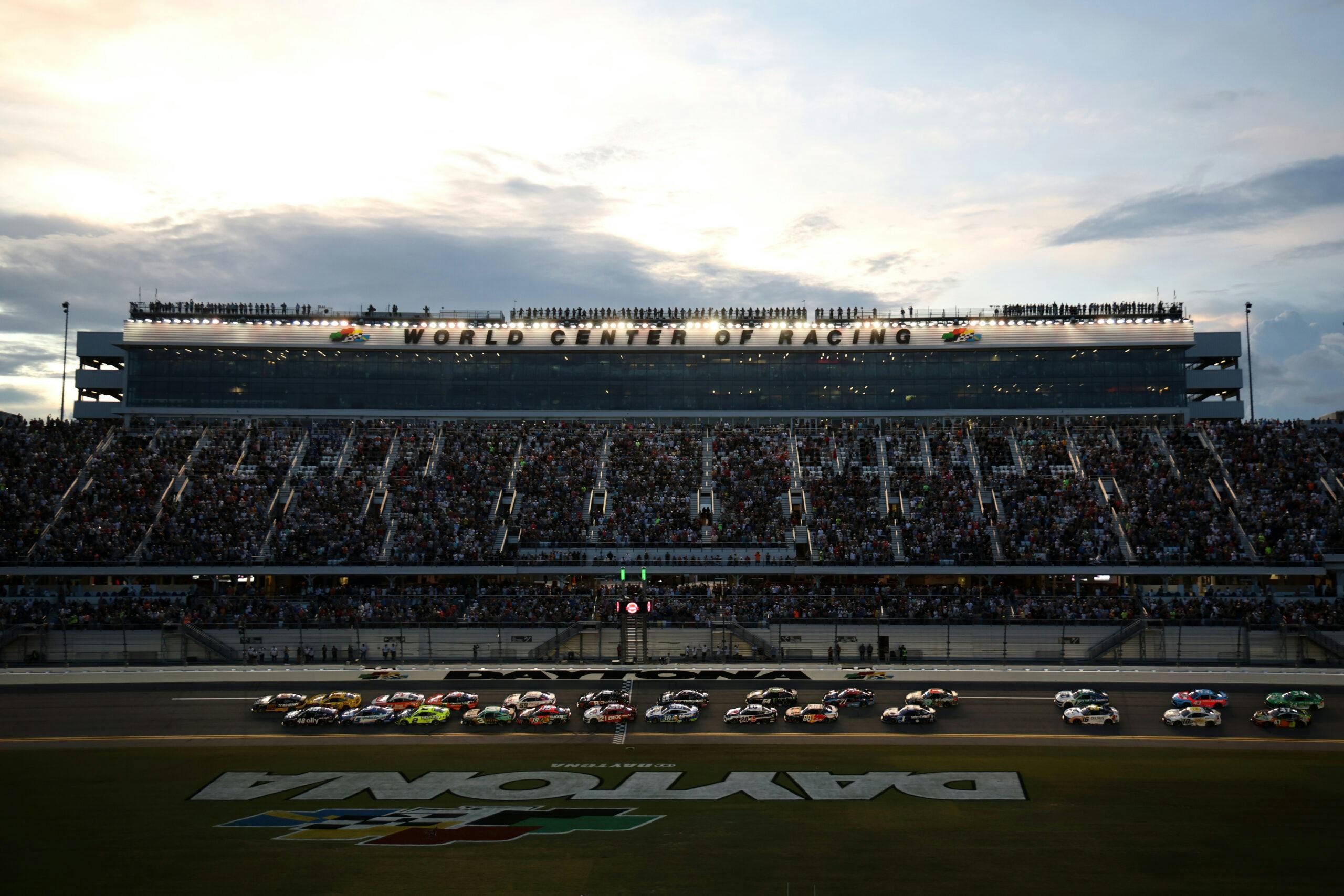
Ryan Blaney’s win in Saturday night’s NASCAR Coke Zero Sugar 400—Daytona’s summer night race was easier to remember when it was just the Firecracker 400, but that name would leave Coke’s money on the table—was especially important to two people: Blaney, of course, and driver Alex Bowman, who finished 36th in the 40-car field.
Why Bowman? We’ll explain, but it’ll require a little scene-setting. Blaney, who had been running 12th with just three laps to go, rocketed to the front on the final lap, beating, in order, Daniel Suarez, Justin Haley, and, in fourth, Cole Custer, who was just 0.049 seconds behind Blaney, which suggests just how close this finish was. Of those four drivers, only Blaney had already won a race this season, which earned him a berth in the season championship Playoffs, to be decided among 16 drivers. Besides Blaney, 13 other drivers had won at least once, and were in. Had the winless Suarez, Haley, or Custer been first to the checkered flag, he would have been the 15th driver to advance to the Playoffs.
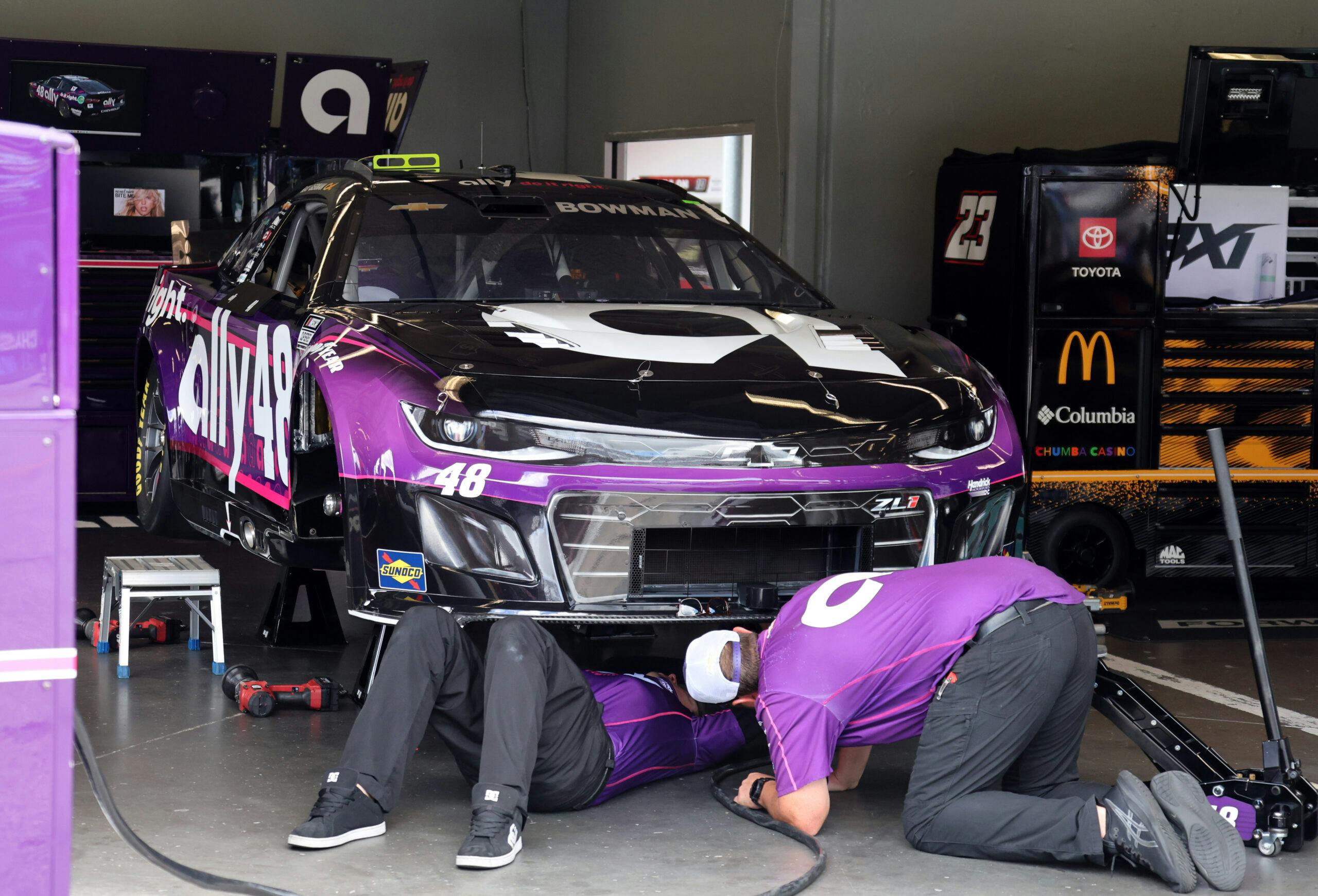
But since Blaney was already in the Playoffs, that left two spots open in the 16-driver roster to be filled by points. Fifteenth in points was Tyler Reddick, who advanced, despite a 21st-place finish in the 400. And 16th in points: Lucky Alex Bowman, who crashed out just 27 laps into the event’s 160, and thus spent the rest of the race biting his nails while he awaited his fate. Custer actually led the next-to-last lap, at which point it looked like Bowman would be the only Hendrick Motorsports driver to miss the Playoffs, as teammates Chase Elliott, William Byron, and Kyle Larson were already in. So now Bowman is in too, and he has Penske driver Ryan Blaney to thank for it.
If all this sounds a little confusing, it is, notably the part I haven’t yet mentioned: That NASCAR invites drivers to gather playoff points during the regular season, which helps them remain in the Playoffs if they have a bad race. (Or two, or three.) Playoff points were earned through stage wins, overall wins, and regular-season performance. At Darlington’s race, NASCAR gives all the Playoffs drivers 2000 points, and they add the points they’ve accumulated in the regular season to those 2000. At the top: Teammates Kyle Larson and William Byron, tied with 2032 points each. At the bottom: Austin Dillon, with 2005 points, and then Bowman, with just 2002.
So what does that mean? It means that the bottom six drivers, none of whom has more than 2008 points, had better perform in the next three races (called the “Round of 16”), or risk being cut for the following three races, or the “Round of 12.” Then the field is trimmed to eight, then four for the Phoenix finale. It was undeniably simpler when racers would gather points at all 36 races, add them up, and the one with the highest score was the champion. But “simpler” doesn’t help TV ratings or ticket sales, so we have the Playoffs.
NASCAR’s Cup Playoff system, which used to be called the Chase for the Championship, began in 2004 to create—artificially, some veteran fans say—more excitement as the season draws to a close. NASCAR witnessed the majority of pro sports building excitement as the season progressed into a Super Bowl or World Series crescendo, and they wanted a piece of that. So NASCAR developed the current system where only 16 drivers are eligible to be the season champion, decided at the last race of the season, with the championship decided based on how those four drivers do in that race. Win the last race, and you’re the champ. Or finish 10th and you’re the champ, as long as the other three drivers come in worse than 10th.

Critics complain that a season championship should be based on the entire season, not just one race, and that’s how it was through 2003. The problem was that sometimes a hot driver locked up the championship well before the season was over—like Alex Palou winning his third straight IndyCar title 15 races into the series’ 17-race 2025 schedule, which undeniably makes promoting those final two races more of a challenge. The NHRA has gone to a playoff system, and IndyCar is looking hard at it.
NASCAR and its broadcast partners insist that the Playoff format is a substantial success, and have worked hard to guarantee that the season championship is a much bigger deal than it used to be. As that field of 16 drivers is whittled down to 12, then eight, then the final four over the last 10 races, television cameras typically spend much more time on those drivers than the rest of the field. So when it comes to pleasing sponsors and your car owner, it’s understandable that Alex Bowman was excited to make the Playoffs. “That was stressful, for sure,” he said. “I think almost the whole top 10 there at the end would’ve knocked us out.”
So when the Playoffs begin this weekend at Darlington Raceway’s Southern 500, the spotlight will be on the 16 Playoffs drivers, but it wasn’t always that way. Indeed, there was a time when the NASCAR season championship wasn’t particularly important to teams: The prize money was nothing special, and winning the championship typically required attending almost all the races.
And for years, there were a lot of races, peaking in 1964 at 62, with 23 of them still held on dirt tracks. That season began on November 10, 1963, and ended with the 62nd race on November 8, 1964. The 1964 champion, Richard Petty, raced in 61 of the 62 races, with 43 top-10 finishes. Petty will tell you that competing in 62 events in one year was incredibly grueling, both for the driver and the crew, which had to show up with a Plymouth that could win at every race, be it on a quarter-mile dirt or 2.5-mile asphalt oval, or on a road course in New York or California.
It was also expensive, factoring in travel costs and the inevitable mechanical failures and crashes. Some teams had no money, and possibly no interest, in traveling to Islip, New York, or New Oxford, Pennsylvania, both of which were on the 1964 schedule.
One of the most dominant drivers of that era, Fred Lorenzen, was well-known for cherry-picking the races he attended, based largely on the size of the purse. In 1964, he competed in only 16 races, but he won half of them. Some of those eight wins came at major tracks, like Atlanta, where Lorenzen won $18,000 from a $57,655 purse. By comparison, Marvin Panch won the very next race, at the long-gone Ashville-Weaverville Speedway in North Carolina, taking home $1150 from a $5040 purse. Another top driver, Junior Johnson, declined to chase a championship for a whole season and consequently never won one. In 1964, he entered fewer than half the races but still scored 15 top-10 finishes.

The number of NASCAR races slowly declined, but in 1971, there were still 48 on the schedule. That dropped to a more manageable (and affordable, for smaller teams) 31 races in 1972, and in 1973, just 28, the lowest number since 1950. It settled into the current average of 36 races a year in 2001. Some in NASCAR will tell you that even the current schedule is grueling: Easter weekend is the only scheduled “off” week for NASCAR Cup teams in 2025, beginning with the Daytona 500 on February 16, to the season-ender at Phoenix Raceway on November 2.
So, if you’re planning on keeping score, this is your 16-driver field competing in the 2025 Playoffs: Getting in on race wins, there’s Denny Hamlin (4 wins), Shane van Gisbergen (4 wins), Kyle Larson (3 wins), Christopher Bell (3 wins), William Byron (2 wins), Ryan Blaney (2 wins), and with one win each: Chase Briscoe, Bubba Wallace, Joey Logano (the 2024 champ), Ross Chastain, Austin Cindric, Josh Berry, and Austin Dillon. Getting in on points are Tyler Reddick and Alex Bowman.
There was also a little news made at the Daytona weekend: Ram was in town to announce the primary team that would take it to the NASCAR Craftsman Truck Series in 2026. To no one’s surprise, it is Kaulig Racing, which already has (Chevrolet) teams in NASCAR Cup and the Xfinity series. Kaulig Racing, we were told, was “founded a decade ago by Ohio-based entrepreneur, community leader and philanthropist Matt Kaulig.” Who, incidentally, has pledged to enter as many as five Dodge Rams beginning with the season opener at Daytona. The announcement was made at Daytona Dodge/Chrysler/Jeep/Ram, a dealership owned by Randy Dye, whose son Daniel competes in the NASCAR Xfinity series. For, of course, Kaulig Racing.

Also, it was announced that wunderkind driver Connor Zilisch, 19, will replace Daniel Suarez in a Trackhouse Racing NASCAR Cup entry in 2026. Zilisch has been nearly unbeatable on road courses, and two weeks ago he was celebrating his Xfinity series win at Watkins Glen by climbing onto his truck’s roof. As he was getting down, he put his foot on his lowered window net, which slipped, and Zilisch fell hard, breaking his collarbone. After surgery, he was cleared to start Friday night’s Xfinity race at Daytona, but got out during the first caution period, and relief driver and TV personality Parker Kligerman climbed in. Stunningly, Kilgerman, who had never won an Xfinity race, went out and won the Wawa 250, thanks in part to a very fast car from the Dale Earnhardt Jr.–owned JR Motorsports stable. But it will go down in the record books as a win for Zilisch, who also gets the points.
The Chase for the Championship—oops, that should be the Playoffs—will begin Sunday at the Southern 500 at the 75-year-old Darlington Raceway in South Carolina. Oops, again: It’s now the Cook Out Southern 500, since Cook Out, a North Carolina–based fast-food eatery with some 360 stores in the Southeastern U.S. (good burgers, excellent shakes), wrote NASCAR a big check. The race starts at 6 p.m. ET Sunday, on the USA Network.


“The Chase” is returning to NASCAR in 2026, which NASCAR unveiled a new format that favors a season long battle for the championship rather than a winner take all format that we saw in previous years.
“The Chase” format was used in NASCAR’s premier series from 2004-2013 with NASCAR determining the seasons champion with a cumulative points accumulated over the course of the 10 race playoff races.
Beginning this season the champion crowned at seasons end in Homestead will have accumulated the most points throughout the 10 race playoff span.
Prior to the beginning of the 2025 season, NASCAR formed the “Playoff Committee”, which consisted of drivers, members of the media and executives. The panel discussed throughout the 2025 season plans for a change of the playoff format after NASCAR’s previous format which gave drivers a free ride to the playoffs with a win in the regular season and a winner take all format for the final race. Fans voiced their opinions on social media for a change in the format favoring a champion crowned with a culmination of points rather than one race deciding the champion.
“Was it the best format we could go with?,” Steve O’Donnell said during the press conference referring to the previous format NASCAR used.
Once the playoff field is set, the leader in points standings will have 2100 points heading into the 10 race playoff races. A ten point interval will separate second and third place while a five point interval will separate all other drivers.
Total points once “The Chase” begins: 1st: 2100 points, Second: 2075 points, Third: 2065 points, Fourth: 2060 points, Fifth: 2055 points, Sixth: 2050 points, Seventh: 2045 points, Eighth: 2040 points, Ninth: 2035 points, Tenth: 2030 points, Eleventh: 2025 points, Twelfth: 2020 points, Thirteenth: 2015 points, Fourteenth: 2010 points, Fifteenth: 2005 points, Sixteenth: 2000 points
Drivers in attendance included Chase Elliott, Chase Briscoe and Ryan Blaney. Also in attendance were NASCAR hall of famers Dale Earnhardt Jr. and Mark Martin as well as Steve O’Donnell from NASCAR.
Chase Briscoe said during the press conference that he believes this format is easier for the fans to follow.
“I’m a fan of the sport and now I know I’m compelled to plug in every week,” Chase Briscoe said. “Every single race, every single lap will have more importance.”
The 2026 NASCAR season gets underway with “The Clash” at Bowman Gray Stadium on Sunday, February 1st and the 68th running of the Daytona 500 on Sunday, February 15th.
By JENNA FRYER AP Auto Racing Writer
CHARLOTTE, N.C. — NASCAR’s nearly two-year study into an overhaul of its championship-deciding format concluded Monday with the reveal that in 2026 the stock car series will return to a 10-race version closely resembling the very first iteration introduced 22 years ago.
The system will return to a 10-race format consisting of the top 16 drivers in the regular-season standings. There will be no driver eliminations every three races, winning will be incentivized and its name will return to “The Chase.” The driver with the most points at the Nov. 8 finale at Homestead-Miami Speedway will be the champion.
“As NASCAR transitions to a revised championship model, the focus is on rewarding driver and team performance each and every race,” NASCAR President Steve O’Donnell said. “At the same time, we want to honor NASCAR’s storied history and the traditions that have made the sport so special.
“Our fans are at the heart of everything we do, and this format is designed to honor their passion every single race weekend.”
The changes come amid fan complaints to periodic tweaks of a system that was largely unchanged from its 2004 introduction to 2013, when Jimmie Johnson won six of his record-tying seven championships.
Changes slowly followed, with eliminations, an expanded field, a win-and-in guarantee and finally a winner-take-all season finale.
Fans had grown weary of the changes. Regular-season victories guaranteed a slot in the 10-race playoffs, a win in any of the first three three-race rounds advanced a driver into the next round, while the bottom three drivers at the end of each round were eliminated.
Finally, the winner was simply the highest-finishing driver among four remaining title contenders in the season finale.
THE TIPPING POINT
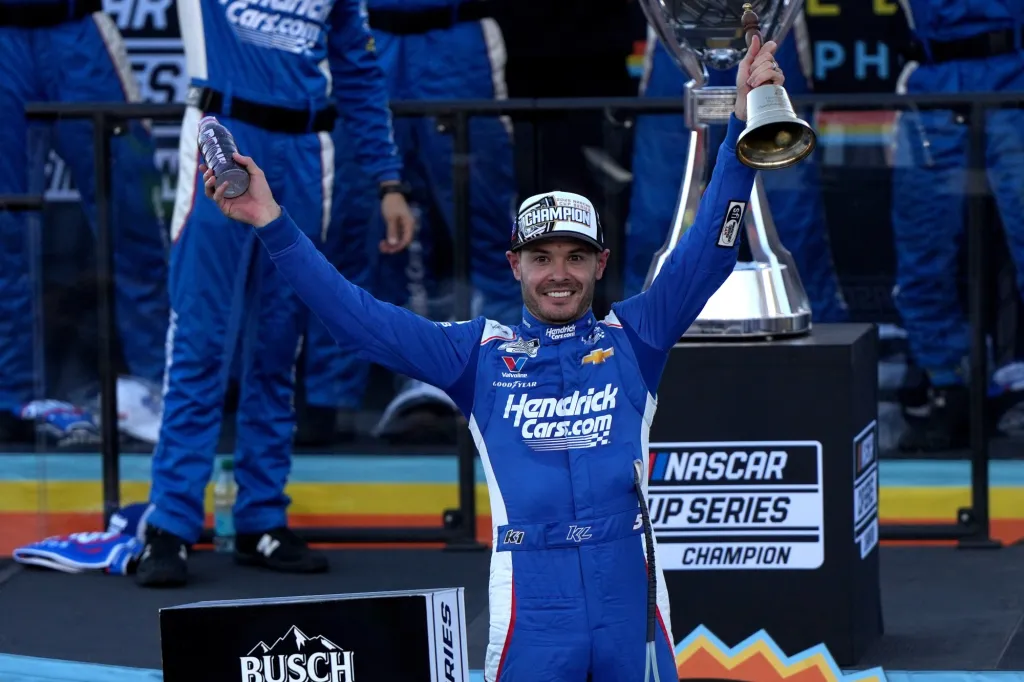
That system reached its breaking point in November when Denny Hamlin dominated the race until a late caution changed the final sequence and Kyle Larson won his second title by simply finishing ahead of Hamlin despite Larson not leading a single lap at Phoenix Raceway while mired in a 25-race losing streak.
Hamlin had won two playoff races – a Cup Series high six victories on the season – and led 208 of the 319 laps at Phoenix. He was the leader with three to go when a late caution changed the outcome and sent the race into overtime; Larson finished third, two spots ahead of Hamlin, to automatically claim the championship.
It wasn’t the only race on the final weekend of 2025 that didn’t finish as expected.
Corey Heim had 11 victories at the start of the Truck Series finale at Phoenix but needed to dip his truck low in an outrageous seven-wide scramble in overtime to secure the title. He did pull out the win and NASCAR dodged the controversy of the most consistent driver being denied a championship because of a gimmicky format.
NASCAR wasn’t so fortunate the next night in the Xfinity Series when 10-race winner Connor Zilisch lost the championship because Jesse Love won the race. Love opened the season with a win at Daytona and closed it with a win at Phoenix – his only two victories of the season but good enough in that format for a championship.
Fan discourse – which had been building for several years and intensified after Joey Logano won two titles in three years including in 2024 when he advanced on another’s driver elimination – exploded after Hamlin.
The changes announced Monday were already in the works and came after an extensive review that included collaboration between owners, drivers, automobile manufacturers, tracks, broadcast partners, and fans.
“Going into Phoenix was a hold your breath moment,” O’Donnell said. “We recognize someone winning the championship, absolutely they won it by the rules. But was it the best format that we could go with? The tide had turned in the garage.”
The new format is designed to bolster the importance of each race and reward consistency while maintaining the importance of winning. It will be known as its original name, ‘The Chase,’ with an also accepted use of ‘postseason,’ NASCAR is eliminating the vernacular ‘playoffs’ and ‘regular-season champion.’
NASCAR’S NEW FORMAT
Moving forward, the driver with the most points after the postseason finale will be champion in all three NASCAR national series. The Chase will comprise of the final 10 races for the Cup Series.
NASCAR has eliminated the automatic berth into the playoff field earned by winning during the regular season, a move designed to increase the importance of every event on the schedule and emphasize consistency throughout the regular season.
A race victory win will now earn the winning driver 55 points, up from 40 points, to reward drivers who battle for wins instead of settling for a solid points days. NASCAR hopes it encourages aggressive racing and strong team performance.
Points for all other positions, including stage points, remain the same.
The points leader after the regular season will receive a 25-point cushion over the second seed as the points will be reset for the 16 Chase drivers. A win in a playoff race no longer earns the automatic advancement into the next round – a move NASCAR says prevents teams from using the remainder of that particular round as preparation time for the finale.

Youth motorsport riders of the Sliders Flat Track Racing Program have spent countless hours in recent months learning how to ride dirt and electric bikes and build motorcycles while gaining personal development.

The Milwaukee youths are preparing for Flat Out Friday, an international motorcycle race that will take place at Fiserv Forum on Feb. 21. The race features over 300 riders of all skill levels.
The Sliders Flat Track Racing Program gives underrepresented youths in Milwaukee free access to electric and dirt bikes, and eventually motorcycles, while introducing them to science, technology, engineering and math, or STEM, components.

“Motorsports is not something that people of color typically participate in and sometimes we’re the only people of color there when we race,” said Venisha Simpson, founder of the Sliders Flat Track Racing Program.
Lately, Simpson and co-founder Tiger Mabato have been coaching the riders inside the Boys & Girls Club and on a dirt road in Sheboygan County for Flat Out Friday.
“I love this sport because it’s intergenerational and you’ll find people between 4 to 84 racing on the same track,” Simpson said. “The respect level is low between the young and old in the Black community, so with this event and program we’re absorbing from each other.”

A young engineer on the track
One of the riders in the program is Tiger Mabato’s 11-year-old son Noah.
His interest in motorbikes started when he was 6 and he complained about the condition of a junkyard dirt bike his dad gifted him.
By 7, his dad gave him the opportunity to take the dirt bike apart and rebuild it on his own.
“Engineering and building things is fun to me, but I have to learn to do this on my own without any help,” Noah said.
After rebuilding the dirt bike, he crashed into a tree, leaving him hesitant about the sport and even joining the program.
Noah regained interest after seeing another kid from the program race on a dirt bike.
“I crash often when practicing and racing, but now I know what to do,” Noah said.
Currently, Noah is building a Suzuki RM 85cc dirt bike for his third Flat Out Friday competition.
“This will become my official bike because my last bike was causing me to lose pretty badly,” he said.
He placed ninth last year in the open youth class after falling and crashing his bike, but this year wants to come back stronger.
“It took me a while to get back up last year, but I’m more excited about trying it again,” he said.
According to Tiger Mabato and Simpson, Noah Mabato and Donald Amartey are the only Black youth racers that ride vintage Harley-Davidson bikes in Milwaukee.
“Noah and Donald are making history right now,” Tiger Mabato said.

Adjusting quickly
Justice Osei, 9, is a second-year rider in the Sliders Flat Track Racing Program.
He started without knowing how to ride a regular bike but caught on quickly.
“They taught him that day in just a couple hours how to ride one,” his mom, Malaika Osei, said.
Justice wasn’t drawn into traditional sports or video gaming, but with motorsports found a connection to the people and skills he learned.
“When I’m racing and sometimes make a mistake, I try to lock in and stay focused after it,” he said.
Tiger Mabato is amazed to see kids like Justice latch onto the sport.
“These kids go through so many ups, downs and tears, it’s crazy how quickly they adapted to everything,” Mabato said. “This is a different level of excitement.”

Prioritizing safety
Before getting on a motorbike, every rider and parent is made aware of how dangerous the sport can be.
“The hardest thing is seeing your kid crash and tumble at times, but we prepare them for that, and our biggest thing is safety,” Mabato said.
To ensure safety, the program provides students with motorbikes, helmets, gloves, padding and vests. Parents are responsible for purchasing jeans, long-sleeve shirts and racing boots.
“It’s dangerous, but it’s fun,” Justice said.
Justice broke three toes during a practice from not wearing the proper racing boots.
His mom saw him take a tumble that day on the dirt road
“I took off running once I saw him crying and grabbing his foot,” Malaika Osei said.
Justice didn’t even realize at first that his toes were broken.
“I didn’t even know until a week later,” he said.
After purchasing a new pair of boots, Justice was ready to ride again.
Building other skills

Motorsports is more than just racing and maintenance.
Flat Out Friday co-founder Jeremy Prach wants riders to know the sport is about developing skills that keep you improving.
“I think the thing that hurts the most is your pride when you fall because many think they’re going to do awesome in a race,” Prach said. “But without a skill base, it’ll be hard to do awesome.”
At the Sliders Flat Track Racing Program, Simpson and Tiger Mabato teach the riders confidence, self-regulation, quick problem solving and self-respect.
“These kids are tough and it takes a different type of mentality to race with these bikes,” Mabato said.
Simpson and Mabato also teach the youth riders how to network and maintain relationships with people like Cameron Smith, one of the few professional Black racers in the country.

It takes a community
To ensure the program has everything it needs, places like Cream City Moto, STACYC, Southeast Sales, Proplate and other local organizations pitch in to donate equipment, design graphics, cover fees for events and more.
The program also received grants from the Greater Milwaukee Foundation and Comoto Cares.
“The race community is very supportive and I love that,” Simpson said.
Tiger Mabato encourages parents to get their children involved in things that spark their interest even if it’s scary and wants them to know that the race part of the program is optional.
“There’s no better feeling than seeing your kid go around the track,” he said.
For more information
If you are interested in becoming a part of the program, click here to register and join the waitlist for spring.
To watch, support and cheer the youth riders on at Flat Out Friday, tickets start at $28.
Related

By JENNA FRYER AP Auto Racing Writer
CHARLOTTE, N.C. — NASCAR’s nearly two-year study into an overhaul of its championship-deciding format concluded Monday with the reveal that in 2026 the stock car series will return to a 10-race version closely resembling the very first iteration introduced 22 years ago.
The system will return to a 10-race format consisting of the top 16 drivers in the regular-season standings. There will be no driver eliminations every three races, winning will be incentivized and its name will return to “The Chase.” The driver with the most points at the Nov. 8 finale at Homestead-Miami Speedway will be the champion.
“As NASCAR transitions to a revised championship model, the focus is on rewarding driver and team performance each and every race,” NASCAR president Steve O’Donnell said. “At the same time, we want to honor NASCAR’s storied history and the traditions that have made the sport so special.
“Our fans are at the heart of everything we do, and this format is designed to honor their passion every single race weekend.”
The changes come amid fan complaints to periodic tweaks of a system that was largely unchanged from its 2004 introduction to 2013 when Jimmie Johnson won six of his record-tying seven championships.
Changes slowly followed, with eliminations, an expanded field, a win-and-in guarantee and finally a winner-take-all season finale.
Fans had grown weary of the changes. Regular-season victories guaranteed a slot in the 10-race playoffs, a win in any of the first three three-race rounds advanced a driver into the next round, while the bottom three drivers at the end of each round were eliminated.
Finally, the winner was simply the highest-finishing driver among four remaining title contenders in the season finale.
THE TIPPING POINT
That system reached its breaking point in November when Denny Hamlin dominated the race until a late caution changed the final sequence and Kyle Larson won his second title by simply finishing ahead of Hamlin despite Larson not leading a single lap at Phoenix Raceway while mired in a 25-race losing streak.
Hamlin had won two playoff races – a Cup Series high six victories on the season – and led 208 of the 319 laps at Phoenix. He was the leader with three to go when a late caution changed the outcome and sent the race into overtime; Larson finished third, two spots ahead of Hamlin, to automatically claim the championship.
It wasn’t the only race on the final weekend of 2025 that didn’t finish as expected.
Corey Heim had 11 victories at the start of the Truck Series finale at Phoenix but needed to dip his truck low in an outrageous seven-wide scramble in overtime to secure the title. He did pull out the win and NASCAR dodged the controversy of the most consistent driver being denied a championship because of a gimmicky format.
NASCAR wasn’t so fortunate the next night in the Xfinity Series when 10-race winner Connor Zilisch lost the championship because Jesse Love won the race. Love opened the season with a win at Daytona and closed it with a win at Phoenix – his only two victories of the season but good enough in that format for a championship.
Fan discourse – which had been building for several years and intensified after Joey Logano won two titles in three years including in 2024 when he advanced on another’s driver elimination – exploded after Hamlin.
The changes announced Monday were already in the works and came after an extensive review that included collaboration between owners, drivers, automobile manufacturers, tracks, broadcast partners, and fans.
“Going into Phoenix was a hold your breath moment,” O’Donnell said. “We recognize someone winning the championship, absolutely they won it by the rules. But was it the best format that we could go with? The tide had turned in the garage.”
The new format is designed to bolster the importance of each race and reward consistency while maintaining the importance of winning. It will be known as its original name, ‘The Chase,’ with an also accepted use of ‘postseason,’ NASCAR is eliminating the vernacular ‘playoffs’ and ‘regular-season champion.’
NASCAR’S NEW FORMAT
Moving forward, the driver with the most points after the postseason finale will be champion in all three NASCAR national series. The Chase will comprise of the final 10 races for the Cup Series.
NASCAR has eliminated the automatic berth into the playoff field earned by winning during the regular season, a move designed to increase the importance of every event on the schedule and emphasize consistency throughout the regular season.
A race victory win will now earn the winning driver 55 points, up from 40 points, to reward drivers who battle for wins instead of settling for a solid points days. NASCAR hopes it encourages aggressive racing and strong team performance.
Points for all other positions, including stage points, remain the same.
The points leader after the regular season will receive a 25-point cushion over the second seed as the points will be reset for the 16 Chase drivers. A win in a playoff race no longer earns the automatic advancement into the next round – a move NASCAR says prevents teams from using the remainder of that particular round as preparation time for the finale.
Motorsports
NASCAR returns to 10-race Chase format to decide national series champions – Speedway Digest
NASCAR is heading full-steam into the future with a return to the past.
In response to growing sentiment among fans and stakeholders in the sport, the sanctioning body has opted to revive the Chase format to crown champions in its top three national series.
In the Cup Series, NASCAR’s top division, 16 drivers will qualify for a 10-race Chase based on the number of points they score during the 26-race regular season, according to the format announcement on Monday at NASCAR’s Production Facility in Concord, N.C.
Gone is the “win-and-you’re in” provision that governed qualification in the elimination Playoff format in use from 2014 through 2025. Under the Chase format, the top 16 drivers in points will compete for the series title irrespective of the number of regular-season victories they accumulate.
To provide balance and to elevate the importance of wins in the Chase format, NASCAR will award 55 points for a victory versus 40 under the elimination system. Points for all other positions, including stage points, remain the same, though Playoff points, an important element of the elimination format, are now a thing of the past.
No longer is there Regular Season Champion, but finishing first in the standings will continue to have substantial value. The points leader after 26 races will start the 10-event Chase with 2100 points, 25 more than the second-place driver and 35 more than the third-place qualifier.
From third on down, the value of each position to start the Chase declines in five-point increments, with the 16th-place driver receiving 2000 points. Under the Chase format, there are no eliminations and no single championship race to decide the title. The driver who scores the most aggregate points in the final 10 races will be crowned champion.
In the newly christened NASCAR O’Reilly Auto Parts Series, 12 drivers will compete in a nine-race Chase; in the NASCAR CRAFTSMAN Truck Series, 10 drivers will vie for the championship over seven races. Those numbers are commensurate with the respective proportions of the schedules of those two national divisions.
Landing on the Chase format followed lengthy discussions involving owners, drivers, manufacturers, tracks, broadcast partners and fans.
NASCAR Hall of Famer Mark Martin, a vocal advocate for a full 36-race championship format, was delighted with the compromise that revived the Chase.
“I think that this is the most perfect compromise that you could ever ask for,” Martin said at the announcement. “It’s going to require our 2026 champion to be lightning fast and incredibly consistent, and that’s what we can all get behind.
“So, I’m really excited. I think it’s fantastic. I would just appeal to the race fans, all the race fans, but especially the classic fans who say to me, ‘I don’t watch anymore.’ I say we need you. Come on back. We’re headed in the right direction. Come back and join with us, and we’ll keep making progress.”
Like Martin, NASCAR president Steve O’Donnell feels the return to the Chase provides a delicate balance between those who favor a full-season points race and those who prefer a postseason playoff.
“We believe we’ve struck that balance,” O’Donnell said. “We’ve got the best of both worlds where every race matters. We’ve talked to a lot of folks in the industry. We’ve run a lot of different models and believe this is the best place to land really to get back to who we are.
“That’s the core of NASCAR… and we’re really excited about the 2026 season.”
Chase Elliott, the 2020 Cup Series champion, grew up watching drivers compete in the Chase, the system used from 2004 through 2013, and was enthralled by what he saw.
“A lot of those years of (seven-time champion) Jimmie (Johnson) dominating and the (2011) championship of Tony (Stewart) and Carl (Edwards) all during the Chase were incredible runs. I think we oftentimes forget how good we had it through all those years of Chase format.
“I think it’s a really nice compromise. I think getting a full season was going to be a pretty big challenge, and I’m not sure there’s really a better place to land than a true 10-race Chase, really similar to what we had through those years of the epic battles that we saw.”
Kyle Larson, who won his second Cup title in November at Phoenix Raceway, favors the longer format, even when it was just theoretical—and even though next year’s final race is moving to Homestead-Miami Speedway, one of his favorite tracks.
“Even though Homestead’s arguably my best track and most dominant track, I still would feel like I have a better opportunity to win a championship going off—whatever it may be—a 10-race, three-race, four-race sort of point-earning thing,” Larson said two weeks before the Chase format was announced.
“With more races, it’s a little bit more in your hands… I think what we had kind of ran its course.”
By JENNA FRYER AP Auto Racing Writer
CHARLOTTE, N.C. — NASCAR’s nearly two-year study into an overhaul of its championship-deciding format concluded Monday with the reveal that in 2026 the stock car series will return to a 10-race version closely resembling the very first iteration introduced 22 years ago.
The system will return to a 10-race format consisting of the top 16 drivers in the regular-season standings. There will be no driver eliminations every three races, winning will be incentivized and its name will return to “The Chase.” The driver with the most points at the Nov. 8 finale at Homestead-Miami Speedway will be the champion.
“As NASCAR transitions to a revised championship model, the focus is on rewarding driver and team performance each and every race,” NASCAR President Steve O’Donnell said. “At the same time, we want to honor NASCAR’s storied history and the traditions that have made the sport so special.
“Our fans are at the heart of everything we do, and this format is designed to honor their passion every single race weekend.”
The changes come amid fan complaints to periodic tweaks of a system that was largely unchanged from its 2004 introduction to 2013, when Jimmie Johnson won six of his record-tying seven championships.
Changes slowly followed, with eliminations, an expanded field, a win-and-in guarantee and finally a winner-take-all season finale.
Fans had grown weary of the changes. Regular-season victories guaranteed a slot in the 10-race playoffs, a win in any of the first three three-race rounds advanced a driver into the next round, while the bottom three drivers at the end of each round were eliminated.
Finally, the winner was simply the highest-finishing driver among four remaining title contenders in the season finale.
THE TIPPING POINT
That system reached its breaking point in November when Denny Hamlin dominated the race until a late caution changed the final sequence and Kyle Larson won his second title by simply finishing ahead of Hamlin despite Larson not leading a single lap at Phoenix Raceway while mired in a 25-race losing streak.
Hamlin had won two playoff races – a Cup Series high six victories on the season – and led 208 of the 319 laps at Phoenix. He was the leader with three to go when a late caution changed the outcome and sent the race into overtime; Larson finished third, two spots ahead of Hamlin, to automatically claim the championship.
It wasn’t the only race on the final weekend of 2025 that didn’t finish as expected.
Corey Heim had 11 victories at the start of the Truck Series finale at Phoenix but needed to dip his truck low in an outrageous seven-wide scramble in overtime to secure the title. He did pull out the win and NASCAR dodged the controversy of the most consistent driver being denied a championship because of a gimmicky format.
NASCAR wasn’t so fortunate the next night in the Xfinity Series when 10-race winner Connor Zilisch lost the championship because Jesse Love won the race. Love opened the season with a win at Daytona and closed it with a win at Phoenix – his only two victories of the season but good enough in that format for a championship.
Fan discourse – which had been building for several years and intensified after Joey Logano won two titles in three years including in 2024 when he advanced on another’s driver elimination – exploded after Hamlin.
The changes announced Monday were already in the works and came after an extensive review that included collaboration between owners, drivers, automobile manufacturers, tracks, broadcast partners, and fans.
“Going into Phoenix was a hold your breath moment,” O’Donnell said. “We recognize someone winning the championship, absolutely they won it by the rules. But was it the best format that we could go with? The tide had turned in the garage.”
The new format is designed to bolster the importance of each race and reward consistency while maintaining the importance of winning. It will be known as its original name, ‘The Chase,’ with an also accepted use of ‘postseason,’ NASCAR is eliminating the vernacular ‘playoffs’ and ‘regular-season champion.’
NASCAR’S NEW FORMAT
Moving forward, the driver with the most points after the postseason finale will be champion in all three NASCAR national series. The Chase will comprise of the final 10 races for the Cup Series.
NASCAR has eliminated the automatic berth into the playoff field earned by winning during the regular season, a move designed to increase the importance of every event on the schedule and emphasize consistency throughout the regular season.
A race victory win will now earn the winning driver 55 points, up from 40 points, to reward drivers who battle for wins instead of settling for a solid points days. NASCAR hopes it encourages aggressive racing and strong team performance.
Points for all other positions, including stage points, remain the same.
The points leader after the regular season will receive a 25-point cushion over the second seed as the points will be reset for the 16 Chase drivers. A win in a playoff race no longer earns the automatic advancement into the next round – a move NASCAR says prevents teams from using the remainder of that particular round as preparation time for the finale.

Men’s Volleyball Sweeps EIVA Weekly Awards – Penn State

Special Olympics Targets 600,000 Coaches by 2030 with Nike Partnership

Waverly Senior Sophia D. Commits to Sarah Lawrence College Volleyball

St. Louis LGBTQ+ community rallies in support of athletes

Sign up for youth basketball shooting competition

Men’s volleyball set to replicate success with new lineup, rotation in 2026 season

$2.6 million QB ranked No. 1 NFL Draft prospect amid College Football Playoff

Seattle Adaptive Sports Gives Kids with Disabilities a Team

Three Podiums Highlight Season Opening Alpine Action

Joel Klatt declares there’s a new top head coach in college football

NCS: NASCAR returns to 10 race Chase format to determine champion – Speedway Digest

NASCAR restores 10-race ‘Chase’ championship format – Pasadena Star News

Pat McAfee dealt blunt reality check from college football fans

Hawks general manager Onsi Saleh on Trae Young trade: ‘I really wish him the best’

DVIDS – News – American, Japanese youth basketball players forge bonds, learn fundamentals during sports exchange

Stempien to seek opening for Branch County Circuit Court Judge | WTVB | 1590 AM · 95.5 FM

Ross Brawn to receive Autosport Gold Medal Award at 2026 Autosport Awards, Honouring a Lifetime Shaping Modern F1

Princeton Area Community Foundation awards more than $1.3 million to 40 local nonprofits ⋆ Princeton, NJ local news %

Downtown Athletic Club of Hawaiʻi gives $300K to Boost the ’Bows NIL fund

Five Youth Sports Trends We’re Watching in 2026

Badgers news: Wisconsin lands 2nd commitment from transfer portal

Beach Volleyball Unveils 2026 Spring Schedule – University of South Carolina Athletics

Three Clarkson Volleyball Players Named to CSC Academic All-District List

Badgers news: Final Four Game Thread vs. No. 1 Kentucky Wildcats

Kentucky VB adds an All-American honorable mention, loses Brooke Bultema to portal

Kentucky AD explains NIL, JMI partnership and cap rules

Central’s Meyer earns weekly USTFCCCA national honor

Is women’s volleyball the SEC’s next big sport? How Kentucky, Texas A&M broke through

PRI Show revs through Indy, sets tone for 2026 racing season

Dr. Patrick Staropoli Lands Full-Time O’Reilly Ride with Big Machine Racing

 NBA Legend Michael Jordan to Join NBC Sports as Special Contributor
 Why a rising mid-major power with an NCAA Tournament team opted out of revenue-sharing — and advertised it
 Trackhouse to pair Chastain with McSwain
 Volleyball Falls to SEMO – Tennessee State University
 Kennewick School Board backs changes to gender inclusion in sports | News
-
 Rec Sports1 week ago
Five Youth Sports Trends We’re Watching in 2026
-
 Sports3 weeks ago
Kentucky VB adds an All-American honorable mention, loses Brooke Bultema to portal
-

 Motorsports3 weeks ago
BangShift.com IHRA Acquires Historic Memphis Motorsports Park In Millington Tennessee. Big Race Weekend’s Planned For 2026!
-
NIL3 weeks ago
Fifty years after IU’s undefeated champs … a Rose Bowl
-

 Sports2 weeks ago
H.S. INDOOR TRACK & FIELD: GLOW region athletes face off at Nazareth University | Sports
-
 Sports3 weeks ago
Colorado volleyball poised to repeat success
-
 Sports3 weeks ago
2025 Volleyball Player of the Year: Witherow makes big impact on Central program | Nvdaily
-

 Sports3 weeks ago
Texas A&M volleyball’s sweep of Kentucky attracts record viewership
-

 Motorsports3 weeks ago
NJ Motorsports Park Announces 2026 Event Schedule
-
 Motorsports3 weeks ago
Kyle Larson opens door to 24 Hours of Daytona comeback – Motorsport – Sports