Connect with us
https://yoursportsnation.com/wp-content/uploads/2025/07/call-to-1.png

NIL

In NIL and transfer portal era, top college football stars have more say than ever in building …

Published

on

In NIL and transfer portal era, top college football stars have more say than ever in building ...

You best know Dylan Stewart as a game-wrecking defensive end who has a chance to end the season as the nation’s best defensive player. The 6-foot-5, 245-pound star had 6.5 sacks, 9.5 tackles for loss and 34 quarterback hurries as a true freshman, and he has already drawn comparisons to former Gamecocks star Jadeveon Clowney. 

But if Stewart is going to reach his seemingly limitless potential, the kind that former teammate Kyle Kennard says is going to make him “an all-timer in this sport,” he knows he needs help. 

With rival teams dangling big money to tempt him to leave South Carolina, Stewart wasn’t afraid to be forceful in making sure it was an offseason priority for the Gamecocks. During hectic transfer portal periods, Stewart would pop into the office of Darren Uscher, South Carolina’s director of player personnel and recruiting, to see who South Carolina was considering adding at the defensive line position. He’d plop down and intently watch as Uscher and his team reviewed film of defensive line recruiting targets. 

When Stewart didn’t like what he saw, the typically soft-spoken defensive end wasn’t shy about expressing his feelings. 

“If he doesn’t like them, he’ll let us know,” Uscher told CBS Sports. “‘This dude can’t play.’ He wants good teammates.”

2025 College Football Playoff predictions, expert picks, most overrated and underrated teams

Chip Patterson

2025 College Football Playoff predictions, expert picks, most overrated and underrated teams

The reasoning is easy to understand, according to Stewart. Even with Kennard — the eventual Nagurski Award winner as the nation’s top defensive player — opposite him last season, Stewart still faced double teams and even a triple-team against Kentucky. Even for a superstar like Stewart, he admits you can’t do much in that scenario.

“If you just send all your people to one person and you can run your game plan, that’s easy,” Stewart says. “But if you’ve got two guys, you have to figure it out.”

South Carolina listened to Stewart’s desires and added four defensive linemen and two edge-rushers out of the transfer portal. 

Stewart wanting a hand in the players surrounding him is more normal now than you would think. In the transfer portal and NIL era, where top players earn millions and have more agency than ever, they want a real say in who else is on the roster. We’ve seen this play out for years at the professional levels, from NFL quarterbacks like Aaron Rodgers to NBA superstars such as LeBron James, who act as unofficial general managers in helping shape the roster. 

With the professionalization of college sports, it was only a matter of time before that trickled down. 

In fact, one of the reasons for Nico Iamaleava’s departure from Tennessee was discomfort over the offensive line and wide receivers that were returning to Knoxville this season. Iamaleava’s camp, which included his father Nic and family friend Cordell Landers, wanted Tennessee to be more aggressive in adding players to help the quarterback. After a season that ended in Iamaleava’s helmet cracking twice against Ohio State in the College Football Playoff, Iamaleava’s advisors wanted a better offensive line to protect him. There was frustration this spring, too, over a wide receivers room that was now without Bru McCoy and Dont’e Thornton Jr. 

Of course, that same camp also wanted Tennessee to dramatically increase its compensation for Nico, sources told CBS Sports, a demand that was ultimately rejected. 

Iamaleava was slated to make around $2.4 million this season, and after multiple offseason headlines about top quarterbacks such as Miami’s Carson Beck and Duke’s Darian Mensah significantly eclipsing that number, the people around the Tennessee quarterback believed he deserved more. It has been previously reported they wanted something in the $4 million range, though Darren Heitner, a prominent sports law attorney who had conversations with Iamaleava’s camp during the saga, believes the ask was actually $6-$8 million. Sources believe Tennessee was willing to go to the low $3 million range but was never going to come close to those outlandish asks. 

Iamaleava’s camp was confident he’d be able to make more than $4 million on the open market, though leaving Tennessee in the spring significantly limited the pool of potential suitors and drove his value down. Iamaleava ultimately left for UCLA and is expected to make less this season in Los Angeles than he would have had he stayed in Knoxville. Those around Iamaleava have always denied it was about the money — sources around Tennessee, of course, say otherwise — and that it was about the surrounding talent. Iamaleava, in his first public comments back in July, told CBS Sports, “My family was strictly the main importance for me. I let my business team, my parents, handle that side of NIL. Just me being closer to family was the most important thing.”

While Iamaleava has become the poster child for NIL gone bad in some ways, his non-financial demands made sense. 

“All the great college quarterbacks we’ve seen in the past, they’ve all had a great supporting cast,” Indiana quarterback Fernando Mendoza told CBS Sports. “Although there is a lot of imagery and attention put on the quarterback, it’s not a one-man show. It really is an 11-person game.”

Nico Iamaleava led Tennessee to the CFP last season before abruptly leaving this past spring. 
Imagn Images

In a weird twist of fate, one of the quarterbacks Tennessee was interested in adding to replace Iamaleava had gone through a similar exercise himself months earlier. 

Multiple schools, including some within the SEC, were interested in poaching Luke Altmyer away from Illinois. The Mississippi native had started his career at Ole Miss, so he was familiar with the SEC and was coming off his best season yet in guiding the Fighting Illini to a 10-3 record. He threw for 2,717 yards, 22 touchdowns and only six interceptions. 

As Altmyer weighed his options, he had three questions for Illinois coach Bret Bielema: 1) Was offensive coordinator Barry Lunney Jr. coming back? 2) What role would Art Sitkowski have in 2025? 3) Who would be the offensive line and wide receivers for him in 2025?

The receiver position was a huge question after Illinois lost its top two receivers, Pat Bryant and Zakhari Franklin, from last year’s team. Bryant, in particular, had a significant impact on the program and was responsible for three game-winning touchdowns. 

Altmyer’s questions didn’t offend Bielema. After stints with the New York Giants and New England Patriots before coming to Illinois, he thinks his senior quarterback is ahead of the curve.

“A good quarterback knows he is built by the protection in front of him and the talent that he has around him,” Bielema says. “…That verifies even further to me how well he thinks. He’s a college player who plays like an NFL player the way he thinks, the way he prepares.”

Altmyer says he was heavily involved in their recent recruiting of receivers, from meeting with players on their visits to sending posts to general manager Pat Embleton to make sure Illinois is involved with players he thinks they need. If he was going to stay at Illinois, a place he truly believes can compete at the highest level this season, he wanted to make sure he was doing everything he could to make that happen.

Given the importance of the quarterback position, having Altmyer actively involved was critical for Illinois this offseason. Illinois ultimately added West Virginia transfer Hudson Clement and Ball State transfer Justin Bowick, both of whom are expected to be contributors at receiver this season. 

“They know that I have a different perspective being the quarterback out there making the plays and on the field,” Altmyer says. “So I’m heavily involved through the social media world, and they’re sending me player tapes and being in some of those meetings like, ‘Hey, what do you think about this guy compared to this guy?’ It’s crazy, but it’s a lot of fun.”

Not every player has the cachet to want or be given a say in shaping the roster, but it is one advantage schools can deploy to keep their players on the roster. Player acquisition gets the most attention in college football now, but player retention is even more important, especially for programs focused on developing homegrown talent. Money will always be critical, but knowing your voice is important enough to impact what your program wants to do in its roster-building could be the tipping point in staying. 

For Altmyer, it was another reason why he knew Champaign is where he needed to be in 2025.

“There’s a big risk in picking up and going somewhere that’s uncertain to a team that needs a quarterback and doesn’t have a lot of good players around around him,” Altmyer says. “I’m comfortable here because I know what’s around me, I know the trajectory, I know the people around me, and I know where we can go.”

Continue Reading
Click to comment

Leave a Reply

Your email address will not be published. Required fields are marked *

NIL

College Football’s Expanded Playoff Works. Its Rhythm Doesn’t.

Published

on


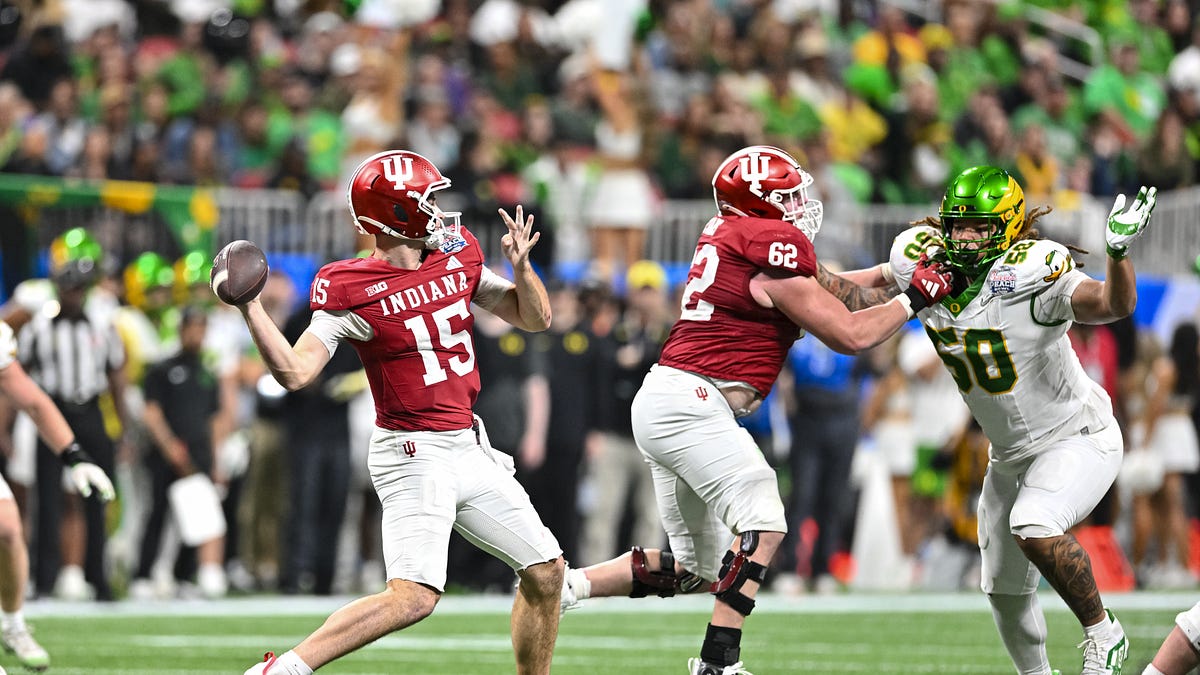
Fernando Mendoza of the Indiana Hoosiers throws against the Oregon Ducks during the fourth quarter in the CFP Semifinal Chick-fil-A Peach Bowl at Mercedes-Benz Stadium on January 9, 2026. (CFP/Getty Images)

One of the most compelling sales pitches for the new(ish) expanded College Football Playoff, now in its second season of existence, was that it offered more teams chances to prove their worth on the field, rather than in computer formulae or the backrooms of the sport’s halls of power. And with apologies to notable snubs like Notre Dame, that’s mostly been the case. Eighth-seeded Ohio State fought through the strongest opponents of any modern champion last year, while next Monday’s championship game will pit undefeated Indiana — who might have a case as the greatest champ ever — against No. 10 seed Miami, who earned every bit of their way to play the title game at their home stadium.

The price for all of that, however, was adding to the disoriented and discontented feeling that generally pervades the sport right now.

Last week, The Athletic conducted a “vibe-check” poll of college football fans, asking how they felt about the sport. And the results were not exactly pretty. Out of more than 12,000 voters, roughly 56 percent said they did not like the state of college football at the moment because “it’s a mess” — more than two-and-a-half as many respondents who said they liked the sport because “the games are great”:

To be clear, I suspect the majority of that comes from the off-field chaos — from money-chasing coaches like Lane Kiffin to the sense that NIL and the transfer portal have fundamentally turned college football into a completely different sport than it used to be. (A viewpoint with which I sympathize, though the upside has been to allow non-traditional powers inject the sport with much-needed parity.)

But other changes have plunged the sport still deeper into the uncanny valley between its amateur past and an increasingly professionalized future. I wrote last month about the toll the new playoff was taking on the last remaining vestiges of the classic bowl system, and this time a year ago I noted how absurdly long and drawn-out bowl season was in the age of the expanded CFP:

Just like last season, this year’s title game will take place a full 38 days after the beginning of bowl season — and 32 days since the opening game of the playoff itself. For comparison’s sake, pre-playoff bowl season used to span an average of 19.1 days, and the old four-team playoff lasted an average of 10.9 days from beginning to end. Now we will have a gap longer than that simply between Miami and Indiana’s semifinal victories at the end of last week and the title game a week from tonight.

If that (and really the whole thing in general) feels weird and long, it might be because we’re still thinking of things in college terms — when, like everything else in the sport right now, we probably should be putting it in pro terms instead. Here’s a comparison between various different formats (plus March Madness, thrown in for fun) when it comes to their average days until the championship at each round of the playoffs:

The 12-team college playoff has taken slightly longer (31.8 days) to get to the championship than the 14-team NFL playoffs (29.2). But generally, the cadence matches pretty closely, right down to the double-digit day gap between the semifinals and final. (Conversely, it would be a lot to ask football players to turn around within a few days and play the championship, like they do in basketball’s Final Four.)

So, then, what makes the NFL’s postseason rhythm feel so much more normal than college football’s? Well, in addition to the novelty of the college playoff even having this many teams and rounds, the NFL gets to muscle college off of the premium days for playoff scheduling. As Club Sportico’s Eben Novy-Williams notes here, the odd timing of the CFP’s biggest games is mainly a byproduct of the NFL’s dominance of the January calendar.

While college football “owns” Saturdays in the fall, thanks to protections in the 1961 Sports Broadcasting Act, those safeguards expire in mid-December, freeing the NFL to schedule late regular season and playoff games on Saturdays and Sundays. And rather than going head-to-head with the NFL postseason, the College Football Playoff and its TV partners must push marquee games to weekday nights where they can be the biggest event on the schedule. In their current formats, nearly 92 percent of NFL playoff games have been on weekends, while only 9 percent of college playoff games can say the same. (Many more have been on random-feeling days like Tuesday, Wednesday, Thursday and especially Friday.)

That tradeoff reflects a broader paradox for modern college sports: What makes college football special is its tradition and atmosphere — but what makes it valuable is television. And as the NFL continues to broaden its reach across more days of the year and college football continues to expand its playoff bracket, the latter increasingly finds itself chasing whatever visibility it can find, wherever it can be found. As a result, college football is now no longer the biggest thing on the calendar when its games matter the most.

That sensation, as much as any, is what fans can’t quite shake — even as the cream rises to the top more than ever and the football itself can be plenty exciting (when Indiana isn’t blowing the doors off everyone, that is). This no longer feels quite like the sport we used to organize our lives around, and the weirdo cadence of the playoff schedule is one of the most glaring signs of that shift. That doesn’t mean the expanded playoff was a mistake, but it does mean college football is asking us to recalibrate how we experience it: Following a game that looks like a pro league in more and more ways, even as it still demands to be loved like a campus tradition.

Filed under: College Football, Football


Link

Continue Reading

NIL

Demond Williams Jr. stays at Washington: Did revenue share contract work as intended?

Published

on


It was quite a week for the Washington Huskies and quarterback Demond Williams Jr.

In the span of a few days, Williams went from signing a new contract to stay with Washington for the 2026 season to announcing his intention to enter the transfer portal. Two days later, he said he will, in fact, remain with the Huskies “after thoughtful reflection.”

A potential standoff between a star quarterback and a Big Ten program lasted 48 hours, but it still raised pertinent questions about the enforceability of revenue-sharing agreements that have become a predominant feature of major college football. Williams’ new contract with Washington will pay him roughly $4 million, a deal Washington made clear it had no intention of releasing Williams from.

It’s the latest saga in this new-ish era of college sports, one reshaped by legal battles and schools directly signing athletes to contracts. Universities are permitted to distribute up to $20.5 million in revenue sharing to athletes across all sports for the 2025-26 school year, a result of the multi-billion-dollar antitrust settlement agreed to by the NCAA and power conferences.

The disturbance at Washington was sorted out before things fully escalated, but it wasn’t the first contract dispute involving a college athlete, and it won’t be the last. Let’s examine the nuances of these revenue-sharing deals — and potential fallout when others inevitably go pear-shaped.

If a player breaches a revenue-sharing agreement… ?

The prevailing question for many in the industry is whether these revenue-sharing deals are actually worth the paper they’re printed on. If an athlete can break a deal and transfer to another school — presumably for more money or better circumstances — what purpose do these contracts actually serve?

“They’re not worthless,” said lawyer Cal Stein, who advises colleges and athletes on revenue sharing, “but they are very difficult to enforce.”

From a legal perspective, that difficulty is due to the blurred shadowland college football operates in, compensating athletes like pay-for-play employees without lawfully designating them as such. Revenue-sharing contracts are not employment contracts because college athletes are not employees — a designation the NCAA and member schools have resisted because of the added costs and responsibilities that would come with it. Think of these deals more like independent contractor agreements, a distinction that might not mean much to the average person, but is significant in terms of how contracts hold up under legal scrutiny.

“If push comes to shove and a judge takes a look at them, I think it will be interesting what that judge’s determination is,” said lawyer Darren Heitner, who specializes in sports law.

Last Thursday, after The Athletic spoke with him for this article, Heitner announced that he had been retained as legal counsel for Williams.

Many universities use a template contract crafted by the conference office, with each one adjusted according to state law and as each school sees fit. Commonly referred to as “licensing agreements” — because they license an athlete’s name, image and likeness rights to a university — it essentially allows a school to market the contracted athlete, often with exclusivity language.

These agreements increasingly feature early termination language as well, also known as buyout clauses, which stipulate dollars an athlete is responsible for redeeming to the university if they breach the contract before the end of the term. It’s usually a specified percentage or amount, such as the amount remaining on the deal once it is broken. This is similar to coaching buyouts, when a coach is hired away and owes money to the previous institution in the form of liquidated damages.

“The biggest difficulty is coming up with damages” — meaning a dollar amount — “that a judge or arbitrator will accept,” Stein said of revenue-sharing buyouts. “How can you quantify the financial harm a university will suffer based on a single player playing somewhere else? I could put on my creative lawyer hat and come up with some ideas, but it would be really hard to prove.”

Regardless, buyouts are becoming more common and can make for more efficient conflict resolution. Multiple power conference general managers tell The Athletic they have either signed players who had buyouts with their previous school or lost players with buyouts to other teams. Most are handled without public incident or additional legal action.

“It’s not prevalent, but it’s happening,” Heitner said. “Typically, there is a negotiation where a school starts at a specific number and then negotiates down, if the player has good counsel.”

One noteworthy wrinkle is that if a player with a buyout transfers to another school, the dollar amount of that buyout counts against the new school’s revenue-sharing cap for that fiscal year. That’s according to enforcement guidelines from the College Sports Commission, which oversees revenue sharing and settlement terms. Typically, a player’s deal with the new school will cover or account for the buyout in some fashion, but the new school is not required to directly pay the buyout fee to the previous school.

The Athletic reported last Friday that Brendan Sorsby, the top transfer quarterback of the current portal window, transferred to Texas Tech with one season remaining on a multi-year revenue-sharing agreement with Cincinnati that includes a $1 million buyout clause. It is not yet clear how Sorsby’s buyout will be resolved.

What happened with Williams and Washington?

We don’t know all the details of Williams’ initial desire to transfer, or of his swift change of heart to return to Washington. The specifics of his deal with the Huskies have not been made public, either. His agent publicly dropped him Thursday for “philosophical differences.” But we can glean that a potential buyout may have factored into the final decision.

Yahoo Sports reported Thursday evening that, if he left Washington, Williams would have owed the Huskies the value of his new contract (roughly $4 million), and if he transferred to a new school, that new school would have to count the $4 million against its own $20.5 million revenue-sharing cap for the 2025-26 fiscal year.

As The Athletic reported, this reflects the buyout language in the Big Ten template contract. Multiple versions of the template, reviewed by The Athletic, state that if a player intends to transfer before the end of an agreement, the athlete would owe the remaining amount left to be paid on the contract, unless the school negotiates a different buyout amount.

It’s possible a legal challenge would have delivered a different verdict or required a lesser buyout figure. But despite Williams retaining a lawyer, this situation is not headed to court. That itself could be a revealing outcome: In the end, the contract may have been strong enough to deter Williams from breaking it. The fact that he signed his deal less than a week prior probably bolstered that sentiment.

“If it’s a clear agreement that was negotiated by both parties, the damages are reasonable, those are generally enforceable,” said lawyer Paia LaPalombara, a former college athletics administrator who advises schools, conferences and athletes on revenue sharing. “A lot of it depends on how things are worded within the agreement.”

Do schools have recourse?

It’s common for revenue-sharing contracts to include language prohibiting a player from entering the transfer portal or another school from using their NIL rights, and there were reports that Williams’ deal with Washington includes similar stipulations. But those only apply if the contract is in good standing. No school will keep paying an athlete who doesn’t play for them, and there’s no contract that can prevent a player from quitting the team.

“You can’t force someone to stay where they are. There is a freedom aspect in an agreement that allows an individual to terminate that agreement,” said LaPalombara. “Can they terminate it for free? No, not necessarily. But you have the right to get out of an agreement. And if there is not language that allows for it, that can be taken to a court.”

If a school believes a contract has been breached and the agreement contains early-termination language, the simplest resolution is to pursue the buyout payment, whether in full or at a negotiated rate.

If a buyout isn’t feasible for whatever reason, a school can take a player to court or arbitration, which is a private form of mediation. Some schools and administrators, however, might be hesitant of how a legal battle with a college athlete will play publicly, even if there is confidence in the legal argument.

“College athletics is a very relational business,” said LaPalombara. “It’s less of a legal challenge and more of an optics challenge for some institutions.”

Though that dynamic could be shifting as well.

How existing disputes were handled

Late last year, the University of Georgia took former defensive end Damon Wilson II to court, with Georgia seeking arbitration and $390,000 in damages, claiming Wilson broke an agreement with Georgia’s NIL collective, a third-party group affiliated with the school, prior to the start of revenue sharing. The arbitration request was filed in the state of Georgia — contract law is traditionally a state matter — and Wilson, who transferred to Missouri for the 2025 season, later filed suit in the state of Missouri against Georgia’s athletic association, seeking his own damages. It’s believed to be the first time a player and school have taken each other to court over an NIL dispute, and both cases are ongoing. Wilson recently re-entered the portal.

Last winter, then-Wisconsin defensive back and South Florida native Xavier Lucas attempted to enter the transfer portal. At the time, Wisconsin claimed that Lucas had a “binding agreement” with the university. The university, with the support of the Big Ten, refused to enter Lucas into the portal as a result, even though it could violate NCAA transfer bylaws.

Lucas later un-enrolled as a student from Wisconsin and enrolled at Miami, where he is playing football for a team that plays for the national title next week. There were no NCAA or eligibility rules preventing Lucas from transferring without utilizing the portal.

“There is nothing improper about a student un-enrolling from one school and enrolling at another,” said Heitner, who represented Lucas. “My inclination is that no judge is going to [prohibit] an athlete from changing schools.”

In June, the University of Wisconsin sued the University of Miami for tortious interference, claiming Miami intentionally interfered with a contract between Wisconsin and Lucas. That case is also ongoing.

The NCAA has its own rules against tampering, but it’s so rampant in college sports that it’s become almost impossible for the NCAA to penalize it. But if a school believes that another school illegally tampered with one of its athletes in an attempt to break a revenue-sharing contract — and the first school believes it can prove that in court — it could attempt the tortious interference route.

What’s next?

Was the potential standoff at Washington a harbinger or an outlier?

It might be the shortest contract dispute we ever see, but the turbulence with Williams could be an indicator of future conflicts. Few would argue that this era of revenue sharing and NIL has done much to stabilize college sports, even if most agree that athletes deserve to be compensated.

But in the meantime, schools and conferences will continue to fortify the language in revenue-sharing contracts, and athletes with the most leverage — or legal horsepower — will continue to test those limits. Until the next saga arrives.




Link

Continue Reading

NIL

Ty Simpson reportedly receiving NIL offers to stay in college

Published

on


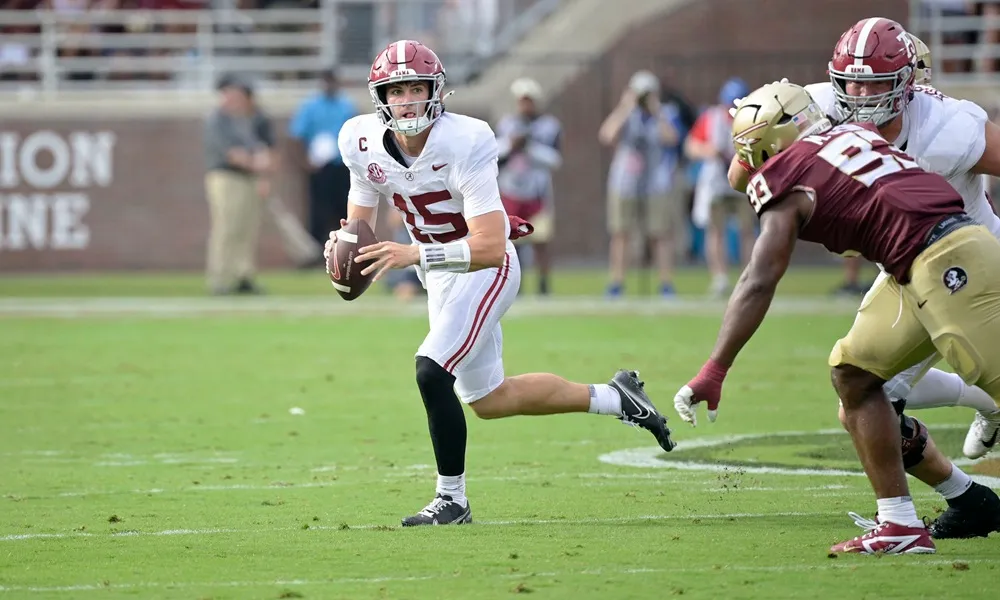
Aug 30, 2025; Tallahassee, Florida, USA; Alabama Crimson Tide quarterback Ty Simpson (15) looks to pass the ball against the Florida State Seminoles during the second half at Doak S. Campbell Stadium. Mandatory Credit: Melina Myers-Imagn Images

Ty Simpson is receiving NIL offers to stay in college and transfer to another program ahead of Wednesday’s deadline to declare for the NFL Draft, according to AL.com. 

Simpson has reportedly been offered NIL deals worth $4 million and higher with one deal having a chance to be worth $6.5 million, but he has already announced his intentions to enter the 2026 NFL Draft.

The Tennessee native started at quarterback for the Tide in 2025 after waiting three years for an opportunity to earn the role. He lead the Crimson Tide to the second round of the College Football Playoff in his first year as a starter before having to leave the Rose Bowl with an injury.

Simpson finished his first year as the Tide’s starting quarterback with 3,567 passing yards and 28 passing touchdowns.

Carson Beck was the latest high-profile college quarterback to back out of plans to enter the NFL Draft and take his talents to another school with a huge NIL Deal.

No signs point to Simpson doing the same at the moment.


Link

Continue Reading

NIL

$2 million QB could redshirt next college football season amid transfer portal entry

Published

on


Under a week remains in the window for college football players to enter the NCAA transfer portal in the 2026 offseason. The portal officially opened on Jan. 2 and will remain open until Friday.

Over 4,000 players at all levels of college football have decided to enter the transfer portal in the last month. Some of the most notable entries into the portal include Power Four quarterbacks seeking better situations at their next school.

One of the first quarterbacks to enter the NCAA transfer portal in the offseason was former Nebraska signal-caller Dylan Raiola. He will have two seasons of eligibility remaining at his second school.

The 6-foot-3, 230-pounder was recruited to Nebraska by Matt Rhule as a five-star prospect in the Cornhuskers’ 2024 signing class. He passed for 2,819 yards, 13 touchdowns and 11 interceptions and led Nebraska to its first bowl game in eight seasons and first bowl victory since its win over UCLA in the 2015 Foster Farms Bowl.

Raiola broke his fibula against USC, limiting his season to just nine games. He passed for 2,000 yards, 18 touchdowns and six interceptions in his last year with Nebraska. Raiola announced his intent to enter the transfer portal on Dec. 15, 2025.

While many quarterbacks who entered the NCAA transfer portal were either clearly linked to another Power Five program or had already committed to one, Raiola’s portal journey has been much quieter despite his early entry. Some of the prospects for Raiola in 2026 are less conventional than those of most quarterbacks who enter the transfer portal.

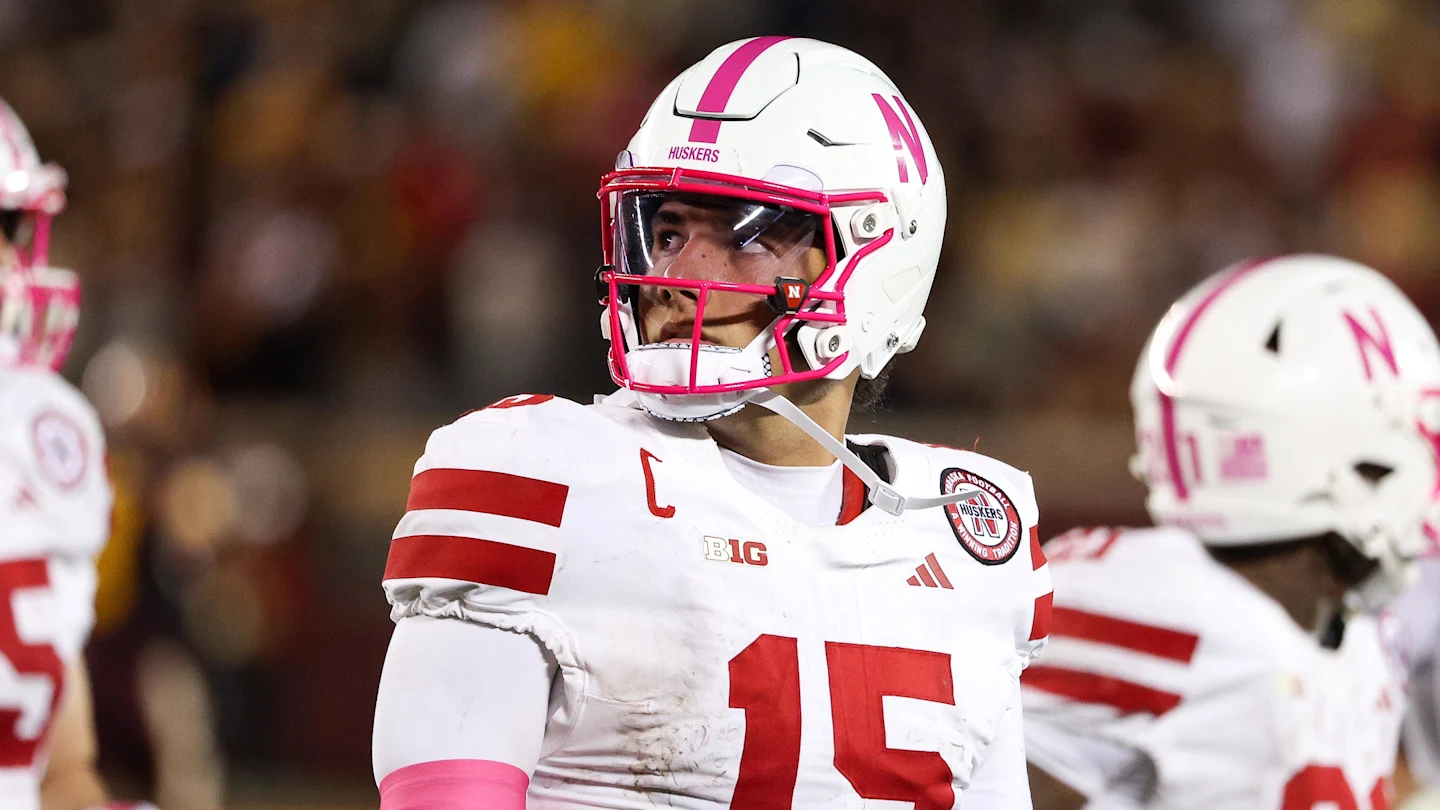
Dylan Raiola throws the ball against Northwestern.

Nebraska Cornhuskers quarterback Dylan Raiola (15) throws a pass against the Northwestern Wildcats | Dylan Widger-Imagn Images

Pete Nakos of On3 reported that one possible option for Raiola in 2026 would be to transfer to Oregon and that if Dante Moore returned to the Ducks, Raiola would still transfer there and use a redshirt.

“Sources have indicated that Raiola is in play to join the Oregon roster regardless of Dante Moore’s NFL draft decision,” Nakos said. “If Moore decided to return to school, Raiola could redshirt a season and be in line to start in 2027.”

Moore is currently projecting as the second best quarterback in the 2026 NFL draft behind Fernando Mendoza of Indiana. As it relates to Raiola, Moore also transferred to Oregon and redshirted a season while Dillon Gabriel started for the Ducks in 2024.

If Moore stays at Oregon and Raiola transfers there, it would resemble that of a transfer prior to the portal’s inception. College athletes used to be required to sit out one full season after transferring from one school to another, but that requirement ended after the portal’s launch.


Link

Continue Reading

NIL

Report: Ty Simpson drawing top-dollar NIL offers to transfer after NFL Draft declaration

Published

on


Is Ty Simpson this year’s Carson Beck? That’s a question the talented Alabama junior quarterback could be entertaining as multiple QB-needy programs reportedly try to sway him to transfer rather than jump to the NFL.

Beck famously declared for the 2025 NFL Draft last January before reversing course days later and transferring to Miami, where he’s led the 10th-ranked Hurricanes to the 2026 College Football Playoff national championship game Dec. 19 against No. 1 Indiana.

Advertisement

Simpson formally announced his intentions to enter the 2026 NFL Draft last Wednesday. But that move may be on hold after the Crimson Tide’s 2025 starter — through third-parties — has reportedly received high-dollar NIL offers from other Power Four programs, including one particular deal that could total as much as $6.5 million, according to AL.com. That reportedly includes three other SEC programs that are offering at least $4 million for Simpson’s services in 2026, per AL.com.

Prior to his draft declaration last week, On3 insider Pete Nakos reported Simpson was evaluating all his options regarding his future per his agent, Peter Webb of QB Reps. That potentially included returning to Alabama, declaring for the NFL Draft, or entering the NCAA Transfer Portal.

“No decisions have been made about Ty declaring for the draft at this point, and he is still evaluating everything with his family and close advisors,” Webb told Nakos.

Simpson has long been considered a potential first-round lock, and is currently projected to be the third quarterback off the board according to ESPN draft expert Mel Kiper Jr., behind only Indiana‘s Fernando Mendoza and Oregon’s Dante Moore, neither of whom have declared for the draft yet.

Advertisement

Despite leaving Alabama’s 38-3 quarterfinal loss to Indiana early with a cracked rib, Simpson capped a strong redshirt junior season in Tuscaloosa by throwing for 3,567 yards and 28 touchdowns to just five interceptions in his first year as the Tide’s QB1. That included powering Alabama to an 11-4 record and a first-round victory over Oklahoma in the 2025 College Football Playoffs.

This news about Simpson comes two days after his two backups — redshirt sophomore Austin Mack and five-star true freshman Keelon Russell — both negotiated new deals with Alabama’s team collective, Yea Alabama, to return for the 2026 season.

The 6-foot-6 and 235-pound Mack saw the first significant action of his Crimson Tide career on New Year’s Eve when he replaced an injured Simpson in the second half of a 38-3 loss to No. 1 Indiana in the Rose Bowl national quarterfinal.


Link

Continue Reading

NIL

Former Auburn WR Cam Coleman commits to Texas

Published

on


Former Auburn wide receiver Cam Coleman committed to Texas out of the NCAA transfer portal, he announced via Instagram on Sunday. The Longhorns were one of three visits by the wideout.

Coleman had a large role for the Tigers’ offense over the last two years. In 2025, Coleman had 56 catches for 708 yards, five touchdowns and 12.6 yards per catch. In two seasons, Coleman has 93 catches for 1,306 yards, 13 touchdowns and 14 yards per catch.

Coleman came to Auburn as one of the program’s highest-rated recruits in recent history. Largely, he lived up to that billing as across two seasons, he hauled in 84 passes for 1,215 yards and 12 touchdowns.

As a high school prospect, Coleman was a Five-Star Plus+ recruit in the 2024 class. According to the Rivals Industry Ranking, an equally weighted average that utilizes all three major recruiting services, he was the nation’s No. 4 overall prospect and No. 2 wide receiver.

He signed with the Tigers over offers from Clemson, Texas A&M, Alabama, LSU and dozens of other major programs. Coleman was committed to the Aggies for nearly five months before they fired head coach Jimbo Fisher, and as a result, Coleman’s future position coach Dameyune Craig. He flipped his pledge from A&M to Auburn on December 1, 2023 — marking a massive recruiting win for Hugh Freeze.

To keep up with the latest players on the move, check out On3’s Transfer Portal wire. The On3 Transfer Portal Instagram account and Twitter account are excellent resources to stay up to date with the latest moves.

Texas is coming off a season where they just missed out on the College Football Playoff. The Longhorns finished 10-3 by beating Michigan 41-27 in the Citrus Bowl.

Led by QB Arch Manning’s second half of the season development, Texas got on a hot streak. That included a win over 11-0 Texas A&M to end the season. Coleman adds to a dynamic offensive approach under Steve Sarkisian next fall.


Link

Continue Reading

Most Viewed Posts

Trending