Connect with us
https://yoursportsnation.com/wp-content/uploads/2025/07/call-to-1.png

Sports

SBJ Unpacks

Published

on

SBJ Unpacks

Olympic spectators taking in speedskating and figure skating at the 2002 Winter Games in Salt Lake City did so at the home of the Utah Jazz. For those two weeks, however, that arena was not officially known as Delta Center because International Olympic Committee rules prevented the naming-rights holder, which had been in place there since 1991, from utilizing those rights under its long-standing, clean-venue policy.

With interior signage removed or covered up, the venue became the Salt Lake Ice Center for the two weeks of the Games.

Come 2028, though, there could be a venue named Delta Center in Los Angeles after organizers announced this month that they would sell naming rights to venues in a first for the movement.

Whether the airline wants to secure the rights to a temporary venue — it will have to wait in line behind the 11 current TOP sponsors — remains to be seen. That it can do so at all represents a revolution in the Olympic movement, which has long kept the commercialization of the Games outside of the places they’re actually contested.

The change gives sponsors something more tangible tied to the Games and organizers — a previously nonexistent revenue stream. Traditionally, naming rights deals across sports include language prohibiting use of corporate names and logos during the Olympics and Paralympics.

“This is a natural evolution. I think it’s innovative. I think it’s unique to LA for a lot of reasons,” said longtime Olympic marketer Terrence Burns. “Every stadium in L.A. almost has a name on it anyway.

“It’s a win-win for everybody,” Burns added. “And I think it might be an example of a draconian rule from a long time ago that, frankly, may not have much value anymore. … You’ve got all those positives, what is the negative?”

“It’s a win-win for everybody. And I think it might be an example of a draconian rule from a long time ago that, frankly, may not have much value anymore. … You’ve got all those positives, what is the negative?”

—  Longtime Olympic marketer Terrence Burns

Aside from fears in some quarters that this marks another step in the commercialization of the Games, there aren’t many, especially for LA28 organizers tasked with funding the current $7.1 billion budget privately. They had been in talks with the IOC about the change, which was largely in place last year but not finalized until after it had its venue plans set.

“We’ve got to push all of the levers we can given the makeup of the way we fund these Games privately … and in doing so, it was a meaningful opportunity for an asset that companies in this country understand, value and want to buy,” said Chairman Casey Wasserman, who estimated that the price tag for naming rights could hit nine figures depending on location and venue.

That reality has caused U.S.-based Games to become innovators, in many regards, because they do not receive government funding.

A branding evolution

Even four decades on, the 1984 Games in Los Angeles remain renowned for revitalizing the movement, with Chairman Peter Ueberroth establishing a sponsorship model that would become foundational to the Games and generate a nearly $250 million surplus.

Los Angeles ’84 sponsors McDonald’s, the Southland Corporation (7-Eleven) and Thrifty underwrote the construction of venues — swimming at USC, the velodrome and the Los Angeles Tennis Center, respectively — and had their brands tied to events in the lead-up, but none was on those venues during the Games themselves.

The Atlanta Games in 1996 became the first to charge its tier-one sponsors the same as the global sponsors in the TOP program.

LA28 and the IOC both emphasized the change came, in part, because of a cultural acceptance of naming rights on venues. Indeed, partners of venues that will host Games events, such as SoFi (which will host swimming and co-host the opening ceremony) and Intuit (basketball) will have the first chance to acquire those rights during the Olympics and Paralympics. If they don’t want them, no other company can buy them. The Peacock Theater (boxing and weightlifting in the Olympics and goalball in the Parlalympics) will keep its name.

In addition to the revenue generated, the sale of naming rights at those permanent venues will result in operational cost savings for LA28 in not having to cover up those on and within the venue.

“This is such a big part of a sporting culture [in the U.S.], it’s accepted. It’s welcome. It’s everywhere,” said Ricardo Fort, founder of Sport by Fort Consulting and a longtime Visa and Coca-Cola executive. “So it would have been surprising if Brazil would have come with this idea back in 2016.”

Indeed, in 1996, the last time the U.S. hosted the Summer Games, only 38% (38 of 101) stadiums and arenas that housed teams in MLB, the NBA, the NFL and the NHL had naming-rights deals. Now that number is 95% (107 of 113), according to SBJ research.

Already, two of LA28’s founding sponsors, Honda and Comcast, have secured naming rights at venues that will host events — one existing venue (Honda Center, home of the Anaheim Ducks, which will host volleyball) and one temporary venue (squash, which will be held at the Comcast Squash Center at Universal Studios). LA28 will offer rights to the 19 remaining temporary venues first to TOP partners and then to its founding partners at its highest level of sponsorship. Delta is the only current top-tier sponsor without naming rights, and any new sponsors who want venue naming rights will have to come in at LA28’s highest level of sponsorship.

Beyond names on the venue, the rights could include wayfinding signage, tickets and Games-related media — such as maps and websites, as well as broadcast references.

Under a long-standing joint venture between LA28 and NBCUniversal, top-tier sponsors commit to a sponsorship and media buy. Wasserman put the price tag for venue naming rights at nine figures, though that could vary based on location and venue.

Of course, because this is a first-of-its-kind offer, adoption remains to be seen.

Fort said because of the nature of a TOP sponsorship, selecting one venue and one sport over others would be surprising. To Burns, it offers a visible promotion that might have more value, especially to TOP partners, than some of the things they can currently do.

“If I were a TOP partner, how much it costs to be a TOP partner, I would look at this as a very affordable, interesting and tangible way to extend my relationship with L.A.,” said Burns.

Michael Payne, the longtime former IOC marketing director, called the change “insignificant.”

“In the scheme of what is being sold, relative to the ring rights, the hospitality, the product showcasing and integration … having your name on one of 40 venues comes pretty low down the benefits list,” Payne said.

How the initiative performs doesn’t just affect LA28’s bottom line but the potential future of this in the movement, as well.

The Olympic Charter has long maintained a clean-venue policy, but the creep to greater commercialization has accelerated in recent quads.

Starting in the Tokyo Games, the IOC started displaying TOP sponsors in the backdrops at press conferences and had them in the mixed zone in Paris last year. Sponsor integration has existed for years, from Omega timing to BMW and Toyota having remote cars that deliver throwing equipment back to field athletes. Athletes took selfies from atop the podium in Paris with a Samsung phone and domestic sponsor LVMH had an extended video in the opening ceremony, both of which have continued to cause consternation within the movement.

The naming rights are the next step.

“For us, it’s also a way to demonstrate that the Olympic program is agile, is able to pivot and to take pragmatic ways when it is relevant,” said Anne-Sophie Voumard, managing director of IOC Television & Marketing Services.

“That principle doesn’t change. What evolves is the way we interpret it, or we need the pragmatic approach that we’ve taken with it and this is what took time for us to discuss with L.A.”

Voumard said sponsors are looking for ways to support the Games more meaningfully, and the acceptance of named venues in the United States made sense for this decision. She said the IOC could work with organizing committees to incorporate these rights in future agreements for TOP sponsors.

LA28 and the IOC have stressed that the change is a pilot program that is not guaranteed for future hosts. But it’s hard not to see Salt Lake City (2034), to be sure, and even the likes of Brisbane (2032) and other future hosts lobbying for the IOC’s approval to do the same.

“If you look at the road map of the host cities where we’re going to, those are also very sophisticated markets in the future,” Voumard said. “So if the pilot is successful, there’s no reason why we wouldn’t continue to expand this opportunity.”

Beyond the names that will appear on the tops of venues for a month in the summer of 2028, that might be another legacy of how a domestic Games has changed the movement. Now that LA28 is selling naming rights, what once was unheard of could become a line item in sponsorship budgets.

“It could be a call to arms that suddenly everybody’s got to get a piece of this,” said longtime Olympic sponsorship executive Rob Prazmark. “It’ll just change the game. Everybody will do it.”

Continue Reading
Click to comment

Leave a Reply

Your email address will not be published. Required fields are marked *

Sports

Two School Records Fall for Women’s Track & Field in VIrginia

Published

on


WINCHESTER, Va. – After a week in Florida leading into the spring semester, the Franklin & Marshall’s women’s track & field team competed at Shenandoah’s Kaye & JJ Smith Invitational. The Diplomats got the January portion of their schedule off to a great start with a pair of school records, with four other marks that rank in the top 10 in program history.

Tara Silverman broke the school record in the 3,000 meters that was formerly held by All-American and F&M Hall of Famer Sheena Crawley ’13. Silverman finished in a time of 10:19.87. Teammates Annalise Kauffman (11:01.19) and Georgeia Hodgson (11:36.98) finished second and sixth in that same event.

Lauren Dunnigan once again broke her own school record in the 60 meter dash as she finished with a time of 7.75 seconds during the finals of that event. That is currently the second-fastest time in the Centennial Conference this season. Dunnigan was also the individual champion in the 200 meter dash as her time of 26.56 seconds was the second-fastest in school history. Dunnigan capped her day with a time of 9.15 seconds to take first (her third event title of the day) in the 60 meter hurdles.

The Diplomats finished with five individual titles on Sunday as Jordyn Collie won the 400 meters with a time of 1:05.42. Her performance highlighted seven Diplomats in the top 10 of that event, as Avery Canady (1:06.33) and Abby Bachman (1:06.52) took the silver and bronze positions. Collie was also the team’s top finish in the 800 meters (2:33.68), with Bachman (2:44.52) and Sophia Bloom (2:53.15) each turning in top 10 individual finishes.

Amanda Imhauser and Hayden Adams both had busy days in their return to competition. Imhauser was third in the 60 meter hurdles (10.24) and long jump (4.84m), sixth in the high hump (1.35m) and shot put (9.30m), and seventh in the 200 meters (29.14). Adams took third in the pole vault as she cleared 3.20 meters to rank second in school history. She added a fifth-place showing in the high jump (1.38m). Max McCoy led the Diplomats in the both throwing events as she took third in the shot put (11.13m) and fourth in the weight throw (12.07m). Both of those marks were top 10 performances in school history.

Women’s track & field will return to competition this Saturday, January 17 when the team travels to Catholic’s Cardinal Classic.

Franklin & Marshall Event Winners / Top 10 Performances

60 Meters

1. Lauren Dunning (7.75) – school record

200 Meters

1. Lauren Dunnigan (26.56) – second in school history

3,000 Meters

1. Tara Silverman (10:19.87) – school record

Pole Vault

3. Hayden Adams (3.20m) – second in school history

Shot Put

3. Max McCoy (11.13m) – ninth in school history


Link

Continue Reading

Sports

Ball State Finishes Weekend Victorious Versus NJIT

Published

on


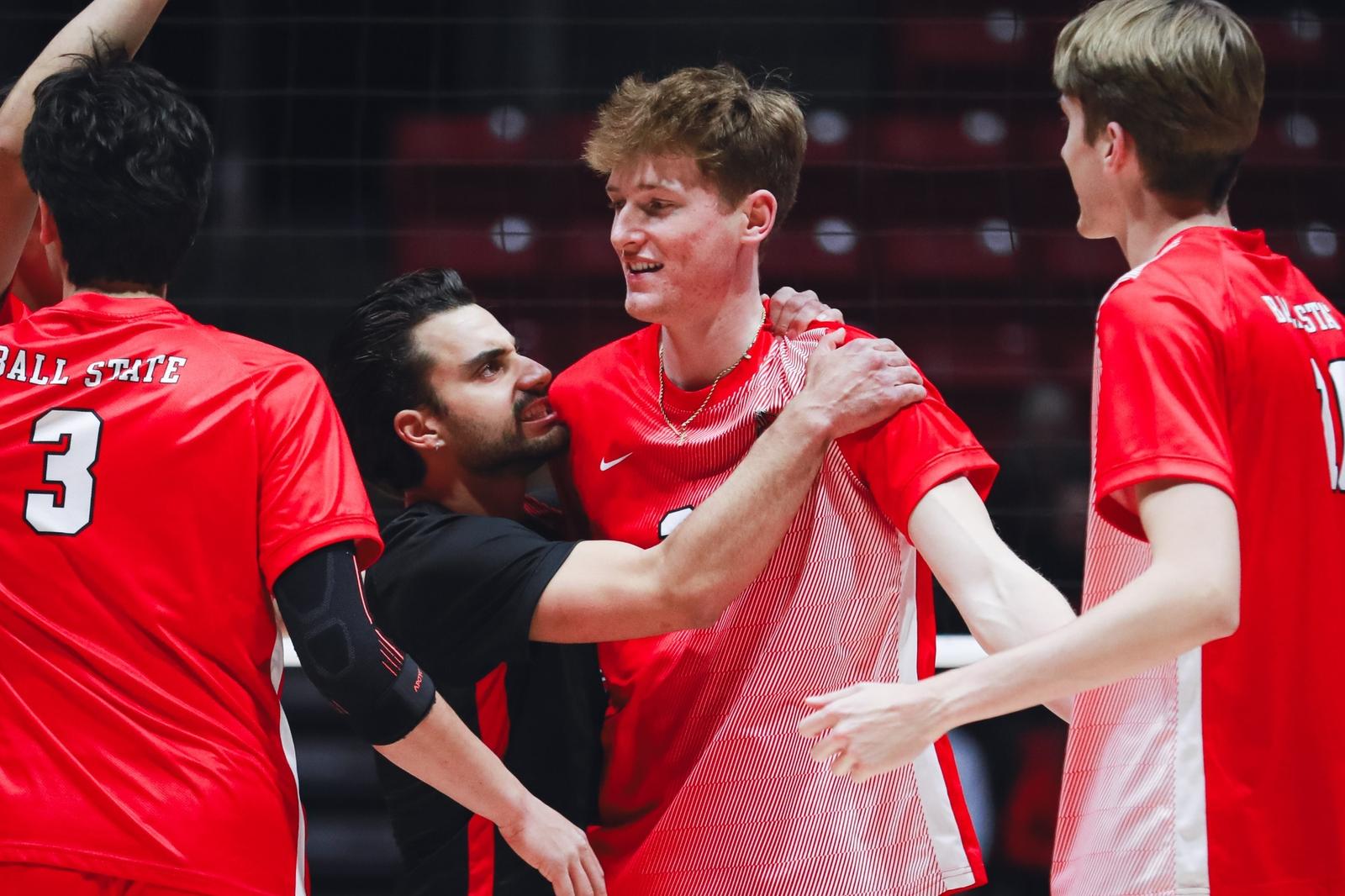
MUNCIE, Ind. – The Ball State men’s volleyball team completed a successful weekend at Worthen Arena, defeating NJIT in four sets (25-13, 21-25, 25-12, 25-15) Saturday evening.

The Cardinals (3-0, 0-0 MIVA) limited the Highlanders (0-4, 0-0 EIVA) to a 0.80 hitting clip while averaging .391 themselves, along with a team block total of 15.5 compared to NJIT’s 3. The evening saw just one lead change, three points into the fourth set, as NJIT recorded an attack error at the end of a Patrick Rogers serve.

Rogers led the way as he matched his kill total from the evening prior, tallying 16 while hitting .522, along with six digs, two assists and a team-leading three aces. Ryan Louis was credited with 11 kills on a .318 clip, two aces, four digs and a career-high seven block assists. Wil Basilio earned nine kills, three digs and four block assists.

Ball State’s defense halted the Highlanders at the net, aided by Jacob Surette who recorded a career-best nine block assists, Louis’ seven and Braydon Savitski-Lynde’s five. Savitski-Lynde also completed five kills while hitting .522. Freshman libero Adir Ben Shloosh led the men with eight digs.

Lucas Machado’s hustle was on full display throughout the match, dishing out 37 assists with three kills.  

The Cardinals led by as much as 14 in the opening set, highlighted by an 8-0 run which brought them to set-point. After three-straight points by the Highlanders, Rogers punched a kill to finish it, capping off a set that saw Ball State hit an efficient .688 clip.

Set two was a different story, as the score tied seven times until NJIT’s late momentum pushed them just enough to claim the set.

The men’s squad was unfazed, easily taking sets three and four. Rogers swatted nine kills between the two sets, and claimed two of his three aces in set four, with one of those bringing the Cardinals to match point. Surette’s four block assists were also instrumental, including back-to-back blocks assists by him and Basilio.

In his first career appearance with the Cardinals, sophomore Jason Harris put the exclamation point on the weekend with the final kill of the match, finishing with two.

The Ball State men’s volleyball program ride this momentum into next week when it travels to Phoenix, Ariz. for the First Point Collegiate Challenge Tournament at the Phoenix Convention Center. The men square off against No. 1 UCLA Jan. 17 at 7 p.m. ET, followed by No. 9 Stanford Jan. 18 at 4 p.m. ET.


Link

Continue Reading

Sports

Gauchos Down Harvard to Start Season 3-0

Published

on


SANTA BARBARA, Calif. – The UC Santa Barbara Men’s Volleyball team defeated Harvard 3-1 Saturday night to close out the final round of the 61st ASICS Invitational. The Gauchos open the 2026 season undefeated, having also beaten Kentucky State and Maryville earlier in the tournament. 

HOW IT HAPPENED

Harvard opened the gate with a first-set win, taking it 25-22.  The Gauchos hit just 0.074 in the first and were unable to collapse Harvard’s early lead. 

The Gauchos finally clicked during the second, bringing it home 25-18. Santa Barbara and Harvard stayed even through the second, with neither team managing to gain more than a three-point lead until the set’s finale. At 19-18, Santa Barbara went on a six-point scoring run that brought them directly to victory. 

Santa Barbara shone in the third, capturing a 25-14 success for their cleanest win of the match. The Gauchos made off with a 7-2 head start and stayed at least three points ahead at all times. Senior Owen Loncar sealed the set with a service ace.

Finally, the Gauchos closed out the match by winning the fourth and final set 25-19. They held a slight initial lead before springing multiple points ahead of the Crimson. 

Santa Barbara revived their hitting percentage after the grim first set, hitting 57% in the remaining three. As a team, they dug 42 digs and made ten aces.

George Bruening put on a hitting masterclass, annihilating 26 kills and hitting .455. He tied his career record in kills and made ten in the fourth set alone. Ben Pearson delivered the match’s second highest kill count with nine, while Riggs Guy lasered eight. Guy also placed a career-best six assists. 

Cole Schobel achieved all over the court, popping 42 assists,  five kills, and a block. He also led the match in service aces with four, hit .714, and tied Jason Walmer for the match-high dig count at nine. Joe Wallace followed with seven digs and freshman Dylan Pilkvist made a team leading 5 block assists


UP NEXT

The Gauchos will continue home play for their next match, hosting The Master’s University on Friday, Jan. 16 at 7:00 p.m. in the Thunderdome. 


Link

Continue Reading

Sports

Men’s volleyball tested in 3-1 season opener against Jessup – The UCSD Guardian

Published

on


UC San Diego men’s volleyball (1-0, 0-0 Big West) kicked off its 2026 campaign with a hard-fought 3-1 victory over Jessup (0-1, 0-0 MPSF) on Tuesday, Jan. 6, at LionTree Arena.

The key to the Tritons’ victory was the offensive firepower of junior outside hitter Josh Ewert, who racked up a game-high 17 kills, including the final point in two of the four sets. Junior outside hitter Leo Pravednikov added 15 kills of his own.

The first set showcased opening-game jitters with both sides committing a multitude of attacking errors. Ewert came to play from the first serve, racking up five kills in the opening set alone. However, Jessup had its own go-to guy — senior middle blocker Clement Osahon Jr. caused major issues for the Tritons early on. By the end of the set, UCSD shook off its early errors and created some separation. Fittingly, Ewert scored the set point, a kill that pushed his team over the line to clinch the first set with a score of 25-20.

The second set started sloppily, but a vicious kill from Triton junior middle blocker Leo Wiemelt ignited a spark. A sneaky dump set from senior setter John Luers extended the Tritons’ lead to six. Yet, UCSD was plagued by service errors following strong kills, allowing Jessup to remain on the Tritons’ heels.

“[The offense] is so potent at times, and then, at times, we struggled with the blockers and getting the ball in the court consistently,” head coach Brad Rostratter said in a postgame interview with The UCSD Guardian. “So, our strengths can be our weaknesses.”

Ewert led the Tritons to set point after a crafty tool of the Warriors’ block. Despite a final 3-point push from Jessup, a powerful kill from senior middle blocker Peter Selcho drove UCSD over the line 25-22.

Jessup refused to go quietly in the third. After a couple of early kills from Ewert, the Warriors found their momentum. UCSD responded with a block from Wiemelt and an emphatic kill and ace from junior outside hitter Sebastiano Sani. However, a solo 3-0 run from Jessup’s senior opposite hitter Carter Depue tied the game at 18. Late Triton errors ultimately allowed Jessup to build its lead and eventually take the set 25-22.

“Their middles did a really good job of committing, slowing down our middles, and touching and defending the middle of the court,” Rostratter said. “It’s something they did really, really well. And we struggled; it took a little bit of adjusting to their higher quick set.”

The Tritons decisively regained control in the fourth set, and Ewert set the tone with back-to-back service aces. UCSD went on an 8-2 run, which included a vicious kill from Selcho and another ace from Ewert. For the first time in the match, the Tritons had a comfortable lead at 18-11. Ewert sent one last back-row kill past the unresponsive Warriors to take the fourth set 25-20 for UCSD.

The Tritons stayed hot with a 3-1 home victory against Daemen on Friday, Jan. 9. UCSD will finish off its three-game homestand against Rockhurst on Sunday, Jan. 11, before heading to Utah to face BYU in a two-game road trip from Jan. 16-17.


Link

Continue Reading

Sports

Purdue Fort Wayne Bests (RV) NJIT in Five-Set Bout

Published

on


FORT WAYNE, Ind. – The Purdue Fort Wayne men’s volleyball team collected their first win of the season on Sunday night (Jan. 11), topping NJIT in the Mastodons’ second five set match of the season (25-20, 18-25, 25-22, 23-25, 15-12).

Owen Banner and Carlo Huisden led the ‘Dons offensively in the match, combining for 43 of the ‘Dons 67 kills. Banner finished with 21 kills, two aces, nine digs and three total blocks. Huisden tallied 22 kills on a .472 hitting percentage, along with seven digs.

Both teams battled early in the first set, until NJIT took the lead with a 5-1 run. Purdue Fort Wayne rallied back midway through the set with their own 6-1 run to claim a 16-13 lead. The Mastodons finished the set on a .481 hitting percentage to take the frame 25-20.

The Highlanders jumped out to an early second set lead, using a 6-2 run. NJIT added onto their lead with the help of another 6-1 run, sitting on top of a 16-9 score. Despite the ‘Dons boasting another high hitting percentage (.429), the Highlanders maintained the lead and finished out the set at 25-18. 

Purdue Fort Wayne rallied to begin the third set, shooting out on a 7-0 run. Banner earned nine of his kills and the Mastodons defense rejected four attacks during the frame. The ‘Dons took a 2-1 set lead after a 25-22 conclusion.

The fourth set was highly contested, neither side owned larger than a three point lead. Both teams were held to under .100 hitting percentage. NJIT forced a fifth set after taking the fourth 25-23.

Purdue Fort Wayne dropped the first two points of the final frame, but bounced back with a 6-1 run.  NJIT closed the gap to 9-11 after a 3-0 run of their own. The Mastodons managed to hold on to their lead and close out the contest at 15-12.

Hunter Hopkins finished with a near double-double of 53 assists and nine digs. Casey Lyons tied his career-high with eight block assists. Andrew Mayer dug out 11 attacks in the contest.

Purdue Fort Wayne moves to 1-1. NJIT falls to 0-5. The Mastodons will take on the Under Armour Challenge, hosted by Lindenwood, next weekend. The ‘Dons will face off against Menlo on Friday (Jan. 16) and No. 11 CSUN on Saturday (Jan. 17).

~ Feel the Rumble ~


Link

Continue Reading

Sports

SBU Sports: Men’s Track & Field returns to competition at TCNJ Invitational

Published

on


Brian Liebowitz during Jan. 10 race. Photo courtesy of Stony Brook Athletics

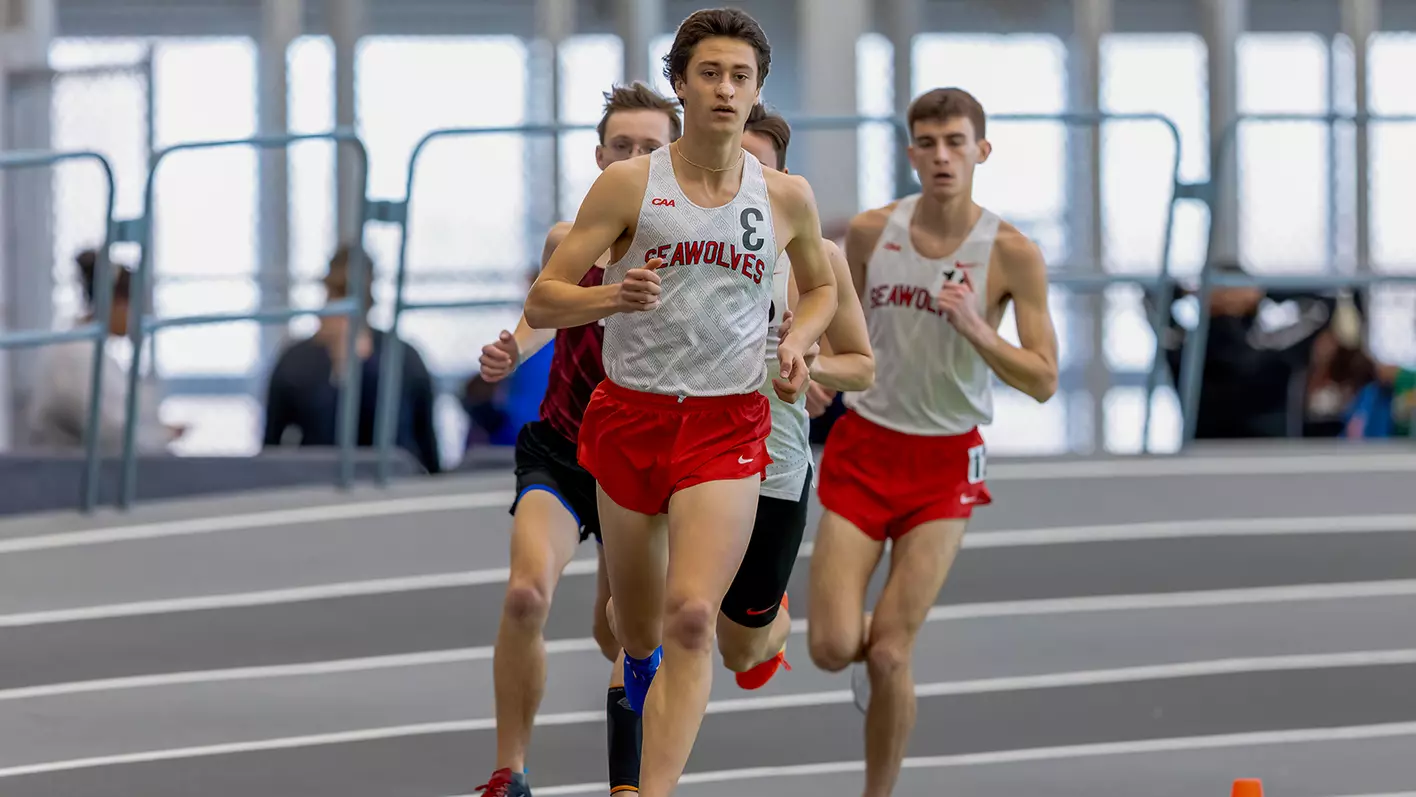
Stony Brook men’s track & field competed in its first meet of the New Year on Jan. 9 at the TCNJ Invitational from The Armory in New York City. As a team, the Seawolves recorded eight top-eight placements, including a first-place finish in the 3000m race by Brian Liebowitz.

HIGHLIGHTS

  • Liebowitz won the 3,000m, with a time of 8:33.52, setting a new PR.
  • Luca Maneri recorded a third-place finish in the mile run (4:23.26).
  • Freshman Jamal Joseph finished third in the 200m (22.41).
  • Cain Lawler placed fourth in the mile run (4:23.42).
  • Andrew Lawler posted a fifth-place finish in the mile run event, setting a new PR with a time of 4:23.65.
  • The team of Walesky Nowak, Andres Acosta Mondriguez, Jaden Medrano, and Matthew Brodsky finished fifth in the 4x400m relay (3:23.20).
  • Chris Tardugno recorded an eighth-place finish in the mile run, setting a new PR with a time of 4:27.64.
  • Brodsky finished eighth in the 500m and set a new PR in the event (1:06.37).

The team continues its busy January slate returning to The Armory for the Ramapo College Invitation on January 16, with action set to begin at 9:30 am.


Link

Continue Reading

Most Viewed Posts

Trending