



KANSAS CITY, Mo. — When Texas A&M hired Jamie Morrison to take over the volleyball program, the Aggies were coming off a 13-16 season and had not had a winning year since 2019.
Sports
Obituary

Marc Hill carved out a 14-year career as a backup catcher, including playing behind two Hall of Famers. Then he spent nearly 20 more years as a coach and manager, in both professional baseball and independent teams across the country. Hill, 73, died on August 24, his family announced on Facebook. Hill, who had been hospitalized for several days, died from complications of a liver ailment. During his playing career, Hill played for the St. Louis Cardinals (1973-74), San Francisco Giants (1975-80), Seattle Mariners (1980) and Chicago White Sox (1981-86).
Marc Kevin Hill was born in Pike County Hospital in Louisiana, MO, on February 18, 1952, but he grew up in nearby Elsberry. His first taste of catching came with the Elsberry Khoury League, where he played for 6 years. Hill was also a talented basketball player at Elsberry High School, usually scoring double digits in his games. He was named to the Class-M All-District basketball team in 1969. He stood about 6’3″ and weighed 200 pounds. When he was named to the East Missouri All-Star Team as a unanimous pick in 1970, the Columbia Daily Tribune described him as “big, burly Marc Hill” and said he was “a great jumper for a man built much like a pro football defensive end.” Hill initially was a pitcher/shortstop for the high school baseball team, but as he matured and bulked up, he moved behind the plate and became one of Missouri’s top high school catchers. He was named to the All-State Second Team as a senior in 1970. Hill was drafted by the St. Louis Cardinals in the 10th Round of the 1970 June Amateur Draft, and he signed with the team days later. The Cardinals sent scouts Fred McAlister and Joe Mathes to watch Hill, and they were impressed. “He has a real major league arm and good catching ability,” McAlister said. “And he also has a chance of developing into a respectable major-league hitter.” There was an element of destiny in Hill beginning his professional career with a St. Louis team. His father, Henry Edward Hill, played briefly in the St. Louis Browns organization in the 1940s.

Hill debuted with the Gulf Coast League Cardinals and batted .192 in 28 games and played well as catcher. He was named Rookie Catcher of the Year and was rewarded by spending several weeks with the Cardinals big-league club as a batting practice catcher. Hill improved his batting average to .232 with Cedar Rapids in 1971 and hit his first professional home run. In 1972, he hit 8 home runs while driving in 69 runs for two different Class-A teams, St. Petersburg and Modesto. He was added to the Cardinals’ 40-man roster that October, but the obstacle in Hill’s path to the majors was Ted Simmons, St. Louis’ 22-year-old All-Star catcher. Not only was Simmons an excellent hitter and catcher, but he also rarely took days off. Whoever ended up as his backup wouldn’t be guaranteed many starts at all.
St. Louis moved Hill up to Double-A Arkansas in 1973, and he batted .241 with 9 homers. His defensive abilities made a fan out of his manager, Tom Burgess. He said the young catcher “throws better than [Johnny] Bench, or anybody… Hill will move Ted Simmons to another position.” Hill was promoted to Triple-A Tulsa at the end of August and proceeded to rip the cover off the ball. In one of his first games, he homered twice and drove in 5 runs in a 6-2 win over Wichita. He batted .414 in 9 games with Tulsa and was promoted late in the season to St. Louis. Hill started a game on September 28, and he went 0-for-3 with a strikeout and double play as Mike Thompson and Diego Segui combined on a 3-0 shutout of Philadelphia. Hill returned to Tulsa in 1974, as the parent club had Simmons as the starting catcher and veteran Tim McCarver as the backup. He hit steadily and maintained a patient outlook. “I might be going crazy reading every day Simmons was 2-for-4 and wondering if I was going to be traded,” he told the Tulsa Daily World. “But Mr. Kennedy [Bob Kennedy, general manager] told me they would never have spent this much time with me if they hadn’t intended for me to be their catcher. So I don’t worry about Simmons. I figure it’s just a matter of time until I am catching and he’s on first [base].”

The Cardinals released veteran first baseman Jim Hickman in July 1974 and brought Hill to the majors. He was given several starts, with Simmons displacing Joe Torre at first base. He singled off Cincinnati’s Don Gullett on July 16, 1974, for his first major-league hit. He later doubled off Pedro Borbon and scored his first run on a Jim Dwyer sacrifice fly. Hill batted over .300 during his week as a regular catcher, but then Simmons returned to his normal position and Hill spent the rest of the season in the minors or coming off the bench with the Cardinals. In 10 games, he batted .238. That October, St. Louis traded Hill to San Francisco for catcher Ken Rudolph and pitcher Elias Sosa.
The Giants had good-but-not-great catchers in Dave Rader and Mike Sadek, so Hill was able to get a share of the catching duties during his time with the Giants. San Francisco had heard the good things about Hill’s defense and throwing arm, and he made a favorable impression in spring training by starting his workouts before the other players even arrived. Well, Giants minor-league manager Rocky Bridges was less impressed when he saw Hill working up a sweat all alone on the field. “Isn’t it awful? He really wants to play. If he isn’t careful, he can louse things up for everybody else,” Bridges cracked. Hill played in 72 games, including 434 innings at catcher, and he committed 2 errors for a .994 fielding percentage. He threw out 36.5% of would-be base stealers, which was above league average. Offensively, Hill batted just .214, but he hit 5 home runs and drove in 23 runs. His first major-league homer came in his first start for the Giants on April 12, and it was a 2-run shot off Atlanta’s Carl Morton. Hill’s average dropped to .183 in 1976, and his season ended in August after he tore ligaments in his knee. After recovering, Hill saw his playing time increase in 1977, as he topped 100 games played in a season for the first time in his major-league career. He had his ups and downs at the plate, but even when his batting average fell below .220, his throwing arm never slumped. He was 0-for-3 in a game against Cincinnati on May 25, but he threw out Dave Concepcion and Ed Armbrister trying to steal, shutting down two rallies in a 6-5 Giants win. Concepcion had stolen 13 bases in a row before Hill caught him. The catcher also got used to working with the Giants pitching staff. “Now that I’m catching them a little more I know what they like and don’t like,” he explained. Hill ended the year with a .250/.316/.366 slash line in 108 games. He hit 9 home runs and drove in 50, which were both career bests. During his time with the Giants, he acquired the nickname of “Booter,” a variation of “Boot” Hill.

During spring training in 1978, the Giants traded Alexander in a massive deal to land pitcher Vida Blue from Oakland. Not only did the move give the Giants an ace pitcher, but it essentially handed the starting catcher role to Hill. “It’s been a long time since I’ve been first string,” he said. Hill got off to a slow start and spent much of the first half of the season batting around .200. He did, however, steal his one and only career base on May 2 against St. Louis — off catcher Ted Simmons of all people. Giants owner Bob Lurie had promised to buy the first base Hill ever stole and have it bronzed for the catcher. Hill’s bat picked up in the summer, and he hit .278 over the final three months of the season. All total, Hill slashed .243/.329/.316 in a career-high 117 games. He had one of his best offensive games the following year, on April 19, 1979. He contributed to a 14-10 win over San Diego with 4 RBIs, including a 3-run homer off Mickey Lolich. That game aside, Hill spent much of the season under .200 and lost playing time to Sadek and rookie catcher Dennis Littlejohn. He had just brought his batting average up to .207 when he was involved in a home plate collision with New York Mets catcher John Stearns on July 24. Stearns knocked him down, and the Giants catcher landed on his right hand, losing the ball in the process. Not only was Stearns called safe, but Hill also broke his wrist, ending his season.
San Francisco ensured that the starting catcher for 1980 would be Hill — Milt Hill, who signed a 5-year contract as a free agent. Marc Hill appeared in 17 games for the Giants and hit .171 before he was placed on waivers on June 20. He was claimed by the Seattle Mariners but didn’t play much for his new team until manager Darrell Johnson was replaced by Maury Wills. Wills had worked as a baserunning instructor with the Giants, and he began giving Hill starts over light-hitting catcher Larry Cox. He hit well enough over the remainder of the season to bat .229 for Seattle and .207 overall. He and Seattle parted ways after the season, as Hill was seeking a multiyear contract as a free agent. “I don’t feel I’m worth $250,000 a year — like a Milt May — and I don’t think any ballclub is going to pay me that,” Hill told the Kitsap Sun. “But I’m looking for a good contract with some security. You never know when you’re going to get hurt in this game.”
Hill initially didn’t get any takers in baseball’s re-entry draft, which was the early version of modern free agency. He almost returned to the Mariners but signed with the Chicago White Sox on a 1-year deal. The only catchers the Sox had were Hill and Jim Essian… until the team landed Carlton Fisk about a month later, after the Boston Red Sox made an infamous contract snafu and lost their All-Star catcher. The signing virtually eliminated Hill’s chance to play, and he was hitless in 6 at-bats during the strike-shortened 1981 season. But Sox manager Tony La Russa valued Hill’s experience and defensive skills, and the catcher made Chicago his home for the rest of his playing career. He got his first White Sox hit on May 1, 1982, and he hit his first Sox homer a week later, helping to spur a comeback 7-4 win over Seattle. Fisk was one of the team’s most productive hitters, but Hill became a valuable backup. During the team’s division-winning season of 1983, he played in 58 games and batted .226 while letting the veteran Fisk get much-needed breaks. He also threw out runners at a 37.7% rate, above league average. “I don’t see any holes on this team,” Hill said about the White Sox in September. “We just have the type of club that if you give us an opportunity to win, we will beat you.” Chicago ultimately lost to Baltimore in the AL Championship Series 4 games; Hill didn’t make an appearance in the series.

Hill saw the most playing time with the White Sox in 1984, when he appeared in 77 games and batted .233 with 5 home runs and 20 RBIs. He filled in well when Fisk was injured, and he didn’t complain when La Russa gave playing time to rookie catcher Joel Skinner. “I’ve never met anybody as totally unselfish as Marc Hill,” the manager said. “He’s as good a man to have on a club as any I’ve seen, and he’s got talent. There are a lot of us, like I was, who are good guys on a club, but we can’t play. He can play.” The return of Fisk to full health in 1985 and ’86, and the emergence of rookie catchers, left Hill with limited playing time. He played in 40 games in 1985 and batted .133 in 95 plate appearances. In 22 games in 1986, Hill hit .158 — 3 singles in 19 at-bats. The White Sox promoted catcher Scott Bradley to the majors on May 27, 1986, and released Hill. He remained with the team as a catching instructor for the rest of the season and was re-signed as a free agent in October, after catcher Ron Karkovice injured his thumb on a foul tip. He did not make an appearance in the team’s final games, and when the season ended, so did Hill’s playing career.
Over 14 seasons, Hill appeared in a total of 737 games. He slashed .223/.295/.317, and his 404 hits included 62 doubles, 3 triples and 34 home runs. He drove in 198 runs and scored 146 times. Hill had a career .990 fielding percentage behind the plate and threw out 35 percent of all baserunners.

Since Hill was already working as a White Sox instructor in 1986, his transition into a secondary career was already in the works. He wasn’t expecting to be named a manager so soon, but new White Sox general manager Larry Himes asked Hill to manage the Daytona Beach Admirals of the Class-A Florida State League. He said it gave him a new appreciation for his former managers like La Russa and Jim Fregosi. “I didn’t think there would be so many things to do,” Hill said. “But I have to make reports on our players. I also have to make reports on every player in the league twice a year. There’s 14 teams in this league — that’s a lot of reports.” After that season, he served as a coach for the Houston Astros and New York Yankees. Yankees catcher Matt Nokes heaped praise on Hill for improving his throwing mechanics. “Marc totally changed my throwing motion. Throwing was my biggest weakness,” the All-Star catcher said. “He has me throwing in a compact motion instead of the long style I had been using. He also changed my release. The difference is amazing. I get rid of the ball much quicker now, with more on the throw.”
The Seattle Mariners had Hill manage in the minors in 1992-94, and then he managed in the Pittsburgh system from 1995 to 1997. He was named Manager of the Year in 1992 with the Peninsula Pilots of the Carolina League. He managed the independent River City Rascals of the Frontier League in 2003 after several years as a minor-league instructor for the Pirates. Among the players he coached or managed during his career were Sammy Sosa, Raul Mondesi and Alex Rodriguez. Hill is survived by his children, Kevin, Kyle and Kara, and his wife, Judi.
Follow me on Instagram: @rip_mlb
Follow me on Facebook: ripbaseball
Follow me on Bluesky: @ripmlb
Follow me on Threads: @rip_mlb
Discover more from RIP Baseball
Subscribe to get the latest posts sent to your email.
Continue Reading
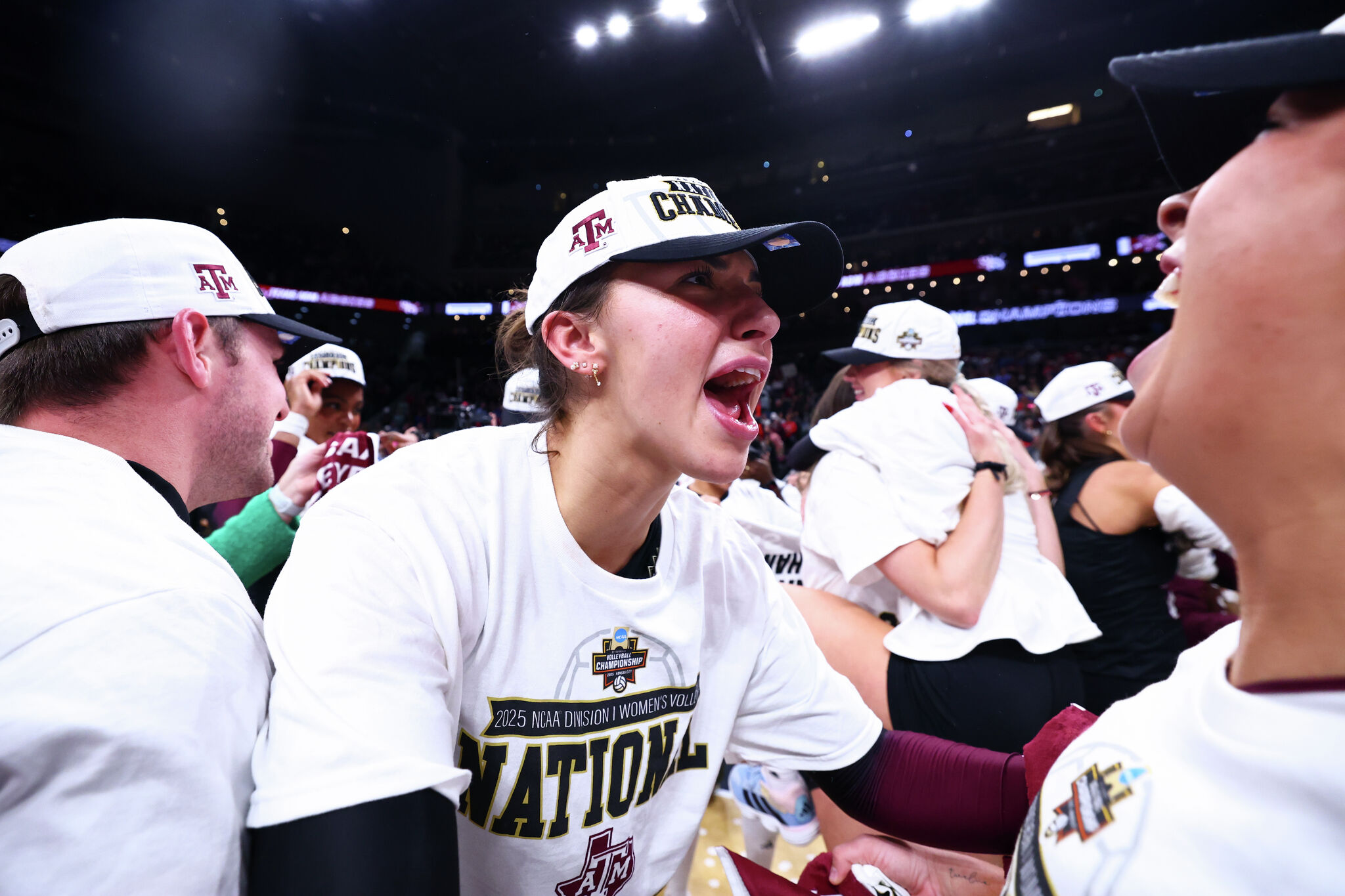

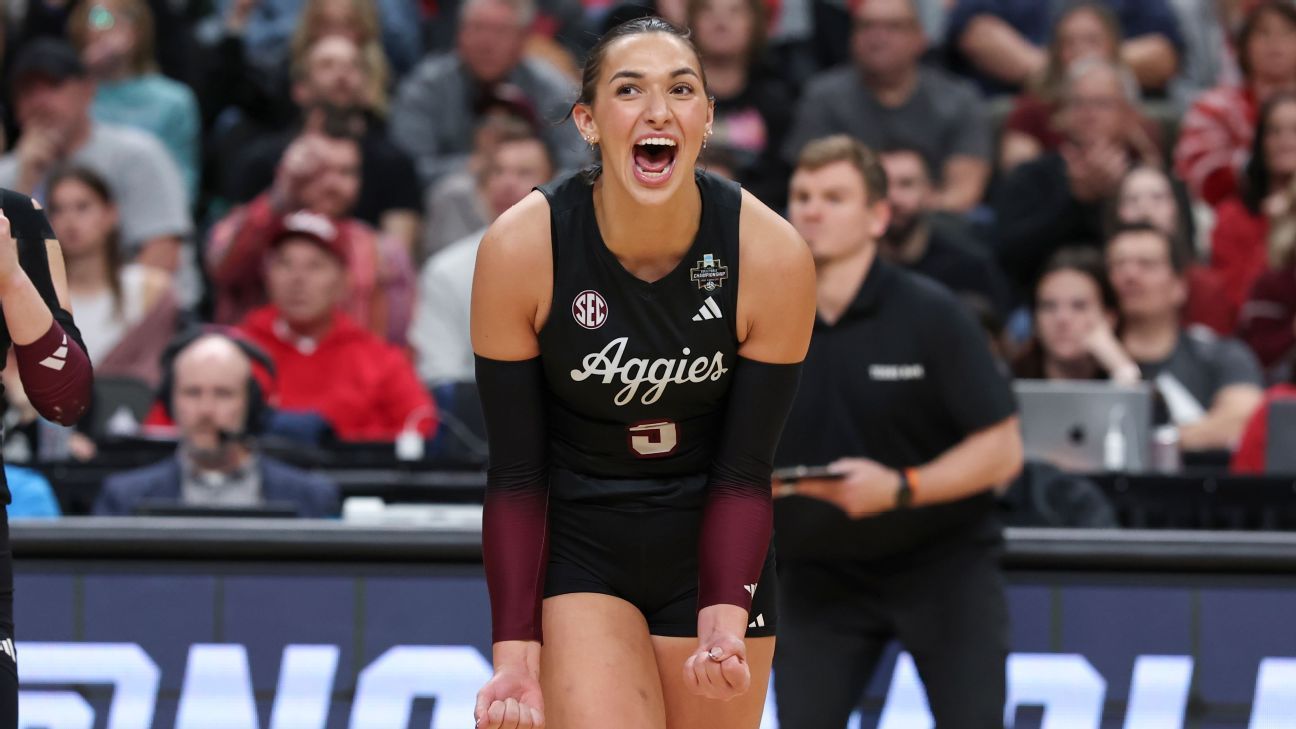
Logan Lednicky celebrates Texas A&M’s win over Kentucky for the NCAA volleyball title.
Three seasons later, the Aggies are national champions.
Texas A&M swept Kentucky on Sunday to win the school’s first volleyball title and cap a run through the NCAA tournament that included a rally from down 2-0 in the regional semifinals against Louisville, a five-set win over top-ranked Nebraska on its home court, and wins over three No. 1 seeds: Nebraska, Pitt and Kentucky.
Article continues below this ad
“This is surreal,” Morrison said after the win. “So proud of this team.”
The Aggies (29-4) were led by nine seniors, including four who had played together on the Houston Skyline club team. They decided to stay after the coaching change and bought in to Morrison’s vision.
“We said a million times we wanted to build the program,” said Logan Lednicky, who led A&M with 11 kills on Sunday to go along with seven digs. “But this is beyond my wildest dreams.”
Lednicky, Maddie Waak, Ava Underwood and Morgan Perkins were four seniors who had played together since their days on the Houston Skyline club team, which won a national title in 2019 and were coached by Jen Woods, now an assistant at A&M.
Article continues below this ad
“There’s been so much put into this by every person involved in this program, said Underwood, who led the team with 10 digs on Sunday. ‘We’ve worked so hard and given so much. I feel like we deserve it.
Waak had 29 assists in the final and set up the winning kill by Ifenna Cos-Okpalla, another of the seniors.
“We persevere,” Cos-Okpalla said.
That was evident again on Sunday. The Aggies trailed by six points in the first set and didn’t lead until 25-24 on a block by Cos-Okpalla. Kyndal Stowers finished off the 26-24 first-set win for the Aggies with a tip off the Kentucky block.
“Response, that’s what it’s been about all season,” Morrison said. “This team will not give up.”
Article continues below this ad
The second set was all A&M as the Aggies took a 15-7 lead and coasted to a 25-15 win.
A&M’s pressure forced Kentucky to make 15 errors in the first two sets.
Texas A&M led 13-10 in the third set before a kill by Lednicky started a 6-1 scoring run for a commanding 19-11 lead, six points from the national championship. The Aggies won 25-20 with Cos-Okpalla getting the final point on a kill in the middle, which was set up by Waak.
Stowers, a sophomore, was one of the newcomers to the Aggies. She played as a freshman at Baylor but sat out a season because of concussions. After being cleared to play, she transferred to A&M.
Article continues below this ad
“This team was there for me,” said Stowers, who had 10 kills and six digs in the final. “If this isn’t pure joy, I don’t know what is.”
Reid Laymance reported from Houston.
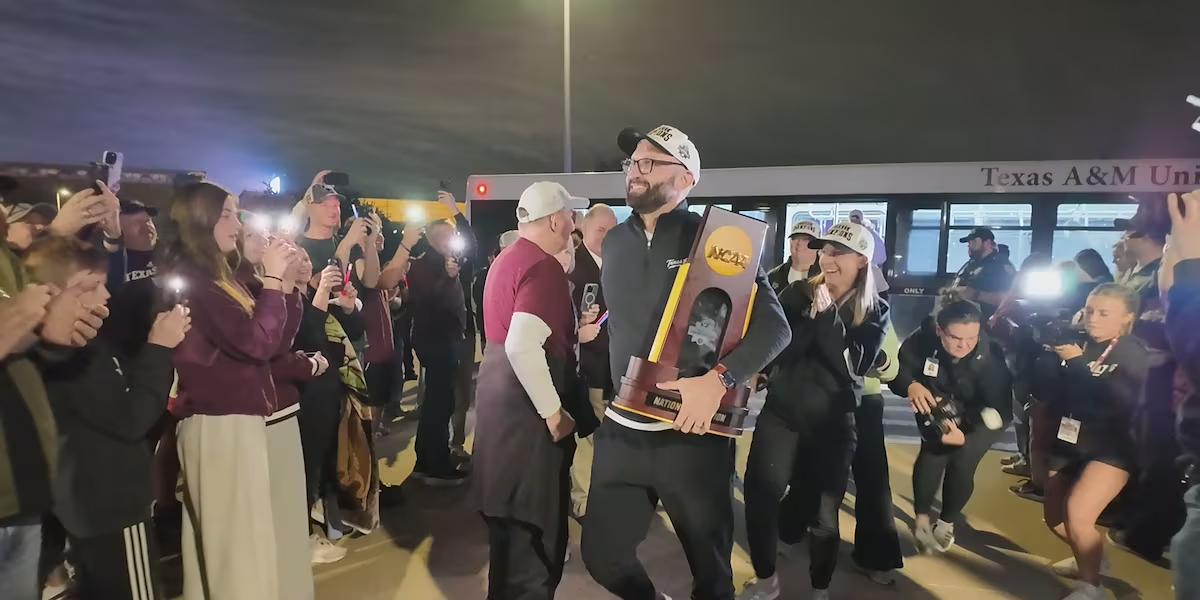
COLLEGE STATION, Texas (KBTX) – Texas A&M volleyball fans waited nearly two hours outside Reed Arena to welcome the national champion Aggie volleyball team back to Aggieland with high-fives, signs and cheers. After the team’s arrival, just after 1 a.m., head coach Jamie Morrison, libero Ava Underwood and opposite hitter Logan Lednicky spoke words of appreciation to the gathered crowd.
Copyright 2025 KBTX. All rights reserved.
Dec. 22, 2025, 4:00 a.m. ET
Here are the postseason honors for the 2025 Washington County high school volleyball season (all averages are per set):
2025 Herald-Mail Volleyball Player of the Year
Caydence Doolan, North Hagerstown
Doolan, a senior, is the first three-time Herald-Mail player of the year of the 21st century. She set a county rally-scoring record by averaging 7.35 kills while leading the Hubs to their fourth straight appearance in the Class 3A state final. She earned AVCA All-America second-team honors and was named to the coaches’ all-county and Central Maryland Conference large-school first teams. She also averaged 3.43 digs and 0.85 aces. She will play college volleyball at Division I Marquette.
-

Elizabeth Merrill
KANSAS CITY, Mo. — A few days before the NCAA women’s volleyball national championship, Texas A&M opposite hitter Logan Lednicky posted an old family video on her Instagram account. Lednicky is maybe 5 or 6 years old in the video, wearing a maroon A&M shirt and doing cartwheels on the grass at Kyle Field, A&M’s football stadium. “Say ‘Gig ‘Em, Aggies,'” her mom, Leigh Lednicky, implores her, and little Logan walks up to the camera, smiles and gives a thumbs-up.
Under the video, Lednicky wrote that she is living in that little Aggie’s “answered prayers.”
Her dad, Kyle, was a long snapper for the Texas A&M football team in the 1990s, and her mom worked in the football office. She chose Texas A&M because she always dreamed of being a fourth-generation Aggie, but that was only part of it. She wanted to help build a middling volleyball program into a powerhouse.
Lednicky went beyond that little girl’s dreams Sunday, swatting 11 kills to lead Texas A&M to a sweep over No. 1 seed Kentucky for the program’s first national title. The senior from Sugar Land, Texas, was a linchpin in the Aggies’ improbable December postseason run, helping her team knock off three No. 1 seeds in the NCAA tournament.
In the final four matches of her career, when it mattered most, Lednicky amassed 69 total kills, a team high. She’s one of four seniors who have been with the program from the beginning — they went 13-16 as freshmen — and set the tone for the historic season. The past and present swirled through that class Sunday. With the Aggies cruising in the final set, coach Jamie Morrison high-fived Lednicky, and hung on to her hand.
“I think she had that moment where, ‘This might be the last four points of my college career,'” Morrison said. “I think she actually started getting a little teary on the court. I was like, ‘Oh, no, did I just ruin everything?’ No, it means the world.
“There was a group of them here from the beginning that said, ‘I want to be a part of this, I want to build this program.’ … I don’t think they were envisioning a national championship by the time they were done. I think when we were selling what we were doing, it was building something they could come back to in the future and be really, really proud they helped build.”
It was Lednicky who helped save the season on Dec. 13 in the Sweet 16, when the Aggies were down two sets to Louisville. She hammered a team-high 20 kills in a reverse sweep, and afterward, Lednicky mentioned a random note that someone left on the scorer’s table as her team was teetering toward elimination.
The note said, “Something great is about to happen.”
She has always been the charismatic optimist — the one who keeps things loose. Teammates call her everything from their “ride-or-die” to a best friend.
She has been a recruiter. When Morgan Perkins hit the transfer portal after her freshman season at Oklahoma three years ago, her first text came from Lednicky, an old club teammate. Perkins said the text was something along the lines of, “Hey, Mo-Mo, I see you’re in the portal …”
Lednicky, along with sophomore Kyndal Stowers, helped pull A&M together when the Wildcats sprinted out to a 15-9 lead in the first set. The Aggies later said they dealt with some jitters at the start of the match, but it was short-lived. Lednicky’s kill drew A&M within one, and then she teamed up with Perkins for a block that tied the game. Stowers’ kill completed the rally and gave the Aggies the set, 26-24.
From there, the Aggies dominated. They took a commanding 19-8 lead in the second and pulled away in the third with a Lednicky kill that made it 18-11.
“I was pretty emotional all day today,” Lednicky said, “just knowing that no matter the outcome of this game, it would be my last getting to represent A&M on my chest. Being able to do this with these girls — end like this, I just can’t even believe it.
“I’m so happy I get to carry this with me through the rest of my life and remember all the memories with these girls.”
In the waning moments of the match, a corner of the arena chanted, “Why not us?” It became a slogan for the Aggies in the postseason, during the match against Louisville. Late Sunday, Lednicky gave a shoutout to her boyfriend and teammate Ava Underwood’s boyfriend for coining it for the Aggies at a concession stand in Lincoln, Nebraska.
“We kind of took it and ran with it,” she said. “We started saying it. Ava and Addi (Applegate) wrote it on their shoe. Now it’s on a T-shirt somehow. Shout out to them.
“But, I mean, it’s true. It’s a testament to the hard work this program has put in all year long, staff, players. That’s such a great statement. ‘Why not us’ has turned into, ‘It is us’. I think with that dawg mentality all season long, all tournament long, we knew it was going to be us.”
Morrison, who came to A&M in December 2022 and overhauled the program’s culture, figured it would take at least five years to win it all. He credited the rapid ascent to his team’s work ethic.
Kyle Lednicky waited for his daughter after the match, marveling over how she and her teammates set out to change a program and did it so quickly, and dramatically. He said former A&M football coach R.C. Slocum texted her Sunday morning and wished her luck.
“That was pretty cool,” Kyle Lednicky said.
Of course he always hoped his daughter would go to his alma mater, but he says he never put pressure on her. Maybe it was osmosis, that all those football games, and that maroon clothing, would eventually seep into her consciousness, and her heart. It didn’t matter. That fourth-generation Aggie is now a first-generation champion.
Kyle Lednicky saw his daughter’s Instagram post Thursday, and it brought back a flood of memories.
“I had to put it away,” he said, “because I got teary-eyed when I was looking at it.”

At a point when most rowers are pounding away on rivers in the wind and rain through the dark winter months, a new breed are honing their skills in brighter climes surrounded by sun, sand and waves, all the while dreaming of the 2028 Los Angeles Olympics.
Out of 17 sports that proposed an extra discipline to the International Olympic Committee, rowing came out on top with its beach sprints format added to the LA 2028 programme. While many may have noticed the addition of five new sports in baseball, cricket, flag football, lacrosse and squash, a mini-revolution is happening on the water within a sport that will no longer have a lightweight category but will have five coastal rowing events in 2028.
Coastal beach sprints shake up this most traditional and predictable of sports by taking the core elements of rowing – a need for extreme levels of fitness and psychological toughness – and adding new layers of jeopardy and a beach-party vibe. The discipline involves a head-to-head format and begins on land with athletes running down the beach and jumping into their boats at the water’s edge, then racing out around a buoy before hurtling back to dry land, leaping out of their boats and sprinting up the beach. With frequent close finishes, their final move is to hurl themselves through the air to hit the finish line buzzer first and land, usually, with a face full of sand.
In a world where people have greater choice over which sports to watch and participate in, and minor sports’ world federations are considering how to stay popular and relevant, coastal rowing offers a less predictable and more entertaining format, while simultaneously reconnecting with a historic activity that dates back to around 1900BC in ancient Egypt where it was a significant mode of transport.
We might be a footballing nation first but this is a great addition for Team GB as we also excel at sitting-down sports and boats are part of our national island identity. We also gain a new impetus to revitalise sport and activity around the coastline in areas that have become some of the most socially and economically challenged parts of each of the home nations. The Welsh government identified that its major sports event funding was going into big cities and realised the importance of reaching and engaging a different part of the population by hosting the coastal rowing world championships in Saundersfoot and developing the Wales international coastal centre there.
Scotland has embraced the sport with St Andrews University investing in the wider flat boats used to row on the rougher waves and stepping up to become one of Britain’s 11 coastal sculling academies at East Sands Beach. Meanwhile, Glenarm in County Antrim hosted the All-Ireland Coastal Rowing Championships this summer for both beach sprint and endurance coastal rowing events. England’s coastal academies include clubs in Tynemouth, Scarborough, Whitby and Lowestoft, alongside many south coast clubs with a strong heritage in the activity. Sandbanks in Dorset was the venue for the first Commonwealth Beach Sprint Championships in 2018, followed by Namibia in 2022, and Barbados next weekend.
Britain’s Guin Batten, a member of the silver-medal quadruple sculls crew from Sydney 2000 and one of the first British female rowers to stand on a podium, has been masterminding the logistical and political course to get to this point. As chair of the World Rowing coastal commission in her spare time (and deputy chief executive of Volleyball England the rest of the time), Batten describes the two disciplines of coastal and classic rowing as the “yin and yang of the sport”, different yet beautifully complementary, both at their core about brilliant boat skills and athletic prowess and yet each providing such a contrasting spectacle to watch or participate in.
Boat costs and accessibility issues have been cleverly reduced – the wider boats are suitable for beginners and those racing at the highest level, unlike the incredibly narrow hulls that require significant expertise to master in still-water rowing. Countries don’t have to fly their equipment over as a pool of boats is provided, adding another unpredictable factor as participants won’t try out the actual boat they’ll race in until two days before they compete. At that point, they’ll need to study the boats and in particular the fin positions on the hull, which will be key to working out the optimal “buoy-rounding” techniques, all the time knowing they’ll need to judge everything again on the day once they see the size of the waves that Mother Nature chooses to throw at them.
New Zealand’s Emma Twigg, the 2024 Olympic champion and five-time Olympian, has reinvigorated her love for being in a boat by taking up the coastal discipline and won at the recent world championships in Turkey. Twigg told me she had fallen in love with beach sprints because of the “closeness of the racing”, “the beach volleyball vibes”, plus the benefit that you can watch the entire race from start to finish in the mini-stadium area, avoiding one of the insurmountable challenges of Olympic still-water rowing where you cannot ever see the whole 2km distance from one vantage point.
Like their classic still-water cousins, coastal rowers will still need to develop a formidable physiology that can both sprint and endure to compete in up to three races in a day. Each race is a lung-busting, all-out effort with an arm-wrenching, shoulder-shuddering effort to make a 180-degree turn round the buoy mid-race. New Zealand’s Olympian Finn Hamill missed the buoy by centimetres to get knocked out at the recent world championships, while Moritz Wolff, the leading favourite from Germany, stumbled in the semi-final in the beach sprint allowing Spain’s Ander Martin to come through in the closing seconds to face the reigning American champion, Chris Bak, in the final who held on to retain his title. There’s a mix of existing rowers transitioning to this new discipline and others coming in from coastal clubs, while sports scientists and performance directors work out what future coastal Olympians will look like.
The world’s best coastal rowers will share the Long Beach LA venue alongside open-water swimmers, windsurfers, foil and kitesurfing champions over the fortnight of the Games and show a different side to this otherwise seemingly strait-laced sport. Rowing’s answer to snowcross, BMX and beach volleyball is coming to LA, but if you live near the coast, then it may be coming to a beach near you soon too.
Sports
Texas A&M tops Kentucky for first NCAA volleyball championship: ‘We sent a warning shot out to the world’
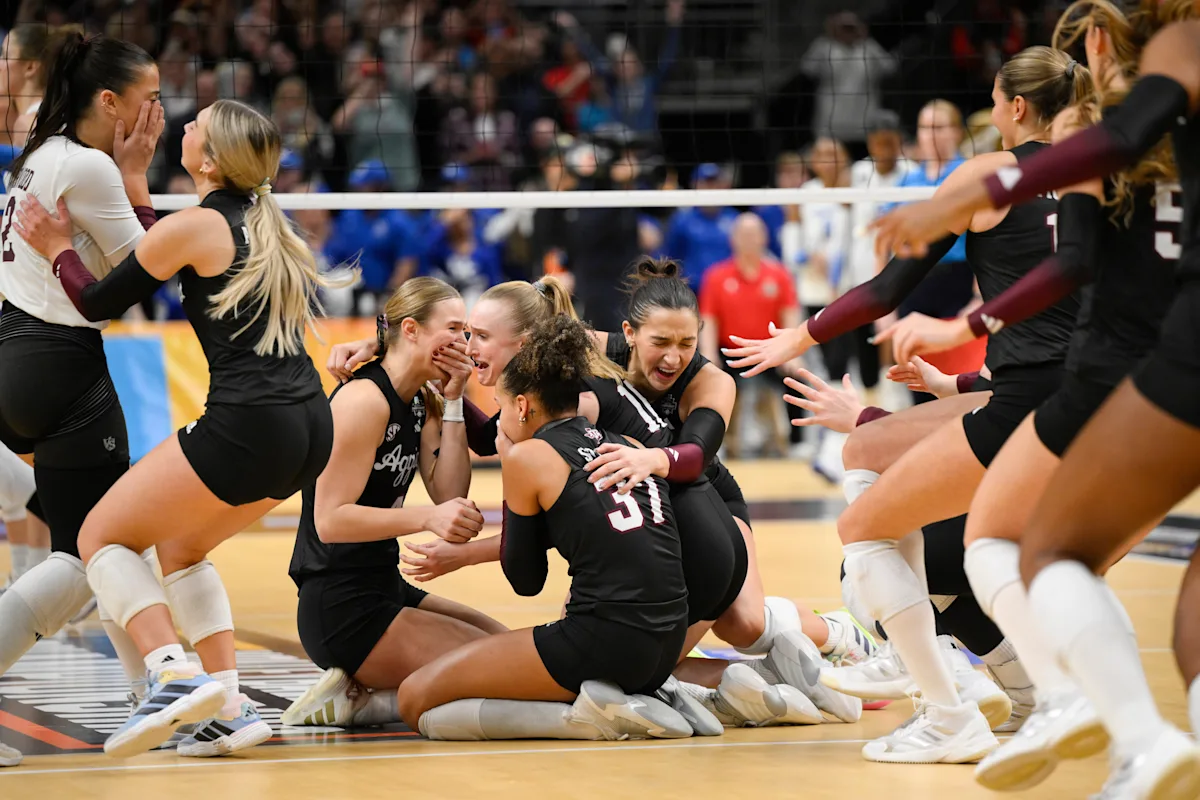
With Texas A&M up 24-20 in the third set of the NCAA women’s volleyball title match, Maddie Waak set the ball for Ifenna Cos-Okpalla. Though Logan Lednicky and Kyndal Stowers had played bigger games for the Aggies, it was Cos-Okpalla who got the call for the championship point.
She elevated and slammed the ball in between Kentucky’s defenders at the T-Mobile Center in Kansas City. With that kill, Texas A&M won an improbable national title, 3-0 (26-24, 25-15, 25-20).
Advertisement
“They’re putting on t-shirts behind me. I can’t believe it. I’m still a little bit in disbelief,” Aggies coach Jamie Morrison said to ABC after the game. “We sent a warning shot out to the world about what we’re about.”
Kentucky, the No. 1 seed, started out strong in the first set. They built a lead as big as six points before Texas A&M started chipping away, eventually winning the set, 26-24. With that momentum, the Aggies owned the next two sets. Lednicky was the star of the match with 7 kills, 11 digs and 2 blocks. With every point won, Texas A&M’s confidence grew.
Kentucky was the third No. 1 seed that Texas A&M — a third seed — beat on the way to the national title, and every win from the Sweet 16 on was shocking. First, the Aggies came back from 2-0 to pull the reverse sweep against Louisville. Next, Texas A&M had to face undefeated, No. 1 overall seed Nebraska in Lincoln. In what was the best game of the tournament, the Aggies beat Nebraska in five sets.
Advertisement
But their magic didn’t stop once the Aggies got to Kansas City. In the national semifinal, they swept No. 1 seed Pittsburgh, the first time the Panthers had been swept all season. And then in the first-ever All-SEC final, the Aggies came out victorious.
Unlike Kentucky, which won the national title in 2020 and has been one of the top teams in women’s volleyball for years, Texas A&M is a newcomer to volleyball’s elite. Though it had some good teams over the years that made it to the Elite Eight, this was the program’s first Final Four and their first national title.
Morrison took over the program in 2023, and held onto Lednicky and Cos-Okpalla. The Aggies turned the program around quickly, earning a bid to the tournament in 2023 and then making it to the Sweet 16 in 2024. This year, the Aggies went 29-4 and looked like a team on the brink. But with so many seniors, they had no time to waste and adopted the mentality of “Why not us?”
Lednicky, who played with the U.S. national team over the summer, was the heart of this team’s championship run, and the player who kept asking “Why not us?” Stowers’ comeback might be one of the best sports stories of the year. While playing for Baylor, she suffered concussions and medically retired from the sport. But after being medically cleared and deciding she had more to give to the sport, Stowers signed with Texas A&M and is now a national champion.
Advertisement
Morrison has built a program that is not only a national champion, but is in a great position to continue to grow volleyball in Texas. While he will lose seniors like Lednicky and Waak, he can now show off a championship ring while on the recruiting trail.
But figuring out who will play for the Aggies next season is tomorrow’s problem. Today, Texas A&M gets to celebrate how it defied the odds to win the school’s first-ever national title in women’s volleyball.

Motorsports4 minutes ago
As Forza Motorsport Winds Down, Gran Turismo Is Experiencing A ‘Phenomenon’ At PlayStation

Sports19 minutes ago
Texas A&M wins NCAA volleyball title with sweep of Kentucky

Motorsports20 minutes ago
Teams expected to hide true performance in pre-season testing

Rec Sports31 minutes ago
Bowling alley’s new owner aims to improve | News, Sports, Jobs

Sports35 minutes ago
Texas A&M volleyball returns to Reed Arena after winning national title

Motorsports37 minutes ago
Founding family fends off shakeup at UniFirst
NIL41 minutes ago
6 Tennessee players who increased their NIL value, including DeSean Bishop
Sports52 minutes ago
2025 Washington County high school volleyball all-stars

Sports1 hour ago
Logan Lednicky caps dream with volleyball title at Texas A&M

Sports1 hour ago
Rowing’s answer to snowcross, BMX and beach volleyball is coming to LA | Rowing

Rec Sports1 hour ago
Super Bowl 60: Santa Clara youth soccer league displaced as NFL plans to take over park for operations center
Rec Sports2 hours ago
Houma-Terrebonne Housing Authority gets help with Bayou Towers
Rec Sports2 hours ago
Meet 10 new coaches for the winter season

Rec Sports2 hours ago
Effects of learning, exercise, and game curriculum model on the physical fitness of preschool children aged 3–6: a cluster-randomized controlled trial

Rec Sports2 hours ago
DTR Youth Cheerleaders Host First Annual Sports Banquet

Rec Sports4 weeks ago
First Tee Winter Registration is open

Rec Sports4 weeks ago
Fargo girl, 13, dies after collapsing during school basketball game – Grand Forks Herald

Motorsports4 weeks ago
CPG Brands Like Allegra Are Betting on F1 for the First Time

Motorsports4 weeks ago
F1 Las Vegas: Verstappen win, Norris and Piastri DQ tighten 2025 title fight

Sports4 weeks ago
Sycamores unveil 2026 track and field schedule

Sports4 weeks ago
Utah State Announces 2025-26 Indoor Track & Field Schedule

Sports4 weeks ago
Two Pro Volleyball Leagues Serve Up Plans for Minnesota Teams

Motorsports2 weeks ago
SoundGear Named Entitlement Sponsor of Spears CARS Tour Southwest Opener

Motorsports3 weeks ago
Jo Shimoda Undergoes Back Surgery

Motorsports4 weeks ago
Redemption Means First Pro Stock World Championship for Dallas Glenn

NIL3 weeks ago
Bowl Projections: ESPN predicts 12-team College Football Playoff bracket, full bowl slate after Week 14

Sports4 weeks ago
Texas volleyball vs Kentucky game score: Live SEC tournament updates

Rec Sports3 weeks ago
Robert “Bobby” Lewis Hardin, 56

Rec Sports3 weeks ago
How this startup (and a KC sports icon) turned young players into card-carrying legends overnight

NIL4 weeks ago
Indiana’s rapid ascent and its impact across college football






-
 Motorsports2 weeks ago
SoundGear Named Entitlement Sponsor of Spears CARS Tour Southwest Opener
-

 Rec Sports3 weeks ago
Black Bear Revises Recording Policies After Rulebook Language Surfaces via Lever
-

 Motorsports2 weeks ago
Donny Schatz finds new home for 2026, inks full-time deal with CJB Motorsports – InForum
-

 Rec Sports2 weeks ago
How Donald Trump became FIFA’s ‘soccer president’ long before World Cup draw
-
 Rec Sports2 weeks ago
David Blitzer, Harris Blitzer Sports & Entertainment
-
 Motorsports2 weeks ago
JR Motorsports Confirms Death Of NASCAR Veteran Michael Annett At Age 39
-
Sports2 weeks ago
Elliot and Thuotte Highlight Men’s Indoor Track and Field Season Opener
-
 Motorsports2 weeks ago
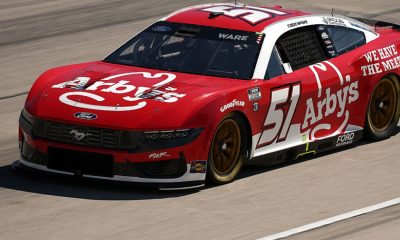
Rick Ware Racing switching to Chevrolet for 2026
-
Sports2 weeks ago
West Fargo volleyball coach Kelsey Titus resigns after four seasons – InForum
-

 Sports2 weeks ago
Women’s track and field athletes win three events at Utica Holiday Classic