
With the recruiting of 2026 high school graduates heating up this fall, UCLA coach Mick Cronin has a new plan.
NIL
College basketball coaches brace for legal challenges that could open NIL floodgates again


Actually, two new plans.
One for a landscape in which the House settlement provisions — school revenue-sharing and strict outside NIL limitations — effectively eliminate booster-driven pay-for-play schemes.
Another is for if lawsuits break down those limitations, leading to the sort of unrestricted free agency that resulted in top men’s basketball players pulling down seven-figure deals in the transfer portal last spring.
In other words, you better have an NIL collective with plenty of cash on hand just in case.
“You have athletic directors nationwide that want to believe in the new system, that it’s reality, but you have to be ready,” Cronin said. “You have to have Plan A and Plan B. You have to have Plan B because if it goes back to where it was this spring, and other people have Plan B and you don’t, then you’re right back to struggling to get players.”
People are also reading…

UCLA’s Kenneth Nwuba (14), Sebastian Mack (12), Lazar Stefanovic, rear, head coach Mick Cronin, second from front right, and Dylan Andrews (2) wait for a call from the referees during the second half of a matchup against Arizona in Tucson on Jan. 20, 2024.
Speaking to the Star and Blue Ribbon Yearbook earlier this month, as did several Western coaches, Cronin says he’s “not optimistic” that the House provisions will stick, especially after the College Sports Commission issued a statement last month that loosened restrictions on collectives.
Limiting NIL is “a noble attempt to put everybody on a level playing field, but I just don’t see in our country where it’s constitutionally legal to limit wages and tell people what their value is,” Cronin said. “I don’t see how it holds up in court.
“You hear all these coaches saying, ‘We just want to know the rules are, there’s got to be some sort of level playing field.’ But I don’t see how we get there.”
The CSC, which oversees the NIL GO program and its scrutiny of NIL payments, now says collectives and other entities can still sign athletes to NIL deals as long as they are for a “valid business purpose.” The CSC says it may require documentation proving the entity intends to profit from the sale of a product or service that the athlete promotes, but not whether the entity itself is profitable.
Morgan Lewis, a law firm that has a focus on college sports, wrote last week that the statement was “in response to a flood of backlash, including threats of action from counsel of plaintiffs in the House settlement.”
So maybe it was one step toward heading off actual legal challenges. Or maybe not.
“Three weeks after NIL Go started, they walked back the statement that that collectives couldn’t operate,” Cronin said. “So it becomes ‘How do we not get sued again? How do we not lose again?’”
Colorado coach Tad Boyle indicated he isn’t sure either. Known for running one of the most stable programs in the Pac-12 before moving to the Big 12 last season, Boyle would likely benefit from a new system that theoretically disincentivizes transfer activity.
If that system sticks.
“I don’t know the answer and I don’t think anybody does,” Boyle said. “If you listen to the powers that be, they expect it to stabilize. Not to sound skeptical, but I’m skeptical, because we basically have put a cap on something without collective bargaining.

Colorado head coach Tad Boyle, left, speaks with guard KJ Simpson during the first half of a game at Washington State on Jan. 27, 2024, in Pullman, Washington.
“I’m not an attorney and I don’t pretend to be an attorney. But from everybody I’ve talked to, that won’t work long term.”
The only thing for sure about NIL is what’s happened in the past.
College athletes were first allowed to profit from NIL back in July 2021, giving notion to the idea that football linemen could endorse a barbeque joint or a star quarterback might appear at a car dealership for a small fee. But NIL quickly sprouted collectives, booster-funded groups that now often pay six- or seven-figure amounts to top athletes in exchange for a sometimes minimal amount of promotional activity.
Collective payments have jumped dramatically every year since 2021 and exploded notably over the past year, with coaches, athletes and collectives alike all racing to complete NIL deals before NIL GO became effective once the House settlement was approved in June.
According to NIL platform and advisory firm Opendorse, collective spending jumped 182% between April 2025 from April 2024 and was up 824% from June 2024 to June 2025, when the House settlement was approved.
That suggested intense escalation, especially during the 2025 spring transfer portal window, when NIL deals for men’s basketball players rose 5.3 times in the weeks following the transfer portal’s March opening, according to Opendorse data.
“The concept of ‘front loading’ payments — stacking collective payments prior to the approval of the House settlement and subsequent July 1 cap year — was not just a theoretical possibility,” Opendorse wrote. “The data proved it.”
The jump in NIL activity threatened the viability of budgets that both ASU coach Bobby Hurley and UA coach Tommy Lloyd carried into the spring.
“I think we had we had a good number to work with … but the market I think was probably 2½ times stronger than it was last year,” Hurley said earlier this month. “That factored into decisions we made with the roster.”
Hurley lost 11 players and wound up replacing them with six international players and several veterans of lower levels of college basketball, while Lloyd added seven freshmen plus Harvard grad transfer Evan Nelson, a Salpointe High School graduate who returned home for his final season.

Arizona guard Evan Nelson (21) takes shots during a partially-open practice at Richard Jefferson Gymnasium, Aug. 12, 2025.
That helped the Wildcats offset the transfer portal losses of forward Henri Veesaar (North Carolina) and guard KJ Lewis (Georgetown), who left for what appeared to be better NIL opportunities.
“Did I anticipate this, basically the market, going as crazy as it did? Obviously I didn’t,” Lloyd said in June. “I think everybody thought that there might be a little bump, but to the level it did bump, I don’t think anybody could have predicted that. Fortunately, with the help of our athletic department, I think we were able to participate in a level that’s going to allow us to be competitive. And that’s what this program deserves.”
Things were just as challenging at Oregon State, which managed a 20-13 season while playing in the West Coast Conference last season during a forced hiatus from the now-rebuilding Pac-12.
The Beavers lost six of their last nine games, and coach Wayne Tinkle said some of the momentum was lost after “agents and folks” started calling players late in the season and telling them they could earn more if they entered the portal.
The agents were correct. Tinkle said his five starters last season together made about $400,000 — and those five are now making a collective $4 million at programs they transferred to last spring.
“Loyalty is really lost,” Tinkle said. “We’ve been heartbroken with a couple of kids in particular the last couple of years, where we gave them a chance, an opportunity that no other schools at our level did. They’re allowed to play through their mistakes and play when they’re young and really develop, then we lose them for their most fruitful years.

Oregon State head coach Wayne Tinkle, third from right, and his players circle up following home game against Colorado on March 9, 2024, in Corvallis, Oregon.
“It’s a tough deal. The reason we got into it was to really help mold young men as much as basketball players. That’s really taking a hit because it’s become mostly transactional.”
Like Hurley, Tinkle rebuilt with a combination of veteran transfers from lower levels of college basketball and international players.
But even coaches who could afford high-priced transfers last spring are sharing the same challenge as their less-endowed peers: They are annually flipping over half or more of their rosters, then attempting to rebuild chemistry every summer.
“It reminds me a lot of the two years I spent in the D league as far as building a roster,” says new Utah coach Alex Jensen, a former Ute standout who has played and coached at many levels. “ And there’s elements of Europe, too, because a lot of times in Europe, you’re building a new team every year.”
Also like Europe: Free agents often land where the money tells them to.
“No matter what players say about picking a school, they’re not going to pick schools that are offering them five times less money,” Cronin said. “No matter how good their relationship is with the coach, no matter how much they like the program. It’s just not gonna happen.”
Contact sports reporter Bruce Pascoe at bpascoe@tucson.com.
On X(Twitter): @brucepascoe

Continue Reading

Name, image and likeness (NIL) rights were created to finally allow college athletes to profit from their talent. That’s led to formerly unpaid amateur players becoming instant millionaires, using their newfound wealth to save and invest, help out family, or even share the money with their teammates.
But handing that much money to teenagers is also risky. Grown professional athletes have blown through millions of dollars in the past, and while the stories of “going broke” are more infrequent today, there’s still a risk.
In steps NIL financial advisors, whose sole focus is making money earned from college stretch further than the one to five years an athlete is in school. They advise clients on the benefits of saving, investing, budgeting, taxes, and saying “no.”
In the past 10 years, there has been a massive shift in player compensation. Former and current players across different sports have successfully challenged and sued for greater equity in college sports revenue, including increases in stipends (2015), the right to profit from their NIL (2021), and the right to receive direct compensation from their university (2025).
According to Opendorse, a company that facilitates NIL endorsements for athletes, it’s estimated that college football players alone earned $1 billion from NIL payments in 2024. The company estimates that total will nearly double ($1.9 billion) by the end of 2025 after the introduction of revenue sharing on July 1.
Didier Occident is a wealth management advisor at Milwaukee-based financial services firm Northwestern Mutual. He also runs a financial literacy program, Secure the Bag. It is for college and professional athletes.
Secure the Bag is a 60-minute presentation in which Occident discusses budgeting, personal credit, taxes, and other money matters. It puts the audience through an interactive budgeting game that requires them to make financial decisions based on real-world examples from the four years of NIL’s existence.
For example, there’s an athlete Occident represented who made an expensive, beyond-his-means purchase that got him down to almost no money — $75 to be exact. To get the player’s money back, he posted the item on Instagram for sale.
“There’s always that ‘Keeping up with the Joneses’ feeling, but now these guys gotta keep up with IG,” he said.
Occident began working with college athletes around 2018 when conferences began increasing some player stipends by about $2,000. He stressed to athletes at the time to view the stipend as a salary so that they know how to manage any kind of money.
“If you can’t manage $1,000,” Occident would tell the players, “you can’t manage $1 million.”
He’s presented at TCU, Florida State, Michigan, Oregon, Alabama, Tennessee, Oregon State and a few other football programs. He’s also presented with eight NFL teams, including the Los Angeles Chargers and San Francisco 49ers.
When Occident first talks with teams or meets with prospective clients, he asks them, “What do you want to achieve with your money?” The more specific the goal — to travel the world or one day open a food truck — the more faith Occident has in his ability to show them the steps to reaching it.
“Because they have something that is in their mind that is going to keep them walking that straight line,” Occident said.
There’s a widely held assumption that rich people will eventually lose all their money. Whenever the lottery gets to a certain amount, it’s been said that 70% of lottery winners eventually declare bankruptcy, even though that likely isn’t true. Much of the interest in the various gambling scandals plaguing the sports world stems from interest in rich athletes risking millions on sports betting.
But these are adults we’re talking about. What happens when a bunch of teenagers are handed millions of dollars? It’s easy to assume they’ll blow their riches just as quickly.

Financial Literacy For Student Athletes
Where college athletes spend their money isn’t all that shocking.
“Unfortunately, stereoptical things: the cars, clothes, the jewelry,” said Pat Brown, a wealth manager at Lawrence, Kansas-based financial services firm Creative Planning and the founder of “Financial Literacy for Student Athletes,” which specializes in money management programming for college athletes.
Brown was an all-conference linebacker at Kansas from 1994 to 1999, back when players received $600 monthly stipends compared to the estimated $5 million Texas quarterback Arch Manning is bringing in today.
“That was big money right there. Shoot,” Brown recalled.
During his final season, Brown took a class that introduced college athletes to basic financial literacy tools, such as investing and life insurance. Though Brown grew up middle class in the Ohio suburbs, he didn’t know anything about money management.
“Being Black, we just don’t talk about that stuff,” said Brown, author of the book, Financial Literacy for the Culture: Teaching What Wasn’t Taught-Credit, Budgeting, Investing, and Legacy for the Culture.
It is why Brown sees it as his purpose to teach today’s athletes how to earn, maintain and increase their wealth. He launched “Financial Literacy for Student Athletes” around 2021 and has presented at Kansas, West Virginia and Ohio.
Brown goes over opening bank accounts, the importance of credit scores/reports, and the various types of investment devices (traditional, Roth IRA, stocks, etc.). Through Creative Planning, which counts more than 500 college and professional athletes as individual clients, Brown helps his clients set up taxable and retirement accounts, establish limited liability companies, and review NIL contracts.
“I wasn’t exposed to this stuff until my senior year [at Kansas],” Brown said.
While working toward wealth for all college football players is the goal, it’s especially important for Black players, who make up nearly 45% of the sport.
Black people live within a system that legally held them back until about 60 years ago, creating a wealth gap that persists to this day: Median white net worth in America is almost six times that of Black net worth.
According to popular media such as ESPN’s “Broke” documentary, Black athletes are almost expected to blow all their money: Former NFL receiver Odell Beckham Jr. recently asked, “Can you make that last?” in reference to signing a $100 million contract.
But, young rich Black athletes aren’t any more irresponsible with their money than anyone else: Americans owe $1.23 trillion in credit card debt.
There is no group, Occident said, that has more opportunity to narrow that wealth gap than Black athletes.
“It is my mission to help them do what they can to erase the systemic part of what we’ve dealt with for 400-plus years,” he said.
Occident and Brown believe athletes are uniquely suited to handle money. The discipline to stick to a financial plan is no different than the discipline needed to play at a high level in college. Starring at the NCAA Division I level is almost impossible without being accountable and consistent.
“You don’t get that without being consistent and doing what you need to do,” Occident said.
Baltimore Ravens defensive back Malaki Starks neither had much money growing up nor did he know how to save it.
“It was like get money, spend money,” he said.
But after Occident’s presentation to the Georgia football team while Starks was on the roster, it eased Starks’ mind about managing his $160,000 in NIL deals.
Starks said he now has at least four investment accounts he manages. After getting his first NIL check his sophomore year at Georgia, Starks said he saved some, gave some to his parents, and the rest …
“I kept enough to get gas for the next month and go out to eat, like, twice,” he said.

Football
Elon Athletics
Jeff Yurk Voted First Team All-American Twice
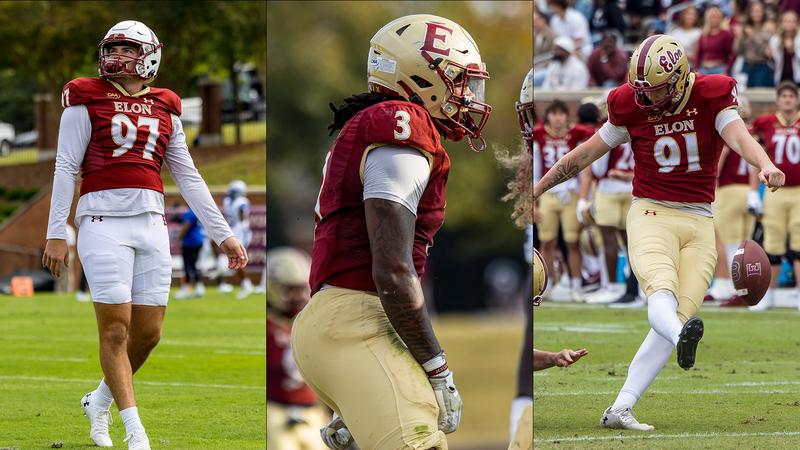
ELON – Elon redshirt senior punter Jeff Yurk highlighted three Phoenix who collected FCS All-American honors from four different organizations this week.
Yurk was selected twice as a first-team All-American and four times overall. Sophomore defensive lineman Kahmari Brown was listed as a second team All-American by three different outlets, while sophomore kicker Luke Barnes was named an All-American Honorable Mention by the Associated Press.
- First Team All-American (FCS Football Central)
- First Team All-American (Stats Perform FCS)
- Second Team All-American (Associated Press)
- Second Team All-American (American Football Coaches Association)
Yurk finished his fourth season with the Phoenix as Elon’s all-time leading punter. As a senior this fall, Yurk ranked second in the FCS and third in all of college football in punting average (48.3 yards). He tallied 17 punts inside the 20-yard line and 24 punts of greater than 50 or more yards. Yurk dominated his CAA competition during his senior season, averaging more than five yards per punt greater than any other punter in the league. He concludes his Phoenix career as Elon’s all-time leader in career punting average and has the top three seasons by punting average in program history.
- Second Team All-American (FCS Football Central)
- Second Team All-American (Stats Perform FCS)
- Second Team All-American (Associated Press)
Brown became the first Elon player ever with double-digit sacks in a season (12.0) during his standout sophomore campaign this fall. Brown broke Elon’s single-season FCS sacks record and tied the program’s FCS career sacks record (16.5) in just two years. He led the CAA in sacks by 2.5 and was the only CAA player with double-digit sacks. Brown ranked top-15 nationally in forced fumbles, sacks, and tackles for loss. The Jacksonville native was twice named CAA Defensive Player of the Week in 2025.
- Honorable Mention All-American (Associated Press)
Barnes was chosen as an Associated Press Honorable Mention All-American following his first full season as Elon’s starting kicker. The sophomore finished 15-for-18 on field goals and missed just one attempt inside 50 yards. He was a perfect 40-for-40 on PATs, the most in the CAA without a miss. His 85 points were the second most in the CAA among kickers and first on the team. On kickoff duty, he recorded 20 touchbacks on 49 kickoffs.
SUPPORT THE PHOENIX
STAY POSTED
For further coverage of Elon Football, follow the Phoenix on X (@ElonFootball) and Instagram (@ElonFB).
-ElonPhoenix.com-
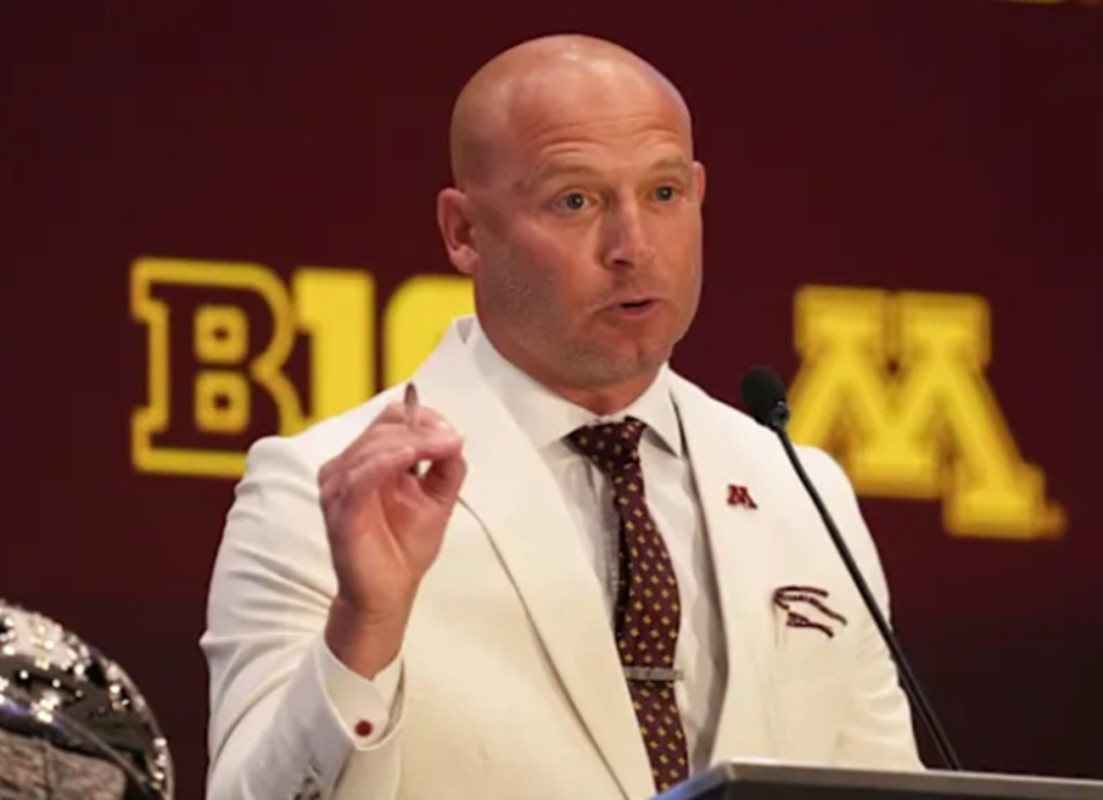
The Minnesota Golden Gophers are 7-5 this season following a season-ending home win over the Wisconsin Badgers with one final matchup left on Friday, Dec. 26 (4:30 p.m.) at Chase Field in Phoenix against the New Mexico Lobos in the Rate Bowl.
The Golden Gophers are led by charismatic head coach P.J. Fleck, known for his motivational slogans (‘Row the Boat’) and history of getting maximum effort and performance out of his oftentimes overmatched teams.
Advertisement
Fleck coaches in a brave new world of college football including NIL (Name, Image and Likeness) payments for college football players that are often set up by universities, granting lucrative opportunities for student athletes to earn off of sponsorship deals.
On Wednesday, Fleck spoke at a press conference during which he detailed the head spinning world of NIL payments and negotiations while stating that some offers used as bargaining chips by players are not real in his personal estimation.
Fleck’s Stunning NIL Admission
Fleck’s story on NIL was shared by Tony Liebert of ‘Bring Me the News,’ a media company based in Minneapolis.
Advertisement
“I don’t think the general public actually truly knows what college football truly looks like,” Fleck said.
He painted the picture of a complex process of negotiating contracts that lacks the structure of the National Football League’s professional contracts.
“I think that everybody has representation now,” Fleck said, with the goal of “getting the most money they possibly can.”
He spoke about the complex roles college coaches play in the process.
“The roles we’re in is like, you’re the head coach, you’re the president, you’re the owner, you’re the GM, you’re the director of player personnel, and you’ve almost got to be a negotiator as well of what you have in your budget…And you’re doing that without the systems that the NFL has in place,” Fleck added.
Advertisement
Fake NIL Offers Cloud Negotiation Process, Fleck Says
A media member commented on the lack of a salary cap in the sport, musing that it must be difficult for Fleck and other coaches to know how much each player is being offered by other schools before writing, proposing, offering and negotiating contracts.
“Sometimes those offers are real, sometimes those offers aren’t real,” Fleck added.
“It is a very unique environment to work in,” Fleck added.
“I truly believe…You could put a camera on somebody’s shoulder…You (could) do a reality show of what’s going on right now,” the Golden Gophers coach added, gesturing that it’s a wild, unpredictable situation.
Advertisement
“I don’t think the general public truly knows what college football looks like when you peel back the onion.”
Related: Penn State Fans Blast Nick Saban For Comments on New HC Matt Campbell
Related: Michigan’s Kenny Dillingham Chances Get Update From ESPN Reporter
This story was originally published by Athlon Sports on Dec 18, 2025, where it first appeared in the College section. Add Athlon Sports as a Preferred Source by clicking here.
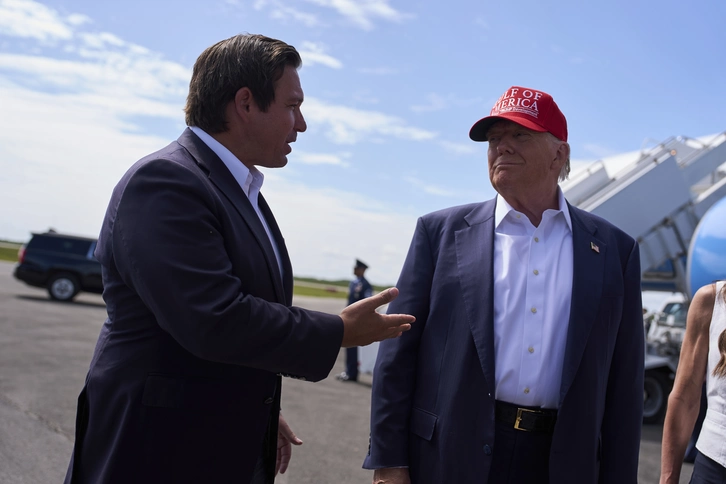
Gov. Ron DeSantis says college football is a “total mess” in light of athletes shopping around for better deals from programs, and that his efforts to reform it have been paused by Donald Trump’s White House.
Speaking in Sebring, DeSantis said he spoke to a bipartisan group of Governors “about a year ago” and said Governors on both sides of the aisle wanted to “come up with a framework.”
“Honestly, you really only need 10, 12 states, right? Because, you know, if you get Florida, Texas, Georgia, Alabama, Michigan, now you need Indiana, California,” DeSantis said, explaining that once states with “big-time programs” act, that would be enough to set up a workable structure.
But DeSantis said comments by Trump that the federal government planned to step in halted the state-led effort.
“So we’re like, all right, we’ll let the feds do it,” DeSantis added.

DeSantis said as early as last year that he wanted Governors to join him in some reform effort.
“I know they’re working on something, but I think it’s hit rock bottom just in terms of all the static that’s in the system,” DeSantis said.
He noted that “general managers” in college football make it “like a professional thing,” adding that many of the athletes recruited “haven’t even really produced that well.”
He also suggested that athletes are currently holding up programs for more money when they are performing.
“Now it’s like they have more rights than pro athletes,” he said.

“A quarterback will, you know, throw for four touchdowns. The third game of the season (he will) go, ‘Hey, coach, any more NIL money? Oh, I’m going to hit the transfer portal.’ And then you just go hop around schools. So you can play for four or five schools the way it goes now. And you can even play a few games, do very well, sit out and still get eligibility for the next year.”
Players’ mobility hurts programs, he argued.
“It’s hard to even know whether your teams are going to be good year after year because you don’t know who you’re going to lose. And then to do the transfer portal, right as we’re getting into the playoff, how does that make sense where these teams are going to have to make the decision?”
While the Governor stopped short of saying he regrets signing the name, image and likeness legislation that helped start the current cycle of professionalization of college sports, he does want a “happy medium” between athletes not being compensated and the current system.
But with time running out, reforms may not be realized before DeSantis leaves Tallahassee.
NIL
$64 million college football coach emerges as prime candidate to replace Sherrone Moore at Michigan

Less than a week after Michigan dismissed Sherrone Moore for cause, the Wolverines are navigating a condensed and high-pressure coaching search, with at least one prominent candidate already drawing serious consideration.
Michigan closed the 2025 regular season 9–3 (7-2 Big Ten) and will play No. 13 Texas in the Cheez-It Citrus Bowl on December 31 under interim coach Biff Poggi.
The program swiftly moved to remove Moore on December 10 after an internal probe concluded that there was an inappropriate relationship with a staff member.
While a cluster of candidates has emerged across national hot boards and analyst shows, college football analyst Josh Pate on Tuesday specifically singled out Missouri’s Eli Drinkwitz.
“I think Eli Drinkwitz’s name is involved here,” Pate said. “Names like Eli Drinkwitz get thrown out, and people are really quick to scoff at it… I have always been baffled by people who turn their nose up at Eli Drinkwitz. It’s well known in the SEC, he’s one of the better staffers in the country.”

A former offensive coordinator at Boise State and NC State who won a Sun Belt title at Appalachian State in 2019, Drinkwitz inherited Missouri in 2020 and built the program to back-to-back double-digit win seasons (2023-24) and an 8–4 showing in 2025.
That on-field progress led to a recent six-year contract extension in late November, which anchors him at roughly $10–10.75 million annually and includes significant buyout provisions.
Drinkwitz has also publicly pushed back on any rumors, calling coaching carousel speculation “just a distraction,” saying he loves Mizzou, is focused on the job, and recently signed an extension.
On the Michigan front, the program has indicated it hopes to finalize a hire before the end of December, a timeline that highlights how little margin the search affords.
In the next two weeks, expect intensified contact between Michigan’s search firm and top-tier candidates, a group many believe includes Drinkwitz.
Read More at College Football HQ
- $3.7 million college football head coach named clear candidate for Michigan vacancy
- College football program signs $1.2 million deal with NFL legend
- College Football Playoff team losing all-conference player to transfer portal
- $2.1 million college football QB announces return to Big Ten program

HELENA — It’s been a two-way relationship between the Carroll College and University of Montana football programs.
Some guys who didn’t quite stick with the Grizzlies — like current Carroll quarterback Kaden Huot — have had success in Helena. And on the other side of the equation, a standout few have jumped up from the NAIA level to the Division I FCS level.
Each of the past two seasons, Carroll has produced the Frontier Conference defensive player of the year. And each time, that player has subsequently transferred to Montana.
“It shows well for our ability to develop,” Carroll head coach Troy Purcell told MTN Sports, “where they didn’t have that opportunity, and now with our coaching and our structure here and our culture here, to develop fine young men and great football players.”
On Dec. 10, Saints cornerback Braeden Orlandi — the NAIA’s reigning tackles leader — announced he was leaving Helena for Missoula. And the year before, it was NAIA All-American Hunter Peck trading Purple and Gold for Maroon and Silver. And following his first regular season with the Griz, Peck made the Big Sky all-conference first team, something he credits his time at Carroll for making possible.
“They did a great job with taking me in, developing me not (just) into a football player, but a young man, as well,” Peck said of his four years at Carroll. “And so, those life lessons are ones that you take off the football field and are arguably the most important part of the game.”
So, in this transfer-portal-and-NIL-dominated era of college athletics, the Carroll coaching staff said they understand their position in the larger college football ecosystem.
“Let us develop you. Let us make you the best you can possibly be for two to three years, get some tape, get some good film out there,” Purcell said. “You get some great ball in along the way. And then when the time is right, and it looks good, you have an opportunity to go up, maybe put a little money in your pocket, and get to play at a higher level. So, maybe that kid could be a walk-on but now has an opportunity to play for us, and like I said, we can develop him.”

Motorsports4 minutes ago
Jimmie Johnson Reveals the Hardest Part About Retirement as a Full-Time NASCAR Driver

NIL8 minutes ago
College football players are earning millions – wealth managers are helping them keep it
Sports26 minutes ago
Time, how to watch Final Four

Motorsports31 minutes ago
New RACER magazine celebrates greatness, past and present

Rec Sports41 minutes ago
Letcher Co. man arrested after he reportedly threatened physician

Sports43 minutes ago
Volleyball Adds McCloskey to Beach/Indoor Rosters

Rec Sports50 minutes ago
NBA, global basketball community to take part in World Basketball Day

Motorsports52 minutes ago
Carvana and Jimmie Johnson Unveil 2026 Daytona 500 Paint Scheme – Speedway Digest

Rec Sports58 minutes ago
USA Lacrosse Works with Organizations to Inspire Female Coaching Opportunities

NIL1 hour ago
Three Phoenix Named All-Americans – Elon University Athletics

Sports1 hour ago
Merritt’s heart: A second chance at life and the Nebraska volleyball connection that sparked a smile

Sports2 hours ago
Will the University of Pittsburgh volleyball reach championship match?

Rec Sports2 hours ago
Gilbert council advances priority parks projects despite concerns

Rec Sports2 hours ago
Providing sailing news for sailors

Sports2 hours ago
Beach Volleyball Unveils 2026 Spring Schedule – University of South Carolina Athletics

Rec Sports3 weeks ago
First Tee Winter Registration is open

Rec Sports3 weeks ago
Fargo girl, 13, dies after collapsing during school basketball game – Grand Forks Herald

Motorsports3 weeks ago
CPG Brands Like Allegra Are Betting on F1 for the First Time

Motorsports3 weeks ago
F1 Las Vegas: Verstappen win, Norris and Piastri DQ tighten 2025 title fight

Sports4 weeks ago
Volleyball Recaps – November 18

Sports3 weeks ago
Sycamores unveil 2026 track and field schedule

Sports3 weeks ago
Utah State Announces 2025-26 Indoor Track & Field Schedule

Sports3 weeks ago
Two Pro Volleyball Leagues Serve Up Plans for Minnesota Teams

Motorsports3 weeks ago
Redemption Means First Pro Stock World Championship for Dallas Glenn

Motorsports3 weeks ago
Jo Shimoda Undergoes Back Surgery

Sports3 weeks ago
Texas volleyball vs Kentucky game score: Live SEC tournament updates

Motorsports1 week ago
SoundGear Named Entitlement Sponsor of Spears CARS Tour Southwest Opener

NIL3 weeks ago
Bowl Projections: ESPN predicts 12-team College Football Playoff bracket, full bowl slate after Week 14

Rec Sports3 weeks ago
How this startup (and a KC sports icon) turned young players into card-carrying legends overnight

Rec Sports3 weeks ago
Robert “Bobby” Lewis Hardin, 56






-
 Motorsports3 weeks ago
Jo Shimoda Undergoes Back Surgery
-
 Motorsports1 week ago
SoundGear Named Entitlement Sponsor of Spears CARS Tour Southwest Opener
-
 NIL3 weeks ago
Bowl Projections: ESPN predicts 12-team College Football Playoff bracket, full bowl slate after Week 14
-
 Rec Sports3 weeks ago
How this startup (and a KC sports icon) turned young players into card-carrying legends overnight
-
 Rec Sports3 weeks ago
Robert “Bobby” Lewis Hardin, 56
-

 Motorsports3 weeks ago
Pohlman admits ‘there might be some spats’ as he pushes to get Kyle Busch winning again
-
Sports3 weeks ago
Wisconsin volleyball sweeps Minnesota with ease in ranked rivalry win
-

 Motorsports1 week ago
Donny Schatz finds new home for 2026, inks full-time deal with CJB Motorsports – InForum
-

 Motorsports3 weeks ago
Increased Purses, 19 Different Tracks Highlight 2026 Great Lakes Super Sprints Schedule – Speedway Digest
-
 Rec Sports2 weeks ago
How Donald Trump became FIFA’s ‘soccer president’ long before World Cup draw