Connect with us
https://yoursportsnation.com/wp-content/uploads/2025/07/call-to-1.png

Rec Sports

U.S. Soccer has a new vision for youth development. Implementing it is ‘an astronomical ask’

Published

on


When Matt Crocker landed in America, as U.S. Soccer’s second-ever sporting director, he plunged into a few urgent tasks. In 2023, he had a men’s national team coach to hire and, soon, a USWNT coach to find too. He had 27 national teams to oversee, and his first priority, he has said, was “getting our own house in order.” But eventually, he stepped back — and saw deficiencies.

He asked Twenty First Group, a sport data firm, some simple questions: Over the past 10 years, how many of the world’s best soccer players have been American? From 2014 to the present, Crocker said, the data showed a “slight, slow decline” in top-50 and top-250 players on the women’s side. On the men’s side, Crocker asked a room of coaches in January, how many top-50 players do you think we’ve produced?

“Zero,” a man in the audience shouted.

“Correct,” Crocker said.

And “there’s a saying,” he later continued: “do what you’ve always done, and you will get what you’ve always got.”

His goal, and his most monstrous task, is to get American soccer doing things differently.

He knows, however, that he can’t do this alone. “What I pretty quickly realized,” Crocker tells The Athletic, “is that we can have a way of doing things, a philosophy internally; but the players that come to us are always gonna be the same players unless we impact the landscape.”

So he canvassed that landscape, the messy, “disjointed,” dollar-driven U.S. soccer landscape. Throughout his first year on the job, he listened and learned. Then he codified a vision, a “plan for changing and improving, hopefully, player development in this country,” he says. His challenge, and the riddle that no U.S. Soccer executive has ever solved, is implementing it at thousands of amateur clubs, across an alphabet soup of youth soccer sanctioning organizations, that he does not — cannot — control.

There, at the clubs, is where “95% of player development happens,” Crocker often says. That’s the theory and motto underpinning the plan, which he and U.S. Soccer have branded “the U.S. Way.” Crocker has thoughts on how a 13-year-old should train, and on how a 5-year-old should be introduced to the game. What he’s trying to figure out is how to transmit those thoughts to the actions of the 13-year-old’s and the 5-year-old’s coaches.

U.S. Soccer sporting director Matt Crocker


U.S. Soccer sporting director Matt Crocker heads the federation’s youth development initiative (Photo by Evan Bernstein/Getty Images)

In the past, he and others say, U.S. Soccer gurus would dictate to those coaches. The most transformative and disruptive plan to date, the Development Academy, relied on “standards” — and “technical advisors” who enforced them. A variety of “evaluation criteria,” from cadence of training to style of play, were graded and mandated at top youth clubs across the country. Many believe the DA reformed player development for the better, but it also angered members. “U.S. Soccer used a stick,” Crocker says, before relaying one analogy he heard on his listening tour. A stakeholder told him: “The only time we heard from U.S. Soccer is when they wanted to send a lightning bolt down to blow up something.”

Crocker, years later, has taken a different tack. Rather than dictate or tell, he wants to help and “influence.” He wants to inspire adoption of and alignment with his ideas. “It’s educating,” says Trish Hughes, commissioner of the Girls Academy, one of several youth leagues that Crocker needs on board, “and trying to pull people in to be a part of the process.”

But doing that, across this boundless landscape of independent clubs with their own incentives, who are often far more focused on fighting with one another for players than on producing future pros, is “not simple,” Crocker admits.

“The 5% is such an easy bit to change and tweak,” he said in January of U.S. Soccer’s operations. “But this 95% is a beast. A beast that I can’t even — I’m only just trying to begin to get my head around.”

Seven months later, he’s still trying. “This is — pfff,” he says with wide eyes. “This is something that I’ve never experienced.”


‘It feels like UEFA’

Crocker comes from a land where soccer is very different. Born in Wales, he made his name in England, first at Southampton, then at the English FA, the sport’s national governing body. There, he helped craft and operationalize “England DNA,” a five-pillar approach to elite player development that is credited with shaping successful England national teams of the 2020s.

But there, operationalizing a national plan is relatively straightforward.

“No one is more than three hours away from St. George’s Park,” Crocker says, referring to England’s national football center. “You could go on a roadshow, and cover the whole country, [visiting] every county association, in two weeks.” When the FA wants to push a new developmental philosophy or initiative, it engages with those county associations, which govern grassroots soccer; with professional clubs, which operate youth academies; and with coach educators, who work for the FA and serve the entire country. Everybody, and everything, can be interconnected.

In the U.S., on the other hand, everybody has their own motives. A youth club, which relies on pay-to-play fees for funding, must attract and retain players; a pro club might scout and poach those players; a college coach might recruit them so his or her team can win; Crocker might want them to develop into national teamers.

“What is needed to make youth soccer better can be very similar and very different to what pro soccer may need or want, or what the national team may need or want,” says Christian Lavers, president of the Elite Clubs National League (ECNL).

And in each of those segments, Lavers notes, “you have a lot of very strong-willed, very opinionated people.” Historically, “in American soccer,” he says, “there has really never been a table where youth soccer, pro soccer, college soccer and U.S. Soccer all sit together with transparent, respectful relationships to try and talk about moving the game forward. And so, what you end up having is all these different ecosystems of soccer pulling in slightly different directions based on what they see, and what they feel is important.”

Children play soccer at an AYSO, US Soccer event


(Photo by Adam Hagy/ISI Photos/USSF/Getty Images for USSF)

Even within the “youth soccer” category, there are multiple elite leagues for teens and multiple sanctioning bodies. Within the U.S. Youth Soccer Association, the largest sanctioning body, there are 54 state associations (two each in California, Texas, New York and Pennsylvania), each with its own season, own concerns and own structure. It’s a web of maddening complexity. “Sometimes it feels like 50 countries, it feels like UEFA,” Crocker says, referencing the European soccer confederation of 55 member nations. “It feels like trying to get the whole of UEFA on the same page with a philosophy. That is the bit that is our biggest challenge.”

He knows that he and the U.S. Soccer Federation, a national governing body with a budget less than half that of the English FA, cannot work hands-on with coaches in the same way England can, nor with clubs that span an area roughly 75 times as vast. They cannot identify, nurture and elevate all the best 13-year-old players.

They have discussed novel solutions, such as creating six or eight “regional youth national teams” to touch a broader selection of players, but remember: youth national teams are the 5%; “you guys are the 95%,” Crocker told the room of coaches in January. “Your ways are fundamentally gonna make the difference. … You make the sausage. We’re just a little machine at the end that turns.”

What Crocker and U.S. Soccer must do, essentially, is teach the sausage makers.


‘Putting the player’s needs above winning’

That’s why Crocker, in his second year on the job, set off on his own “roadshow.” He jetted coast to coast, south to north, evangelizing “the U.S. Way.” He presented at board meetings and symposiums. He spoke at conferences and conventions. The meat of his message was, and is, about “putting the player first, and the player’s needs above winning.”

For elite teenage prospects, that means individual development plans shared among youth national team and club coaches. U.S. Soccer is piloting a digital platform that will house performance data, training programs, film and more, so that all those coaches who sculpt a given player can align.

For 5-year-olds, of course, it means something very different. U.S. Soccer doesn’t have specific prescriptions for them — yet. Crocker, though, wants the federation to help shape playing environments at “every age and stage,” as he often says, “as soon as a child can walk.” He envisions a dad who signs his daughter up for rec soccer, and stumbles into coaching the team, with no prior experience. He wants that dad to log onto U.S. Soccer’s website and find instructive, illustrative answers to three key questions: “How do you make the environment fun and safe? How do you [give each kid] as many touches [of the ball] as you possibly can? And how do you make sure that you put the individual needs of the player before winning?”

That latter point, the prioritization of winning vs. development, is a source of constant tension in youth sports. There’s natural pressure to win, says Hughes, the Girls Academy commissioner, and “there’s always a scorecard in the girls youth soccer space,” where wins determine coach and club prestige. Crocker says it’s “a bit dog-eat-dog. It’s a bit ‘win win win, that helps me as a coach keep the players I want to keep, and helps me progress.’”

Inter Miami youth players


(Photo by Carmen Mandato/Getty Images)

Crocker believes, “wholeheartedly,” that this mentality hinders technical development, and must shift. Many others do as well. But there’s a significant subset of coaches who believe that the U.S. soccer intelligentsia has actually shifted too far toward “winning doesn’t matter.” Lavers, the ECNL president, is part of this subset and says: “We need to correct for that.”

“You cannot completely decouple winning and development,” Lavers argues. “Because the will to win, the fight to win, the understanding of what it takes to win, is something that you certainly don’t want to stifle.”

He adds: “I also think we need to have respect for the youth coaches, [and] respect that they know how to balance winning vs. development as it changes across all of the age groups, and not talk to them as if they can’t possibly understand that.”

This is the proverbial tightrope that Crocker must walk. He does not want to impose his views, but, in the absence of mandates or standards, how can he incentivize coaches to adopt them?

In January, he spoke about drafting a “bible” that anyone could choose to follow. Speaking now, via Zoom from a temporary office south of Atlanta, he delves into the more formalized field that will be crucial: coaching education. U.S. Soccer’s network of courses, educators and licenses has historically been exclusive. It’s “a drop in the ocean compared to what we’re gonna need to deliver to service the whole game across 50 countries,” Crocker says.

He knows that coaching coaches is unsexy. But it’s “the biggest lever that we can pull,” he says. In England, he explained, a young boy is “never more than 13 minutes away from a free elite program, with highly qualified coaches that have a playing philosophy and have an individual development plan for every single player.” In the U.S., there simply aren’t enough coaches with any of that. Many currently turn to YouTube and “try to find the best drill,” according to Chris Bentley, U.S. Youth Soccer’s director of education. U.S. Soccer and its members must arm them with better knowledge and resources.

Crocker dreams of having a USSF coaching education hub in each of the 50 states. He knows, of course, that this is an “absolutely unbelievable gigantic project,” one that would require many millions of dollars and could take decades to stand up.

But,” he continues, “it’s bloody exciting. The reason why I’m here is, I’m excited by these types of huge projects.”


‘A presentation and a document is not a plan’

At many stops on the roadshow, Crocker’s rhetoric has galvanized coaches and administrators. But it has been almost a year since he first outlined “the U.S. Way,” and many are still wondering: What, exactly, is it? How will it come to fruition?

“A presentation and a document,” says Mike Cullina, the CEO of U.S. Club Soccer and a U.S. Soccer board member, “is not a plan.”

Earnie Stewart, Crocker’s predecessor, also had a presentation. Claudio Reyna, U.S. Soccer’s youth technical director in the early 2010s, had a 123-page document. “Everybody,” Cullina says of Reyna’s curriculum, “bought it hook, line and sinker … and then it just disappeared.” Some have wondered skeptically: Is “the U.S. Way” just a well-branded repeat?

“Words on paper is lovely,” Cullina says. “But unless you can operationalize it, and unless you can get the buy-in necessary, it really isn’t going to have any impact.”

What he and others stress, though, is that U.S. Soccer has in fact changed. Crocker’s sporting department and a new soccer growth department are “doing a tremendous amount of work, building relationships” across the landscape, Cullina says.

“The change is dramatic,” Bentley says. “They have people involved, that are full-time employed, that are working directly with their members.”

“I’ve never seen the type of energy and activity that U.S. Soccer has brought to us — the time, the resources,” U.S. Youth Soccer CEO Tom Condone agrees.

Added United Soccer League president Paul McDonough: “This group has been very, very proactive in communication and collaboration.”

Tangibly, thus far, they’ve begun to coordinate a “unified youth calendar” with leagues like MLS Next. They are working on digital platforms. They are reaching out, building trust.

And they are refining what Crocker calls “a really robust plan,” but he acknowledges: “Being able to turn that plan into something that resembles some type of reality, and get it working, and fund it, I think is an astronomical ask.”

Paul Tenorio contributed reporting to this story.

(Top photo: Sandy Huffaker for The Washington Post/Getty Images)



Link

Continue Reading
Click to comment

Leave a Reply

Your email address will not be published. Required fields are marked *

Rec Sports

Moorhead Spuds win against Sartell Sabres – The Rink Live

Published

on


The Moorhead Spuds won when they faced the Sartell Sabres at Moorhead Sports Center on Tuesday, Dec. 23, 2025.

The final score was 10-3.

The Spuds took the lead in the first period, with a goal from John Gramer. Max Cullen and Evan Wanner assisted.

The Spuds’ Will Cullen made it 2-0 in the middle of the first period, assisted by George Arnold and Brandon Mickelson.

The Spuds’ Zac Zimmerman increased the lead to 3-0 halfway through the first, assisted by Brandon Mickelson.

The Spuds made it 4-0 with a goal from George Arnold late in the first, assisted by Drew Kortan and Will Cullen.

The second period ended with a 7-2 lead for the Spuds.

Brandon Mickelson increased the lead to 8-2 with a goal in the third period, assisted by Max Cullen.

Seamus Campbell also made it 9-2 with a goal two minutes later, assisted by Will Cullen.

Preston Deragisch narrowed the gap to 9-3 with a goal less than a minute later.

Drew Kortan then increased the lead to 3-10 with a goal four minutes later, assisted by Gage Kallhoff and Noah Petersen.

Next games:

The Spuds will face against the Cretin-Derham Hall Raiders on Thursday, Jan. 01, 2026, at Dakotah! Ice Center, with the Sabres set to challenge Blake on Monday, Dec. 29, 2025, at St. Louis Park Rec Center.

Read more prep coverage

Scoring:

Minnesota, Moorhead Sports Center

2nd December 2025

Sartell Sabres at Moorhead Spuds

10-3

1st period:

Moorhead Spuds, 0–1 (8:26) John Gramer

Moorhead Spuds, 0–2 (10:56) Will Cullen

Moorhead Spuds, 0–3 (11:29) Zac Zimmerman

Moorhead Spuds, 0–4 (13:50) George Arnold

2nd period:

0–5 (24:15) John Gramer, 0–6 (24:54) Brandon Mickelson, 1–6 (27:15) Lane Larson, 2–6 (29:43) Preston Deragisch, 2–7 (33:39) Will Cullen

3rd period:

2–8 (48:25) Brandon Mickelson, 2–9 (50:04) Seamus Campbell, 3–9 (50:59) Preston Deragisch, 3–10 (54:26) Drew Kortan


Link

Continue Reading

Rec Sports

Aleia Fenburg wins again as local wrestlers compete in Warrior Classic

Published

on


Belt, Lillian Fenburg, Baker finished in top three for Durango teams

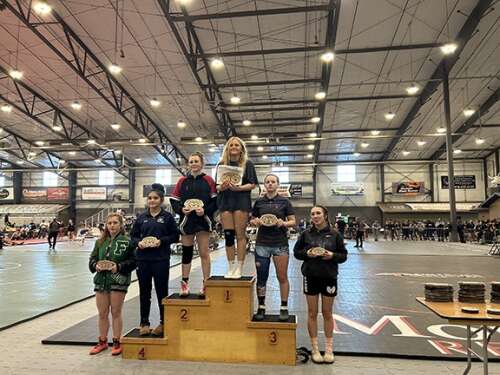
Durango High School girls wrestling’s Aleia Fenburg stands on the top of the podium after winning the 125-pound bracket at the Western Slope Showdown in Montrose on Dec. 13. Fenburg also finished first at the Warrior Classic in Grand Junction on Saturday. (Courtesy Ryan McGrath)

Durango High School boys wrestling star Ryan Dugan left a big void in the Durango wrestling program when he graduated in the spring, and it looks like Durango girls wrestling junior Aleia Fenburg could be the next star Durango wrestler.

After winning at the Western Slope Showdown on Dec. 13, Aleia continued her winning ways at the Warrior Classic in Grand Junction on Saturday by winning the 125-pound bracket. She led a successful Durango girls wrestling team that had four wrestlers place.

“It’s midseason, so what we’re looking for on the competition side right now is, where are we,” Durango girls wrestling head coach Ryan McGrath said. “We’re far enough along that our conditioning, technique and match strategy should be lining up if the goal is to place at state. The Warrior is an excellent place to mix it up with like competition … what you see are your weaknesses and holes.”

Aleia was ranked third in the 125-pound bracket and had a 3-0 win in her first match before a tough 7-5 victory against Lyniah Richardson from Douglas County in the quarterfinals. She then won 8-4 in the semifinals against Chrissa Hawkes from Bear River. It was a Western Slope Showdown rematch in the final, with Aleia facing Ignacio’s Lainee Bradley. Aleia got the job done again, beating Bradley 7-0.

McGrath complimented Aleia on her skills and technique, being on point along, with adjusting during and after matches. McGrath said she’s been very coachable.

“An opponent you’ve beaten is always dangerous,” McGrath said. “They’ve already wrestled with you; they know where you’re strong and where you’re not. That match was close because Lainee is so good. It was an opportunity for Aleia to be a lot more strategic and patient.”

Aleia’s twin sister, Lillian, also had a good tournament and finished third at 140 pounds. She won her first match, 3-0 and then beat Ignacio’s Krysten Neil 8-3 in the quarterfinals. Lillian’s run ended in the semifinals with a 9-0 loss to Grand Junction Central’s Rya Burke. Lillian rebounded to beat Eagle Valley’s Julia Borejszo in the third-place match.

Durango girls wrestling’s Marie Baker also finished third. The five-seed in the 120-pound bracket, Baker won her first two matches by a combined score of 23-2 before losing to the top-seeded wrestler, Harleigh Prater from Grand Junction Central, 3-1 in the semifinals. Baker then won against Falcon’s Zoe Greer in the third-place match.

McGrath knows neither Lillian nor Baker likes to lose, but there can be something gained from the loss at the first practice after the tournaments. They just need to look back at certain situations and learn from them. McGrath thinks Lillian might drop down a weight class.

“It’s a lot more about tuning the skillsets,” McGrath said about Lillian and Baker. “Every year there are a couple of people who rise to the top; we’ve seen that in Lillian and Marie’s (Baker) weight classes. There are girls there who are just really pushing everybody … I’m really pleased with where we’re at.”

Sydney McAllister had one of her best tournaments as a Demon and finished sixth at 105 pounds. McAllister had a tough freshman season last year, and McGrath is proud of her resolve and how much she’s improved this season.

There were plenty of other successful wrestlers from Bayfield High School, Durango High School and Ignacio High School at the Warrior Classic.

The Durango boys had one wrestler place, with Jacob Belt finishing third at 175 pounds.

“We’re in a transition year with a bunch of new kids and a bunch of new kids on varsity,” Durango boys varsity head coach Jason Silva said. “All I keep telling them is focus on scoring points, having fun and being in a good position … and they did it.”

Belt was behind in a lot of his matches, and Silva was proud to see his no-quit attitude paid off. He won his first match 11-3. Belt was down 7-3 when he pinned Andy Weipert from Green River. Belt dominated Mason Fresquez from Grand Junction 18-1 in the quarterfinals before losing to Canon City’s Elias Koonce 18-3.

After losing, Belt didn’t give up and made it to the third-place match, coming from behind once again to beat Palisade’s Eric Snodgrass via pin when Belt was down 9-4.

“The bigger guys do have a different style,” Silva said. “There are a lot more of those power-type throws and moves to where they don’t typically get underneath the guy because they’re bigger … the type of offense we create for Jake (Belt) is a lot different from what we’re doing for Ryder (Martyn) and Cash (Silva).”

Martyn had an off day for the Demons and didn’t place. Silva knew it was important to remind him that success is not a vertical line; it ebbs and flows. Martyn needs to be ready to come back to the drawing board and get better.

Ignacio’s girls wrestling program had three second-place finishers with Bradley, Larissa Espinosa and Madison Egger in their respective weight classes.

Before Bradley lost to Aleia in the finals, she won her opening round matchup, 13-3 and beat Edi Linascum from Grand Junction Central in the quarterfinals in a close matchup. Bradley then beat Green River’s Raygen Bauers 17-1 in the semifinals.

Espinosa won 19-4 in her quarterfinal matchup before winning 3-0 against Dawn Tahy-Sloan from Farmington. Caylee Miller from Bloomfield beat Espinosa in the 235-pound final, 5-0.

Egger finished second in the 100-pound bracket beating her first two opponents by a combined score of 23-3, before pinning Addi Whaley from Soroco. Egger lost 19-3 in the final to Fort Lupton’s Yaida Rodriguez.

On the boys side, for Ignacio, top local wrestlers Aven Bourriague and Lincoln deKay both placed, with Bourriague finishing fifth at 120 pounds and deKay sixth at 165 pounds.

Bourriague lost in the semifinals, but bounced back to win his fifth-place match. deKay was the top seed at 165 pounds and made it to the semifinals before losing a close 5-4 match to Aztec’s Cory Douglas. deKay then lost his fifth-place match.

Bayfield High School girls wrestling’s Violet Christner finished fifth at 100 pounds.

bkelly@durangoherald.com


Link

Continue Reading

Rec Sports

Child care funding methods ‘unsustainable’ for YSS | News, Sports, Jobs

Published

on


WHEELING — Officials with Youth Services System Inc. say changes in how the agency receives subsidies for the before and afterschool care the program provides to young students has significantly reduced available funding, and that continuing the programs under the new subsidy system is “unsustainable.”

“We’re no longer under a financial strain,” said Chris Sengewalt, CFO of YSS. “We have a financial crisis.”

Sengewalt and Sarah Gamble, supervisor of community based services for YSS, spoke before Ohio County Board of Education members Monday night and asked for their support and assistance in continuing the program.

They explained YSS is no longer being reimbursed based on the number of students enrolled in their programs, but instead on each student’s actual attendance. Children enrolled don’t always attend the program on a daily basis or may only attend part of the day.

Gamble noted that they had been before the board in September 2024, telling them a financial strain was coming down the pike.

“There were discussions statewide then suggesting that some of the funding sources currently being utilized were going to be depleted in the coming months,” she said.

Fortunately, the YSS programs were sustained through both 2024 and 2025, she continued.

But last fall, the West Virginia Department of Health informed YSS that beginning Sept. 1 they could no longer bill for subsidies based on overall enrollment. They would instead need to base the billing on actual attendance.

YSS serves students attending Bethlehem, Elm Grove and Middle Creek elementary schools. In these schools, 52% of the students attending the before- and after-school programs are eligible for the subsidies, according to Gamble.

“We have to keep a spot for them full-time if we are full capacity,” she explained.

There are 49 students actively enrolled in the before and afterschool programs at YSS and another 16 on the waitlist.

There are 22 billing days in the month and a student may only attend two days, Gamble explained.

“Previously, we could bill for the 22 days. Now we can only bill for the two days they actually attended,” she said.

YSS receives an average daily subsidy of $14.50 per student who attends the program. Billing is also now being broken down into two-hour increments for billing purposes, Gamble said.

“We’re presenting this information to you in hopes that as a board you might actually support this program,” she said. “At the end of the day, the last thing we want to see is preschools closed. Parents depend on these programs to make it to work every day.”

Board president David Croft asked her if the funding for the current school year already had dried up, and she told him it had.

“Wow. That’s a shame. It really is,” board member Andy Garber said.

Gamble explained that for the month of September the amount of supplement would have been $7,377 under prior billing practices, but YSS was only able to bill for $1,091.

“So it is fair to say the current configuration is not sustainable?” Croft asked.

Gamble answered yes and Croft inquired what options they might propose to the board.

Gamble said Marshall County Schools provides YSS with “scholarship funding” and the school district is invoiced every month which helps to cover some of YSS’s cost.

“That allows us to keep the billing at a minimum for our families,’ she said. “The last thing we want to have to do is raise the rate for our families — which we already did last year.”

Croft asked if the board needed to make a choice and if it would help more to fund before- or after-school care.

“If we can’t sustain the program the way it is, my recommendation would be to offer before care,” she said. “Then we can support two-hour delay days.”

Sengewalt said YSS is seeking funding to help them finish out the current fiscal year while they seek a collaborative solution in the future.

Superintendent Kim Miller suggested the school district put together a task force consisting of Gamble and Raquel McLeod, student services director for Ohio County Schools, and others to review what other counties are doing and what is working elsewhere.

The matter will be reviewed by board members and placed on the agenda for their next meeting at 6 p.m. Jan. 12 at the board office, 2203 National Road, Wheeling.


Today’s breaking news and more in your inbox


Link

Continue Reading

Rec Sports

Valley Boys: The U12 team redefining the “win” for a 4-year-old fighter | News

Published

on


LOGAN — For a group of 12-year-old baseball players from northern Utah, the most important play of their season didn’t happen on a diamond, but on the edge of a dance floor.

The “Valley Boys,” a U12 team from Richmond, recently traveled more than two hours each way to support a 4-year-old girl named Delilah at her dance recital—a performance that lasted less than two minutes, but represented a massive milestone in her 20-month battle with cancer.

The bond began six months ago at the Nixon Strong Baseball Tournament, an event that pairs youth teams with children undergoing cancer treatment. While many pairings end when the final out is recorded, the Valley Boys turned their assignment into a genuine friendship.

“From the moment they met her, the boys connected in the most genuine way,” said Alexis Grove, Delilah’s mother. “They got on her level, let her paint their nails in the dugout, and ran the bases with her. It quickly turned into a meaningful bond.”

That bond was put to the test recently when Delilah became severely ill and was hospitalized. Her family feared she would miss her dance recital, an event she had looked forward to as a way to reclaim a piece of the childhood stolen by nearly two years of intensive medical treatment.

When the team learned Delilah had been cleared to perform, the players and their families organized a caravan to ensure they were in the audience.

“Their presence was not convenient or easy, but it was intentional,” Grove said. “The recital itself lasted less than two minutes. But those two minutes represented a moment of triumph, resilience, and joy—and the boys made sure she never danced alone.”

For Delilah, who has missed typical peer connections and childhood opportunities due to her illness, the team has provided a rare sense of belonging. Grove noted that the players’ empathy shows that the impact of youth sports can extend far beyond wins and losses.

The story also highlights the ongoing mission of the Nixon Strong Baseball Tournament, which aims to bridge the gap between young athletes and families facing pediatric cancer. The tournament is currently accepting registrations for its upcoming event in June.

As Delilah continues her recovery, she does so with a roster of older brothers in baseball cleats cheering her on from the sidelines.


Link

Continue Reading

Rec Sports

Monroe residents help throw a Christmas bash for children in Bridgeport’s East End

Published

on


Joel Castillo, of Monroe, was on a mission to transport over 300 gifts to the S.W.A.G Community Center in Bridgeport to bring joy to 120 children this Christmas, but his Honda Pilot was stuffed. The fact that this was community effort saved him from making several trips for the party, held on Dec. 11.

“Jerry Peck, who coaches the Monroe Lions’ eighth grade team, volunteered with his truck, which is red like Santa’s sleigh,” Castillo, a Masuk Spanish teacher, said with a smile during an interview in his classroom last Monday.

The annual S.W.A.G (Students With Academic Growth Inc.) program event was organized by Castillo with assistance from Masuk students, University of Bridgeport softball players, Rhode Island Thunder softball players and coaches, and other volunteers.

Joel Castillo, bottom, left, of Monroe, with softball players from the Rhode Island Thunder.

On Dec. 11, Masuk students organized the gifts onstage and handed it all out to the children, and an arts and crafts section was staffed by eight UB softball players. Among the volunteers was Castillo’s daughter, Alyssa, who was a star player at Masuk and now plays for UB.

“Special thanks to Dawn Stearns,” Castillo said of UB’s coach.

Castillo coaches in the Rhode Island Thunder softball program. He said fellow coach, Pete Sinapi, told his team about the party and his players teamed up with Castillo’s students to make 170 cookie bags.

After the kids had their treats, they enjoyed a dance party. Castillo’s son, Jordan, served as deejay.

Drew Hall, an assistant softball coach in the Rhode Island Thunder program, volunteered to dress up as Santa and visit the children, along with Jen Olimpieri, a teacher at Middlebrook Elementary School in Trumbull, who went as Mrs. Claus.

Castillo said the 120 children, ranging from months old to age 14, are from families in Bridgeport’s East End, where he grew up.

The greatest gift

Castillo first became involved with the S.W.A.G Community Center Christmas party four years ago, when his childhood friend, Gary Nelson, who runs the center, approached him with the idea.
“I was afraid to take on this project, because I didn’t know I’d get the support to fulfill all of the kids’ wish lists,” Castillo recalled.

But Sofia Nwosu, a student member of the Spanish Club at Masuk, offered to help by reaching out to people she knew, and other student clubs at the high school also came forward.

Then Castillo thought of his colleagues through teaching and coaching youth sports, his friends and family.

The list of 50 children included their names, ages and wish lists. Castillo snapped his fingers, while recalling how quickly they completed the wish list. “I asked Gary for more kids,” he said.

Goodie bags.

This year, Castillo said he came to Masuk with a stack of sheets.

“I presented it to my students and my family — everybody who crosses my path,” he said. “Most say, ‘sure, I’m willing to help.’”

Julia Kinahan, a Masuk student, gave 10 sheets to her mother, Tina, who is a nurse, and she took it to Griffin Hospital so her colleagues could help out.

Castillo’s wife, Angie, took 10 sheets to Middlebrook Elementary School, where she is a teacher, and other family members also pitched in.

“If people don’t have time, they give me money to shop,” Castillo said. “It was wonderful to see everybody coming together. I didn’t realize I knew so many people.”

Four years ago, the Christmas party was held on Dec. 16, which is Castillo’s birthday.

“I realized how special it was to bring smiles,” he said. “The effort made me feel special. The greatest gift was to help others. I don’t see celebrating my birthday any other way than to give back.”

All respectful comments with the commenter’s first and last name are welcome.


Link

Continue Reading

Rec Sports

3 young kids killed in house fire; 4-year-old, parents and grandmother seriously injured

Published

on


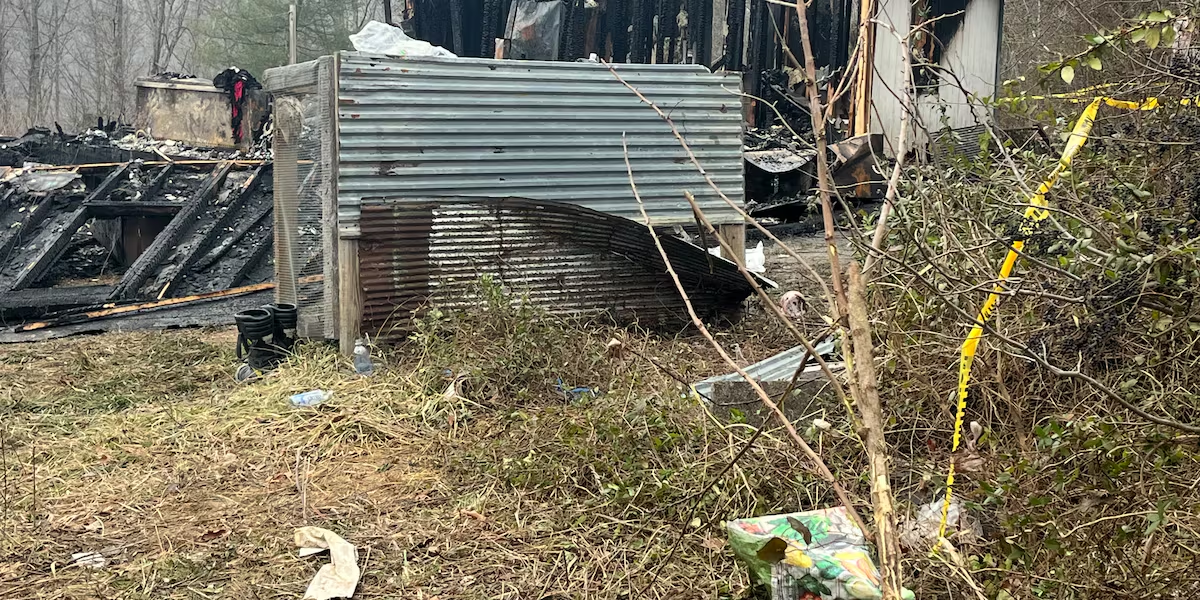
JACKSON COUNTY, Ky. (WKYT/Gray News) – Authorities say three children, the oldest of whom was 3, were killed in a house fire in Kentucky. A fourth child, the parents and a grandparent were all injured in the fire.

The Kentucky State Police received a request from local authorities to help with a Jackson County house fire just before midnight Tuesday. A preliminary investigation revealed three children, ages 7 months, 2 and 3, were killed in the fire, according to a press release.

A 4-year-old child was taken to the University of Kentucky Albert B. Chandler Hospital before being transferred to Nationwide Children’s Hospital in Columbus, Ohio, for further treatment.

Three adults were also taken to UK Chandler Hospital for treatment of injuries from the fire. They have been identified as 23-year-old Tyler Monst, 22-year-old Morgan Johnson and 76-year-old Florence Johnson.

The children’s uncle says Monst and Morgan Johnson are their parents, while Florence Johnson is his mother.

“Christmas is meant for joy and happiness, and obviously, this community is not experiencing that this year,” said Chief Zachary Bryant with the McKee Police Department.

Neighbor Orvel Hisel says he saw multiple first responders head down the road to the scene. There are expected to be numerous fundraisers for the family announced in the coming days.

“It’s just a sad time for our whole community. The loss of children and lives,” Hisel said. “What kind of means can we help that family? There’s a child that’s been flown to Columbus. That’s a ways off. If the family can go there, they are going to want to.”

KSP’s press release said the cause of the fire and the circumstances surrounding the deaths remain under investigation.


Link

Continue Reading

Most Viewed Posts

Trending