Connect with us
https://yoursportsnation.com/wp-content/uploads/2025/07/call-to-1.png

Rec Sports

What is ‘The U.S. Way’ for youth players? Plus: The goalkeepers on the way to Manchester

Published

on


The Athletic FC ⚽ is The Athletic’s daily football (or soccer, if you prefer) newsletter. Sign up to receive it directly to your inbox.


Hello! The country is colossal, as is its population. How does football in America establish a nationwide youth development plan and ramp up its output of world-class players?

On the way:

👁️ US Soccer’s vision of excellence

🪟 £3.11bn EPL window

💰 Inside Wrexham’s £33m spend

📅  Signed… for all of 33 days


The U.S. Way: A new vision for youth development — but it’s an ‘astronomical ask’


Sandy Huffaker for The Washington Post/Getty Images

The sporting ecosystem in the United States has a wide array of competing interests. The popularity of the NFL is vast. Basketball, baseball and ice hockey draw committed audiences. Further out on the fringes, football — or soccer — tries its best to muscle in.

On the flip side, there are plenty of people to go around. The population of the U.S. is roughly half the size of Europe’s, with a landmass that lends itself to countless football teams, amateur and pro. Millions of Americans embrace the sport, but at no stage have those who govern it created a fluent plan for nurturing the best from those who play it.

Some have had a go, such as ex-USMNT international Claudio Reyna, who, while he worked as U.S. Soccer’s youth technical director over a decade ago, drew up a document detailing best practice for developing junior footballers. It was 123 pages long, but it soon disappeared into the ether without leaving a scratch.

Now, however, U.S. Soccer’s Matt Crocker (below), the organisation’s technical director, is attempting to crack the dilemma of how to create a coordinated production line in America, via a project entitled ‘The U.S. Way’. Henry Bushnell spoke to him at length about it, and reading Henry’s article made me appreciate why creating something close to a one-size-fits-all training model is such an enormous undertaking.

Football in the U.S. is incredibly fragmented. It’s not like the UK, where the Football Association holds concerted influence over the entire pyramid. U.S. Soccer has less than half of the FA’s budget and little to no direct control over swathes of amateur, pro and college sides, and geographically, the country it wants to pull together is huge. Building and funding a cohesive scheme is, Crocker admitted, an “astronomical ask”, but something he’s actively taking on.

‘It feels like UEFA’

U.S. Soccer sporting director Matt Crocker


(Photo: Evan Bernstein/Getty Images)

It would be wrong to say that America doesn’t generate talented players. In the women’s game, historically, they have produced some of the best. But when Crocker got a group of prominent coaches together and asked them how many U.S. men’s footballers would make a world top 50 over the past 10 years, the answer was essentially ‘none’.

There’s something counterintuitive about that because of how big America is. But size is also a handicap. Take this as an example: the U.S. Youth Soccer Association comprises 54 different state associations. Certain states, such as California, boast two. Crocker joked that it “feels like UEFA”, the European governing body with 55 nations under its remit.

All of those associations have their own schedules and structure, so unifying a system whereby teams across the country coach primary school kids or teenagers consistently — and manage the most gifted of them to fixed standards — isn’t remotely easy. Crocker wants to create new structures, standardise the junior calendar, introduce a coaching ‘bible’ that would be accessible online, and hire more people to ‘coach the coaches’. He’s talking in terms of decades and millions of dollars of investment.

Because of all this, some who saw Reyna’s ideas come to nothing question whether ‘The U.S. Way’ has legs. As Mike Cullina, the CEO of U.S. Club Soccer, told Henry: “A presentation and a document is not a plan.” Crocker’s vision is a daunting undertaking, certainly, but not one he thinks he can shirk, or not if football in the States intends to go from strength to strength.


News round-up

  • Nottingham Forest’s tussle with the powers that be goes on. The club have successfully forced the chair of an appeal panel in a case involving them to step down after claiming he had an “apparent bias” against them.
  • USMNT midfielder Benjamin Cremaschi, 20, has taken a loan move from Inter Miami to Parma in Italy. The deal includes a permanent option.
  • Ilkay Gundogan left Manchester City for Galatasaray yesterday. He’ll remember his first spell at the Etihad more fondly than his second.
  • Another notable, and relatively pricey, transfer in the women’s game: defender Lucia Corrales is moving from Barcelona to London City Lionesses. London City have activated a £425,000 buyout clause in the 19-year-old’s contract.
  • Sections of West Ham United’s support have been fighting a running battle with their ownership for a while. Now one group has called for a boycott of their home Premier League meeting with Brentford in October, saying: “Our club is going to die.”

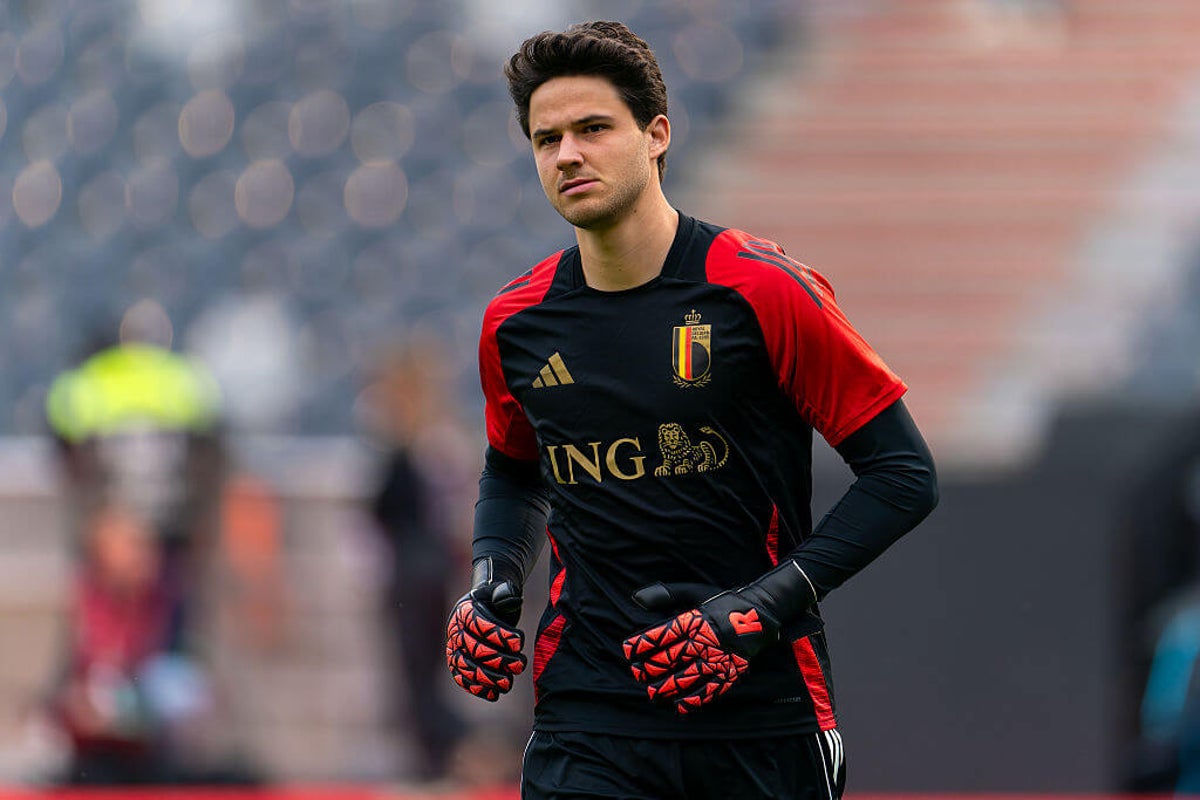
Playing for keeps: Logic behind Lammens and Donnarumma moves to Manchester


(Tom Goyvaerts/Belga Mag/AFP via Getty Images)

One of TAFC’s subscribers wrote in yesterday with what I thought was a fair question: why did Manchester United solve their goalkeeping issue “by buying another goalie who wouldn’t start for almost any other Premier League club?”.

He’s talking about Senne Lammens, the 23-year-old who arrived at Old Trafford on deadline day from Royal Antwerp in Belgium. No doubt at all that Lammens comes with limited experience — fewer than 100 pro appearances — so we asked our goalkeeping expert Matt Pyzdrowski to address that precise point: is he any good?

In Matt’s estimation, yes, he is. Lammens’ shot-stopping is strong, he can work the ball with both feet, and he’s competent in the air. How well that translates to the world’s most unforgiving division is a moot point (and I’m not convinced he usurps Andre Onana instantly anyway), but as Matt sees it, this is a signing to follow with interest.

Something else I wanted answered from the other side of Manchester, and which Jordan Campbell has covered this morning: given that Pep Guardiola said City would stick with Ederson and Stefan Ortega as their main goalkeepers this season, how did they end up with Gianluigi Donnarumma and James Trafford instead?

Where Donnarumma is concerned, it sounds like plain old common sense. He’s 26, he’s world-class, and he came onto the market out of the blue. You don’t look a gift horse in the mouth.


Show Viz

Now the dust is starting to settle, we can all take stock of just how wildly the Premier League lost its financial marbles in the transfer window.

Phil Buckingham’s review of the bull market is essentially a rundown of broken records. Total expenditure of £3.11bn ($4.15bn) is the highest we’ve ever seen, an increase of more than £1bn compared to 12 months ago. No club in English history has ever spent as much as Liverpool’s £420m outlay. They banjoed the British transfer record by buying Alexander Isak, and seven clubs broke their own.

The scary thing? Elite football isn’t getting poorer, so the transfer scene isn’t about to calm down. As others have said, recruitment is almost a sport within a sport these days — and our grading of Premier League teams in the window just gone drew the inevitable conclusion that Liverpool won.


Around TAFC


And finally…


(Andrew Redington/Getty Images)

In July, Chelsea sold teenage defender Ishe Samuels-Smith to Strasbourg in France. It was an easy deal to do (I’m assuming) because Chelsea and Strasbourg have the same owner.

Thirty-three days later, Chelsea repurchased the 19-year-old (above) and promptly loaned him to Swansea City in the Championship. Samuels-Smith didn’t play once for Strasbourg and was hardly there long enough to draw his first month’s wage. There was, admittedly, a risk that minutes would be few and far between for him in Ligue 1, but even so, this will go down as one of the quickest-ever U-turns.

📬 Love TAFC? Check out The Athletic’s other newsletters, including Full-Time, for women’s soccer.

(Photo: Joris Verwijst/BSR Agency/Getty Images)


Link

Continue Reading
Click to comment

Leave a Reply

Your email address will not be published. Required fields are marked *

Rec Sports

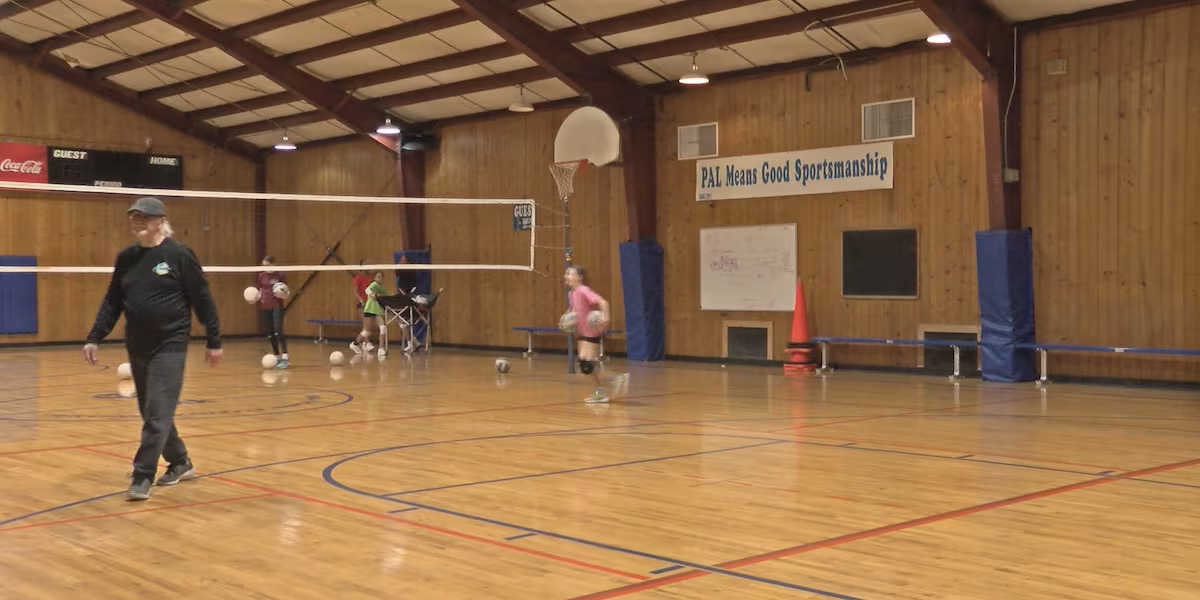
Police Athletic League (PAL) reports engagement numbers are down, offers youth sports programs

Published

on


FORT WAYNE, Ind. (WPTA) – Leaders with Fort Wayne’s Police Athletic League, or PAL, say 2025 has been a difficult year for the program due to low attendance.

PAL offers youth programs in Football, Basketball, Boxing, and Girls’ Volleyball, but they say it goes beyond athletics.

”It’s more of a community. Our volunteers don’t just focus on athletics, but they get to the heart of the child, and they truly care and mentor them, and care about them as a person,” said PAL Coordinator Tristin Lichtsinn.

The program, established in 1956, “was founded with the vision of empowering the youth of Allen County. Through athletics, we aim to foster character development and create positive opportunities for young individuals in our community,” as written on their website.

Although football has long been their biggest draw, Lichtsinn says 2025 has been unusually slow due to more programs popping up in the community.

For the first time this year, they are offering a Spring football program, taking in registrations right now.

Her husband, Nicholas, is a police officer who has volunteered as a football coach for 5 years.

“I didn’t know that it would be something that I would truly enjoy. I thought it would just be exhausting. Watching the kids grow and learn, and accomplish new tasks, and watching them just mature into young men and women has been really rewarding,” he said.

The philosophy he brings into the gig is all about character development.

“I’m one of those horrible coaches who don’t really care if we win. I want the kids to truly enjoy it. I want them to grow up and really love this sport. Odds are they aren’t gonna grow up and play professionally, odds are they won’t even play college,” Lichtsinn said.

Boxing has recently become one of their biggest draws under Coach Alberto Lozada, who, in just a few weeks, already has a class of more than 40 people of all ages.

“The most important (thing is) they come here, try to do something, keep the kids out the streets, because the violence is more and more,” Lozada said.

To learn how to enroll your kids in PAL’s programs, you can visit their website and Facebook page through these links. You can also call them at (260) 432-4122.

Anyone interested in signing up to be a volunteer or mentor is encouraged to do the same.


Link

Continue Reading

Rec Sports

Youth Matters and the role of sport and physical activity

Published

on


Our sector already delivers experiences that young people value: inclusive activities, strong role models through coaches and volunteers, and environments where young people can feel safe, welcomed and supported to be themselves.

When done well, sport and physical activity can be a powerful protective factor in helping young people thrive, not just cope.

Inequality remains a barrier

Youth Matters rightly highlights the need to halve the participation gap between disadvantaged young people and their peers when it comes to enriching activities.

This is an area where urgency is needed.

Our latest Active Lives Children and Young People survey shows that while overall activity levels are rising, stubborn inequalities remain.

Young people from the least affluent families are still the least likely to be active, and too often face barriers related to cost, access, safety and whether opportunities feel designed for ‘people like them’.

Less than half of young people say they are happy with the activities and services in their local area, and even fewer feel those opportunities reflect their needs and expectations.

Addressing this must be a priority if the ambitions of the strategy are to be realised.

Alignment with Uniting the Movement

The emphasis in Youth Matters on putting young people and communities at the heart of decisions, shifting from fragmented to collaborative working, and empowering local delivery strongly aligns with our long-term Uniting the Movement strategy.

Our Place Partnership approach is already focused on tackling inequalities, working alongside local partners and investing in long-term, community-led solutions.

Youth Matters validates this direction and reinforces the importance of sustained, place-based action rather than short-term interventions.

Our commitment

Delivering the ambitions of Youth Matters will require coordinated action across Government, sectors and communities.

Sport England is committed to playing our part: working with partners nationally and locally to ensure sport and physical activity are accessible, affordable, welcoming and shaped by young people themselves.

By listening to young people’s voices, focusing on the places facing the greatest challenges and continuing to address inequality head-on, we can help ensure this strategy delivers lasting impact over the next decade.

We look forward to continuing to work with Government, the youth sector and partners across sport and physical activity to turn this ambition into action for young people.


Link

Continue Reading

Rec Sports

Female youth sports injuries on the rise in Michigan, doctors say

Published

on


Editor’s note: This story was produced for the ear and designed to be heard. If you’re able, WCMU encourages you to listen to the audio version of this story by clicking the LISTEN button above. This transcript was edited for clarity and length.

Gabe Schall: Doctors are seeing an uptick in ACL knee injuries in young athletes across Michigan.

WCMU’s Tina Sawyer recently sat down with Stefanie Mills, one of WCMU’s TV producers to learn more about this debilitating injury. Mills recently produced a TV segment of this story for WCMU’s Pressing Matters. She started the discussion by explaining what the ACL affects.

Stefanie Mills: It’s a band of tissue inside your knee that connects the femur thigh bone to the tibia or the shin bone to the knee joint. But as I discovered, I was hearing more stories about ACL injuries and tears, and it wasn’t just boys, and it wasn’t just a specific sport. It was all different sports. There is a lot of research that shows that girls are significantly more susceptible to injuries.

Tina Sawyer: In the episode of Pressing Matters, the topic was, you know, why girls? And they had brought up hormones are changing in younger people, younger women.

SM: Yeah, the incident rate, it depends on an activity. Boys versus girls, girls are actually 4 to 8 times more susceptible to ACL injuries. And again, depends on sports, but there’s other factors too. And one of those factors includes monthly cycles, hormone levels. It’s also about girls’ knees are built different. Biological factors and physical factors, right? Girls’ bone structures are not the same as their male counterparts.

TS: Why are they on the rise now as opposed to say 10 years ago? And I know that’s a very broad umbrella.

SM: I think there are many reasons. What I learned by talking with Dr. Crawford and Kyle Mason is that the seasons are longer, the expectations are just more demanding overall. But seasons are stretching year-round, right? And so there’s just more demands being put, especially on younger bodies that are still growing. So it’s all about finding balance and also nutrition, getting enough sleep, stretching, all those things. They’re pushing themselves more.

TS: The intensity is there.

SM: The athlete that was featured, her name is Grace. She’s a soccer player. And through her journey, I kind of learned more and more about ACL injuries. You know, oftentimes require surgery that’s going to keep you out of competition for at least a year.

TS: She was a soccer player. Now, are you seeing those tears in like basketball players as well?

SM: Absolutely. There’s basketball players, there are soccer players, there are volleyball players, there are football players. It’s no one. Sure, one, some sports might have higher risks of it, but it can happen to anybody. And I think the biggest part for me when I started doing the story and researching it was this information has been out there, but you don’t know what you don’t know until you’re really, you know, until you’re going through something like this, until you get injured.

TS: What are ways that people can get support, protection for these young people when they’re going into a certain sport?

SM: There’s no one way to prevent an injury, but here are some ways that could maybe help. One thing the doctors talked about was sports sampling. And that is basically, at younger ages, playing multiple sports, because that allows your body to use muscles in different ways, as opposed to using the same muscles over and over in the same sport. Now, not everybody may want to play extra sports, so that’s where it’s really important to focus on strength training, core training, that you can support your whole body.

TS: That makes sense. I understand also that another component of getting support is mentally, because they feel as though they’re starting back at square one or they don’t feel like a part of the team anymore. What did you learn from that?

SM: Yeah, that was a really important piece. I think mental health, especially for younger athletes, is so, so important right now. It’s also important to be active, right? But then the mental health aspect, especially when you’re injured, you can find yourself in really dark times. So that’s where the whole teamwork comes in. And I really like how a lot of teams, they include those injured players in some capacity, right? Like from team managers maybe. So that’s all really important to just feel that camaraderie with your teammates and your coaches and your family and your friends, you know, to have a good, strong, solid support system there.

TS: Stefanie Mills, thank you so much for joining us.

SM: Thank you so much for having me, Tina.


Link

Continue Reading

Rec Sports

FIS encourages youth participation with Para Ski Nordic Action Day at Europa-Park

Published

on


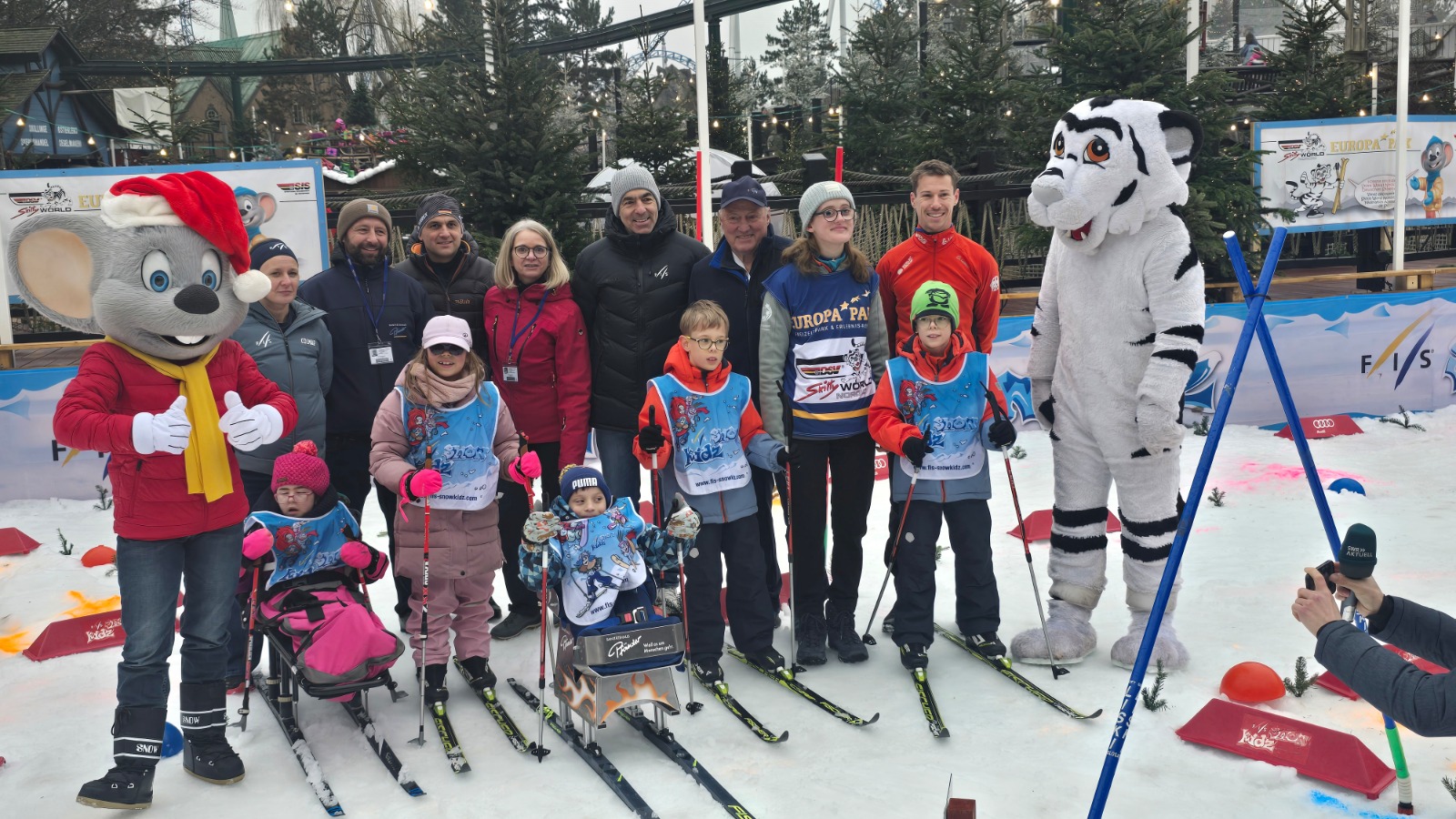
Earlier this month, a special action day for Para Cross-Country skiing took place at Europa-Park–Germany’s largest theme park, suited for year-round activities.

On 14 December, children with disabilities were given the opportunity to experience Nordic skiing for the first time at the Skitty World Nordic, the course of the German Ski Association.  

A fixture of the park’s winter season since 2016, the Cross-Country course was specifically designed for introductory purposes to assist those with no prior experience by providing a low threshold to skiing.

It was developed by Georg Zipfel, former national coach and current FIS Race Director for the discipline, and Anja Haepp who was crucial to the organizing of this project. The idea was supported by and brought to life with the commitment of Europa-Park and the German Disabled Sports Association.

Over the course of the event, 14 children with visual impairments, arm or leg amputation, or young participants who rely on wheelchairs, were involved on the day. For many, it was their introduction to the world of snow sports.

With the guidance of experienced coaches, such as Markus Sommerhalter, those in attendance enjoyed their first experience in a safe environment with a focus on joy, movement, and inclusion.


Link

Continue Reading

Rec Sports

Baldwinsville’s 1st year boys basketball coach is working to build strong culture and pipeline

Published

on


Basketball has been a big part of Brian Montanaro’s life for as long as he can remember.

Montanaro had his fair share of playing days in high school and college, but his transition to coaching came quicker than expected in the mid-2000s.

Fast forward to today, and he’s currently in his first season as head coach of the Baldwinsville boys basketball team.

“It’s been a great experience so far,” Montanaro said. “From a strategic side of things, when you graduate seven seniors like we did last year, that’s never an easy stepping stone into the following season and filling roles in the process. But we have a lot of good returning players who have stepped into the role and have been buying into everything we’ve been doing and sharing. They’ve been working their butts off, which is awesome. Our goal is to continually improve, one step at a time. And as long as you put forth that effort, whether it’s on the core, in the classroom or later in your professional life, that’s the attitude that’s going to make you succeed. It might not always show up immediately, but you keep up that consistency and the results will follow. That’s kind of the mindset we have.”

Before Montanaro entered the coaching world, he played at Bishop Ludden. A 2001 graduate, he was part of a 2000-01 Pat Connelly-Gaelic Knights squad that made a run to the New York State Class B semifinals.

“Having Coach Connelly as my coach was awesome,” Montanaro said. “He was a great coach and mentor. I had a very good three-year career there, and Coach Connelly was a big reason for it.”

Montanaro went to play for Daemen College (Daemen University), an NAIA Division II program that recently moved to NCAA Division II.

“I had different offers or (Division I) coaches that reached out to me, but a lot of them were like Ivy League and Patriot League schools where there weren’t really academic or athletic scholarships,” Montanaro said. “I was trying to find the right fit that I thought made sense for me. When I visited Daemen, I visited Canisius on the same trip. Once I stepped onto the Daemen campus, I fell in love with it. I thought the coach was awesome. I got to meet some of the players, I got a tour, and I met some teachers on the visit. It was just the way everyone was so friendly, outgoing, upfront and honest with what they were looking for and how I’d fit into the program. I knew right when I left the campus that that’s where I wanted to go.”

Montanaro was a 6-foot-5, jack-of-all-trades player for Daemen. He played every position for the Wildcats, receiving All-America and conference player of the year honors near the end of his career.

Daemen reached the NAIA Division II Tournament two years in a row, including an appearance in the Elite Eight.

“(College basketball) was an amazing experience,” Montanaro said. “I lived and breathed basketball. I was in the gym all the time, working out, playing, helping, and breaking down game film with the coach. I loved being on the road and pushing the team. I had a great group of kids that I played with, and we pushed each other all the time.”

Montanaro had a chance to play basketball overseas, but the opportunity to coach was calling. That’s when he decided to stay with Daemen for the long haul and also graduated from the college in 2006.

“I had a few offers to coach college,” Montanaro said. “It seemed like most of the coaches in our conference that reached out to me at one point or another said, ‘If you want to coach, we’ll be happy to take you on. We’d love it.’

“Then I had my coach at Daemen say, ‘I think I’m planning on retiring in the next couple of years. I’d love for you to come on, be the assistant coach, and take over the program.’ That was kind of the path that I went toward. I got my master’s degree while I was coaching.”

Soon after coaching at Daemen, Montanaro realized he wanted to start a family with his high school sweetheart, Ashley.

“While I loved coaching, it was hard to justify being on the road all the time,” Montanaro said. “Coaching and not being able to be part of my kids’ lives was not the way I wanted it to be.”

Montanaro took a break from coaching, then got back into it when his kids started playing basketball.

He and his family moved to Syracuse in 2016. From there, Montanaro and his family became involved with the Baldwinsville Sting, a youth basketball program within the area.

“I got involved with it from there and then, with my knowledge and background and having both boys and girls in the program, it was a natural fit,” Montanaro said.

Montanaro coached some of the Baldwinsville Sting squads that his kids were on. In 2021, he took over as president of the entire program for a few years.

Right before the 2024-25 season, an opportunity arose to be an assistant under head coach Tom Brown for the Bees’ varsity squad.

Montanaro credits his time with the Baldwinsville Sting for his transition to coaching high school basketball.

In the midst of working on his physical education certification, Montanaro was already a substitute teacher within the Baldwinsville Central School District.

Coaching at the same time made sense for Montanaro.

“(The Baldwinsville Sting) kind of led its way into me getting into the school and the varsity program and a unique position to help build a basketball culture,” Montanaro said. “At B’ville, that hasn’t always been here and that’s our goal over the next few years here is to keep building that connection from the ground up with a youth level up through the high school program.”

When Montanaro stepped in as the next head coach at Baldwinsville for the 2025-26 season, the pipeline between the Sting and the high school program solidified even more than before.

“I think that pipeline is huge for helping with that culture and building it,” Montanaro said. “There are a lot of great parents who volunteer and help with coaching with the Sting program. Being able to be connected to them and all the players, knowing me from seeing me at Sting (games and practices) and seeing me at tryouts and summer camps, and now seeing me there and then coming to the games and seeing me coaching, they can see the same things I’m teaching (on varsity). There might be some tweaks and a little bit more advanced, but teaching them that this is what you’re building toward. It’s been extremely helpful teaching my own kids and their teams, and they see it at both levels and see that coaching style. I’m trying to bridge it all with that. I think it’s great for the program and something that’s only going to be beneficial in the long run.”

Montanaro’s own children are following in his footsteps. His oldest daughter, Lilly, is on the Bees’ JV girls basketball team. Maximus is one of Baldwinsville’s modified basketball squads, and some of his kids currently play for the Sting.

Montanaro’s varsity squad played in the Rome Free Academy Invitational over the weekend. As the Bees trek through the season and beyond, Montanaro will be there to guide them.

“There are a few things we talk about regularly in practice,” he said. “One is that it is all right to make mistakes. It’s just a matter of how you learn from those mistakes and how you keep building on them every day. It’s about a growth mindset and always getting better each day. As long as you bring a full effort every day, we’re going to get better. You’ve got to push yourself and the person next to you.

“We’ve been using the term ‘hive mentality,’ and as the Bees, we’re all in this together. We’re one team. We’re one hive and one drive. We have one singular goal, so it’s about us building together. It’s not about one person always standing out and only doing things. It’s about what can I do to make the player next to them better, which is going to ultimately make me better and the team better. Having that consistency is what you need to really improve and build over the course of the season or over the course of a few years in your career.”


Link

Continue Reading

Rec Sports

‘Batter Up!’ Dos Pueblos Little League Calling for Youth Baseball Umpires | Sports

Published

on


Dos Pueblos Little League is recruiting middle school and high school baseball players to umpire Little League games this season.

Prior umpiring experience is preferred, but not required. Dos Pueblos Little League has an Umpire Board member who will help with training, but baseball knowledge is a must.

Gear also provided and Little League umpires can earn $40 per game or receive volunteer service hours.

Umpiring Little League is “a great way to build leadership skills and stay involved in the game,” organizers said.

To apply, email presidentdpll@gmail.com.


Link

Continue Reading
Technology9 minutes ago

Abu Dhabi to Showcase Its Esports and Motorsports Excellence: Gran Turismo World Series 2026 Kicks Off in the UAE

Motorsports13 minutes ago

Chase Elliott 2025 season in review: Two wins, Round of 8 appearance highlight big year for the 9 team

NIL15 minutes ago

Former Tennessee QB Nico Iamaleava returning to UCLA for second season

Rec Sports26 minutes ago

Police Athletic League (PAL) reports engagement numbers are down, offers youth sports programs

Motorsports29 minutes ago

Big Machine Racing Welcomes Retina Surgeon Dr. Patrick Staropoli to the O’Reilly Auto Parts Series for Full-Time Competition Beginning at Daytona – Speedway Digest

Rec Sports33 minutes ago

Youth Matters and the role of sport and physical activity

Rec Sports41 minutes ago

Female youth sports injuries on the rise in Michigan, doctors say

Sports44 minutes ago

Volleyball Assistant Coach in Clinton, SC for Presbyterian College

Motorsports45 minutes ago

Greenville land use ordinance addition moved to June town meeting -Piscataquis Observer

Rec Sports49 minutes ago

FIS encourages youth participation with Para Ski Nordic Action Day at Europa-Park

Rec Sports58 minutes ago

Baldwinsville’s 1st year boys basketball coach is working to build strong culture and pipeline

Sports60 minutes ago

Wisconsin volleyball offseason off to crazy start

Motorsports1 hour ago

CLIMBING: How the All-Time Win List Looks After 2025 – Speedway Digest

Technology1 hour ago

PlayStation Market Accelerates Global Gaming Evolution:

NIL1 hour ago

Four takeaways from the first weekend of the College Football Playoff

Most Viewed Posts

Trending