
Rec Sports
BUSINESSMAN SUES TAX COLLECTOR — OVER KIDS BASEBALL



In case you’ve been living under a rock, baseball is a big deal in Key West, so much so that when a prominent Key West businessman recently sued the county tax collector, the complaint was not over anything related to business or taxes, but rather a baseball team for second graders.
Businessman Peter E. Batty, president/owner of United Atlantic Insurance Group, co-founder and current chairman of Gulf Atlantic Bank and owner of ICAMCO property management, has sued Monroe County tax collector Sam Steele for $250,000, claiming defamation related to the Florida Keys Bull Sharks, a nonprofit travel baseball team for kids 8 and under.
Steele is the coach and board president of the team; and, until Aug. 26, Batty, whose son played on the team until recently, was also a Bull Sharks board member, according to state records.
The defamation lawsuit was filed the same day as Batty’s removal from the board and his son’s removal from the team, according to court records.
The lawsuit claims that Steele sent one or more text messages to others involved with the baseball team that included defamatory statements about Batty. The message in question was addressed to Batty and his wife, Jessie, and reportedly was sent to both of them, as well as to other Bull Sharks board members. The text message from mid-July appears in full below:
“Peter and Jessie:
“I have put more time and energy into building this organization than most people probably realize, and as the founder, it’s my responsibility to protect its integrity and values. That includes making difficult and uncomfortable decisions when those values are repeatedly challenged.
“Sitting on this has been stressful and mentally exhausting. After weeks of reflection, conversations, and efforts to find another solution, I have decided that the Bull Sharks will move forward without your involvement. Peter will no longer serve on the Board, and we will be filling the roster spot with another player.
“I am not going into specifics here, but the ongoing issues have been thoroughly documented and considered over time. These concerns have built up for months. I have been patient, direct, and clear about expectations, but the pattern of deflection, dishonesty, and disregard for coaching decisions and the commitment other families have shown by reliably putting the team first has caused tension that others both inside and outside the team have noticed. I can’t allow that to affect the team any longer.
“It’s unfortunate that I need to send this in a group text with the Board and the head coach but putting it in writing is necessary to prevent any further misrepresentation of my words. The mutual trust, respect, and structure that holds this team together have been tested for too long, and I take ownership for allowing it to continue. Everyone has made sacrifices to support this team, and my priority is to protect what they have helped build and who we are building it for.”

That message from Steele is included as an exhibit in the lawsuit, which was filed by attorney Stuart Grossman. The legal complaint states, “While not a public figure, Plaintiff (Batty) enjoys a well-earned reputation in the tight-knit Key West community for integrity, honesty, and respect for others. People who know him or know of him know he is a person who can be trusted and counted upon to be honest and straightforward. As set forth below, Defendant (Steele) has told multiple people that Plaintiff is not such a person.”
In addition, the lawsuit claims that “(Steele) was the President. (Steele) wrote the by-laws to make him the autocratic ruler of the team.”
“As a direct and proximate result of the Statement, Plaintiff has suffered damages including, but not limited to: (a) Injury to reputation; (b) Mental anguish and emotional distress; (c) Loss of income or business opportunities; and (d) Other special and general damages to be proven at trial,” the lawsuit states.
Steele told the Keys Weekly that he had been advised by his legal counsel not to comment on the pending litigation. Batty referred questions to his attorney, Grossman, who told the Keys Weekly that he and his client are looking forward to deposing Steele “because we don’t have any examples” of the behavior that Steele accused Batty of.
“We have no explanation other than that (Steele) rules with an iron fist. You don’t have someone just appoint themselves a potentate (monarch),” Grossman said.
The lawsuit, as well as a warning letter about the potential lawsuit that was sent to Steele last month, has become the subject of much discussion on local social media channels.

On Aug. 11, Grossman sent a letter to Steele, informing him that he had 14 days to correct his alleged defamatory actions. Failure to do so would result in a lawsuit being filed against Steele for $250,000. The required corrective actions included public retractions and apologies for the statements Steele made in the message and reinstatement of Batty to the team’s board and his son to the Florida Keys Bull Sharks team.
The team’s website states, “Our purpose as a youth travel baseball team is to provide kids an opportunity to develop their skills while instilling values of teamwork, discipline, respect and dedication that will serve them well beyond the sport. Florida Keys Bull Sharks is a nonprofit youth sports organization dedicated to developing young athletes through competitive sports. At FKBS, we believe success is earned, not given.”



A player is pushed during a game of Sharks and Minnows. (Image: Joshua Huston)
Approaching the gym at Bellevue’s Highland Community Center, the familiar sounds of bouncing balls and kids calling out to each other echo down the halls. Inside the doors, more than a dozen young athletes, from grade school through high school, are rolling across the floor in specialized sports chairs — a typical practice session for the Seattle Adaptive Sports (SAS) wheelchair basketball teams.
Sports have been adapted to meet the special needs of student athletes in Greater Seattle for decades, providing opportunities for countless athletes to compete on teams and producing several current and former Paralympians. Seattle Adaptive Sports has been part of the community since the early 90’s, organizing teams that compete in sled hockey (players sit on specialized sleds low to the ice), soccer for athletes in motorized wheelchairs, goalball for visually impaired athletes, and wheelchair basketball (players propel themselves across the court and older age groups shoot on regulation hoops).
SAS teams regularly compete against programs from Tacoma, Spokane, and Portland, and travel to compete nationally.
Back at the community center, the younger athletes are wrapping up their practice session while older players are gearing up for more intensive drills. SAS runs three youth teams: varsity for ages 14 to 18, prep for kids ages eight to 13, and the Micro Sonics for players ages four to seven. Their overlapping practice times create mentoring opportunities between age groups, and many of the older players have passed down sport chairs they’ve outgrown to younger athletes.
SAS designs all its programs to be as accessible as possible and to lower or eliminate the many barriers to participation, including the significant cost of equipment, facility rental, and travel. They use grants and fundraisers — including their annual gala, coming up on March 7 — to fund scholarships for athletes and purchase and maintain equipment that can be loaned out to new members. All of this is with the goal of increasing the number of participants and growing adaptive sports locally.
Current SAS families come from as far north as Bellingham and as far south as Auburn.
Brennan Henderson, 16, attends Auburn Riverside High School and began playing wheelchair basketball just before turning seven. He is now one of the most experienced players in the program.
“I started with power soccer. I’ve tried sled hockey before, but my main sport with SAS is wheelchair basketball,” Henderson says.
The sophomore doesn’t remember being nervous their first time on the court.
“My mom showed me videos of wheelchair basketball, so that probably helped me know what to expect,” Henderson says. “I kept turning in circles because I didn’t know how to use the chair and my arms were really impacted by cerebral palsy. Over time, I became stronger and my arms became stronger and I learned how to adapt myself to use the chair.” Henderson has not only adapted but excelled, earning “most valuable player” honors at the West Coast Championships in 2024.
Jess Thomson has watched a lot of kids like Henderson develop and find success through SAS programs. A member of the board and parent of an SAS athlete, she first introduced her son to playing sled hockey with the adult team at the Kraken Community Iceplex before becoming a founding member of SAS’s new youth team. Her son now participates in multiple sports with SAS and Thomson has seen him compete in ways that a lot of kids with disabilities aren’t able to access.
“I think one of the things that able-bodied people take for granted is the luxury of being able to compete,” explains Thomson. “Every kid in this organization has been through surgeries and procedures. These kids have grit, they are really tough.
But it’s a very different kind of toughness to learn how to compete athletically. And every person in Seattle Adaptive Sports has that opportunity,” Thomson says. “Once kids come out and try it, they wind up sticking with it because they are drawn to sports the same as anyone else.”
SAS works with new members to help orient them to the sports they are interested in. For some, like Thomson’s son, who uses forearm crutches off the court, it may be their first time in a sports chair. And with sled hockey, where able-bodied siblings are encouraged to join practices, it may be their first chance to play a sport with a family member.
Interested in becoming involved with Seattle Adaptive Sports? Contact info@seattleadaptivesports.org for more information.

In his first media availability since the trade of four-time All-Star Trae Young, Atlanta Hawks general manager Onsi Saleh on Monday thanked Young for all he did for the franchise but said the Hawks liked the players they got back and weren’t the type of team to wait if they had a good deal.
The trade late last week, which leaked near the end of Atlanta’s win over the New Orleans Pelicans on Wednesday but didn’t become official until Friday, sent Young to the Washington Wizards for 34-year-old guard CJ McCollum and reserve forward Corey Kispert. Around the NBA, it was widely viewed as a salary dump to avoid Young’s $49 million player option for next season.
“If there are deals to be done, why wait, is my philosophy,” said Saleh, who replaced Landry Fields in April. “If you like something that makes a lot of sense, we’re going to do that. We just do what’s best for our organization. And, you know, I’m not one to really wait on anything like that. Trae has been so huge in our community.
“Him and (his wife) Shelby, what they’ve done, we just wish them the best. They’ve been phenomenal for our organization. (We’re) talking about a guy that’s been the face of our franchise for quite a long time. I really wish him the best, and he’s going to do some cool stuff over there, too.”
“But we like the trade, and what we did was something we really thought would help us now and in the future,” Saleh added. “The players coming back, I think they’re excellent fits with us and make a lot of sense for us, and we get deep in our rotation, too. I think you guys kind of saw a little bit of that last night (in a 124-111 win over the Golden State Warriors).”
Removing Young’s $49 million contract from next season’s books also gives the Hawks considerable offseason flexibility, including the possibility of being a cap-room team in 2026-27, and Saleh didn’t deny that was part of the trade logic.
“When we go through all the calculus of making the deal, there’s elements of the financial flexibility, the optionality, which is huge for us, but also (liking) the players we’re getting back,” Saleh said. “And just having that optionality in this current cap environment, you guys are seeing it. You guys have seen the repercussions of it and the consequences if you’re not diligent in how you spend, in your cap space.”
The emergence of young stars Jalen Johnson and Nickeil Alexander-Walker, in particular, served as catalysts for the trade. Although Young had played in only 10 games due to an early-season knee injury, the core had proven in his absence that it could still thrive.
“We’ve learned a lot about our team this year,” Saleh said. “I think you guys have to, right? Watching our group and the evolution of the guys that we have out there and the youth movement that we’ve got going on as well. I think, again, the emergence of some players on our group, and how it all fits together was really key here …. It was just the right move for us.”
“Jalen’s game has evolved so much, and he’s doing some amazing things on the court. Most importantly, I think he’s making his teammates better as well,” he added. “And that’s how we kind of look at this as like as the group grows. It’s the group, it’s not simply just one player either, right? It’s Jalen, it’s Dyson (Daniels), it’s Onyeka (Okongwu), it’s Zacch (Risacher), it’s Nickeil. We got two guys, Nickeil and Jalen, who have just made tremendous leaps, and when Dyson’s on the ball, we’ve seen that leap as well. So, again, it just comes down to what we’re seeing and how this fits the entire group rather than one person.”
Finally, Saleh wouldn’t comment on a possible extension for McCollum, whose deal expires after the season.
“We’ll see where that all goes as the season comes along, but CJ’s been awesome,” Saleh said. “He’s somebody that I think could fit here long term as well. I’m really, really excited about having him here. But yeah, I can’t really say anything about extension talks and negotiations.”
Rec Sports
DVIDS – News – American, Japanese youth basketball players forge bonds, learn fundamentals during sports exchange

After the shot, a mob of American and Japanese children and teens swarmed on Quentin to congratulate him. In that moment, their shared enthusiasm for basketball transcended any language barrier and brought them together for a spontaneous outburst of celebration.
The attendees, including both children from the Camp Zama community and more than 50 invited Japanese players from nearby junior high schools and sports teams, were at the Youth Center Jan. 10 for a bilateral basketball exchange.
Jarred Serrano, Camp Zama’s youth sports and fitness director, started the event primarily to expand on the ongoing relationship between the installation and its host-nation neighbors in the cities of Zama and Sagamihara. From there, he said, his goal is to form competitive teams made up of the younger players and help develop their skills as they feed into the high school program here.
“Being able to play with and train alongside the local-national players helps everyone, because we’re able to host them more frequently and get more practice than if we were relying on playing in a single-season league,” Serrano said. “We’re trying to build on the development of these young players, and it’s great that we have the facilities and resources to do it.”
The morning began with Serrano leading the group through a series of warm-ups, each of them with a practical application for improving a different fundamental — high kicks and jump stops to practice flexibility and “exploding,” and wall lunges to build their running form. Next, they spread out for different dribbling and stepping drills to hone their ball-handling and mobility.
Serrano lauded the collaborative spirit among all the participants. He ran a similar program in Korea and found that even though the players there couldn’t speak the same language, they were able to build bonds through their shared love of sports.
“In the beginning, the games were ‘friend versus foe,’ but the more they played together, it became ‘friend versus friend,” Serrano said. “Through programs like this, we’re able to give these kids the positive experience of playing with kids from different backgrounds that they couldn’t otherwise get.”
During the Camp Zama event, older players readily stepped in to assist those who were younger and less experienced, and the language barrier similarly disappeared as the American and Japanese children combined in mixed teams for both the practice drills and the centerpiece of the event: the scrimmages.
Teams of five faced off for three minutes of on-the-court action to showcase what they’d learned. Cheers rang out from courtside, and the attendees witnessed more than a few highlight moments like Quentin’s triumphant last-second shot.
“It felt good out there,” Quentin said after the scrimmage. “I liked shooting [the ball], and I liked playing with the other kids. My dream is to keep playing basketball and getting better.”
Adrian Venable, 15, a student at Zama Middle High School, shone on the court during his scrimmage, but said the event was about more than his individual performance.
“Events like this are important because they show that we have a good relationship with one another and we can continue to be friends in this community of ours,” Adrian said. “I also think it’s a good opportunity for anyone who is just now starting to play basketball to learn these drills and work on fundamentals.”
Yuna Namatame, 14, attends the nearby Wakakusa Junior High and has been playing basketball for four years. She said she was excited to play a different style of the sport with Americans and came away with a clearer understanding of how their approach emphasizes sportsmanship over showboating.
“What impressed me was how the American players applauded not only their own teams, but also their opponents,” she said. “This created a friendly atmosphere where everyone could enjoy the game together, regardless of who scored or who won.”
Yuna said she enjoyed getting to talk to and learn from the American children and will incorporate those skills into her own playing.
“I learned that while Japanese teams emphasize teamwork, American players place greater emphasis on individual play,” she said. “I want us to learn from their playing style and incorporate the good aspects.”
Jorude Diallo, 14, a student at Sobudai Junior High, was likewise impressed by the sportsmanship he saw from his hosts. Like them, he was enthusiastic to cheer the athleticism of all the players, both those of his teammates and his opponents.
“It was truly enjoyable getting to play basketball with the American kids,” Jorude said. “If I ever get another chance like this, I would definitely like to come back.”
Masāki Tokuda, head coach of the Sobudai girls’ team, said he was grateful for them to be invited to Camp Zama and for the rare chance for them to play with American peers. Observing his players, he said they seemed to enjoy experiencing a style of basketball different than that to which they were accustomed.
“I hope this exchange will serve as a catalyst for both the American and Japanese players to begin interacting with each other outside the gate as well,” Tokuda said. “Through the game of basketball, I want my students to understand that we are not so different from one another — we are all human beings.
“Even if we speak different languages, we share a love for the same sport, so we can start to connect through this common ground,” he added. “Next time, we want to invite the American students to our school and create an opportunity for both sides to gain a deeper understanding of each other.”
Rec Sports
Bloom of Youth: Washington County 4-H seeking counselors for summer camp | News, Sports, Jobs

-

- Campers look for life in a stream at Hervida 4-H camp in 2018. (File Photo)
-

- Campers enjoyed a variety of activities at Camp Hervida in Waterford. (File Photo)
-
- In this 2022 photo, a junior camp class of wood workers shows off their finished projects. (File Photo)

Campers look for life in a stream at Hervida 4-H camp in 2018. (File Photo)
MARIETTA — Washington County is in need of 4-H camp counselors for summer camp with applications due by 4 p.m. Feb. 27.
To be considered for the position, applicants must submit online to the Ohio State University Extension Office and fulfill all application requirements.
Summer Camp Director Martha Webster said they’re in need of about 40 counselors this year and are accepting applications from those who are ages 14-22 by the start of camp on June 15.
“We’ll have training twice a month on Sunday evenings that are two hours each from March until June,” said Webster. “We will also have a counselor camp at Camp Hervida at the beginning of June.”
Counselors will be trained on how to work with the campers who are anywhere from ages 6-15 depending on the camp.

Campers enjoyed a variety of activities at Camp Hervida in Waterford. (File Photo)
She said the camps will occur at the end of June and into July. Requirements include having transportation to meetings and events, 12 hours of training with two of those hours on-site, Child Abuse Awareness training, background checks for those 18 and older, and first time applicants are required to provide two references along with a formal interview.
The role of a camp counselor is to serve as a leader, plan programs, enforce camp rules, insure the safety of campers, and more.
“Counselors will learn how to work together with their peers to plan a successful camping program,” said Webster. “They will learn about child development and how to work with and care for children of a variety of ages during the camping program.”
Through the required training, the counselors will learn how to work with campers and how to handle various situations.
“Counselors will also gain skills in preparing and implementing a variety of camping programs including recreation, crafts, campfire, and many others,” said Webster. “Skills including responsibility, team work, time management, and knowledge of child development will all be gained all within a fun environment.”
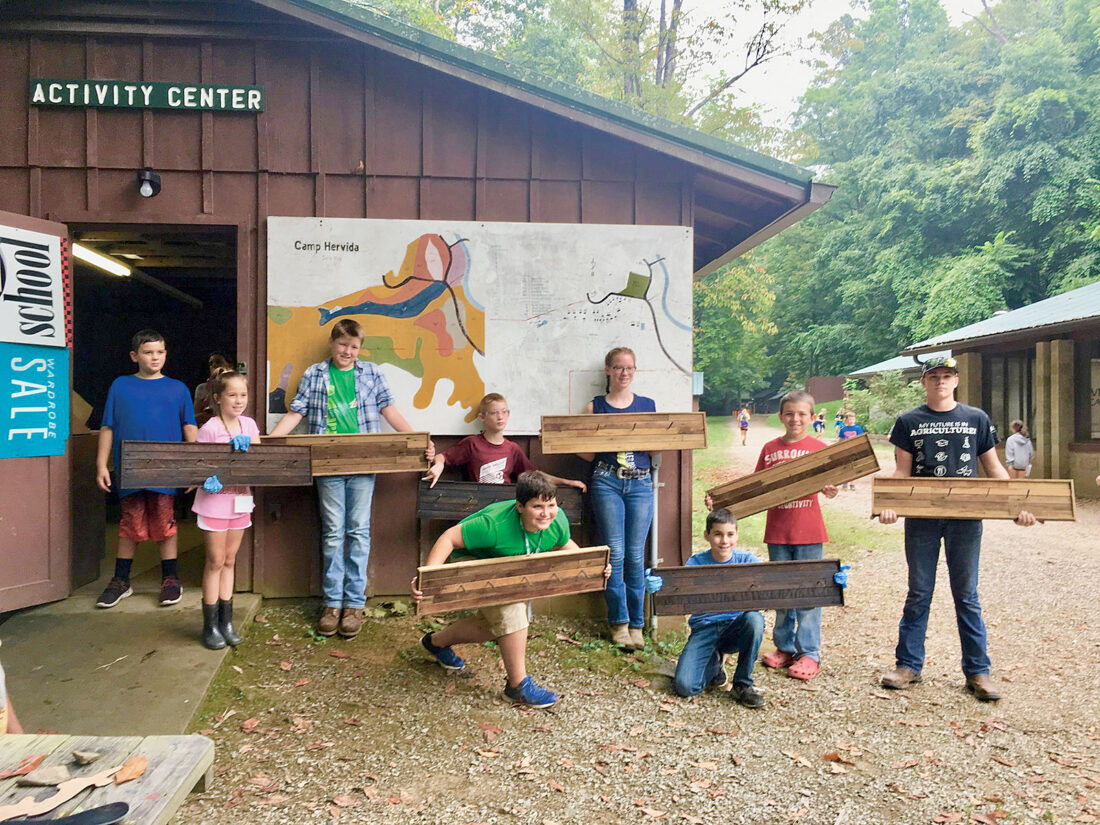
In this 2022 photo, a junior camp class of wood workers shows off their finished projects. (File Photo)
Based on age, counselors will be assigned to:
* Junior Camp at Camp Hervida: June 23-27
* Cloverbud Day Camp at Camp Hervida: June 30
* Beginner Camp at Camp Hervida: July 1-2
* Senior Camp at Camp Hervida: July 7-11
For more information or to apply, visit https://tinyurl.com/4jjbrwvp
Questions can be directed to Martha Webster at marthaw09@gmail.com, 740-350-7585 or contact OSU Extension Office 740-376-7431
Amber Phipps can be reached at aphipps@newsandsentinel.com

NASHVILLE (WSMV/Gray News) – A college basketball player was killed in a shooting on a Nashville interstate.
Fisk University announced that 20-year-old Andre Bell, a sophomore business administration major and student-athlete, died from a shooting on I-65 North at the I-40 interchange.
Police believe that Bell and two friends had been at a gymnastics event at the fairgrounds before getting onto the interstate to return to campus.
Police said Bell’s friends reported noticing a dark sedan in the left lane beside them. Both of them said they were distracted by their cellphones when they suddenly heard multiple gunshots and realized Bell had been hit, according to police.
Bell’s car allegedly slowed and spun back into traffic before hitting a red pickup truck. The dark sedan continued traveling on the interstate, according to police.

Bell was shot in the head and was initially taken to the hospital in “extremely critical condition,” where he died from his injuries.
“He was a dominant force on the Fisk University men’s basketball team, but he was most remembered for his infectious smile, loving personality, and unique ability to always bring warmth to a room,” said Jeremiah Crutcher, Fisk University’s men’s basketball head coach. ”We now have a deep absence in our program, but more importantly, we have a deep pain in our hearts. He will be truly missed.“
Anyone with information on the dark sedan, please contact crime stoppers at 615-742-7463. Callers to Crime Stoppers can remain anonymous and qualify for a cash reward.
Copyright 2026 WSMV via Gray Local Media, Inc. All rights reserved.

WASHINGTON (Gray DC) -Supreme Court Justices will hear landmark cases Tuesday, Little V. Hecox and West Virginia v. B.P.J, that deal with transgender athletes.
It has the potential to re-write the rules around who’s allowed to play which sports.
As it stands right now, 27 states have laws that ban transgender athletes from playing women’s sports.
Supporters of the ban say transgender players have a biological advantage.
Others say it’s the latest crusade against an already marginalized group.
“What this case is about is: are states allowed to draw distinction between biological males and biological females in a space where their size, their speed and their strength matters?” Said West Virginia AG John McCuskey.
McCuskey is advocating for a law that would prohibit trans girls from participating in female sports.
The issue has drawn wide-spread attention, with President Trump signing an executive order last February to pull funding from schools that don’t comply.
Now, Justices will play referee.
“This is a chance, these cases that are going to be heard next Tuesday for hopefully the United States Supreme Court to provide some clarity that heretofore has not existed,” said Don Daugherty with the Defense of Freedom Institute.
Some believe a federal law would be overkill, and instead individual schools should handle these students on a case-by-case basis.
“This is not a case about elite sports competition at the Olympic level or at the professional level,” said Columbia Law professor Suzanne Goldberg. “This is a case about school sports. And again, school sports are part of an educational program. The point of an educational program is to enable all kids to learn. And the law promises that that learning and those opportunities will be free from discrimination.”
Goldberg says there’s a lot to lose.
“What’s at stake more broadly is when their governments will be able to use the law as a weapon to punish categories groups of kids because they are transgender”
A decision is expected by June.
Copyright 2026 Gray DC. All rights reserved.

Seattle Adaptive Sports Gives Kids with Disabilities a Team

Three Podiums Highlight Season Opening Alpine Action

Joel Klatt declares there’s a new top head coach in college football

NCS: NASCAR returns to 10 race Chase format to determine champion – Speedway Digest

NASCAR restores 10-race ‘Chase’ championship format – Pasadena Star News

Pat McAfee dealt blunt reality check from college football fans

Hawks general manager Onsi Saleh on Trae Young trade: ‘I really wish him the best’

DVIDS – News – American, Japanese youth basketball players forge bonds, learn fundamentals during sports exchange

Bloom of Youth: Washington County 4-H seeking counselors for summer camp | News, Sports, Jobs

Mailbag Call: So…Indiana? | Off Tackle Empire

Men’s And Women’s Track And Field Come Out On Top In Final Home Meet

University of Georgia set to dedicate new track and field facility Feb. 18 | Georgia Sports

Hollywood Smothers’ flip to Texas underscores Alabama’s NIL struggles, dwindling mystique

Milwaukee youth motorsport riders find their way to racing through local program

VCU’s Phil Martelli Jr. on the state of college sports amid NIL, transfer portal, conversations with dad

Stempien to seek opening for Branch County Circuit Court Judge | WTVB | 1590 AM · 95.5 FM

Ross Brawn to receive Autosport Gold Medal Award at 2026 Autosport Awards, Honouring a Lifetime Shaping Modern F1

Princeton Area Community Foundation awards more than $1.3 million to 40 local nonprofits ⋆ Princeton, NJ local news %

Downtown Athletic Club of Hawaiʻi gives $300K to Boost the ’Bows NIL fund

Badgers news: Wisconsin lands 2nd commitment from transfer portal

Five Youth Sports Trends We’re Watching in 2026

Beach Volleyball Unveils 2026 Spring Schedule – University of South Carolina Athletics

Badgers news: Final Four Game Thread vs. No. 1 Kentucky Wildcats

Three Clarkson Volleyball Players Named to CSC Academic All-District List

Kentucky VB adds an All-American honorable mention, loses Brooke Bultema to portal

Kentucky AD explains NIL, JMI partnership and cap rules

Central’s Meyer earns weekly USTFCCCA national honor

PRI Show revs through Indy, sets tone for 2026 racing season

Is women’s volleyball the SEC’s next big sport? How Kentucky, Texas A&M broke through

Dr. Patrick Staropoli Lands Full-Time O’Reilly Ride with Big Machine Racing

 NBA Legend Michael Jordan to Join NBC Sports as Special Contributor
 Why a rising mid-major power with an NCAA Tournament team opted out of revenue-sharing — and advertised it
 Trackhouse to pair Chastain with McSwain
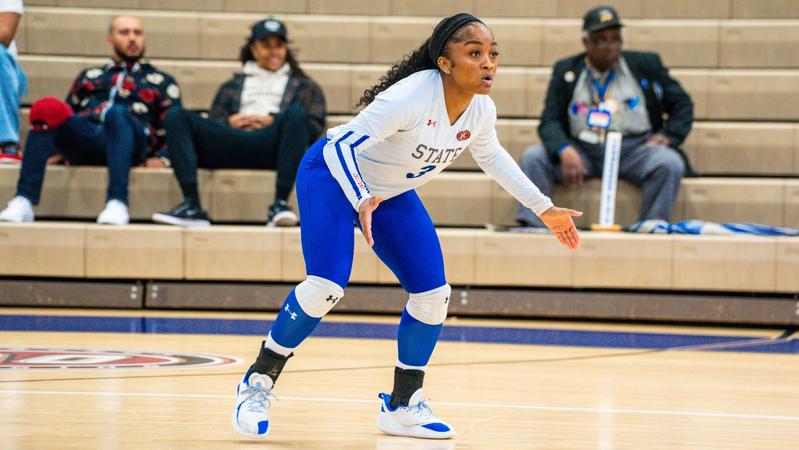 Volleyball Falls to SEMO – Tennessee State University
 Kennewick School Board backs changes to gender inclusion in sports | News
-
 Rec Sports1 week ago
Five Youth Sports Trends We’re Watching in 2026
-
 Sports3 weeks ago
Kentucky VB adds an All-American honorable mention, loses Brooke Bultema to portal
-

 Motorsports3 weeks ago
BangShift.com IHRA Acquires Historic Memphis Motorsports Park In Millington Tennessee. Big Race Weekend’s Planned For 2026!
-
NIL3 weeks ago
Fifty years after IU’s undefeated champs … a Rose Bowl
-
 Sports2 weeks ago
H.S. INDOOR TRACK & FIELD: GLOW region athletes face off at Nazareth University | Sports
-
 Sports3 weeks ago
Colorado volleyball poised to repeat success
-
 Sports3 weeks ago
2025 Volleyball Player of the Year: Witherow makes big impact on Central program | Nvdaily
-

 Sports3 weeks ago
Texas A&M volleyball’s sweep of Kentucky attracts record viewership
-

 Motorsports3 weeks ago
NJ Motorsports Park Announces 2026 Event Schedule
-
 NIL3 weeks ago
NIL Funds Are at Top of Arizona State’s Christmas Wishlist