
NIL
NIL Go clears $79.8 million in debut report

The recently established College Sports Commission (CSC), college sports’ new enforcement entity, released its first report of deals being pushed through the NIL clearinghouse on Thursday. Dubbed “NIL Go,” the clearinghouse is supposed to approve any deal from a third-party business valued at over $600 and launched this summer following the approval of the House v. NCAA settlement.
The clearinghouse, which was built with assistance from Deloitte, announced Thursday that 28,342 athletes and 1,227 institutional users have registered since launch, with 8,359 deals being cleared. In total, 32,729 athletes, agents and institutional users have registered. Values for deals have ranged from north of $1.6 million.
To date, $79.8 million has been cleared by the clearinghouse, with 332 deals not being approved. No parties are currently in arbitration, with the most common issues including deals not satisfying a valid business purpose and contradictory deal terms.
“This initial report shows the new system is working as intended: legitimate NIL deals are being submitted, reviewed and approved through NIL Go,” College Sports Commission CEO Bryan Seeley said in a statement. “The strong engagement from student-athletes and institutions shows real progress toward the clarity, transparency and fairness that the House Settlement intended. We look forward to sharing our progress on a regular basis as we continue to refine and improve the NIL deal review process moving forward.”
After releasing guidance this summer stating that NIL collectives could not directly pay athletes, the CSC pivoted on the guidance. The clearinghouse announced in late July that it would treat NIL collectives as a typical business, but the organizations must conform to the “valid business purpose” requirements outlined in the House settlement.
Athletes are required to submit deals for a “fair‑market‑value evaluation” within five business days of execution. The decision from the CSC to update its guidance around NIL collectives could stave off any forthcoming lawsuits.
Officials from at least 25 NIL collectives told On3’s Ross Dellenger on Thursday that 120 of their submitted NIL deals have been denied by the College Sports Commission and another 192 remain under review.
“The College Sports Commission will enforce the settlement as written,” Seeley said in July. “Pay-for-play will not be permitted, and every NIL deal done with a student-athlete must be a legitimate NIL deal, not pay-for-play in disguise.”

Dec. 23, 2025, 5:35 a.m. ET
If you watched any part of Ole Miss’ 41-10 blowout of Tulane, the one common theme you felt was that the absence of former head coach Lane “Benedict” Kiffin was not acknowledged by the home fans; they even appeared to embrace it. It took a while for Rebel Nation to realize it but Kiffin simply was never “one of them” and, while he built the program, he did not measure up to the “Ole Miss family.” Most Rebel fans would probably tell you now they’d rather lose without him than win with him. Kiffin has now been fully exposed and St. Nick (Saban, now known as Mr. Hypocrite) and Pete Carroll, his self-proclaimed advisers, should be ashamed for their comments supporting the manner in which he tried to negotiate his way to both coaching one team and recruiting for another simultaneously. One is the GOAT who ran away from NIL and the transfer portal while the other is a recognized cheater by many. The best part is Kiffin’s LSU Tigers play at Mississippi next year. Good riddance!
Dec. 23, 2025, 6:07 a.m. ET
Arizona State football coach Kenny Dillingham says he was never offered the Michigan job. Never got to that point.
This, of course, isn’t the story nor the takeaway from Dillingham’s dalliance with the Wolverines.
The irony of the state of Arizona’s highest-paid public employee begging for private donations to compete at the highest level of college football is where this bizarre story begins.
“We live in Phoenix, Arizona. You’re telling me there’s not one person who could stroke a $20 million check right now?” Dillingham said after agreeing to a new contract worth more than $37 million over the next five years.
That’s right, the guy whose future could never be more secure, sees the immediate horizon line for the Arizona State football program. And frankly, it’s financially unstable at best — and a house of cards at worst.

It’s Arizona State today, but could be Kansas State or Colorado or North Carolina State or Virginia Tech or Boise State — or any of the other 100-plus Bowl Subdivision teams not protected by the golden parachute of the Big Ten and SEC.
Coaches at those 34 schools in the two big conferences — many of those institutions born on third base from long-term association with the leagues before the financial boom of television media rights — aren’t publicly calling out dignitaries and alums associated with their schools.
They’re not standing during a media availability and pleading for the next Cody Campbell to please step up. Or else.

Dillingham made it very clear that college football is about those who wish to spend money, and those who don’t. This isn’t about revenue sharing between schools and players, this is all about private NIL funding.
This is about the dirty underbelly of the sport that can’t be legally controlled. A growing vice that doubles and triples the obstacles faced by conferences chasing the Big Ten and SEC.
It’s bad enough that mega media rights deals give the Big Ten and SEC a huge competitive advantage over the rest of college football. It’s downright sinister that those same schools have deep pocket boosters willing to spend tens of millions in private NIL deals to eliminate all doubt.
Sam Leavitt led Arizona State to the Big 12 title and the College Football Playoff in 2024, and returned to Tempe this season for another run. A foot injury ended his season early, and now he’s headed to the transfer portal looking for a new home.
Not because he doesn’t think he can win big with the Sun Devils — he already proved that. He’s in the portal, like so many other players, to strike when its hot and score a deal before moving onto the NFL.
What are the odds he signs with a Big Ten or SEC school? A program which has boosters that can pay him an outrageous salary through a private NIL deal.
Do you really blame Leavitt?
Do you really blame Campbell, Texas Tech’s billionaire booster, who built a championship-level team with a $25 million roster — and the Red Raiders responded by winning the Big 12 and earning a first round bye in the CFP?
They’re just following the rules, and until a different set of rules is in place, they’ll take advantage of it.
That’s why Dillingham sounded like a panhandler last weekend, begging — literally begging someone, anyone, in The Valley to jump on board and throw money at the program. He even specifically called out school alums Phil Mickelson and Jon Rahm.
Hey, Kenny, while you’re at it, why not place a call to the sheiks in Saudi Arabia? See if their Public Investment Fund (PIF) is interested in sports washing with the second-most popular sport in America.
Because if you’re reaching out to Mickelson and Rahm, you’re reaching out to the Saudis — who own LIV Golf — by proxy. The only difference between the PIF and Utah’s new $500 million agreement with Otro Capital is one group of investors has a long line of human rights violations.
The other is a financial shark, whose only goal is to make money.
Any way they can.
“College football is absolutely chaotic right now,” Dillingham said. “You’ve got to be able to have a plan to be aggressive in this thing for three, four, five years down the road. If you don’t have that, you’re a ticking time bomb for failure.”
This nonsense isn’t going to end until players are considered employees, and players collectively bargain their best deal. Until FBS conferences go to market as one, and sell their games to make double or more than the current market value of $4 billion-plus annually.
That move will allow universities to restrict player movement through multi-year contracts, and find a fair and equitable postseason for all. One that doesn’t include charity for the Group of Five conferences, who have no business in a playoff unless invited based on merit (see: Boise State, 2024).
But that move also means players would go from earning about 20 percent of media rights revenue to likely 45-50 percent. NFL players currently make 48 percent of the media rights.
That’s why the Big Ten and SEC don’t want players collectively bargaining. It has nothing to do with the pollyanna idea sold by conference commissioners that players, “don’t want to be employees.”
If they’re going to earn 20 percent, who wants to deal with the headache of collectively bargaining? Move that number to 45-50 percent, and watch how many players say they’re all in.
Then maybe their coaches wouldn’t have to shamelessly beg for cash, mere hours after signing a new $37 million dollar contract. Or else.
Matt Hayes is the senior national college football writer for USA TODAY Sports. Follow him on X at @MattHayesCFB.

As Indiana prepares to host its first-ever College Football Playoff game as the No. 1 seed, the Hoosiers are quietly already planning for 2026.
Fernando Mendoza, a redshirt junior transfer who led the Hoosiers to a 13-0 regular season, won the 2025 Heisman Trophy after throwing 2,980 yards and a national-best 33 passing TDs and is widely seen as an early NFL first-round prospect.
Should Mendoza depart for the draft, Indiana would be tasked with replacing an elite, NFL-caliber starter, which explains why numerous quarterbacks expected to enter the transfer portal have been linked to the Hoosiers.
On a December 20 episode of “Hoosiers Football Tailgate,” host Coach Griff specifically named TCU quarterback Josh Hoover, who announced he will enter the transfer portal and skip the Alamo Bowl, as a name Indiana should watch.
“I like this guy as a definite target for Indiana,” Griff said. “So, Josh Hoover, keep an eye on him as a potential target… The one I think they’ll really try to get is Hoover.”

Hoover was a three-star recruit out of Rockwall-Heath (Texas) and initially committed to Indiana in 2021 before flipping to TCU after the school extended an offer.
He then redshirted in 2022 and became the starter in 2023, producing breakout numbers in 2024 with 3,949 passing yards, 27 passing touchdowns, and 11 interceptions with a 66.5% completion rate.
In 2025, Hoover threw for 3,472 yards and 29 TDs, with 13 INTs, and projects among the most productive returning QBs in 2026 on career totals of 9,629 passing yards, 80 total TDs, and a career passer rating of 147.8.
On3’s NIL valuations list also shows Hoover ranking among the most marketable college quarterbacks, with a valuation in the neighborhood of $2.1 million.
Hoover is an intriguing option for Indiana due to his proven production and Power Five experience, positioning him as a potential one-year, plug-and-play solution as Curt Cignetti prioritizes continuity.
There is also a “full-circle” aspect to his recruitment, as Hoover originally committed to Indiana before flipping to TCU in 2021.
Read More at College Football HQ
- Major college football program loses 15 players to transfer portal
- College Football Playoff team has ‘significant interest’ in 4,000-yard QB
- College football quarterback enters transfer portal after 4,000-yard season
- No. 1 ranked transfer portal player predicted to join College Football Playoff team
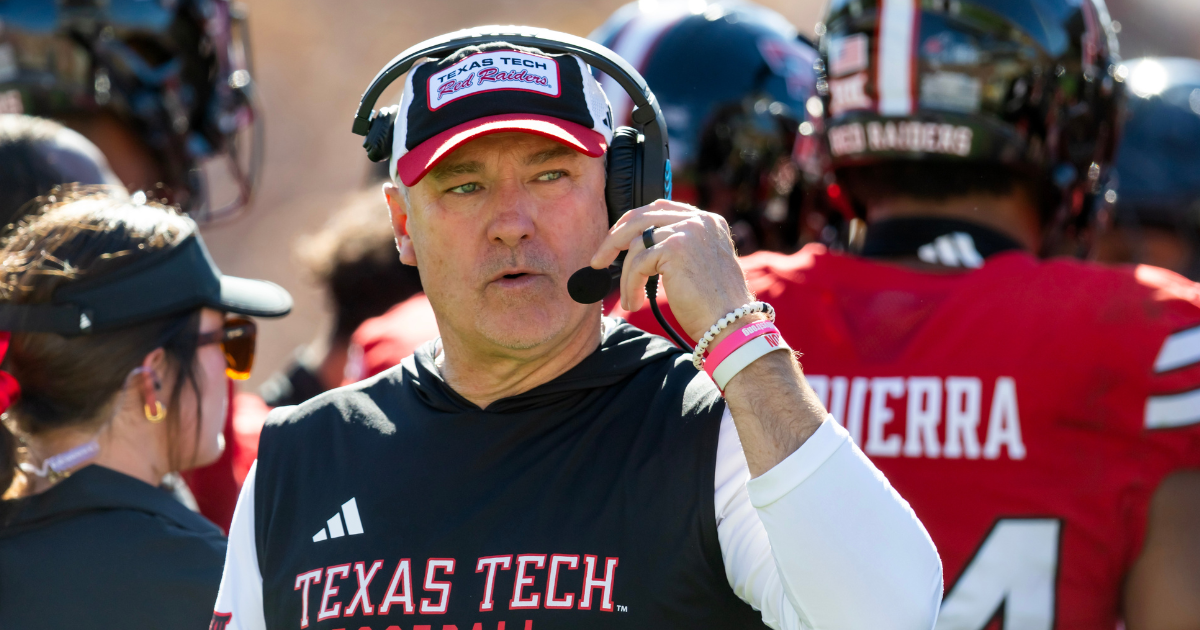
Two teams that have really embraced the NIL era are set to meet on New Year’s Day. Oregon‘s win over James Madison advanced them to the College Football Playoff quarterfinals, where Texas Tech was waiting on the other side. Now, it’s Dan Lanning vs. Joey McGuire in the Orange Bowl with a lot of resources put into rosters.
Oregon has been at the forefront of NIL since its inception, especially under Lanning. Texas Tech could be considered the new kid on the block after major investment from a few donors. Even so, McGuire sees some similarities between the two when it comes to winning at whatever cost.
SUBSCRIBE to the On3 NIL and Sports Business Newsletter
“They’ve got a great booster in Phil Knight that really said, ‘We’re going to go win at the highest level and there’s no excuse when it comes to finance.’ You turn around and I think that we’re showing that we’re doing that. I think we’re really comparable,” McGuire said.
“We’ve got guys that have stepped up and done a great job. I kind of call them the ‘Big Five’ whenever you talk about Cody and John, Mike, Dusty, and Gary. Those guys have, along with everybody else in Red Raider Nation, but those guys have really led the charge. So, we’re kind of comparable on and off the field in this team. They’ve just done it for a little bit longer. That’s what we’re trying to do.”
As he said, McGuire is looking to put together a run similar to Oregon. All four years since hiring Lanning have been a resounding success, finishing with double-digit wins in all of them. This is the program’s second College Football Playoff appearance in the 12-team format, just missing out in 2023 due to a Pac-12 Championship loss.
Oregon won the Big Ten in its inaugural season inside the conference. Texas Tech can check that box already though, winning the Big 12 for the first time in school history. Advancing in the CFP would be a sweet bonus.
No matter the result on Jan. 1, Texas Tech is positioning itself to be successful moving forward. The 2026 recruiting class ranked 20th in the country but No. 1 in the Big 12 per the Rivals Industry Team Rankings. This is all before raiding the NCAA transfer portal, something McGuire and his staff did so well with last offseason.

In the weeks leading up to the opening of the NCAA transfer portal, hundreds of college football players have announced their decisions to leave the schools they played for in 2025 for new horizons next season.
Some cases involve players transferring up from Group of Five or FCS programs to broaden their exposure. Others feature players following their coaches from one school to another due to the coaching carousel. In occasional instances, players are searching for the highest bidder on the portal.
Former Arizona State quarterback Sam Leavitt is a portal entry drawing the attention of high-bidding college football programs. He will enter the portal with two seasons of eligibility remaining.
On3 ranks Leavitt as the top available quarterback in the transfer portal. Chris Hummer of CBS Sports reported that schools are expected to offer Leavitt around $3 million.

“Sam Leavitt on the open market is going to command a significant amount of money,” Hummer said. “We’re talking $3 million plus most likely. Although, in all fairness, I think teams really do have questions about Sam Leavitt’s injury and what that means moving forward. It’s kind of like the Carson Beck situation a year ago.”
The 6-foot-2, 205-pounder began his college football career with Mel Tucker at Michigan State in 2023. He played in a maximum of four games that season to maintain his redshirt, throwing for 139 yards, two touchdowns, and a pair of interceptions.
Leavitt transferred to Arizona State in the 2024 offseason. The Sun Devils were 10-2 in the regular season and defeated Iowa State (45-19) en route to the program’s first-ever College Football Playoff appearance. Leavitt passed for 2,885 yards, 24 touchdowns and six interceptions and rushed for another 443 yards and five touchdowns.
Postseason honors for Leavitt included Big 12 Offensive Freshman of the Year and Second Team All-Big 12. His 2,885 passing yards are the most by a freshman quarterback in Arizona State history.
Leavitt’s season was cut short after the Sun Devils’ game against Houston due to a Lisfranc injury. He threw for 1,628 yards, 10 touchdowns and three interceptions while he ran for 306 yards and five touchdowns in seven games.
Arizona State will not start Leavitt in its bowl game. The Sun Devils (8-4, 6-3) will play ACC champion Duke (8-5, 6-2) in the Sun Bowl in El Paso, Texas (3 p.m. EST, CBS).
The NCAA transfer portal officially opens on Jan. 2, 2026, the final day of bowl games across the FBS ranks. It will remain open for the following two weeks.

Baldwinsville’s 1st year boys basketball coach is working to build strong culture and pipeline

Wisconsin volleyball offseason off to crazy start

CLIMBING: How the All-Time Win List Looks After 2025 – Speedway Digest

PlayStation Market Accelerates Global Gaming Evolution:
Four takeaways from the first weekend of the College Football Playoff

Outside hitter Eva Travis signs with Wisconsin volleyball

How eSports Is Shaping Competitive Mindsets in Miami and Beyond – Five Reasons Sports Network

The Year Schools Paid Their Players

Elyria Youth Track Club, Oberlin College Track and Field partner for clinic

How Miami’s Sports Mindset is Fueling Innovation in Online Casinos and Startups – Five Reasons Sports Network
Kenny Dillingham-Michigan saga proves college football about money

Men’s Volleyball Picked First in EIVA, Merk and Rose Named Players to Watch – Penn State
From Virtual Racing to Luxury Travel: Explore Abu Dhabi as the First Middle East Host of Gran Turismo World Series 2026

Ajith Kumar documentary trailer showcases actor’s grit and love for motorsports

No. 1 college football team predicted to sign $2.1 million transfer QB

First Tee Winter Registration is open

Fargo girl, 13, dies after collapsing during school basketball game – Grand Forks Herald

CPG Brands Like Allegra Are Betting on F1 for the First Time

F1 Las Vegas: Verstappen win, Norris and Piastri DQ tighten 2025 title fight

Sycamores unveil 2026 track and field schedule

Two Pro Volleyball Leagues Serve Up Plans for Minnesota Teams

Utah State Announces 2025-26 Indoor Track & Field Schedule

SoundGear Named Entitlement Sponsor of Spears CARS Tour Southwest Opener

Jo Shimoda Undergoes Back Surgery

Redemption Means First Pro Stock World Championship for Dallas Glenn

Bowl Projections: ESPN predicts 12-team College Football Playoff bracket, full bowl slate after Week 14

Texas volleyball vs Kentucky game score: Live SEC tournament updates

Black Bear Revises Recording Policies After Rulebook Language Surfaces via Lever

How this startup (and a KC sports icon) turned young players into card-carrying legends overnight

Robert “Bobby” Lewis Hardin, 56





-
 Motorsports2 weeks ago
SoundGear Named Entitlement Sponsor of Spears CARS Tour Southwest Opener
-
 Rec Sports3 weeks ago
Black Bear Revises Recording Policies After Rulebook Language Surfaces via Lever
-
 Motorsports2 weeks ago
Donny Schatz finds new home for 2026, inks full-time deal with CJB Motorsports – InForum
-

 Rec Sports3 weeks ago
How Donald Trump became FIFA’s ‘soccer president’ long before World Cup draw
-
 Rec Sports2 weeks ago
David Blitzer, Harris Blitzer Sports & Entertainment
-
 Motorsports2 weeks ago
JR Motorsports Confirms Death Of NASCAR Veteran Michael Annett At Age 39
-
Sports2 weeks ago
Elliot and Thuotte Highlight Men’s Indoor Track and Field Season Opener
-
Sports2 weeks ago
West Fargo volleyball coach Kelsey Titus resigns after four seasons – InForum
-
 Motorsports2 weeks ago
Rick Ware Racing switching to Chevrolet for 2026
-
 Sports2 weeks ago
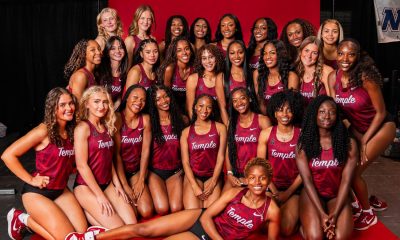
Temple Begins Indoor Track & Field Season at UPenn This Weekend