
NIL
The Price of the Future in NIL, Revenue Share and Recruiting


Good morning, and thanks for spending part of your day with Extra Points.
Two quick notes before we get started:
First, could you do me a huge favor? If this newsletter has ever been helpful for you at work, would you mind emailing me a quick 1-2 sentence example? We’re tweaking a few marketing tools here behind the scenes, and having a testimonial or two would really help us out. THANK YOU!
And second, I wanted to remind everybody that I do happily accept, and pay for, freelance submissions at Extra Points. I’m particularly looking for reporting/personal essays/historical analysis or perspectives that I can’t provide, and also fit with our coverage area. Pitch me at [email protected].
I’m happy to publish one of those freelance stories today, from our colleague and regular contributor KC Smurthwaite. I’ll pass him the mic, right after this message from today’s sponsor:
You Have a Lot on Your Plate. Let Practice of Life Help You Help Your Student-Athletes.

As a college administrator, you’re pulled in a million directions. You care about your student-athletes, but time is short. You’re not alone. Nearly 9 in 10 student-athletes say they’re overwhelmed.
They know what’s getting in their way. As one put it: “My phone is absolutely my BIGGEST distraction.”
Another said: “My phone is 99% of the reason I don’t get great sleep.”
They want to change. You can help—without adding to your to-do list. Swipe Less, Live More is a ready-made digital wellness program that helps your athletes reset their habits. Built by Practice of Life, it combines short-form micro-lessons, daily challenges, and a custom tracker to deliver real behavior change. Like:
After just 14 days, student-athletes at Sacramento State said:
→ “I got notifications down to a much more manageable amount.”
→ “I’m spending less time on social media.”
→ “Less doom scrolling on bad days.”
Everyone expected fireworks on the Fourth of July — and they got them. In college football, the real fireworks that shifted the NCAA recruiting landscape exploded in Lubbock, Texas, where the spark of a commitment blew up the revenue-sharing model.
Five-star offensive tackle Felix Ojo, ranked No. 20 in the 2026 ESPN 300, stunned the recruiting world by committing to Texas Tech. But the real bombshell wasn’t his actual commitment. It was the fine print: Ojo had reportedly signed a seven-figure, guaranteed revenue-sharing deal before ever playing a college snap.
Guaranteed. High school. Millions.
The move instantly shifted the conversation from “Texas Tech landed a big recruit” to “Texas Tech just rewrote the playbook.” In a sport long dominated by bluebloods, a program from outside the national elite was suddenly front and center in the new NIL arms race. Oh, did I mention that Tech wasn’t even in the mix in the days leading up to Ojo’s commitment?
The deal is unprecedented. For Texas Tech, Ojo is the highest-ranked offensive lineman ever to commit to the program. For college football, his contract is proof that the ground is shifting beneath our feet — quickly.
Early reports framed Ojo’s contract at a jaw-dropping $5.1 million. His agent, Derrick Shelby of Prestige Management, indicated that escalators could push it that high: $1.2 million in Year 1, $1.6 million in Year 2 and $2.1 million in Year 3. However, subsequent reports painted a more modest picture: a three-year, $2.3 million agreement averaging $775,000 per year. But incentives, renegotiations and the still-evolving revenue-sharing landscape could push that higher.
Attorney Darren Heitner believes Ojo’s deal signals just how far the college game has drifted into professional territory. “Ojo’s revenue-sharing contract could mirror protections seen in NFL rookie deals, ensuring compensation regardless of performance or injury,” he said. But he also pushed back against the hype about the deal being fully guaranteed. “Calling it a fully guaranteed contract may not be accurate if much of the money hinges on incentives or increases in the revenue-sharing cap,” he said.
Heitner added that deals like this will force schools to make tough choices about where to direct their money. High school stars like Ojo offer long-term upside, but transfers bring proven production and can flip a roster overnight. In today’s landscape, both are essential, but resources are finite — and the decisions looming for schools could have massive implications
How to split recruiting resources between high schoolers and transfers?
The spotlight will always shine on athletes like Ojo, but the ripple effects of contracts like his may not be so kind to everyone else. The pulse of conversations around the industry points to one vulnerable demographic: underclassmen. The five-star recruits will get deals, dominate headlines and secure long-term agreements. But the one-to three-star players, the lifeblood of most rosters, face a harsher reality. In today’s climate, the transfer portal is king.
In an era when athletic directors and coaches are judged on their ability to win quickly, the reliance on transfers has never been greater. “It’s never been easier to flip a program than it is now,” one athletic director noted. “And you don’t do that with 18- and 19-year-olds. You do it with upperclassmen.”
That shift means high school players without elite ratings are increasingly vulnerable, as they are squeezed out by the urgency to win now.
The ‘infancy’ of contracts in college sports
The evolution of contracts in college sports explains why Ojo’s deal matters so much. For decades, the “contract” was little more than a National Letter of Intent — a standardized form binding a player to a school in exchange for scholarship aid. Today, those single-page agreements have evolved into complex, multi-year documents that resemble NFL rookie contracts.
Agent Juan Lozano describes this moment as “our collective infancy with contracts.” He said many players and parents still view the scholarship as the ultimate goal, and just getting any deal across the finish line feels like success. However, that approach often results in unfavorable terms and inadequate compensation. Lozano has seen families negotiate on their own, relying on promises from coaches that never make it into a written agreement. “A coach or the GM tells a player they’ll make $150,000, but the contract comes back for far less,” he said. Without competent legal representation, those mistakes are inevitable.
The irony, Lozano pointed out, is that the NCAA spent years painting agents as villains, which kept many qualified professionals away. That created a vacuum where unqualified representatives now swoop in. “Players will sign with anyone who tells them what they want to hear,” Lozano said. “And often those people aren’t qualified to evaluate what’s really in the deal.”
If all of this feels messy, that’s because it is. A sitting Power Four athletic director didn’t sugarcoat the reality, saying there’s no slippery slope anymore, just “a malfunctioning system with no CBA or backbone to operate where we want it to go.”
A glimpse into the future
The baseline in today’s system starts with Alston money, a result of the Supreme Court ruling in 2021 that guaranteed up to $5,980 a year in education-related benefits for student-athletes. On top of that came the rise of NIL collectives, which helped set the stage for a “soft cap” of around $20.5 million in revenue sharing. But the real story is the hard cap — or lack of one. In practice, it’s whatever a school and its boosters can muster (or get the CSC to approve), with no true ceiling in sight.
Behind the headlines are families and agencies navigating uncharted waters. Rashad Phillips, CEO of Prestige Management, which signed Ojo, said his company has prioritized working with families that share a vision of putting kids’ needs first. “All deals are different,” Phillips said. “There is no cookie-cutter experience.”
Prestige already represents multiple high school athletes. Ojo might be the first to grab national headlines, but he almost certainly won’t be the last. That reality raises difficult questions: How should schools recruit teenagers already tied to million-dollar contracts, and what happens when one mid-major goes all-in on a few high school recruits and they don’t pan out?
When Ojo committed to Texas Tech, it was a glimpse into the future — a landscape where high school seniors negotiate like pros, where schools are officially weighing roster-building decisions like general managers and where millions of dollars change hands before the first snap.
On July 4, with fireworks cracking across the Texas sky, Lubbock showed that you don’t have to be a blue blood to play in the game … you just have to pay.


When Kirby Moore got the Washington State head coaching job, Eli Drinkwitz knew a few members of his staff would likely be headed to Pullman soon.
“Moving forward, could lose a couple more people off our staff from analyst roles, as coach Moore finalizes and puts his staff together,” Drinkwitz said on December 16. “It shouldn’t change the dynamic of what we do at all.”
Three of those moves were reported on Wednesday morning by Chris Hummer and Matt Zenitz of CBS and 247Sports.
START YOUR ANNUAL VIP SUBSCRIPTION FOR 50% OFF YOUR FIRST YEAR
The first is Tiger tight ends coach Derham Cato. Cato has coached Mizzou’s tight ends for the last three seasons. He spent six years at Washington, including an overlap with Moore when Moore was a graduate assistant for the Huskies. PowerMizzou.com had alerted subscribers to this move being likely a week ago.
The second coach is assistant offensive line coach Jack Abercrombie. Hummer and Zenitz report that Abercrombie will be the full-time offensive line coach for Moore with Washington State. Prior to his time at Mizzou, Abercrombie was on staff at VMI.
The final Mizzou to Washington State move is a front office move. Brad Larrondo, who has served as the CEO of Every True Tiger Brands, which is Missouri’s third-part partner for name, image and likeness deals. In his role, Larrondo helps Mizzou athletes line up NIL deals and also negotiates NIL and revenue sharing contracts for Mizzou football and men’s basketball players. Larrondo came to Missouri as Drinkwitz’s Director of Football External Relations and Recruiting in March of 2023. Prior to that, he had been the Chief of Staff at Auburn.
Larrondo had spent the previous 28 years in the athletic administration at Boise State, which is just 300 miles from Pullman. He still has family in Boise and sources told PowerMizzou.com the move to Washington State is heavily based in family reasons.
Larrondo’s position is technically not a University or a football program hire. However, the position works very closely with both and whoever replaces him will do so with influence and blessing from both of those entities. Missouri plays Virginia in the Taxslayer Gator Bowl on Saturday night. Any personnel moves or replacements will almost certainly not come until after that game.
Updated Dec. 24, 2025, 11:28 a.m. ET
Missouri football defensive end Damon Wilson has sued Georgia athletics, a move that counters a Georgia lawsuit filed against Wilson earlier this year and intensifies what was already a novel and likely first-of-its-kind case over an NIL contract dispute.
A 42-page document reviewed by the Columbia Daily Tribune was filed in Boone County on Tuesday.
Georgia is attempting to take Wilson into arbitration and is seeking $390,000 in liquidated damages from the star edge rusher, who transferred to the Tigers in January 2025, over what the university views as an unfulfilled contract with the Bulldogs’ former NIL collective, Classic City Collective.
In response, escalating what was already an attempt at a potentially precedent-setting case, Wilson’s attorneys allege his former team “falsely (told) at least three programs” unnamed Power Four teams that “Wilson would be subject to a $1.2 million buyout.”
The suit also alleges Georgia violated a confidentiality provision in Wilson’s term sheet, which was provided as part of the UGA lawsuit in a public court filing.
Wilson’s suit argues he also was urged to sign the term sheet without legal counsel, and that Georgia did not “immediately submit his name to the transfer portal” but instead “launched an all-out offensive to convince Wilson to remain at Georgia.”
Also of note: The suit argues the term sheet Wilson signed states it would “be used to create a legally binding document” and therefore is not enforceable in its current format, and that he was urged to “seek legal counsel” before the agreement was finalized.
If the document is determined not to be finalized, it is quite likely Wilson will not owe Georgia the $390,000 it seeks.
Per The Athletic, Wilson is seeking “a ‘fair and reasonable amount of damages’ for the ‘financial and reputational harm he has suffered’ along with legal fees” from Georgia.
“Georgia appears intent on making an example of someone, they just picked the wrong person,” Jeff Jensen, one of Wilson’s attorneys, said to the Columbia Daily Tribune. “Damon never had a contract with them. I don’t see how Georgia thinks intimidation and litigation will help their recruitment efforts — maybe players could bring lawyers with them to practice.”
Multiple Missouri representatives, including a team spokesperson and athletic director Laird Veatch, have declined to comment on Wilson’s lawsuit. The Georgia lawsuit is not against the University of Missouri; it is only against Wilson.
“This matter involves pending litigation, and we have no comment at this time,” Georgia spokesperson Steven Drummond told USA TODAY on Tuesday. “We refer you to our previous statement.”
The previous Georgia statement in question: “When the University of Georgia Athletic Association enters binding agreements with student-athletes, we honor our commitments and expect student-athletes to do the same.”
Georgia has argued Wilson signed a contract — a common practice in the NIL era — with what was then Georgia’s main, but now-shuttered, NIL and marketing arm, Classic City Collective, in December 2024.
That collective has since shut down, as Georgia has partnered with Learfield to negotiate and facilitate NIL deals in the revenue-sharing era.
The report, citing documents attached to Georgia’s legal filings, shows that Wilson signed a 14-month term sheet worth $500,000 with the Bulldogs. He was set to earn monthly payments of $30,000 through the end of the contract, as well as two $40,000 bonus payments.
Before announcing his intention to transfer in January, he reportedly was paid $30,000.
The contract states if Wilson left the team or transferred, as he ultimately did to Missouri, he would owe the collective that issued the payments a lump sum equal to the amount remaining on his deal.
The bonus payments seemingly were not included, which brings that total to the $390,000 that Georgia is now seeking in court.
Wilson was paid only a fraction of that sum, but the university argues he owes the full amount in damages. It’s unclear why Georgia is claiming it is owed the full amount in liquidated damages.
According to documents viewed by the Tribune through the Georgia courts records system, Georgia filed an “application to compel arbitration” on Oct. 17 in the Clarke County Superior Court, which includes Athens and the University of Georgia. Wilson was served with a summons to appear in court, according to documents, on Nov. 19, three days before the Tigers faced Oklahoma.
Wilson spent his freshman and sophomore seasons at Georgia. He transferred to Missouri ahead of spring camp in 2025 and has emerged as one of the top pass rushers in the SEC.
Per Pro Football Focus, Wilson generated 49 pressures on opposing quarterbacks this season, which was the second-most in the SEC behind only Colin Simmons at Texas. He’s listed at 6-4, 250 pounds and could declare for the 2026 NFL Draft, where he would likely be a Day 1 or 2 pick.
This case marks the first time a school has taken a player to court over an NIL buyout. It also looks likely to be the first time a player has filed suit against a school over NIL.
Missouri has multiple players on two-year contracts. Part of that is in the hope they do not move on after one season.
If Georgia’s arbitration case against Wilson is successful, that would be a groundbreaking ruling in college athletics that could give more weight to liquidated damages clauses in athlete contracts.
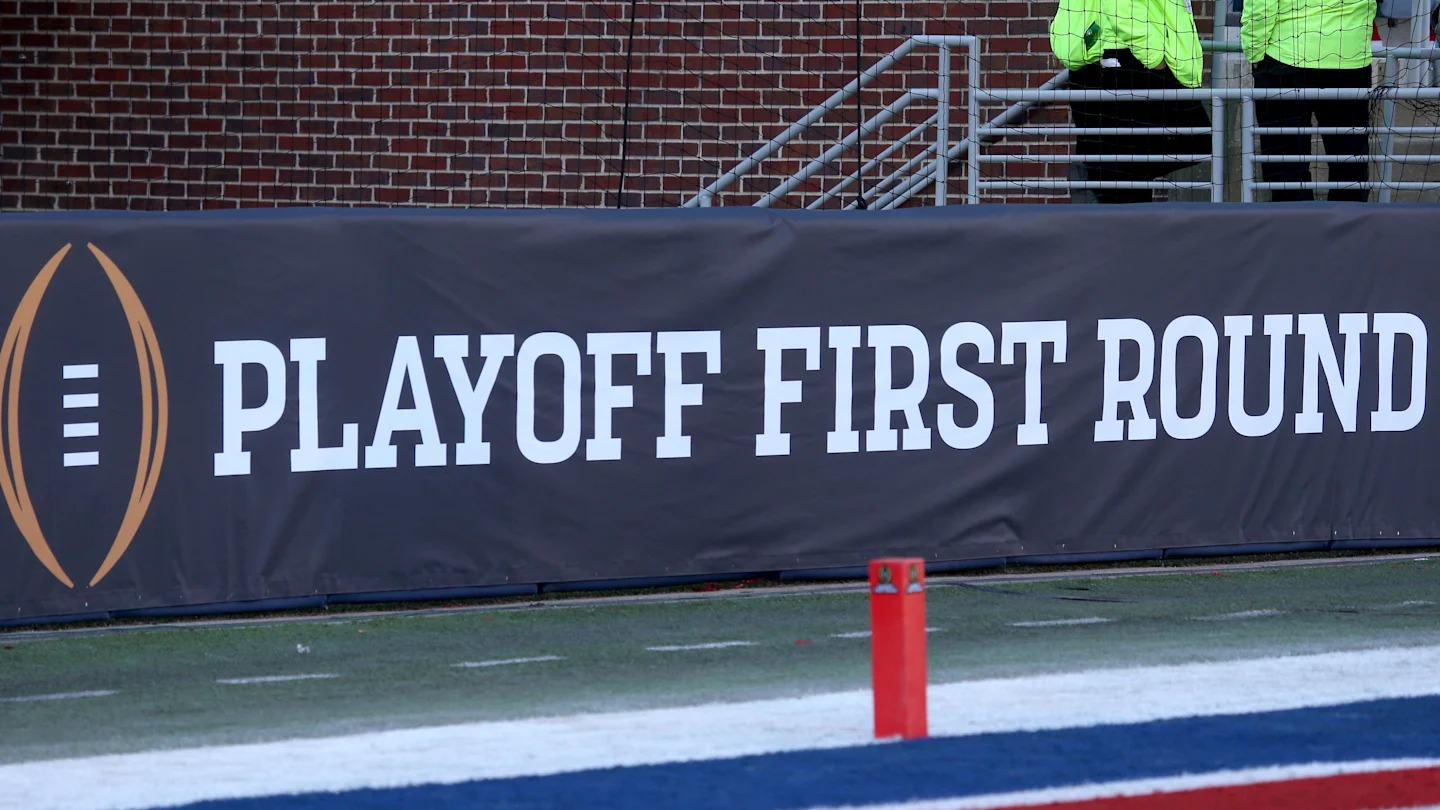
The first round of the College Football Playoff is in the books. Eight teams remain in the hunt to win it all, with Miami and Ohio State kicking off the quarterfinals slate in the Goodyear Cotton Bowl on December 31.
There were quite a few memorable games in the opening round of the playoffs, including Miami’s hard-fought victory against Texas A&M and Alabama’s wild comeback to secure a road win over Oklahoma.
The lone blowout came from Ole Miss over Tulane, winning 41-10 over the Green Wave. Both programs are in transition after their head coaches were hired away by other schools. The Green Wave, in particular, has seen some attrition since concluding its season last week.
Another Tulane Starter Enters Transfer Portal
On Wednesday afternoon, redshirt sophomore cornerback Jahiem Johnson announced his plans to move on after three seasons at Tulane, per On3’s Haye Fawcett.
Johnson developed into a productive defender for the Green Wave in 2025, starting in all 14 games. He totaled 42 tackles, 1 tackle for loss, 1 forced fumble, 9 pass deflections, and 4 interceptions. Johnson’s 9 pass deflections led the American Conference.
He deflected a pass in 6 different games and recorded a pick in 4 separate outings. In Tulane’s conference championship victory against North Texas, Johnson tied his season-high with 5 tackles, 1 pass deflection, and 1 interception.
The Louisiana native played the most snaps (834 snaps) of any player on Tulane’s defense. He was the third-highest-graded player on the unit (77.1 overall grade), per Pro Football Focus.
Johnson signed with Tulane as a three-star prospect in the 2023 class, joining the program under former head coach Willie Fritz. He redshirted as a true freshman, sticking with the Green Wave when Jon Sumrall took over.
In 2024, appeared in 14 games as a reserve, totaling 4 tackles and 2 pass deflections. Johnson’s rise this past season resulted in him earning honorable mention conference honors.
Johnson is the fifth starter to transfer from Tulane, joining defensive end Santana Hopper, linebacker Harvey Dyson, defensive tackle Tre’Von McAlpine, and running back Javin Gordon in the portal.
Sumrall was hired away from the Green Wave to be the next head coach of the Florida Gators. Considering Johnson’s breakout campaign, he may want to continue playing for a familiar face if that option is on the table.
Read more on College Football HQ
• Coveted dual-threat quarterback entering college football transfer portal
• Former 5-star QB becomes latest college football star to sign new deal for 2026 season
• Johnny Manziel issues apology to ESPN after Texas A&M-Miami game
• College football team set to be without nearly 20 players for upcoming bowl game

PHOENIX — Four important Gopher football players were part of a unique media campaign on Tuesday.
Offensive linemen Greg Johnson and Nathan Roy, and defensive backs John Nestor and Kerry Brown allowed the Gophers’ NIL collective, Dinkytown Athletes, to share news they will play in the Rate Bowl against New Mexico on Friday, and will return to Minnesota for the 2026 season.
The social media posts were “presented by Cub Foods,” and those players will be recipients of the grocer’s NIL contribution next year. Dinkytown Athletes serves as a subcontractor.
Athletics Director Mark Coyle called Cub Foods a “foundational partner” of Gopher sports.
“That is how we take the next step, with that type of involvement with NIL side of it,” Coyle told the Pioneer Press. “We are so grateful for their support.”
A few more current Gopher players are expected to join the Cub Foods campaign after the bowl game. But if players on the current roster aren’t included in this specific rollout, that doesn’t necessarily mean they are leaving the U to go into the transfer portal.
For instance, quarterback Drake Lindsey said, independently, two weeks ago that he would return to Minnesota for his redshirt sophomore season in 2026. Other current players have shared they will be back with the Gophers next year.
Meanwhile, the futures of defensive end Anthony Smith, safety Koi Perich and running back Darius Taylor have yet to be shared. Smith and Taylor said Wednesday they have not yet made decisions on their plans for 2026; both are in line to play in the bowl game at Chase Field.
“I really haven’t thought about that stuff,” Taylor said. “I’m just worried about the game. I will figure all that out after the game.”
Smith said he hasn’t ruled out entering the transfer portal. “I don’t know,” he said.
Johnson, who started all 12 regular-season games at guard, will return for his senior season next fall. The Prior Lake native played nearly 700 snaps and was Minnesota’s highest-graded starting offensive lineman in 2025 (75.3 overall mark, per Pro Football Focus).
“Being from Minnesota, I personally didn’t have any thoughts of going elsewhere,” Johnson said. “I think Drake really set the tone for the team. This is Drake’s team. He’s our leader and it’s easy to come back and want to play for a guy like that.”
Roy stepped in as the U’s left tackle during his redshirt freshman year with aplomb, playing a team-high 702 snaps with a 69.0 grade from PFF. The Mukwanago, Wis., native will be back for his redshirt sophomore year.
Nestor transferred in from the Iowa Hawkeyes last year, and the Chicago native started 10 of 12 games as Minnesota’s most-reliable corner. He had a team-high five interceptions, adding 47 tackles in 538 total snaps. He will be a senior in 2026.

Brown continued as a linchpin in Minnesota’s defense for second straight season. The safety and nickel back from Naples, Fla., was fourth on team with 55 tackles and added two interceptions in 579 snaps. He will return for his redshirt junior year.


Are top-drawer college football teams and their name, image and likeness collectives simply trying to protect themselves from willy-nilly transfers or are they bullying players to stay put with threats of lawsuits?
Adding liquidated damage fee clauses to NIL contracts became all the rage in 2025, a year that will be remembered as the first time players have been paid directly by schools. But some experts say such fees cannot be used as a cudgel to punish players that break a contract and transfer.
It’s no surprise that the issue has resulted in a lawsuit — make that two lawsuits — before the calendar flipped to 2026.
Less than a month after Georgia filed a lawsuit against defensive end Damon Wilson II to obtain $390,000 in damages because he transferred to Missouri, Wilson went to court himself, claiming Georgia is misusing the liquidated damages clause to “punish Wilson for entering the portal.”
Wilson’s countersuit in Boone County, Mo., says he was among a small group of Bulldog stars pressured into signing the contract Dec. 21, 2024. The lawsuit also claims that Wilson was misused as an elite pass rusher, that the Georgia defensive scheme called for him to drop back into pass coverage. Wilson, who will be a senior next fall, led Missouri with nine sacks this season.
Georgia paid Wilson $30,000, the first monthly installment of his $500,000 NIL deal, before he entered the transfer portal on Jan. 6, four days after Georgia lost to Notre Dame in a College Football Playoffs quarterfinal.
Bulldogs brass was not pleased. Wilson alleges in his lawsuit that Georgia dragged its feet in putting his name in the portal and spread misinformation to other schools about him and his contractual obligations.
“When the University of Georgia Athletic Association enters binding agreements with student-athletes, we honor our commitments and expect student-athletes to do the same,” Georgia spokesperson Steven Drummond said in a statement after the school filed the lawsuit.
Wilson’s countersuit turned that comment on its head, claiming it injured his reputation because it implies he was dishonest. He is seeking unspecified damages in addition to not owing the Bulldogs anything. Georgia’s lawsuit asked that the dispute be resolved through arbitration.
A liquidated damage fee is a predetermined amount of money written into a contract that one party pays the other for specific breaches. The fee is intended to provide a fair estimate of anticipated losses when actual damages are difficult to calculate, and cannot be used to punish one party for breaking the contract.
Wilson’s case could have far-reaching implications because it is the first that could determine whether schools can enforce liquidated damage clauses. While it could be understandable that schools want to protect themselves from players transferring soon after receiving NIL money, legal experts say liquidated damage fees might not be the proper way to do so.
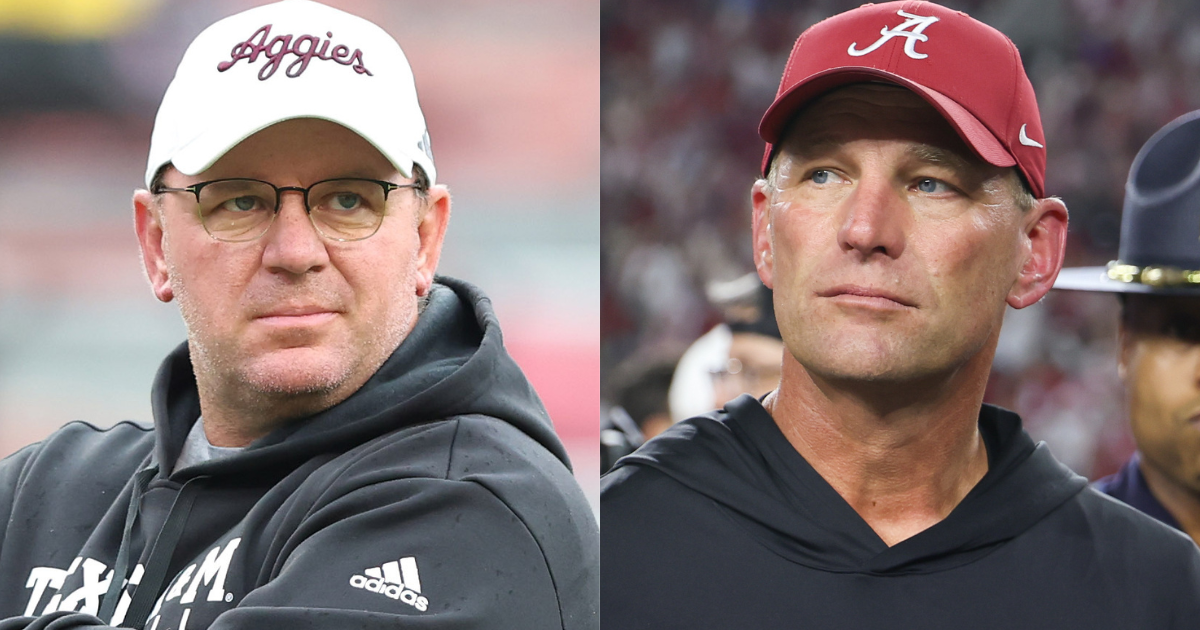
Penn State‘s head coaching search may have taken longer than expected, but the Nittany Lions ultimately landed their guy — Matt Campbell from Iowa State. According to a recent report from ESPN, however, the search apparently featured a number of big-name college football candidates to replace James Franklin.
These names included Alabama‘s Kalen DeBoer, Notre Dame‘s Marcus Freeman and Texas A&M‘s Mike Elko. All surfaced as “potential candidates,” with Elko looked at as “the most realistic,” given his ties to the region.
“The whole time, we thought Elko was going to be the guy,” one SEC coach told ESPN. “Then he came off the board.”
Elko just finished an 11-2 season at Texas A&M, leading the Aggies to its first-ever College Football Playoff. His Aggies were undefeated for the first 13 weeks of the season while Penn State continued it’s head coaching search. Texas A&M went on to extend his on Nov. 15.
For DeBoer, he denied having interest in the Nittany Lions’ job. Freeman was in the middle of leading Notre Dame to a 10-game win streak to lose the season. According to another ESPN source, Penn State “never spent a ton of time on those guys knowing their current situations.”
It wasn’t until early December that Penn State announced the hire of former Iowa State head coach Matt Campbell. The hire appears to have been well-received on social media and recruits alike.
He’s bringing to Happy Valley a resume that includes a 107–70 overall as a head coach. He built the Iowa State program from the ground up after a successful stint as Toledo’s head coach. Starting with a 3-9 finish in his first year with the program, Campbell led the Cyclones to a program record five-straight bowl games.
In 2024, Iowa State had its best season yet under Campbell. Leading the Cyclones to an 11-3 record, they came up just short of the College Football Playoff after losing to Arizona State in the Big 12 Championship game. They were ranked as high as No. 9 in the AP Poll last season.
He is expected to mirror that success and then some as the Nittany Lions’ new head coach, all while competing alongside the DeBoer’s, Freeman’s and Elko’s at the forefront of college football. Campbell’s effort is already underway in Happy Valley, and the product of it will be seen next fall.
The first step — the NCAA transfer portal. Penn State was left with two signees in its 2025 recruiting class, so he’ll be focused on bolstering his roster once it opens on Jan. 2.

Three Mizzou staffers following Kirby Moore to Washington State
Izzy Starck transfers to Pitt volleyball from Penn State
Missouri Damon Wilson files countersuit against Georgia in NIL case

Texas A&M volleyball’s sweep of Kentucky attracts record viewership

K-State Hires Jeremiah Johnson to Serve as Defensive Backs Coach

Texas A&M Volleyball adds another productive player from the portal

The News-Gazette’s 44th All-State volleyball team: Player of the Year Burgdorf a dominant force for St. Charles North | Sports

College Football Playoff team loses key starter to NCAA transfer portal

Wisconsin volleyball flips Isabelle Hoppe from Penn State

Penn State earns commitment from Pitt transfer Ryla Jones | Penn State Volleyball News

Four key Gophers will be back in 2026

My Christmas wish this year? Less diapers, more sleep

PROFILE | Red Star’s Damien Durand – from youth activity leader at 25 to Ligue 2 top-scorer at 30

Merry Christmas to one and all

Georgia case could determine if schools can get damages from transfers

Fargo girl, 13, dies after collapsing during school basketball game – Grand Forks Herald

CPG Brands Like Allegra Are Betting on F1 for the First Time

Sycamores unveil 2026 track and field schedule

Two Pro Volleyball Leagues Serve Up Plans for Minnesota Teams

Utah State Announces 2025-26 Indoor Track & Field Schedule

SoundGear Named Entitlement Sponsor of Spears CARS Tour Southwest Opener

Jo Shimoda Undergoes Back Surgery

Redemption Means First Pro Stock World Championship for Dallas Glenn

Bowl Projections: ESPN predicts 12-team College Football Playoff bracket, full bowl slate after Week 14

Black Bear Revises Recording Policies After Rulebook Language Surfaces via Lever

Texas volleyball vs Kentucky game score: Live SEC tournament updates

Robert “Bobby” Lewis Hardin, 56

How this startup (and a KC sports icon) turned young players into card-carrying legends overnight

Donny Schatz finds new home for 2026, inks full-time deal with CJB Motorsports – InForum

How Donald Trump became FIFA’s ‘soccer president’ long before World Cup draw






-
 Motorsports2 weeks ago
SoundGear Named Entitlement Sponsor of Spears CARS Tour Southwest Opener
-
 Motorsports2 weeks ago
Donny Schatz finds new home for 2026, inks full-time deal with CJB Motorsports – InForum
-
 Rec Sports3 weeks ago
How Donald Trump became FIFA’s ‘soccer president’ long before World Cup draw
-
 Rec Sports2 weeks ago
David Blitzer, Harris Blitzer Sports & Entertainment
-

 Motorsports3 weeks ago
JR Motorsports Confirms Death Of NASCAR Veteran Michael Annett At Age 39
-
Sports3 weeks ago
Elliot and Thuotte Highlight Men’s Indoor Track and Field Season Opener
-

 Motorsports2 weeks ago
Rick Ware Racing switching to Chevrolet for 2026
-
Sports3 weeks ago
West Fargo volleyball coach Kelsey Titus resigns after four seasons – InForum
-
 Sports2 weeks ago
#11 Volleyball Practices, Then Meets Media Prior to #2 Kentucky Match
-

 NIL2 weeks ago
DeSantis Talks College Football, Calls for Reforms to NIL and Transfer Portal · The Floridian