Connect with us
https://yoursportsnation.com/wp-content/uploads/2025/07/call-to-1.png

Rec Sports

What Ryan Smith’s building in Utah is much bigger than the Mammoth and Jazz: ‘This is a movement’

Published

on


SALT LAKE CITY — As Ryan Smith, in his typical attire of a white hoodie, backwards cap, jeans and sneakers, gives a gathering of Utah Mammoth players a sneak peek of their new home on a day in early September, the reaction he receives can only be described as shock and awe.

Smith, the 47-year-old owner of the NBA’s Utah Jazz and NHL’s Utah Mammoth, is leading a tour of the new 146,000 square-foot practice facility in Sandy, a suburb south of Salt Lake City. Drills and hammers echo in the background, with renovation continuing on the 120-acre mall as Smith takes the players around a massive gym, four-pool recovery room and state-of-the-art kitchen.

“Incredible,” 21-year-old Logan Cooley says.

“You’re like ‘Wow,’” veteran Lawson Crouse says.

“Everything that he promised has been done,” captain Clayton Keller says. “And in crazy time, too.”

It was only 17 months ago that Smith first introduced himself to the then-Arizona Coyotes during a fireside chat and a round of golf in Scottsdale.

Smith, who was taking on a Herculean task of relocating the team to Salt Lake in a matter of months, asked players and staff what they needed. The response included everything from better travel and nutrition to, yes, a facility for training.

He shakes his head at how far they’ve come.

“We didn’t get into sports to be like, ‘Hey, we want to conquer the world,’” Smith tells The Athletic. “It was very much community-based. We really had to keep asking, ‘What are we doing?’ In a world that’s completely divided, (sports) bring everyone together. That’s our ‘why’ and what keeps us going.”

No, Smith isn’t intending to build an “empire” here in Salt Lake. It just feels that way.

Ryan and Ashley Smith’s company, Smith Entertainment Group, is gutting the 34-year-old Delta Center to make it more fan-friendly for both basketball and hockey. Plans are underway for a $3 billion-plus downtown overhaul by the arena, connecting the sports teams to the cultural and convention centers, with construction expected to be mostly complete before the 2034 Olympics. The Mammoth already boast a season-ticket base of 10,000 full-season equivalents for what will be a 12,266-seat capacity this season and around 17,000 after the upper bowl is renovated by the start of the 2027-28 season. They did not disclose the breakdown of this year’s season-ticket equivalents, but last year, they capped full-season packages at 8,000 and also sold partial-season packages that added up to another 2,500 full seasons.

Smith’s summer project was a pledge to help build 20 local rinks, offering $500,000 each to get them started. According to SEG, five municipalities are now in different stages of development. Smith wants the Junior Mammoth program to mirror the Junior Jazz, which according to SEG is the largest youth basketball organization in the NBA with 70,000 participants.

The goal is to be a picture of stability as an NHL organization. And to win the Stanley Cup — multiple times.

But mostly, Smith says, “This is a movement.” He sees a greater purpose for it: to elevate his home state.

“I don’t think we’ve thought much about, ‘Hey, this is the legacy. This is the empire,’” Smith says. “Nobody is going to remember Ryan Smith 100 years from now. This isn’t my legacy. It’s really not about the Smith family. We’re pretty normal people, trying to raise kids, and we all share a common theme.

“It’s Utah.”

And to think hockey wasn’t even on Smith’s radar until a few years ago.


Smith was on a weeklong trip to the Bahamas in December of 2022 when this hockey brainstorm was unexpectedly sparked.

Smith and Ashley were with Danny Ainge, recruiting him to run the Jazz. Chris Armstrong, a former long-time sports agent, was there, too, along with Tony Finau, one of his one-time PGA Tour clients.

The group was in a shared condo watching a Jazz game one night, and Armstrong asked if they could flip it over to a hockey game at halftime: the Toronto Maple Leafs against the Boston Bruins.

“Hockey?” Smith chirped at him. “Really?”

Then Ainge shared some of his experiences in Boston running the Celtics, and how much he learned about the Bruins and hockey culture. Over the course of the weekend, the group started having “what-if” conversations. By the end, they decided they should try to meet with NHL commissioner Gary Bettman to see how they could get involved.

Armstrong’s passion for hockey was one thing, but Smith also felt emboldened about the sport because of his connection with some high-profile neighbors at his vacation home in Coeur d’Alene, Idaho, including Tampa Bay Lightning coach Jon Cooper and retired players Wayne Gretzky, Brenden Morrow and Ray Whitney.

“It’s the hockey capital,” Smith says. “It’s interesting. There’s no way we would have a hockey team if I didn’t get to know those guys up there. I remember the first year, I had never really been around hockey culture, and I was like, ‘There’s something different about these stars. These guys are humble.’ I started playing golf with these guys, and the more I got to know the vibe, the way they operate, the way they talk, I’m like, ‘That would work in Utah.’”

A few months after the Bahamas trip, in the spring of 2023, Smith and Armstrong were in Bettman’s New York NHL offices along with deputy commissioner Bill Daly. Armstrong had a relationship with Daly and helped set it up. Armstrong could tell that Smith’s dynamism and passion for Utah struck an impression.


Gary Bettman found a fast partner for the NHL in Ryan Smith. (Photo courtesy of SEG)

“This wasn’t just about getting a hockey team,” Armstrong says. “This was about getting another driver for the state of Utah to reach its full potential.”

They didn’t put on a full-court press at the meeting, telling the NHL brass that they’d love to be involved, whether that meant hosting a game at some point or being in the mix if the league ever considered expansion.

“I’m like, ‘It doesn’t make sense not to be here,’” Smith says. “Every other Olympic sport trains here. All the skiers, the ice skating, speed, track. Shaun White is here all the time. Why aren’t we doing this?

“One thing led to another, and we were kind of in the right place at the right time.”


The lengthy saga in Arizona, the struggles of the Alex Meruelo ownership era, has been well-documented.

When the situation reached its breaking point, with a new arena plan going nowhere, Bettman met again with Smith and asked him if he thought he could pull off buying and relocating the team.

“It was like, you don’t ask questions,” Smith says. “You just say, ‘Yes.’”

Smith laughs, thinking about it now. The $1.2 billion deal between SEG, the NHL and the Coyotes was one thing. The execution after was another. Smith remembers sitting down with his wife and Mike Maughan, a long-time right-hand man since their days at Smith’s software company Qualtrics.

“We know Day 1 is going to be good,” Smith remembers saying. “But what does Day 2 look like? (How do we) make Day 2 and Day 3 better?”

Asked for his favorite day as an owner so far, Smith has a few. There was the introduction of the team to the fan base. Smith flew to Scottsdale for that round of golf and fireside chat, then called Delta and booked a plane to fly the entire Coyotes team and their families to Salt Lake City for a rally at the Delta Center. About 12,000 fans attended, and several thousand more gathered outside.

“It was the greatest sporting event I’ve ever been to where no sports were played,” Smith says. “It’s like we were out fishing and caught this massive fish, and we were bringing it back to Utah. We hoped people were as excited about the fish as we were. They grabbed the fish and ran it through town.

“Every player left going, ‘OK, we trust this.’ Then they were validated opening night.”

Utah’s first game, a 5-2 home win over the Chicago Blackhawks on Oct. 9, set the tone. Shaboozey played a pregame concert. Dwyane Wade, a minority owner, was in the house with his wife, Gabrielle Union, telling Smith, “I don’t know how you made me a hockey fan.”

Dylan Guenther, the No. 9 draft pick in 2021, opened the scoring for Utah five minutes into the game. The Delta Center erupted. Players say it was the loudest they had ever heard a hockey rink. Smith remembers Bettman turning to him and saying, “You do not know how big that was.”

“That was a moment where players got the confidence like, ‘Hey, it’s going to be OK,’” Smith says.

There have been plenty of challenges, too. Smith admits they underestimated just how “broken” the Delta Center was, from a hockey perspective. It’s a basketball-first facility that had poor sightlines for a good chunk of seats. The gutting of the arena includes raising the floor by two feet and installing first-of-their-kind risers to solve this. They also didn’t realize how much adding 41 nights of events at the Delta Center would impact downtown.

“Everyone wants their own world, but the way we’ve been able to bring it together has been awesome,” Smith says. “They were meant to be together.”


Smith, who has five kids, aged 9 to 17, can’t wait to take his youngest skating.

The first place they plan to go is the Mammoth’s practice facility, which they believe will not only be the hub for their team but also for youth hockey in Utah. There will be 4,000 square feet of community space, ice times for youth hockey teams and watch parties for Mammoth games here.

“This has to be the home and the bat signal of it,” Smith says. “This is exactly what every community needs.”

Smith’s pledge to help get 20 rinks built feels ambitious, but the club feels it has built a sort of “model home” in this rink that can be copied on a smaller scale. If a municipality comes forward with interest, Smith says, the Mammoth and SEG will help in any way they can.


The Mammoth are hoping their new practice facility can be a “model home” of sorts for future rinks built in the area. (Photo courtesy of SEG)

Kristen Bowness, who has previously worked for the Lightning and the Nashville Predators in their youth and community programs, is spearheading the Mammoth’s youth hockey efforts. The Junior Mammoth are trying to mirror the Junior Jazz, from partnerships with local parks and recreation departments to the jerseys they hand out to kids, which include a ticket to a game. The Jazz set aside 1,800 seats for each game for the Junior Jazz — heavily-reduced-priced tickets that are included in the registration fee for those youth program members. There’s a similar ticket arrangement for the Junior Mammoth.

Bowness says they had 3,875 kids participate in the street hockey program in Year 1. The goal is to match the Junior Jazz’s 70,000 league members by Year 5.

“We really feel like we can get there,” she says.

Smith and SEG are betting on youth. As of 2024, Utah had the youngest demographic in the United States, with a median age of 32.4 years, according to U.S. Census Bureau data. The organization is tapping into that to grow its fanbase. Bowness says the Mammoth will do four to five youth events per week during the season, from hosting street hockey to coaching and referee clinics. Starting in January or February, the Sandy practice facility will be used for “Learn to Skate,” adult leagues, AAA youth hockey and other community-building activities.

Bowness says there are currently six rinks in the greater Salt Lake City area and 12 in the state. The practice facility will be the 13th. There are 60 high school hockey programs throughout the state. Six NHL players have come from Utah. The goal is for those numbers to grow, as well. The more interest in hockey, at all levels, the better, long term.

“That’s what we want,” Bowness says.


Ryan Smith plans on the new Mammoth practice facility being the center of the hockey world in Utah. (Photo courtesy of SEG)

Smith played a role in pushing for the Olympics’ return to Salt Lake in 2034, which will put the region’s hockey fandom in an international spotlight. Smith has said the plan is for the Delta Center to be involved in Olympic hockey for those games.

And will he get involved in helping local colleges like his alma mater, BYU, to move to Division I in hockey? Chris Armstrong says that’s not on their immediate radar — but the hope is that “rising tides lift all boats” and momentum is built on its own over time.

As for the fans of today, synergy with the Jazz has been critical in getting them in the door.

Having the infrastructure, software and staff already on board allowed them to secure 34,000 seat deposits right away, according to Chris Barney, president of revenue and commercial strategy for SEG — those deposits for a mix of full-, half- and partial-season packages. And many are left on that waitlist. The teams were able to share partners and sponsors, as well.

The Mammoth also followed the Jazz’s lead regarding their television broadcasts. Barney says that SEG learned a couple of years ago that the Jazz were distributing their games to only 39 percent of the market on cable. So when their regional sports network deal was up, they struck a deal with a local Sinclair station and are now entering their third year having over-the-air broadcasts on KJZZ. They’re doing something similar with the Mammoth on Utah 16, which will air all 71 of the team’s non-nationally-broadcast games this season for free this season.

“So 100 percent of the market can see the games,” Barney says.

There’s also a paid subscription service that streams games and behind-the-scenes content. According to SEG, there were more than 18,000 subscribers last season to Mammoth+ and SEG+, the latter of which also streams Jazz games.

Smith and SEG have received strong collaboration and support from the city of Salt Lake and the county, especially when it comes to the downtown district overhaul. The idea is to have a walkway connect blocks that feature the Delta Center, convention center, symphony and museums. SEG’s investment in the area is $3 billion, which includes partnering with Live Nation on a 6,000-seat indoor concert venue. A 0.5 percent citywide sales tax will help fund the project.

Salt Lake City mayor Erin Mendenhall says they’ve already seen the annual financial impact from activity in the district increase from $326 million to a projected $600 million after the addition of the Mammoth.

“The whole proposal has been forged through imagining together,” she says. “It’s about our identity as a capital city for the next 50 to 100 years.”

For Smith, it all comes back to investing in pro sports to help grow Utah.

“We want to build an extremely stable organization, to where if you look at Utah, you think stability — just a model franchise in sports,” Smith says. “We want the community to feel like they’re really part of it. For us to be part of bringing an NHL team, it’s not lost on anyone here — the second they walk into that area and they see that NHL shield. It’s like, we have this forever.”


Is Smith more of a Mark Cuban or a Jerry Jones?

Smith laughs at the question.

He looks and dresses like a player. Mikhail Sergachev, the Mammoth’s No. 1 defenseman, jokes that he acts like one of the guys, too, sometimes “dabbing” players as they walk by.

Players see “genuine” there — a new-age type of owner.

And how does Smith see himself?


Is Ryan Smith more Mark Cuban or Jerry Jones as an owner? (Photo courtesy of SEG)

He says he likes to manage down to an inch. He wants to be in on all the details. But he also doesn’t want to do everything. He trusts his people: Maughan with the downtown district, Jazz president Jim Olson with the Delta Center gutting, Chris Armstrong and general manager Bill Armstrong with the hockey operations.

“Am I Jerry Jones where I’m playing GM? Absolutely not,” Smith says. “But am I hiring people and getting out of the way? Absolutely not. … I don’t want to coach the team. I don’t want to play GM. However, I want to know absolutely everything that’s going on at every level. Part of that is also to back our people.”

Bill Armstrong says that what makes his job different now than when he was the GM of the Coyotes is that there are “no excuses.” The team has been given everything it needs from a resources and support perspective. Now it’s on management, coaches and players to deliver.

“We freaking want to win a championship, right?” Maughan says. “We’re going to win a Stanley Cup. We’re building to win. We’re not here because we want to dilly-dally or just own a team. There’s no ego in that. We want to give a gift of a championship to the people of Utah. We want to give the gift of downtown to people of Utah. It’s about that, not any personal thing. Life is too short to have small dreams. The dream wasn’t to own a hockey team. The dream was to win a Stanley Cup and create something amazing for the community.”

Smith already knows where the championship parade route will be. And it won’t just be in Salt Lake or Sandy.

“I think it’ll start here in Northern Utah,” he says, smiling. “And go all the way down to Las Vegas.”

(Illustration: Will Tullos / The Athletic, with photos from Kamil Krzaczynski, Alex Goodlett, Tyler Tate and Joe Sohm / Getty Images, and courtesy of SEG)





Link

Continue Reading
Click to comment

Leave a Reply

Your email address will not be published. Required fields are marked *

Rec Sports

Jack Ryan: Baseball fields are all gone, but the memories survive

Published

on


On a cool and sunny Friday afternoon, I finally did what I’d been meaning to do for several weeks.

I drove over to Edgewood Park to have a look at the former Dixie Youth Baseball fields. After several years of being unused, McComb officials recently removed the fencing around each field along with several buildings on the property.

It’s an inglorious ending to a place that introduced thousands of local children to baseball and softball, and drew hundreds of their family members and friends on summer evenings to watch the games.

But now it’s gone. I parked my car and looked out at the property, trying to recall the location of the various fields.

Everything has been removed. The concession stand, the overhead press boxes behind each home plate, the storage buildings, the fences, the dugouts, the bleachers, the cinder blocks. I couldn’t tell for sure, but it looked like even the sidewalks were gone.

One overhead light lay on its former field, where the minor league used to play. There were three vehicles on the property, with guys completing the removal work, including a truck and a backhoe.

I don’t blame the city for clearing the property. It had been overgrown for several years until the city board approved the cleanup.

Nor do I blame the McComb Exchange Club for merging its youth baseball operations with Summit several years ago and moving to the Windsor Gay Youth Complex, which has more space than Edgewood Park did. Times change, and decisions have to be made.

In fact, Pike County once had three Dixie Youth Baseball locations, in McComb, Magnolia and Summit.

The Dairy Belt leagues in Magnolia were the first to close, pretty much going the way of all the dairy farms that Southwest Mississippi used to have. And then McComb DYB left Edgewood Park, where it had been since it started in 1958, for Summit.

Mary Ann and I were regulars at youth baseball games from 1994 to 2008, if my math is correct. Though it could be aggravating at times for parents trying to make sure their kids got to where they were supposed to be, the upside to Dixie Youth Baseball far outweighed any hassles.

The baseball fields are gone, but the memories remain. Every family has them, and here are some of my favorites:

• Coaching T-ball was comically fun. I remember one year, a player insisted on sitting down in the base path whenever he was in the field. I would have to go lift him up to move him out of the way.

• John’s junior league team Sonic won the championship in 1997. It was a close race with another team.

This team was a great group of kids, and they had good coaches and especially a fun group of parents. And the Sonic on Delaware Avenue, to their credit, donated a bunch of hamburgers for the team party.

• Thomas struggled at the plate in his first few games of minor league, when players graduated to a live pitcher instead of the junior league machine.

I pulled out my VCR tape of “The Empire Strikes Back” — this was the summer of 2000 — and had him watch Yoda’s tutorials of Luke Skywalker. A Jedi must feel the Force; it surrounds us. Believe in what you can do. And the very next game, he got a hit.

• When Audrey was in the softball leagues, one year I had these comical trash-talking contests with friends whose daughters were on another team. Audrey, it turned out, was a decent player. A sign of her future on the high school volleyball team.

When Audrey, our youngest, finished her last year of Dixie Youth, I was glad to be free of spending two nights or four nights a week at the park. I planned to go back once in a while to see what was going on, but I never did.

This would be the right place to thank all the Exchange Club members and other volunteers who do the hard work of running Dixie Youth. They all are champs.

Looking out at the empty space on Friday, it had to look a lot nicer than it did when the property wasn’t being used and the weeds had taken over. So I’m OK with starting from scratch on what is a pretty large piece of Edgewood Park.

A soccer league has asked to use the property, and I hope they, or some kind of youth sports group, gets it. The place has six decades of history, and that ought to continue.


Link

Continue Reading

Rec Sports

Chicago ARF celebrates championship season for local Homenetmen and AYF youth

Published

on


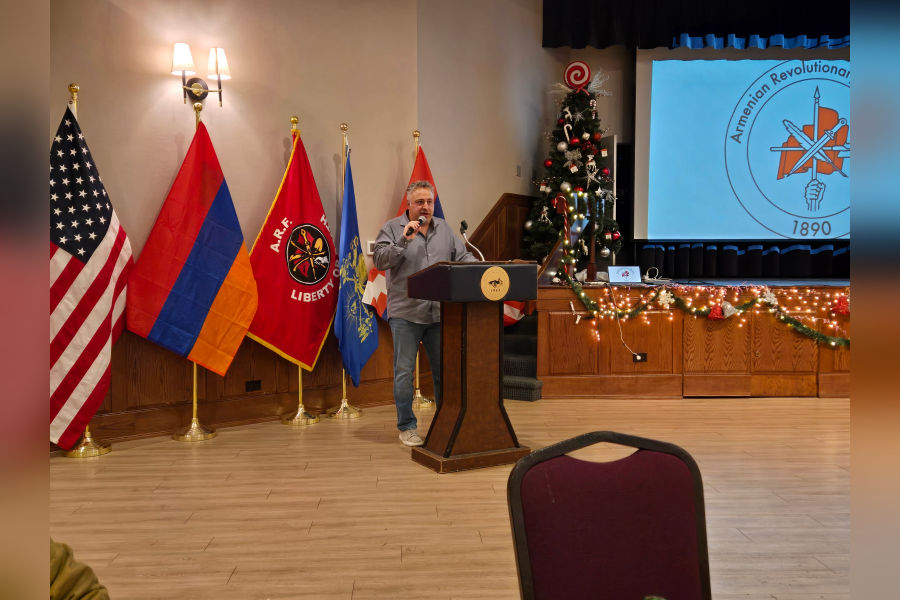
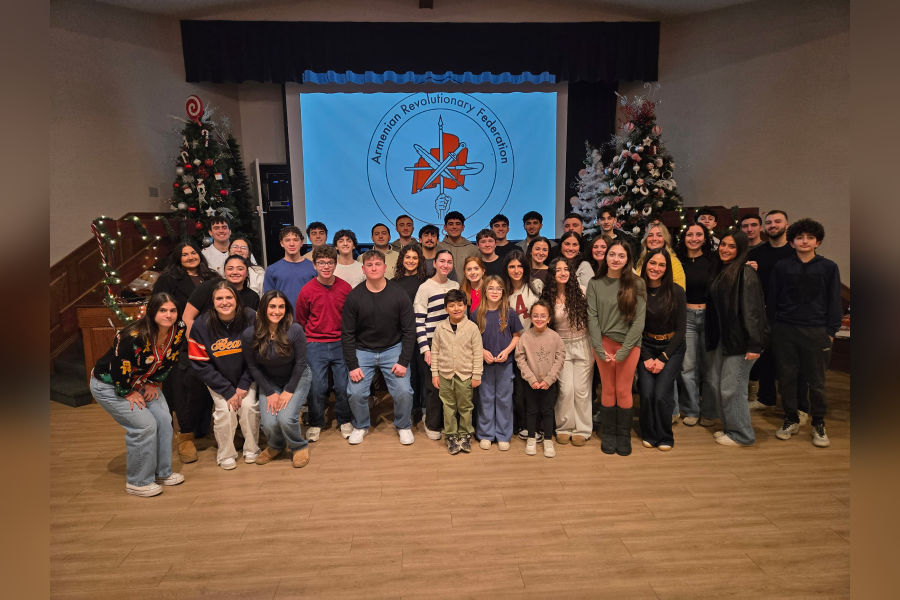
GLENVIEW, Ill. — On Saturday, Dec. 20, the Chicago “Christapor” Gomideh of the Armenian Revolutionary Federation (ARF) hosted a special evening at Shahnasarian Hall in the Armenian Community Center in Glenview to celebrate Armenian youth, athletic excellence and the enduring values that guide the Armenian community.

The evening began with a shared dinner, creating a warm and welcoming atmosphere for fellowship and celebration. The Gomideh expressed its sincere gratitude to all who contributed to the preparation, serving and cleanup, whose efforts ensured a smooth and enjoyable start to the night.

The program formally opened with welcoming remarks by Hagop Soulakian, chairman of the Chicago “Christapor” Gomideh. He welcomed the athletes and members of Homenetmen Chicago and the Chicago Ararat AYF Juniors and Seniors, along with their families, and congratulated both organizations on their recent championship victories.

The Homenetmen Chicago athletes were recognized for winning the 2025 Navasartian Games, followed just one week later by the Chicago Ararat AYF Juniors, who captured the 2025 Junior Olympic Championship. These back-to-back victories were highlighted as a source of pride for the entire community and as evidence of discipline, preparation and teamwork.

Hagop Soulakian, chairman of the Chicago “Christapor” Gomideh

In his remarks, Soulakian emphasized that these achievements extend beyond athletics. “Winning championships does not happen by chance,” he stated. “It begins with ideas, preparation and planning. It requires hard work and sacrifice. But above all, championships are won through unity.”

He then connected these athletic principles to the mission and values of the ARF through the symbolism of its coat of arms. He explained that the pen represents ideas, education and thoughtful preparation; the shovel symbolizes disciplined work and consistent effort; the sword honors sacrifice and courage; and the fist unites all of these elements through collective strength. “Just as in athletics,” he noted, “ideas, hard work and sacrifice only lead to victory when they are bound together as one. That belief — unity through shared purpose — is exactly what the ARF stands for.”

To conclude the program, the ARF invited all Homenetmen athletes and AYF members to the front of the hall, where each was presented with a Zinanishan pin. The pin was offered as both a token of appreciation for their hard work and a reminder of the principles required to succeed not only on the field, but within the Armenian community and in service to the nation.

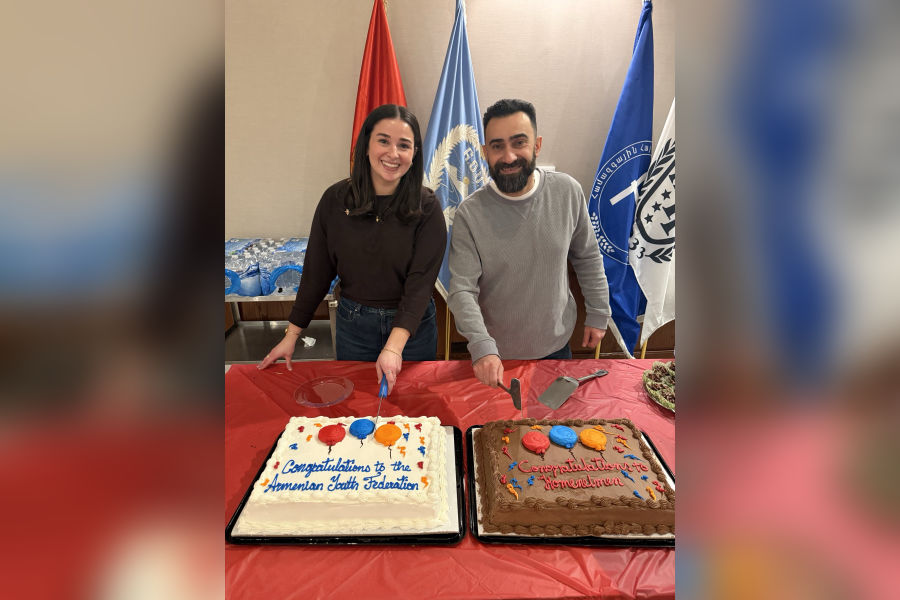
Khajak Arakelian (right), chair of Homenetmen Chicago, and Aleena Surenian (left), chair of the Chicago Ararat AYF, cut the cake.

The evening continued with a special cake-cutting ceremony led by Khajak Arakelian, chair of Homenetmen Chicago, and Aleena Surenian, chair of the Chicago Ararat AYF, marking the shared celebration between the organizations. Following the ceremony, it was announced that Chicago will host the 2027 AYF Senior Olympics. The announcement was met with enthusiasm and pride, as hosting the Senior Olympics is both a significant responsibility and a meaningful honor for the local community. The opportunity reflects the confidence placed in Chicago’s organizations and volunteers and further underscored the evening’s theme of youth leadership, organizational strength and collective commitment to the future.

Organizers expressed hope that the evening fostered renewed appreciation for all those who helped make the celebration joyful and meaningful, while reinforcing the importance of unity, service and continued investment in youth. As emphasized throughout the night, the young people honored at this event represent more than championship teams; they are future leaders of the Armenian community. As Soulakian reminded those gathered, “Our survival has never been accidental; it has always been the result of resilience, unity, and an unbreakable commitment to our nation.”


Link

Continue Reading

Rec Sports

Angel City FC at L.A. Works MLK Volunteer Festival

Published

on


DATE: Monday, January 19, 2026

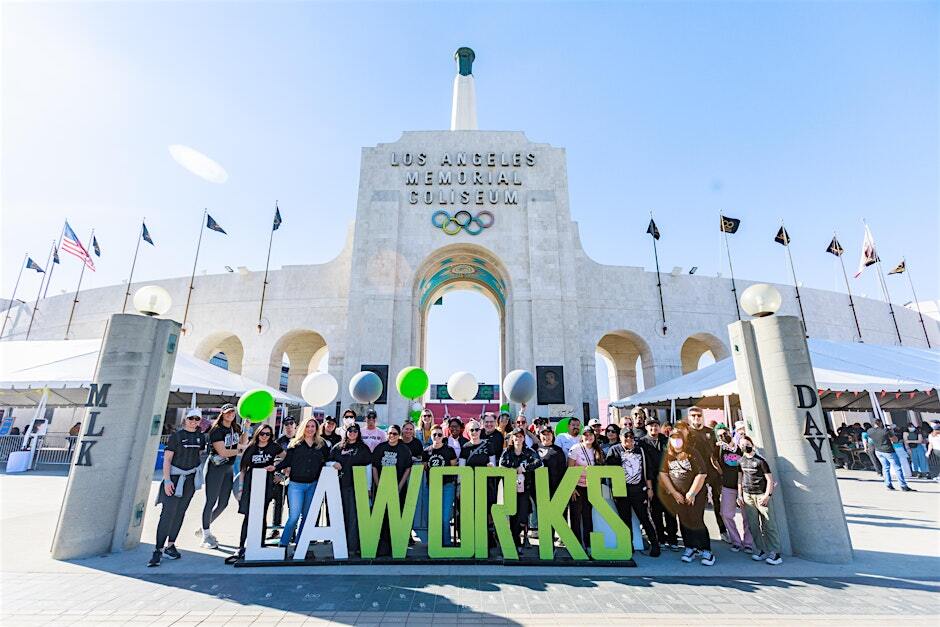
LOCATION: LA Memorial Coliseum

ADDRESS: 3911 S Figueroa St, Los Angeles, CA 90037

START TIME: 12:00 PM

END TIME: 4:00 PM

OPPORTUNITY: 50 volunteers per shift

Event Overview

Volunteer with ACFC at the MLK Festival and help build 1,500 sports kits for youth across Los Angeles.

On Monday, January 19, Angel City FC will join thousands of Angelenos at the L.A. Works MLK Volunteer Festival to honor Dr. King’s vision of a Beloved Community. This annual day of service brings people together to support local families through hands-on projects across education, health, housing, environment, and sports equity.

Angel City FC’s Impact on the Day:

ACFC will lead the Sports Equity Zone, where 100 staff and employees will assemble 1,500 Sports Kits for students served by Para Los Niños. These kits will support young people across Los Angeles with essential tools for learning and play. By showing up together, ACFC volunteers will turn purpose into action and deliver a meaningful contribution to local youth.

Volunteer Schedule:

Shift 1: 12:00 pm – 1:50 pm (1 hour 50 minutes)

Activity: Assemble 750 Sports Kits

  • 12:00 pm – Volunteers arrive at L.A. Works check-in
  • 12:00–12:10 pm – Walk to Sports Zone
  • 12:10–12:20 pm – Orientation and welcome
  • 12:20–1:40 pm – Volunteer activity
  • 1:40–1:50 pm – Group photo with Shift 2
  • 1:50 pm – Shift 1 concludes
Shift 2: 1:30 pm – 3:10 pm (1 hour 40 minutes)

Activity: Assemble 750 Sports Kits

  • 1:30 pm – Volunteers arrive at L.A. Works check-in
  • 1:30–1:40 pm – Walk to Sports Zone
  • 1:40–1:50 pm – Group photo, orientation, and welcome
  • 1:50–3:10 pm – Volunteer activity
  • 3:10 pm – Shift 2 concludes and closes out


Link

Continue Reading

Rec Sports

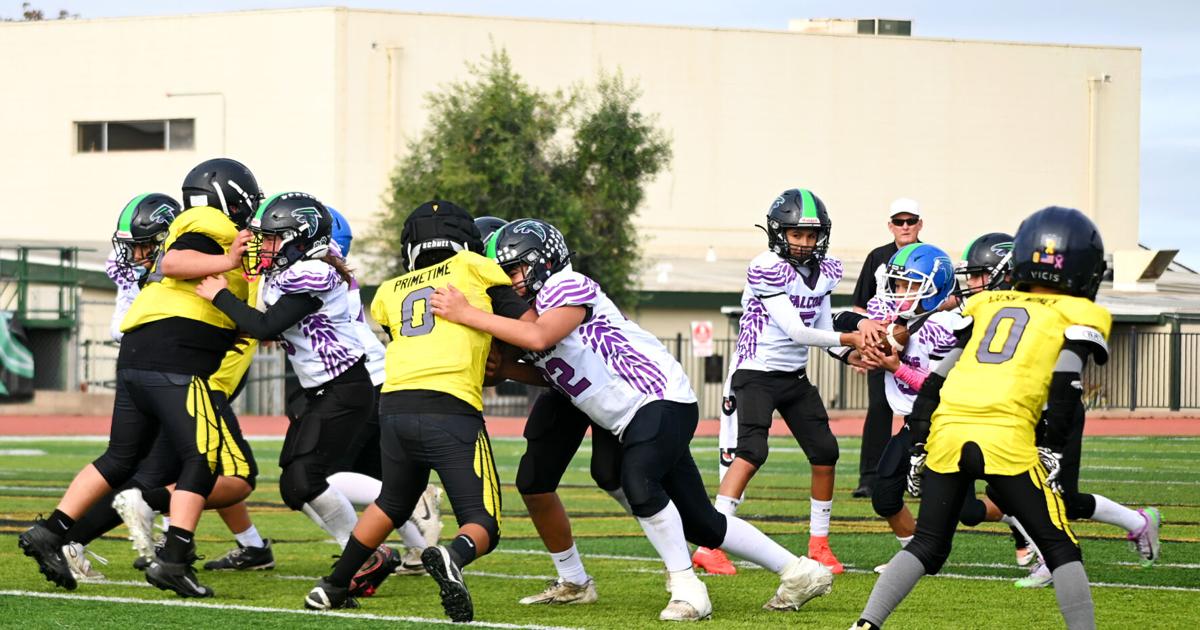
805 Ducks defeat Cheehoo Falcons at Winter Classic youth football tournament | Youth Sports

Published

on


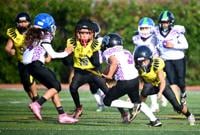
The 805 Ducks’ offense did enough Sunday to score 20 points. The Ducks’ defense took care of the rest.


122125-smt-news-cheehoo-football-003.jpg


Sign up to receive headlines in your inbox!

Breaking News | Local Sports | Daily Headlines | Local Obituaries | Weather | Local Offers


Link

Continue Reading

Rec Sports

One family, two superstars: Inside the Luna household

Published

on


United's Jorge Luna, second from left, and Victoria Luna, right, with their parents Jorge and Valerie after a football game. 

United’s Jorge Luna, second from left, and Victoria Luna, right, with their parents Jorge and Valerie after a football game. 

Courtesy/For the Laredo Morning Times

When they look back on their own high school athletic careers, Jorge Luna Jr. and Valerie Luna remember being average athletes.

Luna Jr., a 1992 United graduate, played basketball while Valerie Luna played volleyball at Nixon until graduating in 1997.

Article continues below this ad

But it’s a different experience when the two watch their son, Jorge Luna III, throw touchdown passes for the Longhorns on Thursday, Friday and Saturday nights and their daughter, Victoria Luna, rise high for thunderous kills on the volleyball court.

The brother-sister duo are superstars. They were arguably the two best players in their respective sports this past fall and live under the same roof and eat at the same dinner table.

It’s created a surreal experience for the family.

“What is amazing to me is that we were never even close to the level these two kids are,” Luna Jr. said. “It’s crazy. It’s unbelievable to me.”

Article continues below this ad

Valerie Luna added, “We always try to stay grounded. Yes, we do think they’ve done a lot and it’s great to see that, but we try to stay humble. We don’t want to say they’re the best, but they’re good because they’re hard workers, disciplined and have a schedule. They’re normal kids. They’re still brats.”

Siblings Victoria and Jorge Luna after a football game. The two were superstars during this fall. Victoria was the All-City Hitter of the Year in volleyball, while Jorge was the All-City Most Valuable Player in football. 

Siblings Victoria and Jorge Luna after a football game. The two were superstars during this fall. Victoria was the All-City Hitter of the Year in volleyball, while Jorge was the All-City Most Valuable Player in football. 

Courtesy/For the Laredo Morning Times

Luna III wrapped up a senior season to remember on the gridiron not only by United’s standards, but for Laredo as a whole. His 3,908 passing yards this season were 321 yards short of the single-season Laredo record, while his 43 touchdown passes were one shy of the single-season mark for gunslingers to play in the Gateway City. He ended his prep career with 6,256 yards and 69 touchdowns as one of eight Laredo quarterbacks to surpass 6,000 career yards and eighth all time in passing touchdowns.

Following his impressive senior campaign at quarterback, Luna III was named District 30-6A and All-City Most Valuable Player. He quarterbacked a Longhorns team that averaged 35 points per game and reached the third round.

Article continues below this ad

Victoria Luna, meanwhile, shined on Tuesday evenings and Saturday afternoons. The do-everything volleyball star compiled 364 kills, 197 digs and 63 blocks as a junior this fall to lead United to the playoffs. She earned Hitter of the Year honors in the District 30-6A and All-City awards and will arguably be Laredo’s top returning volleyball talent as a senior next year.

Siblings Victoria and Jorge Luna, who were both superstars during this fall. Victoria was the All-City Hitter of the Year in volleyball, while Jorge was the All-City Most Valuable Player in football. 

Siblings Victoria and Jorge Luna, who were both superstars during this fall. Victoria was the All-City Hitter of the Year in volleyball, while Jorge was the All-City Most Valuable Player in football. 

Lex Saenz Photography/For the Laredo Morning Times

When people ask the Luna parents about the secret to their kids’ success, it’s pretty simple: They work for it.

“Other than being big kids, they’re not natural athletes,” Luna Jr. said. “It’s the work they put in, the fact they’ve been able to train with the coaches they’ve trained with and the year-round training. They don’t have a break. As soon as they get out of season, they’re back to training.”

Article continues below this ad

Sports have been the identity of the Luna family. The kids were destined to succeed as athletes. As products of Borchers Elementary School and Elias Herrera Middle School, there’s hardly a sport the two didn’t play. Luna III played basketball and football and even had a short stint with baseball, while Victoria Luna started gymnastics when she was 3 years old and, because of her height at such a young age, excelled in basketball and volleyball and even tried soccer.

The years in youth sports immediately paid off for Victoria Luna. Because of her height and the strength she built in her arms and legs from years of gymnastics, she had an advantage over her brother when they were kids.

“Ever since they were babies, we have so many videos where she’s like ‘Jorgie stop right now,’ and bop, she’s beating up on Jorge,” Luna Jr. said. “She was always the bully since she was bigger. Jorgie, she’d grab him and throw him on the ground.”

The Lunas had these sumo suits, and the kids would wrestle around in them. Luna III would have his friends over, but Victoria Luna, bigger than the boys, would throw everyone around with her gymnast strength.

Article continues below this ad

Despite early jokes that he got his mom’s height and not his dad’s 6-foot-5 stature, Luna III eventually grew into his body and now stands about 6-foot-2.

The Luna family cheers on Victoria Luna during a northside Laredo rivalry game this past fall. 

The Luna family cheers on Victoria Luna during a northside Laredo rivalry game this past fall. 

Billy Woods/Laredo Morning Times

“He’s always saying it’s your fault, Mom. I could’ve been taller,” Valerie Luna said while laughing.

It was always a competition between the siblings. Whether it was racing in the pool or playing basketball in the driveway or at the park, competition was in their genetic makeup.

Article continues below this ad

There are almost too many childhood stories to tell, but the intense back-and-forth basketball games were the first to come to mind.

“We would 1 v 1, and every time I’d win she’d get mad, and when she’d win I’d get mad and upset,” Luna III said. “As we grew up playing sports with different people, it made us more competitive. Being in that environment (against each other) made us better.”

For Victoria Luna, the constant competition against her older brother would serve a purpose that wouldn’t come to fruition until years later. As a girl, it helped mold her into a more physically and mentally strong athlete. Because of the environment she grew up in, she feels she thrives under pressure on the court.

“I can handle it more since I had a brother,” Victoria Luna said. “I get irritated bad with him, but if it’s a girl or someone I don’t know, I’m good. I can handle pressure because being young and arguing with him and competing with him … it’s not as much pressure in volleyball.”

Article continues below this ad

United's Victoria Luna with a kill during a district match against Alexander on Oct. 25, 2025, at United.

United’s Victoria Luna with a kill during a district match against Alexander on Oct. 25, 2025, at United.

Billy Woods/Laredo Morning Times

Eventually, the two had to narrow down their sports. Once he got to middle school and especially when he got to United for high school, football just clicked for Luna III. During his freshman year, United coach David Sanchez reached out to the Lunas to tell them he was taking an interested look at Luna III. Sanchez set them up with a quarterback coach in San Antonio to work year-round, and from that point on, it was all football for the oldest of the two siblings.

Between traveling to San Antonio and Austin for extra training, Luna III’s improvement over the years came down to simply putting in the hard work and reps to get better. It also helped that he was playing for the Sanchez-led Longhorns, who have a history of producing excellent quarterbacks.

All of that served as motivation.

Article continues below this ad

“It’s the culture there. It’s different there than any other school,” Luna III said. “I knew I had to be my absolute best to do great there.”

United's Jorge Luna shakes loose from a tackle during the 6A first round against Converse Judson on Nov. 14, 2025, at the Bill Johnson Student Activity Center.

United’s Jorge Luna shakes loose from a tackle during the 6A first round against Converse Judson on Nov. 14, 2025, at the Bill Johnson Student Activity Center.

Billy Woods/Laredo Morning Times

After he sat and watched Atzel Chavez Jr. for two years, Luna III got his shot early in his junior year when the starter went down with an injury. Luna III never looked back. Once he became the full-time starter, he exploded. Of his 2,256 yards his junior year, 2,195 came from Week 3 to Week 10. All 25 of his touchdowns came in those eight games.

As a senior, he erupted for one of the most memorable seasons by a Laredo quarterback.

Article continues below this ad

After games, he’d be swarmed by kids wanting autographs, pictures and accessories he wore in games.

But to Victoria Luna, he’ll always be little Jorgie to her and she’ll always be little Vicky to him.

The Luna family when current United standouts Victoria Luna and Jorge Luna were young children. Jorge and Valerie Luna have watched their kids become superstars in volleyball and football. 

The Luna family when current United standouts Victoria Luna and Jorge Luna were young children. Jorge and Valerie Luna have watched their kids become superstars in volleyball and football. 

Courtesy/For the Laredo Morning Times

“It’s super fun being able to watch him,” Victoria Luna said. “We’ve grown up together and are only one year apart, so I’ve watched him grow up and become this amazing football player. It’s fun being able to cheer him from the stands. Everybody knows he’s my brother.”

Article continues below this ad

Victoria Luna’s journey was a bit different. Her chance came much earlier.

When she entered high school, she thought she’d be showing up for junior varsity volleyball tryouts. But the night before tryouts, she was told to report to varsity tryouts. Once she made varsity as a freshman, it became easy for volleyball to be her one year-round sport and to give up basketball.

“Volleyball became natural to me,” she said. “I feel like I picked it up quickly.”

Similar to her brother being motivated by Sanchez and the notorious Longhorns football team, Victoria Luna felt the pressure to get better playing for Lety Longoria’s Longhorns. Over the past two years, Longoria has built United into one of the top volleyball programs in South Texas.

Article continues below this ad

While she can be a bit reserved off the court, on the court she is very expressive and her explosive kills give her plenty of reasons to smile and yell with her teammates. So far in her United career, she’s recorded 601 kills.

She’s another name to add to the impressive list of United hitters who have come up through the ranks under Longoria’s watch. By the time her prep career is over, Victoria Luna’s name will sit among names like Lauren Arzuaga and Mia Molina, who each surpassed 1,000 kills for the Longhorns and went on to play in college.

United's Victoria Luna (14) is fired up after a kill during a district match against Alexander on Oct. 25, 2025, at United.

United’s Victoria Luna (14) is fired up after a kill during a district match against Alexander on Oct. 25, 2025, at United.

Billy Woods/Laredo Morning Times

The rise for both siblings has come with plenty of support from each other.

Article continues below this ad

“Our life really revolved around sports. It was a family thing,” Luna Jr. said. “If she played basketball or volleyball, we’d all go. He would support her and scream. When it was his time to play, we’d all go and Vicky would be there screaming and supporting Jorge. It’s been back and forth since (they were little) to now.”

The rise also featured lots of travel around Texas. After a 32-year career in law enforcement, Luna Jr. was able to retire in late 2024 and really dedicate his full time to helping the kids improve. He mentioned he and Luna III would travel so much that they’d be sleeping in their cars before quarterback camps, while Valerie would run Victoria around to camps and tournaments.

“It’s very hectic and nonstop,” Valerie Luna said. “But we’re so used to it that we need it. It’s just our daily lives now. It’s just a lot of traveling and running around, discipline and learning from both of them. We’re happy doing it.”

United quarterback Jorge Luna in the pocket during a district game against United South on Oct. 3, 2025, at the Bill Johnson Student Activity Center. 

United quarterback Jorge Luna in the pocket during a district game against United South on Oct. 3, 2025, at the Bill Johnson Student Activity Center. 

Billy Woods/Laredo Morning Times

The memories from the trips are something both siblings can eventually look back on with fondness. Luna III joked about getting some time away from his parents, but ultimately said he’ll miss traveling Texas with his dad and family.

Article continues below this ad

“I’m going to miss them a lot,” Luna III said. “Being around them all the time, I obviously have a great relationship with them. They’ll always be there for me and have my back.”

The mom and daughter, meanwhile, have the same demeanor, and sometimes that leads to bickering, but there’s still tons of laughing and shopping on the volleyball trips that both will miss one day.

“Sometimes it’s good, sometimes it’s not,” Valerie Luna said with a laugh. “The biggest thing with her is waking her up in the morning. It’s really a job to wake her up. She likes to sleep.”

While they’re proud of their accomplishments on the field and court, the Luna parents are just as proud, if not more so, of their kids’ attitude and the way they carry themselves.

Article continues below this ad

“Everyone gravitates to them because they’re good kids. They don’t think they’re the best,” Luna Jr. said. “They get along with the other kids.”

There’s only one more fall of the Luna family at United. Luna III will graduate this spring, leaving Victoria Luna by herself at United next fall. When it’s all said and done, the Luna family will miss the camaraderie of the United community.

“We’ve become friends with everyone,” Luna Jr. said. “The coaches, the parents, it becomes a family deal. When we go to the games, we eat before the games and after the games. During the week, we’re doing pasta nights and all the parents get together to do it. It’s always been a tight-knit family, but with everyone—not just with our family, but with the whole community of football and volleyball.”

Victoria Luna, center, with her parents Valerie and Jorge after a volleyball game. Victoria has become one of the best volleyball talents in Laredo.

Victoria Luna, center, with her parents Valerie and Jorge after a volleyball game. Victoria has become one of the best volleyball talents in Laredo.

Courtesy/For the Laredo Morning Times

It’s all but guaranteed both Luna III and Victoria Luna will continue their athletic careers in college. Division II offers have started to roll in for Luna III, while Victoria has already gained interest from mid-major Division I programs and plenty of Division II schools.

Article continues below this ad

The married couple of nearly 20 years, Luna Jr. and Valerie Luna, are already making plans to get an RV to travel around and watch their kids play in college. Given how much time they’ve dedicated to being sports parents, it’ll be strange not having the United Longhorns in their everyday lives a year from now—and it’ll be strange for the siblings not to be at each other’s games, screaming in the crowd.

“Our biggest worry is what’s going to happen when sports are over. We’re praying that we’ll get another couple of years to watch them (in college),” Luna Jr. said. “Then we’re worried when that ends, what’s life going to be like? That’s what we know in this family. We’ve traveled together and it’s just been our lives.

“I’m afraid for what the future is going to be like without them. It’s become such a part of our lives. We’re going to have to find actual hobbies.”

Article continues below this ad


Link

Continue Reading

Rec Sports

Wizards and Under Armour to Provide Athletic Shoes to 6,500 DC Students Through 2026

Published

on


Key Takeaways

  • Nearly 6,500 DCPS students will receive Under Armour athletic footwear through the year-long District Kicks initiative launching in 2026.
  • All high school athletes across approximately 22 DCPS schools will receive sport-specific shoes distributed by season starting March 2026.
  • More than 1,200 sixth graders will receive athletic sneakers during a March 3 celebration event at CareFirst Arena.
  • The program builds on District Dribble’s success, which distributed 30,000 basketballs to elementary students in 2024.
  • District of Play reached over 200,000 DC residents in its inaugural year as part of MSE’s community investment platform.

Building on District of Play’s First Year

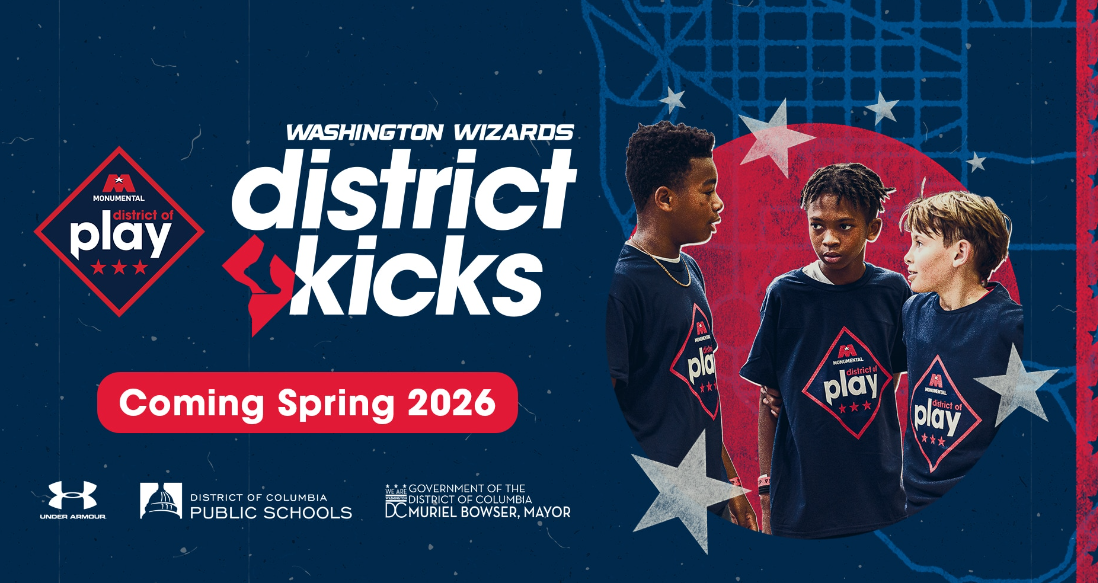
Monumental Sports & Entertainment announced District Kicks on December 21, the second major initiative under its District of Play platform. The Washington Wizards are leading the effort in partnership with Under Armour and DC Public Schools.

District of Play launched in 2024 as part of the Capital One Arena reimagination. The platform focuses on expanding youth sports access and wellness across Washington, DC through infrastructure investment and programming.

In its first year, the initiative distributed nearly 30,000 basketballs to every DCPS student in pre-K through fifth grade through the District Dribble program. District of Play reached more than 200,000 residents and earned recognition from Fight for Children, along with a nomination for a 2025 ESPY Sports Humanitarian Award.

District Kicks shifts focus from basketball equipment to athletic footwear, targeting older students who participate in organized sports programs.

Multi-Phase Distribution Across DC Public Schools

The initiative will unfold throughout 2026 with separate tracks for high school athletes and sixth grade students.

Approximately 5,200 high school student-athletes across roughly 22 DCPS schools will receive sport-specific Under Armour footwear. Shoes will be delivered directly to school campuses and distributed according to athletic seasons. Spring sports athletes receive shoes in March 2026, followed by fall sports in August and winter sports in November.

Each seasonal distribution will include a pep rally at a featured high school to create visibility for student athletes.

More than 1,200 sixth graders enrolled in DCPS 6th Grade Academies across 11 campuses will receive Under Armour athletic sneakers in multiple styles and colorways. MSE will distribute the footwear during a March 3, 2026 event at CareFirst Arena. The celebration will include interactive sports experiences and career-based learning opportunities, with MSE covering transportation and logistics for all participating schools.

“When I got my first basketball as a kid in Brooklyn, that single piece of equipment unlocked everything that followed: confidence, belonging, and the belief that sports could shape my future,” said Ted Leonsis, founder, chairman, managing partner and CEO of Monumental Sports & Entertainment. “District Kicks is built on that same idea: when you give young people the right tools, you give them the ability to dream bigger.”

Connecting to Under Armour’s Project Rampart

District Kicks operates within Under Armour’s Project Rampart framework, which aims to improve student-athlete experiences and academic outcomes through sports access.

Project Rampart launched in Baltimore in 2017 and has since expanded to Oakland and Washington, DC. The initiative provides student-athletes with upgraded facilities, apparel, leadership development, and specialized coach training.

DCPS Chancellor Dr. Lewis D. Ferebee noted the alignment with the district’s 6th Grade Academy model. “In our 6th Grade Academies, students are given the tools to excel inside and outside of the classroom,” Ferebee said. “DCPS is grateful to partner with Monumental Sports and Under Armour to provide resources to young people so they can thrive in programming that deepens their connection to school.”

Strategic Implications for Youth Sports Access

District Kicks represents a scaling approach to equipment access programs in large urban school districts. By targeting specific student populations (high school athletes and transitioning middle schoolers) rather than universal distribution, the initiative directs resources toward students most likely to engage in organized sports programming.

The multi-year commitment from MSE and Under Armour creates predictability for DCPS athletic departments planning seasonal equipment needs. Sport-specific footwear addresses a recurring cost barrier for families supporting student-athletes across multiple sports seasons.

The sixth grade focus aligns with research showing middle school transition years as critical for sustained sports participation. Providing footwear during this window may support retention in school-based athletics programs.

MSE’s integration of the initiative with the Capital One Arena project and District of Play platform suggests continued expansion of corporate-funded youth sports infrastructure in Washington, DC through 2026 and beyond.

via: Wizards


YSBR provides this content on an “as is” basis without any warranties, express or implied. We do not assume responsibility for the accuracy, completeness, legality, reliability, or use of the information, including any images, videos, or licenses associated with this article. For any concerns, including copyright issues or complaints, please contact YSBR directly.


About Youth Sports Business Report

Youth Sports Business Report is the largest and most trusted source for youth sports industry news, insights, and analysis covering the $54 billion youth sports market. Trusted by over 50,000 followers including industry executives, investors, youth sports parents and sports business professionals, we are the premier destination for comprehensive youth sports business intelligence.

Our core mission: Make Youth Sports Better. As the leading authority in youth sports business reporting, we deliver unparalleled coverage of sports business trendsyouth athletics, and emerging opportunities across the youth sports ecosystem.

Our expert editorial team provides authoritative, in-depth reporting on key youth sports industry verticals including:

  • Sports sponsorship and institutional capital (Private Equity, Venture Capital)
  • Youth Sports events and tournament management
  • NIL (Name, Image, Likeness) developments and compliance
  • Youth sports coaching and sports recruitment strategies
  • Sports technology and data analytics innovation
  • Youth sports facilities development and management
  • Sports content creation and digital media monetization

Whether you’re a sports industry executive, institutional investor, youth sports parent, coach, or sports business enthusiast, Youth Sports Business Report is your most reliable source for the actionable sports business insights you need to stay ahead of youth athletics trends and make informed decisions in the rapidly evolving youth sports landscape.

Join our growing community of 50,000+ industry leaders who depend on our trusted youth sports business analysis to drive success in the youth sports industry.

Stay connected with the pulse of the youth sports business – where industry expertise meets actionable intelligence.

Sign up for the biggest newsletter in Youth Sports – Youth Sports HQ – The best youth sports newsletter in the industry 

Follow us on LinkedIn

Follow Youth Sports Business Report Founder Cameron Korab on LinkedIn


Are you a brand looking to tap into the world’s most passionate fanbase… youth sports?

Introducing Play Up Partners, a leading youth sports marketing agency connecting brands with the power of youth sports. We specialize in youth sports sponsorships, partnerships, and activations that drive measurable results.

About Play Up Partners

Play Up Partners is a leading youth sports marketing agency connecting brands with the power of youth sports. We specialize in youth sports sponsorships, partnerships, and activations that drive measurable results.

Why Sponsor Youth Sports?

Youth sports represents one of the most engaged and passionate audiences in sports marketing. With over 70 million young athletes and their families participating annually, the youth sports industry offers brands unparalleled access to motivated communities with strong purchasing power and loyalty.

What Does Play Up Partners Do?

We’ve done the heavy lifting to untangle the complex youth sports landscape so our brand partners can engage with clarity, confidence, and impact. Our vetted network of accredited youth sports organizations (from local leagues to national tournaments and operators) allows us to create flexible, scalable programs that evolve with the market.

Our Approach

Every partnership we build is rooted in authenticity and value creation. We don’t just broker deals. We craft youth sports marketing strategies that:

  • Deliver measurable ROI for brand partners
  • Create meaningful experiences for athletes and families
  • Elevate the youth sports ecosystem

Our Vision

We’re positioning youth sports as the most desirable and effective platform in sports marketing. Our mission is simple: MAKE YOUTH SPORTS BETTER for athletes, families, organizations, and brand partners.


Common Questions About Youth Sports Marketing

Where can I sponsor youth sports? How do I activate in youth sports? What is the ROI of youth sports marketing? How much does youth sports sponsorship cost?

We have answers. Reach out to info@playuppartners.com to learn how Play Up Partners can help your brand navigate the youth sports landscape.

Youth sports organizations: Interested in partnership opportunities? Reach out to learn about our accreditation process.


Link

Continue Reading

Most Viewed Posts

Trending