
NIL
Reshaping risk in college sports


In June, the House v. NCAA settlement brought the most significant change yet to the name, image, and likeness (NIL) landscape: athletic departments can now share up to $20.5 million annually in revenue directly with student-athletes.
While NIL agreements between athletes and brands have been in place since 2021—and athletes can still sign independent sponsorships—this is the first time schools themselves will have to distribute a portion of their own earnings to student athletes.
How that revenue is split will vary widely. Many universities are allocating the lion’s share to football (70-75%), followed by men’s basketball (10-15%) and women’s basketball (5-10%), with the rest distributed across other sports. Some institutions are spreading the benefits more evenly among all athletes, while others are channeling nearly all revenue to marquee programs like football.
The shift from third-party NIL deals to direct school-funded revenue sharing doesn’t just change how athletes are compensated. It fundamentally alters the risk profile of collegiate athletics.
From potential employee classification and escalating medical liabilities to Title IX disputes and budget volatility, universities now face a new set of operational, legal and financial exposures that could—if not managed proactively—derail programs, drain budgets, and redefine the business of college sports.
With the framework in place, the focus now shifts to the questions that will determine whether revenue sharing becomes a competitive advantage or an unsustainable liability for your program.
Will athletes be considered employees in the NIL era?
The House settlement stops short of classifying athletes as employees. For now, they’ll be treated as 1099 contract workers, preventing collective bargaining and limiting eligibility for traditional employee benefits.
That may not hold forever. Many experts predict that the tipping point could come in the early 2030s, when major media rights deals expire and conferences can restructure compensation models. If certain conferences begin operating like professional leagues, the case for full W-2 employee status will grow stronger.
Employee classification would open the door to collective bargaining—something many athlete groups are already pushing for—but it can’t happen without a formal W-2 relationship. That’s one reason the NCAA has lobbied Congress for antitrust exemptions, though neither political party has shown much interest.
The “Saving College Sports Act,” a recent executive order, made headlines but offered little substantive guidance on this issue.
For college risk managers and CFOs, the implications are enormous. If athletes become employees, universities could face workers’ compensation obligations far beyond the scale of their current programs.
Traditional workers’ compensation plans designed for faculty and staff aren’t built to absorb the frequency and severity of athletic injuries. Just a few football-related ACL surgeries can generate as much in workers’ compensation claims as several years’ worth of claims from employees like professors or office staff.
Without planning, that exposure could quickly overwhelm budgets.
How can we control medical liability?
The estimated annual cost of injuries in collegiate athletics is billions of dollars nationwide. Right now, most Division I programs provide at least primary or accident insurance for athletic injuries, and institutional policies often cover significant costs above NCAA-mandated deductibles (which exclude Division II and Division III schools).
Coverage typically extends to practice, play and travel—anything sport-related—and fills the gap when standard student health insurance excludes athletic injuries.
If employee status becomes reality, those costs could balloon under WC requirements. Even without that change, the pressure is mounting. High-cost surgeries, longer recovery times and increased injury awareness have driven up claim expenses year over year.
Alternative funding models like medical captives or self-insurance pools are emerging as a strategic solution. By pooling resources at the conference level, schools can spread costs, maintain greater control over coverage design and better withstand the budget volatility that comes with high-severity claims.
Insurance strategies to help stabilize budgets
In the NIL and revenue-sharing era, insurance is a strategic lever for sustaining the long-term health of an athletic program.
Today’s risks span multiple fronts: legal compliance in areas such as Title IX and employment classification; athlete welfare, encompassing medical coverage, injury management and post-career support; and financial stability, as donor contributions, collective funding and performance incentives fluctuate from season to season.
Well-structured coverage can help smooth these variables. For example, policies tied to team or individual performance can offset revenue shortfalls in a down year or help fund bonus commitments when success exceeds expectations.
Medical coverage tailored to the realities of collegiate athletics can keep injury costs predictable, even as procedures become more advanced—and more expensive. And liability protection designed with NCAA rules, conference policies, and school-specific exposures in mind can reduce the financial impact of disputes or compliance challenges.
Programs should turn to specialized coverages designed for this environment, including:
- Upside coverage to boost budgets when teams exceed expectations.
- Downside protection to safeguard roster funding in tougher years.
- Performance-based bonus coverage to incentivize athletes without massive upfront commitments.
- NIL and revenue-share protection to insulate against the financial impact if an athlete’s performance or availability changes unexpectedly.
- Athlete medical coverage tailored to the high-frequency, high-severity claims unique to competitive sports.
This is a new and unique set of risks so working with an insurance broker that specializes in NIL-related risks is essential to help build a buffer against the volatility of this new model, ensuring you remain competitive, compliant, and financially stable, regardless of how next season unfolds.

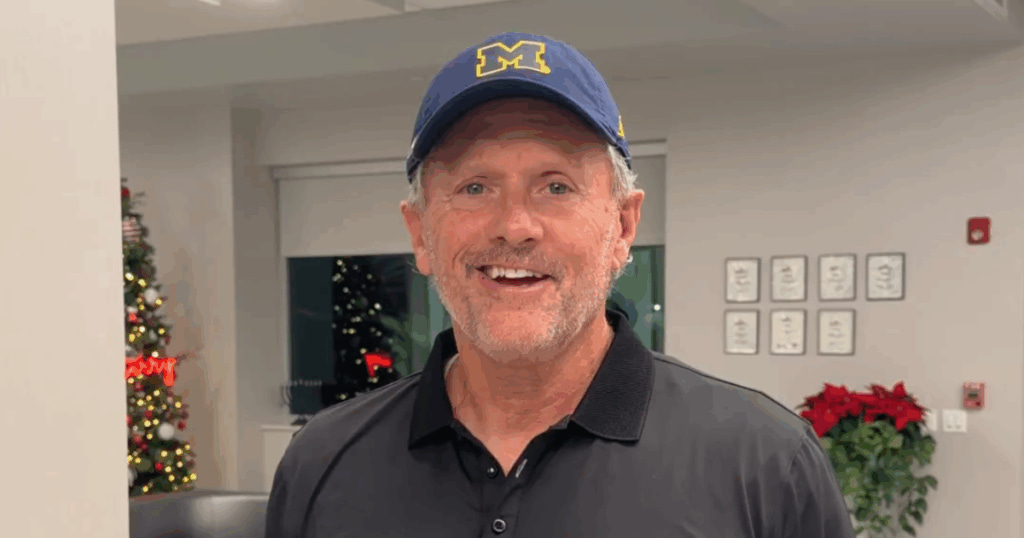
The coaching search is over, but the work is just beginning. Michigan Wolverines football has a new leader in Kyle Whittingham, the 22nd head coach in program history, and he’s already hard at work in Orlando as the Maize and Blue prepare for the Dec. 31 Citrus Bowl against Texas.
Michigan’s official NIL collective, Champions Circle, has launched its ‘Membership 2.0,’ an opportunity for fans to receive “new benefits, new opportunities to engage with players and coaches and new ways to support those who wear the Maize and Blue.”
Advertisement
“As Coach Whittingham takes the helm to lead the next chapter in Michigan football history, one thing is clear: success in today’s college football landscape requires support from each and every fan,” the collective shared in a press release.
By becoming a Champions Circle member, Michigan fans are “directly supporting NIL opportunities that help:
• Empower our new coach to establish the next great era of Michigan Football
• Build championship-level depth at every position
• Prevent rivals from poaching our top talent
The First 100 New Yearly Victors & Valiant Members will receive a football signed by Whittingham and freshman quarterback Bryce Underwood AND an invitation to a first-of-its-kind “Meet Coach Whittingham” webinar in 2026.
Advertisement
Here are details on membership tiers for Champions Circle:

The 66-year-old Whittingham is already in Orlando connecting with Michigan staff, players and their families. The Wolverines have one game remaining but are also focused on next season.
Whittingham was introduced to Michigan fans on social media Saturday evening and will hold his introductory press conference Sunday morning at 11 o’clock from the team hotel.
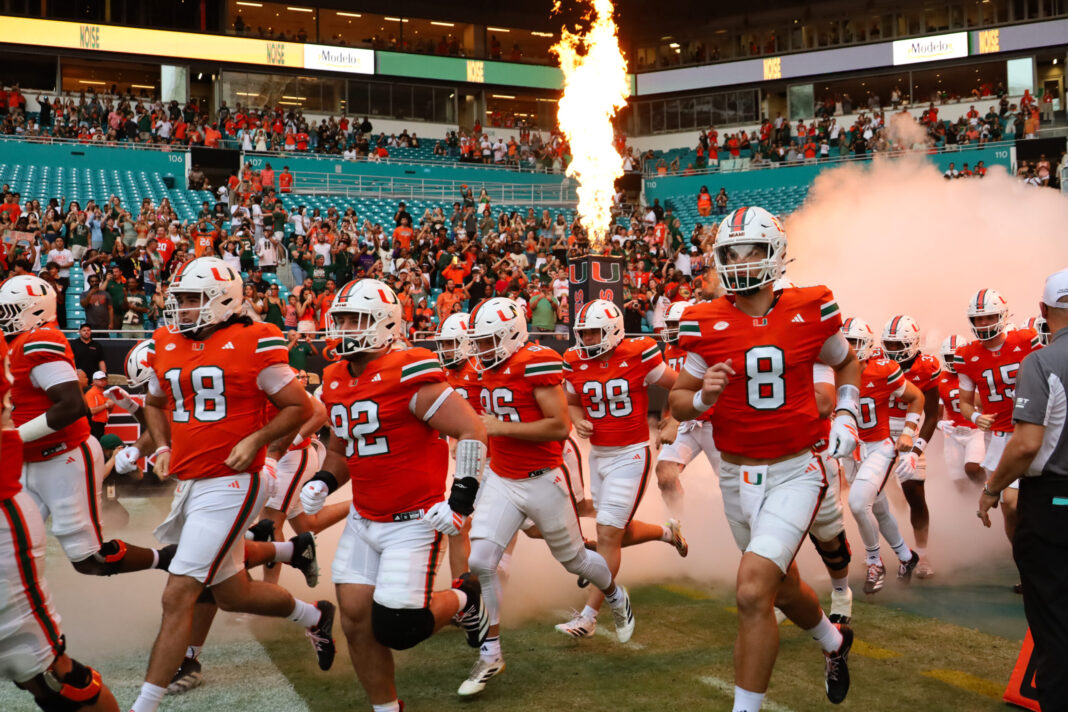
The dawn of NIL has forced a realignment of college conferences, putting pressure on the structure of conference championships. When you look at the Power Four football conferences (ACC, Big 10, Big 12, and SEC), each have expanded somewhere between 16 and 18 members.
The past two seasons have demonstrated that the current conference championship format is not equipped to corral the super-sized power conferences. Deciding the top teams in the country is left to too many qualitative metrics (strength of schedule, head to head, and common opponents).
Something needs to change.
Texas A&M’s path to CFP
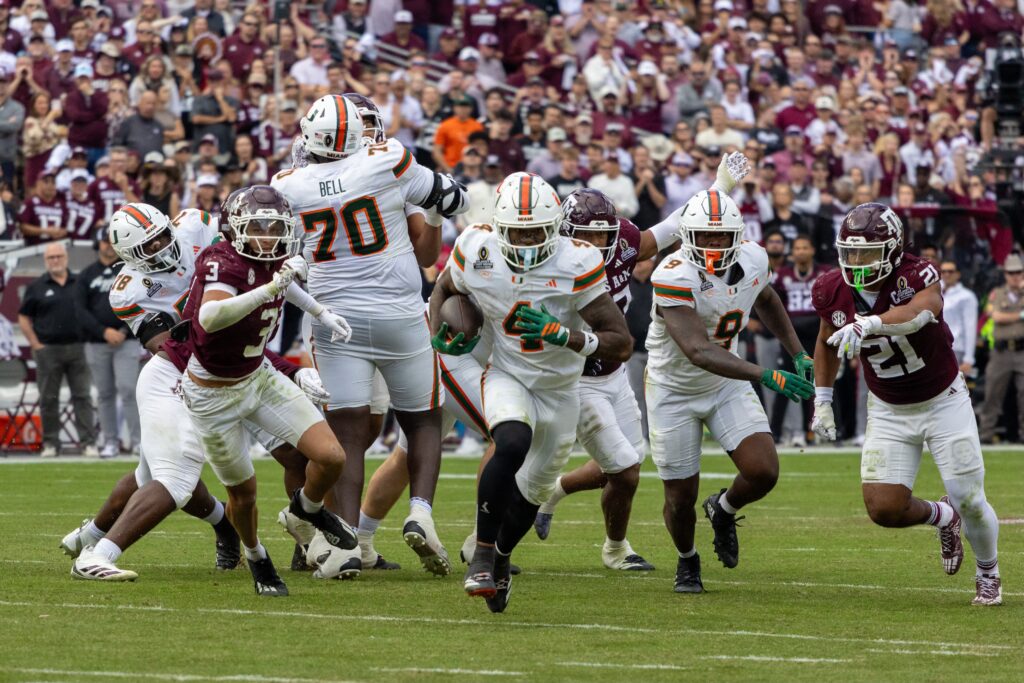
Looking at the SEC, Texas A&M had a historic 11-1 regular season, good for one of the best records in the nation. However it featured in-conference wins against seven out of the nine worst teams in the SEC; and every team they beat had a conference win percentage of .500 or worse.
The Aggies season would end in disappointing fashion as they lost twice in a row, against in-state rival the Texas Longhorns 27-17 and in the first round of the College Football Playoff against the Miami Hurricanes 10-3.
A&M arguably only faced three impressive teams all season (Miami, Notre Dame, Texas), and its only win of the three came in the form of a controversial one-point victory over ND in Week 2.
TAMU is one of multiple glaring examples of how massive conferences allow teams to waltz unscathed through their conferences thanks to scheduling issues.
Is a return to Divisions the solution?
It would seem creating divisions within the conferences should be closely considered. This would stoke more fierce rivalries among inter-division opponents, ensuring more even matchups and a clearer cut conference championship.
Looking to the past, all of the Power Four conferences had divisions but were eliminated across the last decade — a division format made less sense with smaller membership.
In 2024, the Big 12 (with 16 members) had a four-way tie at the top of the conference between Arizona State, Iowa State, BYU, and Colorado, who all finished with a 7-2 record. By the end Arizona State and Iowa State faced off due to tiebreakers, but many thought that BYU was more deserving than Iowa State.
This season in the ACC (with 17 members), Virginia guaranteed their spot after a 7-1 conference record, but there was a 5-way tie for second place between Duke, Miami, Georgia Tech, SMU, and Pitt. As Miami fans well know, the unranked 7-5 Duke Blue Devils were awarded the second spot over a 10-2 Miami team ranked No. 12 in the country at the time.
Applying the Divisions to the ACC
When looking at the ACC, the conference has 17 members, which forces teams to play more or less games than one another. All of this would be solved if another team joined the conference.
But let’s concentrate on how the current structure of the ACC would address this issue. There would be three main things taken into consideration: rivalries, location, and talent. It might look something like this:
ACC North: Syracuse, BC, Pitt, Louisville, VT, Virginia, Clemson and Georgia Tech
ACC South: Miami, FSU, SMU, Cal, Stanford, Duke, UNC, NC State and Wake Forest
For the divisions, it would be fair to re-evaluate every five years whether the two divisions are evenly split. Currently the competition would be tight; each division would be well balanced.
The proposed system would also allow scheduling and travel to be much simpler; every division team plays one another, the north would have 7 conference games while the south would have 8. At the end of the season, the two representatives from each division would face-off for the championship.
As some guidelines here are the five hypothetical tiebreaker rules:
1 – Conference Record
Conference records always take importance over every guideline but would have more weight as every team faces each other.
2 – Head to Head
Due to everyone facing off this should solve for tiebreakers except for three (or more) way ties.
3 – Overall Record
In the case of Miami – Duke the tiebreaker was Win Percentage of Conference opponents. In the context of a 7-5 record, the overall record should have more weight.
4 – National Ranking (AP poll / CFP)
Ideally the conference championship should be settled by this point but if it goes this far National Ranking should be considered in ensuring that the best teams compete for the conference championship.
Will realignment fix everything?
Fans want more entertaining matches and teams want ease of scheduling and travel.
The answer is simple — either return to smaller conferences or implement divisions to make conferences matter.
In the end, no matter the solution, it won’t be perfect. Sports fanatics will always say that there will be a better format, but the least we can do is learn from past mistakes.
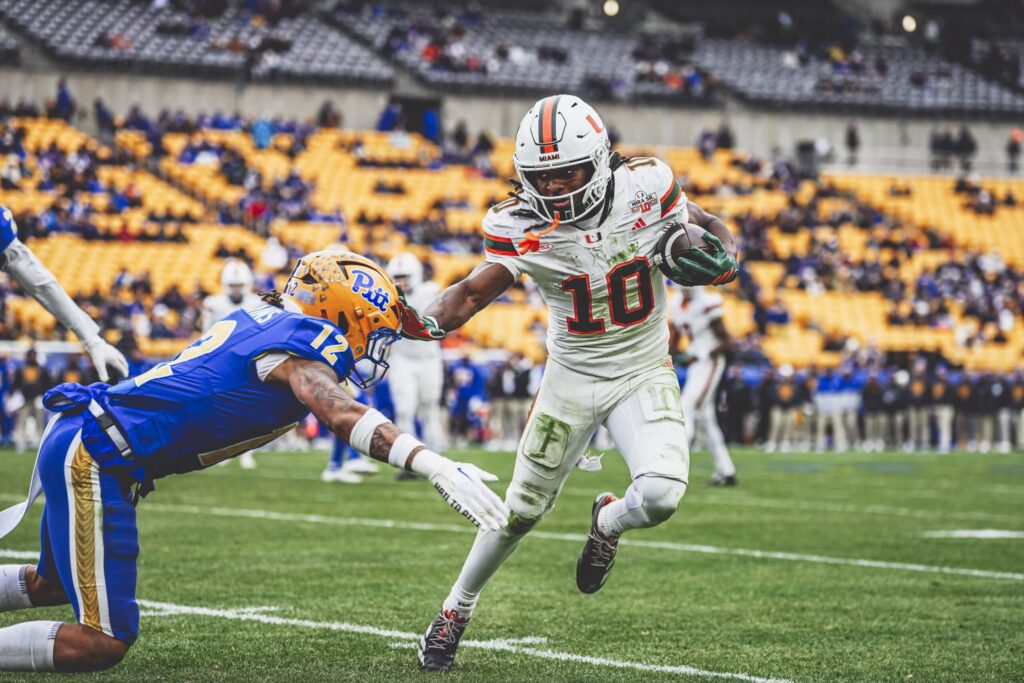

North Texas capped a program-best 12–2 season with a New Mexico Bowl win, but quickly faced major roster turnover as quarterback Drew Mestemaker, running back Caleb Hawkins, and wide receiver Wyatt Young all entered the NCAA transfer portal.
Mestemaker broke out as a redshirt freshman in 2025, leading the FBS with 4,379 passing yards and 34 touchdowns following Saturday’s 49–47 victory over San Diego State.
He began his North Texas career as a walk-on and earned conference offensive honors and national attention before deciding to test the portal.
Hawkins, the Mean Green’s freshman back, finished 2025 as one of the nation’s most productive rushers, totaling 1,434 rushing yards and leading the FBS with 25 rushing touchdowns, highlighted by a 198-yard, three-touchdown bowl performance to cap the year.
Young, meanwhile, paced UNT’s receiving corps with 1,264 yards and 10 touchdowns (ranking among the top three nationally) and earned first-team All-American and All-Conference honors.
Losing the nation’s top passer, the FBS’s most productive freshman runner, and a top-three WR in one offseason represents an immediate top-to-bottom offensive reset for North Texas.

For the transfer market, all three are premium, high-demand assets — Mestemaker as a starting QB target for Power-Five teams, Hawkins as a feature back with breakout tape, and Young as a proven perimeter threat.
Mestemaker has already been linked to Oklahoma State (connection via coach Eric Morris), Indiana, Texas Tech, and Oregon, while Hawkins and Young are expected to draw attention from both Group-of-Five and Power-Five programs.
Hawkins, a three-star recruit from North Rock Creek High School (Shawnee, Oklahoma) in the 2025 class, also held offers from Emporia State and Central Oklahoma before committing to North Texas in September 2024.
Young, a three-star prospect from Katy Tompkins High School (Katy, Texas) in the 2024 class, signed with the Mean Green over offers from Rice, Arizona, Memphis, Air Force, and others.
Three top underclass producers hitting the transfer portal at once underscores how quickly the transfer era can reshape a program, leaving Group of Five teams that develop stars grappling with retention issues and the financial pressures of NIL.
Read More at College Football HQ
- No. 1 college football team linked to 1,700-yard RB in transfer portal
- Top 3 transfer portal landing spots for 4,000-yard quarterback Drew Mestemaker
- College football team loses starting QB to NCAA transfer portal
- Major college football program surges as candidate for 4,000-yard QB
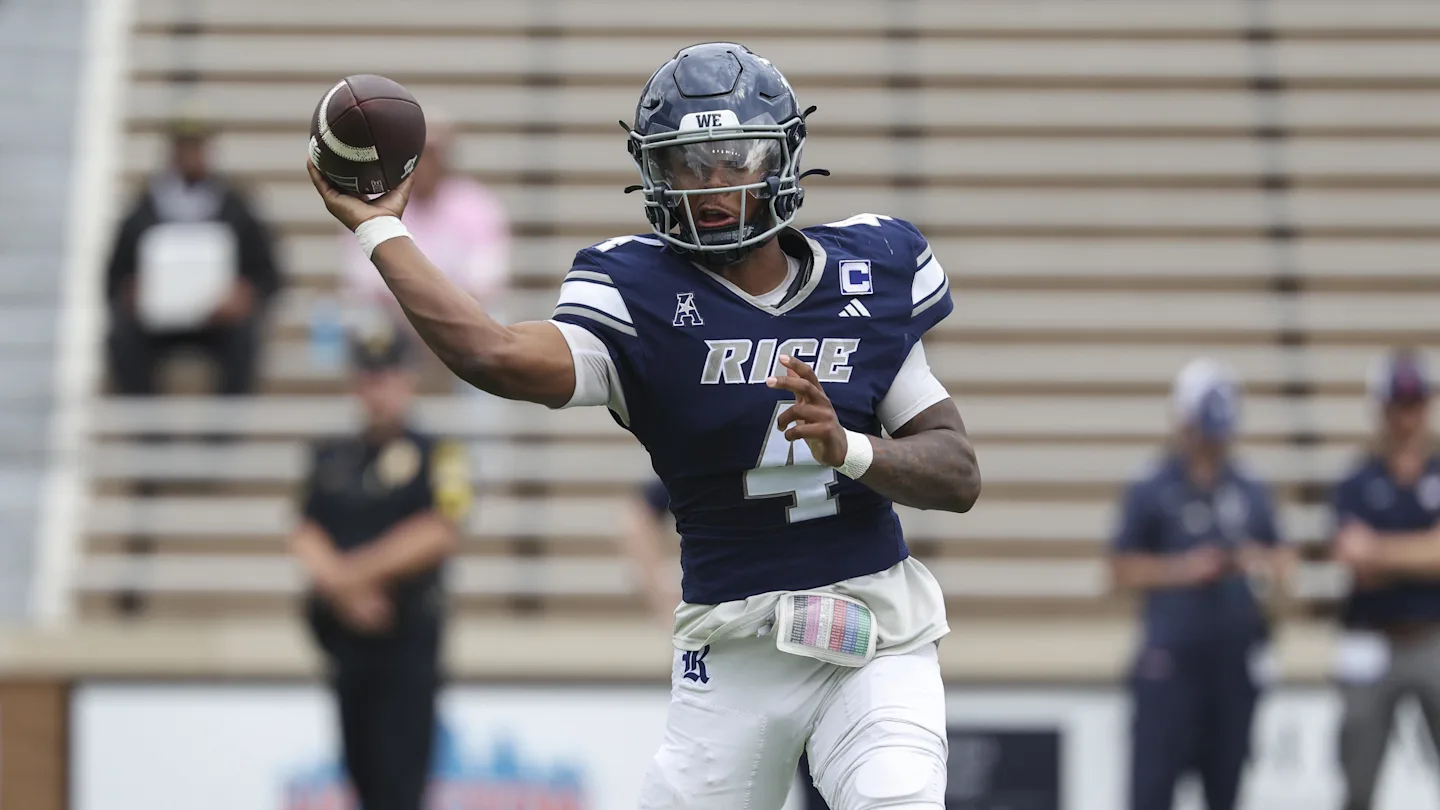
In its first year under head coach Scott Abell, Rice finished the 2025 season 5–7 overall (2–6 in the American Conference) but still earned an Armed Forces Bowl invite, where it will face Texas State (6–6) on January 2 in Fort Worth, Texas.
Across 12 games in 2025, Jenkins completed 119 of 172 passes (69.2%) for 1,025 yards with nine touchdowns against two interceptions, while also carrying the ball 151 times for 531 yards and five scores.
That momentum may be short-lived, however, as Rivals’ Hayes Fawcett reported on Saturday that Jenkins plans to enter the NCAA transfer portal, adding another domino to an already loaded quarterback transfer market.
A Houston, Texas product who signed with Rice in February 2023, Jenkins worked his way into the program as a multi-role quarterback/athlete, appearing in limited action early in his career before being named the 2025 starter.
In his first full year as the starting quarterback, Jenkins earned American Conference All-Academic recognition.
Prior to signing with Rice, he starred at Alief Taylor (Houston), where he threw for 4,735 yards and 46 touchdowns against just six interceptions in 22 varsity games and earned All-District 23-6A honors as a junior.
Jenkins was 247Sports’ No. 93 quarterback in the 2023 class, committing to Rice over offers from Alcorn State, East Texas A&M, Jackson State, and Lamar.

With a 69.1% career completion rate and proven mobility, Jenkins profiles as a strong fit for spread-option or run-oriented Group-of-Five offenses that prioritize efficiency and quarterback movement.
He could appeal to programs seeking an experienced starter while also offering value as depth at the Power-Five level, with his Texas roots strengthening his regional appeal.
Some notable programs that have reportedly shown interest in adding a quarterback through the transfer portal include Florida State, Clemson, North Texas, TCU, Virginia Tech, and Cincinnati.
Read More at College Football HQ
- $2.4 million QB emerges as transfer portal candidate for SEC program
- Major college football program ‘expected to hire’ 66-year-old head coach
- College Football Playoff team loses player to transfer portal
- College Football Playoff team loses starting QB to transfer portal

Cincinnati closed the 2025 season at 7–5 (5–4 Big 12) and will face Navy in the AutoZone Liberty Bowl on January 2, marking the Bearcats’ first bowl appearance since joining the Big 12 and since head coach Scott Satterfield took over in 2023.
Cincinnati rattled off seven straight wins midseason but dropped its final four games to close the regular slate before receiving the bowl invitation.
Quarterback Brendan Sorsby started 12 games for Cincinnati in 2025 and finished with 2,800 passing yards, 27 passing TDs, and five interceptions (61.6% completion, 155.15 passer rating), adding 100 carries for 580 rushing yards and nine rushing touchdowns.
A Denton/Lake Dallas (Texas) product, Sorsby was a three-star recruit who signed with Indiana (redshirted 2022, started in 2023) before transferring to Cincinnati in 2024.
However, Sorsby notified Cincinnati and publicly confirmed on December 15 that he will test the transfer portal while awaiting an NFL draft grade.
Since then, multiple programs have reportedly shown interest, with some NIL offers rumored to approach $5 million, a figure that would rank among the highest in college football.
On3’s NIL tracker currently values Sorsby at approximately $2.4 million, placing him among the higher-valued quarterbacks in the college game.
On Friday, Fox Sports’ Laken Litman included Oregon among the programs expected to pursue a quarterback through the transfer portal and identified Sorsby as a “top quarterback from the portal,” along with Texas Tech, Indiana, and Oklahoma.

Oregon’s starter, Dante Moore, is widely regarded as a likely high NFL Draft selection and has not publicly committed to returning, stating that he has yet to make a final decision.
With a young and largely unproven group of quarterbacks behind him on the depth chart, speculation has been that Dan Lanning and his staff could pursue a transfer portal quarterback should Moore declare.
If Moore declares for the draft, Oregon would likely seek an experienced, pro-ready signal-caller capable of operating a tempo-based offense while sustaining recruiting and NIL momentum.
Sorsby’s size (6’3″, 235 pounds), proven starter experience, marketplace value, and dual-threat rushing ability, a trait Oregon has used successfully, would make him an immediate candidate.
Read More at College Football HQ
- No. 1 college football team linked to 1,700-yard RB in transfer portal
- Top 3 transfer portal landing spots for 4,000-yard quarterback Drew Mestemaker
- College football team loses starting QB to NCAA transfer portal
- Major college football program surges as candidate for 4,000-yard QB
Updated Dec. 28, 2025, 1:33 p.m. ET
Former Georgia football defensive end Damon Wilson is asking an Athens-Clarke County Superior Court judge to deny Georgia athletics’ attempt to go to arbitration on what it contends is Wilson breaking an NIL contract when he entered the transfer portal.
Georgia sued Wilson, seeking $390,000 in liquidated damages after he agreed to an NIL deal with Classic City Collective and transferred weeks later. He played this season at Missouri where he was second-team All-SEC.

Michigan NIL collective Champions Circle hits ground running after Kyle Whittingham hire

Texas A&M star Ifenna Cos‑Okpalla signs with League One Volleyball

Super-sized conferences are breaking college football

Deaf volleyball coach speaks volumes (video)

Cos-Okpalla Inks Professional Contract with LOVB Salt Lake – Texas A&M Athletics

College football team loses three All-Americans to transfer portal

College football team loses starting QB to NCAA transfer portal

Spring sports registration opens Jan. 1

Young Sharks continue to display maturity in win vs. Canucks – NBC Sports Bay Area & California

No. 11 Long Beach Poly’s Ki’ele Ho-Ching Wins Gold with USA Softball – The562.org

$2.4 million QB connected to major college football program in transfer portal

South Carolina Gamecocks Defensive Back Plans to Enter the Transfer Portal

Staten Island’s Finest AAU Travel Basketball Organization hosts 4th Annual Holiday Classic (90 action-packed photos)

In Austin and across Texas, youth boxing thrives out of the spotlight

Kyle Larson nervous about dramatic entrance to deliver record prize – Motorsport – Sports

SoundGear Named Entitlement Sponsor of Spears CARS Tour Southwest Opener

Donny Schatz finds new home for 2026, inks full-time deal with CJB Motorsports – InForum

Black Bear Revises Recording Policies After Rulebook Language Surfaces via Lever

Jo Shimoda Undergoes Back Surgery

Bowl Projections: ESPN predicts 12-team College Football Playoff bracket, full bowl slate after Week 14

Robert “Bobby” Lewis Hardin, 56

How this startup (and a KC sports icon) turned young players into card-carrying legends overnight

Men’s and Women’s Track and Field Release 2026 Indoor Schedule with Opener Slated for December 6 at Home

David Blitzer, Harris Blitzer Sports & Entertainment

How Donald Trump became FIFA’s ‘soccer president’ long before World Cup draw
Wisconsin volleyball sweeps Minnesota with ease in ranked rivalry win

Michael Jordan’s fight against NASCAR heads to court, could shake up motorsports

JR Motorsports Confirms Death Of NASCAR Veteran Michael Annett At Age 39

Increased Purses, 19 Different Tracks Highlight 2026 Great Lakes Super Sprints Schedule – Speedway Digest
Elliot and Thuotte Highlight Men’s Indoor Track and Field Season Opener





-
 Motorsports3 weeks ago
SoundGear Named Entitlement Sponsor of Spears CARS Tour Southwest Opener
-
 Motorsports3 weeks ago
Donny Schatz finds new home for 2026, inks full-time deal with CJB Motorsports – InForum
-
 Motorsports3 weeks ago
Rick Ware Racing switching to Chevrolet for 2026
-

 NIL3 weeks ago
DeSantis Talks College Football, Calls for Reforms to NIL and Transfer Portal · The Floridian
-
 Sports2 weeks ago
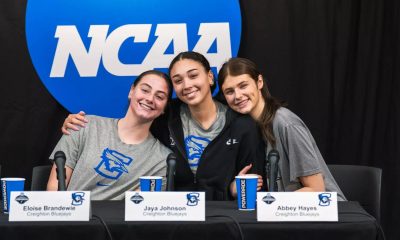
#11 Volleyball Practices, Then Meets Media Prior to #2 Kentucky Match
-

 Motorsports2 weeks ago
Sunoco to sponsor No. 8 Ganassi Honda IndyCar in multi-year deal
-
 Motorsports3 weeks ago
NASCAR owes $364.7M to teams in antitrust case
-
 Motorsports2 weeks ago
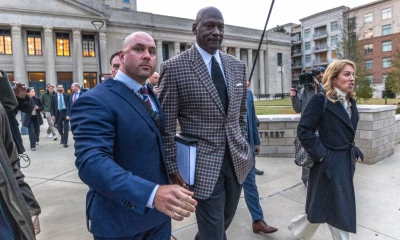
Nascar legal saga ends as 23XI, Front Row secure settlement
-

 Rec Sports3 weeks ago
Why the Texas Sport for Healing Fund Should Return – The Daily Texan
-

 Motorsports3 weeks ago
Accelerating Inclusion: Breaking Barriers in Motorsport