
Connect with us
https://yoursportsnation.com/wp-content/uploads/2025/07/call-to-1.png

NIL

USA Today ranks the Top 25 highest paid general managers in college football for 2025

Published

on


In the age of NIL and the transfer portal – not to mention revenue-sharing – general managers have become an important part of the college football landscape. They play key roles in roster construction, and USA Today has ranked the Top 25 highest paid GMs in college football.

One of the highest-profile general managers is in Chapel Hill where Michael Lombardi became the first hire under North Carolina head coach Bill Belichick. The longtime NFL executive is also the only general manager to make more than $1 million, according to USA Today’s data.

SUBSCRIBE to the On3 NIL and Sports Business Newsletter

Some schools, such as Georgia, do not list a general manager and do not appear in the rankings. Additionally, Andrew Luck’s official salary is unknown at Stanford, as is Chad Bowden’s at USC since both are private schools. Here are the full Top 25 highest-paid general managers in college football.

1. Michael Lombardi, North Carolina: $1.5 million

A former NFL general manager, Michael Lombardi has become one of the prominent figures at North Carolina under Bill Belichick. He left his job as a podcast host and analyst at VSiN to take over the newly created role, becoming the highest-paid GM in college football at $1.5 million.

Lombardi previously worked with Belichick as a coaching staff assistant with the New England Patriots and in the personnel department with the Cleveland Browns. He now takes on a pivotal role in North Carolina’s roster strategy.

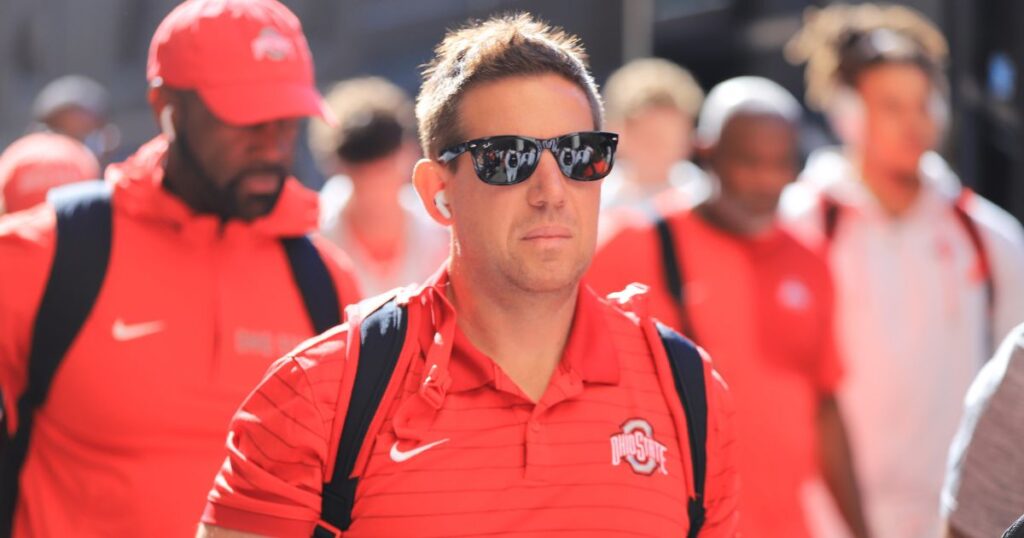
2. Mark Pantoni, Ohio State: $900,000

Mark Pantoni-Ohio State
Mark Pantoni (Mick Walker/Lettermen Row)

Now in his 14th year at Ohio State, Mark Pantoni has been a crucial part of the Buckeyes’ operation. He previously worked for Urban Meyer at Florida before arriving in Columbus in December 2011.

Pantoni has a lead role in Ohio State’s personnel and recruiting, including NIL negotiations and evaluations, according to the school website. That means he’s front and center as Ryan Day and the Buckeyes attempt to build off last year’s national championship.

3. Marshall Malchow, Oregon: $900,000

When Dan Lanning arrived at Oregon, he brought in Marshall Malchow as chief of staff. That move proved to be a trendsetter in the early stages of the NIL era as Malchow takes on general manager-like roles.

Malchow previously served as the associate athletics director at Texas A&M in 2021 and worked closely with the player personnel department. Now, he has a prominent role in building an Oregon roster that ranks as one of the best in college football.

4. Courtney Morgan, Alabama: $825,000

As Kalen DeBoer got off the plane to be introduced as Alabama head coach in 2024, Courtney Morgan was with him. He was with DeBoer at Washington from 2022-23 after a year as the general manager at Michigan.

Morgan has been front and center in Alabama’s recruiting efforts, helping the Crimson Tide land four five-star recruits last year. He is also the fourth-highest paid GM in college football, according to USA Today.

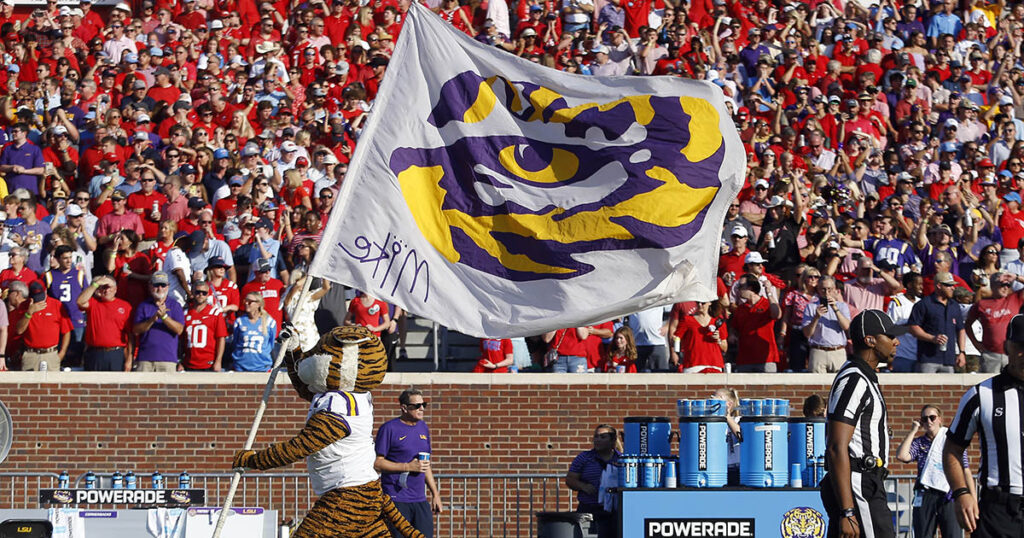
5. Austin Thomas, LSU: $800,000

LSU Tigers logo on a flag
© Petre Thomas-Imagn Images

A key staff addition for Brian Kelly in 2024, Austin Thomas is in his third stint at LSU. He was previously the general manager in 2021 and currently serves in his official title of senior associate athletic director for football administration.

Prior to his return to LSU, Thomas spent two years under Lane Kiffin at Ole Miss as football chief of staff. He’s one of three college football general managers making $800,000 this year, according to USA Today.

6. Pat Stewart, Nebraska: $800,000

As Matt Rhule looked to hire a general manager at Nebraska, he turned to the NFL. That’s where Pat Stewart was working with the New England Patriots and previously spent time under Rhule with the Caroilna Panthers.

Stewart is in his first season in Lincoln and has a central role in roster construction for the Cornhuskers. Most recently with the Patriots, he worked in the pro personnel department in a similar capacity.

7. Ron Rivera, Cal: $800,000

One of the most notable Cal football alumni came home this past offseason when Ron Rivera took over as general manager. Fans also got their wish this past offseason when the school made him the point person for football in a similar arrangement to Andrew Luck at Stanford.

Rivera is the point person for the Golden Bears football program after a long career as an NFL head coach. He made the Super Bowl with the Carolina Panthers and most recently worked for the Washington Commanders before heading back to his alma mater in a newly created role.

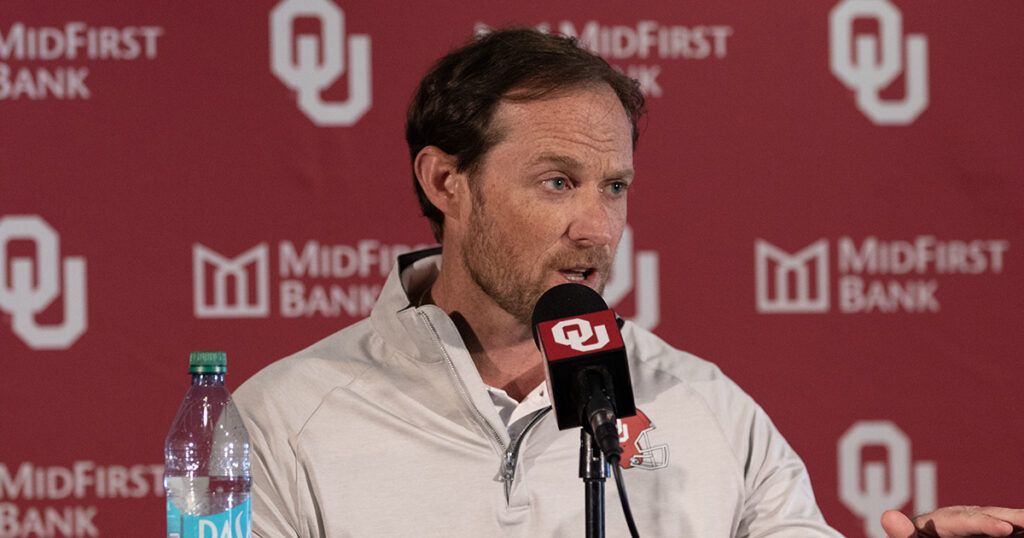
8. Jim Nagy, Oklahoma: $750,000

Oklahoma football general manager Jim Nagy
Jim Nagy. (Photo by: Carey Murdock – SoonerScoop.com/On3)

As Brent Venables overhauled his staff this offseason, he made quite a splash with a newly created general manager role. Oklahoma landed Senior Bowl executive director Jim Nagy for the position in a surprising move.

Nagy – who also interviewed for the New York Jets GM spot – spent seven years at the helm of the Senior Bowl, holding a prominent role in the pre-draft process. A former NFL scout, he is now one of the 10 highest-paid general managers in college football, according to USA Today.

9. Vince Marrow, Louisville: $714,000

One of the biggest offseason moves occurred in Kentucky. That’s where Vince Marrow left Kentucky for rival Louisville to become Jeff Brohm’s general manager.

Marrow served as the associate head coach and tight ends coach at UK from 2013-25. He was also a crucial part of the recruiting efforts under Mark Stoops, and now leads the charge for Brohm at UL.

10. Brandon Harris, Texas: $600,000

Rounding out the Top 10 highest-paid general managers in college football, Brandon Harris started out as an analyst and assistant running backs coach at Texas. He then moved over to director of recruiting upon Steve Sarkisian’s arrival and became the program’s general manager in 2024.

Harris played college football at LSU and North Carolina before getting into coaching. Sarkisian has praised his efforts as general manager and has helped Texas put together the top-ranked 2025 recruiting class so far this cycle.

Highest-paid GMs: No. 11-25

11. Rob Ianello, Kansas – $550,000
12. James Blanchard, Texas Tech – $525,000
13. Tyler Barnes, Iowa – $500,000
14. Tyler Jones, Virginia – $480,000
15. Eddie Gran, Kentucky – $475,000
16. Billy Glasscock, Ole Miss – $425,000
17. Gerrit Chernoff, Minnesota – $410,000
18. JJ Cosh, Georgia Tech – $410,000
19. Jordan Sorrells, Clemson – $390,000
20. Andy Vaughn, NC State – $375,000
21. Kevin MacConnell, Rutgers – $375,000
22. Sean Magee, Michigan – $360,000
23. Khary Darlington, UCLA – $350,000
24. Marcus Sedberry, Wisconsin – $334,805
25. Matt Doherty, Washington – $325,008

General managers are taking on central roles in the new era of college football. With recruiting and NIL in play, they take some responsibilities off head coaches’ plates as the landscape continues to shift.


Link

Continue Reading
Click to comment

Leave a Reply

Your email address will not be published. Required fields are marked *

NIL

Oregon Ducks Playoff Uniforms Instantly Steal the Show

Published

on


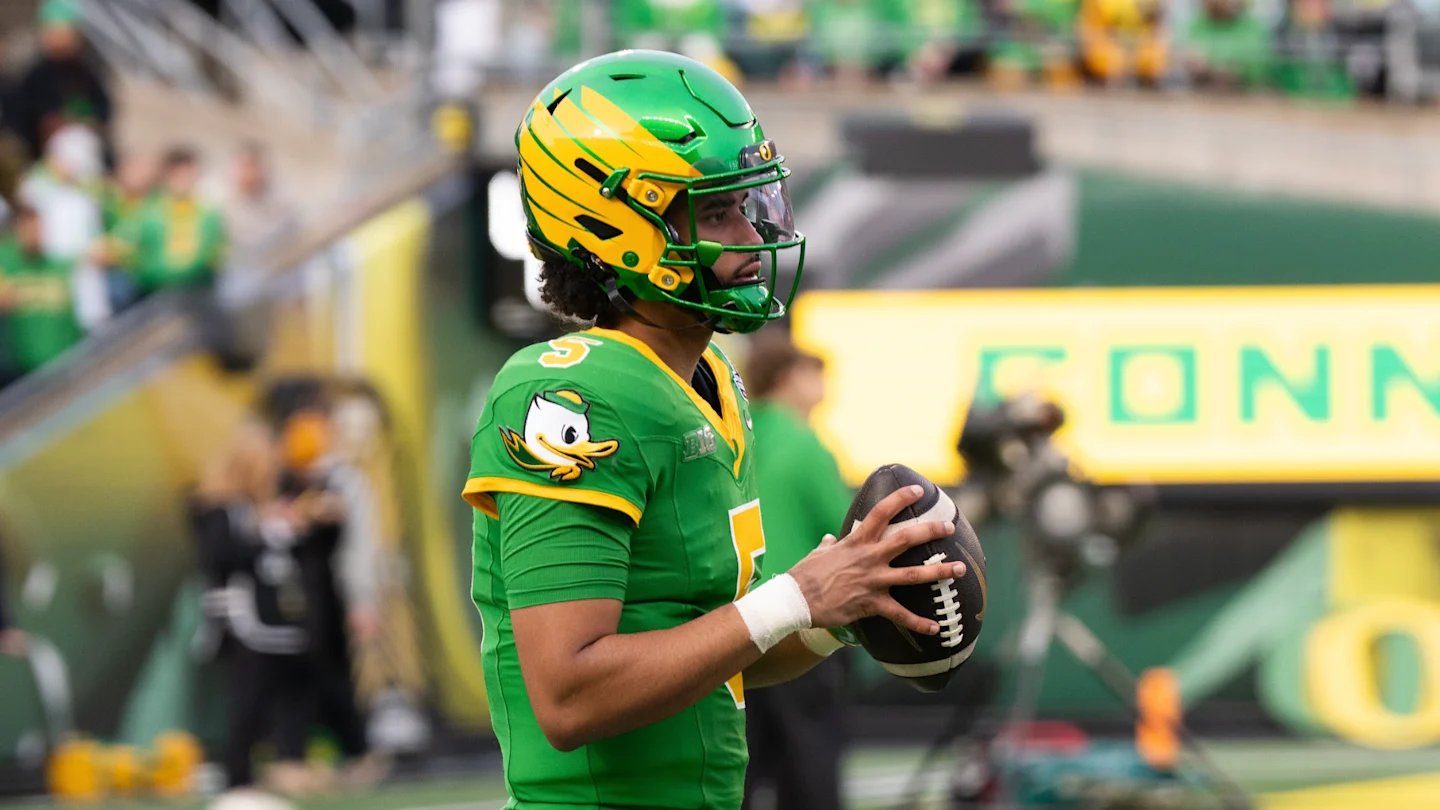
EUGENE – The Oregon Ducks’ uniforms stole the spotlight in the first round of the College Football Playoff. Long celebrated for their innovative Nike designs, the Ducks may have unveiled their most striking combination yet, paying homage to their classic colors while adding fresh, bold details.

As Oregon takes the field against James Madison in Autzen Stadium’s first-ever playoff game, fans and analysts alike struck by the uniform combination and how they add to the pageantry. From the gleaming helmet to the eye-catching cleats, every element of the look was designed to make a statement. In this historic debut, it did just that, reinforcing Oregon’s reputation as the gold standard in college football style.

oregon ducks uniforms nike phil knight dan lanning college football playoff james madison dante moore NIL autzen stadium

Oregon Ducks quarterback Dante Moore | Jake Bunn

oregon ducks uniforms nike phil knight dan lanning college football playoff james madison dante moore NIL autzen stadium

Oregon Ducks safety Dillon Thieneman | Bri Amaranthus

oregon ducks uniforms nike phil knight dan lanning college football playoff james madison dante moore NIL autzen stadium

Oregon tight end Kenyon Sadiq | Jake Bunn

oregon ducks uniforms nike phil knight dan lanning college football playoff james madison dante moore NIL autzen stadium

Oregon Ducks linebacker Bryce Boettcher | Jake Bunn

oregon ducks uniforms nike phil knight dan lanning college football playoff james madison dante moore NIL autzen stadium

Oregon Ducks safety Dillon Thieneman | Bri Amaranthus

Oregon’s Uniforms Make Big Statement

The team is wearing a green “Gang Green” Generation O jersey, paired with a glossy green helmet featuring a yellow wing, yellow pants, green undergarments with yellow accents, and yellow-and-green ombre cleats. A College Football Playoff patch sits on the right side of the jersey, just above Oregon’s Nike Swoosh, complete with the logo and “Playoff First Round Presented by Allstate.”

The uniforms also made history – the first time that solid yellow wings were featured on an Oregon helmet in program history. The green helmet, green jersey, yellow pant is a combination that has been worn only six times in program history in the modern era.

Oregon Ducks Football unveils their uniforms for their 2025-2026 College Football Playoff first round game against James Madi

Oregon Ducks Football unveils their uniforms for their 2025-2026 College Football Playoff first round game against James Madison. | @goducks on X

Oregon’s uniforms aren’t just cool designs that go viral on social media, they’re a representation of the Ducks’ national brand. Not only do the new uniforms reflect the program’s innovative culture and performance identity – the impact on recruiting is undeniable. It’s not just fashion; it’s strategy and branding.

The electricity in Autzen Stadium is palpable for the postseason game. A true home field advantage, the fans in Eugene know how to turn up the decibel levels. Ducks fans have turned Autzen into a house of doom for opponents who make their way west. The Ducks have an impressive 25-2 record in Autzen Stadium under coach Dan Lanning. The Ducks are 54-4 at home since the start of the 2017 season. 

If the Ducks beat James Madison, they will play the No. 4 Texas Tech Red Raiders in the quarterfinals at the Orange Bowl on Jan. 1 in Miami. Oregon is making its third College Football Playoff appearance overall and is one of just four teams (Georgia, Indiana, Ohio State) to make the field each of the last two years.

A win would hive Oregon its first playoff win since since beating Florida State in the CFP Semifinal at the Rose Bowl on Jan. 1, 2015. It also would send Oregon to its first-ever Orange Bowl appearance.

Oregon coach Dan Lanning spoke to how the senior leaders are stepping up before the playoff.

“Guys are excited about the opportunity, but I think it’d be wrong to say that the preparation is different this week than any other week, right? Yes, the game’s different. We all feel that. We recognize that, that it’s different. But it’s not like guys are like, okay, let’s work hard now. They’ve been working hard, right? You work hard to get into this moment, and then it’s about maintaining that level, that standard as you approach games like this,” Lanning said.

Oregon Ducks Washington Huskies dan lanning rivalry college football playoff dante moore jeremiah mcclellan jamari johnson

Oregon Ducks Washington Huskies dan lanning rivalry college football playoff dante moore jeremiah mcclellan jamari johnson | oregon ducks on si darby winter

MORE: Oregon Ducks Lose Receiver To Transfer Portal Amid Injury Updates

MORE: Oregon Ducks Uniforms Flex The Power Of A National Brand In Playoff Spotlight

MORE: Oregon Ducks Intriguing Injury Report vs. James Madison

SIGN UP FOR OUR NEWSLETTER HERE

JMU Quarterback Alonza Barnett III Talks Oregon’s Uniform

JMU’s starting quarterback Alonza Barnett III gave an unexpected shoutout to the Ducks, further highlighting Oregon’s national brand not only through their play throughout the years, but also in their iconic uniform designs.

“They had the flashy jerseys, Marcus Mariota, Darren Thomas, Darren Carrington, Kenjon Barner, a bunch of people. I was one of those kids who grew up watching Oregon. And so, this is an environment you dream of playing in. If you are who you say you are, you can’t shy down when the lights are bright,” Barnett added.

The Ducks look to slow Barnett III, who has thrown for 2,533 yards and 21 touchdowns this season.


Link

Continue Reading

NIL

Iowa football lineman highlights importance of opting into bowl games

Published

on


Dec. 21, 2025, 7:45 a.m. CT

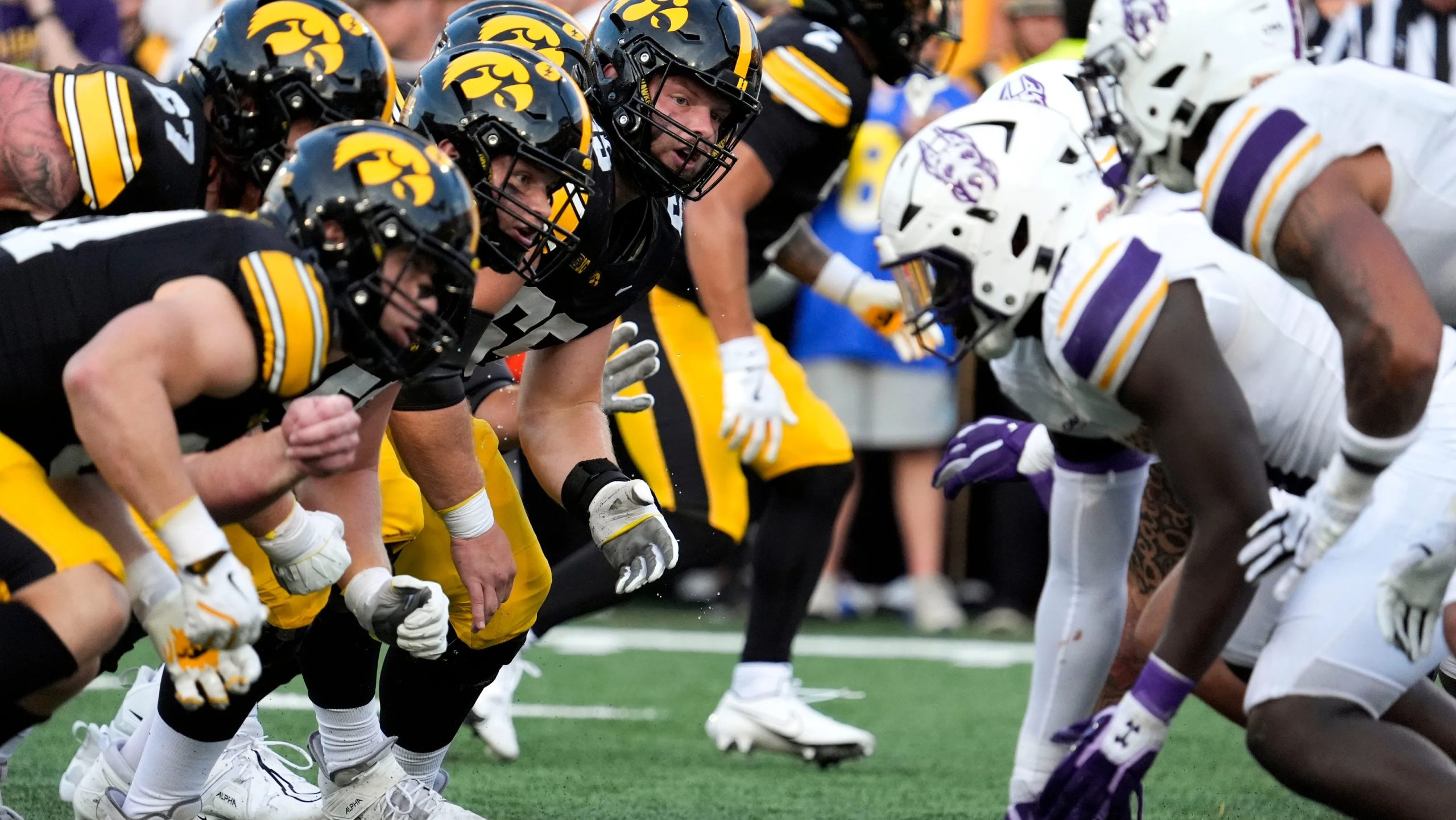
As No. 23 Iowa football (8-4, 6-3 Big Ten) prepares for its ReliaQuest Bowl matchup against No. 14 Vanderbilt (10-2, 6-2 SEC), Hawkeyes’ sophomore offensive lineman Trevor Lauck discussed why Iowa’s roster is committed to playing in its upcoming bowl game.

In a college football climate where the influence of NIL opportunities and the transfer portal steer many away from playing in bowl games, Lauck commented on how the Hawkeyes view the ReliaQuest Bowl as a chance to finish the season the right way.

“I feel like the point of college football is to go out there and win games with your team,” Lauck said.

“I feel like people kind of lose track of that when it comes to the bowl season. It kind of turns into people thinking about themselves, and that’s why I’m super fortunate to be here at a school like this. It’s still a team. No one’s really thinking about themselves right now. This is still the 2025 season, and we want to finish it strong.”


Link

Continue Reading

NIL

Texas Longhorns’ Michael Taaffe Reveals Difference-Making Strategy with NIL

Published

on


NIL has been one of the biggest and most impactful changes to the world of college football for both programs and athletes.

For some affluent programs, NIL has allowed them to climb back up to be a college football powerhouse, and for those without a track record of great success in the sport its allowed them to gain a seat at the table.

And for the players, they are likely the biggest beneficiaries of it all, finally being able to be financially compensated for the efforts and hard work they put into their programs. However, one Texas Longhorns star has taken a different route when navigating the world of NIL.

Michael Taaffe Discusses his Use of NIL

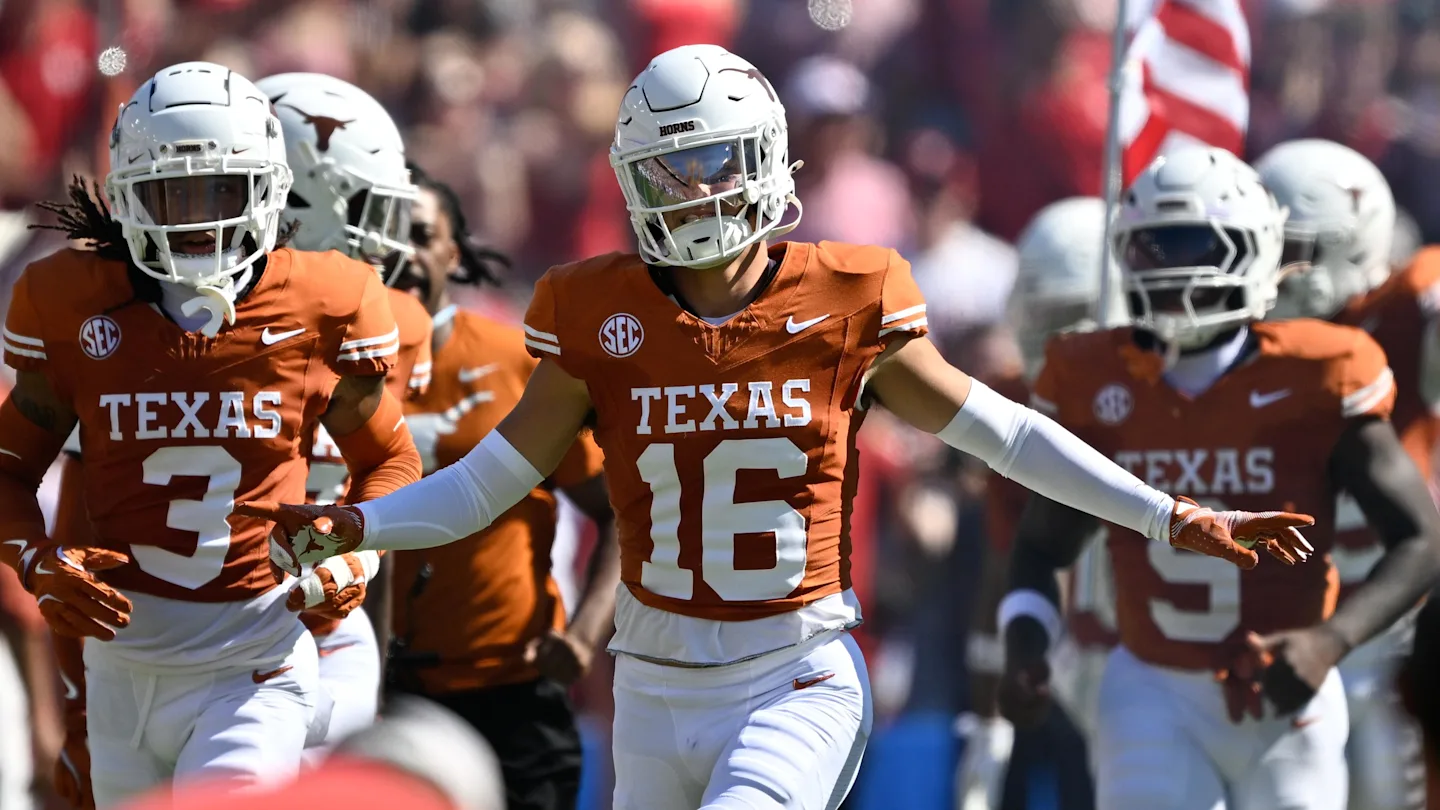
Texas Longhorns Football Michael Taaffe

Texas Longhorns defensive back Michael Taaffe (16) celebrates after the game against the Kentucky Wildcats at Kroger Field. | Jordan Prather-Imagn Images

With Longhorn star safety Michael Taaffe, whether on or off the football field, is one of the best representatives of the Texas program, there’s no better example of that than how the senior has approached NIL and optimized it.

“I think NIL, for me, has been a little bit different because there’s opportunities that I have taken to get a little cash in the wallet, in the pocket,” Taaffe told On3. “But I think, would you much rather have this little success? This little financial success that at the end of the day, when you have to go buy a house, when you have to get a car, when you have to pay rent, this little success isn’t going to matter in the long-term? Or, would you rather have success and significance to the University of Texas that will last 100 years? I chose that route.”

While Taaffe was a part of a few partnerships with outside brands and companies, his main focus was on partnering with Texas Against Fentanyl, where he helped raise nearly $60,000 for the organization through a fundraiser, which he said helped cover the organization’s yearly budget.

Taaffe’s efforts did not go unnoticed, as he was recognized with the Wuerffel Trophy, which is the premier award for community service and recognizes athletes who use their platforms to serve others and create positive change and who exemplify community service, academic excellence, and athletic achievement.

Not only was Taaffe heavily involved with raising awareness of substance abuse, but before the 2025 season, he played a big role in the relief efforts after the flooding at Camp Mystic. The safety participated in a fundraiser for the families and, during SEC Media days, wore a special tie to honor the victims.

The Longhorns’ star has used his platform to give back to communities in need and to try to make a difference in those communities, which he says hold plenty of importance to him.

“I don’t fault anybody for the routes they take,” Taaffe said. “But I just knew that I believe being significant is way more important than being successful.”


Link

Continue Reading

NIL

Why the College Football Playoff system isn’t to blame for lopsided postseason

Published

on


Everybody wants to fix the College Football Playoff, but nobody seems to know how. There’s a good reason for this. It’s because the College Football Playoff isn’t broken … college football is.

On Saturday, college football die-hards and casuals alike tuned in to watch two games that were largely decided before a snap ever took place. Sure, the possibility of an upset always looms, but the first quarters of Ole Miss’s 41-10 win over Tulane or Oregon’s 51-34 win over James Madison made it clear quickly how those games would go. They were results that would do nothing to slow the ceaseless wave of the college football literati who had spent the last few weeks gnashing their teeth in despair over the possibility these blowouts would happen and what it would all mean.

But the pearl-clutching, hemming and hawing are all directed at the wrong target. What we’re seeing in the College Football Playoff is the result of a far bigger problem in the sport. College football has always been a top-heavy sport, and while we’ve seen a more even distribution of that weight up top thanks to NIL and the transfer portal (the GLP-1 of college football), on the whole, the sport is more top-heavy than ever before.

Resources, talent shifting in one direction

There is far more talent available and far more money coming in than at any time before, and it’s all flowing overwhelmingly in one direction.

If you look at the top recruiting classes for the 2026 cycle, you’ll notice a couple of things. The first is that, for the first time since 2008, the top class in the country belongs outside of the SEC. USC took the honors this year, the first non-SEC program to do so since Miami way back when. Furthermore, Alabama is the only SEC school to finish in the top four, but while that’s nice to see as far as spreading the talent around, it ignores the larger picture.

Sure, the Big Ten has the top spot, but 23 of the top 35 classes call the Big Ten or SEC home. The only non-Big Ten and SEC schools to crack the top 20 were Notre Dame, Miami, Florida State, North Carolina, Texas Tech and Clemson. Of those six, only Notre Dame and Miami are in the top 10, and Miami is 10th.

Pete Golding shows he’s in charge as Ole Miss dominates without Lane Kiffin: ‘He controls what he wants’

John Talty

Pete Golding shows he's in charge as Ole Miss dominates without Lane Kiffin: 'He controls what he wants'

Damage done by mass realignment

Recruiting rankings are not the only area in which the Big Ten and SEC have consolidated power. They’re just another result of that consolidation. In the last 15 years, the Big Ten has added Nebraska, Maryland, Rutgers, UCLA, USC, Oregon and Washington to the fold. Taking the last four essentially killed the Pac-12, while reaching out and taking Nebraska caused a destabilizing effect on the Big 12. An instability the SEC was all too happy to take advantage of as it poached Missouri, Oklahoma, Texas and Texas A&M from the league over the last 15 years, too. Both leagues will exist in 2026 but largely in name only. Clearly, the Big 12 has survived the attacks much stronger than the Pac-12 has, but the league has seen all of its biggest brands taken from it, which leaves it at a disadvantage when it comes to finding a television deal, causing the gap to grow only wider.

Perhaps that’s why, while we were all forced to suffer the horrors of two uncompetitive football games on Saturday, Arizona State’s Kenny Dillingham was sending out a call to any possible billionaires who wanted to buy him a new roster. Because that’s where we are now with NIL. The sport dragged its collective feet and ignored the giant tidal wave coming at it for decades, only to dive in full speed ahead on openly paying players (some of) what they’re owed. Only, you know, with hardly any regulations or guidelines that everybody can follow and no viable way to enforce them. Whose fault is that? I don’t know? Everybody’s?

Anyway, right now, people are looking at the Group of Five as the problem with the playoff, but believe me: if finances continue to work the way they’re working in this sport, it’s only a matter of time before the ACC and Big 12 get the same treatment people are giving Tulane and James Madison. After all, it’s the Big Ten and SEC who have been handed complete control of the future of the format as a compromise to simply let the ACC and Big 12 continue to exist.

Big Ten, SEC will win out in the end

But, the truth is, the Big Ten and SEC have always controlled the College Football Playoff. The Big Ten and SEC have won nine of the first 11 College Football Playoffs. Clemson is the only team from outside those leagues to win it, and it’s done so twice. Of course, Clemson has only made the field once since the NCAA stopped forcing transfers to sit out a year after changing schools and hasn’t won a playoff game at all. That’s mostly due to Clemson’s stubbornness, but it’s fitting nonetheless.

To drive the point home even further, of the 22 teams that have played in a College Football Playoff National Championship, 16 currently reside in the Big Ten or SEC. Clemson (4x), TCU and Notre Dame are the only teams to get there who aren’t in those leagues (Oregon and Washington made it while still members of the Pac-12, but are now in the Big Ten).

As the Big Ten and SEC expanded, the Big 12 and ACC did what they had to do to try to keep up. All of which has led to bloated conferences spanning the entire continent where you only play half the league in any given season, leading to ridiculous tie-breaker scenarios that end up with a five-loss Duke winning the ACC, which puts those damned Dukes of James Madison in the field!

So what’s the solution? How do we fix it all? I don’t know that you can, but I do believe there’s a natural outcome from all of this that at least leads to equilibrium of some sort.

You simply let nature take its course. Let the Big Ten and SEC finish what they started. Whether you’re excited about it or not — and believe me, I am not — the Super League or whatever dumb name you want to give it is coming. I don’t know if it will be the result of a hostile takeover by the Big Ten and SEC pilfering all the remaining valuable brands once the current television deals expire, or if it’ll be the result of a compromise between the four leagues to break off from the NCAA and form their own, fully professionalized league. But whatever the method, and whatever the final makeup of the schools involved, it is coming.

And when it does, your College Football Playoff will finally be “fixed.” The blowouts, however, will continue.


Link

Continue Reading

NIL

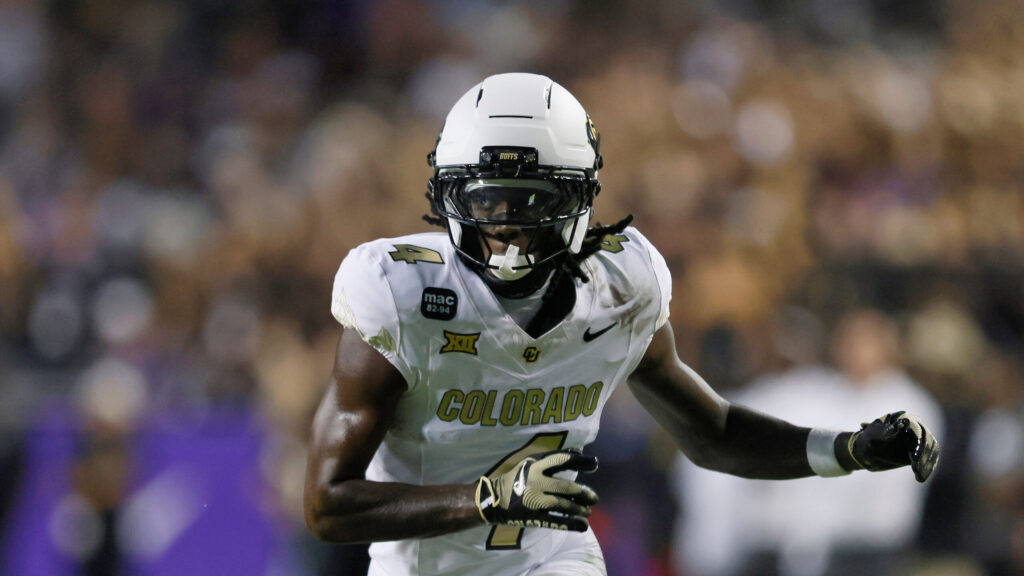
Kickin’ It with Kiz: We comin’? They leaving. CU stars dump Coach Prime for greener pastures

Published

on


These young men leaving the CU football program want wins. Wins equal NIL money.

– Joe, ninja-like tendencies

Kiz: Maybe it was Deion Sanders’ magnetic personality that attracted wide receiver Omarion Miller and safety Tawfiq Byard to Boulder. But they’re both hitting the transfer portal, because, as it turns out, the Buffs’ top offensive playmaker and most impactful defender from a wretched 3-9 CU team find money more attractive than Coach Prime. We comin’? They leavin’. Louis Vuitton cuts both ways, eh? 

Maybe it’s not such a doom-and-gloom situation with Sanders and the Buffs if other football programs are getting hit by the transfer portal in the same way.

– S.D., Buffs fan

Kiz: Can you handle the truth? Sanders came to Boulder to make the CU football program a pro showcase for his son and Travis Hunter. Coach Prime also got his bag. More power to him. But CU was so busy countin’ the money from the increased attention that athletic director Rick George was blind to what’s painfully obvious now. The University of Colorado is not a serious football program. As a coach, is Prime ready to get serious about becoming something more than an Aflac pitchman? We’re fixing to find out.

The NIL mess has ruined college football, Kiz.

– Allison, chasing the sun

Kiz: I am all for an athlete at a big-time football school getting paid, because it’s a strenuous and pressurized job. Always has been. But college football has become a game without any semblance of financial rules, loyalty or ethics. That’s not sport, it’s chaos. College football is my first love. So, this mess not only hurts my heart, but it also gives the Buffs next to no shot at winning another national championship.

The college football system is a wreck. So much is wrong that I wonder how you begin to fix it. The question isn’t: What would you do to fix it? In a practical sense, it’s more like how do you convince people to make the necessary changes?

– Z., Denver

Kiz: ESPN should replace its happy little charade of bowl week with more meaningful programming and call it tampering week. Texas at San Antonio playing Florida International in a bowl on the day after Christmas is a complete waste of everybody’s time, especially when you consider UTSA coach Jeff Traylor expects 20 of his players to opt out of their last dance with teammates. “I hate what’s going on in college football,” Traylor said. “It’s sad, it really is sad. I never thought we’d be punished for making a bowl game by being leveraged, that if you don’t give (players) a certain number, they’re not going to play in a bowl.” Nothing short of a collective bargaining agreement, with binding contracts between players and college teams, is going to fix this mess.

And today’s parting shot warns the Broncos to not start taking their football magic for granted.

Beware the Jags. The Broncos will be facing a tough test. Denver needs to keep its edge. Jacksonville quarterback Trevor Lawrence is playing at a high level. Fingers and toes crossed.

– Z.G., true Bo-liever


Link

Continue Reading

NIL

I’m deeply disturbed by what just happened with BYU’s football coach

Published

on


We continually talk about serving the collective good, creating inclusive environments and making ethical choices. The spectacle of multimillion-dollar contracts in athletics sends a conflicting message.

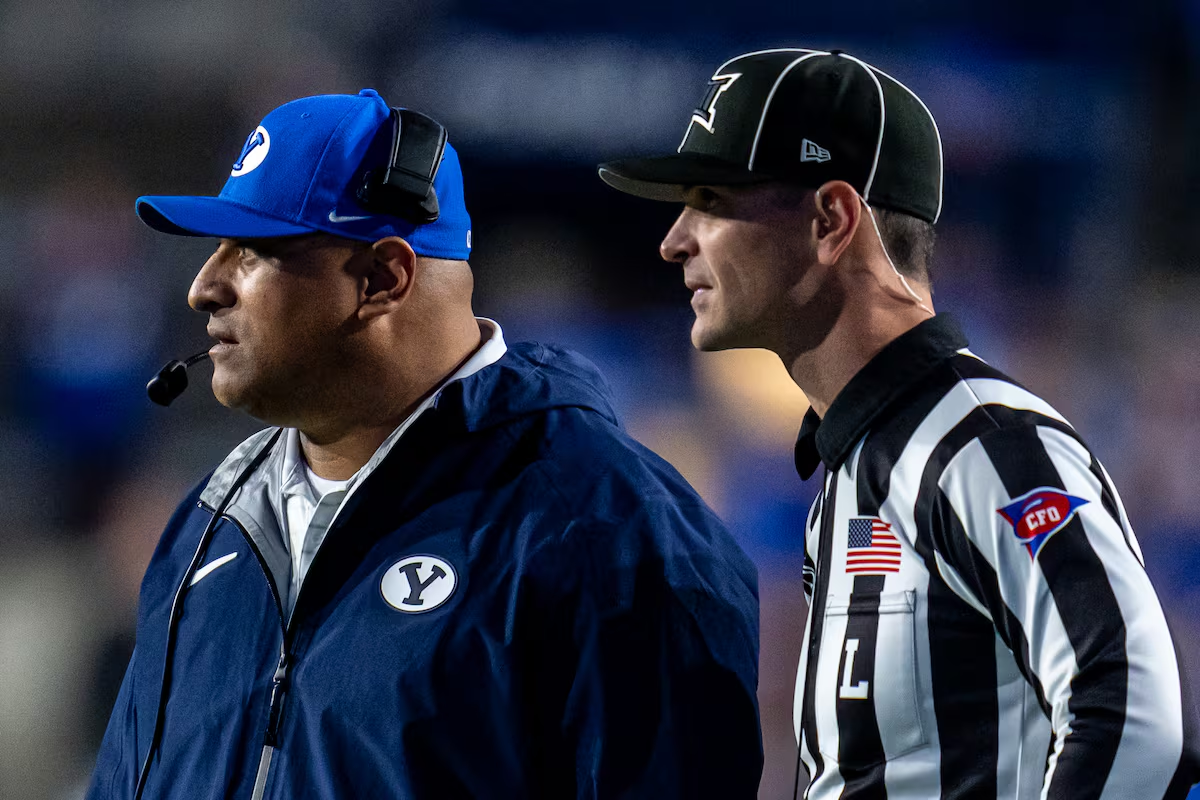
(Trent Nelson | The Salt Lake Tribune) BYU Cougars head coach Kalani Sitake as BYU hosts TCU, NCAA football in Provo on Saturday, Nov. 15, 2025.

Since the onslaught of Name, Image, and Likeness (NIL) deals in college sports, Brigham Young University has made it clear that it is not just willing to play the game — it is willing to pay top dollar.

The recent contract our football coach signed is the latest example. As a BYU student, I am deeply disturbed by the attitude our university has taken toward athletics.

Although the numbers are not officially confirmed, Coach Kalani Sitake’s new annual salary is reportedly in the ballpark of $9 million. Those millions could provide clean drinking water and food to people around the world; it could fund thousands of full tuition scholarships at BYU each year. Yet that same money is tied up in a single athletic contract. What does this suggest about BYU’s priorities?

I am not against sports, nor do I begrudge athletes or coaches for earning compensation. But BYU’s approach raises difficult questions about our values. President Shane Reese is clearly a big proponent of BYU athletics, but the frequency with which he attends sporting events, speaks of athletic outcomes and invests his bully pulpit and limited time in sports, can feel to the rest of campus like our academic focus lags behind. BYU cannot control what donors do with their money, but it can choose what it does with donor money, and that’s what students, faculty and Cougar Nation are watching.

BYU’s mission emphasizes providing an education that is spiritually strengthening, intellectually enlarging and character-building, with a focus on service and the full realization of human potential. How then, do we justify advocating for self-reliance, helping the poor and the needy and promoting ethical values while simultaneously celebrating multimillion-dollar contracts in athletics?

NIL deals became legal in 2021, creating opportunities for college athletes to profit from endorsements and sponsorships. BYU has clearly embraced this reality, investing heavily to compete financially and attract top talent. While the university maintains that its mission remains intact, the optics are hard to ignore. Students who work campus jobs are still earning sometimes under $10 an hour, while they see athletes and coaches earning millions. Professors researching cures for cancer, promoting democratic ideals, championing global ecological stewardship and strengthening families earn less than our assistant coaches. What message does this send about fairness, value and the culture we are promoting on campus?

Some defenders of this system argue that the sports budget is separate from university funds, and, technically, that is true. But every time BYU’s name, logo or likeness is used in media coverage, sponsorships or promotions, the university’s reputation is leveraged for profit. The supposed separation of funds does little to address the ethical and practical implications for the rest of the student body. What we are celebrating now is a kind of hypocrisy — one that contradicts the core principles meant to guide the university community.

In our classes, we talk often about serving the collective good, creating inclusive environments and making ethical choices. Yet, the spectacle of multimillion-dollar contracts in athletics sends a conflicting message. Sports can inspire and unite communities, and I have no wish to diminish athletic achievement. But BYU has to ask: Are we actually serving our mission, or are we just keeping people entertained with bread and circus?

I don’t see BYU’s attitude toward sports changing anytime soon. But the next time a student faces a family member with cancer, a community is devastated by a natural disaster or any urgent need arises, I expect BYU administrators, mega-donors and alumni to respond just as quickly and generously as they did to retain a football coach.

(Elias Johnson) Elias Johnson is a senior at Brigham Young University.

Elias Johnson is a senior honors student studying biodiversity in conservation at Brigham Young University.

The Salt Lake Tribune is committed to creating a space where Utahns can share ideas, perspectives and solutions that move our state forward. We rely on your insight to do this. Find out how to share your opinion here, and email us at voices@sltrib.com.


Link

Continue Reading

Most Viewed Posts

Trending