
Rec Sports
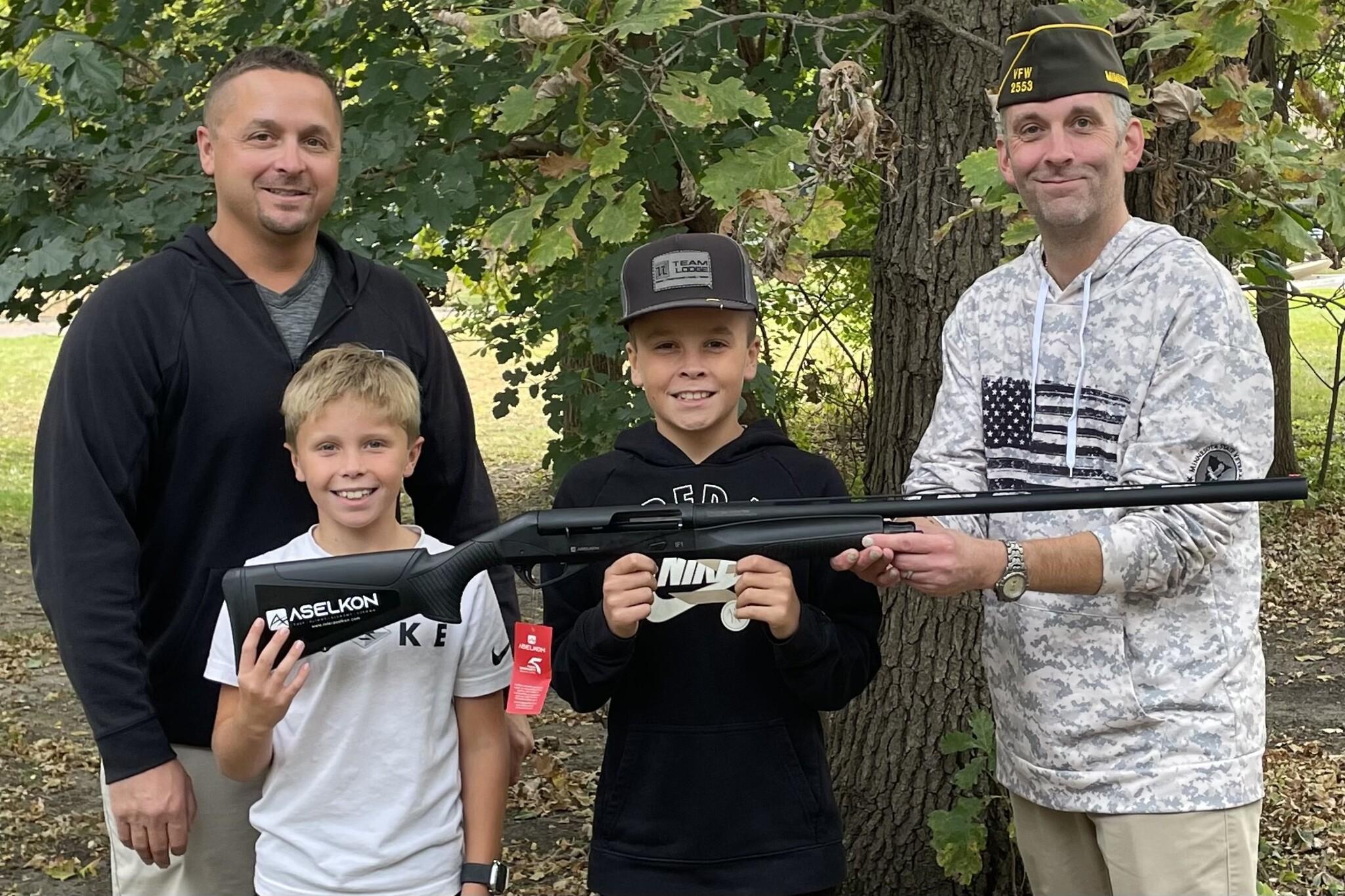
Gun raffle to raise funds for local youth shooting sports



The San Pedro Town Council Sports Department hosted a sign-up session for its four youth sports academies, football, basketball, softball, and track and field, on Saturday, January 10th, at Central Park. The registration drive ran from 9AM to noon and attracted families eager to enroll their children ages 6 to 13.
Parents and children visited information booths to learn more about each academy, with promotional materials highlighting benefits such as teamwork, discipline, confidence-building, and life skills. Adaly Ayuso, who holds the sports portfolio, and Sports Coordinator Ada Cordova were on hand to provide details on training schedules, costs, and equipment packages.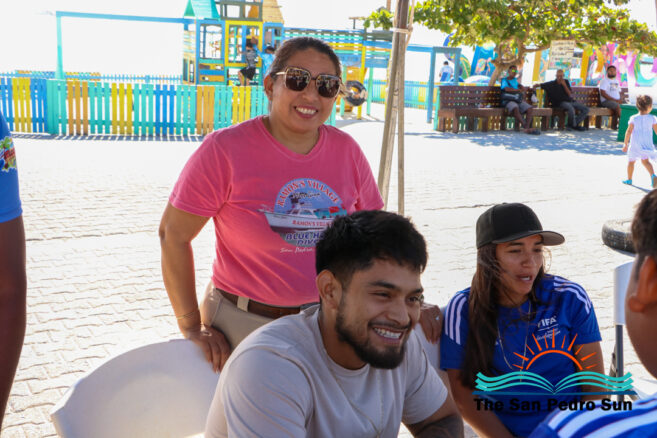
The registration marked the launch of structured programs divided into three ten-week phases, each followed by a three-week break. Phase one focuses on building fundamentals, phase two emphasizes competition, and phase three addresses skill refinement and identifies weaknesses.
The football academy is scheduled to begin on February 7th at the Ambergris Stadium and will be held on Saturdays. Training sessions will run from 8AM to 9AM for under-7 and under-9 categories, and from 9AM to 10AM for under-11 and under-13 players. The cost is $85, which includes two jersey sets, a training kit, and hydration. The second phase of the football program will feature the Kids Mundialito tournament.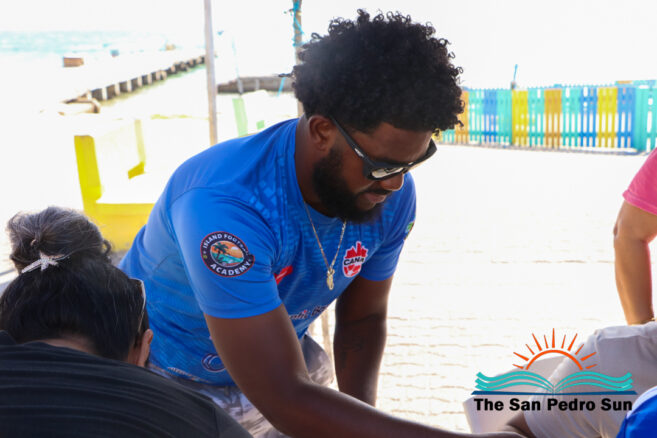
The basketball academy will begin on February 9th and will take place on Mondays from 4PM to 5PM at Boca del Rio Park. The participation fee is $35 and includes a training kit. The softball academy begins on February 6th, with training held on Fridays at 4PM, priced at $30 and including a training kit. The track and field academy started on January 12th and is held on Mondays and Tuesdays from 4PM to 5PM. The registration fee is $15 and includes a training kit.
The initiative builds on the Town Council’s prior efforts to strengthen youth sports development, including academy programs and infrastructure improvements, such as the renovation of the Boca del Rio basketball court. Councilor Ayuso has also spearheaded several sporting events in recent years, including women’s football tournaments to increase youth participation.
“All these programs we do are to keep our kids and youths out of trouble and engaged,” Ayuso said. “They give them goals to work toward. Many tournament winners go on to compete outside of the island. These academies are designed to be family-oriented.”
The youth academies aim to enhance physical fitness and athletic skills, increase community engagement, and provide talented participants with opportunities to advance to national-level competitions. Additional tournaments and development phases are planned throughout 2026 as the Town Council continues to invest in San Pedro’s growing sports culture.

Tickets for all regular-season games at Camden Yards and special ticket packages go on sale to the general public on Wednesday.
Just head over to Orioles.com/Tickets for more information and to make purchases.
The club also announced some additional promotions, including Tupac and Pete Alonso bobbleheads. Because you can’t think of one without the other.
Shakur lived in Baltimore from 1984–88 and attended the Baltimore School for the Arts, where he studied acting, poetry, jazz and ballet.
The Orioles will distribute Tupac Bobbleheads to the first 15,000 fans prior to the Friday, May 8 game against the Athletics, and the Alonso Bobblehead to the first 15,000 fans prior to the Saturday, Aug. 22 game against the Rays.
The special ticket package offers can be accessed at Orioles.com/TicketPackages. A complete list of current promotions and special ticket packages, including some promotional item imagery and quantities, can be found online at Orioles.com/Promotions.
Here’s the list of new promotions, with some giveaways or experiences attached:
April 11: Bark at Oriole Park
April 12: Scouts Day (pregame parade)
April 14: Lacrosse Night (Lacrosse Pinnie)
April 15: Field Trip Day (pregame show)
April 24: HBCU& Divine Nine Night (Bucket Hat)
April 26: Youth Baseball & Softball Day (pregame parade)
April 28: Military Appreciation Night (Military Hat)
April 30: Field Trip Day (pregame show)
May 11: Healthcare Appreciation Night (Crewneck)
May 13: Japanese Heritage Night (Jersey)
May 22: Educator Appreciation Night (Windbreaker)
May 26: Jewish Heritage Night (Jersey)
May 27: Bark at Oriole Park
May 28: AAPI Night (Hat)
May 31: Youth Sports Day (pregame parade)
June 12: Union Night
June 30: Swim Night (Swim Cap)
June 30: Run Club Night (Running Hat)
June 30: Pickleball Night (Pickleball Paddle)
July 1: Day Camp Day
July 8: Women’s Night (Quarter Zip)
July 9: Christian Faith Night (postgame concert)
Aug. 6: Day Camp Day
Sept. 8: First Responders Night (Hat)
The club already shared more details about the Birdland Caravan that runs from Jan. 22-24 with stops in Baltimore, Bethesda, Ellicott City, Halethorpe, Linthicum Heights, Sykesville, White Marsh and a mystery Pop-Up Photo Op location in Prince George’s County.
The event provides a rare opportunity for the media to catch up with some players during the offseason. Information on access will become available within the next week.
We’ll always remember interviewing reliever Dillon Tate at the 2023 Caravan about his selection to the Team USA roster for the World Baseball Classic. He called it a “crazy feeling.”
More crazy was Tate already knowing that he had a right elbow flexor strain. He wasn’t pitching for Team USA. He didn’t pitch for the Orioles.
Knowing who’s participating this month, here are a few question ideas for anyone made available.
Manager Craig Albernaz
What does he think about the current roster since the last time we spoke to him? He’s got two new starters – well, one new and one returnee – with Shane Baz and Zach Eflin.
What kind of prep work has he done leading up to spring training and his first camp as a major league manager?
How has he been received by players, fans and anyone else with a pulse?
Anything relating to the rotation and lineup, despite how it’s too early to ask about anything relating to the rotation and lineup.
Albernaz also will be asked about his coaching staff.
First baseman Pete Alonso
Alonso already sat through a 45-minute press conference after signing his five-year, $155 million contract and nothing new has happened to him. But that was a month ago.
Has he found a place to live or is the move on hold?
What’s his usual offseason routine to get ready for spring training?
Any new thoughts on the roster and chances of playing in the World Series?
Has he talked to any new teammates?
Anything relating to his interaction with the public.
Anything relating to his bobblehead.
Hopefully, something a lot more interesting than these ideas.
Gunnar Henderson
His reaction to the Alonso signing and other moves made so far this offseason.
Playing for Team USA, and sharing shortstop with Bobby Witt Jr.
His big arbitration raise, the largest in team history for a first-timer.
Married life.
He’s probably going to be asked about the shoulder impingement from last season that he talked about last week on the “Orioles Hot Stove Show.”
How confident is Henderson that he can put up numbers closer to his 2024 season?
How does Henderson feel about the Albernaz hiring?
Has Henderson connected with new hitting coach Dustin Lind and assistant Brady North?
Any opinions on new infield coach Miguel Cairo?
Adley Rutschman
Can he get through the season without injuring an oblique, or anything else?
Like everyone else, he’s going to be asked about playing for a new manager, and he also can comment on the hitting coaches.
Rutschman also can talk about catching coach Joe Singley and having former major league catcher Hank Conger on the staff as bullpen coach. And having Albernaz, a standout defensive catcher in the minors.
What did Rutschman see from Samuel Basallo after the top prospect’s promotion in August?
Rutschman probably will be asked about catching Shane Baz, as well as Eflin’s return. Perhaps by Caravan time, the Orioles will have added another starter for Rutschman to comment on and later catch.
Jackson Holliday
What areas is he concentrating on during his offseason workouts?
How much of it is getting more comfortable at second base?
Having Alonso on the right side of the infield.
The importance of veteran leaders like Alonso and Taylor Ward in his development.
The same Cairo question.
I’ll focus on other confirmed participates later this week.
Rec Sports
Potomac Falls graduate Jalen Coker emerges as needed reliable No. 2 wide receiver for Bryce Young in Carolina | Sports

Rec Sports
US supreme court considers state bans on transgender athletes in school sports – live | US supreme court

US supreme court considers state bans on transgender athletes in school sports

Sam Levin
The US supreme court is considering the rights of transgender youth athletes on Tuesday in a major hearing on state laws banning trans girls from girls sports teams.
Oral arguments center on two cases of trans students who sued over the Republican-backed laws in Idaho and West Virginia prohibiting them from participating in girls athletic programs. The cases could have far-reaching implications for civil rights, with a ruling against the athletes potentially eroding a range of protections for trans youth and LGBTQ+ people more broadly.
In West Virginia v BPJ, 15-year-old Becky Pepper-Jackson challenged the state’s 2021 law banning her from track. A federal court blocked the ban, but the state appealed to the supreme court.
In the second case, Little v Hecox, Lindsay Hecox, a trans college student pursuing track, sued to overturn Idaho’s first-in-the-nation 2020 law categorically banning trans women and girls from women’s sports teams. She has since pushed to have the case dismissed, saying she is not doing sports in college and doesn’t want further harassment, but the supreme court is still hearing the matter.
Twenty-seven states have now restricted trans youth access to school sports – most with laws targeting trans girls, but some applying to all trans youth. Defenders of the bans argue they are promoting fairness and safety in women’s sports, while trans rights advocates counter the laws are cruel and discriminatory, and that there’s no credible evidence inclusive sports policies have endangered cis girls and women.
We’ll bring you all the latest from inside and outside the court as we get it.
Key events
Block argued that Pepper-Jackson has no physiological / competitive advantage, given that she had been through female puberty.
The purpose of sex separation is to control for the sex-based differential that comes through puberty. By virtue of her medical care, BPJ has controlled for those sex-based advantages.
Joshua Block, an attorney for the American Civil Liberties Union, is now arguing on behalf of Becky Pepper-Jackson.
Chief Justice John Roberts questioned whether the court’s landmark 2020 finding that federal law protects transgender people from workplace discrimination also applies to women’s sports.
Roberts sided with the majority in that decision, but indicated that the reasoning might not apply in this case.
The question here is whether or not a sex-based classification is necessarily a transgender classification.
Trans youth athletes speak out: ‘Sports is my everything’
In the lead up to today’s oral arguments, we spoke with trans youth athletes and their families about the role of sports in their lives and the toll of exclusionary policies.
Here are clips from interviews with three students:
More from those conversations here:
Hashim Mooppan is now arguing for the Trump administration for the second time today, this time in support of West Virginia’s state law.
In his opening statement, Williams said:
The law is indifferent to gender identity because sports are indifferent to gender identity.
He also argued that transgender girls have inherent biological advantages, though Pepper-Jackson’s lawyers have said that she does not because of puberty-blocking medications.
The 15-year-old is the only known transgender student-athlete seeking to compete in the state.
Lex McMenamin
Outside the supreme court, the crowd on both sides has slowly started dissipating, particularly the anti-trans side, though speakers continue.
On the anti-trans side to the right, speakers can be heard arguing that gender is biologically constructed; much of the rhetoric is focused on calling trans women “men” and claiming they are “male athletes”.
To the left, a group of West Virginians who traveled by bus to DC are telling the crowd they stand with Becky Pepper-Jackson: “[US senator] Jim Justice doesn’t speak for West Virginia.”
In his opening remarks, West Virginia’s solicitor general Michael Williams said that the state legislature “reasonably and rationally defined sex based on biology and acknowledged the physical differences biology creates”.
He argued that this “preserves the enduring structure on which girls’ sports depends”.
Arguments in Idaho case end as court moves on to West Virginia challenge
The arguments in the first case have now ended, justices are now hearing arguments in a challenge to a West Virginia law by high school student Becky Pepper-Jackson (she was in middle school when the case began).
And conservative justice Amy Coney Barrett asked Harnett how she can argue that there is discrimination based on transgender status when anyone, including transgender boys, can play on boys’ sports teams under the Idaho law, meaning only trans girls are affected.
Hartnett said the court has not required the entire protected class to be excluded in other similar cases, and reiterated that her case focuses on a specific subgroup targeted by the law.

Here’s a story you’ve probably heard before:
A new youth sports complex opens on the edge of town. Ten or twelve pristine fields. Acres of parking. A name that signals ambition… Regional, Legacy, Premier. On weekends, the place is packed with tournament traffic: minivans, tents, folding chairs, vendors. On weekdays, it sits largely empty. At the same time, closer to the city’s core, school fields are locked after hours. Park courts lack lights. Neighborhoods dense with children and young adults have no playable space within walking distance.
This coexistence (abundance on the outskirts, scarcity at the center) does not feel accidental. It’s the result of a set of incentives that consistently push cities toward large, centralized sports complexes rather than small, distributed neighborhood fields.
The question is not whether these complexes “work.” Many of them do exactly what they are designed to do. The question is what problem they are actually solving.
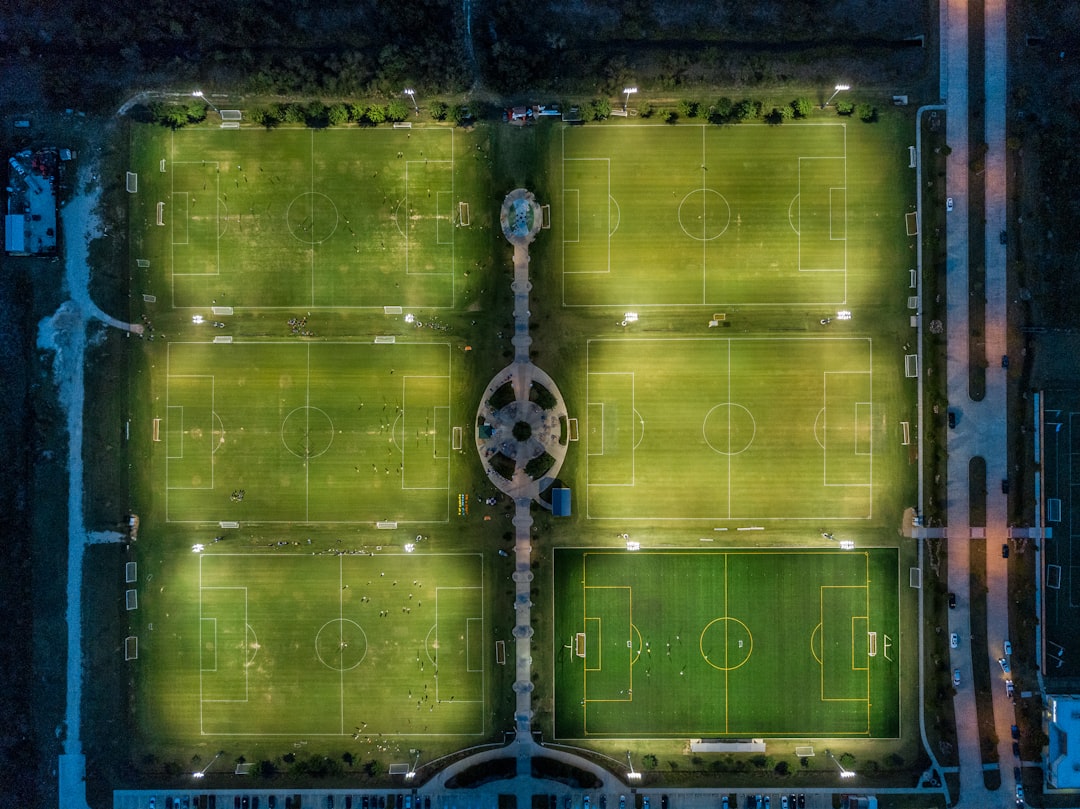
Large sports complexes are attractive to city governments because they are easy to explain. They arrive with economic impact studies attached: hotel nights, restaurant spending, regional visitors. They come with clear capital budgets, naming rights, and ribbon-cutting ceremonies. They can be photographed from the air and branded as evidence of investment. A $30 million complex feels like progress because it is visible.
Neighborhood fields, by contrast, don’t always photograph well. A lit mini-pitch on a residential block looks like maintenance instead of transformation. Ten small investments scattered across a city do not produce a single moment of political credit in the way one large facility does.
In the end, cities are not only responding to community need; they are responding to the logic of governance. Centralized projects are legible to councils, donors, and the press. Distributed infrastructure is quieter and harder to narrate. The result is predictable: cities optimize for visibility rather than proximity.
Beyond politics, sports complexes solve a series of administrative challenges. They centralize scheduling, liability, maintenance, and security. They allow recreation departments to manage sport as a contained activity rather than a diffuse one. Insurance is simpler, permitting clearer, and staff can be concentrated in one place.
Neighborhood fields demand something different. They require tolerance for informal use. They require shared ownership and ambiguity. They invite unscheduled play, mixed ages, and overlapping activities. They make risk harder to quantify and control.
Over time, American cities have made a quiet tradeoff: In the name of safety, efficiency, and liability management, they have narrowed the conditions under which play is allowed to happen. Locked school fields are the clearest example. Publicly funded land—arguably the most evenly distributed athletic infrastructure in the country—is increasingly inaccessible outside of sanctioned hours for certain groups. What once functioned as a neighborhood commons now operates as a reserved facility.
This is not some sort of conspiracy; it is a cumulative effect of policy choices that privilege order over use. In any case, the outcome is the same: informal play disappears, not because people stopped wanting it, but because cities stopped permitting it.

Sports complexes are often defended as “for the kids”, which is true, but incomplete. They are for a specific kind of kid: one whose family has transportation, flexible weekends, and the means to pay tournament and registration fees. They are for teams already inside organized systems.
A facility located thirty minutes from most neighborhoods, designed around weekend tournaments, implicitly excludes:
- children who rely on public transit
- adults who work nonstandard hours
- people seeking casual, after-work play
- families for whom sport is not a full-time logistical project
By contrast, neighborhood fields, especially when lit and unlocked, serve a much broader population. They support:
- spontaneous play
- intergenerational use
- adult recreation
- repeated, low-pressure participation
The difference is not simply access, but frequency. A child who can play three nights a week within walking distance accumulates far more meaningful engagement than one who plays once a week at a distant complex.
Complexes maximize peak usage. Neighborhood fields maximize lifetime usage. Cities tend to choose the former.
One reason this pattern persists is scale. A single large complex carries a large price tag, which paradoxically makes it easier to justify. It feels like a serious investment and a line item that commands attention. Distributed infrastructure does not. Ten $1 million neighborhood projects feel incremental rather than transformative, even if they serve more people more often. Maintenance budgets are harder to celebrate than capital expenditures.
Yet from a public-health and civic perspective, the return on neighborhood infrastructure is often higher. A small field used daily by dozens of people across age groups produces more cumulative hours of movement, social contact, and belonging than a complex used intensely but intermittently. The problem is not that cities lack resources. It is that they measure success at the wrong scale.

This is not an abstract critique. Other cities offer concrete alternatives. In the Paris suburbs, municipal pitches are embedded directly into residential neighborhoods. These are not elite facilities. They are durable, visible, and permissive. Community tournaments like the Coupe d’Aulnay use public fields to create large-scale civic events without privatizing space. In Medellín, small neighborhood courts—canchas de barrio—were built deliberately as tools of violence reduction and social cohesion. Lighting, visibility, and accessibility mattered more than surface quality. These spaces became anchors of daily life, not destinations.
Even within the United States, basketball provides a telling comparison. For much of the twentieth century, cities invested heavily in outdoor courts. These were cheap, ubiquitous, and politically uncontroversial. They produced a culture of pickup play that persists decades later. Basketball did not become a public language because of professional leagues alone. It became a public language because cities made it unavoidable.
Soccer, by contrast, was routed into complexes and clubs. This difference was not inevitable. It was designed. So… what would change if cities asked a different question?
Instead of: How do we host more tournaments?
Ask: Can a twelve-year-old play within a ten-minute walk of home, three nights a week?
Instead of: How do we attract regional events?
Ask: Where do adults play after work without registering, paying, or driving across town?
These questions point toward a different set of investments:
- lighting instead of fencing
- unlocked gates instead of reservation systems
- durable surfaces instead of showcase turf
- policy that tolerates informal use rather than suppressing it
The most powerful sports infrastructure is not the kind people travel to; it’s the kind they stop noticing because it is always there.
Cities keep building sports complexes not because they are the best way to create access, but because they are the easiest way to demonstrate investment. They are legible, controllable, and photogenic. Neighborhood fields are none of those things. They are messy. They are dispersed. They blur the line between program and public life… But they do something complexes cannot.
They turn play into a daily practice rather than a scheduled event. They allow sport to function as civic infrastructure rather than consumer experience. American cities do not lack ambition when it comes to sports. They lack imagination about scale.
Ultimately, the choice is not between excellence and access. it’s between building for moments and building for lives. If cities want sport to serve public health, belonging, and community—rather than only weekends and tournaments—they will need fewer showcases and more spaces where nothing is scheduled, and everything is possible.
[[divider]]
This article was originally published, in slightly different form, on Noah Toumert’s The People’s Pitch. It is shared here with permission.


In the pursuit of easier maintenance and year-round playability, Palo Alto officials approved installing new artificial turf at the El Camino Park playing fields Monday night, concluding, at least for now, the prolonged debate that pit environmentalists against soccer players and their coaches.
However, the approved fields look a bit different than the ones that were proposed before the City Council in November. That’s because a council ad hoc committee was tasked with learning more about the technology and risks associated with synthetic turf, and recommended a natural cork infill as opposed to the typical rubber pellets. The goal of the cork infill is to reduce the amount of plastic as well as the surface temperature of the fields, which tend to develop heat islands during warmer weather. Other risk mitigation efforts include annual testing and site-specific filtration to limit the plastic runoff into stormwater drains.
“There was just no way to replace the El Camino fields with grass without displacing huge numbers of players,” said Mayor Vicki Veenker, who served on the ad hoc committee.
It only took a consultant study, two Parks and Recreation Commission discussions, two council discussions, and a specially appointed council hoc committee to decide which material the city should use to resurface the El Camino turf fields, which are reaching the end of their usable life. The ad hoc committee was formed at the end of a lengthy discussion on Nov. 17, when instead of taking a vote, the council deferred the decision yet again
Council members Julie Lythcott-Haims, Keith Reckdahl and George Lu were ready that night to go with the committee and consultant recommendation of synthetic turf — but their three votes were not enough to muster a majority. Instead, then-Vice Mayor Veenker, then-Mayor Ed Lauing and Council member Pat Burt joined the ad hoc committee to further review the issue.
The committee’s meetings were not publicly available, but a staff report summarizing the discussion took care to emphasize the greater number of playable hours offered by synthetic turf compared to natural grass. According to the staff report, a natural grass replacement could displace more than 1,000 players annually due to winter weather rendering the grass unplayable.
While the consultant study and the Parks and Recreation Commission both recommended artificial turf as the best option for El Camino, the City Council initially appeared keen to heed the warnings of environmental advocates who raised concerns about microplastics and forever chemicals. They have argued before the council several times that the increased playability of synthetic turf — or “plastic carpet,” as some call it — is not worth the environmental contamination.
Advocates have also taken issue with the consultant study upon which city officials have relied to make their decision, saying that it exaggerates the playable hours of turf and minimizes the long-term costs and risks of playing on plastic. Some argued that the city does not truly understand the hazards of synthetic turf. Claire Elliott, an ecologist who lives in Ventura, urged the council to formally reject the consultant study that recommended turf.
“I am frankly dismayed that we are still considering plastic-coating our parks with this material,” Elliott said. “It’s really not an environmentally sound decision and I think of Palo Alto being a city that generally makes environmentally sound decisions, so it’s disappointing.”
Even at just one minute per speaker, the public comment portion of the meeting took close to an hour, with 42 people (and more than a few youth soccer players) lined up in the council chambers and on Zoom to offer their support or condemnation of synthetic turf fields.
Speakers who have opposed turf previously were not satisfied with the risk mitigation efforts proposed by the ad hoc committee, arguing that “better plastic” is still plastic at the end of the day.
The back-and-forth also got testier on Monday night compared to previous meetings, with several residents addressing other speakers directly instead of the council.
“To the patronizing speakers who think that we’re too dumb to understand this, I’m a professor in public health, and look how healthy the soccer players look versus the people who spoke against the soccer fields,” said Adam Olshen, who spoke in favor of synthetic turf.
While the rest of the council was persuaded by the upgraded synthetic turf option, Vice Mayor Greer Stone found himself as the sole no vote. He acknowledged this fact on the dais, but said the health risks described by the Santa Clara County Medical Association were too great to vote in favor of synthetic turf.
“I think it’s a false choice to say that we’re choosing synthetic turf and then youth sports, or if we choose natural grass we are voting against youth sports,” Stone said. “Sports will continue; I think we can find better ways to create access to it.”
Stone added that he hopes the resurfacing of the El Camino fields will be the last time synthetic turf is used in Palo Alto.
The council’s motion leaves room to pursue a natural grass pilot elsewhere in the city, with fields at Greer Park and Cubberley Community Center floated as options. The motion also makes explicit reference to transitioning the Cubberley synthetic fields to natural grass when they are due for resurfacing in 2028.
“We don’t have time to go through that (natural turf) learning curve while the kids are sitting there waiting for the grass to grow,” Reckdahl said. “I think in the short term, we unfortunately have no option but to go to the artificial turf field.”

Volleyball’s M.E. Hargan Earns Academic All-America Recognition

This Week in Wake Forest Women’s Athletics – Presented by Truist (Jan. 12-18)

Huskies add D1 transfer Keeley Nellis

Cadillac launches stealthy first F1 livery for Barcelona testing

This Week in Huskie Athletics – Jan. 13, 2026

Youth Sports Academies Open for the 2025 Season

Bauer Named CSC Third Team All-American

Could new NASCAR Chase format help Hendrick Motorsports? Elliott: ‘I like my odds now, for sure.’

Reilly Named Academic All-America Team Member of the Year – University of Nebraska

Examining the Winners, Losers from Volleyball’s First Transfer Window

Chili’s® Grill and Bar and Spire Motorsports Ride the ‘Dente into 2026 with Multi-Year Partnership Renewal

Chili’s, Spire extend No. 77 NASCAR deal to 2026

Greg McElroy states Fernando Mendoza is the best college football quarterback since Joe Burrow

Gamecock Student-Athletes Continue Academic Excellence in 2025 Fall Semester – University of South Carolina Athletics

Brady Stump Named NEC Player Of The Week For Men’s Volleyball

Stempien to seek opening for Branch County Circuit Court Judge | WTVB | 1590 AM · 95.5 FM

Ross Brawn to receive Autosport Gold Medal Award at 2026 Autosport Awards, Honouring a Lifetime Shaping Modern F1

Princeton Area Community Foundation awards more than $1.3 million to 40 local nonprofits ⋆ Princeton, NJ local news %

Downtown Athletic Club of Hawaiʻi gives $300K to Boost the ’Bows NIL fund

Badgers news: Wisconsin lands 2nd commitment from transfer portal

Five Youth Sports Trends We’re Watching in 2026

Kentucky VB adds an All-American honorable mention, loses Brooke Bultema to portal

Badgers news: Final Four Game Thread vs. No. 1 Kentucky Wildcats

Beach Volleyball Unveils 2026 Spring Schedule – University of South Carolina Athletics

Three Clarkson Volleyball Players Named to CSC Academic All-District List

Kentucky AD explains NIL, JMI partnership and cap rules

Central’s Meyer earns weekly USTFCCCA national honor

Is women’s volleyball the SEC’s next big sport? How Kentucky, Texas A&M broke through

BangShift.com IHRA Acquires Historic Memphis Motorsports Park In Millington Tennessee. Big Race Weekend’s Planned For 2026!

PRI Show revs through Indy, sets tone for 2026 racing season

 NBA Legend Michael Jordan to Join NBC Sports as Special Contributor
 Why a rising mid-major power with an NCAA Tournament team opted out of revenue-sharing — and advertised it
 Trackhouse to pair Chastain with McSwain
 Volleyball Falls to SEMO – Tennessee State University
 Kennewick School Board backs changes to gender inclusion in sports | News
-
 Rec Sports2 weeks ago
Five Youth Sports Trends We’re Watching in 2026
-
 Sports3 weeks ago
Kentucky VB adds an All-American honorable mention, loses Brooke Bultema to portal
-
 Motorsports3 weeks ago
BangShift.com IHRA Acquires Historic Memphis Motorsports Park In Millington Tennessee. Big Race Weekend’s Planned For 2026!
-
 Sports2 weeks ago
H.S. INDOOR TRACK & FIELD: GLOW region athletes face off at Nazareth University | Sports
-
NIL3 weeks ago
Fifty years after IU’s undefeated champs … a Rose Bowl
-
 Sports3 weeks ago
2025 Volleyball Player of the Year: Witherow makes big impact on Central program | Nvdaily
-
 Sports3 weeks ago
Colorado volleyball poised to repeat success
-

 Sports3 weeks ago
Texas A&M volleyball’s sweep of Kentucky attracts record viewership
-
 NIL3 weeks ago
NIL Funds Are at Top of Arizona State’s Christmas Wishlist
-

 Motorsports3 weeks ago
Kyle Larson opens door to 24 Hours of Daytona comeback – Motorsport – Sports