For decades, those of us working in youth development have understood that relationships are central to how young people thrive. It is through close relationships with adults, caregivers, mentors and peers that youth discover who they are, cultivate abilities to shape their own lives and learn how to engage with and contribute to the world around them. A young person’s web of relationships provides access to new opportunities and lasting connections and links them to valuable resources that can foster youth thriving. However, while we’ve long known that relationships matter, much less has been studied about how youth mobilize their social capital and how youth-serving organizations support them in doing so.
That’s the question we set out to answer in our recent study, published in the Journal of Youth Development. Our team wanted to know: How is social capital mobilized among young people within youth-serving organizations, and what role do youth-serving organizations and practitioners play in young people’s social-capital mobilization?
[Related: From curiosity to action — Learn to engage youth in YPAR]
Our findings offer valuable insights into the resources young people gain and leverage through their relationships. Practitioners working in schools, afterschool programs, mentoring organizations or workforce development settings may use these insights to better support youth.
What do we mean by social capital?
When we talk about social capital, we mean the resources that come from positive, meaningful relationships that help young people in accomplishing their life, academic and career goals.
This might look like guidance from a teacher, encouragement from a coach, access to new information from a mentor or network opportunities facilitated through a youth program. Access to relationships is important, but we found that access alone may not be enough. Young people also need the skills, confidence and support to mobilize those connections.
Four ways youth mobilize connections
Courtesy of Erica Van Steenis
Erica Van Steenis
To dig into this, we held focus groups with 74 youth, program alumni and staff across six education and workforce programs. By listening closely to their experiences, we adapted Mario Small’s Institutional Space Framework to identify four distinct ways social capital is mobilized:
Youth-driven mobilization happens when young people take the initiative themselves. For example, a student might form a study group to improve their grades or reach out to new career contacts on LinkedIn.
Connection-driven mobilization occurs when peers or staff help make connections. A mentor might introduce a participant to someone in their professional circle, or a peer might share a job posting that aligns with a friend’s interests.
Organization-connected mobilization involves structures or tools that programs provide. Think of resume templates, networking scripts or online platforms like Slack that make it easier for young people to reach out.
Organization-driven mobilization is when the program itself directly brokers opportunities. This could mean guaranteeing interviews with employer partners, providing stipends or arranging internships that youth would not otherwise access.
[Related: Is the youth development field confident enough about its contributions to learning to disrupt K-12 education?]
Together, these four domains highlight that mobilization is not just about youth initiative. It’s also about how organizations and practitioners create the conditions that make mobilization possible.
Implications for Practice
Courtesy of Ashley Boat
Ashley Boat
Based on what we heard, we see several takeaways for practitioners:
Assess your program’s approach. Youth-serving organizations can use lessons from the adapted institutional space framework as a complement to program assessments. Specifically, practitioners can reflect on their program offerings and how different types of social-capital mobilization work together. Practitioners can ask: which of the four domains are strongest in our setting? Which could we strengthen?
Train and empower staff as connectors. Staff often have networks that can benefit young people, yet may not think to leverage them as part of their role. One important role practitioners can play is drawing on their own social capital and network connections to give young people access to other supportive adults, peers and near peers that have access to valuable resources and information.
Tailor strategies to youth needs. Practitioners can also reflect on how young people within their programs currently engage in social-capital mobilization processes and how their organization’s practices are (or are not) supporting that process. Some young people thrive when taking initiative, while others may feel intimidated. Programs can offer more structured supports like tailoring strategies to accommodate young people’s needs (e.g. practitioners can consider how they can support youth in becoming more confident in using youth-driven mobilization strategies).
Foster a culture of paying-it-forward. Alumni who return as mentors or staff often create a cycle of support, modeling for participants how to use their social capital to lift others. Youth-serving organizations can encourage youth to think about the role that they play in other’s networks and how they can network with peers, educators and potential employers.
Recognize social capital as an equity strategy. All young people have social capital that can be mobilized as a valuable asset in their lives. Youth-serving organizations and practitioners can reflect on the role they play in not only supporting young people’s social-capital mobilization but also empowering young people’s collective and social change efforts to build a more equitable society. For youth from historically marginalized communities, mobilizing social capital can be a powerful way to counter systemic barriers.
Why this work matters
Courtesy of Miray D. Seward
Miray D. Seward
At the heart of our study is a simple but powerful idea: relationships matter most when young people can activate them. As researchers and practitioners, we believe youth-serving organizations are uniquely positioned to help young people gain not just access to networks but also the skills, confidence and opportunities to mobilize them. When young people and adults work in partnership, social capital can be a powerful resource. Young people bring goals and networks of their own, while practitioners and youth-serving organizations can help create structures that make mobilization easier, open their networks and share tools that support youth in seizing opportunities.
***
Dr. Erica Van Steenis is a community-based researcher whose work focuses on designing equitable learning systems that strengthen practitioner practice and promote positive youth development. She earned her Ph.D. in Learning Sciences and Human Development from the University of Colorado Boulder.
Ashley Boat, Ph.D. is an applied researcher who studies how relationships and community connections shape young people’s development and opportunities.
Miray Seward is the director of research and evaluation at the American Camp Association and was previously a research scientist at Search Institute. Her work has focused on supporting youth development professionals and youth in out-of-school contexts. Dr. Seward received her Ph.D. in Educational Psychology — Applied Developmental Science from the University of Virginia.
developmental relationships, Feature Story, mentor, mentorship, social capital, social capital mobilization, Youth Development, youth development organization, youth mentor, youth mentorship, youth-serving organization
Orange’s leading scorer Friday night Ivan Kim in the tournament opener. (PHOTOS: Tom Connolly, For OC Sports Zone).
Orange’s boys basketball team got off to a slow start and couldn’t recover, falling to Incline High of Nevada 52-32 in an opening round game of the 60th annual Orange Holiday Basketball Classic Friday at Orange.
Incline forward Halen Hanson led all scorers with 17 points to help the team snap a five-game losing streak and improved its record to 4-6 while Orange (5-9) lost its third consecutive game.
To see additional photos, click on the first photo:
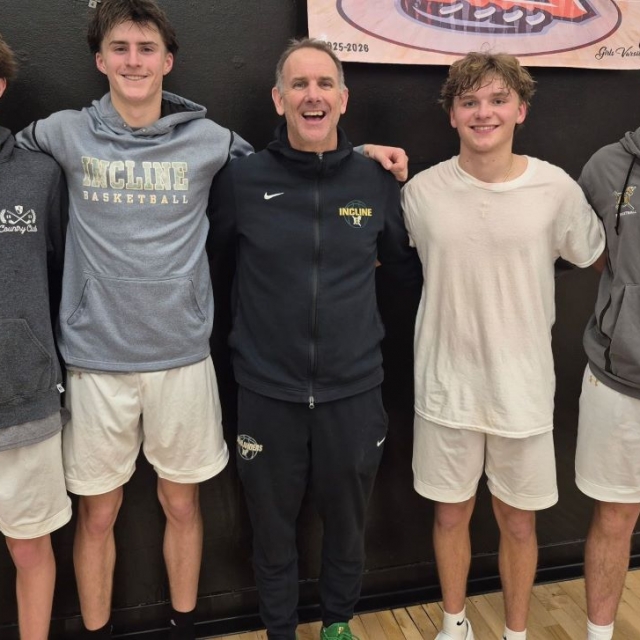
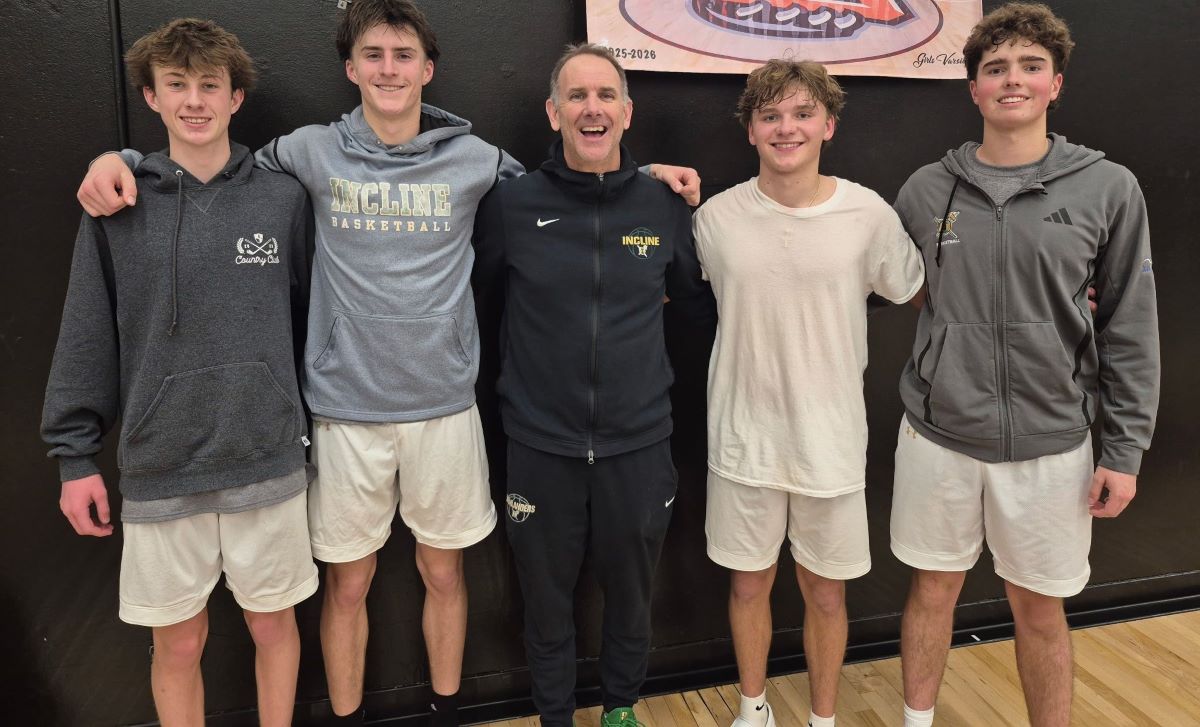
Incline players left to right with Coach Tim Kelly, Halen Hansen, Jonah Miller, Lucas MacDonald and Andrew Bodel after the win Friday.
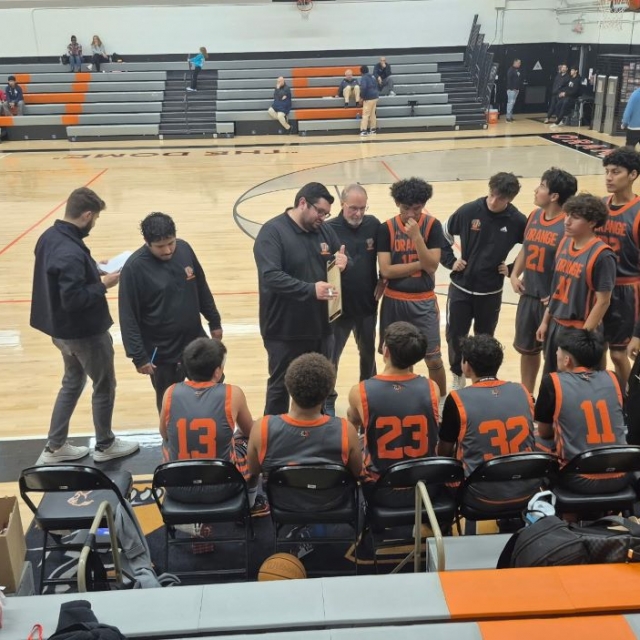
Orange Coach Jake Rhodes (fourth from left) talks to his team during a timeout.
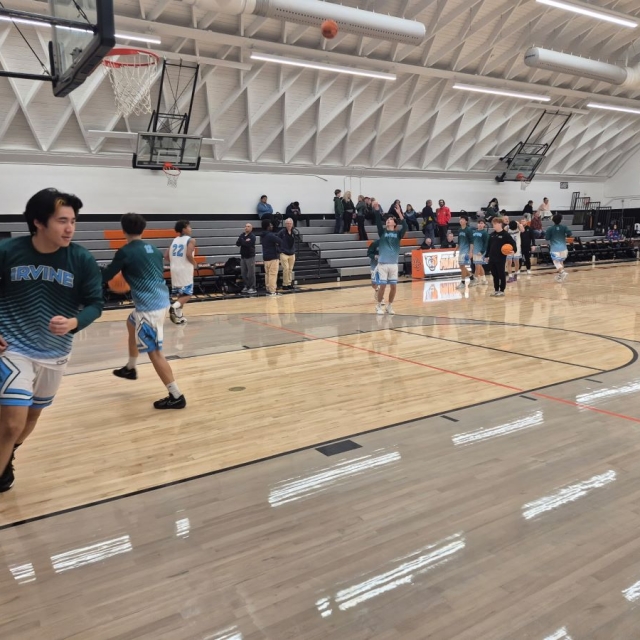
Irvine players warm up before Friday’s game.
“We lack basketball awareness and making adjustments,” said Panthers Coach Jake Rhodes, who was missing four players due to sickness and unavailability. “We’re not shooting well. I think we’re shooting something like 18 percent from the 3-point line. We can’t continue to try and shoot over taller opponents in the paint. We must push through this and be focused on the fact that the team comes first.”
The Panthers fell behind 14-7 in the opening quarter but held Incline scoreless over the final 3:40 of the quarter and added baskets by Sebastian Nunez and Fernando Reyes to cut the lead to 14-11 after eight minutes of play.
Both teams didn’t shoot well in the second quarter. The Panthers were held to two baskets by Anthony Randle and Ivan Kim in the quarter but still only trailed 23-15 at halftime.
Orange’s shooting woes continued in the third quarter as the Panthers didn’t sink a bucket until Alex Villa nailed a 3-pointer with 1:12 left in the quarter, but Orange trailed 36-21 after three quarters and the Highlanders cruised to a victory.
“Shooting has been our big problem,” said Panthers assistant coach Rob Nasman. “Our defense is improving but as a team we’re still having too many lapses and we’re giving up too many second chance points.”
Orange forced 13 turnovers in the game but was never able to draw any closer than 10 points of the lead in the second half.
“We didn’t have the energy today; we need to come out with more energy,” said Ivan Kim , who led Orange with 13 points. “We know we’re better than this and we know what we are capable of, but we have to prove it.”
The Highlanders were consistently able to drive into the lane for layups and limited Orange to one shot on the offensive end. Incline also outrebounded the Panthers and moved the ball efficiently.
“Tonight was the best job we did all season getting Lucas MacDonald the ball in the key,” said Incline’s coach Tim Kelly. “We need to get him the ball more in the paint for him to be effective. We are still trying to find our identity as a team.”
“We did good getting back on defense, moving the ball, rebounding and getting key baskets,” said Hanson, who scored 10 points for the Highlanders.
In other tournament games, Fullerton defeated Boulder City, Nev. 54-42 and Shadow Ridge topped Irvine 50-49.
Notes:
—Orange will play Shadow Ridge of Nevada on Saturday at 6 p.m. while Incline faces Irvine at 7:30.
–—The Orange Holiday Basketball Classic is the longest running Christmas basketball Tournament in Orange County. The event started Friday, including boys’ and girls’ divisions with the girls championship game scheduled Tuesday at 6 p.m. The boys’ final will follow at 7:30 p.m. on Tuesday night.
—In the boys division, Pool A consists of Incline, Nevada; Irvine, Orange and Shadow Ridge of Nevada, Nev. Pool B will include Boulder City, Nevada, Cerritos, Fullerton, and Long Beach Wilson.
—In the girls division, Pool A includes Apple Valley, Laguna Hills, Montclair, and Valley Christian. Pool B includes Cabrillo, Fullerton, Irvine, Orange.
—Incline’s coach Tim Kelly is the son-in-law of former Servite football coach Larry Toner. Kelly said his son, John Paul Kelly, is currently an eighth grader and is a skillful basketball player who plans to relocate to Southern California next season and attend Servite or Mater Dei and play basketball.
—Incline High School is in Nevada on the north shore of Lake Tahoe.
Bayern Munich have, supposedly, always put an emphasis on academy talents and transitioning that talent to make an impact in the first team. However, for years it felt as if Bayern’s pool of youth talent had run dry. Blame the front office, blame the coaches or blame the general lack of talent. It doesn’t matter. Lennart Karl’s tremendous success story this season is single-handedly forging Bayern’s youth strategy for the future.
In an interview with Maximilian Koch of Abendzeitung, Bayern CEO, Christian Dreesen, stressed the importance of Karl’s emergence, the Bavarian side’s youth academy and how the club will continue to lean on academy players in the future.
Advertisement
“Lennart Karl is doing incredibly well,” exclaimed Dreesen (as captured by @iMiaSanMia). “Compared to other 17-year-olds, he’s simply much, much more mature. Christoph Freund, Max Eberl, and Vincent Kompany recognized his immense talent, which is why he got his chance. And he seized it. Of course, we couldn’t have expected him to establish himself so quickly. This has to be our path for the future. Lennart is an example for other talents at the academy that they can make it to the top. Just like Josip Stanišić, Aleksandar Pavlović, and Jamal Musiala before him. We’re investing a lot of money in the academy, and it has to pay off. A high percentage of players trained here are making it to the professional level – significantly more than at any other German club. To remain competitive in the medium and long term, we need to rely on a mix of homegrown players and international superstars like Harry Kane or Luis Díaz. Financially, the Premier League is too far ahead – especially when it comes to TV revenue. English clubs earn 80% more from domestic TV rights than their German counterparts, and the differences are even bigger internationally.”
The 58-year-old CEO went on to explain Bayern’s need to find creative ways to bridge the financial gap that exists between the Bundesliga and Premier, perhaps hinting that the youth academy could be a good example.
“We need to find other sources of revenue or further improve existing ones,” explained Dreesen. “Take sponsorship, for example; we’re doing very well there, among the top three European clubs. And we need to increase that even more. We’ll only be able to compete internationally in the future if we grow dynamically in sponsorship and merchandising. And then I’m not worried about the future. We have to work harder for it; for us, money doesn’t just seem to grow on trees like it does for others. We have to work for every euro and, above all, be careful about how we spend. It’s about our ambition to play top-level European football while simultaneously being financially stable. We have to try to maintain this balance. And that’s harder than it perhaps used to be.”
The recent emergence of Aleksandar Pavlović and Lennart Karl have certainly given Bayern impetus to trust and utilize the youth academy, something fans have been crying out for season upon season. Youth players also incur no transfer fee which comes as a massive positive on Bayern’s balance sheet. Considering Kompany’s knack for integrating young players into his squad as well as ‘Die Rekordmeister’s’ financial savvy, one can expect the academy to play an increasingly important role.
The Alabama Sports Writers Association has released the three finalists for Back and Lineman of the year in each classification.
Plainview junior Cole Holland has been name one of the three finalist for 4A Lineman of the Year along with Sharontae Bailey, Anniston and Laquon Whisenhunt, Jackson.
Holland anchored the Bears offensive line this season as Plainview captured the 4A Region 8 Championship going 13-1 advancing to the semifinals for the first time since 1999. Holland blocked for an offensive that scored 586 points this season averaging 41.9 PPG. This year’s Bears offense scored the most points in school history, passing the 1991 team that scored 553 points.
ASWA FINALISTS
Winners of the Alabama Sports Writers Association’s major high school football awards, Mr. Football and the 12-member Super All-State team are scheduled to be announced Jan. 20 at a lunch banquet at the Montgomery Renaissance.
Rosenberg National Little League (RNLL) has officially opened registration for the Spring 2026 baseball season, welcoming boys and girls ages 4 through 14 to participate in one of the community’s longeststanding youth sports programs.
The Spring 2026 season will run from February through late May, with all practices and games held at Seabourne Creek Regional Sports Complex in Rosenberg.
RNLL offers divisions ranging from Tee Ball for firsttime players through Junior Baseball for older youth, with a strong emphasis on player development, sportsmanship, and teamwork.
Registration closes on Jan. 25. Players must be registered by the close of registration to be eligible for evaluations and team placement. Registration fees vary by division and help support uniforms, equipment, field maintenance, umpires, and league operations.
New for Spring 2026, RNLL is introducing a Rookie Ball division for players ages 5–6 who have completed one season of Tee Ball. Rookie Ball is designed to bridge the gap between Tee Ball and Coach Pitch by allowing players to see a limited number of coach-thrown pitches before using a tee if needed, helping young athletes build confidence while learning the fundamentals of live pitching.
Player evaluations will be held following the close of registration, except for Tee Ball and Rookie Ball, which do not require evaluations. Practices are expected to begin in early February, with games starting after Spring Break. The season will conclude prior to Memorial Day.
Rosenberg National Little League is led by dedicated volunteers and coaches who focus on teaching the game in a positive, supportive environment while fostering community involvement and youth development.
Families interested in registering for the Spring 2026 season can find additional information and complete registration online at www.rosenbergnationallittlelea-gue. net.
For updates and league announcements, the public is encouraged to follow Rosenberg National Little League on Facebook.
LA HABRA 63, WASHINGTON PREP 48: Acen Jimenez led the Highlanders with 27 points, five rebounds and five assists. Josh Desatoff and Aaron Wilson each had 15 points and three 3-pointers for La Habra.
FOOTHILL 69, AQUINAS 51: Magnus Lawson had 20 points, Braeden Davidson 18 points and five rebounds, Marlee Slone 12 points, six rebounds and five assits and Damir Buckingham seven points and four assists to lead the Foothill Knights.
PACIFICA CHRISTIAN 64, REDWOOD 57: Pacifica Christian was led by Michael Noel, who scored 19 points and had assists. Joaquin Rigdon scored 18 points and Soloman Huang had seven points.
LOS AMIGOS 56, FOOTHILL, NEV. 51: Los Amigos (9-5) was led by Phillip Stewart, who had 18 points and seven rebounds and Jayvon Morgan, who had 10 points in the win over the Foothill team from Nevada.
JSERRA 71, ST. IGNATIUS, OHIO 70: The Lions (11-5) were led by Jaden Bailes with 29 points and Ryan Doane with 17 points.
Crean Lutheran 62, Owyhee 59
ESTANCIA COAST CLASSIC SHOOTOUT
WOODBRIDGE 65, WESTERN 35: Woodbridge (11-4) was led by Jaiden Sabino, who had 31 points and Zacc Saleh who scored 10 points. Woodbridge faces Compton Saturday at 9 a.m. at Estancia.
NEWPORT HARBOR 53, SAN CLEMENTE 46: Owen Saukkola led all scorers with 23 points. Marcel Aguilar added 16 points for the Sailors (10-3).
RINGO BOSSENMEYERTUSTIN HOLIDAY CLASSIC
TESORO 55, MERCER ISLAND 49: The Titans (14-2) were led by Owen Hatch who scored 14 points, Carson Hatch who had 10 points, three rebounds and two assists and Max Draper, who had eight points and 10 rebounds. The Titans face St. Anthony Saturday at 4:30 p.m. Tustin meets Servite at 7:30 p.m.
St. Anthony 60, Beckman 59
Servite 81, Huntington Park 21
Tustin 69, Hawaii Baptist 29
TORREY PINES CLASSIC
CYPRESS 64, MARANATHA CHRISTIAN 51: Ryan Gov led the Centurions (11-5) with 20 points. Ethan Mai added 18 points on six 3-pointers and Gavin Kroll had 14 points with two 3-pointers.
MT. CARMEL TOURNAMENT
EL DORADO 85, EASTLAKE, SAN DIEGO 69: Noah Barker had 20 points, Jack Boettner 18 points, Ryan Northcott 16 points, Elias Rodarte 15 points and Evan Nam 13 points to lead the Golden Hawks (13-1).
ORANGE HOLIDAY CLASSIC
SHADOW RIDGE 50, IRVINE 49: Irvine (7-8) was led by Evan Terakawa, who had 13 points. Holden Stearns and Chase Brito had 11 points each and Jalen Yim eight points for the Vaqueros, who face Incline, Nev. Saturday at 7:30 p.m.
Fullerton 54, Boulder City, Nev. 42
Incline, Nev. 52, Orange 32
DESERT HOLIDAY CLASSIC
VILLA PARK 79, SIMI VALLEY 44: Villa Park (11-6) was led by Sebastian Perez, who had 17 points and four 3-pointers. Jordan Salem had 15 points, seven rebounds and five blocks for the Spartans. Jalen Cotton had 10 points and Nathan Chung nine points.