Connect with us
https://yoursportsnation.com/wp-content/uploads/2025/07/call-to-1.png

Rec Sports

The Bob Adams Family Community YMCA Opens Saturday, Nov. 1

Published

on


The Bob Adams Family Community YMCA — including the Christy Birkhold Wellness Center and George Jenkins Fieldhouse — will open on Saturday, Nov. 1, at 3620 Cleveland Heights Blvd. in Lakeland. The site was formerly known as the Lakeland Family YMCA.

Years in the making

This project has been in development for years. In 2022, the original building  — now called the Historic Y — was running at maximum capacity for youth sports like basketball and indoor soccer, said T.J. Wright, CEO of YMCA of West Central Florida.

With so many kids and members on campus, spaces were crowded. Staff members at the Y started dreaming about what expansion might look like: “Obviously more space, more basketball, more indoor soccer or turf and then a larger weight room,” he said.

Now, that vision is becoming a reality.

Lakelanders are invited to explore the new building during an open house on Thursday, Oct. 30, from 1 to 7 p.m.

New facilities

The new entrance is bright and spacious, featuring a donor wall recognizing supporters who made the project possible. Childcare facilities for those utilizing the gym are now more conveniently located near the check-in desk. 

The first floor of the Christy Birkhold Wellness Center is dedicated to strength training. On the second floor, the cardio deck provides ample space for equipment, including Matrix treadmills, stairclimbers and ellipticals. 

“We take the whole family approach, and so we have a little bit of everything instead of focusing on just cardio or strength,” Wright said. The expanded space doubles the Y’s equipment, with room to grow.

The new George Jenkins Fieldhouse features flexible court space, named for the Clark Family, with six suspended basketball goals and two volleyball nets. Staff will operate a switch to raise and lower the hoops and nets. A curtain divider down the center of the court allows for two games to be played simultaneously. 

The fieldhouse supports indoor soccer and other sports. The first indoor soccer games at the Lakeland Family YMCA were actually played on a basketball court, Wright explained. Eventually, they added turf in a space that was previously used for gymnastics, “and it absolutely blew up,” he said.

They hope the turf field in the George Jenkins Fieldhouse will allow the Y to expand their programmatic offerings to include other sports, like flag football, lacrosse and field hockey. 

A one-tenth-mile hanging track overlooks the turf and courts in the fieldhouse. “That concept kind of came about from us seeing other fieldhouses throughout the country,” Wright said. He recalled being inspired by the University of Central Florida’s facilities in Orlando. The track will be available for exercise purposes only, and they are exploring the possibility of hosting indoor running clubs. Bleachers will be open to spectators around the courts.

Courts and fields will be available for both programming and open member use, including designated times for pickup-games.

One bite at a time

Long before construction on the new facility began, the staff and board members thought of the scope of the project and its $21 million budget, and recalled the proverbial, “How do you eat an elephant? One bite at a time.” And the Elephant Club was born.

Twenty-two Elephant Club members donated $100,000 and helped secure additional funding. A plaque in new facility honors their contribution.

A plaque recognizes the Elephant Club’s contributions at the Bob Adams Family Community YMCA. | Anna Toms, LkldNow

“A lot of our donors are either currently still utilizing the Y or they have in the past and their kids are utilizing it now,” said Wright.

Bob Adams, the namesake of the new facility, worked out daily at the Y until recently. “Literally every single day he was here, working out, lifting weights, on a treadmill, just huge supporter of the Y and our mission,” Wright said.

Rodda Construction managed the project, led by Jodie Rodda, senior vice president of construction. “Jodie plays racquetball here all the time, so this is like his baby, his project,” Wright said. “He’s been super helpful and just making sure we stay on time and on budget.”

“We’re extremely proud of the project,” Wright said. “There’s a handful of us who were here prior to COVID, and, you know, that was just such a scary time for a lot of organizations … so for us to make it through that and then be able to go through a project like this, of this scale, and to see it through fruition has been incredible.”

What’s next

Infrastructure upgrades to the childcare building are already underway. Next up for the Historic Y:

  • Replacing 60-year-old mainline plumbing
  • Installing new flooring in the basketball gym
  • Adding a dedicated space for personal training

By June 2026, the Bob Adams Family Community YMCA will have doubled its basketball and soccer space — and built in plenty of room for future growth.

Something went wrong. Please refresh the page and/or try again.


Link

Continue Reading
Click to comment

Leave a Reply

Your email address will not be published. Required fields are marked *

Rec Sports

USCA Announced As NCAA Award Of Excellence Finalist

Published

on


AIKEN, S.C. – USCA is one of 26 schools and one conference announced as a finalist for the 2026 Award of Excellence. This award highlights initiatives that exemplify the Division II philosophy of community engagement and student-athlete leadership.

The overall finalists were chosen by a committee of athletics administrators and the Division II Student-Athlete Advisory Committee, with the SAAC members ultimately selecting the top three finalists. Those honorees, including the winner, will be announced at the Division II business session this month at the 2026 NCAA Convention in the Washington, D.C., area.

Each finalist will receive $750. The winner will receive $3,000, with the second-place finisher getting $1,750 and the third-place finisher awarded $1,500. All prize money is intended to be used for future SAAC programming or community engagement events.

Learn more about the 2026 finalists and their initiatives:

University of South Carolina Aiken, Peach Belt Conference

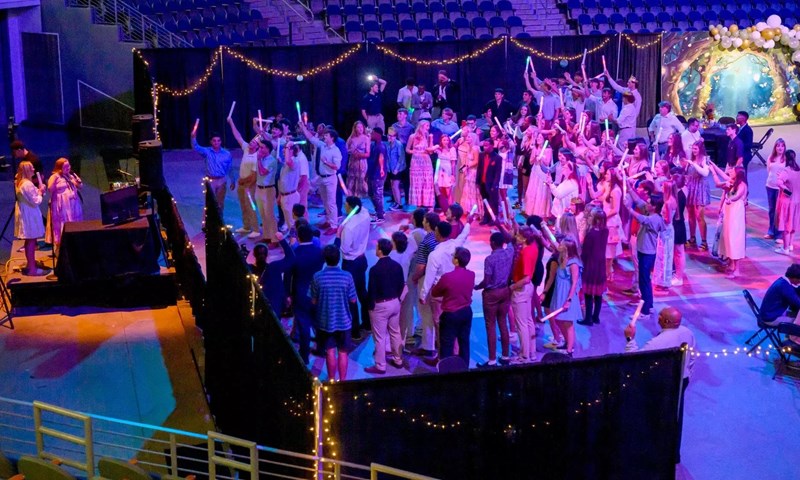
A Night in Wonderland: USC Aiken SAAC celebrated students with intellectual disabilities from the USCA LIFE program and the local community with a semi-formal prom night. Around 130 student-athletes and community volunteers transformed the campus gym into a ballroom, pairing each guest with a student-athlete buddy for an evening of dancing, games and inclusion.

A NIGHT IN WONDERLAND PHOTO GALLERY

Auburn Montgomery, Gulf South Conference

TOPSoccer and Dream Court: Auburn Montgomery partnered with YMCA TOPSoccer and Dream Court to support adaptive sports programs for youths with physical and intellectual disabilities. Over 45 student-athletes volunteered more than 500 hours, assisting with soccer and tennis activities that promoted inclusion and confidence. The collaboration included seasonal events and ongoing engagement with families in Montgomery.

Augustana (South Dakota) and Minnesota State Mankato, Northern Sun Intercollegiate Conference

Wish Family Fun Day, Make-A-Wish: Augustana and Minnesota State Mankato partnered to support Make-A-Wish. The programming featured a Week of Wishes with campus events, donation drives and a joint social media campaign. Sodexo donated food for the pregame tailgate and Make-A-Wish staff helped coordinate family participation. Activities included games, face painting and a football game experience for Wish kids, with over 60 families.

Bentley, Northeast 10 Conference


Flight Plan: Bentley launched a four-year leadership and development program for student-athletes built around five pillars: leadership, wellness, career readiness, community engagement and financial literacy. The program includes annual phases — Ignite, Ascend, Cultivate and Soar — with workshops, service projects and mentorship opportunities. Campus partners support this initiative through wellness training, career development and financial education to prepare athletes for life beyond college.

Central Intercollegiate Athletic Association (at large)

Painting HER Story: The CIAA’s 50th Anniversary Women’s Basketball Tournament in Baltimore combined athletic excellence with community engagement. Programming featured youth basketball and cheer clinics for more than 200 students with support from Under Armour, outreach through the Mental Health Forum, Money Moves Financial Summit, Tech Summit House and the Shoes of Hope initiative with Samaritan’s Feet, providing new shoes to 500 children. Education and career access were prioritized through High School Education Day, which welcomed 3,000 students for on-the-spot college acceptances and scholarships, and a Career Expo connecting families to employment opportunities. Free Fan Fest and Super Saturday removed economic barriers, while partners like Visit Baltimore, Nationwide and Food Lion amplified the event’s impact. Intergenerational programs such as the EmpowerHER Town Hall and the Hall of Fame Breakfast featured icons like Sheryl Swoopes.

Central Washington, Great Northwest Athletic Conference

Retirement Homes Reverse Trick or Treat: Central Washington’s SAAC led a “reverse trick or treat” at two senior living homes in Ellensburg, visiting 160 residents. Student-athletes delivered handwritten cards, candy and flowers while engaging in meaningful conversations, lifting spirits and building lasting relationships.

Coker, South Atlantic Conference

Halloween in Hartsville: Coker hosted Hartsville’s annual Treats on the Street celebration and its own campus trick-or-treat event, welcoming thousands of families, with over 468 student-athletes participating. Activities included soccer goal challenges, lacrosse shots and track sprints, creating interactive experiences for children. The second event welcomed over 200 families to the DeLoach Center for candy, costumes and a volleyball match.

Colorado Mesa, Rocky Mountain Athletic Conference

Where We Become Mavericks: Colorado Mesa connected student-athletes with Mesa County elementary schools to promote values and college readiness. Over 100 student-athletes from nine teams visited schools for assemblies and interactive lessons, including a Resiliency Pledge at Clifton Elementary. Colorado Mesa’s SAAC also launched a Reading and Recess Buddies program, reinforcing mentorship and engagement throughout the school year.

Concordia University Irvine, Pacific West Conference

Concordia Cares, L.A. Fire Relief: Concordia’s SAAC and women’s water polo student-athletes launched Concordia Cares in response to the January Los Angeles wildfires. Over six days, the campus collected hundreds of boxes of essentials and assembled over 200 care packages, raising additional funds for recovery efforts. Donations were delivered to pop-up sites, including Livingway Community Church and the Red Cross, with support from partners like U-Haul for storage.

D’Youville (at large)

Saints in Service Building Community Through Action: D’Youville student-athletes contributed over 250 hours to build a playground on Buffalo’s west side in partnership with the Ralph Wilson Park Conservancy. Their efforts addressed critical needs in an underserved neighborhood, creating a safe, inclusive space for families and children. 

Embry-Riddle (Florida), Sunshine State Conference

Food Brings Hope: Embry-Riddle partnered with Food Brings Hope and the NASCAR Foundation to support children from Volusia County. Student-athletes hosted kids at a men’s basketball game with meals, mascot photos and on-court activities, and later volunteered at the Daytona International Speedway to distribute more than 100 bikes and helmets.

Fairmont State, Mountain East Conference

Making a Wish Come True, Make-A-Wish: The SAAC at Fairmont State set a goal to raise $10,000 for Make-A-Wish and exceeded it by raising over $20,000, granting two wishes. The student-athletes put on fundraising events that included a Swim-A-Thon, a free youth softball camp and a community volleyball tournament, supported by campus dining partner Elior.

Ferris State, Great Lakes Intercollegiate Athletic Conference

Golden Girls: The Ferris State stunt program organized monthly “Pamper Days” at The Brook of Big Rapids assisted living facility, creating joyful experiences for the residents. The student-athletes partnered with the “Golden Girls” group for a halftime performance at a football game, strengthening intergenerational connections. In their inaugural season, the 39-member team completed over 765 community engagement hours.

Gannon, Pennsylvania State Athletic Conference

Make-A-Wish Initiative: Gannon raised $14,339 for Make-A-Wish during the 2024–25 academic year, ranking second nationally and contributing to the conference’s fundraising total. Student-athlete fundraising efforts included themed games, raffles, bake sales and events like the women’s lacrosse Wish Stars Campaign and acrobatics and tumbling’s Make-A-Wish meet. The year culminated in a wish reveal granting a child’s trip to LEGOLAND.

Georgian Court, Central Atlantic Collegiate Conference

The Lakewood United Initiative: Georgian Court launched a departmentwide effort to mentor youth in Lakewood through academic, athletic and life-skills programming. Student-athletes led school visits, reading sessions, sport clinics and community events like Trunk or Treat and a Color Run, impacting hundreds of students in a district where fewer than 42% pursue college.

Johnson C. Smith, Central Intercollegiate Athletic Association

The Smitty Project — Literacy as a Bridge to Opportunity: Johnson C. Smith engaged K-8 students through campus-based programs like AVID Day, Literacy Boot Camp and a Scholastic Book Fair. Student-athletes contributed over 2,000 community engagement hours with initiatives combining reading, mentorship and college exposure. This programming served hundreds of students in the Charlotte-Mecklenburg area through tutoring, story sessions, technology workshops and raising thousands for book access.

University of Mary (at large)

Day of Service: Mary united nearly 500 student-athletes and over 1,500 volunteers for a record-breaking day of community engagement across 76 sites. Teams landscaped parks, restored historic sites, assisted nonprofits and supported vulnerable populations, contributing more than 6,000 engagement hours. Rooted in the school’s Benedictine tradition and “Greatness through Virtue” philosophy, the day showcased character, leadership and hope.

Missouri S&T, Great Lakes Valley Conference

Tornado Cleanup: After an EF-2 tornado struck Rolla, Missouri, S&T student-athletes and staff mobilized for cleanup efforts, volunteering alongside FEMA and the Red Cross. Football and soccer student-athletes cleared debris, removed fallen trees and assisted affected families, contributing significant labor to restore the community. The soccer teams also hosted a free clinic for children impacted by the disaster.

Missouri Western, Mid-America Intercollegiate Athletics Association

Griffs Giving Gifts: Missouri Western adopted 11 families through a partnership with the St. Joseph AFL-CIO Community Services Department. Student-athletes raised over $7,000, provided gifts, nonperishable food and household essentials, and delivered items personally — complete with a student-athlete dressed as Santa. The initiative also included Thanksgiving meals for four families, touching 36 children and 16 adults.

Roberts Wesleyan, East Coast Conference

Redhawks Reachout, Mental Health: Roberts Wesleyan prioritized mental health through partnerships with Morgan’s Message, The Hidden Opponent and the University Wellness Center. Programs included mental health screenings, goat yoga and advocacy campaigns like Smash the Stigma, alongside awareness games hosted by the volleyball and field hockey teams. Over 300 engagement hours from student-athletes supported these efforts, complemented by fundraising and volunteer work for the Pirate Toy Fund, saving over $10,000 in labor costs and collecting thousands of toys for local children.

San Francisco State, California Collegiate Athletic Association

Act of Love: San Francisco State launched a campuswide effort to save its programs after facing a system budget crisis and the potential elimination of athletics. Student-athletes, SAAC leaders, administrators and the Associated Students organization collaborated to advocate for a student fee increase, leveraging social media campaigns, meetings and campus engagement. Increased game attendance and a formal statement of support from Associated Students helped secure funding and preserve athletics at the school.

Southern Arkansas, Great American Conference

Rachael’s Wish, Make-A-Wish: Southern Arkansas student-athletes partnered with Make-

A-Wish to grant “Rachael’s Wish,” raising over $10,000 through initiatives like Restaurant Week, a football game fundraiser and private donations. SAAC members dedicated 174 volunteer hours to help fulfill Rachael’s wish to visit Disney World through a personalized reveal event, including a campus tour, art department visit and volleyball-themed celebration.

Tuskegee, Southern Intercollegiate Athletic Conference

Macon County Helping Hands Food Drive: Tuskegee athletics partnered with the Macon County Helping Hands Food Ministry to organize one of the largest food distributions in Tuskegee. Student-athletes collected, organized and distributed meals and grocery items to hundreds of families, promoting leadership and service learning. The initiative reinforced campus-community relationships and provided essential resources to local residents.

UNC Pembroke, Conference Carolinas

Education Appreciation Day: UNC Pembroke hosted an Education Appreciation Day during a men’s and women’s basketball doubleheader to honor faculty, staff and local educators. The event featured free admission, giveaways, halftime games and T-shirt tosses, while local elementary school students were invited to connect with student-athletes through the Braves Buddies program. Over 1,800 attendees enjoyed a festive atmosphere celebrating education as a pathway for youth.

The University of Texas at Tyler, Lone Star Conference

Sports Camp Supporting Kerr County Flood Relief: UT Tyler hosted Patriots for a Cause, a two-day sports camp benefiting the Kerr County flood relief fund. In partnership with UT Health East Texas, coaches and student-athletes provided multisport instruction for 136 campers, while local businesses like Hawaiian Bros and Raising Cane’s donated meals. The event raised $8,385.50 for the Community Foundation of the Texas Hill Country’s relief fund.

Walsh, Great Midwest Athletic Conference

Cav Salute: Walsh honored veterans, active duty service members and local first responders in celebration of America’s 250th birthday. The initiative included patches on student-athlete uniforms, a Veterans Day celebration and a Salute to Service football game. Over 750 student-athletes engaged in community engagement projects like a Home Run Derby fundraiser, a Veteran Suicide Awareness Push-Up Challenge and volunteering at the Serving Area Military Center. The initiative raised $1,619 for local veteran organizations, along with donated goods.


Link

Continue Reading

Rec Sports

#UnitedBy building bridges – Lindsey Kittredge

Published

on


The programme has grown exponentially since its launch, and Kittredge has no plans to let it slow down. In fact, she and her husband have big ideas and goals that they’re aiming to set into motion within the next 12 months.“As for what’s next, right now we’re working on a huge, strategic five-year plan,” she says. “We really feel that in a year, our programme in Rwanda will be completely sustainable with local talent. Our entire coaching staff is Rwandan, and we’re in the process of hiring our first Rwandan in-country programme director. So we’re not only empowering women and men, but we’re also providing a pathway to employment. We are proud to use the power of sport to significantly affect their lives with not only health education, but also a job that helps them support their family. We’re looking to get a lot more institutional funding so we can continue to grow domestically here, in Boston, and take our international model throughout Rwanda, or maybe even to another country.”


Link

Continue Reading

Rec Sports

UW-La Crosse aims to break attendance record Saturday during Bubba’s Youth Day honoring coach Moran Lonning’s son

Published

on


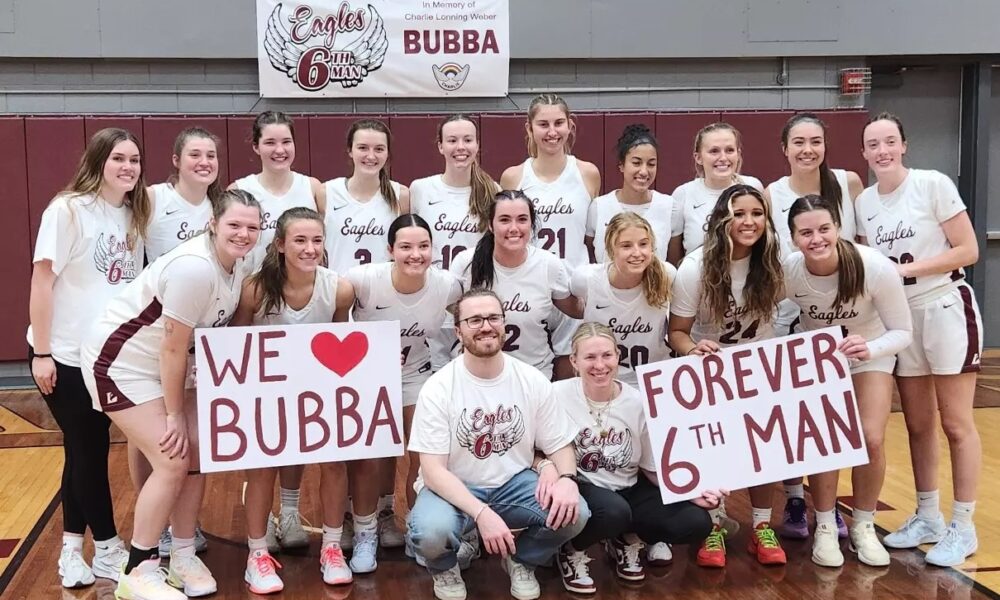
UW-La Crosse is inviting the community to Mitchell Hall on Saturday for a day of play and remembrance, dedicated to the legacy of Charlie “Bubba” Lonning Weber.

The festivities kick off at from noon-2:45 p.m. with the Charlie’s Kids fest, and lead into the UW-L women’s basketball game after that, where attendance is free and they hope to break the WIAC single-game attendance record of 2,112 fans.

The game will also feature a deeply personal tribute, as the Eagles take the court in special jerseys. Each jersey will be inscribed with the names of 19 infants who have passed away, serving as a visual memorial to raise awareness for pregnancy and infant loss.

Know before you go: Bubba’s Youth Day & Charlie’s Kids fest

If you are planning to help “Fill Mitchell Hall” Saturday, here is the schedule and what you need to know:

  • Charlie’s Kids fest (Noon–2:45 p.m.): The pre-game party takes place in the Mitchell Hall Fieldhouse. It features inflatables, obstacle courses, and activity stations for kids (preschool through 8th grade).
  • The Big Game (3 p.m.): Stick around as UW-La Crosse Women’s Basketball takes on UW-Platteville. This is the official push to break the WIAC attendance record of 2,112 fans.
  • Admission is FREE: Both the fest and the basketball game are free for fans of all ages.
  • Registration & Waivers: While the event is free, children participating in the fest must be accompanied by an adult. You can save time by signing the required waiver online before you arrive.
  • The Cause: The event is hosted by Bubba’s Fund, which supports the Charlie’s Kids Foundation. Their mission is to provide SIDS education and “sleep safe” resources to new parents, a mission that has already significantly impacted childcare safety in the La Crosse area.

While the record is a target, organizers say the primary goal is to “Fill Mitchell Hall” with support for a cause that has already transformed local childcare safety.

Alex Weber (left), Moran Lonning and Charlie “Bubba” Lonning Weber (PHOTO: bubbasfund.org)

The event supports Bubba’s Fund, established by UW-L women’s basketball coach Moran Lonning and her husband, Alex Weber, after their son Charlie passed away in 2024 at just three months old.

Since then, the fund has reached a major milestone in successfully providing automated external defibrillators (AEDs) to every state-licensed childcare facility in La Crosse.

Saturday’s events will help sustain that momentum and support “Rising Athletes,” a nonprofit that removes financial barriers for local youth sports.

Charlie’s Kids Fest at Mitchell Hall Fieldhouse is free for children (preschool through 8th grade) and features inflatables, obstacle courses, plus a chance to play alongside UW-L student-athletes.

Parents are encouraged to sign a participation waiver in advance at bubbasfund.org.

Moran was a guest on La Crosse Talk on Thursday morning with Sean Dwyer.

La Crosse Talk airs weekdays at 6-8 a.m. Listen on the WIZM app, online here, or on 92.3 FM / 1410 AM / 106.7 FM (north of Onalaska). Find the show on Apple Podcast, Spotify or here.


Link

Continue Reading

Rec Sports

Long Beach Poly Holds Off Millikan For Scoreless Draw – The562.org

Published

on


The562’s high school soccer coverage for the 2025-26 season is sponsored by Long Beach Poly soccer alum Kennedy Justin.

The562’s coverage of Long Beach Poly Athletics for the 2025-26 school year is sponsored by Former Jackrabbits Wendell “WoWo” Moe, Jr. & Tyson Ruffins.

The562’s coverage of Millikan Athletics for the 2025-26 school year is sponsored by Brian Ramsey and TLD Law.

It was an odd feeling for both Millikan and Long Beach Poly as they walked off the field after their Moore League boys’ soccer matchup Wednesday night.

For Millikan, the Rams were left disappointed in their inability to take advantage of opportunities at the goal, a familiar feeling after a season-opening draw against Wilson last week. On the other end, a night of injuries plagued what was otherwise a huge defensive effort for Long Beach Poly at home.

Ultimately, the Jackrabbits were able to walk away at ease, minimizing any damage from a potent Millikan offense by holding off the Rams to earn a scoreless draw.

“We always want the win, but at the end of the day this is the Moore League, and every game is going to be like this,” said Poly coach Carlos Casillas. “We know what to expect in these league matchups. As much as we wanted the win, we’ll take the 0-0 draw, move on, and try to build on it.”

The visitors heavily outshot the Jackrabbits for the match and had four corner kicks to just one for Poly. Millikan was by far the more physical team, doubling the Jackrabbits in fouls, but none of those advantages turned into goals for the Rams.

“I thought we had significantly more opportunities, but that’s the way it goes,” said Millikan head coach Jeff Schofield. “It’s the second straight game where we’ve had more chances and haven’t been able to put them away. That part is a little bit frustrating, but it’s also a positive that we’ve been able to create chances—so you can look at it one of two ways.”

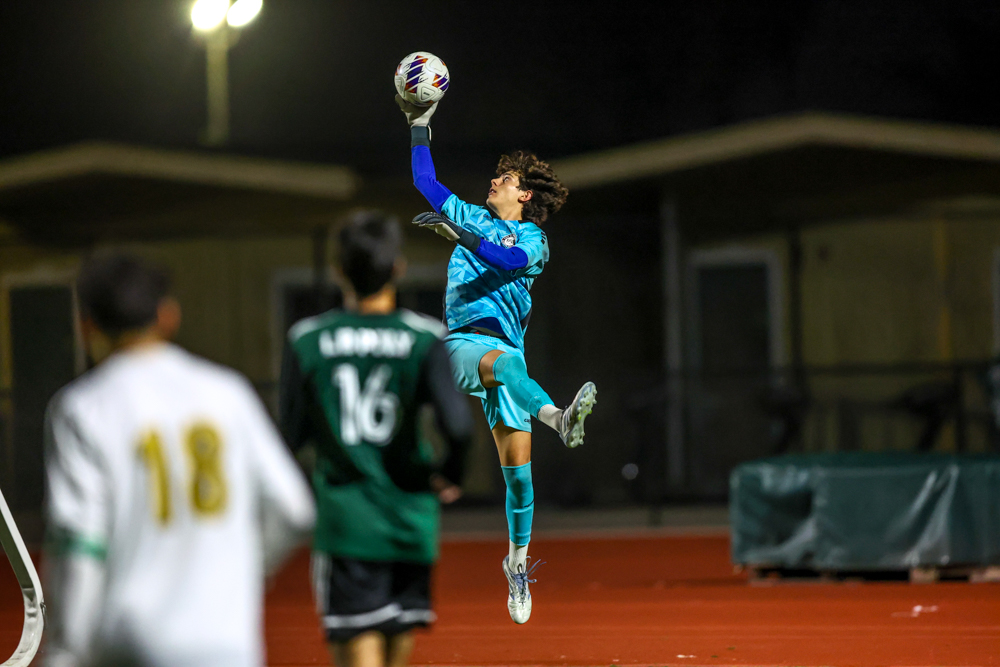
Credit can go to Poly goalkeeper Mekiah Twal, who was kept busy all night against Millikan’s attack. The junior kept a clean sheet while racking up a half dozen saves and swallowed up a handful of shots and corner kicks in the final 20 minutes to help secure the draw for his team.

“First off, I just have to give some praise to my defense,” Twal said. “It’s just confidence as a team to come out and be ready for anything that is coming our way. Millikan wasn’t playing for a tie and neither were we, so I just had to stay on my toes.”

Millikan found its opportunities early and often, including a pair of first-half shots from both Vonnae Ocegueda and Ivan Cervantes Vega. Vega had a quality look down the middle in the 17th minute, followed by another close opportunity off Millikan’s only corner kick of the half. The Rams then had a shot split wide off the head of Grant Johnson in the 31st minute.

The Rams had two of their three second-half corner kicks in the final minutes of the game, including one from Pablo Lica that sailed off the head of a Poly defender. Lica had another corner kick just moments later, which ricocheted to the feet of Jesse Torres for a shot from 10 yards out, but Poly was able to get a foot on it to avoid any damage.

Regarding those scoring opportunities, Schofield said it’s up to his team to work through the frustration that comes with a lack of production, noting that he’s seen enough on the field to know they’re more than capable of finding a rhythm on offense.

“If you’re not creating chances then you have to do something different, but our two guys up front scored a bunch of goals earlier in the year,” he said. “We know they have the ability to do that, and we just have to keep training it and building confidence. It’s one of those things where once the first one goes in, we’ll get some momentum going.”

Poly’s handful of chances at breaking the scoreboard came around the midway point of the game, but the Jackrabbits were forced to play shorthanded after having a pair of players carted off the field with injury.

“Unfortunately, those injuries took a couple of our players off the field that bring a little extra to the team, so we had to play it a little more defensively,” Casillas said. “We got a little bit healthier towards the end, which helped a little bit, but honestly we just need to get healthy. It’s been big injuries that we’ve been dealing with, and it’s made a difference.”

In the meantime, guys like Twal have assured the team that it’ll be a collective effort on both sides of the ball.

“We’re a team and we’re a family, and if our offense isn’t producing then that means our defense will step up until they can,” Twal said. “We’re one unit and we play together.”

The Jackrabbits will be back in action at Wilson on Friday, while Millikan will be hosting Jordan.


Link

Continue Reading

Rec Sports

Women’s Basketball: Macalester Battles Saint Benedict in 72-57 Loss

Published

on


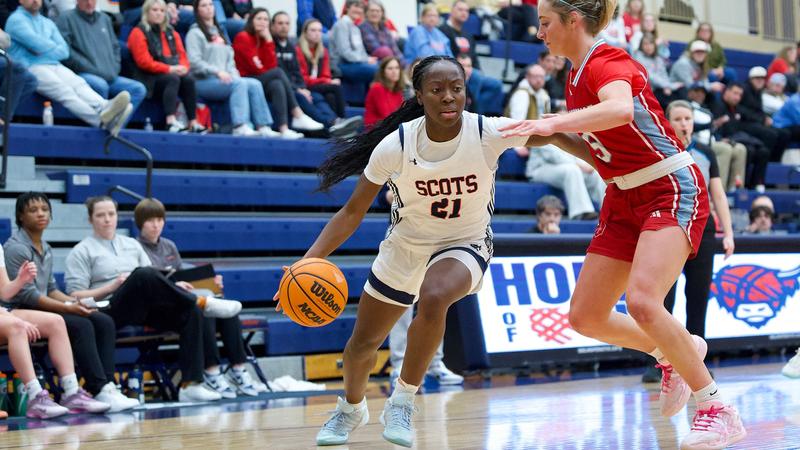
ST. PAUL, Minn. – The Macalester College women’s basketball team gave Saint Benedict all it could handle for three quarters before falling, 72-57 in a MIAC game Wednesday evening in the Leonard Center. The Scots are now 1-10 overall and 0-5 in the conference, while the Bennies improve to 9-3, 4-1 MIAC.

Five different players scored Macalester’s first five baskets in building a 10-3 lead. After Saint Benedict responded with five straight points, a three-pointer by junior guard Sydnee Smith (Gainesville, Va./Patriot) started a 6-0 run that put the Scots on top, 16-8 with 3:31 left in the first quarter. A Bennies’ basket in the final seconds of the quarter made the score 16-10 heading into the second quarter. Macalester shot 58.3 percent from the field in the quarter while holding Saint Benedict to 3-of-21 (14.3 percent) shooting.

After Saint Benedict reduced Macalester’s lead to one early in the quarter, a layup by sophomore guard Emma Karlin (Rockville, Md./Richard Montgomery), a free throw from first year guard Faith Accardo (Thousand Oaks, Calif./Oaks Christian) and a conventional three-point play by junior guard Mary Daley (Cumberland, R.I./Bishop Feehan) put the Scots on top, 22-15 with 4:50 remaining in the half. But a 12-2 run gave the Bennies their first lead of the game, 27-24 before taking a 32-29 edge at the half.

In the third quarter Saint Benedict pushed the lead up to eight, 44-36 with 3:32 on the clock before Macalester responded with four points from Daley and a three by junior guard Kendall Bernbaum (Dallad, Texas/Shelton School) to make it a one-point game, 44-43. Four points by Kira Young to close out the quarter gave the Bennies a 48-43 advantage heading into the final quarter.

Saint Ben’s broke open the close game by scoring eight points in the first 50 seconds of the fourth quarter to lead, 56-43. Again the Scots answered with one last push, getting seven straight points from Smith to bring Macalester to within six, 56-50 with 6:40 remaining. But the Bennies tallied the next nine points, and the Scots never came closer than 11 points the rest of the way. Saint Benedict shot 60 percent in the fourth quarter to finish the game with a 30.7 shooting percentage compared to 46.0 percent for Macalester.

Ten Scots scored at least two points in the game. Smith and Daley each tallied 12 points to lead Macalester, with Daley grabbing 10 rebounds for her first double-double of the season. Daley also dished out four assists, while Smith recorded three blocks. Karlin had seven rebounds to go with four points, and senior forward Ellie Corbett (Austin, Texas/James Bowie) blocked two shots. Megan Morgan led the Bennies with 19 points.

Macalester plays another conference game on Saturday, Jan. 10 at Augsburg University. The game begins at 1:00 p.m. in Minneapolis, Minn.


Link

Continue Reading

Rec Sports

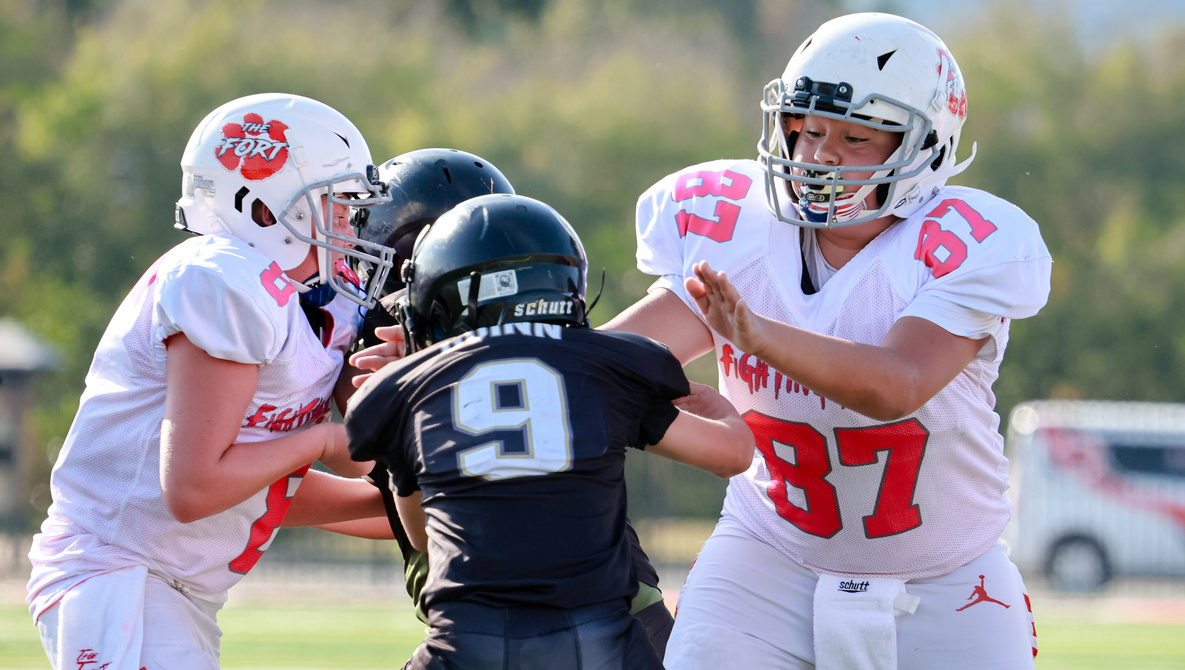
Why I Shoot JPEG for Youth Sports (And Don’t Miss Raw)

Published

on


By the time I pack up my monopod and walk off the field on a Saturday, my memory cards are loaded with a thousand frames. By Sunday morning, parents are already texting to ask when the gallery goes up. That’s the job: move fast, stay consistent, and tell the story of the game without spending the rest of the week dragging sliders. That’s why I shoot JPEG—on purpose, not by accident, not because I don’t know what Raw can do, but because the work I do doesn’t require me to excavate shadows five stops deep. It requires timing, clear color, and a fast delivery.

This isn’t a manifesto against Raw. Raw is wonderful for the right work: fashion, commercial, studio, high-end composites, or those once-in-a-lifetime artistic projects where you’ll live inside a file for hours. My reality is different. I’m sideline-to-sideline, shooting youth football, baseball, and school events, where the pictures live on phones, in yearbooks, and as prints no bigger than a poster. I need clean color, crisp detail, and quick turnaround. JPEG gives me all three with fewer steps and fewer surprises.

The Speed That Matters When Everything Is Moving

A football drive can flip in seconds. If your camera chokes because the buffer is stuffed with giant Raw files, you’ll feel it. JPEG’s smaller file size lets the camera write to the card faster and keeps the buffer clearing. I can stay on the action without babysitting the top plate to see if I’ve outrun my camera. That matters on third-and-short when the quarterback sneaks, the pile surges, and the ball pops loose to the weak side where nobody expected it.

Speed isn’t just at capture; it’s at the desk. Importing a thousand Raw files is like asking every photo to show up with a lawyer. JPEGs slide in, render previews fast, and let me start culling immediately. If I’m editing around a hundred keepers per game, every second shaved off each step adds up to hours saved across a season. That’s time I can spend at another game, with my family, or actually sleeping.

Color I Like Straight Out of the Camera

This is the part raw shooters never want to hear, but it’s the truth: modern cameras make really good JPEGs. Skin tones look right. Team colors pop without turning radioactive. With a little care up front—consistent white balance, a tuned picture profile, sensible in-camera sharpening—I get files that are eighty-five to ninety-five percent of the way there before I ever open the computer.

My routine is simple. Before kickoff I take thirty seconds to set a custom white balance off a gray card or a neutral surface near the field. If the light is stable, that one habit keeps a whole game’s worth of frames consistent. I keep contrast modest in-camera so helmets and jerseys don’t clip, and I set sharpening to a middle value that holds edges without chewing them. The result is a file that wants only the lightest finishing: a crop, a tiny nudge to exposure, maybe a touch of clarity for turf texture or eyes under a facemask. That’s it.

The Right Constraints Make Better Pictures

Shooting JPEG makes me more careful at the moment of exposure. I protect my highlights. I watch my histogram. I’ll underexpose by a third on harsh noon games to save the whites on helmets and shoulder pads. I set a fast floor for shutter speed so I don’t get greedy with ISO. Those constraints aren’t handcuffs; they’re a discipline. The pictures are cleaner because I made them right at the field instead of trusting future-me to fix my laziness.

There’s also something freeing about not chasing infinite latitude. If I’m not trying to make a 10 p.m. stadium look like golden hour, I’m less tempted to turn a documentary assignment into a digital special-effects project. Sports are about tempo and truth. JPEG encourages me to honor both.

Culling a Thousand, Delivering a Hundred

Anyone who shoots youth sports knows the real grind begins after the whistle. A typical game leaves me with somewhere between eight hundred and twelve hundred frames. JPEG lets me move through them like a film editor scanning for scenes. In Photo Mechanic or Lightroom, I can play the sequence almost like a flip book: pre-snap, push, contact, burst, celebration. Because the previews render on the fly, I’m not waiting for every file to build. I star the keepers, color-tag the stories I want to highlight—rivalry moments, a coach’s sideline talk, the joy after a goal—and move on.

Editing those hundred selects is intentionally light. Crops for composition and emphasis. A consistent exposure trim so the set feels like one game, not ten different shoots. A little local adjustment to brighten eyes under face masks if I need it, and a subtle curve to keep the whites clean. That’s it. If I’m doing my job on the field, ninety percent of my time is culling and sequencing, not rescuing.

The Deliverables Decide the Format

Who is this work for? Parents, coaches, yearbook editors, local papers, booster clubs. They need images that look great on phones, on social, in slideshows, and in print at sane sizes. A high-quality JPEG is perfect for that. If a photo graduates from “game gallery” to “hero print”—a banner for the gym, a large canvas for the senior banquet—I have two solutions: I either shot Raw+JPEG for that sequence, or I re-shoot it next time with that destination in mind. Ninety-nine times out of a hundred, the JPEG I delivered was already the right answer.

Storage, Backup, and Sanity

There’s a hidden economy to shooting JPEG. Smaller files mean faster offloads to SSD, quicker cloud backups, and less storage rented from a service every month. On a busy fall schedule, that isn’t a rounding error; that’s real money and fewer spinning beach balls. It also means my laptop fan isn’t auditioning for takeoff while I’m trying to edit at the kitchen table.

What About Dynamic Range and “Insurance”?

Raw shines when the light is ugly or the stakes are unusual. Inside a dim, mixed-light gym? Raw can be a lifesaver. Sunset games with a sideline in deep shadow and the field still bright? Raw gives you headroom. If your client is a brand or a publication that wants the option to radically re-grade later, shoot Raw. I’m not allergic to it. I just don’t need it for the majority of what I deliver, and it would absolutely slow me down on the jobs that pay my bills.

There’s a myth that shooting Raw is professional and shooting JPEG is amateur. The truth is professional means choosing the right tool for the assignment. I’d rather give a team a finished gallery tonight than promise wizardry and send it next week. For my work, speed and consistency are a feature, not a compromise.

Practical Setup That Works for Me

Here’s the setup that keeps me honest and fast:

  • I shoot manual exposure with a fixed shutter speed—usually 1/1600 to 1/2000 for football—and an aperture around f/2.8 to f/4 depending on the lens and distance.
  • I let Auto ISO roam within a ceiling I trust for my camera, and I ride exposure compensation when the light changes.
  • I keep highlight alert on and use the histogram after each new lighting situation, not after every play.
  • Before the game I dial in a custom white balance and a picture style that treats skin kindly and keeps bright uniforms from clipping.

If your camera offers highlight tone priority or similar settings, test them in daylight to see if they protect whites without muddying midtones. I keep in-camera noise reduction on low at high ISO and avoid the strong setting because it trades detail for smoothness I don’t want. The whole point is to make a file that holds together with a light touch.

A Real Example From the Sideline

Middle of September. Heat coming off the field. I’m on the visitor sideline because the sun is at my back there, and the end zone I want is opening into clean light. Kickoff return comes straight at me. I’m already at 1/2000, f/4, Auto ISO capped at 6400. I track the returner, grab a five-frame burst at the cutback, and immediately swing to catch the blocks sealing the lane. A linebacker’s hand outstretched; I get the moment his fingers grab the jersey and the runner slips away. The whole sequence is sharp, exposed cleanly, and color-true. I cull that series in seconds, crop two frames, add a tiny exposure bump to one, and move on.

Could I have wrung more micro-contrast or feathered a luminance mask on a Raw file? Maybe. Would any parent notice, or would the story be better? No. What they notice is their kid’s face, the hole that opened because the left tackle did his job, and the fact that the gallery is live before dinner.

When I Still Flip the Raw Switch

I keep my raw lever available for margin cases. Playoff night with mixed stadium lighting I’ve never seen? Raw+JPEG. Senior portraits on the fifty with the sun kissing the bleachers? Raw because I want maximum latitude for skin and sky. Team banner composites where I know I’ll be masking hair and decals? Raw, gladly. But I’m not dragging that workflow into every Saturday because I don’t need to, and neither do most working sports shooters covering youth and schools.

JPEG Is a Creative Choice, Not a Shortcut

What I love about this workflow is that it forces intention. JPEG rewards you for reading light, for exposing with care, for trusting color at capture rather than repainting it later. It frees your week without cheapening your work. It’s not lesser; it’s lean. And in a season where you might shoot eight to ten games, lean is exactly what keeps you hungry and able to say yes to the next assignment.

If you’re on the fence, try it for a month. Set your camera to make the best JPEGs it can and give yourself permission to edit like a photojournalist, not a VFX artist. Protect highlights, choose a stable white balance, and let the pictures breathe. You might find what I did: that your clients are happier, your galleries arrive sooner, and your love for the work grows because you’re spending your time on the field, not in a war with a histogram.

Color Consistency Without the Headache

One of the hidden taxes of Raw is color management. Every camera sensor has its own secret sauce, and every converter interprets that sauce a little differently. If your week takes you from a Saturday game to a Tuesday pep rally in a different gym with different lights, your Raws can wander in hue and tint unless you’re vigilant with profiles and camera matching. My JPEG workflow cuts that drift down to almost nothing because the camera bakes in its own profile—the one I’ve tested against jerseys, skin, grass, and the painted lines. I’m choosing the look up front, at the scene, instead of chasing it later.

This doesn’t mean I accept whatever the camera gives me. I built my own picture style starting from a neutral base to avoid crunchy contrast, nudged saturation so red jerseys don’t scream, and set the sharpening where helmets hold detail without ringing. Once it’s dialed, it’s repeatable. My September games look like my October games, which is exactly what a season recap or a team poster needs.

Night Games and Noise

Night football tempts every shooter to go spelunking for detail that isn’t there. Raw can tease out a bit more shadow information, sure, but the trade-off is time, and sometimes a waxy look after heavy noise reduction. With JPEG I accept the physics: I keep shutter speed honest for motion, brace my stance, and trust my camera’s high-ISO behavior. I set in-camera high-ISO noise reduction to low or standard—never strong—because I’d rather have a little grain-like noise than smeared detail. In post I’ll add only the gentlest detail work. The reward is a file that still looks like a photograph, not a plastic doll.

Buffer Behavior and Card Strategy

If you shoot older bodies—or even some current ones with modest buffers—file size isn’t a theory, it’s the difference between catching the second effort at the goal line and staring at a blinking BUSY. I run fast cards, keep them freshly formatted in-camera, and avoid mixing raw+JPEG unless I know I’ll need raw for a specific sequence. For long drives I’ll occasionally feather my cadence—short bursts with half-second breaths—to help the buffer clear while the play develops. JPEG makes that whole dance easier.

A Word on “Fix It Later” Culture

Somewhere along the way we convinced ourselves that the real photograph happens on a computer. I love editing when the job calls for it, but youth sports is journalism with whistles. The best frames are made with footwork, anticipation, and timing. JPEG rewards those habits. It puts the emphasis back on the craft you do with your eyes and hands, not the brush pack you buy after.

File Integrity and Revisions

Clients sometimes ask whether a JPEG locks them into a look forever. The answer is that a high-quality JPEG stands up to sensible edits just fine: exposure trims, white balance tweaks within a reasonable range, gentle curves, selective dodging and burning. What I avoid are the extreme rescues—hauling a file up two or three stops, rebuilding skies, or color-swapping uniforms. That kind of surgery belongs to Raw and advertising. For youth sports storytelling, the JPEG’s print-ready nature is a feature.

Two Games, Two Timelines

Here’s what my weekend looks like in real numbers. Saturday noon kickoff, 1,100 frames, daylight with some clouds. JPEG import and cull: about forty-five minutes. Edits on 120 selects: another sixty to seventy-five minutes. Gallery up before dinner. The following week, a 7 p.m. game under uneven lights: 950 frames. Slightly slower cull because I’m checking for motion blur a little more carefully: fifty-five minutes. Edits on 100 selects: eighty to ninety minutes because I’ll touch local contrast and eyes under masks a bit more. Still live that night. Could I spend longer massaging Raw files? Of course. Would anyone prefer a slower gallery to microscopic improvements? In this space, no.

Prints and Real-World Output

I sell prints from these JPEGs every season—8×10s, 11×14s, and the occasional poster. They hold up because the exposure is right, focus is solid, and the color is honest. I soft-proof for the lab, keep an eye on saturation clipping in reds and greens, and let the file go. Nobody has ever brought a print back because it wasn’t shot Raw. They come back because they want more.

What You Gain When You Let Go

The biggest gift JPEG has given me is attention. I watch the game more. I learn tendencies, notice light pockets, and place myself a step earlier. I spend my energy where photographs are born, not where they’re rescued. That shift has made my work better—and my life outside of it saner.

The Bottom Line

Raw is a powerful negative. JPEG is a finished print you can still refine. In youth sports and school coverage, the finished print wins. I’m not here to win an internet argument; I’m here to make pictures families will keep—and to deliver them while the grass stains are still fresh.

All photos belong to the author, Steven Van Worth.


Link

Continue Reading
Motorsports4 weeks ago

SoundGear Named Entitlement Sponsor of Spears CARS Tour Southwest Opener

NIL4 weeks ago

DeSantis Talks College Football, Calls for Reforms to NIL and Transfer Portal · The Floridian

Sports4 weeks ago

#11 Volleyball Practices, Then Meets Media Prior to #2 Kentucky Match

Rec Sports3 weeks ago

Stempien to seek opening for Branch County Circuit Court Judge | WTVB | 1590 AM · 95.5 FM

Motorsports4 weeks ago

Nascar legal saga ends as 23XI, Front Row secure settlement

Sports4 weeks ago

Maine wraps up Fall Semester with a win in Black Bear Invitational

Motorsports3 weeks ago

Ross Brawn to receive Autosport Gold Medal Award at 2026 Autosport Awards, Honouring a Lifetime Shaping Modern F1

Rec Sports3 weeks ago

Princeton Area Community Foundation awards more than $1.3 million to 40 local nonprofits ⋆ Princeton, NJ local news %

NIL3 weeks ago

Downtown Athletic Club of Hawaiʻi gives $300K to Boost the ’Bows NIL fund

Motorsports4 weeks ago

Sunoco to sponsor No. 8 Ganassi Honda IndyCar in multi-year deal

Rec Sports4 weeks ago

WNBA’s Caitlin Clark, Angel Reese and Paige Bueckers in NC, making debut for national team at USA camp at Duke

Motorsports4 weeks ago

North Florida Motorsports Park led by Indy 500 Champion and motorsports legend Bobby Rahal Nassau County, FL

Motorsports4 weeks ago

NASCAR, 23XI Racing, Front Row Motorsports announce settlement of US monopoly suit | MLex

Sports4 weeks ago

Woods, Ogunribido Named CCIW Women’s Indoor Track & Field Student-Athletes of the Week

Sports4 weeks ago

Hope College Tops MIAA Commissioner’s Cup Fall Update

Most Viewed Posts

Trending