
Rec Sports
La Habra back in CIF finals, out to secure championship against San Jacinto –


La Habra Coach Frank Mazzotta with players DJ Mitchell, Bobby Brooks, Luke Hedgpeth, Noah Poppin and Kevika Mata’Utia-Martinez at Tuesday’s CIF press conference at The Grand. (PHOTO: Tim Burt, OC Sports Zone).
La Habra’s football team, with a late season surge, reached the CIF playoffs and now the Highlanders have a chance to bring home the eighth title for the program when they meet San Jacinto Saturday at 7 p.m. in the Division 4 final at San Jacinto Community College.
La Habra, 10-3 overall, suffered a 56-21 road loss to Epsilon League champion Crean Lutheran on Friday, Oct. 17. But the Highlanders won their last two league games and three more in the playoffs, to reach the final against San Jacinto (10-3).
La Habra’s last CIF title came in 2015 when the Highlanders defeated San Clemente to win the CIF Southwest Division crown at Cerritos College.
“We’re really excited to be there,” said La Habra Coach Frank Mazzotta at Tuesday’s CIF press conference at The Grand. “We know San Jacinto really well, we see them twice a year, we go to his passing tournament and they come to scrimmage us in the fall. It’s really going to be one of those great nights because the kids are all very respectful with each other and we kind of know each other, which is weird, they’re so far away.
“I’m excited to see a great football game between two well coached teams with good players and good coaches. You want to be playing your best football at this time.”
Mazzotta acknowledged the Highlanders early struggles in league.
“Crean Lutheran is really, really good and I thought we made a few horrible mistakes in the Huntington Beach game and still had a chance to win at the end,” he said. “It’s a testament to the kids and the coaches, you just got to keep going. No matter what happens, you get up and go next week and keep working and you might get some positive things happen.”
No. 2 seeded La Habra has been outstanding on defense, limiting opposing teams to under 250 points this season.
Noah Barajas has been La Habra’s leader on defense with more than 80 tackles. Barajas and Luke Hedgepeth have teamed up for nearly half of the Highlanders 30 sacks. Santi Batista Cuesta has recorded six interceptions.
The offense is led by quarterback DJ Mitchell, who has thrown for more than 2,500 yards and 30 touchdowns and 10 rushing touchdowns.
Running back Kevika Mata’ Utia Martinez has run for more than 1,000 yards and scored 10 touchdowns and wide receiver Bryce Vasquez has more than 1.000 reception yards and 10 touchdown catches.
La Habra was represented Tuesday by Mitchell, two-ways lineman Noah Poppin, defensive end Hedgpeth, running back-linebacker Mata’ Utia-Martinez, and safety/running back Bobby Brooks, who Mazzotta said, “is a two-way star for us, he’s had an amazing playoffs, he’s had two pick sixes and four interceptions in three games, he’s had an amazing three games in the playoffs.”
Mitchell, the junior quarterback, is looking forward to the game.
“It’s really exciting,” he said. “It hasn’t been done in 10 years in the program history so we’re going to try and execute on Saturday and just have fun.”
Mitchell said the players and coaches got together after two league losses to regroup./
“Once those two league losses came, we sat down as a group, talking about what we were doing wrong and figure out how to execute it better, and we’ve been rolling since then,” he said.
San Jacinto is back in the final for the first time since winning the crown in 2022. The Tigers, the champions of champions of the Mountain Pass League, are on a six-game winning streak.
Quarterback Josue Estrada has passed for more than 1,600 yards and 17 touchdowns. Running back Jomani Ransom has rushed for more than 1,400 yards and 14 touchdowns.
Damare Coleman leads the defense with more than 90 tackles.
—Tim Burt, OC Sports Zone; timburt@ocsportszone.com


NASHVILLE (WSMV/Gray News) – A college basketball player was killed in a shooting on a Nashville interstate.
Fisk University announced that 20-year-old Andre Bell, a sophomore business administration major and student-athlete, died from a shooting on I-65 North at the I-40 interchange.
Police believe that Bell and two friends had been at a gymnastics event at the fairgrounds before getting onto the interstate to return to campus.
Police said Bell’s friends reported noticing a dark sedan in the left lane beside them. Both of them said they were distracted by their cellphones when they suddenly heard multiple gunshots and realized Bell had been hit, according to police.
Bell’s car allegedly slowed and spun back into traffic before hitting a red pickup truck. The dark sedan continued traveling on the interstate, according to police.

Bell was shot in the head and was initially taken to the hospital in “extremely critical condition,” where he died from his injuries.
“He was a dominant force on the Fisk University men’s basketball team, but he was most remembered for his infectious smile, loving personality, and unique ability to always bring warmth to a room,” said Jeremiah Crutcher, Fisk University’s men’s basketball head coach. ”We now have a deep absence in our program, but more importantly, we have a deep pain in our hearts. He will be truly missed.“
Anyone with information on the dark sedan, please contact crime stoppers at 615-742-7463. Callers to Crime Stoppers can remain anonymous and qualify for a cash reward.
Copyright 2026 WSMV via Gray Local Media, Inc. All rights reserved.

WASHINGTON (Gray DC) -Supreme Court Justices will hear landmark cases Tuesday, Little V. Hecox and West Virginia v. B.P.J, that deal with transgender athletes.
It has the potential to re-write the rules around who’s allowed to play which sports.
As it stands right now, 27 states have laws that ban transgender athletes from playing women’s sports.
Supporters of the ban say transgender players have a biological advantage.
Others say it’s the latest crusade against an already marginalized group.
“What this case is about is: are states allowed to draw distinction between biological males and biological females in a space where their size, their speed and their strength matters?” Said West Virginia AG John McCuskey.
McCuskey is advocating for a law that would prohibit trans girls from participating in female sports.
The issue has drawn wide-spread attention, with President Trump signing an executive order last February to pull funding from schools that don’t comply.
Now, Justices will play referee.
“This is a chance, these cases that are going to be heard next Tuesday for hopefully the United States Supreme Court to provide some clarity that heretofore has not existed,” said Don Daugherty with the Defense of Freedom Institute.
Some believe a federal law would be overkill, and instead individual schools should handle these students on a case-by-case basis.
“This is not a case about elite sports competition at the Olympic level or at the professional level,” said Columbia Law professor Suzanne Goldberg. “This is a case about school sports. And again, school sports are part of an educational program. The point of an educational program is to enable all kids to learn. And the law promises that that learning and those opportunities will be free from discrimination.”
Goldberg says there’s a lot to lose.
“What’s at stake more broadly is when their governments will be able to use the law as a weapon to punish categories groups of kids because they are transgender”
A decision is expected by June.
Copyright 2026 Gray DC. All rights reserved.

The Chicago Cubs on Monday announced the schedule for the 2026 Cubs Convention, set for this coming weekend at the Sheraton Grand Chicago along the Chicago River.
The Cubs Convention will be the first time the team can come together with fans to honor the team’s 150th anniversary as a National League franchise, as well as the upcoming 10th anniversary of the Cubs’ 2016 World Series championship.
Fans who attend the convention at the hotel, at 301 E. North Water St., will get to watch footage in the Theater Room documenting Cubs history and notable players, view a 150th anniversary exhibit with materials from the Cubs and Wrigley Field archive, and buy limited-edition merchandise — including jerseys with a 150th anniversary patch.
Fans will also get to vote on who should be on the Cubs 150th Anniversary Team, with a special roster of iconic past players who helped shape Cubs history. Voting through the Cubs website begins at noon Friday, Jan. 16, and closes at 6:15 p.m. Saturday, April 25
Honorees will be announced during the 2026 baseball season.
The convention will begin Friday, Jan. 16, with a star-studded opening ceremony in which the Chicago Cubs Hall of Fame Class of 2026 will be introduced. Friday will also feature the talk show “Off the Mound with Ryan Dempster,” and a brand of karaoke known as “Harry Carayoke.”
On Saturday, the convention will feature discussions, including a 2016 World Series Team Reunion featuring alumni of the history-making team, a “Remembering Ryno” panel discussion honoring the life of Ryne Sandberg, and a “Kids Only Press Conference” presented by Advocate Children’s Hospital.
A Baseball Operations Update with Cubs president of baseball operations Jed Hoyer and general manager Carter Hawkins, and a sit-down with Cubs manager Craig Counsell, will also be held Saturday. Also on the agenda for Saturday is a live taping of “The Compound” podcast with Ian Happ, an opportunity to have a beverage with Cubs executive chairman Tom Ricketts at an afternoon reception, and more “Harry Carayoke.”
On Sunday, young baseball and softball players can take part in a youth sports clinic headed by Cubs players, alumni, and Nike RBI coaches. The clinic is sold out, and is open only to those who have pre-registered.
A celebration of the life and legacy of Dr. Martin Luther King Jr. is also set for Sunday.
The Cubs did not go by their current name until 1902, but they trace their history back to 1870 — when they were officially just called the Chicago Base Ball Club, and were colloquially known as the Chicago White Stockings. In 1876, the White Stockings became a charter member of the National League.


Seasoned municipal recreation leader brings decade-plus of experience in equitable programming, operations, and fiscal stewardship
Mayor Jake Wilson is welcoming Ohemeng Kyeremateng as the city’s new Director of Parks and Recreation. Kyeremateng brings more than a decade of municipal parks and recreation leadership experience focused on expanding access, strengthening community programming, and improving the stewardship of public recreational spaces.
Prior to joining Somerville, he held senior leadership roles across multiple communities, including serving as Deputy Director of Recreation for the City of Hartford, CT, where he helped oversee parks, facilities, aquatics, and community programs and managed significant operating and capital budgets.
“I’m proud to welcome Ohemeng as our new Parks and Recreation Director. Recreation is quality-of-life infrastructure,” said Mayor Wilson. “It’s youth sports, afterschool and summer programs, and the daily opportunities that help kids thrive, and neighbors connect. Ohemeng brings the experience and drive to grow participation and strengthen the programs Somerville families and all our residents rely on.”
In Hartford, Kyeremateng directed division-wide strategy and operations, collaborated with schools and community partners to deliver neighborhood-based programming, and helped manage budgets exceeding $10 million.
Most recently, Kyeremateng has served as Director of Recreation for the Town of Palmer, MA, leading year-round programming, overseeing town recreational assets, and supporting long-term planning and facility improvements guided by community needs.
Kyeremateng is a scholarship award recipient of the American Parks and Recreation Foundation and a graduate of the National Recreation and Park Association’s Revenue Management School, with expertise in financial sustainability and revenue strategy. He holds an MBA in Management and a bachelor’s degree in Sports and Leisure Management.
“I’m honored to lead Somerville’s Parks and Recreation Department,” said Kyeremateng. “Recreation programming can help community members of all ages discover new talents, meet new friends, and just have fun. I’m looking forward to working with our team to deliver great programs for everyone in Somerville.”
For more information on the city’s Parks and Recreation programming, please visit somervillema.gov/parksandrec.

By Mike Warren
Sports Editor
MARSHFIELD – A junior-laden Auburndale girls’ basketball team has found early-season success by combining lots of varsity experience with a few new faces.
“I think our experience is getting us off on the right foot,” Head Coach Josh Nagel told Gene Delisio, WDLB/WOSQ, following a 5-0 start in December. “I’ve got a lot of girls with fifty career games or more under their belts and it’s starting to show. We’re able to work on some of the finer things and they’re picking some offensive tendencies up a little bit quicker. We were able to progress a little bit faster here at the start of the season, which was nice to see. They are all familiar. They know what to expect with what we’re trying to do in our system, so we were just able to hit the ground running.”
Kylie Anderson is the lone senior on Auburndale’s varsity roster this season.
“She started every game for us last year,” said Nagel. “She’s our off guard, but she’s been stepping up a little bit more this year and actually handling the point position off and on, so Gracie Hasenohrl doesn’t have to do it all the time.
“And then I’ve got Gracie Hasenohrl and her sister, Rose Hasenohrl (both juniors).
They’ve been major contributors the last couple years.
“Then there’s (juniors) Chesney Nagel and Myah Katzenberger.
“Breleigh Grimm (junior) is another one of those players. She’s a capable scorer as well,” Nagel added.
“We’re waiting for (junior) Lily Bellanti to get back off her ACL injury, so that’s just going to make us stronger.
“That junior class has gotten a lot of experience since they were freshmen, so that’s where all those career games come in,” the second-year head coach told Delisio. “They’ve had to play maybe sooner than they needed to. I don’t know what the case was, but they’ve got the experience and it’s showing here this year.”
In addition, Marti Anderson is a sophomore who’s been getting substantial minutes so far this season.
“So, we’ve got a little bit of new coming in with a lot of the old and hopefully it pays off,” said Nagel.
He added that physical strength has been the area in which he has seen the most improvement from last season to this year.
“We’ve had some girls put some time in in the weight room here this year. And that physical strength builds confidence. When you’re physically strong you’re more confident with the ball, which has cut back on our turnovers here at the start of the season. Hopefully that continues,” Nagel said.
Katzenberger, a five-foot, nine-inch forward, was a second-team All-Marawood Conference selection a season ago, and Nagel is expecting another big year out of her.
“She’s got a nice outside shot. Most people think she’s just an inside player, but she shoots the three pointer at a high clip, right around forty, fifty percent. She can play with her back to the basket. She’s passing out of the post real well. She knows she’s going to get a double team coming her way and she’s been really cognizant this year of turning around, facing the basket, and if it’s there she’ll make a move, and if not she’ll kick it out and repost,” Nagel said.
Nagel also said much of the credit for Auburndale’s fast start this season should go to his team’s man-to-man defense.
“We’re only giving up thirty-five, thirty-six points a game, and part of that is we can put great pressure on the ball. With Gracie Hasenohrl and Chesney Nagel, they can put great ball pressure on ball handlers and shooters, and the rest of the girls just know how to play help defense, so we can face guard and those other three girls on the court at any given time are always in the right spot,” said Nagel.
The Eagles are coming off a 21-5 record a season ago, which ended with a loss to Bonduel in a Div. 4 Regional Final.
Auburndale JV features international trio
Up until just recently, the Eagles’ junior varsity basketball squad had among its membership three foreign exchange student/athletes from three different countries.
Juliette Mills, 17, from Orange, Australia, 160 miles west of Sydney in New South Wales, is in Auburndale until her year abroad ends Jan. 14. While there, the five-foot, nine-inch senior competed in softball, volleyball and JV basketball.
“I never had played softball, so I wanted to try a new sport,” Mills told Hub City Times on Jan. 7. “I really liked it. It was a lot of fun. Volleyball was where I made a lot of closer friends. I just like being a part of the team. And I love watching as well.”
Since Australia has only club sports that practice and play just once a week, and does not include them in their high schools, this was the first opportunity for Mills to be a part of those experiences.
“Prom was probably my favorite part of my exchange year. I really enjoyed the summer. And the Fourth of July was cool. Oh, and I really enjoyed Homecoming,” the 2025 Auburndale Homecoming Queen added. “At photos, I fell down the stairs with my heels on, and so then I didn’t wear my heels onto the stage because I didn’t want to fall down the stairs again. So my mom told everyone that I’m her barefoot queen.”
Mills has three more quarters left of high school back home.
After that, Juliette says she will pursue a career as a flight attendant.
Still a part of Auburndale’s JV team are Lola Marchand and Iris Galetto.
Marchand, 17, is from Normandy, France and in her senior year.
“Homecoming was fun. I really liked it,” said Marchand, who added all three girls especially enjoyed watching Auburndale’s football season, since it’s a sport they don’t have in their respective homelands.
Marchand, who also played volleyball, will this spring participate in track & field, which will be another new experience for her.
France, like Australia, offers sports only at the club level and not in its high schools.
Galetto, 16, is a junior from Turin in western Italy.
“Basketball is fun. I really like watching the varsity,” said Galetto, who added she enjoys practice more than the games. “The girls on the team are really nice and they try to take us in.”
Galetto said she is more of a runner and participated in cross country in the fall and will go out for track & field in the spring — two sports she also competes in back home.
“I like track better, so I’m really looking forward to it and it’s going to be a whole lot of fun,” she added. “And cross country was really fun, but I don’t really like long distance. I’m more like a short-distance person. But the (cross country) team was really fun. They’re like a second family. I really liked the girls on the team. It was amazing and I had so much fun.”
Galetto says she will focus on running the 400 and the 800 during the track season.
She will have two more years of high school left once she returns home to Italy.
After that, Iris says she will either become a teacher or study law.
“If I could, I would just run, but I don’t think I’m good enough to run for a living.”
Both Galetto and Marchand will be in Auburndale through the end of the current school year.

CHARLESTON, W.Va. (WVVA) – Governor Patrick Morrisey has appointed Brian Keith Cochran to serve as Mercer County’s 13th Circuit Court judge.
Cochran fills the vacancy created by the retirement of Judge William J. Sadler in December.
Cochran has served as Mercer County’s prosecuting attorney since 2020 and brings more than three decades of combined law enforcement and legal experience to the bench. He has handled a wide range of criminal and civil matters and has represented individuals, businesses, municipalities and governmental entities across West Virginia. Cochran served as city attorney for Bluefield and worked in private practice before returning to public service.
He earned his Juris Doctor from Appalachian School of Law and holds degrees in criminal justice and liberal arts from Fairmont State College, Marshall University and Glenville State College. Cochran was admitted to the West Virginia State Bar in 2007.
Cochran has received awards including American Legion Police Officer of the Year and the U.S. Attorney’s Department of Justice Award for Meritorious Service. A lifelong West Virginian, he has been active in youth sports, church activities and civic life in Mercer County. He and his wife Connie have been married more than 30 years and raised three children in the county.
Cochran said he appreciates the governor’s confidence and pledged to “ensure that justice is done fairly and impartially, and to be respectful to all who come before the court in order to provide every party a full and fair opportunity to be heard.”
Cochran must run in the May 2026 election to serve the remaining seven years of Judge Sadler’s term.
Copyright 2026 WVVA. All rights reserved.

Mailbag Call: So…Indiana? | Off Tackle Empire

Men’s And Women’s Track And Field Come Out On Top In Final Home Meet

University of Georgia set to dedicate new track and field facility Feb. 18 | Georgia Sports

Hollywood Smothers’ flip to Texas underscores Alabama’s NIL struggles, dwindling mystique

Milwaukee youth motorsport riders find their way to racing through local program

VCU’s Phil Martelli Jr. on the state of college sports amid NIL, transfer portal, conversations with dad

College basketball player killed in shooting on interstate

SCOTUS referees transgender athlete case

Scarlet Knights Legend Leonte Carroo Sues Rutgers Over NIL Claims

NASCAR restores 10-race ‘Chase’ championship format – Orlando Sentinel

Cryst, Pazanti Earn Big West Player Of The Week Honors In Collegiate Debuts

Big Ten vs. SEC: Josh Pate explains where college football supremacy currently sits

Cubs announce schedule for 2026 Cubs Convention this weekend

Somerville names Ohemeng Kyeremateng as New Parks Director

Youth, experience winning combination for Auburndale girls

Stempien to seek opening for Branch County Circuit Court Judge | WTVB | 1590 AM · 95.5 FM

Ross Brawn to receive Autosport Gold Medal Award at 2026 Autosport Awards, Honouring a Lifetime Shaping Modern F1

Princeton Area Community Foundation awards more than $1.3 million to 40 local nonprofits ⋆ Princeton, NJ local news %

Downtown Athletic Club of Hawaiʻi gives $300K to Boost the ’Bows NIL fund

Badgers news: Wisconsin lands 2nd commitment from transfer portal

Five Youth Sports Trends We’re Watching in 2026

Beach Volleyball Unveils 2026 Spring Schedule – University of South Carolina Athletics

Badgers news: Final Four Game Thread vs. No. 1 Kentucky Wildcats

Three Clarkson Volleyball Players Named to CSC Academic All-District List

Kentucky VB adds an All-American honorable mention, loses Brooke Bultema to portal

Kentucky AD explains NIL, JMI partnership and cap rules

Central’s Meyer earns weekly USTFCCCA national honor

PRI Show revs through Indy, sets tone for 2026 racing season

Is women’s volleyball the SEC’s next big sport? How Kentucky, Texas A&M broke through

Teesside youth discovers more than a sport

 NBA Legend Michael Jordan to Join NBC Sports as Special Contributor
 Why a rising mid-major power with an NCAA Tournament team opted out of revenue-sharing — and advertised it
 Trackhouse to pair Chastain with McSwain
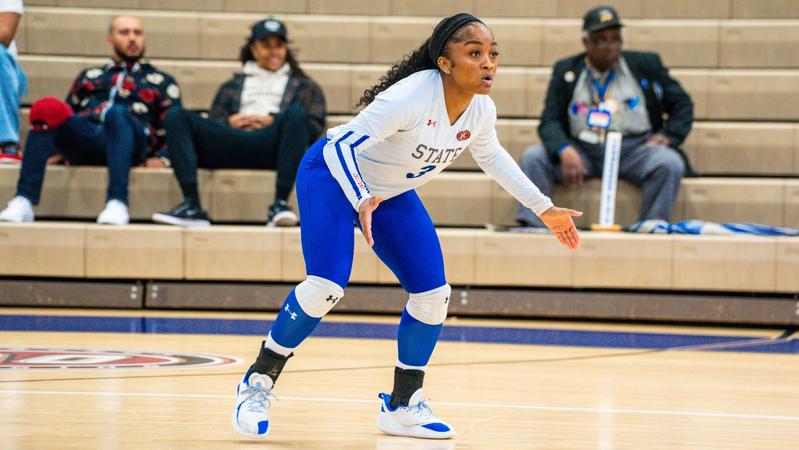 Volleyball Falls to SEMO – Tennessee State University
 Kennewick School Board backs changes to gender inclusion in sports | News
-
 Rec Sports1 week ago
Five Youth Sports Trends We’re Watching in 2026
-
 Sports3 weeks ago
Kentucky VB adds an All-American honorable mention, loses Brooke Bultema to portal
-

 Motorsports3 weeks ago
BangShift.com IHRA Acquires Historic Memphis Motorsports Park In Millington Tennessee. Big Race Weekend’s Planned For 2026!
-
NIL2 weeks ago
Fifty years after IU’s undefeated champs … a Rose Bowl
-
 Sports2 weeks ago
H.S. INDOOR TRACK & FIELD: GLOW region athletes face off at Nazareth University | Sports
-
 Sports3 weeks ago
Colorado volleyball poised to repeat success
-
 Sports3 weeks ago
2025 Volleyball Player of the Year: Witherow makes big impact on Central program | Nvdaily
-

 Motorsports3 weeks ago
NJ Motorsports Park Announces 2026 Event Schedule
-

 Sports3 weeks ago
Texas A&M volleyball’s sweep of Kentucky attracts record viewership
-

 Motorsports3 weeks ago
Kyle Larson opens door to 24 Hours of Daytona comeback – Motorsport – Sports