- New studies show many parents believe their child is destined to be a pro athlete, which can create unrealistic pressure.
- Most kids stop playing sports by age 13, so keeping it fun matters more than chasing early success.
- Help your child lead their own journey while you offer support, not control.
Every year, on the first day of school, we take pictures of our kids with those little chalkboards so we can have the memories to look back on of their first and/or last day of school. But there’s something that often appears on those chalkboards that we need to be aware of.
Right next to grade, age, and the teacher’s name, there’s often a box that says, “When I grow up, I want to be…” There’s absolutely nothing wrong with that question—it’s fun to get a peek into our kids’ dreams—but if we’re not careful, those childhood dreams can cause us to feel and do some things that, while having the best of intentions, can add unnecessary pressure to our kids’ childhood.
Especially when they say they want to be a college or professional athlete.
Two recent studies are shedding new light on parental expectations when it comes to youth sports. One was from Talker Research and BSN Sports, and the other from a collaboration between the University of Florida and The Ohio State University. Both studies analyze what parents expect out of their kids’ youth sports journey. The Florida/Ohio State survey took it one step further to determine what the driving factors of those expectations are. What they found was that parents of kids who filled out that box on the chalkboard with “pro athlete” were the ones who were more likely to believe their kid would grow up to be a pro athlete.
While I’m all for supporting your kid’s dreams—seriously, hype them up, be their biggest fan, help them go after whatever big, gigantic thing they can dream up! But it’s also important for us as the adults in the room to understand what chasing those dreams actually looks like.
By The Numbers
When our kids are young, and they’re all in on a sport, it’s easy to watch their passion and think they’re going to always have that same love for their game, especially if they have some advanced abilities early on. But we all change. I’m willing to bet many of the hobbies and interests you had five years ago are not the same ones you have today.
Kids often go through the same shift. For all the things that have changed in our culture over the last 20 years, one consistent thing has been that 70% of kids stop playing sports by the time they’re 13. Of the ten kids on your kid’s tee ball team, seven of them won’t be playing by middle school, and there are a myriad of reasons behind that.
But your kid with pro athlete dreams is likely not part of the 70%. They’re probably the ones that will push through and continue playing. Even if they make it to the varsity level in high school, only 6% of varsity athletes play college sports at any level. That includes NCAA Divisions I, II, and III, NAIA, and NCCAA (junior college/community college). Only 2.5% of high school athletes will go on to play at the NCAA Division I level, which is the highest.
To put it into perspective, if you lined up 100 elementary-aged kids on a field, at most two of them (1.8% really) will go on to play in college.
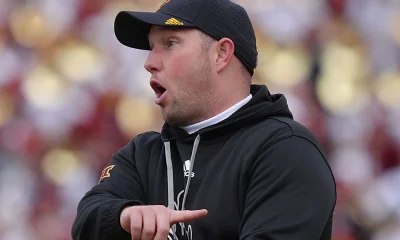
Dan Meske, the head coach of the University of Louisville Women’s Volleyball team, tells me this about college recruiting. “There was a legendary coach in the volleyball landscape, Russ Rose. He coached at Penn State. And I’ve always remembered what he said about recruiting. He said, ‘If it’s not the best kid you’ve ever seen, she probably can’t play for me.’ That kind of sets the water level because the level (of play) is so high.”
But let’s say your kid makes it! Let’s assume they’re the best of the best and end up playing in college somewhere. Even then, less than 2% of NCAA athletes go pro. The percentages vary by sport, but if we look at that field we just lined up 100 elementary-aged kids on, we would have to put 6,667 kids on that field for there to statistically be one professional athlete on it.
Supporting Our Kids With Perspective
Now, it’s easy to read that and think I’m telling you that it’s not going to happen, so you shouldn’t support your kid’s dreams. That’s not what I’m saying at all.
As parents, I want you to fully support your kid’s dreams, but I want you to do it with eyes wide open and realistic expectations so that you don’t put extra pressure on your kid. After all, the number one reason those kids stop playing by 13 is because their sport stops being fun.
The Talker Research survey found that 17% of parents surveyed believed their child “is meant to be a pro at their sport someday.” That’s simply not the reality of the sports environment our kids are walking into.
When we believe our kid is “meant to be” something, we attach their identity to that activity. It could be sports, a vocation, the arts, or any other label. When their identity is in that label, we don’t give them space or the ability to explore other things as they grow up, and their interests inevitably change.
A long-term high school athletic director once told me we should treat elementary school like a buffet and let our kids try everything to see what they like. That exploration doesn’t happen when we have an unrealistic expectation that our kid is part of the less than 2% and will eventually get to the levels 98% of kids will never reach.
The good news is that most parents change their expectations over time. The University of Florida/ Ohio State study found, “parents typically decrease their expectations for their children’s sport achievement as their children age. Apparently, parents are continually adjusting their expectations as they encounter new information about their children’s chances of success, so that parents with initially high expectations tend to develop more refined and accurate expectations later as they process new information about the difficulty of becoming an elite athlete.”
What Healthy Support Looks Like For Parents
Our role as parents is to help facilitate our kids’ passions in whatever ways possible. So, whether your kid dreams of being a professional athlete or has another big, giant dream, you should support that dream, but in healthy, age-appropriate ways.
Here are three quick tips to keep in the back of your mind as you support your kid’s journey.
Support the dream, but hold the outcome loosely
The problem with the 17% of parents who believe their kid is “meant to be a pro” is not that the parents believe their kid could become a pro. It’s that they felt the kid was meant to be one. We can validate our kids’ dreams and support their efforts toward the dream without predicting the ending. The certainty of that prediction removes flexibility and adds pressure.
You can try supportive language to encourage your child’s dream.
- Say “I love that you care about this” instead of “You’re meant to make it.”
- We can tell our kids, “I think you can make it if you work really hard and give it your all,” instead of, “If you work really hard, you’re going to get there.”
That subtle shift in wording continues encouraging them to pursue the dream while also creating emotional safety and not creating additional pressure.
Fight off any fear or urgency
We live in a culture that celebrates prodigies. But did you know that early success is actually a poor predictor of long-term success?
A recent study looked at more than 30,000 people who ended up becoming elite adults. We’re talking about Olympic athletes, world-class musicians, etc. The study found that only 10% of these adults who reached the highest levels in their fields were standout performers as kids. At the same time, most of the kids who were elite at a young age didn’t end up staying at that level as they grew up.
The thing that separates those who made it to high levels wasn’t early dominance or specializing as young as possible; it was time.
“If you have an athlete living in your house who is destined for that level, they will get there. We do not need to manufacture it in elementary school,” legendary USA Softball player and San Diego State Coach Stacey Nuveman-Deniz told me on my podcast, Healthy Sports Parents.
If your kid is meant to get there, they will, but it will be because it was their dream and they took ownership of it, not because you pushed them hard and fast as kids.
Help your kid own the journey
It is really easy—like ridiculously easy—for our kids’ dream to become our dream. We see them excited about something and start imagining what it might look like for them to reach it.
But we have to remember this is their dream to be a professional athlete, not ours. Our role is to facilitate their dream. Show them what it’ll take to reach the level they want to get to. Offer opportunities for growth. Ask probing questions. Ultimately, though, let them be the decision maker.
And I know, there’s fear that comes with that idea. What if they get left behind? What if they make the wrong choice? What if…?
As Coach Nuveman-Deniz says, if your child is destined for that level, they’ll get there. They’ll catch up. They’ll learn. But while it might sound scary, failure in safe environments is often the best teacher our kids will ever have. Give them room to make the wrong decisions and then provide a safe place for them to learn from that failure and bounce back. If their dream is really their dream, they’ll find their way.
What Matters Most In Their Journeys
Kids can have big dreams, but they still need space to be kids. The reality is, whether your kid makes it to the pros or is part of the 70% who quit before 13, every kid eventually plays their last game at some point.
The value in youth sports is not how far a kid goes or how much money they make. The true value is found in the type of human they grow into through the lessons they learn in sports.
Let’s walk in the tension of supporting our kids’ wildest dreams while also giving them the freedom to explore growing up in healthy ways.