


NIL
Lane Kiffin Ole Miss, LSU decision expected soon: Live updates, latest news, analysis and reaction

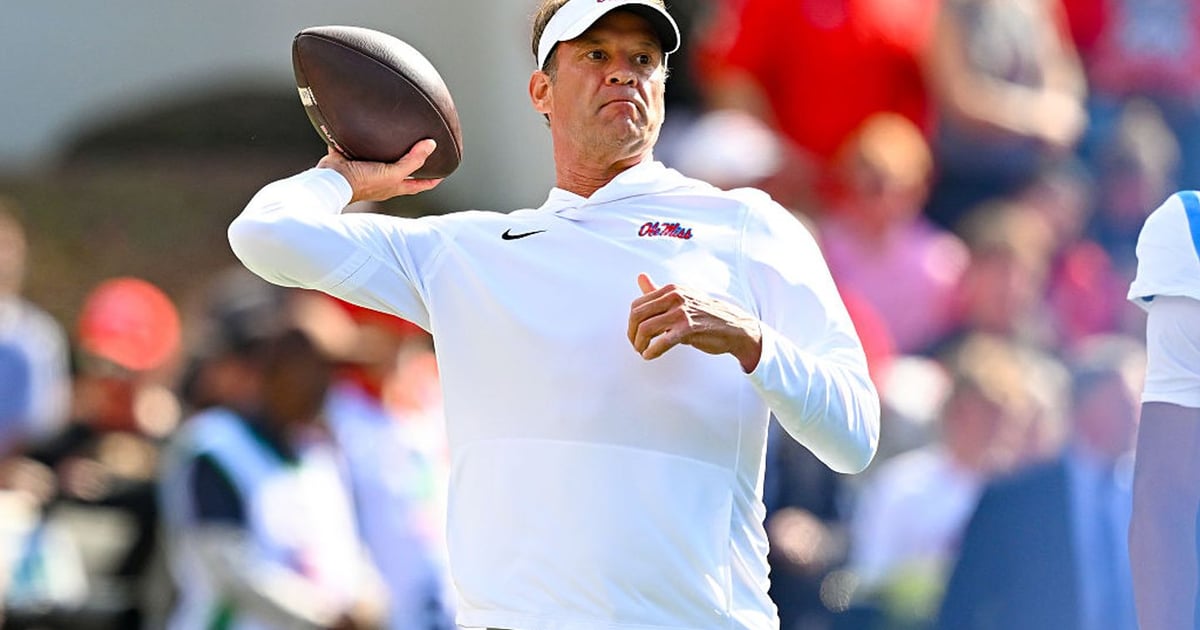
All that glitters is not gold. LSU and Florida want Lane Kiffin to come and lead their program to the College Football Playoff and a shot at national championships … something Kiffin is already doing at Ole Miss.
The easy argument is that the ceiling is higher at places like LSU and Florida, where the dream of a championship is more attainable than at Ole Miss. Which, maybe? The Tigers and Gators have won titles much more recently than the Rebels, but it’s a new dawn in college football, when the support and resources (and autonomy) Kiffin has in Oxford could outweigh the bigger, bluer-blooded legacies in Baton Rouge and Gainesville. Look no further than the current CFP rankings, where LSU and Florida are nowhere to be found.
The Rebels are 55-19 in the nearly six seasons since Kiffin was hired. LSU is 47-27 over that same stretch; the Gators are 36-38. At the very least, Kiffin has a nice head start if he sticks with Ole Miss.
It’s more than history and trophy cases, too. Kiffin has talked ad nauseam about how much he loves living in Oxford and coaching at Ole Miss — how it brought him closer to his family and bettered his lifestyle, hot yoga and all. Hubris and ambition may be tugging him elsewhere, in the same way those forces have helped fuel his current success. But he doesn’t have to leave to chase greatness. Or happiness.
If he goes to LSU or Florida, Kiffin will be expected to win and win big, on an increasingly shortened timeline. Or he can stay put — for similar financial rewards, with some established equity — while continuing to build a legacy at a place that will appreciate him in a way those other schools never could.
Continue Reading
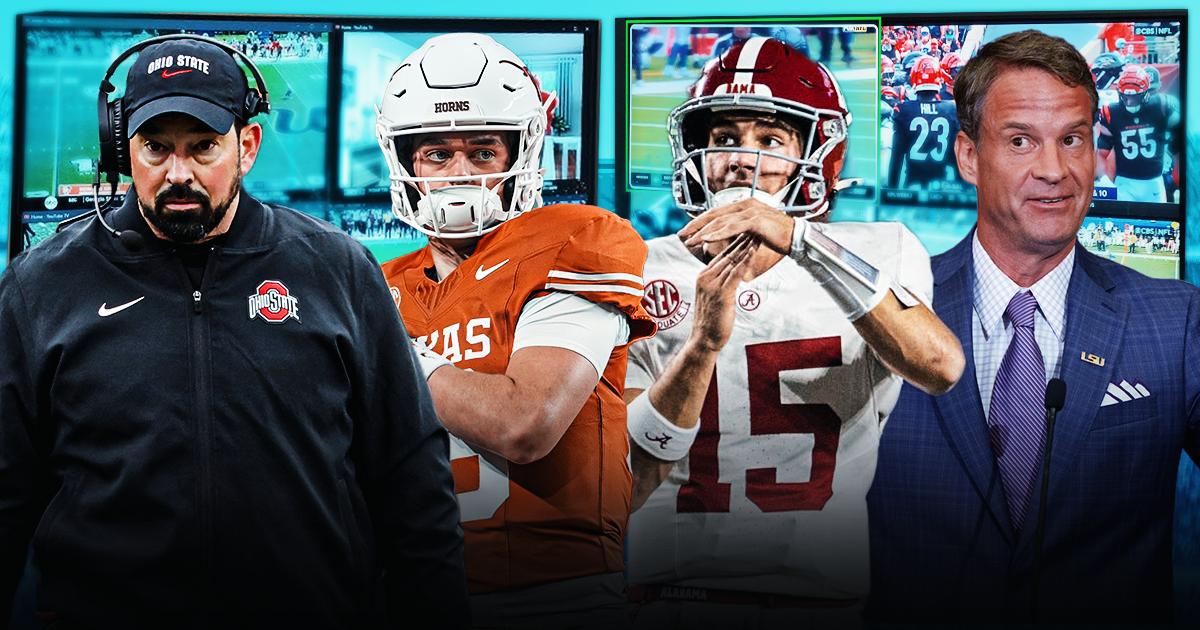
The final week of the regular season delivered plenty of rivalry flare. It was also an opportunity for networks to score more TV ratings wins to close out the college football campaign, and On3 is breaking down the most-watched games of Week 14.
The Week 14 slate began on Thanksgiving with Navy vs. Memphis before a jam-packed Black Friday slate of SEC rivalry games. From there, Saturday had more marquee matchups, headlined by Michigan vs. Ohio State in the early window, which became the most-watched college football game of the 2025 season.
SUBSCRIBE to the On3 NIL and Sports Business Newsletter
On3 obtained Nielsen Big Data + Panel ratings data for the most-watched rivalry games of Week 14. Here is the full breakdown of the week’s college football TV ratings.
Note: SEC Network, ACC Network and CBS Sports Network do not pay for Nielsen to measure viewership.
Michigan vs. Ohio State
Date/Time: Nov. 29, Noon ET
Channel: FOX
Viewers: 18.4 million
The Game was once again a big draw in Week 14 and became the most-watched game of the season. Ohio State’s victory over Michigan averaged 18.4 million viewers on FOX to lead the charge as the Buckeyes ended their losing streak against the Wolverines.
Texas vs. Texas A&M
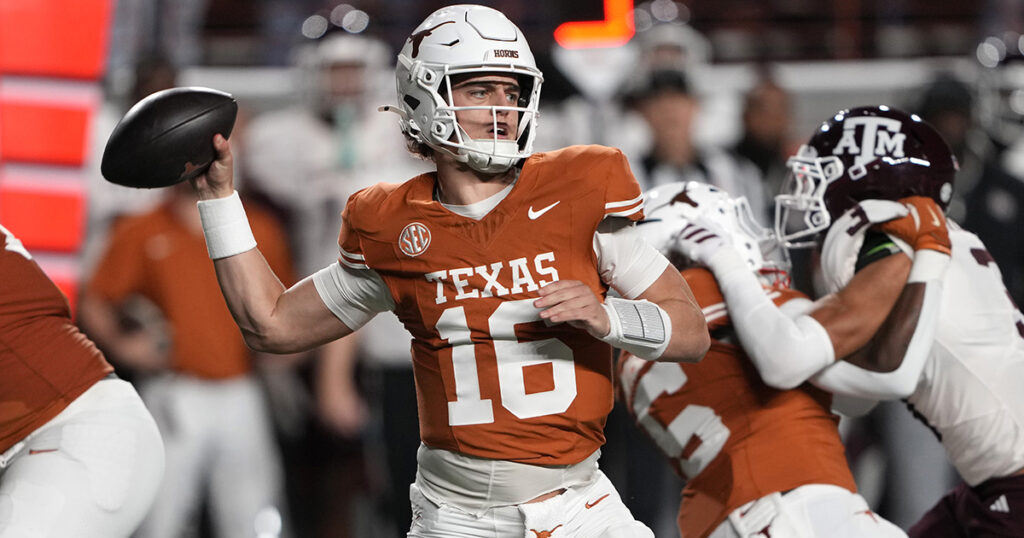
Date/Time: Nov. 28, 7:30 p.m. ET
Channel: ABC
Viewers: 13.0 million
The Lone Star Showdown had plenty at stake as Texas A&M headed to Texas. The Longhorns came away victorious, though, pulling off the upset in primetime on Black Friday in front of 13 million viewers on ABC.
Alabama vs. Auburn
Date/Time: Nov. 29, 7:30 p.m. ET
Channel: ABC
Viewers: 11.3 million
One of college football’s most storied rivalries returned to Jordan-Hare Stadium and it lived up to the billing. Alabama nearly saw a commanding lead disappear before eventually fighting off Auburn in the Iron Bowl, which drew 11.3 million viewers for ABC’s Saturday night game.
Georgia vs. Georgia Tech
Date/Time: Nov. 28, 3:30 p.m. ET
Channel: ABC
Viewers: 8.7 million
The Clean, Old Fashioned Hate game saw two top teams in their respective conferences square off. Ultimately, Georgia rose to the occasion in a big way, handling Georgia Tech with ease at Mercedes-Benz Stadium in the rivalry affair.
LSU vs. Oklahoma
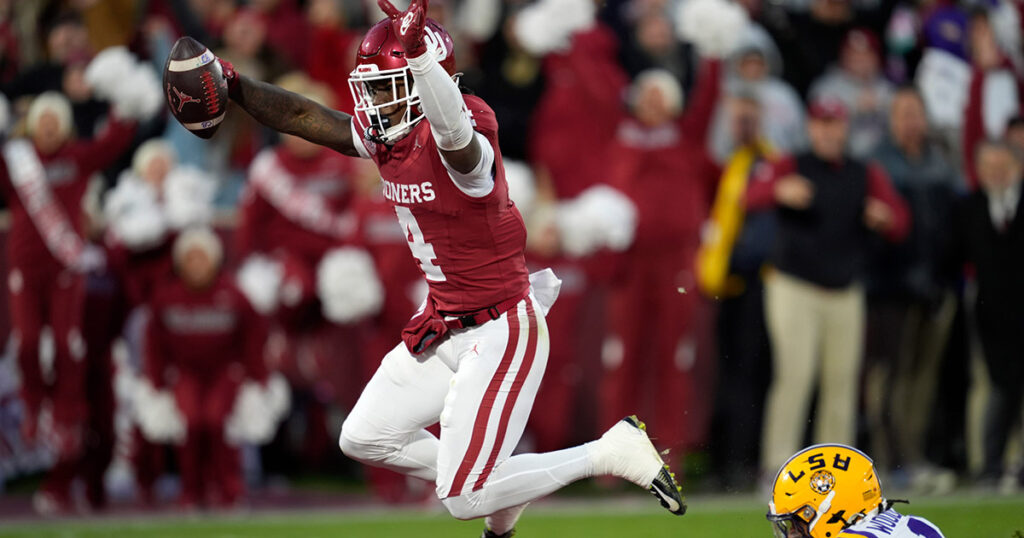
Date/Time: Nov. 29, 3:30 p.m. ET
Channel: ABC
Viewers: 6.4 million
Needing a win to continue its quest for a College Football Playoff berth, Oklahoma did just that in the late-afternoon window in Week 14. The Sooners took down LSU in Norman to put themselves in strong position in the 12-team bracket.
Ole Miss vs. Mississippi State
Date/Time: Nov. 28, Noon ET
Channel: ABC
Viewers: 5.2 million
All eyes were on the Egg Bowl as the Black Friday slate began as Ole Miss took down Mississippi State. It turned out to be the last game for Lane Kiffin as the Rebels’ head coach, and 5.2 million viewers were dialed in to watch.
Oregon vs. Washington
Date/Time: Nov. 29, 3:30 p.m. ET
Channel: CBS
Viewers: 4.3 million
In an old Pac-12 showdown, Oregon headed to Seattle for a late-afternoon matchup against Washington. The Ducks continued their strong season, taking down the Huskies in CBS’ Big Ten game – and the regular-season finale for analyst Gary Danielson.
Vanderbilt vs. Tennessee
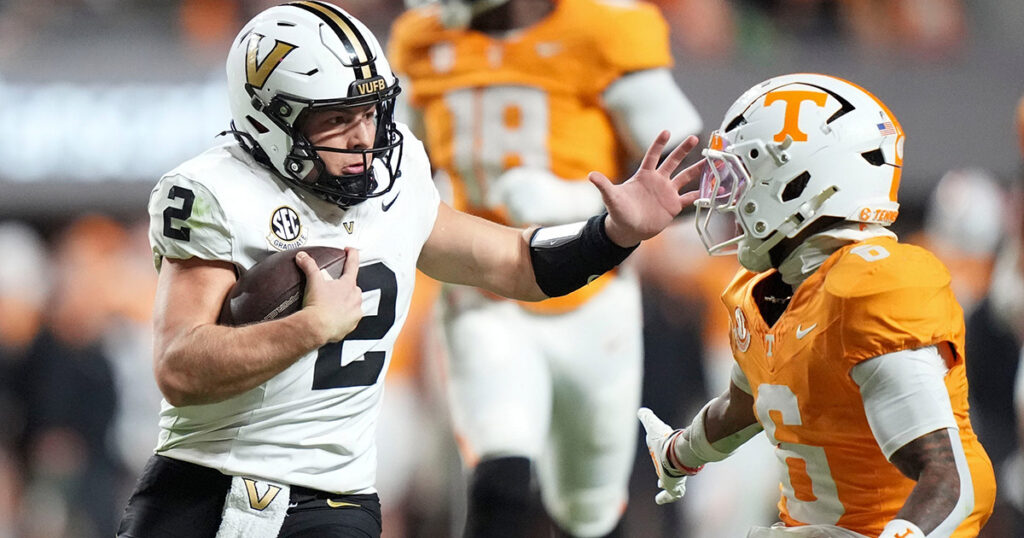
Date/Time: Nov. 29, 3:30 p.m. ET
Channel: ESPN
Viewers: 4.0 million
The Diego Pavia Show arrived on Rocky Top as Vanderbilt took down Tennessee. The electrifying Commodores quarterback continued to make his case for the Heisman Trophy and did so on the big stage with 4.0 million people tuned to ESPN.
Iowa vs. Nebraska
Date/Time: Nov. 28, 3:30 p.m. ET
Channel: CBS
Viewers: 3.8 million
A top Big Ten rivalry looked a bit different this year as both Iowa and Nebraska’s offenses showed out early. But the Hawkeyes kept their foot to the floor, taking down the Huskers 40-16 in one of the Top 10 most-watched games of Week 14.
Cincinnati vs. TCU
Date/Time: Nov. 29, 3:30 p.m. ET
Channel: FOX
Viewers: 2.74 million
Immediately following Michigan-Ohio State, TCU vs. Cincinnati also drew strong numbers for FOX. The Horned Frogs handed the Bearcats a fourth straight loss to end the season and get to the 8-win mark for the 2025 season.
- Indiana vs. Purdue (Nov. 28, 7:30 p.m. ET, NBC) – 2.69 million
- USC vs. UCLA (Nov. 29, 7:30 p.m. ET, NBC) – 2.2 million
With 11 games topping 10 million viewers this year, college football put together a huge year for TV ratings. Three of the Top 10 most-watched games of the regular season came in Week 14, and it’s now on to conference championships.
NIL
SEC Commissioner Greg Sankey calls for changes to college football calendar after Lane Kiffin split with Ole Miss for LSU
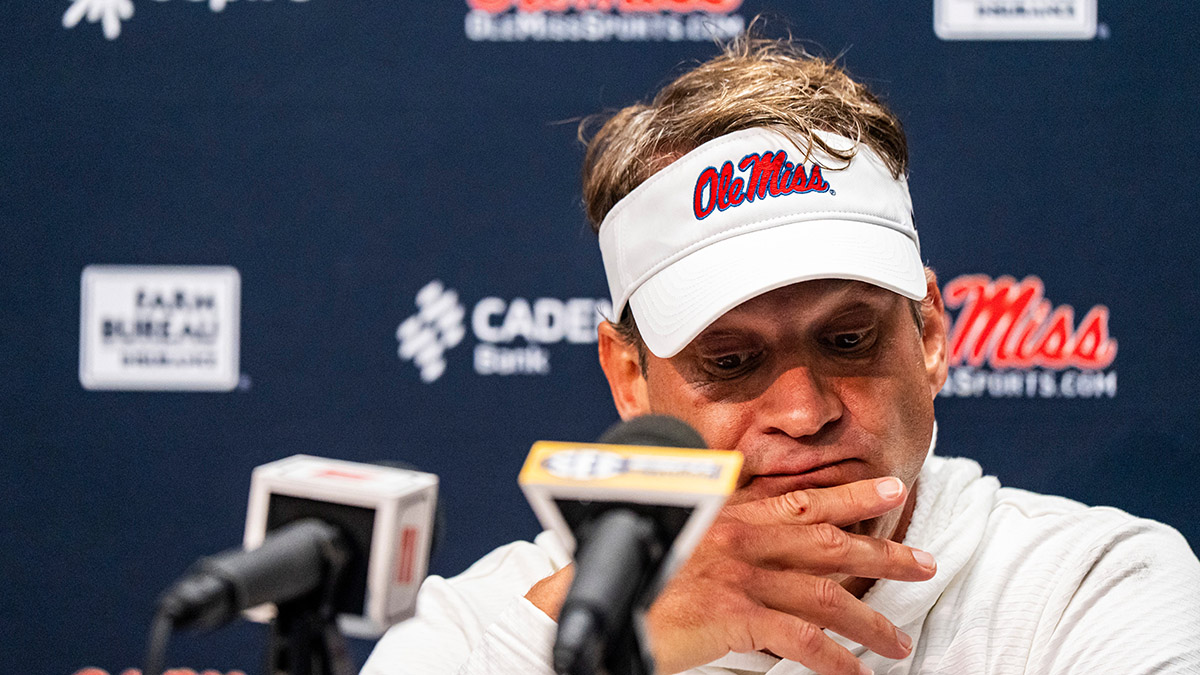
If the Lane Kiffin to LSU saga exposed one thing, it was that the current college football calendar is really not conducive to major coaching changes. There are simply too many variables involved.
SEC commissioner Greg Sankey was asked if the league could put into place some kind of rule that would prevent one program from pulling another program’s coach before the end of a season. Realistically, it cannot.
“You have to go back a number of years, we had a rule about responsibility for outreach if you were going to contact another coach,” Sankey explained. “Our outside legal counsel suggested for anti-trust reasons that it be eliminated, which it was years and years ago. I think that’s an example of the difficulty just legislating at a conference level.”
In fact, Sankey essentially predicted some of the chaos that unfolded with the Lane Kiffin saga. He knew having so many things packed into one area of the calendar was going to create some unintended consequences.
“You can go find my quotes where I warned that an early signing period added in December would change the calendar and the timing of coach changes,” Sankey said. “I think now there are more factors involved. But, in fact, going back to the moment where we added the December signing period, you saw earlier terminations of coaches during the season, and then the need to rapidly hire a coach in late November and early December.”
That’s exactly what happened this offseason. Both Florida and LSU fired their coaches to go with weeks remaining in the season, kicking off the Lane Kiffin sweepstakes.
LSU eventually got the upper hand, but even then, the hiring was messy. There were reportedly ultimatums given to staffers looking to join Kiffin, though those claims were later disputed. All of this in the middle of a playoff run for Ole Miss.
Regardless, the Lane Kiffin ordeal clarified for many people that change is needed. Sankey offered a few avenues.
“There are opportunities for adjustments to the calendar that, at least in my view, probably won’t solve everything but could provide a healthier environment,” he said. “And where there are solutions, so that you’re not disrupting a team’s season, I think those should be pursued.
“Unfortunately the environment we’re in doesn’t allow and hasn’t resulted in some of the changes that even the basic change like removing that early signing period from kind of compelling people to make change rapidly has taken place. Can changes be made? Absolutely. Is it just the recruiting calendar? Likely not.”
What other solutions could there be? How can a Lane Kiffin 2.0 be averted?
“Perhaps it’s the competitive calendar that can be explored,” Sankey said. “But those are multi-level issues where people have different opinions. We’ve added a transfer portal on top of that signing period that adds to the complexity.
“But I think everyone would agree, and forget particular circumstances, you take a step back and whether it’s a roster or a coaching staff, looking at something other than maybe a medical emergency, we should be able to have competition through the year with those rosters and coaching staffs intact. And we ought to figure out how we can adjust collectively on a national basis to make that happen.”

In partnership with

Good morning, and thanks for spending part of your day with Extra Points.
Save up to $100 on Qi35 This Holiday Season
The holiday season is here and TaylorMade is making it ridiculously easy to score something everyone on your list will actually love.
The Qi35 lineup is built for players who want more speed, more forgiveness, and a whole lot more fun on the course. Right now you can save $100 on Qi35 drivers and $50 on Qi35 fairway woods and rescue clubs.
Whether you’re upgrading your own bag or surprising the golfer in your life, this is the kind of gift that pays off round after round.
The trouble with trying to plan an editorial calendar in advance is stuff just keeps happening. I had a different story planned for today, but recent events have caused me to want to speak from the heart about something else.
Friends, I’d like to talk about the Cookie Man
As most of you know, BYU is owned and operated by the Church of Jesus Christ of Latter-day Saints, colloquially known as the Mormons. Devout Mormons do not drink alcohol, do not smoke, do not consume THC beverages or edibles, do not view pornography, do not gamble and generally do not participate in many of American society’s socially acceptable vices. Shoot, they don’t even drink coffee.
So what do you do when you need to temporarily dull the pain of being alive but are theologically prohibited from doing what everybody else does? You eat junk food. Utah County loves it some fancy soda pop and 1,500-calorie cookies.
Which is why it’s so funny that perhaps the most visible booster during the Kalani Sitake will-he-or-won’t-he-go-to-Penn-State storyline was Jason McGowan, the CEO of Crumbl Cookies. According to the Extra Points style guide, McGowan will henceforth be referred to as either “Big Cookie” or “the Cookie Man” in this publication.
It’s not every day that the public-facing booster of a fan base produces something so deeply aligned with that market. It’d be like if the biggest Wisconsin bag man were a cheese magnate, the biggest Idaho donor were the CEO of All the Potatoes, or the biggest Rutgers booster working in, uh, waste management.
As poet laureate and sports economist Lil Wayne once remarked, “real G’s move in silence like lasagna.” The boosters you hear about on Twitter — the people who are constantly talking to message-board owners — aren’t usually the ones throwing the biggest checks around. Those deep-pocketed boosters also typically don’t come from fun industries. There are exceptions, but across most schools, the biggest athletic boosters are folks involved in law, tech, high finance and, occasionally, agriculture.
I’ve talked to a few folks connected to BYU over the past few days, and I’m quite confident that was also the case here. It’s very funny to write “BIG COOKIE DEFEATS PENN STATE” or “COOKIE MAN OUTBIDS BIG TEN BLUEBLOOD” or something, but that isn’t actually what happened. The Cookie Man helped BYU keep Sitake, but if we’re interested in being Accurate Serious Professionals, it’s worth noting that Penn State’s contract offer was still more money than what BYU ultimately paid the coach, and that money didn’t all come from the Cookie Man.
It would be very funny if that money came from other LDS-adjacent industries (BIG MINIVAN! BIG UNFASHIONABLY MODEST FORMAL DRESSES! BIG FOLDING CHAIR!), but I imagine its sources were boring stuff like “executives at Goldman” or “various Silicon Slopes tech companies.” That’s more common, but it doesn’t make a good tweet.
Also, speaking of BYU and money …
Part of what makes this storyline so interesting to me, specifically, as a national college sports writer and also a guy who was a Mormon for a really long time, is how unlikely it would have seemed even just a few years ago.
BYU — and, for that matter, LDS institutions generally — has a reputation for not really paying top dollar anywhere. If you’re a professor, a baseball coach, a computer programmer or a construction manager, chances are, you can make more money doing what you do somewhere else. Part of that is a reflection of Utah’s labor market, but part of it is also ideological. BYU doesn’t want people attached to the institution by golden handcuffs. They want folks who want to be there. Do I always agree with that thinking? No, but I understand it.
By paying a football coach in the neighborhood of $9 million (as reported here and here), coupled with the investment in the men’s basketball program, it’s clear that BYU is prepared to spend competitively in the market. Whether that attitude changes elsewhere within church employment is interesting to me, but likely outside the scope of this newsletter.
I do think it’s worth noting where that money is coming from. BYU is a private school, and as such isn’t obligated to share contracts, MFRS reports or financial info at all, no matter how many times I ask very nicely. So I don’t have specific receipts.
But I do know that LDS church officials are very sensitive to the idea that specific church funds would be used for athletic payrolls, coach or athlete. Devout Latter-day Saints also pay a 10 percent tithe on their income to the church, money that is used to pay for educational, charitable and ecclesiastical operations around the globe. The idea that some widow’s mite in northern Brazil was used to pay LJ Martin would be a scandal … if not to the world, then certainly to most of the church community.
I’ve been told increased athletic investments are driven primarily by donors, rather than existing operational funds. And while I’d love to actually look at the books myself, I legitimately do believe that.
I’ll be curious, as senior church leadership becomes more global, or as public frustration with the status quo of college sports grows, whether there will be internal pushback on the optics of paying this kind of money. But maybe not! As the last 100-plus years have shown us, fans and the academy might get upset about rising expenses or ideological shifts … but they hate losing even more.
FWIW, I think Sitake is a very good football coach and worth locking up for BYU, especially given the paucity of other experienced LDS football coaching candidates. Will Penn State’s hire work out? Or any of these other hires? I have no idea. Can’t-miss hires fail all the time, and fourth choice candidates sometimes turn out to be the right ones.
A few quick back-of-the-notebook thoughts:
-
It looks like the SCORE Act, the Republican-driven college sports legislation that would have codified much of the House settlement terms, is dead … for now. Democratic leadership whipped against the vote, and just enough Republicans defected to keep the thing from passing. My read on the situation is that the defeat of SCORE shouldn’t be read as a bipartisan rejection of the idea that Congress shouldn’t get involved in these issues. In fact, at least one GOP rep, Chip Roy (TX), is saying that Congress should be more involved. I look at this more as a reminder that issues that have nothing to do with college sports can impact the legislative calendar, and the path to getting anything passed right now is razor-thin.
-
Anyway, I think this about sums it up:
Here’s what else we’ve been working on:
-
On Monday, I laid out the good, bad and ugly of the Extra Points business. We’re growing, our future is bright, but we need to be built less around ME. All of the details, and a 15 percent off discount code (sale ends this evening!) are here.
We want to finish the year strong, and we have some original reporting, special projects and plenty of FOIAing in the hopper the rest of the month. You can read everything we write by making sure you’ve upgraded to a premium subscription. These subscriptions pay our bills, from FOIA fees to bowl game sponsorships to travel and more.
And hey, as a parting gift, we finished a big update to Who’s That Football Team. We now have a daily Puzzle challenge. The game is totally free! Today’s clue comes from the FCS ranks, but who knows who will by our mystery program tomorrow….
NEWYou can now listen to Fox News articles!
The proposed SCORE Act promises to provide the NCAA with a limited antitrust exemption in hopes of protecting the organization that regulates student athletics from potential lawsuits over eligibility rules, and it would prohibit athletes from becoming employees of their schools.
Shortly before it was set to be brought to the floor on Wednesday, House leadership canceled a vote on the SCORE Act. The decision came amid concerns about whether Speaker of the House Mike Johnson, R-La., had secured the required votes for passage.
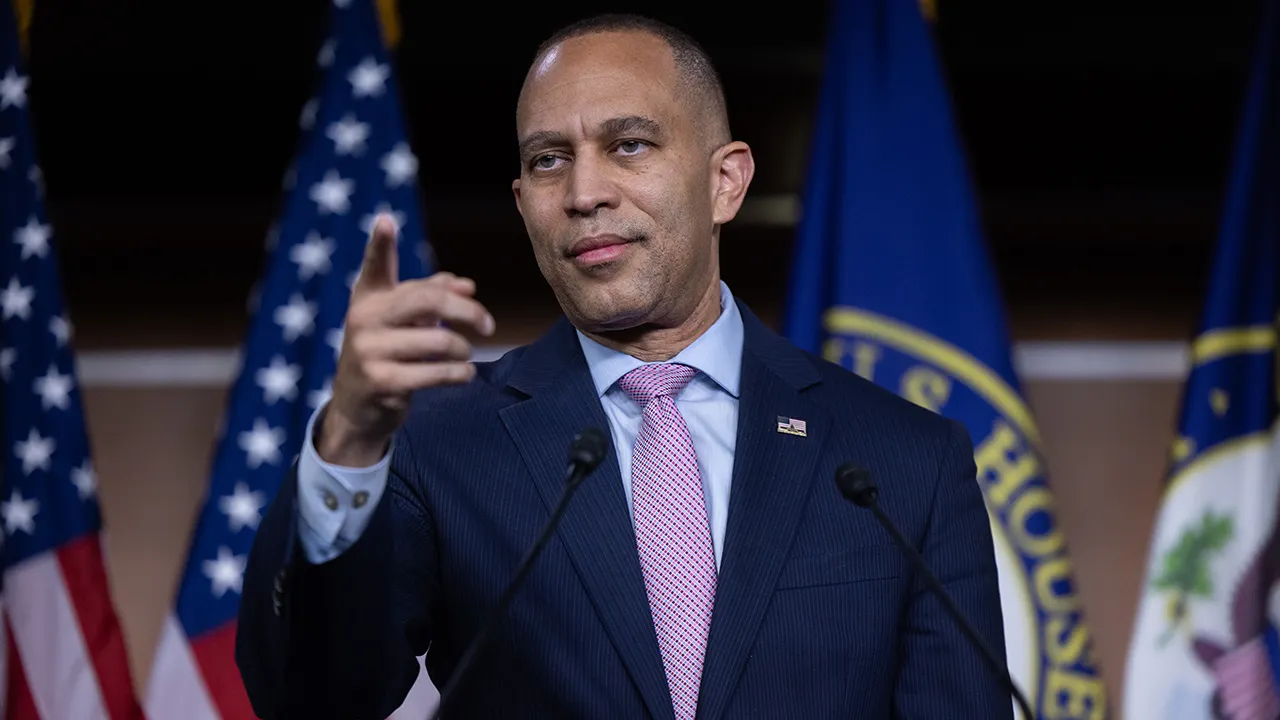
Following the delay, House Minority Leader Hakeem Jeffries, D-N.Y., voiced his concerns about the chaotic events leading up to what ultimately became a failed effort to move the bill forward.
CLICK HERE FOR MORE SPORTS COVERAGE ON FOXNEWS.COM
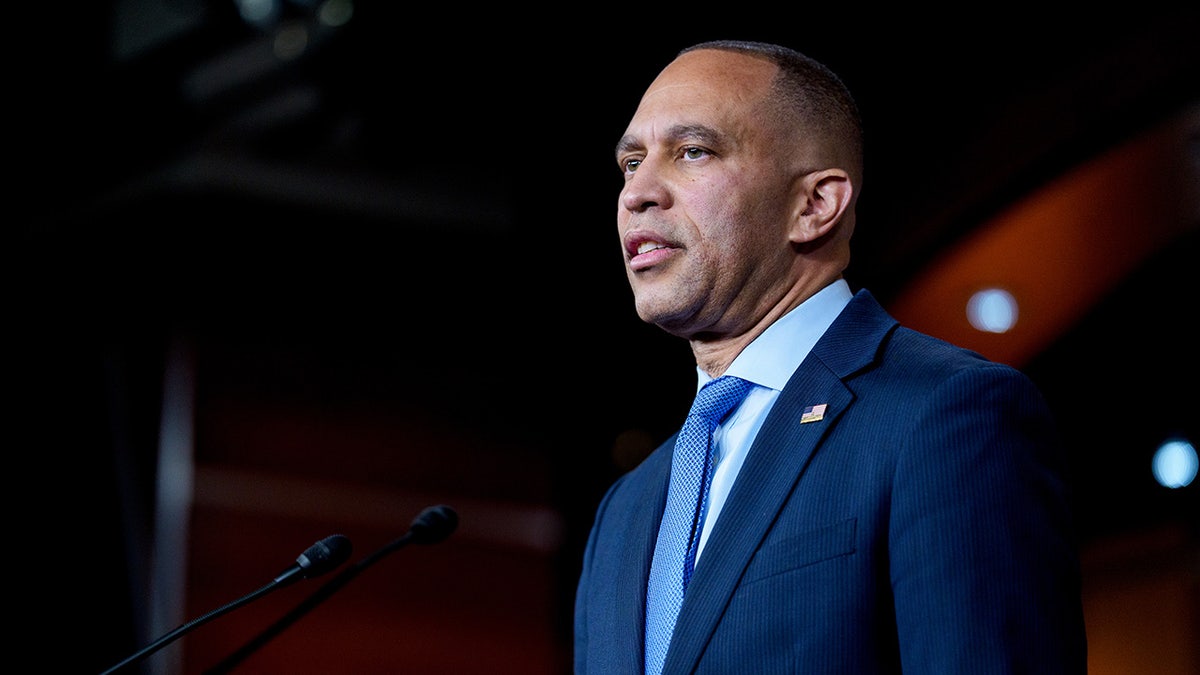
U.S. House Minority Leader Hakeem Jeffries (D-NY) during a news conference at the US Capitol in Washington, D.C., on Monday, Nov. 10, 2025. (Aaron Schwartz/Bloomberg via Getty Images)
“The question that a lot of people are asking this week related to the SCORE Act legislation is who exactly directed Mike Johnson and Steve Scalise to bring this bill to the floor this week? Was it the big donors connected to LSU? That legislation would not have benefited college athletes. It would hurt college athletes, take away the antitrust exemption. It would preempt the ability of states to actually pass legislation that promotes the health, the safety and the well-being of their own college students.”
GOP REP RIPS BIG TEN COMMISH AFTER SCORE ACT VOTE GETS DELAYED
Jeffries continued: “It would take away legal rights to seek redress the organized labor unions across the country were strongly opposed because it undermined the ability of college athletes and undermined their freedom to negotiate, took away collective bargaining rights. And of course, the players’ associations across every sports league led by the NFL Players Association were opposed to it because they concluded, when evaluating the bill on the merits, that it would actually hurt college athletes, not help them.”
Jeffries then facetiously renamed the SCORE Act to the “Lane Kiffin Protection Act.”
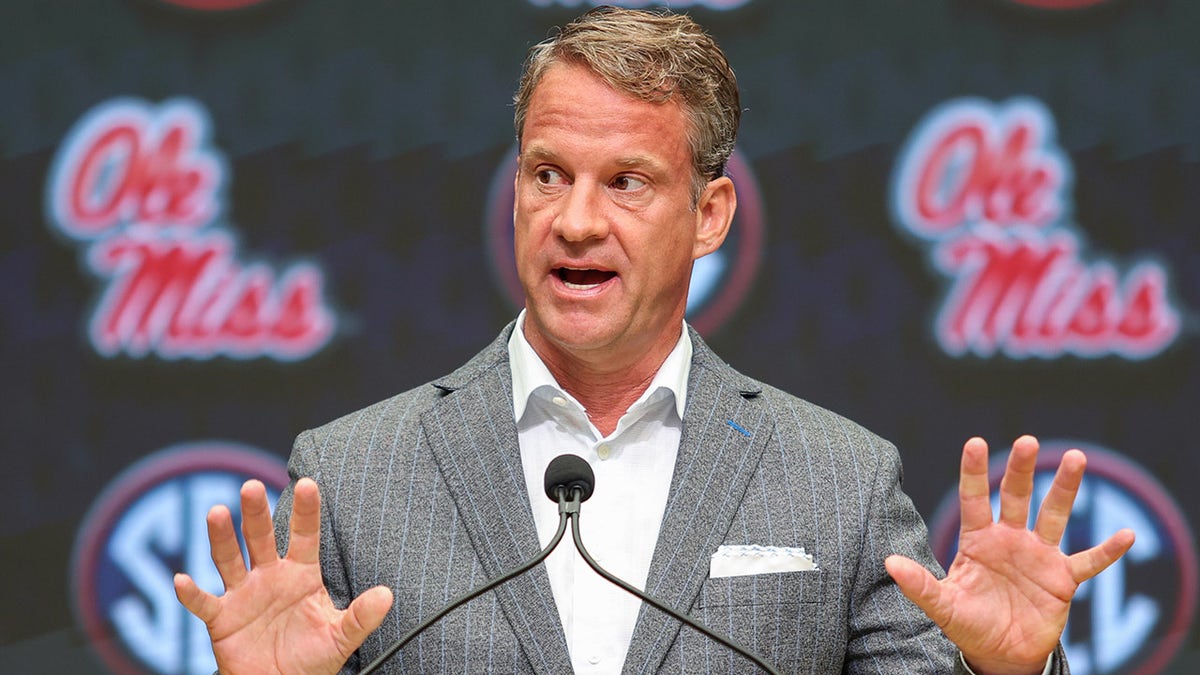
Ole Miss Rebels head coach Lane Kiffin speaks to the media during SEC Media Day at Omni Atlanta Hotel on July 14, 2025. (Jordan Godfree/Imagn Images)
“Why would Mike Johnson and Steve Scalise think it was a good idea to bring the Lane Kiffin Protection Act to the floor of the House of Representatives? Legislation that would do nothing to benefit college athletes and everything to benefit coaches like Lane Kiffin, who got out of town, abandoned his players in the middle of a playoff run to go get a $100 million contract from LSU, the home state of Mike Johnson and Steve Scalise.”
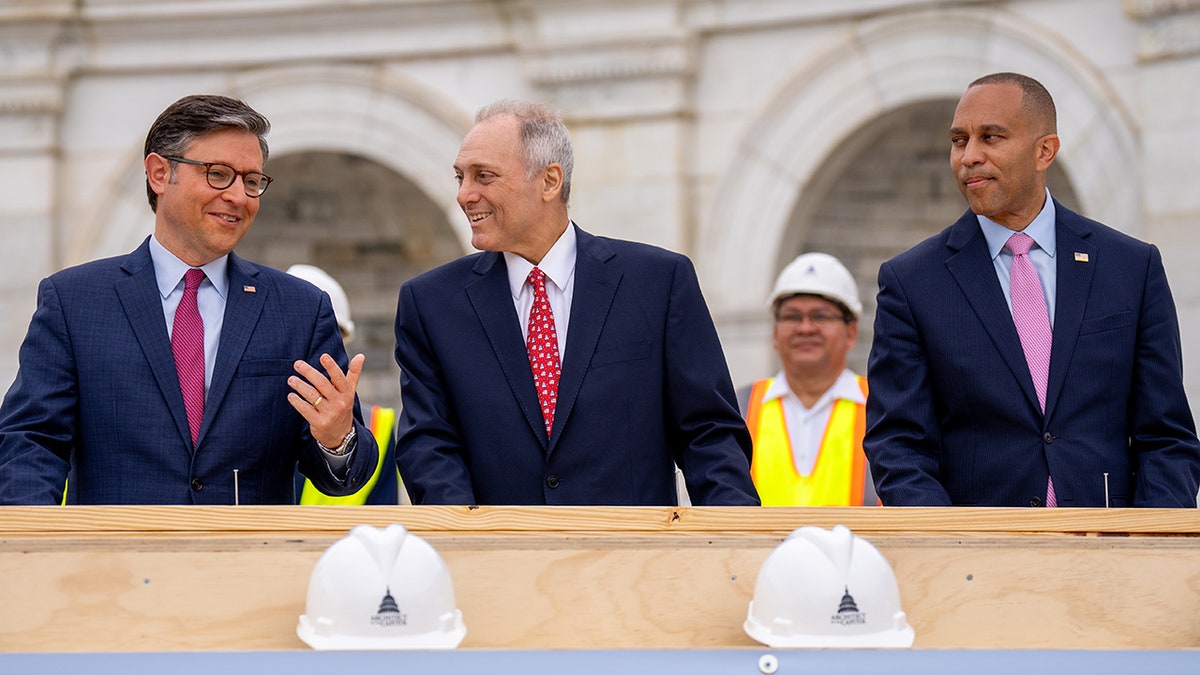
(L-R) Speaker of the House Mike Johnson (R-LA), House Majority Leader Rep. Steve Scalise (R-LA), and House Minority Leader Hakeem Jeffries (D-NY), participate in the first nail ceremony for the construction of the 2025 presidential inauguration platform on the West Front of the U.S. Capitol Building on Sept. 18, 2024 in Washington, D.C. (Andrew Harnik/Getty Images)
“People are asking the question, why did you decide to bring this bill this week with all the other issues that the country is demanding that we focus on, led by the affordability crisis that they claim is a scam and a hoax, but that the American people know is very real.”
A narrow 210-209 procedural vote was enough to get the bill to the House.
CLICK HERE TO GET THE FOX NEWS APP
The SCORE Act calls on schools to share revenue, per terms of the House settlement, per terms of the House settlement to the tune of 22% “if such rules provide that such pool limit is AT LEAST 22 percent of the average annual college sports revenue of the 70 highest-earning schools.”
The bill would also prohibit schools from using student fees to fund NIL payments.
Proponents of the proposed legislation have argued the SCORE Act would introduce some stability to college sports amid a landscape that increasingly lacks adequate regulation. However, critics have pointed to the possibility of returning arguably too much power back to schools and the NCAA.
Fox News’ Ryan Gaydos contributed to this report.
Follow Fox News Digital’s sports coverage on X, and subscribe to the Fox News Sports Huddle newsletter.
-

Max Olson
LUBBOCK, Texas — In December 2021, Jacob Rodriguez felt lost.
The young quarterback had just ended his freshman season at Virginia. Coach Bronco Mendenhall had unexpectedly stepped down. Rodriguez decided to transfer but had minimal tape as a college passer and few options. He had a creeping doubt, too, that maybe it was time to give up his quarterback dreams.
Texas Tech was willing to take a chance on him under two conditions: It didn’t have a scholarship available, and it didn’t need a QB. If Rodriguez wanted to come home to Texas and play for new coach Joey McGuire, he would have to learn to play linebacker.
Rodriguez took out a student loan to pay for school. He couldn’t find an apartment when he arrived in January 2022 and moved in with his older brother at the University Pointe apartments. He slept on the floor of his brother’s bedroom, on a foam queen mattress topper folded in half for a little more cushion.
He started sixth on the linebacker depth chart. He lifted weights twice a day to bulk up and watched film to figure out a position he had never played in high school. Back then, Rodriguez wasn’t envisioning someday becoming the All-America performer he is today.
“My biggest concern was not really trying to get a scholarship,” he said. “I was just trying to make the team. I’m fighting to survive.”
Four years later, Rodriguez is the Big 12 Defensive Player of the Year and the best linebacker in college football. His No. 4 Red Raiders are about to play for a Big 12 championship. Then, they’ll advance to the College Football Playoff. Surreal doesn’t even begin to describe it.
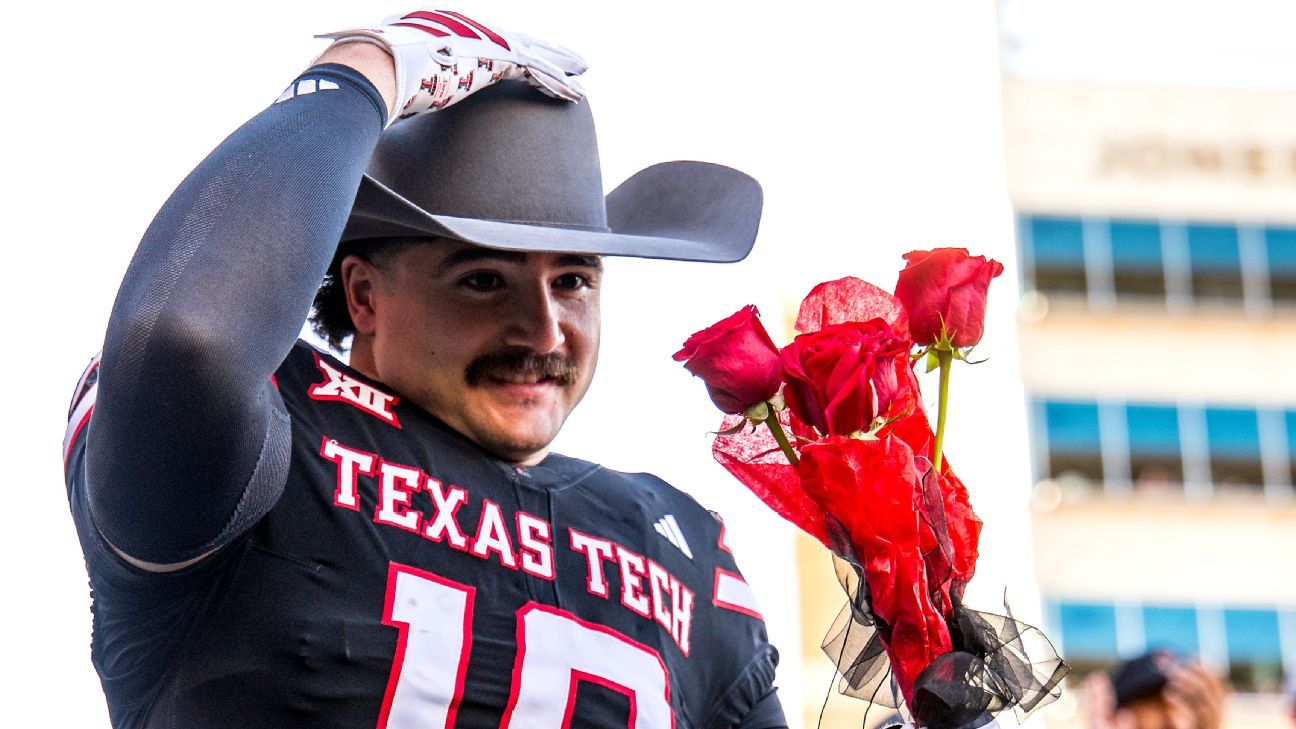
The mustachioed, cowboy hat-wearing captain married to a U.S. Army Black Hawk helicopter pilot is enjoying a historic senior season and experiencing a new level of fame this fall as Texas Tech pushes him for Heisman Trophy consideration. No other college defender over the past 20 years has put up the stats he has with more than 100 tackles, seven forced fumbles and four interceptions.
And Rodriguez is ready for more as the Red Raiders prepare for the program’s first Big 12 title game against No. 11 BYU on Saturday (noon ET, ABC).
“Man, it’s such a great story,” McGuire said. “In the age of all this money, which is great — I mean, I’m all for it, obviously — this is one of those great stories for college football.”
Rodriguez always had his believers as a record-setting quarterback coming out of Wichita Falls, Texas, but Heisman good? No, even those who know him best say this is getting ridiculous and see it as pure proof of his determination. If Rodriguez could tell his 19-year-old self where he’d be standing today after his humble beginnings?
“That was a long time ago,” Rodriguez said with a smile. “But I’m very proud of that. I think it’s something that I’ll hang my hat on for a long time.
“There’s nowhere else I’d rather be than here, doing what we’re doing.”
HIS CHILDHOOD DREAM was to become the starting quarterback of the Minnesota Vikings.
“Oh yeah, you betcha,” his brother Joshua Rodriguez said with a chuckle.
Jacob Rodriguez was born in Hastings, Minnesota, the youngest of five siblings in a family that competed in everything, from croquet to UNO to holiday pancake decorating. Joe and Ann Rodriguez signed up Jacob and his twin brothers Joshua and Jeremiah for wrestling at a young age because “we were breaking everything,” Joshua said.
Jacob got started at age 3 and won two youth state championships by the time he was 7, pinning every opponent he faced during his second title run.
“That’s one reason why he’s so good at tackling: all those single-leg and double-leg takedowns,” Joshua said.
When the family moved to Wichita Falls in 2010, the boys were eager to start playing tackle football. The twins would play linebacker at Rider High School. Jacob, a four-sport athlete, played varsity as a sophomore and went on to break school records with more than 10,000 career total yards and 106 touchdowns.
“He was the guy, the talk of the town,” Rider teammate Jed Castles said. “He was signing autographs when we went out to restaurants.”
Rider coach Marc Bindel occasionally let his star quarterback play safety, but Rodriguez was a QB first and foremost with a playing style that evoked Tim Tebow comparisons.
“We always called him Captain America,” Bindel said.
Rodriguez was an ESPN 300 recruit, but recruiters were split on his college projection: Should he play offense or defense? Then-Kansas State offensive coordinator Collin Klein gave him his first FBS offer in 2019 and saw his potential as an athletic quarterback.
But others saw something else. In a game against Canyon Randall during his junior year, Rodriguez made a fourth-and-1 play on defense they still talk about to this day. He burst through the line, grabbed the running back by his legs, lifted him in the air and slammed him on his back for the stop.
Bindel had a coach on his staff send the clip to then-Texas Tech defensive coordinator Keith Patterson. The next day, the Red Raiders offered Rodriguez a scholarship as a linebacker. Baylor would end up doing the same after McGuire became its outside linebackers coach in 2020. Rodriguez ultimately received more offers for defense than offense.
But Mendenhall and his Virginia coaches made Rodriguez a priority — and convinced him he could be their next Taysom Hill. His plans to fly out for a spring break official visit were canceled by COVID-19. Rodriguez still committed and enrolled without ever visiting campus.
“I think we all knew his best chance to make it big was going to be on defense,” Bindel said, “but in his heart, he wanted to play quarterback. And why would you not want to try to play quarterback in college?”
Virginia had an established starter in Brennan Armstrong, who broke single-season school records in 2021. But the Cavaliers also had a way to get Rodriguez on the field as a freshman. He agreed to back up Keytaon Thompson at their FBP (football player) position, a hybrid role in Robert Anae’s offense that could entail pretty much anything.
Rodriguez wore No. 98 and Thompson, a former quarterback at Mississippi State, wore No. 99. They lined up at slot receiver, outside receiver, tight end, running back or behind center. They would motion all over the field before the snap and throw blocks, run routes or take handoffs. It was intentional chaos, aimed at confusing opposing defenses.
“It was pure creativity,” Thompson said. “A lot of the stuff [Anae] came up with, I don’t even think he knew it would work. If it looked good, we’d go with it.”
It was an awful lot of running, so much so that Rodriguez said he went from 215 pounds to 185 during the season. He played 169 snaps but only four at quarterback. The rookie didn’t expect to become a Swiss Army knife on offense, but he embraced it.
“I was having a blast,” Rodriguez said. “I was just happy to be on the field.”
All these years later, Rodriguez believes he would’ve finished his college career at Virginia if Mendenhall hadn’t surprised everyone by resigning that December after a 6-6 season. Thompson called it a “totally unexpected curveball.”
“I loved it there and loved the people there,” Rodriguez said. “But I kind of went there to play for him.”
He made the 1,300-mile trek home to Wichita Falls, unsure what his future might hold. And his phone wasn’t ringing.
“There wasn’t a whole lot of buzz,” Bindel said.
TEXAS TECH ASSOCIATE head coach Kenny Perry excitedly called Bindel the morning after Red Raiders’ first spring practice in 2022.
“Jacob Rodriguez is a bad motherf—er,” Perry told him.
The high school coach’s reply?
“Yep, and he’s playing for free right now…”
After leaving Virginia, Rodriguez had asked a few people to reach out to McGuire on his behalf in the hopes he could join the Red Raiders. Two Rider teammates, Castles and E’Maurion “Dooda” Banks, played for Texas Tech. One of his former youth coaches, Dudley McAfee, is a Tech grad and knew McGuire well. All three vouched for Rodriguez to the new head coach.
“Dooda was like, ‘Coach, if we can get this guy on our team, we need to get him,'” McGuire said.
McGuire vowed he would put Rodriguez on scholarship as soon as one became available. These were the early days of NIL before collectives helped take care of walk-ons. Tech could provide him two meals a day, but he would need to take out a student loan to cover his classes and books.
“It was kind of one of those deals where, well, I got to go somewhere,” Rodriguez said.
More importantly, Rodriguez had to accept his future was on defense. Texas Tech already had three starter-caliber quarterbacks in future second-round pick Tyler Shough, Behren Morton and Donovan Smith.
Bindel has no doubt Rodriguez could’ve made it as a tough dual-threat QB such as Georgia Tech’s Haynes King had he found the right opportunity. Rodriguez doesn’t fault other coaches for missing on him during his month in the portal, especially given his role with the Cavaliers.
“I really didn’t have any quarterback film,” he said. “I just had a whole bunch of other stuff.”
Ann Rodriguez suspects if he hadn’t gone to Virginia to play quarterback, he would’ve regretted never trying. He had received plenty of advice that linebacker was his best path to the NFL. It still wasn’t easy to give up his childhood dream.
“There were a lot of tears shed and a real thought process about it,” his mother said. “It took a lot of him really looking inward and deciding, ‘You know what? I’m going to do whatever it takes.'”
It was Joshua’s idea for Jacob to move in and save money. The brothers lived in a four-bedroom apartment with three random roommates they initially didn’t know. The bedroom was certainly tight quarters — the brothers had to share a bathroom and closet — and Jacob would sleep near the foot of Joshua’s bed. Eventually, they squeezed in a twin-sized mattress for him.
“To be honest, I wouldn’t even know if those guys would be able to say, ‘Yeah, I lived with Jacob Rodriguez,'” Joshua said. “He was never there. He’d go to workouts at 5 a.m. and was gone before they woke up. He’d come back at 9 p.m. after classes and film.”
Rodriguez said he’d go in for the 8 a.m. lifting session and come back at 2 p.m. for another while working to get back to 220 pounds for spring practice. His offensive knowledge helped, but learning to play his new position was a completely different challenge. Former Texas Tech inside linebackers coach Josh Bookbinder said Rodriguez had all the right traits coming out of high school to be a great linebacker — he just hadn’t played the position.
The hardest part early on was the physicality of Texas Tech practices. Quarterbacks never get touched in these settings. Rodriguez had to get the hang of hitting and getting hit day after day. “I’m like, ‘Dude, how can I sustain this?'” he said. If he were to queue up his 2022 practice film today, Rodriguez expects it would probably look “awful.” He barely had a clue.
“The one thing he showed really early was his effort was nonnegotiable,” Bookbinder said. “He may not have known exactly what he was doing at linebacker, but he was running his ass to the ball.”
Texas Tech coaches loved the potential they saw in the spring of 2022. When McGuire called Rodriguez into his office before August preseason camp, the linebacker genuinely didn’t know why. The head coach asked him to call his parents and let them know he was on scholarship.
“There was a lot to learn, but Jacob is a football dude,” McGuire said. “He was raw, but he picked up stuff so fast because he’s really intelligent. Football makes sense to him.”
All the little details — his footwork, hand use, the angles he took in tackling, how he struck ball carriers — came with reps and time as he graduated from playing on instincts to processing and better understanding formations, sets and situations. After playing backup snaps as a sophomore, Rodriguez’s development accelerated throughout his second offseason in Lubbock to earning a starting job entering 2023, but a foot injury sustained in the season opener sidelined him for most of the season.
“It’s like you had all the ingredients on the counter,” said Bookbinder, who’s now coaching at TCU. “You just had to mix them up and let it cook for a little bit.”
The Jacob Rodriguez who returned in 2024 was finally ready to put it all together with an All-Big 12 season, finishing second among all Power 4 defenders with 127 tackles. And the one who returned for his senior year in 2025?
“He’s the best player in college football,” Perry said.
SESI VAILAHI TOOK the handoff and ran up the middle. Rodriguez met the Oklahoma State running back in the hole and stood him up. But this wasn’t your typical tackle for loss.
Vailahi staggered backward, attempting to break free. Except the veteran linebacker wasn’t going for a takedown. No, he was thinking theft. Rodriguez ripped the football right out of Vailahi’s grip and ran the other way for a 69-yard touchdown.
Literally took it away and took it to the house.
Best defender in the country.
📺 @ESPNU | https://t.co/G56N3v07Kv https://t.co/SKua435dYH pic.twitter.com/1FGuLyRaEt
— Texas Tech Football (@TexasTechFB) October 25, 2025
He has been filling up the Heisman highlight reel week after week. Like the two Kansas State fumbles he punched out. The one-handed interception at Utah. The pick he deflected to himself against BYU, or the screen pass he jumped in front of against UCF.
“Every time you look up, he’s at the ball,” Morton said. “The way he can cause and flip momentum in a game, there’s not another player in the country who can do that.”
Rodriguez has created seven turnovers by himself. His FBS-leading seven forced fumbles are more than 53 teams have all season, including Georgia, Ole Miss and Notre Dame, and he’s four away from breaking Khalil Mack’s FBS career record of 16.
McGuire has plenty of respect for Indiana’s Fernando Mendoza, Vanderbilt’s Diego Pavia and Ohio State’s Julian Sayin, the trio of quarterbacks currently leading the Heisman race with one week to go. But he’s not going to relent in campaigning for Rodriguez.
“The thing for me is there’s nobody at the quarterback position that is having a year that we haven’t seen before,” McGuire said. “He’s having a year at the linebacker position that we haven’t seen.”
For comparison: Notre Dame linebacker Manti Te’o finished with 113 tackles and seven interceptions but zero forced fumbles during his Heisman runner-up season in 2012. Te’o was the unquestioned top player on the No. 1 team in the country.
Rodriguez points to Texas Tech pass rusher David Bailey, their projected first-round pick with 12.5 sacks, as the best player they’ve got. His answers in news conferences offer praise toward teammates and coaches. But among his peers, there’s no question.
“This is a talented football team,” Morton said, “and it’s led by Jacob.”
McGuire shook up Texas Tech’s defense after an 8-5 finish in 2024. He brought in defensive coordinator Shiel Wood from Houston, splurged in the portal with a rebuilt defensive line that cost more than $7 million and inked arguably the top transfer class in the country.
Rodriguez considered going pro at the end of last season and went through senior day ceremonies before the home finale. But he put his trust in McGuire and watched as his coach and general manager James Blanchard assembled the kind of roster that could finally compete for a Big 12 championship.
“You could tell as soon as we put pads on for spring ball: Hey, we’re going to be a special group,” Rodriguez said. “I’ve never had this much fun playing football ever.”
Texas Tech’s determined efforts to make Rodriguez a Heisman finalist took a creative turn two weeks ago. Ahead of its home finale against UCF, McGuire texted Joe Rodriguez to break the news: Offensive coordinator Mack Leftwich was working on a Wildcat package to utilize Jacob at quarterback.
“I said, ‘Coach, that’s so freaking awesome,'” his dad said. “I’ve been pushing that for four years. I told him, ‘Be careful, because you’re going to let that beast out.'”
Joe did not warn his wife that this was in the works. Jacob’s wife, Emma, was the one who told her inside Jones AT&T Stadium, a few plays before the moment arrived in the first quarter. She asked her to try to stay calm. Texas Tech running back Cameron Dickey said he got goosebumps when he overheard Leftwich ask, “Is J-Rod ready?”
“He goes out there,” Ann said, “and we both immediately started crying.”
The home crowd got so loud that Rodriguez worried he might mess up the snap cadence. But his offensive line paved a wide-open lane for an easy 2-yard score. He got to go in and do it again Saturday at West Virginia.
Linebacker Jacob Rodriguez with his FIRST CAREER OFFENSIVE TD for @TexasTechFB ‼️
And he hit the Heisman as his celebration 👀 pic.twitter.com/zzOWSXR1Qr
— FOX College Football (@CFBONFOX) November 15, 2025
“Just like old times, man,” said Thompson, his former Virginia teammate.
It was all so cathartic for those who know Rodriguez best, who watched how relentlessly he worked to turn into the linebacker he is today and know what he gave up getting here. The dream had to change along the way, but he wouldn’t change a thing now.
“We couldn’t have dreamt this up,” Ann Rodriguez said.
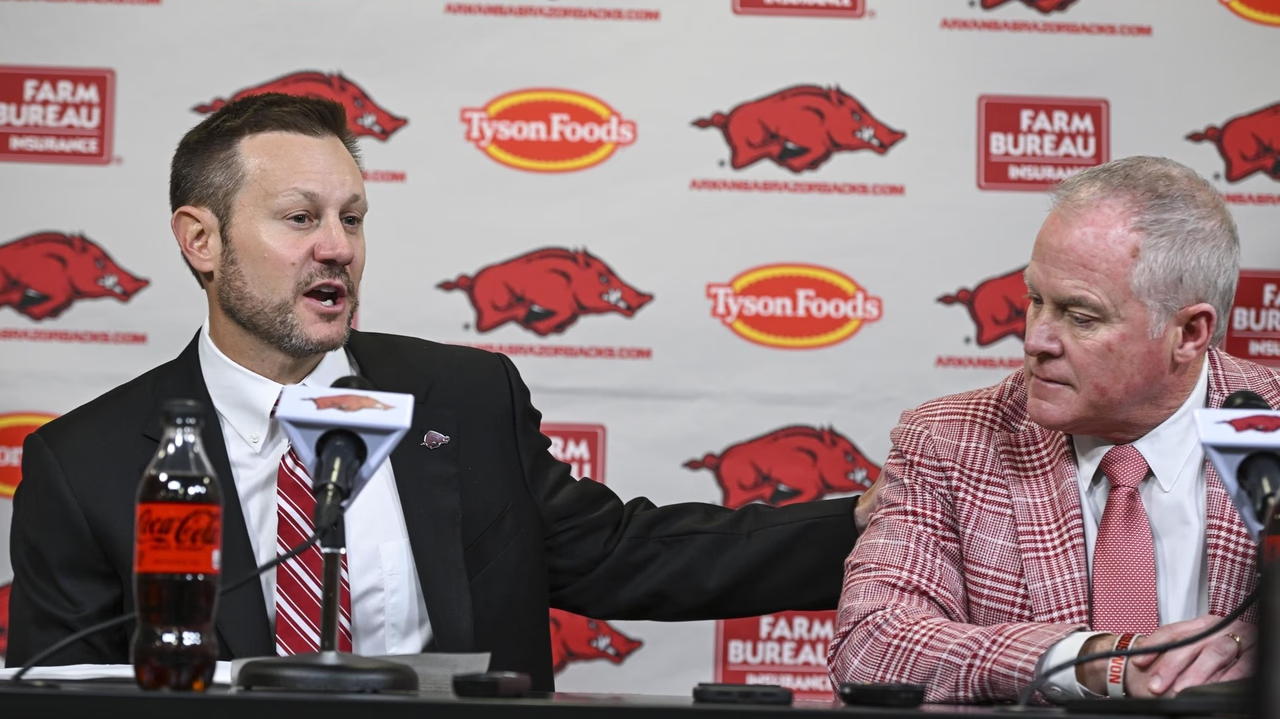
FAYETTEVILLE, Ark. — Ryan Silverfield had a second stop to make Thursday after his first press conference since being hired as Arkansas football coach.
He had to face the people he needs to win over, the ones the Razorbacks need to increase their spending so they can compete with the SEC’s power programs.
Silverfield signed a five-year, $33.5 million deal to take over in Arkansas earlier in the week. He had coached Memphis since the 2020 season, plus a single game with the Tigers as interim head coach in 2019. Memphis qualified for a bowl in every season with Silverfield at the helm and peaked in 2024 with an 11-2 record. The Tigers hold an 8-4 record ahead of a likely bowl game.
Those kinds of results at Arkansas would be a boon. The Razorbacks’ season concluded Saturday with a loss to Missouri. That ended a 2-10 season with an 0-8 record in the Southeastern Conference, the third season in the last seven Arkansas finished with those marks.
“This program is built on pride, resilience and toughness, and it’s time to bring it all back,” Silverfield said at the press conference. “Being all in together, we will rebuild it, we will earn it, and we will make this state proud.”
Finances were one of the biggest points in both the press conference and the public introduction a few hours later. Arkansas athletic director Hunter Yurachek has made a point for the last year that the Razorbacks need more contributions for NIL funds in order to compete at a higher level in the SEC. The first audible announcement over the loudspeaker before Silverfield took the dais was one asking for money.
NIL war chests are tight-lipped secrets across college football. But Arkansas’ football attendance, which equates to revenue earned, ranks fifth from the bottom in the SEC. Both Silverfield and Yurachek said finances were a key topic during the interview and contract negotiations.

Arkansas’s new head football coach Ryan Silverfield speaks to reporters during an NCAA college football press conference, Thursday, Dec. 4, 2025, in Fayetteville, Ark. Credit: AP/Hank Layton
“I think it’s our competitive advantage not to give details of what that is, other than to tell you that it is a significant investment in all aspects of our football program that will move us to the top half of spending in all of those categories I mentioned in the Southeastern Conference,” Yurachek said. “I don’t believe we need to be at the top of spending. We need to be somewhere where we’re really competitive and Ryan and I are on the same page with where we are.”
Quarterback KJ Jackson and defensive end Quincy Rhoads Jr. both joined the press conference and announced they would return to the team in 2026. Jackson, a rising sophomore, took over as Arkansas’ starting quarterback for the final game of the season and is largely considered the future of the position. Rhoads finished in a tie for fifth in the SEC in sacks (8) and second in the league in tackles for-loss (17 1/2).
Silverfield told fans he doesn’t think a rebuild will take long.
“It’s not one of those things where we’re sitting here saying, ‘Hey, you know, Hunter, I need three years to rebuild this,’” Silverfield said. “No. We can start rebuilding the culture the moment we step down.”

NIL5 minutes ago
College Football TV Ratings: Top 10 most-watched games of Week 14
Sports6 minutes ago
Tennessee volleyball vs Utah State, Lady Vols upset in first round

Motorsports8 minutes ago
SRX’s threat to NASCAR takes center stage in antitrust trial

Sports22 minutes ago
2025 DI women’s volleyball championship: Bracket, schedule, scores

Motorsports25 minutes ago
Carson Kvapil Adds Champion Irrigation Sponsorship for 3 Races

Sports48 minutes ago
Track & Field Opening Indoor Season with Split-Squad Weekend – Penn State

Sports55 minutes ago
Women’s Volleyball vs University of Alaska Anchorage on 12/4/2025 – Box Score

Rec Sports1 hour ago
Delaware, New Jersey face foster care shortage

Sports1 hour ago
#11 Creighton Volleyball Outlasts Northern Colorado to Advance to Second Round of NCAA Tournament

Motorsports1 hour ago
Several NASCAR Drivers Headed to Pensacola for 58th Snowball Derby

Rec Sports1 hour ago
‘I just gambled our entire savings away’: Young adults in Mass. are hooked on online sports betting

Rec Sports1 hour ago
Celebrating a culture of giving back
Motorsports1 hour ago
SRX’s threat to NASCAR takes center stage in antitrust trial

Rec Sports2 hours ago
SUBARU: GEAR FOR GOOD INITIATIVE NAMES FIVE YOUTH SOCCER PROGRAM BENEFICIARIES TO HELP GROW THE GAME IN 2026

Motorsports2 hours ago
NCMA Announces Board of Directors Officers for 2026 – Speedway Digest

Rec Sports2 weeks ago
First Tee Winter Registration is open

Rec Sports1 week ago
Fargo girl, 13, dies after collapsing during school basketball game – Grand Forks Herald

Motorsports1 week ago
CPG Brands Like Allegra Are Betting on F1 for the First Time

Sports2 weeks ago
Volleyball Recaps – November 18

Motorsports2 weeks ago
F1 Las Vegas: Verstappen win, Norris and Piastri DQ tighten 2025 title fight

Sports1 week ago
Two Pro Volleyball Leagues Serve Up Plans for Minnesota Teams

Sports1 week ago
Utah State Announces 2025-26 Indoor Track & Field Schedule

Sports1 week ago
Sycamores unveil 2026 track and field schedule

Sports1 week ago
Texas volleyball vs Kentucky game score: Live SEC tournament updates

NIL5 days ago
Bowl Projections: ESPN predicts 12-team College Football Playoff bracket, full bowl slate after Week 14

Motorsports1 week ago
Redemption Means First Pro Stock World Championship for Dallas Glenn

Motorsports7 days ago
Pohlman admits ‘there might be some spats’ as he pushes to get Kyle Busch winning again

NIL1 week ago
Indiana’s rapid ascent and its impact across college football

Rec Sports2 weeks ago
Troy Football Need to Know; Gameday at The Vet — Georgia State Game

Rec Sports6 days ago
How this startup (and a KC sports icon) turned young players into card-carrying legends overnight

 Why a rising mid-major power with an NCAA Tournament team opted out of revenue-sharing — and advertised it
 NBA Legend Michael Jordan to Join NBC Sports as Special Contributor
 Falcons mailbag
 Portal Update – Basketball and Gymnastics Take Hits
 has always dreamed in Mercurial. Now his initials are on the boots.
The new Kyl…
has always dreamed in Mercurial. Now his initials are on the boots.
The new Kyl…
-
 Rec Sports2 weeks ago
First Tee Winter Registration is open
-
 Rec Sports1 week ago
Fargo girl, 13, dies after collapsing during school basketball game – Grand Forks Herald
-
 Motorsports1 week ago
CPG Brands Like Allegra Are Betting on F1 for the First Time
-
 Sports2 weeks ago
Volleyball Recaps – November 18
-
 Motorsports2 weeks ago
F1 Las Vegas: Verstappen win, Norris and Piastri DQ tighten 2025 title fight
-
 Sports1 week ago
Two Pro Volleyball Leagues Serve Up Plans for Minnesota Teams
-
 Sports1 week ago
Utah State Announces 2025-26 Indoor Track & Field Schedule
-
 Sports1 week ago
Sycamores unveil 2026 track and field schedule
-
 Sports1 week ago
Texas volleyball vs Kentucky game score: Live SEC tournament updates
-
 NIL5 days ago
Bowl Projections: ESPN predicts 12-team College Football Playoff bracket, full bowl slate after Week 14