
Connect with us
https://yoursportsnation.com/wp-content/uploads/2025/07/call-to-1.png

Rec Sports

Climate Breakdown Is Destabilising The Global Sports Industry

Published

on


The global sports industry is built on predictable schedules, reliable infrastructure and functioning supply chains. Warnings delivered at the U.K.’s first national emergency briefing on climate and nature last week, which called for urgent and radical action to prevent systemic breakdown, carry profound implications for one of the world’s most valuable cultural and economic sectors.

The foundations of the ninth biggest industry in the world, and a multi-trillion dollar ecosystem, are being destabilised. Every corner of sport, from investors, executives, athletes, participants and fans, will feel the consequences. While policymakers at the briefing heard that climate disruption threatens national security, food systems and economic stability, the sport sector faces a parallel reckoning.

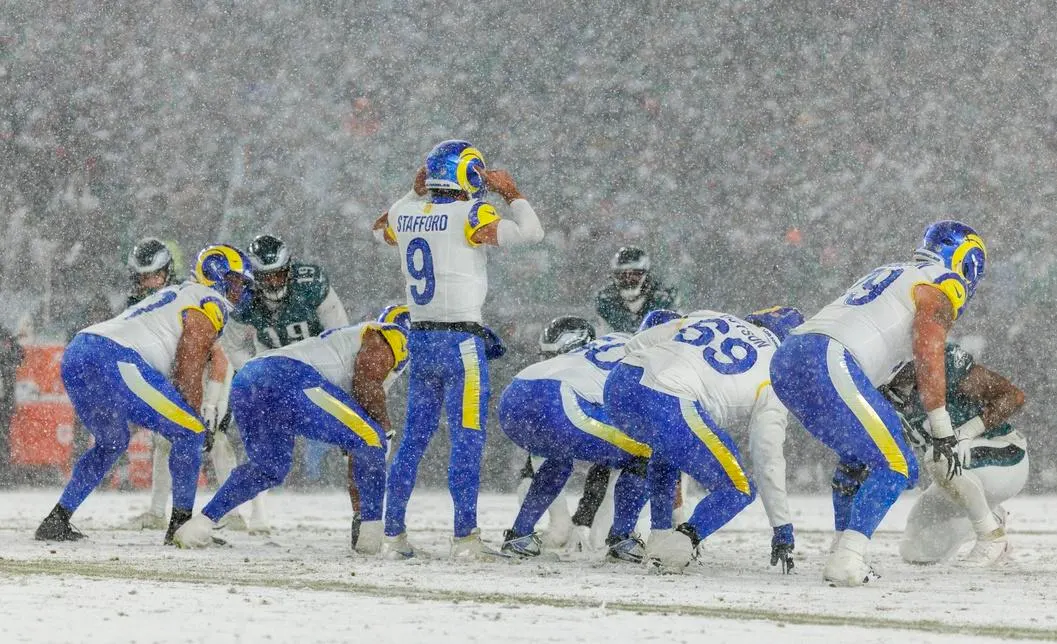
From flooded pitches stopping play, to play continuing in blizzards, overheated stadiums, collapsing supply chains and rising insurance costs, the impacts are already being felt from the highest levels of professional competition to grassroots and youth sports. Experts at the briefing were crystal clear that incrementalism is no longer an option, and sport, one of society’s most powerful cultural institutions, is not insulated from this reality.

Professional Sports Business Model On The Line

At the elite level, the concerns raised by scientists and security experts translate into operational and financial instability. Lieutenant general (ret’d) Richard Nugee’s raised the concern of “crises cascading together” and overwhelming Governments, and the sport sector faces its own version of this. Multiple climate-driven shocks and implications hitting simultaneously will erode conditions required for safe play and profitable competitions.

Extreme heat is disrupting sports, with major sporting bodies, including World Rugby, FIFA, the International Olympic Committee, recently adjusting or expanding heat protocols. Wildfire smoke has caused match cancellations or postponements across the MLS, MLB, and NWSL in the past two seasons. Floods and extreme rainfall are repeatedly damaging stadiums, venues and sports grounds. Heat stress is putting athletes, staff and spectators at medical risk. Global supply-chain instability, another risk highlighted during the national briefing, affects everything from team travel and broadcast operations to kit manufacturing and stadium catering.

For sport executives, the economic repercussions are stark. Climate impacts can directly influence event scheduling and broadcast commitments, player welfare and match performance, stadium maintenance and capital expenditure. Global tournaments face viability questions. Commercial planning and sponsorship portfolios become vulnerable as climate shocks destabilise economies.

The climate crisis is now a business risk, a performance risk, and a brand risk for professional sports. Incremental adaptations such as cooling breaks, shade canopies, pitch covers, will not be enough to continue business as usual as warming accelerates.

Grassroots Sports Participation Is Under Threat

Climate breakdown is reshaping the physical environment grassroots sport depends on. Increased flooding, extreme heat, poor air quality, and deteriorating natural surfaces are making fields and facilities less safe and less available. In the U.S. it was estimated that youth sports lost an average of seven days of “sports practices or competitions in 2024 due to very hot temperatures, wildfires or wildfire smoke, flooding or changing winters.” In California that nearly doubled, at 13 days lost. High schoolers are dying from extreme heat impacts, and it is an issue that is increasing existing injustices.

Professor Nathalie Seddon’s warning that nature is critical national infrastructure” applies directly here. Losing biodiversity means losing the healthy soils, drainage, shade, and temperature regulation needed for outdoor sport. As nature degrades, grassroots sport becomes more fragile, fewer young people can participate, and physical inactivity, which already costs health systems billions, increases. For youth pathways, this is existential. The next generation’s development pipeline will not thrive if young athletes cannot safely train or compete.

A Tipping-Point For Sports

Professor Tim Lenton’s reminder that positive tipping points are possible is perhaps where sport holds the greatest power. The sector has shown repeatedly, on issues from racism to gender equity and mental health, that it can transform public behaviour when it leads with clarity and urgency.

Experts at the briefing emphasised that this moment demands courage, not incrementalism. For sport, that courage means setting science-based climate targets, accelerating stadium energy transitions, designing seasons and competitions around heat and other extreme weather thresholds, protecting nature-based facilities through restoration, reducing travel emissions and supporting equitable grassroots access. Sport influences culture like very few other sectors. If sport embraces climate action at emergency speed, it can become a catalyst for wider societal resilience.

The core message from the U.K. national emergency briefing applies directly to the global sports sector. We have the tools, but leadership has yet to treat the climate crisis and its wide-ranging impacts with the urgency required. Whether sport in 2050 remains a thriving global industry or becomes a fragmented, heat-stressed shadow of itself will depend on decisions made in the next few years. The question for sport’s decision makers and investors is urgent and simple. Will you act boldly and at scale before the window closes, and decisions are forced upon you?


Link

Continue Reading
Click to comment

Leave a Reply

Your email address will not be published. Required fields are marked *

Rec Sports

Youth hockey players get into wild brawl during game at AHL rink

Published

on


Things were far from sweet on the ice in “The Sweetest Place on Earth,” when a “Mites on Ice” game in Hershey, Pennsylvania, descended into an all-out brawl on Saturday night. 

The “Mites on Ice” game was taking place between periods of an AHL game between the Hershey Bears and the Cleveland Monsters at Giant Center, when players from the Central Penn Panthers Youth Ice Hockey Club started fighting each other. 

Mite players are considered kids aged 8 and under.

Video from the game showed multiple players trying to fight each other, with a player in a blue jersey taking an opposing player down to the ice and punching him in the helmet before teammates of the player in the white jersey came to his aid. 

Other players in blue jerseys joined the fray, and eventually the white team’s goaltender came bumrushing into the picture.

A “Mites on Ice” game was taking place between periods of an AHL game between the Hershey Bears and the Cleveland Monsters at Giant Center, when players from the Central Penn Panthers Youth Ice Hockey Club started fighting each other. ” X / @allieberube

At no point in the one-minute video did any officials or adults attempt to break up the fracas, and toward the end of the footage, it looked as though some of the mites had turned their attention back to the puck. 

In a statement Sunday, the Central Penn Panthers Youth Ice Hockey Club said they were aware of the incident at Saturday night’s game and that they were “conducting an internal review to understand the circumstances surrounding the incident.” 

The organization asked for “patience and understanding” as it looked into the situation. 

A “Mites on Ice” game was taking place between periods of an AHL game between the Hershey Bears and the Cleveland Monsters at Giant Center, when players from the Central Penn Panthers Youth Ice Hockey Club started fighting each other. “
X / @allieberube

The Central Penn Panthers are based in Lancaster, Pennsylvania, and have teams that range in age from 4 to 18. 

The Atlantic Amateur Hockey Association called the incident in its statement a “staged fight,” and said “appropriate disciplinary action will be taken against those players and team officials involved” in the incident following its own investigation. 

The AAHA’s statement also noted that neither USA Hockey nor its own organization sanctioned the “Mites on Ice” game at Giant Center over the weekend. 

The Hershey Bears said that the brawl “did not reflect the values of the sport or the standards we expect when young athletes are on the ice.”

A “Mites on Ice” game was taking place between periods of an AHL game between the Hershey Bears and the Cleveland Monsters at Giant Center, when players from the Central Penn Panthers Youth Ice Hockey Club started fighting each other. “
X / @allieberube

“We are reviewing this matter and will work closely with participating teams and partners to ensure clear safeguards, supervision, and expectations are in place for any future youth activities held during our games. Our focus remains on protecting young players and upholding the integrity of the sport,” the Bears said in their statement. 

The incident has gone viral on social media, with outlets across the country picking up on the brawl, and it was even mentioned during “Hockey Night in Canada.”


Link

Continue Reading

Rec Sports

Ranking the Top Basketball Leagues in the World

Published

on


Over the past few weeks, James Nnaji has gone from an NBA draft-and-stash prospect to one of the most widely discussed international recruits of all time, as he became the first player drafted by an NBA team to suit up in the NCAA in over 45 years. His recent move to Baylor, however, is just the tip of the iceberg: according to information I compiled from RealGM, during this 2025-26 season, there have been 276 college players who made an appearance in at least one of 75 different international competitions the year prior.

With the origins of players coming into college basketball becoming increasingly diverse, it’s key for NCAA teams (and their decision-makers) to understand levels of competition around the world. There are thousands of domestic leagues, continental championships, national team tournaments, youth competitions, and special events. Ranking those levels of competition has been a titanic, if not nearly impossible, task.

What makes it so hard? Even when continental (and world) tournaments help funnel the best teams from a country or region into a single competition, teams from domestic leagues don’t always play teams from other domestic leagues. There are also teams that operate entirely within their own bubbles: national teams don’t play club teams (at least in official competitions), while U16, U18, and U20 teams don’t compete outside their age categories. That makes it nearly impossible to find a common opponent as a point of comparison, even after hundreds of degrees of separation.

Long story short: it’s hard to rank teams that don’t play against each other. Just ask the College Football Playoff committee.

While there’s no publicly available league ranking or translation model, there is one great tool: Layne Vashro’s article Measuring Level of Competition Around the World. In it, he came as close as anybody in the public space to finding that holy grail, creating an index that, in his own words, measures “what statistical production in each league says about NBA potential.”

There is, however, one problem with the article that has absolutely nothing to do with the (excellent) quality of the research: it was published in 2015. Since then, many of the competitions listed have ceased to exist, many new ones have emerged, and the global basketball landscape has changed significantly, its map redrawn by shifting economic realities across countries and the irruption of NIL, which has made college basketball a more attractive market for international players.

With Layne now working for an NBA team, I doubt we’ll ever see an update, so I set out to build my own ranking of basketball competitions.

I know how short attention spans are in 2026, so before getting into the hows and whys, I’ll get straight to the what.

If by any chance, the list is hard to visualize (especially if your phone is in dark mode), here’s a direct link to the list.

Since we’re trying to map out a lot of things that we don’t know, let’s start with the one thing we do know: the NBA is the best league in the world.

But how do we know that? We can’t prove it on the court, since NBA teams rarely play international teams outside of the occasional preseason game.

In my opinion, one simple fact proves the NBA’s status: the best players from every other league in the world—whether that’s college, the G League, or overseas professional leagues—end up in the NBA, if the league wants them.

Here, we’re looking at the average productivity of NBA players who appeared in other competitions the year prior, expressed in percentiles. In general, these are players who ranked among the top performers in their respective leagues.

There’s also one more thing we do know: in countries with multiple tiers, a first-tier league is always better than a second-tier league, and so on.

If we take Spain as an example and examine player movement between leagues over the past five years, we see exactly what we’d expect. On average, the best players from the second tier move up to the ACB, while the best players from the third tier move up to the second tier. Meanwhile, the weakest performers from the top tier drop down to the second tier, and so on.

Players, like workers in any industry, seek better salaries and conditions. Employers, in turn, seek the best available talent.

This study, then, is based on a core assumption: if League A consistently acquires the best-performing players from League B, and, in turn, League B acquires the worst-performing players from League A, then League A is a better level of competition than League B.

If we apply that logic to every movement between leagues and calculate the productivity differentials between incoming and outgoing players, we should arrive at an approximate quality gap between leagues themselves.

With the logic now established, and after organizing, matching, and cleaning up data from over 250,000 individual season stat lines sourced from RealGM, we need to define the whats and the hows: which metric we’ll use to define productivity, and how we’ll utilize those productivity differentials to rank each league.

I’d love to have some of the most respected catch-all stats available for every league and competition. Unfortunately, those metrics are publicly available only for the NBA, and building most of them from scratch would require play-by-play data that we don’t have access to. In the absence of BPMs, RAPMs, and LEBRONs, we’ll have to work with metrics that are based entirely on box-score data.

Among those, we’ll use the highest-ranked metric from Bryan Kalbrosky’s 2021 survey on advanced stats: FIC/40. It’s far from a perfect metric and should be viewed for what it is: an indicator of overall box-score productivity normalized by playing time, not a definitive measure of efficiency or impact on winning.

With that out of the way, the method itself is fairly simple. We compare the average FIC/40 of players moving between two leagues and calculate the differential between incoming and outgoing players. If the quality (as measured by FIC/40) of players going from League B to League A is higher than the quality of players moving in the opposite direction, then League A is a higher level of competition.

Here’s what that looks like:

Now that we have every matchup, it’s time to rank every league. With over 150 competitions and roughly 6,000 league-to-league matchups, things won’t be perfectly ordered. The best league in the world won’t go 149–0 against the field, the second-best league won’t go 148–1, and so on. That’s simply not how the real world works. There are also gaps in the data, as not all leagues exchange players with one another.

I thought about other systems that rank large numbers of teams that don’t necessarily play each other. My mind went to college sports, and specifically to SRS. As explained by Sports Reference, SRS is a ranking that takes into account not only the win/loss record, but also the strength of schedule and margin of victory.

We can treat player movement between leagues like a game. If a league has a positive differential between incoming and outgoing player quality, that’s a win. The size of the differential becomes the margin of victory.

Using those results, we can build an SRS-style ranking for basketball leagues across the entire world. For this study, I used a slightly modified version of John Frederick King’s SRS script for R.

With the rankings complete, how do we know if the results make sense? Subjectively, the top of the list looks exactly as you’d expect: the NBA at the top, followed by a mix of well-known international competitions such as the Olympics, EuroLeague, EuroBasket, the FIBA World Cup, and the Spanish ACB.

There’s also objective validation. Returning to the Spain example detailed above, leagues with multiple tiers should appear in the rankings in the same hierarchical order they have in real life — and that’s exactly what happens here.

Subjectively, a few things stand out.

  • Lower-level French competitions appear somewhat overrated. It’s difficult for me to justify France’s second division being equivalent to Lithuania’s top flight, or its third division being comparable to conferences like the Atlantic-10 or the Mountain West.

    That said, France has been one of the world’s most prolific exporters of young basketball talent over the past five years, which helps explain why its leagues perform so well in a metric that favors countries with a positive trade balance of talent.

  • I also believe that some NCAA D-I conferences are slightly underrated, though not dramatically so. Vashro noted that lower-tier D-I conferences were comparable to lower European competitions like Luxembourg’s Total League, while the top NCAA conferences were equivalent to high-level domestic competitions in Europe, such as the first divisions in Turkey, France, and Germany.

    In this study, top conferences still sit alongside elite European competitions, but the lower conferences are closer to youth competitions such as the U16 EuroBasket, U18 AfroBasket, and U18 EuroBasket Division B.

    I do think that the transfer portal has gutted the teams in lower conferences, so a lower ranking than they had in 2015 makes sense. However, these rankings are also a byproduct of studying talent movement between leagues: only the top players in lower conferences tend to move on to the professional ranks, while the top players in the pros or youth competitions rarely move into those lower D1 conferences. This creates a negative trade balance of basketball talent, which is precisely what this study measures.

If I ever get the chance to update this study, I plan to introduce age as a variable. Rather than relying on raw production, I’ll use a metric of production relative to expected output by age, as player movement around the world is not tied exclusively to productivity but also to perceived potential, an aspect in which age plays a critical role.

Another potential reference point would be average productivity changes for players who appear in two different leagues. If players consistently perform better in League B than in League A, then League A should represent a higher level of competition. However, age would again need to be included as a variable to separate the true effect of competition level on performance from the effect of natural development or age-related decline.

The goal of this study was not to build a translation model, but to provide a quick reference point for fans, basketball decision-makers in the college and international game, and frankly, myself, about comparable levels of competition. The next time you’re watching or scouting a player who made a statistical impact in a league you’re unfamiliar with, this list can help contextualize that production.

There are thousands of basketball competitions in the world, and it’s impossible to fully understand every one of them without years, if not decades, of watching and scouting experience. If this titanic task of ranking every league with sufficient available data helps people break through the international iceberg, even just a little, then the study has done its job.

Share No Ceilings


Link

Continue Reading

Rec Sports

Hillers girls basketball builds chemistry

Published

on


Hopkinton High School girls basketball coach Mike Greco has been building chemistry within his program, and this year’s team is showing the results of that process. The Hillers, who opened the season with six straight wins, are a tight-knit unit, the coach said, bonding off the court and playing well on it.

“The kids all get along, and you can see it,” Greco said. “We are having a lot of fun right now.”

Hopkinton is led by some experienced players who have set the tone for the rest of the squad. Senior Teagan Resteghini, a captain for the second year in a row, got off to a strong start to the season.

“She has been a leader since last year,” Greco said. “She is really helping in maintaining the team-first culture that we have built.”

The team’s other senior captain is Sofiah Wightman Kraus, a forward whose effort and attitude Greco could not help but extol. Wightman Kraus was named MVP of the Mary Korbey Invitational Tournament, which Hopkinton won in late December with victories over Medford and Milford.

“She is one of those kids who plays so hard and is so unselfish,” he said. “It doesn’t matter whether she starts or comes off the bench, or whether she plays 10 minutes or 30 minutes. You get the same kid and the same max effort every time.”

In addition to the captains, Hopkinton returns sophomore Abbie Rabinovich in the front court after a standout freshman year that saw her earn Tri-Valley League All-Star recognition.

“She has improved tremendously in the offseason,” Greco said. “She gives us a very physical presence, but she also really understands the game of basketball.”

Junior Julia Chatten has “blossomed into a leader,” her coach said, and is embracing taking on a bigger role. She has fit right into what Greco describes as the strength of this year’s team.

“Our culture and our chemistry is something we put a massive premium on,” he said. “We have been developing the attitude that it is all about the team, more than the individual, and the girls really bought into it from the start of the season.”

Hopkinton will need to stay together in a tough TVL. Norwood, Westwood, Ashland and Medfield all figure to be strong this year, though Greco stressed that the league will be tough from top to bottom. But that does not mean he doesn’t expect his team to compete.

“We have talked about competing night in and night out, and hopefully that puts us in a position where we are in a competition for the league title,” Greco said. “I would also love for the seniors to get a home playoff game this year.”

Many of those goals will come into a clearer focus later in the season.

“Right now,” Greco said, “we are just focusing on getting better.”


Link

Continue Reading

Rec Sports

Lambda Legal launches education campaign on trans youth in school sports

Published

on


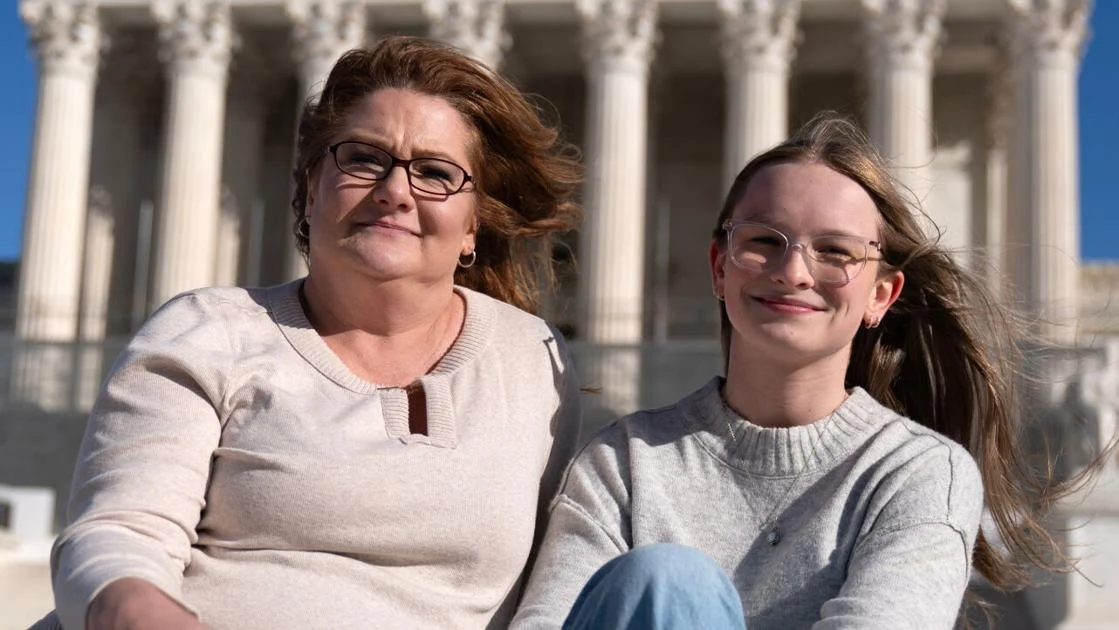
The U.S. Supreme Court will hold oral arguments tomorrow (Tuesday, Jan. 13) in two landmark cases challenging state laws banning transgender youth from participating in interscholastic and intercollegiate sports.

Lambda Legal, alongside the American Civil Liberties Union, will argue West Virginia v. BPJ on behalf of 15-year-old Becky Pepper-Jackson, a West Virginia teen who is challenging that state’s discriminatory ban. West Virginia is one of the 27 states that have banned transgender youth from playing school sports.

According to a press release from Lambda Legal, while the organization “will show up in the court of law to argue for Becky’s legal rights” tomorrow, Lambda Legal has already launched a public education campaign “in support of trans youth nationwide to do the same in the court of public opinion.”

“The first piece of this multi-faceted effort is the Trans Youth in Sports Conversation Guide, designed to help people navigate conversations about this topic with empathy, clarity and confidence,” the press release notes. “It offers thoughtful questions, human stories and select data points that can help forge greater understanding when chatting on the sidelines of a game or catching up at a social gathering.”

Lambda Legal CEO Kevin Jennings said, “Many Americans hear a regular drum beat of loud, hateful rhetoric — often from zealots who reject trans peoples’ right to exist — spouting falsehoods and sowing fear. As an antidote, Lambda Legal is offering new tools  to help lower the temperature, foster curiosity and understanding, and promote constructive neighbor-to-neighbor conversations.”

Lambda Legal is partnering with advocacy communications firm RALLY on the campaign, which will continue through to SCOTUS’ decision later this year. The foundation for the campaign is messaging backed by research RALLY conducted in late October of 2025, the press release explains. The firm surveyed 3,196 US adults ages 18-54 who identify as Democrats or Independents and found that:

• Positive, hopeful, values-based messaging frames about trans youth participation in school sports far out-performed those that focused on politicians.
• The most resonant message underscored that the life lessons kids learn from sports — leadership, perseverance, self-discipline, teamwork and more — don’t stay on the field. These lessons trickle into our classrooms, homes, and communities. When every child can participate in school sports, including transgender kids, we all benefit.
• Some of the best performing messages were able to shift support for trans youth inclusion by double digits, with several audience segments moving to majority support.”

Additional elements of the campaign in partnership with RALLY will be announced and rolled out in the weeks and months ahead. A decision on West Virginia v. BPJ is expected in the spring or early summer this year.

— Tammye Nash


Link

Continue Reading

Rec Sports

Eagles fall short against Pioneers on “Bubba’s Youth Day” | UW-La Crosse

Published

on


​COPYRIGHT 2025 BY NEWS 8 NOW/NEWS 8000. ALL RIGHTS RESERVED. THIS MATERIAL MAY NOT BE PUBLISHED, BROADCAST, REWRITTEN OR REDISTRIBUTED.


It was an emotional day inside Mitchell Hall as UW-La Crosse played host to UW-Platteville for a WIAC matchup on Saturday.

Festivities began at noon with “Charlie’s Kids fest” where kids could come play games and do other activities in the Mitchell Hall Fieldhouse.

Admission was free for everyone with donations being accepted for “Bubba’s Fund” after head coach Moran Lonning’s son Charlie died at just three months old in 2024. 

Special jerseys were worn by Eagle players honoring 19 infants who have passed away raising awareness for pregnancy and infant loss. 

In the game, UW-La Crosse came out of the gates on fire with a 9-2 run to begin the game forcing a timeout by the Pioneers. 

From that point, UW-Platteville settled in and would grab the lead 32-31 at halftime. 

The visitors would outscore the hosts in the second half 34-32 and go on to win the game 66-63. 

With the loss the Eagles fall to 8-6 and they’ll look to get back in the win column next Wednesday at UW-Whitewater. 

​COPYRIGHT 2025 BY NEWS 8 NOW/NEWS 8000. ALL RIGHTS RESERVED. THIS MATERIAL MAY NOT BE PUBLISHED, BROADCAST, REWRITTEN OR REDISTRIBUTED.


Link

Continue Reading

Rec Sports

Check out who are the top recruits playing at Flyin’ to the Hoop in 2026

Published

on


Seven members of the Nike Elite Youth Basketball League’s Scholastic League are participating as a tournament partner for the 2026 event. Those teams will play several games counting in its Scholastic league standings and a few will also take on local teams.

Coming with them to play in those games are many of the top four- and five-star prospects of the sophomore, junior and senior classes in the country.

“Each year we try to ‘out-do’ outselves from the year before with regards to the level of talent participating and I think we have achieved that again,” FTTH found and president Eric Horstman said. “With 10 5-star and 20-plus 4-star players on one court over the weekend, our fans will get to see some high-level talent that will eventually be playing professionally.

“As of last week, we will have 5 of the top 20 teams in the nation in Dayton over the MLK weekend.”

Three players ranked in the top-25 of the 247Sports Composite as of Wednesday and listed as five stars are participating at this year’s event.

The top rated player of the group is Arafan Diane of Iowa United (Utah). The 7-foot, 1-inch, 290-pound center is the top ranked player at his position and 14th overall ranked recruit in the country. He is signed to play at Houston.

Alex Constanza of SPIRE Academy is the 20th ranked recruit in the country and No. 2 player in Ohio. He is signed to play at Georgetown. Jaxon Richardson with Southeastern Prep out of Orlando, Fla., is the 22nd ranked prospect and fifth overall small forward in his class. He holds several power conference offers but has yet to commit.

Garfield Heights junior Marcus Johnson dunks the ball during their game against Wayne at Flyin' to the Hoop showcase earlier this season. Michael Cooper/STAFF PHOTO

icon to expand image

Other top-ranked recruits that have been rated as four stars include:

  • No. 32 Ikenna Alozie of Dream City Christian (Ariz.), committed to Houston
  • No. 55 Tarris Bouie of SPIRE Academy (Alabama)
  • No. 56 Jacob Webber of La Lumiere (Ind.) (Purdue)
  • No. 62 Anthony Felesi of Utah Prep (Pittsburgh)
  • No. 67 Katrelle Harmon of Wasatch Academy, Utah (Creighton)
  • No. 68 Jonathan Sanderson of La Lumiere (Notre Dame)

Four-star recruits include:

  • No. 75 Aiden Derkack, the brother of Dayton’s Jordan Derkack, from SPIRE Academy (Providence)
  • No. 81 Chidi Nwigwe of Wasatch Academy
  • No. 90 Collin Ross of SPIRE Academy (VCU)
  • No. 99 Jackson Kiss of Utah Prep (Iowa State)
  • No. 122 Gan-Erdene Solongo of La Lumiere (Notre Dame)

Margaretta features three-star Dayton signee Julian Washington and local fans can see the senior play on Jan. 19 at the event.

More five-stars that are 2027 recruits also will be present. Southeastern Prep features the top-two ranked juniors in the country, 6-foot-10 C. J. Rosser and 7-foot-0 Obinna Ekezie Jr., and also has No. 23 Beckham Black on the roster.

SPIRE has No. 11 King Gibson, and Dream City Christian has No. 13 Malachi Jordan.

Centerville's Tom House shoots from 3-point range against SoCal Academy at Flyin' To The Hoop on Jan. 16. On Saturday at Akron St. Vincent-St. Mary, House made three 3-pointers in the fourth quarter to rally the Elks to victory. Jeff Gilbert/CONTRIBUTED

icon to expand image

Four-star juniors include No. 28 Tyran Frazier and No. 55 Godson Okokoh of Iowa United, No. 32 Devin Cleveland of La Lumiere, No. 70 Joshua Tyson and No. 143 Bryce Curry of Lakota West, No. 78 Keaundre Morris and No. 85 Chris Brown of Dream City Christian, No. 81 Darrell Davis of SPIRE, No. 87 Marri Wesley and No. 122 Griffin Starks of Southeastern Prep, and No. 90 Trevor Manhertz of Christ School (N. C.)

Top ranked sophomores include four stars Mateen Cleaves Jr. of Dream City Christian, Stra Zelic of Wasatch Academy, and Keonte Smith of Northridge.

More than 100 players have competed at past FTTH events and have gone on to play in the NBA.

2026 Beacon Orthopaedics Flyin’ to the Hoop Schedule

Friday, Jan. 16

6:30 p.m. — Dream City Christian (Ariz.) vs. Wasatch Academy (Utah)

8:15 p.m. — SPIRE Academy vs. Reynoldsburg

Saturday, Jan. 17

11:30 a.m. — CATS Academy (Mass.) vs. Dream City Christian (Ariz.)

1:15 p.m. — Cincinnati Wyoming vs. Huber Heights Wayne

3 p.m. — Lima Senior vs. Brunswick

4:45 p.m. — Wasatch Academy (Utah) vs. Cleveland St. Ignatius

6:30 p.m. — Southeastern Prep (Fla.) vs. Lutheran East

8:15 p.m. — Fishers (Ind.) vs. Centerville

Sunday, Jan. 18

11:30 a.m. — Utah Prep (Utah) vs. CATS Academy (Mass.)

1:15 p.m. — Iowa United (Iowa) vs. Dream City Christian (Ariz.)

3 p.m. — Akron St. Vincent-St. Mary vs. Cincinnati Moeller

4:45 p.m. — La Lumiere (Ind.) vs. Lakota West

6:30 p.m. — Upper Arlington vs. Kettering Alter

Monday, Jan. 19

11:30 a.m. — Christ School (N. C.) vs. Iowa United (Iowa)

1:15 p.m. — Margaretta vs. Northridge

3 p.m. — La Lumiere (Ind.) vs. Utah Prep (Utah)

4:45 p.m. — Warrensville Heights vs. Kettering Fairmont

6:30 p.m. — Indian Hill vs. Tri-Village

When: Jan. 16-19, 2026

Where: Trent Arena, Kettering

Tickets: www.flyintothehoop.com/tickets.asp. $11 general admission per day, $21 reserved seating per day, $68 general admission three-day pass, $123 reserved seating three-day pass

For more information: 937-704-9670 ext. 112, www.flyintothehoop.com


Link

Continue Reading

Most Viewed Posts

Trending