
Motorsports
The Antitrust Trial that Could Take Apart NASCAR

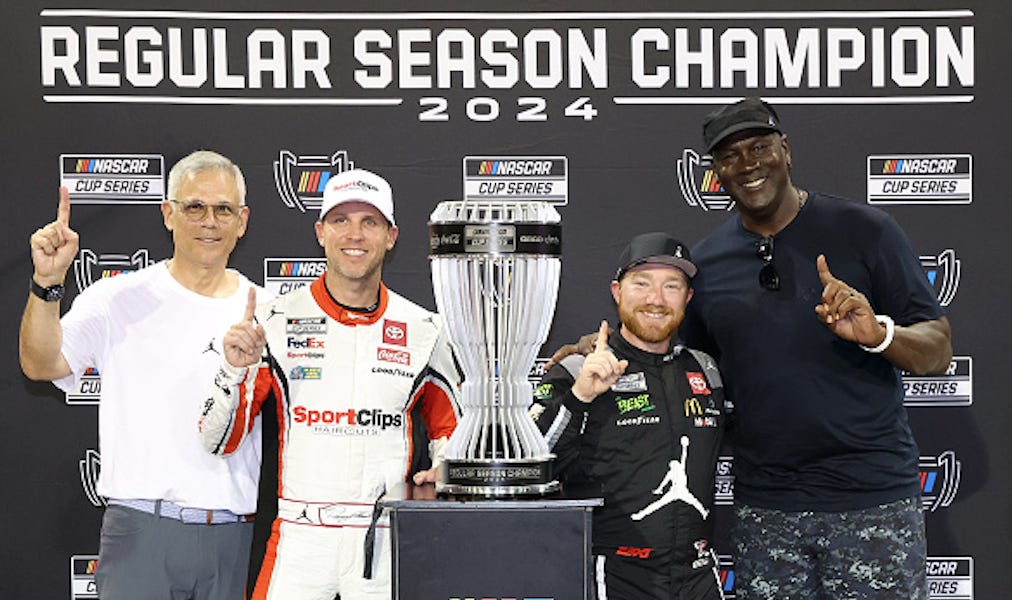
“The France family and NASCAR are monopolistic bullies. And bullies will continue to impose their will to hurt others until their targets stand up and refuse to be victims. That moment has now arrived.” – complaint against NASCAR
On Monday in a Charlotte, North Carolina courthouse, the weirdest and most interesting monopolization trial of the year started. A driving team, 23XI Racing, is suing NASCAR over its control of the sport, alleging violations of the Sherman Act for acting as a monopolist in the premier stock car racing market. 23XI is owned by basketball legend Michael Jordan and three-time Daytona 500 winner Denny Hamlin. Sitting on the other side is the billionaire France family, which owns NASCAR and speedways across the country.
It’s a real North Carolina scene, which is full of race tracks and racing fans. Jordan is a strategic weapon, sitting in the courtroom every day as the most famous and accomplished athlete in the history of the state. He is famously apolitical, but in this case, he said, “I’m willing to fight for a competitive market where everyone wins.” Several jurors were dismissed because of their love for Jordan, whereas another was kicked off the case because of her dislike for one of the driving teams involved. And then there was the guy who joked on his juror form that his hobby is “heavy drinking;” he was ultimately chosen to serve. The judge, Kenneth Bell, is a Trump appointee, and he moved the case lightning fast, bringing it to trial in a year.
The world of racing fans is glued to the trial, just as authors and agents couldn’t get enough of the merger challenge to Penguin/Simon & Schuster. And the reason is that antitrust trials are where everyone learns how their industry really works. There had always been rumors of dictatorial controlling behavior from NASCAR’s leadership, as well as attempts to quell dissent, everything from criticism of fees to attempts to unionize drivers. But now the evidence is coming out.
For instance, a few years ago Richard Childress, a legendary former driver and current owner who won six championships with Dale Earnhardt, made a comment about a new NASCAR TV deal. “Childress needs to be taken out back and flogged,” NASCAR Commissioner Steve Phelps texted Chief Media Officer Brian Herbst. “He’s a stupid redneck who owes his entire fortune to NASCAR.” Drivers and writers are in shock over these comments towards someone considered royalty in the sport. Another NASCAR stakeholder at one point showed contempt for fans, texting in one exchange, “Unfortunately, most our fans are not exactly top readers.”
The bad behavior is downstream from the market power exhibited by NASCAR. Last year, I wrote up the allegation of how the corporation maintains its monopoly.
The allegation is that NASCAR blocks rival top-tier stock car racing series from emerging so it can be the only place where racing teams can race. With its resulting monopoly buying power, NASCAR can underpay racing teams that compete in its events. The net effect is that NASCAR captures the bulk of the billions of dollars of revenue in the sport, and teams, even those helmed by famous racers, are almost always on the verge of bankruptcy.
NASCAR monopolizes in a number of ways. It buys rivals that might challenge its dominance. For instance, in 2018, it bought Automobile Racing Club of America (ARCA), which could have emerged as a competitor, but did not as a result of the merger. It also seeks to control the distribution and input channels in the industry. Over the years, especially with its purchase in 2018 of the International Speedway Corporation, NASCAR has bought up most of the viable race car tracks, such as Daytona International Speedway and Talladega Superspeedway.
Top tier tracks are expensive, requiring the ability to host tens of thousands of spectators, manage safety, infrastructure, track surface, promotional, mechanical facilities, insurance, and guest services, as well as staffing people with experience to run it. Those racetracks it doesn’t own it controls through contract, prohibiting independent tracks from hosting races of potential rivals as a condition of hosting NASCAR races. One result is that most of these tracks sit vacant throughout the year.
It’s not just mergers and control of tracks. Teams themselves are both gouged by NASCAR and blocked from competing in rival events. As the complaint puts it, “Teams are now required to shell out millions to purchase car parts dictated by NASCAR, but they do not retain ownership of these parts and are forbidden from using the cars containing these parts in any other racing event.” And of course, there are also non-compete agreements that teams have to sign.
The net effect is that NASCAR presents terrible deals to teams, and having invested a lot of capital, teams have no choice but to agree. Several anonymously discussed the level of fear they experience. NASCAR “put a gun to our head[s],” they were “coerced,” or put “under duress.” One team called NASCAR’s tactics that of a “communist regime.” That’s classic fear of retribution from a monopolist, which we see all over the economy.
Formally titled the National Association for Stock Car Auto Racing, NASCAR is a sanctioning body and operating company that offers temporary franchises to teams who own and run racing cars. It negotiates and splits TV revenue with those teams, runs marketing, owns racetracks, sets the rules, and otherwise manages the sport. It was founded in 1948 by Bill France, Sr., and the France family still runs it today. A charter guarantees a spot for a team in NASCAR races, and some of the prize money. Yet charters aren’t permanent, but must be renewed by NASCAR, which can revoke them.
Unlike major sports like the NBA or NFL, NASCAR shares relatively little with its teams, not nearly enough to cover the actual costs of running race cars, such as paying superstar drivers millions of dollars. Teams have to make up to cover these expenses with sponsorships, but NASCAR itself sometimes competes for those same sponsors. It’s a tense relationship, and teams are often on the verge of bankruptcy. According to the plaintiffs, 19 owners had charters in 2016, just eight remain in the sport. One left the sport a year after winning the championship.
In going through some of the court documents, what I found was the antitrust suit was the final straw in a long-running saga. Teams had been trying to collectively bargain for better terms for years, but were operating in fear over retaliation from the France family. As this discussion between NASCAR legend Jeff Gordon and financier Rob Kaufmann shows, weaker teams were so terrified in negotiations they would “sign whatever is put in front of them” for fear NASCAR would eliminate their charters. Meanwhile, NASCAR had $200 million in annual cash flow for dividends and debt payments.

In 2024, Jordan and Hamlin had enough of what they perceived as coercion from NASCAR, and worked with antitrust lawyer Jeffrey Kessler to file suit. Kessler is best known for breaking the NCAA cartel in 2020 over allowing college athletes to earn sponsorship money; he’s a heavy hitter. For its part, NASCAR has hired big law partner Chris Yates from Latham & Watkins.
NASCAR’s response is that there is plenty of competition among motor sports, from IndyCar to NASCAR to Formula 1. They compete over capital, talent, and sponsors. Moreover, the monopolization claims from two owners are pretextual, a mere way to extract better terms they couldn’t otherwise get through skill or value creation. Owners requested the charter system now at issue, and did not discuss trying to race in other stock car racing circuits. Moreover, their franchises, though temporary, are worth money, so there’s economic value that these owners are pretending doesn’t exist in order to put forward a claim.
But Yates also made a significant legal error that makes the case easier for the plaintiffs. As part of the legal tussle, NASCAR countersued the teams, alleging that the owners were themselves violating antitrust law by coming together as a cartel in joint negotiations. In bringing that claim, NASCAR unwittingly told the judge it’s a monopolist in the premier stock car racing market. And so while the judge dismissed NASCAR’s counterclaim that there’s an owner cartel, he did rule that NASCAR is a monopolist. “NASCAR made a strategic decision in asserting its Counterclaim and must now live with the consequences,” the judge wrote.
Oops.
The case is going badly for NASCAR. Yesterday, Hamlin got emotional on the stand, crying when he discussed entering the sport and telling the jury about his views of NASCAR’s unfair terms. “If the terms were fair, (so many teams) wouldn’t have gone out of business,” he said. “Only one side is going out of business.” Today, NASCAR’s lawyers sought to take apart Hamlin’s credibility, attempting to show him as a spendthrift and unreliable narrator changing his story to whatever would best suit his needs. But then the plaintiff’s lawyer, Jim Kessler, put NASCAR executive Scott Prime on the stand. And Prime had to defend his own emails saying NASCAR prevented Speedway Motorsports from hosting a different stock car series, the Superstar Racing Experience (SRX), over fears that SRX might become a real competitor.
There are eight more days to go, and the seething anger and evidence is going to continue emerging. As with all antitrust cases, the outcome is uncertain, and it’ll likely be appealed on various grounds. But already, NASCAR’s reputation, and that of the France family, has taken a serious hit. The company has always been known as a dictatorship. In the 1960s, Bill France Sr. banned union members from participating in races. “I’ll use a pistol to enforce” the rule, he said. “I have a pistol and know how to use it.” There were physical fights over safety matters at tracks. But under Bill Sr, NASCAR was well-managed.
But the big problem is that the stock car series has lost its mojo. In 2004, 17 out of the top 20 biggest sporting events by attendance in the U.S. were NASCAR races. At roughly that time, comedian Adam McKay released the beloved comedy, Talladega Nights: The Ballad of Ricky Bobby, starring Will Ferrell and John C. Reilly in a story about NASCAR drivers in George W. Bush’s America. It was the number one movie at the summer box office for two weeks in a row, and captured the zeitgeist of a sport that was then at its zenith. Dale Earnhardt Jr. was one of the most popular figures in the country, and NASCAR was at a peak in its popularity. From 2001-2015, average viewership was 15-19 million.
But that has changed. Last year the Dayton 500 had an average audience of 6.7 million. Attendance and ratings have collapsed, and races, which once sold out tickets and were the biggest sporting events in the country, now routinely have empty stands. While always right-leaning, the league got more political, with CEO Brian France, the grandson of the founder, as an early Trump supporter. Then in 2018, France was arrested for drunk driving and possession of oxycontin. Yet, NASCAR maintained tight control of its media image, so it was hard to figure out what had gone wrong.
NASCAR fans are finally finding in this lawsuit some of the answers to why the sport hasn’t been managed well. It’s because the management, while always dictatorial, came to have contempt for the actual teams and fans who made the sport work. And that’s where this antitrust suit could actually help. Michael Jordan, in some ways, is the ultimate fan. He loves racing, and the competition, and put his money to work to win championships. And his group is angry that NASCAR doesn’t seem to take the sport as seriously as they do, instead choosing to focus on extraction. There are many important aspects of this case. It’s a monopolization argument that may lead to NASCAR having to sell some of its tracks, aka a break-up. It is on trial within a year, which shows these cases can be done quickly. It’s a jury trial.
But if nothing else, it is actually forcing some accountability for the billionaires who own NASCAR, purely through the court system. And in doing so, it is showing the potential of a path for others who don’t want to take crap from bad leaders anymore.

Thanks for reading! Your tips make this newsletter what it is, so please send me tips on weird monopolies, stories I’ve missed, or other thoughts. And if you liked this issue of BIG, you can sign up here for more issues, a newsletter on how to restore fair commerce, innovation, and democracy. Consider becoming a paying subscriber to support this work, or if you are a paying subscriber, giving a gift subscription to a friend, colleague, or family member. If you really liked it, read my book, Goliath: The 100-Year War Between Monopoly Power and Democracy.
cheers,
Matt Stoller

Motorsports
NASCAR legend set strict rule before daughter’s Tulsa Shootout debut – Motorsport – Sports

Legendary NASCAR driver Ryan Newman will see his 14-year-old daughter race at the Tulsa Shootout this weekend – an event at which many have looked to make a name for themselves.
The largest event for micro sprint racing in the world, the Tulsa Shootout begins this week with Brooklyn Newman set to be competing. Newman is not the only driver to see his kids race in the event this weekend, with Kyle Larson’s son and daugher both set to be behind the wheel.
A hectic and unforgiving race, a 13-year-old had a helmet thrown at him by a fellow driver this week after an ugly incident on the track.
Newman is all too knowing of the risks that come with the sport, but has trust in his daughter and allowed her to race in the event after making a deal with her.
The former Daytona 500 winner had spoken on why he’s allowing her to compete, stating that at the start of last year, she asked him: “Dad, I want to go Tulsa”.
Newman responded to his daughter: “We have a good year. I’ll take you to Tulsa, so here we are in Tulsa and it’s the end of the year. So we’ll see how we finish up.”
The 14-year-old is seen as an exciting prospect in motorsports, competing across multiple events including at the Winged Micro, Outlaw Dirt Intermediate and 602 Modified classes.
She impressed her father enough to enter her in the Tulsa Shootout this week, where she’ll be in Race 67 of the Outlaw micro sprint class.
Ahead of the race, she said: “We had a pretty fast car. I’m excited.”
Meanwhile, NASCAR Cup Series Championship winner Larson will see his son and daughter enter the same event this weekend.
Larson said on his children competing: “That’s what I’m most excited about is just getting to see the kids participate in a big event, have fun and, hopefully, do a good job.
“Audrey, she’s getting to run her first Shootout in the junior sprint—and she takes it very seriously. We’ve watched every lap of the 2024 Shootout, every lap of the Junior Sprint. So she’s been studying. Hopefully, she can do good.
“And then Owen, he has been doing a good job this year, but he’s going to be in a lot of tough divisions, so I don’t know what to expect there. Obviously, it takes a little bit of luck along the way.”
Motorsports
Watkins Glen International Statement on the Passing of Michael Printup – Speedway Digest
“Watkins Glen International is saddened by the passing of former President Michael Printup, who led the facility for 15 years.
During his tenure, Michael played a key role in the continued growth and success of Watkins Glen International, helping to strengthen its operations, partnerships, and standing within the motorsports industry while honoring the venue’s storied history.
Michael was a respected leader who left a lasting impact on the organization and those who worked alongside him. We extend our sincere condolences to his family, friends, and colleagues.”
WGI PR
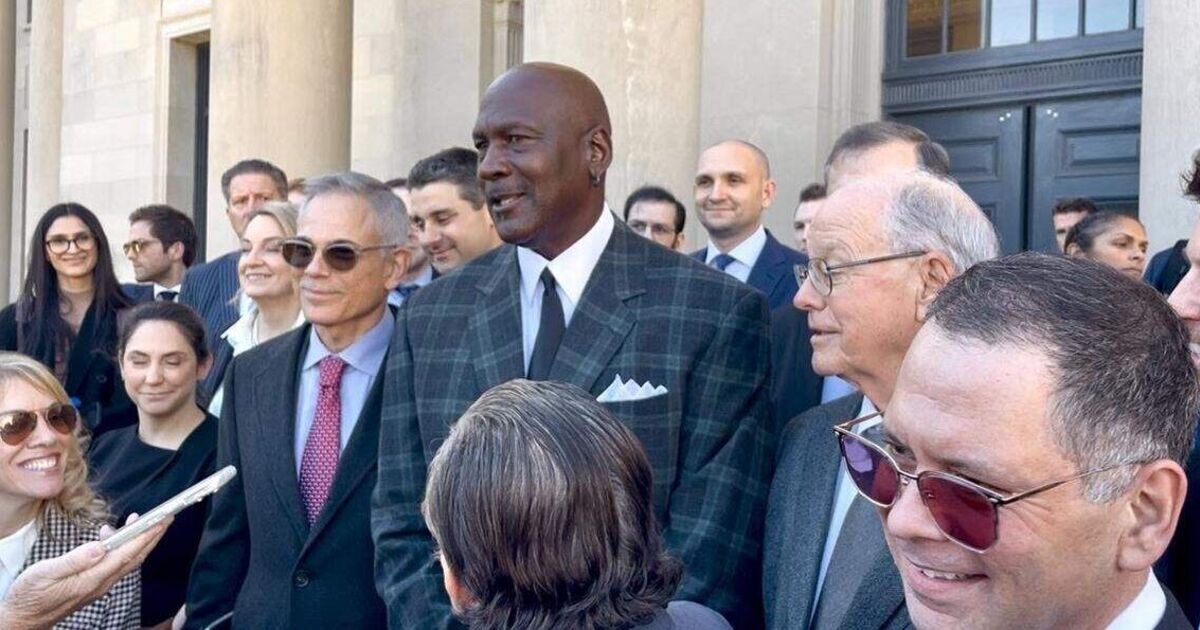
The long-running feud between NASCAR and two of its teams — 23XI Racing, Front Row Motorsports — finally came to an end on Dec. 11 when it was announced that the two teams had reached a settlement agreement in the antitrust lawsuit filed against the organization. And according to one litigator, NASCAR likely had to pay up big to bring the damaging suit to an end.
The lawsuit alleging “monopolistic” behaviour had been filed in October 2024, the month after they were the only teams to refuse to sign NASCAR’s new charter agreement, which was meant to align with the new seven-year $7.7 billion TV broadcasting rights deal.
Ultimately, the trial in Charlotte, North Carolina, lasted just eight days before a settlement was reached. During the course of the trial, both sides revealed less-than-flattering messages exchanged privately from their counterparts.
A prime example came from 23XI co-owner Michael Jordan calling Joe Gibbs Racing “f——” and the teams that signed the agreement “p——.”
As for NASCAR, it arguably emerged far worse off than its opponents, thanks in no small part to commissioner Steve Phelps, who was revealed to have called Hall of Fame team owner Richard Childress “an idiot” and a “stupid redneck” who he said should be “taken out back and flogged.”
Sign up to our NASCAR newsletter here.
NASCAR CEO Jim France also didn’t fare well, having supposedly responded to Joe Gibbs’ plea for further negotiations by simply saying, “If I wake up and I have 20 charters, I have 20. If I have 30, I have 30.”
Thankfully, the sides were able to come to an amicable agreement in the end, halting the need for further embarrassment.
“This resolution reflects our shared commitment to maintaining a fair and equitable framework for long-term participation in America’s premier motorsport, one that supports teams, partners and stakeholders while ensuring fans enjoy uninterrupted access to the best racing in the world,” a joint statement said.
“The agreement allows all parties to move forward with a unified focus on advancing stock car racing and delivering exceptional competition for our fans.
“With this matter now resolved, all parties look forward to working together, alongside all chartered race teams, to deliver world-class events, dynamic sponsorship and partner activation opportunities, and continued growth for generations to come.”
While the terms of the agreement were not made public, barring the implementation of “evergreen” charters, antitrust litigator Meegan Hollywood told the Sports Business Journal, NASCAR may well have forked up around 10-25 percent of the $365 million in damages the teams were seeking, meaning anywhere from $36.5 to $91.25 million.
However, another antitrust lawyer, who opted to remain anonymous, believed the payment could have been at least 50 percent, or $182.5 million.
The trial was a costly one for all involved, with the combined attorney fees suspected by Hollywood to be in the region of $50 million, with the second lawyer suggesting this estimation could only be half of the true amount.
“I suspect also that this particular settlement allowed them to have a little bit more control in the changes that they made to the charter system,” Hollywood suggested, adding, “Because in addition to the sort of financial risk, NASCAR did run the risk of having court-mandated changes and then they sort of would have had to do that not on their own terms. This probably allowed them to make certain changes on their own terms and have some more internal control.”
Motorsports
Joey Logano sends touching message to Denny Hamlin after NASCAR tragedy – Motorsport – Sports
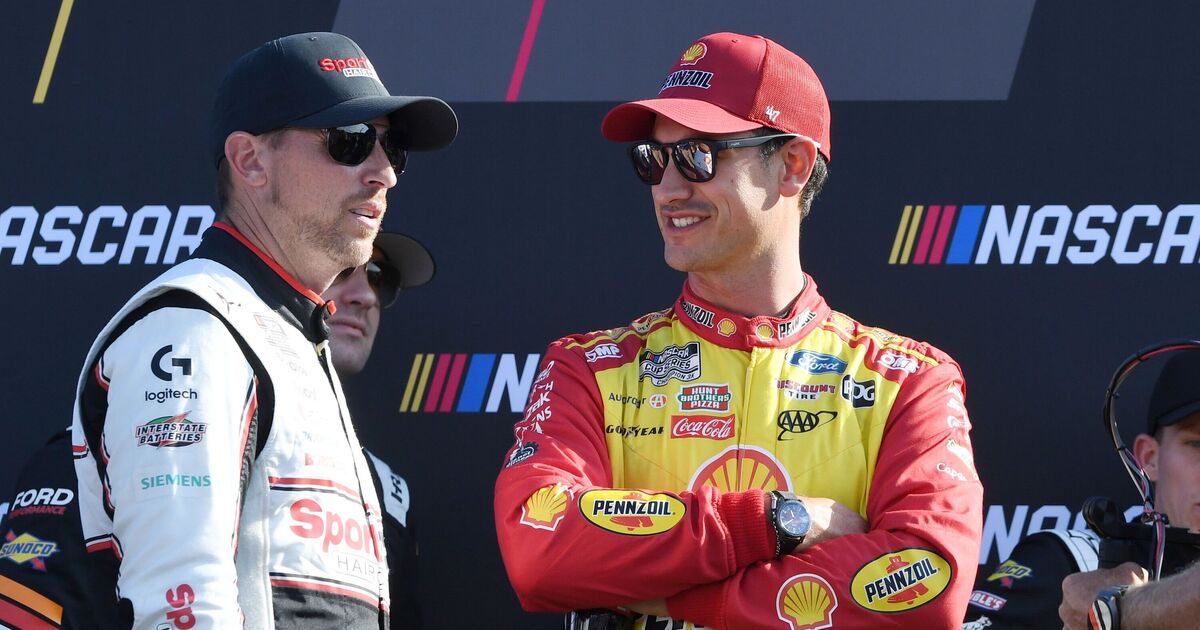
Joey Logano sent his thoughts and prayers to Denny Hamlin and his family in the aftermath of a devastating housefire.
On Sunday, the home where Denny Hamlin’s parents, Dennis and Mary Lou Hamlin, lived in North Carolina was destroyed in a massive blaze. On Monday, Dennis Hamlin, who already had been seriously ill, was confirmed to have died while Mary Lou Hamlin continued to recover from her injuries.
Now, Logano is the latest NASCAR star to reach out to the grieving Hamlin family amid their tragedy. The 35-year-old’s social media post comes just hours before Denny Hamlin broke his silence on the death of his father while simultaneously giving an update on his mother.
“My thoughts and prayers go out to @dennyhamlin,” the three-time Cup Series champion posted on X. “Such a horrific situation. The Logano family will continue to think of and pray for everyone impacted, and we’ll pray for Mary Lou and hope the best for her full recovery.”
It wasn’t just Logano that sent his thoughts and prayers to Hamlin and his family; A large majority of the NASCAR community sent their condolences to the 45-year-old. 23XI Racing, the team he co-owns with Michael Jordan, posted a statement on social media regarding the tragedy.
Sign up to our NASCAR newsletter here.
“Everyone at 23XI Racing is deeply saddened by the tragic news concerning the Hamlin family. We extend our deepest condolences to Denny and the entire Hamlin family during this difficult time. Our thoughts and prayers remain with the family and his mom,” the statement read.
Kyle Larson, who defeated Hamlin at Phoenix to win his second Cup Series championship, also sent his thoughts and prayers to the star, as did Kaden Honeycutt and Rodney Childers, a crew chief for JR Motorsports. NASCAR also released a statement on social media, offering its condolences to the Hamlin family after it was confirmed that Dennis Hamlin had died.
“NASCAR extends its deepest condolences to Denny Hamlin and the entire Hamlin family,” the statement began.
“Dennis Hamlin instilled a love of racing in his son, and sacrificed greatly to develop Denny into a world-class talent in the sport. We also continue to offer our thoughts and prayers to Denny’s mother, Mary Lou, and hope for her full recovery.”
On Wednesday, Denny Hamlin broke his silence and took to social media to express his gratitude for the outpouring of support he’s received in the days following the fire and his father’s death.
The NASCAR star wrote: “Thank you to everyone who has reached out with condolences on my father’s passing. My mother continues to improve, and our family truly appreciates the outpouring of support and the respect for our privacy during this time.”
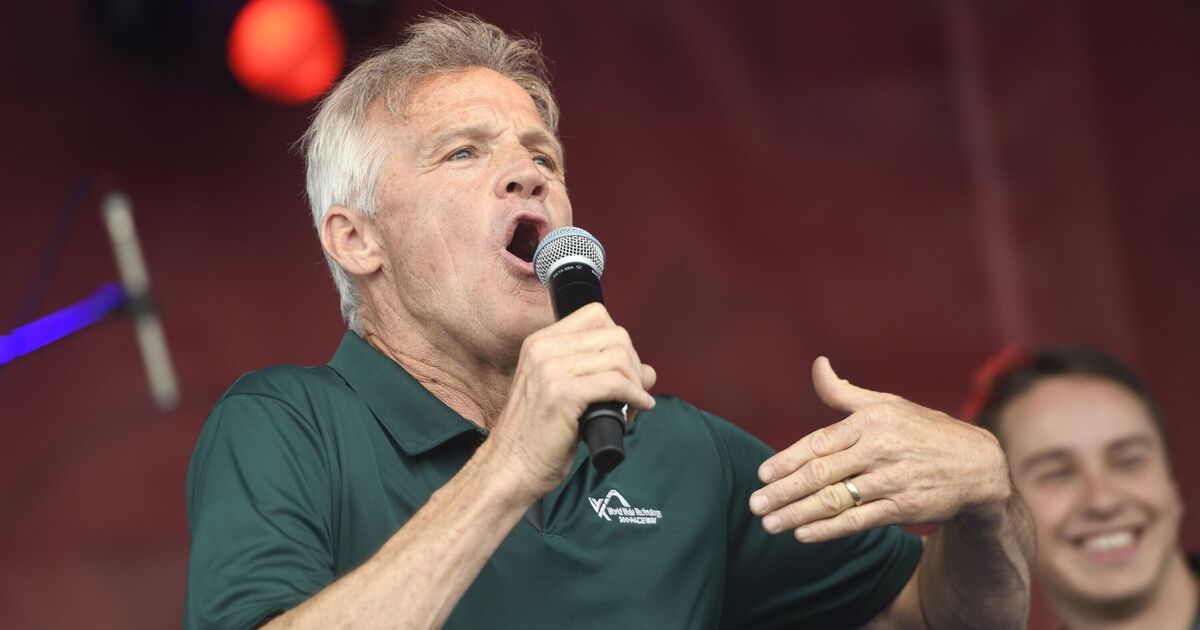
Former NASCAR driver Kenny Wallace joined in on the ongoing debate regarding the value fans receive for the price of their tickets to attend races.
Speaking on his ‘Coffee with Kenny’ segment on X, Wallace detailed his frustrations with NASCAR’s ticketing strategy in recent years, which has prevented fans from enjoying a full and affordable experience at the racetrack and caused a decline in attendance.
Through the introduction of the one-ticket-for-everything bundle, which prohibits fans from buying a ticket to just the race or practice, many fans’ interest in attending live races has deteriorated, Wallace claimed.
“People say that the price of the ticket is relatively cheap when you consider inflation, people aren’t complaining about the price to get in the race track,” Wallace said, detailing a phone call he had with a NASCAR track owner.
“Here’s what they’re complaining about… what I’m hearing through a NASCAR track owner is that the fans are upset there’s nothing going on at the racetrack.”
Entry level tickets at low-end races fall within the $40 to $60 range, but most tracks have increased general admission and basic grandstand seats closer to $100. Single tickets to higher profile events, such as the Daytona 500, can cost $350 or more.
But that is just the base level. Camping, VIP passes, infield access and other experiences add to those costs significantly, sometimes exceeding four figures for one individual, much less a family.
Most fans’ gripes, Wallace said, come from the lack of action around the grounds for what a multi-day ticket costs. Track owners want to pack the campgrounds and encourage fans to come on Thursday night and stay through Sunday’s race, but there just isn’t enough exposure to Cup Series action throughout the weekend.
In recent seasons, the Cup Series moved most practice and qualifying activity into tight windows on Saturday afternoon, giving fans eager to see the stars of the sport little reason to show up as early as Thursday night.
“Back in the day, say, I don’t know, 15 years ago, when you went to the racetrack you had a reason to get there on Thursday night,” Wallace said.
“My track owner says that’s why the camping grounds are not packed anymore because Cup practice is at 4:30 on Saturday night right now. And the times change for everything, nothing is consistent. Nobody knows what the f— is going on.”
Wallace then sent a plea to NASCAR president Steve O’Donnell to enact change.
“Steve O’Donnell, my dear friend, if you’re listening to this, ‘You are the president of NASCAR. Let’s get some practice in on Friday and Saturday. Let’s do some things. Let’s give, let’s give these, these fans a reason to get to the racetrack early.”

January 1, 2026
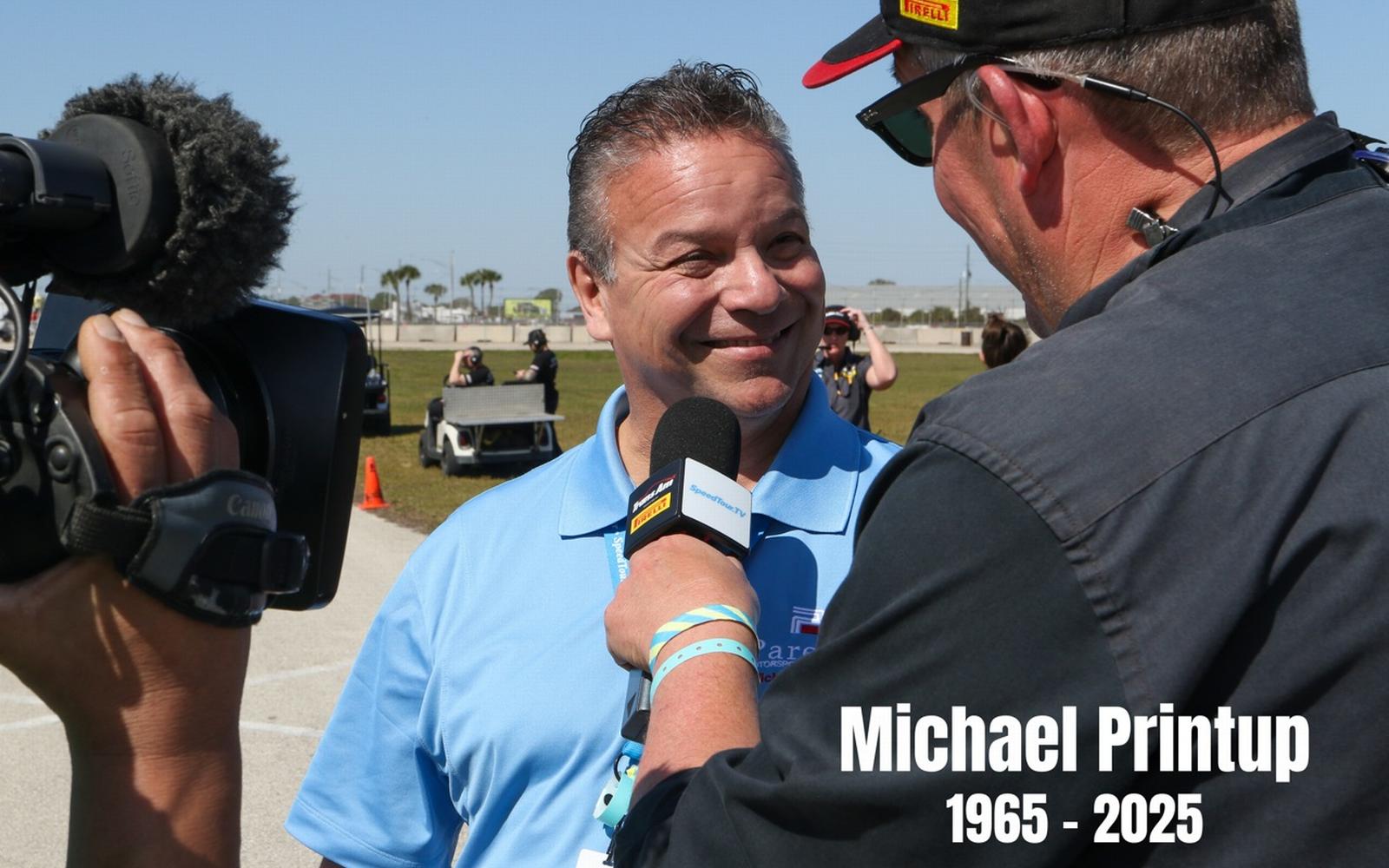
Racing America is devastated to confirm the sudden passing of Chief Operating Officer Michael Printup. Michael was an icon in motorsports, a great partner and a friend. His passion for racing and commitment to the industry made a lasting impact on the sport. He will be deeply missed. Racing America sends our thoughts and condolences to Michael’s family, friends and colleagues.
Michael first joined Racing America in July 2023 as the President of Sportscar Vintage Racing Association (SVRA). In January 2024, he was promoted to Chief Operating Officer, where he oversaw the Trans Am Series presented by Pirelli, as well as all racing operations. A native of Hamburg, N.Y., Michael spent nearly three decades working for NASCAR, most notably in the role of president of Watkins Glen International. He was also president of Americrown and oversaw the Levy food service contract for 12 NASCAR-owned racetracks.
“For more than 15 years, Michael has been a great friend, from a lot of fun times together at Watkins Glen to being massively helpful to me in my new role this past year,” said Trans Am President Andy Lally. “I leaned on him a lot for advice in so many areas, and he was incredibly generous with his time. I’m going to miss him terribly.”
Michael leaves behind his wife, Stephanie, two boys Brendan (Caitlin) and Matthew, and two granddaughters, Sophia and Vivienne.
A memorial service for Michael will be held on Wednesday, January 7, 2026 from 2-4 p.m. at James A. Dyal Funeral Home (303 S. Main Street, Summerville, SC 29483).

New Arkansas football GMs rise up the ranks in College Football’s new era

Emerald Acres Volleyball Tournament | MyRadioLink.com

NASCAR legend set strict rule before daughter’s Tulsa Shootout debut – Motorsport – Sports

Former Illini basketball sharpshooter Luke Goode engaged to Illinois volleyball star Kayla Burbage

Watkins Glen International Statement on the Passing of Michael Printup – Speedway Digest

Hawkeyes Knock Down Nebraska – Iowa Hawkeyes Athletics

Player pay and transfer portal put college sports in new territory

No. 4 Tech falls to No. 5 Oregon in the Orange Bowl

NASCAR predicted to have paid big to end antitrust lawsuit – Motorsport – Sports

Dallas Pulse set to make history in season opener at Comerica Center

Looking back at top local sports moments of 2025

Two unexpected college football teams emerge as contenders for $2 million QB

Iola outside hitter takes top honor on Texas 2A all-state volleyball team | APG State News

Joey Logano sends touching message to Denny Hamlin after NASCAR tragedy – Motorsport – Sports

Ty Gregorak on the state of college football + MSU heading to national championship – Skyline Sports

SoundGear Named Entitlement Sponsor of Spears CARS Tour Southwest Opener

Donny Schatz finds new home for 2026, inks full-time deal with CJB Motorsports – InForum

Black Bear Revises Recording Policies After Rulebook Language Surfaces via Lever

David Blitzer, Harris Blitzer Sports & Entertainment

How Donald Trump became FIFA’s ‘soccer president’ long before World Cup draw

DeSantis Talks College Football, Calls for Reforms to NIL and Transfer Portal · The Floridian
Elliot and Thuotte Highlight Men’s Indoor Track and Field Season Opener

Rick Ware Racing switching to Chevrolet for 2026

JR Motorsports Confirms Death Of NASCAR Veteran Michael Annett At Age 39

#11 Volleyball Practices, Then Meets Media Prior to #2 Kentucky Match

Colleges ponying up in support of football coaches, programs

Nascar legal saga ends as 23XI, Front Row secure settlement
West Fargo volleyball coach Kelsey Titus resigns after four seasons – InForum

Temple Begins Indoor Track & Field Season at UPenn This Weekend

Sunoco to sponsor No. 8 Ganassi Honda IndyCar in multi-year deal





-
 Sports3 weeks ago
Maine wraps up Fall Semester with a win in Black Bear Invitational
-
 Motorsports2 weeks ago
Ross Brawn to receive Autosport Gold Medal Award at 2026 Autosport Awards, Honouring a Lifetime Shaping Modern F1
-

 NIL3 weeks ago
Nike Signs 10 LSU Athletes to NIL deals
-
NIL3 weeks ago
Georgia football’s Dontrell Glover, Bo Walker arrested for shoplifting
-

 Rec Sports2 weeks ago
Stempien to seek opening for Branch County Circuit Court Judge | WTVB | 1590 AM · 95.5 FM
-

 Rec Sports3 weeks ago
Hillsborough Democrats announce 2026 committee slate
-

 NIL3 weeks ago
Meet The Two Oregon Freshmen Ready To Make Ducks History Under Dan Lanning
-
 Rec Sports2 weeks ago
Princeton Area Community Foundation awards more than $1.3 million to 40 local nonprofits ⋆ Princeton, NJ local news %
-
 NIL2 weeks ago
Kentucky AD explains NIL, JMI partnership and cap rules
-
 Rec Sports3 weeks ago
Concord sports memorabilia dealer admits to fraud after selling phony Willie Mays items