2025 was a disappoint season for the Minnesota Gophers. P.J. Fleck was starting a redshirt freshman quarterback, but heading into the season there was legitimate hope this team could win nine or ten games.
Not only did they win just seven, but Fleck got embarrassed by Iowa in his ninth season on the job, and they didn’t perform well against Northwestern, either. Minnesota is headed to the Rate Bowl against New Mexico in Phoenix, but the page needs to be flipped to 2026.
If the Gophers are going to be better next year, it will be because Drake Lindsey, Koi Perich, and Darius Taylor contribute in a big way. They aren’t going to be cheap to keep around, either, as the transfer portal will soon heat up.
MN Gophers spending big on key roster talent
The college sports landscape has changed amidst the introduction of NIL spending. Roster creating, especially in revenue generating sports, is not simply a byproduct of recruiting anymore. Dollars are attached to expectations, and Charley Walters revealed the substantial amount Minnesota will need to pay their stars.
It is expected to cost the Gophers at least $1 million to retain redshirt QB Drake Lindsey for his sophomore season next year. That would make him and 2016 junior defensive back Koi Perich at least a $2 million duo. Add Darius Taylor and the cost could exceed $3 million for trio.
Charley Walters – Pioneer Press
Drake Lindsey hardly set the world on fire this season. He completed 63.2% of his passes, with 16 touchdowns and 6 interceptions. At times, he looked every bit of a redshirt freshman. However, he also showed off his special arm talent, and there’s clearly a path for development.
Needing to pay a guy like Lindsey seven figures to retain his services is indicative of what college football has become, way too expensive… Minnesota will likely pony up for the Arkansas native who has always had a soft spot in his heart for the home state Razorbacks. It’s also probably helpful that his mentor, Vikings QB Max Brosmer is still in town.
Perich earned a hefty jump in NIL funds after leading the Big Ten in interceptions as a true freshman. The Minnesota native was nowhere near as noticeable this year, but he did record his first pick six. It seems logical he’ll be back, but the number will only increase.
Of the trio, Darius Taylor would seem to be the most expendable. An extremely talented running back, but rarely can be counted upon to remain on the field. Taylor played in just nine games for the Gophers while nursing a hamstring injury, and someone else paying for him to be injured on their sideline wouldn’t be the worst outcome.
Attendance still an issue for Minnesota Gophers
P.J. Fleck has the best recruiting class in history for the Minnesota Gophers for 2026. He held onto that talent despite the 7-5 record, but he’ll need to do much better in order to generate additional interest in the program. Walters added this about attendance for the Gophers:
Meanwhile, Gophers football attendance has decreased for a second straight season, averaging 46,519 for its seven games this year in 50,085-capacity Huntington Bank Stadium.The Gophers’ highest attendance average in history was 62,954 in 1957 at Memorial Stadium. The Metrodome years topped out at 60,985 in 1985; and the Huntington Bank Stadium high is 52,355 in 2015.During Fleck’s nine seasons at Minnesota, home attendance — excluding the abbreviated COVID 2020 season — has averaged 45,257.
Pioneer Press
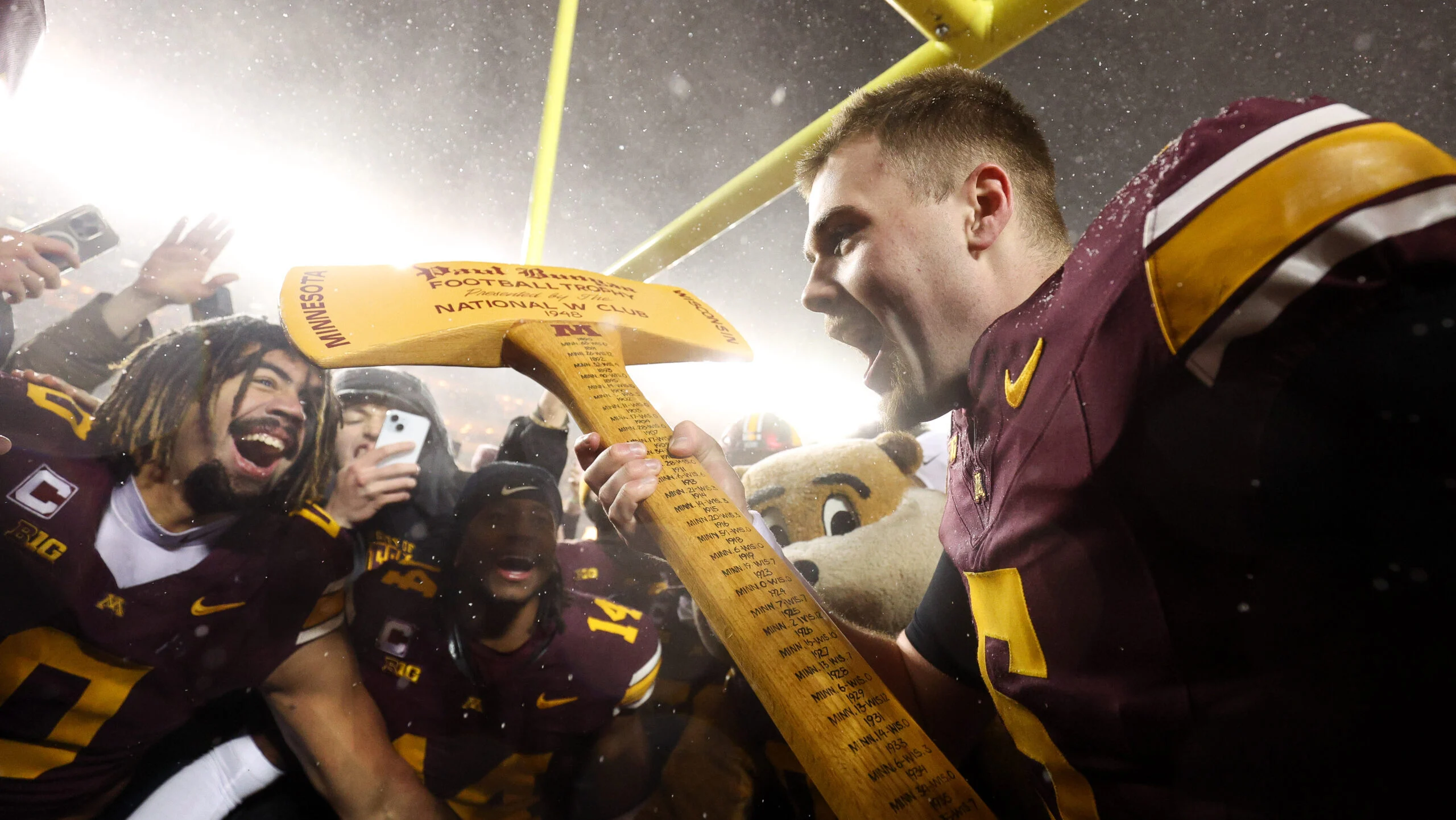
When things are good at Huntington Bank Stadium, they can be really good. The problem is that Fleck has largely failed to sustain consistency. It might have seemed odd to storm the field after beating Nebraska, but it could have held more weight if the season trended in a positive direction.
At some point Fleck needs to reach a new level. He is 6-0 in bowl games at Minnesota, but has won less than nine games each of the past three seasons. An outlier 11-2 season with Tanner Morgan in 2019 is the high-water mark, and he’s shown zero semblance of returning to those heights since.
Mentioned in this article: Darius Taylor Drake Lindsey Koi Perich
More About: Minnesota Gophers Football
Add MinnesotaSportsFan as a preferred source on Google.
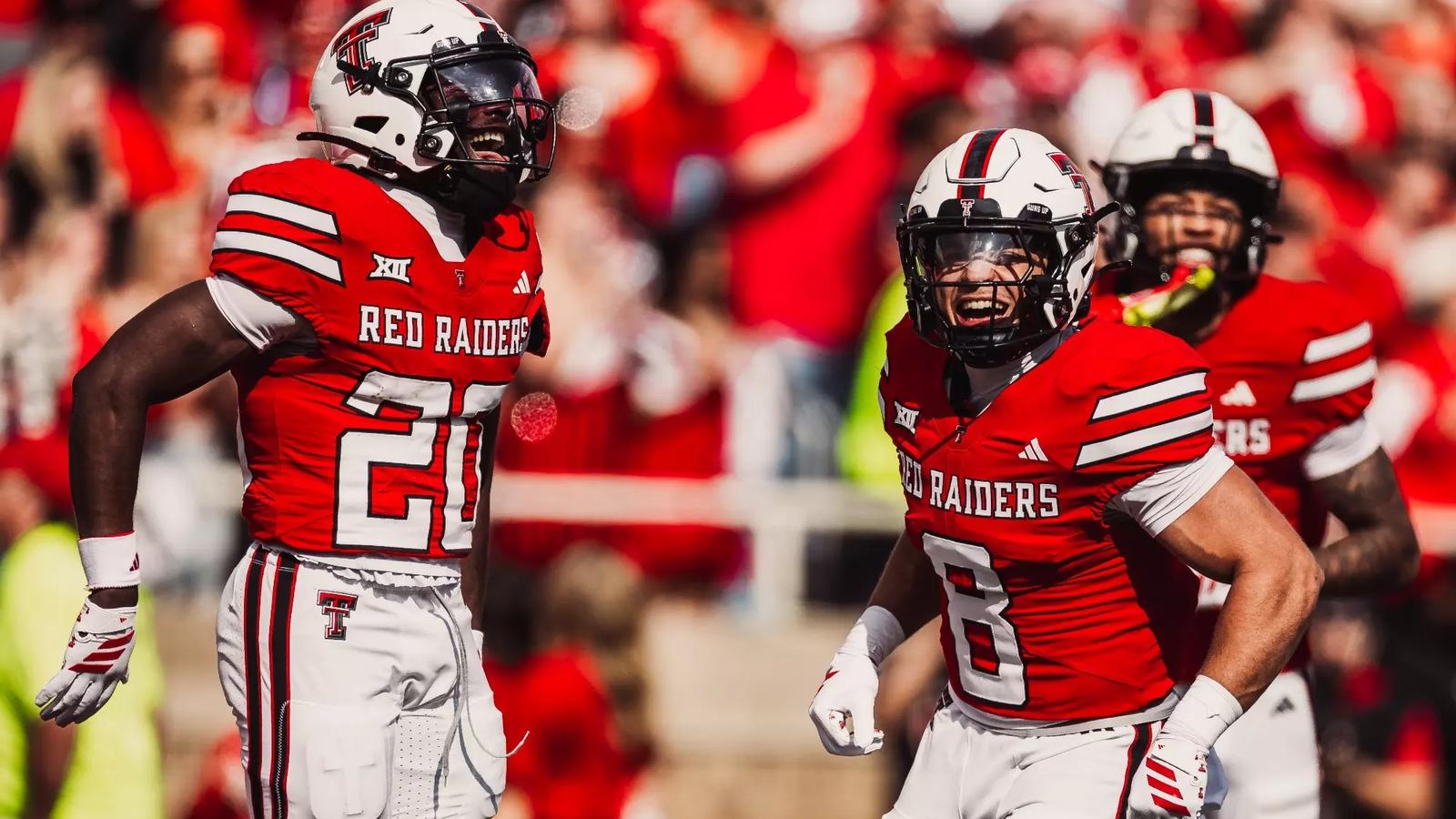
LUBBOCK, Texas – Dave Campbell’s Texas Football unveiled its 2025 All-Texas College Football Team following championship weekend, with the seven Power Four programs in the Lone Star State accounting for 40 of the 56 players selected. Texas Tech led all programs with eight honorees.
Butkus Award and Bronko Nagurski Trophy winner Jacob Rodriguez was tabbed the Dave Campbell’s Texas Football Defensive Player of the Year, in addition to being selected as one of Texas Tech’s four First-Team All-Texas Defense picks. Joining the standout linebacker on the first team were defensive end David Bailey, defensive tackle Lee Hunter, and cornerback Brice Pollock. That quartet played a key role in elevating the Red Raiders to top-five national rankings in turnovers gained (1st, 31), rushing defense (1st, 68.5 yards per game), scoring defense (3rd, 10.9), total defense (5th, 254.4), and sacks (T-5th, 3.0 per game).
Defensive end Romello Height, an integral part of Tech’s pressure-heavy front, was named to the Second-Team All-Texas Defense. Height recorded 54 pressures this season, according to Pro Football Focus, the seventh most in the FBS. Bailey led all of college football with 74 pressures.
On the offense, running back Cameron Dickey and offensive lineman Howard Sampson were each named First-Team All-Texas Offense, while running back J’Koby Williams was tabbed to the second team.
A total of 56 players were selected, with 28 on offense and 28 on defense. Texas Tech’s eight selections led all teams, followed by seven for Texas A&M, and six for the Texas Longhorns. The six Group of Five programs had a combined 16 players on the list, led by North Texas with six.
Eddie Robinson and George Munger Coach of the Year finalist Joey McGuire was named the DCTF Co-Coach of the Year alongside Texas A&M’s Mike Elko. Both head coaches have their teams in this year’s College Football Playoff, with the Red Raiders earning the No. 4 seed and the Aggies the No. 7 seed.
DCTF 2025 ALL-TEXAS COLLEGE FOOTBALL TEAM(Texas Tech selections)
First-Team All-Texas Offense
RB: Cameron Dickey, So.
OL: Howard Sampson, Jr.
First-Team All-Texas Defense
DE: David Bailey, Sr.
DT: Lee Hunter, Sr.
LB: Jacob Rodriguez, Sr.
CB: Brice Pollock, Jr.
Second-Team All-Texas Offense
UTL: J’Koby Williams, So.
Second-Team All-Texas Defense
DE: Romello Height, Sr.
Defensive Player of the Year: LB, Jacob Rodriguez
Co-Coach of the Year: Mike Elko (Texas A&M), Joey McGuire (Texas Tech)
To view the complete 2025 All-Texas College Football Teams, visit TexasFootball.com.
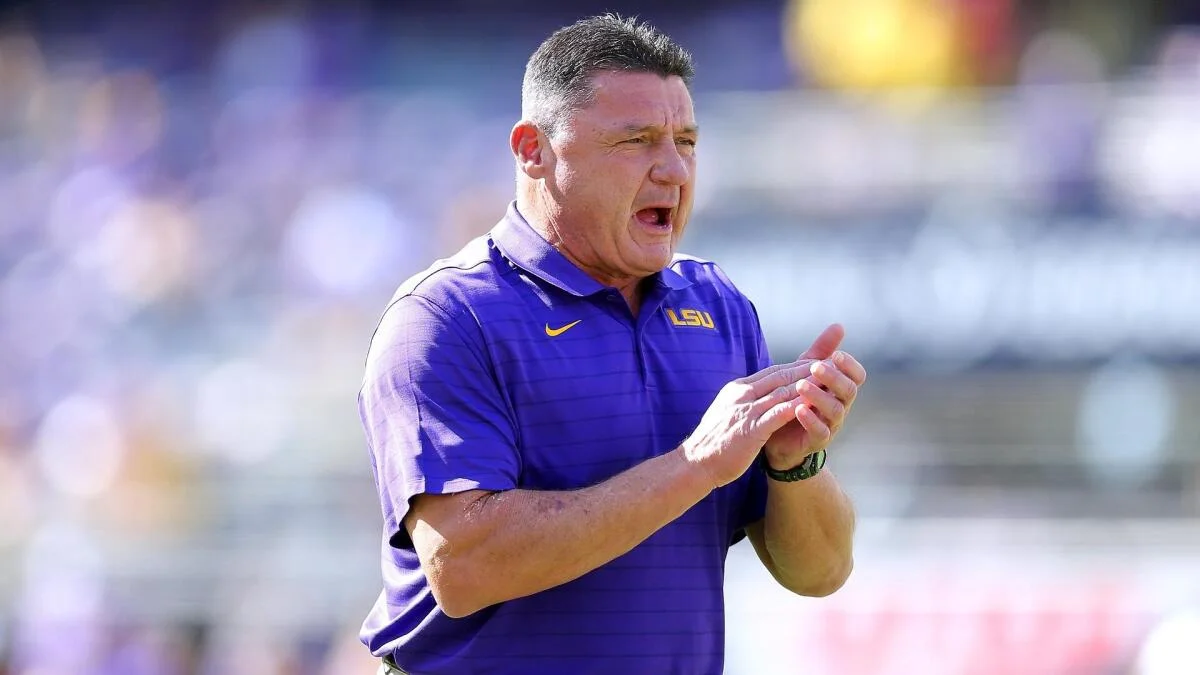
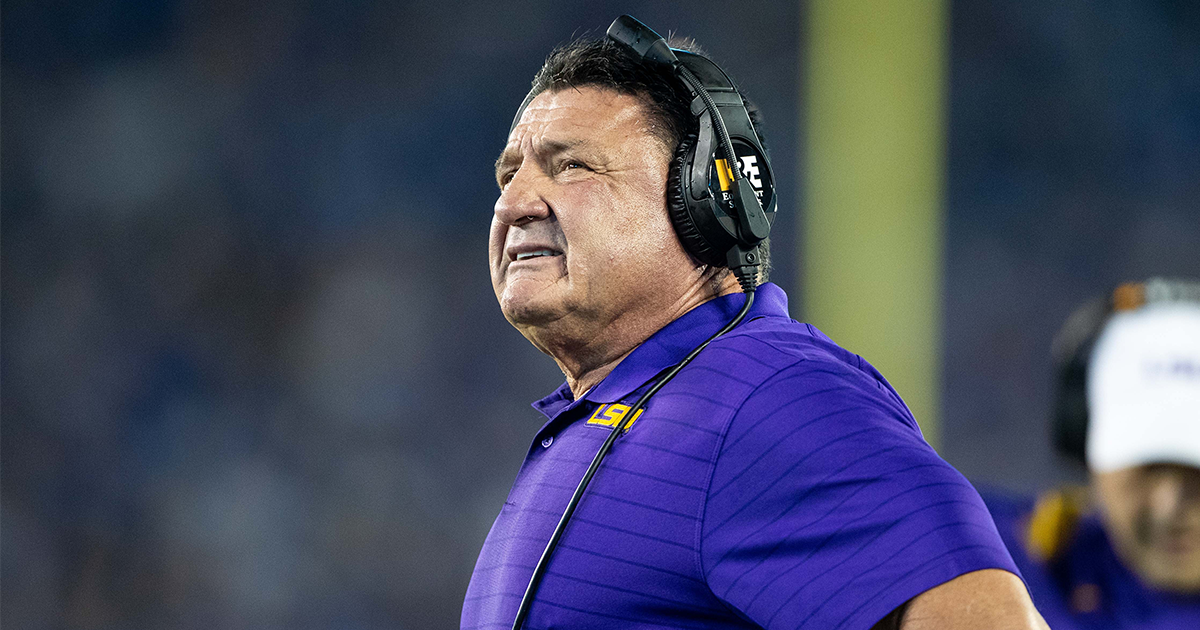
Four years after being fired by LSU, Ed Orgeron has not been shy about his desire to get back into coaching.
Plenty has changed in the college football landscape in those years, most notably players being able to get paid via name, image and likeness deals and now through revenue sharing directly from the schools themselves. That’s an adjustment every coach has had to make, and some have adapted to the new way of the college football world better than others.
In a recent appearance on “Bussin’ With The Boys,” Orgeron joked that after all his years coaching in the SEC, paying players via NIL will only require a “minor adjustment.”
“They say, ‘Hey coach, you been out of coaching for awhile. How you gonna adjust to NIL?’ Orgeron said. “I said, well, it’s a minor adjustment. ‘What do you mean?’ Well, back then we used to walk through the back door with the cash. Now we just gotta walk through the front door with the cash.”
Orgeron has long been known as an elite recruiter and that’s not a title one could get without knowing how to get things done in the shadows. Now all those conversations and negotiations happen above the table, and Orgeron is pretty confident he can make that small adjustment if he were to land back on a sideline soon.
Orgeron, of course, coached LSU to a national title in 2019 but was let go following the 2021 season. In all, Orgeron had a 51-20 record leading LSU, but went just 11-11 combined in the two years following the national championship. He has not coached since, but the 64-year-old is looking to get back in the action — perhaps even back in Baton Rouge with the Tigers.
Washington State is looking for a football coach. (Photo: Naji Saker)
I’m emptying my notebook on the football coaching searches at Washington State and Portland State. Also, I have thoughts on the bowl game opt-outs by a growing number of schools. And I have some information on James Madison University, Oregon’s first-round opponent in the College Football Playoff.
Plus, a cameo in today’s installment by the front-desk manager at Planet Fitness.
Pro Football Hall of Fame quarterback and Fox Sports NFL color analyst Troy Aikman wanted to help UCLA football through name, image and likeness donations, but his experience has made him apprehensive about contributing again.
Aikman shared his experience on Monday’s episode of “Sports Media Podcast with Richard Deitsch,” hosted by The Athletic’s sports media reporter Richard Deitsch.
“I gave money to a kid,” Aikman admitted. “I won’t mention who. I’ve done it one time at UCLA. I never met the young man. He was there a year, but he left after the year. I wrote a sizable check and he went to another school. I didn’t even get so much as a thank-you note, so it’s one of those deals where I’m done with NIL. I want to see UCLA be successful, but I’m done with it.”
NIL has become big business in college football. According to 247 Sports, the top five schools in spending (Texas, Ohio State, LSU, Georgia and Texas A&M) spent a combined $98 million in NIL money in 2025, and the number will likely increase next season.
Aikman still believes NIL money should go to players, but he says the system needs changes that benefit the sport without creating a convoluted mess.
“There has to be some leadership at the very top that kind of cleans all of this up, starting with players who accept money. There has to be some accountability and responsibility on their behalf, to have to stick to a program.”
Few recruiters in college football worked harder than Ed Orgeron. No matter which school he was representing, Orgeron did a great job bringing in some great talent. However, most of his work came in the pre-NIL era, meaning he could not, technically, use money in the process.
So when talking about how he would adapt with NIL now legal, Orgeron hilariously said there would just be a slight difference. He does not have to be subtle about the aspect of giving certain recruits a bag to help gain a commitment.
SUBSCRIBE to the On3 NIL and Sports Business Newsletter
“You know what?” Orgeron began on Bussin’ With The Boys. “They say, ‘Hey, coach. You know, you’ve been out of coaching for a while. How are you going to adjust to NIL?’ I said, ‘Well, it’s a minor adjustment.’ They said, ‘What do you mean?’ I said, ‘Back then, we used to walk through the back door with the cash. Now, we just got to walk through the front door with the cash.’”
The question began by specifically mentioning SEC programs. Orgeron has worked for four of those throughout his career, one of which likely involved zero recruiting. His first job within the SEC came at Arkansas as the assistant strength coach. But as Orgeron climbed up the ladder in his career, prominent roles became available.
None more memorable than being LSU‘s head coach from 2016 through 2021. Everyone remembers the famous national championship in 2019, led by Joe Burrow, and backed by one of the best rosters college football has ever seen. Orgeron was also in charge at Ole Miss beginning in 2005, lasting three seasons.
Lane Kiffin employed Orgeron as the assistant head coach, defensive line coach, and recruiting coordinator at Tennessee in 2009. Everyone knows how that ended, infamously leaving for USC, only for Orgeron to follow him.
Getting back to the present — reports indicate Orgeron might be interested in getting back into the coaching world. He has not held a position since getting fired by LSU, making it four seasons now. One even suggested Orgeron might be a candidate to link back up with Kiffin in Baton Rouge.
If something does come to fruition, a great recruiter will be joining the program. Orgeron is one of the best, even when paying players was not totally legal. But now, his job is a whole lot easier with a direct parth through the front door.
SMU has launched Mustang Partners, a new revenue-generating division focused on pursuing revenue and brand opportunities to benefit both athletes and the athletic department.
With the full-service revenue, NIL and brand unit, SMU becomes the latest school to launch such a program in recent months — joining Clemson, Kentucky and Michigan State — as athletic departments look to expand revenue streams.
Mustang Partners’ portfolio will include sponsorships in collaboration with media and technology company Learfield, philanthropy, exclusive gameday experiences and ticket sales, and it will add commercial NIL, special events and trademark and licensing.
“Mustang Partners is a bold new chapter in the story of SMU athletics,” SMU Athletic Director Damon Evans said in a statement. “Today’s rapidly evolving collegiate athletics marketplace demands programs to be more innovative, more adaptable and more resolute in pursuing new opportunities and ideas. This new venture will position SMU at the forefront of the next era of collegiate athletics.”
Business Briefing
Become a business insider with the latest news.
By signing up, you agree to our Terms of Service and Privacy Policy.
SMU closed the 2025 fiscal year with “historic momentum,” according to its news release, led by a record-breaking year for the Mustang Club. The club raised $65,058,040 in cash gifts from 6,158 donors, the highest single-year cash total in SMU history.
The Mustangs also sold a record number of football season tickets in 2024, doubling 2023’s total and increasing revenue 157%. SMU also saw substantial increases in concessions (108%), parking (98%) and licensing revenue (120%).
Mustang NIL is a strategy to drive financial and branding opportunities for SMU athletes.
The division will focus on the development of new premium amenities within Gerald J. Ford Stadium, Moody Coliseum and other athletic venues. The school completed a market study to evaluate new premium areas within Ford Stadium this fall.
Mustang Partners expands on trademark and licensing activities, including the addition of the university’s first full-time director of trademarks and licensing.
The division will also focus on booking special events and concerts into SMU venues, as well as rentals of premium hospitality areas for corporate retreats, meetings and private events.
Brian Ullmann, executive director of athletics, will lead Mustang Partners’ staff of 60. The senior leadership team will include Alex Gary, deputy athletic director of external relations; Lauren Adee, deputy athletic director/chief marketing officer/chief revenue officer; and Sean Penix, senior associate athletic director/commercial strategy.
Did Jerry Jones, Mark Cuban crack the list of the 125 most influential sports biz leaders?
New Sports Business Journal list highlights several influential sports business figures with D-FW ties.
Tom Hicks: From teen DJ to Dallas titan who remade the soft-drink industry in his image
The wealthy businessman used the alchemy of leveraged buyouts to spin the soft-drink market into gold. “He had vision,” said Ross Perot Jr.