
NIL
Three Transfer Portal Players Dan Lanning Should Add To Oregon Ducks

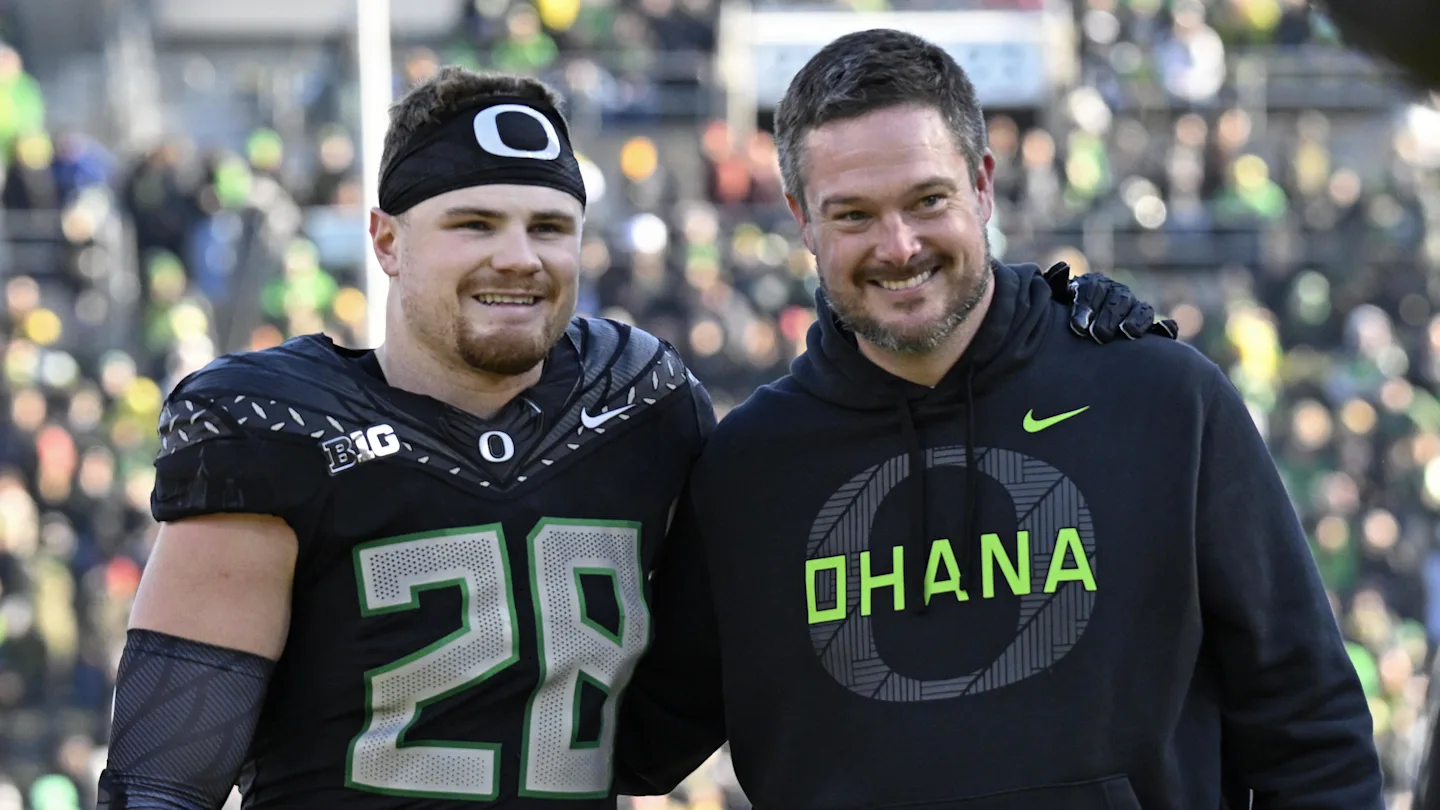
The Oregon Ducks are in the College Football Playoff for a second consecutive season and look to make a run to secure their first national championship in school history. While the Ducks’ main focus is reaching their goal of winning a national title, it’s not too early to look ahead to the offseason and what transfers Oregon may add to their team.
Oregon coach Dan Lanning has found success in past seasons in adding talent to the Ducks roster from the transfer portal. Last season, the Ducks had the No. 5-ranked transfer class, according to 247Sports, with a total of 11 commits.

The Ducks lost several talented players to the NFL Draft last season, and it is expected to be the same case for Oregon this offseason as well. Oregon quarterback Dante Moore and tight end Kenyon Sadiq are among the top stars for the Ducks who are expected to be top selections in the 2026 NFL Draft.
With those key departures set to take place this offseason, here’s a look at some of the top transfer portal players that Lanning and the Ducks could consider going after to add to their roster for the 2026 season.
Khmori House, North Carolina Linebacker

With star linebacker Matayo Uiagalelei set to be a first-round selection in the 2026 NFL Draft and Bryce Boettcher graduating, the Ducks may go after multiple top transfer linebackers this offseason. North Carolina linebacker Khmori House is one of those transfers that the Ducks could potentially consider adding this offseason.
House is ranked as the No. 1 transfer linebacker, per 247Sports, and would be a valuable addition to Oregon’s defense that aims to remain dominant heading into next season. In two seasons with Washington and North Carolina, House has recorded 111 total tackles, two interceptions, and one forced fumble. Adding House to a defense that ranked among the best in the Big Ten and the country would be a massive steal for the Ducks.
Michael Short, Virginia Tech Linebacker

Another top linebacker that the Ducks could land is Michael Short from Virginia Tech. Short is ranked as the No. 2 transfer linebacker, per 247Sports. While it’s not a guarantee that Oregon will add both Short and House, adding one of them would be considered a success for the Ducks.
MORE: Oregon’s Breakout Freshman Emerges As Potential X-Factor For The Playoff
MORE: Why Cleveland Moving On From Dillon Gabriel Could Be a Blessing in Disguise
MORE: Four-Star Safety Makes Recruiting Announcement With Oregon, Alabama, Ohio State
SIGN UP FOR OUR NEWSLETTER HERE!
In two seasons with North Carolina and Virginia Tech, Short collected 45 total tackles and one sack. After playing in five games with the Hookies this season, Short redshirted and was sidelined for the remainder of the season.
Short underwent two coaching changes during his time with the Tar Heels and Hokies. Playing under an experienced coach, Dan Lanning, who has built a great culture with Oregon, makes the Ducks a valuable landing spot for Short.
Tyrell Green, Interior Offensive Lineman
Oregon’s offensive line has played a pivotal role in the success of the Ducks’ offense this season. The group’s protection has allowed quarterback Dante Moore to be efficient and Oregon’s dominant running back trio of Noah Whittington, Jordan Davison, and Dierre Hill Jr. to flourish.
With Iapani Laloulu projected to be drafted in the NFL Draft this offseason, the Ducks may look to add a transfer to their interior offensive line. Purdue interior offensive lineman Tyrell Green is a piece the Ducks could add. Green is ranked as the No. 2 interior offensive lineman transfer, per 247Sports, and would be a great replacement for Laloulu.
The Ducks have seen success with transfers from Purdue before, as they added star defensive back Dillon Thieneman from the Boilermakers this season. Oregon looks to find success once again with a top player for the Boilermakers this go around.
Recommended Articles

NIL
Here’s how much money Heisman Trophy finalists Mendoza, Pavia and Love made from NIL deals this season

By Weston Blasi
The Heisman Trophy award may not come with a cash prize, but these finalists have already scored millions through their name, image and likeness deals
Fernando Mendoza of the Indiana Hoosiers celebrates after defeating the Ohio State Buckeyes in the Big Ten Championship Game on Dec. 6.
It pays to be the Heisman.
The final voting for the 2025 Heisman Trophy will take place on Saturday, as the top players in college football compete for the game’s highest individual honor.
The Heisman Trophy, given to the most outstanding player in college football, doesn’t come with any cash prizes – just prestige. But while the Heisman finalists may not be paid for winning, they’re still among the highest earners in college sports when it comes to name, image and likeness (NIL) deals.
College athletes have been allowed to leverage their influence and make money from NIL deals since 2021, after decades of having to avoid any form of payment that could compromise their amateur status and NCAA eligibility. Now, many of the top student-athletes earn millions of dollars each year from NIL arrangements.
The four finalists for the Heisman this year are Fernando Mendoza, Diego Pavia, Julian Sayin and Jeremiyah Love.
Here’s at look at what the 2025 Heisman finalists are estimated to have made from NIL deals this year, according to On3’s deal tracker.
Fernando Mendoza, QB, $2.6 million
Fernando Mendoza of the Indiana Hoosiers runs the ball in a game against the Oregon Ducks.
Indiana University quarterback Fernando Mendoza was not a highly rated Heisman contender headed into the season – but Mendoza had a great 2025 campaign, leading Indiana to its first Big Ten conference title since 1967, a 13-0 record and the No. 1 seed in the College Football Playoff.
Mendoza won a separate Associated Press player of the year award, and is the betting favorite to win Heisman, according to DraftKings (DKNG) odds.
Mendoza has an NIL deal with sports-apparel giant Adidas (XE:ADS) (ADDYY).
“At the beginning of the year, I saw the list of the top 10 Heisman contenders, and evidently [my name] wasn’t there,” he said about the award.
But that didn’t discourage Mendoza. “I was like, ‘Wow, I want to make a goal for myself.’ I prayed about, like, if I could make it to the ceremony, how cool that would be,” he said. “Now that it’s come to fruition, I’m able to share that moment with people who appreciate it. It’s such a cool moment.”
Related: A $100 million NFL contract isn’t enough money to last a lifetime, says former football star Odell Beckham Jr.
Diego Pavia, QB, $2.5 million
Quarterback Diego Pavia on the Vanderbilt Commodores celebrates after defeating the Auburn Tigers.
Vanderbilt University quarterback Diego Pavia threw 27 touchdowns this season, leading his team to the eighth-best scoring offense in the country.
Pavia, who has the second-best odds to win the Heisman, behind Mendoza, is expected to declare for April’s NFL draft.
Pavia has NIL deals with AutoPro, Raising Cane’s and the NIL Store.
He also recently joked on “The Pivot Podcast” that he would donate his 2025 NIL money if one of the lower-ranked teams like Tulane or James Madison won the College Football Playoff this year.
Julian Sayin, QB, $2.5 million
Quarterback Julian Sayin of the Ohio State Buckeyes enters Ohio Stadium prior to a game against the Minnesota Golden Gophers.
Ohio State University quarterback Julian Saying led his team to yet another College Football Playoff bid this year, in addition to his Heisman-hopeful season. It’s the fifth time in the last eight years that an Ohio State signal-caller has been a Heisman finalist.
Sayin threw 31 touchdown passes this season, which was third in the nation. He has NIL deals with The Foundation (Ohio State’s collective), Panini and EA Sports (EA).
Related: Why Michigan’s Sherrone Moore probably won’t get paid the millions left on his contract – unlike other recently fired college football coaches
Jeremiyah Love, RB, $1.6 million
Jeremiyah Love of the Notre Dame Fighting Irish celebrates after a touchdown.
University of Notre Dame running back Jeremiyah Love is the only non-quarterback among this year’s Hesiman finalists.
Love was fourth in the nation with 1,372 rushing yards, and led Notre Dame to a 10-2 record. Unfortunately for the Fighting Irish, they narrowly missed out on the College Football Playoff.
Love has NIL deals with Samsung (KR:005930), Celsius (CELH) and New Balance.
The 2025 Heisman winner will be announced at 7 p.m. Eastern time on Saturday, Dec. 13, on ABC.
From the archives: The number of millionaire college athletes has tripled
-Weston Blasi
This content was created by MarketWatch, which is operated by Dow Jones & Co. MarketWatch is published independently from Dow Jones Newswires and The Wall Street Journal.
(END) Dow Jones Newswires
12-12-25 1629ET
Copyright (c) 2025 Dow Jones & Company, Inc.
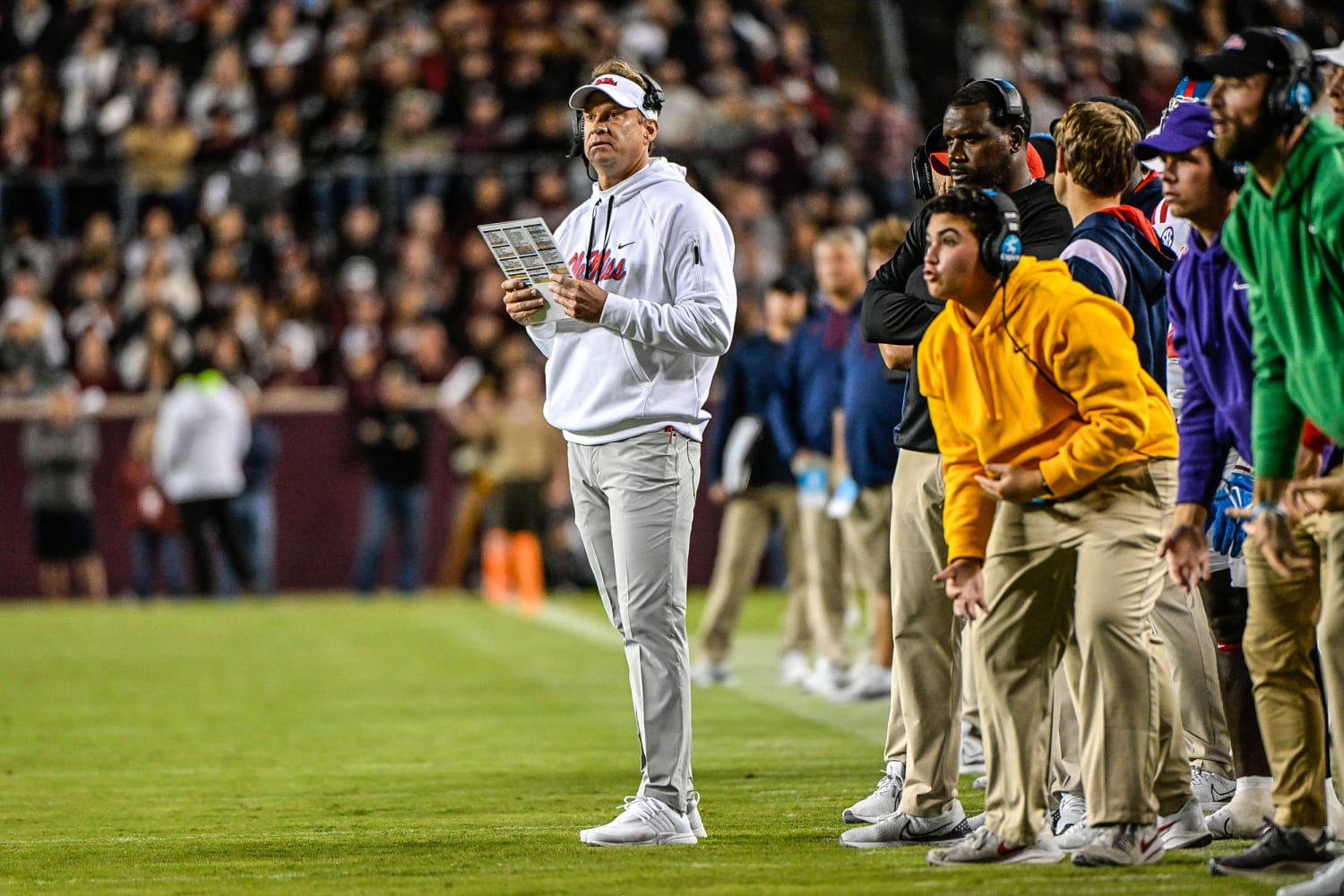
Lane Kiffin’s betrayal of the Ole Miss faithful to sign as the next head football coach at rival Louisiana State University is more significant than just the $91 million price tag. This situation exemplifies the current state of college sports in the American South, one that is dominated by the professionalization of coaches, athletes, and what it means for the states in which these colleges reside.
A coach earning $91 million over seven years, while the university also has to pay $54 million to buy out former coach Brian Kelly’s contract in October, is problematic for the flagship university of a state that ranks 50th in crime and economy, 48th in infrastructure, and 46th in education nationally. Kiffin’s contract and the surrounding controversies — his choice to leave the University of Mississippi before the upcoming College Football Playoff and his NIL and financial fund criticism of the university— expose the contradictions of football in the American South. It may be a deeply flawed system that doesn’t financially help any of the state’s residents other than the select few superstar players and coaches, but LSU and SEC football provide identity and joy for deep Southerners that external circumstances may not provide.
Kiffin’s contract at LSU is the second-highest annual salary for any college football coach, only marginally behind the University of Georgia’s head coach Kirby Smart. His previous contract still netted him $9 million annually, which left a foul taste in the mouths of Ole Miss fans when Kiffin decided not to coach Ole Miss for their run during the College Football Playoff. This behavior by Kiffin is irregular; both Tulane’s Jon Sumrall and James Madison’s Bob Chesney have accepted other head football coaching positions and are choosing to continue to coach their teams through their playoff runs. The increased professionalization of college football is the direct cause of this lack of loyalty; priorities are now more than ever focused on what is next and how much that contract pays.
With Mississippi and Louisiana constantly being ranked at the bottom nationally in income, education, infrastructure, healthcare, and overall opportunity, an interesting question arises: Should these publicly funded universities be spending tens of millions of dollars on football salaries? To understand this question, it is important to note that the money to pay these coaches comes directly from the respective universities’ athletics departments. The funding for these departments comes primarily through TV network deals, ticket sales, and wealthy alumni boosters who directly donate money to the programs. So, this situation is not directly stealing taxpayer dollars like estranged Green Bay Packers legend Brett Favre, who was involved in the welfare scandal in Mississippi that misallocated money toward a volleyball facility at Southern Mississippi University.
However, even if the money is not coming directly from the taxpayers, the university still has discretion over how to use the revenue brought in. Because of that, it is still valid to criticize how that money is being spent. It’s impossible to ignore the optics: Ole Miss and LSU are each ranked around the 92nd-best public colleges in the U.S., yet they choose to spend tens of millions of dollars on football coaches rather than to put that money back into their faculty and research, improvements that would increase the quality of education and expand opportunities for their residents.
At first glance, it seems obvious why a resident of Louisiana or Mississippi might not support such a high salary for a public employee when they are statistically more likely to be struggling financially themselves. Yet LSU fans were ecstatic when Kiffin was hired. An LSU fan site, Death Valley Voice, recently published an article titled “LSU fans are fired up for the future of this position group under Lane Kiffin.”
The truth is that this reaction stems from the unique role these SEC schools play in the Deep South. Outside of New Orleans, which has the Pelicans and the Saints, these states cannot financially support professional sports teams. As a result, SEC schools like the University of Alabama, the University of Arkansas, Auburn University, LSU, and Ole Miss are the de facto professional sports teams. They are often the only large-scale, shared cultural institutions for people in these places, so their success means far more to Southerners than it might to people in other parts of the country. This is also why the feeling of abandonment and disloyalty surrounding Kiffin’s departure was so exacerbated.
In today’s college sports environment, the “Power Four” designation is no longer accurate, because there is now a tier above the “Power Four.” Within the ACC, SEC, Big Ten, and Big 12, there are true “blue bloods” backed by the largest NIL funds. The NIL college economy has changed the game entirely. The ever-delayed and controversial SCORE Congressional Act and other legislative efforts are attempting to put guardrails on NIL, but for now, and the foreseeable future, it is the unregulated wild west of the sports world. Kiffin just happens to be someone who is taking advantage of that system.
When looking at the bigger picture, it is truly absurd how much college football coaches are making, especially in states with such major socioeconomic struggles. The truth is that, for many people in Mississippi and Louisiana, college football is one of the few reliable and communal sources of pride and entertainment. SEC football is the one of the biggest sources of Southern identity, and it is exactly why the Kiffin story is compelling. It shows how much people care about football success, but it also shows the inflection point that college football has reached, a point where the financial logic is drifting ever further from the communities that love it.

 Listen to this article
A few years ago, I wrote a piece about Name, Image, and Likeness earnings (NIL earnings) which had just become a thing for college athletes. It was a very interesting topic of conversation as the first of my kids was preparing to head off to college. Now a few years later, I have more than one in college and the financial implications for college athletes in major NCAA Division I sports have changed significantly again.
Earlier this year, the House vs NCAA settlement became reality. This decision made it possible for college athletes to receive pay directly from the university at which they attend and compete. The University of Oklahoma reported that they would share the maximum amount allowed to student athletes who play football, men’s and women’s basketball, women’s gymnastics, softball and baseball.
What these students also need to understand and plan for, along with their parents or guardians, are the tax obligations that will also be a part of that potential financial windfall for these athletes. NIL earnings are subject to self-employment tax and income tax. Since NIL payments are not directly from the universities, the student athlete needs to expect to save an appropriate amount to cover the tax for those earnings. These earnings could be from things like social media, advertising, even goods in exchange for the NIL deal. Goods could be a vehicle, clothing, or ownership in a business, and all these things could be considered taxable income.
With the House vs NCAA settlement, schools are now allowed to share revenue they receive with their student athletes. Currently, the environment indicates these payments will be reported as non-employee compensation, which would subject a student athlete to self-employment and income tax on those earnings. Putting the full tax burden of the income on the student.
This begs the question, what potential deductions could a student use to reduce their tax burden from this income. Do they have agent fees, advisor fees, are they creating their own brand that contracts with the school for their services and if so, are they doing this through an advanced tax structure?
These aren’t the only questions the changing environment has created. As these students are now being paid directly by the university they attend to play a sport, there is much talk about whether student athletes should be considered employees of the university they attend.
There are many questions that still need to be answered to determine if they should be, and if they are what are the questions that should be asked next. Will they organize like professional athletes do in their respective sports? Will schools have to provide benefits? Will NCAA athletes be pushed to sign multi-year contracts with a school which could slow down the transfer portal?
It isn’t very often we get to see new business models built in today’s day and age, but college athletics is in the process of trying to figure it out and it will be a very interesting journey.
Josh Mullins, CPA, is a partner at Arledge, the largest locally owned accounting firm in the Oklahoma City metropolitan area.

On December 9, 2025, the University of Utah, in what appears to be the first such deal of its kind, announced plans to partner with Otro Capital in a private equity arrangement. The deal is projected to generate approximately $500 million in capital for the university’s athletic programs.[i] Otro Capital is a New York-based firm that invests in sports teams and leagues.[ii]
Under NCAA rules, the university must retain decision-making authority over Utah Brands & Entertainment LLC, the entity created to participate in the partnership with Otro Capital. Utah’s president, Taylor Randall, and athletic director, Mark Harlan, will continue to make major decisions impacting the athletic department at Utah. Meanwhile, Otro Capital will receive a percentage of Utah Brands & Entertainment’s revenues while serving as a strategic partner for the university. The university also retains the right to purchase Otro Capital’s ownership stake in Utah Brands & Entertainment at any time. Certain athletic department responsibilities will be managed by the newly formed company.
Reports this fall indicated that the Big Ten has been exploring a $2 billion private equity deal for the power conference that would include an extension on the conference’s grant of rights.[iii] The structure reportedly under consideration for the Big Ten resembles what has been outlined for Utah: the university (or conference) would continue to oversee core personnel and operational decisions, while the private equity-backed entity would focus on business development and share in revenues.
At Utah, Utah Brands & Entertainment is expected to oversee functions such as corporate sponsorships, ticketing, trademarks, and licensing. Randall and Harlan were adamant that the university will retain control over all administrative matters for its athletic departments. A majority of the new entity’s board members will be appointed by the university, and the athletic director will serve as the chair of the board.
Although private equity has been circling college sports for months, Utah is the first university or conference to finalize such a deal.[iv] While several other universities already operate private, revenue-generating entities outside their athletic departments, those entities do not involve private equity partnerships.[v]
[i] https://www.cbssports.com/college-football/news/utah-college-athetics-football-basketball-private-equity/
[ii] https://otrocapital.com/portfolio/
[iii] https://bleacherreport.com/articles/25255101-big-ten-reportedly-discussing-2b-private-capital-deal-nothing-imminenthing ‘Imminent’
[iv] https://www.espn.com/college-football/story/_/id/47263084/utah-aims-boost-athletic-revenue-private-equity-deal
[v] https://www.sportsbusinessjournal.com/Articles/2025/12/09/report-univ-of-utah-nears-college-sports-first-private-equity-deal/
In a decision issued on November 25, 2025, the United States Court of Appeals for the Third Circuit vacated a preliminary injunction that had allowed Rutgers University football player Jett Elad to participate in the 2025-2026 season despite an eligibility restriction imposed by the National Collegiate Athletic Association (NCAA). Elad previously competed one season at Ohio University, one season at Garden City Community College, and two seasons at the University of Nevada. Under the NCAA’s “Five-Year Rule,” any season played at a junior college counts toward an athlete’s maximum of four permissible seasons of competition within a five-year period. Although Elad participated in only three seasons at the Division I level, his participation at the junior college (JUCO) level rendered him ineligible according to the NCAA.
Last December, a Tennessee district court in Tennessee granted Vanderbilt University quarterback Diego Pavia’s request for a preliminary injunction, ruling in Pavia v. National Collegiate Athletic Association that he had demonstrated a likelihood of success on the merits in establishing that application of the Five-Year Rule to JUCO athletes violated federal antitrust law. On October 1, 2025, the Sixth Circuit dismissed the NCAA’s appeal of that ruling, noting that the NCAA’s subsequent grant of Pavia’s waiver application to participate in the 2025-26 college football season deprived the court of jurisdiction on mootness grounds.
Following the 2024 season, Elad entered the national transfer portal, ultimately committing to Rutgers in January 2025. In doing so, Elad secured an approximately $500,000 name, image, and likeness (NIL) agreement with a New Jersey advertising company. When the NCAA denied Elad’s waiver request to participate in the 2025 season, Elad filed suit in the United States District Court for the District of New Jersey, alleging, like Pavia, that application of the Five-Year Rule unlawfully restrained trade in violation of Section 1 of the Sherman Antitrust Act by limiting his ability to compete and participate in the evolving economic marketplace surrounding Division I football.
On April 25, 2025, the New Jersey district court granted Elad’s request for a preliminary injunction, enabling Elad to participate in all 12 of Rutgers’ games during the 2025 football season. On appeal, however, the Third Circuit held the injunction could not stand because the district court failed to define the relevant market adequately as required for a “Rule-of-Reason” antitrust analysis. Specifically, the Third Circuit noted that the plaintiff’s expert offered a broad market definition encompassing all cities in which college football was played, provided no economic analysis, and relied primarily on case law predating the rapidly changing conditions ushered in by the Supreme Court’s decision in NCAA v. Alston. In reaching its decision, the court further underscored that NIL compensation, the transfer portal, and university-facilitated commercial opportunities fundamentally have altered the economic landscape of college athletics, making reliance on older assumptions insufficient.
However, the Third Circuit also declined to treat the NCAA’s eligibility bylaws as categorically noncommercial, observing that rules that impact an athlete’s ability to compete and earn compensation may have commercial consequences that justify Section 1 of the Sherman Act scrutiny. Nevertheless, because the district court accepted Elad’s proposed market definition without independent factual findings or supporting data, the court concluded that Elad had not demonstrated a likelihood of success on the merits. Accordingly, the preliminary injunction was vacated, and the matter remanded for further proceedings, including a complete and evidence-supported market-definition inquiry.
For the public — including student athletes, parents and institutions — this ruling reinforces that, while courts are paying close attention to the economic realities of modern college sports, plaintiffs are still required to present data-supported analyses in seeking to challenge current eligibility rules. Recent decisions across the country, including Pavia, the class-wide settlement in House v. NCAA, and the market-definition guidance in Fourqurean v. NCAA, reflect increasing willingness by courts to scrutinize NCAA regulations under antitrust law. At the same time, the Third Circuit’s decision in Elad confirms that not every challenge necessarily will succeed, particularly those lacking an adequate factual foundation. The ruling signals that, when evaluating these challenges, courts will expect to be presented with careful economic analysis before granting immediate or emergent relief that disrupts NCAA governance.
As this and other eligibility issues continue to develop, Buchanan offers a comprehensive suite of services, providing guidance tailored to institutions, collectives, and businesses involved in the NIL space and other activities related to student athletes to ensure compliance and support at every stage.
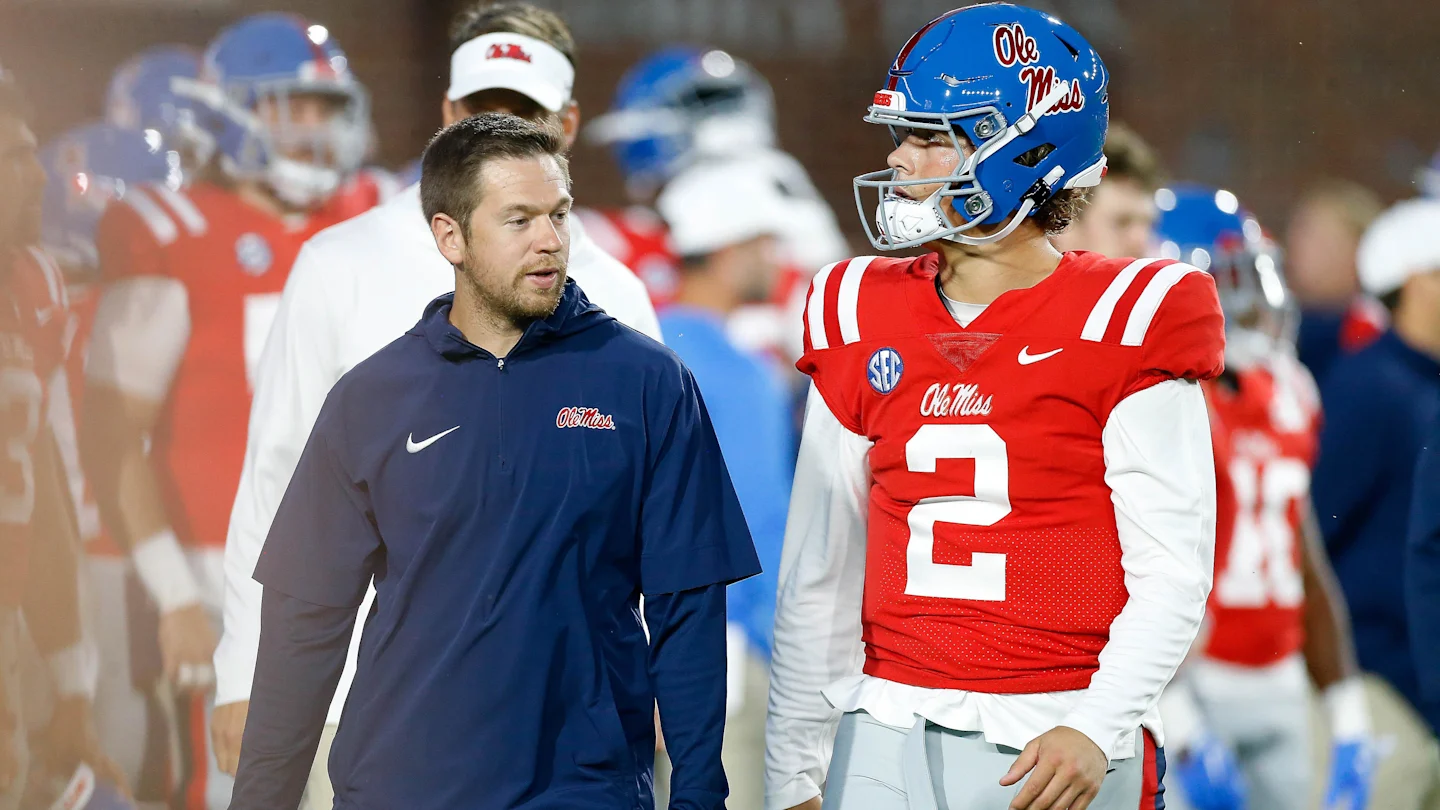
The 2025 college football regular season is officially in the books.
Twelve college football programs were selected for the 2025 College Football Playoff field on Sunday. Among those programs is No. 6 Ole Miss (11-1, 7-1), which will host No. 11 Tulane (11-2, 7-1) at Vaught-Hemingway Stadium in Oxford, Mississippi, for the first round of the 2025 College Football Playoffs (3:30 p.m. EST, TNT).
Despite the Rebels’ success in 2025, they will enter the College Football Playoff without head coach Lane Kiffin, who left Ole Miss to take the LSU head coaching vacancy on Nov. 30.
Kiffin is bringing a handful of staffers to Baton Rouge, including offensive coordinator Charlie Weis Jr. The Tigers have agreed to pay Weis $7.5 million over three years, making him the highest-paid offensive coordinator in the SEC.
NEW: Charlie Weis Jr to be highest paid SEC OC with new $7.5 million deal
Weis and LSU agreed to a three year deal 💰🐯🏈
Full Story 🔗 https://t.co/qeOdrcNR6E pic.twitter.com/iSOOr3GYw8
— 104.5 ESPN (@1045espn) December 10, 2025
Weis is the son of former college football head coach Charlie Weis Sr, who was the head coach at Notre Dame from 2005-09 and Kansas from 2012-14. He was an offensive quality control his father at Florida in 2011 before becoming a team manager for the following three seasons at Kansas.
Weis joined Nick Saban’s staff for the following two seasons at Alabama as an offensive analyst. Alabama was the first of four different stops Weis has worked for Lane Kiffin.
Steve Sarkisian was the Crimson Tide’s offensive coordinator for the 2016 College Football Playoff. Weis followed Sarkisian to the Atlanta Falcons in 2017 for another offensive analyst position.
Weis reunited with Kiffin in 2018, a year after Kiffin took the head coaching vacancy at Florida Atlantic. It was the first of Weis’ four stops as an offensive coordinator and quarterbacks coach.
When Kiffin left to take the head coaching vacancy at Ole Miss in the 2020 offseason, Weis left to join Jeff Scott’s first staff at USF as the offensive coordinator and quarterbacks coach. The Bulls were 4-26 under Scott, and Weis left after the second of the three seasons.
Weis once again found himself working under Lane Kiffin at Ole Miss in 2022 as an offensive coordinator. The Rebels finished 8-5 in 2022 with a 42-25 Texas Bowl loss to Texas Tech.
In the past three seasons, Ole Miss has compiled a 32-6 overall record. Weis’ offenses have finished No. 13, No. 2 and No. 3 nationally in yards per game in that time frame.
While Weis is joining LSU’s staff in 2026, Ole Miss is permitting him to coach its football team throughout the 2025 College Football Playoff.


Alabama A&M Graduates 26 at Fall Commencement

Spire Motorsports makes announcement after Chris Gabehart’s JGR exit – Motorsport – Sports

Nebraska track and field shines with record-breaking season debut

Feeling Elite – Purdue Boilermakers

Holly Springs Motorsports Joins NHRA Member Track Network

Eighteen Governors Have Degrees Conferred at Winter 2025 Commencement

Marist Announces Leadership Change in Volleyball Program

Motorsports Community Raises $13,000 for Riley Kids at Return of Rev ‘n Roll Event

Here’s how much money Heisman Trophy finalists Mendoza, Pavia and Love made from NIL deals this season

Bryan Poerner – Osprey Stories

2025-26 LC State Track and Field Season Preview

East Bay woman who embezzled $1.6 million from youth charity sentenced to prison

Houston Athletics, LLH Healthcare Announce Indoor Track Naming Rights Partnership

Science-Backed Youth Sports Programs : Science-Backed Youth Sports Program

What Lane Kiffin’s Story Reveals About College Football in the South – The Oberlin Review

First Tee Winter Registration is open

Fargo girl, 13, dies after collapsing during school basketball game – Grand Forks Herald

CPG Brands Like Allegra Are Betting on F1 for the First Time

Volleyball Recaps – November 18

F1 Las Vegas: Verstappen win, Norris and Piastri DQ tighten 2025 title fight

Two Pro Volleyball Leagues Serve Up Plans for Minnesota Teams

Utah State Announces 2025-26 Indoor Track & Field Schedule

Sycamores unveil 2026 track and field schedule

Redemption Means First Pro Stock World Championship for Dallas Glenn

Jo Shimoda Undergoes Back Surgery

Texas volleyball vs Kentucky game score: Live SEC tournament updates

Bowl Projections: ESPN predicts 12-team College Football Playoff bracket, full bowl slate after Week 14

How this startup (and a KC sports icon) turned young players into card-carrying legends overnight

Robert “Bobby” Lewis Hardin, 56

Indiana’s rapid ascent and its impact across college football

 NBA Legend Michael Jordan to Join NBC Sports as Special Contributor
 Why a rising mid-major power with an NCAA Tournament team opted out of revenue-sharing — and advertised it
 Falcons mailbag
 Portal Update – Basketball and Gymnastics Take Hits
 has always dreamed in Mercurial. Now his initials are on the boots.
The new Kyl…
has always dreamed in Mercurial. Now his initials are on the boots.
The new Kyl…
-
 Rec Sports3 weeks ago
First Tee Winter Registration is open
-
 Rec Sports2 weeks ago
Fargo girl, 13, dies after collapsing during school basketball game – Grand Forks Herald
-
 Motorsports2 weeks ago
CPG Brands Like Allegra Are Betting on F1 for the First Time
-
 Motorsports3 weeks ago
F1 Las Vegas: Verstappen win, Norris and Piastri DQ tighten 2025 title fight
-
 Sports2 weeks ago
Two Pro Volleyball Leagues Serve Up Plans for Minnesota Teams
-
 Sports2 weeks ago
Utah State Announces 2025-26 Indoor Track & Field Schedule
-
 Sports2 weeks ago
Sycamores unveil 2026 track and field schedule
-
 Motorsports2 weeks ago
Redemption Means First Pro Stock World Championship for Dallas Glenn
-
 Motorsports2 weeks ago
Jo Shimoda Undergoes Back Surgery
-
 Sports2 weeks ago
Texas volleyball vs Kentucky game score: Live SEC tournament updates