
NIL
Top 5 transfer portal landing spots for TCU quarterback Josh Hoover

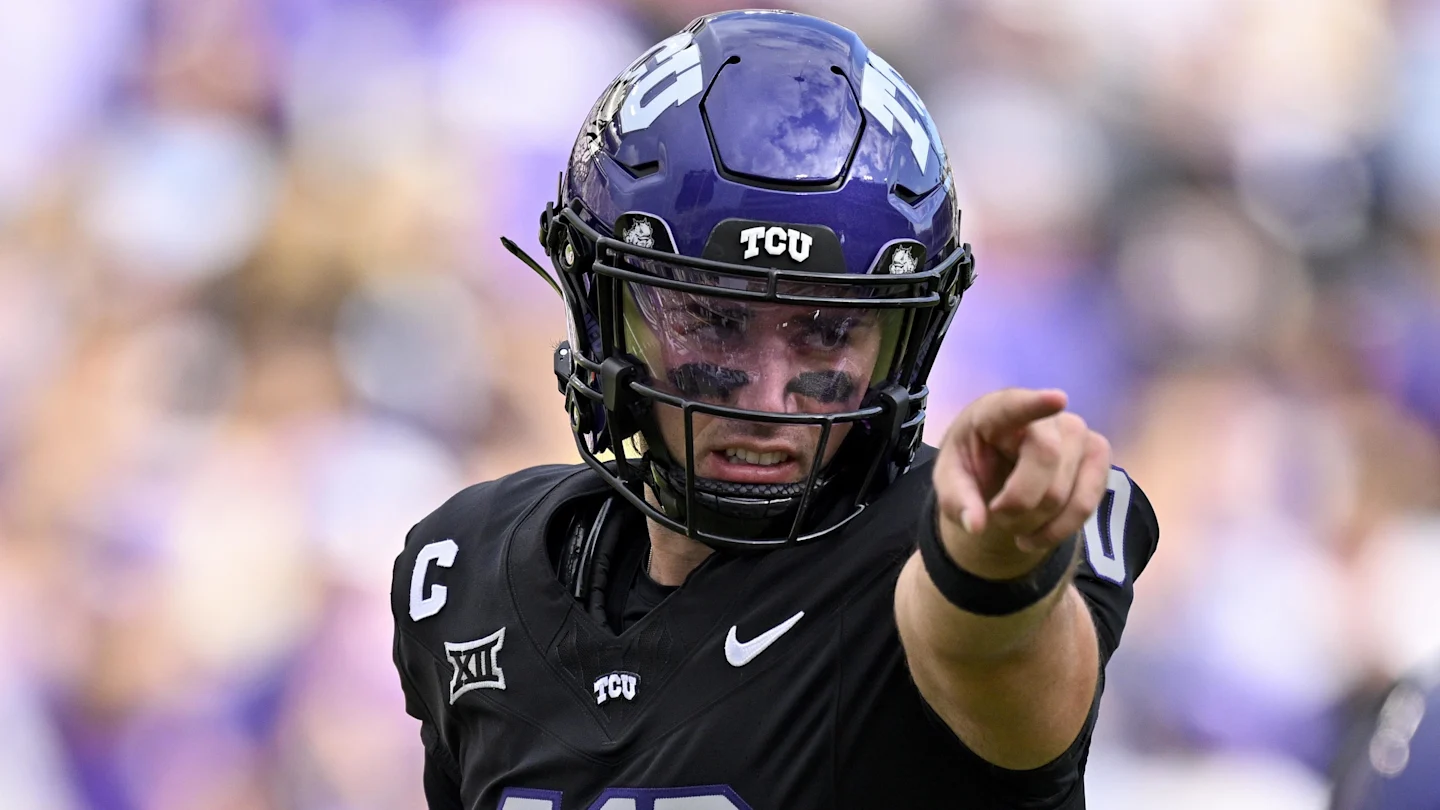
The NCAA Transfer Portal claimed another big name on Thursday night.
TCU star quarterback Josh Hoover has announced he intends to move on from the program. Hoover spent the last four seasons with the Horned Frogs, taking over as the starter midway through the 2023 campaign and putting up big numbers in each of the last two years.
In 36 career games, Hoover has completed 771/1183 passes for 9,629 yards with 71 touchdowns to 33 interceptions. He added eight more scores on the ground. There’s a very real likelihood that Hoover’s the most productive quarterback returning to the sport in 2026.
Hoover ranks in the top 5 in TCU program history in touchdown passes and total offense. He’s expected to be a coveted option in the portal.
Where are five landing spots that make sense for Hoover?
Indiana Hoosiers

Back in the College Football Playoff with a different starter for the second consecutive season, Indiana has put together one of the most impressive runs in the sport since Curt Cignetti took over the program.
The undefeated Hoosiers produced their first Heisman Trophy winner in school history last weekend as star quarterback Fernando Mendoza ran away with the award. Mendoza has another season of eligibility remaining, but is projected to be a top selection in the 2026 NFL Draft.
Indiana has already been linked to Hoover, per CBS Sports’ Chris Hummer.
Miami Hurricanes

Miami has lived in the transfer portal over the past few years, investing plenty of time and money into building a contender for Mario Cristobal. The moves finally worked out in 2025 as a massive financial commitment to secure Carson Beck from Georgia helped power the Hurricanes to the playoffs.
Though the conclusion of the 2024 season was a disappointment, former Miami quarterback Cam Ward was developed into the No. 1 pick in the most recent NFL Draft. Beck will likely get a shot at the professional level as well.
With little proven depth on the roster, it makes sense to bring in another experienced quarterback like Hoover to keep the Hurricanes on the right track. Miami has proven it’s willing to pay up.
Oregon Ducks

Oregon is a known quarterback factory, sending former stars such as Marcus Mariota and Justin Herbert to the NFL. That hasn’t changed since Dan Lanning took over the program in 2022.
The Ducks have had a quarterback drafted in back-to-back years, with Bo Nix going in the first round in 2024 and Dillon Gabriel being selected within the top-100 picks in 2025. Lanning could do it again next April with Dante Moore, who is nearing the end of a career year.
If Moore does leap to the professional level, Hoover would be a solid fit. Nix, Gabriel, and Moore all began their college careers at different schools and later transferred to Oregon, a similar path Hoover is embarking on.
Texas Tech Red Raiders

Suiting up for a playoff contender is pretty cool. Having a chance to win championships and staying home in the process might be even cooler.
Texas Tech has firmly entrenched itself as a program to reckon with in the modern age of the sport. The Red Raiders have plenty of money, and they’ve shown they’re willing to use it to pull in elite talent from the transfer portal and high school ranks.
With Behren Morton exhausting his eligibility following the playoff run, Texas Tech has to decide if it wants to turn the program over to another transfer or a homegrown talent like Will Hammond.
Either way, Hoover is from Texas and he’s already in the state.
Houston Cougars

An outlier among four other programs that have a chance to win it all, Houston is on the come-up. The Cougars haven’t been shy about writing checks, evidenced by the program signing five-star quarterback Keisean Henderson during the Early Signing Period.
Redshirt junior starter Conner Weigman does have one season of eligibility remaining and has stated he intends to return next season. Decisions are quick to change in this era, so never say never.
Would Houston bring in Hoover while Henderson develops for a season? Or should the program stick with Weigman as a veteran leader for Henderson?
Weigman just joined the program as a transfer last year. He was fine, but unspectacular this fall, and an upgrade could help the Cougars break their ceiling.
Read more on College Football HQ
• $45 million college football head coach reportedly offers Lane Kiffin unexpected role
• Paul Finebaum believes one SEC school is sticking by an ‘average’ head coach
• SEC football coach predicts major change after missing College Football Playoff
• Predicting landing spots for the Top 5 college football transfers (Dec. 17)

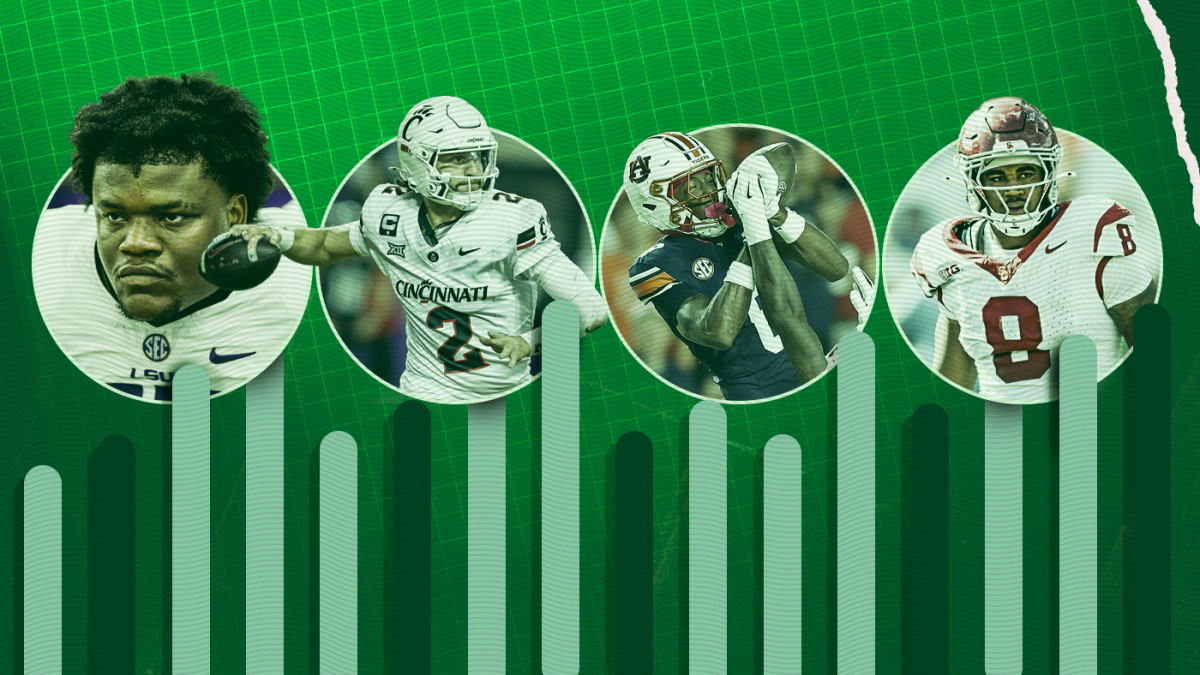
The college football transfer portal will officially open Jan. 2 and with it should come a flurry of activity, big-money deals and roster transformations.
There is more pressure than ever this time around with the spring portal period disbanded in favor of a sole winter period that runs from Jan. 2 through Jan. 16. It’s why this year’s winter portal could resemble what we see with NFL free agency with many of the best options coming off the board quickly for big money deals.
“People are going to spend out of the gate — like immediately — your top guys, your best guys, are going to go quick,” said a Big Ten general manager. “Then it’s the rest of them that are asking for money, but at some point they’re going to come down a little bit because the money has already been spent.”
There was a belief a year ago that with the passing of the House settlement and introduction of the College Sports Commission as an enforcement arm that last year may have been the Golden Age for big paydays. With a $20.5 million revenue share cap and a promise for stricter enforcement of NIL deals, the idea was that prices would come down this cycle as teams could no longer double dip between unlimited collective money and the rev share. For a variety of reasons, however, that hasn’t proven to be the case.
In some cases, even, prices have doubled.
CoPilot
“I feel like the average starter this cycle, the sort of line you have to hit, is $600,000,” said one SEC general manager. “I feel like last year starters’ in our conference were $300,000. Now it feels like starters are more like $600,000.”
What does that look like for the entire market? CBS Sports talked to dozens of sources from agents to general managers to collective leaders to put together value ranges for each position ahead of this window’s official opening.
Quarterback
High End: > $3.5 million
Average: $1.5 million to $2.5 million
Low End: $750,000 to $1 million
Just like in the NFL where the top quarterbacks account for around 20% of a team’s cap, the best portal quarterbacks this cycle are expected to command a hefty chunk of the pie.
Top-ranked arms like Brendan Sorsby (from Cincinnati), Josh Hoover (from TCU) and Sam Leavitt (from Arizona State) are expected to reach — and possibly pass — the $3.5 million mark.
It’s well-documented last cycle’s double dip (teams spending freely before rev-share caps were put into place over the summer) allowed teams to go gangbusters in transfer portal spending, including at QB where Duke made the little-known Darian Mensah famous for a $4 million annual salary. General managers thought there would be a downturn in spending at the position this cycle because of rev-share caps, but that sentiment has changed in recent weeks.
Getty Images
Schools are figuring out creative ways to exceed the rev-share cap, usually through marketing deals the school can find for their high-profile QB1.
“Six weeks I would have said no way,” an ACC GM said. “In the last six weeks people have figured out ways to construct a contract. You can put 15 deals together to get to $4 million.”
What 20% of a team’s cap looks like depends on the school. Some Power Four programs will only be at the full revenue sharing max, around $14-18 million for each Power Four football programs. Other big spenders will be at $25 million-plus due to the outside name, image and likeness deals the program manages to generate.
As for whether it makes sense to pay a quarterback that much, it’s a matter of debate for the general managers we spoke with.
“Even if you’re at $25 million, are you really going to put 20 percent of your resources into one player?” a Big Ten GM said. “You better hope he’s good. You better hope he’s Fernando Mendoza or Diego Pavia – he has to be or that’s a bad investment.”
Beyond the upper end of the market, the number required for a quality starter in the portal continues to creep up. Last year, quality-starting QBs could be found in the upper 600s and low million-dollar range. Now the same level of player costs $1.5 to $2.5 million.
Even high-upside backups who haven’t started are making that sort of ask.
“I don’t know in the portal if you’re going to get a guy experienced and proven (for) less than $2 million,” a SEC GM said.
As for the low end of the market, there are some Power Four teams who could choose to go the discount route for a starter, be it a player jumping up from the FCS or Group of Five ranks — there are starters who’ve played a lot of snaps who can be found at that price — or betting on a player who’s shown flashes in short bursts on the Power Four level.
Running back
High End: > $1 million
Average: $400,000 to $700,000
Low End: $250,000
Similar to the NFL, at the running back spot you’ll see some college teams really prioritize it and others shy away from spending big money. There are multiple running backs this cycle who could command seven figures if they enter the portal such as Louisville’s Isaac Brown and Florida’s Jaden Baugh. The idea of a $1-million plus running back prompted strong reactions.
“If you’re spending a million dollars on a running back, you need a new GM,” said one agent.
Said a Big Ten general manager: “The running back numbers have been absolutely stupid. They don’t make any sense.”
Still, there are those willing to invest major resources in a top running back just like the Philadelphia Eagles did in plucking Saquon Barkley away from the New York Giants or the Atlanta Falcons drafting Bijan Robinson 8th overall in the 2023 NFL Draft.
“I’m a bigger fan of running backs than the whole trend 10-15 years ago,” said an ACC general manager. “‘Oh don’t ever draft a running back in the first round’. Well, look at all the best ones that ever played. They were all drafted in the first round.”
Once you get past the top-end running backs, most agree that you can get a good back in the $300,000-$500,000 range.
Wide receiver
High End: $1 million to $2 million
Average: $500,000 to $800,000
Low End: $300,000 to $500,000
If you want a top receiver out of the transfer portal, be prepared to spend big. Auburn’s Cam Coleman could be in the $2 million range, predicted one Big Ten general manager. Coleman is ranked as the No. 1 overall transfer in Cooper Petagna’s 247Sports transfer portal rankings.
Auburn star WR Cam Coleman to enter transfer portal: 7 potential destinations for No. 1 player in 2026 cycle
Cody Nagel
With receivers, it can depend on whether the player is viewed as a true No. 1 receiver or more of a No. 2. If you’re a true No. 1 with legitimate NFL talent, you’ll command $1 million and upward, especially the big-bodied outside plays. A Big Ten general manager, throwing out a hypothetical, said Ohio State’s Jeremiah Smith could command up to $4 million for one year of his services should he transfer. Smith is a cut above the rest of the sport, though. The hypothetical gap between him and Coleman could be $2 million — though a bidding war could also push Coleman’s number above $2 million — while the gap between Coleman can be hundreds of thousands of dollars.
As one Big 12 general manager explained: “$1 million for elite receivers, $1.5 million to $2 million for freak receivers and $400,000-$750,000 for everyone else.”
A No. 2 starting receiver could be more in the $300,000-$600,000 range. What determines the price range for those? Some of it is based on production, some of it is based on traits and some of it is simply physical attributes.
“Bigger, taller WRs, even without production, can be in that $600,000-$700,000 range,” said an agent. “Smaller guys/third guy is $200,000-$300,000. Decent guy is $400,000-$600,000 at No. 2. Tall guys get an extra $100,000.”
In last year’s cycle, there were multiple receivers who were in the seven-figure range including Auburn’s Eric Singleton and Texas A&M’s KC Concepcion. Multiple receivers will hit that range again.
Tight end
High End: $600,000 to $800,000
Average: $300,000 to $500,000
Low End: $200,000 to $300,000
Tight end is an eye-of-the-beholder position. Some schools don’t use them much in their offense. Others require two on the field at a time. The best ones can be game changers at receiver like Tanner Koziol was for Houston this year (727 yards, 6 TDs) for a 10-win team. Interestingly, Koziol transferred to Wisconsin first, didn’t mesh and reentered the portal in the spring to emerge as a difference maker for the Cougars.
That’s why the range for tight ends is so varied.
Value is there to be found on the lower range — with at least one all-conference player this year making $200,000 this year — but mostly it’s the block-first tight ends who fit in the lower range. Most starters will be between $300,000 to 500,000 while the elite players of the cycle, like Iowa State’s Benjamin Brahmer and Tulsa’s Brody Foley, will sit between $600,000-800,000.
Getty Images
Offensive Tackle
High End: > $1 million
Average: $500,000 to $1 million
Low End: $300,000 to $500,000
Outside of quarterbacks, offensive tackle is the position that traditionally commanded the highest average premium. Even some non-proven tackles last cycle — think 300 or fewer snaps coming from a high-end Power Four program — commanded well into the seven-figure range last year.
That seems to have shifted, or at least plateaued, this cycle.
“That’s the one position that oddly feels like it’s the same market as last year,” the SEC GM said.
As one agent with several high-level tackles — those located in the top 15 of the 247Sports rankings — put it: “Last year it seemed like if you were pretty good you could get a million. This year it seems like teams are shying away from a million. I’ve seen a lot of $700,000 to $900,000 offers for the tackles. The minute you ask for a million they clam up.”
Regardless, elite tackles will still command a million-plus. There just aren’t that many of them with those like Auburn’s Xavier Chaplin and LSU’s Carius Curne fronting the market as currently constructed — and a few big names are floating out there still as hot rumors.
Getty Images
Teams still have to pay up even for the solid starters. The average in the Power Four for that level of player will still sit between $500,000 and a million. Some teams will try to find value between $300,000 to $500,000 at tackle, but those players will either be FCS players jumping up or unproven Power Four players teams are taking a chance on.
Interior Offensive Line
High End: $600,000 to $800,000
Average: $300,000 to $500,000
Low End: $200,000 to $300,000
Opinions on guard can vary depending on a team’s priorities. Seeing them as critical interior anchors and a huge piece of the run game, some high-profile programs are willing to shell out up to $800,000 for an elite guard. Other schools, even the high-profile ones, consider them the most replaceable pieces on offense and allot around $400,000 on the high end.
Thus, the salary range can be extreme.
“A large-bodied guard could warrant $700-800K plus for a guy who could be drafted,” said one agent who represents a blue-chip guard. The agent noted there would only be a handful of those types this cycle.
Center is a more specialized position generally than guard, so the better ones tend to be a bit more expensive. A good center with experience will be in the $500,000 range, a little higher than the average on the inside.
EDGE
High End: $1 million to $1.7 million
Average: $600,000 to $1 million
Low End: $300,000 to $500,000
After quarterback and offensive tackle, edge-rusher is the premium position where you’ll see considerable resources dedicated for many programs. If you have a game-wrecker at this position, it can open so much for you defensively and it’s why so many programs want a great one.
With high demand comes hefty prices. If a player like South Carolina’s Dylan Stewart, who recently re-upped with the Gamecocks, had instead hit the portal, he would have garnered in the $2 million range, according to a Big Ten personnel executive. If you want anyone even in the neighborhood of Stewart’s caliber, you’ll be spending seven figures this cycle. One general manager known for shopping in the expensive portal aisles said “the really good ones are between $1-$1.5 million.”
Penn State edge-rusher Chazz Coleman is the top-rated edge transfer, according to 247Sports, and No. 2 overall transfer.
Getty Images
Even just an average starting edge-rusher can command in the $700,000 range, according to a different Big Ten general manager.
“I don’t know if it’s desperation or scarcity,” the GM said, “but guys without a whole lot of production or proven impact are commanding eye-brow raising money.”
Defensive tackle
High End: $800,000 to > $1.5 million
Average: $500,000 to $700,000
Low End: $250,000 to $500,000
The scarcity of talented defensive tackles has made this a position of high value if you’re going shopping out of the transfer portal. The gem of this year’s class is Wake Forest’s Mateen Igirogba (No. 5 in 247Sports’ rankings) who could command in that range of $1.5 million or a little more. USC transfer Devin Thompkins, No. 11 in the rankings, is another expected to be in the seven-figure range.
For a top interior defensive linemen, according to a Big Ten general manager, “to get you in the conversation it has to be at least $800,000.” An SEC GM summed it up well, “Decent DT for $400,000-$500,000, really good ones $700,000-plus. Great ones $1 million-plus.”
Linebacker
High end: > $700,000
Average: $250,000 to $500,000
Low end: $150,000 to $250,000
The general consensus is this is the cheapest starting position outside of the specialists. Multiple people we talked to believed you could get a good starter around $300,000. If you wanted an all-conference type, it’d be in the $600,000 range. While the linebacker position isn’t where programs like to spend up, Jacob Rodriguez, who finished fifth in Heisman Trophy voting, proved this year at Texas Tech just how potent having a top linebacker can be.
‘It’s like euphoria’: How Texas Tech All-American LB Jacob Rodriguez mastered the art of the punch-out fumble
Chris Hummer
Cornerback
High end: $800,000 to > $1 million
Average: $400,000 to $700,000
Low end: $150,000 to $350,000
In part because programs need so many cornerbacks, this position has one of the widest ranges in salary, according to one agent who represents multiple top options. Some programs really value the position while others prefer quantity over well-paid quality.
Elite cornerbacks, especially in the Big Ten and SEC, can command $1 million and up. Another agent, who represents cornerbacks, says SEC and Big Ten schools will pay $700,000 to $800,000 for those 6-foot-1, 195-pound cornerback types that Nick Saban loved. Meanwhile ACC and Big 12 programs, excluding Texas Tech, might be more willing to accept a 5-foot-10 fast DB, and spend only $400,000.
A viable starting cornerback is usually going to cost you $300,000 and up. If you want more of a higher end option, that number is more in the $400,000-$600,000 range. But a Power Four nickel back could be more in the $150,000 neighborhood.
“That’s a position I feel you can get a good player for a reasonable number,” said the SEC GM. “It’s hard to get a proven player for a reasonable number. There are good players out there for less than $400,000.”
Safety
High end: $700,000 to $1 million
Average: $350,000 to $500,000
Low end: $200,000 to $350,000
Once again similar to how NFL teams see the position in the draft, there are a few programs that really value this position but the majority are going to see an opportunity to invest elsewhere. One GM even said it wasn’t an impact position. For those that really value it and want their version of a Caleb Downs-type, as if they grow on trees, that could cost up to $1 million.
Getty Images
But, by and large, there is value to be found in the $350,000-$500,000 range. One agent even said that multiple schools told them that their budget was $350,000 for a starting safety.
“It’s just a position where there’s a lot of them,” the agent said. “If you’re not elite they fall into a different bucket.”
Specialists
General range: $50,000 to $200,000
Specialists make money, too! It’s not often discussed in portal season, but there’s a healthy market for specialists, especially the really good ones. Solid starters will be in the $50,000 to $100,000 range. But the best kickers and punters, especially in the Big Ten and SEC, can push between $100,000 and $200,000.
Dec. 31, 2025, 4:06 a.m. CT
“NIL is ruining college football.”
“Teams are just buying players.”
“NIL is taking passion out of college football.”
During the college football season, these quotes have been commonplace. Is college football ruined? Maybe for those few programs that reside at the top over the last two decades.
The contrary view to the negative is the shot in the arm NIL has brought to cities and fan bases not named Ann Arbor, Tuscaloosa, Athens, etc. For cities like Lubbock or Bloomington, or Dallas, it has allowed a taste of success at a high level. Last year, SMU was able to play in a conference championship and have a shot at a very cold playoff game. Without NIL, they would still be playing San Jose State in a bowl game.
There are three reasons NIL is great for college football: Alums have a role in making their alma mater great, players have a chance to build wealth and cities have a chance to taste success.
First, if someone deeply cares about their university, they now have a direct line to facilitating success.
Money is no guarantee for on the field success, (see Texas) but it helps level the playing field.
Take a team like Texas Tech, whose defense has historically been more open than a Waffle House in the South.
Defensive lineman with an NFL pedigree have historically gone to “blue blood” schools and either waited their turn in the line up or maybe were able to grow into NFL players at lesser-known schools and not capitalize on their value.
In either scenario, these players are now open for business.
For SMU, players like Elijah Roberts or Anthony Booker transferred in and fundamentally changed the trenches and the program.
This year, Texas Tech has seen Lee Hunter, David Baliey and Romello Height.
All players that would have looked to historically great programs are now looking to programs they can make historically great.
All paid for by Cody Campbell, David Miller and others who want to bring success to their schools.
Second, as a former college football player, I can attest to the plight of many players after graduation.
Many players grow up in extreme poverty and are then dropped into a five-star luxury resort, with no guidance on the importance of networking.
As upper-income students are well versed in the importance of building business alliances and are taking majors such as finance and engineering, many student athletes are pushed to majors that fit their practice schedule.
They study “ball,” but the shelf life on “ball” can be four years.
Today, NIL fundamentally transforms families. Buying mom a house. Learning the power of long-term investing. Starting a franchise, owning rental properties, having a chance at the American Dream.
Of course, along the way there will be bottle service, ridiculous purchases, and many who will recreate the Mike Tyson wealth preservation plan; however, at least they are given the opportunity.
Being able to be compensated for their hard work, in a skill that is short lived, should be a factor in the current NIL Environment.
You could make an argument, that this ability to be compensated should not have a cap.
Last, it is difficult to fully quantitate the impact of college football to cities and families.
I grew up in Lubbock, and from the age of 4 have been rooting alongside my dad for the Red Raiders.
Rain, snow, and shine we rode out every season together and it was a unique way we showed each other love. We saw Crabtree catch the ball and much more.
My dad passed in 2021, and I haven’t been able to enjoy Texas Tech since.
For decades, as a season ticket holder in Section 108, we saw fellow ticket holders lose loved ones to cancer, children grow into adults and friends go through 2008 and 2020.
For many families across the country, college football is family.
For a fanbase like Bloomington that has been a bottom bencher for decades, families can now plan trips to the Rose Bowl and potentially follow their team to Miami.
They can use all their PTO and savings to potentially allow their son or daughter to experience a season they will remember.
For a town like Lubbock that still dwells on a catch in 2008, they can now experience the joy of winning and the city can experience the economic success that sold-out stadiums can bring.
For those dads and sons/daughters, they should experience the same joy big schools have experienced for decades.
NIL isn’t running the game. As the British couldn’t regulate the cost of tea, it’s OK if 10 schools can’t own college football. If a wealthy alum wants to give back to their community, let them.

Carl Pankratz is a former Professor of Real Estate for a number of colleges and is the President/Managing Director of Blackacre Commercial.
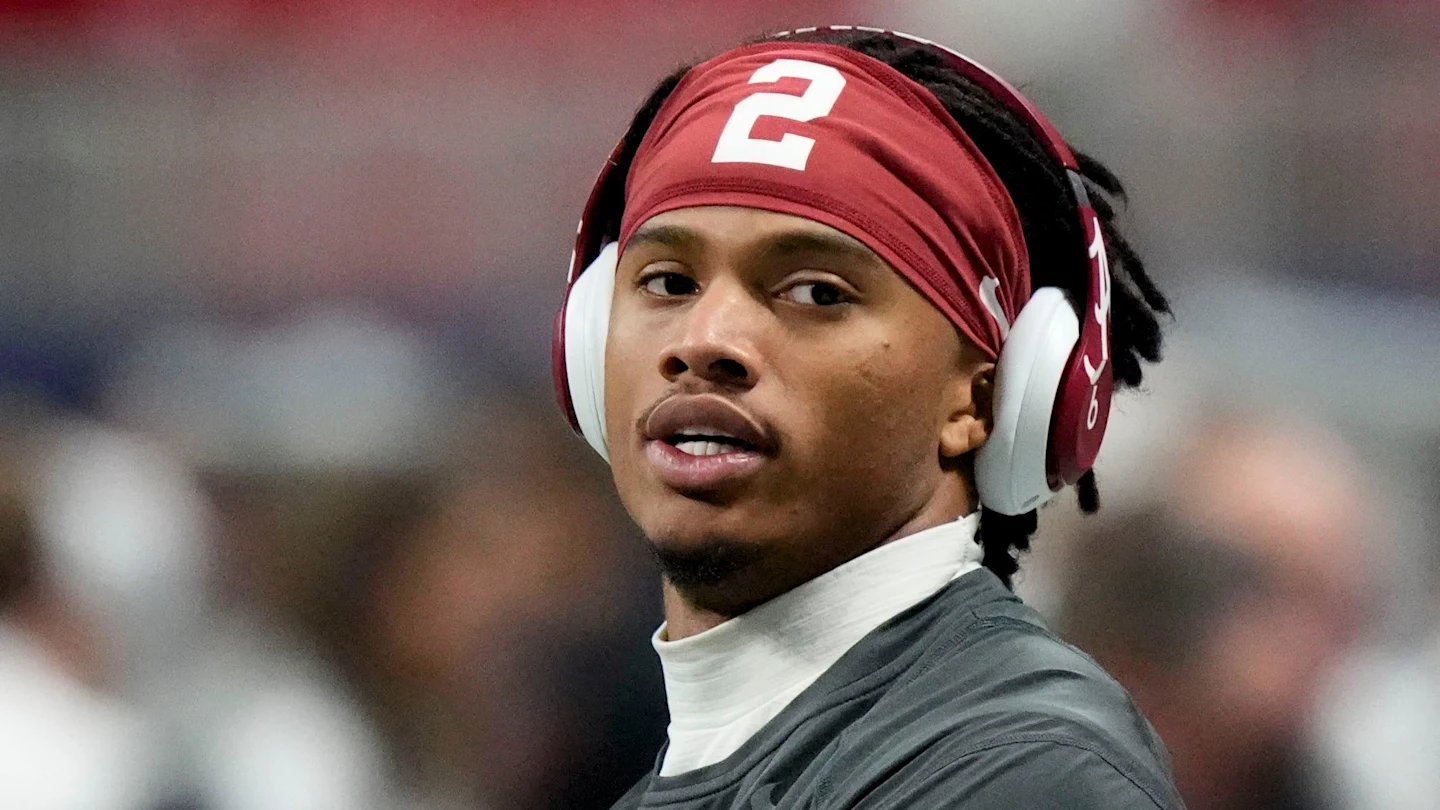
One of the most talented wide receivers in the SEC has made his final decision when it comes to entering the transfer portal days before his team is set to appear in the second round of the College Football Playoff.
And it’s a decision that Alabama fans should welcome right before their team is set to take on the top seed team from the historic Rose Bowl.
Alabama star is staying put
Crimson Tide wide receiver Ryan Williams has stated that he will return to the school for the 2026 college football season.
“Of course. I’m Alabama through and through. I have no intentions of being anywhere else,” Williams told reporters before the Tide’s appearance in the Rose Bowl quarterfinal game.
So he’s not going into the portal? “Nah,” he said.
Coming off an impressive comeback victory against Oklahoma in the first round, Alabama is set to face off against undefeated No. 1 overall seed Indiana in the second-round fixture from Pasadena on New Year’s Day, and Williams should be a big part of its game plan.
Williams burst onto the scene last fall
Williams made a name for himself as a 17-year-old freshman last season, catching 48 passes for 865 yards and eight touchdowns in addition to two rushing scores.
The wideout’s gravity-defying and acrobatic plays in a statement win against Georgia, in particular, made him a household name among college football fans in the SEC and nationally.
And he was able to parlay that success into a solid NIL valuation, ranking among the top 50 players in the NCAA and in the top 35 in football with a reported $1.6 million estimation, according to the On3 Sports national rankings.
This was a down year, though
Expectations were through the roof coming off his debut campaign, but Williams’ production didn’t live as much up to the hype in his sophomore effort.
The wideout recorded 43 receptions for 636 yards and just four touchdowns in 2025, although he had a strong outing against Wisconsin early this fall, when he secured 5 grabs for 165 yards and two of his touchdown catches.
“This season has presented a lot of opportunities for me and my squad,” Williams said at the Rose Bowl media day from L.A.
He added: “Learning opportunities. On the field opportunities. Really just growing as an individual.”
How the college football transfer portal works
College football’s transfer portal officially opens on Jan. 2, but that hasn’t stopped a flurry of players from entering their names for consideration at a new school right now.
The new 15-day transfer portal window from Jan. 2-16 and the elimination of the spring transfer period has condensed the timeline for players and programs to make their moves.
The NCAA Transfer Portal is a private database that includes the names of student-athletes in every sport at the Division I, II, and III levels. The full list of names is not available to the public.
But to hear the Alabama star speak for himself, it appears Ryan Williams will not be among those names.
More college football from SI: Top 25 Rankings | Schedule | Teams
Follow College Football HQ: Bookmark | Rankings | Picks
NIL
Nick Saban goes on long rant about state of college sports: ‘I got it figured out, nobody will listen’
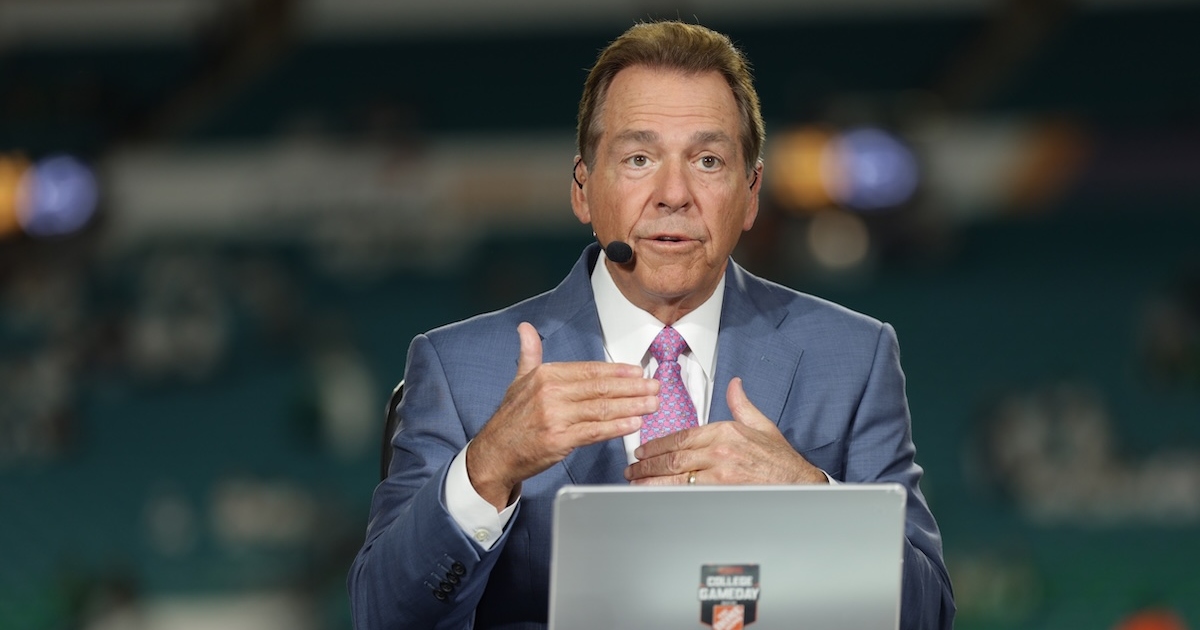
Nick Saban went on a lengthy rant about the state of college sports, claiming he had all the answers. But, the former Alabama coach said “nobody will listen” to his solutions.
“I got it figured out. Nobody will listen,” Saban said on The Pat McAfee Show. “So, you know, what are you going to do? I mean, we got to have, you know, some kind of antitrust exemption. You got to get the political parties together on it. I think the college people have to get over the fact that, you know, a graduate student can be a graduate assistant, get paid, is not an employee. So players don’t have to be employees. And these graduate students have representation. You call it a union if you want, but it’s restricted on what they can negotiate for.
SUBSCRIBE to the On3 NIL and Sports Business Newsletter
“They can’t say, you know, I have a lab that takes 10 hours and I’m going to go on strike, so we only have to go six hours. Can’t do that. You do the same thing in football. Put some restrictions and determine what you can and can’t negotiate. Shouldn’t be anything that has anything to do with athletic development. We already have those restrictions, 20 hours a week, whatever it is, that practice time. So there is a way to do this that satisfies both parties, that gives cover to both groups, so that we can move forward.”
Saban even referred to how he was criticized for his opinions on the state of college athletics at this time. That’s despite college football being more popular than ever, but it’s not without its flaws.
“And you know, I got killed in the Wall Street Journal for saying things like, college football is messed up,” Saban said. “But the thing about it is, everybody just looks at … the playoffs have created tremendous interest in college football. There’s a whole bunch of teams now that have a chance to get in the playoffs. There’s more interest than ever, higher TV ratings and all that. But the underbelly underneath that is not really good. It’s not really good for the development of players. It’s not really good for all the sports that we try to sponsor in college.”
Nick Saban has hot opinion about state of college athletics
“I mean, and I think we got to decide that we want to be, you know, a professional developmental league,” Saban continued. “Or are we really going to have college athletes who go get an education and develop value for their future as they’re playing and making money? I want them to make money. I think they should make money, but there should be some restrictions on how they go about doing it.”
However, money aside, Saban said the biggest issue is the transfer portal. NIL can be tweaked, but player movement has to be fixed. He even likened it to the biggest issues in basketball and has coaching legends hitting him up!
“And the movement is as big an issue, to me, a bigger issue than even the money,” Saban said. “I mean, everybody being able to transfer all the time. I mean, that’s not a good thing. Now, we even got a basketball player going to Baylor after he played in the NBA. I mean, you heard me say this before: we are going to have a quarterback gets drafted by the New York Giants. He’s gonna be playing for Penn State. I mean, what about that? Calipari and Izzo are blowing me up. I’m not even a basketball guy.”

The USC Trojans will be active in the transfer portal this upcoming offseason as they try to find complimentary pieces to their returning core of starters.
Combining the resources at their disposal and players that are returning for the Trojans, here are three reasons why USC will be a destination program for the top players in the transfer portal.
Quarterback Jayden Maiava And The Trojans’ Pass Attack

On the offensive side of the ball, wide receiver is arguably USC’s biggest need.
Their stars from this season, Makai Lemon and Ja’Kobi Lane, have already announced their intention to enter the 2026 NFL Draft. Prince Strachan and DJ Jordan made their plans known that they will hop into the transfer portal when it opens on Jan. 2. Jaden Richardson is out of eligibility.
That’s at least five scholarship wide receivers that the Trojans will have to replace. Granted, they did sign six recruits from the 2026 class.
Enter USC quarterback Jayden Maiava. The Trojans’ gunslinger re-signed and will come back for his senior year as he looks to raise his draft stock and lead the program to their first College Football Playoff appearance under Lincoln Riley. He played a big part in helping Makai Lemon win the 2025 Biletnikoff Award.
Not only can playing with a quarterback like Maiava be enticing, but being able to play in Riley’s scheme is also a big bonus.
Under Riley, the Trojans have produced three NFL wide receivers in Tahj Washington, Jordan Addison, and Brendan Rice. The latter two transferred in to play for Riley in his inaugural season in 2022. More receivers in the portal can look to Addison and Rice as prime examples of what Riley can do in terms of getting players out to the next level.
Defense On The Rise

Although USC defensive coordinator D’Anton Lynn is reportedly heading to Penn State in the same position, the Trojans’ defense is trending in the right direction heading into 2026.
With plenty of solid returning pieces like linebacker Desman Stephens II, defensive lineman Jahkeem Stewart, and cornerback Marcelles Williams, the Trojans can be selective with who they decide to bring in.
Considering nearly every position group along the defense has a transfer that has made an impact for the Trojans, they show that they know how to make the most of their newcomers.
That’s why USC could be a program to watch when it comes to top defensive transfer portal additions.
MORE: What TCU Is Saying About USC’s Offense Before Alamo Bowl
MORE: USC Trojans Defensive Back Clarifies Injury Status Ahead Of Alamo Bowl
MORE: USC Trojans Breakout Candidates Following NFL Draft, Transfer Portal Departures
SIGN UP FOR OUR NEWSLETTER HERE!
NIL Resources

The Trojans are losing a lot of firepower to the upcoming draft with Lemon, Lane, and safety Kamari Ramsey being a few of the draft entries from USC.
The loss of the talented trio is offset by the fact that their absences clears up some NIL funds potentially to be used in the transfer portal.
USC won’t be in the market for a hefty transfer portal class. And if they opt for quality of quantity, it will cost them a pretty penny. But if the Trojans have shown anything, it’s that their resources are vast and abundant.
Recommended Articles
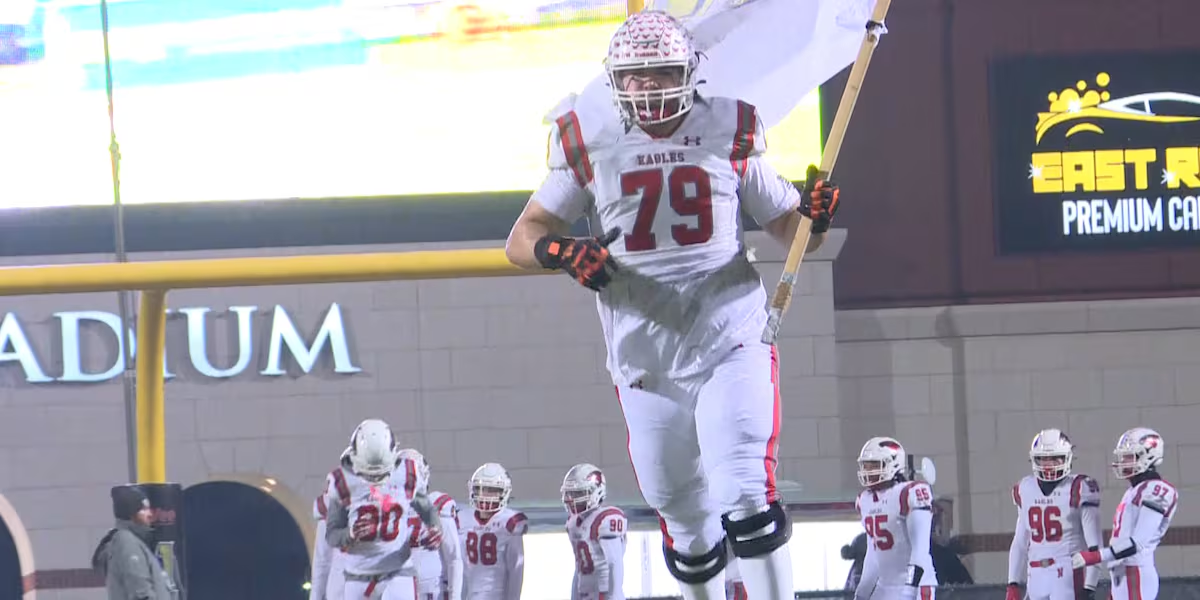
NIXA, Mo. (KY3) – It’s a new era of college football. And Nixa High School offensive lineman Jackson Cantwell finds himself in the middle of it.
The Ozarks Sports Zone’s Danielle King sat down with Cantwell and his agent Drew Rosenhaus to discuss his recruitment and managing NIL.
Check out the latest high school sports coverage on the Ozarks Sports Zone by clicking here.
To report a correction or typo, please email digitalnews@ky3.com. Please include the article info in the subject line of the email.
Copyright 2025 KY3. All rights reserved.

College football transfer portal prices: Position‑by‑position ranges surge

Mia Kinney, 2025 5-Star Preps Volleyball Player of the Year

Avery Elizabeth Merritt, loved animals, volleyball
How Kansas women’s volleyball will remember 2025 season, Sweet 16 run

Boise State hoops grinds out New Mexico after a slow start
NIL gives football programs like Texas Tech a ‘taste of success’
Two of area’s best high school volleyball coaches call it quits

Sports Daily Digest December 30, 2025 – WRBI Radio

New gym opens in Santa Maria where kids can embrace their inner-warrior
Vote for Athens all-area high school volleyball player of the year

Rick’s Sports Corner: Karisma Mendez, Two-Sport Stand Out

State rep. blasts Gov. Walz for ignoring daycare fraud warnings

Here’s which FLC basketball players rank in top 10 in RMAC in key categories

Kendall Young Library announces teen events for January | News, Sports, Jobs

Youth soccer league registration closes Jan. 31 | News, Sports, Jobs

SoundGear Named Entitlement Sponsor of Spears CARS Tour Southwest Opener

Donny Schatz finds new home for 2026, inks full-time deal with CJB Motorsports – InForum

Black Bear Revises Recording Policies After Rulebook Language Surfaces via Lever

Men’s and Women’s Track and Field Release 2026 Indoor Schedule with Opener Slated for December 6 at Home

David Blitzer, Harris Blitzer Sports & Entertainment

How Donald Trump became FIFA’s ‘soccer president’ long before World Cup draw

DeSantis Talks College Football, Calls for Reforms to NIL and Transfer Portal · The Floridian
Elliot and Thuotte Highlight Men’s Indoor Track and Field Season Opener

Rick Ware Racing switching to Chevrolet for 2026

JR Motorsports Confirms Death Of NASCAR Veteran Michael Annett At Age 39

#11 Volleyball Practices, Then Meets Media Prior to #2 Kentucky Match

Colleges ponying up in support of football coaches, programs

23 عاما من الفضائح السياسية والجنسية منذ انقلاب حمد بن خليفة.. استغلال الفتيات الصغيرات في الدعارة.. ضبط ابنة رئيس وزراء قطر خلال ممارستها لجنس الجماعي.. ملامح الحكم تتخبط بين المنفي وتدخلات النساء
West Fargo volleyball coach Kelsey Titus resigns after four seasons – InForum

23 عاما من الفضائح السياسية والجنسية منذ انقلاب حمد بن خليفة.. استغلال الفتيات الصغيرات في الدعارة.. ضبط ابنة رئيس وزراء قطر خلال ممارستها لجنس الجماعي.. ملامح الحكم تتخبط بين المنفي وتدخلات النساء






-
 Sports3 weeks ago
#11 Volleyball Practices, Then Meets Media Prior to #2 Kentucky Match
-
 Motorsports3 weeks ago
Nascar legal saga ends as 23XI, Front Row secure settlement
-

 Motorsports3 weeks ago
Sunoco to sponsor No. 8 Ganassi Honda IndyCar in multi-year deal
-
 Sports3 weeks ago
Maine wraps up Fall Semester with a win in Black Bear Invitational
-
 Rec Sports3 weeks ago
WNBA’s Caitlin Clark, Angel Reese and Paige Bueckers in NC, making debut for national team at USA camp at Duke
-

 Motorsports2 weeks ago
Ross Brawn to receive Autosport Gold Medal Award at 2026 Autosport Awards, Honouring a Lifetime Shaping Modern F1
-
Motorsports3 weeks ago
NASCAR, 23XI Racing, Front Row Motorsports announce settlement of US monopoly suit | MLex
-

 Motorsports3 weeks ago
Rick Hendrick comments after the NASCAR lawsuit settlement
-

 Sports3 weeks ago
Hope College Tops MIAA Commissioner’s Cup Fall Update
-

 Sports3 weeks ago
Pinterest predicts the biggest Gen Z trends of 2026 | News