
Rec Sports
12th Annual Imagine Little Tokyo Short Story Contest — Youth: My Time With You




By JOSEPHINE TAKIGUCHI
Mondays.
Mamu and Papa.
Every week, that was always the routine. Ever since I was a little girl, Monday was the day to spend with Mamu and Papa.
Not Grandma and Grandpa.
Not just Mamu, or just Papa. Mamu and Papa.
Nothing about Mamu and Papa has changed since I was little. The large house. The tall driveway. The big pool in the backyard next to the looming hill sprouting kaki and nashi pears, or the cupboard stacked with Fugetsu-do mochi. Every Monday, same routine. As the world around us changed, time continued to tick. Time continues to tick, and tick, and tick. But not with Mamu and Papa.
Time. Another one of the many things that never changed about Mamu and Papa. Time and time again, Monday rolls around and we all gather to enjoy Mamu’s home cooked tonkatsu and sunomono. My mom asks Papa how his back is feeling, as Mamu wears her same bright blue apron in the kitchen to listen to her opera and make more tsukemono appetizers.
“So Dad, how’s your back feeling?” My mom says, reaching over to grab a slice of tonkatsu.
“It’s good, it’s good,” Papa says, pouring tonkatsu sauce over his plate. “Went to the doc the other day to check it out. Everything’s normal.”
“That’s great!”
My brother and I quietly slice our food, listening to the chatter amongst everyone else — the same, routine conversations and catch-up small talk. Mamu has changed the radio station to basketball, and turned it on the TV. The Los Angeles Lakers are playing.
Mamu and Papa have loved basketball ever since their youth. Raising my dad and uncle, they helped manage his basketball team to watch them grow up and play. Papa was the coach, and Mamu always prepared the refreshments for the game. Following in their footsteps, my parents now help around with me and my brother’s basketball team. My dad is the coach, and my mom helps bring the snacks.
Basketball is a big part of our lives.
Of course, basketball was our sport. Since the moment my brother and I could run, we were playing basketball every Sunday for the JA League (Japanese American League).
As time continued to tick, we were starting to play more games. Sunday was always game day, and Game Day was always at Terasaki Budokan.
I was never a star-player for basketball, and my brother was always better than me. I only went to play the games for the sake of my teammates and our “after-the-game” walk to Marukai Market, or a quick brunch at Cafe Dulce.
Mamu and Papa were always at my games. I’d be sitting on the player bench the entirety of the game, and they never left. Time, and time again. Mamu and Papa always watched my games.
One day, after one of my games, my parents had left me with Mamu and Papa to spend the day with them. I picked up my oversized basketball bag that made me look like a floating head from the back, and walked over to where Mamu and Papa sat on the bleachers.
Mamu, sitting with her book, and Papa, with his bulky fall-proof iPad, got up from the bleachers and made their way over to me.
“Mamu and Papa! Hey!” I exclaimed, speeding up the pace.
“Hey there kiddo, nice game today,” says Mamu, nodding her head with that same sweet smile she always wears.
“Ready to go?” asks Papa.
“Yeah, let’s head out. Where are we going next?” I say, beaming with excitement.
We walk out the door, and head down the sidewalk back to the parking lot. I grab Mamu and Papa’s hand as we walk slowly together, one step at a time.
We arrive in front of Weller Court, and pass by the Kizuna Friendship Knot on our way to find something quick to eat. After a few loops around the plazas, we decided we wanted red bean manju—Papa’s favorite.
Mamu suggests that we make our way over to a quieter, more peaceful spot to enjoy our manjus. Papa and I nod our heads in agreement, while in reality, the only thing in our heads is that sweet, red, delectable dessert.
Since the beginning of our walk, I haven’t let go of Mamu and Papa’s hands. The only time was to allow Mamu to pick up the bags with the red bean manju.
“Hey, let’s take a break here. I’m getting a little tired, kiddo, the walk has been pretty long.” Papa sighs, slowly coming to a stop.
“Okay, we’ll rest here,” I say, nodding my head as Papa lets go of my hand to pull up a chair and sit under the shady Aoyama Tree.
Mamu, who was a few steps ahead, turned around after noticing our footsteps weren’t trailing anymore.
“Gosh, you guys, you could’ve given me a warning before I started walking too far,” Mamu complains, swinging her arm up out of frustration. She slumps back over to the table, Papa grinning a sly smile.
“Okay now what’s that face for — stop laughing at me!”
“Am I not allowed to smile at my wife?”
“Smile at me again, and you’ll betcha’ no red bean manju!” Mamu says, as she swipes the plastic “Thank You!” bag behind her chair. Papa leans back and chuckles.
I watch the two of them, happy to be here. Happy to be with them. For a moment, time comes to a brief, yet long halt. I sit at this old, still, bench next to two people who have been my life since the start. I’m used to this reminiscent feeling by now. I enjoy my time with them. We all bite into our manjus.
Papa begins to tell stories after we all eat, and I’ve been folding origami with Mamu. We have many conversations about time in the war, and afterwards we visit the Aratani Movie Theater to watch a movie. We watch a movie, and I notice the wall of people’s names I’ve never seen before. In gold, I read Mamu and Papa’s names outloud. Mamu and Papa then talk about how they met at this theater for their first date after college, and they both made the donation to get their names placed on the wall. They got their names on there because even to this day, their names signify that they are still together in the same moment of time, as if they never actually left.
When we finish eating, we make our way past the hall of greenery and toward the Go For Broke Monuments with the list of people’s names. I walk around and Papa shares stories of his time in the war, memories, and moments.
We talk about his childhood, how he remembers driving away from his house and watching the looters raid his home as he drove farther and farther. He talks about his sister being born in the horse stall there because of the conditions, and how hard it was for him to leave behind his home and other friends. Mamu doesn’t remember because she was too young, but her recollection was of packing her things, and she loved her red fancy coat dress. She even wore that little red fancy coat dress in one of the pictures at the internment camps. Her same, bright sweet smile, and short black hair.
I check my phone and realize it’s getting close to the time we were supposed to return home. We absorb one last look at the monument, and walk back to the car.
On the car ride home, we all sing songs together and laugh about our adventures around Little Tokyo. Time is all mine. Nothing can interrupt this endless moment.
When we return to Mamu and Papa’s house, my parents are there to pick me up. In the car, I watch the trees and buildings zoom by and my eyes fall heavy and close.
Tomorrow is Monday.
The school bell rings and I walk to the car to catch a ride home. Once home, I pack my homework and head to the car. Today is Monday.
Mamu meets me at the bottom of the steps and we tend to her garden at the front. We all gathered around to enjoy Mamu’s home cooked tonkatsu and sunomono. Mom asks how Papa’s back is feeling, and Mamu is in the kitchen. Same routine. While we eat, Papa brings up the topic of college and we discuss what I plan to do for my future — which is weird, since I never would’ve considered him to be interested in that sort.
When dinner ends, I help bring the dishes to the sink and put things away.
Papa comes up to me after dinner, which isn’t part of our routine. I normally don’t talk to him apart from dinner on Mondays. He looks up at me.
“I won’t be here much longer, but I’ll try my best to stick around to watch you graduate from college.” Catching me off guard, I process what he says.
For the first time in my life, as I stared at Papa, time started to move differently. Instead of Mamu and Papa, it was my surroundings and the outside world that seemed to stay still and freeze for a moment, and I stared as my time with Mamu and Papa flashed before my eyes. For the first time in my life, I could see the way they aged.
I noticed the missing grey hairs that used to fill the top of his head, and the glasses that changed as his eyesight got worse.
I noticed the creases under his eyes and the corners of his sweet smile that couldn’t reach as high up on his face as it used to.
I noticed Mamu’s hair had gotten shorter, and lighter. I noticed how much slower they walk, how their hearing has worsened.
I noticed how my mom’s normal question about Papa’s back wasn’t such a normal question anymore.
I finally realized I’m not their little girl anymore.

From left: Youth category judges Yoko Hata, Sharon Fujimoto-Johnson, Carmela Tomek.
I’m not their little girl who could barely reach the top of the table with my mini pink chopsticks. I’m not their little girl with her high-pitched voice singing in the car ride with them anymore. I’m not their little girl that fits right into their laps anymore and they can tuck me in and read me bedtime stories.
And as I stared at Papa, I thought to myself. For the first time in my life, I had realized — that I was running out of my time with you.
Josephine Takiguchi is an incoming junior at Granada Hills Charter High School. Growing up in Los Angeles, she joined the San Fernando Valley Japanese American Community Center, where she played basketball and volunteered at cultural events. Josephine was a member of the LAUSD Superintendent’s Student Advisory Council, where she contributed as the students’ voice on improving student experience. This year, she participated in the 21st Rising Stars Youth Leadership Program. Josephine also founded a nonprofit for food allergy awareness to advocate for those with food allergies like her. As with most teens, she enjoys spending time with her friends and going out. She also comes from a big family and enjoys spending time with and babysitting her baby cousins.
Articles for you


ALBANY — The Saratoga Springs Youth Ballet brought its presentation of “The Nutcracker” to the UAlbany Performing Arts Center on Saturday.
A Christmas classic, the ballet is based on “The Nutcracker and the Mouse King,” an 1816 short story written by E. T. A. Hoffmann. The version performed by the youth ballet, choreographed and re-staged by Cristiane Santos and Joan Kilgore Anderson, featured more than 120 local dancers between the ages of 5 and 18, according to the nonprofit dance group’s website.
The show featured special guests such as Sarah MacGregor and Jethro Paine of Boulder Ballet and Andre Malo Robles as Herr Drosselmeyer.
Another performance is scheduled for Sunday at 2 p.m. That show is sold out, according to the event website.


Funeral services for Donny Wayne Stricklin, Jr., 54, of Bremen, AL will be 2 p.m. Sunday, December 21st at Hanceville Funeral Home Chapel. Burial will follow the service at Bethany Baptist Church. Bro. Brandon Stripling & Bro. Jay Washburn will officiate services. The family will welcome friends for visitation at Hanceville Funeral Home on Saturday, December 20th from 6 p.m. to 8 p.m.
Donny was a man whose life was defined by service, loyalty, and a deep love for people. Known for his big heart and even bigger sense of humor, Donny never met a stranger—only friends he hadn’t made yet.
A devoted and lifelong Alabama football fan, Donny proudly supported the Crimson Tide with passion that was impossible to miss even if it meant delaying an important event. To his grandchildren, he was lovingly known as “Pee Pee,” a title he cherished and lived up to every day through his constant presence, encouragement, and love. Donny worked for several years at Sansom Equipment, where his role went far beyond a job description. He treated his coworkers as family, always showing up for them—whether it was work-related or not. His loyalty and care for others were hallmarks of who he was.
A dedicated volunteer firefighter and EMT for many years, Donny selflessly served his community, willing to help in moments when others needed him most. His commitment extended to youth as well, as he devoted countless hours to Cold Springs Athletic youth sports, including Upwards Basketball, and proudly supported the RCBC Youth Council. He believed deeply in guiding and uplifting young people. Donny was truly a “friend’s friend”—someone who would stand by anyone, whether he knew them well or had just met them. His love for jokes and playful spirit were legendary, often expressed through perfectly timed—or hilariously inappropriately timed—music, guaranteeing laughter wherever he went.
Above all else, Donny loved his family. His loving wife, children and grandchildren were the center of his world, and he poured his heart into being present, supportive, and proud of each of them. Donny leaves behind a legacy of kindness, service, laughter, and love that will live on in the many lives he touched. He will be deeply missed and forever remembered.
Survivors include his loving wife, Lorrie Stricklin; children, Brennen (Allyson) Stricklin and Hannah Stricklin; grandchildren, Agustus Wayne Stricklin, Ivy Faye Stricklin and Omari Cooper Stricklin; father, Donald Wayne Stricklin Sr. (Rita); siblings, Danny Stricklin (Gloria), Devan Ponder (Brian), David Still (Kimberly) and James Still (Jennifer), step-brother, Tim Busbee (Rebecca); brother-in-law, Jamie Akin (Jan); grandfather, Leldon Stricklin; and a host of many nieces, nephews and cousins.
Mr. Stricklin was preceded in death by his mother, Modene Campbell Stricklin; grandparents, Mae Stricklin and Ogle & Oleta Campbell; step-sister, Tonya Busbee; niece, Rhianna Busbee; and mother and father-in-law, Gary and Linda Akin.
To celebrate his passion for Alabama football, the family asks that guests consider wearing causal Alabama football attire on Saturday or your favorite college football team.
Also, he was cared for beautifully by the liver transplant team, ABTX team, SICU team, and PCCU team at UAB.
Hanceville Funeral Home is honored to serve the Stricklin Family.

DB3 Boxing hosts a free community holiday event on Monday, Dec. 22, in Norfolk with gifts, games, youth activities, and family-friendly fun.
NORFOLK, Va. — DB3 Boxing, a nonprofit organization focused on youth development through athletics and mentorship, will host a free community holiday celebration on Monday, Dec. 22, at Lambert’s Point Community Center in Norfolk.
The event, titled DB3 Boxing Community Day: Home for the Holidays, is scheduled from noon to 6 p.m. and is open to the public. Organizers say the gathering is designed to bring families together while offering recreational activities and seasonal support at no cost to attendees.
DB3 Boxing was founded by the Davis family and emphasizes discipline, education, and positive engagement for young people through sports. According to the organization, the Community Day will feature gift giveaways, free haircuts and hairstyling, nail services, youth dance performances, basketball games, and family-friendly attractions such as a bounce house.
The event will take place at Lambert’s Point Community Center, located at 1251 West 42nd Street.
The three brothers, professional boxers Keyshawn Davis, Kelvin Davis, and Keon Davis who are from Norfolk, have represented the city at the national and international level and remain involved in community-based initiatives through DB3 Boxing.
In addition to the on-site activities, organizers said attendees will have an opportunity to learn about DB3 Boxing programs and a chance to connect with the organization during Super Bowl week events in San Jose, California.
Admission is free, but registration is available through Eventbrite for those seeking additional information or to reserve tickets. Organizers note that the event is intended as a community-wide holiday gathering and does not require prior involvement with DB3 Boxing to attend.

Exceptional performers play a major role in driving innovation and tackling some of the world’s most urgent challenges. Because of this, societies have a strong stake in understanding how top-level talent develops. A new review published in the journal Science argues that many long standing approaches to gifted education and talent development rest on flawed assumptions. For the first time, an international and interdisciplinary research team has brought together evidence on how world-class performers emerge in science, classical music, chess, and sports.
For decades, research on giftedness and expertise has followed a familiar model. Outstanding achievement was thought to depend on strong early performance, such as excelling in school subjects, sports, or concerts, combined with specific abilities like intelligence, physical coordination, or musical talent. These traits were believed to need years of intense, discipline-focused training to produce elite results. As a result, many talent programs concentrate on identifying the top young performers early and pushing them to specialize quickly.
According to new findings led by Arne Güllich, professor of sports science at RPTU University Kaiserslautern-Landau, this approach may not be the most effective way to nurture future high achievers.
Why Earlier Research Missed the Full Picture
Until recently, most studies of giftedness focused on young or sub-elite performers. These groups included school and college students, youth athletes, young chess players, and musicians training at conservatories. However, evidence drawn from adult world-class athletes has begun to challenge conclusions based on these earlier samples.
“Traditional research into giftedness and expertise did not sufficiently consider the question of how world-class performers at peak performance age developed in their early years,” Arne Güllich explains. The goal of the new Review was to address this gap by examining how elite performers actually progressed over time.
To do this, Güllich worked with an international research team that included Michael Barth, assistant professor of sports economics at the University of Innsbruck, D. Zach Hambrick, professor of psychology at Michigan State University, and Brooke N. Macnamara, professor of psychology at Purdue University. Their findings are now published in Science.
Pooling Evidence Across Fields
The researchers reexamined large datasets from many previous studies, analyzing the developmental histories of 34,839 top-level performers from around the world. The group included Nobel Prize winners in the sciences, Olympic medalists, elite chess players, and leading classical music composers. This effort made it possible, for the first time, to compare how world-class performers develop across very different disciplines.
Early Stars Are Rarely Future Legends
One of the most striking conclusions is that elite performers follow a developmental path that differs from long-held assumptions. “And a common pattern emerges across the different disciplines,” Güllich notes.
First, individuals who stand out as the best at a young age are usually not the same people who become the best later in life. Second, those who eventually reached the highest levels tended to improve gradually during their early years and were not top performers within their age group. Third, future world-class achievers typically did not focus on a single discipline early on. Instead, they explored a range of activities, such as different academic subjects, musical genres, sports, or professions (e.g., different subjects of study, genres of music, sports, or professions).
How Variety Builds Stronger Performers
The researchers propose three ideas that may help explain these patterns. “We propose three explanatory hypotheses for discussion,” says Güllich.
The search-and-match hypothesis suggests that exposure to multiple disciplines increases the likelihood of eventually finding the best personal fit. The enhanced-learning-capital hypothesis proposes that learning in diverse areas strengthens overall learning capacity, making it easier to continue improving later at the highest level within a chosen field. The limited-risks hypothesis argues that engaging in multiple disciplines reduces the chance of setbacks such as burnout, unhealthy work-rest imbalances, loss of motivation, or physical injury in psychomotor disciplines (sports, music).
Arne Güllich summarizes the combined effect of these factors: “Those who find an optimal discipline for themselves, develop enhanced potential for long-term learning, and have reduced risks of career-hampering factors, have improved chances of developing world-class performance.”
Encouraging Breadth Instead of Early Specialization
Based on these findings, Güllich offers clear guidance on how young talent should be supported. The evidence suggests avoiding early specialization in a single field. Instead, young people should be encouraged and given opportunities to explore several areas of interest and receive support in two or three disciplines.
These areas do not need to be closely related. Combinations like language and mathematics, or geography and philosophy, can be equally valuable. Albert Einstein provides a famous example — one of the most important physicists, who was also deeply engaged with music and played the violin from an early age.
Implications for Policy and Practice
The authors argue that these insights should inform changes in how talent development programs are designed. Policymakers and program leaders can move toward approaches grounded in evidence rather than tradition.
As Güllich concludes, “This may enhance opportunities for the development of world-class performers — in science, sports, music, and other fields.”

Dec. 21, 2025, 5:01 a.m. PT
When it comes to financial numbers for high school football recruits in this new world of Name, Image and Likeness (NIL), it’s not often their parents or agents, or the player themselves, explicitly say what they are being offered.
However, when it comes to former Mission Viejo High School star and four-star wide receiver Phillip Bell, that isn’t the case after a recent Wall Street Journal feature on the Ohio State freshman revealed what Washington reportedly offered the four-star prospect.
In a story that details the inner-workings of what the Journal labeled as the black market of youth sports and family of the Buckeyes’ receiver, along with other figures in the high school and college recruiting world, that drives at the central problems that NIL—what has effectively turned into the compensation 18 to 23 year olds receive in return to represent colleges while also playing for one of their athletic programs—has become, Bell’s mother texted a friend following an official visit to UW in late May 2024 that the senior-to-be had been offered $350,000 to don purple and gold over the next four years.
The article noted after the quote sent by Bell’s mother, who passed away before his senior year, that the university declined to comment on the matter.
Ultimately, the 6-foot-2, 195-pound four-star recruit in the 2025 class committed to OSU three months after his UW visit, while the newly minted Big Ten program signed five receivers in the cycle, four of which made their verbal commitments before Bell announced his decision on August 31.
Although—despite the story citing his two subsequent official visits to Penn State and OSU went poorly—the Huskies didn’t land the talented California recruit, and whether or not his mother’s claim is true remains unknown, it sheds some light on what the estimated value is of high-caliber prep prospects, which UW football head coach Jedd Fisch has said he wants his program to be built on with the rest of the roster supplemented through “free agency,” the term Fisch and many other coaches use for the transfer portal.
In the case of Bell, who played only 22 snaps and registered just one target this season for the Buckeyes—none of which came in UW’s 24-6 loss to Ryan Day’s team when the two opened Big Ten play against each other at Husky Stadium in late September—Fisch made the right call to take the five receivers the program signed as things turned out, even though Arizona-native Raiden Vines-Bright has already opted to enter the portal after less than one calendar year in Seattle.
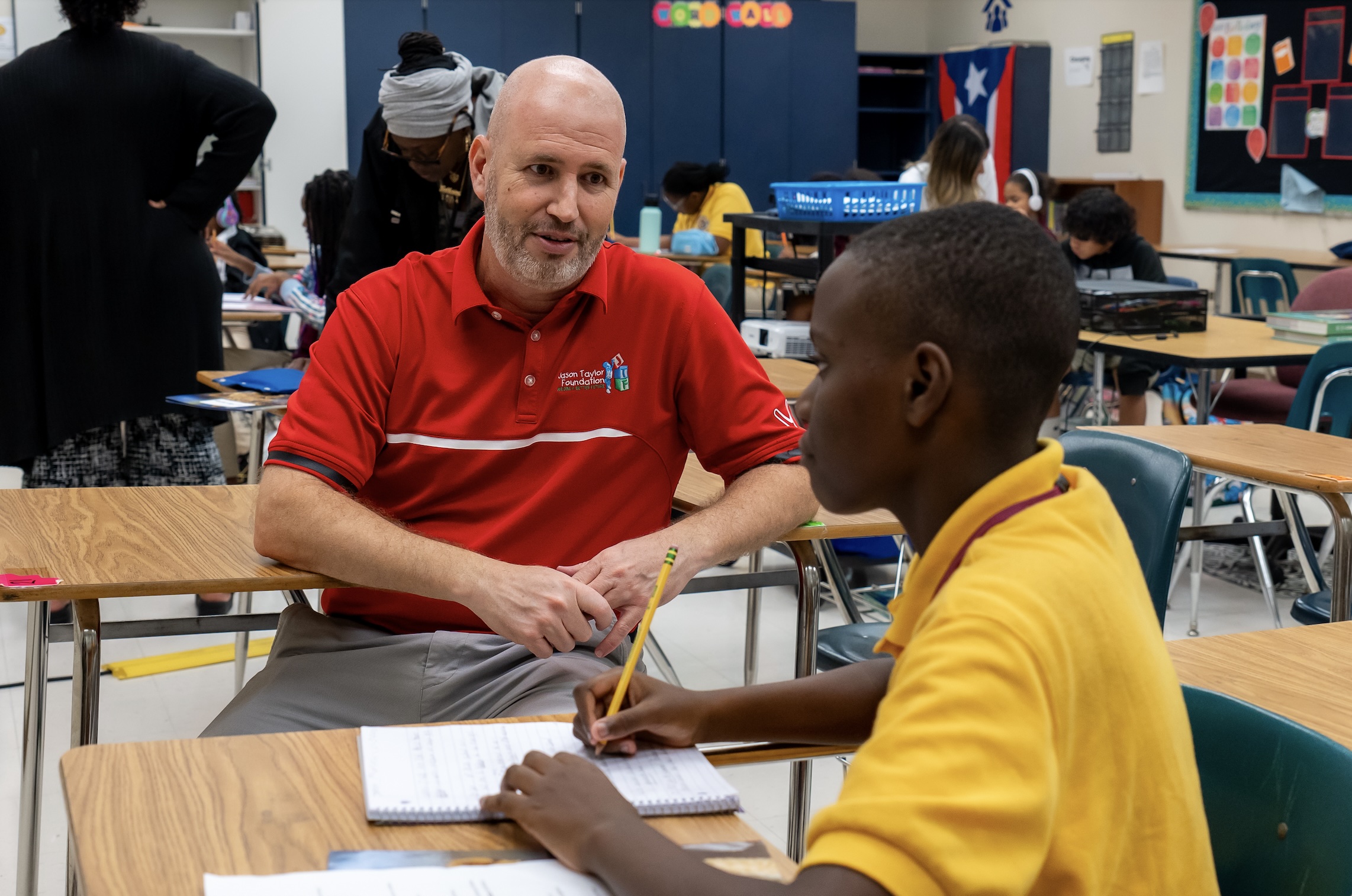
During Week 5 of the 1995 NFL season, the Miami Dolphins traveled on the road to face the Cincinnati Bengals at Riverfront Stadium.
Down by four points with just over a minute to play, Dolphins quarterback Dan Marino found wide receiver O.J. McDuffie on a back-shoulder route at the left pylon. McDuffie reeled in the pass for his first touchdown of the season for a Dolphins win.
Rooting for the Dolphins in the 300-level seats was Seth Levit, a soon-to-be University of Florida graduate who was interning for the Cleveland Cavaliers. The Dolphins’ victory against the Bengals was Levit’s first game outside of the then-Miami Orange Bowl. If it had not been for taking the weekend off from his all-encompassing Cavaliers gig, Levit would not have seen the wideout he deeply admired.
Today, Levit shares a microphone with McDuffie on The Fish Tank: Miami Dolphins Tales From The Deep podcast. Thirty years after the Miami legend caught the walk-off touchdown in Cincinnati, the two spend more than an hour multiple times a week discussing “the good ol’ days” of the Dolphins.
But long before stepping into sports media, Levit’s journey into sports ties back to Piper High School in Sunrise. A 1991 graduate, he played tennis for the Piper Bengals and continued his academic journey at UF, where he becadme involved with Gators athletics after overhearing a teammate speaking about a degree in sports administration
With a slight bit of luck and a “rowdy crowd” basketball contest, Levit became a part of Florida Basketball’s backup statistics crew. After meeting with then-sports information director Joel Glass, Levit built his own group behind the stats.
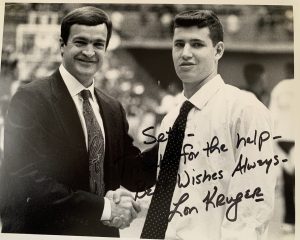
At Florida, Levit learned the daily responsibilities of an SID for Gators basketball and football. He spent Saturdays answering phone calls at The Swamp about 1996 Heisman Winner Danny Wuerffel’s stats.
As a senior, Levit reluctantly put his name in the mix for an opportunity with the Cavaliers despite striving to pursue a career in football. Still a college student, he bought a suit and made the trip to Cleveland, where he met with Cavaliers executives and secured himself a gig as a season intern.
After forming a relationship with Harvey Greene, the Dolphins senior vice president of media relations, Levit had the opportunity to watch the Dolphins take on the Bengals in Cincinnati. The 26-23 October win was meaningful in two regards: he watched McDuffie notch the game-winning touchdown, and it helped wrap up an important chapter in Levit’s life in Cleveland.
Greene later connected with then-Cavaliers media relations executive Bob Zink, who spoke highly of his intern. The conversation landed Levit his dream job — working with the Dolphins organization.
“Bob told Harvey, ‘You might look long and hard and find somebody as good. I doubt it, but I know you won’t find anyone better. He’s as good as we’ve ever had here,’” Levit said.
The new UF grad had one thing to do in order to join Miami: enroll in a college course.
While he did not attend graduation, Levit was required to take a class to intern with the Dolphins. After discussions with the late Owen J. Holyoak, the former chair of the department of education in the College of Health and Human Performance, Levit signed up for the professor’s course and began working with Miami.
“Cleveland was an opportunity, but the Dolphins was my dream job,” Levit said.
McDuffie, a Cleveland native, was entering his fourth season with the Dolphins. He was fresh off a 1995 season with eight touchdowns and 819 receiving yards. Once Levit stepped foot on the Miami facility, the two formed a friendship that remains today.
“We hit it off right away,” McDuffie said. “It was almost an instant connection between him and I.”
Levit had the responsibility to handle “whatever was left over” while Greene worked with coach Jimmy Johnson and Marino. He orchestrated training camp interviews, set up media conversations with coaches, answered PR questions — all the duties that were required of Seth during his first few moments with the Dolphins.
“I was heavily involved,” Levit said. “In some ways, not all, I was given more opportunities in Miami early on than in Cleveland.”
Levit quickly formed relationships with Dolphins stars.
Jason Taylor, the Miami Hurricanes defensive ends coach, was drafted by Miami in April 1997. The third-round selection immediately transformed the Dolphins defense. He was named Defensive Player of the Year in 2006 and inducted in the Pro Football Hall of Fame in 2017.
“Seth was very relatable with the players,” Taylor said. “He was always around and we sparked up a friendship, and have been boys ever since.”

Taylor quickly cemented himself as one of the greatest to ever do it. His name remains in history in the Miami Dolphins Ring of Honor. Taylor and Levit grew closer as the defensive cornerstone made his rise to the top.
Levit was with the organization and alongside Taylor through his 18.5-sack 2002 season — which remains as the program’s record — and his various community service initiatives.
While he terrorized the league through his 15-year career, Taylor arguably made his greatest impact off the field. He was honored as the 2007 Walter Payton Man of the Year, given to one player each season who provides a positive influence in the community.
Three years prior to the accolade, Taylor had his eyes set on creating a foundation for the children of South Florida. As a gesture on Levit’s birthday in 2004, Taylor approached him with the idea.
“He gave me a card that said ‘celebrate your birthday today, and turn in your two weeks tomorrow,’” Levit said.
After mulling over the idea, Levit agreed and became the executive director and partners with Taylor in what is now known as the Jason Taylor Foundation.

The non-profit organization based out of Davie, Florida, focuses on aiding the day-to-day of children in South Florida.
“I wanted it to be a children’s-based foundation that focused on improving kids’ lives through education, health care and general well-being,” Taylor said. “We wanted to affect lives in a different way, we wanted to create original programming.”
While it has evolved across its 21 years of functioning, the foundation serves in various capacities. Taylor and Levit worked together to bolster the original idea. Now, JTF carries numerous programs — Bluapple Poetry Network, Careers in Sports Network, Children’s Learning Center, Reading Room and more.
“We wanted to teach kids how to capture opportunities, be prepared for opportunities and to better themselves,” Taylor said. “At some point they have to leave the nest and go out and fend for themselves to become productive citizens and people within our society.”
Troy Drayton, former Miami Dolphins tight end, was brought on to the JTF scene in 2002, 18 years after the foundation’s inception.
Levit worked with Drayton during the latter’s time with the organization. He was traded to Miami from St. Louis early in the 1996 NFL season and became close with Levit. Also, Drayton and Taylor shared the same football agent, bringing the three together.
When the idea for the Careers in Sports Network transpired, Levit looked towards Drayton to run the program.
Drayton said Levit’s drive for the idea and the other aspects of his life enticed him to take the opportunity.
“When you have the kind of passion and are the type of leader Seth is, anything is possible,” he said.
Careers in Sports “focuses on educating the future generation of leaders in the sports business.”
The network works with high schools in South Florida such as Cypress Bay, Piper and Cardinal Gibbons in creating a positive environment for students to become involved with athletics in various facets of the business.
“The foundation was an opportunity to give back and to work with young people in helping them figure out what they want to do for the rest of their lives,” Drayton said. “They are going to be the next generation of sports leaders in the industry and we want to have our hand in being a part of that process.”
Levit wanted to kickstart the Careers in Sports Network off of the idea that there is more to athletics than the product put out on the field. He said everything the foundation has created up to 2022 revolved around education, but there was untapped potential in sports.
“You could build an entire career in sport without ever sacking a quarterback, without ever catching a touchdown pass, without ever dunking a basketball,” Levit said.
Former Dolphins defensive end and linebacker Kim Bokamper has also become immensely involved with Levit, but from behind the microphone.
Bokamper, a nine-year NFL standout, co-hosts the Out to Pasture podcast with ex-teammate Joe Rose. The two introduced the weekly show early in 2024 where they reminisce on the “glory days.”
Rose served as the Dolphins’ tight end from 1980 for 1985, while Bokamper played on the Miami defense tabbed the ‘killer b’s’ in the same time span. Levit produces the show while the two talk about their previous experiences and speak with various guests.
“I don’t think I’ve seen many people like Seth,” Bokamper said. “He’s my first call in the morning and my last call at night, and probably three or four times in between.”
Like Drayton and Taylor, Bokamper first met Levit when he was in the PR department with Miami. The two would cross paths frequently and struck up a friendship. As the years went on and they became increasingly close, producing the podcast entered the conversation.
“I have a real admiration for him,” Bokamper said. “You know you like working with somebody when you’re happy every time you see them.”
Prior to becoming the producer of Out to Pasture, Levit had begun to work on a podcast of his own with McDuffie.
The Fish Tank began as a weekly live chat on a computer in McDuffie’s home with Levit typing behind the screen because he’s “a much better typer” than the former wideout. The public would ask questions about McDuffie’s career and other aspects of the game.

The two had the idea to start the podcast in 2018. The show’s first episode dropped in July of the same year and took off. At first, they relied on “authentic voices of the players” such as former Dolphins linebacker and Pro Football Hall of Fame inductee Zach Thomas.
“The podcast has given me something that I really enjoy doing,” McDuffie said. “I’ve learned so much about some of the guys that I played with. It gets me more inside who the real person is.”
What started as a part of the Five Reasons Sports Network evolved to a piece of the Miami Dolphins organization, and is now its own entity.
“All these stories were buried in the depths of the sea and you have to be ready to swim in the deep end,” Levit said.
Levit’s numerous stops in his professional life has led to building the Jason Taylor Foundation and amusing the public with stories of the Dolphins’ past.
The once-college student sitting in the seats of Riverfront Stadium in Cincinnati admiring as McDuffie caught the game-winning touchdown now bolsters the community through his words and actions, while inspiring those around him.
Category: Feature Sports News, Former Gators, Miami Dolphins, NFL, University of Florida

Oregon Ducks Playoff Uniforms Instantly Steal the Show

No. 1 seed Kentucky Volleyball set to take on No. 3 seed Texas A&M for 2025 National Championship – Kentucky Kernel

Greg Biffle’s last NASCAR race in 10 pictures before death – Motorsport – Sports

BigRock Motorsports Retains Its Championship Title At ISRL Season 2 Grand Finale In Calicut

Saratoga Springs Youth Ballet performs ‘The Nutcracker’

Obituary: Donny Wayne Stricklin, Jr.

BangShift.com Drag Racing with CHRISTMAS TREES! Racing Action From Cleetus McFarland’s XMAS Tree Drags 2025 At Bradenton Motorsports Park

Iowa football lineman highlights importance of opting into bowl games

DB3 Boxing to host free community holiday event in Norfolk

Science says we’ve been nurturing “gifted” kids all wrong

BigRock Motorsports retains its Championship title at ISRL Season 2 Grand Finale in Calicut

UW Football Cited in WSJ Feature on Ohio State WR Phillip Bell

Florida’s Jaela Auguste transfers to Wisconsin volleyball

Texas Longhorns’ Michael Taaffe Reveals Difference-Making Strategy with NIL

Is women’s volleyball the SEC’s next big sport? How Kentucky, Texas A&M broke through

First Tee Winter Registration is open

Fargo girl, 13, dies after collapsing during school basketball game – Grand Forks Herald

CPG Brands Like Allegra Are Betting on F1 for the First Time

F1 Las Vegas: Verstappen win, Norris and Piastri DQ tighten 2025 title fight

Sycamores unveil 2026 track and field schedule

Two Pro Volleyball Leagues Serve Up Plans for Minnesota Teams

Utah State Announces 2025-26 Indoor Track & Field Schedule

SoundGear Named Entitlement Sponsor of Spears CARS Tour Southwest Opener

Jo Shimoda Undergoes Back Surgery

Redemption Means First Pro Stock World Championship for Dallas Glenn

Bowl Projections: ESPN predicts 12-team College Football Playoff bracket, full bowl slate after Week 14

Texas volleyball vs Kentucky game score: Live SEC tournament updates

Robert “Bobby” Lewis Hardin, 56

How this startup (and a KC sports icon) turned young players into card-carrying legends overnight

Indiana’s rapid ascent and its impact across college football





-
 Motorsports2 weeks ago
SoundGear Named Entitlement Sponsor of Spears CARS Tour Southwest Opener
-
 Sports3 weeks ago
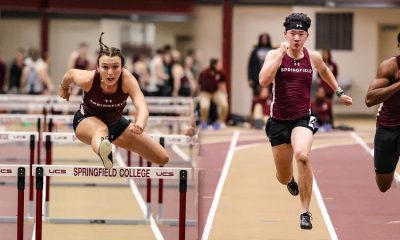
Men’s and Women’s Track and Field Release 2026 Indoor Schedule with Opener Slated for December 6 at Home
-

 Motorsports2 weeks ago
Donny Schatz finds new home for 2026, inks full-time deal with CJB Motorsports – InForum
-

 Rec Sports2 weeks ago
Black Bear Revises Recording Policies After Rulebook Language Surfaces via Lever
-

 Rec Sports2 weeks ago
How Donald Trump became FIFA’s ‘soccer president’ long before World Cup draw
-
 Rec Sports2 weeks ago
David Blitzer, Harris Blitzer Sports & Entertainment
-

 Motorsports2 weeks ago
JR Motorsports Confirms Death Of NASCAR Veteran Michael Annett At Age 39
-

 Motorsports2 weeks ago
Rick Ware Racing switching to Chevrolet for 2026
-
Sports2 weeks ago
West Fargo volleyball coach Kelsey Titus resigns after four seasons – InForum
-
Sports2 weeks ago
Elliot and Thuotte Highlight Men’s Indoor Track and Field Season Opener