
Rec Sports
Effects of learning, exercise, and game curriculum model on the physical fitness of preschool children aged 3–6: a cluster-randomized controlled trial

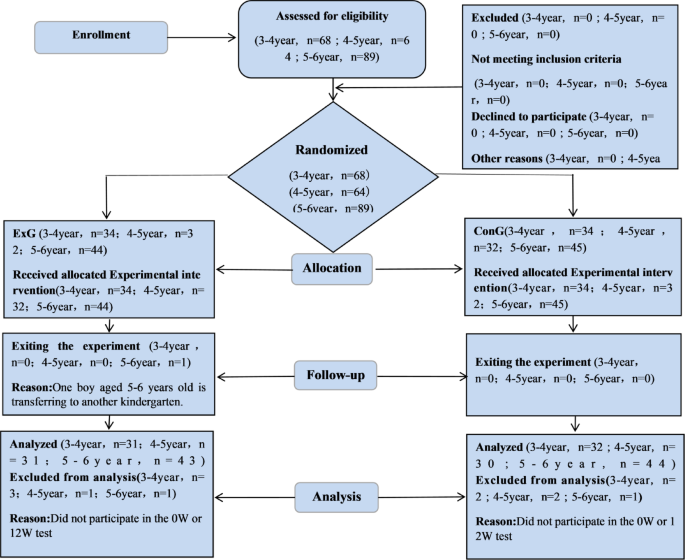
Stodden, D. F. et al. A developmental perspective on the role of motor skill competence in physical activity: an emergent Relationship. Quest. 60, 290–306 https://doi.org/10.1080/00336297.2008.10483582 (2008).
Ortega, F. B. et al. Systematic review and proposal of a field-based physical fitness-test battery in preschool children: the PREFIT battery. Sports Med. 45, 533–555. https://doi.org/10.1007/s40279-014-0281-8 (2015).
Google Scholar
Council of Europe Committee for the Development of Sport. Handbook for the EUROFIT Tests of Physical Fitness; Eurofit, C., Ed.;Italian National: Rome, Italy, (1998).
Cattuzzo, M. T. et al. Motor competence and health related physical fitness in youth: A systematic review. J. Sci. Med. Sport. 19, 123–129. https://doi.org/10.1016/j.jsams.2014.12.004 (2016).
Google Scholar
Janssen, I. & Leblanc, A. G. Systematic review of the health benefits of physical activity and fitness in school-aged children and youth. Int. J. Behav. Nutr. Phys. Act. 7, 40 (2010).
Google Scholar
Latorre-Román, P. et al. Physical fitness in preschool children: association with sex, age and weight status. Child. Care Health Dev. 43, 267–273. https://doi.org/10.1111/cch.12404 (2017).
Google Scholar
Kriemler, S. et al. J.Effect of school based physical activity programme (KISS) on fitness and adiposity in primary schoolchildren:cluster randomised controlled trial. BMJ. 23, c785 https://doi.org/10.1136/bmj.c785 (2010).
Martínez-Vizcaíno, V. et al. Effectiveness of a school-based physical activity intervention on adiposity, fitness and blood pressure: MOVI-KIDS study. Br. J. Sports Med. 54, 279–285 https://doi.org/10.1136/bjsports-2018-099655 (2020).
García-Hermoso Antonio; Alonso-Martinez Alicia M; Ramírez-Vélez Robinson; Izquierdo Mikel. Effects of exercise intervention on health-related physical fitness and blood pressure in preschool children: a systematic review and meta-analysis of randomized controlled trials. Sports Med. 50, 187–203 https://doi.org/10.1007/s40279-019-01191-w (2020).
Wick, K., Leeger-Aschmann, C. S., Monn, N. D. & Radtke, T. Interventions to promote fundamental movement skills in childcare and kindergarten: A systematic review and Meta-Analysis. Sports Med. 47, 2045–2068. https://doi.org/10.1007/s40279-017-0723-1 (2017).
Google Scholar
Chen, W. et al. Health-related physical fitness and physical activity in elementary school students. BMC Public. Health 18, 19 https://doi.org/10.1186/s12889-018-5107-45 (2018).
Google Scholar
Wang, G. et al. The effect of physical exercise on fundamental movement skills and physical fitness among preschool children: study protocol for a Cluster-Randomized. Controlled Trial Int. J. Environ. Res. Public. Health. 19, 6331 https://doi.org/10.3390/ijerph1910 (2022).
Weizhen, G. & Huan, W. Meta-analysis of the effects of physical activity intervention on physical fitness of 3-6-year-old children in China. China School Health 42, 1311–1317 + 1322.https://doi.org/10.16835/j.cnki.1000-9817.2021.09.009 (2021).
Robinson, L. E. Effect of a mastery climate motor program on object control skills and perceived physical competence in preschoolers. Res. Q. Exerc. Sport. 2, 355–359. https://doi.org/10.1080/02701367.2011.10599764 (2011).
Google Scholar
Robinson, L. E. The relationship between perceived physical competence and fundamental motor skills in preschool children. Child Care Health Dev. 37, 589–596 https://doi.org/10.1111/j.1365-2214.2010.01187.x (2011).
Logan, S. W. et al. Getting the fundamentals of movement: a meta-analysis of the effectiveness of motor skill interventions in children. Child. Care Health Dev. 38, 305–315. https://doi.org/10.1111/j.1365-2214.2011.01307.x (2012).
Google Scholar
Robinson, L. E. et al. Teaching practices that promote motor skills in early childhood settings. Early Childhood Educ. J. 40, 79–86. https://doi.org/10.1007/s10643-011-0496-3 (2012).
Google Scholar
Palma, M. S., Pereira, B. O. & Valentini, N. C. Guided play and free play in an enriched environment: impact on motor development.Motriz. Revista De Educacao Fisica. 20, 177–185. https://doi.org/10.1590/S1980-65742014000200007( (2014).
Google Scholar
Robinson, L. E., Palmer, K. K. & Bub, K. L. Effect of the children’s health activity motor program on motor skills and self-regulation in head start preschoolers: an efficacy trial. Front. Public. Health 4, 173 https://doi.org/10.3389/fpubh.2016.00173 (2016).
Google Scholar
Robinson, L. E., Veldman, S. L., Palmer, K. K. & Okely, A. D. A ball skills intervention in preschoolers:the CHAMP randomized controlled trial. Med. Sci. Sports Exerc. 49, 2234–2239. https://doi.org/10.1249/MSS.0000000000001339 (2017).
Google Scholar
Tortella, P., Haga, M., Lorås, H., Sigmundsson, H. & Fumagalli, G. Motor skill development in Italian pre-school children induced by structured activities in a specific playground. PLOS ONE. 11, e0160244 https://doi.org/10.1371/journal.pone.0160244 (2016).
Veldman, S. L., Jones, R. A. & Okely, A. D. Efficacy of gross motor skill interventions in young children: an updated systematic review. BMJ open. Sport Exerc. Med. 2, e000067 https://doi.org/10.1136/bmjsem-2015-000067 (2016).
Google Scholar
Johnstone, A., Hughes, A. R., Martin, A. & Reilly, J. J. Utilising active play interventions to promote physical activity and improve fundamental movement skills in children: A systematic review and meta-analysis. BMC Public. Health 18, 1–12 https://doi.org/10.1186/s12889-018-5687-z (2018).
Abusleme-Allimant, R. et al. Effects of structured and unstructured physical activity on gross motor skills in preschool students to promote sustainability in the physical education classroom. Sustainability 15 (10167). https://doi.org/10.3390/su151310167 (2023).
Zhexiao, Z., Yaodong, G., Jianshe, L., Huanbin, Z. & Xiaoguang, Z. Design and empirical study of functional exercise program of preschoolers aged 3 ~ 6 years based on motor development.33, 187–198 https://doi.org/10.14036/j.cnki.cn11-4513.2021.02.010 (2021).
Goodway, J. D. & Branta, C. F. Influence of a motor skill intervention on fundamental motor skill development of disadvantaged preschool children.Res. Q. Exerc. Sport. 4, 36–46. https://doi.org/10.1080/02701367.2003.10609062 (2003).
Google Scholar
Park, I. S. et al. Experience-dependent plasticity of cerebellar vermis in basketball players. Cerebellum 8, 334–339 https://doi.org/10.1007/s12311-009-0100-1 (2009).
Debaere, F., Wenderoth, N., Sunaert, S., Van Hecke, P. & Swinnen, S. P. Changes in brain activation during the acquisition of a new bimanual coordination task. Neuropsychologia 42, 855–867. https://doi.org/10.1016/j.neuropsychologia.2003.12.010 (2004).
Google Scholar
Kraft, E. et al. The role of the basal ganglia in bimanual coordination. Brain Res. 1151, 62–73. https://doi.org/10.1016/j.brainres.2007.01.142 (2007).
Google Scholar
Floyer-Lea, A. & Matthews, P. M. Changing brain networks for visuomotor control with increased movement automaticity. J. Neurophysiol. 92, 2405–2412. https://doi.org/10.1152/jn.01092.2003 (2004).
Google Scholar
Puttemans, V., Wenderoth, N. & Swinnen, S. P. Changes in brain activation during the acquisition of a multifrequency bimanual coordination task: from the cognitive stage to advanced levels of automaticity. J. Neurosci. 25, 4270–4278. https://doi.org/10.1523/JNEUROSCI.3866-04.2005( (2005).
Google Scholar
Van Der Graaf, F. H., De Jong, B. M., Maguire, R. P., Meiners, L. C. & Leenders, K. L. Cerebral activation related to skills practice in a double serial reaction time task: striatal involvement in random-order sequence learning. Brain Res. Cogn. Brain Res. 20, 120–131. https://doi.org/10.1016/j.cogbrainres.2004.02.003 (2004).
Google Scholar
Zhang, L. & Li, H. W. Huan; Hu Shuiqing; Wang Zhengsong. Relationship between fundamental movement skills and physical fitness in children. Chin. JSch Health 41, 554–557.https://doi.org/10.16835/j.cnki.1000-9817.2020.04.020 (2020).
Wang, H. & Hu, S. Li Yichen; Zheng Yingdong. Canonical correlation of motor skills and physical fitness in preschool children. China Sport Sci. Technol. 55, 46–51. https://doi.org/10.16470/j.csst.2019018 (2019).
Google Scholar
Wang Tingting.Research on the Development Characteristics and Mechanism of Physical Activity. Physical fitness and motor skills of preschoolers. Chinasport Sci. Technol. 58, 49–61. https://doi.org/10.16470/j.csst.2020068 (2022).
Google Scholar
Amato, A. et al. Young basketball players have better manual dexterity performance than sportsmen and non-sportsmen of the same age: a cross-sectional study. Sci. Rep. 13, 20953. https://doi.org/10.1038/s41598-023-48335-7 (2023).
Google Scholar
Latorre-roman, P. A., Mora-lopez, D. & Garcia-pinillos, F. Effects of a physical activity programme in the school setting on physical fitness in preschool children. Child. Care Health Dev. 44, 427–432. https://doi.org/10.1111/cch.12550 (2018).
Google Scholar
Gong Menglan. Research on the influence of physical games on the physical quality of the older children.Guangzhou. Inst. Phys. Educ. 04, 40. https://doi.org/10.27042/d.cnki.ggztc.2021.000077 (2022).
Google Scholar
Lubans, D. R., Morgan, P. J., Cliff, D. P., Barnett, L. M. & Okely, A. D. Fundamental movement skills in children and adolescents: review of associated health benefits. Sports Med. 40, 1019–1035. https://doi.org/10.2165/11536850-000000000-00000 (2010).
Google Scholar
MacNamara, A., Collins, D. & Giblin, S. Just let them play? Deliberate Preparation as the most appropriate foundation for lifelong physical activity. Front. Psychol. 6 (1548). https://doi.org/10.3389/fpsyg.2015.01548 (2015).
Liu, J. Break through the key and promote the high quality development of school physical education in the New Era. J. TUS 37, 249–256. https://doi.org/10.13297/j.cnki.issn1005-0000.2022.03.001 (2022).
Google Scholar
Shuliu Liao. A study on the effect of teaching, practicing and competing teaching model to improve junior high school students’ interest in physical education and endurance quality. Nan ling normaluniversity 04, 23 https://doi.org/10.27037/d.cnki.ggxsc.2023.000404 (2024).
Google Scholar
Zuozheng Shi, X. The LEG program promotes the development of physical activity and fundamental movement skills in preschool children aged 3–6 years: a Delphi study. Front. Public. Health 13, 1521878–1521878 https://doi.org/10.3389/fpubh.2025.1521878 (2025).
Google Scholar
Daryl Siedentop. Sport Education: Quality PE Through Positives Port Experiences (Human Kinetics, 1994).
Cao Zhiyang. Research on the practice of PMS mode in kindergarten sports activities. Guizhou Normal Univ. 09, 75–79. https://doi.org/10.27048/d.cnki.ggzsu.2023.000675 (2023).
Google Scholar
Donath, L. et al. Fundamental movement skills in preschoolers: a randomized controlled trial targeting object control proficiency. Child. Care Hlth dev. 41, 1179–1187. https://doi.org/10.1111/cch.12232 (2015).
Google Scholar
Theobald, M. et al. Children’s Perspect. play. Learn. Educational Pract. Educ. Sci. 5, 345–362 https://doi.org/10.3390/educsci5040345 (2015).
Kinder, C. J., Gaudreault, K. L. & Simonton, K. Structured and unstructured contexts in physical education: promoting activity, learning and motivation. J. Phys. Educ. Recreat Danc. 91, 30–35. https://doi.org/10.1080/07303084.2020.1768181 (2020).
Google Scholar
Cadenas-Sanchez, C. et al. Assessing physical fitness in preschool children: Feasibility, reliability and practical recommendations for the PREFIT battery. J. Sci. Med. Sport 19, 910–915 https://doi.org/10.1016/j.jsams.2016.02.003 (2016).
Mora-Gonzalez, J. et al. Estimating VO2max in children aged 5–6 years through the preschool-adapted 20-m shuttle-run test (PREFIT). Eur. J. Appl. Physiol. 117, 2295–2307. https://doi.org/10.1007/s00421-017-3717-7 (2017).
Google Scholar
Cadenas-Sanchez, C. et al. Physical fitness reference standards for preschool children:the PREFIT project. J. Sci. Med. Sport. 22, 430–437. https://doi.org/10.1016/j.jsams.2018.09.227 (2019).
Google Scholar
China National Physical Fitness Monitoring Center. Fifth National Physical Fitness Monitoring Workbook. 2023.08.
Eveline, V. C. et al. Preschooler’s physical activity levels and associations with lesson context, teacher’s behavior, and environment during preschool physical education. Early Child. Res. Q. 27, 221–230. https://doi.org/10.1016/j.ecresq.2011.09.007 (2012).
Google Scholar
Toussaint, N. et al. A preschool-based intervention for early childhood education and care (ECEC) teachers in promoting healthy eating and physical activity in toddlers: study protocol of the cluster randomized controlled trial PreSchool@HealthyWeight. BMC Public. Health. 19, 278. https://doi.org/10.1186/s12889-019-6611-x (2019).
Google Scholar
Natale, R. A. et al. Role modeling as an early childhood obesity prevention strategy: effect of parents and teachers on preschool children’s healthy lifestyle habits. J. Dev. Behav. Pediatr. 35, 378–387. https://doi.org/10.1097/DBP.0000000000000074 (2014).
Google Scholar
Behan, S., Belton, S., Peers, C., O’Connor, N. E. & Issartel, J. Moving well-being well: investigating the maturation of fundamental movement skill proficiency across sex in Irish children aged five to twelve. J. Sports Sci. 37, 2604–2612. https://doi.org/10.1080/02640414.2019.1651144 (2019).
Google Scholar
Wang Guangxu, Z., Shikun, S. & ShanLiu, Y. Effects of different physical exercise program interventions on fundamental movement skills of preschool children. J. Shanghai Univ. Phys. Educ. Sport. 47, 85–94. https://doi.org/10.16099/j.sus.2023.02.02.0001 (2023).
Google Scholar
Popović, B. et al. Nine months of a structured multisport program improve physical fitness in preschool children: a quasi-experimental study. Int. J. Environ. Res. Public. Health. 17, 4935. https://doi.org/10.3390/ijerph17144935 (2020).
Google Scholar
Wang, G. et al. The effect of different physical exercise programs on physical fitness among preschool children: a cluster-randomized controlled trial. Int. J. Environ. Res. Public. Health. 20, 4254. https://doi.org/10.3390/IJERPH20054254 (2023).
Google Scholar
Zhu & Weining A study on the current physical quality of 3–6 year olds and its influencing factors. Fujian Normal Univ. 03, 121 https://doi.org/10.27019/d.cnki.gfjsu.2023.000510 (2023).
Google Scholar
Liu, J., Gao, F. & Yuan, L. Effects of diversified sports activity module on physical fitness and mental health of 4–5-year-old preschoolers. Iran. J. Public. Health. 50, 1233–1240. https://doi.org/10.18502/ijph.v50i6.6422 (2021).
Google Scholar
Tortella, P., Haga, M., Lorås, H., Fumagalli, G. F. & Sigmundsson, H. Effects of free play and partly structured playground activity on motor competence in preschool children: A pragmatic comparison trial. Int. J. Environ. Res. Public. Health. 19, 7652. https://doi.org/10.3390/IJERPH19137652 (2022).
Google Scholar
Mostafavi, R., Ziaee, V., Akbari, H. & Haji-Hosseini, S. T. Effects of SPARK physical education program on fundamental motor skills in 4–6 Year-Old children. Iran. J. Pediatr. 23, 216–219 Available online: https://pubmed.ncbi.nlm.nih.gov/23724186 (2023).
Zhenya, C. & Shuming, W. Relationship between physical Activity, sedentary behavior and physical health of preschool children. Xueqian Jiaoyu Yanjiu. 3, 42–56. https://doi.org/10.13861/j.cnki.sece.2020.03.004 (2020).
Google Scholar
Murrin, C. M. et al. Body mass index and height over three generations: evidence from the lifeways cross-generational cohort study. BMC Public. Health 12, 1–11. https://doi.org/10.1186/1471-2458-12-81) (2012).
Serrano-Gallén, G., Arias-Palencia, N. M., González-Víllora, S., Gil-López, V. & Solera-Martínez, M. The relationship between physical activity, physical fitness and fatness in 3–6 years old boys and girls: A cross-sectional study. Transl Pediatr. 11, 1095–1104. https://doi.org/10.21037/TP-22-30 (2022).
Google Scholar
Williams, H. G. et al. Motor skill performance and physical activity in preschool children. Obesity 16, 1421–1426. https://doi.org/10.1038/oby.2008.214 (2008).
Google Scholar
Luo, X. et al. Association of physical activity and fitness with executive function among preschoolers. Int. J. Clin. Health Psychol. 23, 100400. https://doi.org/10.1016/J.IJCHP.2023.100400 (2023).
Google Scholar

Dec. 23, 2025, 4:04 a.m. ET
- Plymouth Youth Baseball and Softball is launching a new adaptive co-ed Challenger division in April.
- The league is for children aged 7 to 12 with physical or intellectual challenges from across the South Shore.
- There is no registration fee for the league, which aims to provide an inclusive and accessible baseball experience.
There’s a new brand of baseball coming to Plymouth Youth Baseball and Softball this spring thanks in major part to the efforts of West Plymouth resident John Devito.
The PYBS will open an adaptive co-ed Challenger baseball division in April for children aged 7 to 12 with physical or intellectual challenges. Players in the league will practice once each week with a field day planned for the end of the season. The league promises to provide an inclusive and accessible baseball experience for everyone involved.

Sports are a huge part of the DNA of the DeVito family. John’s grandfather is a member of New York Coaching Hall of Fame and his brother Mike Devito played nine years in the NFL with the New York Jets and the Kansas City Chiefs before retiring in 2016.
The idea behind the Challenger baseball experience hits close to the heart of DeVito and his family.
“My wife Autumn and I are big believers in promoting athletics for children. Our sons, Vincent and Dominic, are involved in different sports in town, but our youngest son Johnny was diagnosed with autism, so he doesn’t have the same opportunities to play sports as his brothers,” explained DeVito. “I brought the idea of opening a Challenger league to town and the PYBS board was all for it. They’ve been incredible about getting this idea off the ground. We couldn’t have done this without them.”
DeVito said Steve Nearman, owner of The Great Blizzards special needs youth hockey program, was also a huge help in pointing organizers in the right direction to getting the new program off the ground in Plymouth.

A unique part of the program is that there is no registration fee. It is also open to players from all over the South Shore.
“We’ll be open to anyone who would like to be involved. It’s a very inclusive environment and we won’t turn anyone away,” said DeVito, who serves as the league’s director. “When we announced we were looking to start a Challenger program earlier this month, the response on social media was tremendous.”
Founded by the Little League organization in 1989, there are more than 35 Challenger baseball leagues operating in the state of Massachusetts at the moment. The closest leagues are in Hanover, Middleboro, and Braintree.
Coaches from the PYBS will run the weekly practices at the Nook Road baseball field. DeVito hopes to get the Plymouth North and Plymouth South baseball teams to be a part of the program, as well.
“We just did about $30,000 worth of renovations at Nook Road and the facility is looking great,” said DeVito.
For more information of the program, contact DeVito via email at challenger@Plymouthybs.org.

Ask the Ravens about Lamar Jackson and they’ll tell you he’s Rembrant. Picasso. Mozart. Einstein. Newton. This means two things. One is that he’s brilliant, the kind of comet that flies past our periphery once every 100 years. The other? No one else sees the world or the game of football quite like him. That can be both a tremendous advantage and something to work through.
That’s the thing about genius: It rarely translates from one person to another. It cannot be absorbed or passed on. It takes an infrastructure to support it and, most of the time, is so reliant on the continued stability of the genius themself. It came to mind on Sunday night, when Baltimore was effectively eliminated from the playoffs after Jackson went down with a back injury. Jackson will end up having played at most 14 games this year, though that seems like a stretch. He has played two complete seasons in the NFL, two 15-game seasons, two 12-game seasons and his rookie season when he was not a regular starter all year.
Obviously, without Jackson—at full strength and not hampered by any kind of soft tissue or lower-body injury that impacts his mobility—the Ravens lose the tailwind that comes from having a player who can regularly conjure the impossible. The offense looks pedestrian without him and, in 2025, has scored about 12 fewer points per game and swung from a 1.51 EPA per play rate to a minus-8.47 EPA per play rate. I don’t think it’s controversial to say that the team, placing a great deal of faith in its offensive personnel and coaches, overlooked the backup quarterback position this offseason. Baltimore’s inability to even partially replicate its offensive efficiency with Cooper Rush during the early portion of the season ended up costing Baltimore a playoff spot.
When taking all of this into consideration, adding in that Jackson’s mega-extension will again need to be reworked, the solution seems abundantly clear to me: The Ravens do not need to trade Jackson. They don’t need to fire John Harbaugh. But they do need to make 2026 their “Jordan Love” year and draft a worthy successor to Jackson, which would buttress the Ravens against the kind of collapse we saw this season, give the team a position of strength at the negotiating table and facilitate a situation like Green Bay enjoyed with late-Packer Aaron Rodgers, who won back-to-back MVP awards, in part, after submitting to an offense that more effectively balanced his skill set with a sensible run game. Having a young, cost-controlled backup quarterback with upside is often the ultimate revelation of character at the starting position and gives the team a multitude of options.
And it’s not out of character for the organization whatsoever. Jackson, who will turn 29 in a few weeks, was a luxury pick at the back end of the first round in 2018, with Joe Flacco having just completed his age-32 season. Baltimore had just 8–8 and then 9–7, missing the playoffs each time. While Flacco was clearly losing his effectiveness in that offense and the Ravens desired to make a hard pivot, the circumstances were quite different, yet the ethos is still the same. Being prepared and having foresight, especially at the quarterback position, is the smartest preventative measure a team can make.
This is exceedingly true when it comes to Jackson. While he has come out of his shell—or at least something closer to it—Jackson is self-represented and keeps a tight circle. Negotiations almost always become contentious. It could easily reinforce his belief that few people should be trusted. Of course this complicates everything, from getting an authentic read on what he’s feeling, parsing what is important to him and, at the most basic level, finding ways to understand football through his incredible mind.
Sign Up. SI NFL Newsletter. Get MMQB’s Free Newsletter. dark
Personality aside, it is difficult to ignore the injury factor and the ravages of time. If you remove illness and rest with a playoff spot already clinched, Jackson has appeared on an NFL injury report 17 times. Jackson also has only about 800 fewer carries than Saquon Barkley, who was drafted the same year (1,077 to 1,807). Many of those are kneeldowns in victory formation, but you can add in that Jackson has been sacked 225 times in his career and hit in the pocket 178 times. I have zero—zero—doubt that Jackson’s arm talent can help him translate seamlessly into a different phase of his career once his outlier athleticism winnows to the point where it is no longer an advantage. But Baltimore does not know what that looks like yet.
Which brings us to this year’s draft. Baltimore would have the 14th pick based on current standings, in a quarterback class that serves as the preamble to a much more anticipated 2027 group, which could mean a shorter line between the Ravens and a promising option at the position. If Jackson is healthy next season, the Ravens are going to almost certainly be boxed out from taking a top-tier quarterback in the following draft.
The Ravens, organizationally, also have the flexibility and foresight to be able to take a prospect fewer teams see value in and build an offense specific to his skill set, which is exactly what happened when the team deftly read the tea leaves of the NFL and pivoted to a multidimensional offense that set the Ravens up for another half-decade of success and competitiveness.
Obviously, it’s simplistic for any of us to say, Just do that again, but it’s imperative that the Ravens try. Because failing to do so leaves them at the fragile whim of genius, and all that entails, both good and bad. No one is saying that Jackson needs to go, but the sensible among us are saying that Jackson needs a safety net that can one day grow into his replacement on a structured rookie contract. That way if Jackson is hurt, disaffected, on his way out or simply less himself, it won’t matter nearly as much as it did Sunday.
More NFL From Sports Illustrated
Rec Sports
Police Athletic League (PAL) reports engagement numbers are down, offers youth sports programs
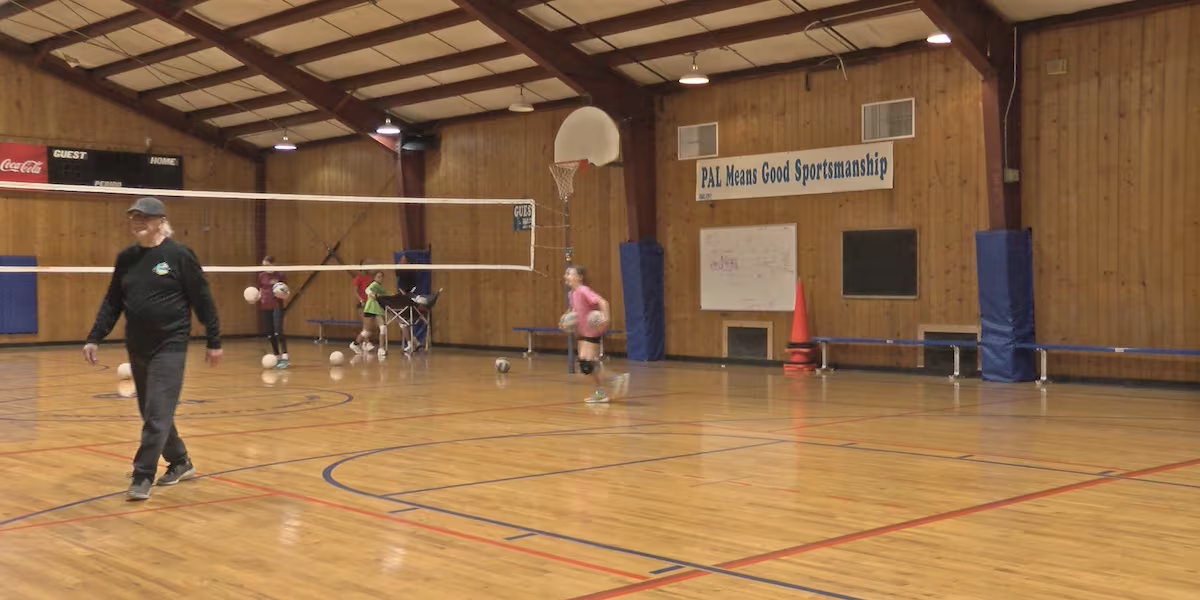
FORT WAYNE, Ind. (WPTA) – Leaders with Fort Wayne’s Police Athletic League, or PAL, say 2025 has been a difficult year for the program due to low attendance.
PAL offers youth programs in Football, Basketball, Boxing, and Girls’ Volleyball, but they say it goes beyond athletics.
”It’s more of a community. Our volunteers don’t just focus on athletics, but they get to the heart of the child, and they truly care and mentor them, and care about them as a person,” said PAL Coordinator Tristin Lichtsinn.
The program, established in 1956, “was founded with the vision of empowering the youth of Allen County. Through athletics, we aim to foster character development and create positive opportunities for young individuals in our community,” as written on their website.
Although football has long been their biggest draw, Lichtsinn says 2025 has been unusually slow due to more programs popping up in the community.
For the first time this year, they are offering a Spring football program, taking in registrations right now.
Her husband, Nicholas, is a police officer who has volunteered as a football coach for 5 years.
“I didn’t know that it would be something that I would truly enjoy. I thought it would just be exhausting. Watching the kids grow and learn, and accomplish new tasks, and watching them just mature into young men and women has been really rewarding,” he said.
The philosophy he brings into the gig is all about character development.
“I’m one of those horrible coaches who don’t really care if we win. I want the kids to truly enjoy it. I want them to grow up and really love this sport. Odds are they aren’t gonna grow up and play professionally, odds are they won’t even play college,” Lichtsinn said.
Boxing has recently become one of their biggest draws under Coach Alberto Lozada, who, in just a few weeks, already has a class of more than 40 people of all ages.
“The most important (thing is) they come here, try to do something, keep the kids out the streets, because the violence is more and more,” Lozada said.
To learn how to enroll your kids in PAL’s programs, you can visit their website and Facebook page through these links. You can also call them at (260) 432-4122.
Anyone interested in signing up to be a volunteer or mentor is encouraged to do the same.
Copyright 2025 WPTA. All rights reserved.

Our sector already delivers experiences that young people value: inclusive activities, strong role models through coaches and volunteers, and environments where young people can feel safe, welcomed and supported to be themselves.
When done well, sport and physical activity can be a powerful protective factor in helping young people thrive, not just cope.
Inequality remains a barrier
Youth Matters rightly highlights the need to halve the participation gap between disadvantaged young people and their peers when it comes to enriching activities.
This is an area where urgency is needed.
Our latest Active Lives Children and Young People survey shows that while overall activity levels are rising, stubborn inequalities remain.
Young people from the least affluent families are still the least likely to be active, and too often face barriers related to cost, access, safety and whether opportunities feel designed for ‘people like them’.
Less than half of young people say they are happy with the activities and services in their local area, and even fewer feel those opportunities reflect their needs and expectations.
Addressing this must be a priority if the ambitions of the strategy are to be realised.
Alignment with Uniting the Movement
The emphasis in Youth Matters on putting young people and communities at the heart of decisions, shifting from fragmented to collaborative working, and empowering local delivery strongly aligns with our long-term Uniting the Movement strategy.
Our Place Partnership approach is already focused on tackling inequalities, working alongside local partners and investing in long-term, community-led solutions.
Youth Matters validates this direction and reinforces the importance of sustained, place-based action rather than short-term interventions.
Our commitment
Delivering the ambitions of Youth Matters will require coordinated action across Government, sectors and communities.
Sport England is committed to playing our part: working with partners nationally and locally to ensure sport and physical activity are accessible, affordable, welcoming and shaped by young people themselves.
By listening to young people’s voices, focusing on the places facing the greatest challenges and continuing to address inequality head-on, we can help ensure this strategy delivers lasting impact over the next decade.
We look forward to continuing to work with Government, the youth sector and partners across sport and physical activity to turn this ambition into action for young people.
Editor’s note: This story was produced for the ear and designed to be heard. If you’re able, WCMU encourages you to listen to the audio version of this story by clicking the LISTEN button above. This transcript was edited for clarity and length.
Gabe Schall: Doctors are seeing an uptick in ACL knee injuries in young athletes across Michigan.
WCMU’s Tina Sawyer recently sat down with Stefanie Mills, one of WCMU’s TV producers to learn more about this debilitating injury. Mills recently produced a TV segment of this story for WCMU’s Pressing Matters. She started the discussion by explaining what the ACL affects.
Stefanie Mills: It’s a band of tissue inside your knee that connects the femur thigh bone to the tibia or the shin bone to the knee joint. But as I discovered, I was hearing more stories about ACL injuries and tears, and it wasn’t just boys, and it wasn’t just a specific sport. It was all different sports. There is a lot of research that shows that girls are significantly more susceptible to injuries.
Tina Sawyer: In the episode of Pressing Matters, the topic was, you know, why girls? And they had brought up hormones are changing in younger people, younger women.
SM: Yeah, the incident rate, it depends on an activity. Boys versus girls, girls are actually 4 to 8 times more susceptible to ACL injuries. And again, depends on sports, but there’s other factors too. And one of those factors includes monthly cycles, hormone levels. It’s also about girls’ knees are built different. Biological factors and physical factors, right? Girls’ bone structures are not the same as their male counterparts.
TS: Why are they on the rise now as opposed to say 10 years ago? And I know that’s a very broad umbrella.
SM: I think there are many reasons. What I learned by talking with Dr. Crawford and Kyle Mason is that the seasons are longer, the expectations are just more demanding overall. But seasons are stretching year-round, right? And so there’s just more demands being put, especially on younger bodies that are still growing. So it’s all about finding balance and also nutrition, getting enough sleep, stretching, all those things. They’re pushing themselves more.
TS: The intensity is there.
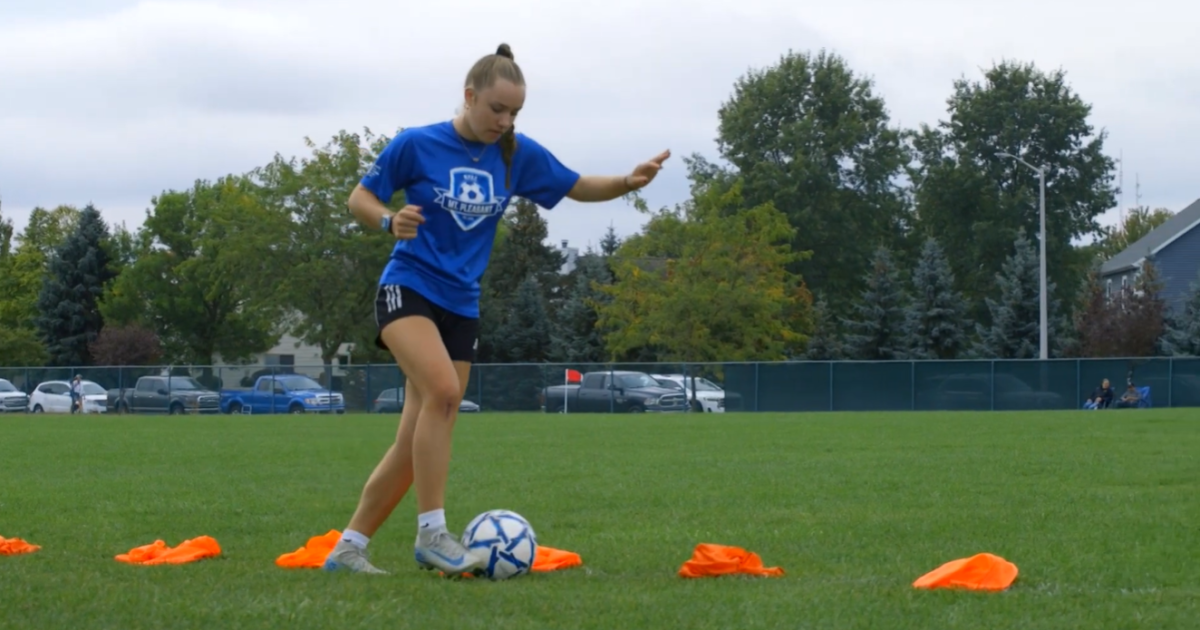
SM: The athlete that was featured, her name is Grace. She’s a soccer player. And through her journey, I kind of learned more and more about ACL injuries. You know, oftentimes require surgery that’s going to keep you out of competition for at least a year.
TS: She was a soccer player. Now, are you seeing those tears in like basketball players as well?
SM: Absolutely. There’s basketball players, there are soccer players, there are volleyball players, there are football players. It’s no one. Sure, one, some sports might have higher risks of it, but it can happen to anybody. And I think the biggest part for me when I started doing the story and researching it was this information has been out there, but you don’t know what you don’t know until you’re really, you know, until you’re going through something like this, until you get injured.
TS: What are ways that people can get support, protection for these young people when they’re going into a certain sport?
SM: There’s no one way to prevent an injury, but here are some ways that could maybe help. One thing the doctors talked about was sports sampling. And that is basically, at younger ages, playing multiple sports, because that allows your body to use muscles in different ways, as opposed to using the same muscles over and over in the same sport. Now, not everybody may want to play extra sports, so that’s where it’s really important to focus on strength training, core training, that you can support your whole body.
TS: That makes sense. I understand also that another component of getting support is mentally, because they feel as though they’re starting back at square one or they don’t feel like a part of the team anymore. What did you learn from that?
SM: Yeah, that was a really important piece. I think mental health, especially for younger athletes, is so, so important right now. It’s also important to be active, right? But then the mental health aspect, especially when you’re injured, you can find yourself in really dark times. So that’s where the whole teamwork comes in. And I really like how a lot of teams, they include those injured players in some capacity, right? Like from team managers maybe. So that’s all really important to just feel that camaraderie with your teammates and your coaches and your family and your friends, you know, to have a good, strong, solid support system there.
TS: Stefanie Mills, thank you so much for joining us.
SM: Thank you so much for having me, Tina.
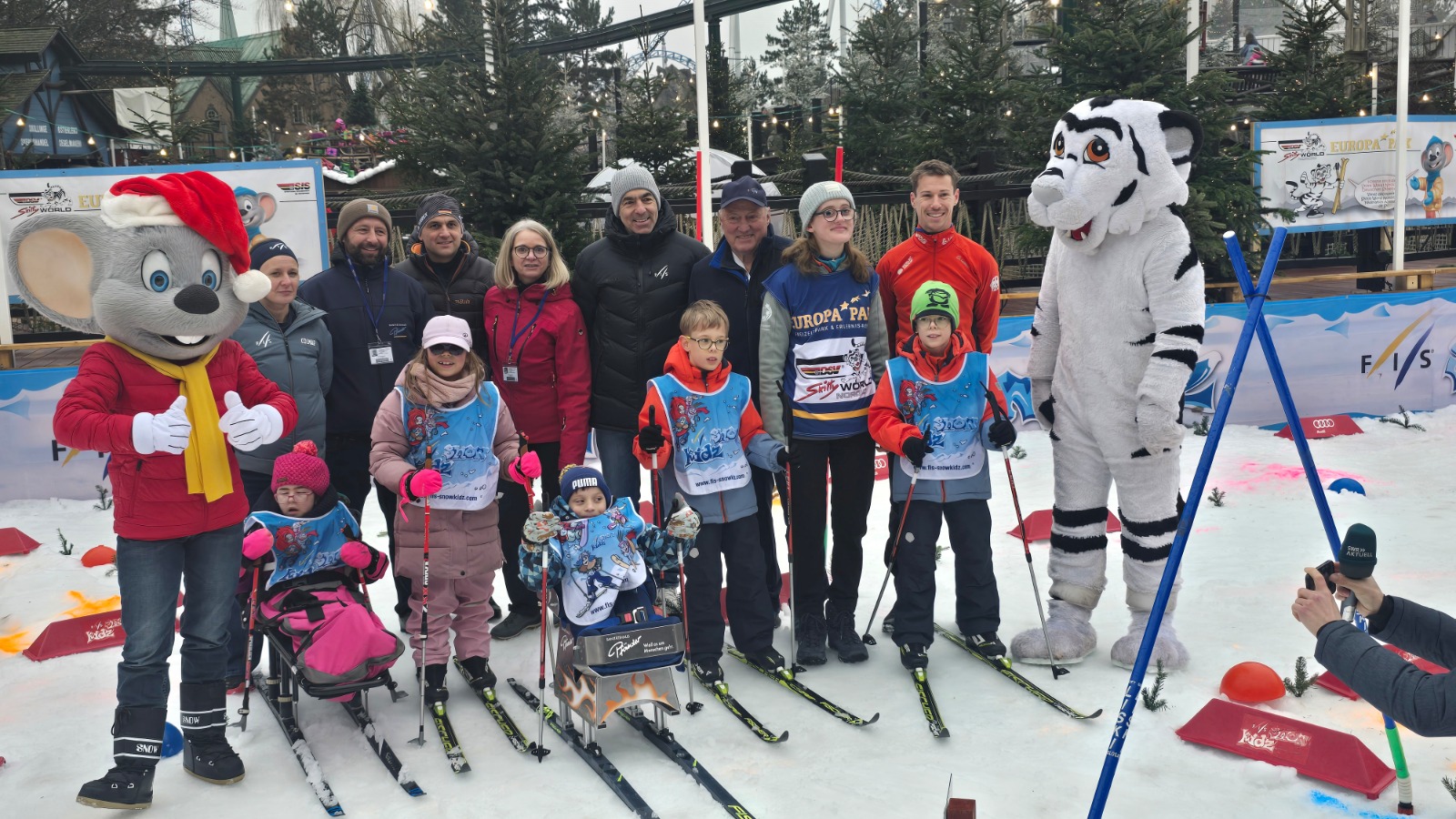
Earlier this month, a special action day for Para Cross-Country skiing took place at Europa-Park–Germany’s largest theme park, suited for year-round activities.
On 14 December, children with disabilities were given the opportunity to experience Nordic skiing for the first time at the Skitty World Nordic, the course of the German Ski Association.
A fixture of the park’s winter season since 2016, the Cross-Country course was specifically designed for introductory purposes to assist those with no prior experience by providing a low threshold to skiing.
It was developed by Georg Zipfel, former national coach and current FIS Race Director for the discipline, and Anja Haepp who was crucial to the organizing of this project. The idea was supported by and brought to life with the commitment of Europa-Park and the German Disabled Sports Association.
Over the course of the event, 14 children with visual impairments, arm or leg amputation, or young participants who rely on wheelchairs, were involved on the day. For many, it was their introduction to the world of snow sports.
With the guidance of experienced coaches, such as Markus Sommerhalter, those in attendance enjoyed their first experience in a safe environment with a focus on joy, movement, and inclusion.

Missouri DE Damon Wilson II sues Georgia, setting up landmark player vs. school NIL legal battle

Kentucky Volleyball Gained New Fans in Special Season That Ends Short of a Title

Thomas Earns First ASUN Honors
Wisconsin racing in 2026 at Road America, Mile, Slinger, Outaws, more
Challenger division coming to Plymouth Youth Baseball

It’s Time for the Ravens to Draft a Young QB Behind Lamar Jackson
Gainesville High’s Rowan Kage is the 2025 Big School Volleyball POY

BangShift.com Racing With Heavy Hearts…..The KSR Crew Heads To Bradenton Motorsports Park’s Christmas Tree Drags 2025!
Abu Dhabi to Showcase Its Esports and Motorsports Excellence: Gran Turismo World Series 2026 Kicks Off in the UAE

Chase Elliott 2025 season in review: Two wins, Round of 8 appearance highlight big year for the 9 team
Former Tennessee QB Nico Iamaleava returning to UCLA for second season

Police Athletic League (PAL) reports engagement numbers are down, offers youth sports programs

Big Machine Racing Welcomes Retina Surgeon Dr. Patrick Staropoli to the O’Reilly Auto Parts Series for Full-Time Competition Beginning at Daytona – Speedway Digest

Youth Matters and the role of sport and physical activity

Female youth sports injuries on the rise in Michigan, doctors say

First Tee Winter Registration is open

Fargo girl, 13, dies after collapsing during school basketball game – Grand Forks Herald

CPG Brands Like Allegra Are Betting on F1 for the First Time

F1 Las Vegas: Verstappen win, Norris and Piastri DQ tighten 2025 title fight

Sycamores unveil 2026 track and field schedule

Two Pro Volleyball Leagues Serve Up Plans for Minnesota Teams

Utah State Announces 2025-26 Indoor Track & Field Schedule

SoundGear Named Entitlement Sponsor of Spears CARS Tour Southwest Opener

Jo Shimoda Undergoes Back Surgery

Redemption Means First Pro Stock World Championship for Dallas Glenn

Bowl Projections: ESPN predicts 12-team College Football Playoff bracket, full bowl slate after Week 14

Texas volleyball vs Kentucky game score: Live SEC tournament updates

Black Bear Revises Recording Policies After Rulebook Language Surfaces via Lever

How this startup (and a KC sports icon) turned young players into card-carrying legends overnight

Robert “Bobby” Lewis Hardin, 56






-
 Motorsports2 weeks ago
SoundGear Named Entitlement Sponsor of Spears CARS Tour Southwest Opener
-
 Rec Sports3 weeks ago
Black Bear Revises Recording Policies After Rulebook Language Surfaces via Lever
-

 Motorsports2 weeks ago
Donny Schatz finds new home for 2026, inks full-time deal with CJB Motorsports – InForum
-
 Rec Sports3 weeks ago
How Donald Trump became FIFA’s ‘soccer president’ long before World Cup draw
-
 Rec Sports2 weeks ago
David Blitzer, Harris Blitzer Sports & Entertainment
-
 Motorsports2 weeks ago
JR Motorsports Confirms Death Of NASCAR Veteran Michael Annett At Age 39
-
Sports2 weeks ago
Elliot and Thuotte Highlight Men’s Indoor Track and Field Season Opener
-
Sports2 weeks ago
West Fargo volleyball coach Kelsey Titus resigns after four seasons – InForum
-
 Motorsports2 weeks ago
Rick Ware Racing switching to Chevrolet for 2026
-
 Sports2 weeks ago
Temple Begins Indoor Track & Field Season at UPenn This Weekend