
Rec Sports
Competitive Tennis Powers a Business Mindset


In this episode of Future of the Business World, Yijia Chen, co-grand prize winner of the Summer 2025 Comment & Win Competition, shares how her journey as a provincial-level tennis player has shaped her entrepreneurial mindset, intellectual curiosity, and approach to personal branding. Trained at the Rafa Nadal Academy, Yijia reflects on how competitive sport taught her focus, resilience, and attention to detail — skills that now inform her work as a sports content creator and emerging researcher in the business of athletics.
Wharton Global Youth Program: Hello and welcome to Future of the Business World, the podcast featuring high school entrepreneurs across the globe. I’m Diana Drake, managing editor of the Wharton Global Youth Program at the Wharton School, University of Pennsylvania.
As we wrap up our fifth season of the Future of the Business World podcast, I can’t help but look back at the innovative spirit captured in the past 62 episodes. We launched the show in September 2020 with guest Rucha Mehendale, then a California high school student, developing an app to keep teens motivated and on schedule. Today, Rucha is working as a global marketing specialist at Nvidia, a great example of the Future of the Business World in action.
Today’s guest emerged from the pages of our summer 2025 Comment and Win Competition, ultimately claiming the title as co-grand prize winner. The innovative thread woven through those comments inspired me to reach out to her.
Let’s get started.
Yijia [Annie] Chen, welcome to Future of the Business World.

Annie Chen: I’m really honored to be here.
Wharton Global Youth: Tell us about yourself. Where do you live and go to school and what are your passions?
Annie: I’m from Nanjing, a city very close to Shanghai, with a long history and rich cultural roots. I go to school there, and outside of academics, tennis has been a huge part of my life. Beyond tennis, I’m really passionate about sports analytics. Music. I enjoy music from Lana Del Rey, and I also play the Guqin, which is a traditional Chinese seven-string instruments. It’s very calming for me and helps me slow down in a fast-paced world.
Wharton Global Youth: You’re a provincial level tennis player who has trained at the Rafa Nadal Academy [in Spain]. Tell us more about your tennis career and training. What does that look like so far?
Annie: I’ve been playing tennis since I was five and for almost 12 years, and one of the most enjoyable experiences for me was training at the Rafa Nadal Academy. Through conversations with fellow athletes, coaches and even Rafa Nadal’s nutritionist, I noticed how often they reflect on the mental struggles that come with daily training and constant competition, things like pressure buildup, emotional fatigue and confidence swings after matches. Many players don’t struggle because of a lack of skill, but because intense expectations arrive too quickly, like you often need to face immense pressure from the press conference and also the press coverage, so you are simply too young to handle all the stress.
These experiences made me reflect on how lower ranked or developing players often don’t receive enough mental or structural support, even though they may have huge potential. As I trained at Rafa Nadal Academy, I just did some comparison with the training in my Chinese tennis academies. I feel that Rafa Nadal Academy, like the system, is more integrated. Training isn’t just about hitting balls. Everything is connected. They use advanced facilities like motion tracking systems and even small efficiency details that are hard to notice with the naked eye. So, coaching is also more Western style, like instead of only giving direct structures, coaches often ask you questions like why you chose a certain shot, and what do you notice during a rally? So, that encourages me to think independently and take ownership of their decisions. So, experiencing both systems helped me understand how structure, technology and coaching philosophy together could shape long-term athlete development, and it could help me grow as a well-rounded athlete.
Wharton Global Youth: Wow, so you’re not just doing your thing on the court, you’re really digging deeply into the motivations and the psychology behind your sport. That sounds fascinating, and we are going to talk about tennis today, because I feel like your personal sports experience has fueled your entrepreneurial mindset in many ways. Would you agree with that?
Annie: Definitely, tennis constantly puts me in situations where there’s noone to rely on but myself. I need to stand alone on the court, competing and combining with my opponents, and there was no coach to step in. I had to figure out much whether to slow the pace or change my serve placement. So, actually I could. I developed a habit of diagnosing a problem quickly, adjusting technology, adjusting strategy with limited information, and also staying calm under immense pressure. I will test an idea and see when or how it fails, and I will adapt, and then I will keep moving forward, just like on a court.
Wharton Global Youth: In the past, you have been an influencer on Red Note, which is a popular Chinese social media and e-commerce app. Help us understand really what it means to be a sports creator on Red Note, and how you use your content to support and motivate other young athletes.
On Red Note, my content usually focuses much more on supporting athletes mental well being and also decision making. First, I share my content of how to help young athletes recognize common stressors in training and competition and understanding when it’s important to pause and seek help. And also, I talk openly about how to process losses, setbacks and emotional ups and downs to come with competing and being evaluated publicly. And moreover, I teach them breathing techniques and short meditation routines, and also kind of instruct them with some positive visualizations, so we could help athletes stay grounded under pressure. And also, I share about sports analytics-based content, including, like simple match breakdowns and some data-informed predictions. The goal is to teach young athletes how to think, how to read patterns, evaluate matchups and understand why some tech strategies will work in specific situations.
And also, I often highlight athletes like Naomi Osaka, their mental stress and how they overcome their mental illness, because she has stepped away to protect her mental health, become a mother and return on her own terms, also like Amanda [Animisimova], whose journey shows how resilience and patience can lead to renewed success. So, I wanted young players to follow role models who value balance, resilience and long-term growth, not just constant winning like only the points and match results.
Wharton Global Youth: I want to stay with Naomi Osaka for a minute. Your experience as a content creator actually prompted you to research women’s tennis sponsorships, where you compared athletes such as Naomi and Coco Gauff and explored how branding decisions shape opportunities in the industry. It really sounds like fascinating work. Annie, what have you learned about branding and sponsorships, which is a big social media and business, right?
Annie: Yes, so like, through Red Note, I noticed that brands weren’t just looking for performance. They care about storytelling and values. For example, sports headphone brands approached me and connected with my contents, message and audience trust. So, I wanted to delve deeper, and I compared Naomi Osaka and Coco by looking at how their brand identities led to very different sponsorship pathways. Naomi partnerships are closely tied to her global influence, mental health advocacy and social impact, which attract brands and technology, health care and wellness, and also her status as a coming mother to the court.
Coco Gauff, on the other hand, has a more diverse and Gen Z-oriented sponsorship portfolio, like she’s one of the most successful tennis athletes on Tiktok and on Instagram, those social media, so she could have a strong appeal to apparel lifestyle and digital-first brands, and she could attract the Gen Z athletes, the Gen Z teenagers. What stood out to me is that sponsorship success isn’t just about performance. It’s about alignment between an athlete’s values, audience and the type of assets brands want to activate. That difference has important implications for how the industry evaluates female athletes and long-term brand strategy.
Wharton Global Youth: Can you talk more about some of the opportunities that your Red Note engagement inspired for you. For example, when you and I were talking back and forth before this interview, you mentioned that you spoke recently at Wimbledon about reimagining tennis media. Tell us more about that.
Annie: At Wimbledon, my talk focused on how tennis media can better support young athletes and engage Gen Z audiences. And I proposed two main ideas. First, I suggested creating media opportunities led by high school students or youth clubs. These students could act as interviewers, content creators or storytellers, giving junior players a platform to speak on their own terms. From my own experience, training and competing with junior athletes, traditional press conferences can be overwhelming, so when we let young people lead the conversation, we could shift the dynamic from interrogation to dialog. This approach is clearly a win-win, because young athletes feel more in control and less pressured. Student journalists gain real-world experience in media production and tennis organizations could receive content that feels genuine and resonates with younger audiences.
The second proposal is more focusing on showcasing vulnerability and growth, not just victories, because media can feature speeches and interviews where players discuss challenges, near misses or emotional struggles after tough matches, moments like Amanda’s runner-up speech at Wimbledon, or Coco Gauff talking openly about pressure, demonstrate that losing, as in failure, is part of growth. So, when we highlight those authentic stories, we could help young athletes understand that success isn’t only measured by trophies. We’re also providing relatable role models for the fans. So I wanted to [emphasize] those [types of] content and spread it through social media [with the] hashtag #GrandSlamFinals. So, when it is combined with the youth-led media, this approach could reinforce mental health, build empathy and create content that Gen Z audiences will genuinely connect with themselves.
Wharton Global Youth: I’m amazed by how much you’re a voice of youth in the game of tennis. It sounds like you are really championing so much more than winning that next match. I’m remembering a moment from last summer’s Comment & Win Competition when you were reflecting on one of our podcast episodes featuring students who are doing great work around recycling used tennis balls — again, another innovative aspect of your sport. You talked about the gap in sustainability awareness within tennis academies in China. What does that gap look like, and have you worked to address it?
Annie: So, many tennis academies in China just don’t have clear systems for handling used tennis balls. Most are simply thrown away without a second thought. To address this on a small but practical level, I founded my school’s first tennis club and turned this issue into something students could engage with directly. We collected discarded tennis balls in our community and organized hands-on workshops where students could transform them into creative art pieces and functional decorations. The goal wasn’t just recycling; it was helping people see waste differently and start conversations about sustainability within a sports setting. Through this, more students and even coaches began to think about how tennis programs could manage equipment more responsibly.
Wharton Global Youth: Also, again from the Comment & Win (this is probably one of the things that led to your co-grand prize, by the way), you wrote about reaching out to the woman who led sustainability efforts at Wimbledon. What did you learn about Wimbledon’s approach to using old tennis balls?
Annie: Wimbledon’s used tennis balls are repurposed in a variety of creative ways, like they are transformed into acoustic panels to improve sound quality, made into shelters that provide safe habitats for wildlife, especially birds, and even crafted into functional furniture like benches and seating. So, seeing this firsthand showed me how small and thoughtful innovations can turn what would normally be waste into something really useful and really meaningful, beautiful and even environmentally friendly.
“Many of us, especially teenagers, are afraid of cold emailing to professionals. The hardest part of reaching out to professionals is often taking the first step. It could feel intimidating to send that initial email or make that first connection, especially when you’re young and inexperienced, but in my experience, many professionals genuinely value youth perspectives. They’re often impressed by their initiative, their young voice, their curiosity and their fresh ideas.” – Yijia “Annie” Chen
Wharton Global Youth: This is a great example, because time and again, I was surprised by your ability to take the initiative and risks to discover new knowledge and to fuel your curiosity. Where does that drive come from in you, do you think? What have you learned about cold calling and reaching out to people randomly for insight?
Annie: I think a lot of my drive comes from a mix of curiosity and love of challenges. From a young age, I realized that trying new things, even if I might fail, was the only way to really learn and grow. For example, in tennis losing my first big match at seven and crying for like four or five hours taught me that setbacks in the end are a signal to explore, improve and push myself further.
And also, speaking of cold emailing, I think it’s a thing that is worth talking about, because many of us, especially teenagers, are afraid of cold emailing to professionals. The hardest part of reaching out to professionals is often taking the first step. It could feel intimidating to send that initial email or make that first connection, especially when you’re young and inexperienced, but in my experience, many professionals genuinely value youth perspectives. They’re often impressed by their initiative, their young voice, their curiosity and their fresh ideas. So, if one email doesn’t get a response, that’s okay. You could try a different approach, follow up politely, or reach out through another channel, another approach. Each attempt is also a chance to practice research, your communication skills, and also problem-solving skills. So, it’s beneficial for our growth.
Wharton Global Youth: You touched on sports analytics a few minutes ago. I want to go a little deeper, because I know that’s one of your passions. You actually spent a few weeks on the Wharton School campus in summer 2025 studying sports analytics in Wharton’s Moneyball Academy. Tell us more about your passion for sports data as well as your time in the academy. What were your greatest takeaways from this?
Annie: Being immersed in sports analytics at Wharton was an eye-opening experience, because back at my hometown, I don’t have that much opportunity to engage with those like-minded peers and also TAs and professors to delve deeper into our projects.
One of the projects I worked on is to focus on what really makes a tennis serve effective, looking at factors like speed, accuracy, and how unpredictable the serve placement is. So, I analyzed point by point data from the US Open over several years and our team run regressions, and found that serve speed had the biggest impact, though accuracy and variation also played important roles.
What made the experience truly memorable wasn’t just about the data or the analysis. It was working with a team of passionate peers and getting support from the course TAs. They were incredibly helpful. The TAs did guide us to finalize our methods, question our assumptions, and refine our approaches when we hit some roadblocks. And sometimes it was stressful trying to get everything right, but that pressure pushed us to think critically and creatively. Collaborating so closely with teammates and receiving mentorship from TAs taught me how to communicate ideas, clearly, handle feedback, and also persevere under pressure. And by the end, I kind of feel like I was part of a real sports analytics community.
Wharton Global Youth: I’m going to actually throw one of your quotes back at you from the Comment and Win, because I think it really just synthesized your thoughts around this. You said, “Tennis has taught me how to focus, how to push through, and how to pay attention to details. Data has taught me to question what I see, to look deeper and to keep testing ideas.” I really thought that was sweet.
You’re currently designing an app. The prototype is complete and includes interactive challenges that help young tennis athletes recover from injuries more effectively. Tell me how all of this incorporates AI and data driven insights and just provide a few details of your project.
Annie: The app uses a gamified Island map to make recovery engaging and interactive each week. Athletes complete recovery challenges that feel like unlocking new areas of the island, turning rehabilitation into a fun and game-like experience. Users can select specific pain areas or focus points, like your shoulder, maybe your leg, your ankle or your knee. And the app generates AI-personalized rehab and conditioning plans tailored to their needs. So, throughout the process, your AI personalized rehab and assistant will provide encouragement, track progress, and offer tips to keep athletes motivated and also consistent. At the end of each week, the app will also produce a comprehensive coach report summarizing the athlete’s progress, highlighting their improvements and recommending adjustment for next week. So, looking ahead, I hope to build on this experience during college, because when I learn more about AI data analysis and also user standard design, I could further develop this app. I could lengthen like the weeks that the athletes could rehabilitate. My goal is to expand the features to make it usable over long recovery periods, and ultimately, I hope I could help more athletes reach their full potential safely and effectively.
Wharton Global Youth: All right, let’s end with our lightning round answer these questions as quickly as you can. What is about you that would surprise us.
Annie: I think I really love teddy bears. Like I sleep with eight to nine teddy bears. They’re eight to nine teddy bears on my bed. And I love Paddington Bear.
Wharton Global Youth: What is your best shot on the court?
Annie: I think volleys.
Wharton Global Youth: Where do you hope to be in five years?
Annie: Maybe in a sports consulting or sports analytics firm, and possibly I will attend graduate school.
Wharton Global Youth: How do you define success in a few words?
Annie: Making impact without losing yourself.
Wharton Global Youth: What advice do you have about handling pressure?
Annie: When I’m on the court, I will use some breathing techniques like, 4331, I think, inhale, hold exhale and grunt.
Wharton Global Youth: What would you be caught binge watching at midnight,
Annie: Mysteries, especially Wednesday, and also maybe some Disney episodes
Wharton Global Youth: Your favorite influencer on social media?
Annie: Kendall Jenner.
Wharton Global Youth: You are starting a business-themed talk show. Who is your first guest and what is your first question?
Annie: If I am lucky enough, I hope to invite Serena Williams, and my first question will be, how do you redefine success beyond the court?
Wharton Global Youth: Annie Chen, thank you for joining us on Future of the Business World.
Annie: Thank you.
Cover Image Shot By: Darko Nesic, Unsplash


North Korea isn’t quite a traditional footballing powerhouse, but in recent years, the nation’s youth women’s national teams have been nothing if not dominant.
The Hermit Kingdom. International Pariah. Terrorist State.
Advertisement
The very name of the Democratic People’s Republic of Korea, or North Korea, evokes sentiments of dystopia, dictatorship, and backwardness. Compared to their cosmopolitan, larger-than-life neighbors to the south, the communist north presents as a gray morass of state-mandated conformity and suppression.
Its mercurial leader, Kim Jong-Un, is as close to an international boogeyman as exists in modern geopolitics, frequently portrayed as an unhinged madman with his finger hovering perilously above the nuclear button. North Korea’s citizens are subjected to an overwhelming onslaught of state propaganda in nearly all facets of life, attempting to convince them that the world is out to get them and that they stand alone against the capitalist monsters at their doorstep.
For more than half a century, soccer has been called, almost past the point of irony, the beautiful game. It emphasizes creative expression, ecstatic play, and the exhilaration of enigmatic moments and personalities above all else. So how in the world has North Korea, which embodies the very converse of these ideals, been so immensely successful in the arena of women’s youth soccer?
Unparalleled Success
It’s exceedingly difficult to brand any youth international team a “powerhouse.” After all, the nature of these teams is that players age out of them. You might get a golden generation here and there that wins big throughout various age groups, but those players invariably graduate to the senior level, where they either sink or swim (in many cases the former). The North Korean women’s youth national teams, on the other hand, have laid down a marker at international competitions in recent years that is not likely to be replicated by any team in the world.
Advertisement
On November 8, 2025, in Rabat, Morocco, the DPRK’s U-17 women’s side went up against their Dutch counterparts for the world title. The Netherlands rode their luck to get to this stage, scraping by on penalties against the United States and France before eking out a 1-0 win against Mexico in the semifinals. The Dutch were considered a big, physical side that no one in their right mind would want to play against.
The final against North Korea, however, was a forgone conclusion. The young Dutch stood not a snowball’s chance in hell. They’d been drubbed in the group stage by their Asian opponents, arriving at an embarrassing 5-0 scoreline that left little doubt as to which was the better side.
It was over seemingly before it began. The ferocious and fearless North Koreans pounced on every loose ball and ran out to a 3-0 lead before halftime. The goals themselves were amateurish at best, emblematic of a supremely confident squad taking on an overwhelmed opponent who was truly out of its depth. The Dutch conceded via the failure to clear a looping ball, then by turning over deep in their own territory, and finally by playing an underhit backpass, which was gobbled up by North Korea’s Pak Rye-Yong.
Advertisement
Star 16-year-old striker Yu Jong-hyang took home the Golden Ball award for best player of the tournament, and bagged the Golden Boot for her eight goals in the competition.
Following the match, Dutch coach Olivier Amelink was magnanimous, telling FIFA.com, “I don’t think we could have beaten them. I think the gap between Korea DPR and us is simply too big to compete with them at the moment.”
The tournament in Morocco was the fourth edition of the Women’s U-17 World Cup, won by the DPRK for the second time in as many years. It is the most successful team in the history of the competition, but the fireworks don’t end with that age group. The North Korea Women’s U-20 team has won the World Cup three times, most recently in 2024, with victories over traditional powerhouses the United States, Japan, and Brazil en route.
Pyongyang Academy

The crown jewel of the North Korean sporting establishment is the Pyongyang International Football Academy. Opened in 2012, the academy is a sprawling three-acre modern soccer training facility located just to the southwest of the national team’s home, May Day Stadium, in the heart of Pyongyang.
Advertisement
The school boasts around 200 players between the ages of 7 and 17. They are identified by a massive, nationwide scouting network that brings the most talented youngsters and their families to the capital to undergo intense schooling and soccer training. This opportunity represents a sort of upward mobility for rural families, as life in the North Korean capital is described as far more pleasant than the far-flung agrarian lifestyle.
This state-level sporting investment can actually be traced back to the late North Korean dictator Kim Jong-il, who, in the 1980s, served as a sort of cultural decision maker in his father’s government. He tried his hand at everything, from filmmaking to music to sports. In 1985, the Kim family announced a program of state investment in women’s soccer, surprising many since the sport had been played exclusively by North Korean men up to that point.
Some assert that the burgeoning world of women’s sports had a lower barrier to entry than men’s sports and would be a field rich with propagandizing victories over Western rivals. This investment led little by little to a formalization of women’s sports in the country, organized under the banner of the central government in Pyongyang, which went on to found various high-level sporting academies that served a singular purpose: to create generations of high-performance athletes to be trotted out as proof of communist exceptionalism.
The Pyongyang Academy and North Korea’s investment in women’s sports can be seen as an early and prominent form of the practice that has been so prevalent in recent years: sportswashing. Currently, it’s a bevy of Persian Gulf oil states using massive investment in sports as a vehicle for rehabilitating their public image. FIFA and its cadre of satellite federations have only been too happy to accept their tainted lucre.
Advertisement
At least the DPRK is claiming to educate its athletes! The North Korean state assures us that the education their players receive at the Pyongyang Academy is well-rounded. According to the DPRK’s official website, “Football players should be prepared physically and technically. However, they can achieve deserved results only when they are supported by independent judgment and other creative thoughts. A future football ace is among those who can anticipate two or more through the one taught by teachers and get into action promptly.”
Critics will point out the irony of a dictatorial, homogenous regime ostensibly emphasizing the importance of creativity and self-expression. Conversely, the militaristic training and overtly nationalistic environment of the Pyongyang Academy are common explanations for the domination of the North Korean youth teams. How, we wonder, can Western, African, or Middle Eastern teams compete with heavy-handed state control of the entire sporting establishment?
Young players in, for lack of a better term, capitalist countries are actually taught the value of expression and individualism on the pitch; it’s not just lip service. They aren’t, like the North Koreans, subjected to intense physical training that would make GI Jane sick to her stomach. Young Dutch, American, or English women aren’t subject to punishment at the hands of their own government if they fail to perform well in international competition.
Advertisement
Some will point out that North Korea in international competition plays not only for individual glory or the success of a nation, but as a reflection of their entire communist existence, as a proof of concept of a social and economic organization that most of the rest of the world has eschewed. Is it possible that 16-year-olds have so enthusiastically internalized this struggle?
What’s worse, some outside critics have even levied accusations of gender-based cheating at the North Korean teams, asserting that some of their young women might, in fact, be young men.
It’s important to note that none of these accusations come with much merit. Although rumors circulated following the men’s disastrous 2010 World Cup campaign that various players and coaches had been thrown in re-education camps. These reports are dubious, with none of the major news outlets able to corroborate these sensational detentions. There were confirmed “criticism sessions” carried out at which players and coaches were made to explain publicly the reasons for their failure. But hey, does that really sound much worse than a press conference with British media?
As far as the gender thing is concerned, I don’t think anyone has offered much in the way of evidence other than the young North Korean women having short haircuts.
Advertisement
This is certainly not meant to exonerate the oftentimes cruel and draconian North Korea regime. The DPRK has a long history of sporting crimes, principally maltreatment of athletes and doping. What seems a bridge too far, however, is devaluing the success of these teams because of the society in which they live, or using their particular way of life as a cheap explanation for their being very, very good at soccer. “Of course they’re good at soccer!” a critic might charge. “Their government will kill them if they’re not!”
It’s hard to watch the DPRK women’s youth teams play and overlay a collective fear of state retribution. Their play is not particularly rigid or drilled, and occasionally includes a type of flair and creativity that wouldn’t look out of place on the beaches of Copacabana. Upon scoring their myriad goals at this year’s U-17 Women’s World Cup, none of the North Korean players’ faces betrayed any sense of relief, but instead highlighted a heightened camaraderie and belief among the team. This is to say, it’s entirely possible that these young women are supremely talented, have a deep, abiding passion for the game of soccer, and just happen to live in a cloistered communist dystopia. Multiple things can be true.
What’s Next?
In the modern geopolitical climate, North Korean players are severely limited in terms of their soccer development.
Advertisement
Before the pandemic, there was a smattering of male players from the DPRK who managed to make their marks in European club football. Notably, Han Kwang-song played for Cagliari in Serie A and became the first-ever Asian player to appear on the bench for Juventus, but had his European career prematurely shuttered by United Nations sanctions that prevented North Koreans from living and working abroad in response to Pyongyang’s insistence on pursuing its renegade nuclear weapons program.

Photo by Emilio Andreoli/Getty Images
Han reportedly spent two to three years trapped at North Korea’s embassy in China during the COVID-19 pandemic, unable to return to his home country due to travel restrictions. He finally returned to action on the pitch for April 25 Sports Club, a team based in Pyongyang, in 2023.
Advertisement
This is a possible explanation for why the women’s team has been, as of yet, unable to repeat their youth success at the senior level. Players are limited in terms of moving abroad to foreign clubs because of international work restrictions. They also lack any sort of mechanism for receiving their salaries; any money players earn would be funneled directly to the North Korean state, which, in legalese, would amount to any foreign club funding “state terrorism.”
The litany of international sanctions levied against North Korea has rendered the nation unable to continue its upward trajectory in the world of international soccer. For talented North Korean women like Kim Phyong-hwa and Choe Il-son to make moves to major European or American clubs, the North Korean regime would have to make major diplomatic inroads, submitting to heretofore untenable processes like nuclear weapons and human rights inspections. That is why, as of this writing, each and every player representing North Korea on the men’s and women’s national teams plays their club football domestically.
The team is also limited in terms of opponents. The North Korean federation withdrew from men’s World Cup qualifying for 2022 because of the COVID-19 pandemic, and did not return to international competition until 2023. The women’s team similarly retreated from international play until recently. The country also suffers from a lack of willing opponents for FIFA friendly windows, and this past year, the men’s side was forced to play a series of friendlies against lower-division Russian clubs.
This came after the great shame of the North Korean women being banned from participation in the 2015 Women’s World Cup. Multiple DPRK players tested positive for prohibited substances at the 2011 Women’s World Cup after FIFA blanket-tested the entire squad. The North Korean federation came out with an absolute banger of an explanation for the test results, claiming that the banned substance in question was actually a traditional Chinese medicine derived from deer musk, used to treat people who have been struck by lightning. FIFA fined the North Koreans $400,000 and effectively cast them into the international soccer doldrums for an entire generation.
But if the North Korean women continue their success at the senior level at the 2027 Women’s World Cup in Brazil, the team’s immensely talented individual players will be impossible to ignore. It won Group H in the first round of Asian qualifying for the tournament, boasting a plus-26 differential after only three games. The 2026 Women’s Asian Cup actually serves as the final round of qualifying for the federation, with all semifinalists automatically qualifying and quarterfinal teams going into a playoff for the final two spots.
Advertisement
International tournaments have always served as a springboard to high-profile moves at the club level, and it would come as no great surprise to see some intrepid European or American club seek to entice the regime with an irresistible offer.
What comes next is the purview of political scientists and analysts the world over. Will the DPRK regime decide that sports continue to be a low-cost way to showcase the exceptionality of its communist regime? Or will relations continue to freeze over with the rest of the world, condemning a golden generation of nascent North Korean superstars to stagnate in an unholy footballing purgatory?
The North Korean women will almost certainly line up at the next World Cup in 18 months’ time. It’s a safe bet that no one will want to play them. We can only hope that, from a soccer perspective, its brightest young stars are allowed to shine.
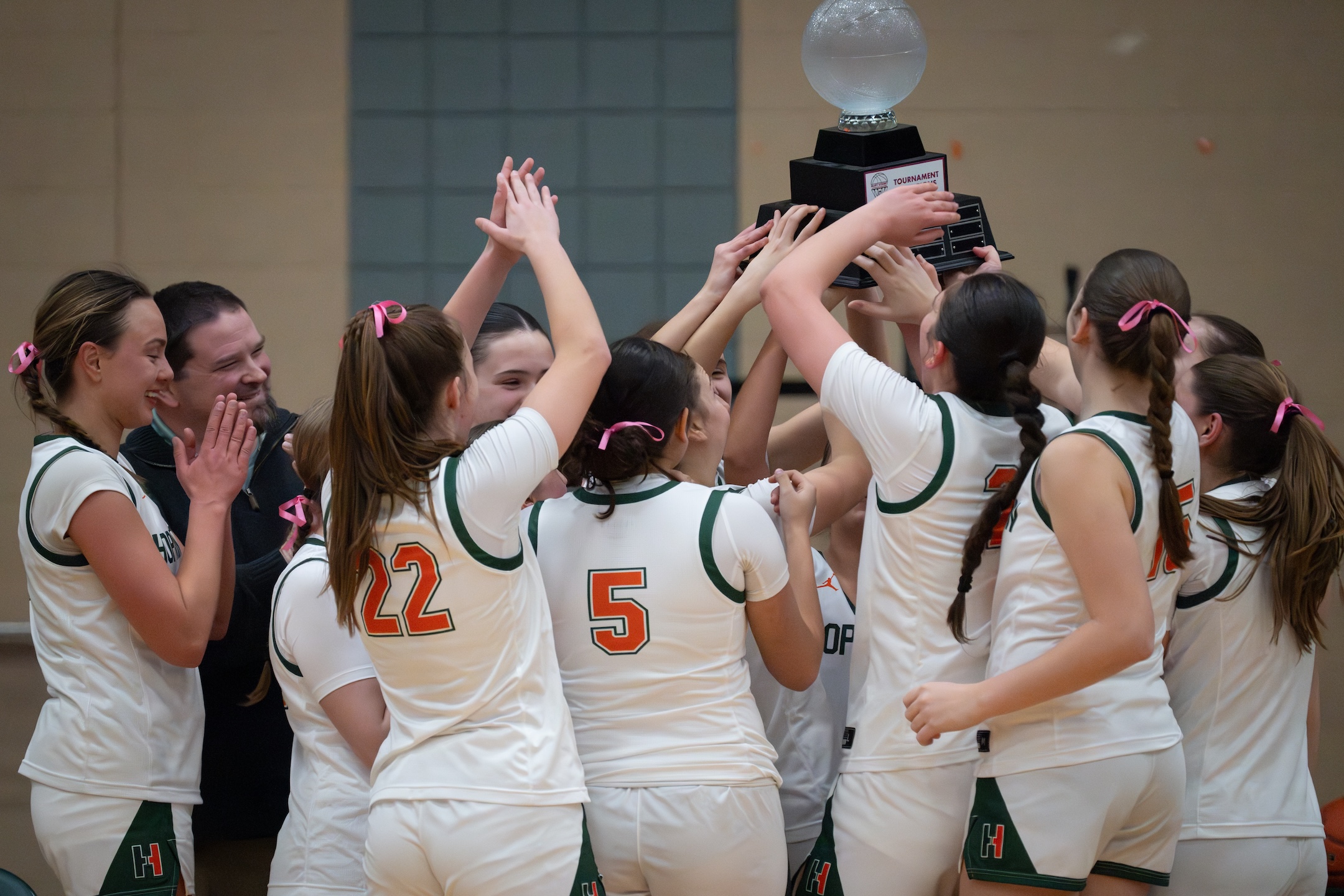
The Hopkinton High School girls basketball was tested by Milford in the championship game of Sunday’s Mary Korbey Invitational Tournament before pulling out a 41-33 win. The Hillers, who routed Medford in Saturday’s first round, take a 5-0 record into the new year.
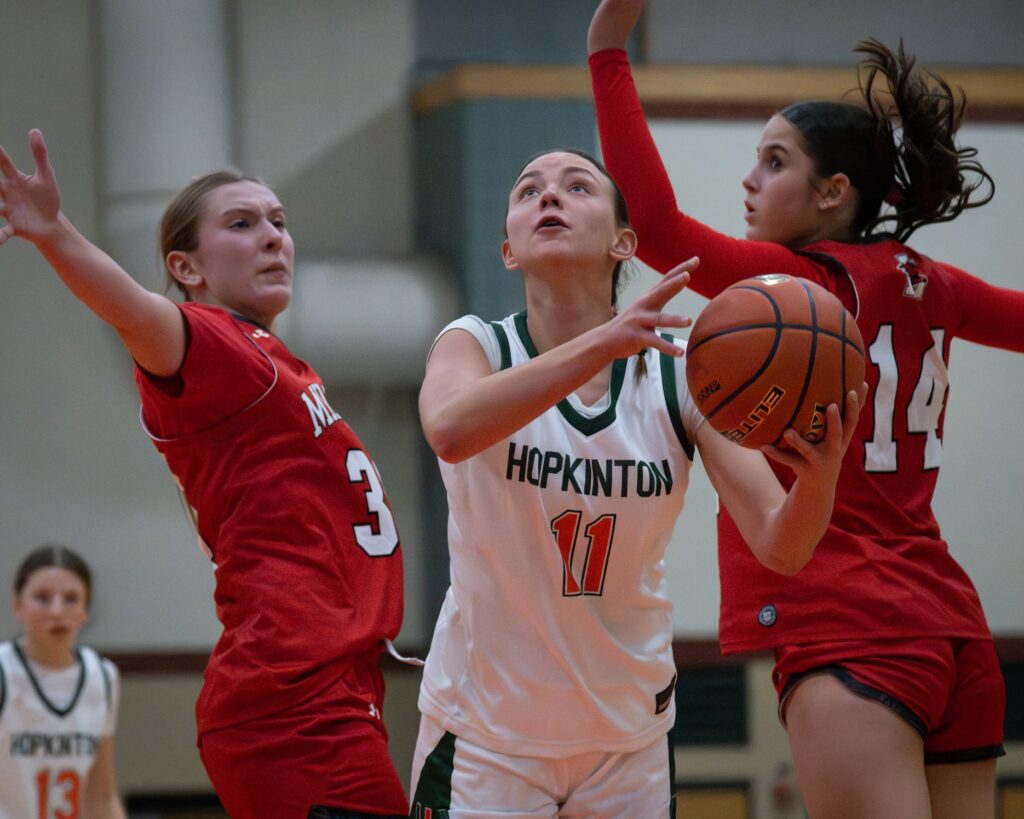
Sofiah Wightman Kraus, who was named tourney MVP, gets to the basket. PHOTO/JEN DADAGIAN
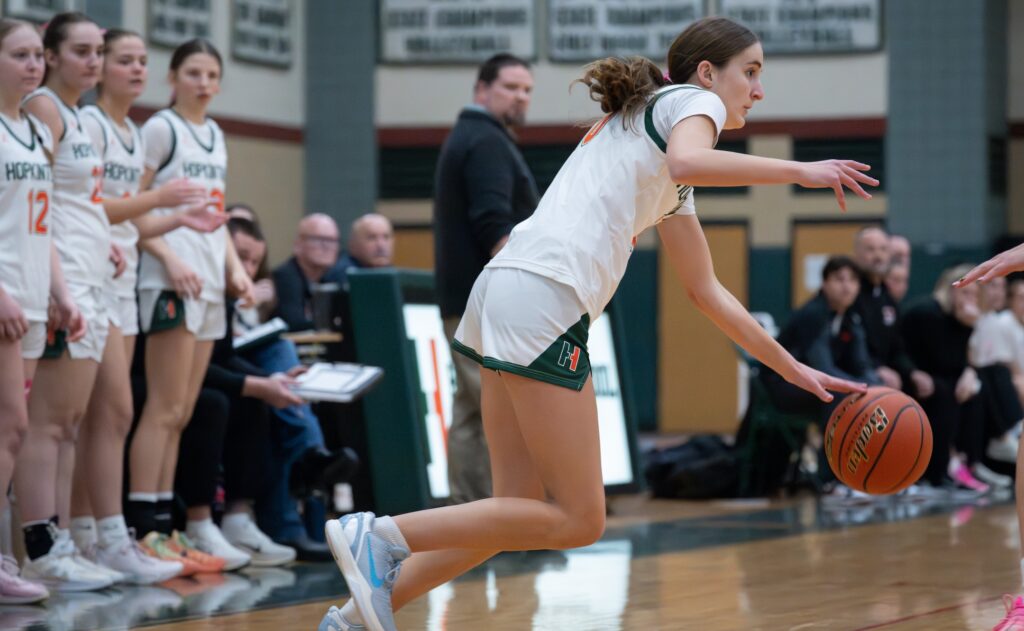
Julia Chatten assesses her options while dribbling the ball. PHOTO/JEN DADAGIAN
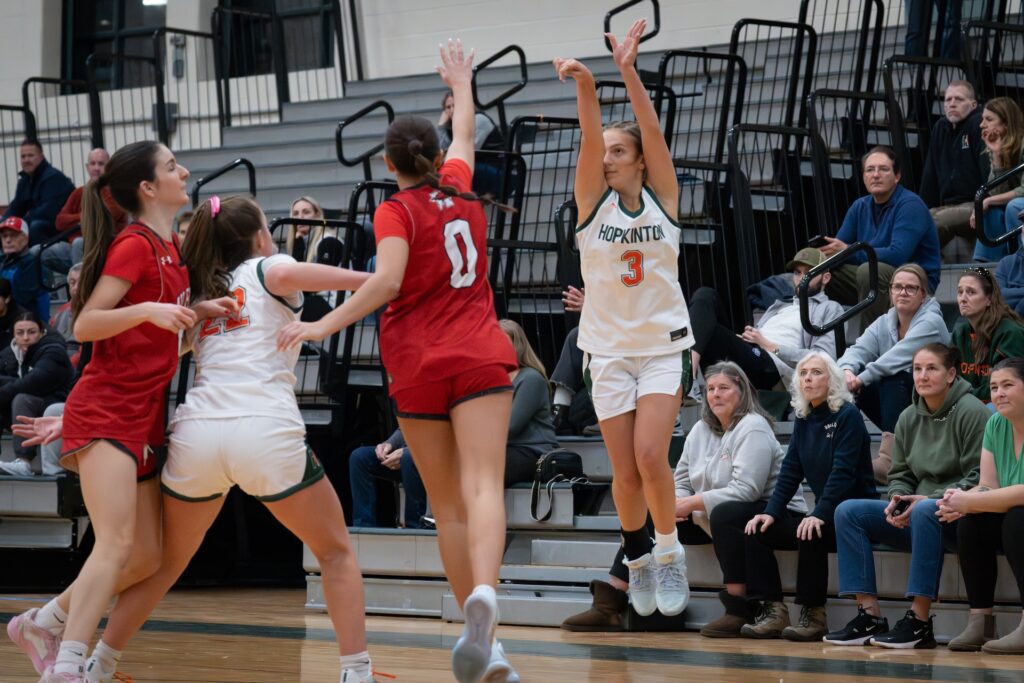
Elena Valis keeps here eye on the basket while shooting a long jumper. PHOTO/JEN DADAGIAN
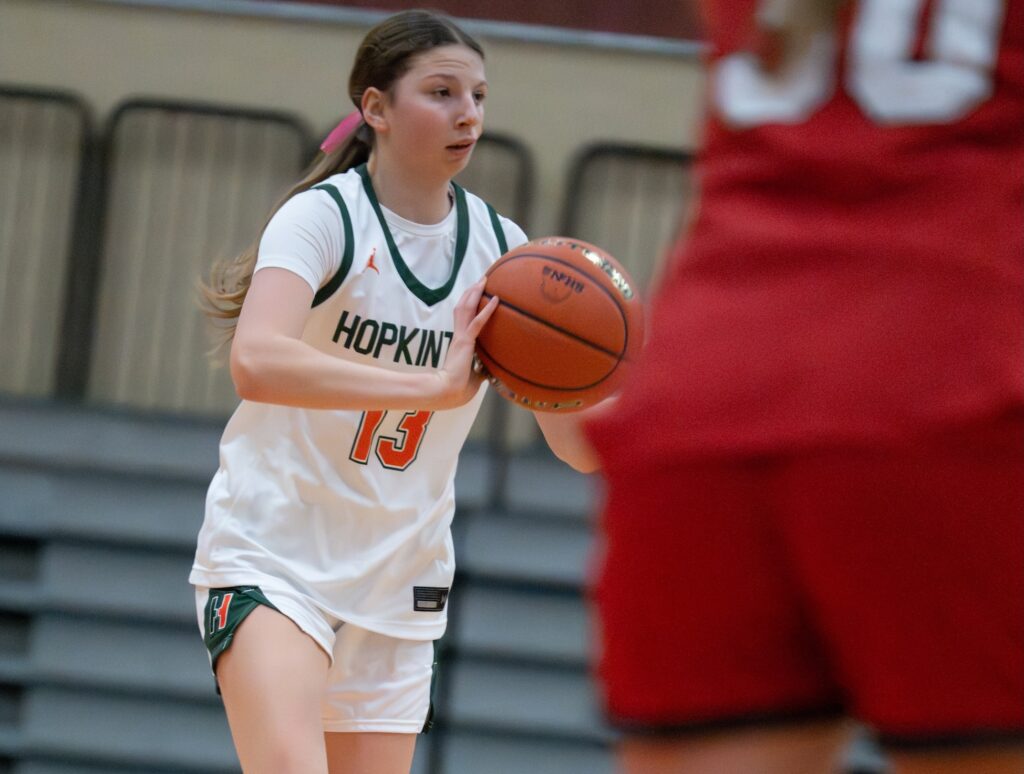
Murphy Chatten Guerette makes a pass. PHOTO/JEN DADAGIAN
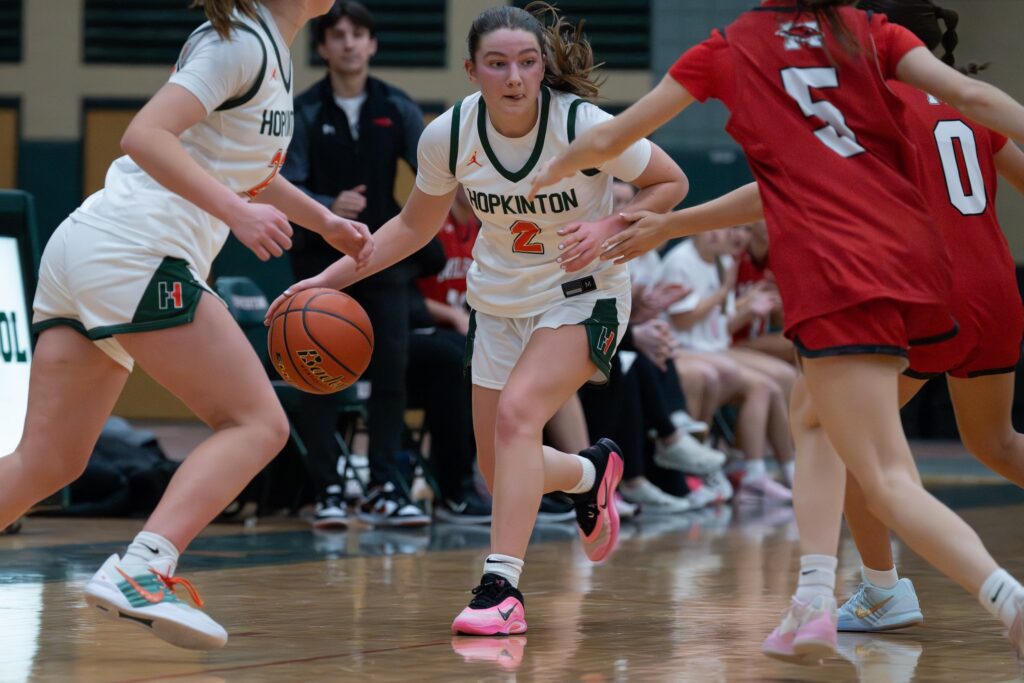
Gabby Simulis looks for an opening. PHOTO/JEN DADAGIAN

Teagan Resteghini, who was named to the all-tournament team, lines up a free throw. PHOTO/JEN DADAGIAN
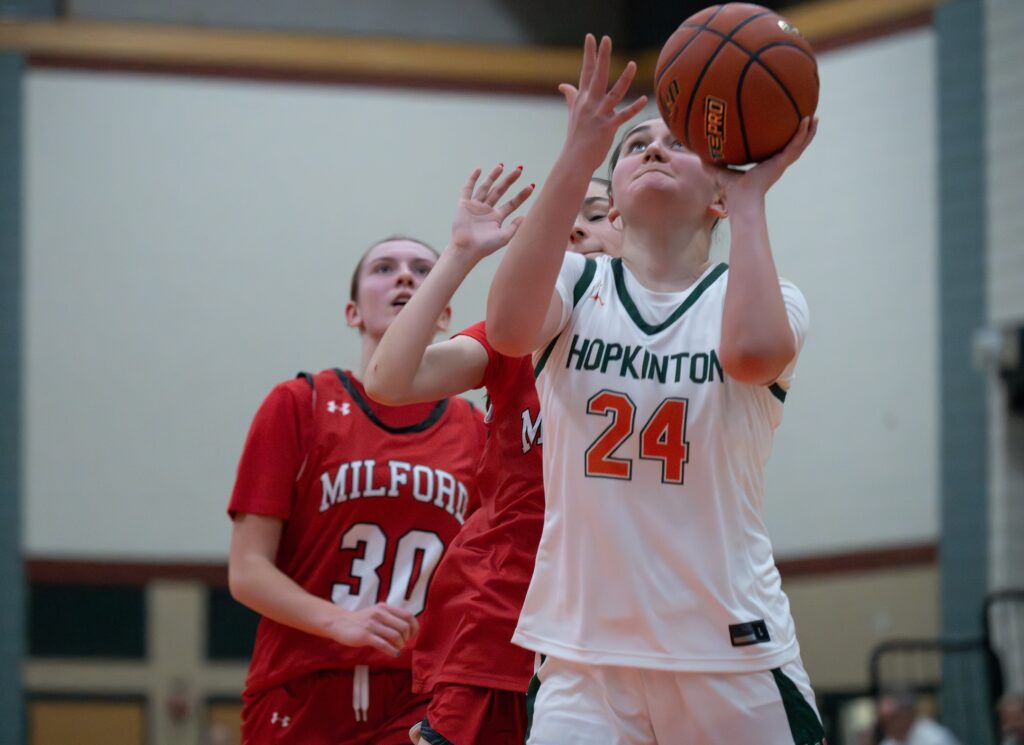
Abbie Rabinovich looks to convert a layup. PHOTO/JEN DADAGIAN

Coach Mike Greco watches the action. PHOTO/JEN DADAGIAN

The Hillers celebrate with the trophy. PHOTO/JEN DADAGIAN
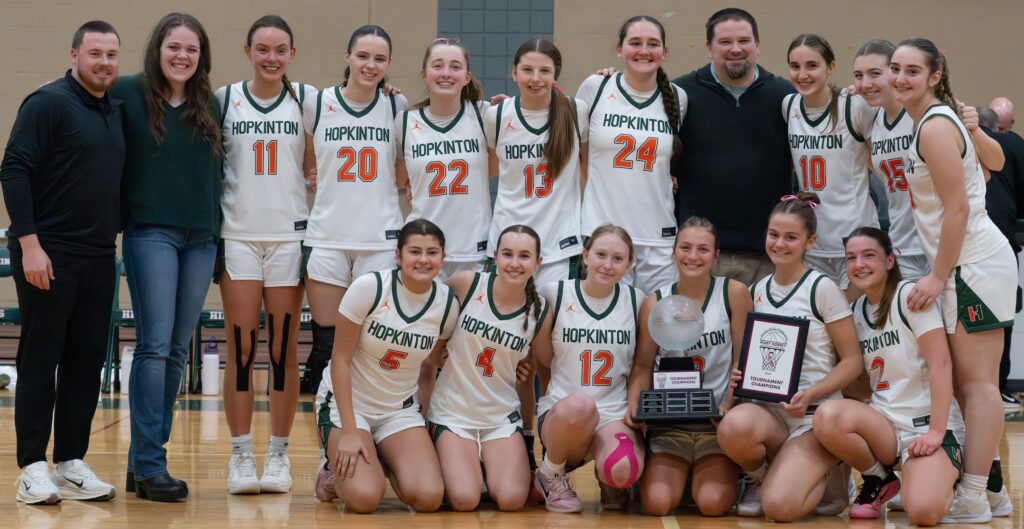
The team poses for a photo with the trophy. PHOTO/JEN DADAGIAN

The Webster City Street Department will be picking up Christmas trees on Monday, weather permitting.
Trees should be placed at the nearest street corner prior to 7 a.m. on Monday as only one trip will be made through the city.
Please remove all stands and decorations and place these trees so they will not obstruct sight distance and not blow into the street to create a traffic hazard.
Bagged trees or trees with a stand will not be picked up.
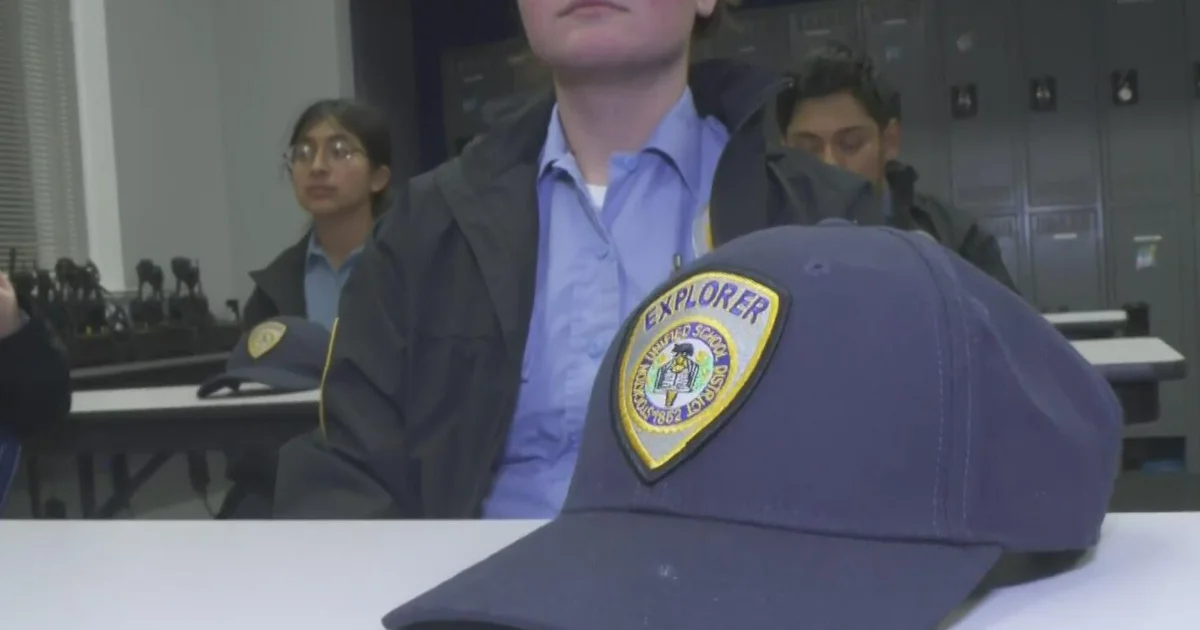
Stockton students are making an impact in their community by participating in a police program that gives them opportunities to do community outreach and learn the ins and outs of what it takes to work in law enforcement.
From getting an athletic scholarship to joining the military to becoming police officers, the Stockton Unified School District Police Explorers’ mentors are helping students accomplish their dreams.
“It’s definitely an outlet,” Officer Anthony Tacardon said. “Coming up, growing up in Stockton, there’s not much to do. I mean, you can go around and hang around at the mall, but for how long does that get boring and a safe place…yeah, this place (Explorers) you just come in, you enjoy yourself, you learn, you not only build connections with people that you meet here, you build connections outside of it with the community engagement. And that’s one of the best things. You get to speak with people in your community besides being at home, stuck, locked up in your room.”
That’s where the Stockton Unified School District Police Explorers come in. CBS Sacramento was given access to a day-in-the-life of what a Stockton Police Explorer goes through and how they help in the community.
“Some kids have sports, some kids have clubs, but we have this,” explorer and sophomore Kylah Cadman said.
Since its inception in 2013-14, Captain Roberto Marquez said it’s the largest Explorer program in San Joaquin County. The program and its mentors are making an impact with students, like Officer Anthony Tacardon, who is an explorer alumnus.
“When I graduated, that was the best feeling,” Officer Tacardon said. “All the hard work I had put in, in the Explorer program that ultimately helped me better prepare for the Academy, graduating and getting to see my mentor.”
Officer Tacardon’s mentor through the academy and the program was Captain Marquez.
“I didn’t have anyone to teach me this stuff as I was growing up in south Stockton, and I know there are some other kids here that don’t have that type of upbringing, but having this program here, it allows us to be our role models for our youth,” Captain Marquez said.
That includes the 24 explorer cadets who are in the program now, who learn life skills, are given real-world police training, are able to learn from sworn officers and non-sworn staff, and volunteer at community events.
Heriberto Garcia graduated from high school and is an Explorer. Ever since he was a kid, he’s dreamed of becoming a police officer. He said before this program, he was shy, and now, he was leading his comrades in the roll call excellently and his peers wouldn’t even know he used to be shy.
“Some students, they be like, ‘Oh, there’s nothing to do in high school or like there’s nothing to do in Stockton, right?'” Garcia said. “But, when you engage to a program like this, most likely weekend, we’ll have a community service that we have to go and we will attend because we like what we do in this program. So, it’s nothing that they force us to do but it’s something that we like to do.”
Cadman said this program has helped her grow as a person and she enjoys being able to help people to better their community.
“I like the social aspect of our program, in that we get to help the community, we get to help fellow students and it’s just really nice to get to know people and to help out however we can,” Cadman said.
Freshman Madalyn Westervelt was inspired by her big brother, who was also a part of the program.
“It really helped me with my confidence, public speaking, my socializing skills…,” Westervelt said. “That was a really big part of me, going to the high school that I was going to and it just helped me succeed a lot with making friends and being able to introducing myself without being like stuttering or being uncomfortable around other people. It’s just a very big focus for me, like it helped a lot.”
Even for students who aren’t necessarily interested in pursuing a career in law enforcement, this program also gives students the opportunity to learn crucial life skills that are crucial and transferable to any career they dream of pursuing.
“The discipline that we learn from them, the leadership skills, the responsibility, it’s all taught all of us to become greater in our own personas,” Maritza Matias-Pablo, a junior and explorer, said.
Captain Marquez is proud of these explorers, including knowing how the community gets to see the positive work they do.
“I think a program like this makes them realize that it’s a person that makes themselves and it’s not where they came or where they grew up or people around them,” Captain Marquez said. “It’s the actual person and what’s inside of you. If you want to be positive, if you want to be a good leader, a good role model for other students, you can do that.”
The camaraderie, communication, and connection to mentors, peers after school, and throughout the community have led these explorers to some healthy competition, winning multiple awards conducting mock real-life scenarios. They have around 30 trophies they’ve won at competitions against other explorer teams throughout California, where police officers give out the scores.
They’re looking to add more trophies, along with more explorers. If you or your kids are interested, you can stop by their police station at 640 N San Joaquin St. in Stockton on Thursdays from 6-8 pm, where you can shadow what their classes are like and learn more.

Las Vegas Golden Knights to host autographs, photos with Deryk Engelland, and mascot on Jan. 4
By Jen Clancey STAFF WRITER
Youth hockey players will have the opportunity to learn to play, or sharpen their skills in the game starting Sunday, Jan. 4 at the Marty Pavelich Ice Rink in Big Sky. The Las Vegas Golden Knights team, on their 10th season in the National Hockey League, will lead a five-week clinic, teaching players from ages 4-11 how to play hockey each Sunday from Jan. 4 to Feb. 1. The Golden Knights will also hold a free clinic for players aged 9-13 on Sunday, Jan. 4, at 11 a.m.
For both clinics, players need prior skating experience. Those who registered for the paid clinic for ages 4-11 will receive a full set of complimentary hockey equipment shipped to them ahead of the first session. Participants in the free clinic should bring full gear to use.
Steven Reid, recreation manager for Big Sky Community Organization, the nonprofit that operates and maintains the ice rink, estimates that between 20 and 25 kids are registered for both the five-week session and the free clinic. Families pay $275 for the five-week session with new hockey gear included, which is subsidized by the NHL to keep costs low for participants.
“You know, anyone who’s been around the sport of hockey knows that hockey gear is not cheap,” Reid said. “And to get that much brand new hockey gear out to these kids, that’s huge and hopefully will get them interested in playing the sport.”
Reid is glad to see families signed up for the five week session.
“The fact that we have 20 to 25 kids signed up for that alone means that’s a potential 20 new hockey players in our community right there and the hope is that they feed into the local youth hockey program and continue to grow there with those coaches,” Reid said. The local youth hockey program is organized by the Montana 64’s Hockey Association, which recently formed as a nonprofit.

Sheri Hudspeth, director of youth programs and fan development with the Las Vegas Golden Knights, reached out to BSCO with the hopes of scheduling the youth clinic in Big Sky to engage younger kids in the sport and reach further audiences for the Golden Knights. From there, BSCO and the Golden Knights sorted out use of facilities and local involvement.
Outside of youth learning, the clinic will also train coaches on how to teach hockey, with local community members Cassie Dietz, Keelan Grupe, Brandon Maki and Jack Murray participating in coaching the clinics, learning practice plans and leading kids throughout the five-week session.
BSCO hopes this clinic can become an annual tradition with the Golden Knights.
“My hope is to not only bring new kids into the sport of hockey, but get some adults interested in coaching and being good role models in that sport for the kids,” Reid said.
From 9-10 a.m. on Jan. 4, Deryk Engelland, a former ice hockey defenseman for the Golden Knights will be at the rink to meet fans and give autographs. Chance, the team’s mascot will also be there as well as Hudspeth, who has more than 30 years in playing and coaching hockey. Reid said Sunday’s events will be a fun atmosphere for families and participants.
Tacoma’s
signature winter arts event returns with illuminated installations, interactive
displays, and neighborhood-based light art spanning downtown and Hilltop. The
trail draws thousands of visitors nightly and encourages self-guided
exploration throughout the city. Installations are spread across multiple
districts, making it one of the region’s largest winter events.
Downtown & Hilltop Tacoma

Knights cruise past Cornell 86-69; Yungtum records career-best 17 rebound double-double

The Curious Juggernaut: The DPRK Women’s Youth Teams

Meet the 2025 Huntsville Times All-Region volleyball team

Photos: HHS girls basketball wins Korbey Tournament

Webster City Christmas tree pickup to be Monday | News, Sports, Jobs

H.S. INDOOR TRACK & FIELD: GLOW region athletes shine in RWTL meet at Nazareth University | Sports

LANE ONE: Projecting the top stories of 2026 (10 to 6), with questions about Russia, Israel, esports, doping, college chaos and, of course, track & field

$2.3 million college football QB heavily linked to struggling NFL team

Inside Joey McGuire’s calculated program build

Texas A&M Volleyball makes USA Today’s Top Women’s Moments list

Stockton students making an impact in community with school Police Explorers

2025 Volleyball Year in Review – UCF Athletics

Oregon’s Dan Lanning calls for college football season to end by Jan 1 every year

The 2025 Your Prep Sports Area Volleyball Team

Dan Shaughnessy: Is college sports broken?

SoundGear Named Entitlement Sponsor of Spears CARS Tour Southwest Opener

Donny Schatz finds new home for 2026, inks full-time deal with CJB Motorsports – InForum

Black Bear Revises Recording Policies After Rulebook Language Surfaces via Lever

How Donald Trump became FIFA’s ‘soccer president’ long before World Cup draw

David Blitzer, Harris Blitzer Sports & Entertainment

DeSantis Talks College Football, Calls for Reforms to NIL and Transfer Portal · The Floridian
Elliot and Thuotte Highlight Men’s Indoor Track and Field Season Opener

JR Motorsports Confirms Death Of NASCAR Veteran Michael Annett At Age 39

Rick Ware Racing switching to Chevrolet for 2026

#11 Volleyball Practices, Then Meets Media Prior to #2 Kentucky Match

23 عاما من الفضائح السياسية والجنسية منذ انقلاب حمد بن خليفة.. استغلال الفتيات الصغيرات في الدعارة.. ضبط ابنة رئيس وزراء قطر خلال ممارستها لجنس الجماعي.. ملامح الحكم تتخبط بين المنفي وتدخلات النساء

Colleges ponying up in support of football coaches, programs

Nascar legal saga ends as 23XI, Front Row secure settlement

23 عاما من الفضائح السياسية والجنسية منذ انقلاب حمد بن خليفة.. استغلال الفتيات الصغيرات في الدعارة.. ضبط ابنة رئيس وزراء قطر خلال ممارستها لجنس الجماعي.. ملامح الحكم تتخبط بين المنفي وتدخلات النساء
West Fargo volleyball coach Kelsey Titus resigns after four seasons – InForum






-
 Sports3 weeks ago
#11 Volleyball Practices, Then Meets Media Prior to #2 Kentucky Match
-
 Motorsports3 weeks ago
Nascar legal saga ends as 23XI, Front Row secure settlement
-

 Motorsports3 weeks ago
Sunoco to sponsor No. 8 Ganassi Honda IndyCar in multi-year deal
-
 Sports3 weeks ago
Maine wraps up Fall Semester with a win in Black Bear Invitational
-

 Motorsports2 weeks ago
Ross Brawn to receive Autosport Gold Medal Award at 2026 Autosport Awards, Honouring a Lifetime Shaping Modern F1
-

 Rec Sports3 weeks ago
WNBA’s Caitlin Clark, Angel Reese and Paige Bueckers in NC, making debut for national team at USA camp at Duke
-

 Rec Sports2 weeks ago
Stempien to seek opening for Branch County Circuit Court Judge | WTVB | 1590 AM · 95.5 FM
-

 Motorsports3 weeks ago
Rick Hendrick comments after the NASCAR lawsuit settlement
-

 NIL3 weeks ago
Nike Signs 10 LSU Athletes to NIL deals
-

 Rec Sports3 weeks ago
East Bay woman who embezzled $1.6 million from youth charity sentenced to prison