
Sports
Why Karnataka is Focusing on Siddi Athletes

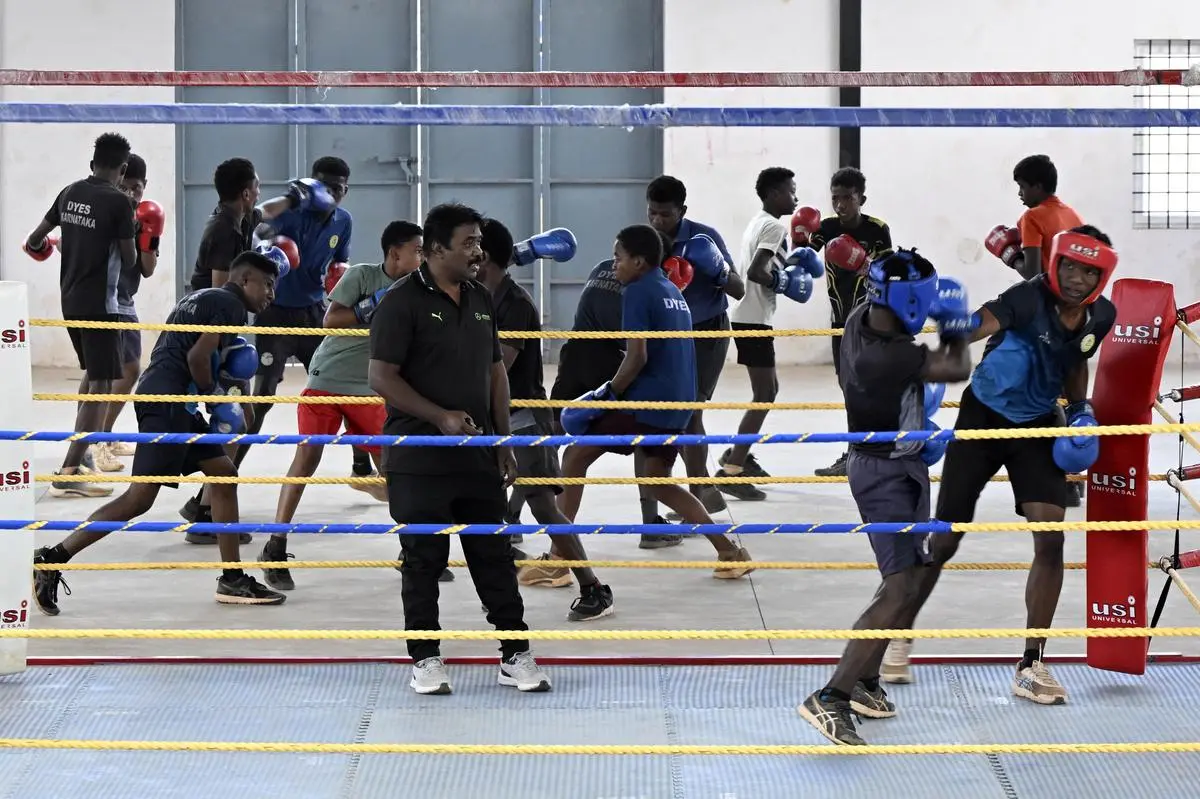
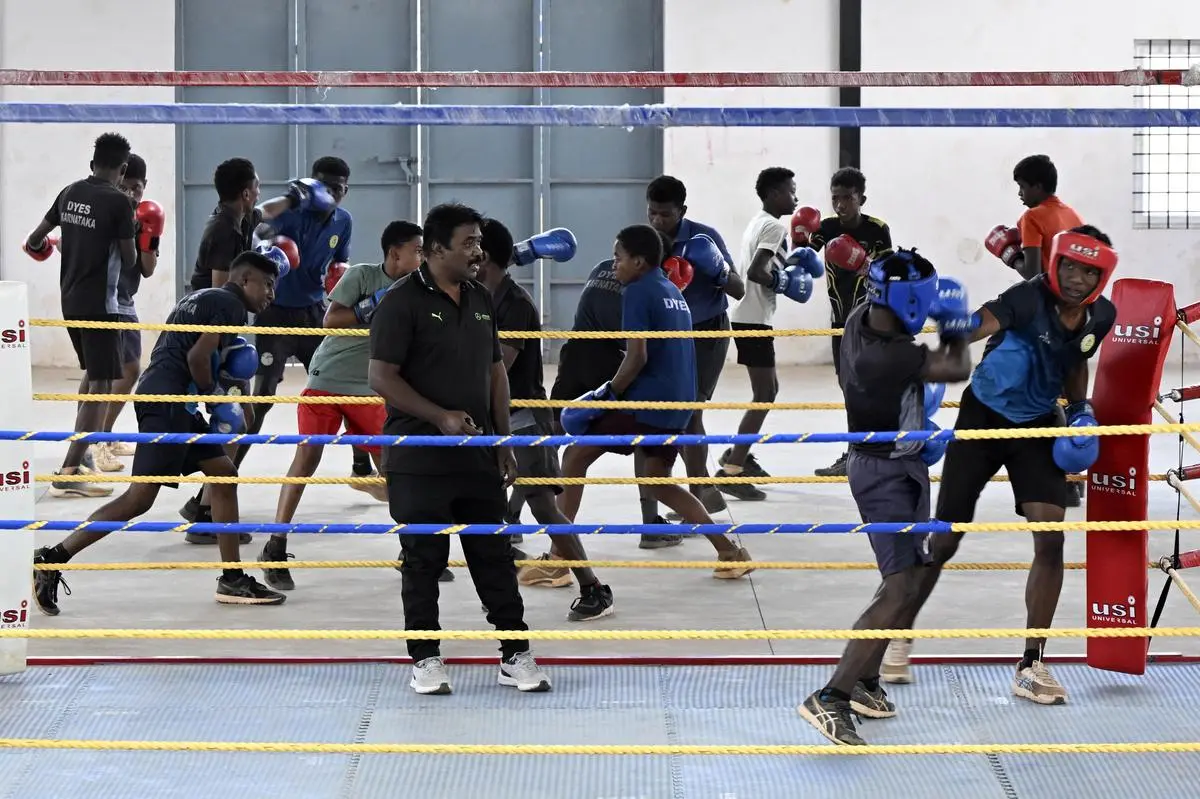
The Siddi youth were a picture of concentration and soon, trails of sweat flowed down their faces.
| Photo Credit:
Sudhakara Jain/The Hindu
According to Nagarathna K.M., Deputy Director of DYES, Vidyanagar in Bengaluru currently has 25 Siddi boys and 14 Siddi girls undergoing training. Of these trainees, six are athletes, while the remaining 34 are novice boxers. “We hope that with DYES support, these children will secure government jobs through sports quotas, achieve national recognition, and serve as role models for their community,” said Nagarathna.Three sports hostels—in Bengaluru, Uttara Kannada, and Chamarajanagar districts—receive annual funding of approximately Rs.1.5 crores through this scheme. The Chamarajanagar hostel offers training in fencing and does not include any Siddis, whereas the hostels in Bengaluru (boxing and athletics) and the Uttara Kannada (wrestling) predominantly consist of Siddi youth, with Bengaluru hosting just one non-Siddi tribal trainee among the boxers.
Siddis have ‘unique advantages in sports’
While numerous tribal communities exist in Karnataka, the significant proportion of Siddis among selected athletes reflects a longstanding belief that members of this African-Indian diaspora make for great athletes and sportspersons. Boxing coach Dhanasanjayan illustrated this by pointing to a six-foot metal fence, explaining, “In my experience, Siddis are physically fitter. When asked to scale this fence, they swiftly leaped across, while other trainees found it challenging”. His coaching has proven fruitful, with several young Siddis winning medals in state-level boxing championships.Maryani arrived at this sports training centre in 2022 after being identified as a promising boxing talent. He was part of the initial cohort of Siddi youth supported by DYES through a scheme aimed at identifying athletic talent among tribal communities in Karnataka (the Siddis are recognised as a Scheduled Tribe in Karnataka). This scheme was funded by the Tribal Sub Plan, mandated by the Karnataka government to ensure departments allocate budget shares proportionate to the tribal population. Since tribals represent nearly seven per cent of Karnataka’s population, seven per cent of each department’s budget is exclusively reserved for tribal communities.Nevertheless, a senior athletics coach based in Bengaluru, who requested anonymity and is familiar with the DYES scheme, raised a pertinent question: “Why are only Siddis selected for this scheme when it is meant for all tribals? Karnataka has 50 communities recognised as Scheduled Tribes. Has the department conducted any scientific tests or pilot studies demonstrating that Siddis possess special physical advantages? There’s no justification for exclusively privileging Siddis, he said.Although this initiative was inexplicably discontinued after a few years, several Siddi athletes achieved prominence, with some even competing internationally for India. Kamala Mingel Siddi, a beneficiary of the 1989 scheme, represented India in three South Asian Federation (SAF) Games (now the South Asian Games). Other Siddi sportspersons from that period secured government jobs through sports quotas. More recently, the Siddi community’s inclination towards sports has continued, resulting in accolades in wrestling, kabaddi, and boxing. For instance, Sushil Kambrekar, a Siddi from Haliyal, was selected last year by the pro-Kabaddi team Bengal Warriors.
 Samantha Saver Siddi, 17, from Ugginakere village in Mundgod taluk, considered by Dhanasanjayan as the best female boxer, shared her experience: “When I first arrived here, I missed my family and our traditional food, which includes a lot of meat, seafood, and even a special red ant chutney. But now I’m accustomed to the food provided here, especially since we get chicken and eggs daily.” The communal housing arrangement has further fostered their orientation and enthusiasm for prolonged training in Bengaluru.
Inside, two boxing rings occupied the centre, with a row of punching bags lining one wall. The teenagers, aged between 14 and 19, formed two separate lines—one for boys and the other for girls—as Dhanasanjayan initiated their warm-up exercises. They jogged on the spot, stretched, did push-ups, jumped, and in one exercise, adopted a boxer’s stance, jabbing the air in front of them. Focused and disciplined, they soon had sweat streaming down their faces. After warming up, the trainees moved to the corners of the warehouse, quickly pulling on red and navy-blue boxing gloves and placing transparent gumshields in their mouths. Equipped and ready, they paired off; some headed to the punching bags, others stepped into the rings.
Dhanasanjayan entered the practice ring where Nikhil Maryani, (Right, wearing red headgear) 18, from Vagginakere village of Mundgod taluk in Uttara Kannada district, was already eyeing his opponent, Steevan Salgatti, also 18, from the village of Tottilagundi in Yellapur taluk in Uttara Kannada district.
| Photo Credit:
Sudhakara Jain/The Hindu
History of the African diaspora in India
While numerous tribal communities exist in Karnataka, the significant proportion of Siddis among selected athletes reflects a longstanding belief that members of this African-Indian diaspora make for great athletes and sportspersons.
| Photo Credit:
Sudhakara Jain/The Hindu
When Siddi boxers initially arrived in Bengaluru, other sporty teenagers residing at SJNNYTC often called them “Africans”. “They were surprised when we spoke Kannada, but they quickly became our friends upon realising we were also from Karnataka,” said Rohan Mohan Siddi, 18, from Yellapur. Although the SJNNYTC campus provides schooling, senior trainees enrolled in Pre-University College (11th and 12th standard) attend classes at a nearby government college, where Rohan encountered curious questions about his racial background.Over the past three years, Dhanasanjayan, who represented India internationally in boxing during the late 1980s and early 1990s, has regularly visited schools in the Yellapur, Haliyal, and Mundgod taluks of the Uttara Kannada district to identify promising Siddi youth for training in Bengaluru. While satisfied with his selections, he noted that many talented Siddis prefer wrestling, as the Haliyal sports hostel offering wrestling is closer to their villages.
This initial surprise and fascination regarding African-looking Indians are understandable yet reflect ignorance about India’s extensive African diaspora history. The term “Siddi”, used to describe Africans in India, is believed to be derived from “Sayyid”, which means “master” or “lord”, highlighting the influence of Muslim culture in the migration of Africans to India. Historical accounts suggest that the name could have been derived from the title borne by Arab captains (sayyids) of vessels that brought Africans to India, either as slaves, soldiers, or merchants. Another theory links “Siddi” to sahibi, an Arabic term of respect used in North Africa. Some historians are of the opinion that it is inaccurate to describe all African migration to India as a consequence of the slave trade as, throughout history, free merchants also travelled to the subcontinent from Africa along established routes in the Indian Ocean.Also Read | Why a third of India’s 716 Eklavya Model Schools for tribal children remains ‘non-functional’
Sports schemes: Successes and questions
A few minutes before 4:30 pm, on March 11, a group of Siddi youth residing at the sports hostel of the Sri Jayaprakash Narayan National Youth Training Centre (SJNNYTC) in Vidyanagar, north Bengaluru, sauntered toward a large building resembling a warehouse. They had strolled over from their nearby hostels, situated within the expansive sports campus operated by the Department of Youth Empowerment and Sports (DYES), Karnataka government. The youth, all hailing from Uttara Kannada district and belonging to an ethnic community descended from India’s historical African diaspora, stood grouped together, awaiting their coach. Precisely at 4:30 pm, coach Dhanasanjayan B. arrived, and the group promptly followed him into the warehouse.
For centuries, the Siddi community remained isolated in remote hamlets in the jungles of Uttara Kannada, leading to significant marginalisation. However, their athletic talents have offered avenues of success. The current DYES scheme is not unprecedented; in 1988, the Union Ministry of Youth Affairs and Sports launched a Special Area Games (SAG) scheme for Siddis, selecting 65 athletes in two batches for training in Bengaluru. Also Read | Wrestlers’ protest: Hanging on in troubled hunt for justiceAs the Karnataka government advances this current initiative for Siddis, it would be prudent to revisit the reasons behind the failure of the 1988 scheme. One reason cited in the 1990s was that Siddis experienced cultural alienation upon relocation to Bengaluru. However, interactions with Siddi youth at SJNNYTC indicate that cultural alienation is no longer a significant issue.Many of the people who arrived in India came from East Africa and they served as soldiers in various Muslim and Hindu kingdoms across the subcontinent. They achieved upward social mobility over the years, married local women, and gradually integrated more deeply into Indian society with each generation. The Habshi Sultans of Bengal (1486–1493 CE) were of African origin, but the greatest influence of Siddis was felt in the Deccan, where high-ranking Africans served prominently in the courts of the Bahmani, Ahmednagar, Bijapur, and Golconda Sultanates.With the establishment of the Portuguese Asian Empire in the 16th century, the region of present-day Mozambique became another significant source of slaves to India. Gwyn Campbell, a historian of the Indian Ocean, writes that “it is probable that the cumulative number of African slaves to Asian markets over the centuries well exceeded the 10 to 12 million landed in the Americas.” According to oral accounts, Siddis in the Uttara Kannada region (located just south of Goa, a Portuguese colony for over five centuries) migrated there seeking safety from persecution. They have since lived in villages adjacent to dense forests. Karnataka’s Siddis are religiously diverse, reflected among the boxing trainees who include Christians, Hindus, and Muslims, conversing in a dialect that Maryani described as a blend of Konkani, Hindi, and Marathi. Dhanasanjayan entered one practice ring, where Nikhil Maryani, 18, from Vagginakere village in Mundgod taluk of Uttara Kannada district, was already eyeing his opponent, Steevan Salgatti, also 18, from Tottilagundi village in Yellapur taluk, Uttara Kannada district. The two boxers briefly bumped gloved fists before the whistle signalled the start of their sparring. They weaved, ducked, and launched strategic punches while Dhanasanjayan circled around, urging them on: “Have you seen Mohammed Ali’s punches? He was more than 100 kg but moved lightly on his feet and lasted 15 rounds!” After several intense minutes, both Maryani and Salgatti were drenched in sweat. Dhanasanjayan blew his whistle, stopping the vigorous match. “I want to win an Olympic gold medal for India in boxing,” Maryani told this correspondent, before striding over to a punching bag and fiercely striking it.











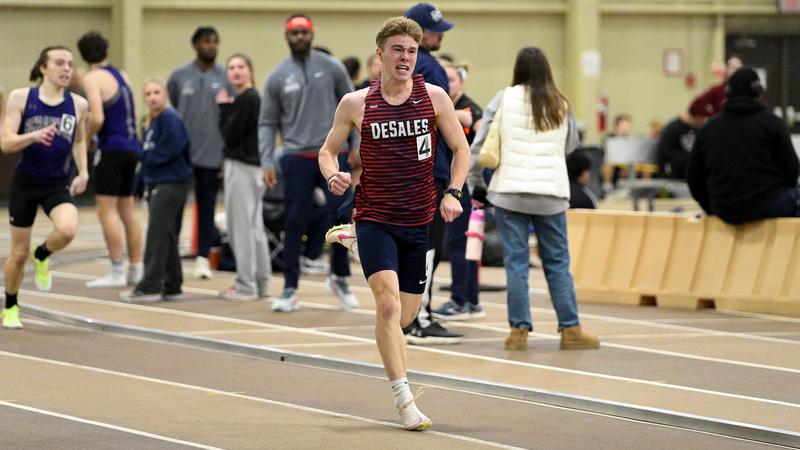
Lancaster, PA (December 6, 2025) – The DeSales University men’s track & field team opened the 2025-26 indoor T&F season competing at the Diplomat Open at Franklin & Marshall College on Friday.
The Bulldogs posted 10 MAC qualfying times/marks in the meet.
Among the qualifying times were junior Bryce Guthier taking second in the 400-meters with a time of 52.08. It is the fifth fastest time in indoor history. Senior Davis Trump also qualified in the 5K with a time of 16:20.32.
In the field events, DSU posted eight qualfying marks. Junior Weston Simak qualified for the MAC Championships in both the long jump (6.52m) and triple jump (13.72m). His triple jump mark was the second best in team history. First-year Luke Heimann also qualfied in the triple jump (11.86m).
Junior Jonathan Castronovo took home first place in the long jump with a mark of 6.58m, the second best long jump in team history.
First-year John Amoretti qualified in the shot put (12.33m), seniors Jonathan Eudja and Giovanni Wellington qualified in the weight throw with marks of 14.85m and 14.23m. First-year Ryan Rodriguez also quallified in the weight throw (11.89m).
The Bulldogs won’t return to action till the New Year at the Blue and Grey Invitational on Jan. 17th.
RESULTS
ITHACA, N.Y. –
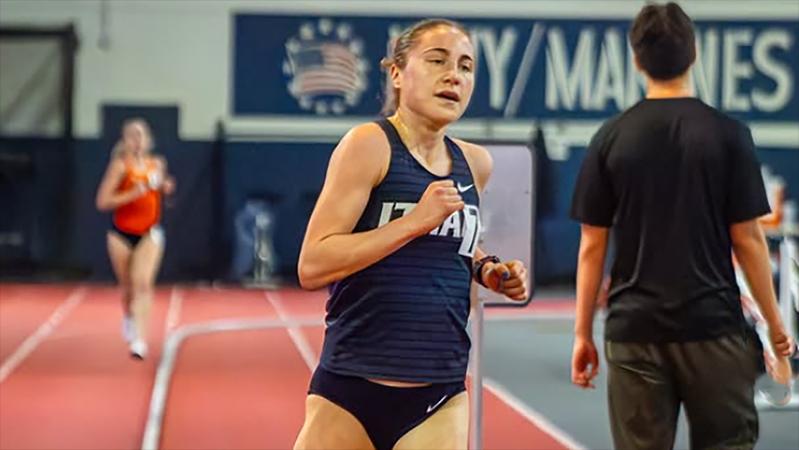
The Ithaca College women’s track & field team opened its 2025-26 season over the weekend as the Bombers made the short trip across town to compete in the Greg Page Relays hosted by Cornell University on December 5-6.
Lola Gitlin posted a time of 10:25.57 in the 3000-meter run to finish third overall.
Rachel Larson was a fourth place finisher with a time of 8.58 seconds in the 60-meter hurdles. That time is currently No. 1 in Division III after the opening weekend of the season.
Aynisha McQuillar took fifth in the 200-meter dash in a time of 26.61 seconds. McQuillar also ran in the 60-meter dash and posted the 11th fastest time in DIII during the prelim with a performance of 7.78 seconds.
Lyla Powers was fifth in the 500-meter dash with a time of 1:21.75.
Lily Seyfert claimed fifth in the shot put with a heave of 12.78 meters, which is currently ninth in the nation.
Bree Boyle and Erin Eastwood each cleared 3.54 meters in the pole vault, which is tied for 11th on the Division III performance list.
Alexis Brown turned in a leap of 11.02 meters in the triple jump for the 17th best mark in the country.
Ithaca is off for the remainder of 2025 and will return to Cornell on January 10 for the Southern Tier Invitational.
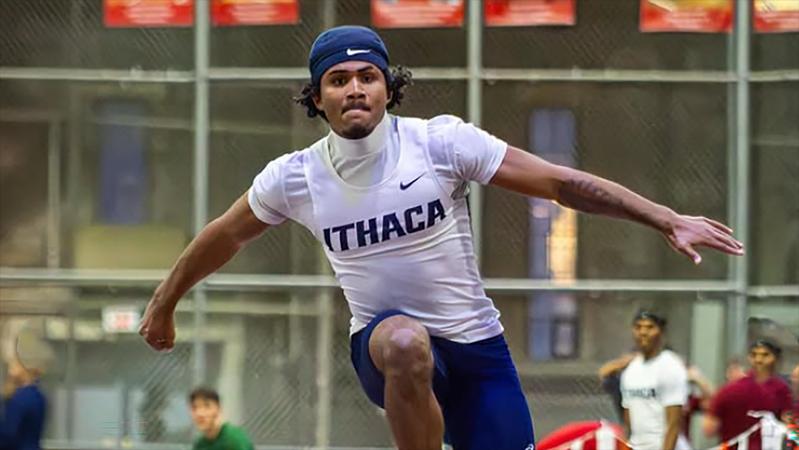
RESULTS
ITHACA, N.Y. –
The Ithaca College men’s track & field team opened its 2025-26 season over the weekend as the Bombers made the short trip across town to compete in the Greg Page Relays hosted by Cornell University on December 5-6.
Anik Vossschulte claimed third in the 200-meter dash in a time of 23.32 seconds, while Jacob Antilety was seventh at 23.71 seconds.
Matt Lokshin posted a time of 8.65 seconds in the 60-meter hurdles to place third in the event. Aidan Irwin took fourth in the high jump with a mark of 1.70 meters.
Quinten Lewis posted a mark of 13.73 meters in the triple jump to place fourth and Sebastien-Oliver Lacrete was sixth at 12.68 meters, while Evan Cherry secured fifth in the long jump with a leap of 6.84 meters.
IC’s 4×400-meter relay team of Damian Simmonds, Griffin Lupes, Noah McKibben and George Nilson placed sixth in 3:34.49.
Luke Ellor finished sixth in the shot put with a mark of 14.40 meters.
Three Bombers finished within the top eight in the 500-meter dash as Brad Kellogg was sixth in 1:09.73, Peter Tysiak followed in seventh with 1:10.74 and Matthew DeJulio was next at 1:11.59.
Kaiden Chandler and Luke Ferrer posted times of 4:41.29 and 4:53.44 in the mile to finish in seventh and eighth.
Raf Campanile was seventh in the pole vault with a clearance of 4.25 meters.
Ithaca is off for the remainder of 2025 and will return to Cornell on January 10 for the Southern Tier Invitational.
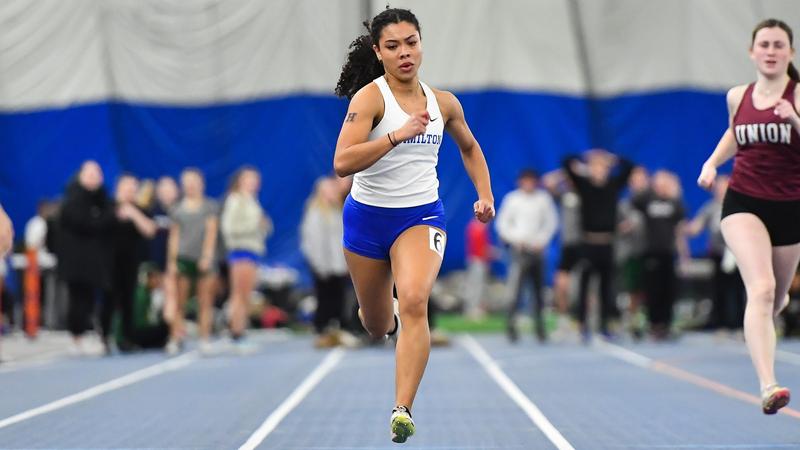
UTICA, N.Y. – The Hamilton College Continentals competed against 13 teams at the non-team scoring 2025 Utica University Track & Field Holiday Classic inside the Todd & Jenn Hutton Sports and Recreation Center on Saturday, Dec. 6.
The meet was the first of the 2025-26 season for the Hamilton women, who will be back at Utica for the Pioneers’ Winter Opener on Friday, Jan. 16 after taking a break for finals and the winter holiday.
The Continentals qualified for the 2026 All-Atlantic Region Track & Field Conference Indoor Championships in four different events and finished first in three events.
Emily Pogozelski ’26 won the 3,000-meter run by over 20 seconds with a regional-qualifying time of 10:27.93. Mackenzie Loudon ’29, who was competing in her first collegiate meet, took first place and qualified for regionals in the triple jump.
Loudon was also part of Hamilton’s winning 4×200-meter relay with Tatiana McCray ’28, Ava Chiappinelli ’29 and Marley Meyers ’28. Their performance was more than five seconds faster than the regional-qualifying time.
McCray ran a regional-qualifying 7.96 seconds and finished in second place in the 60-meter dash final. Chiappinelli also qualified for regionals in her first collegiate meet and finished right behind McCray with a time of 7.99 seconds.
TOP PERFORMANCES
300-Meter Dash (17 Runners)
4. Marley Meyers ’28, 43.08
7. Hannah Turner ’26, 43.91
60-Meter Dash (35 Runners)
2. Tatiana McCray ’28, 7.96 (PR, AARTFC)
3. Ava Chiappinelli ’29, 7.99 (AARTFC)
600-Meter Dash (16 Runners)
5. Aisha Kandji ’29, 1:47.31
4×200 Meter Relay (9 Teams)
1. McCray ’28, Mackenzie Loudon ’29, Chiappinelli ’29, Meyers ’28 (1:46.42, AARTFC)
3000-Meter Run (19 Runners)
1. Emily Pogozelski ’26, 10:27.93 (PR, AARTFC)
Triple Jump (15 Athletes)
1. Loudon, 11.29 meters (37 feet, 0.5 inches; AARTFC)
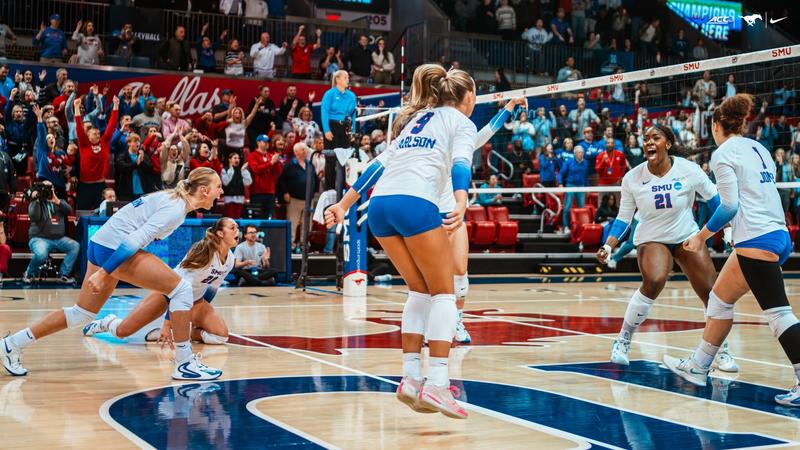
DALLAS (SMU) – For the first time in program history, SMU volleyball is headed to the Sweet Sixteen after sweeping Florida (16-12) in the Round of 32 on Saturday with set scores of 25-11, 25-21, 26-24.
With the win, SMU won its 27th match of the season, tying the program record for single-season wins. It also gave coach Sam Erger her 100th victory at SMU and in her Division I head coaching career.
Averi Carlson dished out 38 assists, the most in a three-setter for the senior setter this season. Carlson led the Mustangs to a .370 hitting percentage in the win. Kennedi Rogers went for 14 kills, hitting .440, with four digs and three blocks. Malaya Jones closely trailed Rogers with 13 kills, eight digs and seven blocks, tying her career high.
SMU out-blocked the Gators 15-4, spearheaded by a career-high nine blocks from freshman Maggie Croft. The Mustangs’ blocking efforts helped hold the Gators to a .156 hitting percentage for the match.
MATCH NOTES
- With 13 kills against Florida, Jones (503) is now the second player in SMU Volleyball history to reach 500 kills in a season. She joins Rachel Giubilato, who notched 568 kills in 2006.
- Averi Carlson (1,341) moved to third in the rally scoring era and sixth all-time for single-season assists at SMU.
- Jones reached the double-digit kill mark for the 26th time this season and for the ninth straight match.
- Rogers recorded double-digit kills for the sixth time this season.
- It marked Schilling’s 22nd time in double-figures this season and her fifth straight.
- With six blocks against the Gators, Anyanwu draws within 14 of breaking the program record for most blocks in a season. (188 by Janelle Giordano in 2015)
- SMU had double-digit blocks (15) for the 17th time this season and for the second straight match.
- SMU has won 20 of its last 21 matches and its 12th straight.
- The Mustangs end the 2025 season with 15 wins at Moody Coliseum, tying the program record for most in a season.
- The win marks the Mustangs’ 15th sweep, 11th at home this season.
HOW IT HAPPENED:
SMU controlled the first set from start to finish in all phases of the game. SMU hit .483 with no errors on 29 swings in the first, while holding Florida to a .000 hitting percentage. Rogers put in five kills to lead the Mustangs, who got point production from six different players to help propel them to a 25-11 set one victory. SMU commanded the net with a 5-0 advantage in blocks.
Down four (16-12) in the second frame, SMU responded with five straight points on a run that included two aces from Madison Scheer. After trading points, SMU went on a 4-0 run to pull away in the frame. The Mustangs went on to win the frame 25-21.
Tied 20-20 entering the red zone of the third set, SMU got the first two points on an ace from Carlson and a block from the freshman tandem of Rogers and Croft. Despite a 3-1 run by Florida that put the Gators at set point first, the Mustangs responded with three straight to close the match, ending the frame with their sixth block of the set to win 26-24.
SMU LEADERS:
SMU Kills Leader: Kennedi Rogers (14)
SMU Assists Leader: Averi Carlson (38)
SMU Digs Leader: Jordyn Schilling (11)
SMU Blocks Leader: Maggie Croft (9)
SMU Ace Leader: Madison Scheer (2)
SMU Points Leader: Malaya Jones (17.5)
Up Next: SMU will get a rematch with No. 3 seed Purdue in the NCAA Regional Semifinal on Thursday evening in Pittsburgh, Pa.
Sports
Trans volleyball player Blaire Fleming hits back at claim about female teammate’s eating disorder
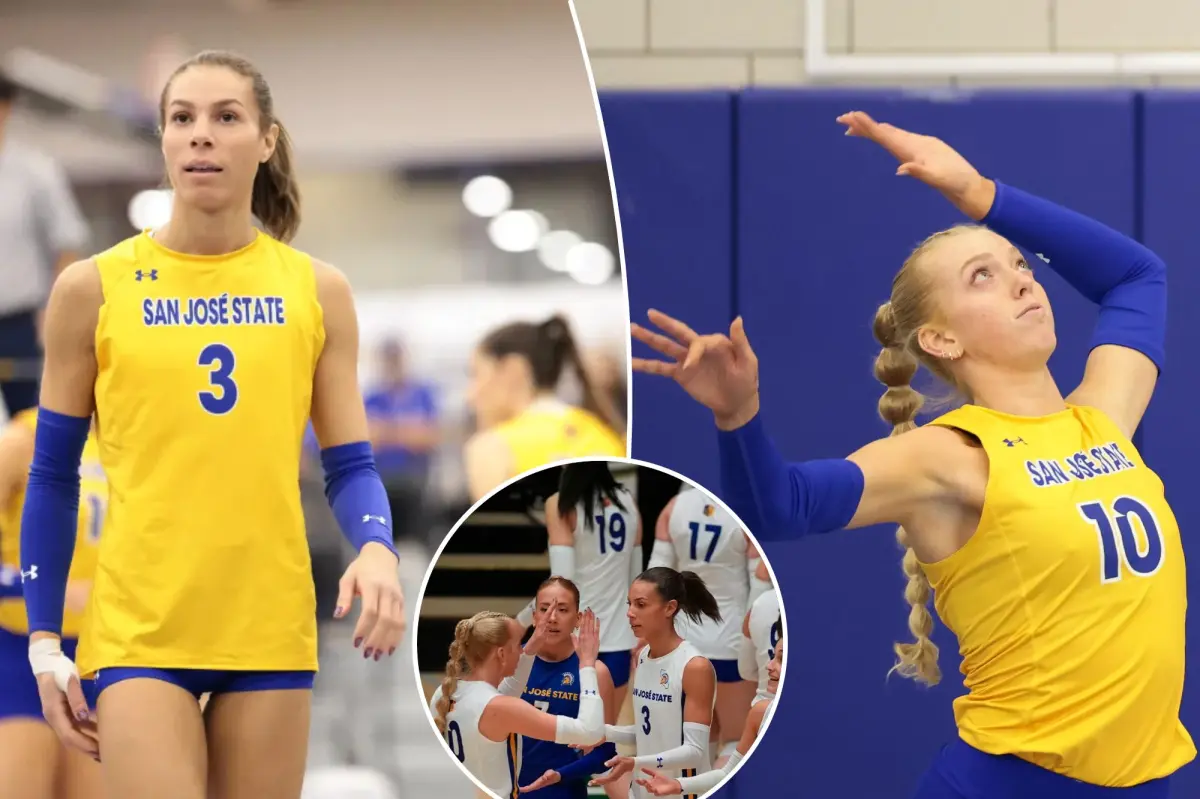
Transgender college volleyball player Blaire Fleming has hit back at claims that she triggered her teammate’s eating disorder due to emotional distress — and said that she doesn’t “feel bad for her.”
Fleming, 23, was at the center of a scandal last year involving Brooke Slusser, who filed multiple lawsuits against her San Jose State University (SJSU) teammate after discovering that she was transgender.
Slusser alleged that the panic and stress from that period of her life led her to develop an eating disorder, leading to anorexia so severe that her menstrual cycle stopped for nine months.
The pair had previously shared hotel rooms and changing spaces for a whole season in 2023 before Slusser said she found out that Fleming, who is biologically male but reportedly started medically transitioning at 14, was trans.
“From the stress and how anxious I was every single day, I just wasn’t eating really at all,” Slusser told Fox News Digital last week.
“I went from around 160 to 128 [lbs] in that one semester. It definitely isn’t healthy for someone of my size to be that weight, and I ended up losing my menstrual cycle for nine months. So it was definitely severe,” she said.
Slusser later dropped her classes in the final semester this past spring, citing constant in-person harassment by students who opposed her stance.
Fleming has since responded, claiming that Slusser’s eating disorder dated back for as long as she knew her, prior to her learning that she was trans.
“She’s been anorexic and struggled with food since I’ve known her aka since 2023. She literally would weigh herself 2-3x a day and keep track of it on her whiteboard in her room,” Fleming told Fox News Digital on Sunday.
“So I really don’t care or feel bad for her. And she didn’t drop her classes, she failed out, hope that helps!” Fleming said.
Slusser has now come back and disputed Fleming’s allegations.
“These statements are just not true. I have always lived a very healthy lifestyle. Before these events took place I was very disciplined in fueling myself for athletics and [kept] track to make sure I was where I need to be to be the best athlete,” Slusser told Fox News Digital.
“It wasn’t until all the craziness started that my healthy lifestyle turned very unhealthy into not eating the amount I should,” Slusser said.
“As for school, I decided to stay home after fall 2024 to better myself and heal. So no, I did not return to San Jose and enroll myself in more courses at an institution that didn’t have my best interest,” she added.
Slusser alleged that she was never told Fleming’s birth sex and said the two regularly shared hotel rooms on away trips, according to her lawsuits filed against the NCAA and Mountain West Conference.
Fleming allegedly requested to be roomed with Slusser, a request she said was granted by team leadership, according to lawsuits.
Slusser said that the 6ft1 Fleming confessed to being transgender during a conversation over ice cream with another teammate in April 2024.
In September 2024, Slusser joined swimmer Riley Gaines’ lawsuit against the NCAA.
At the same time, SJSU’s volleyball team saw a series of forfeits by opposing teams, with police protection regularly assigned.
The US Department of Education is currently investigating SJSU for potential Title IX violations.

Men’s T&F Opens Season at Diplomat Open

Max Verstappen’s wife has child with F1 driver he replaced – Motorsport – Sports

Miami Selected to College Football Playoff – University of Miami Athletics

Women’s Track & Field Turns in Multiple High Marks to Begin Season at Cornell

Brad Keselowski glad Michael Annett ‘no longer suffering’ after death – Motorsport – Sports

Men’s Track & Field Opens Indoor Season at Cornell Greg Page Relays

Verstappen expected to win race, Norris title

Alonso hints at ‘favorites’ as Max hunts allies

Revised plan for Good Life District Aquatics Center appears to meet city’s needs

Forget Kiffin — NIL is the real villain here

BangShift.com Pro 10.5 Racing Action From The DI Winter Series Snowbird Nationals At Bradenton Motorsports Park In Florida

What Happened To Michael Annett? Everything We Know About The Former NASCAR Driver’s Death

Women’s track and field athletes win three events at Utica Holiday Classic

Volleyball Advances to Program’s First Sweet Sixteen, Sweeps Florida Saturday

LIVE: F1 Abu Dhabi GP updates – Max Verstappen leads Lando Norris in Q3 | Live text

First Tee Winter Registration is open

Fargo girl, 13, dies after collapsing during school basketball game – Grand Forks Herald

CPG Brands Like Allegra Are Betting on F1 for the First Time

Volleyball Recaps – November 18

F1 Las Vegas: Verstappen win, Norris and Piastri DQ tighten 2025 title fight

Two Pro Volleyball Leagues Serve Up Plans for Minnesota Teams

Utah State Announces 2025-26 Indoor Track & Field Schedule

Sycamores unveil 2026 track and field schedule

Redemption Means First Pro Stock World Championship for Dallas Glenn

Bowl Projections: ESPN predicts 12-team College Football Playoff bracket, full bowl slate after Week 14

Texas volleyball vs Kentucky game score: Live SEC tournament updates

Indiana’s rapid ascent and its impact across college football

How this startup (and a KC sports icon) turned young players into card-carrying legends overnight

Pohlman admits ‘there might be some spats’ as he pushes to get Kyle Busch winning again

Ole Miss Reveals Troubling News Before Egg Bowl vs Mississippi State

 Why a rising mid-major power with an NCAA Tournament team opted out of revenue-sharing — and advertised it
 NBA Legend Michael Jordan to Join NBC Sports as Special Contributor
 Falcons mailbag
 Portal Update – Basketball and Gymnastics Take Hits
 has always dreamed in Mercurial. Now his initials are on the boots.
The new Kyl…
has always dreamed in Mercurial. Now his initials are on the boots.
The new Kyl…
-
 Rec Sports2 weeks ago
First Tee Winter Registration is open
-
 Rec Sports2 weeks ago
Fargo girl, 13, dies after collapsing during school basketball game – Grand Forks Herald
-
 Motorsports2 weeks ago
CPG Brands Like Allegra Are Betting on F1 for the First Time
-
 Sports3 weeks ago
Volleyball Recaps – November 18
-
 Motorsports2 weeks ago
F1 Las Vegas: Verstappen win, Norris and Piastri DQ tighten 2025 title fight
-
 Sports2 weeks ago
Two Pro Volleyball Leagues Serve Up Plans for Minnesota Teams
-
 Sports2 weeks ago
Utah State Announces 2025-26 Indoor Track & Field Schedule
-
 Sports2 weeks ago
Sycamores unveil 2026 track and field schedule
-
 Motorsports1 week ago
Redemption Means First Pro Stock World Championship for Dallas Glenn
-
 NIL7 days ago
Bowl Projections: ESPN predicts 12-team College Football Playoff bracket, full bowl slate after Week 14