
NIL
WATCH


How to get FOX54+:
- Download the FOX54+ app on your Roku, Apple TV, or Fire TV.
- Open the app and dive into a world of content available 24/7!
- Enjoy local news, the latest LockedOn Sports podcasts, true crime documentaries, and essential weather updates—all at your fingertips.









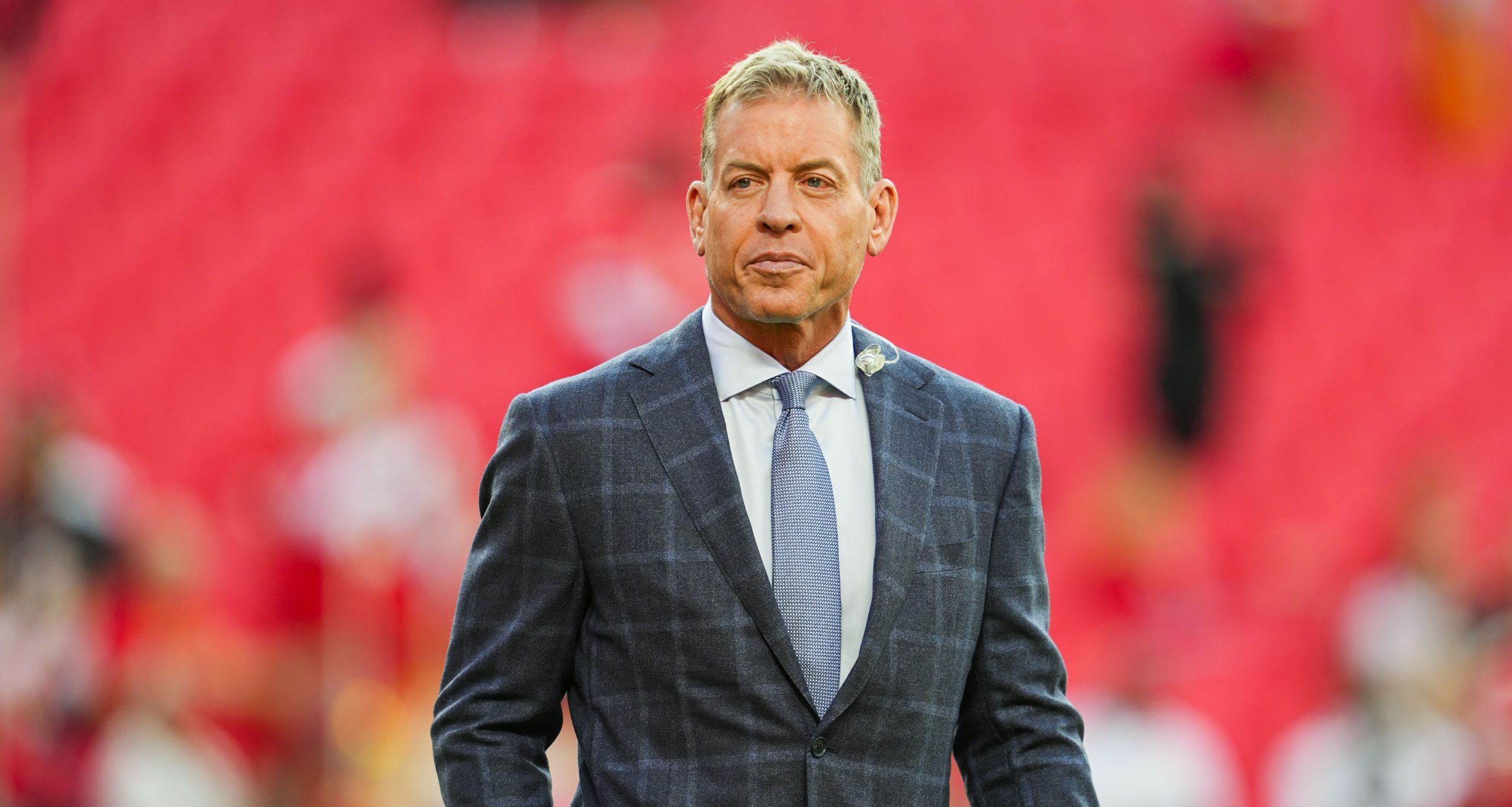
ESPN’s lead NFL analyst Troy Aikman made headlines earlier this week when he took direct aim at what he sees as a flawed NIL system.
Aikman shared a story on a recent episode of the Sports Media with Richard Deitsch podcast about how he made a significant donation to UCLA, his alma mater, to secure a star quarterback recruit. It turns out that recruit played just one year for the Bruins, and didn’t even give Aikman so much as a “thank you” for his hefty NIL payday.
“I gave money to a kid, I won’t mention who. I’ve done it one time at UCLA, never met the young man. He was there a year, he left after the year. I wrote a sizable check, and he went to another school. I didn’t even get so much as a thank-you note. So, it’s one of those deals, to where I’m done with NIL. I want to see UCLA be successful, but I’m done with it,” Aikman explained.
It turns out there was a good reason why Aikman didn’t get a “thank you” from the UCLA quarterback. According to Ben Bolch of the Los Angeles Times, it was a matter of policy.
Per Bolch, “The player in question didn’t know who funded his NIL deal, only that it was coming from the team’s collective, Men of Westwood. It was standard practice for players not to know which donors or alumni contributed NIL funds that were distributed to the team.”
Instead of receiving thanks directly from the player, Aikman was thanked by the Men of Westwood leadership, head coach Chip Kelly, and athletic director Martin Jarmond, according to the Times.
Troy Aikman is far from the only one calling for stricter regulation of NIL. As it stands, the system essentially allows players to be free agents every year, which isn’t ideal for college football as an entertainment product. But Aikman was clearly a bit misguided about what exactly he was getting from his NIL donation. Sure, the money he gave to the collective almost certainly went towards the quarterback he speaks of. But the player won’t know that; he only knows the money is there, not where it came from.
So does Aikman’s broader point about NIL in college football stand? Yes. But if he had a do-over, he might take back his statement that he didn’t receive any gratitude from the player he helped.
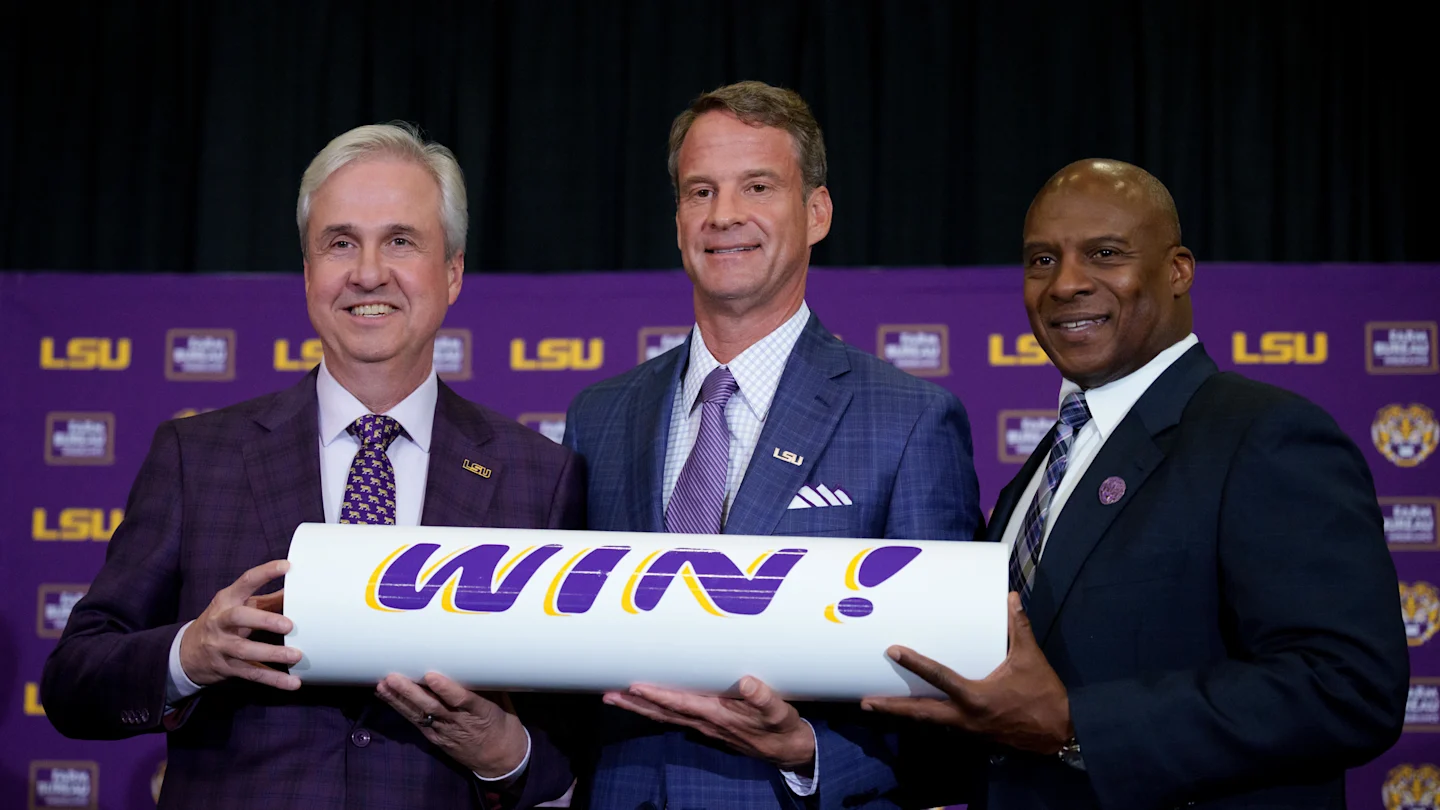
The 2025 college football carousel is spinning faster than it has ever spun before.
In the Power Four ranks, 16 different college football programs have made head coaching changes: Virginia Tech, UCLA, Oklahoma State, Arkansas, Penn State, LSU, Auburn, Florida, Ole Miss, Michigan State, Iowa State, Kansas State, California, Stanford, Kentucky and Michigan.
While this cycle has created chaos throughout the college football landscape, none of the changes compare to Lane Kiffin’s decision to leave Ole Miss, the No. 6 seed in the 2025 College Football Playoff, for the Rebels’ Magnolia Bowl rival in LSU.
The Leadership
The Facilities
The Brand#JustDifferent @Lane_Kiffin pic.twitter.com/qIlsxx9VtB— LSU Football (@LSUfootball) December 8, 2025
The subject of Kiffin’s departure has sparked much debate about leaving a Power Four program while in a position to win championships and about the current layout of the college football calendar.
The Kiffin saga was recently addressed on Outta Pocket, a podcast hosted by Heisman-winning quarterback Robert Griffin III and his wife, Grete Griffin.
On a recent episode of Outta Pocket, the Griffins were joined by current Texas A&M quarterback Marcel Reed as a guest. Grete asked Reed about his reaction to the news of Kiffin’s departure to LSU.
Texas A&M QB Marcel Reed on Lane Kiffin leaving Ole Miss,
“Shoot if $91 Million for 7 years was in front of my face I would not pass it up. 🤣”#GigEm #RG3 #OuttaPocket pic.twitter.com/7bkwSeFWGE
— Robert Griffin III (@RGIII) December 10, 2025
“I felt like it was going to happen,” Reed said. “No disrespect toward Lane or anything, but you can’t talk about it that long and it not happen. If $91 million for seven years was in front of my face, I would not pass it up.”
Coaches are no longer the only ones college football programs are attempting to lure away from their rivals. The work Reed has accomplished at Texas A&M has turned him into a hot commodity for the Aggies and something they need to protect for their future.
Reed came to Texas A&M as the fourth-string quarterback behind Conner Weigman, Max Johnson and Jaylen Henderson in 2023. After very limited action in the regular season, he pieced together a strong first start in a 31-23 Texas Bowl loss after Johnson and Henderson entered the transfer portal.
The Aggies featured Reed in all but their season opener in 2024. He finished his redshirt freshman season with 1,864 passing yards, 15 touchdown passes and six interceptions while rushing for an additional 547 yards and seven touchdowns.
Texas A&M made a significant jump in 2025 thanks to Reed’s guidance. His numbers ballooned to 2,932 pass yards with 25 touchdown passes and 10 interceptions while he rushed for an additional 466 yards and six touchdowns.
The Aggies’ 11-1 record is their best in a regular season since 1992. Their performance has them as the No. 7 seed in the 2025 College Football Playoff, hosting No. 10 Miami (10-2, 6-2) in Kyle Field on Dec. 20 (Noon EST, ABC).

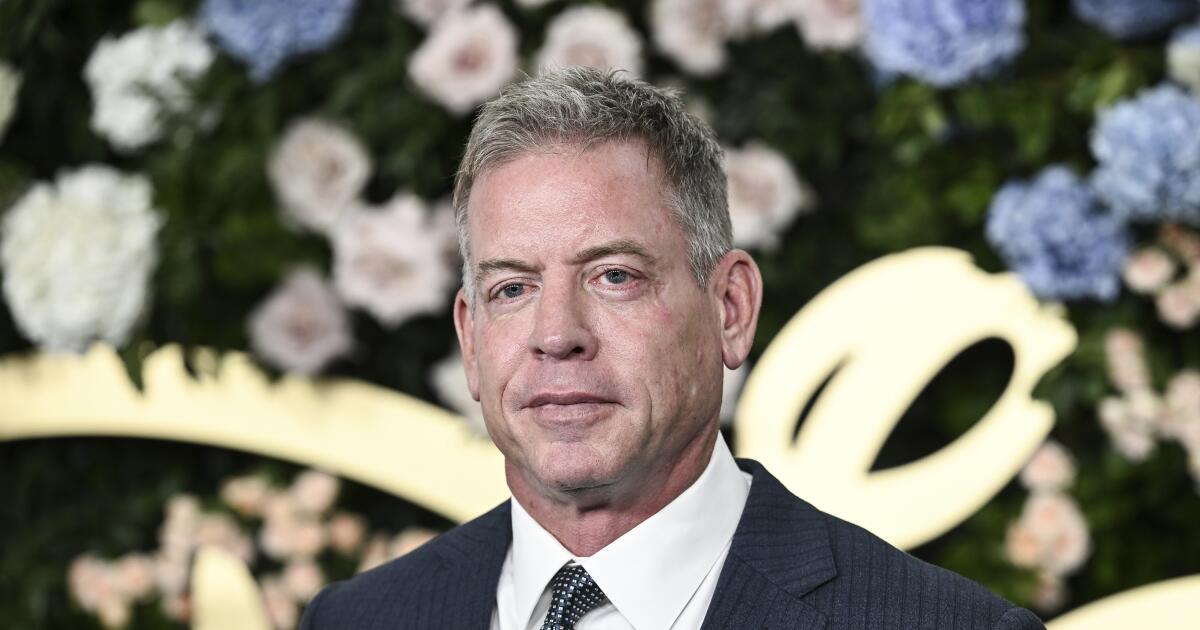
Troy Aikman said he’s “done with NIL” after writing a check to a UCLA football player who never thanked him and went on to leave for another school after one season.
There was a reason for that lack of gratitude, according to one person familiar with the Bruins’ football name, image and likeness operations from that time not authorized to discuss donor information publicly.
The player in question didn’t know who funded his NIL deal, only that it was coming from the team’s collective, Men of Westwood. It was standard practice for players not to know which donors or alumni contributed NIL funds that were distributed to the team.
Aikman, who did not identify the player in his remarks, did receive thanks from Men of Westwood leadership, coach Chip Kelly and athletic director Martin Jarmond, according to the person familiar with the situation.
Aikman, the former UCLA quarterback who led the Bruins to a victory in the 1989 Cotton Bowl before going on to a Pro Football Hall of Fame career with the Dallas Cowboys, voiced his frustrations about NIL on the Sports Media Podcast with Richard Deitsch.
“I gave money to a kid, I won’t mention who,” Aikman told Deitsch. “I’ve done it one time at UCLA, never met the young man. He was there a year, he left after the year. I wrote a sizable check, and he went to another school. I didn’t even get so much as a thank-you note. So, it’s one of those deals, to where I’m done with NIL. I want to see UCLA be successful, but I’m done with it.”
Aikman went on to say he believed that players should be able to leave one school for another amid coaching turnover but should have to otherwise stay with the program paying them.
“There’s got to be some leadership at the very top that kind of cleans all of this up,” Aikman said. “Starting with players that accept money. There’s got to be some accountability and responsibility on their behalf, to have to stick to a program.”

Arizona State finished 8-4 (6-3 Big 12) and will head to the Sun Bowl, marking another successful season under third-year head coach Kenny Dillingham.
Despite the winning record, the narrative has centered on last year’s unexpected Big 12 title run and 11-3 finish, along with this season’s offensive struggles, largely due to injuries such as Sam Leavitt’s season-ending foot injury.
Leavitt’s season ended after seven games and 1,628 passing yards, 10 touchdowns, and three interceptions, a sharp contrast to his 2024 breakout, when he earned Big 12 Freshman of the Year and All-Big 12 recognition with 2,885 passing yards, 24 touchdowns, and 443 rushing yards with five rushing scores.
Persistent chatter and Leavitt’s absence from team events sparked transfer speculation, and on Monday, reports confirmed he plans to enter the portal.
On Monday, coach Dillingham fielded media questions about Leavitt’s future at ASU but stopped short of making any formal announcement.
“I’m going to let that leave that to Sam’s team, out of respect for him, for how they want to progress from that,” Dillingham said. “I love Sam. Sam grew so much here, he really did, and I grew so much learning from Sam. Whatever his future holds, I wish him nothing but the best. I absolutely want to see him succeed.”
“With that, I’m very, very confident that we’re going to have a really, really good quarterback at Arizona State,” Dillingham added.
Kenny Dillingham on Sam Leavitt’s future status at ASU:
“I’m gonna leave that to Sam’s team…I love Sam. Sam grew so much here….Whatever his future holds, I wish him nothing but the best…I’m very very confident that we’re gonna have really really good QB at Arizona State.” pic.twitter.com/rIh9wvQBq5
— Blake Niemann (@Blakes_Take2) December 8, 2025
On the roster, Arizona State is not without alternatives.
True freshman Cameron Dyer (four-star recruit) remains on the depth chart and has been cleared to play, while ASU’s 2026 class features Jake Fette, a four-star dual-threat signee who enrolled early.
Those internal options, along with the possibility of adding an experienced passer via the portal, give Dillingham multiple pathways to attempt to replace Leavitt’s production.
Leavitt is also one of the more marketable athletes in college football, with a reported NIL valuation of around $1.8 million.

After a poor 3-9 start to the program, Dillingham led Arizona State to an 11–3 season, a Big 12 title, and a College Football Playoff berth in 2024, earning coach-of-the-year recognition for that run.
However, while Dillingham’s work drew national attention a year ago, his challenge now is sustaining momentum, finding Leavitt’s replacement, managing NIL pressures, and guarding against recruiting reverberations from a marquee departure.
Read More at College Football HQ
- Former 5-star QB announces return to college football for 2026 season
- Major college football AD responds to potential departure of $54 million head coach
- $1.2 million college football coach named candidate to replace former Pac-12 head coach
- 34-touchdown college football quarterback enters transfer portal

Troy Aikman is totally out on NIL after getting burned.
Troy Aikman didn’t hold back when discussing the current state of college football and NIL.
Despite the fact I might sound like an old man yelling at the clouds, everyone with eyes and a functioning brain can see that college football is going through an unprecedented era of change.
The main driver?
Money.
NIL has completely reshaped college sports, and none more than college football. Players cut and run for bigger checks, rosters have to be rebuilt yearly, and it feels like loyalty and commitment are dying.

Troy Aikman isn’t a big fan of the current state of college football. (Photo by Sam Hodde/Getty Images)
Troy Aikman crushes current state of college football.
Well, it sounds like the Dallas Cowboys legend and current ESPN broadcaster has had enough, and he’s not spending one more penny on NIL after feeling like he got burned.
“I gave money to a kid. I won’t mention who. I’ve done it one time at UCLA. Never met the young man. He was there a year, he left after the year. I wrote a sizable check, and he went to another school. I didn’t even get so much as a thank you note. It’s one of those deals to where I’m done with NIL. I mean, I wanna see UCLA be successful, but I’m done with it,” Aikman said in an interview with Richard Deitsch, according to NBC Sports.

Troy Aikman says he’s done cutting NIL checks for UCLA. (Photo by Mike Carlson/Getty Images)
I think it’s fair to say the frustration Aikman shared is felt by a lot of people in similar situations. Writing a check for a *SINGLE YEAR* of a player who then left and never even said thank you is dirty work.
There’s no way to justify spending money in that fashion. There’s an argument NIL could be an investment if the payoff is significant.
Spending cash for a single year of action from a player for a bad football program is a total waste. Aikman might as well have put the money in a pile and lit it on fire.
At what point do the people writing checks just decide enough is enough and save their money? Everything has a breaking point. College football is racing towards it.

Troy Aikman trashed the current state of college football amid an infusion of NIL money. (Photo by Allen Berezovsky/WireImage via Getty Images)
What do you think about Aikman’s stance? Agree? Disagree? Let me know at David.Hookstead@outkick.com.
By Matt Baker, Justin Williams and Stewart Mandel
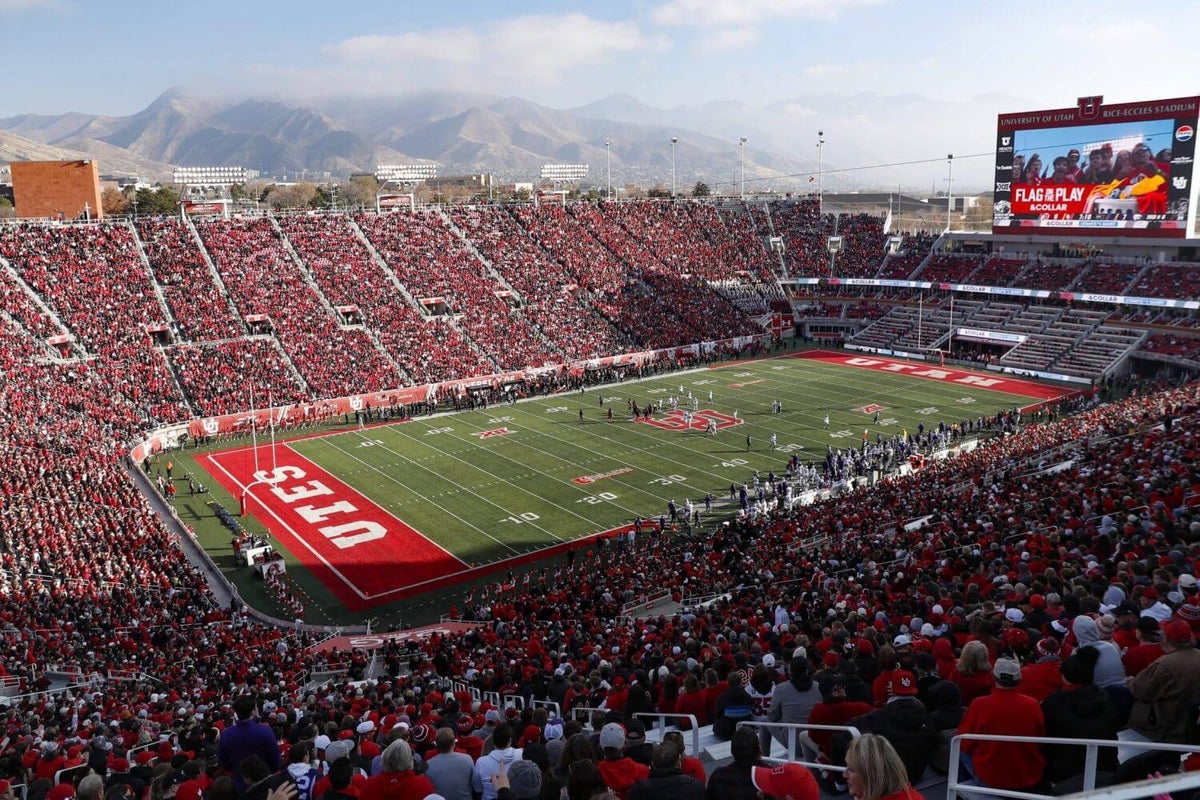
Utah took college sports’ biggest step into private equity yet Tuesday when it approved a plan to partner with a private investment firm, Otro Capital, which would have an ownership stake in a new, for-profit business to fund Utes athletics and increase revenue.
The first-of-its-kind partnership comes with risks, and the terms must still be finalized after receiving unanimous approval Tuesday from the university’s board of trustees. But Utah administrators billed it as a nine-figure venture that could stabilize the Utes in a period of nationwide college athletics upheaval. It’s also the clearest window yet into a complex model schools across the country have been assessing for more than two years, a model with dynamic risks and rewards that could transform the heart of major college athletics.
“The upside is the difference between surviving and thriving,” university CFO Anthony Wagner said.
Here’s how the private-equity partnership would work and how it fits into the national landscape:
How will this work?
The school started a new company called Utah Brands & Entertainment. The Utes will own most of this company, but Otro Capital will also own part of it. The new company will handle some things most athletic departments do (like ticketing, events, sponsorships and NIL) but try to do them even better to make more money for the school and the investment firm.
The Utes would remain in control of big decisions like hiring/firing coaches and scheduling. Although the company will distribute NIL payments to players, the Utes would still control who gets how much.
The company will be under the university’s foundation and chaired by the Utes’ athletic director. On a potential seven-person board, the athletic director and three other Utah foundation members would be joined by two members from Otro Capital and another university supporter/investor.
The company would submit audits to Utah’s trustees, and the university would have the ability to buy back its share of the company from Otro Capital.
During a panel discussion at the SBJ Intercollegiate Athletics Forum on Tuesday, NCAA president Charlie Baker called the deal “really well thought out and really well designed” because the school still controls athletics’ decision-making process. Yahoo! Sports reported Tuesday that the Utes cleared the proposal with the NCAA.
How much money is involved?
No specific dollar figures were mentioned during the board presentation and discussion, but school president Taylor Randall said the platform will allow the Utes to raise “hundreds of millions of dollars over time.”
“This is not a one-time transaction,” Randall said.
That said, the partnership is expected to include a significant initial transaction. Athletic director Mark Harlan called a “short-term solution” of capital something “that’s very important” for the program. Trustees discussed the possibility of a seven-year term to the partnership.
Why did Utah jump at this deal before any other school/league?
The Utes were caught between the rising costs of college sports and the growing gap between the SEC/Big Ten and everyone else. When schools were allowed to start paying players directly this year, that added a $20.5 million expense for Utah and every other team that wants to compete nationally. That expense is harder for schools in the Big 12 and ACC to fund because, as Harlan said, they’re “certainly tens of millions behind other conferences.”
Utah administrators said they did not want to raise student fees to fund athletics. They didn’t want to cut sports or cut academic/research programs, either. Because the status quo, Randall said, “jeopardized the future” of Utah as a powerful program, the Utes decided to become the first program to make this move.
“There’s equal risk of actually not doing anything,” Randall said.
What are the risks?
Because financial details are either not yet finalized or not public, we can’t fully assess them. But generally, private equity groups don’t get into partnerships to lose money. What happens if this venture doesn’t make as much as both sides expect?
Foundation CEO David Anderson acknowledged a “tension” between commercial success and the university’s mission. Utah administrators said in the presentation that the school would be able to veto a sponsorship opportunity that doesn’t align with its values, but how might that work in practice?
A rosier risk is that Utah undervalued itself because it’s the first program to make a deal like this. Anderson told the board that if the deal becomes below market value, Otro Capital will effectively have to match the new numbers.
Who is Otro Capital?
It describes itself as an “operator-led private equity firm with deep expertise” in sports, media and entertainment. The portfolio for the New York-based firm includes FlexWork Sports (a marketing/event group focused on youth camps) and a stake in the Formula One racing team BWT Alpine.
One of Otro’s co-founders, Alec Scheiner, was the Cleveland Browns’ president from 2012 to ’16. The other, Brent Stehlik, worked in pro sports with NFL, MLB and NHL franchises.
Is this the start of a trend?
Probably.
A few schools (like Kentucky and Clemson) have already formed companies to handle some of the business of college athletics. Utah simply took that idea a step further by adding an outside investor to the mix. The Utes aren’t the only program in these financial straits, so don’t be surprised if others follow to the same proposed solution.
What’s the broader relationship between private equity/capital and college sports?
Schools and conferences have been looking into outside money for a long time; Utah’s deal has been in the works for two years.
Florida State seriously explored a similar idea in 2023 but stopped short of executing anything. The Big 12 previously considered conference-wide private equity and capital deals in ’24 and early ’25 but never garnered enough support among its members. “We’re just not ready to jump in just yet,” Big 12 commissioner Brett Yormark told Front Office Sports this May.
The Big Ten spent more than a year exploring similar opportunities before a nontraditional investor emerged this summer: UC Investments, a non-profit public pension and arm of the UC system, offered Big Ten members $2.4 billion in capital in exchange for a 10 percent stake in a newly formed company that would hold the league’s media and sponsorship rights. That deal is now on hold due to public opposition from two members, Michigan and USC. Michigan board chairman Mark Bernstein has called the proposal akin to “a payday loan.”

Daniel Suárez Hailed as the Best NASCAR Driver to Represent Longtime Sponsor in 2026

Track and Field Competes in Opening Meet, Swimming Takes on Rowan

Troy Aikman not thanked by UCLA QB for NIL donation due to school protocol

Jeffrey Kessler Puts On a Clinic in Day 8 of NASCAR Antitrust Trial

Top NASCAR Sponsor Calls Out Commissioner Steve Phelps and His “Lieutenants” in Response to Childress Comments

College football star QB sends strong message on $91 million coaching move

How Sweet It Is: No. 3 Badgers take on NCAA Regionals

Vinton Today – JAKES Day: Local group invites youth to learn variety of outdoor sports skills

How To Have a Plastic-Free Holiday Season

Why Troy Aikman didn’t get thanked by that UCLA football player

#11 Volleyball Meets Media, Makes Final Prep For Sweet 16 Match

Riverhead hires Melissa Edwards as its new athletic director

Women’s Basketball: Macalester Loses Heartbreaker to Carleton

Volleyball to get new arena

Game Thread: Huskers v. Badgers

First Tee Winter Registration is open

Fargo girl, 13, dies after collapsing during school basketball game – Grand Forks Herald

CPG Brands Like Allegra Are Betting on F1 for the First Time

Volleyball Recaps – November 18

F1 Las Vegas: Verstappen win, Norris and Piastri DQ tighten 2025 title fight

Two Pro Volleyball Leagues Serve Up Plans for Minnesota Teams

Utah State Announces 2025-26 Indoor Track & Field Schedule

Sycamores unveil 2026 track and field schedule

Redemption Means First Pro Stock World Championship for Dallas Glenn

Jo Shimoda Undergoes Back Surgery

Texas volleyball vs Kentucky game score: Live SEC tournament updates

Bowl Projections: ESPN predicts 12-team College Football Playoff bracket, full bowl slate after Week 14

Robert “Bobby” Lewis Hardin, 56

How this startup (and a KC sports icon) turned young players into card-carrying legends overnight

Indiana’s rapid ascent and its impact across college football

 Why a rising mid-major power with an NCAA Tournament team opted out of revenue-sharing — and advertised it
 NBA Legend Michael Jordan to Join NBC Sports as Special Contributor
 Falcons mailbag
 Portal Update – Basketball and Gymnastics Take Hits
 has always dreamed in Mercurial. Now his initials are on the boots.
The new Kyl…
has always dreamed in Mercurial. Now his initials are on the boots.
The new Kyl…
-
 Rec Sports2 weeks ago
First Tee Winter Registration is open
-
 Rec Sports2 weeks ago
Fargo girl, 13, dies after collapsing during school basketball game – Grand Forks Herald
-
 Motorsports2 weeks ago
CPG Brands Like Allegra Are Betting on F1 for the First Time
-
 Motorsports2 weeks ago
F1 Las Vegas: Verstappen win, Norris and Piastri DQ tighten 2025 title fight
-
 Sports2 weeks ago
Two Pro Volleyball Leagues Serve Up Plans for Minnesota Teams
-
 Sports2 weeks ago
Utah State Announces 2025-26 Indoor Track & Field Schedule
-
 Sports2 weeks ago
Sycamores unveil 2026 track and field schedule
-
 Motorsports2 weeks ago
Redemption Means First Pro Stock World Championship for Dallas Glenn
-
 Motorsports2 weeks ago
Jo Shimoda Undergoes Back Surgery
-
 Sports2 weeks ago
Texas volleyball vs Kentucky game score: Live SEC tournament updates