
NIL
Sustainability and sport



Project researchers also carried out an on-site environmental impact analysis of the Zurich Weltklasse athletics meeting in 2022, which that year served as the Wanda Diamond League final. Results from that assessment appeared in the report, ‘Guidelines on Decarbonisation Practices for Athletics, Biathlon and Floorball’, published in August 2023.World Athletics played a leading role is several of the project’s key milestones. One was a Life Cycle Assessment (LCA) calculation of the environmental impact of the 2023 World Mountain and Trail Running Championships hosted by the Austrian cities of Innsbruck and Stubai.
Another important legacy of the project was the creation of an interactive database of sustainability best practices for sports events.
– to develop training modules to improve environmental knowledge;
The governance and management model analysis also played an active role in refining the Athletics for a Better World Standard, the system World Athletics implemented across all owned and licensed athletics events in January 2024 that evaluates, measures and scores an event’s achievement in sustainable delivery.
– to support the sports with strategic objectives, programmes and operational frameworks
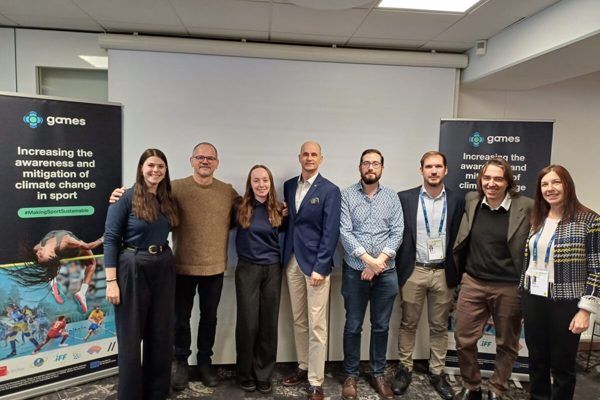
The GAMES Project (Green Approaches in Management for Enhancing Sports), a unique multi-sport collaboration exploring how sports can improve and promote environmental sustainability practices at their events, marked its successful conclusion in March.
Ramsak, along with Tero Kalsta of the IFF and Riikka Rakic of the IBU, co-authored a chapter on environmental governancen in the sports sector in the book, ‘Integrity and Sustainability in Sport’, published in January 2025. The GAMES final report will be published on the project’s website in early April.
World Athletics Head of Sustainability Bob Ramsak also participated in two project conferences, its mid-term gathering hosted by the IBU in Oslo in February 2024 and at its final event in Malmö, Sweden in December, held on the sidelines of the 2024 Men’s World Floorball Championships, where he shared and discussed World Athletics sustainability initiatives.
The project launched in June 2022, with five key objectives:
– to leverage the popularity of the sports to broadly increase environmental awareness; and
The work was led by a team of researchers from the Sant’Anna School of Advanced Studies in Pisa, who coordinated the project.
The 30-month European Commission Erasmus+ funded initiative brought together four sport organisations – World Athletics, the International Biathlon Union (IBU), the International Floorball Federation (IFF) and the Swedish Floorball Federation (SFF) – to explore how their respective sports can adopt more practices to mitigate their impact on climate change.
– to analyse the governance and management models used by the three sports and support the development of decarbonisation strategies for each partner.
– to raise awareness and increasing the adoption of climate change mitigation practices by key sports actors;
Other World Athletics initiatives associated with the project included ‘Building Collaborations for Sustainable Events’, a panel discussion hosted by Asics during the 2023 World Athletics Championships in Budapest; and ‘How to Promote Sustainability at Major Events’, a webinar focusing on the strong leadership commitment to sustainability by the organisers of the 2024 World Athletics Indoor Championships in Glasgow, the most-watched from the GAMES Project-produced series of webinars.










Updated Dec. 6, 2025, 8:30 a.m. ET
Getting recruited: This is Part 3 of a series that looks behind the curtain of college recruiting. USA TODAY Sports was granted behind-the-scenes access by the football staff at the University of Pennsylvania, a Division I program that offers a high academic profile but no Name, Image and Likeness (NIL) money or scholarships. We also conducted a phone interview with Jerheme Urban, a former NFL wide receiver who is now the head football coach at Trinity University, a high athletic and academic Division III liberal arts school in San Antonio.
This week:Using sports to find a life path for success.
Read Part I: How college recruiting can be like the dating game
Read Part II: A ‘broken’ system? Negotiating constant change in college sports
PHILADELPHIA — Are you a late bloomer?
Maybe you weren’t a Little League All-Star, or didn’t make the A squad on the town soccer, lacrosse or basketball team.
You might be exactly what your future college coach wants.
“Think about that cup being half full,” says Ray Priore, 62, who spent more than half his life on Penn football’s coaching staff. “That’s when you want to get somebody. Because when you get them here, you can get them bigger, stronger, faster, and that’s development.
“If there’s an art to recruiting, and there is, (it’s) how do you see who those kids are?”
Penn’s four best players this past season, according to Priore, were guys who distinguished themselves in their senior years of high school, two of them in an extra year at a college preparatory school.
Star wide receiver Jared Richardson was a quarterback, but Penn’s coaches loved the athleticism he showed with the ball in his hands. Bisi Owens, the team’s second-leading receiver, could have played QB in college but wound up at Penn because Priore loved how he played above the rim in basketball.
Priore saw how Liam O’Brien, the 2025 starting QB, and Alex Haight, another wide receiver, matured during a fifth year at the Deerfield Academy in Massachusetts.
“My angle on it is you go out early, fill your class, but are you taking just to take to fill the class? Or are you taking the best players?” Priore says.
“And I do believe there is such a huge development part that’s missing and why there are still good players out there right now to go recruit.”

Priore spoke a few days before he stepped down on Nov. 24 following 11 seasons as head coach. He left with this parting shot: Coaches, even at the Division I level, will keep their eyes open for players who show late bursts of maturity.
If a D-I coach doesn’t find you, maybe it will be someone in Division III like Jerheme Urban of Trinity University, who seeks a similar profile of freshmen who shoot for the Ivy League.
Urban wants kids he can develop, of course, into winners on the football field but also ones who take a long view of what they can get out of a collegiate sports experience.
What’s the purpose of college sports? Really, at any level you achieve, you can look at it as your transition into the real world.
YOUTH SPORTS SURVIVAL GUIDE: Pre-order Coach Steve’s upcoming book for young athletes and their parents
Kids, even late in high school, get better with age. Give them time to develop.
To Priore, the lesson was the same, whether you were the player scouted by the NFL or the walk-on who became captain: Can you get knocked down and get back up?
Urban wasn’t heavily recruited out of high school in Texas. When he reached the NFL, he bled tenacity and loyalty, qualities he credits, in part, for playing and being a student at Trinity.
He thinks about how, indirectly, it prepared him for an NFL journey: He had to figure out how to study, to ask hard questions and do hard things, to stand up to situations that seemed stacked up against him.
As he watches your video, or you in person at his camp during the summer between your junior and senior year, Urban looks for something that distinguishes you beyond your metrics – maybe your intensity level or how you work your hands during game situations.
When he brings you in for a visit, he is still recruiting you. He likes kids who advocate for themselves and learn and grow through tough academic situations and on a football team that competes for championships.
Trinity faces Berry College in Georgia Saturday, Dec. 6 in the third round of the Division III playoffs.
“I recruit a lot of parents because I want to be able to talk with them and try to figure out where’s the room for growth for this kid, from his ability to handle adversity, what’s the support system gonna be like, are they gonna be in it for the long haul?” he says. “Are the parents gonna allow him to grow through hard things or are they gonna try to come in and do it for him or solve the problem for him, like maybe they’ve done their whole life when he’s been underneath their roof.
“The kids who thrive here the most are those who know that they can tell their parents that they failed but their parents are gonna continue to hold them to a high standard, but encourage them to figure it out on their own.”
More Coach Steve: Raiders QB had ‘worst sports father,’ changes game for his own kids
‘NIL for life’: Sports help you make connections, especially if you stay somewhere for the long haul
According to the NFL, about 1.6% of NCAA football players make it to the professional level.
Urban always felt he was on borrowed time in the league, traveling from team to team, trying annually to make the roster. His most valuable experience might have been his time on the Dallas Cowboys practice squad in 2006 and 2007.
“Hey, Urban,” then-Cowboys coach Bill Parcells shouted one day. “When we’re done, come talk to me about horses.”
Parcells found ways to relate to his players to get them to play harder for him. The coach had learned his receiver had grown up on a working cattle ranch.
“Tell me about what you did on the ranch,” Parcells told him after practice. “I’m into racehorses.”
At his previous stop under the Seattle Seahawks’ Mike Holmgren, Urban discovered precision routes and observed how another Hall of Fame coach delegated heavily to his assistant coaches, empowering them while maintaining ultimate say on decisions.
As he got older and closer to retirement as a player, he began to look at things through a coach’s lens, going over the decisions of first-time head coaches – Ken Whisenhunt with Arizona and Todd Haley with Kansas City – and cross-referencing with how they might do it if they were older like Holmgren.
“I was on the wrong side of 30 for an NFL receiver and while I thought that I could keep playing, I knew that somebody would tell me really quick that they didn’t think I could anymore,” Urban says, “and so I really needed to try to learn from these guys.
“I had great advice from so many people, from leaders and mentors who were teammates to coaches about really talking about the value of being myself and making sure that for me to come to work every day for the program to be what we need it to be, I’ve gotta make sure I’m consistent with that and our expectations and everything. I think that’s what I learned in the NFL, and what I’ve applied here. It’s really available to everybody else in all other industries if you’re willing to look at those above you and learn from ’em.”
We can look at our choice of college experience in a similar way. Priore called what Penn offers “NIL for life.”
The university has what it calls the Penn-I-L Marketplace & Local Exchange, which connects athletes to alumni and local businesses for internships and employment chances. Penn much more heavily sells itself as a 40-year investment, an opportunity to attend its prestigious Wharton School of Business and seek other long-term opportunities.
Priore draws a distinction with what he sees going on at top FBS programs, where teams woo players with direct financial payments. It’s how, he says, running back Malachi Hosley, the 2024 Ivy League Offensive Player of the Year, ended up at Georgia Tech in 2025.
“How can you tell a kid what he was getting, which I’ve been told, not to take on that opportunity? And it’s Georgia Tech, it’s ACC,” Priore says. “We’re not seeing mass exoduses of that stuff, because they understand football lasts four years, maybe a fifth.
“How do you build culture, how do you build anything if it’s a revolving door?”
Don’t be that parent: You have to be honest about your kid’s chances
A current Penn football player who is enrolled in the university’s College of Arts and Sciences could have played at Rice or San Diego State. Penn’s need-based system got his tuition to less than $10,000 a year.
“That is what the Ivy League is,” says Bob Benson, Penn’s associate head coach who has worked at a fellow FCS football school (Georgetown) and a Division III school (Johns Hopkins) with similar approaches to the sport. “And I am the ultimate believer in that investment and yet the difficulty is, not every family can afford the investment or believes in the investment.
“You’re gonna get a return on the investment if you can afford the initial investment.”
As parents of athletes, really at whatever level, we’re buying into the entire experience.
“Football is that tool to help these young guys have a network and a future circle,” Urban says. “The guys that they’re gonna go on vacations with, the guys are gonna be the godfathers to their kids. How can we put just a super tight collection of people together? Use football to grow together to be an outlet to compete while getting this, what I would say, life-changing degree for down the road.”
Go to college with an understanding, perhaps, that your priorities might change when you are there. Your role may shift or you may get injured. But you have to get on a team first.
“Whether it’s NFL, college or high school, middle school, there’s different seasons of life for everybody, but you either have it or don’t, right?” Urban says. “I feel for kids and parents who just don’t understand that their kid just doesn’t have the physical skill set to play at a certain level.
“You have to have honest conversations with your kids, high school coaches have to be trusted by the parents. If your kid’s 5-9, 162 pounds, runs a 4.9 (40-yard dash), you may want to go to Texas A&M and play in the worst way but he’s just not gonna get that opportunity. It’s not the high school coach’s fault.”
We can, though, have realistic talks with our kids about where they might fit. Try to pick prospect camps at schools where, Urban says, there aren’t hundreds of kids. You want to have the opportunity to interact with and be coached by the staff, where they can get a sense of who you are.
Instead of flooding a number of schools with your interest, or following through with every coach who reaches out to you or even offers you a campus visit, Urban suggests you make a concise list based on your priorities for a college.
“You’re not burning a bridge,” he says, “you’re simply giving yourself filters.”
Find riches in other ways than making money
Benson, also Penn’s defensive coordinator, and his colleagues have learned to fish for recruits with nets. They could have 10 potential names for their team, and those players could be out the window in a split-second because they don’t meet the athletic or academic requirements or they cut Penn from their own list.
Penn’s tuition without aid for room and board next year is about $96,000. Trinity’s annual freight is more than $74,000, but, like other Division III schools, it offers need-based aid and academic merit that can reduce the cost.
Division I schools have a football roster limit of 105. Urban says he keeps his around 115, but you’ll find Division III teams, he says, with more than 200.
Division II and III schools wait for the dust to settle from Division I recruiting. When I spoke to Urban in mid-November, he said half his class of 2026 had committed, and another quarter of the class should be done by early December.
It’s around the time, during their senior years, Penn signed its late-blooming wide receivers, Richardson and Owens, and quarterback O’Brien. If you play four or fewer games as a freshman at an Ivy League school, or take a medical redshirt, you can take another year of eligibility elsewhere.
It’s a recruiting tool Priore says he used: Stay four years and get a master’s somewhere else for which you can potentially get the school to pay. And continue to play football.
Last month, Richardson, Owens and O’Brien announced they’re entering the transfer portal, but they’re doing it after staying at Penn four years and earning Ivy League degrees.
“You name it, our kids have done it,” Priore said. “Follow your passion, follow your love. And I think part of college is learning how to do that.
“Riches don’t come with making money. You can be rich and doing a lot of other things than make money. And our kids through my 38 years (as a Penn coach) and you times it by 30, over 900 kids (who) have come through here are very, very wealthy in life right now.”
Borelli, aka Coach Steve, has been an editor and writer with USA TODAY since 1999. He spent 10 years coaching his two sons’ baseball and basketball teams. He and his wife, Colleen, are now sports parents for two high schoolers. His Coach Steve column is posted weekly. For his past columns, click here.
Got a question for Coach Steve you want answered in a column? Email him at sborelli@usatoday.com
NIL
How Wisconsin football’s recruiting approach has been forced to evolve during the Luke Fickell era
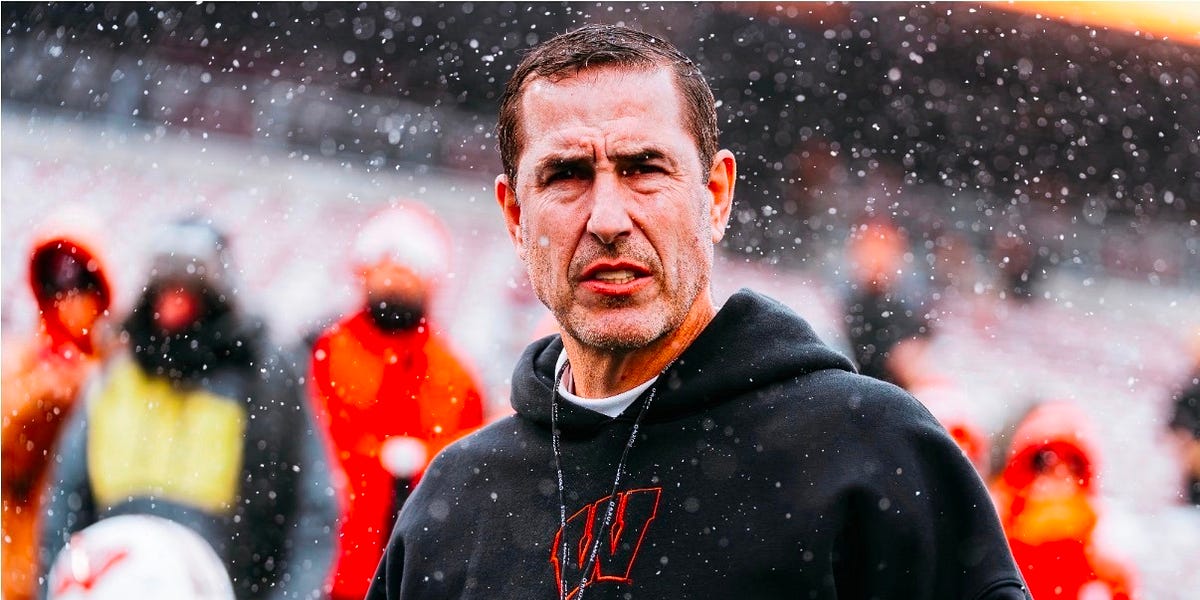

There was a moment, not all that long ago, when it felt like the University of Wisconsin football program had finally found the right steward for its next era. Sit back and watch Fickell’s introductory press conference from Nov. 2022. You’ll see it: the fully formed blueprint, the clarity of vision, the confidence of a coach who had built Cincinnati into a College Football Playoff contender by leaning on something other schools couldn’t imitate.
Relationships. Development. High-school recruiting. Ownership of the Midwest. That was the sales pitch. That was the promise. And for about fifteen minutes, it sounded like the perfect marriage between a coach with a proven developmental background and a program that had built three decades of winning football on those very same values.
But three years later? The sport changed faster than the blueprint did.
And nothing illustrates that evolution, or that philosophical pivot, quite like looking at what Fickell said on Day 1, and what he’s saying right now.
From the jump, Fickell laid out a recruiting philosophy rooted in simplicity. Wisconsin, he said, would build from the inside out, starting with a “300-mile radius” that would serve as the core and crux of the program’s build.
Verbatim, Fickell said:
“Within a 300-mile radius, you can build the core and the crux of your program,” Fickell said during his introductory press conference. “And that’s what I love about this opportunity, is that within a 300-mile radius, that will be the core of what it is that we do. I have a good grasp on that. I’ve got to learn a lot more about maybe the 50-mile, the 100-mile radius. But as you get into Chicago and the areas that these guys have done an unbelievable job in, there are a lot of roots that have been built there.
“I know if we can kind of capture that within the 300-mile radius of where the core of the program is, then we can extend into the other areas where we’ll look at the history of what’s been really good here,” Fickell continued. The pipelines and those kinds of things. We’ll use a lot of the connections we’ve had. There are a lot of former great players who are from Ohio as well. We’ll have guys with backgrounds in different areas.”
When Fickell talked about that radius, he wasn’t describing some abstract idea. He was talking about a region that included places like Detroit, Minneapolis, Indianapolis, and St. Louis, as well as the heart of Wisconsin and the football-rich pockets of Illinois, Michigan, Indiana, and Iowa.
In his mind, this was where the backbone of the roster would be built. This was where the high school relationships lived, where the Badgers could win recruiting battles by being smart and connected. And this was where he believed the heavy lifting would happen. That wasn’t lip service.
That was the Cincinnati model brought north: lock down Wisconsin, live in established long-term pipelines across the Midwest. Then, supplement using the transfer portal sparingly, but only when a player fits perfectly.
Again, Fickell’s words:
“I’m a high school recruiting guy that says it’s about development of young men,” Fickell said. “Now, sometimes people will say, ‘You had this transfer.’ Yeah, we have had a matrix for transfers. We have had literally a matrix to say they’ve got to hit these points in these situations and these things, because the last thing I want to do is bring a guy into our program here in particular that’s going to mess with the culture, mess with the environment, mess with the relationships inside a lot of those rooms.
“So in my mind, it’s got to be a right fit, and it’s got to be the right people. The thing about transfers is sometimes you don’t know them, and you don’t have the opportunity like you’ve had in high school to get to know them, to be in their home, to build some relationships, and know when they walk in the door they’ve got four or five years to grow and develop into what it is that you want. I’ve never been a proponent of the transfer portal, but I think we’ve used it and would use it only in ways to fill gaps.”
For an outsider with no ties to the program, it was a developmental philosophy that fit the Wisconsin ethos like a glove. Toughness. Development. Ideally, players would become starters in Year 3, contributors in Year 4, and pros in Year 5. That’s the Barry Alvarez model. That’s the DNA of the Badgers. What more could fans have wanted?
And Fickell, along with the revamped recruiting department he brought along with him from Cincinnati, sounded ready to replicate it.
College football, though, doesn’t wait for your philosophy to catch up. NIL exploded. Free transfer rules wiped out continuity. Roster turnover hit 40–50% annually. Programs with deep donor pools — Penn State, Ohio State, Oregon, Texas — turned roster building into a cold, economic arms race.
And suddenly, the sport Fickell had built his blueprint around was gone. The 300-mile radius? It didn’t hold.
Wisconsin has lost multiple in-state recruits since Fickell took over, a trend some attribute to the staff lacking the same cachet with local high schools while trying to leverage the program’s brand more nationally to chase higher-end talent. There have been cases where that approach has paid off, but the larger pattern has been harder to ignore. The 2026 cycle underscored it again. The staff pushed their chips in on players like Amari Latimer and Jayden Petit — some of the top-ranked prospects at their positions — but still couldn’t hold onto them when it mattered.
Latimer flipped to West Virginia on Signing Day, and Petit, who the staff believed could eventually be a cornerstone, flipped to Oklahoma.
That doesn’t happen in the old model. But it does happen in the modern marketplace. The developmental model? It cracked.
Wisconsin couldn’t keep players long enough to develop them. You build a three or four-year plan for a high school prospect, only to watch another school drop an NIL number you can’t match. Or you redshirt a player, and they transfer before Year 3 because the depth chart looks crowded.
That turns every high-school recruit into a risk, not a building block. Fickell knows this now. And he said as much on Signing Day 2026.
“Not saying we don’t want to take high school kids, not saying we don’t want to take the in-state kids,” Fickell said. “I think for us, just recognizing and saying, okay, now this league is a bit different. And it is harder and harder with younger guys to think you can be successful. And so the balance there with the higher end of what you really believe as freshmen, we call them draft picks now. I mean, you don’t have 22 draft picks.
“So that was a little bit more of the idea, like, okay, let’s be disciplined in what we’re doing, which is going to put you in a situation where the transfer portal is going to have to be one of those things that’s probably bigger than you’ve ever used before. As well as retaining the guys that you’ve got in your program. You’ve got to invest and make sure the ones you have here are the ones that you’ve got to be able to keep here.”
That isn’t the 2022 blueprint, nor is it the framework college football was built on. It’s a coach and an administration reacting to the sport as it currently exists, even if they didn’t have the foresight, the positioning, or the resources to meet this era head-on. They’re pivoting now, and the question becomes whether they can deliver before the clock runs out.
The most honest problem? You cannot build for 2028 when your job depends on 2026. Wisconsin is 17–21 under Fickell, 10–17 in Big Ten play, and is just 2–11 against AP Top 25 teams. Not to mention, the program missed bowl games in both 2024 and 2025 for the first time since 1991-92, breaking a 22-season postseason streak. The fanbase is restless.
Donors are watching. And even if you land high-school players that you believe in, there’s no guarantee they’ll still be on your roster when it’s time for them to help you win. As Fickell hinted on National Signing Day, you need players who can help immediately, and you need them on campus in January if you want any realistic chance of getting production in Year 1.
“Being here in January was a really big thing for us,” Fickell said. “If you can’t come in January, you’re starting to look at guys and say, How do we have a chance to play this guy in Year 1 if they’re not here? You’ve gotta feel like the guys can get on the field. A lot of that has to do with some natural ability, but a lot of it has to do with a size that you have to have.”
That is the polar opposite approach of the Cincinnati-to-Wisconsin developmental arc he preached in 2022. It’s not because Fickell lied. It’s because the sport changed, and he either adapts or gets left behind.
That adaptation has finally arrived. Wisconsin just signed 13 players in its 2026 high-school recruiting class, the smallest class the program has taken since 2012, when the Badgers signed 12 athletes, and it was entirely intentional. Fickell said it openly: the philosophy has changed.
Instead of trying to bring in 22 high-school players every year, Wisconsin is now taking far fewer freshmen, treating them more like draft picks, and investing more heavily in proven players through the transfer portal. It reflects a model most top-tier programs use. It’s one built around having older players, instant-impact additions, and far fewer long-term projections. Because if you’re coaching for your job, you simply can’t wait multiple years for a developmental plan that might never materialize.
And the truth is, Wisconsin wasn’t positioned financially or structurally to compete in this new era. The NIL infrastructure wasn’t there. Athletic Director Chris McIntosh acknowledged it. Prominent donor Ted Kellner acknowledged it. By their own admission, Wisconsin operated in the “bottom third” of the Big Ten in NIL spending this past year. That’s how West Virginia beats you for a player you spent multiple years recruiting.
McIntosh and Kellner are now promising a long-overdue investment of resources in the football program. They want Wisconsin in the “top third” of the conference. They want a stronger donor base. They want to win big-time portal recruitments. But it’s a bold claim to suggest the Badgers will suddenly leap from the lower tier of Big Ten spending into the same financial lane as blue-blood programs chasing playoff berths.
And it’s even harder to project where Wisconsin will realistically land when nobody truly knows what other programs are operating with in terms of money behind the scenes. Whether the promised influx of NIL funding actually materializes remains to be seen, but the message inside the building has shifted: development alone won’t bridge the gap anymore.
Fickell has been candid about what that shift requires. On Signing Day, he offered one of his clearest acknowledgments yet that modern recruiting isn’t just about relationships or evaluations anymore, it’s about investment.
“I think it comes down to an investment,” Fickell explained. “And the truth of the matter is, in a traditional way of doing things, recruiting had been a lot about relationships. And I’m not saying that there aren’t still some traditional things, but there is a bigger piece of what recruiting is. And if you’re not willing to invest in some guys and you feel like they could get on the field, then you’ve got to make some disciplined decisions.”
You have to acquire proven production to win now, because universities need the revenue stream, and the ones serious about winning put their money where their mouth is. Football is the lifeblood of any successful athletic department, and the consistency Wisconsin once enjoyed meant the Badgers were never forced to invest like their peers, at least not until the product became nearly unwatchable and the reality finally set in.
And that leaves Wisconsin somewhere between what Fickell promised and what the sport has forced him to become. The old model was built through high-school recruiting, long-term development, maintaining strong Midwest relationships, and occasional use of the transfer portal.
The new standard across college football is one built on a portal-based roster construction, smaller, more selective high school classes, expectations of instant contributions, older, more physically mature players, a draft-pick mentality toward freshmen, and a staff operating in survival mode as it coaches for its future. None of this is a shot at Fickell.
But make no mistake: Fickell deserves the lion’s share of the blame for where Wisconsin sits today. Three seasons in, there are very few data points suggesting he’s been a difference-maker on Saturdays. His game management has been shaky, his situational decisions have been costly, and there are real questions about whether he has stayed ahead of the curve or fully understands what it takes to win in this version of the Big Ten.
Fickell has routinely been slow to adapt, miscalculated which schemes translate in this league, assembled a subpar coaching staff, and, too often, failed to put his players in the best positions to succeed.
But all of that can be true while also acknowledging the other half of the story.
Fickell attempted to build Wisconsin using the exact recruit-and-develop blueprint that once made him one of college football’s most successful coaches, and the sport changed beneath his feet. The Badgers were slow to give him the resources required to execute that plan, and when you aren’t the kind of coach who tilts games through pure in-game acumen, you have to compensate with terrific coordinators and high-end talent.
This staff has rarely gotten more out of the roster than the raw talent already on it, which makes acquiring better players non-negotiable. So while it’s fair to question whether Fickell and his recruiting department can actually maximize whatever new NIL funding they’ve got at their disposal, it’s equally true that the athletic department did Fickell no favors by asking him to win while operating with fewer resources than his peers.
To Fickell’s credit, he’s fully aware of how difficult the evaluation piece has become in this era. He said something on Signing Day that spoke to the razor-thin margin staffs operate on, where almost every high school eval has to be correct because developmental timelines no longer exist.
“The lifeblood of what you do is still bringing guys in that you can develop, and we’ve got to be able to do that,” Fickell said on Signing Day. “You can’t miss on those guys that are going to be developed. That’s what’s sometimes harder. You don’t miss on four and five-star guys. They might not pan out completely, but there’s a reason those guys are higher rated or ranked in a lot of things — they’re more developed. You’ve got a good idea whether their high-end ceiling is better than somebody that’s a two or three-star.
“Usually, the reason that they’re ranked a little bit higher is that they’ve got an opportunity to walk in and play a little bit more. So, there’s a greater balance in making sure you’re doing a better job of being right about the guys that maybe can or can’t play just yet.”
Now, finally, the staff and athletic department appear aligned with reality. The NIL commitment from private donors and corporate partnerships is rising, so they say. The recruiting approach has shifted. The urgency is unmistakable. Fickell is coaching with the understanding that Year 4 determines everything. Wisconsin has gone from trying to “build the core and crux” of the program within a 300-mile radius to preparing itself to assemble a roster capable of winning now through the portal — not because the vision changed, but because the sport demanded it.
And this offseason will reveal whether the adaptation came too late or just in time.
We appreciate you taking the time to read our work at BadgerNotes.com. Your support means the world to us and has helped us become a leading independent source for Wisconsin Badgers coverage.
You can also follow Site Publisher Dillon Graff at @DillonGraff on X.

The Penn State Nittany Lions are deep into a complex coaching search that has extended well past the firing of James Franklin. Athletic director Pat Kraft aimed to secure a new leader quickly to salvage the recruiting class, but the process has dragged into December without a resolution.
While many premier programs have already filled their vacancies, the situation in State College remains fluid as the administration explores every available option to stabilize the team’s future.
A surprising new candidate has emerged from within the Big Ten Conference to add a layer of intrigue to the saga. This potential hire commands one of the most dominant units in the nation and possesses a resume highlighted by extensive NFL experience.
His background includes multiple Super Bowl championships and a previous stint as a head coach at the professional level, distinguishing him from other names linked to the job.
Reports indicate that Penn State has officially contacted this high-profile coordinator regarding the opening. Poaching a key asset from a bitter rival would represent a massive swing for the program. The move would bring a defensive mastermind to Happy Valley while simultaneously weakening a competitor currently vying for a conference title.
Super Bowl-Winning Assistant Is Candidate For Nittany Lions Job
Ohio State Buckeyes defensive coordinator Matt Patricia has become the latest focal point in the search. CBS Sports College Football Insiders analyst Chris Hummer detailed the development during a podcast on Thursday.
“I think there’s a couple of candidates that are floating out in kind of the ether,” Hummer said. “A name that’s come up the last 24 hours for me a little bit is Matt Patricia at Ohio State, the defensive coordinator.”

According to Alex Gleitman of Lettermen Row, Penn State has contacted Patricia and his representation about the position. Patricia is currently in his first season back in the collegiate ranks since serving as a graduate assistant with the Syracuse Orange in 2003.
His impact in Columbus has been immediate and profound. The Buckeyes boast the top-ranked defense in the FBS, allowing just 204 yards and 7.8 points per game. The seamless transition from former coordinator Jim Knowles to Patricia has been credited for the rapid development of players such as linebacker Arvell Reese.
Although his time as a head coach in Detroit did not yield a winning record, Patricia has done an impressive job reshaping his reputation this season. His unit is undeniably the best in college football and has been a massive asset for Ohio State as they pursue a national title.

There have been no reports that Patricia has formally interviewed with Penn State, but the inquiry is notable. Ohio State head coach Ryan Day has successfully replaced coordinators before, yet losing Patricia would be significant.
The Buckeyes have already seen offensive coordinator Brian Hartline agree to become the next head coach of the USF Bulls. Hartline will remain with the team through the postseason, but the potential exit of Patricia would leave Day with two major voids to fill.
Read more on College Football HQ
Dec. 5, 2025, 5:49 a.m. ET
- Kalani Sitake was rumored to be Penn State’s top target for its coaching job.
- After seeing reports, Crumbl Cookies CEO Jason McGowan stepped in and used fan support and money to convince Sitake not to leave.
With its signature pink box, Crumbl is a dessert chain founded in Utah known for making big cookies and desserts.
It’s also now known for its big influence in Brigham Young football.
It was a wild week in Provo, Utah, with Cougars coach Kalani Sitake reportedly at the top of Penn State’s long coaching search. The Nittany Lions were pushing hard to hire him, causing panic for a program that is one win away from their first College Football Playoff appearance.
That was until some big-time donor decided to “get off the sidelines” and get to work. That was Crumbl co-founder and CEO Jason McGowan, who got BYU to rally around its coach by baking up a sweet treat with a heavy dose of love and financial commitment.
The finished product out of the oven? A long-term extension for Sitake that keeps him at his alma mater – and Penn State still searching.
“Sometimes, you just got to get off the sidelines in life and just try your best to see what you can do to make a difference,” McGowan told USA TODAY Sports. “Every once in a while, it pans out.”

Crumbl helps BYU keep Kalani Sitake
It makes sense Sitake eventually got on Penn State’s radar. The Cougars have thrived in the Big 12 under him, going 11-2 last season and reaching this season’s conference championship game. He’s won double-digit games in four of the past six seasons. Penn State felt confident it had found its man.
The idea of Sitake leaving BYU was “gut-wreching” for McGowan, so he got to work. He posted a cryptic yet obvious message on X that he was going to do whatever he could to keep Sitake at BYU.
Not long after, he made another post that called for Cougars fans to show how much Sitake meant to the school and show him love and respect. He called it a love bomb, believing there would be a tremendous response. Just to incentivize it, McGowan said he’d give away four 50-yard line seats and airfare to the Big 12 championship game in Arlington, Texas, for the best responses.
“I wanted to remind Kalani just how much everyone loves him,” McGowan said. “I knew he would get a tremendous response.”
Maybe the prize helped, but It clearly had an impact. BYU fans flooded social media, and as McGowan put it, “it turned Kalani’s heart.” Sitake was emotional during the press conference announcing his extension as he recalled all the messages directed toward him.
“It was an amazing feeling of appreciation from everybody,” Sitake said. “I don’t know how you can leave that, man. I just don’t know how you can walk away from it.”
Love is a great way to convince someone, but ultimately, money does do quite a bit of talking. Luckily, McGowan is just one of several major donors for the Cougars with his company that made over $1 billion in sales in 2023, according to Forbes. After BYU beat Utah, he offered to cover the fine for rushing the field, and when the Cougars weren’t penalized, he ended up donating to the NIL fund and paying lunch debt in the nearby school districts.
It’s unknown how much McGowan, other donors and BYU offered up to keep Sitake. As a private school backed by Church of Jesus Christ of Latter-day Saints, BYU doesn’t have to make its finances public.
But there was a bigger financial commitment. Athletic director Brian Santiago said Sitake didn’t talk much about his own compensation, but he wanted to take care of the people around him – assists, team staff and players.
“It’s not really about the money, but there is an opportunity for me to take care of my players and my staff and make sure that we’re all headed in the right direction of what we want to accomplish,” Sitake said.
Whatever the price was, it was right enough to slam the door shut on the Nittany Lions. Sitake proclaimed it was time to “quit all the drama” because “I’m here.”
With university and donor back, Santiago said it was a significant investment to “make sure that we do everything we can to retain Kalani Sitake.”
“I think Penn State offered some tremendous support,” McGowan said. “I think that was appealing to him, but I think we showed Kalani that we equally – BYU especially – and us donors in our small little way, to help out.
“We’ve got all these amazing donors behind us that just says we’re here. We’re all committed on BYU, too. It wasn’t just me. It was everyone just saying, ‘Yep, we’re here for you.’”
Why BYU wanted Kalani Sitake to stay
The week has revealed how greatly Sitake is viewed at BYU: a highly respected individual with love for the university and its fans. In McGowan’s eyes, there was no one else that could be in charge of the Cougars.
“Finding a coach who can help us win, that’s replaceable,” McGowan said. “Finding someone who can help us win, but also the character and the person he is and the values he’s trying to share, I had a hard time imagining anyone else that could come in and do what he did.
“We love him and we want him here, and you can see that.”
As if the Nittany Lions coaching search couldn’t get worse, salt was rubbed in the wound when Virginia Tech and its former coach James Franklin had Crumbl cookies at its signing day ceremony. It made sense to assume McGowan was involved in it, but don’t blame him.
“I didn’t have any part of it,” McGowan said with a laugh. “Seeing that happen, I laughed and thought it was really, really funny. I think we shouldn’t take ourselves too seriously.”
Now that BYU has its guy, it can focus on trying to make the playoff. McGowan said to expect another version of love bombing, this time aimed at the playoff selection committee to remind them it belongs in the field.
There’s no better proof than teams coming up to bat for Sitake – and all striking out − thanks to the pink box.
“You know what else believes it?” McGowan added. “Penn State, and so does everyone else because they want our coach, right?”
News dropped on Wednesday that Oregon director of recruiting Pat Biondo will be Kentucky’s new general manager. His work will start almost instantly. Will Stein needs to build his first staff in Lexington, but important roster decisions must be made and a plan to attack the portal must be built.
Through all of that, this football organization will have to manage a salary cap. There will be the allotted rev-share amount from the university and extra NIL funds provided by JMI’s collective. At his introductory press conference, Stein was confident in the financial plan presented by Kentucky athletics director Mitch Barnhart and deputy athletics director Marc Hill during the search. When asked by KSR, Stein confirmed that he will have the funding needed to go build the roster required.
But he and his coaching staff will need help. That’s where Biondo will step in.
“That’s why I’m hiring a general manager,” Stein told KSR’s Matt Jones on Thursday when asked about Kentucky’s NIL structure. “To help us through this, and somebody I trust fully, and that’s been in our system out in Oregon, and knows the landscape of college football. You just gotta be adaptable. You know? You gotta be able to change with the times. It is what it is.”
Part of that could be managing a salary cap and make sure there is enough of the pie allotted for every position. We are still unsure of what Biondo’s specific job requirements will be but it is clear he will be play a large role in Kentucky’s roster-building process. Barhnart called it “ridiculous” to assume that any head coach is not making final roster decisions but a front office structure can help streamline things for the coaching staff and narrow down the pool of targets.
Pat Biondo will help Will Stein and this Kentucky football program adapt to a world where a roster budget has to be balanced. Everyone is still adapting to college football’s new age. UK is doing that by joining the growing general manager trend in college football.
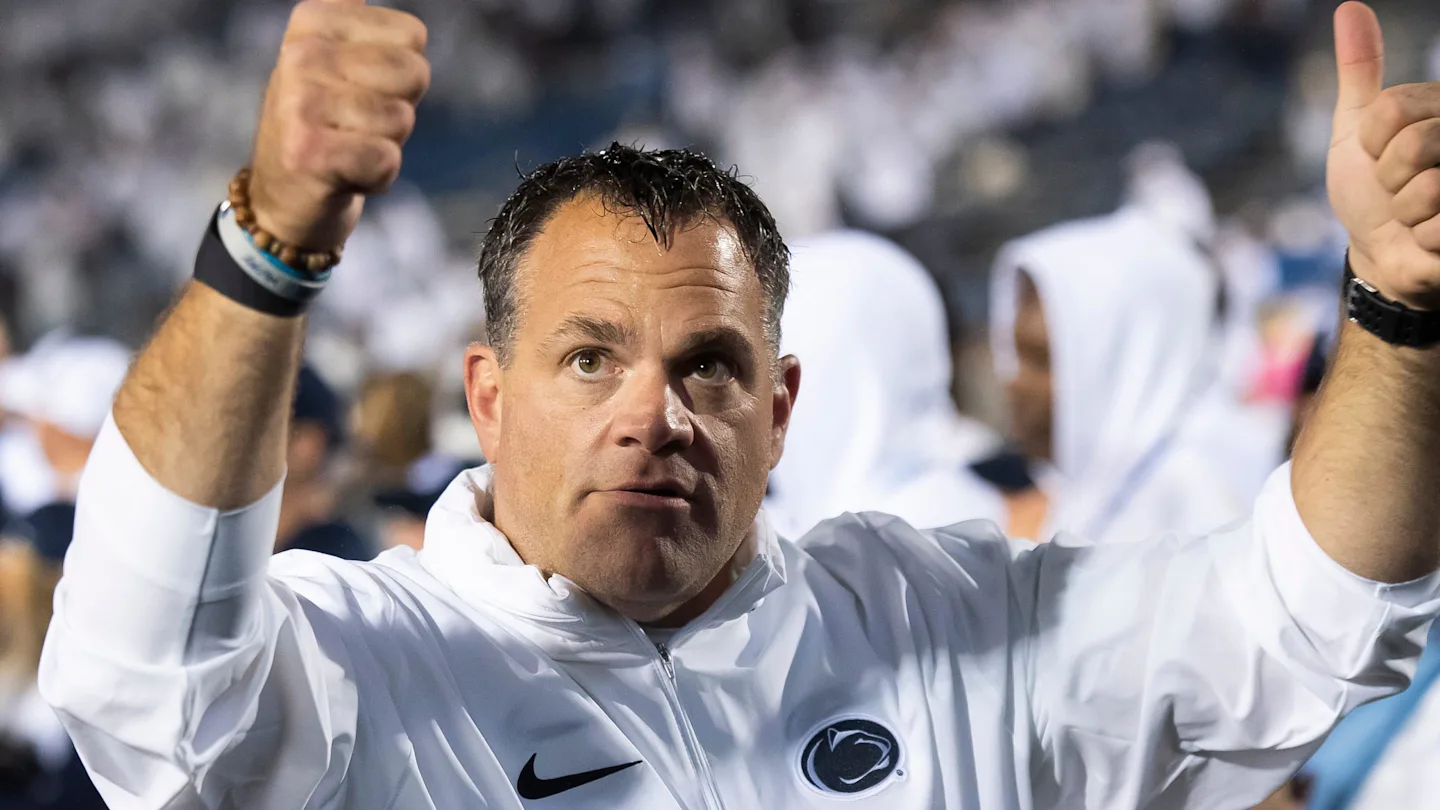
Ding dong! The wicked Penn State football head coaching search is dead at last, or so it seems. The Nittany Lions fired James Franklin from the position a long 54 days ago in mid-October. Now, in the first week of December, all reports indicate that Penn State has found their new leader.
According to both On3’s Pete Nakos and ESPN’s Pete Thamel, two of the highly trusted college football insiders, Penn State is working towards a deal with longtime Iowa State head coach Matt Campbell. On3 tweeted out Friday afternoon that “Penn State is working to finalize a deal to hire Iowa State’s Matt Campbell” according to their man Nakos.
Shortly after that report reached X, Pete Thamel posted his own report confirming that Campbell and Penn State had entered talks for him to assume the school’s head football coaching job.
The sides met in Iowa on Thursday night and have been working toward an agreement since. Nothing is signed, and there’s still a few steps remaining for this to come to fruition.
— Pete Thamel (@PeteThamel) December 5, 2025
“Sources: Matt Campbell and Penn State are working toward a deal for him to become the next coach at Penn State,” Thamel wrote Friday afternoon. “There’s multiple steps needed to finalize, including agreeing to terms and formal approval of compensation.” He reiterates that no official documentation has been dotted.
“The sides met in Iowa on Thursday night and have been working toward an agreement since,” said Thamel. “Nothing is signed, and there’s still a few steps remaining for this to come to fruition.” Don’t count those chickens yet, says the insider, but it’s likely that Penn State’s is teeing Campbell up as the program’s next head coach.

Iowa State inked Campbell to a major long-term deal this summer, just weeks before the season. Starting in 2025, Campbell was signed for eight years, through 2032, at a salary of $5 million per year before incentives. That comes out to a cool $40 million total over the deal, making him a very well-compensated Big 12 coach now that he’s been around for 10 full seasons.
Penn State coaching search was a wild ride
Penn State’s search ends, at last, following nearly two straight months of chaos. Athletic director Pat Kraft received a hoard of praise for pulling the trigger on James Franklin’s firing following the two-loss start to Big Ten play that was wholly unacceptable. But since, Penn State certainly didn’t execute a clean investigation for their next program leader.
Almost too many names to monitor came and went as either sourced candidates, rumored possibilities, or options on various betting markets. Either way, Penn State certainly missed on several top options, earning extensions for several.
In that department, Curt Cignetti and Matt Rhule stick out. Cignetti was an obvious first call but Indiana didn’t even allow his name to escape Pat Kraft’s mouth before he was set with a $93 million extension. Rhule also received a pay bump to stay at Nebraska as soon as Penn St. rumors kicked up. More recently, Penn State made a big push for Kalani Sitake, but BYU boosters and fans publicly rallied to tie down their Tongan war general in Provo.
Did Iowa State make the huge offer for Campbell to stay put? Are the Cyclones preparing a final last-ditch offer this minute to try and stall PSU negotiations? After 10 years, is Campbell simply ready to leave Ames, Iowa? We’ll get answers to all of those questions soon. It sure seems like a Matt Campbell and Penn State union is about to happen.
More on College Football HQ

OPINION: Buying local is a Christmas gift twice

Temple Begins Indoor Track & Field Season at UPenn This Weekend

Former NASCAR Winner Michael Annett, 39, Passes Away

Olympic pitch | News, Sports, Jobs
Ivy League to NFL? How to look at the big picture as a college recruit

Garcia named Sports Legends Youth Volunteer Award winner | Community News

Women’s Track & Field Sees Positive Performances at SVSU Holiday Open

NASCAR attorney scores point questioning Bob Jenkins over attempted FRM sale to 23XI

Former NASCAR driver Michael Annett dies at 39, racing team announces

ARCA Menards Series West 2026 Schedule Announced; 13 Races Set at 11 Tracks – Speedway Digest

How Wisconsin football’s recruiting approach has been forced to evolve during the Luke Fickell era

Former NASCAR winner Michael Annett passes away at 39

NASCAR championship contender loses his ride, then gets it back

Friday Qualifying Results – 2025 Snowbird Outlaw Nationals

$10 million college football coach latest addition to growing Penn State coaching search

First Tee Winter Registration is open

Fargo girl, 13, dies after collapsing during school basketball game – Grand Forks Herald

CPG Brands Like Allegra Are Betting on F1 for the First Time

Volleyball Recaps – November 18

F1 Las Vegas: Verstappen win, Norris and Piastri DQ tighten 2025 title fight

Two Pro Volleyball Leagues Serve Up Plans for Minnesota Teams

Utah State Announces 2025-26 Indoor Track & Field Schedule

Sycamores unveil 2026 track and field schedule

Bowl Projections: ESPN predicts 12-team College Football Playoff bracket, full bowl slate after Week 14

Texas volleyball vs Kentucky game score: Live SEC tournament updates

Redemption Means First Pro Stock World Championship for Dallas Glenn

Pohlman admits ‘there might be some spats’ as he pushes to get Kyle Busch winning again

Indiana’s rapid ascent and its impact across college football

How this startup (and a KC sports icon) turned young players into card-carrying legends overnight

Troy Football Need to Know; Gameday at The Vet — Georgia State Game

 Why a rising mid-major power with an NCAA Tournament team opted out of revenue-sharing — and advertised it
 NBA Legend Michael Jordan to Join NBC Sports as Special Contributor
 Falcons mailbag
 Portal Update – Basketball and Gymnastics Take Hits
 has always dreamed in Mercurial. Now his initials are on the boots.
The new Kyl…
has always dreamed in Mercurial. Now his initials are on the boots.
The new Kyl…
-
 Rec Sports2 weeks ago
First Tee Winter Registration is open
-
 Rec Sports1 week ago
Fargo girl, 13, dies after collapsing during school basketball game – Grand Forks Herald
-
 Motorsports2 weeks ago
CPG Brands Like Allegra Are Betting on F1 for the First Time
-
 Sports2 weeks ago
Volleyball Recaps – November 18
-
 Motorsports2 weeks ago
F1 Las Vegas: Verstappen win, Norris and Piastri DQ tighten 2025 title fight
-
 Sports2 weeks ago
Two Pro Volleyball Leagues Serve Up Plans for Minnesota Teams
-
 Sports2 weeks ago
Utah State Announces 2025-26 Indoor Track & Field Schedule
-
 Sports2 weeks ago
Sycamores unveil 2026 track and field schedule
-
 NIL6 days ago
Bowl Projections: ESPN predicts 12-team College Football Playoff bracket, full bowl slate after Week 14
-
 Sports2 weeks ago
Texas volleyball vs Kentucky game score: Live SEC tournament updates