
NIL
04



Speaker 1(00:00):
We’re joined by my friend and colleague Dave Logan, one
of a very very very small number of people two
have been drafted out of college into the NFL, the NBA,
and Major League Baseball. He, of course, coaches high school
football at Cherry Creek, with recently won an award as
like the greatest coach of all time in Colorado or(17:05):
I think they’ve got to find some way to get
a hold of this a little bit and come up
with some rules that don’t prevent moving, don’t prevent players
making money, but at least get a hold of it
a little bit.Speaker 1 (09:57):
Someone can just offer him one point one at another
and he can just go. So some years ago, now,
well before nil, he donated three and a half million
dollars to build a big practice facility, and he thought
that investment made more sense than quote, just buying players.(08:50):
player from Georgia to the university. You know, what, what
have you. There’s ways, there’s ways to do that. But
until they come up with so something like that, you’re
going to continue to see the bigger programs that have
huge collectives millions and millions of millions of dollars and
choose to engage in that arena. You’re going to see(12:41):
coaching staffs, this might not be the best situation. Would
I have maybe looked at other opportunities. I can’t, if
I’m being honest about it, I can’t say that I
absolutely would not have, but I certainly would have gone
to the University of Colorado when I.Speaker 1 (01:02):
A law that says college students can get paid and
I think it’s because the governor figures the federal law
is going to go that way anyway, so we might
as well get in line. There’s other aspects to what
Paula said, but that’s what I want to focus on
with uh with you. So I think my first question
for you, Dave is our college students, especially top students(01:49):
was a pre emptive move, but it’s a move that
that he’s he’s smart in maybe trying to get ahead
up a little bit because that’s that’s that’s going to
be the federal the federal law. And I think when
you when you look back over the last handful of
plus of years, the NCAA, in particular, universities in theSpeaker 3 (11:44):
This is sort of a parallel universe question.Speaker 3 (07:07):
It should it.Speaker 2 (01:28):
Now? Well, I think we’re to be honest about it,
we’re dealing in semantics so that they are not amateurs
in my mind. And I think that the governor signing
the bill, as you said, was I won’t say it(02:12):
NCAA could have done a better job of mitigating some
of this simply by providing a contract of sorts with
their athletes to make them employees. That the institutions have
fought that forever. The n Cuba has backed them inSpeaker 2 (10:18):
I think it’s it’s all accurate. I think that’s exactly
what I’ve you and I’ve been talking about the last
two or three minutes. It’s it’s the wild, wild West.
You have, you have collectives that have millions and millions
and millions of dollars in it, and there’s no I mean,
there are virtually zero rules. Yeah, so you’re gonna haveSpeaker 1 (03:33):
A name, Travis Hunter Jerseys, and the university keeps that money,
and now I guess they’ll have to share some of
that money with the player. So in that sense, the
university gets less money. But then there’s another possible channel,
and again, please tell me what I’m how I’m thinking
about this, right or wrong? There’s another possible channel where, uh,Speaker 3 (09:56):
Million dollars and the next year.(10:40):
to come up with a system that penalizes, that allows
players to move, but they should only be able to
move once or twice in certain time time slots of
the season. And then you’re gonna have to have contracts,
in my mind, with these players to stipulate, hey, we’ve
got a two year agree. We’re going to pay you(14:30):
is I just don’t know many of their names now.
And it’s like that for most universities. I mean it
truly is, because that roster turns over at such a
rapid rate. And it’s not just CEU, it’s virtually every
other program as well. So I’m not crazy about the system,(02:34):
that regard. And because they didn’t, I mean obviously they didn’t.
They didn’t want to have them become employees of the
university because then they would have owed them benefits, There
would have been health insurance, that would have been all
sorts of things. But I think retrospectively looking at this,
it would have been far less costly for universities toSpeaker 3 (00:59):
And basically it’s it’s.Speaker 2 (11:59):
Yeah? Now I have some movie would have gone to
see you, you know what I mean. I took my
five visits and I just felt I wanted to stay
close to home. I wanted my folks, my family to
be able to see me play. Now, you know, my
first couple of years at the University of Colorado were great.Speaker 1 (12:58):
Went interesting, Glad I asked that question. All right, one
more for you on this, Dave. So this is more
of a I’m asking you this more as a personal
question than as a sports analyst.Speaker 1 (09:18):
There was an interesting piece over at Axios talking about this.
So James Harden, you know, huge NBA star, gave some
of they don’t say how much money.Speaker 2 (13:42):
I think I think you said it best. I think
we have to there’s a certain amount of acceptance that
when you get to a certain age that you look
at things and say, you know what, it’s not the
same as when when I was involved. But there’s a
lot of other things that aren’t the same as well.
What you can do has been an inordinate amount of time,Speaker 1 (03:19):
I’m just gonna tell you what went through my brain
and then you can tell me how dumb I am.
So it occurs to me there’s probably two possible things,
or two separate channels of revenue. One is the university
was selling a lot of.(05:24):
of another pot. You are literally seeing schools contact players
even prior to them jumping in the portal at some
universities and enticing them financially to transfer schools from that(08:29):
Maybe the player goes to see you and he’s there
for two years and he’s to make this amount of money.
Then after after the first year, as you said, Georgia
comes calling with a million dollars and a Ferrari player
wants to transfer to George. Okay, it’s already stipulated in
the contract what that is going to cost from theSpeaker 1 (17:21):
Dave Logan one of only two or three people who
were ever drafted out of college into the MLB, NBA
and NFL. He is, of course, the voice of the
Denver Broncos with his broadcast partner Rick Lewis right here
on Koway. Thanks for making time for us, Thanks for
spending so much time with me, Dave. It was a
long conversation and I thoroughly enjoyed it.(04:41):
do think players ought to be able to be compensated.
As the illustration you use of Travis Hunter’s jersey. Yeah,
I mean I think Travis Hunter should realize some of
the revenue in that regard, and prior to the start
of all this that never happened on the collegiate level.(16:19):
player that money would not be known as like a
football power. I mean I think they’ve been. They’ve been,
you know, a good program, but they certainly have not
been a football power. A million and a half dollars
to come play football for two years. So happy for him.Speaker 1 (15:02):
But the listener says, Alabama is a pro football team
playing amateurs, So Alabama’s not alone. But I do get
a sense, and again I don’t want to go too
far down the road of wishing it were the way
it used to be, because its not going to be the
way it used to be. But my concern for college
sports is that it ends up in something that is
much more stratified, where you have a few teams that,
because their booster base is so big and they’ve got(05:44):
school to our school. Well not really how name image
likeness was set up to be. I don’t have an
answer in terms of how that is going to be addressed,
but I do think the first step has to be
some sort of agreement from the institution standpoint that thereSpeaker 3 (13:09):
So you were.(08:07):
you open yourself up for some form of benefit package
because they are essentially employees of the university. I know
they haven’t wanted to do that, but it’s going to
get to that. It’s going to get to that, I
think fairly soon. I think you have to penalize. There
has to be something in the contract with the player.(06:04):
are going to be contracts between the colleges and players,
and if a player decides to leave, if a player
is enticed to go to another school, then there’s going
to be a financial penalty, much the same way as
we have seen with college coaches you’re going to have
to start digging down on this, I think to thatSpeaker 1 (06:30):
Do you think that such a penalty? So let’s just
give listeners an example. A player agrees to go play
for the University of Colorado. I’m doing fine, and some
huge booster at Georgia decides to offer this kid a
million bucks in a ferrari, and the kids signed a(11:23):
What if you want to move, here’s what has to
happen in order for you to move. And there has
to be a penalty involved that is sufficient enough that
it would tear guys from doing that. If you don’t
want to sign a two year deal, don’t, But that’s
what it’s going to take for you to come to
university A.Speaker 1 (00:42):
To talk about something that I think you and I
have talked about for about ninety seconds in the past.
But I wanted to get into a little deeper with
you because yesterday Governor Polus signed a bill House Bill
ten forty one entitled Concerning Measures to Support a Student
Athlete in the Use of their name, image, or Likeness.(07:46):
to sit out of here. But yeah, I think there
absolutely has to be a financial stipulation. And again, I
think universities have been reticent to come up with any
sort of contract for their air quote student athletes, because
when you enter into a contact a contract with them,(09:13):
them benefit because they’re able to throw tons of money
at virtually anybody they want.(15:23):
so much money, that they’re just going to be the
dominant teams almost every year. And in a way, it
could make college sports boring.(11:01):
here at the University of Colorado. Here’s what you’re gonna make.
And then if if the university decides, you know what,
this is a bad deal for us. All Right, you
still all that player that’s a contract. If the player
decides I want to go to Georgia for this my
second year. All right, it’s written right in the contract.(12:21):
I loved him. I didn’t have as good an experience
in my last two years there. So, in all honesty,
if this system would have been in place back then
is there a chance that a much younger me would
have said, well, wait, a minute. I mean, we’ve changedSpeaker 2 (15:32):
Yeah, I think it’s much much deeper than Alabama. And
I’ll give you an example. I know, of fact I coached,
but really I’ve been blessed to have had some really
good players. Coached a really good player. He attended a
huge they will to say college football school. His first(16:43):
I’m happy for him, he is. I’m happy for him
and his family. But that just goes to show you,
I mean, how much you know, how much money that
we’re talking about. And that’s one one example of a
player who you know, again the school that he’s going
to go to, who is not a football power. So
I don’t know where this all kind of ends, butSpeaker 3 (15:00):
A few other colleges you can name.Speaker 2 (07:26):
Well, I mean it used to be when the NCAA
had full control of this. It used to be in
terms of player transfers that you had to if you
transferred on the same level you had to set out
of here, right if you transferred down, if you went
from Division one to Division two, then you didn’t haveSpeaker 3 (00:38):
How are you, Rob, I’m good. I wanted to have
you on the show.Speaker 2 (04:16):
No, I think in the analogy that you use the example,
I think two things can be true. I think both
those things are true. I think the issue, I mean,
it’s a multifaceted issue. It really is the nil name
image likeness. I like the idea behind it because I(14:51):
but you know what, it just is what it is
at this point.(13:32):
thing and a behind the scenes thing. But the end
of the day, it’s still more or less the same
thing for you.(03:53):
some shoe company was never gonna work through the university
but wants to work with Travis Hunter or should Sanders
or any player anywhere and goes to them directly and says,
I want to do this deal with you when the
player makes that money, and that money was never going
to go to the university anyway, So in that part
it doesn’t hurt the university at all, and maybe there’s
some way.(15:57):
couple of years there was not not playing a lot.
Decided recently to get into the portal. Was offered upwards
of a million and a half dollars for two years
to come to a school. The school that offered this(01:23):
at fairly large programs, are they still amateurs or are
they professionals?Speaker 1 (11:46):
But do you think that if if this structure had
been in place when you were in college, do you
think you would have gone to see you?Speaker 1 (04:11):
So on a financial basis, how should we think about this?Speaker 2 (17:41):
You bet Ross appreciate you(02:55):
do that seven, eight, nine, ten years ago than what
they’re gonna have to do now with everything going on.
From a Semnis standpoint.(05:02):
But I think where we are now honestly in big
time and I’ll address college football big time college football
with the name, image and likeness, and then you have
another pot of money, the collective. And what you are
seeing is whether it comes out of the name image
likeness pot or the collective pot, or it comes out(14:06):
you know, upset about it, bitching about it, or you
can accept certain things as just the world in which
we live. I’m not crazy about the current system. I
mean I can still you know, when those guys wearing
the University of Colorado uniform run out behind Ralphie, I
still get excited. I’m excited for those kids. The differenceSpeaker 3 (09:28):
It looks like a little bit less than a million to.Speaker 1 (03:05):
Okay, a listener asked a question, and I’m gonna slightly paraphrase,
but what the listener was trying to get at is
will the nil stuff with the students getting paid, will
it cost the university’s money?Speaker 3 (10:15):
What do you think about any of that.(09:54):
into a pool and you can give a kid a.Speaker 3 (07:23):
What else could you look at?(06:25):
level because it is the wild wild West currently as
we speak.Speaker 3 (04:11):
That it helps them.Speaker 1 (14:54):
Yeah, I agree with a listener who singles out Alabama,
but it’s not just Alaba.Speaker 2 (00:33):
Hi, Dave, or you don’t want me to say thanks
and hang up?(06:51):
contract with Colorado, but says, I want the million bucks
in the ferrari and Colorado is not going to come
close to matching that, so they go to Colora. So
so they go to go to Georgia. Do you think
in that case, should the penalty only be against the
University of Georgia?Speaker 1 (07:08):
Be a financial penalty, like you owe some dollars? Should
there be a penalty against the player such as I
don’t know if you can financially tag the player, but
say if you do that, you can’t play for a year.Speaker 3 (03:18):
And again I’m no experts.Speaker 3 (03:31):
I’m gonna I’m just gonna pick.Speaker 1 (09:31):
An organization associated with ari Arizona State University where he went,
and they basically bought a player who was going to
go somewhere else. And then near the end of the article,
this is the part I want to share with you.
I’ll just read this to you. You of a alum,
Richard Jefferson, now an ESPN analyst after seventeen years in
the NBA, told Front Office Sports that he wouldn’t invest
in NIL because it isn’t regulated. Quote, you put moneySpeaker 1 (13:10):
Obviously one of one of the great college players and
you follow this stuff very closely. Now these are huge changes,
and I don’t want to try to live in a
world where you know, like, oh it was better back
in the day, like we live in the world we
live in. But how does this make you feel about
college sports? Does it change how you feel about it
at all? Or is this really sort of a logistical(00:21):
something like that, which he deserves, having won high school
football championships at multiple high schools, which proves that coaching
really makes a difference. And I’m going to stop there
because I don’t want Dave’s ego to get too big.










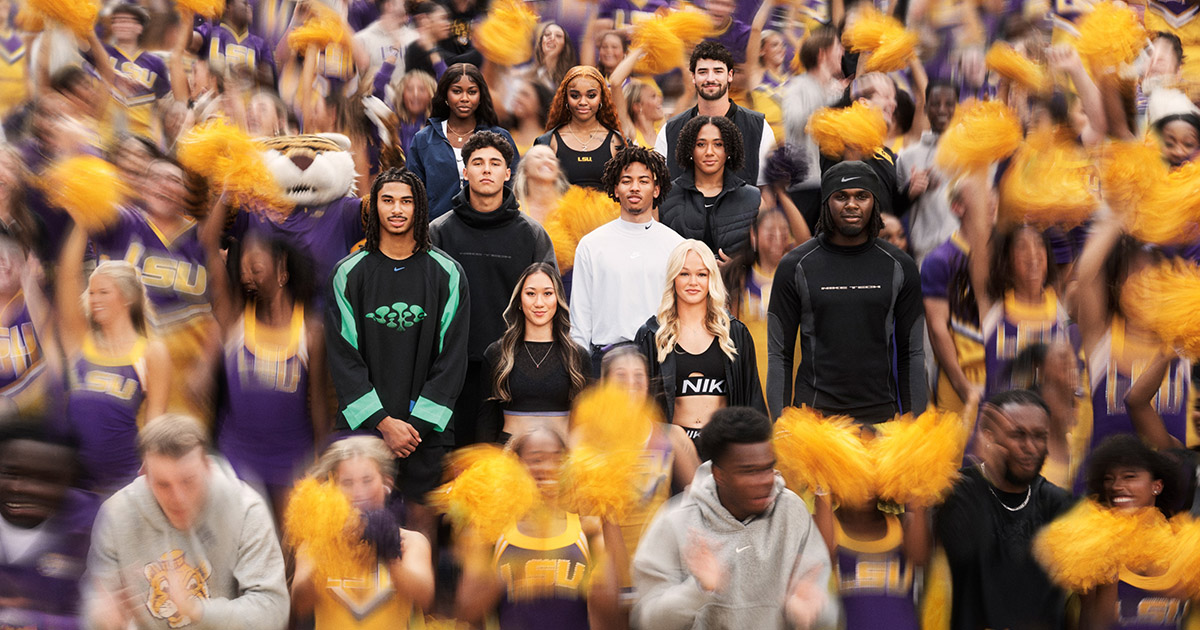
Nike is taking another major step into the NIL space. In the process, the company is also strengthening its relationship with LSU.
Nike announced an extension with the Tigers through 2036, continuing a partnership that spans more than five decades. In addition, the brand launched the new Blue Ribbon Elite NIL program, featuring 10 LSU athletes as its first NIL deals.
SUBSCRIBE to the On3 NIL and Sports Business Newsletter
Two LSU football players, DJ Pickett and Trey’Dez Green, are part of the initiative. Gymnastics’ Kailin Chio, baseball players Derek Curiel and Casan Evans, softball players Tori Edwards and Jayden Heavener, volleyball’s Jurnee Robinson, men’s basketball’s Dedan Thomas and women’s basketball’s ZaKiyah Johnson are also on board.
“LSU and Nike are two of the top brands in sport and an ideal duo. We are both continuously looking to innovate and stay ahead of the game, and that’s what we intend to do in the future with this extended partnership,” said LSU athletics director Verge Ausberry in a statement. “LSU has always been at the forefront of NIL strategy, and as the launchpad for Nike Blue Ribbon Elite, we look forward to working with Nike to offer our student-athletes unrivaled opportunities to capitalize on their brands.”
Blue Ribbon Elite makes Nike the latest company to launch an NIL-focused initiative with its partner schools. Adidas has been doing something similar, including NIL components in new agreements at schools such as Tennessee and Penn State.
Through Blue Ribbon Elite, Nike will collaborate with athletes through campaigns with the brand, as well as product innovation and creative direction. Nike has already been active in the NIL space, signing multiple notable deals with college football stars this year, not to mention its growing basketball roster. Now, The Swoosh is taking the next step toward working with athletes in addition to their schools.
“College sport is woven into Nike’s DNA, and we’ve always believed its future should be shaped in lockstep with athletes,” said Ann Miller, Nike executive vice president of global marketing, in a statement. “Renewing our partnership with LSU and welcoming 10 new NIL athletes is about more than gear.
“It’s about collaboration, creativity and meaningful impact, giving athletes a platform to influence product, innovation, storytelling and culture. LSU and these athletes aren’t just representing Nike — they’re helping us redefine what partnership means in this new era of college sport.”
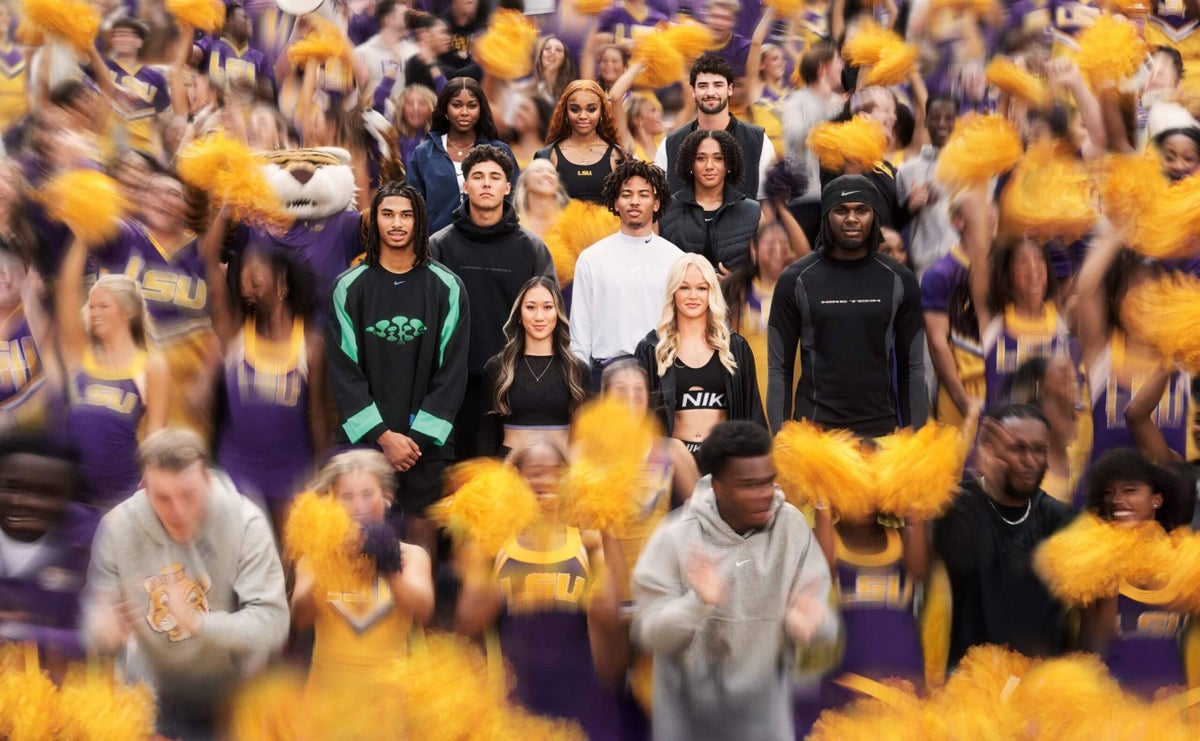
Nike is expanding its footprint in the name, image and likeness space.
The renowned footwear and apparel company announced Thursday that a new approach to partnering with college athletes is underway. In conjunction with announcing a long-term partnership extension with LSU that runs through 2036, Nike is unveiling the Blue Ribbon Elite NIL program. The program is a new collective within Nike that will feature 10 LSU athletes across football, basketball, gymnastics, softball, baseball and volleyball.
The Blue Ribbon Elite program — named after one of the first shoe brands created by Nike founder Phil Knight — will not only feature monetary and product-based contractual deals with athletes but also will expand to collaborations with product innovation, brand campaigns and creative designs for each athlete.
“I would tell you LSU is one of the first; it won’t be the last,” said Ann Miller, Nike executive vice president of global sports marketing, in an interview with The Athletic. “As you can imagine, lots of colleges and universities are excited about that, and we’re working with many of them. This one opportunistically came at the right time with the announcement of the renewal.”
Collectives are typically backed by boosters, businesses and fans to create NIL opportunities for college athletes, and now Nike wants to get in the mix with its own. Though the company has numerous existing NIL partnerships with individual college athletes, the latest move to create an LSU-based collective signals Nike’s desire to leverage the brand of a particular program.
LSU athletes joining Nike’s NIL list are Kailin Chio (gymnastics), Derek Curiel (baseball), Tori Edwards (softball), Casan Evans (baseball), Trey’Dez Green (football), Jayden Heavener (softball), ZaKiyah Johnson (basketball), DJ Pickett (football), Jurnee Robinson (volleyball) and Dedan Thomas Jr. (basketball).
“With Nike and LSU’s help, I’m excited to show little girls — especially the ones that look like me — that being yourself is all you need to do to get to where you want to be,” Robinson said.
Miller said investing in players at this level goes beyond just putting a Swoosh on their shirt or shoes. Nike wants to do what it has done for decades: help tell the stories of its athletes.
“What’s fundamentally different is that we’ve taken our time to really think about, how do we develop partnerships that are richer and deeper than just a, ‘Hey, we’ve signed you, it’s transactional and we don’t actually get to you know, we don’t get product insight, we don’t listen to your voice,’” Miller said.
“We’re really trying to flip it on its head and say if we’re going to work with you, it’s because we not only believe in you, not for what you might be later, but for what you are right now and the value you have right now.”
Miller said before the launch of the school-specific collective, Nike had NIL partnerships with about 50 athletes at 15 universities across the country. Some recent prominent Nike NIL athletes include USC star basketball player Juju Watkins, Alabama wide receiver Ryan Williams and former UConn star Paige Bueckers, who was the first NIL athlete to have a Nike player edition shoe last December.
Miller said this particular approach, launching a collective with one school, is a chance to see how a move like this could work elsewhere.
“(College is) a perfect playground to learn. It’s a perfect playground to try new things,” Miller said. “It’s one of the best things about having this roster of both athletes and colleges and universities. They’ll try stuff with you. It’s the best place to learn.”
Miller did say that although Nike could extend these types of partnerships swiftly across the college landscape if it wanted to, her team will instead take a more disciplined approach. Asked whether she had a target number of schools she’d like to extend NIL collective partnerships to in the future, she said there isn’t one currently, “but if there’s an amazing athlete, an amazing college out there, I want them.”
As for Nike’s NIL budget as a whole, Miller declined to offer specific numbers.
“I think it’s safe to say this is a growing area where every day what you thought you’d spend is off,” she said.
“I think it’s going to continue to be an area of rich interest and investment.”
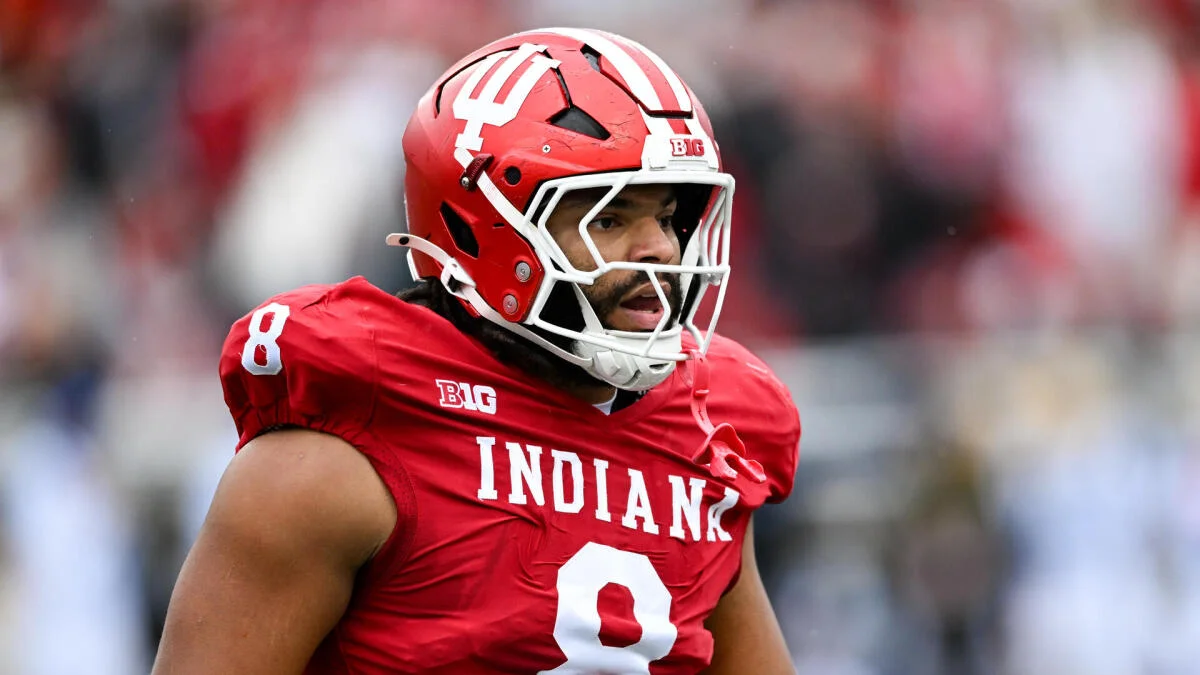
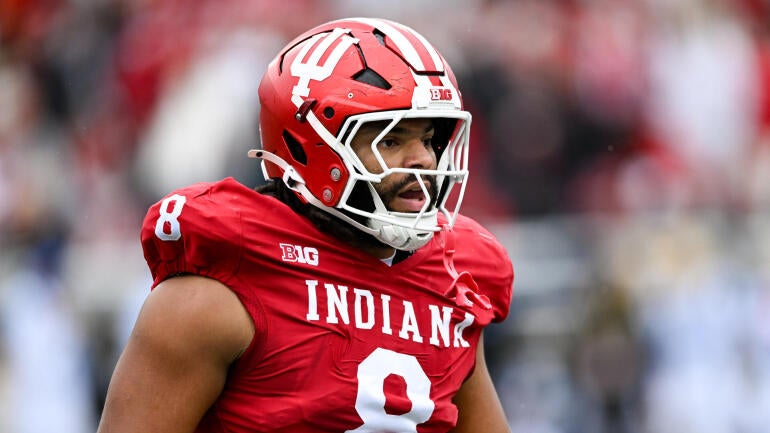
Indiana defensive end Stephen Daley will likely miss the College Football Playoff due to an injury he sustained after the Hoosiers’ victory over Ohio State in the Big Ten Championship Game, coach Curt Cignetti said on Wednesday. Daley appeared to hurt his leg during the postgame celebration while jumping to high-five Hoosiers fans in the stands. He was later seen in an air cast as trainers took him into the locker room on a cart.
Daley underwent tests over the weekend that revealed the extent of the injury, which Cignetti called “serious” and said is anticipated to keep him out for the remainder of the season.
Daley would have been one of the top defensive players in the CFP if not for the injury. The senior led the Big Ten this season with 19 tackles for loss and racked up 5.5 sacks in his first year on a Power Four roster. He joined Indiana through the transfer portal last offseason after spending the first three years of his career at Kent State.
“This postgame was a little different than most,” Cignetti said to reporters on Wednesday. “So I didn’t get into the coaches room probably until 45 minutes after the game, and that was the first I had heard about [Daley’s injury] and then we were walking to my press conference.
“Sunday was still sort of waiting a little bit on images to come back, that sort of thing. So when I had my press conference (on Sunday), there was a little more information that still had to come in. I was still processing the whole thing because it was sort of unbelievable when I heard about it, and I think that is why I said we had nobody hurt in the game, during the game.”
While Daley was not a full-time starter during the regular season, he made an immense impact for one of college football’s most formidable defenses. He recorded at least one tackle for loss in all but two games and hit his stride down the stretch with 2.5 stops behind the line of scrimmage against Penn State, 3.0 against Wisconsin, 4.5 against Purdue and 1.0 in the Big Ten Championship Game.
The absence of a premier force on the defensive front could prove problematic for the Hoosiers given that their road to a national championship runs through a few of the sport’s top offenses. Indiana will play the winner of Alabama and Oklahoma in the quarterfinals when it opens CFP play as the No. 1 overall seed.
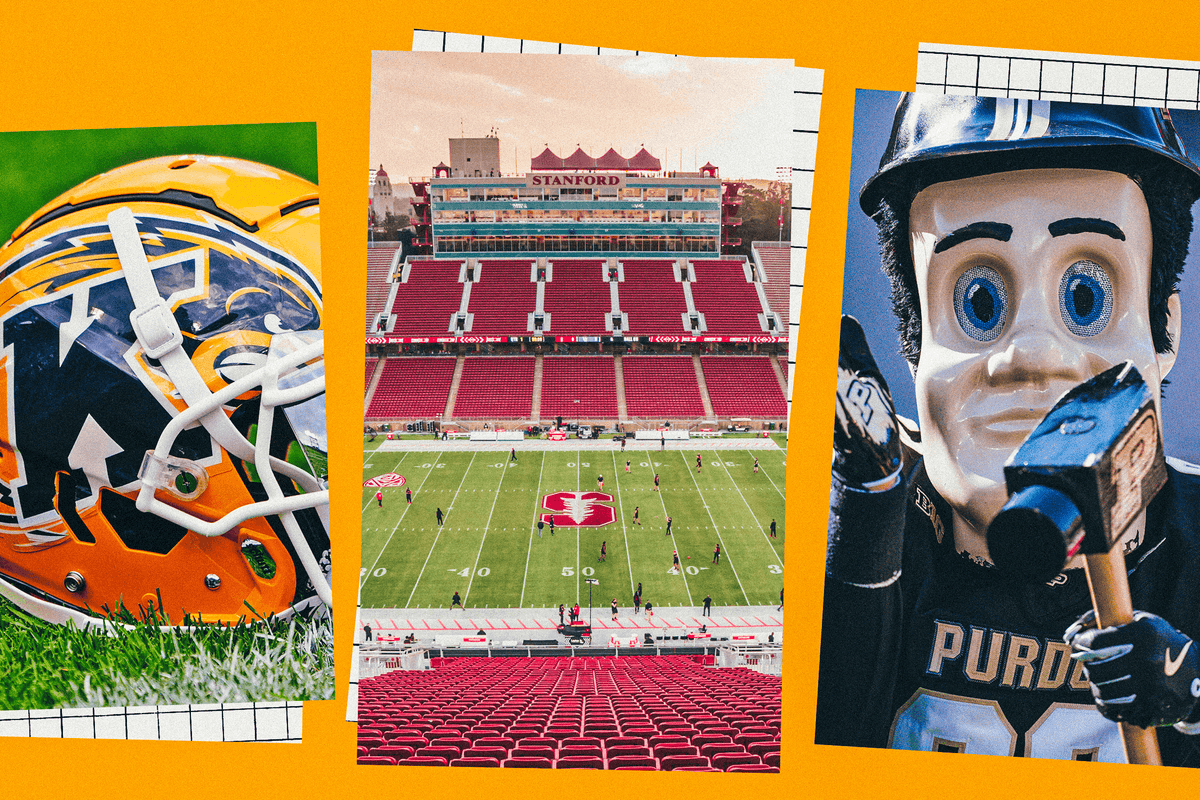
Story by Antonio Morales, Bruce Feldman and Sam Khan Jr.
One of the most active — and no doubt dramatic — coaching carousels took another wild turn when Michigan fired Sherrone Moore on Wednesday. Sixteen Power 4 schools (at least) will have a new coach in 2026. Five SEC schools hired a coach on the same day.
Some of these jobs are set up for a new coach to step in and succeed right away. Others are far more daunting, complete rebuilds at places that have struggled to compete.
A year ago, we polled 50 people in the sport and asked a simple question: What are the top five jobs in college football? Well, this year we’ve flipped it. We’ve asked a mix of coaches, personnel staffers and administrators the following: What are the five toughest jobs in college football?
They were granted anonymity so they could speak candidly.
We asked them to rank five in the Power 4 leagues and five in the Group of 5. The Athletic conducted a similar poll four years ago, but a lot has changed in the sport since then.
Of course, “toughest” can mean different things to different people. It could be the most difficult path to success. Or the most pressure to meet enormous expectations. Or several other things.
So we left “toughest” up to everyone’s own interpretation. Let’s get to the results.
(First-place votes were worth five points, second-place votes were worth four, etc.)
Power 4
1. Stanford
Points: 68
First-place votes: 7
Last winning season: 2020
Stanford received just one point when this exercise was done four years ago. From 2010 to 2015, the Cardinal played in five BCS/New Year’s Six bowl games, and they won at least 10 games six different times during the 2010s.
But times have changed, and the most recent headwinds across the sport have left Stanford in the wilderness. The university’s administration was late to adapt to NIL. Rigorous academic and admission standards make it difficult to add talent through the transfer portal. And the latest wave of realignment resulted in the Cardinal landing in the ACC — an unnatural fit with no real connection to the rest of the schools in the league besides its rival Cal.
“To me, that one jumps off the page,” one Group of 5 head coach said.
“Academic rigor. Difficulty of transfers. Has money,” a Group of 5 offensive line coach said. “But would need a developmental approach and unique style that might take a cycle of older players hitting at the right time.”
Stanford finished the 2025 season 4-8 under interim head coach Frank Reich, which was actually a step up after four straight three-win seasons. General manager Andrew Luck tabbed Tavita Pritchard, a former quarterback at Stanford and, most recently, the quarterbacks coach of the Washington Commanders, as the new head coach.
2. Purdue
Points: 62
First-place votes: 7
Last winning season: 2022
The Boilermakers played in the Big Ten title game in 2022 but have won just seven games in the three seasons since. Coach Barry Odom opened his tenure this fall with wins over Ball State and Southern Illinois, but lost the final 10 games. The Boilermakers lost their last 11 games of the 2024 season, so that’s 21 losses in their past 23 games.
It will take some time for Odom to turn things around, but realignment and the Big Ten getting rid of divisions only made life harder for this program. It doesn’t help that Indiana is thriving now under Curt Cignetti.
“(It’s a) historic talent gap,” a P4 receivers coach said.
“Purdue is the least successful football school in the Big Ten, and I think it has the least amount of money,” a G5 personnel staffer said.
T3. Vanderbilt
Points: 61
First-place votes: 8
Last winning season: 2025
The Commodores recently suffered through 10 consecutive losing seasons but are on a major upswing thanks to their coach/quarterback combination of Clark Lea and Heisman Trophy finalist Diego Pavia. However, there are plenty of people around college football who are skeptical that Vanderbilt, a strong academic school that just clinched the program’s first 10-win season, can maintain this sort of success in a loaded SEC.
“(The) schedule is brutal,” a G5 head coach said. “Pavia is lightning in a bottle. Cannot sustain.”
“It’s the hottest it can ever be,” a P4 cornerbacks coach said.
Lea started off slowly, with three losing seasons to start his head coaching tenure before he broke through with a 7-6 record in 2024. This season was the best in school history. Lea is a Vanderbilt alum who likely could have pursued openings at several other Power 4 schools, but he signed a six-year contract late last month and will remain in Nashville.
“Awesome job six days a week, impossible on the seventh,” a director of player personnel said.
T3. Boston College
Points: 61
First-place votes: 4
Last winning season: 2024
Eagles coach Bill O’Brien enjoyed a solid first season with a 7-6 record in 2024, but he just finished an ugly 2-10 campaign that included only one win against an FBS opponent.
The Eagles won at least eight games every year from 2001 through 2009, but haven’t won more than seven games since. Boston College isn’t in a fertile recruiting area, and it’s not a big NIL spender. So acquiring talent is a problem.
Can O’Brien overcome that?
“Poor recruiting footprint, lack of history, hard to get to and not an ideal conference to recruit to,” a P4 running backs coach said.
“Maybe the hardest (job),” a G5 AD said. “They’re getting the s— beat out of them in every sport.”
5. Rutgers
Points: 56
First-place votes: 4
Last winning season: 2024
Greg Schiano is the only coach who has enjoyed sustained success with the Scarlet Knights. He won nine games or more three times during his first stint at Rutgers, but that’s when the program was in the Big East.
Things are a lot more difficult now in the Big Ten. Schiano has the program in a good place — compared to its early years in the Big Ten — but he still hasn’t won more than seven games in a season during his second go-round.
“Historically bad — now in the Big Ten — what’s the ceiling? Eight wins?” one P4 director of player personnel said. “Only one coach has ever figured it out.”
Toughest jobs, Power 4
| Rank | School | Votes (1st place) |
|---|---|---|
|
1 |
68 (7) |
|
|
2 |
62 (7) |
|
|
T-3 |
61 (8) |
|
|
T-3 |
61 (4) |
|
|
5 |
56 (1) |
|
|
6 |
55 (2) |
|
|
7 |
52 (4) |
|
|
8 |
32 (2) |
|
|
9 |
30 (1) |
|
|
10 |
25 (2) |
Other schools that received first-place votes: LSU (3), Alabama (1), Auburn (1), Iowa State (1), Nebraska (1), Ohio State (1), Oregon State (1), Syracuse (1)
An FBS general manager on Northwestern: “If you have the staff alignment who embrace the degree as a selling point instead of b—-ing about it as a hurdle, you can have a lot of success. Unbelievable facilities and fertile recruiting grounds (relatively speaking).”
A G5 athletic director on LSU: “The pressure to win and the short timeline. You gotta win right off the bat and enamor the fan base and then sustain it. … If you have a one-year trip up, you get fired two years after winning a national championship at LSU or Auburn.”
A G5 athletic director on Iowa State (before Penn State hired Matt Campbell): “I think when Matt Campbell leaves, they’re in trouble.”
A G5 personnel staffer on Alabama: “Any coach for the foreseeable future is going to be measured against (Nick) Saban, who didn’t really have the same challenges of winning that future coaches will have (NIL, expanded College Football Playoff access, etc.).”
P4 receivers coach on Auburn: “Unachievable expectations. Always compared to Bama.”
Group of 5
1. Kent State
Points: 100
First-place votes: 6
Last winning season: 2020
The Golden Flashes removed the interim tag from Mark Carney in late October. He won five games this season, and that should be viewed as a major step forward considering Kent State won just one game over the previous two seasons.
Sean Lewis, currently the head coach at San Diego State, went 24-31 at Kent State from 2018 through 2022, and he was considered a miracle worker.
There’s no real history of success. The resources are lacking, as is the commitment. And there are several losses baked into the schedule every season because the program has to play so many “buy” games against P4 powers — the Golden Flashes played Texas Tech, Florida State and Oklahoma this season.
“Virtually impossible,” a G5 personnel staffer said.
2. UMass
Points: 98
First-place votes: 8
Last winning season: 2010 (FCS)
The Minutemen returned to the FBS ranks in 2012 and have yet to post a winning season. They went 0-12 in 2025 and have lost 16 consecutive games dating back to last season. They haven’t beaten an FBS opponent since October 2023.
It was coach Joe Harasymiak’s first season, so we’ll have to look for any small sign of progress next season. But with no real blueprint or roadmap for success in the program’s history in the FBS, it’s going to be tough.
“Bad location, lack of resources, no history or previous success, hard recruiting footprint,” a P4 running backs coach said.
3. Louisiana-Monroe
Points: 77
First-place votes: 5
Last winning season: 2012
Bryant Vincent won five games in his debut season in 2024, and even though the Warhawks missed out on a bowl game, that felt like a real positive step for the program.
But ULM took a step back this season and won only three games.
“The guy at ULM (Vincent) is the head coach, coordinator and (interim) athletic director. They have no money. That job is impossible,” a G5 athletic director said, before the school named SJ Tuohy as the new AD.
The lack of resources might be insurmountable at this job.
4. Akron
Points: 62
First-place votes: 5
Last winning season: 2015
The Zips have not posted a winning record since 2015. Coach Joe Moorhead led the team to a 5-7 mark this season — a sign of unquestionable progress since the program had not won that many games since going 7-7 in 2017.
Similar to Kent State, the resources and commitment are lacking, though Moorhead has improved things in recent years. He’s won nine games over the past two seasons. The Zips won seven games in the four seasons before his arrival.
“Low resources, poor academics, not a great town, no pedigree,” a G5 personnel staffer said. “It’s a very tough place to sell and win.”
5. UTEP
Points: 59
First-place votes: 3
Last winning season: 2021
Dana Dimel looked like he had things headed in a positive direction with a 7-6 season in 2021, but the Miners won a total of eight games over the next two seasons, and Dimel was fired. Scotty Walden, previously at FCS Austin Peay, replaced Dimel and is 5-19 over his two seasons.
Location was a big talking point when discussing the difficulty of the job.
“You’re in the middle of nowhere, and not in or near a football hotbed,” the G5 personnel staffer said. “Low resources, lack of historical success.”
Walden hasn’t been able to get it going, but not many coaches have in El Paso. Mike Price is the only coach in the past 30 years who has led the program to two winning seasons.
Toughest jobs, Group of 5
| Rank | School | Votes (1st place) |
|---|---|---|
|
1 |
100 (6) |
|
|
2 |
98 (8) |
|
|
3 |
77 (5) |
|
|
4 |
62 (5) |
|
|
5 |
59 (3) |
|
|
6 |
58 (3) |
|
|
7 |
34 (4) |
|
|
8 |
18 (0) |
|
|
9 |
16 (1) |
|
|
10 |
14 (2) |
Other schools that received first-place votes: FIU (2), UConn (2), Boise State (1), Bowling Green (1), Oregon State (1), UAB (1)
A P4 director of player personnel on New Mexico State: “Without Diego Pavia, they have won more games than lost four times in 45 years.”
A P4 offensive line coach: “Wild cards are UConn, Washington State and Oregon State. They are nomads at this point. Not even sure how to rate them.”
A P4 assistant coach on the G5: “Whew, those are way harder jobs now because if you have anyone decent, they leave you. The much shorter list is, what are good G5 jobs?”

Data provided by Student Athlete Score
(Dec. 10th, 2025) — Another week, another wave of notable NIL activity across college sports. From Texas Volleyball partnering with Fairfield by Marriott to major football and basketball names teaming up with brands like Raising Cane’s, Whataburger, Dr Pepper, and Puma, this week highlights the continued expansion of athlete-brand collaborations across every corner of the country. Wrestling, softball, gymnastics, track, and hockey athletes also secured meaningful deals—showing just how broad and dynamic the NIL marketplace has become. Below is a full breakdown of the latest partnerships.
For a full, searchable archive of past deals, visit our NIL Deal Tracker.
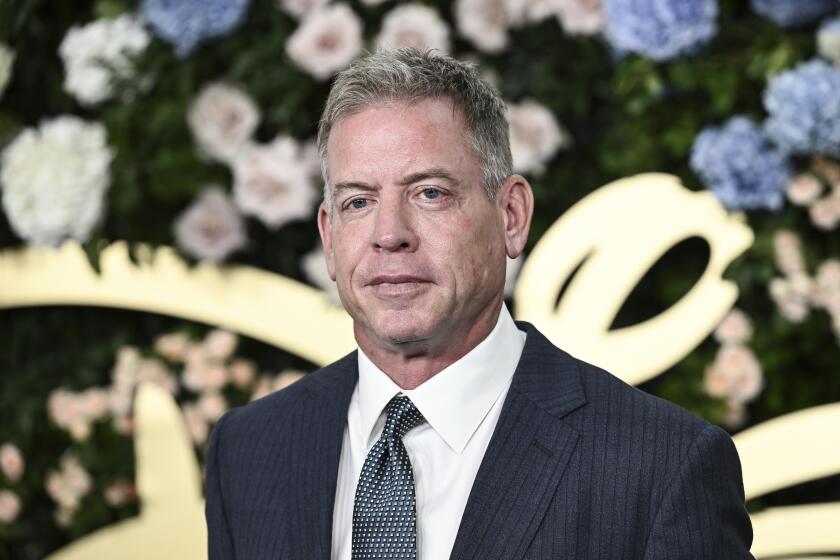
Troy Aikman said he’s “done with NIL” after writing a check to a UCLA football player who never thanked him and went on to leave for another school after one season.
There was a reason for that lack of gratitude, according to one person familiar with the Bruins’ football name, image and likeness operations from that time not authorized to discuss donor information publicly.
Advertisement
The player in question didn’t know who funded his NIL deal, only that it was coming from the team’s collective, Men of Westwood. It was standard practice for players not to know which donors or alumni contributed NIL funds that were distributed to the team.
Aikman, who did not identify the player in his remarks, did receive thanks from Men of Westwood leadership, coach Chip Kelly and athletic director Martin Jarmond, according to the person familiar with the situation.
Read more: UCLA donors question athletic director Martin Jarmond’s leadership, future viability
Aikman, the former UCLA quarterback who led the Bruins to a victory in the 1989 Cotton Bowl before going on to a Pro Football Hall of Fame career with the Dallas Cowboys, voiced his frustrations about NIL on the Sports Media Podcast with Richard Deitsch.
Advertisement
“I gave money to a kid, I won’t mention who,” Aikman told Deitsch. “I’ve done it one time at UCLA, never met the young man. He was there a year, he left after the year. I wrote a sizable check, and he went to another school. I didn’t even get so much as a thank-you note. So, it’s one of those deals, to where I’m done with NIL. I want to see UCLA be successful, but I’m done with it.”
Aikman went on to say he believed that players should be able to leave one school for another amid coaching turnover but should have to otherwise stay with the program paying them.
“There’s got to be some leadership at the very top that kind of cleans all of this up,” Aikman said. “Starting with players that accept money. There’s got to be some accountability and responsibility on their behalf, to have to stick to a program.”
Sign up for UCLA Unlocked for big game takeaways, recruiting buzz and more UCLA sports insights.
This story originally appeared in Los Angeles Times.

Parella Motorsports acquires Racing America, creating North America’s largest integrated grassroots motorsports platform

Denny Hamlin and Jim France embrace after NASCAR settlement – Motorsport – Sports

How 6 of San Diego’s Top Nonprofits Spend Your Donations

Nike announces extension with LSU, signs 10 Tigers athletes to NIL deals

The new home of Texas volleyball?

Thomas J Krum Obituary – Johnstown, NY

NASCAR, 23XI Racing and Front Row Motorsports agree to settlement in antitrust trial

NASCAR trial sees breakthrough as lawsuit settlement reached – Motorsport – Sports

Despite state lawsuit, another Maine school district affirms policy banning trans athletes

Thai women’s volleyball face Philippines in second SEA Games clash at Huamark Stadium

My big questions about the Utah athletics PE deal

NASCAR settles federal antitrust case filed by 2 of its teams, one owned by NBA great Michael Jordan

Dale Earnhardt Jr. sends stark warning over NASCAR civil war – Motorsport – Sports

Effingham Moms: Juggling Kids, Work, and Chaos Before Sunrise

ECAC Announces 2025 Division III Women’s Volleyball All-ECAC and Major Awards

First Tee Winter Registration is open

Fargo girl, 13, dies after collapsing during school basketball game – Grand Forks Herald

CPG Brands Like Allegra Are Betting on F1 for the First Time

Volleyball Recaps – November 18

F1 Las Vegas: Verstappen win, Norris and Piastri DQ tighten 2025 title fight

Two Pro Volleyball Leagues Serve Up Plans for Minnesota Teams

Utah State Announces 2025-26 Indoor Track & Field Schedule

Sycamores unveil 2026 track and field schedule

Redemption Means First Pro Stock World Championship for Dallas Glenn

Jo Shimoda Undergoes Back Surgery

Texas volleyball vs Kentucky game score: Live SEC tournament updates

Bowl Projections: ESPN predicts 12-team College Football Playoff bracket, full bowl slate after Week 14

Robert “Bobby” Lewis Hardin, 56

How this startup (and a KC sports icon) turned young players into card-carrying legends overnight

Indiana’s rapid ascent and its impact across college football

 Why a rising mid-major power with an NCAA Tournament team opted out of revenue-sharing — and advertised it
 NBA Legend Michael Jordan to Join NBC Sports as Special Contributor
 Falcons mailbag
 Portal Update – Basketball and Gymnastics Take Hits
 has always dreamed in Mercurial. Now his initials are on the boots.
The new Kyl…
has always dreamed in Mercurial. Now his initials are on the boots.
The new Kyl…
-
 Rec Sports2 weeks ago
First Tee Winter Registration is open
-
 Rec Sports2 weeks ago
Fargo girl, 13, dies after collapsing during school basketball game – Grand Forks Herald
-
 Motorsports2 weeks ago
CPG Brands Like Allegra Are Betting on F1 for the First Time
-
 Motorsports2 weeks ago
F1 Las Vegas: Verstappen win, Norris and Piastri DQ tighten 2025 title fight
-
 Sports2 weeks ago
Two Pro Volleyball Leagues Serve Up Plans for Minnesota Teams
-
 Sports2 weeks ago
Utah State Announces 2025-26 Indoor Track & Field Schedule
-
 Sports2 weeks ago
Sycamores unveil 2026 track and field schedule
-
 Motorsports2 weeks ago
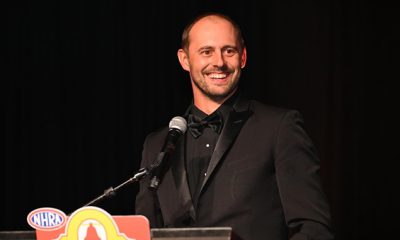
Redemption Means First Pro Stock World Championship for Dallas Glenn
-
 Motorsports2 weeks ago
Jo Shimoda Undergoes Back Surgery
-
 Sports2 weeks ago
Texas volleyball vs Kentucky game score: Live SEC tournament updates