
NIL
House Settlement Approval Hearing Set for April 7



The settlement approval hearing in In re College Athlete NIL Litigation, No. 4:20-cv-03919 (N.D. Cal.) is set for April 7, 2025. Commonly known as the “House Settlement,” the pending resolution between plaintiffs and the NCAA, if approved by Judge Claudia Wilken, could have far-reaching implications for higher education NCAA-member institutions and student-athletes.
Background
The pending settlement arises from a consolidated set of three antitrust actions brought by current and former Division-1 athletes: House v. NCAA: Hubbard v. NCAA; and Carter v. NCAA.
Plaintiffs Grant House and Sedona Price filed a class-action complaint in June 2020, asserting that the NCAA and its conferences violated antitrust law by restricting Plaintiffs and Class Members’ rights to license and sell their rights to their names, images, and/or likenesses. Judge Wilken later consolidated House with Hubbard v. NCAA and Carter v. NCAA which both brought similar claims against the NCAA and its conferences.
On October 7, 2024, the court preliminary approved the House Settlement Agreement and directed plaintiffs to give notice of the settlement to the settlement classes. On March 3, 2025, Plaintiffs filed their motion for final settlement approval and omnibus response to objections. The motion argued that class members’ response to the “landmark settlement has been overwhelmingly positive.” Plaintiffs also highlighted that the $2.576 billion damages settlement, if approved, would be “one of the largest in antitrust history.”
The Final Approval Hearing is scheduled for April 7, 2025, at 10 a.m. P.T.
Key Provisions of the House Settlement
Athletes will be eligible to receive payment from NCAA-member schools. The proposed settlement requires the NCAA and its conferences to change all Division I and conference rules to permit payments to student-athletes. Each member-institution and student athlete will have the right to enter into an agreement for the student-athlete’s name, image, and likeness (“NIL”) rights.
Revenue Sharing will be established between NCAA-member schools and athletes. The House Settlement also sets forth a revenue sharing framework that will permit schools to distribute payments and benefits to student-athletes, in addition to existing scholarships and other benefits currently permitted by the NCAA. According to the settlement, schools will be able to spend 22% of specified revenue (which includes ticket sales, media rights deals, and sponsorships). This percentage will increase by 4% annually. Reports state that schools will be able to spend a maximum of $23.1 million at the onset, if the settlement is approved.
NCAA-member schools that are not part of the defendant conferences in the litigation have been given a June 15, 2025 deadline to declare whether they intend to make payments and provide benefits pursuant to the House settlement.
Former players will be compensated for deprivation of their name, image, and likeness rights. Former athletes, dating back to 2016, are eligible to receive a part of settlement’s pool of damages which exceeds $2.7 billion.[1]
Settlement Objections
Several current and former Division I athletes have submitted objections and letters, urging the Court to deny approval of the House settlement. We highlight two objections that raise issues that may arise if the settlement is approved.
Several objectors raise concerns that the settlement runs afoul of Title IX. Objectors cited and discussed a Department of Education “Fact Sheet” that discussed Title IX in the context of NIL. The Biden Administration published the guidance on January 16, a few days before President Trump took office. The fact sheet stated that NIL agreements between schools and their student-athletes are a form of athletic financial assistance that must be proportionally available to male and female athletes pursuant to Title IX. The Trump Administration rescinded that guidance on February 12, stating that “Title IX says nothing about how revenue-generating athletics programs should allocate compensation among student athletes.” In their motion for final settlement approval, plaintiffs argue that “the applicability of Title IX is an issue of legal statutory interpretation that the Court need not resolve to grant final approval of the settlement.”
Some objectors also argue that the proposed settlement includes an unlawful “cap” on the amount of compensation and benefits that schools may provide student athletes. As one letter argues, the settlement’s cap on athlete compensation “is not different in theory or purpose than previous caps found to violate antitrust laws.” Dkt. No. 705. A Statement of Interest filed by the Department of Justice during the final days of the Biden Administration argued that the “cap” amounts to an agreement among competing employers that “restrains competition among schools for payments above the cap.” Plaintiffs argue that the cap “was the only way to implement a compromise settlement” and that other antitrust class action settlements involving professional sports leagues have been adopted and approved.
Whether these arguments and others made by objectors will have any impact on Judge Wilken’s decision to approve or not approve the settlement remains to be seen.
What’s Next?
Judge Wilken is set to hold a hearing on the House Settlement on April 7 at 10 a.m. PST. The public can watch the hearing here.
After the April 7 hearing, Judge Wilken will presumably take the arguments under advisement and eventually approve or not approve the settlement. Even if the settlement is approved, her decision could be appealed to the Ninth Circuit by objectors.
Earlier this month, the NCAA announced a Settlement Implementation Committee, made up of 10 athletics directors (two from each defendant conference) and the legal and compliance teams from the conferences and the NCAA. This committee, according to the NCAA, will be divided into four different working groups focused on different components of the settlement, including one group drafting new rules and clarifying existing rules to facilitate compliance with the settlement, another group is tasked with forming a new enforcement entity to enforce these rules.
It is important to follow these developments and consult with legal counsel to ensure compliance with the House Settlement and the forthcoming new rules from the NCAA, if the settlement is approved. Please contact one of the attorneys below or your regular Crowell contact to learn more.










Gov. Ron DeSantis criticized the current structure of college football’s name, image, and likeness (NIL) policies and players’ use of the transfer portal to move to different schools in an exclusive interview with The Floridian publisher Javier Manjarres.
“This whole NIL and transfer portal has got to be worked out a little bit,” DeSantis said. “If they’re selling your jersey with your name on the back, you should get money for it if they are using your name, image, and likeness.”
Gov. DeSantis signed a bill allowing college athletes to profit from their name, image, and likeness back in 2020. It was later amended to allow schools, coaches, and athletic departments to assist athletes in the NIL process so Florida could stay on an even playing field with other states that had adopted similar policies.
While the governor has advocated for more player rights, he critcized the use of college football’s transfer portal, which has arguably overrun the sport with player transformers and fans wondering who stayed at their flagship school from year to year.
According to a report from NBC Sports, the number of FBS [Football Bowl Subdivision] transfers increased from 1,561 in 2018-19 to over 3,700 in last year’s cycle. FBS transfers from scholarship players also significantly rose over the past several years.
“To then say, I played three games, coach, I need more NIL money, or I’m going to transfer to another school, that’s almost like they have more rights than pro athletes do,” DeSantis commented. “I think there needs to be some reform of that.”
Gov. Ron DeSantis is a big sports fan. His son, Mason, is also a big fan of the Florida State Seminoles, with the governor often sharing predictions from his son on the outcome of the Noles’ football games on social media.
However, the governor played it fair when speaking about one of Florida State’s chief rivals, the University of Miami, and their rightful spot in the College Football Playoff (CFP).
“The Hurricanes should be in the college football playoff,” DeSantis suggested.
At the time, the governor argued that the team’s strength of schedule, their head-to-head win against the University of Notre Dame, which had been ahead of Miami in the rankings for months despite the team’s win, along with each school’s scoring margin against common opponents, was enough to lift the Canes into the final rankings.
Miami beat Notre Dame 27-24 in Week 1 of the season. In addition, the Hurricanes defeated three common opponents (NC State, Pittsburgh, Stanford) by a larger margin than the Irish.
Both teams also played Syracuse, with the Irish winning by 63 points, while the Hurricanes won by 28.
The governor was right. Miami was selected to be in the CFP last Sunday. The 10th-seed Hurricanes will play the 7th-seed Texas A&M Aggies in the first round of the playoff in College Station on Dec. 20.
DeSantis also advocated for the Fighting Irish to get in, but they were not selected in the final rankings.
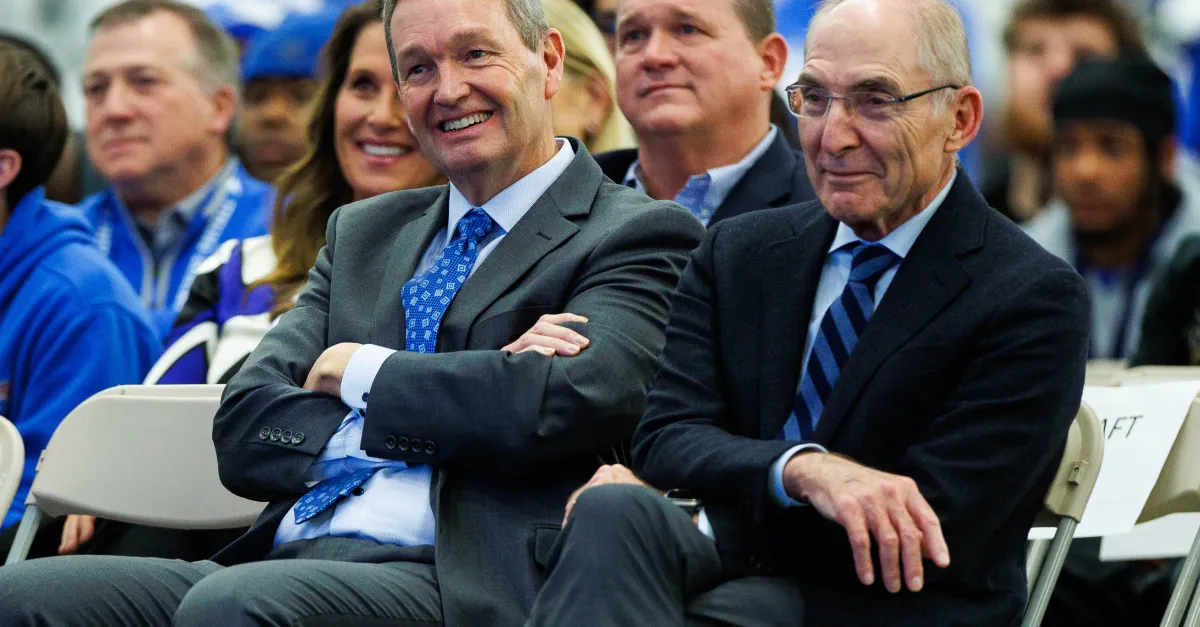
In talking to sources, JMI, in conjunction with the UK basketball staff, is requiring prospective student-athletes to sign away NIL rights that would normally be untouched at any other school. A highly structured brand partnership agreement is something uncommon at other schools, but it is something Kentucky has pursued in accordance with JMI, making this arrangement unique to the current landscape of college basketball recruiting.
“I will say that Kentucky is the only school I’ve dealt with that even has anything remotely like this in their contracts,” one anonymous source said
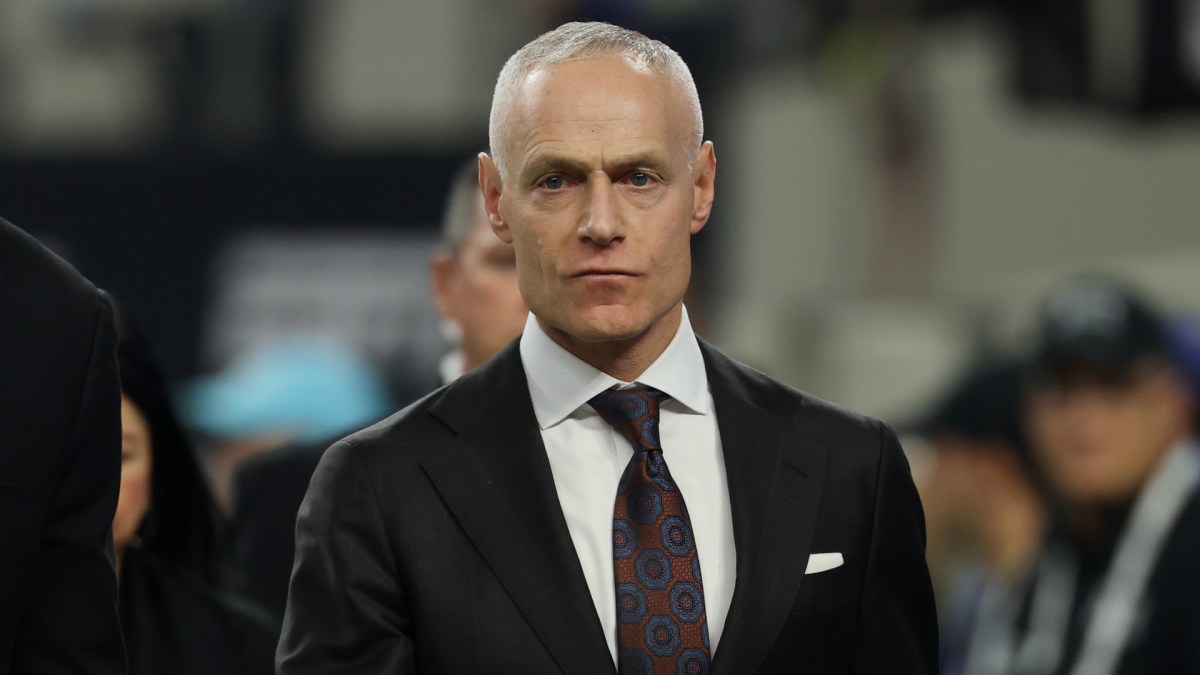
LAS VEGAS — Big 12 commissioner Brett Yormark publicly backed his ACC counterpart Tuesday after Notre Dame’s athletics director tore into the league over the Irish being left out of the College Football Playoff.
Notre Dame AD Pete Bevacqua has openly questioned the ACC’s support after Miami — an ACC member — jumped the Irish for the final at-large CFP berth. Bevacqua told “The Dan Patrick Show” on Monday that Notre Dame’s relationship with the ACC sustained “permanent damage.”
His decision to go after the league so forcefully, and so publicly, didn’t sit well with Yormark.
“Pete’s behavior has been egregious,” Yormark said Tuesday during a panel at the Intercollegiate Athletics Forum in Las Vegas. “It’s been egregious going after [ACC commissioner] Jim Phillips when they saved Notre Dame during COVID. We all knew, and it was very transparent — [CFP committee chairman] Hunter [Yurachek] was very transparent about it, that as Notre Dame and Miami got closer together, head-to-head would be a factor.”
Notre Dame AD says ACC did ‘permanent damage’ to relationship with push for Miami over Irish
Robby Kalland

In 2020, Notre Dame was granted temporary ACC membership to play a full football schedule during the shortened season.
“I think [Bevacqua] is totally out of balance in his approach, and if he were in the room, I’d tell him the same thing,” Yormark said Tuesday.
In the penultimate CFP rankings, BYU sat between Notre Dame and Miami but fell to Texas Tech in the Big 12 Championship Game, giving the committee room to take a hard look at the Hurricanes and Irish. Miami’s season-opening win over Notre Dame became the decisive wedge that pushed the Hurricanes into the field.
Bevacqua argued the ACC “singled out” two-loss Notre Dame as it worked to elevate Miami.
“We were mystified by the actions of the conference to attack their biggest business partner in football and a member of their conference in 24 of our other sports,” Bevacqua said Monday.
Phillips rejected that assertion.
“The University of Notre Dame is an incredibly valued member of the ACC, and there is tremendous respect and appreciation for the entire institution,” Phillips said in a statement Monday. “With that said, when it comes to football, we have a responsibility to support and advocate for all 17 of our football-playing member institutions, and I stand behind our conference efforts to do just that leading up to the College Football Playoff Committee selections on Sunday.
“At no time was it suggested by the ACC that Notre Dame was not a worthy candidate for inclusion in the field. We are thrilled for the University of Miami while also understanding and appreciating the significant disappointment of the Notre Dame players, coaches and program.”
Notre Dame declined a bowl invitation after the school was left out of the playoff.
Yormark was a proponent for BYU’s inclusion in the playoff, but said he understood why the Cougars were not included in the field after suffering a second loss to Texas Tech.
“I think overall, they did the right job,” Yormark said. “It’s progress over perfection. The selection process will never be perfect. And our goal as commissioners and the management committee is how do we improve upon it?”
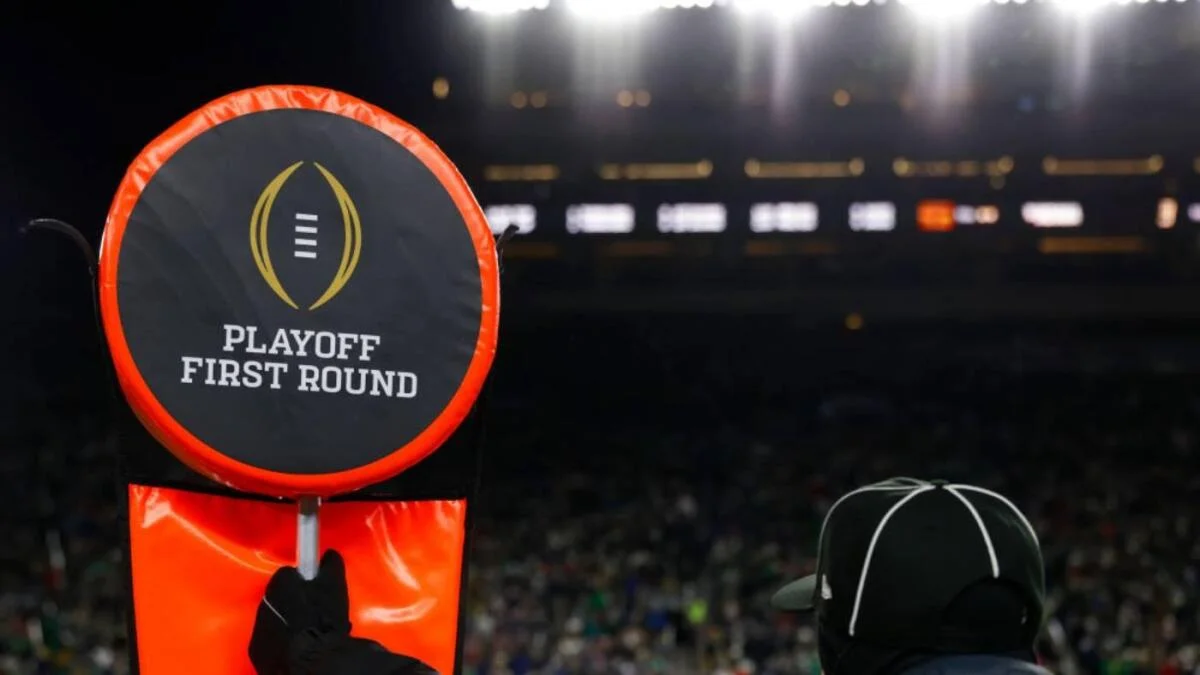
LAS VEGAS — The ACC has found itself in the College Football Playoff crossfire in two of the past three seasons, and now the league is pushing for swift changes to the format.
ACC commissioner Jim Phillips on Wednesday called for an immediate expansion of the 12-team playoff and said he wants the CFP to examine whether it should scale back the weekly rankings released during the five weeks leading up to Selection Sunday.
The window to expand before the 2026-27 season is closing fast. ESPN granted CFP leaders an extension until Jan. 23 to finalize a decision. The prevailing expectation had been that the playoff would stay at 12 teams because the 10 FBS conferences and Notre Dame have been unable to reach consensus on a 16-team (or larger) model.
“I would prefer not to wait another year, but I only speak for the ACC,” Phillips said Wednesday after a speaking engagement at the Intercollegiate Athletics Forum.
Notre Dame’s fury over its exclusion from this year’s CFP helped change the tone. Athletic director Pete Bevacqua accused the ACC of pushing for Miami to be selected over the Irish. Notre Dame has a football scheduling partnership with the ACC and is a full member of the conference in 24 other sports. Bevacqua said Monday the school’s relationship with the ACC suffered “permanent damage” because of what he believed were ACC attacks on Notre Dame’s résumé.
Conference commissioners met Tuesday in Las Vegas to discuss the playoff, but no format agreement emerged. Big 12 commissioner Brett Yormark told CBS Sports he also prefers expansion now rather than waiting until 2027-28. The SEC remains focused on a 16-team format, an SEC spokesperson told CBS Sports.
“We have good teams being left out,” said Phillips, “I think we have that responsibility to make sure that we get to a number that we feel better about, that either we believe anybody after that wouldn’t necessarily win [a national championship], or we at least cut into that margin. And I don’t know what we can get done in the next six weeks, but we’re committed to staying together and working together and working with the management committee to figure this thing out.”
Phillips reiterated his opposition to any format that awards disproportionate automatic qualifiers to the power leagues. The Big Ten recently proposed a 16-team model that would give both the Big Ten and SEC four AQs each, while the ACC and Big 12 would receive two apiece.
The Big Ten and SEC control the votes needed to set the future format, but the sides have yet to reach an agreement on any structure beyond 12 teams. The Big Ten floated a 24-team model earlier this fall, but it failed to gain SEC support — though several SEC athletic directors remain intrigued by the concept, industry sources told CBS Sports.
Phillips: CFP’s weekly rankings ‘disruptive’
Phillips is also pushing to reevaluate the CFP’s weekly rankings shows on ESPN. The committee’s top 25 is currently unveiled in each of the five weeks before Selection Sunday. The group drew criticism this year for keeping Miami below Notre Dame until flipping them in the final week, citing the Week 1 head-to-head result.
“The weekly shows draw a lot of interest. They’re incredibly disruptive and very hard for the schools and the conferences,” Phillips said. “And I understand why we do the shows, and it’s part of the agreement with ESPN. but it causes great anxiety throughout. We have to find a better way moving forward as it relates to some of that, some of that pre-information.”
Phillips said it is unclear whether any adjustments can be made under ESPN’s contract, and commissioners did not address the issue during Tuesday’s meeting.
College football’s weekly reveal schedule is unique. By contrast, the NCAA basketball tournaments release a top-16 preview one month before Selection Sunday, before the field is selected in March.
“You’ve gotta believe that those 16 teams are gonna be in the field at 68, right?” Phillips said. “So there’s less pressure there, and it’s a fun thing and kind of a way to create interest with a month to go before Selection Sunday.”
ACC will explore changes to tiebreaker protocol
Part of the disruption in the ACC’s playoff push this season was the logjam at the top of its regular-season standings. Miami, the highest-ranked ACC team in the CFP, did not reach the ACC Championship because of the league’s five-way tiebreaker policy. Virginia and Duke met in the title game, with the five-loss Blue Devils emerging as the ACC champion, placing more uncertainty on whether the power conference would be left out of the CFP completely this month.
Phillips wants to explore tweaking the tiebreaker policy and implementing CFP rankings into the protocol.
“Who knew that we would get to the seventh tiebreaker with five teams that were 6-2?” he said. “It’s just the stars aligned in a way that nobody predicted, but no one should throw shade on Duke. They earned the right. Everybody had a chance to be part of that tiebreaker, and they played great. They won the league. They held the trophy. So I was super happy for Duke. It worked out the way it was supposed to work out relative to that’s the tiebreaker we put in place, but we’ll come back together. It would be smart of us to now also have a CFP maybe component in there, in the tiebreaker.”
The ACC eliminated divisions in 2023, before the additions of Cal and Stanford in an expansion to 17 teams, further complicating a large league without divisions.
Phillips suggested all conferences follow similar tiebreaker protocols, citing the power conferences all set to play nine conference games starting next season. The ACC and SEC recently voted to move from eight to nine conference games.
“Maybe there’s something that allows less confusion about what everybody’s tiebreaker is in college football,” Phillips said.
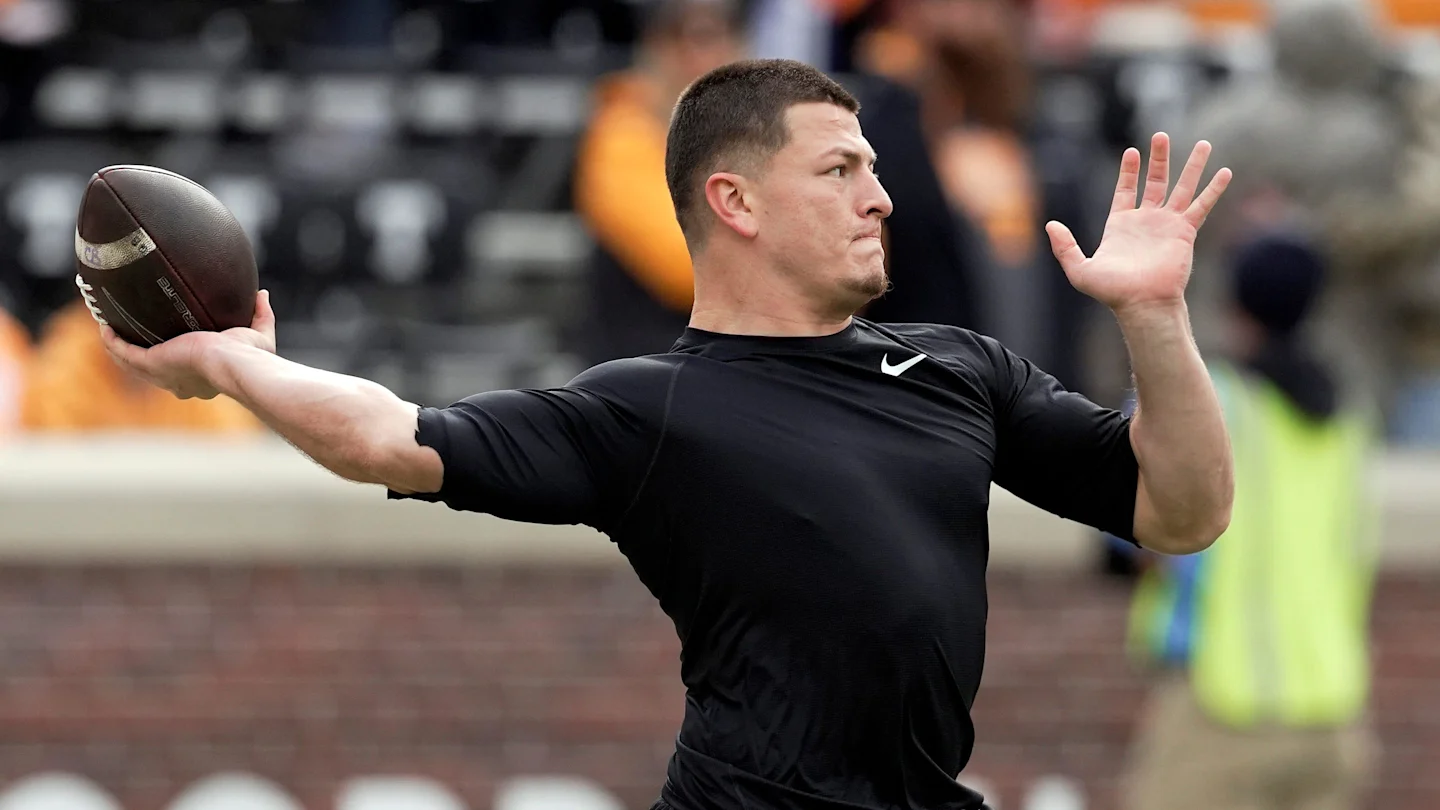
In this day and age, college football programs are generally inclined to accept massive donors from virtually any stripe of life. After all, it wasn’t that long ago that a story bounced around about a South American cartel funding NIL for one school. That story wasn’t true, but a recent story could make for bedfellows nearly as strange as that one.
The G5 Playoff Teams
Tulane and James Madison have dealt with a period of massive disbelief following each school earning a College Football Playoff berth. While one Group of Five team is all but certain to gain a CFP spot, a second team was a surprise. Because 8-5 Duke snuck into the ACC title, James Madison jumped the Blue Devils in the CFP pecking order and claimed a second G5 spot. Many have argued that neither Tulane nor James Madison belong in the Playoff.
Pavia’s wager
But Vanderbilt QB Diego Pavia took his dig and turned it in an interesting direction. The Vanderbilt passer, who has an NIL valuation of $2.5 million per On3, made a particularly bold offer. Pavia’s team at 10-2 finished just outside the CFP picture, had a different reaction to the CFP selection controversy. Specifically, Pavia offered to put his money where his mouth is.
It’s a 12-team Playoff. Put every team that is good… This G5 team, if a G5 team wins it, I would donate whatever I got in NIL back to that team. I would do that if a G5 team ever wins it.
Diego Pavia
A tough road for Tulane and James Madison
Admittedly, Pavia’s cash is probably safe. Tulane is currently a 17.5 point underdog to Ole Miss in its first round game, and James Madison is a 21.5 point underdog against Oregon. ESPN’s FPI gives the Green Wave about a 1 in 6 shot to win their game and the Dukes a just under 1 in 8 shot to win. Even then, a winning G5 team would have to plow through two more games, with the first coming against a top four foe– Texas Tech in the case of James Madison and Georgia in the case of Tulane.
Differing Vanderbilt Messages
Pavia’s consternation runs contrary to his own coach’s comments. In a refreshing recent turn, Clark Lea told reporters that Vandy missing the Playoff was “no one’s fault except our own.” It’s safe to say that Pavia felt a bit differently, and in fact made his multi-million dollar wager against the relevance of the Group of Five teams. Considering that Pavia himself came from a Group of Five team at New Mexico State, he of all people should have realized that in the new era of college football, anything can (and probably will) happen.
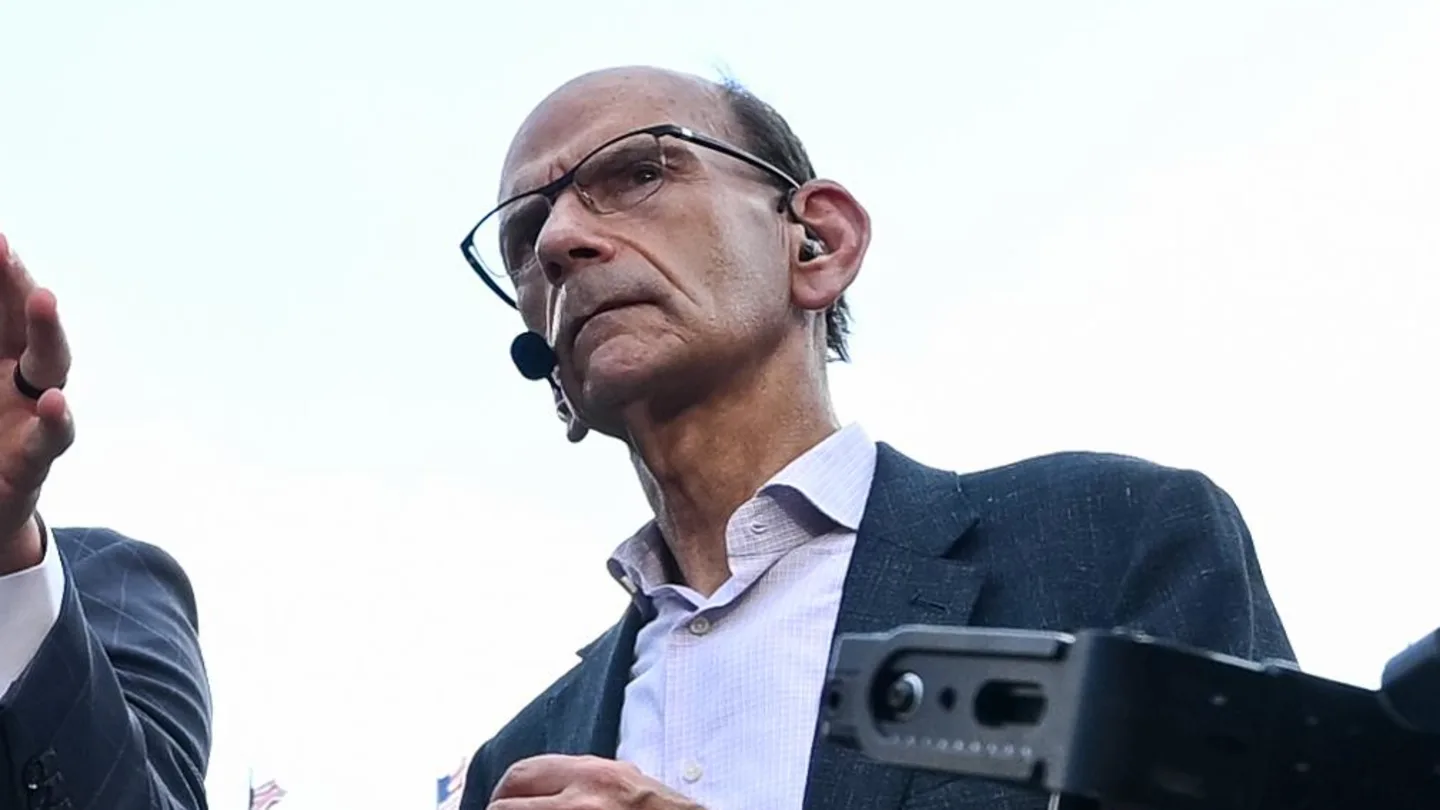
Following the release of the 2025 College Football Playoff bracket along with the end of the sport’s regular season, it’s now the month for debate. In the aftermath of a more controversial CFP field than the first 12-team version a year ago, athletic directors, head coaches, conference commissioners and Paul Finebaum are all lobbing grenades at one another.
The drama has focused in South Bend ever since the relase of Sunday’s Playoff bracket, which had Miami, not Notre Dame, sneaking in as the final at-large bid. Of course, the Hurricanes ultimately made the last-second leapfrog of ND thanks to a second bad BYU loss to Texas Tech in the Big 12 title game while Miami’s head-to-head win was the final difference-maker.
To say the Irish are upset would be describing the situation with extreme grace. Shortly after the field was set, Notre Dame athletic director Pete Bevacqua dressed his wagon and made quite the media tour, stopping by Dan Patrick to take shots at the ACC while, overall, sharing several messages to the public about how poor and unfair he felt Notre Dame was treated during this year’s selection process.
While watching some of those clips and discussing the Notre Dame fallout from their missed CFP bid on Wednesday morning’s episode of First Take, ESPN college football analyst and SEC Network host Paul Finebaum dumped criticism on the way Bevacqua and Notre Dame have handled this saga.
“Pete Bevacqua has said a lot of things; he hasn’t backed up anything,” Finebaum said. “I mean, he just threw a bunch of rocks at the street. But he didn’t touch anything. If he wanted to make a statement, say, ‘Hey, we’re getting out of the ACC, whatever it costs, whatever the legalities.’ But he didn’t do that. He just made a bunch of empty threats.”

Finebaum makes the point that if Bevacqua is going to attack the ACC and the CFP committee and its chair, who’s an SEC athletic director — all these various important parties in college football — then he better have a reason. For now, though, he sees all this uproar from Bevacqua as pretty much shouting into the wind if it isn’t followed up by any serious action.
“And I think, as a result, Notre Dame has lost all credibility in this matter,” Finebaum added of the Irish. Sure, did Notre Dame have legit complaints about the whiplash nature of their ranking vs. Miami over the final weeks? Perhaps. But ultimately, the Fighting Irish lost to both of the CFP opponents who they played, and beat only one team in the final top-25 rankings.
As Finebaum and others would say, Notre Dame had their chances. A path to the national title game isn’t some birthright. Even with an expanded field, the Irish should have to earn their way in if they aren’t going to win a conference, and in 2025, they unfortunately came up just short.
More on College Football HQ

Kalin Badgley Excels in Baseball While Defying Gender Norms – The562.org

Capitals Street Hockey League Coming to Germantown

DeSantis Talks College Football, Calls for Reforms to NIL and Transfer Portal · The Floridian

Alaska Youth Education in Shooting Sports gun show this weekend | Local News
Cincinnati Enquirer names 2025 girls volleyball all-city teams

Racing Hall of Famer Bobby Rahal part of team to build North Florida Motorsports Park in Nassau County

Pitt volleyball to host 2026 Opening Spike Classic

New details on JMI deal with UK and its negative impact on recruiting

Lionel reveals the best-selling NASCAR diecasts of 2025

Nebraska Huskers Dominate All-Region Volleyball Honors

Goodbye SW racetrack, hello Auburn Motorsport Park

Pitt volleyball among four elite programs set for 2026 Opening Spike Classic

Major NASCAR sponsor speaks out amid antitrust trial

Big 12 commish blasts Notre Dame AD’s ‘egregious’ reaction to College Football Playoff snub

Three Golden Knights Named AVCA All-Americans

First Tee Winter Registration is open

Fargo girl, 13, dies after collapsing during school basketball game – Grand Forks Herald

CPG Brands Like Allegra Are Betting on F1 for the First Time

Volleyball Recaps – November 18

F1 Las Vegas: Verstappen win, Norris and Piastri DQ tighten 2025 title fight

Two Pro Volleyball Leagues Serve Up Plans for Minnesota Teams

Sycamores unveil 2026 track and field schedule

Utah State Announces 2025-26 Indoor Track & Field Schedule

Redemption Means First Pro Stock World Championship for Dallas Glenn

Texas volleyball vs Kentucky game score: Live SEC tournament updates

Bowl Projections: ESPN predicts 12-team College Football Playoff bracket, full bowl slate after Week 14

Robert “Bobby” Lewis Hardin, 56

How this startup (and a KC sports icon) turned young players into card-carrying legends overnight

Jo Shimoda Undergoes Back Surgery

Indiana’s rapid ascent and its impact across college football

 Why a rising mid-major power with an NCAA Tournament team opted out of revenue-sharing — and advertised it
 NBA Legend Michael Jordan to Join NBC Sports as Special Contributor
 Falcons mailbag
 Portal Update – Basketball and Gymnastics Take Hits
 has always dreamed in Mercurial. Now his initials are on the boots.
The new Kyl…
has always dreamed in Mercurial. Now his initials are on the boots.
The new Kyl…
-
 Rec Sports2 weeks ago
First Tee Winter Registration is open
-
 Rec Sports2 weeks ago
Fargo girl, 13, dies after collapsing during school basketball game – Grand Forks Herald
-
 Motorsports2 weeks ago
CPG Brands Like Allegra Are Betting on F1 for the First Time
-
 Motorsports2 weeks ago
F1 Las Vegas: Verstappen win, Norris and Piastri DQ tighten 2025 title fight
-
 Sports2 weeks ago
Two Pro Volleyball Leagues Serve Up Plans for Minnesota Teams
-
 Sports2 weeks ago
Utah State Announces 2025-26 Indoor Track & Field Schedule
-
 Sports2 weeks ago
Sycamores unveil 2026 track and field schedule
-
 Motorsports2 weeks ago
Redemption Means First Pro Stock World Championship for Dallas Glenn
-
 Sports2 weeks ago
Texas volleyball vs Kentucky game score: Live SEC tournament updates
-
 NIL1 week ago
Bowl Projections: ESPN predicts 12-team College Football Playoff bracket, full bowl slate after Week 14