




















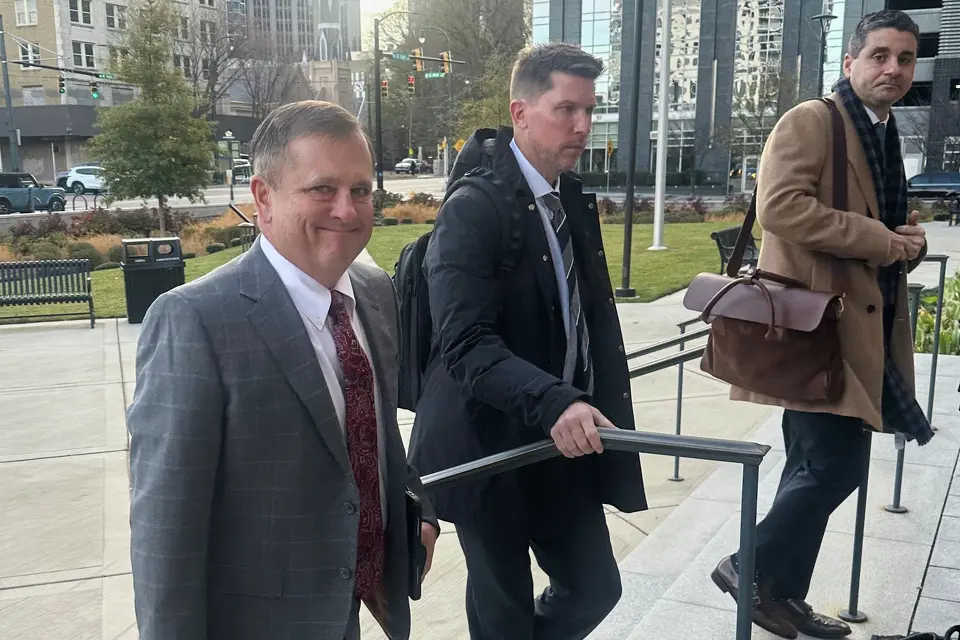
CHARLOTTE, N.C. (AP) — An economist testified in Michael Jordan’s federal antitrust trial against NASCAR that the racing series owes a combined $364.7 million in damages to the two teams suing it over a revenue-sharing dispute.
Motorsports
Unhinged wigmaker Miriam Yarimi allegedly attacked neighbor with hammer




The unhinged wigmaker charged in a horrific Brooklyn crash that killed a mom and her two daughters allegedly attacked a neighbor’s apartment with a hammer last year, The Post has learned.
Miriam Yarimi went on a deranged tirade last March at her Midwood apartment building — pounding on a neighbor’s door as she screamed at the top of her lungs, according to an eviction petition filed by her landlord in Brooklyn civil court on April 24.
Yarimi, 32 was “verbally abusing, cursing, threatening, yelling, and screaming” and “banging [a] hammer against the door” of her upstairs neighbor’s apartment at 6:51 p.m. on March 24, 2024, according to court documents and the resident who endured the demented outburst.
“It was her,” the still-rattled female neighbor told The Post, referring to Yarimi, who lived on the third floor of the Avenue P building with her then-husband Shneur Kovitz.
The neighbor, who spoke on the condition of anonymity, has “no idea” why Yarimi went on the attack, during which a child was present, according to court papers.
4-year-old Philip Saada was seriously injured, and remains in critical condition at Maimonides Medical Center.
During Yarimi’s arraignment on Thursday, prosecutors claimed she went on a bizarre rant to cops after she was busted in the deadly wreck.
“The devil’s in my eyes,” she allegedly told police, according to a criminal complaint. “I’m haunted inside. I didn’t kill anyone. I don’t hurt anyone. Prove it. Show me proof.”
A former classmate previously told The Post Yarimi came from a “nerdy religious” Jewish family and was “screwed up” from a teen affair with a married NYPD cop.
P and 21 LLC declined to comment.
Additional reporting by Tina Moore.
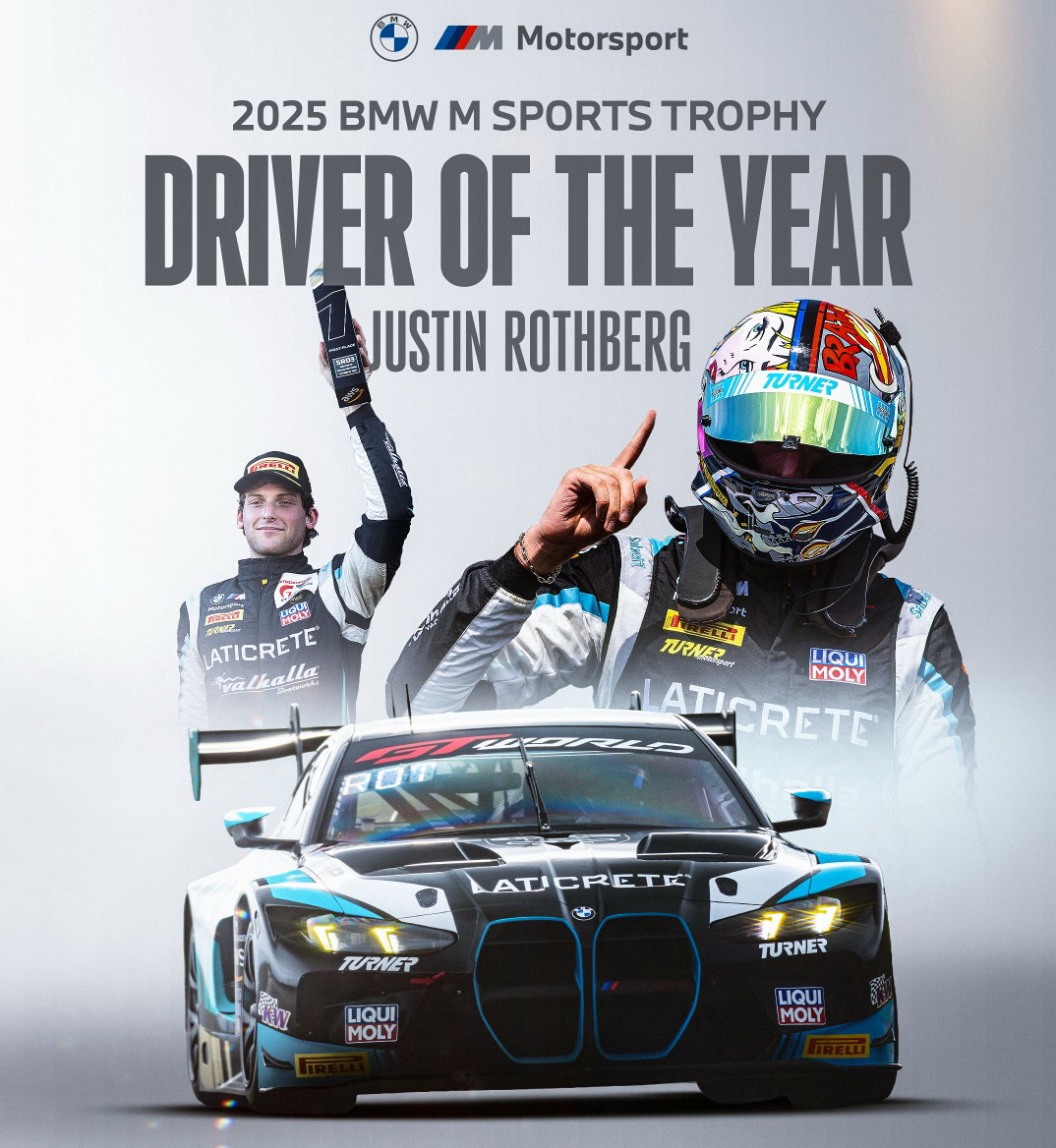
Every December, BMW M Motorsport invites the customer racing teams from around the world to come together for an awards banquet and to honor championship winning teams and drivers. The driver who scores the most points racing a BMW as a privateer (works drivers don’t qualify) wins the prestigious BMW Sport Trophy, which went to Turner Motorsport driver Justin Rothberg for the second year in a row.
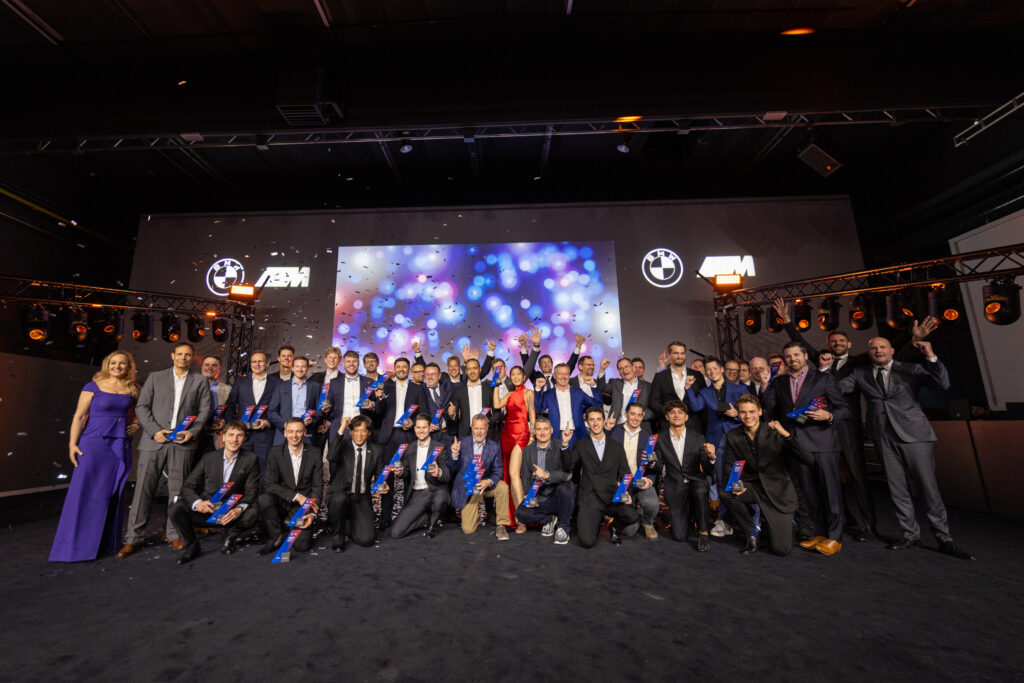
Rothberg had a fantastic 2025 season, winning the SRO GT World Challenge America championship with Robby Foley and also winning the SRO GT America championship on his own. “Super thrilled to be winning the Sports Trophy again this year,” he said. “The BMWs are great race cars and there’s so many talented drivers so it’s an accomplishment I’m proud of. It’s a testament to the great work from all the guys at Turner Motorsport: Will Turner for running such a well-oiled machine, Robby Foley for always putting in great drives and giving me the help and advice I need – and my parents for supporting me and putting me in a position to succeed.”
The team trophy went to FK Performance Motorsport, which became the first team to win the overall standings of the Nürburgring Endurance Series (NLS) with the BMW M4 GT4. The team also had a podium finish in the Nürburgring 24-hour race and competed in the ADAC GT Masters series, where they finished second in the standings. The Turner Motorsport team, which won the team trophy last year, finished third behind FK Performance Motorsport and Schubert Motorsport.
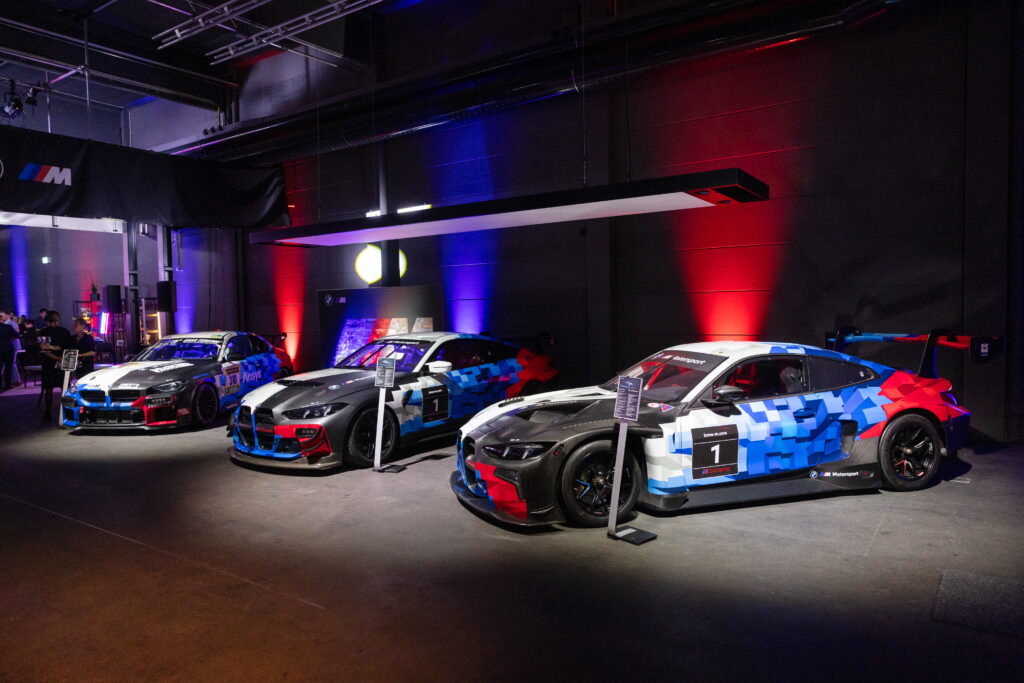
BMW was very successful worldwide with customer teams competing in the M4 GT4 EVO and M4 GT3 EVO. In 2025, there were 56 GT3 and 88 GT4 cars competing worldwide, covering over 700,000 kilometers in racing miles and achieving around 180 wins and 250 additional podium finishes across various classes. “It is truly special to welcome our most successful customer racers to Garching, where the heart of BMW M beats,” said CEO of BMW M Franciscus van Meel. “They perfectly embody the DNA of our brand and, with their performances on racetracks around the world, serve as ideal ambassadors. While we celebrate the victories and titles of our works drivers and teams, our emotional connection to customer racing is equally profound. Without it, BMW M Motorsport would not be the same. It is a central pillar of our racing program and will remain so in the future.”
—David Haueter
[Photos courtesy BMW]

Marcus Ericsson will make his third start in the Rolex 24 At Daytona in January, driving the No. 45 Wayne Taylor Racing Lamborghini Huracán GT3 EVO2 in the GTD class.
The 2022 Indianapolis 500 winner will share the car with the already-announced trio of Danny Formal, Trent Hindman, and Graham Doyle. Ericsson’s run of even-year Daytona 24 Hours appearances began in 2022 when he drove for the Chip Ganassi Racing-run Cadillac Racing team, then continued in 2024 when he drove for WTR in one of its two Acura ARX-06es.
“I’m super excited to be back racing with Wayne Taylor Racing for the legendary Rolex 24 Hours,” said Marcus Ericsson. “It will be my third time racing the Daytona 24 but the first time for me in the GTD class. I’m joining a great lineup with Danny, Trent and Graham, whom I know quite well already after being to quite a few races with the team in 2025 whilst supporting my brother, Hampus, in the Lamborghini Super Trofeo championship. I’m very thankful to Wayne, Travis (Houge, Vice President and General Manager of WTR) and DEX for the opportunity. I can’t wait to go racing!”
As he enters a critical third season of NTT IndyCar Series racing with Andretti Global, the 2026 Rolex 24 will be Ericsson’s first IMSA start in a Lamborghini GT3 car. But he’ll already have experience with the Huracán GT3 EVO2 after making his first start in the car this past weekend in the Michelin 12H Malaysia in Sepang, where he drove alongside his brother Hampus.
Formal and Hindman took the No. 45 WTR Lamborghini’s first win in July at Canadian Tire Motorsport Park (CTMP) and will return for the full season in GTD, with Doyle accompanying them for the five-race Michelin Endurance Cup.
“I am very excited that we managed to sign Marcus for the Rolex 24,” said Wayne Taylor. “He drove for us previously and we know he will be a great addition to the GTD program. We are lucky to have him. Danny Formal, Trent Hindman and Graham Doyle did a great job in 2025, and we feel like we have a really good shot at a podium. We have drivers and crew that have experience with the car and with this event, so we are really looking forward to Daytona.”
“I’m delighted to see Marcus join WTR for this opportunity,” added TWG Motorsports CEO Dan Towriss. “Moves like this reflect the potential of the TWG Motorsports portfolio in creating an opportunity for Marcus to race alongside Danny, Trent and Graham.”
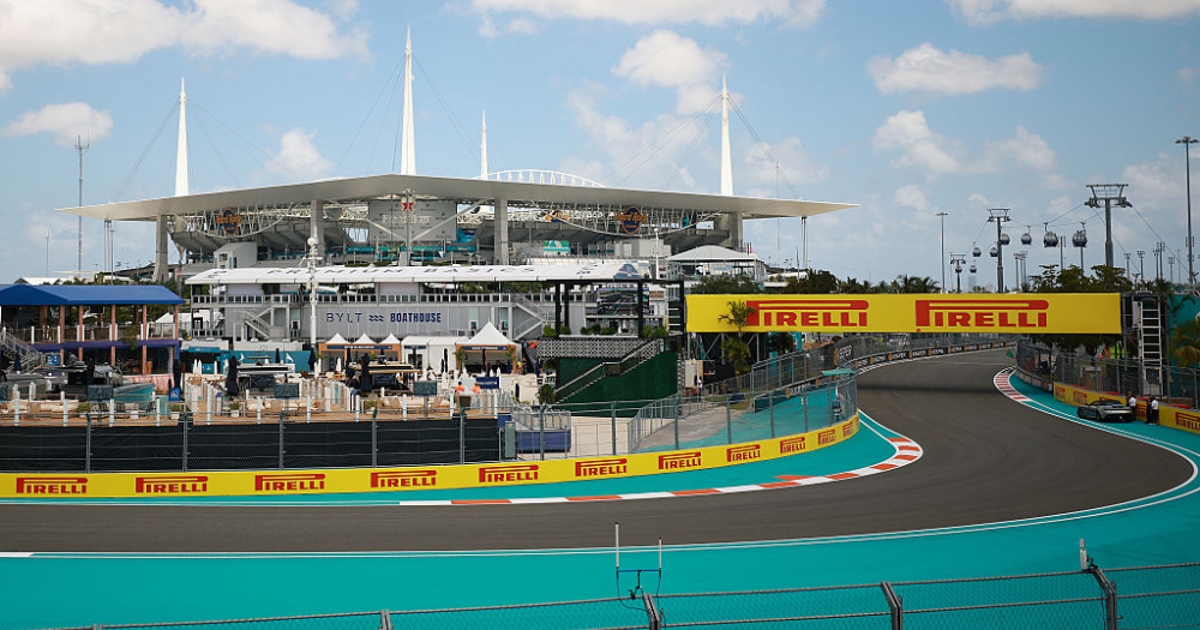
The Indy NXT series has solidified next year’s group and open testing schedule that will hold six official gatherings for its eight entrants and 24 cars.
Group tests involve sharing the track with at least one other series and the use of sessions to alternate between those series; open tests provide NXT drivers with exclusive use of the track throughout the day. Group and open tests are organized by NXT; private test days arranged by teams are not permitted.
Among the highlights, IndyCar’s top development series will launch its preseason running in Florida with a two-day group run on Sebring’s short course across January 19-20 and return to the stand and make its first visit to the Miami International Autodrome, home of the Formula 1 Miami Grand Prix, for two days of preparatory action across February 22-23.
The Sunday-Monday Miami group test takes place days before the start of the IndyCar and NXT seasons at St. Petersburg Feb. 27-March 1, and the rest of the tests fall within the active NXT championship.
After Miami, the series’ next gathering is for a single-day open oval test at Nashville Speedway on Thursday, April 2, and less than two weeks later, teams will reconvene for a two-day group road course test at Mid-Ohio across April 14-15.
One week after the stop in Ohio, NXT drivers will spend Wednesday, April 22, on the Illinois oval at World Wide Technology Raceway for an open test, and then it’s a two-month pause until the last organized test within the season as teams head to Wisconsin for the Tuesday, June 23, open test at the Milwaukee Mile.
NXT’s competition calendar is comprised of 17 races with a heavy emphasis on doubleheaders – 10 road and street course events will use the twin-race format – which concludes at the September 5-6 doubleheader in Monterey at Laguna Seca.

NTT Indy Car Series driver Callum Ilott will join Wright Motorsports as a full-time driver for the 2026 IMSA WeatherTech SportsCar Championship.
Ilott, who raced in IndyCar with PREMA this year following earlier stops at Juncos Hollinger and Arrow McLaren, will share the No. 120 Porsche 911 GT3 R with Wright owner/driver Adam Adelson, who purchased the team from founder John Wright in April.
It will be Ilott’s first full-season campaign in sports car racing since his 2024 FIA World Endurance Championship effort with Hertz Team JOTA, in which Ilott won the 6 Hours of Spa-Francorchamps, driving one of JOTA’s privateer Porsche 963s. He drove for Wright Motorsports as a guest driver during the 2023 Indianapolis 8 Hour.
Ilott also said that his new program in IMSA will be run alongside a continued program in IndyCar. There are no clashes between the two series, outside of shared events at the Grand Prix of Long Beach and Detroit Grand Prix.
“I’m thrilled to be joining Wright Motorsports for the full season in GTD alongside my IndyCar season,” said Ilott. “Having raced with Wright Motorsports once before, I got a taste of how impressive the team is and I’m motivated to continue building on that throughout the year. It’s shaping up to be a great season ahead and I can’t wait to get to work with Adam, Elliott, Tom and the whole Wright crew.”
2025 Porsche Motorsport North America (PMNA) Selected Driver, Tom Sargent, returns to drive the five-race Michelin Endurance Cup, while Adelson’s long-time co-driver Elliott Skeer will round out the four-driver crew for the Rolex 24 At Daytona in January.
“I’m extremely excited to get the 2026 season started off with Daytona,” said Adelson, who enters his third season in the IMSA WeatherTech SportsCar Championship. “We have a new car in the 911 GT3 R Evo, and have been working hard in the off season to be able to extract the most of it as soon as we hit the track.
“I’m also very excited that Callum is joining the team for the full season. We’ve been good friends for quite some time and always spoke about how cool it would be to race together, and I’m glad to see that come to fruition. For the Rolex 24, we have Tom and Elliott with us, and it’s a driver lineup I know we can count on to bring home a really strong result – hopefully better than last year!”
Wright Motorsports, who won the GTD class at the 2022 Rolex 24, will be one of at least five teams entering the newest 992.2-generation Porsche 911 GT3 R for its first IMSA race at Daytona – including Manthey’s two-car, two-class program, as well as AO Racing, Mühlner Motorsports, and RS1.
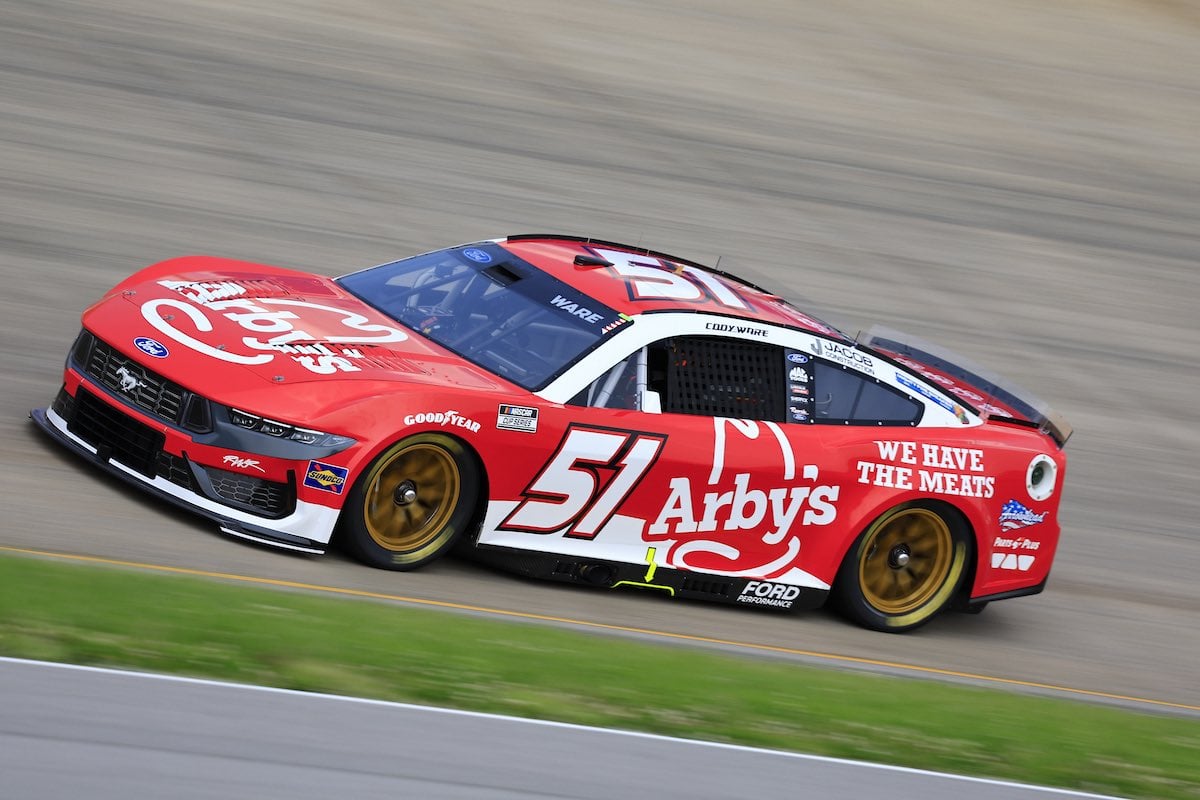
The NASCAR team also has a new alliance partner
Rick Ware Racing is making the switch from Ford to Chevy in 2026. It’s part of a new multi-year partnership.
They have also signed a technical alliance with Richard Childress Racing. RWR will also use engines prepared by ECR.
Cody Ware will drive the No. 51 in the Cook Out Clash at Bowman Gray Stadium on February 1st.
Rick Ware comments
“Chevrolet has always set a high bar with its people, its performance and its passion for racing, and partnering with them gives us the resources and support to make real progress on the racetrack,” Rick Ware, team owner stated via the release.
“Teaming up with RCR and ECR provides a foundation we can build on, not just for 2026, but for the future of our race team. We’re proud to be part of the Chevrolet family.”
“The NASCAR Cup Series is the toughest and most competitive series in motorsports, and this is an important move for the long-term growth of our company. We’ve won in NHRA, American Flat Track, World Supercross and the CARS Tour, and we want to elevate our NASCAR performance to the level of our other programs.”
GM Motorsports
“Rick and his team have shown a real commitment to growing their program, and we’re proud to support that effort alongside our partners at Richard Childress Racing and ECR Engines,” said Pat Suhy, manager, NASCAR Competition for GM Motorsports.
“Bringing RWR into the Chevrolet fold is a win for all of us. Their drive to keep improving aligns with our dedication to performance and innovation.”
Last month, Chevrolet released a new body shape for NASCAR Cup Series competition.
New NASCAR Chevy released for the 2026 season
Links
Rick Ware Racing | NASCAR | Team Chevy
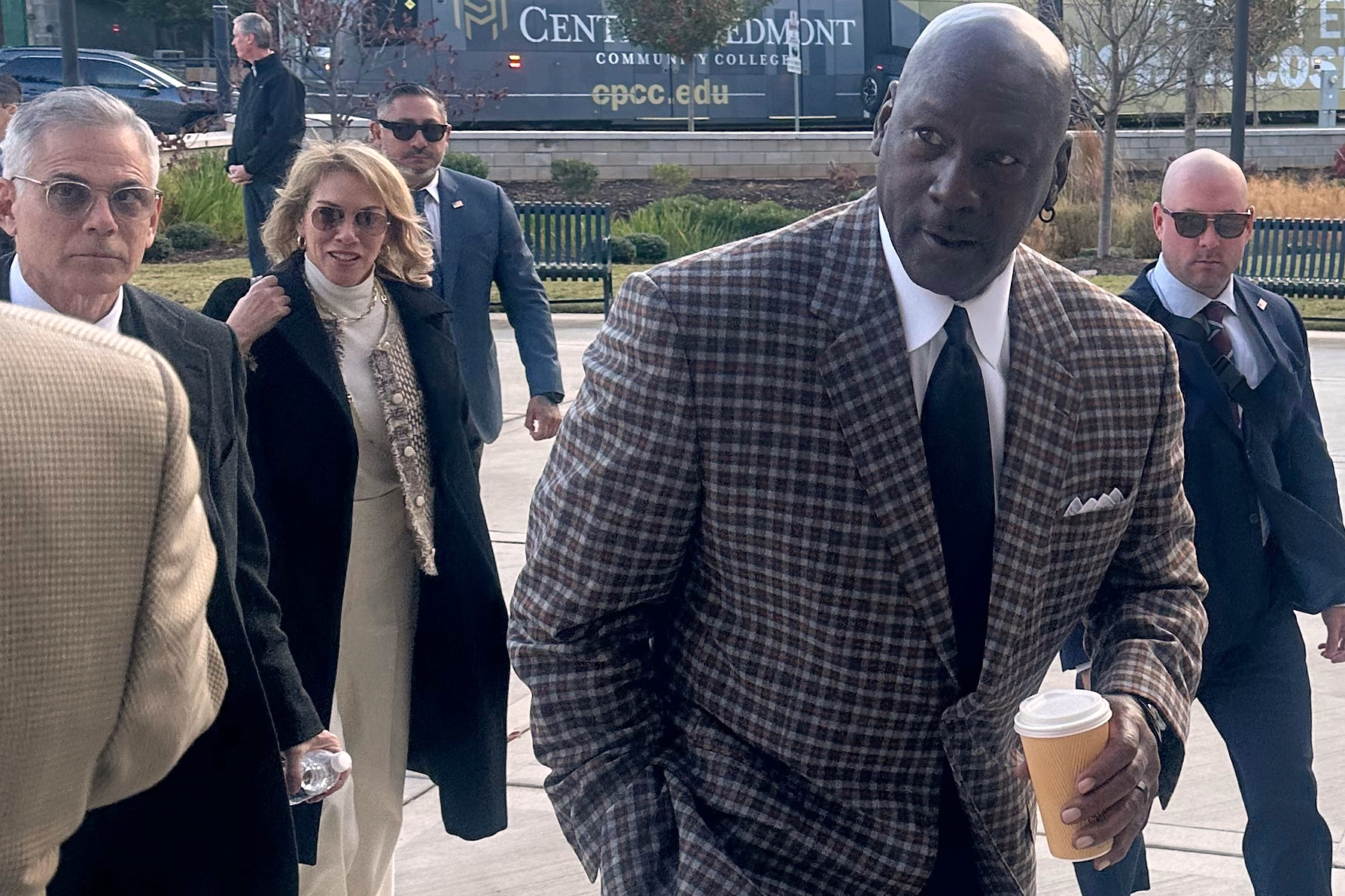

Michael Jordan arrives in the Western District of North Carolina on Monday Dec 1, 2025 for the start of the antitrust trial between 23XI Racing and Front Row Motorsports against NASCAR, in Charlotte, N.C.
Jenna Fryer/AP
Edward Snyder, a professor of economics who worked in the antitrust division of the Department of Justice and has testified in more than 30 cases, including “Deflategate” involving the NFL’s New England Patriots, testified on Monday. He gave three specific reasons NASCAR is a monopoly participating in anticompetitive business practices.
Article continues below this ad
Using a complex formula applied to profits, a reduction in market revenue, and lost revenue to 23XI Racing and Front Row Motorsports from 2021-24, Snyder came up with his amount of damages owed. Snyder applied a 45% of revenue sharing he alleged Formula 1 gives to its teams in his calculations; Snyder found that NASCAR’s revenue-sharing model when its charter system began in 2016 gave only 25% to the teams.
The suit is about the 2025 charter agreement, which was presented to teams on a Friday in September 2024 with a same-day deadline to sign the 112-page document. The charter offer came after more than two years of bitter negotiations between NASCAR and its teams, who have called the agreement “a take-it-or-leave-it” ultimatum that they signed with “a gun to their head.”
A charter is similar to the franchise model in other sports, but in NASCAR it guarantees 36 teams spots in the 40-car field, as well as specific revenue.
Make the Times Union a Preferred Source on Google to see more of our journalism when you search.
Add Preferred Source
Jordan and three-time Daytona 500 winner Denny Hamlin for 23XI, along with Front Row Motorsports and owner Bob Jenkins, were the only two teams out of 15 to refuse the new charter agreement.
Article continues below this ad
Snyder’s evaluations found NASCAR was in fact violating antitrust laws in that the privately owned racing series controls all bargaining because “teams don’t have anywhere else to sell their services.” Snyder said NASCAR controls “the tracks, the teams and the cars.”
Snyder repeatedly cited exclusivity agreements NASCAR entered into with racetracks after the charter system began. The agreements prevent tracks that host NASCAR from holding events with rival racing series. Prior to the long-term agreements, NASCAR operated on one-year contracts with its host racetracks.
The Florida-based France family founded NASCAR in 1948 and, along with Speedway Motorsports, owns almost all the tracks on the top Cup Series schedule. Snyder’s belief is that NASCAR entered into exclusivity agreements with tracks to stave off any threats of a breakaway startup series. In doing so, he said it eliminated teams’ ability to race stock cars anywhere else, forced them to accept revenue-sharing agreements that are below market value, and damaged their overall evaluations.
Snyder did his calculations for both teams based on each having two charters — each purchased a third charter in late 2024 — and found 23XI is owed $215.8 million while Front Row is owed $148.9 million. Based on his calculations, Snyder determined NASCAR shorted 36 chartered teams $1.06 billion from 2021-24.
Article continues below this ad
Snyder noted NASCAR had $2.2 billion in assets, an equity value of $5 billion and an investment-grade credit rating — which Snyder believes positions the France family to be able to pivot and adjust to any threats of a rival series the way the PGA did in response to the LIV Golf league. The PGA, Snyder testified, “got creative” in bringing in new revenue to pay to its golfers to prevent their defections.
Snyder also testified NASCAR had $250 million in annual earnings from 2021-24 and the France family took $400 million in distributions during that period.
NASCAR contends Snyder’s estimations are wrong, that the 45% F1 model he used is not correct, and its own two experts “take serious issue” with Snyder’s findings. Defense attorney Lawrence Buterman asked Snyder his opinion on NASCAR’s upcoming expert witnesses and Snyder said they were two of the best economists in the world.
Slow pace of trial
Snyder testified for almost the entirety of Monday’s session — the sixth day of the trial — and will continue on Tuesday. The snail’s pace has agitated U.S. District Judge Kenneth Bell, who heard arguments 30 minutes early Monday morning because he was annoyed that objections had been submitted at 2:55 a.m. and then 6:50 a.m.
Article continues below this ad
He needed an hour to get through the rulings, and testimony resumed 30 minutes behind schedule. When the day concluded, he asked the nine-person jury if they were willing to serve an hour longer each day the rest of the week in an effort to avoid a third full week of trial. He all said all motions must be filed by 10 p.m. each evening moving forward.
Bell wants plaintiff attorney Jeffrey Kessler to conclude his case by the end of Tuesday, but Kessler told him he still plans to call NASCAR chairman Jim France, NASCAR commissioner Steve Phelps and Hall of Fame team owner Richard Childress, who was the subject of derogatory text messages amongst NASCAR leadership and has said he’s considering legal action.
NASCAR has a list of 16 potential witnesses and Bell said he wanted the first one on the stand before Tuesday’s session concludes.
Article continues below this ad
AP auto racing: https://apnews.com/hub/auto-racing

Sports7 minutes ago
Michigan schools face Title IX complaint over transgender volleyball player

Motorsports29 minutes ago
Turner Motorsport’s Justin Rothberg Just Won the BMW Sport Trophy

Motorsports45 minutes ago
Ericsson to run Rolex 24 in WTR Lamborghini

NIL48 minutes ago
Reporter’s Notebook: Congress debates college sports NIL bill amid Lane Kiffin LSU controversy

Rec Sports60 minutes ago
A Cade Christmas: Cunningham gives back to Detroit youth

Motorsports1 hour ago
Indy NXT heading to Miami International Autodrome for testing

Rec Sports1 hour ago
Why the Texas Sport for Healing Fund Should Return – The Daily Texan

Rec Sports1 hour ago
Boys’ Varsity Basketball Honors Coach Darrell Sumpter, Defeats Sachem North

Motorsports1 hour ago
Ilott joins Wright Motorsports for full IMSA season; will dovetail IndyCar commitments

Rec Sports1 hour ago
Kids, Inc., Toot’n Totum launch ‘Change for Better’ campaign for Rockrose Sports Park

Sports1 hour ago
Mason Bendinger’s big week earns him Big South Co-Player of the Week – University of South Carolina

Motorsports2 hours ago
Rick Ware Racing is switching to Chevy for the 2026 season

NIL2 hours ago
Was Jeff Choate’s viral sales pitch good for Nevada football?

Motorsports2 hours ago
Economist says NASCAR owes $364.7M to teams in antitrust case

Sports3 hours ago
NCAA Women’s Div I Volleyball Tournament Glance

Rec Sports2 weeks ago
First Tee Winter Registration is open

Rec Sports2 weeks ago
Fargo girl, 13, dies after collapsing during school basketball game – Grand Forks Herald

Motorsports2 weeks ago
CPG Brands Like Allegra Are Betting on F1 for the First Time

Sports3 weeks ago
Volleyball Recaps – November 18

Motorsports2 weeks ago
F1 Las Vegas: Verstappen win, Norris and Piastri DQ tighten 2025 title fight

Sports2 weeks ago
Two Pro Volleyball Leagues Serve Up Plans for Minnesota Teams

Sports2 weeks ago
Utah State Announces 2025-26 Indoor Track & Field Schedule

Sports2 weeks ago
Sycamores unveil 2026 track and field schedule

Motorsports2 weeks ago
Redemption Means First Pro Stock World Championship for Dallas Glenn

NIL1 week ago
Bowl Projections: ESPN predicts 12-team College Football Playoff bracket, full bowl slate after Week 14

Sports2 weeks ago
Texas volleyball vs Kentucky game score: Live SEC tournament updates

NIL2 weeks ago
Indiana’s rapid ascent and its impact across college football

Rec Sports1 week ago
How this startup (and a KC sports icon) turned young players into card-carrying legends overnight

Motorsports1 week ago
Pohlman admits ‘there might be some spats’ as he pushes to get Kyle Busch winning again

Rec Sports1 week ago
Robert “Bobby” Lewis Hardin, 56

 Why a rising mid-major power with an NCAA Tournament team opted out of revenue-sharing — and advertised it
 NBA Legend Michael Jordan to Join NBC Sports as Special Contributor
 Falcons mailbag
 Portal Update – Basketball and Gymnastics Take Hits
 has always dreamed in Mercurial. Now his initials are on the boots.
The new Kyl…
has always dreamed in Mercurial. Now his initials are on the boots.
The new Kyl…
-
 Rec Sports2 weeks ago
First Tee Winter Registration is open
-
 Rec Sports2 weeks ago
Fargo girl, 13, dies after collapsing during school basketball game – Grand Forks Herald
-
 Motorsports2 weeks ago
CPG Brands Like Allegra Are Betting on F1 for the First Time
-
 Sports3 weeks ago
Volleyball Recaps – November 18
-
 Motorsports2 weeks ago
F1 Las Vegas: Verstappen win, Norris and Piastri DQ tighten 2025 title fight
-
 Sports2 weeks ago
Two Pro Volleyball Leagues Serve Up Plans for Minnesota Teams
-
 Sports2 weeks ago
Utah State Announces 2025-26 Indoor Track & Field Schedule
-
 Sports2 weeks ago
Sycamores unveil 2026 track and field schedule
-
 Motorsports2 weeks ago
Redemption Means First Pro Stock World Championship for Dallas Glenn
-
 NIL1 week ago
Bowl Projections: ESPN predicts 12-team College Football Playoff bracket, full bowl slate after Week 14