
Connect with us
https://yoursportsnation.com/wp-content/uploads/2025/07/call-to-1.png

NIL

Needing an Internal Lifeline that seems unlikely

Published

on

Needing an Internal Lifeline that seems unlikely

Needing an Internal Lifeline that seems unlikely
Georgia towel during Georgia’s practice session in Athens, Ga., on Tuesday, March 11, 2025. (Tony Walsh/UGAAA)

Very few events in the last century have affected college sports like NIL, but what is it, and why has it changed college sports forever?

Originally, Name, Image and Likeness (NIL) was a simple concept that allowed players to receive compensation when a business employed a player’s name, image or likeness in advertising or other promotional content. However, NIL has evolved and has become shorthand for all of the player-centric changes that have arrived and those to come.

For this article, I will refer to all player compensation as NIL.

The movement for NIL rights gained momentum with legal cases like Ed O’Bannon v. NCAA, where a former UCLA basketball player (O’Bannon) argued that the NCAA violated antitrust laws by not allowing athletes to profit from their name, image or likeness. He won. To understand how the current turmoil in college sports happened, one must look back to the late 1800s. Congress passed the Sherman Antitrust Act in 1890 to control the so-called “Robber Barons” that had come to dominate American industry. “Antitrust” is the key word. Another, more modern word for trust is “monopoly,” which exists when one entity controls a market. The NCAA qualifies as a trust since it effectively controls college sports through its 1,000-plus college and university membership.

With the recent Sherman Act in the national spotlight, college football fans might be tempted to see it as a consistent negative for college sports. Interestingly, the Sherman Act was also the basis of a court decision that college football fans universally cheer. In 1984, the Supreme Court ruled that NCAA control of television broadcast rights violated the Sherman Antitrust Act, bringing about today’s college football television programming bonanza for fans.

Federal courts opened the litigation floodgates when they ruled that the NCAA violated antitrust laws by restricting players’ right to profit from their NIL earning potential. The seemingly endless stream of lawsuits has changed fans’ perceptions of the game, with many expressing dissatisfaction with changes in recruiting and retaining players in an era of court-required modifications in the player/school relationship to a more straightforward financial arrangement.

There are three potential solutions to the chaos.

1. The status quo is that the NCAA remains in its role as the governing body for college sports, along with the financial penalties, requirements, restrictions and/or settlements imposed by or approved by the Courts.

2. Congress passes legislation that exempts the NCAA from antitrust laws. There is a precedent for Congressional action since Major League Baseball received an exemption in 1922. However, there isn’t a legislative consensus to provide relief now.

3. There is another way, however. The schools that want to play “big time” football (most agree that the total would be in the 50-70 range) withdraw from the NCAA to form a new governing body.

‌How does leaving the NCAA help?

The answer is in the leaving. Remember, all of the lawsuits that the NCAA is losing or will lose in the future are based on our old friend from the 19th century, antitrust laws.

There is a simple answer that negates the antitrust-based legal issues for the top programs: leave the NCAA and form a new governing body. A new, separate governing body cures the antitrust problem immediately since no trust (monopoly) can exist by definition when two or more competing athletic governing bodies exist in the college sports market.

Unfortunately, that simple answer faces stiff resistance and will receive serious consideration only in the wake of a blizzard of further lawsuits. That means we trudge into the future with the Federal Courts pointing the way since Congress seems unlikely to rescue the NCAA with the type of exemption given to Major League Baseball back in the day.

NCAA institutions that opt into the “House v. NCAA” settlement will be permitted to compensate their student-athletes directly. According to estimates, the cap imposed by the settlement will be around $20-$22 million in the 25-26 year. The settlement will bring revenue sharing to college athletics.

Former players are another group that receives compensation under the settlement terms:

Student-athletes who began competing in 2016 through Sept. 15, 2024, are eligible for name, image, and likeness (NIL) backpay. $2.576 billion will be available to eligible student-athletes. Division 1 institutions will fund the back pay via reduced revenue distributions from the NCAA.

How will UGA handle NIL?

That question was asked at the University of Georgia Athletic Association’s board of directors meeting in late February. Based on reports from the recent Athletic Association meeting, football players would be in line for about 75 percent of the revenue, men’s basketball 15 percent, and women’s basketball 5 percent. That accounts for 95% of the $20.5 million NIL funding, leaving five % for all other programs. For comparison, I found these numbers from Texas Tech, “about 74% to football players, 17-18% to men’s basketball, 2% to women’s basketball, 1.9% to baseball and smaller percentages to other sports, according to the Lubbock Avalanche-Journal.”

Bottom line: Are we at the point when player demands cause fans to start losing interest in college sports en masse, or are the seismic changes roaring through the college sports landscape just another change that a football-starved public will absorb, as many other social changes have been assimilated in the long history of college sports?

Just like in most sports, follow the money for an answer to that question. One bottom line is that funds will be available to fund the current $20.5 million NIL budget for most schools in the Power Four conferences, but prepare for the annual “setting of the budget” articles as the $20.5 million escalates annually.

However, questions remain.

A settlement in the cases that the NCAA has already lost does not prevent new antitrust suits from being filed at any time. Here is an example. The NCAA had instituted a rule prohibiting athletes from negotiating NIL deals until enrolled at a school. The rule was promptly challenged under antitrust law by attorneys general from several states. The generals won the battle.

I am skeptical that college sports can discover a long-term solution to NIL issues while the NCAA, crippled by legal matters, limps from courtroom loss to courtroom loss. The Association’s defense relies on its massive income stream to amortize its court-imposed liabilities. For example, according to the Washington Post, the NCAA is reported to receive over $900 million of its $1.4 billion budget from the NCAA basketball tournament in 2024. Of course, Congress may ride to the rescue by exempting the NCAA from antitrust laws like the aforementioned MLB exemption. Still, there has been no public indication that such legislation is imminent.

“Let’s just blow it up and start over” could be the rallying cry for a movement to replace the NCAA with a new organization made of the top sports programs in the country. As appealing as it may be for the “big time” programs to start over in an environment created with the express intent of curing antitrust violations in college sports by eliminating the trust (monopoly) and ushering in an era of self-determination for the schools that drive the revenue stream in college sports, it seems remote.

The SEC and Big 10 are talking about changes to the playoff. These signs of leadership and cooperation are the kind of joint discussions and initiatives that could expand to the discussion of a new league as court-imposed rules (or lack thereof) become too much for the membership to bear.

So where does all this NIL talk land?

Unfortunately, who knows, so stay tuned and hope the product on the football field remains so captivating that the passionate fans continue to support their favorite pastime even though it has troubling issues (off the field).

NIL

Dick Vitale finds College Football Playoff selection committee far from awesome, baby

Published

on


Dickie V knows football

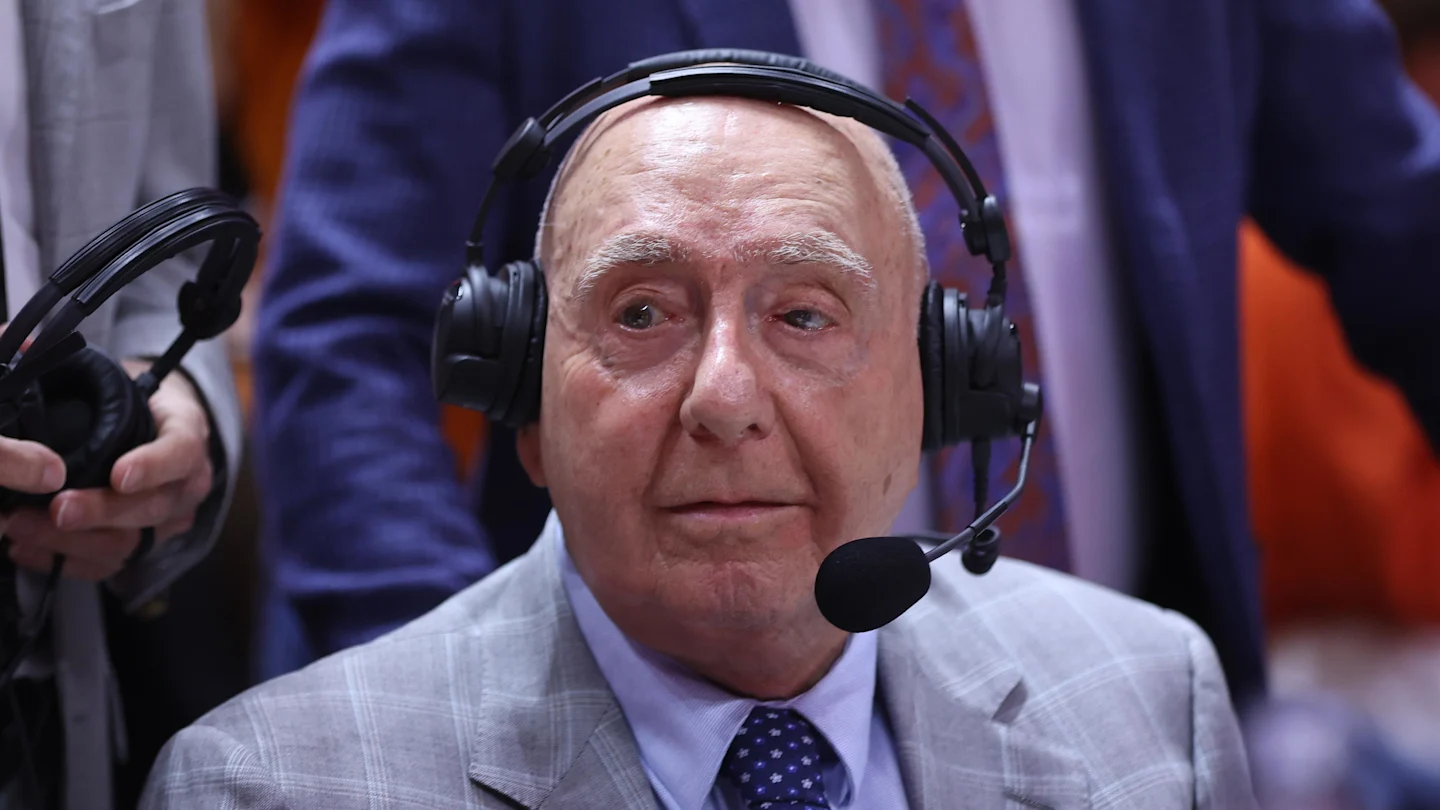
Dick Vitale is well-known and loved as a passionate broadcaster and follower of college basketball. His boundless enthusiam and endless catch phrases have dominated college basketball for several decades. But Vitale pretty clearly knows the gridiron as well, and directed some harsh comments on Sunday to the College Football Playoff selection committee. The topic of discussion was Notre Dame, long a Vitale favorite, as he acknowledged 11 family members who have graduated from the school.

Notre Dame’s rough situation

Notre Dame was ranked as the first team out of the College Football Playoff. The two biggest points of contention for the Irish and their fans are that three-loss Alabama remained ahead of them despite a 28-point loss in the SEC championship game, and that Miami– consistently ranked behind Notre Dame in the CFP weekly rankings– somehow jumped them in the final week despite neither team playing a game.

Vitale speaks out

Vitale shared a video to social media with comments he directed straight toward the CFP selection committee.

I’m really having a tough time. Every Tuesday for five consecutive weeks, you post on ESPN, the teams you think, the top 12 that would be eligible at that time to qualify for the Playoffs. Every week, EVERY, not two of the weeks, but all five weeks, you had Notre Dame over Miami. You had Notre Dame in there every week. How logically do they drop out on the last week, when they’ve done nothing in terms of losing a game during that period? Miami lost two games to unranked teams. I have a real tough time with that…. How do you explain the five weeks of having Notre Dame there and then bouncing them? They did zilch in terms of anything in causing that to happen. They didn’t lose a game. They blew out everybody they played, and the bottom line is they got a raw deal. They got a raw deal. Those kids belong in the Playoffs.

Dick Vitale

Irish reaction

Despite the emotional pitch of his video– and Vitale acknowledges that he’s a fan of the Irish– it’s hard to argue with Vitale’s fundamental talking points. Notre Dame pretty clearly felt the sting of CFP exclusion, as the Irish then turned down non-CFP bowl berths, indicating that for the Irish, the season ended up as CFP or bust. But even if the Irish are outside the Playoff, they do have one of the most notable voices in college sports indicating that their CFP exclusion is a difficult-to-justify stance that wrongs an excellent team.

Irish

Despite ten straight wins to finish the regular season, Notre Dame missed the College Football Playoff, which angered the usually peaceful Dick Vitale. | Stan Szeto-Imagn Images


Link

Continue Reading

NIL

Every college football team that declined their bowl game on Sunday

Published

on


Years ago, schools basically cued in line to plead for a spot in a post-season bowl game. Of course, that was an era before every breakfast cereal, motor oil, or obscure mortgage company was sponsoring its own personal bowl game. But Sunday emphasized a growing trend with a number of teams saying ‘thanks, but no thanks’ to bowl berths on Sunday. The final count included at least 10 teams that turned down bowl berths.

The denials sprang from a variety of potential reasons– from pouting over exclusion from the College Football Playoff to teams not wishing the dive into postseason play in the midst of coaching changes to teams that had given up hope at a bowl and moved on with the offseason. But Sunday’s massive exodus of teams NOT playing in bowls certainly made some college football history.

The Wrath of the Irish

Notre Dame’s bowl denial will probably draw the most attention. The Irish finished one spot out of the College Football Playoff, and accordingly decided that they would pass on the gamut of lower bowls. Notre Dame was purportedly offered a spot in the Pop-Tarts Bowl to play the team ranked behind them in the CFP rankings, BYU, but turned it down flat.

All of college football (and even some college basketball celebrities) weighed in on the propriety of the Irish bowl declination, but it’s a massive move that could reverberate throughout future bowl seasons.

Two Big 12 Coaching Shifts

Kansas State and Iowa State each turned down bowl invitations. In both cases, there are coaching transitions underway. Iowa State lost Matt Campbell to Penn State and is replacing him with Jimmy Rogers. Kansas State saw Chris Kliemann retire and Collin Klein replace him.

Despite the business excuse, the Big 12 made it clear that the decision was not a popular one at the league level. Both schools were fined $500,000 for turning down bowl bids.

Bowl Denial Dominoes (or Sunday Choas for the Birmingham Bowl)

While the NCAA had exactly the number of teams with six or more wins that it needed to fill the bowl vacancies, these three teams declining bowl berths caused the bowls to have to dip into the pool of 5-7 teams. A multitude of 5-7 teams declined bowl bids before Appalachian State finally completed the bowl picture by agreeing to play Georgia Southern in the Birmingham Bowl.

At least seven teams were reported to have turned down last-minute bowl invites off of 5-7 seasons. The list includes Florida State, Auburn, UCF, Baylor, Rutgers, Temple, and Kansas. The 11th hour bowl chaos led to more than a few jokes online. While the 82nd bowl berth was finally filled, at least 10 teams passed on postseason play on a memorable Sunday.


Link

Continue Reading

NIL

Are Ohio companies interested in NIL deals with high school athletes?

Published

on


Dec. 8, 2025, 6:05 a.m. ET

Fred Horner bleeds black and orange.

The owner of Advanced Industrial Roofing is a Massillon football booster and member of the Sideliner program, an initiative where community members act as mentors for varsity players, providing personal guidance and support.

He’s willing to help out Washington High School athletes any way he can. But don’t expect his company to start handing out lucrative name, image and likeness deals to high school students now that the agreements are legal in Ohio.


Link

Continue Reading

NIL

The College Football Playoff Committee took the messy route, but still landed on the right bracket

Published

on


If you want to hammer the College Football Playoff Committee for taking the scenic route on the way to the final bracket reveal, go ahead. That wasn’t the path many of us would have taken, especially if the goal were to set a clear expectation of what the final CFP bracket would look like.

Through more than a month of nationally televised CFP rankings shows, the Committee insisted on keeping Notre Dame slotted ahead of Miami. It didn’t matter that Miami possessed a head-to-head win and an identical record. The Committee told us repeatedly that it felt Notre Dame was better. As a result, we believed that’s what the people in that conference room in Grapevine, Texas, would do at the end.

They didn’t. On Sunday, when the final bracket featured Miami and not Notre Dame, it caused confusion and frustration. No, it was a shock. People couldn’t fathom how two idle teams could be flipped on Selection Sunday when neither team played during championship weekend.

We’ll get into why that happened later, but here’s the important thing: It’s not about the journey, it’s about the destination. And the destination was unequivocally correct. The games still matter and the notions of what we — or the people on the Committee — think would happen in the future didn’t come into play, even if we spent the last month thinking they would.

Miami couldn’t have been left out of the bracket while maintaining the integrity of the games. Had the CFP Committee included Notre Dame and not Miami, what they think would have taken priority over what happened on the field. Notre Dame and Miami’s resumes were similar enough that the result of the game had to matter the most. It couldn’t be ignored. It wasn’t.

If it wound up being ignored, that would have thrown the selection process into a chaotic world where the Committee members could veer from the guardrails — the games – and do whatever they want. So for at least another year, we get to live in a world where the CFP Committee leaned on the results of the games more than personal notions.

If you want to get into why the CFP Committee made this harder on themselves, that’s fine. They could have ranked Miami higher from the get-go, which would have stripped away all of the shock and confusion Notre Dame fans are feeling right now. The Committee made this harder for no reason.

So what’s the explanation for how the jump happened?

“Not until they really got to close proximity — side by side — with the move with BYU were we able to evaluate just those two teams. We always had someone between them,” CFP Committee chair Hunter Yurachek said on ESPN’s broadcast.

It’s all nonsense. How the CFP Committee could ignore the result of that game until its final deliberations doesn’t really make sense. If you’re questioning the process, please do it. There are plenty of holes to poke. But poking the process after the results are right is much better than poking the process after unjust results.

That brings us to Alabama, which got in despite losing to Florida State at the beginning of the year and getting blown off the field by Georgia in the SEC title game Saturday. Why didn’t Notre Dame and Miami go? How did Alabama get in still? Well, it all came back to who you beat.

Yes, Alabama had one more loss than Notre Dame. But its strength of schedule — which ranked No. 11 in comparison to Notre Dame at No. 42 and Miami at No. 44 — carried the day. Contrary to the propaganda the SEC dispersed last year about being penalized for playing tougher schedules, Alabama was actually forgiven for the extra loss because it beat Georgia during the regular season. That’s the benefit of playing in a tougher conference. You get a mulligan.

People have reason to be upset because of the unorthodox path the CFP Committee took.

But leaving Miami out in favor of Notre Dame would have been a miscarriage of justice. Feelings would have taken precedence over results, which ultimately means seasons could be simulated and teams could be slotted based on data.

This CFP Committee, more than others in the past, felt erratic. It felt like this Committee could have done something unconventional. But at the end of the road, it did what was right.

Even if you’re angry, be happy about that.


Link

Continue Reading

NIL

Major changes predicted after controversial College Football Playoff decision

Published

on


Whatever decisions the College Football Playoff selection committee eventually make, there seems to always be some form of controversy, and the 2025 bracket was no different after a consequential decision between Miami and Notre Dame.

With that controversy in mind, ESPN college football announcer Chris Fowler believes the playoff format and selection process could undergo yet more reform in the future.

More change could be on the way

“This is a bracket that’s going to be talked about forever. And not just because Notre Dame got excluded. But because of the framework that created the choices that the committee had to make,” Fowler said on Sunday’s selection show.

Fowler pointed to the “tweak” the College Football Playoff made a year ago, when it ended the confusing distinction between seeding and ranking, and believes another structural alteration could follow after this year’s dilemma.

“There’s going to be something more than a tweak going forward because all of a sudden, inclusivity, which most people in the sport think is a pretty good idea…

“Inclusivity sounds good until teams like Notre Dame and Texas and Vanderbilt get squeezed out. Then people have a serious problem with it.” he said.

Notre Dame felt it coming

Schools take a brave face in public when they have a chance to make the playoff, but the reality behind the scenes is often a little more nerve-racking.

Fowler added: “This is one we’re going to talk about for a long, long time. If you’re Notre Dame, you’re crushed. They were worried about this.” 

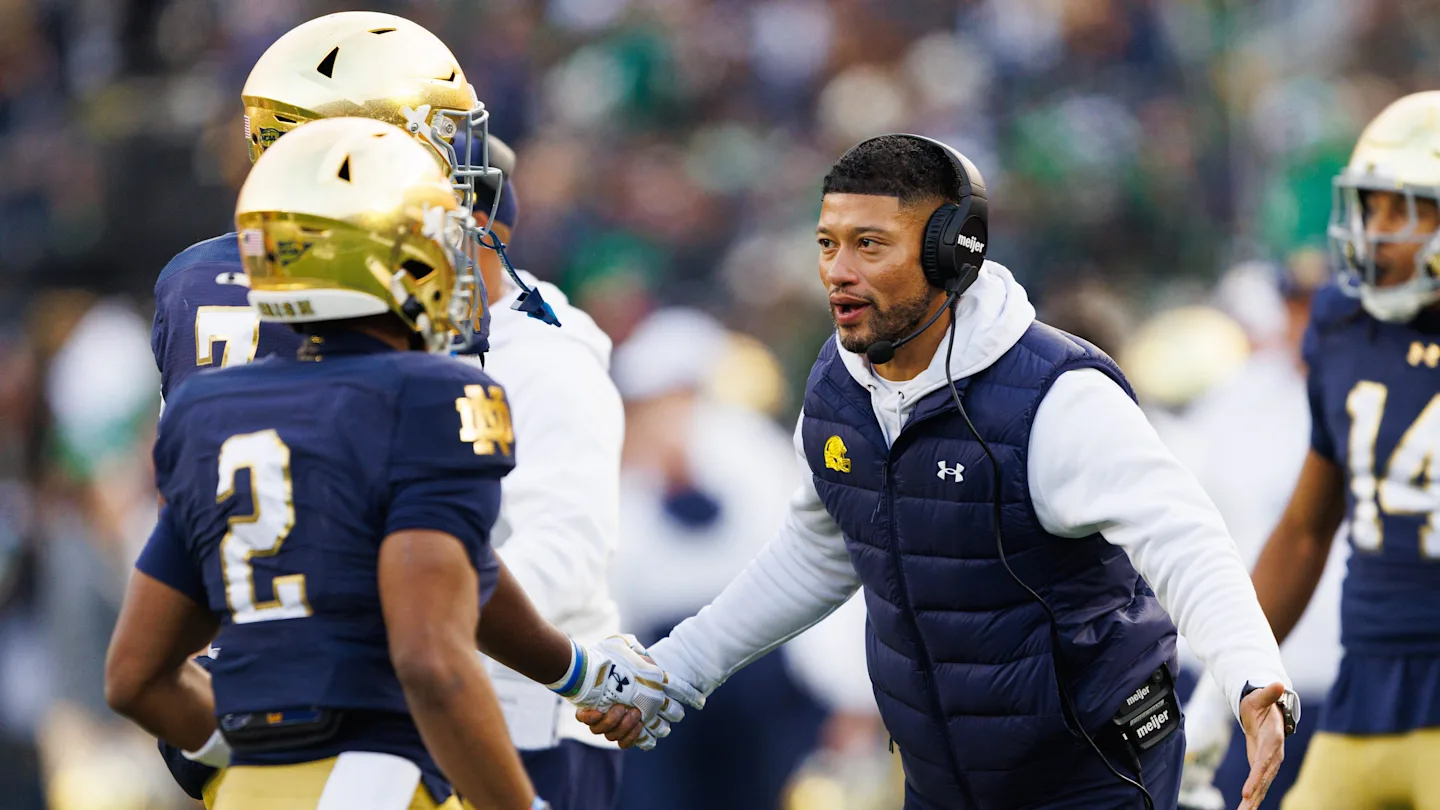
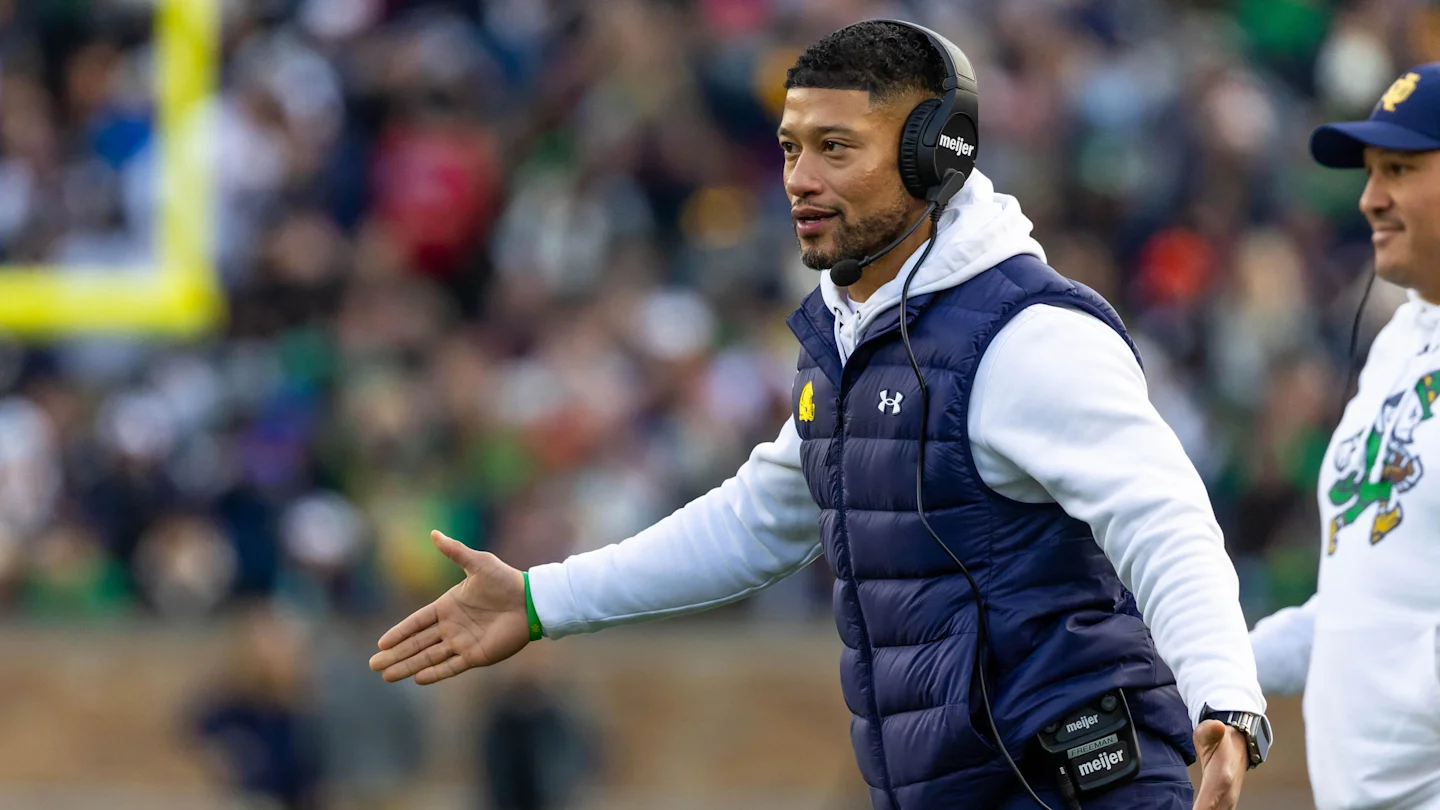
“I know they projected confidence, but there was a lot of unease on the part of Marcus Freeman and others because they saw them drop last week and now in consecutive weeks without playing, they have dropped in the rankings. And it ends up costing them despite a 10-game winning streak to finish the season.” 

Miami over Notre Dame was the right call

Notre Dame had been ranked ahead of Miami in the College Football Playoff rankings until Selection Day itself, when they swapped the Irish for the lower-ranked Hurricanes at the most crucial moment.

Still, despite whatever criticism there may be around the selectors’ decision-making process or timing, what happened on the field still should trump everything else, the ESPN veteran says.

“I have no problem with Miami getting in based on the head-to-head, even though it was early in the season,” Fowler said. 

“They won that game at the line of scrimmage… That was real. It was a late field goal that won it, but it still matters. And I think has to matter, or there’s no incentive to schedule any kind of meaningful non-conference game. 

“That’s not the committee’s job to protect that, or the committee’s job to protect with a sentimental eye [the] conference championship games, but those are also in danger, as we know, going forward.”

Read more from College Football HQ


Link

Continue Reading

NIL

Major college football program declines bowl game bid after losing head coach

Published

on


The Iowa State Cyclones will not play a postseason bowl game after all.

Iowa State (8-4) has reportedly declined a bowl bid as the program moves immediately into a coaching transition that accelerated this week, multiple people familiar with the situation told On3.

The decision arrived after Matt Campbell accepted the Penn State job, and Iowa State named Washington State’s Jimmy Rogers to replace him.

The Sun Belt fined Marshall $100,000 after it withdrew from the Independence Bowl in 2024 because of a mass player exodus.

The Big 12 itself has fined member schools previously in 2025 for other infractions, so financial penalties or public reprimands are within the conference’s authority.

The Big 12 will formally review Iowa State’s decision and consult with bowl partners to determine a potential fine or punishment. 

The Cyclones opened the 2025 season 5-0 and at one point reached the national rankings, but a four-game midseason slide pushed them off that path.

The team recovered with late wins over TCU, Kansas, and Oklahoma State and reached bowl eligibility with a 20-17 road victory at TCU on November 8.

The season finished at 8-4 overall and 5-4 in conference play.

Iowa State Cyclones quarterback Rocco Becht.

Stillwater, Oklahoma, USA; Iowa State Cyclones quarterback Rocco Becht (3) passes during the second half against the Oklahoma State Cowboys at Boone Pickens Stadium. | William Purnell-Imagn Images

The reported decision to decline a bowl is tied directly to off-field upheaval.

Campbell’s move to Penn State and the subsequent arrival of Rogers left Iowa State confronting immediate questions about who would coach a bowl game, which assistants would stay for postseason preparation, and how roster availability might be affected amid late-season transfers and staff turnover.

Initial reporting cites those uncertainties, along with the program’s desire to pivot quickly toward building for 2026, as the rationale for opting out.

This choice comes on the heels of a similar development earlier in the week: Kansas State, another bowl-eligible Big 12 team, informed the conference it would not accept a bowl invite.

Read More at College Football HQ

  • Nick Saban sends strong message on head coach replacing James Franklin at Penn State

  • ‘College GameDay’ announces celebrity guest picker for SEC Championship game

  • Kirk Herbstreit reacts to ESPN College GameDay’s historic reveal

  • Andy Reid reportedly involved in coaching candidate rejecting Penn State


Link

Continue Reading

Most Viewed Posts

Trending