
Sports
Magic happens when kids and adults learn to swim. Tragedy can strike if they don't.



At a swim meet just outside St. Louis, heads turned when a team of young swimmers walked through the rec center with their parents in tow.
A supportive mom kept her eye on the clock while the Makos Swim Team athletes tucked their natural curls, braids, and locs into yellow swimming caps. In the bleachers, spectators whispered about the team’s presence at the pool in Centralia, Illinois — as they do at almost every competition.
“They don’t know that we’re listening,” Randella Randell, a swimmer’s mom, later said. “But we’re here to stay. We’re here to represent. We’re going to show you that Black kids know how to swim. We swim, too.”
Randell’s son, Elijah Gilliam, 14, is a member of the Makos’ competitive YMCA and USA Swimming program based in North St. Louis. Almost 40 athletes, ages 4 to 19, swim on the squad, which encourages Black and multiracial kids to participate in the sport. Coached by Terea Goodwin and Torrie Preciado, the team also spreads the word about water safety in their community.
“If we can get everybody to learn how to swim, just that little bit, it would save so many lives,” said Goodwin, a kitchen and bathroom designer by day who is known as Coach T at the pool. “Swimming is life.”
But just like mako sharks, such teams of Black swimmers are rare. Detroit has the Razor Aquatics, Howard University in Washington, D.C., has a team that’s made headlines for winning championships, and some alums from North Carolina A&T’s former swim team created a group to offer water safety classes.
In the past, Black Americans were barred from many public swimming pools. When racial segregation was officially banned, white Americans established private swim clubs that required members to pay a fee that wasn’t always affordable. As a result, swimming remained effectively segregated, and many Black Americans stayed away from pools.
The impact is still felt. More than a third of Black adults report they do not know how to swim, according to Centers for Disease Control and Prevention statistics, more than twice the rate for adults overall.
Seeing a need in their community, the parents of the Makos swimmers formed the Black Swimmers Alliance at the end of 2023 with a goal of “bridging the gap in aquatic skills,” according to its website. But the group, which offers swim lessons to families of color, is concerned about the flow of grant money dwindling because of the recent federal backlash against diversity, equity, and inclusion programs. Even so, they are fundraising directly on their own, because lives are being lost.
In late January, a 6-year-old died at a hotel pool in St. Louis. A boy the same age drowned while taking swim lessons at a St. Louis County pool in 2022. And across the river in Hamel, Illinois, a 3-year-old boy drowned in a backyard pool last summer.
Drowning is the leading cause of death for children ages 1 through 4, according to the CDC. Black children and Black adults drown far more often than their white peers.
Members of the Black Swimmers Alliance discussed those statistics before their advocacy work began. They also had to address another issue — many of the adult volunteers and parents with children on the Makos team didn’t know how to swim. Even though their children were swimming competitively, the fear of drowning and the repercussions of history had kept the parents out of the pool.
The Makos athletes also noticed that their parents were timid around water. That’s when their roles reversed. The children started to look out for the grown-ups.
Joseph Johnson, now 14, called out his mom, Connie Johnson, when she tried to give him a few tips about how to improve his performance.
“He was like, ‘Mom, you have no idea,'” the now-55-year-old recalled. “At first, I was offended, but he was absolutely right. I didn’t know how to swim.”
She signed up for lessons with Coach T.
Najma Nasiruddin-Crump and her husband, Joshua Crump, signed up, too. His daughter Kaia Collins-Crump, now 14, had told them she wanted to join the Makos team the first time she saw it. But among the three of them, no one knew how to swim.
Joshua Crump, 38, said he initially felt silly at the lessons, then started to get the hang of it.
“I don’t swim well enough to beat any of the children in a race,” he said with a chuckle.
Nasiruddin-Crump, 33, said she was terrified the first time she jumped in the deep end. “It is the only moment in my life outside of birthing my children that I’ve been afraid of something,” she said. “But once you do it, it’s freedom. It’s pure freedom.”
Mahoganny Richardson, whose daughter Ava is on the team, volunteered to teach more Makos parents how to swim.
She said the work starts outside the pool with a conversation about a person’s experiences with water. She has heard stories about adults who were pushed into pools, then told to sink or swim. Black women were often told to stay out of the water to maintain hairstyles that would swell if their hair got wet.
Bradlin Jacob-Simms, 47, decided to learn how to swim almost 20 years after her family survived Hurricane Katrina. She evacuated the day before the storm hit but said one of her friends survived only because that woman’s brother was able to swim to find help.
“If it wasn’t for him, they would have died,” she said, noting that hundreds did drown.
“That’s the reason why swimming is important to me,” she said. “A lot of times, us as African Americans, we shy away from it. It’s not really in our schools. It’s not really pushed.”
Makos swimmer Rocket McDonald, 13, encouraged his mom, Jamie McDonald, to get back into the water and stick with it. When she was a child, her parents had signed her up for swim lessons, but she never got the hang of it. Her dad was always leery of the water. McDonald didn’t understand why until she read about a race riot at a pool not far from where her dad grew up that happened after St. Louis desegregated public pools in 1949.
“It was a full-circle moment,” McDonald said. “It all makes sense now.”
Now, at 42, McDonald is learning to swim again.
Safety is always a priority for the Makos team. Coach T makes the athletes practice swimming in full clothing as a survival skill.
Years ago, as a lifeguard in Kansas City, Missouri, Coach T pulled dozens of children out of recreational swimming pools who were drowning. Most of them, she said, were Black children who came to cool off but didn’t know how to swim.
“I was literally jumping in daily, probably hourly, getting kids out of every section,” Goodwin said. After repeated rescues, too many to count, she decided to offer lessons.
Swim lessons can be costly. The Black Swimmers Alliance aimed to fund 1,000 free swim lessons by the end of 2025. It had already funded 150 lessons in St. Louis. But when the group looked for grants, the alliance scaled back its goal to 500 lessons, out of caution about what funding would be available.
It’s still committed to helping Black athletes swim competitively throughout their school years and in college.
Most of the time, the Makos swimmers practice in a YMCA pool that doesn’t have starting blocks. Backstroke flags are held in place with fishing wire, and the assistant coach’s husband, José Preciado, used his 3-D printer to make red, regulation 15-meter markers for the team. Once a week, parents drive the team to a different YMCA pool that has starting blocks. That pool is about 5 degrees warmer for its senior patrons’ comfort. Sometimes the young swimmers fuss about the heat, but practicing there helps them prepare for meets.
Parents said white officials have frequently disqualified Makos swimmers. So some of the team parents studied the rules of the sport, and eventually four became officials to diversify the ranks and ensure all swimmers are treated fairly. Still, parents said, that hasn’t stopped occasional racist comments from bystanders and other swimmers at meets.
“Some didn’t think we’d make it this far, not because of who we are but where we’re from,” Goodwin has taught the Makos swimmers to recite. “So we have to show them.”
And this spring, Richardson is offering lessons for Makos parents while their children practice.
“It’s not just about swimming,” Richardson said. “It’s about overcoming something that once felt impossible.”
|
|

KFF Health News










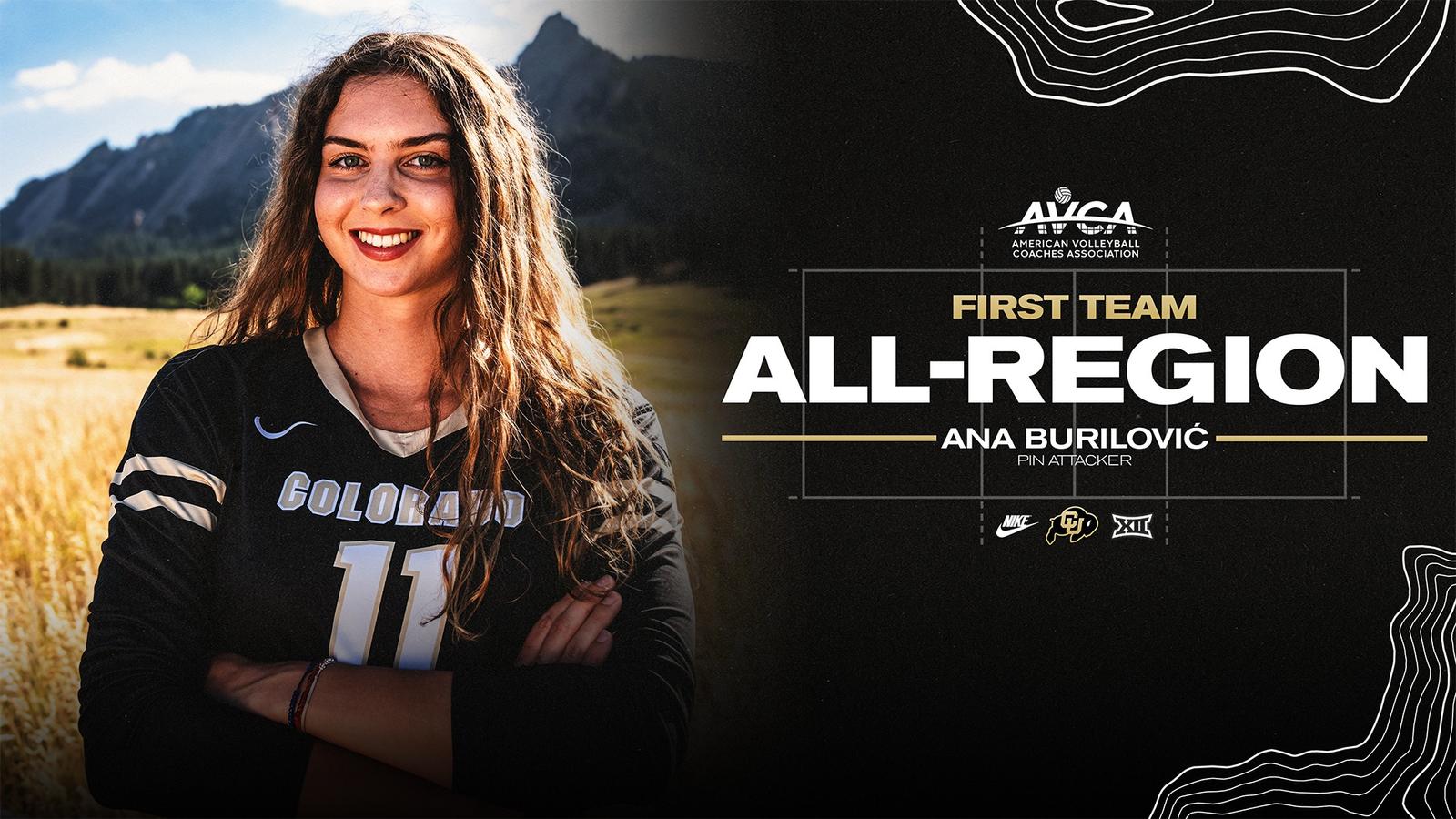
Burilovic’s all-region selection marks the program’s 30th postseason regional selection all-time. This is also her second postseason award after being named to the 2025 All-Big 12 First Team last week. The last time Colorado was named to the All-Region First Team was middle blocker Naghede Abu and outside hitter Alexa Smith in 2018. Colorado’s last all-region selection was an honorable mention for middle blocker Meegan Hart in 2020. Colorado’s first appearance on the all-region team was the first team for setter Nicole Vranesh in 1992.
Burilovic leads the Big 12 in points per set (5.47) and kills per set (4.71). She is also third in conference for aces per set (0.43). This is Burilovic’s first all-region selection of her career. In her 32 matches in 2025, she has accumulated 565 kills, 211 digs, 51 aces, 64 blocks and 19 assists. Burilovic has four kill-dig double-doubles on the season, now totaling 10 in her career. She has had 13 matches with 20 or more kills this season (a CU VB record), including two 30+ kill matches against UCF (Oct. 2) and at Northern Colorado (Oct. 28) – she is only the second player in Colorado Volleyball history to have two matches in one season with over 30 kills. On Sept. 30, Burilovic was named AVCA Player of the Week after aiding the Buffs in their road-sweep over then-No.14 BYU, and then-No.23 Utah. She was named Big 12 Offensive Player of the Week on Nov. 4, after leading Colorado’s win over Northern Colorado with 30 kills, hitting .329, nine digs, two blocks and one ace (Oct. 28). Burilovic surpassed 1,000 career kills at West Virginia, becoming the 19th Buff to total over 1,000 career kills. She now has 1,061 career kills, 521 career digs, 118 career aces and 116 career blocks.
Fourteen student-athletes were selected to the AVCA All-West Region First Team, and six were named Honorable Mention. A full list of the honorees can be found after this release.
Under 10th-year head coach Jesse Mahoney, Colorado finished the 2025 season 23-9 and went 12-6 against Big 12 opponents. Coach Mahoney has led the Buffs to a 164-135 record in his 10 seasons at the helm. The Buffs made their 22nd appearance in the NCAA tournament after the conclusion of the regular season, sweeping American in the first round before falling to four-seed Indiana in the second round. The Buffs’ last match against the Hoosiers marks the 12th second round appearance in program history. Colorado has 20 wins this season, marking the program’s 13th 20-win season and its first since 2022. With 23 wins this season, this is the most in a season since 2017 and ties for the third-most wins in a season in program history.
For more information on the Colorado volleyball team, please visit cubuffs.com/vb. Fans of the Buffs can follow @cubuffsvb on Instagram, X, and Facebook.
West Region
1st Rebekah Allick University of Nebraska MB Sr
1st Tierney Barlow Utah State University MB Sr
1st Ana Burilovic University of Colorado OH Jr
1st Laney Choboy University of Nebraska L Jr
1st Suli Davis Brigham Young University OH Fr
1st Kamryn Gibadlo University of Utah OH Jr
1st Andi Jackson University of Nebraska MB Jr
1st Brielle Kemavor Brigham Young University MB Jr
1st Kaylie Kofe Utah State University S So
1st Annalea Maeder Creighton University S Sr
1st Ava Martin Creighton University OH Sr
1st Harper Murray University of Nebraska OH Jr
1st Bergen Reilly University of Nebraska S Jr
1st Kiara Reinhardt Creighton University MB Sr
Honorable Mention
HM Virginia Adriano University of Nebraska RS Fr
HM Alex Bower Brigham Young University S So
HM Loryn Helgesen Utah State University RS So
HM Taylor Landfair University of Nebraska OH Sr
HM Claire Little Chambers Brigham Young University OH Jr
HM Avery Page Utah Valley University OH Sr
West Region Award Winners
Region Player of the Year: Bergen Reilly, University of Nebraska, S, Jr
Region Freshman of the Year: Suli Davis, Brigham Young University, OH
Region Coach of the Year: Dani Busboom Kelly, University of Nebraska
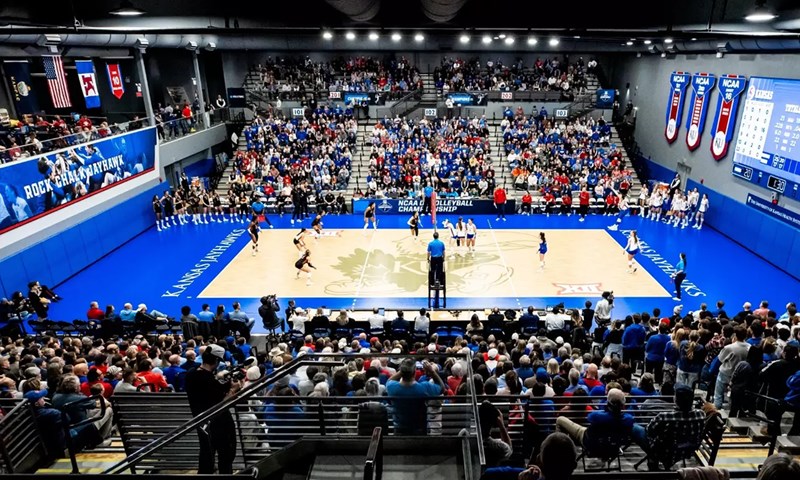
Arizona State and Kansas advanced to the Regional Semifinal round of the 2025 NCAA Division I Women’s Volleyball Championship. This is the fifth time in the last seven years that the Big 12 has sent at least two programs to the Sweet 16 and the first time since 2022. Additionally, the Big 12 finished with eight wins in the first round, the most in Conference history, surpassing the previous high of six (2004, 2006, 2023).
No. 2 seed Arizona State defeated Coppin State and Utah State to make its fourth trip to the regional semifinals in program history, and the second time in the last three years. The Sun Devils improved to 28-3 on the year, the second-most wins in school history. This marks the first time in the NCAA era that Arizona State has finished the year undefeated at home and the second time in Arizona State history. The 2025 Big 12 Offensive Player of the Year, Noemie Glover, recorded 17 kills, the second-most for the Sun Devils behind only Bailey Miller (18 kills). Arizona State will next play No. 3 seed Creighton on Thursday, Dec. 11 at Noon CT/11 a.m. MST.
No. 4 seed Kansas will play in the Sweet 16 for the first time since 2021, and the fourth time in program history after two wins at Horejsi Family Volleyball Arena. The Jayhawks swept High Point (3-0) before taking down No. 5 seed Miami (3-1) behind seniors Rhian Swanson and Katie Dalton. Swanson increased her season total to 19 games with double-digit kills, while Dalton added 59 assists across the two matches. Kansas will play top-seeded Nebraska on Friday, Dec. 12 at 8:30 p.m. CT.
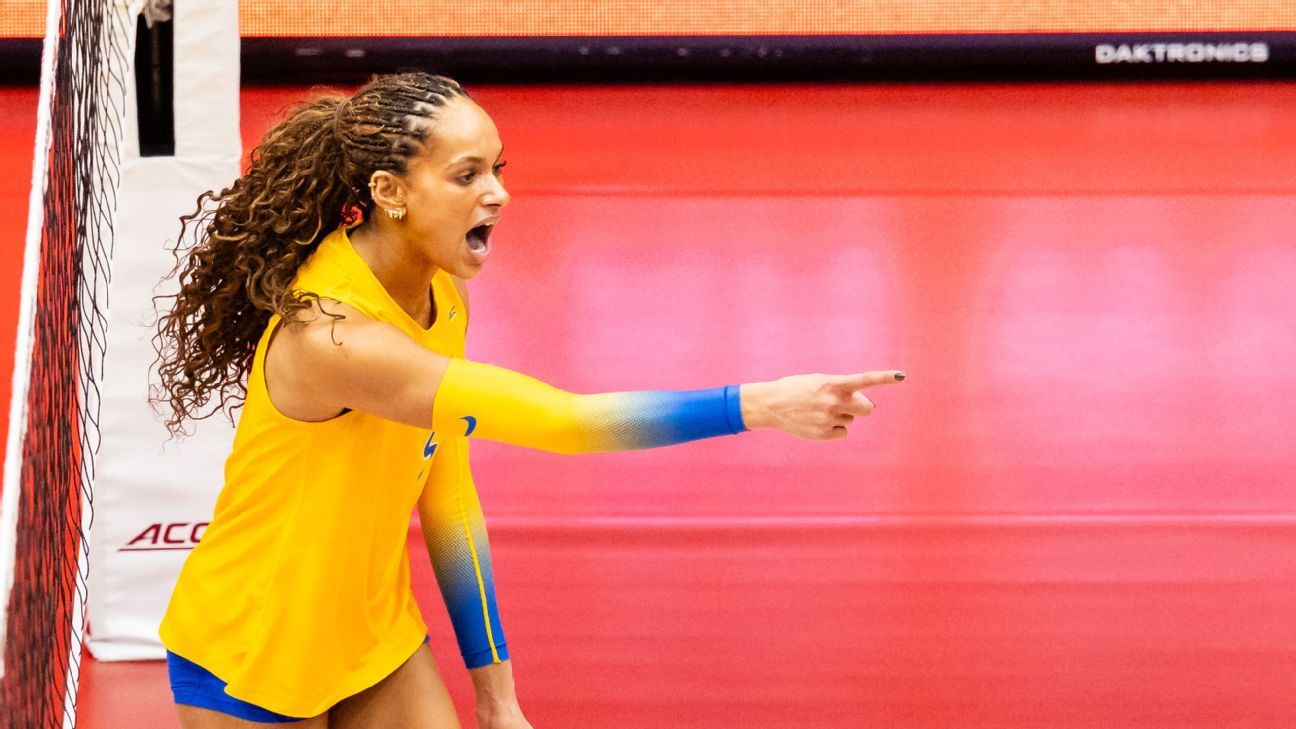
The 2025 NCAA volleyball tournament is down to its final 16 teams. But countless pressing questions remain as the tournament makes its way to the final four in Kansas City. Can Nebraska, the No. 1 overall seed, finish undefeated and claim the program’s sixth national title? Can Pitt advance to its fifth straight final four appearance? Will SEC champion Kentucky return to the final four for the first time since winning its first national championship in 2020? Is a young Texas team ready to cash in ahead of schedule?
Here are the 10 (OK, 11) players who will have a major say in answering those questions and more.
Olivia Babcock, Pitt: If the volleyball gods could issue a warning for the NCAA tournament’s stretch run, it would read something like this: “Do not take your eyes off Olivia Babcock, or else…” Arguably the most dynamic player in the college game, the 6-foot-4 Babcock averages 5.9 points per set and 5.1 kills per set for a team that is looking to return to the final four for the fifth straight time. The ACC Player of the Year had more than 40 kills in two matches this season from her opposite hitter position. With springy legs and a powerful arm from the front row, back row and behind the service line, Babcock, the 2024 AVCA Player of the Year, is magic in motion. Look away at your own risk.
Ella Swindle, Texas: Surrounded by strangers at the start of the season, the Longhorns’ junior setter holds the key to the powerful Texas attack. The 6-foot-3 Swindle led Texas to the national title in 2023 but then played a backup role a year ago when Texas fell to Creighton in the regional semifinals. This year, she has 898 assists — mostly to hitters she had never played with before the season. Texas’ top three hitters are Pitt transfer Torrey Stafford (488 kills) and freshmen Cari Spears (338 kills) and Abby Vander Wal (268 kills), and Swindle has the offense hitting at a .316 clip, tied for third-best in the nation.
Rebekah Allick, Nebraska: The top-seeded Cornhuskers take the court with a pick-your-poison approach. Every attacker around Big Ten Player and Setter of the Year Bergen Reilly can terminate (see: Andi Jackson, Taylor Landfair, Harper Murray). Every defender on the court can dig (see: Laney Choboy, Olivia Mauch, Teraya Sigler). On volleyball’s balanced behemoth, Allick stands out for her passion. Make no mistake: Allick, a 6-foot-4 senior middle blocker, is having the best statistical season of her career, hitting .437 (eighth-best in the country but seven slots below fellow middle blocker Jackson) with 235 kills. But nothing fires up the No. 1 overall seed more than an Allick roar after a stuffed block or a kill on an opponent’s overpass. The Huskers will be tested. And when they are, they’ll turn to Allick for inspiration.
Brookeva DeHudson, Kentucky: Don’t google her. It’s impossible to pick one Kentucky superstar outside hitter over the other. Brooklyn DeLeye and Eva Hudson are both that good, so we merged them into one spot. DeLeye was the SEC Player of the Year in 2024. Hudson, in her first year with the Wildcats after transferring from Purdue, is the SEC Player of the Year in 2025. The 6-foot-2 DeLeye has 495 kills on the season and averages 4.7 per set. The 6-foot-1 Hudson has 482 kills and averages 4.6 per set. Slow down one? Maybe. Stop both? Nearly impossible. Together they are the most lethal pair of pin hitters in the tournament and the engine driving Kentucky toward a shot at a second national title.
Chloe Chicoine, Louisville: Now we come upon the rarest of all sightings in the latter half of the NCAA tournament: a 5-foot-10 outside hitter. Chicoine, a transfer-portal addition to the reigning national runners-up, brings her impressive vertical leap and feisty play from Purdue to Louisville. She comes into the regional semifinals with her arm blazing. Chicoine crushed a season-high 28 kills in a five-set win over Marquette in the second round. She leads the balanced Cardinals with 387 kills and is second in digs with 332.
Mimi Colyer, Wisconsin: Two words: Instant. Offense. The 6-foot-3 senior outside hitter and Oregon transfer was a unanimous all-Big Ten selection in her first season with the Badgers. How could she not be? Colyer averages 5.32 kills per set, tops among players remaining in the tournament, and hits .340. She spent her free time getting 220 digs and 67 blocks. With setter extraordinaire Charlie Fuerbringer healthy and back on the court, the Badgers bring an offense that can pose problems for anyone and everyone.
Averi Carlson, SMU: The 5-foot-11 setter started for two seasons at Baylor, then started at Texas, then led the U.S. U23 national team to gold at the Pan American Cup, and now she orchestrates a high-powered Mustangs attack. The ACC Setter of the Year runs an offense that hits .316, tied for third-best (with Texas) in the country. She has developed a quick and lethal connection with fellow transfer Malaya Jones (503 kills) from Colorado State. She also puts up a strong block, with 85 on the season.
Noemie Glover, Arizona State: Since transferring from Oregon before the season, the Sun Devils’ opposite hitter has had exactly one match in which she didn’t produce double-digit kills — but even in that match she hit .444. The 6-foot-2 Glover has 406 kills, 108 blocks and 80 digs. Fun fact: Her dad, La’Roi Glover, played 13 seasons in the NFL and was a six-time Pro Bowler.
Elia Rubin, Stanford: The senior and four-year Cardinal starter has become synonymous with Stanford volleyball over the past four seasons. She brings a host of awards — AVCA All-America, All-ACC, All-Pac 12 — and 1,607 career kills into the regional semifinals. This season, she leads the second-seeded Cardinal in kills (378) and aces (45) and is second in digs (296). About the only thing Rubin hasn’t done in her Stanford career is play in the final four.
Logan Lednicky, Texas A&M: The 6-foot-3 senior opposite hitter is as steady as they come. She has been killing it for the Aggies for four straight seasons, and she’s poised to go out with a bang in her final NCAA tournament run. Through her first two tournament games, she has 39 kills on a .429 percentage and is averaging 6.21 points per set. The AVCA Player of the Year semifinalist plays some mean defense too — she has 83 blocks and 275 digs this season, both second-most among the Aggies.

Brands have long turned to professional athletes for their star power in big-budget commercials, but recent shifts in name, image, and likeness (NIL) policy have pushed marketers to widen the talent pool.
On July 1, the House v. NCAA settlement took effect, allowing colleges to compensate athletes for their NIL usage. Marketers expect that these athletes, many of whom have built-in communities and an engaged digital fanbase, can help brands stand out in the influencer space.
- Student athletes boast a social media engagement rate 3.7x higher than traditional influencers (5.6% compared to 1.9%), according to a June Opendorse report.
“College athletes bring a new edge by commanding hyper-loyal, local communities,” said Alison Bringé, CMO of Launchmetrics, “shaping culture on campuses and connecting with younger consumers with a level of authenticity traditional influencers can’t reach.”
Why college athletes resonate
NIL compensation has shown that sports influence functions like creator influence, as fans want more from their favorite players than just highlight reels. US sports fans look for personal life updates (31%) almost as much as game highlights (34%), according to an April YouGov survey.
“With jam-packed schedules, they don’t always fit the mold of the ‘always-on’ influencer, which makes the glimpses they share into their daily lives, routines, and preferences even more special and exciting to fans,” said Ajalin Williamson, strategy director at The Goat Agency in an October report.
Inside the sports creator economy
With the NIL settlement giving new opportunities to athletes and marketers, brands are reconsidering who is influential, recognizing that considering the full sports sphere can lead to more memorable work.
Cameo, an app where consumers buy personalized videos from celebrities, is recognizing the value of expanding athlete partnerships through a partnership with the Pro Athlete Community (PAC). The goal is to highlight how “brand deals have historically been limited to only the most prominent names,” according to a press release.
You no longer need to be in the big leagues to be a top sports creator. The Savannah Bananas, an exhibition baseball team that is known for their choreographed dances and social presence, has 11.1 million TikTok followers. The Yankees have 1.8 million, and The Mets only 801.7 thousand.
Dec. 10, 2025, 6:02 a.m. ET
The 2025 NCAA volleyball tournament continues Thursday with the Sweet 16. And when the sport’s biggest event begins, there will be so many players on the court with ties to the NBA and NFL.
There’s an entire pipeline of college volleyball players whose dads played professional sports. For example, NBA Hall of Famer Tim Duncan has a daughter, Sidney, who is a middle blocker for No. 5 ranked and 2 seed Stanford Cardinal. Super Bowl champion and NFL player Joe Jurevicius has two children, Caroline and Ava, who play for the defending champion Penn State Nittany Lions.
In honor of so many dads and daughters with serious athleticism, here are eight NCAA volleyball players who have famous fathers (and some future players to keep an eye on):
1. Sidney Duncan, Stanford, middle blocker
Dad: Tim Duncan, NBA, San Antonio Spurs — Basketball Hall of Famer, picked No. 1 in the 1997 NBA draft out of Wake Forest, five-time NBA champion, three-time NBA Finals MVP, 15-time NBA All-Star
2. Caroline Jurevicius, Penn State, outside hitter
Dad: Joe Jurevicius, NFL, New York Giants, Tampa Bay Buccaneers, Seattle Seahawks, Cleveland Browns — Wide receiver drafted in the first round out of Penn States by the Giants, played 10 seasons in the league, won a Super Bowl with Bucs
3. Ava Jurevicius, Penn State, defensive specialist
Dad: Joe Jurevicius, NFL, New York Giants, Tampa Bay Buccaneers, Seattle Seahawks, Cleveland Browns — Wide receiver drafted in the first round out of Penn States by the Giants, played 10 seasons in the league, won a Super Bowl with Bucs
4. Alexis Ewing, Penn State, outside hitter
Dad: Patrick Ewing, NBA, New York Knicks, Seattle SuperSonics, Orlando Magic — Basketball Hall of Famer, won an NCAA championship at Georgetown, drafted No. 1 overall in the 1985 draft by the New York Knicks, 11-time NBA All-Star
5. Cari Spears, Texas, outside hitter
Dad: Marcus Spears, NFL, Dallas Cowboys, Baltimore Ravens — Won a national championship in 2003 with LSU, drafted in the first round, No. 20 overall, to the Cowboys
6. Jackie Taylor, North Carolina, middle blocker
Dad: the late Sean Taylor, NFL, Washington Commanders — Drafted No. 5 overall out of Miami by the now Washington Commanders in 2004, two-time Pro Bowl selection
7. Rylie McGinest, USC, middle blocker
Dad: Willie McGinest, NFL, New England Patriots, Cleveland Browns — First round pick, No 4 overall out of USC by the New England Patriots in 1994, played 15 seasons, won three Super Bowls, two-time Pro Bowl selection
8. Carter Booth, Wisconsin, middle blocked
Dad: Calvin Booth, NBA, Washington Wizards and seven other teams — Drafted in the second round, No. 35 overall out of Penn State by the Washington Wizards, played 13 seasons
Potential college volleyball players with famous dads
Daughter, Dad, sport
- Zhuri James, LeBron James, NBA
- Riley Curry, Stephen Curry, NBA
- Myah Favre, Brett Favre, NFL
- Kapri Garnett, Kevin Garnett, NBA
- Laycee McGrady, Tracy McGrady, NBA
- Nylah Bibby, Mike Bibby, NBA
- Marlo and Monroe McGwire, Mark McGwire, MLB
- Hanna McGinest, Willie McGinest, NFL
- Sayge Chandler, Tyson Chandler, NBA

Nebraska Athletics is increasing capacity inside the John Cook Arena for the 2026 Husker Volleyball season, but some fans say the reseating is a worrisome change.The arena, inside the Bob Devaney Sports Center, will go from 8,300 to 10,000 seats next year. It’s the first full reseating in the program’s history. Longtime ticket holders like Jim Bunch said their season-ticket spots will no longer be guaranteed under the reseating. “A lot of people in our section, that have now been dispersed, have been together for over well over 30 years,” Bunch said. “It’s really sad.”The Athletic Fund says the reseat will increase revenue for the program. Bunch said he worries that Nebraska Athletics is prioritizing profit over fans.”I understand the landscape of college athletics today, NIL, transfer portal, and now the revenue sharing. But you know, the feeling in Nebraska for me is we’re no longer fans, we’re consumers, and they’re trying to squeeze every nickel out of us that they can,” Bunch said. In a February interview with KETV Sports, UNL Athletic Director Troy Dannen said updates like this one are part of keeping up with the evolution of college athletics.”In this new era of college athletics, for moving into how we generate revenues, stadiums are the primary revenue generators that every institution that plays at this level have,” Dannen said.Bunch said the changes are already beginning, after the University announced the reseating would begin for the NCAA tournament. Bunch said many friends of his no longer could sit in their season-ticket spots.”If you’re a current season ticket holder, you will get a seat somewhere in the building. That has not been true,” Bunch said. The process is outlined on the Nebraska Athletic Fund website, where it lists that season ticket holders will get an assigned appointment time to select their seats, as well as the donation and priority seating costs. The contribution deadline is March 18, 2026, and ticket holders will be notified in April and May of their selection date and time.”We don’t know where we’re going to be for next season, and we’re hopeful that we’re going to be able to stay close to the action,” Bunch said.
Nebraska Athletics is increasing capacity inside the John Cook Arena for the 2026 Husker Volleyball season, but some fans say the reseating is a worrisome change.
The arena, inside the Bob Devaney Sports Center, will go from 8,300 to 10,000 seats next year. It’s the first full reseating in the program’s history. Longtime ticket holders like Jim Bunch said their season-ticket spots will no longer be guaranteed under the reseating.
“A lot of people in our section, that have now been dispersed, have been together for over well over 30 years,” Bunch said. “It’s really sad.”
The Athletic Fund says the reseat will increase revenue for the program. Bunch said he worries that Nebraska Athletics is prioritizing profit over fans.
“I understand the landscape of college athletics today, NIL, transfer portal, and now the revenue sharing. But you know, the feeling in Nebraska for me is we’re no longer fans, we’re consumers, and they’re trying to squeeze every nickel out of us that they can,” Bunch said.
In a February interview with KETV Sports, UNL Athletic Director Troy Dannen said updates like this one are part of keeping up with the evolution of college athletics.
“In this new era of college athletics, for moving into how we generate revenues, stadiums are the primary revenue generators that every institution that plays at this level have,” Dannen said.
Bunch said the changes are already beginning, after the University announced the reseating would begin for the NCAA tournament. Bunch said many friends of his no longer could sit in their season-ticket spots.
“If you’re a current season ticket holder, you will get a seat somewhere in the building. That has not been true,” Bunch said.
The process is outlined on the Nebraska Athletic Fund website, where it lists that season ticket holders will get an assigned appointment time to select their seats, as well as the donation and priority seating costs. The contribution deadline is March 18, 2026, and ticket holders will be notified in April and May of their selection date and time.
“We don’t know where we’re going to be for next season, and we’re hopeful that we’re going to be able to stay close to the action,” Bunch said.

Colorado Volleyball’s Burilovic Named to AVCA All-West Region First Team

Bank of America to become new front-of-jersey sponsor for Portland Timbers

Velocity-backed Parella Motorsports Holdings and SpeedTour picks up Racing America

23XI, Front Row should be awarded more than $360 million, economist testifies

Report reveals lacking evidence of adequate care at Bon Air youth prison

Big 12 Prepares for NCAA Volleyball Sweet 16

Philadelphia football players steal 2000 worth from Florida Dicks Sporting Goods

Players to watch at NCAA volleyball tournament’s Sweet 16

NIL’s marketing success proves the value of athletes as creators

Diego Pavia Vows to Give Up His NIL Money if This CFP Scenario Happens
NCAA women’s volleyball players with famous NBA, NFL dads

2026 Nebraska volleyball reseating concerns some longtime fans

Bailey, Rodriguez collect Pony Express Award

Michigan parent files Title IX complaint with allegations over transgender athlete playing in volleyball game

Where to Go in Corktown Detroit: Best Spots Near the Godfrey Hotel & Michigan Central Station

First Tee Winter Registration is open

Fargo girl, 13, dies after collapsing during school basketball game – Grand Forks Herald

CPG Brands Like Allegra Are Betting on F1 for the First Time

Volleyball Recaps – November 18

F1 Las Vegas: Verstappen win, Norris and Piastri DQ tighten 2025 title fight

Two Pro Volleyball Leagues Serve Up Plans for Minnesota Teams

Utah State Announces 2025-26 Indoor Track & Field Schedule

Sycamores unveil 2026 track and field schedule

Redemption Means First Pro Stock World Championship for Dallas Glenn

Bowl Projections: ESPN predicts 12-team College Football Playoff bracket, full bowl slate after Week 14

Texas volleyball vs Kentucky game score: Live SEC tournament updates

How this startup (and a KC sports icon) turned young players into card-carrying legends overnight

Jo Shimoda Undergoes Back Surgery

Indiana’s rapid ascent and its impact across college football

Robert “Bobby” Lewis Hardin, 56

 Why a rising mid-major power with an NCAA Tournament team opted out of revenue-sharing — and advertised it
 NBA Legend Michael Jordan to Join NBC Sports as Special Contributor
 Falcons mailbag
 Portal Update – Basketball and Gymnastics Take Hits
 has always dreamed in Mercurial. Now his initials are on the boots.
The new Kyl…
has always dreamed in Mercurial. Now his initials are on the boots.
The new Kyl…
-
 Rec Sports2 weeks ago
First Tee Winter Registration is open
-
 Rec Sports2 weeks ago
Fargo girl, 13, dies after collapsing during school basketball game – Grand Forks Herald
-
 Motorsports2 weeks ago
CPG Brands Like Allegra Are Betting on F1 for the First Time
-
 Motorsports2 weeks ago
F1 Las Vegas: Verstappen win, Norris and Piastri DQ tighten 2025 title fight
-
 Sports2 weeks ago
Two Pro Volleyball Leagues Serve Up Plans for Minnesota Teams
-
 Sports2 weeks ago
Sycamores unveil 2026 track and field schedule
-
 Sports2 weeks ago
Utah State Announces 2025-26 Indoor Track & Field Schedule
-
 Motorsports2 weeks ago
Redemption Means First Pro Stock World Championship for Dallas Glenn
-
 NIL1 week ago
Bowl Projections: ESPN predicts 12-team College Football Playoff bracket, full bowl slate after Week 14
-
 Sports2 weeks ago
Texas volleyball vs Kentucky game score: Live SEC tournament updates