23XI Racing and Front Row Motorsports should be awarded more than $360 million in damages, according to the testimony of the economics expert the teams called upon in their antitrust lawsuit against NASCAR.
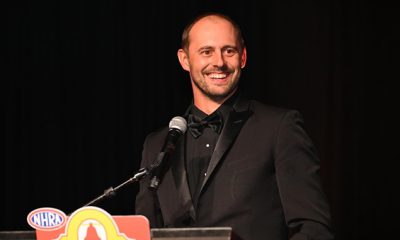
Edward Snyder has a Ph.D. and is a professor of economics. He was called to the witness stand on Monday to kick off the second week of proceedings and underwent nearly three hours of questioning from lead counsel for the teams, Jeffrey Kessler, before being cross-examined by NASCAR. Those questions took up the final two hours of Monday and then continued for another 45 minutes on Tuesday before Snyder was finished as a witness.
In explaining his damages, Snyder broke it down to $215.8 million for 23XI Racing and $148.9 million for Front Row Motorsports. The amounts were determined by Snyder from three different categories: lost profits from reduced revenue (2021 to 2024), reduction in the team’s market value (the difference in market value due to NASCAR’s anti-competitive conduct), and additional lost revenues (competing as Open teams during the 2025 season).
The damages were one part of Snyder’s testimony. As an expert witness, he was asked to consider the allegations in the lawsuit brought by the teams, and during his testimony, he went point by point through a 58-page demonstrative (a visual aid for the jury that is not a document or exhibit entered into evidence) with Kessler, who explained those allegations.
- NASCAR CEO France takes the stand as plaintiffs’ final witness in antitrust case
To make his conclusions, Snyder reviewed financials, charter agreements, communication documents included in the case (text messages, emails, etc.), valuation data (from Forbes and Sportico), the NASCAR schedule, and the entry and exit history of teams in the series.
Snyder’s approach to making his determinations was to conduct an industry analysis, analyze NASCAR’s alleged anti-competitive conduct, identify how the market for premier stock car racing teams would operate absent NASCAR’s alleged anti-competitive conduct, and estimate the damages.
As a reminder, 23XI and Front Row alleged that NASCAR maintained its monopoly power through anti-competitive conduct and that they were injured by those anti-competitive acts. The lawsuit was filed Oct. 2, 2024, after 23XI Racing and Front Row Motorsports were the only two teams that did not sign the 2025 charter agreement.
Here is what Snyder testified:
• NASCAR’s anticompetitive conduct was done through exclusivity clauses with racetracks, teams, and cars.
- Snyder concluded that, as early as 2015 and continuing through 2025, NASCAR created barriers to entry through anticompetitive acts by preventing potential competitors from obtaining venues, teams, and cars.
- Additionally, Cup Series teams are compensated below a competitive market rate.
• Snyder compared NASCAR to other sports leagues:
- NFL, PGA Tour, NHL, MLS, NBA, WNBA, Formula, IndyCar.
- Snyder testified that, unlike NASCAR, other leagues have entry points for competition, such as LIV Golf being created against the PGA or the WNBA seeing the Unrivaled league creation.
- When that competition comes along, Snyder testified that either “wakes up” the league financially or they act anti-competitively. NASCAR, for example, didn’t pay the teams more money but added exclusivity clauses. Snyder pointed to the concern NASCAR had about SRX and the possibility of a breakaway series being created. “It confirms NASCAR has a potential barrier to entry,” Snyder said.
• Snyder used the PGA Tour and Formula 1 as examples of leagues that faced competition and turned around and created better financial terms for their participants.
- In the case of the PGA, the response to LIV was to create more lucrative events, bring in investors, and create new financial programs.
- Formula 1 faced competition from the Grand Prix World Championship (2001) and the Formula One Teams Association (2008). The response was negotiating a better Concorde Agreement with its teams.
• Snyder said the teams having exclusivity clauses with their drivers is not the same as NASCAR’s exclusivity clauses.
“This is common sense,” said Snyder, because the drivers have other options and teams want them committed. NASCAR has created no other options for teams and are protecting a monopoly.
• Snyder said that NASCAR made $311 million in net payments to racetracks in 2024 because “NASCAR pays tracks with exclusivity restrictions.”
• Snyder reiterated some previous testimony already heard in the case about there being no IP protections with previous generation race cars, which opened them up to a copycat series. Those protections were put into place with the Next Gen introduction. He said that the concept bothers him because teams are paying to buy the car but cannot use it elsewhere.
• There was also time spent on Snyder going through comparisons between NASCAR and Formula 1, which he said he did because he saw documents of NASCAR talking about Formula 1 being a benchmark.
- The comparisons come through competition on tracks that are geographically distributed
- The requirement for specialized equipment
- New teams being allowed to join
- Teams having no equity in the league
• Snyder said Formula 1 does not have exclusivity clauses with racetracks or similar open-wheel competitors.
• The average revenue share to NASCAR teams during the 2016 charter agreement was 25%. But it was 45% to Formula 1 teams during that same term.
• On the churn of Cup Series teams (enter and exit rate), Snyder said that of the 19 teams that signed the 2016 charter agreement, 11 of them have exited the sport and did not race in 2025. Additionally, 13 teams left the Cup Series and sold their charters since 2016.
- Snyder used BK Racing, StarCom Racing, and Furniture Row Racing as examples, particularly with Furniture Row Racing leaving one year after winning the championship.
Here is what NASCAR countered on cross-examination of Snyder through its counsel, Lawrence Buterman:
• Formula 1 does have non-compete clauses with its teams against other open-wheel series.
- Snyder appeared to be thinking of McLaren being able to run in Formula 1 and IndyCar. But it’s two different series that they have a team in.
-
Snyder admitted he did not look at Formula 1 track agreements to see if there were exclusivity clauses.
• Buterman said IndyCar is more comparable to NASCAR as it competes in the United States, has a charter agreement, occasionally shares tracks with NASCAR and has considered a cost cap. Snyder said the financial data for IndyCar was not available to do the analysis.
• NASCAR did not increase payments to the racetracks when they began the exclusivity clauses in the sanctioning agreements.
• Snyder said there could have been a viable potential entrant into stock car racing by 2021 without anti-competitive conduct, but NASCAR pushed back, saying that is his theory and a hypothetical. Additionally, there was never any other potential series that came along in the 50-plus years before the charter agreements began, and NASCAR has never prevented one.
- NASCAR pushed repeatedly on Snyder not having a who, what, when, where, or how a new series could have been created.
• NASCAR pressed Snyder on the fact that he didn’t question any team owner about their interest in leaving the sport, but determined NASCAR is anti-competitive because of its contingency plans.
• NASCAR noted that Furniture Row Racing didn’t leave the sport because of NASCAR financial issues but because Joe Gibbs Racing doubled its price for a technical alliance after losing the championship to Furniture Row.
Snyder admitted he didn’t know the specifics but cited an ESPN story in his presentation that said they left because of “lack of necessary funding.”
• Buterman got Snyder to say that NASCAR should share its sponsorship money with the race teams, but the race teams don’t have to share their sponsorship money with NASCAR.
“Yes,” he said. “That’s how it should work.”