
Motorsports
Drivers, teams who need a reset after F1's first five races

Formula 1’s relentless start to the season, featuring five races in six weeks, has had a frenetic feel.
One weekend separated the doubleheader that started the campaign and the triple just completed, with five flyaway rounds in the Pacific and Middle East — Australia, China, Japan, Bahrain, Saudi Arabia — already in the books. Now the series moves in the other direction of world time zones, with a week off before and after the Miami Grand Prix, the first stand-alone race of the 2025 season.
The likes of new championship leader Oscar Piastri, reigning champion Max Verstappen and Williams duo Carlos Sainz and Alex Albon have been thriving in this early-season sprint. There are several more, however, who will be grateful to have a brief let-up in the schedule.
This is the obvious one. Norris needs to change the whole feel around his season, and he needs to do it fast.
The Englishman started the season in line with his billing as preseason favorite: pole position and victory in Australia, holding on through a chaotic, topsy-turvy race in the rain to win. It felt like a statement performance. Since then, though, it has felt like the wheels have fallen off his title bid. He’s been error-prone, he’s been down on himself and even a little down on the car.
Charles Leclerc took the team’s first grand prix podium of the season.
When asked by Sky Sports if he felt comfortable with the car during the race, Hamilton replied: “There wasn’t one second.” He added: “Well clearly the car is capable of being P3, so … Charles did a great job today, so I can’t blame the car.”
The Race reporting the Australian now has until the summer break.
Alpine has been frustrated at the media because of the continuing rumor mill, but team boss Oliver Oakes has never given a clear answer on whether Doohan will see out the season, so it has been a rather pointless and self-inflicted distraction the team has created. Doohan has found himself in the middle of that, and it’s fair to wonder how much that has affected his form early in the year. Doohan’s name naturally is in the spotlight, regardless of whether a late driver swap materializes. Williams clearly loaned Colapinto to the team with an understanding or belief that he would get some race experience at some point in 2025.
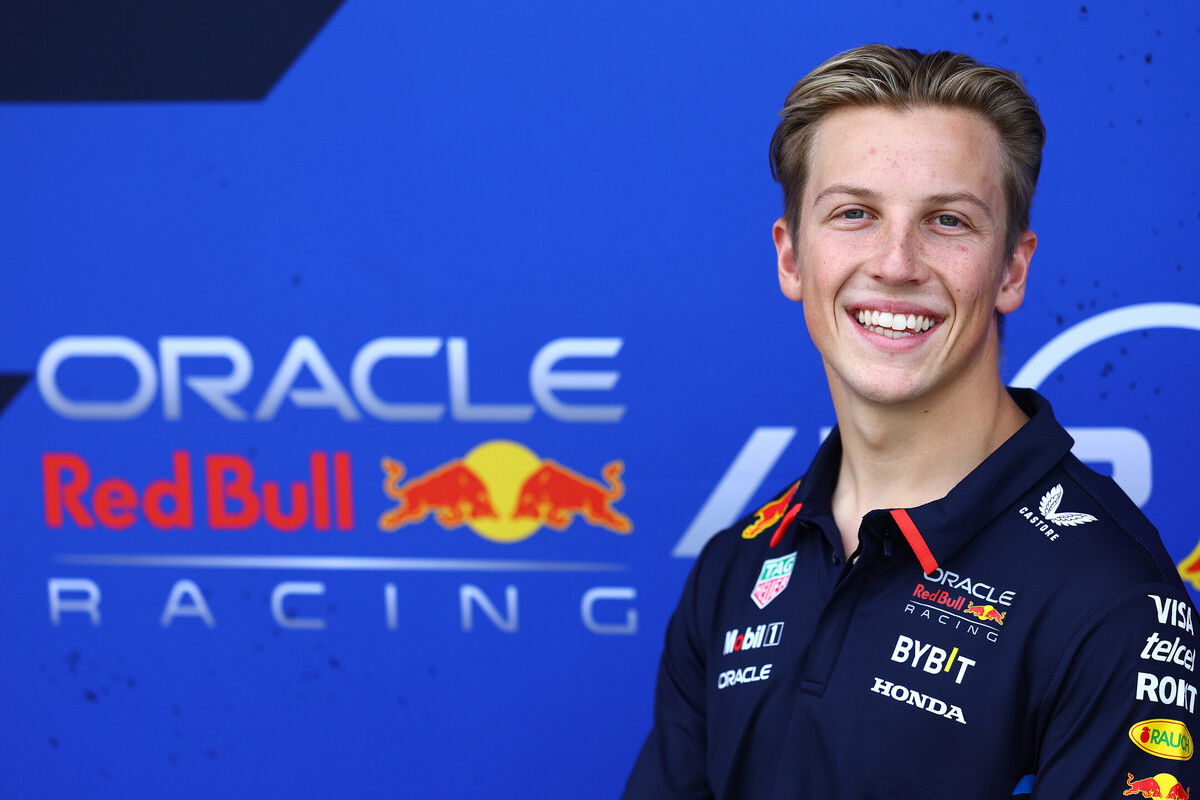
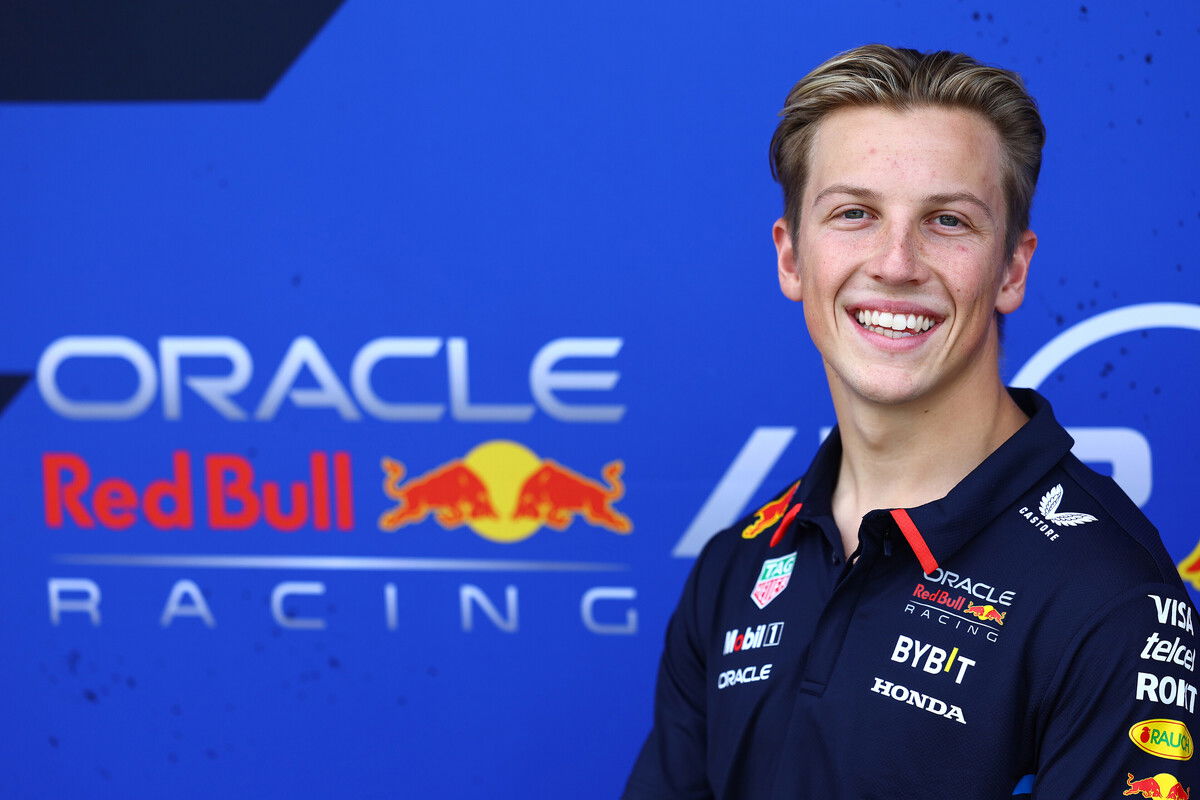
Yuki Tsunoda and Liam Lawson swapped seats in the days after China, the Argentine’s name came up again. Outlets in his home country reported that Red Bull was set to drop Lawson entirely and sign Colapinto to the junior team, a scenario that multiple sources told ESPN was never even explored by Red Bull. The appearance of Colapinto’s name in those reports has made it difficult to trust some of the chatter coming from his camp, and his status as Doohan’s eventual replacement seems less certain now than it was a month ago, even though many in the paddock assume some kind of deal exists for later in the year.
That’s all good news for Doohan, who deserves more time to prove his worth in F1. Alpine has been quick to stress how impressed it has been with him at points, but it’s hardly been a glowing start. Several things have worked against him, beyond the early collection of crashes. One is that Alpine’s car has also not lived up to preseason promise so far. Two is the high benchmark of teammate Pierre Gasly, whose seven points are the difference between the team being ninth and last in the championship. Third is how well other rookies — Andrea Kimi Antonelli, Isack Hadjar and Oliver Bearman, especially — have done early in the year.
Assuming Doohan gets the chance to race in Miami, it’s more than most thought he would get just a few weeks ago. He needs to use it as a platform to change the narrative about the lingering expiry date on his F1 career.
Liam Lawson and Yuki Tsundoa | Racing Bulls and Red Bull
There have been three consecutive race weekends since Lawson was replaced by Tsunoda at Red Bull, and Red Bull has good reason to feel positive about the decision.
Tsunoda’s pace has been encouraging. His Saudi tangle with Gasly was unfortunate, a classic opening-lap crash, and ruined what had been an encouraging starting position. Down the pit lane, Lawson has appeared to get a good handle on his Racing Bulls car, although he’s been outperformed by Hadjar so far — understandably, given the nature of his return to the team without any testing.
Hadjar has seen Lawson make a quick improvement in the past 21 days. Speaking after Sunday’s race, the French rookie said: “This weekend [Lawson] was really, really fast. In qualifying, he made the most of the car. He’s definitely getting stronger now, definitely pushing me just like Yuki was pushing me as well.”
0:55
Gasly and Tsunoda crash on the opening lap
Pierre Gasly and Yuki Tsunoda collide and crash into the barrier in the opening lap of the Saudi Arabian Grand Prix.
Racing Bulls boss Laurent Mekies has also said Lawson readjusted to the swap quicker than the team thought he might. The Kiwi was unlucky to get a 10-second penalty in Jeddah but looked to be in the best shape since returning to the junior team.
As for Tsunoda, he’s clearly handling the car and the role as Verstappen’s teammate better than Lawson did in the opening two races. It’s been a whirlwind for Tsunoda and Lawson, and both have a chance now to step back and take some stock of where they are.
Aston Martin
A team to finish this list. Lawrence Stroll’s outfit is absolutely nowhere at the minute.
Clearly there’s a lot of focus on 2026, which new managing technical partner Adrian Newey is predominantly focused on, but it has still been stark to see how off the pace the British Racing Green cars have been. Three pointless races during the tripleheader have stung, especially after Lance Stroll opened the team’s account in the opening two rounds. Most surprisingly is that Fernando Alonso is one of four drivers with a zero next to his name in the championship table — the other three are rookies.
Also on the 2026 focus, the same is true of every other team on the grid. While Aston Martin is switching to an exclusive Honda deal, Red Bull is also juggling its 2025 challenger with a brand-new engine project for 2026. Perhaps more reassuringly for Lawrence Stroll is that the other two teams making major changes for next season — Sauber, set to be taken over by Audi, and Alpine, which will become a Mercedes customer next season — have also had fairly anonymous starts, but F1 is a results business and throwing in the towel is never a good look.
Seeing is believing. Aston Martin has talked a lot about transforming into a championship contender in the near future, but at the moment, the operation all seems to be performing a little below its capabilities.








The 23XI Racing and Front Row Motorsports v NASCAR antitrust trial is raging on as the two sides do battle inside a North Carolina courtroom with the future of the sport likely to be reshaped by the outcome.
Here, you can find a recap of some of the most important and interesting moments from each day of the trial, with links back to more in-depth stories from our Senior NASCAR Editor Matt Weaver, who is inside the room as the trial unfolds.
Day 4 — NASCAR’s Steve O’Donnell and the ‘threat’ of SRX,
The now defunct Superstar Racing Experience Series was at the heart of Day 4’s courtroom battle. In previously unsealed messages, NASCAR leadership made it clear that they saw SRX as a threat and took issue with their drivers/team owners taking part in the weekly series run by NASCAR Hall of Famer Tony Stewart.
Team attorney Jeffrey Kessler tried to drive home the point that NASCAR reacted in a clear way to stifle SRX, which could be critical in how this case goes in the end. It could answer in part if NASCAR is using its position as a monopoly in the premier Stock Car racing space to harm competition or those operating in the space, like the teams.
NASCAR president Steve O’Donell was questioned by Kessler about the previously unsealed messages and NASCAR’s issue with SRX. While the Sanctioning Body was praised for returning beloved short tracks Bowman Gray and North Wilkesboro to the schedule, the trial has revealed that was at least partially motivated by the fact that SRX could beat them there. They also prevented Speedway Motorsports from hosting SRX events.
O’Donnell said NASCAR was in the middle negotiating a new broadcast rights agreement ‘and SRX started to look like NASCAR, so we said no.’ He added that ‘ NASCAR wanted to gain as much TV revenue for the teams and tracks as possible,” and that they were concerned SRX could hinder those efforts. They were frustrated that the drivers and teams didn’t appear to be ‘all in’ on NASCAR by their choice to compete in SRX.
O’Donnell was asked why he wanted NASCAR’s legal team to look at SRX, and he claimed it was simply IP infringement concerns. The existence of LIV Golf and how it challenged the hegemony of the PGA Tour, clearly rattled NASCAR leadership as they saw the possibility of something similar happening in stock car racing.
During one 2022 meeting, Jeff Gordon of Hendrick Motorsports asked Ben Kennedy, the great grandson of NASCAR founder Bill France and nephew to Jim, if “the family was open to a new financial model” to help the teams. Kennedy had told him ‘yes,’ but when Kessler asked O’Donnell if that was actually true, he said ‘no.
In February of 2023, O’Donnell said in an hand-written note: “I was hoping the future board would include the next generation and was hoping to see that change.” Jim France is 81, and O’Donnell believed the ‘legacy mindset’ in the NASCAR Board ‘inhibited growth.’
“Mr. France was the brick wall in the negotiations,” Kessler suggested to O’Donnell, when referring to those 2023 messages.
“Those are your words, not mine,” replied O’Donnell.
On Thursday, O’Donnell also revealed that NASCAR lost $55 million in running the Chicago Street Course for three years. However, NASCAR still says it was worth it, as “it was a strategic investment because if not for that, Amazon would not have become a broadcast partner.” NASCAR also said they lost $6 million by racing in Mexico City this year, but did so because it was important to Amazon, who kicked in an addition $1 million in race purse.
The day also included some more testimony from FRM team owner Bob Jenkins, who was cross-examined. Jenkins testified that it costs $20 million per car to race in the Cup Series, but NASCAR attorney Lawrence Buterman produced discovery documents that showed the most FRM ever spent on a Cup car was actually $14 million.
There was also some discussion about the proposed FRM/23XI merger from a few years back, with NASCAR attorneys trying to draw parallels between those failed negotiations and the ones between the teams and the Sanctioning Body over the 2025 Charter Agreement, where a deadline was imposed.
‘We can’t keep negotiating this forever,” Jenkins wrote in a text and that’s “…why we decided we had to have a deal by 5 p.m.” Jenkins pushed back against what NASCAR’s legal team was trying to do, saying “this is another one of your analogies that doesn’t work.”
There was also some concern at the end of the day that the trial wasn’t moving quick enough, with Judge Bell saying: “I get the impression that this is not moving along the way we all would like it to.” He encouraged both sides to speed it along, and said the jury is being subjected to redundancy ‘and they’re seeing a lot of trees and not a lot of forest.’ Both sides are cutting witnesses to speed it up, but Roger Penske is only available on Monday, and while that timeline is unlikely to work out, Judge Bell said Penske needs to be present whenever he’s needed.
Day 3 — Prime faces more questions, FRM owner Bob Jenkins takes the stand
NASCAR’s Executive Vice President and Chief Strategy Officer Scott Prime was being cross-examined for the second day in a row. The exchanges between prime and team attorney Jeffrey Kessler was sometimes contentious, with the attorney even apologizing to Prime and the court for raising his voice at one point.
Kessler locked in on the goodwill provision in the 2025 Charter Agreement, which is basically a clause that prevents team owners from competing in another series or owning one without NASCAR approval. Kessler called it ‘anti-competitive will,’ which drew an objection from the NASCAR side. He also focused on the Next Gen car, trying to paint its intellectual property restrictions (as the parts are supplied by a third party) as a tool utilized to restrain trade and prevent competition.
Reacting to an email from NASCAR commissioner Steve Phelps where he took a ‘take it or leave it’ attitude, Kessler said: “Only a monopolist has the power to say, ‘Take my offer and if you don’t take it, you will no longer be in this business, and someone else will take your place.’”
He was also questioned about NASCAR’s exclusivity agreement with tracks, but Prime tried to say that a rival series could race at other short tracks or street courses all around the country. Kessler did not accept that, and pushed back.
Kessler also took time to focus on the The Amanda (Oliver) Chart, which reflected a series of 22 asks made by the race teams and showed only a single ‘win’ for the teams as they negotiated with NASCAR. Prime had previously NASCAR’s September 6 a ‘gun to the head’ offer and Kessler seized on that moment in questioning him. One of the asks was for permanent charters, but NASCAR CEO Jim France was unwilling to go that route, despite Prime doing some work behind the scenes to make that happen.
After Prime’s lengthy testimony concluded, Bob Jenkins took the stand. He is the owner of Front Row Motorsports — the only team that stood with 23XI against NASCAR as the other 13 chartered organizations signed the eleventh hour agreement last September.
Jenkins noted that he loses $6.8 million per year and has never turned a profit under the race team banner. He doesn’t take a salary either. He went on to say that he spends $4.7 million per year on car components under the Next Gen model, and that the number was only $1.8 million under the previous generation of car.
When asked why do it then, Jenkins replied: “That sounds like something my wife would say. I just believe in it. It’s why I feel so strongly about changing this system. There are 150 employees at that race shop who believe in me to make this work.”
When asked about the September 6 deadline, Jenkins called it ‘insulting’ and ‘backwards’ as he recalled those critical hours. “There was a lot of passion, a lot of emotion, especially from Joe Gibbs, he felt like he had to sign it,” Jenkins said. “Joe Gibbs felt like he let me down by signing. Not a single owner said, ‘I was happy to sign it.’ Not a single one.”
Jenkins was asked how he could sue NASCAR for placing non-compete clauses in their schedule and charter contracts while placing non-compete clauses in his driver contracts. Hamlin faced the same question from NASCAR attorneys earlier in the trial, and the answer was similar, pointing out that drivers have options on who to sign with.
After court proceedings concluded for the day, Judge Bell took issue with NASCAR attorneys for violating his orders.
Day 2 — Hamlin faces tense cross-examination and NASCAR executive grilled
Hamlin was grilled by NASCAR attorneys in a somewhat contentious back-and-forth. “We’re not a monopoly like you are,” Hamlin said multiple times while on the stand. Hamlin gave insight into his personal frustrations with France, saying it dates back to the 2022 banquet. “He told me directly the problem in NASCAR is that teams spend too much money,” recalled Hamlin, who says he was very ‘discouraged’ by how differently they viewed the financial landscape of the sport.
“Cutting is not growth. I can’t cut my costs in half. It’s not realistic,” asserted Hamlin. He verbally sparred with Lawrence Buterman as the attorney tried to poke holes in the claim that the teams were strapped for cash and struggling to make a profit.
We also learned that Hamlin makes $14 million per year with his current contract as a driver for Joe Gibbs Racing. When asked why he makes more than most drivers, Hamlin simply replied: “I am at the top of my game.”
Scott Prime is not usually front and center, but he was on Tuesday, December 2nd, as NASCAR’s Executive Vice President and Chief Strategy Officer faced uncomfortable questions from Kessler, representing the teams. He was forced to try and explain the internal strife within NASCAR over the charter terms, and the fact that CEO Jim France seemed committed to imposing on teams after shutting down negotiations. There have been numerous unsealed communications that appear to show that France was the roadblock in granting team’s better terms.
Prime was also asked about a possible breakaway series and NASCAR’s efforts to block a potential CART/IRL split in the stock car racing world. He was also questioned about Project Gold Codes, which he described as a ‘contingency plan’ in case multiple charter holding teams boycotted races and/or didn’t sign the charter agreement in time for the 2025 Daytona 500.
Day 1 – Jury selection, opening statements and Hamlin testimony
After jury selection, the trial officially began. Denny Hamlin, the co-owner at 23XI Racing and one of NASCAR’s top drivers, was the first witness to take the stand. However, he was only on the stand for 40 minutes with cross-examination from NASCAR’s legal team yet to commence.
There appeared to be a clear strategy of bringing up the fact that teams frequently compete with NASCAR for sponsorships, as Motorsport.com Senior NASCAR Editor Matt Weaver noted that Hamlin brought it up three times under questioning from his own attorney.
“First, I have to fend off the series,” Hamlin said. “If a new sponsor want to come in, NASCAR will go after them. I have to fight them. I have to fight other teams for them. I have to fight them for employees.”
Both sides also laid out their arguments to the assembled jury and repeated many of the key points that have been repeated throughout the course of this lawsuit. NASCAR attorney John E. Stephenson framed 23XI/FRM as attacking the charter system and that they only brought up claims of antitrust violations after refusing to sign the new agreement.
Kessler, representing the teams, prepared the groundwork to prove that there was a clear anti-competitive strategy orchestrated by NASCAR CEO Jim France. He showed eyebrow-raising text messages from NASCAR leadership to support his claims.
We want your opinion!
What would you like to see on Motorsport.com?
Take our 5 minute survey.
– The Motorsport.com Team
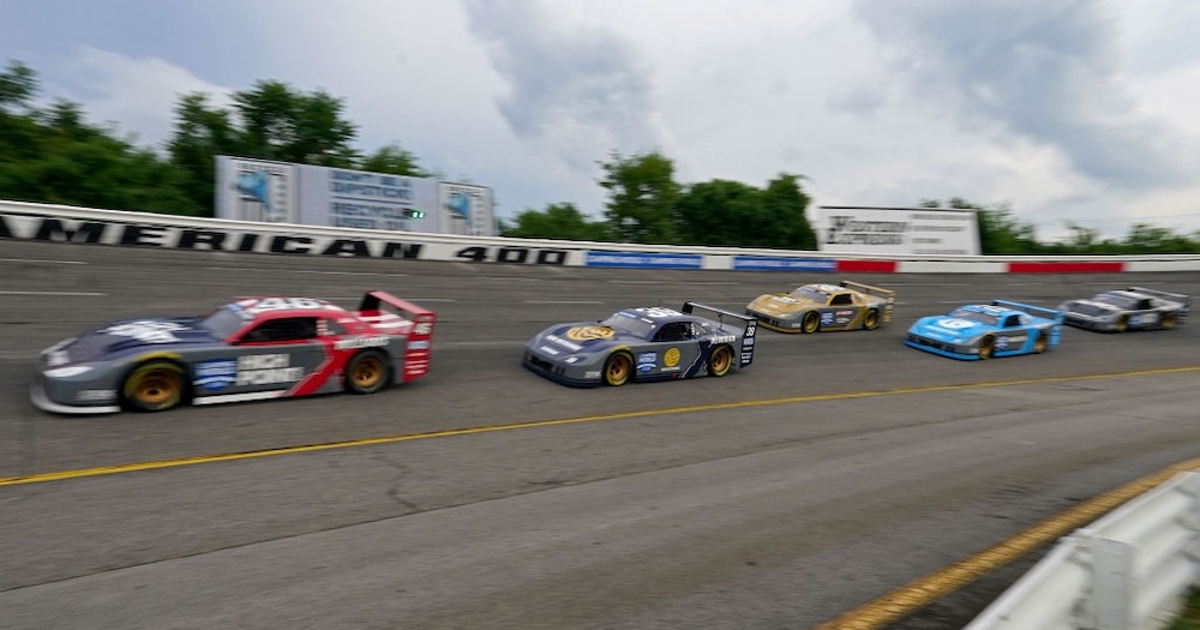
NASCAR president Steve O’Donnell acknowledged to the court Thursday afternoon that there was concern within his organization over what the Superstar Racing Experience (SRX) was turning into.
O’Donnell, testifying in the antitrust lawsuit against NASCAR that was brought by 23XI Racing and Front Row Motorsports, admitted as much when he was specifically asked about the series because of text messages that had come to light before the trial started. The chain of messages featured NASCAR executives discussing their displeasure with their drivers and team owners competing in the series. One message from NASCAR commissioner Steve Phelps expressed that NASCAR needed to put a knife through “this trash series.”
SRX (main image) only lasted three seasons after debuting in 2021. It was shuttered before its fourth season for what were described as market reasons.
“I recall we all became concerned at the look and feel of the series,” O’Donnell said under questioning from the team’s lead counsel, Jeffrey Kessler.
- NASCAR CEO Jim France was not open to new business model – O’Donnell
SRX was founded by Tony Stewart and Ray Evernham. Stewart was a NASCAR team owner at the time, and Kessler honed in on the fact that meant he was a charter holder with Stewart-Haas Racing. This was significant in that NASCAR had clauses in its agreement with the teams expressing that they could not compete or invest in other series.
At the heart of the lawsuit is 23XI Racing and Front Row Motorsports, who are not only arguing that NASCAR’s business model is broken, but that it is anticompetitive. Meaning as a monopoly, which Judge Kenneth Bell has already ruled they are, NASCAR wields its power to keep drivers and teams from competing elsewhere.
As such, Kessler wanted to know how Stewart circumvented that clause. O’Donnell explained that he looked into it and found that, as former Stewart-Haas executive Brett Frood told him, the initial pitch for SRX was a series featuring retired and/or inactive drivers. It was not to be a competition for NASCAR. The series was often compared to IROC (International Race of Champions), which ran from 1973 through 2006, because it featured some of the greatest drivers from across motorsports in similarly prepared race cars.
In its first season, SRX featured Stewart, Tony Kanaan, Bobby Labonte, Helio Castroneves, Ernie Francis Jr., Paul Tracy, Bill Elliott, Willy T. Ribbs, Michael Waltrip, and Marco Andretti. But one active NASCAR Cup Series driver also competed that season: Chase Elliott.
SRX would feature more active NASCAR drivers and owners in its following two years. Denny Hamlin, who co-owns 23XI Racing, was among them, and Justin Marks was another. Kyle Busch, Daniel Suarez, Kevin Harvick, Ryan Blaney, Chase Briscoe, Brad Keselowski, Austin Dillon, and Ryan Preece all competed in the series before it folded.
“I thought this looked more and more like NASCAR,” O’Donnell testified.
Kessler drilled on the message about O’Donnell wanting NASCAR’s legal team to look at SRX. But O’Donnell would only admit that he wanted the legal team to see if they agreed with his stance. Included among the exhibits of text messages on the subject was a screenshot Phelps had shared of a fan comment on an SRX social media page, in which the fan noted that it was starting to resemble NASCAR, the way LIV Golf resembled the PGA Tour.
LIV Golf was founded in 2022 and, with significant funding from Saudi Arabia, signed some of the world’s top golfers. It was a concept that O’Donnell feared seeing repeated in NASCAR.
“I was concerned with what was happening on the racetrack,” O’Donnell testified about SRX.
O’Donnell also admitted that part of his frustration was that the race teams had stated the need to lock hands and be all together as the media rights deal was being put together and charter negotiations were underway, but then they were “out racing in another series.”
NASCAR invoked its exclusivity clause with Speedway Motorsports to keep SRX from racing at one of those facilities. O’Donnell said it was done because “we were in a major negotiation” for the new media rights deal and were focused on retaining the revenue for the teams.
O’Donnell will be back on the witness stand Friday to continue under cross-examination from NASCAR’s lead counsel Christopher Yates.
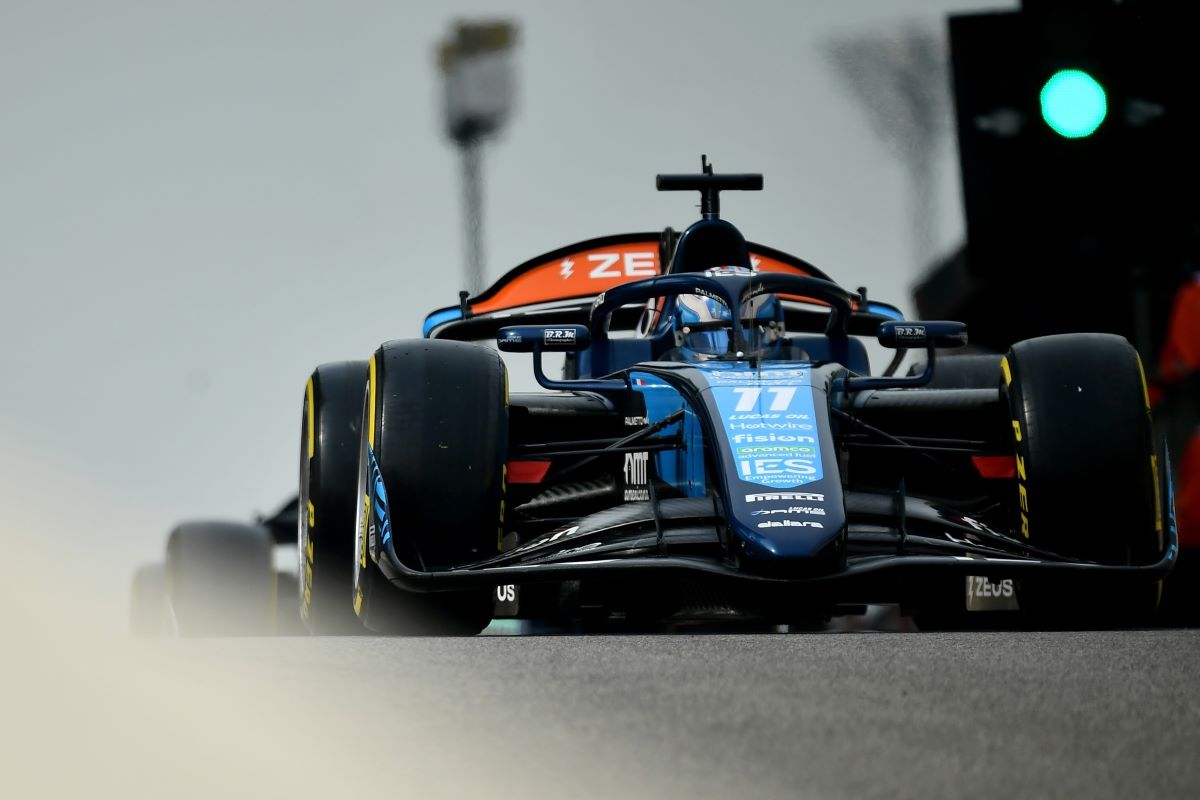
Jak Crawford (pictured) showed his and DAMS Lucas Oil’s pace in Free Practice, winding up quickest of all on a 1:39.545 around the Abu Dhabi Yas Marina circuit.
Gabriele Minì enjoyed a positive session for PREMA Racing as he finished up in P2, while Arvid Lindblad ended up third quickest for Campos Racing.
With installation laps complete, Sebastián Montoya set the early pace with a 1:41.028 for PREMA, 0.3s clear of Richard Verschoor in P2. Joshua Duerksen then put AIX Racing top of the pile with a 1:41.008s.
Oliver Goethe put MP to the front with a 1:40.314, 0.2s clear of Duerksen’s next attempt, although it was Minì’s turn to go quickest for PREMA.
With just over 20 minutes remaining, Minì delivered another improvement to stay ahead of the pack, dipping down to a 1:39.866, 0.009s and 0.020s clear of Duerksen and Goethe in second and third places respectively.
With Leonardo Fornaroli improving to sixth with less than 14 minutes to go, the top five were covered by less than a tenth of a second.
Arvid Lindblad briefly went to P1 for Campos Racing until his effort was deleted for exceeding track limits.
With five minutes left of Practice, fastest sector times began to flow once more, with Minì taking his best down to a 1:39.670.
Crawford was able to put DAMS up to P1, until he too had his time deleted for exceeding track limits. Lindblad then improved to second on his next lap, just 0.011s behind Minì.
Into the final minute and Crawford delivered another improvement to go quickest, a 1:39.545 leaving the American just under a tenth clear of the pack.
Minì remained second ahead of Lindblad, with Duerksen fourth and Goethe going fifth late on for MP. Martins ended the session sixth with Fornaroli seventh, Alexander Dunne in P8, Ritomo Miyata ninth and Montoya completing the top 10.
Qualifying for the final round of the 2025 FIA Formula 2 campaign gets underway at 15:00 local time. Who will take the top spot in Round 14?
Abu Dhabi Practice Times
| Pos | Driver | Team | Time | Behind | Laps |
|---|---|---|---|---|---|
| 1 | Jak Crawford | DAMS | 1m39.545s | +0.000s | 18 |
| 2 | Gabriele Mini | Prema | 1m39.630s | +0.085s | 17 |
| 3 | Arvid Lindblad | Campos Racing | 1m39.641s | +0.096s | 18 |
| 4 | Joshua Duerksen | AIX Racing | 1m39.875s | +0.330s | 19 |
| 5 | Oliver Goethe | MP Motorsport | 1m39.886s | +0.341s | 18 |
| 6 | Victor Martins | ART Grand Prix | 1m39.908s | +0.363s | 18 |
| 7 | Leonardo Fornaroli | Invicta Racing | 1m39.955s | +0.410s | 15 |
| 8 | Alex Dunne | Rodin Motorsport | 1m39.993s | +0.448s | 19 |
| 9 | Ritomo Miyata | ART Grand Prix | 1m40.065s | +0.520s | 18 |
| 10 | Sebastian Montoya | Prema | 1m40.070s | +0.525s | 17 |
| 11 | Roman Stanek | Invicta Racing | 1m40.094s | +0.549s | 19 |
| 12 | Luke Browning | Hitech GP | 1m40.099s | +0.554s | 18 |
| 13 | Richard Verschoor | MP Motorsport | 1m40.129s | +0.584s | 18 |
| 14 | Dino Beganovic | Hitech GP | 1m40.173s | +0.628s | 19 |
| 15 | Nikola Tsolov | Campos Racing | 1m40.389s | +0.844s | 19 |
| 16 | Martinius Stenshorne | Rodin Motorsport | 1m40.417s | +0.872s | 20 |
| 17 | Rafael Villagomez | Van Amersfoort Racing | 1m40.444s | +0.899s | 20 |
| 18 | Laurens van Hoepen | Trident | 1m40.539s | +0.994s | 18 |
| 19 | John Bennett | Van Amersfoort Racing | 1m40.583s | +1.038s | 20 |
| 20 | Kush Maini | DAMS | 1m40.586s | +1.041s | 17 |
| 21 | Cian Shields | AIX Racing | 1m40.854s | +1.309s | 21 |
| 22 | Tasanapol Inthraphuvasak | Trident | 1m41.461s | +1.916s | 18 |
Motorsports
Michael Jordan and Joe Gibbs’ daughter-in-law expected to testify Friday in NASCAR antitrust case
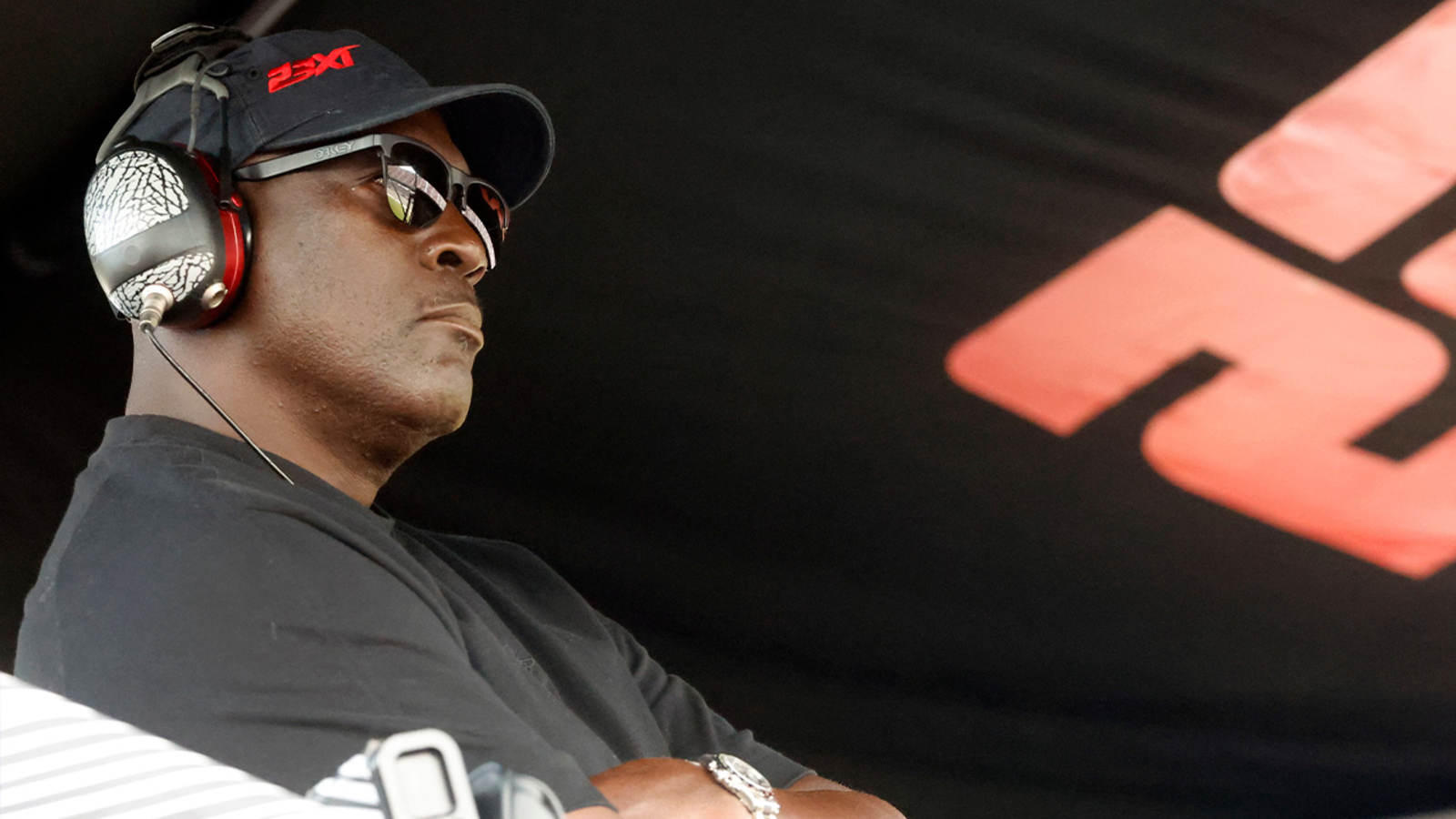
CHARLOTTE, N.C. — Retired NBA great Michael Jordan took the stand at the landmark NASCAR antitrust case and testified Friday that he has been a fan of the stock car series since he was a child, but felt he had little choice but to sue to force changes in a business model he sees shortchanging teams and drivers risking their lives to keep the sport going.
Jordan testified before a packed courtroom for an hour. His celebrity drew quips from the judge and even a defense attorney as he outlined why the team he co-owns, 23XI, had joined Front Row Motorsports in going to court against the top auto racing series in the United States.
“Someone had to step forward and challenge the entity,” the soft-spoken Jordan told the jury. “I sat in those meetings with longtime owners who were brow-beaten for so many years trying to make a change. I was a new person, I wasn’t afraid. I felt I could challenge NASCAR as a whole. I felt as far as the sport, it needed to be looked at from a different view.”
Jordan’s highly anticipated appearance followed dramatic testimony from Heather Gibbs, the daughter-in-law of race team owner Joe Gibbs, about the chaotic six-hour period in which teams had to sign an extension or forfeit the charters that guarantee revenue week to week throughout NASCAR’s 38-race season.
“The document was something in business you would never sign,” said Heather Gibbs, who is also a licensed real estate agent. “It was like a gun to your head: if you don’t sign, you have nothing.”
Charters are the equivalent of the franchise model used in other sports and in NASCAR, it guarantees every chartered car a spot in every race, plus a defined payout from the series. The system was created in 2016, and during the two-plus years of bitter negotiations on an extension, teams begged for the renewable charters to be made permanent for revenue stability.
When NASCAR refused to make them permanent and gave the teams six hours in September 2024 to sign the 112-page extension, 23XI and Front Row Motorsports were the only two organizations out of 15 to refuse. They instead filed the antitrust suit and the trial opened Monday to hear their allegations that NASCAR is a monopolistic bully. 23XI is co-owned by Jordan and three-time Daytona 500 winner Denny Hamlin, and Front Row is owned by fast food franchiser Bob Jenkins.
Jordan testified that 23XI bought a third charter late in 2024 for $28 million, even with all the uncertainty.
“I’m pretty sure they know I love to win,” the six-time NBA champion said. “Denny convinced me getting a third driver improved our chances to win, so I dove in.”
Like other witnesses this week, Jordan described a NASCAR that refused to discuss options or potential changes to the charter system, which he supports. He was asked why 23XI didn’t sign the extensions last fall.
“One, I didn’t think it was economically viable. Two, it said you could not sue NASCAR, that was an antitrust violation, I felt. Three, they gave us an ultimatum I didn’t think was fair to 23XI,” Jordan said, adding: “I wanted a partnership and permanent charters wasn’t even a consideration. The pillars that the teams wanted, no one on the NASCAR side even negotiated or compromised. They were not even open-minded to welcome those conversations, so this is where we ended up.”
Jordan referred to the NBA business model, which shares approximately half its revenue with players, far more than NASCAR.
“The revenue split was far less than any business I’ve ever been a part of. We didn’t think we’d ever get to what basketball was getting but we wanted to move in that direction,” he said. “The thing I see in NASCAR that I think is absent is a shared responsibility of growth as well as loss.”
Jordan said he owns 60% of 23XI and has invested $35 million to $40 million in the team. Jenkins testified earlier this week that his team has never turned a profit since launching his NASCAR team in the early 2000s and estimates he’s lost $100 million, even while winning the Daytona 500 in 2021.
Heather Gibbs earlier told the jury how she became co-owner of Joe Gibbs Racing the day after her husband, Coy, unexpectedly died in his sleep the same night their son, Ty, won NASCAR’s second-tier Xfinity Series championship in 2022. Coy Gibbs had moved into a leadership role with JGR following the death of his older brother, J.D., in 2019.
Because Gibbs had lost both his sons and had built the team as a legacy for his family, his daughter-in-law took an active role in the organization and personally participated in negotiations for the charter extensions. When NASCAR made its final offer at 6 p.m. on a Friday night with just hours to sign, the agreement did not include permanent charters. Gibbs testified that the organization was devastated.
“Everything was going so fast, the legacy of Coy, the legacy of J.D., everyone at JGR was very upset,” she told the jury. She said her father-in-law called NASCAR chairman Jim Franc,e pleading for a resolution.
“Joe said, ‘Jim, you can’t do this,'” she said. “And Jim was done with the conversation.”
Heather Gibbs said she had to leave to take her son to a baseball game in Chapel Hill and left worried about her father-in-law, who was 84 at the time.
“I left him sitting in the dark, listening to his blood sugar monitors going off,” she testified. “We decided we had to sign. We can’t lose everything. I did not think it was a fair deal to the teams.”
Joe Gibbs is both a Hall of Fame NASCAR owner and NFL Hall of Fame coach. He led the Washington football team to three Super Bowl titles and JGR has won five Cup Series championships. JGR has 450 employees, charters for four Cup cars and relies solely on outside sponsorship and investors to keep the team afloat. The team will mark its 35th season next year and Gibbs told the jury that JGR needs permanent charters to protect its investment in NASCAR.
“It’s the most important point, a permanent place in their history books,” she testified. “It is absolutely vital to the teams for us to know we have security, it can’t be taken away, to know what we’ve invested in is ours.”
Teams told NASCAR they were fighting for financial survival
On Thursday, NASCAR President Steve O’Donnell testified that teams approached the sanctioning body in early 2022 asking for an improved revenue model, arguing the system was unsustainable.
O’Donnell was at the meeting with representatives from four teams, who asked that the negotiating window on a new charter agreement open early because they were fighting for their financial survival. The negotiating window was not supposed to open until July 2023.
O’Donnell testified that in that first meeting, four-time series champion Jeff Gordon, now vice chair of Hendrick Motorsports, asked specifically if the France family was “open to a new model.”
Ben Kennedy, great-grandson of NASCAR’s founder, told Gordon yes.
But O’Donnell testified that chairman France was opposed to a new revenue model.
Both sides speak of financial difficulties
The extensions that began this year upped the guaranteed money for every chartered car to $12.5 million in annual revenue, from $9 million. Hamlin and Jenkins have both testified it costs $20 million to bring a single car to the track for all 38 races. That figure does not include any overhead, operating costs or a driver’s salary, and Jenkins admitted he doesn’t spend that much.
NASCAR has argued it has made huge improvements for the teams as it works to grow the sport. O’Donnell testified that NASCAR lost $55 million in the three years it held a race on the downtown streets of Chicago, and $6 million when it raced in June in Mexico City. But he said those events were critical in widening viewership and signing Amazon as a media partner.
“It was a strategic investment because if not for that, Amazon would not have become a broadcast partner,” he testified.
Odds and ends
Judge Kenneth Bell admonished both sides over the slow pace of the trial, which was initially expected to take two weeks. Kessler said he didn’t anticipate wrapping up the teams’ side until the middle of next week.
NASCAR plans to call Roger Penske as a witness. Penske, who is reluctant to testify, has said he’s only available next Monday. Christopher Yates, lead attorney for NASCAR, asked that Penske be allowed to testify that day but Kessler objected because it would disrupt the flow of his presentation.
Bell sided with Kessler and told NASCAR to figure it out with Penske because “federal trials are an inconvenience.”
The judge also said stretching the trial to three weeks is not acceptable, and while he’s hesitant to step in to push the pace along, he urged both sides to counsel their witnesses to stop being “reluctant to answer even the most harmless questions.”
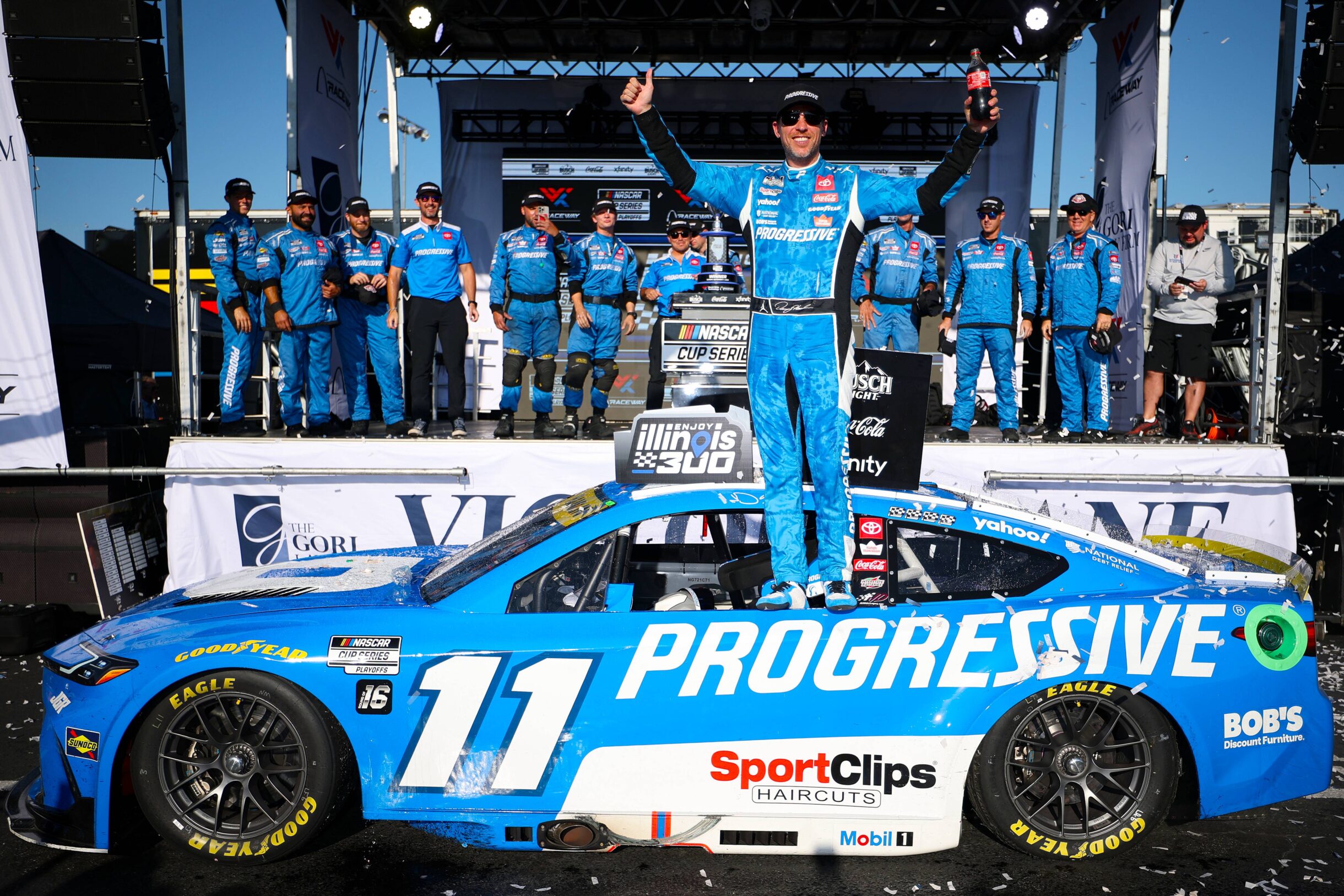
“I will not stop fighting for you and what is right.”
23XI Racing and Front Row Motorsports have taken NASCAR to court. The antitrust lawsuit started on Monday with the first day of the trial.
Denny Hamlin is the co-owner of 23XI Racing along with Michael Jordan. Hamlin took the stand earlier in the week.
After a lengthy time at the stand, Hamlin simply stated, “I’m good” as he walked out of the courthouse.
Hamlin was then advised by his lawyers not to tweet…
Richard Childress is considering legal action against NASCAR he was called a ‘redneck’
Denny Hamlin comments
“My lawyers dont want me to tweet, Or X or whatever this is, but they are asleep,” Denny Hamlin stated via X on Wednesday
He added, “I just wanted to tell you that I love you guys and I will not stop fighting for you and what is right.”
Judge Bell anticipated the trial to last two weeks. However, after the first week and the lengthy cross-examinations, the judge now expects the trial to go on for three weeks.
Noting the holiday season, Bell stated, “I would have a full blown riot.”
Mark Martin is worried about the NASCAR lawsuit hurting the sport
Links
NASCAR | 23XI Racing | Front Row Motorsports
Motorsports
Michael Jordan and Joe Gibbs’ daughter-in-law expected to testify Friday in NASCAR antitrust case
CHARLOTTE, N.C. — Retired NBA great Michael Jordan took the stand at the landmark NASCAR antitrust case and testified Friday that he has been a fan of the stock car series since he was a child, but felt he had little choice but to sue to force changes in a business model he sees shortchanging teams and drivers risking their lives to keep the sport going.
Jordan testified before a packed courtroom for an hour. His celebrity drew quips from the judge and even a defense attorney as he outlined why the team he co-owns, 23XI, had joined Front Row Motorsports in going to court against the top auto racing series in the United States.
“Someone had to step forward and challenge the entity,” the soft-spoken Jordan told the jury. “I sat in those meetings with longtime owners who were brow-beaten for so many years trying to make a change. I was a new person, I wasn’t afraid. I felt I could challenge NASCAR as a whole. I felt as far as the sport, it needed to be looked at from a different view.”
Jordan’s highly anticipated appearance followed dramatic testimony from Heather Gibbs, the daughter-in-law of race team owner Joe Gibbs, about the chaotic six-hour period in which teams had to sign an extension or forfeit the charters that guarantee revenue week to week throughout NASCAR’s 38-race season.
“The document was something in business you would never sign,” said Heather Gibbs, who is also a licensed real estate agent. “It was like a gun to your head: if you don’t sign, you have nothing.”
Charters are the equivalent of the franchise model used in other sports and in NASCAR, it guarantees every chartered car a spot in every race, plus a defined payout from the series. The system was created in 2016, and during the two-plus years of bitter negotiations on an extension, teams begged for the renewable charters to be made permanent for revenue stability.
When NASCAR refused to make them permanent and gave the teams six hours in September 2024 to sign the 112-page extension, 23XI and Front Row Motorsports were the only two organizations out of 15 to refuse. They instead filed the antitrust suit and the trial opened Monday to hear their allegations that NASCAR is a monopolistic bully. 23XI is co-owned by Jordan and three-time Daytona 500 winner Denny Hamlin, and Front Row is owned by fast food franchiser Bob Jenkins.
Jordan testified that 23XI bought a third charter late in 2024 for $28 million, even with all the uncertainty.
“I’m pretty sure they know I love to win,” the six-time NBA champion said. “Denny convinced me getting a third driver improved our chances to win, so I dove in.”
Like other witnesses this week, Jordan described a NASCAR that refused to discuss options or potential changes to the charter system, which he supports. He was asked why 23XI didn’t sign the extensions last fall.
“One, I didn’t think it was economically viable. Two, it said you could not sue NASCAR, that was an antitrust violation, I felt. Three, they gave us an ultimatum I didn’t think was fair to 23XI,” Jordan said, adding: “I wanted a partnership and permanent charters wasn’t even a consideration. The pillars that the teams wanted, no one on the NASCAR side even negotiated or compromised. They were not even open-minded to welcome those conversations, so this is where we ended up.”
Jordan referred to the NBA business model, which shares approximately half its revenue with players, far more than NASCAR.
“The revenue split was far less than any business I’ve ever been a part of. We didn’t think we’d ever get to what basketball was getting but we wanted to move in that direction,” he said. “The thing I see in NASCAR that I think is absent is a shared responsibility of growth as well as loss.”
Jordan said he owns 60% of 23XI and has invested $35 million to $40 million in the team. Jenkins testified earlier this week that his team has never turned a profit since launching his NASCAR team in the early 2000s and estimates he’s lost $100 million, even while winning the Daytona 500 in 2021.
Heather Gibbs earlier told the jury how she became co-owner of Joe Gibbs Racing the day after her husband, Coy, unexpectedly died in his sleep the same night their son, Ty, won NASCAR’s second-tier Xfinity Series championship in 2022. Coy Gibbs had moved into a leadership role with JGR following the death of his older brother, J.D., in 2019.
Because Gibbs had lost both his sons and had built the team as a legacy for his family, his daughter-in-law took an active role in the organization and personally participated in negotiations for the charter extensions. When NASCAR made its final offer at 6 p.m. on a Friday night with just hours to sign, the agreement did not include permanent charters. Gibbs testified that the organization was devastated.
“Everything was going so fast, the legacy of Coy, the legacy of J.D., everyone at JGR was very upset,” she told the jury. She said her father-in-law called NASCAR chairman Jim Franc,e pleading for a resolution.
“Joe said, ‘Jim, you can’t do this,'” she said. “And Jim was done with the conversation.”
Heather Gibbs said she had to leave to take her son to a baseball game in Chapel Hill and left worried about her father-in-law, who was 84 at the time.
“I left him sitting in the dark, listening to his blood sugar monitors going off,” she testified. “We decided we had to sign. We can’t lose everything. I did not think it was a fair deal to the teams.”
Joe Gibbs is both a Hall of Fame NASCAR owner and NFL Hall of Fame coach. He led the Washington football team to three Super Bowl titles and JGR has won five Cup Series championships. JGR has 450 employees, charters for four Cup cars and relies solely on outside sponsorship and investors to keep the team afloat. The team will mark its 35th season next year and Gibbs told the jury that JGR needs permanent charters to protect its investment in NASCAR.
“It’s the most important point, a permanent place in their history books,” she testified. “It is absolutely vital to the teams for us to know we have security, it can’t be taken away, to know what we’ve invested in is ours.”
Teams told NASCAR they were fighting for financial survival
On Thursday, NASCAR President Steve O’Donnell testified that teams approached the sanctioning body in early 2022 asking for an improved revenue model, arguing the system was unsustainable.
O’Donnell was at the meeting with representatives from four teams, who asked that the negotiating window on a new charter agreement open early because they were fighting for their financial survival. The negotiating window was not supposed to open until July 2023.
O’Donnell testified that in that first meeting, four-time series champion Jeff Gordon, now vice chair of Hendrick Motorsports, asked specifically if the France family was “open to a new model.”
Ben Kennedy, great-grandson of NASCAR’s founder, told Gordon yes.
But O’Donnell testified that chairman France was opposed to a new revenue model.
Both sides speak of financial difficulties
The extensions that began this year upped the guaranteed money for every chartered car to $12.5 million in annual revenue, from $9 million. Hamlin and Jenkins have both testified it costs $20 million to bring a single car to the track for all 38 races. That figure does not include any overhead, operating costs or a driver’s salary, and Jenkins admitted he doesn’t spend that much.
NASCAR has argued it has made huge improvements for the teams as it works to grow the sport. O’Donnell testified that NASCAR lost $55 million in the three years it held a race on the downtown streets of Chicago, and $6 million when it raced in June in Mexico City. But he said those events were critical in widening viewership and signing Amazon as a media partner.
“It was a strategic investment because if not for that, Amazon would not have become a broadcast partner,” he testified.
Odds and ends
Judge Kenneth Bell admonished both sides over the slow pace of the trial, which was initially expected to take two weeks. Kessler said he didn’t anticipate wrapping up the teams’ side until the middle of next week.
NASCAR plans to call Roger Penske as a witness. Penske, who is reluctant to testify, has said he’s only available next Monday. Christopher Yates, lead attorney for NASCAR, asked that Penske be allowed to testify that day but Kessler objected because it would disrupt the flow of his presentation.
Bell sided with Kessler and told NASCAR to figure it out with Penske because “federal trials are an inconvenience.”
The judge also said stretching the trial to three weeks is not acceptable, and while he’s hesitant to step in to push the pace along, he urged both sides to counsel their witnesses to stop being “reluctant to answer even the most harmless questions.”

Track and Field Restricts Meet to Rostered Collegiate Athletes, Shutting Out Club Athletes
Wisconsin vs EIU in NCAA volleyball; recap as Badgers sweep Panthers

All the key moments from the 23XI/FRM vs. NASCAR trial

Georgia seeks over $300,000 in damages from Damon Wilson after transfer to Missouri

BC Opens Indoor Season at Sharon Colyear-Danville

NASCAR’s O’Donnell admits to concerns over SRX Series as antitrust case continues

Mountaineers Open Indoor Season at the Visit Winston-Salem College Kick-Off

Crawford quickest in Yas Marina F2 practice for DAMS

Track & Field Prepares for Sharon Colyear-Danville Season Opener

Michael Jordan and Joe Gibbs’ daughter-in-law expected to testify Friday in NASCAR antitrust case

‘Horrible location:’ Proposed Eagle Costco sparks heated backlash and traffic concerns in a neighborhood meeting

GEAR FOR GOOD INITIATIVE NAMES FIVE YOUTH SOCCER PROGRAM BENEFICIARIES TO HELP GROW THE GAME IN 2026

Georgia seeks $390K from DE Damon Wilson for transfer damages

Women’s Track & Field Travels to Chicago State for Season Opener

Long Beach State Men’s Volleyball Announces 2025 Wall of Honor Class

First Tee Winter Registration is open

Fargo girl, 13, dies after collapsing during school basketball game – Grand Forks Herald

CPG Brands Like Allegra Are Betting on F1 for the First Time

Volleyball Recaps – November 18

F1 Las Vegas: Verstappen win, Norris and Piastri DQ tighten 2025 title fight

Two Pro Volleyball Leagues Serve Up Plans for Minnesota Teams

Utah State Announces 2025-26 Indoor Track & Field Schedule

Sycamores unveil 2026 track and field schedule

Texas volleyball vs Kentucky game score: Live SEC tournament updates

Bowl Projections: ESPN predicts 12-team College Football Playoff bracket, full bowl slate after Week 14

Redemption Means First Pro Stock World Championship for Dallas Glenn

Pohlman admits ‘there might be some spats’ as he pushes to get Kyle Busch winning again

Indiana’s rapid ascent and its impact across college football

Troy Football Need to Know; Gameday at The Vet — Georgia State Game

How this startup (and a KC sports icon) turned young players into card-carrying legends overnight

 Why a rising mid-major power with an NCAA Tournament team opted out of revenue-sharing — and advertised it
 NBA Legend Michael Jordan to Join NBC Sports as Special Contributor
 Falcons mailbag
 Portal Update – Basketball and Gymnastics Take Hits
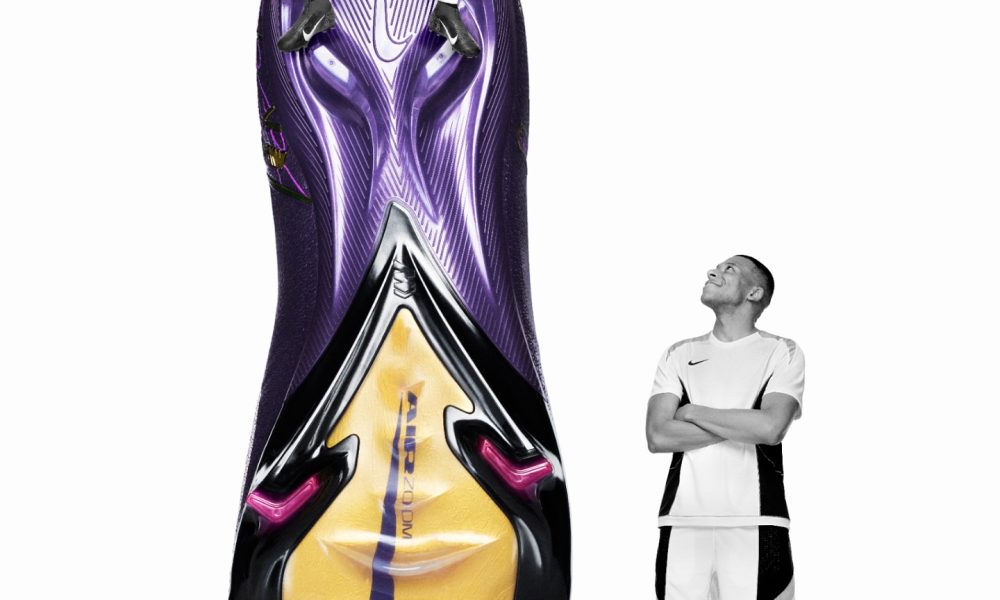 has always dreamed in Mercurial. Now his initials are on the boots.
The new Kyl…
has always dreamed in Mercurial. Now his initials are on the boots.
The new Kyl…
-
 Rec Sports2 weeks ago
First Tee Winter Registration is open
-
 Rec Sports1 week ago
Fargo girl, 13, dies after collapsing during school basketball game – Grand Forks Herald
-
 Motorsports1 week ago
CPG Brands Like Allegra Are Betting on F1 for the First Time
-
 Sports2 weeks ago
Volleyball Recaps – November 18
-
 Motorsports2 weeks ago
F1 Las Vegas: Verstappen win, Norris and Piastri DQ tighten 2025 title fight
-
 Sports1 week ago
Two Pro Volleyball Leagues Serve Up Plans for Minnesota Teams
-
 Sports1 week ago
Sycamores unveil 2026 track and field schedule
-
 Sports1 week ago
Utah State Announces 2025-26 Indoor Track & Field Schedule
-
 Sports1 week ago
Texas volleyball vs Kentucky game score: Live SEC tournament updates
-
 NIL5 days ago
Bowl Projections: ESPN predicts 12-team College Football Playoff bracket, full bowl slate after Week 14