Connect with us
https://yoursportsnation.com/wp-content/uploads/2025/07/call-to-1.png

NIL

Parker’s Sports Corner: Money is taking over sports

Published

on


As each year goes by, it seems money is taking over sports more and more.

The most recent victim of this phenomenon is college basketball, which has become revolutionized by Name, Image, and Likeness (NIL) deals. Starting in 2021, college athletes became eligible for pay. This was initially imagined as a way for college athletes to cash in on their names by landing brand deals, but it has since spiraled into colleges essentially paying athletes directly through school boosters.

According to NIL regulations, colleges can’t pay athletes directly. But that doesn’t stop groups of donors and boosters called NIL Collectives from paying athletes on behalf of a school. For example, Bryce Underwood, the No. 1 football recruit in the high school class of 2025, was given a NIL deal worth up to $12 million to commit to the University of Michigan through the NIL Collective, Champions Circle.

This has become the norm for highly-ranked college teams, particularly men’s basketball and football. These sports typically draw passionate fans and large viewership, allowing wealthy alumni of a school to essentially fund their teams’ success.

Although this NIL craze started with college football, it wasn’t felt as strongly there. Even before NIL deals were legalized, big programs like Michigan always dominated recruiting and, therefore, the playing field. Sure, money is being thrown around in this sport, and rosters are constantly being turned over as student athletes transfer to schools with more lucrative NIL opportunities. But college football has always been an unbalanced sport, where the top few programs consistently dominate.

In college basketball, though, the ripples from the NIL revolution are intense. March Madness — college basketball’s flagship tournament of 68 teams — has that name for a reason. It’s madness. Mid-major Cinderella stories are frequent, as it seems like each year a school like Saint Peter’s University in 2022, Loyola University Chicago in 2018 and even our own Lehigh in 2012 will make an unexpected run against a giant like Duke University.

This year, though, there was none of that. The biggest upset of the tournament was No. 10 seed Arkansas State University beating No. 2 seed St. John’s University, which barely even felt like an upset. Arkansas is coached by the legendary John Calipari, plays in the best conference in college basketball and is a program with a lot of recent success.

The disparity in funding between powerful programs and mid-major schools is playing out in a larger disparity on the court. Many of these dominant teams are made up of players who started at smaller mid-major schools before transferring to bigger programs and signing NIL deals with them. For example, National Player of the Year Johni Broome played at Morehead State University for three years before transferring to Auburn University and leading them to a final four appearance.

This trend of poaching talent from mid-major schools will only grow in future years, making college basketball feel a lot like a competition of who has the deepest pockets. I’m glad these exceptional players have the opportunity to showcase their skills at the highest level, but this is at the cost of mid-major schools competing.

All these NIL deals have put a stench around college basketball, which is supposed to be a pure showcase of competition, free from the money talk of professional sports.

Other sports have also been plagued by this reliance on billionaire funding for successful teams. The professional league that has been affected the most is the MLB, where a lack of salary cap or salary floor allows owners to essentially pay players what they wish.

This is problematic due to the difference in ability and willingness to spend between owners. Because of personal wealth, TV deals, outside funding and more, some owners can spend as much as they want.

The Los Angeles Dodgers are the greatest example of this. They have essentially made a mockery of the league through their deferral of large contracts. It has allowed them to monopolize Japanese superstars coming to the MLB, like newcomer Rōki Sasaki, and to add current star-level MLB talent to their already stacked roster, like pitchers Blake Snell and Tanner Scott.

It seems as though nobody can compete with the Dodgers’ wealth, at least not from a small market. The other big market teams, like the New York Yankees, the New York Mets and the Philadelphia Phillies, are still supporting large payrolls from wealthy owners. But these teams are not the teams being left behind.

Like in college basketball, it’s the little guy — teams like the Tampa Bay Rays, whose active payroll is less than 20% of the Dodgers — that get crushed in this competition between who has the most money. This makes the MLB feel like a league of haves and have-nots, where smaller market teams have to do everything right just to compete. And even if they do everything right and develop talent, they might get outpriced by a bigger fish, just like a mid-major college basketball program.

Now, why am I lamenting this reality? After all, it does lead to the best of the best competing on the biggest stage — as seen in this years’ Final Four of all No. 1 seeds and 2024’s World Series between the Yankees and Dodgers. In some respects, this is a good thing, as I, like any sports fan, love seeing the big dogs battle it out on the biggest stage where both teams truly feel like they belong.

Also, this is America, the most capitalist country in the world. Shouldn’t we expect sports to be dictated by money when everything else in the nation is?

While these things may be true, sports being dictated by a contest of wealth takes away what’s so special about them. Sports allow us an escape from the inequality of life and all the stress that comes with it. Unlike anything else in this world, sports are equitable and merit-based — a place you make it only on the shoulders of your objective ability.

With sports like college basketball and the MLB becoming more about whose pockets are the deepest, we lose some of the magic that makes sports special. Further, by only allowing the biggest brands to compete, sports start to feel too much like the corporate environment that we live in every day.

And that’s not what I want sports to be. As a finance and accounting major, I’ll likely be looking at numbers and financial figures all day for the next 40 years. I don’t want that to become the reality of my sports fandom, too.


Continue Reading
Click to comment

Leave a Reply

Your email address will not be published. Required fields are marked *

NIL

Charles Barkley on NIL, transfer portal: ‘You should not have the ability to get a better offer every year’

Published

on


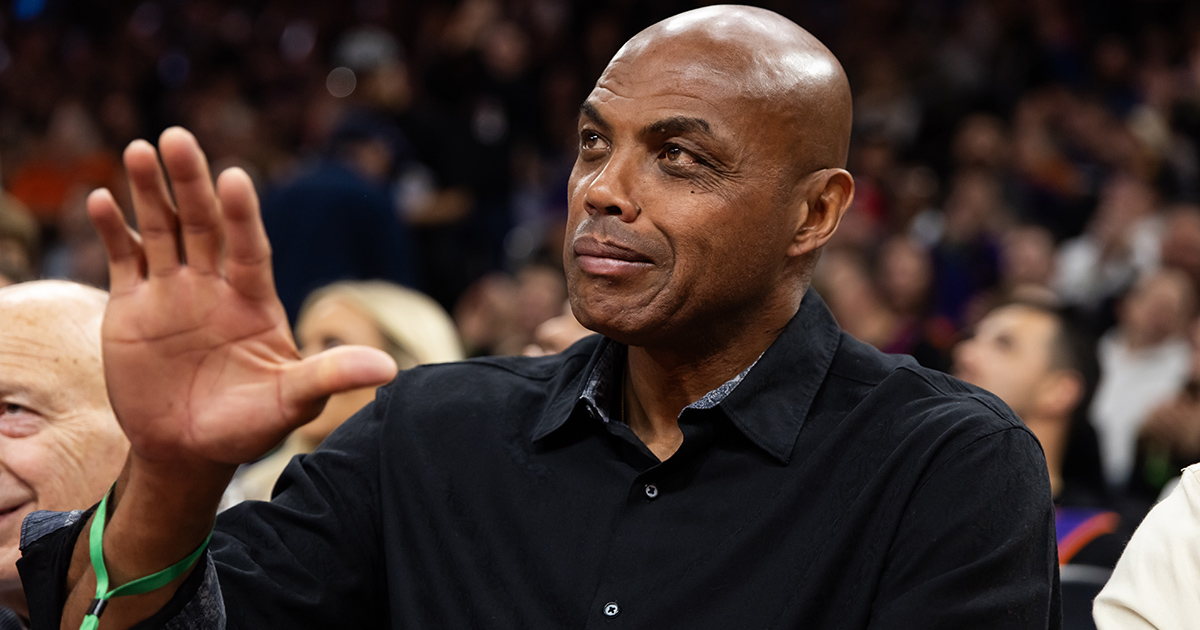
NBA legend Charles Barkley has not been shy about his thoughts on NIL and the transfer portal. During Saturday’s Kentucky vs. Indiana broadcast, he candidly discussed the landscape again.

Barkley called the game on ESPN alongside Dick Vitale, the first of two games they will work together. Vitale called for “stability” in college basketball – and college sports as a whole – because of the amount of player movement via the portal. He used Indiana as an example since new coach Darian DeVries virtually built the program from scratch.

SUBSCRIBE to the On3 NIL and Sports Business Newsletter

While Barkley acknowledged he’s in favor of athletes making money through NIL, he also called out players staying more than their four years of eligibility. In addition, he disagreed with the idea of athletes being allowed to seek better offers after every season.

“No. 1, I’m not opposed to players getting paid,” Barkley said on the broadcast. “I always want my players to get treated fairly. But I can’t remember the last time I heard the word, COVID. Some of these guys have been in college for six or seven years. If you’re in college for six or seven years, your name better be, ‘Dr. Somebody.’ You should not still be playing college basketball after six or seven years.

“But you should not have the ability to get a better offer every year. That’s not fair to any school that you are affiliated with because I can’t even do that. None of us can do that, take a better – Amazon, anybody or FOX Sports can come and say, ‘Well, we’ll give you more money and you can leave after every year.’ That’s not fair. … We’ve got to put some guardrails on these sports.”

One of the other new parts of the college basketball landscape is G-League players seeking eligibility. The NCAA has changed its approach regarding players who played in the G-League, arguing they were not professional athletes in a way the old rule said. Instead, if those players are within five years of their high school graduation, they could become eligible unless they went through the NBA Draft process or signed an NBA contract.

To Charles Barkley, that’s another area that needs fixing. He does not think former G-League players should be able to play college basketball.

“We’ve got guys playing in the G-League coming back to college sports now,” he said. “I don’t think that’s fair.”


Link

Continue Reading

NIL

$29 million college football coach surges as favorite to replace Sherrone Moore at Michigan

Published

on


Michigan began the week coming off a 9–3 regular season, with a Citrus Bowl matchup against No. 13 Texas on December 31 looming.

Instead, an internal investigation and a subsequent arrest that led to criminal charges left the Wolverines without head coach Sherrone Moore, forcing the athletic department into a high-stakes national search for his successor.

Moore, hired Jan. 26, 2024, and elevated from Michigan’s staff, completed two seasons as Michigan’s head coach with a record of 18-8.

Several names have circulated in the wake of Moore’s dismissal, but few have drawn more immediate attention than Arizona State head coach Kenny Dillingham, who, according to Kalshi, emerged as the market favorite with a 58% implied probability to land the Michigan job. 

This puts him well ahead of Alabama’s Kalen DeBoer (19%), Washington’s Jedd Fisch (13%), and Los Angeles Chargers defensive coordinator Jesse Minter (3%).

Dillingham’s Sun Devils rose from a 3-9 debut season to an 11-3, Big 12-championship campaign in 2024, then followed it with another solid 8-4 finish in 2025 despite losing former four-star quarterback Sam Leavitt midway through the year.

At just 34, the Arizona State alumnus has already rebuilt his alma mater into a conference champion and College Football Playoff participant, helping explain why his name has emerged as a focal point in both media coverage and prediction markets.

After that breakout 2024 season, Arizona State extended Dillingham through 2029, raising his 2025 base salary to $5.8 million as part of a $29 million agreement.

Arizona State Sun Devils head coach Kenny Dillingham.

Tempe, Arizona, USA; Arizona State Sun Devils head coach Kenny Dillingham reacts against the Arizona Wildcats in the second half during the 99th Territorial Cup at Mountain America Stadium. | Mark J. Rebilas-Imagn Images

NCAA transfer portal rule changes moved the primary window to Jan. 2-16 and limited the special window after coaching changes to 15 days, beginning five days after a new hire is announced, giving Michigan a clear incentive to move quickly to retain players and recruits.

That timetable, combined with the expectation to uphold the championship standard Moore inherited, has accelerated Michigan’s process, with a decision expected within the coming weeks.

Read More at College Football HQ

  • $1.3 million college football coach reportedly accepts head coaching job

  • First-team All-Conference WR enters college football transfer portal

  • College football program loses 11 players to transfer portal

  • $2.5 college football coach reportedly accepts new head coaching job after winning season


Link

Continue Reading

NIL

With Florida’s top assistant gone to Texas, one portal domino hangs in the air

Published

on


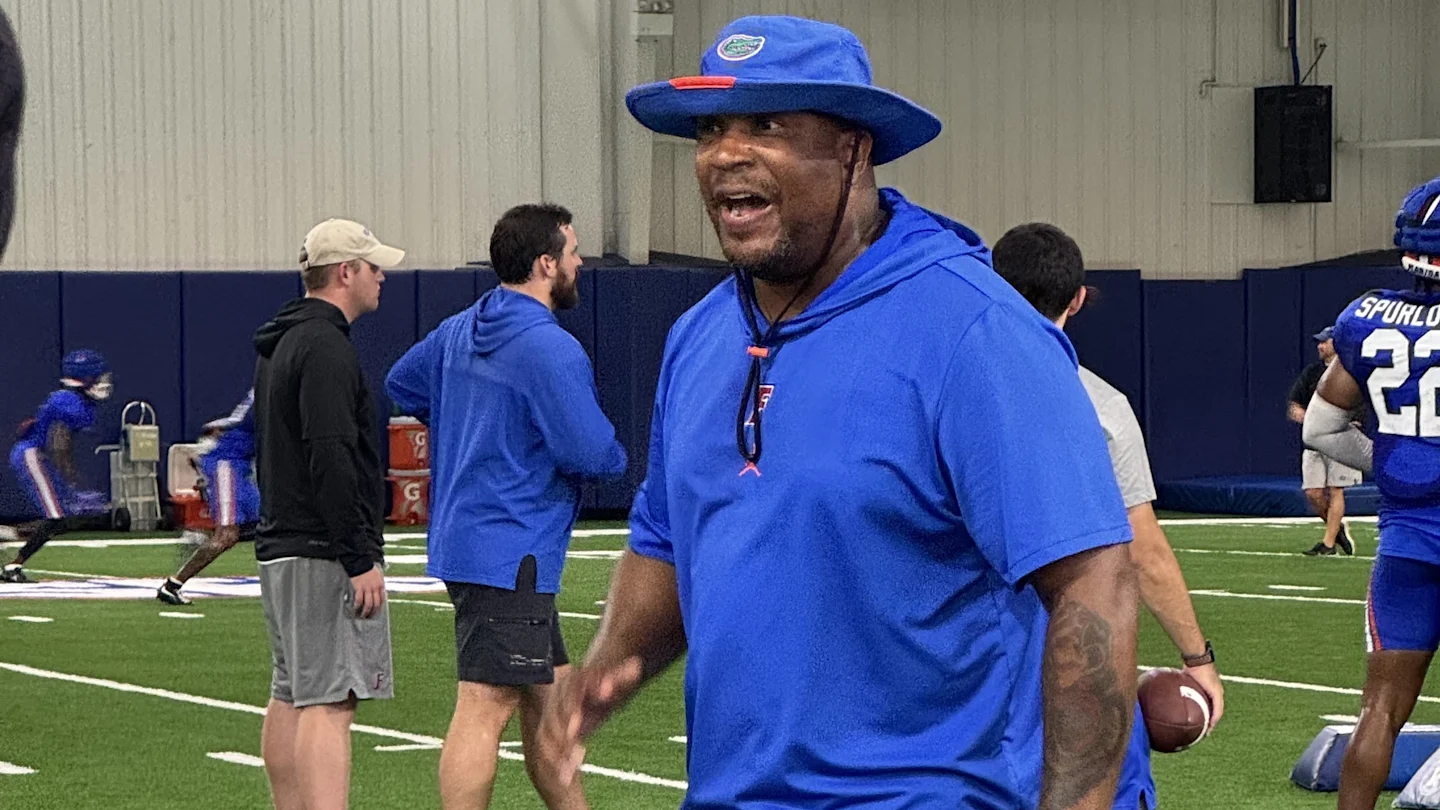
If there had been one assistant coach most Gator fans would have liked to stick around on Jon Sumrall’s new staff, it would have been running back coach Jabbar Juluke. During his time with the Gators, the running back room was deep and felt like one of the biggest strengths of the team. It didn’t seem to matter who Juluke trotted out there; all of Florida’s running backs seemed ready and capable of rushing for 100 yards at a moment’s notice. 

But alas, Juluke didn’t stick around on Florida’s new staff, and it is his new home he just got hired at that also opens up question marks about whether Florida’s best player is going to follow him to that new home.

Jabbar Juluke hired at Texas

Texas has hired Juluke to be its running backs coach and as its associate head coach for the 2026 season. Juluke had been a target to land at Kentucky before opting for Texas.

Given how Sumrall has been assembling his staff, Gator fans should feel confident that someone notable is going to come in and fill his shoes. But given that the modern era is what it is, the immediate fear among Gator fans is whether or not running back Jadan Baugh is going to follow Juluke to Austin.

Sumrall made sure to highlight Baugh during his introductory press conference, and for good reason. After Baugh’s monster game against FSU, he ended the 2025 season as the first Florida running back since 2015 to eclipse 1,000 yards in a season. He also became the first Florida running back since Emmitt Smith to eclipse 1,000 yards in under 200 carries as an underclassman. Baugh’s 266 yards against FSU were also the 2nd most in a single game in Florida history, only behind Smith’s 316-yard performance in 1989 against New Mexico.

There is no official indication of which way Baugh might be leaning or if going to Texas has even crossed his mind. But this is the modern era of college football, where NIL and the transfer portal mean nothing can be taken for granted. 

And so, until we get an update on Baugh’s plans, Gator fans will be taking notice of their former running backs coach’s new home.


Link

Continue Reading

NIL

What college football coaches say about recruiting, roster management means more in NIL, transfer portal era

Published

on


Nearly everything that head college football coaches do comes with purpose. Whether it is the lack of answering a question (with a ramble that flips to different subjects), a rant on NIL representatives or even the most mundane things like a weekly schedule, it is calculated.

That is why paying attention to what coaches say, and how it can be interpreted, is worth looking into and understanding, especially in this volatile transfer portal climate.

So when West Virginia coach Rich Rodriguez opined about the Mountaineers’ depth in the secondary and their need to add more players when the spring transfer portal window opens, there are varied ways to view it.


Link

Continue Reading

NIL

Cap? What cap? Spending on players growing even after NCAA settlement :: WRAL.com

Published

on


The settlement of a class-action lawsuit against the NCAA and its most powerful conferences this year was supposed to cap the amount of money schools could pay athletes and establish stricter guidelines for name, image and likeness payments.

But the introduction of direct revenue sharing with athletes and new reporting requirements hasn’t stopped increased spending, according to coaches, athletics directors and general managers. Even President Donald Trump noted the high price for college talent recently in the Oval Office, and it’s not clear that anyone — in the pursuit of championships and on-field glory — can help themselves.

“Loopholes have won the day,” NC State football coach Dave Doeren said Wednesday. 

The result is a continuing financial race across college athletics, especially football and men’s basketball, with seemingly no end to increasing costs at a time when the NCAA has abandoned or been forced to abandon its amateurism rules under a barrage of legal challenges and moves toward a professional model. Programs and conferences are working with private equity and trying to find new revenue streams amid the financial challenges. 

Meanwhile, athletes are in their fifth year of being able to profit from their names, images and likenesses (NIL). And looser transfer rules implemented at the same time have enabled the movement of athletes akin to free agency in professional sports.

“Let’s make no doubt about it: We’re in a professional era,” University of North Carolina football general manager Michael Lombardi told reporters during a press conference this month.

The settlement in House v. NCAA — named for lead plaintiff Grant House, a former Arizona State swimmer — led to direct revenue-sharing between schools and athletes. And it came with a cap: $20.5 million per school to be divided as they see fit among programs and athletes. 

The number equaled 22% of average athletic revenue across teams in the four biggest, most powerful conferences and brought total spending on athletes to roughly 50% of revenues, including scholarships, travel, food and other expenses.

House and other athletes sued college sports’ governing body and the NCAA’s major conferences — the ACC, Big Ten, Big 12, Pac-12 and SEC. The athletes argued that they deserved damages for not being allowed to monetize their NIL as the NCAA has allowed since 2021. They also wanted future broadcast revenue to be classified as NIL, opening the door to potential revenue sharing. The major conferences and the NCAA make the majority of their revenue through selling broadcast rights for football and men’s basketball. After several years, the dispute wound up with a proposed settlement.

The NCAA and member schools have pushed for federal legislation to allow them to codify some of the settlement and thwart some legal challenges, but that effort hasn’t produced a bill able to pass either chamber.

NIL spending

In addition to revenue sharing, the settlement allowed for outside compensation for the use of athletes’ names, images or likeness, but any deal above $600 would have to go through a new system, called NIL Go, designed to weed out abuses through the new College Sports Commission.

More than 12,000 deals for a total value of $87.5 million have been cleared by NIL Go as of Nov. 1, according to the College Sports Commission. Almost 400 deals worth $10 million haven’t been cleared since the launch of NIL Go on June 11. In October, more than 3,300 deals were cleared worth about $25 million – an average of $7,418 per deal.

The College Sports Commission initially said that NIL collectives — groups created to raise money to pay players for individual schools — wouldn’t meet the group’s “valid business purpose” criteria, a move designed to stop pay-to-play payments masquerading as contracts requiring nominal work or appearances. Within weeks, the commission reversed course, meaning NIL could continue to function as it has in addition to the new revenue sharing.

Collectives rushed to beat the implementation of the coming revenue-sharing cap by frontloading deals for athletes for the 2025-26 academic year so they wouldn’t count against that figure.

Texas Tech, which will play in this season’s College Football Playoff, is the most public example with billionaire boosters helping spend more than $28 million on its roster, including $7 million on its defensive line. Virginia, which reached the ACC title game, got at least $20 million from an anonymous donor to upgrade its football roster. 

“You get what you pay for sometimes – most of the time,” said Doeren, who is completing his 13th season at NC State and is among the longest tenured coaches in major college football. “So that’s what people are doing to rebuild. Some of the schools have more than others. I don’t understand how we can say there’s a cap though, if there’s not.”

UNC paid $4 million over two years for quarterback Gio Lopez, a transfer from South Alabama, ESPN reported. Duke reportedly paid $8 million over two years for quarterback Darian Mensah, a transfer from Tulane who was the top passer in the ACC for Duke, which won its first outright ACC title since 1962. NC State quarterback CJ Bailey will likely have lucrative offers this offseason from teams in need.

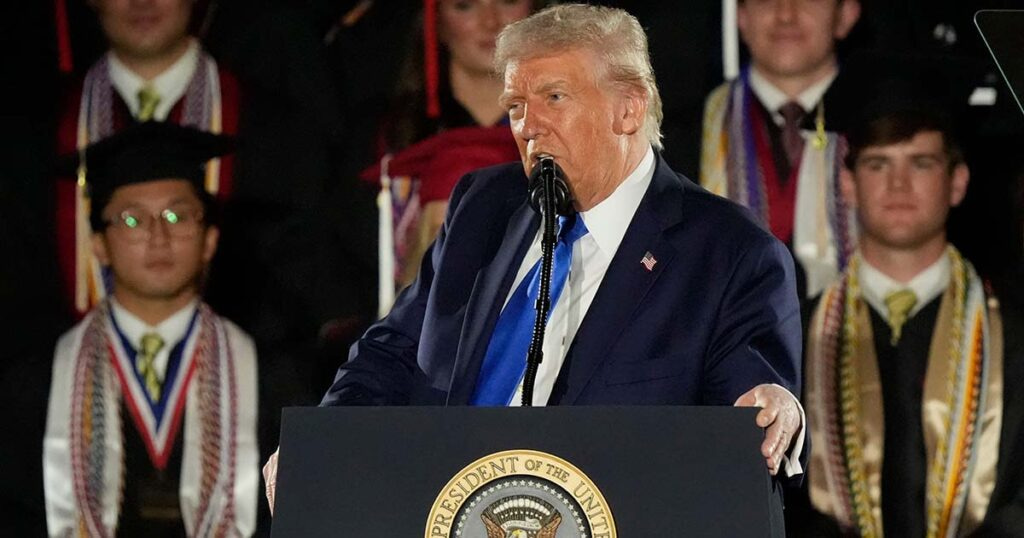
Trump said NIL “is a disaster for sports.”

“You can’t pay a quarterback $14 million to come out of high school,” Trump said. “They don’t even know if he’s going to be a very good player. Colleges cannot afford to pay the kind of salaries you’re hearing out there.”

Salaries, particularly for high school players, haven’t reached that amount yet. But Trump suggested that colleges won’t be able to stop.

“They’re going to get wiped out, including ones that do well in football,” he said.

There is plenty of evidence to suggest schools won’t stop. LSU reportedly guaranteed new coach Lane Kiffin $25 million annually for his roster. Other schools, too, have promised their coaches millions for talent acquisition and retention, above and beyond the revenue-sharing cap.

“Tell me the numbers and the plan for what the money is for the players because that’s everything in that area to me,” Kiffin said at his introductory press conference, claiming he was unaware of his $13-million a year salary. “Not what I make, what they make, to understand how you can build this.”

Arms race

Officials from across the country are paying attention to reports of millions for rosters — and trying to square that with the new rules.

“The numbers you’re hearing and the numbers we know that are out there don’t compute with the cap number,” Notre Dame athletics director Pete Bevacqua said at a press conference last week. “I think we have to be honest and forthright with ourselves and have a set of rules that are realistic and reflect what’s happening, reflect major college football in 2025 and beyond.”

The revenue-sharing cap is $20.5 million, but the first $2.5 million of additional athletic scholarships across the department is supposed to count against the cap, something that could change moving forward. The cap goes up 4% annually.

North Carolina allocated $13 million to football, $7 million to men’s basketball, $250,000 to baseball and $250,000 to women’s basketball, roughly accounting for how the department generates its revenue. Bevacqua said some schools allocate up to $16 million of the cap to football.

“I think the cap’s too low, and I think if we keep operating under this rule of where the cap is, most major programs are going to have a heck of a time going backwards because you read the same news reports that I do,” Bevacqua said. “You read and know about the same roster numbers for NIL and compensation that I do. Instead of making pretend that doesn’t exist, let’s deal with it and come up with a set of rules that can be followed and then hold people’s feet to the fire.”

Before revenue sharing, programs were committing dollars that had been raised — or needed to be raised. Direct revenue sharing brought some certainty as to where the $20.5 million would come from. But the  “above the cap” spending comes from outside dollars.

NC State’s OnePack NIL Collective, a group that helps fund NIL payments for Wolfpack, raises money by selling membership packages to fans and supporters, who get access to a variety of perks including newsletters, gear, autograph sessions and personalized tours from athletes. 

North Carolina has adopted a corporate model, seeking to partner with companies to funnel more money toward its players. Sponsorship money that comes directly to the athletic department would count toward the revenue-sharing cap, Lombardi explained, while a corporate sponsorship deal with a player wouldn’t.

“Part of this job is still fundraising because the teams that you’re competing against – the Clemsons, the Florida States, the Virginias – they’re operating on a different level,” said Lombardi, who traveled to Saudi Arabia before the football season to meet with a potential donor for the UNC program. 

“Everybody has a different level of financial money and you’ve got to be able to be competitive within that environment. Texas, Texas A&M, the Southeastern Conference schools, everybody gets $20.5 million. How it gets divided up is different, but everybody else is out fundraising through corporate dollars, which will then be allowed to go to the players.”

New model

As of 2021, players, at last, could get money to sign autographs, appear in commercials or for the sale of their jerseys. The market, quickly and predictably, expanded into talent acquisition and retention. In 2025, it is an accepted part of recruiting for high school players and college transfers.

Lombardi said every freshman signing with schools is getting a revenue share contract and that each comes with an acquisition cost in a highly competitive environment. UNC brought in 38 freshmen as part of its 39-man early signing day class in December.

“You can argue the order, but what’s your academic curriculum and what’s your NIL situation are two questions that got to get answered,” Lombardi said. “Maybe the second one goes first.”

Lombardi said the Tar Heels under coach Bill Belichick, who won six Super Bowl titles in the NFL but is new to the college game, needed time to get up and running to compete against others who have had a plan for several years.

They’re not alone. Coaches, general managers and programs have to figure out what numbers are real and what they can do within their own budget.

The transfer portal, which Lombardi has equated to NFL free agency, opens Jan. 2, though many players have already announced their intent to transfer and schools, no doubt, have lined up deals with them.

“It’s a mess right now,” Doeren said. “You just got to do the best you can. I know, as a program — [athletics director] Boo [Corrigan] and I’ve met — we’re going to do everything we can to be as aggressive as we can in this space.”


Link

Continue Reading

NIL

President Donald Trump calls NIL ‘disaster,’ reiterates willingness to get involved

Published

on


Speaking from the Oval Office on Friday while honoring the “Miracle on Ice” 1980 U.S. men’s hockey team, President Donald Trump called NIL a “disaster” in college sports. He also further signaled his willingness to get involved.

Trump has been vocal about settling the landscape in college athletics. He signed an executive order earlier this year called “Save College Sports” to prohibit third-party, pay-for-play payments and directs the Secretary of Labor and the National Labor Relations Board to clarify that athletes are amateurs and not employees.

Advertisement

SUBSCRIBE to the On3 NIL and Sports Business Newsletter

But as dollars continue to fly through NIL and revenue-sharing, Trump called for a “strong salary cap” and said colleges are putting themselves in tough financial shape as a result. He stressed the need for action and reiterated he’d step in, if necessary.

“You’re going to have these colleges wipe themselves out, and something ought to be done,” Trump said. “And I’m willing to put the federal government behind it. But if it’s not done fast, you’re going to wipe out colleges. They’re going to get wiped out, including ones that do well in football.

Advertisement

“They can’t pay $12 million, $14 million, $10 million, $6 million for players. They won’t be able to stop. There’ll always be that one player, they only have that player, they’re going to win the national championship. And they’ll have 100 colleges thinking the same thing. Colleges cannot afford to play this game. It’s a very bad thing that’s happening.”

Donald Trump: Schools ‘putting too much money into football’

President Donald Trump’s assessment of college athletics centers around Olympics sports, which he has said multiple times are caught in the middle of the current landscape. He said Friday schools have been cutting those non-revenue sports, calling them “training grounds” for the Olympics. For example, UTEP dropped women’s tennis while Grand Canyon cut men’s volleyball ahead of the House settlement.

As things currently stand, Trump argued schools are starting to divert more dollars toward football. As a result, other sports could be impacted.

Advertisement

“I think that it’s a disaster for college sports,” Trump said of NIL. “I think it’s a disaster for the Olympics. We’re losing a lot of teams. Colleges are cutting their, they would call them, sort of the lesser sports. They’re losing them at numbers nobody can believe. And they were really training grounds, beautiful training grounds. Hard-working, wonderful young people. They were training grounds for the Olympics, and a lot of these sports that were training so well would win gold medals because of it. Those sports don’t exist because they’re putting all that money into football.

“And, by the way, they’re putting too much money into football because colleges don’t make – even the most successful universities don’t make that much money. … I think the NIL is a disaster for sports. It’s horrible for the Olympics. I think it’s actually horrible for the players. And you’re losing all of these great sports. They’re not college football.”


Link

Continue Reading
Sports29 minutes ago

Kentucky Sweeps Creighton, Punches 2025 NCAA Final Four Ticket – UK Athletics

NIL36 minutes ago

Charles Barkley on NIL, transfer portal: ‘You should not have the ability to get a better offer every year’

Sports45 minutes ago

Nebraska Volleyball’s Dominating 2025 Season Like This Isn’t Normal

Sports1 hour ago

Ex-SJSU coach defends Brooke Slusser against Blaire Fleming’s claims

Sports1 hour ago

Can ‘completely different’ Wisconsin upset Texas in NCAA tournament?

Motorsports1 hour ago

Marshall & Foss Enjoy Two Title Season

Rec Sports1 hour ago

Youth soccer costs are rising — and marginalized families are suffering the most

NIL2 hours ago

$29 million college football coach surges as favorite to replace Sherrone Moore at Michigan

Sports2 hours ago

Nunez, Schneider and Woelfel Win Events as St. Cloud State Track & Field Closes 2025 at The Opener in Duluth

Sports2 hours ago

AU Indoor Track & Field Wraps Up 2025 With PBC Record at ’Twas the Meet Before Christmas

Rec Sports2 hours ago

Luzerne County Sports Hall of Fame donates to Special Olympics, YMCA – Wilkes-Barre Citizens’ Voice

NIL2 hours ago

With Florida’s top assistant gone to Texas, one portal domino hangs in the air

Rec Sports2 hours ago

Analysis: Reshaped Third Circuit Raises Stakes of Second Amendment Legal Fights [Member Exclusive]

Motorsports3 hours ago

Five Unforgettable Things Revealed During the NASCAR Trial

NIL3 hours ago

What college football coaches say about recruiting, roster management means more in NIL, transfer portal era

Most Viewed Posts

Trending