Connect with us
https://yoursportsnation.com/wp-content/uploads/2025/07/call-to-1.png

Motorsports

Cindric gives Team Penske its first win of NASCAR season with victory at unusually calm Talladega | National News

Published

on


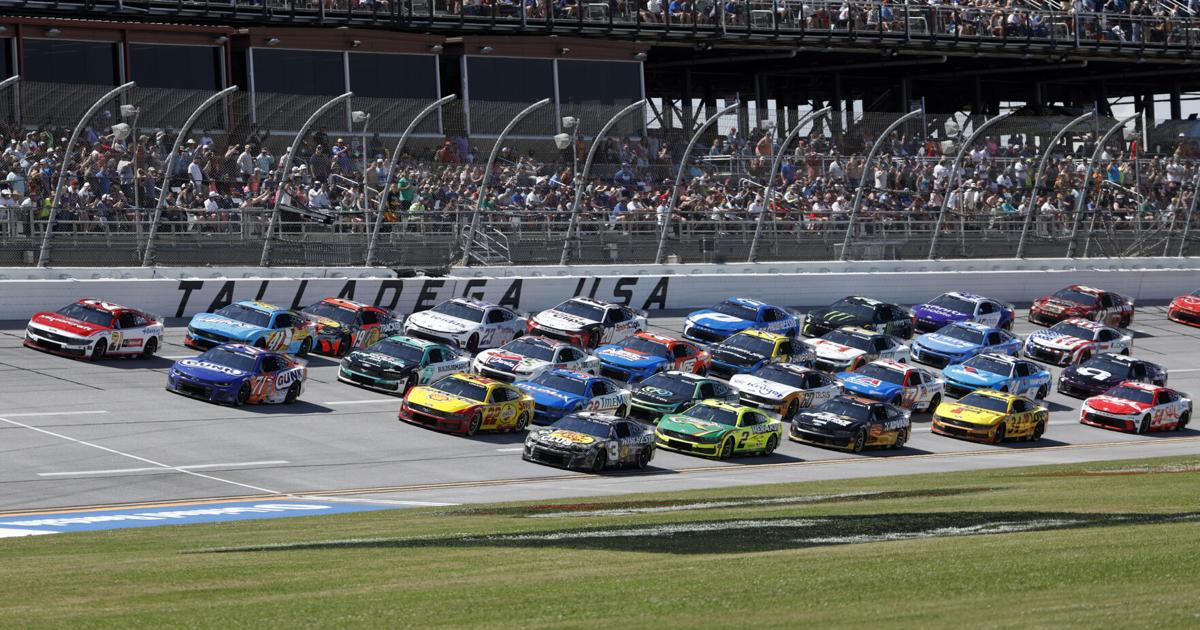
TALLADEGA, Ala. (AP) — Austin Cindric celebrated his first win of the season by wearing Talladega’s Superspeedway traditional victory wreath all around the track.

A wreath like he just won the Indianapolis 500.

He thought so, too.

“Feels like I just won the Indy 500,” he said of Sunday’s NASCAR race. “I’m trying to walk on the plane with this.”

Cindric wasn’t even concerned how such a gesture might be received by Team Penske teammate Joey Logano, who raged on his radio after the second stage when Cindric didn’t push him and it allowed Bubba Wallace in a Toyota to win the segment and its valuable bonus points.

“Way to go Austin,” seethed Logano, who used multiple expletives in his anger over his Penske radio. “You just gave it to him. Gave a Toyota a stage win. Nice job. Way to go … put that in the book.”

Cindric was unconcerned by the idea Logano might take issue with the wreath on the Penske plane.

“I think that would be very immature,” Cindric said. “I don’t see him doing that. We’ll see.”

It was a celebratory day for Cindric, who gave Team Penske its first NASCAR victory of the season by holding off a huge pack of challengers over the closing lap in a rare drama-free day at Talladega Superspeedway.

“Rock on, guys,” Cindric said over his radio. “Rock and roll. Let’s go!”

Ford drivers went 1-2, with Ryan Preece finishing second. But Preece and Logano were disqualified following postrace inspections because of spoiler infractions. Logano had crossed the finish line in fifth.

After the DQ’s, Kyle Larson moved up to second and William Byron third for Hendrick Motorsports. The two Chevrolet drivers pushed Cindric and Preece from the second row rather than pull out of line on the final lap and make a third lane in an attempt to win.

It was Larson’s best career finish at Talladega, where drafting and pack racing is required and neither suits his style. He said he wanted to make a move to try to take the win from Cindric but there was never any room.

“I wanted to take it, but I felt like the gap was too big,” Larson said. “I was just stuck inside and just doing everything I could to advance our lane and maybe open it up to where I then could get to the outside. But we were all just pushing so equally that it kept the lanes jammed up.”

Noah Gragson ended up fourth in a Ford, while Hendrick driver Chase Elliott was fifth — two spots ahead of teammate Alex Bowman, with Carson Hocevar of Spire Motorsports sandwiched in between them. Wallace was the highest-finishing Toyota driver in eighth.

Cindric led five times but for only seven of the 188 laps in an unusually calm race for chaotic Talladega. The track last fall recorded the largest crash in the NASCAR history when 28 cars were collected in a demolition derby with four laps remaining.

On Sunday, there were only four cautions — two for stage breaks — totaling 22 laps. It was the fourth consecutive Talladega race with only four cautions, the two for stage breaks and the two for natural cautions.

But, Sunday featured season-highs in lead changes (67) among different drivers (23). Only five cars failed to finish from the 40-car field, and a whopping 30 drivers finished on the lead lap.

Cindric marked the 10th consecutive different winner at Talladega, extending the track record of no repeat winners. And, by the time it was over, Logano seemed to have calmed down.

“About time one of us wins these things,” Logano said of the Penske trio. “When you think about the amount of laps led by Team Penske and Ford in general, just haven’t been able to close. To see a couple of Fords on the front row duking it out, I wish one of them was me, in a selfish way. But it’s good to see those guys running up there and being able to click one off.”

Larson sets NASCAR record for stage wins

When he won the first stage at Talladega, it was the 67th of Larson’s career and made him NASCAR’s all-time stage winner. He broke a tie with Martin Truex Jr. with the stage win.

Stages were introduced in 2017 as a way to ensure natural breaks during races that allowed fans to rush to the bathroom or concession stand without missing any action. Cars typically make a pit stop during a stage break.

Teammate-on-teammate collision

Joe Gibbs Racing drivers Christopher Bell and Denny Hamlin, who combined to win five of the first nine races this season, had a collision on a restart that ensured Bell would not win his fourth race of the season.

It happened in the first stage of the race with Bell on the front row next to Chris Buescher on his inside, and with Hamlin behind him. As the cars revved to get up to speed at the green flag, Hamlin ran into the back of Bell, which caused him to turn into Buescher and create the second caution of the race.

Bell went to the garage, where he joined Ryan Blaney, Buescher and Brad Keselowski, all betting favorites who were done for the day before the end of the first stage.

“What in the hell? Man, apologies if that’s on me,” Hamlin radioed. “We weren’t even up to speed yet. I don’t know why that would have wrecked him. When he shot down to the bottom, I wasn’t even sure I was actually on him.”

Up Next

NASCAR races next week at Texas Motor Speedway, where Elliott scored his only win of the 2024 season last April.


AP auto racing: https://apnews.com/hub/auto-racing



Link

Continue Reading
Click to comment

Leave a Reply

Your email address will not be published. Required fields are marked *

Motorsports

F1 Engine row erupts over ‘alleged’ 2026 compression loophole

Published

on


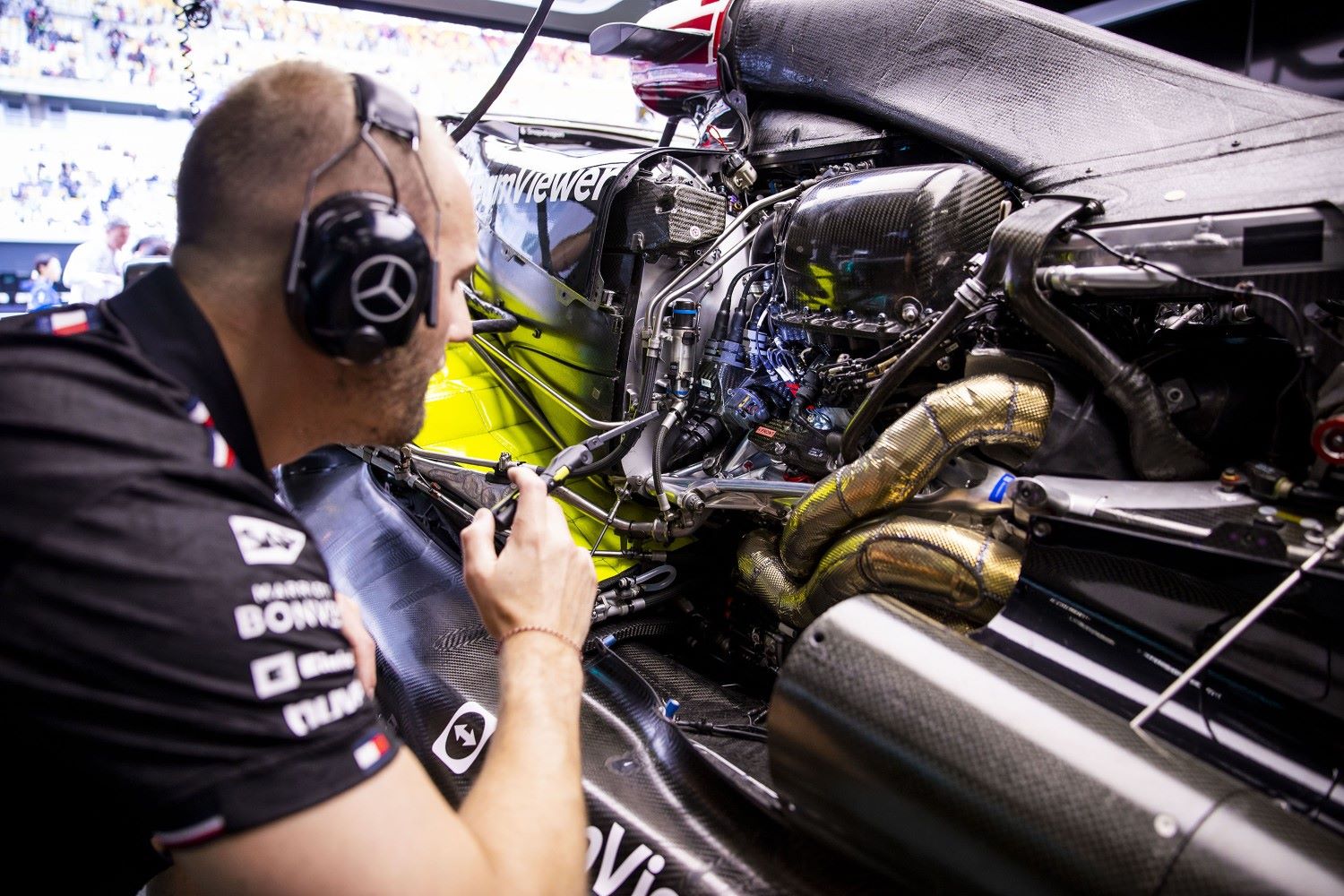
(GMM) Formula 1’s 2026 engine rules have been thrown into early controversy after reports that Honda, Ferrari and Audi are challenging Mercedes and Red Bull over an alleged compression-ratio loophole.

According to German outlet motorsport-magazin.com, the three manufacturers have lodged a complaint with the FIA claiming Mercedes and Red Bull Powertrains have found a way to effectively retain an 18:1 geometric compression ratio under the new regulations, despite the mandated limit of 16:1.

The allegation centers on thermal expansion. While the 2026 rules cap compression at 16:1, measurements are specified to be taken at ambient temperature. Rivals suspect that once the engines reach operating temperatures, component expansion allows Mercedes and Red Bull to regain a higher effective compression ratio – potentially restoring levels similar to 2025.

Estimates cited in the report suggest the advantage could be worth around 15 horsepower, translating to as much as three tenths of a second per lap at a circuit like Albert Park.

Editor’s Note: This smells like the typical F1 off-season bullshit that comes up every winter to keep F1 in the news. The regulations define the materials you can use for most of the internal internal compbustion engine components – pistons, piston connecting rods, crank, etc. – and even the size of any inserts in the cylinder heads. Thermal expansion of about 0.5mm needed to get to a 1:18 compression ratio should be the same for everyone.  If Mercedes and Red Bull have found another way to do it then, good for them.  That is what we call genius engineering and it’s what we come to expect from F1.

The FIA has acknowledged the issue is under active discussion. A spokesperson said: “Thermal expansion can influence dimensions at operating temperature, but current regulations do not require measurements under hot conditions.

“That said, the issue has been and continues to be discussed in technical forums with manufacturers.”

French newspaper L’Equipe reports that all five 2026 power unit suppliers – Mercedes, Red Bull-Ford, Ferrari, Honda and Audi – are meeting with the FIA on Monday in an extraordinary technical session. If Mercedes and Red Bull reach an understanding with the governing body, the other manufacturers are still expected to retain the right to protest ahead of the Australian GP.

Engineers quoted in the German press warn that if the FIA rules against the interpretation, Mercedes and Red Bull could be forced to mechanically reduce compression back to 16:1 – a change that would likely cost performance, given that the power units are already homologated for 2026.

The timing is significant. Red Bull’s in-house power project, backed by Ford, had been widely expected to face early difficulties under the new rules. However, Max Verstappen’s manager Raymond Vermeulen has played down those fears.

“We’ve heard good things about the engine,” Vermeulen said – a remark now gaining added weight as scrutiny intensifies over Mercedes and Red Bull’s alleged behind-the-scenes confidence.


Link

Continue Reading

Motorsports

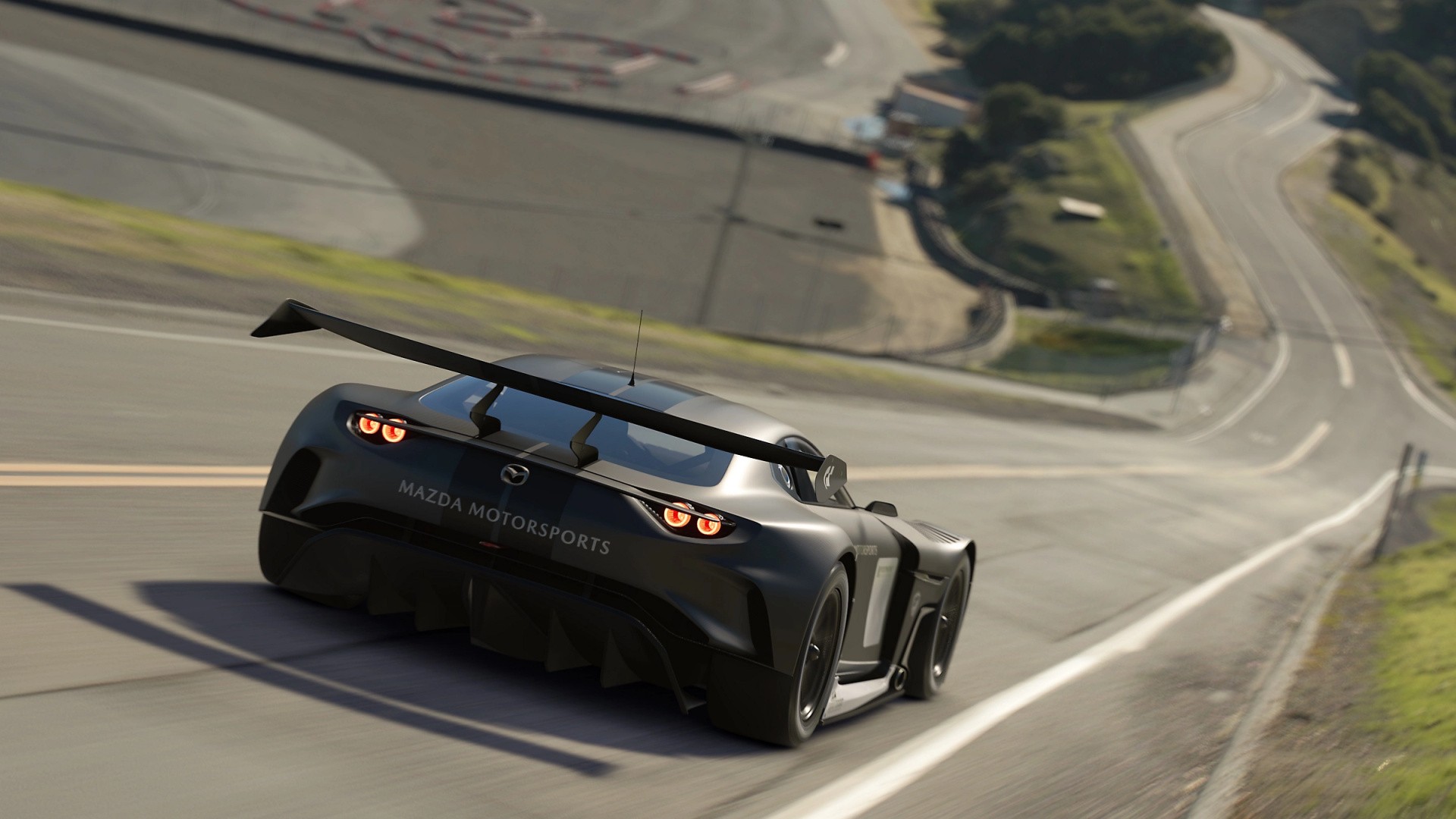
As Forza Motorsport Winds Down, Gran Turismo Is Experiencing A ‘Phenomenon’ At PlayStation

Published

on


As Forza Motorsport Winds Down, Gran Turismo Is Experiencing A 'Phenomenon' At PlayStation

Much has been said about how Forza Motorsport is essentially winding down after two years on the market, with the team recently confirming that no major new content would be added to the game in 2026.

That obviously comes as a shame for those who enjoy a more simulation-focused experience than what Forza Horizon offers, but it also indicates that 2023’s FM reboot hasn’t managed to prove as popular as Xbox had likely hoped.

Meanwhile, PlayStation’s Gran Turismo 7 — a game that’s very similar to Forza Motorsport — is apparently experiencing a “phenomenon” right now due to how many players are still engaging with it. That number is growing as well.

Here’s what series producer Kazunori Yamauchi had to say in a recent roundtable interview (via GTPlanet):

Gran Turismo 7 has been released for several years, but still, the active users are currently over 2 million people, and the new users are increasing. The status that Gran Turismo 7 is in now is probably the best of any Gran Turismo titles that we’ve had in the past. We’ve never experienced this phenomenon before, and neither has PlayStation.”

What’s the reason for Gran Turismo’s immense success and Forza Motorsport’s drop-off, then? According to GTPlanet, Yamauchi apparently attributed GT’s continued appeal to “the studio’s evolving relationship with its community and a shift in how it supports titles long-term”, while the outlet also highlighted the game’s recent update, Power Pack DLC and the millions of people who are watching Gran Turismo World Series events.

And just to be clear, we’re not ragging on Forza Motorsport in terms of the game itself here. We’ve mentioned numerous times how we think FM has an excellent base to it, but it just didn’t quite evolve in the way that we’d hoped.

It also makes sense that Xbox would rather prioritise Forza Horizon these days, and you can bet Forza Horizon 6 will be a best-seller across all platforms that it’s available for, including PlayStation. Sony might have the dominant sim racer of the two companies, but Forza Horizon is in a league of its own in terms of casual open-world racers.

Still, we’ll keep our fingers crossed that Forza Motorsport can make a return with GT7 levels of success in the future!


Link

Continue Reading

Motorsports

Teams expected to hide true performance in pre-season testing

Published

on


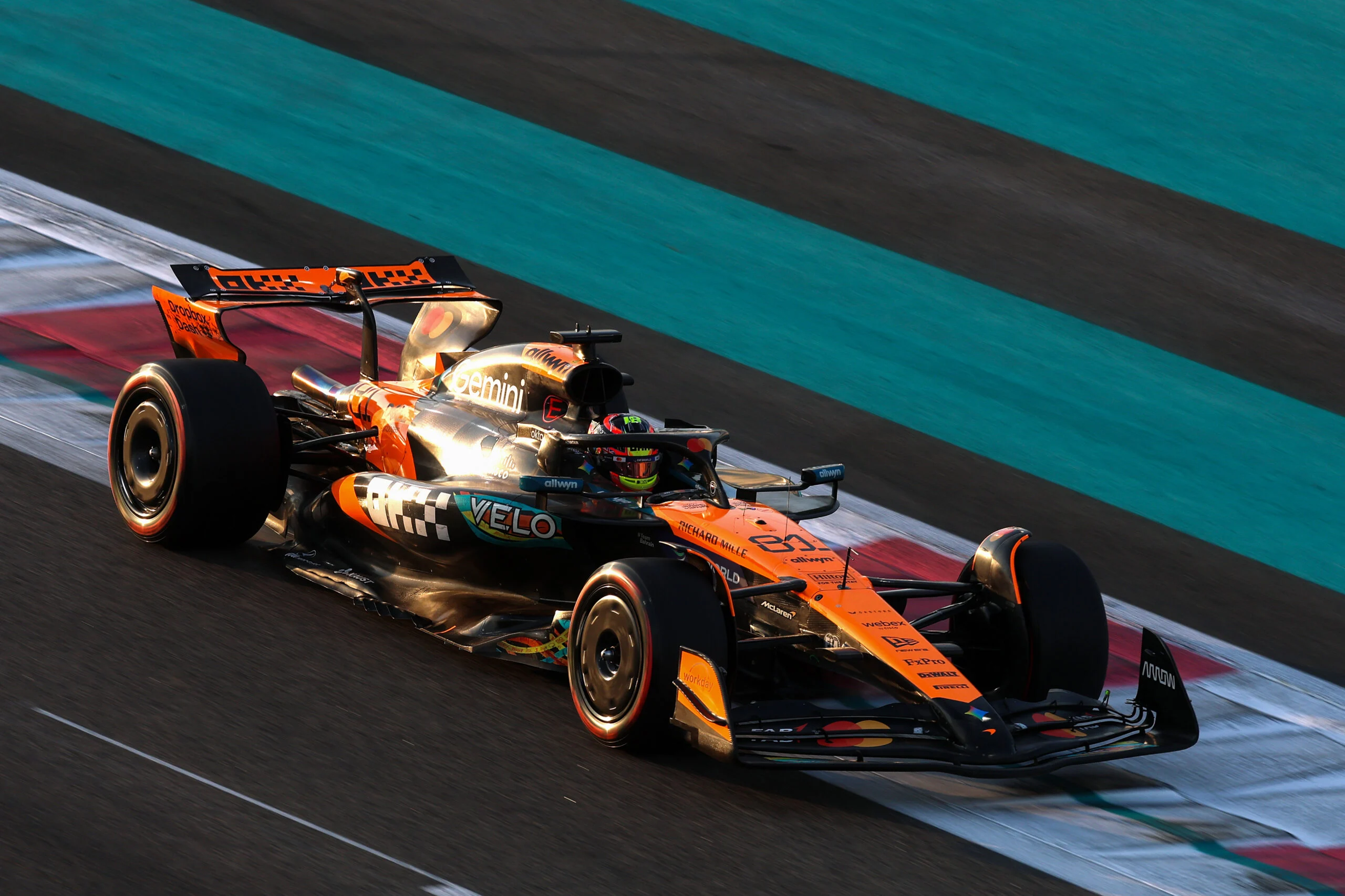
Despite being called the winter ‘break’, there is hardly any rest for teams during this period. If anything, the weeks between the season finale and pre-season testing are some of the most intense.

For aerodynamic and engine-focused personnel alike, the next few months are a race against time to prepare the first F1 2026 machines.

At surface level, pre-season testing will provide the first glimpses of next year’s challengers. Crucially, however, it is reliability – not outright performance – that will be most representative.

Kimi Antonelli, 2025 Bahrain Grand Prix, Friday – Sebastian Kawka

Reliability first, performance to come later

After this season’s conclusion, Ferrari team principal Fred Vasseur gave a series of declarations about F1 2026.

Some of his most interesting commentary focused on pre-season testing and the opening rounds of the year. According to Vasseur, the 2026 hierarchy will be impossible to predict until later in the season.

The Frenchman predicts most teams will focus on reliability in the early months of 2026.

This sentiment is clearly prevalent, with Cadillac, Audi and even Mercedes suggesting they will bring relatively basic packages in Barcelona testing – with more sophisticated iterations to arrive in the subsequent months.

For some teams, this will be out of necessity.

Due to limited wind tunnel hours and financial restrictions, some teams are at relatively early stages in their 2026 development.

Consequently, there will be some assembly lines still producing the first components to be used in pre-season testing. In some cases, only after the first few rounds will more serious upgrades be in the pipeline.

This is not to say all teams will be conservative in their rollout. Those who started early on their 2026 challengers, such as Williams, are already finalising their a-spec and b-spec cars.

Still, even in these cases, reliability will be the first order of business in testing. From hydraulics to suspension to engines, teams must ensure they have avoided any massive blunders when the cars first take to the track.

The near-faultless reliability F1 has become accustomed to will not be present in 2026. Much like at the start of the hybrid era in 2014, some outfits could be in serious trouble with their chassis and powertrains.

Because of this, it will be easier to spot the teams struggling in pre-season – whilst those in a stronger position will be more understated.

Fernando Alonso driving the (14) Aston Martin F1 Team AMR25  in Abu Dhabi, United Arab Emirates. (Photo by Sam Bagnall/Sutton Images)

A game of cat and mouse to start F1 2026

As previously assessed on LWOS, teams began working towards 2026 at different times. This means some teams will be several steps ahead in terms of how they plan to evolve next year’s cars.

Others, meanwhile, will be trying to make up for lost time.

However, regardless of when teams made 2026 their development focus, there could be a dramatic range in how teams approached the new regulations.

In some cases, this could manifest itself in more obvious differences in visible parts of the car. In others, more disguisable areas – such as engine power – could be critical in separating teams.

Because of this, those who believe they have found something others have overlooked will avoid drawing attention to themselves with flashy lap-times.

This was Brawn’s approach when they first tested their title-winning 2009 car. Jenson Button recalls that after his first lap in Barcelona testing, he went six tenths faster than anyone else – much to the team’s surprise.

At that point, Brawn did not complete another low-fuel run. This was integral in keeping the team under the radar in pre-season, and meant rivals only began to emulate their game-changing double diffuser several months later.

Though an extreme example, this case study is relevant for the coming months. Teams that are struggling will have less to hide, and can work on testing their cars with slightly more freedom.

However, whichever engineering department has nailed the 2026 regulations will spend much of pre-season testing trying to avoid attention from elsewhere on the grid. After all, teams naturally protest to the FIA when someone else introduces an innovation they missed.

READ MORE: Lawrence Stroll says “patience” necessary for Aston Martin project

Main photo: Steven Tee/LAT Images (McLaren Racing Media Centre)


Link

Continue Reading

Motorsports

Founding family fends off shakeup at UniFirst

Published

on


While one family feud over the future of a multibillion-dollar local company played out in Delaware last week, another one came to an end in Massachusetts.

In the Delaware Chancery Court, all eyes were on a trial that involved recently deposed Market Basket chief executive Arthur T. Demoulas, and his fight with the supermarket chain’s board and his sisters to get his job back. The Demoulas family was left hanging once the trial wrapped up: A decision from the Chancery Court judge isn’t expected until sometime next year.

Back in Massachusetts, however, there was a more definitive ending for the Croatti family and UniFirst, the Wilmington-based uniform supplier that’s publicly traded but controlled by family members. A hostile campaign by New York hedge fund Engine Capital to put its founder as well as a son of beloved former CEO Ron Croatti on UniFirst’s board fell short of the votes it needed.

That’s not to say shareholders didn’t like the idea. Most did, judging from the fact that Engine Capital founder Arnaud Ajdler and Michael Croatti received more common-stock votes. But the slate of two incumbent board members, chief executive Steven Sintros and Joseph Nowicki, prevailed. That’s because key Croatti family members, including Michael’s mother Carol Croatti and brother Matthew Croatti, own preferred shares that carry much more weight in the voting, and they supported the Sintros-Nowicki ticket.

The legacy of the late Ron Croatti was invoked in a recent hostile shareholder campaign at UniFirst.

Michael Croatti rose through the ranks of the uniform company over three decades working under his father, who died in 2017. But in 2024, the son’s role changed from executive vice president to consultant, while Kelly Rooney was brought on board to be chief operating officer.

Then, in January of this year, larger rival Cintas made an unsolicited bid for UniFirst. That bid was ultimately rejected, and the UniFirst stock tumbled. Ajdler and his firm then showed up, buying shares, and eventually allying with Michael Croatti with an effort to get on the board and potentially put the company on the market.

Ajdler knew it would be tough, because certain Croatti family members control 70 percent of the voting rights. He appealed to them to change their minds, saying the company has struggled since Ron Croatti’s death and even more so since Michael Croatti’s departure from the executive ranks. But it was not meant to be.

After the vote, the board issued a brief statement portraying the proxy fight in positive terms, saying it appreciated the “active dialogue” with UniFirst shareholders, and that it looks forward to “further constructive engagement.”

Ajdler was less diplomatic in his statement, saying the shareholder vote “represents an unequivocal rebuke” of UniFirst’s “value-destructive standalone strategy” and sends a message that the board should put the company on the market and meet with potential buyers — and, at the very least, eliminate the shares’ dual-class structure. He said UniFirst is struggling and needs to team up with a competitor to flourish again. “Selling the Company,” Ajdler concluded, “is the best path to achieving Ron’s goals and honoring his legacy.”

Then on Monday, Cintas announced that it has submitted another bid for UniFirst for just over $5 billion, the same price that it offered nearly a year ago.

Maybe the saga isn’t over after all.

This is an installment of our weekly Bold Types column about the movers and shakers on Boston’s business scene.


Jon Chesto can be reached at jon.chesto@globe.com. Follow him @jonchesto.


Link

Continue Reading

Motorsports

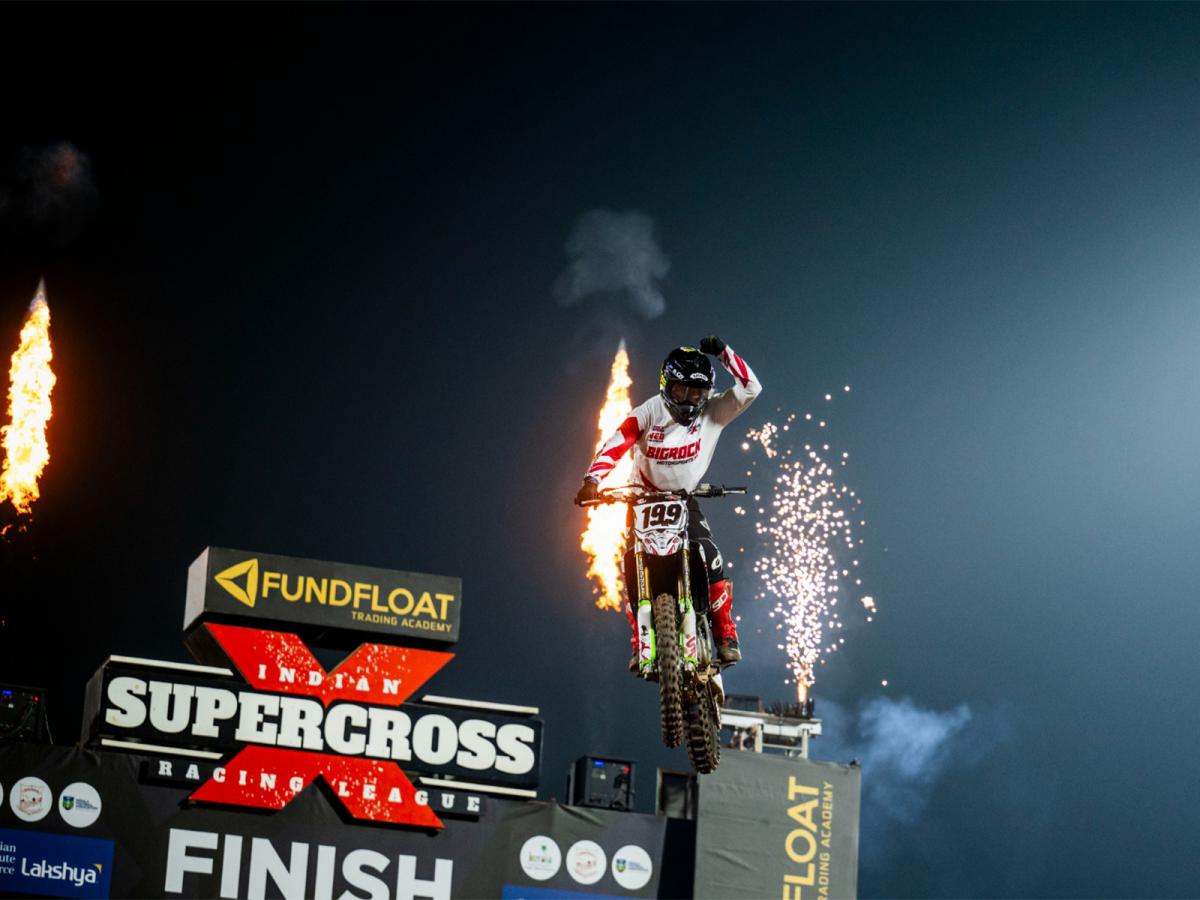
BigRock Motorsports retains its Championship title at ISRL Season 2 Grand Finale in Calicut

Published

on


Calicut (Kerala) [India], December 21 : The Indian Supercross Racing League (ISRL) Season 2 concluded in spectacular fashion with a historic Grand Finale at the EMS Corporation Stadium, Calicut. Megastar and ISRL Brand Ambassador Salman Khan was present on ground, adding star power to an electrifying night of high-octane racing and live entertainment, as per a release.

The finale witnessed a record-breaking turnout of over 32,000 fans, marking the highest-ever attendance for a motorsporting event in India and reinforcing Kerala’s strong connection with motorsport and large-scale live sporting experiences, the release said.

Amid roaring crowds and intense on-track action, Team Bigrock Motorsports were crowned ISRL Season 2 Champions, capping off a fiercely competitive championship that unfolded across Pune, Hyderabad and Calicut. The season showcased a compelling blend of international excellence and emerging Indian talent.

The Calicut round delivered thrilling racing across all categories. Matt Moss from team BigRock Motorsports (Australia) claimed victory in the 450cc International class aboard the Kawasaki KX 450, while Calvin Fonvieille from team Apollo Indewheelers (France) dominated the 250cc International category on the Yamaha YZ 250. The 250cc India-Asia Mix class was won by Delvinator Alfarizi (Thailand) riding the KTM 250 SX – F, drawing thunderous applause from the packed stadium.

Megastar Salman Khan, Brand Ambassador, ISRL, said, “Watching the Grand Finale in Calicut was truly special. The passion of the fans and the intensity of competition show how far Indian motorsport has come. ISRL is creating a platform where Indian riders can compete confidently alongside the world’s best,” as quoted from a release.

Reflecting on the season, Veer Patel, Managing Director, ISRL, said, “Season 2 reflects the growing belief in Supercross across India. From Pune to Hyderabad and now Calicut, the record-breaking fan response shows the sport has truly found a home here, while we continue building strong pathways for Indian riders alongside world-class racing.”

Over the course of Season 2, 36 international riders from 21 countries, including Australia, France, the USA, Germany, Thailand and South Africa, competed alongside India’s top riders such as Rugved Barguje, Ikshan Shanbhag, Prajwal Vishwanath and Shlok Ghorpade, highlighting ISRL’s growing global stature, as per the release.

Beyond the races, the Reise Moto ISRL Fan Park transformed EMS Corporation Stadium into a complete motorsport festival, featuring live music, racing simulators, interactive brand zones, food experiences, merchandise and rider interactions, creating an immersive fan experience for families and enthusiasts alike.

With Season 2 concluding on a historic high, the Indian Supercross Racing League now looks ahead to expanding its footprint, strengthening grassroots development and further positioning India on the global Supercross map.

Disclaimer: This post has been auto-published from an agency feed without any modifications to the text and has not been reviewed by an editor

Open in app


Link

Continue Reading

Motorsports

Toward an Athlete- and Planet-Friendly Hakone Ekiden: All Vehicles Provided for the 2026 Race Will Be Electrified | Corporate | Global Newsroom

Published

on


The Hakone Ekiden is a race with a tradition spanning more than 100 years, dating back to its founding in 1920. Toyota began providing certain operational vehicles in 2003 to help nurture the next generation of young athletes and has supported the event as a sponsor since 2011. Throughout its involvement, Toyota has continually considered how to reduce vehicle emissions to make the race more athlete- and planet-friendly.

Toyota is advancing its multi-pathway approach, offering electrified vehicle options tailored to diverse energy circumstances in each country and region and to varied customer needs. Accordingly, the company felt that its diverse lineup of vehicles, including BEVs and FCEVs, could contribute to the Hakone Ekiden.

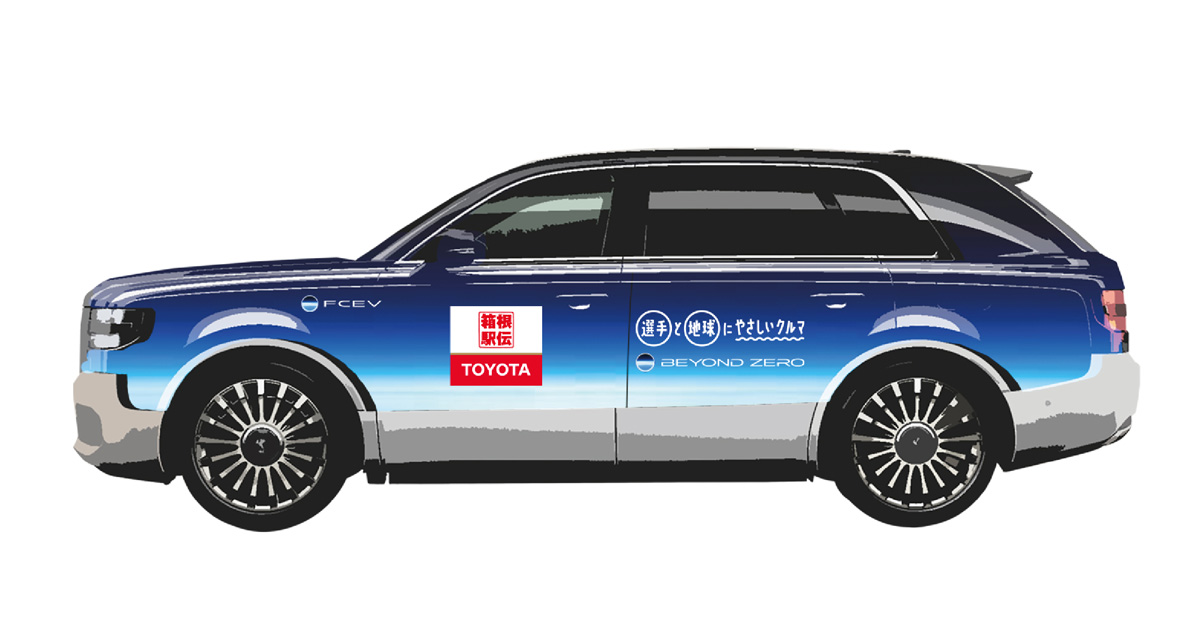
In total, 40 electrified vehicles will be provided for the race.
The joint camera truck filming leading runners and the Century serving as a race headquarters vehicle will be provided as original FCEV models. These vehicles are equipped with fuel cells instead of engines and powered by motors that generate electricity through the chemical reaction of hydrogen and oxygen. They are extremely quiet and emit only water.

Vehicles transporting people and equipment for the race will also be electrified. e-Palettes will serve as emergency response vehicles for all situations, while FCEV Coasters will transport related personnel.

Each university team operations vehicle will be an HEV used in combination with low-carbon E10 gasoline, which contains 10% biofuel. ENEOS Corporation will provide E10 fuel made from ethanol derived from non-edible sorghum plants produced through the Research Association of Biomass Innovation for Next Generation Automobile Fuels*. These initiatives will reduce exhaust gases and carbon dioxide emissions from these vehicles.

Sports give people courage and touch their hearts. Toyota, which has supported athletes through various activities since its founding, will continue to help make the Hakone Ekiden a sustainable race that is both athlete- and planet-friendly through these initiatives.


Link

Continue Reading

Most Viewed Posts

Trending