
NIL
How Young Adults Shape The Future Of Work Through NIL And Branding


It is easy to think that building a personal brand is something that happens after you graduate, land your first job, or start a company. But today, thanks to a major shift in business and culture, many young adults are getting a head start before they even leave high school. NIL, short for Name, Image, and Likeness, is opening the door for students to turn their talents and personal brands into real businesses long before they officially enter the workforce. This early shift is starting to reshape the future of work in ways few people expected.
What NIL Actually Means And Why It Matters For The Future Of Work
What NIL Actually Means And Why It Matters For The Future Of Work
Through NIL opportunities, young athletes and students can sign contracts with brands, create merchandise, run social media promotions, and get paid for appearances. Before 2021, college athletes in the United States were not allowed to profit from their fame. They could not accept endorsement deals, appear in commercials, or even sell their own autograph. Those restrictions have changed, opening new career paths much earlier than ever before.
How NIL Deals Are Opening Future Of Work Career Paths
How NIL Deals Are Opening Future Of Work Career Paths
NIL deals come in many forms. Some athletes sign endorsement contracts with sportswear companies, energy drinks, or local businesses. Others create their own clothing lines, launch YouTube channels, or license their personal brand to video games and advertising campaigns.
A high school quarterback with a large social media following might be approached by a car dealership to appear in a local ad campaign. A gymnast might partner with a sports nutrition brand. Even lesser-known athletes with strong personal brands can monetize their image through social media sponsorships, training camps, and merchandise sales.
The Shedeur Sanders Story: How NIL Is Changing Financial Futures Of Work
The Shedeur Sanders Story: How NIL Is Changing Financial Futures Of Work
One high-profile example is Shedeur Sanders. As the son of NFL Hall of Famer Deion Sanders and the starting quarterback at the University of Colorado, Shedeur capitalized on NIL opportunities early.
During college, he landed endorsement deals with major brands like Nike, Beats by Dre, and Gatorade. His NIL earnings were estimated at around $6.5 million. Even though early projections suggested he could be a first-round NFL draft pick, he was selected much later, going in the fifth round to the Cleveland Browns with a rookie contract valued around $4.6 million over four years. His NIL income almost matched what he would make across multiple years in the NFL, showing how powerful brand building can be even before traditional employment begins.
Beyond Sports: How Personal Branding Is Redefining Future of Work Opportunity
Beyond Sports: NIL And The Future of Work Opportunity
While sports drive much of the NIL conversation, personal branding is opening doors far beyond athletics.
Take Morgan Young, for example. She started posting career advice content on LinkedIn while she was still a teenager. By 18, she had built a significant following, speaking at events and collaborating with companies. Instead of relying solely on content creation, Morgan continued her education in Computer Science and Engineering, blending her brand skills with a traditional career path. Learning to manage a personal brand early is helping young adults like Morgan expand their career options long before they reach the traditional workforce.
Why Personal Branding Is Shaping The Future Of Work
Why Personal Branding Is Shaping The Future Of Work
NIL and personal branding are reshaping what career paths look like for an entire generation.
In the past, you went to school, got a degree, found a job, and maybe climbed the ladder. Now, brand building, entrepreneurship, and digital influence are viable career skills even for teenagers. Marketing, public relations, consulting, entertainment, and even tech companies value people who know how to grow an audience, handle contracts, and build trust online.
Companies that are paying attention to these trends are already adjusting how they scout talent. It is no longer just about a resume. It is about visibility, reputation, and the ability to manage a personal brand with professionalism. Deloitte, for example, hired Lara Sophie Bothur as their first full-time corporate influencer after seeing the impact of her online presence. Bothur built a following of more than 360,000 LinkedIn followers by sharing insights on technology, innovation, and workplace culture, generating hundreds of millions of impressions a year.
The New Future Of Work Skills Young Adults Are Learning Through NIL
The New Future Of Work Skills Young Adults Are Learning Through NIL
Young adults are learning skills that go far beyond athletic performance. Some of the most important lessons from NIL include:
- Negotiation and Contracts
- Financial Management and Taxes
- Marketing, Branding, and Audience Engagement
- Legal Awareness and Compliance
In many ways, these students are getting a crash course in running a small business. Those who navigate these opportunities early are developing a professional edge that carries into industries well beyond sports.
Challenges Young Adults Face With NIL Future Of Work Opportunities
Challenges Young Adults Face With NIL Future Of Work Opportunities
While NIL opens doors, it also brings challenges. Managing brand deals, taxes, and public image is a big responsibility for teenagers still balancing school and life. Without good advice, young brand builders can easily make mistakes. Signing bad contracts, mismanaging earnings, or facing legal troubles are real risks. Families and students often need help from trusted advisors, attorneys, and financial planners to handle the complexity. There is also the issue of burnout. Managing a business presence at such a young age takes a real toll if not handled carefully.
BuWhat This Means For Career Opportunities In The Future
What This Means For Career Opportunities In The Future
As more young adults step into entrepreneurship through NIL and brand building, it is changing what early career development looks like. Some students will arrive at college already managing audiences and partnerships. Others will have developed professional networks and financial stability earlier than most of their peers.
Even students who do not stay in sports or content creation benefit from these skills. Building a brand, negotiating contracts, and managing business relationships are experiences that transfer across almost every industry.
Final Thoughts On The Future Of Work
Final Thoughts On The Future Of Work
NIL and personal branding are pushing a generation to think differently about careers, influence, and entrepreneurship. Young adults who understand how to manage early opportunities well can build momentum that carries them far beyond traditional career paths. The future of work will belong to those who know how to build relationships, manage their image, and create new opportunities before they even get their first job.


After two seasons of despair, Virginia Tech football fans finally have something to cheer about.
The administration has launched a major financial commitment to Hokie athletics, a new head football coach is expected to bring a haul of top-flight talent with him from Penn State and, to kick things off, an anonymous fan stepped up last month with a record-setting $20 million donation.
Yet it remains to be seen if all of that will be enough to fulfill Tech’s ambition of competing with top-tier schools that have seemingly unlimited resources to invest in the post-amateur era of collegiate sports.
A court settlement last year was supposed to have brought some order to the wild-west world of Division 1 athletics. For the first time, schools were allowed to share revenue with student-athletes, but the amount per school was capped at $20.5 million a year. But the agreement has done nothing to tame the cost of “name, image and likeness” payments.
Atlantic Coast Conference members like Virginia Tech have mostly stood on the sidelines and watched as a small number of name-brand teams set the market value.
Last week, Texas Tech inked ex-University of Cincinnati quarterback Brendan Sorsby to a reportedly $5 million deal. The school, flush with West Texas oil boosters, bragged about the deal in a billboard that lit up New York’s Times Square.
Texas Tech, which rode a gusher of NIL money to this year’s College Football Playoff, has budgeted $35 million in combined revenue sharing and NIL payments to athletes in the 2025-26 school year, according to the Athletic.
There’s no way to know how Virginia Tech stacks up.
Officials in Blacksburg have provided few details about its football finances, including how it spends public funds provided by taxpayers and fees extracted from students. Tech is not an outlier when it comes to secrecy; colleges and universities fear that sharing information could provide an unfair advantage to their on-field opponents.

Reporters in North Carolina have used state open-records laws to determine how other ACC schools are distributing their $20.5 million in shared revenue.
In Virginia, however, universities have taken a unified stand in refusing to release records related to revenue sharing of public funds. Virginia Tech and other universities have used an expansive interpretation of a “scholastic records” exemption in state open government laws to withhold copies of revenue-sharing agreements or payments, even in cases when news outlets have requested the redaction of all names or other personally identifiable information.
“Even with student names redacted individual student-athletes may be identified,” the Virginia Tech FOIA office responded to a Cardinal News open-records request. “Therefore, the requested records are considered scholastic records concerning identifiable individuals. Accordingly, your request is denied.”
In December, Tech spokesman Mark Owczarski agreed via email to provide a general breakdown showing that 75% of shared revenue went to members of the football team, a higher percentage than at the University of North Carolina and North Carolina State University.
Getting accurate numbers about the value of NIL deals received by Virginia Tech football players is even harder to come by. When the settlement was announced, there was anticipation that the details of any NIL deal valued at $600 or more would be released as part of a new agency set up to make sure the terms reflected market value.
The College Sports Commission, however, has released only a top-level report on the total number of deals approved and the value. The one-page document has no information about the number of deals for any school, much less information about individual NIL arrangements.
For several weeks, Cardinal News sought to schedule a follow-up interview with Owczarski about the finances of Virginia Tech football. His office eventually said it will not make him available. “University leadership is not available for interviews on this topic.”
The lack of official information has given rise to publications that have developed formulas to place an NIL value on highly touted players. Here is what On3 Media has to say about two recent Virginia Tech portal commits:
- Ethan Grunkemeyer, 6-foot-2-inch, 207-pound quarterback from Lewis Center, Ohio. Grunkemeyer started the final six regular-season games for Penn State last season and led the Nittany Lions to a 22-10 victory over Clemson in the Pinstripe Bowl. He has three years of eligibility left. On3 Media estimates Grunkemeyer’s NIL value at $783,000.
- Javion Hilson, 6-foot-4-inch, 240-pound defensive end from Cocoa Beach, Florida. Hilson appeared in three games last season with Missouri. Hilson will arrive in Blacksburg with four years of eligibility remaining. On3 Media estimates Hilson’s NIL value at $419,000.
There’s no way to know if Virginia Tech paid more or less than the On3 Media estimates.
Kelly Woolwine, the CEO of Triumph NIL, who for several years acted as Virginia Tech’s “defacto general manager” handling negotiations with players and their families, said he learned from experience that “99 percent of what you hear” about NIL values is untrue.
“On the flip side, truth may be stranger than fiction,” Woolwine quipped in a rare interview on the Virginia Tech Sideline podcast in December 2024.
One thing is certain: last fall, many among the Hokie faithful believed the football program had lost its way.
“What was once a great program competing for championships is now a laughingstock,” wrote Robert Irby in “Sons of Saturday,” a website dedicated to Hokie fandom.
Virginia Tech football hit a low in September after a 0-3 start, ending with a 45-25 blowout at the hands of Old Dominion University in Lane Stadium. After the game, Virginia Tech fired head coach Brent Pry.
Two weeks after Pry’s exit, the Virginia Tech Board of Visitors held a special meeting to approve “Invest to Win,” a campaign to inject an additional $229 million into Virginia Tech athletics over the next four years. Figures released by the board show that about half of the funds would come from donations, while $21.3 million would be generated by an increase in student fees.
“Today, we are stepping up to compete, and we ask our loyal fans and generous donors to step forward with us,” said Virginia Tech President Tim Sands.
In November, fans also cheered news about the hiring of head football coach James Franklin, whom Big Ten powerhouse Penn State had dismissed mid-season. (In an unorthodox twist, Franklin announced he would retain Pry — with whom he had coached at Vanderbilt and Penn State — as his defensive coordinator.)
The coaching change so far has led to a huge net gain for Virginia Tech’s roster. About a half dozen players left the team when Pry was fired, but Franklin has brought talent with him from Penn State.
For instance, Franklin was hired on Nov. 17, a little more than two weeks before top high school players would announce where they would enroll in 2026. In short order, Franklin convinced 11 recruits who had committed to play for him in Happy Valley to change their minds and follow him to Blacksburg.
As a result, Virginia Tech assembled a 2026 recruiting class that ranked fifth in the ACC, behind Miami, Florida State, North Carolina and Clemson, according to 247 Sports.
There was more good news on Dec. 15, when Virginia Tech announced that an anonymous donor had agreed to give a record $20 million gift to the athletic department.
“We are deeply grateful for this extraordinary and timely gift,” Sands said. “Doing more with less, while a testament to the talent of our staff and student athletes, is no longer an option.”
The real test begins this week, as Virginia Tech competes with other schools in a NIL bidding war in the transfer portal.
Coach Franklin has imported a member of his Penn State staff, Andy Frank, to serve as general manager and assemble the roster for the 2026 version of the Hokies.
His predecessor, Woolwine, said one of the vexing challenges in major college football today is managing players’ expectations as compensation goes up year after year.
“You’re going to have a program that is going to bring in a guy for $700,000,” Woolwine said in the December 24 podcast, “and on the other side of the line from him is a guy who has been slaving away at that same university for $75,000 a year. How happy is he going to be when he sees that?”
Woolwine said compensation is by far the biggest locker room distraction in the history of college sports. “It’s bigger than girls, and drugs and partying,” he said.
Players’ concerns about where they stand in compensation can lead to negativity in locker rooms of every major program. “They think their school or their organization was holding out on ‘em, taking advantage of ‘em, sandbagging ‘em. They are very bitter about it,” Woolwine said.
The transfer portal has made it easy for disgruntled players to seek more money and/or playing time elsewhere. This has made it harder for coaches to develop players over time. Underclassmen who have been working toward playing time can find themselves knocked down the depth chart when a school signs players from the portal.
Last season, for instance, only eight of 28 seniors on the Virginia Tech football team played their entire careers in Blacksburg, according to a Cardinal News analysis.
Woolwine said the goal is to find players who are in Blacksburg because they love Virginia Tech. “We don’t have the money to buy our way through this,” Woolwine said in December 2024.
The question remains whether today’s “Invest to Win” will generate the resources that will make it possible for Hokie football to again compete at the highest level.
The loftiness of Virginia Tech’s goal was reflected in a last-minute edit to the goal of the $229 million infusion to athletics. Instead of wanting to be competitive against the ACC (considered the weakest of the Power Four conferences), Virginia Tech expressed a desire to compete with “the best institutions nationwide.”
Related stories

Rutgers football legend Leonte Carroo is suing Rutgers University over the use of his Name, Image, and Likeness from when he was playing in college, according to an article written by Brian Fonseca of Nj.com/NJAdvancedMedia. Carroo’s lawsuit claims that he is entitled to back payments for the money he generated for the university throughout his college career. The lawsuit values those figures between 2.8 and 3 million dollars.
Carroo and his team originally filed the lawsuit in October. In December, Rutgers countered and tried to have the lawsuit dismissed, arguing that the statute of limitations had long passed and that several courts from around the country had already unanimously denied the type of NIL claim that Carroo’s team is making. On January 9th, Carroo’s legal team filed a brief meant to argue that the university’s dismissal should be denied.
Advertisement
According to the article by Fonseca, Carroo’s team gave Rutgers a formal demand letter in June seeking compensation for the unauthorized use of his NIL. The university did not provide such compensation, which led to the lawsuit.
The House vs. NCAA settlement granted back payment to college athletes who were in school between June 2016 and 2024. Carroo’s playing at Rutgers career falls just outside that, as he played from 2012-2015. Carroo’s legal team is arguing that just because he falls outside the period given, it does not take away from the fact that Rutgers unjustly profited from his time as a player.
Carroo was one of the most well-known players at Rutgers while he was playing. He currently holds the receiving touchdowns record in school history by a wide margin, and he was one of the faces of the team when they first entered the Big Ten. Carroo and his legal team argue that some sort of compensation is in order for his level of stardom.
If the courts side with Carroo in this case, it has the potential to open up a whole can of worms across college athletics. It would lay the groundwork and encourage other former athletes from other schools to sue their own school for the same reason. Similar cases to this, including players from other college programs, have been dismissed or denied already across the board. It remains to be seen what will come of this lawsuit in particular.
A link to the original article by Fonseca can be found here.

Former Minnesota safety Koi Perich has committed to play for head coach Dan Lanning and the Oregon Ducks, On3 has learned. Perich was one of the top available players in the NCAA transfer portal, proving to be a massive win for Oregon. It’s the second straight year Lanning has snagged an elite safety from a Big Ten foe.
Perich is a four-star prospect per the On3 Industry Transfer Portal Rankings. He also comes in as the No. 12 overall player. At the time of his commitment, only Missouri‘s Damon Wilson ranks higher on the list of available guys. Now, the No. 1 safety is off the board and heading to Eugene.
Texas Tech was the other program battling Oregon for Perich’s eventual signature. It’s no secret how aggressive the Red Raiders can get in the transfer portal. Especially for defensive players, being a staple of the 2025 roster. But similar to the College Football Playoff quarterfinal matchup between the two, Oregon came out on top.
Perich played in 26 games during his time at Minnesota, turning into one of the best defensive backs in the Big Ten. He recorded 128 tackles, 5.5 tackles for a loss, and one sack. The stats when dropping back in coverage are just as good, snagging six interceptions, five passes defended, and even forcing two fumbles.
Oregon will be looking for a whole lot more of the same. Last portal cycle saw the Ducks land Dillon Thieneman from Purdue, setting the blueprint for what Perich’s time in Eugene might look like. But there was always thought to be a ton of potential with Perich.
Looking back at his high school recruitment, Perich played at Esko (MN) Lincoln Secondary, where he was a four-star prospect. He was the No. 58 overall recruit in the 2024 cycle, according to the Rivals Industry Ranking, a weighted average that utilizes all four major recruiting media companies.
Minnesota listed Perich as a sophomore on his official roster bio during the 2025 season. If he wishes to use them, two years of eligibility remain moving forward. While Oregon might be hoping they just snagged a multi-year player, you have to imagine the NFL Draft will be a serious consideration this time next year.
To keep up with the latest players on the move, check out On3’s Transfer Portal wire. The On3 Transfer Portal Instagram account and Twitter account are excellent resources to stay up to date with the latest moves.

The NCAA transfer portal is nearing the end of its two-week window for college football players to enter in hopes of finding better situations at new programs in 2026. The portal opened its doors on Jan. 2 and will officially close on Friday.
No fewer than 4,000 players from across college football entered the portal in the weeks after the 2025 regular season ended. Much of the discussion about the 2026 portal cycle revolves around quarterbacks shifting to different Power Four programs in search of better situations.
One of these quarterbacks is former Cincinnati signal-caller Brendan Sorsby, who entered the transfer portal and committed to Texas Tech. He will have one season of eligibility for the Red Raiders.
The 6-foot-3, 235-pounder began his college football journey under Tom Allen at Indiana in 2022. He used his redshirt that season, completing only three of six passes and throwing an interception in a blowout loss to Penn State.
Sorsby played in 10 of the Hoosiers’ 12 games in the 2023 season. He threw for 1,587 yards, 15 touchdowns and five interceptions while rushing for 286 yards and four more touchdowns. Allen was fired that offseason, and Sorsby entered the portal for the first time.
Cincinnati landed Sorsby from the portal in the 2024 offseason. He started all 12 games for the Bearcats that season, passing for 2,813 yards, 18 touchdowns and seven interceptions and rushing for 447 yards and nine touchdowns. The Bearcats were 5-7 in 2024, losing each of their last five games.

Sorsby passed for 2,800 yards, 27 touchdowns and five interceptions and ran for 580 yards and nine touchdowns in his last season with the Bearcats. Cincinnati was 7-5 in the 2025 regular season, losing each of its last five games. Sorsby entered the portal ahead of the Bearcats’ bowl game.
Schools scouring the portal for quarterbacks had Sorsby near the top of their wishlist. Max Olson of ESPN released rankings for the best transfers in the 2026 portal cycle, with Sorsby coming in at No. 1 overall.
“He was the Plan A all along for coach Joey McGuire and his staff, a proven Big 12 starter and Texas native that who can elevate an offense who ranked No. 2 nationally in points per game this season before the loss to Oregon in the CFP quarterfinal. The Red Raiders return a lot of players around Sorsby entering 2026 and should be the preseason Big 12 favorite,” Olson wrote.
“Sorsby’s arrival also allows backup Will Hammond to recover from his torn ACL and prepare to take over as (Texas) Tech’s starter in 2027.”


1. Las Vegas Raiders: Fernando Mendoza – QB, Indiana

It’s hard to rethink this after a brilliant Peach Bowl performance from Mendoza. Raiders fans should be excited for the opportunity to select this talent at the quarterback position.
2. New York Jets: Dante Moore – QB, Oregon
The big question over the next week or two is whether or not Moore will return to school. His struggles against pressure in the Peach Bowl may warrant more development. If Moore declares it would be hard for New York to pass on him.
3. Arizona Cardinals: Francis Mauigoa – OT, Miami

Mauigoa’s impressively clean year of pass protection has mattered greatly on Miami’s national championship run. The Cardinals with this selection have locked down both tackle positions for the future.
4. Tennessee Titans: Arvell Reese – EDGE, Ohio State
It’s a shame we didn’t get to see more of Arvell Reese, but he put enough on tape to be a top five selection. Tennessee lacks an identity on defense and this pick might create an energetic pass rush.
5. New York Giants: Carnell Tate – WR, Ohio State
Tate opposite Nabers creates headaches for any defense looking to play man coverage. This gives Jaxson Dart multiple targets who can win downfield and above the rim.
6. Cleveland Browns: Jordyn Tyson – WR, Arizona State

The quarterback position will be a question mark in Cleveland, but at least they can improve the situation. Tyson has the route running ability and body type of a true number one receiver.
7. Washington Commanders: Caleb Downs – S, Ohio State
The Commanders need impact players of any kind on defense. Caleb Downs is the closest thing to this definition in the draft. It’s a slam dunk if he’s available here.
8. New Orleans Saints: Rueben Bain – EDGE, Miami
With Chase Young’s late season emergence and Cam Jordan’s age, the Saints look to build out a reliable edge duo with Bain. Led by Bain’s efforts, Miami’s pass rush has dominated in 2025.
9. Kansas City Chiefs: Jeremiyah Love – RB, Notre Dame
The Chiefs need another mismatch weapon on offense as Travis Kelce ages. Jeremiyah Love adds formational versatility and an explosive element in the run game.
10. Cincinnati Bengals: David Bailey – EDGE, Texas Tech

Cincinnati has a bunch of bigger bodies at edge and need to add a pure pass rusher. Bailey’s relentless use of hands and pursuit to the quarterback charges up this defense.
11. Miami Dolphins: Spencer Fano – OT, Utah
Austin Jackson is under contract for another year in Miami, but Fano could be an immediate upgrade. Regardless, Miami can invest in the position long term and give Fano a chance to bulk up in the meantime.
12. Dallas Cowboys: Sonny Styles – LB, Ohio State
Dallas needs a communicator in the middle of their defense to tie both ends together. Sonny Styles supplies a floor against the run game while improving their ability to cover tight ends.
13. Los Angeles Rams: Jermod McCoy – CB, Tennessee

The Rams could use more physicality at the cornerback position. McCoy is rehabbing a torn ACL from late last season and would benefit from slotting in on an already talented roster.
14. Baltimore Ravens: Makai Lemon – WR, USC
If Isaiah Likely walks in free agency, the Ravens need another reliable weapon for Lamar Jackson. Makai Lemon was a consistent chain mover this season at USC and brings some toughness to the middle of the field.
15. Tampa Bay Buccaneers: Olaivavega Ioane – OG, Penn State
When the Buccaneers’ offense was at its best in 2024, they were consistently able to run the football. Depth issues and injuries killed this offensive line in 2025, and it can’t happen again.
16. New York Jets: Peter Woods – DT, Clemson

After trading Quinnen Williams the Jets have a massive hole at defensive tackle. Woods immediately slots in on early downs to provide some stoutness up front while he develops as a pass rusher.
17. Detroit Lions: Mansoor Delane – CB, LSU

There’s not much Detroit can do about their defensive depth issues other than continue to throw darts at key positions. Delane could end up getting selected much higher than this after an excellent season in the SEC.
18. Minnesota Vikings: Kenyon Sadiq – TE, Oregon
There’s a chance the Vikings release TJ Hockenson and they’d need a pass catching tight end to replace him. JJ McCarthy gets a physical target over the middle of the field to develop with.
19. Carolina Panthers: Cashius Howell – EDGE, Texas A&M
This Panthers’ defense finished the season flying around on their way to a near playoff upset of the Rams. Howell brings similar energy with his “see ball carrier, get ball carrier” attitude from the edge position.
20. Dallas Cowboys: Avieon Terrell – CB, Clemson
The Cowboys like cornerbacks who can move in and out of the slot when formations shift. Terrell has that ability, and adds more versatility to a secondary that already has Da’Ron Bland.
21. Pittsburgh Steelers: Denzel Boston – WR, Washington
If there’s a chance Aaron Rodgers is back in Pittsburgh in 2026, they need to add more size at pass catcher. Right now, Rodgers favorite weapons are all big bodied targets.

22. Los Angeles Chargers: Emmanuel Pregnon – OG, Oregon
Pregnon is a late riser in this draft process as a mauling run blocker. The Chargers invested in Omarion Hampton last season and can’t seem to keep Justin Herbert upright. They need more security along the offensive line.
23. Philadelphia Eagles: Kadyn Proctor – OT, Alabama
Jordan Mailata entered the league as a hulking offensive tackle before rounding into one of the league’s best. The Eagles take pride in their size up front, and Lane Johnson’s inconsistent health warrants foresight.
24. Cleveland Browns: Kayden McDonald – DT, Ohio State
McDonald would be the final piece of a truly dominant Cleveland defensive line. Right now, Myles Garrett is the best defensive player in football. It never hurts to make his job easier.
25. Chicago Bears: Colton Hood – CB, Tennessee

The cornerback room in Chicago operates solidly when fully healthy, but there’s a massive dropoff to their first backup. Hood gets to step in as an elite athletic talent with the opportunity to learn and develop.
26. Buffalo Bills: Keldric Faulk – EDGE, Auburn
The Bills like big bodies like Faulk who can rotate to 3-technique on passing downs. Faulk has the ability to add weight and fit in wherever the Bills need a boost of talent along the defensive line.
27. San Francisco 49ers: CJ Allen – LB, Georgia
The 49ers need a player who can freelance in the box against the run. CJ Allen has the necessary range and blockshed ability to apply support behind this pass rush against the league’s best offensive lines.
28. Houston Texans: Caleb Lomu – OT, Utah
Houston’s run game is showing signs of growth in 2025 but still needs more talent. Caleb Lomu comes from a Utah offense predicated on outside zone and immediately adds athleticism to the Texans’ run blocking unit.
29. Los Angeles Rams: Trevor Goosby – OT, Texas
The Rams offensive line is essential to keeping an older Matthew Stafford and an eventual young replacement upright. They need more depth at tackle and have the time and resources to invest in developing a young toolsy player.
30. New England Patriots: Caleb Banks – DT, Florida
The Patriots found consistent pass rush from their interior in 2025 but could use more size on early downs. If Banks hits his ceiling as a disruptive mismatch nose tackle, the defense would have extra versatility to disguise pressures with three massive defensive linemen on the field.
31. Denver Broncos: Romello Height – EDGE, Texas Tech

Nik Bonitto’s ability to get after the quarterback is an incredibly important part of the Broncos defense. Height has the ability to step in and become Bonitto’s understudy while providing personnel depth for one of the league’s best units.
32. Seattle Seahawks: Brandon Cisse – CB, South Carolina
Mike Macdonald’s time in Baltimore shows the importance of constant investment at the cornerback position with this defensive scheme. Cisse has the versatility to play in the slot and adds more physicality to this already ferocious secondary.

The stage is set for the 2025 College Football Playoff National Championship. No. 1 Indiana (15-0, 9-0) will face No. 10 Miami (13-2, 6-2) in Hard Rock Stadium in Miami, Florida, on Jan. 19 (7:30 p.m. EST, ESPN).
The national championship matchup will feature a pair of programs that have not reached this level of success in quite some time. Indiana has never seen this amount of success, as it did not win more than 10 games in a regular season until Curt Cignetti’s arrival. As for Miami, 2025 has been about a return to national relevance that has been missing for nearly two decades.
Retired seven-time national champion head coach Nick Saban is buying into Miami’s return to national relevance. He discussed the importance Hurricanes’ run in the 2025 College Football Playoff at halftime of the Peach Bowl on the ESPN set Friday.

“I’m happy for them too. I think this is great for the city of Miami. The U is back, and that’s really, really good. Glad they’re going to be playing in Hard Rock (Stadium), that’s all great,” Saban said. “But, I tell you what, they helped Ole Miss a lot in the game last night. But what impressed me the most was the resiliency they showed to keep playing the next play and overcome the adversity that they created themselves.”
Saban has a professional connection with Hurricanes head coach Mario Cristobal. After Florida International fired Cristobal in the 2013 offseason, Saban hired him to his Alabama staff. Cristobal served as an associate head coach, recruiting coordinator and offensive line coach for four seasons before departing for Oregon in 2017.
Cristobal spent a season as the Ducks’ co-offensive coordinator and offensive line coach before taking over for the outgoing Willie Taggart as head coach. He was in the role for four seasons before accepting the head coaching job at Miami.
Under Cristobal’s leadership, the Hurricanes are playing in their first national championship since 2002. Following the national championship loss to Ohio State and their eventual movement to the ACC, the Hurricanes gradually regressed to the point where they fired Larry Coker in the 2007 offseason.
Between Coker and Cristobal, the Hurricanes employed Randy Shannon, Al Golden, Mark Richt and Manny Diaz as head coaches. All four finished with winning records as head coaches, but only Richt won 10 games in a season (2017). Richt retired from the post after three seasons, while the other three were relieved of their duties by the university.


Liberty League Performers of the Week for January 12, 2026

Area Briefs: SU’s Bellenbaum earns ODAC men’s volleyball weekly award | Winchester Star

Virginia colleges resist disclosing athletic revenue-sharing

Damis, Johnson Awarded Weekly LEC Awards from Weekend Action

TCNJ’s Garcia-Beltran and Scepkowski, Farmingdale State’s Vitale Earn NJAC Women’s Indoor Weekly Honors

TCNJ Sweeps NJAC Men’s Indoor Weekly Honors; Rychkov, Paulmenn, Akinboboye Honored

Scarlet Knights Legend Leonte Carroo Sues Rutgers Over NIL Claims

Northampton’s Austin Beers win NASCAR title

Former Minnesota safety Koi Perich commits to Oregon

Motorsports: NASCAR Returns To Chase Format This Season

Oldani Named Week 1 MPSF Defensive Player of the Week – BYU Athletics – Official Athletics Website

Hyak Motorsports Announces Multi-Race Sponsorship with Chef Boyardee – Speedway Digest

$5 million QB ranked No. 1 college football transfer portal player

BREAKING: Ahen Kim named head volleyball coach at Duke

South’s Ellie Kleven named Alaska Gatorade Volleyball Player of the Year

Stempien to seek opening for Branch County Circuit Court Judge | WTVB | 1590 AM · 95.5 FM

Ross Brawn to receive Autosport Gold Medal Award at 2026 Autosport Awards, Honouring a Lifetime Shaping Modern F1

Princeton Area Community Foundation awards more than $1.3 million to 40 local nonprofits ⋆ Princeton, NJ local news %

Downtown Athletic Club of Hawaiʻi gives $300K to Boost the ’Bows NIL fund

Badgers news: Wisconsin lands 2nd commitment from transfer portal

Five Youth Sports Trends We’re Watching in 2026

Beach Volleyball Unveils 2026 Spring Schedule – University of South Carolina Athletics

Three Clarkson Volleyball Players Named to CSC Academic All-District List

Badgers news: Final Four Game Thread vs. No. 1 Kentucky Wildcats

Kentucky VB adds an All-American honorable mention, loses Brooke Bultema to portal

Kentucky AD explains NIL, JMI partnership and cap rules

Central’s Meyer earns weekly USTFCCCA national honor

Is women’s volleyball the SEC’s next big sport? How Kentucky, Texas A&M broke through

BangShift.com IHRA Acquires Historic Memphis Motorsports Park In Millington Tennessee. Big Race Weekend’s Planned For 2026!

PRI Show revs through Indy, sets tone for 2026 racing season

 NBA Legend Michael Jordan to Join NBC Sports as Special Contributor
 Why a rising mid-major power with an NCAA Tournament team opted out of revenue-sharing — and advertised it
 Trackhouse to pair Chastain with McSwain
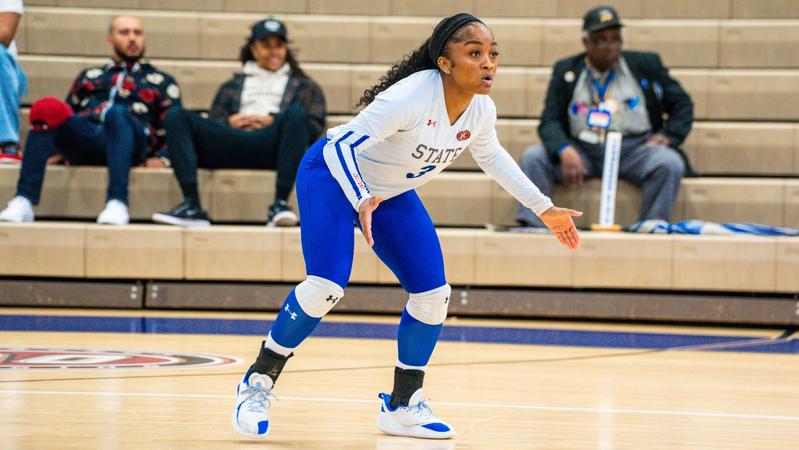 Volleyball Falls to SEMO – Tennessee State University
 Kennewick School Board backs changes to gender inclusion in sports | News
-
 Rec Sports2 weeks ago
Five Youth Sports Trends We’re Watching in 2026
-
 Sports3 weeks ago
Kentucky VB adds an All-American honorable mention, loses Brooke Bultema to portal
-
 Motorsports3 weeks ago
BangShift.com IHRA Acquires Historic Memphis Motorsports Park In Millington Tennessee. Big Race Weekend’s Planned For 2026!
-
 Sports2 weeks ago
H.S. INDOOR TRACK & FIELD: GLOW region athletes face off at Nazareth University | Sports
-
NIL3 weeks ago
Fifty years after IU’s undefeated champs … a Rose Bowl
-
 Sports3 weeks ago
Colorado volleyball poised to repeat success
-
 Sports3 weeks ago
2025 Volleyball Player of the Year: Witherow makes big impact on Central program | Nvdaily
-

 Sports3 weeks ago
Texas A&M volleyball’s sweep of Kentucky attracts record viewership
-

 Motorsports3 weeks ago
NJ Motorsports Park Announces 2026 Event Schedule
-
 NIL3 weeks ago
NIL Funds Are at Top of Arizona State’s Christmas Wishlist