
NIL
WIAA approves NIL for high school and more contact over summer


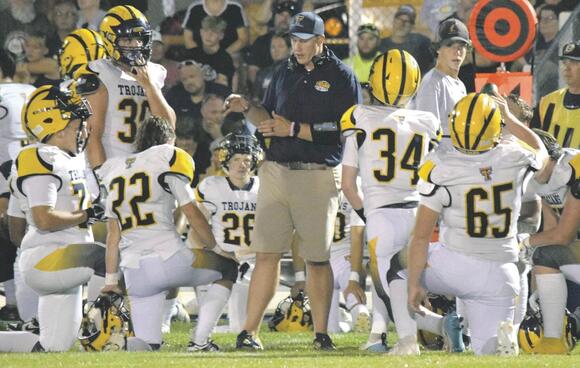
BELOIT — Name, image and likeness is coming to Wisconsin high school sports.
So is much more summer contact between coaches and athletes.
Friday at the Wisconsin Interscholastic Athletic Association’s annual meeting the schools voted 293-108 to approve the proposed NIL, making Wisconsin one of more than 40 states to permit student-athletes to profit off their name, image and likeness by entering into advertising and brand deals.
“With today’s vote, member schools have opted to join a growing list of states that allow student athletes to capitalize on their athletic talents in a way that is similar to students with other valued talents and skills,” WIAA executive director Stephanie Hauser said. “At its core, the WIAA is charged with promoting fairness and sportsmanship while protecting the integrity of the game–something I believe this NIL language preserves.”
The provision allows high school athletes to enter into NIL deals, so long as they don’t wear their team uniform or use school or WIAA logos in an advertisement. Students are also barred from hiring an agent, and schools and their employees can’t help facilitate NIL deals for student athletes.
WIAA athletes will also not be allowed to enter into NIL deals promoting alcohol, tobacco, marijuana or weapons.
NIL activities can’t interfere with a student’s academics, and students cannot miss practices, competitions or other team obligations to participate in NIL opportunities.
The NIL changes are expected to take effect in May.
“I’ve had a lot of experience with NILs in high school in Texas and with college,” Beloit Athletic Director Daniel Gratz said. “It really will be difficult to manage. There will be people trying to take advantage of kids and I have concerns for those reasons. The stipulations and restrictions really make it difficult, but there will be kids who do find a way. It’s going to be interesting.”
WIAA members rejected a similar NIL proposal last year in a 219-170 vote. This time around, ADs had more time to learn about the proposal and that they passed it in part because they worried the Wisconsin Legislature might create its own NIL rules if the WIAA did not.
“I wasn’t here when they had the other vote, but they definitely added some more restrictions this time that made some people feel better about it,” Gratz said.
“The whole NIL thing I am not a fan of, but it’s here,” Turner Athletic Director Andy Coldren said. “I’d still like to see it strictly amateur. But there are so many regulations that will go with it that it will be pretty restricted. I don’t see this impacting Turner much, but we will make sure our kids are following the rules.”
Another important amendment that was approved Friday was to expand the opportunities for summer coaching contact in all WIAA-sponsored sports. The vote was 294-106.
Coaches and members of a school’s team may now assemble without restriction from June 1-June 30 and from July 7-July 31, except football, which requires coaching contact to conclude one week prior to the start of fall practice.
“I think it clears up some of the gray areas,” Coldren said. “Some coaches were using some of the loopholes. This takes that out and everything is up front. I was surprised to see football included, but I’m not sure how many football teams will utilize too many days. We’ll see,”
Turner head football coach Grant McLain said the new rules really won’t change the way his program operates much.
“I think this is a good thing, within reason,” he said. “For us, it won’t change a ton of what we do. Our practices over the summer run by our seniors and captains, instead of just telling them what to focus on or an outline of things, we can actually coach now. That will help, but we’re not going to over-due it. We don’t want to burn kids out. I don’t look to add anything to our schedule. We’re still going to rely on our seniors a lot because we want them to build their leadership skills.
“I do worry about some of the (football) programs across the state that will implement this full-go. They have more football-first athletes. We have so many two and three-sport athletes at Turner that having so many sessions for so many sports, it would be difficult for us to maintain numbers across the board because so many kids would get tired of it and their bodies would get worn down.”
Gratz said Beloit Memorial will have its coaches work together to see the benefits of the expanded contact.
“We don’t want our coaches and athletes getting burned out, but it helps us to know where our kids are, who they’re training with and that they are safe,” said Gratz. “There are a lot of positives (to expanded contact) as long as it is monitored. It’s not going to be seven days a week all summer.
“I think it will benefit us if we can get the kids training in non-sports specific strength and conditioning. Now it goes from getting them from voluntarily committing to the weight room to making it a part of our off-season training program. Now there will be an even greater expectation to participate.
“It should help them during the season because they’re not liable to have their bodies break down. It’s not just basketball or volleyball or football, but mainly just training them and getting their bodies right for all sports. The cherry on top is a little more targeted time for our sports-specific coaches.”
McLain said the expanded time won’t all be on the field. It will allow Trojans to spend more time meeting off it to discuss installs of offenses and defenses. But he won’t overdue that, either.
“I truly believe that in the summer less can be more,” McLain said. “When August rolls around we want meat left on the bone. They’re not so tired of football meetings and workouts already before the season even starts. We want them hungry and when we toss on the shoulder pads and helmet in August we’re ready for business and ready to go.”
A few other issues were addressed by the WIAA:
• COMPETITIVE BALANCE: The schools elected to maintain the current process for applying the performance factor for all sports with a team qualifying component. There was an amendment advanced to the annual meeting to exclude cross country from applying competitive balance, that was voted down 241-161.
• SPECTATOR BEHAVIOR: The schools approved another amendment that had to do with crowd behavior. In addition to a spectator receiving a one-game suspension for being ejected from a contest that spectator will now be required to complete the free online NFHS sportsmanship course available on the NFHSLearn.com website. That amendment passed by a 335-67 vote
• NINTH GRADE GAMES: The amendment allows freshman teams to play the same number of regular-season games as jayvee/varsity. It passed 393-17.


When Ohio State made the decision to hire Ross Bjork as athletic director once Gene Smith stepped down, a large reason was that he was supposed to be an expert in the NIL space. Bjork touted his ability to galvanize donors and pay the athletes what they rightly deserved.
The end of his tenure at Texas A&M did see the football program spend a lot of money on recruits. It backfired spectacularly. Jimbo Fisher did not coach the team well, and Bjork had to fire him and pay him around $77 million to not coach the program.
Since coming to Columbus, Bjork has used the opposite approach. He has been borderline stingy at every corner when it comes to NIL for the Ohio State football program. Instead of helping the Buckeyes, he is actively sinking the ship just a year after winning a national title.
Ross Bjork is actively hurting the Ohio State football program
30 players have entered the Transfer Portal from this year’s version of the Ohio State Buckeyes. That is by far the most since the portal became a widely used thing. What’s even worse is that Bjork has refused to pay enough to bring enough players in to replace those guys leaving.
There have been several instances of the Buckeyes losing out on talented portal players because they did not use their NIL money correctly. Bjork seems to think that the College Sports Commission is actually going to be able to enforce any sort of cap when it comes to revenue sharing.
No other high-major program is operating under those assumptions. In fact, most of Ohio State’s competitors keep reloading in the portal. Indiana is arguably passing the Buckeyes when it comes to finding talented older players in the portal, and that’s why they are playing for a national title.
Bjork was a questionable hire when he was brought in. The shine has worn off from the 2024 national championship, and more people are realizing that the title was won in spite of him, not because of him. Ryan Day needs to start putting his foot down when it comes to the football program.

After some marquee portal losses, the Texas Longhorns needed to add elite talent to the wide receiver room and did just that with the addition of Auburn Tigers transfer Cam Coleman over the Alabama Crimson Tide, Texas A&M Aggies, and Texas Tech Red Raiders.
Coleman is one of the crown jewels of the portal class, the No. 4 player overall and the No. 1 wide receiver and five spots ahead of the next-best offensive player — former Alabama wide receiver Isaiah Horton. The elite wideout made the most of his second recruiting cycle, but traveled to Austin first before trips to College Station, Lubbock, and Tuscaloosa. He’s ranked as a five-star portal prospect after arriving at Auburn two years ago as a five-star high school prospect, the second-ranked wide receiver behind Ohio State’s Jeremiah Smith.
In two years at Auburn, the 6’3, 200-pound wideout emerged as one of the nation’s most explosive targets despite the Tigers struggling to find consistency at quarterback. In two seasons, he accounted for 1,306 yards and 13 touchdowns catching passes from Peyton Thorne, Jackson Arnold, and Ashton Daniels. The hope for both Texas fans and Coleman is that putting him with a quarterback who specializes in the deep ball, like Arch Manning, will both open up the Texas offense and set him up for a one-year springboard on the Forty Acres.
This plan has worked wonders for Texas in previous years, with Matthew Golden and Adonai Mitchell putting up big numbers in Burnt Orange and hearing their names called early in the NFL Draft.
Texas was likely heading to the portal in the offseason regardless, but the departures of DeAndre Moore and Parker Livingstone made it a true necessity for the Longhorns. The Longhorns have bolstered the skill position talent on offense with the additions of Coleman and former Arizona State running back Raleek Brown.

As more and more Ohio State football players enter the Transfer Portal, the Buckeyes continue to let prospects go by without adding them to the roster. Despite several high-profile visits, the Buckeyes have only brought in five players from the portal to offset the 30 they’ve lost.
Ross Bjork should receive the majority of the blame. His failure to use NIL effectively, while every other major program seems to be able to, is a massive problem. Of course, there is something to be said for the change in mindset for some of the college football players these days.
Former Ohio State running back Maurice Clarett had his own gripes with the NCAA. He tried to challenge the NFL rule so that he could enter the NFL after his freshman season. Ultimately, that failed. Regardless, he gave his take on the portal situation.
Maurice Clarett explains why Ohio State football players are transferring
From Clarett’s perspective, he believes that college kids are just looking around to capture the most money possible.
There’s nothing going on besides money. Kids talk to kids. Parents talk to parents. Programs around the country need to win now. They’re paying a premium for guys. Not really hard to leverage yourself when you’re a former 4-5 star recruit that comes from Ohio State. 🤷🏾♂️
Not…
— Maurice Clarett (@ReeseClarett13) January 11, 2026
Clarett isn’t wrong that Ohio State certainly props up other kids who aren’t at the top of the depth chart. The cache of being at an elite program for a year helps them get more NIL money from a lower-level school, allowing them to maximize their earning potential.
That’s still no excuse for what is happening with the Ohio State Buckeyes. There is no reason that they should have this many players exiting the program and so few coming in. Ryan Day needs to get Bjork’s expectations in line for how the NIL game is played.
If that doesn’t happen, Ohio State is going to start to fall behind very quickly. Other programs have risen, and old powers are using NIL to get back to the top, as well. The Buckeyes need to fix their approach before it is too late and they fall too far behind.
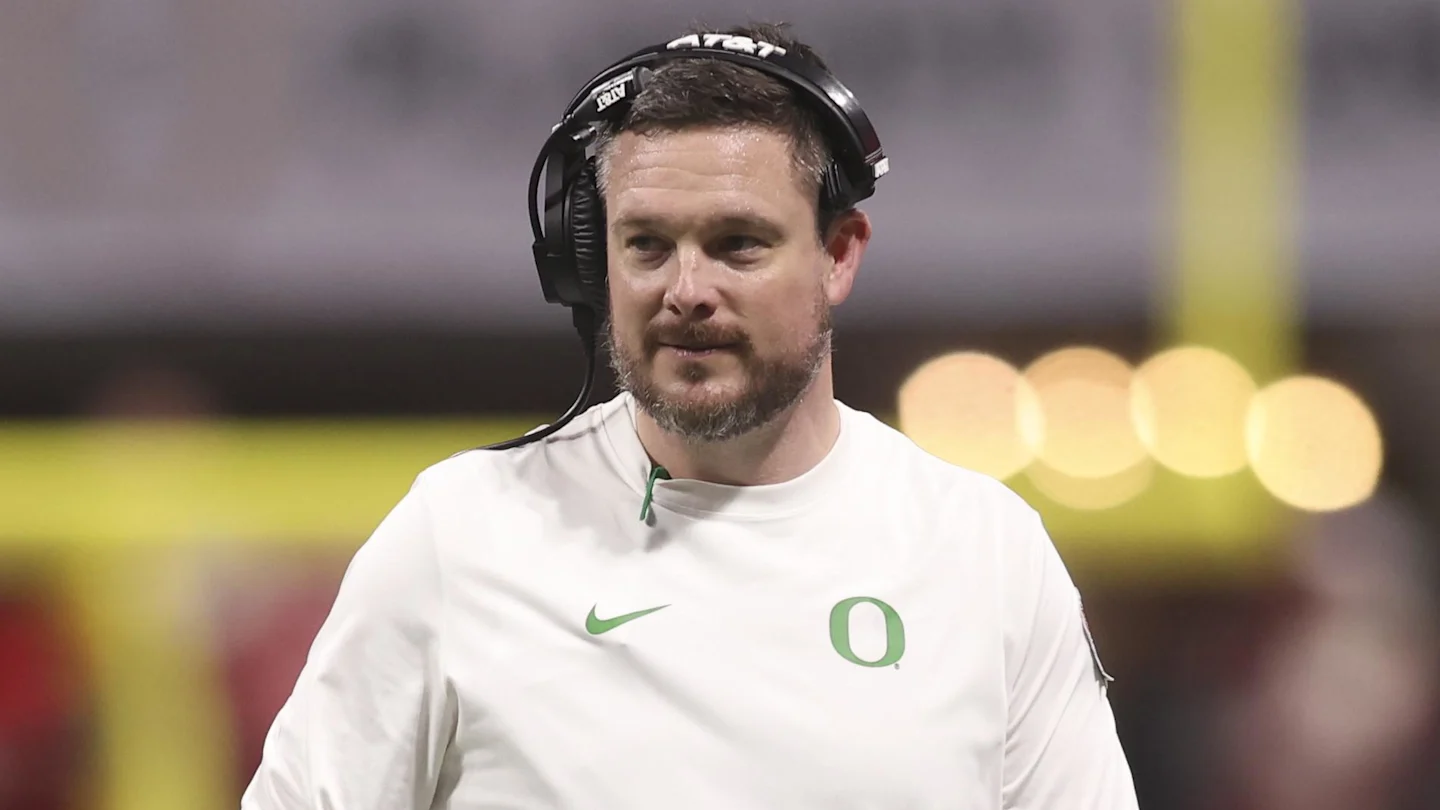
The Oregon Ducks took a hit to their linebacker depth with Kamar Mothudi entering the transfer portal the day after Oregon’s season-ending Chick-fil-A Peach Bowl loss according to 247Sports’ Matt Zenitz.
Mothudi appeared in six games this past season and recorded four tackles. He is the first Oregon linebacker to enter the transfer portal.
High Expectations, Low Production

Mothudi came to Oregon as apart of their 2024 recruiting class. Listed as the No. 13 linebacker and No. 145 player in the country according to 247Sports’ rankings, Mothudi came into Eugene with big expecations as he was the top-ranked linebacker in the Ducks’ 2024 class. However, he never really found his footing in the Ducks’ linebackers.
After appearing in only one game as true freshman, the 2025 Big Ten Championship game, Mothudi was still buried on the depth chart as a redshirt freshman. He played mainly in blowout wins for Oregon and made his last appearance in the Nov. 22 win over USC.
Potential Landing Spots For Mothudi

Tosh Lupoi | Chris Pietsch/The Register-Guard / USA TODAY NETWORK
The Los Angeles native took five official visits during his high school recruitment. Mothudi visited Oregon, Oregon State, Washington, Michigan State, and Utah.
One schoool that stands out among the rest for Mothudi is Cal. The Golden Bears hired Oregon defensive coordinator Tosh Lupoi as their head coach following the dismissal of Justin Wilcox. Lupoi is known as a tenacious recruiter and was a big reason why the Ducks’ constantly reeled in top talent, including Mothudi.
247Sports lists Lupoi as one of the primary recruiters in Mothudi’s recruitment. The two could reunite in the Bay Area next season as the Golden Bears reload their roster via the transfer portal.
UCLA has been quietly making some noise in the transfer portal. Mothudi spent his first three years of his high school career at Campbell Hall, which is 12 miles away from UCLA’s campus. The Bruins also went through a coaching change and brought in James Madison’s Bob Chesney, making them active in the portal as well. They could make a push to bring Mothudi home to close out his college career.
MORE: What Dan Lanning Said After Oregon’s Loss to Indiana
MORE: Instant Takeaways From Oregon’s Playoff Loss to Indiana
MORE: Dante Moore NFL Outlook Comes Into Focus After Peach Bowl Loss
SIGN UP FOR OUR NEWSLETTER HERE!
Ducks Will Be Okay

Although Mothudi was a promising underclassman, his departure isn’t the end all, be all for the Ducks’ linebacker unit. With Devon Jackson, Nasir Wyatt, and Blake Purchase all set to come back next season, Oregon will have plenty of talent coming back in addition to their 2026 recruiting class signees.
Oregon 2026 signees’ Braylon Hodge and Tristan Phillips both rank as top 15 linebackers in the country according to 247Sports’ rankings.
That’s not taking into consideration the fact that Mixon and Teitum Tuioti, both starters, still have eligibility left.
The departure of Bryce Boettcher will be the biggest impact on the linebacker unit as he was a multi-year starter and a leader of the team. But if Oregon coach Dan Lanning has proven anything during his time with the Ducks, it’s that they will be ready on the defensive side of the ball. Especially with the front seven.
Recommended Articles

The college football transfer portal often features unproven talent looking for a second chance, but this cycle featured a rare commodity in a proven statistical leader with multiple years of eligibility remaining.
Several top-tier programs engaged in a competitive pursuit to land one of the most productive passers from the FCS level to bolster their rosters for the 2026 season.
Coaches from the ACC, Big 12 and national independent brands identified this young signal caller as a primary target to solve depth chart issues or compete for a starting job immediately. His availability sparked a significant recruiting battle that spanned multiple time zones and conferences following his breakout debut campaign.
That pursuit ended abruptly on Sunday when the highly coveted prospect announced his decision to head to the Pacific Northwest. The move sends a ripple effect through the market and forces several major programs to look elsewhere for quarterback help as the offseason moves forward.
Mercer QB Braden Atkinson commits to Oregon State over Notre Dame, Baylor
Former Mercer quarterback Braden Atkinson has committed to Oregon State. His agents at AiC Athletes confirmed the decision to On3’s Hayes Fawcett. The move is a significant recruiting victory for the Beavers and a setback for five other major programs that showed interest in the prolific passer.
Atkinson enters the Oregon State program following a historic season at the FCS level. He threw for 3,611 yards and 34 touchdowns while completing 66 percent of his passes. Those numbers helped him win the Jerry Rice Award, which is given annually to the national freshman of the year in the FCS. He also finished fifth in voting for the Walter Payton Award while leading his team to a 9-3 record and a playoff berth.

His entry into the portal came after Mercer head coach Mike Jacobs left for Toledo. That coaching change sparked a recruitment battle involving Notre Dame, Baylor, Syracuse, Boston College and Cal. Each program had specific reasons for pursuing the 6-foot-1 standout.
Notre Dame explored adding Atkinson to a room that features starter CJ Carr. The Fighting Irish sought experienced depth to protect against injury, but will now have to look elsewhere. Baylor viewed Atkinson as a potential solution to replace Sawyer Robertson after he leaves for the NFL Draft. Head coach Dave Aranda faces pressure to find a competent starter after a difficult 5-7 season.
BREAKING: Mercer transfer QB Braden Atkinson has Committed to Oregon State, his agents tell @On3Sports
This season he totaled 3,611 passing yards and 34 TDs and won the Jerry Rice Award
Repped by @AiC_Athletes https://t.co/RlUbB6EMhS pic.twitter.com/vEw4qAbhSa
— Hayes Fawcett (@Hayesfawcett3) January 11, 2026
The ACC also missed out on a potential starter. Boston College is losing Grayson James to graduation and Dylan Lonergan to the transfer portal. This leaves head coach Bill O’Brien with limited proven options on the roster. Syracuse hoped to add competition behind Steve Angeli but failed to close the deal.
Cal viewed Atkinson as a way to bolster the roster under Tosh Lupoi, despite the presence of Jaron-Keawe Sagapolutele. The Golden Bears’ freshman starter has indicated he plans to return, but depth remains a priority.
Atkinson ultimately chose the Beavers and brings three years of eligibility to Corvallis.
Read more on College Football HQ

Frequently these days, we’re reminded that the Alabama Crimson Tide is no longer, in fact, the biggest, baddest recruiting powerhouse in the country. Not with rev-share and NIL essentially serving as a salary cap-less spending spree.
Rev-share has a cap, but NIL doesn’t. Schools can only offer $20.5 million as part of the sport’s rev-share agreement that went into effect at the start of the 2025-2026 academic calendar. NIL is the supplemental cash that big-time boosters, like Cody Campbell with the Texas Tech Red Raiders and Larry Ellison with the Michigan Wolverines, pay beyond that. How every team’s payroll shakes out each season isn’t as transparent. It’s unclear what comes from the school and how much comes from the boosters. Much of it is via taxpayers, who pick up the slack in states across the South because of tax-free NIL payments to players that exist because of these states’ laws.
To that end, the Texas Longhorns have multiple high-spending boosters that can help UT win any bidding war. The Crimson Tide does not.
On3’s Shannon Terry reminded the College Football world of that in the aftermath of former NC State Wolf Pack and Oklahoma Sooners running back Hollywood Smothers flipping his commitment from Alabama to Texas on Sunday.
“Another NIL-driven move. Texas is loading up and has the resources to do it. Alabama has resources, but not at this level. ‘FU money’ is driving the game — just the facts,” Terry wrote.
The Longhorns’ booster network is powered by its top donor, TRT Holdings, the parent company of Omni Hotels and Gold’s Gym, and its owner, Robert Rowling.
Who is Alabama’s top booster?
The Crimson Tide, like Terry, said, isn’t broke. C.T. and Kelly Fitzpatrick, the founders of Vulcan Value Partners, a Birmingham-based investment firm, are financially invested in the program. Yea Alabama, the Tide’s official NIL collective, also chips in for the cause.
UAT AD Greg Byrne has gotten on Yea Alabama’s case for not doing enough spending. We’ll see if the fanbase has enough Bama in them to donate the Tide back into contention with deep-pocketed Texas schools.
Upcoming season could be last for transgender teen athlete | Shareable Stories

Community and Youth | Miami Recreation

The Ohio State football program is in Transfer Portal crisis thanks to Ross Bjork

Two School Records Fall for Women’s Track & Field in VIrginia

No. 1 portal WR Cam Coleman commits to Texas

Legend posts Transfer Portal message that Ohio State football fans needed to see

Ball State Finishes Weekend Victorious Versus NJIT

Fort Lewis College women’s basketball uses strong shooting in win over Westminster

Vasseur outlines Ferrari’s 2026 development strategy

Steelers surprise local flag football leader with Super Bowl LX tickets

Gauchos Down Harvard to Start Season 3-0

Upcoming season could be last for transgender teen athlete

Race cars converge at 37th annual Northeast Motorsports Expo

Statement issued after youth hockey brawl during intermission at Hershey Bears game

Men’s volleyball tested in 3-1 season opener against Jessup – The UCSD Guardian

Stempien to seek opening for Branch County Circuit Court Judge | WTVB | 1590 AM · 95.5 FM

Ross Brawn to receive Autosport Gold Medal Award at 2026 Autosport Awards, Honouring a Lifetime Shaping Modern F1

Maine wraps up Fall Semester with a win in Black Bear Invitational

Downtown Athletic Club of Hawaiʻi gives $300K to Boost the ’Bows NIL fund

Princeton Area Community Foundation awards more than $1.3 million to 40 local nonprofits ⋆ Princeton, NJ local news %

Badgers news: Wisconsin lands 2nd commitment from transfer portal

Three Clarkson Volleyball Players Named to CSC Academic All-District List

Five Youth Sports Trends We’re Watching in 2026

Nike Signs 10 LSU Athletes to NIL deals

Beach Volleyball Unveils 2026 Spring Schedule – University of South Carolina Athletics

Kentucky AD explains NIL, JMI partnership and cap rules

Badgers news: Final Four Game Thread vs. No. 1 Kentucky Wildcats

PRI Show revs through Indy, sets tone for 2026 racing season

Kentucky VB adds an All-American honorable mention, loses Brooke Bultema to portal

Central’s Meyer earns weekly USTFCCCA national honor





-
 Sports3 weeks ago
Badgers news: Wisconsin lands 2nd commitment from transfer portal
-
 Rec Sports1 week ago
Five Youth Sports Trends We’re Watching in 2026
-
 Sports3 weeks ago
Kentucky VB adds an All-American honorable mention, loses Brooke Bultema to portal
-

 Motorsports3 weeks ago
Dr. Patrick Staropoli Lands Full-Time O’Reilly Ride with Big Machine Racing
-
NIL2 weeks ago
Fifty years after IU’s undefeated champs … a Rose Bowl
-

 Motorsports2 weeks ago
BangShift.com IHRA Acquires Historic Memphis Motorsports Park In Millington Tennessee. Big Race Weekend’s Planned For 2026!
-
 Sports2 weeks ago
Colorado volleyball poised to repeat success
-
 Sports2 weeks ago
2025 Volleyball Player of the Year: Witherow makes big impact on Central program | Nvdaily
-
 Sports2 weeks ago
H.S. INDOOR TRACK & FIELD: GLOW region athletes face off at Nazareth University | Sports
-

 Motorsports3 weeks ago
NJ Motorsports Park Announces 2026 Event Schedule