


Select an option below to continue reading this premium story.
Already a Honolulu Star-Advertiser subscriber? Log in now to continue reading.

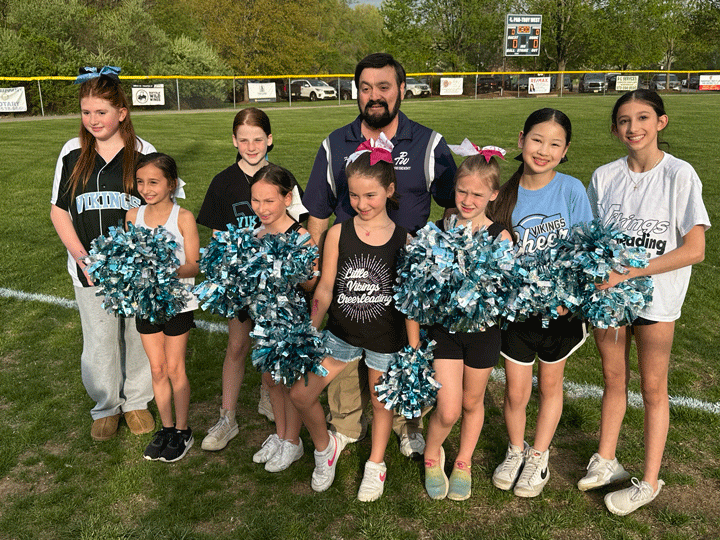
PARSIPPANY — The spirit of community and America’s favorite pastime was on full display Friday evening, April 25, as Parsippany–Troy Hills Little League West celebrated the start of its 73rd season with a vibrant opening night ceremony that brought together more than 600 attendees.

Held under clear skies at the Little League West field, the evening featured a full lineup of fanfare. Players from each division proudly marched onto the field as Player Agent Sandra Neglia introduced teams. The Little Vikings Cheerleaders energized the crowd, waving pom-poms and welcoming each team with cheers and applause.

Parsippany-Troy Hills Mayor James Barberio threw out the ceremonial first pitch to kick off the season. “This is a perfect night to play ball,” said Mayor Barberio. “I have so many great memories from playing baseball growing up. I hope you all enjoy the same wonderful experience of supporting your teammates, learning new skills, and, most importantly, having fun. Have a great season.”
Little League President Frank Neglia welcomed families, coaches, and local dignitaries, offering words of appreciation for the volunteers and community members who help make each season possible. “It’s nights like this that remind us what youth sports are truly about — unity, growth, and a love for the game,” he said.

The Parsippany Hills High School baseball team, which supports the younger generation of athletes and embodies the league’s mentorship and community engagement tradition, was also in attendance.
The ceremony was capped with a festive spirit as players took the field, fans filled the stands, and the 73rd season of Parsippany–Troy Hills Little League officially finished. The evening served as a reminder of the league’s enduring legacy in Parsippany and its role in shaping not just baseball players but lifelong friendships and cherished memories.


Already a Honolulu Star-Advertiser subscriber? Log in now to continue reading.

As club teams continue to grow in popularity across youth sports in recent years, house leagues at the community level for baseball and softball are working as hard as ever to remain relevant.
So, when a neighborhood rallies around a huge storyline at the community level, it can’t help but turn heads.
Dec. 30, 2025, 5:24 a.m. CT
We should have more Winter Olympians coming out of Wisconsin.
We know winter sports in Wisconsin. We grew up on skis and snowboards. We rented our skates at the Pettit National Ice Center and Red Arrow Park. We rambled through the county parks for cross-country gliding. We raced to the closest hill on a snow day, school canceled, with our toboggans and saucers.
Wisconsin has sent great athletes to the Winter Olympic Games − Dan Jansen, Eric and Beth Heiden, among them. This year, we will cheer for speed-skating phenomenon Jordan Stolz.
But could we be doing more?
With our natural resources – hilly terrain, and freezing temperatures – and our love and respect for an athletic and outdoor lifestyle, could we be doing more to find and nurture future Winter Olympians?
Bryan Fish of Rhinelander is the U.S. cross country development director who has been with U.S. Ski and Snowboard since 2010. He skied at the University of Wisconsin-Green Bay until 1997 and then coached there another seven years. He lauds the success of Wisconsin in the Games. But he also sees potential for more.
“Our job as a community, as good citizens, is to provide access and opportunity,” Fish said, “for growth and retention of athletic participation.”
That means three things:
He pointed to successful operations like the CXC Elite team, where Olympic medalist and World Cup-champion cross-country skier Jessie Diggins got her start, and Central Cross Country Skiing, the regional governing body for high school and middle school teams.
“Where you see success is where you see collaboration,” Fish said. “One coach doesn’t do it alone; you have to build a team around the coach.”
Fish said that new additions, like the roller-ski track the George Hovland Trail in Cable, or Ariens Nordic Center in Brillion, have given youth winter-sport athletes more opportunities to train.
“There’s a lot of things that Wisconsin has − that other regions and areas don’t have,” Fish said.
Fish also advocates for year-round venues and activities that are multipurpose and multisport. That means ski hills that include mountain biking, like Alpine Valley. That means cyclocross biking in the summer for skiers.
“When I try to sell ‘access and opportunity,’ … when I try to look at what are we doing with juniors − we’re not trying to do early specialization. We encourage multi-sport,” Fish said. “We do try to connect the dots in sport. We want our kids to be physically active all year and trying to create a multi-sport venue and family-oriented venue.”
But it can be a challenge to find the nearest club or sanctioned event. Silent Sports Magazine is an online resource for Wisconsin Olympic sports, and sometimes the manufacturers of the sports equipment feature events and races on their websites.
But the best bet are youth programs. UWGB ski coach Sam Myers said it’s all about lowering the barriers to the sport. Students are lucky, for example, if someone has organized a club-level sport like Peak Nordique at Lapham Peak. Ideally, Wisconsin would be more like Minnesota, with more high school-sanctioned winter sports, but a club team is better than nothing.
“If you are a beginner skier, you can just register with your high school team,” Myers said. “A lot of times, those high schools provide equipment rentals, so it’s really low barrier to entry, because you’re with your high school friends and you can rent equipment easily, and you can get bused to all the ski venues.
“Well, in Wisconsin, there’s only the club level.”
Some of the clubs are affiliated with high schools. The Ashwaubenon nordic ski team near Green Bay, for example, is based out of Ashwaubenon High School.
Maybe the next Wisconsin Winter Olympic skier will come out of the Flying Eagles Ski Club in Eau Claire or the Rib Mountain Ski Club or Wausau Nordic Ski Club, or a curler out of the Wausau Curling Club.
“When you look at Wisconsin, it’s so spread out,” Myers said. “You have so many different teams, in Wausau, in Chippewa Valley and Minocqua and Spooner and Hayward. They’re spread out everywhere. And each team has kind of only, like a handful of skiers, because these are in small towns.
“That’s also kind of hard on the programs, or it’s like, it’s just hard to retain skiers, because there’s just so few to begin with.”
By Quintessa Williams
Dionna Brown was two weeks shy of her 15th birthday when her world turned upside-down. An outstanding public high school student in Flint, Michigan, with a report card most of her peers would envy, she suddenly began to struggle in the classroom for no obvious reason.
“I was in AP and honors classes — straight-A student,” she recalls. “Then all of a sudden, I couldn’t remember things. I couldn’t concentrate.”
Rushed to the hospital, doctors pinpointed the problem: tests revealed elevated levels of lead, a potent neurotoxin, in Brown’s blood. In high enough concentrations, lead can cause permanent brain damage, lower IQ, learning disabilities — and even death.
Without knowing it, Brown became one of the many young victims of the Flint water crisis. But her story is being repeated in cities across the country.
For generations, America’s crumbling infrastructure has quietly poisoned its most vulnerable populations. From peeling paint in public housing to unsafe water pipes beneath city streets, lead has lingered long before and after its federal ban in 1978.
But while the government has taken action against lead exposure in homes, experts say its impact in our schools remains overlooked.
In January, the issue made headlines again when a child attending a Milwaukee public school tested positive for elevated lead blood levels. The discovery triggered emergency inspections and forced at least four other schools in the district to close temporarily.
Subsequent data found that children in cities like Cleveland, Detroit, Philadelphia, Baltimore, and Chicago also face disproportionately high levels of lead exposure in schools. Cleveland topped the list, with nearly 9% of children under the age of six showing signs of elevated lead levels in their blood.
“Once a child is exposed to lead, the impacts are irreversible,” says Dr. Denae King, Associate Director of the Bullard Center for Environmental and Climate Justice at Texas Southern University. “There’s not a lot you can do to undo that damage — and it’s still happening.”
These cities share more than aging infrastructure: they also serve large Black K-12 student populations, often in racially segregated neighborhoods. And even Flint, whose water crisis made national news, still hasn’t fully established safe drinking water for its children.
While Milwaukee’s crisis may feel like the beginning for some, the poisoning of Black communities by lead — especially in schools — began long before 2025.
Today, Brown, now the National Youth Director of Young, Gifted, & Green, a non-profit organization, has spent years fighting for environmental justice. But what still haunts her the most is how little has changed.
“That was over a decade ago,” she says. “And we’re still here. Kids are still being poisoned in our schools and communities.”
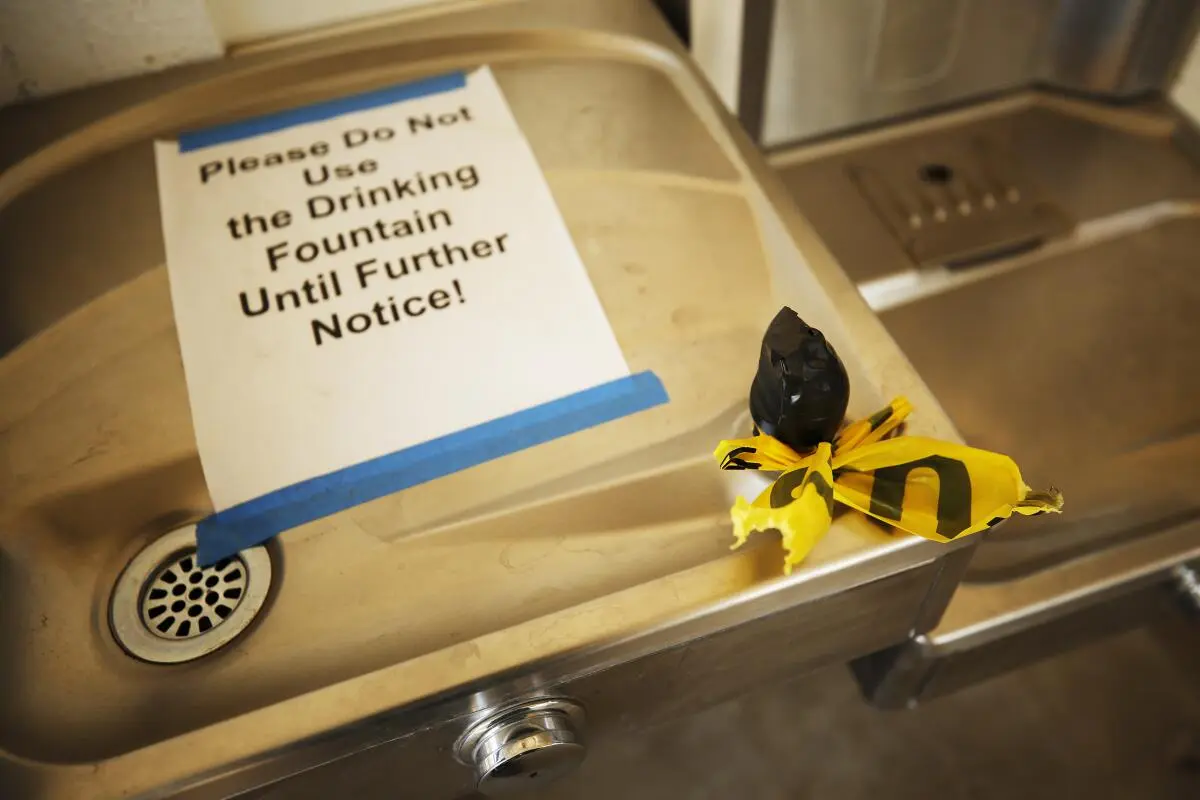
Nationwide, more than 38% of public K-12 schools were built before 1970, well before the government banned the use of lead-based paint. Many of the schools were built to serve Black students in underfunded, segregated neighborhoods, and these aging buildings often contain lead service lines, contaminating the water that flows into cafeteria faucets and hallway water fountains.
According to a 2022 study in the Proceedings of the National Academy of Sciences, Black children face higher levels of early lead exposure. The report found that exposure was linked to significantly lower standardized test scores in fourth-grade reading and math compared to their white peers.
“Most of the Black kids we’re talking about attend schools built before the ban,” King says. “That means many of them are still walking into buildings that are not only failing structurally, but failing them academically, too.”
King explains that the root of the lead crisis in schools often begins underground, with lead service lines — city-owned pipes that deliver water from municipal systems to homes, businesses, and schools.
“Most cities still have lead service lines,” she says. “So it’s no surprise students are being exposed. She adds that even if a school updates its internal plumbing, “students remain at risk” if city pipes aren’t upgraded.
Once a child is exposed to lead, the impacts are irreversible,” says Dr. Denae King, Associate Director of the Bullard Center for Environmental and Climate Justice at Texas Southern University.
Dr. Denae king, associate director of the Bullard Center for Environmental and Climate Justice
According to the Centers for Disease Control and Prevention, even low levels of lead exposure in children can cause irreversible damage, including reduced IQ, learning disabilities, developmental delays, and behavioral problems.
“The data is very consistent when we think about learning and cognitive ability with lead exposure in children ages zero to six,” King adds. “By the time you get to first or third grade, you start to see the results of that early exposure.”
Just as striking as the exposure itself is the uneven response.
In wealthier districts, King says, active parent-teacher organizations (PTOs), can quickly raise money for water filtration systems. Unfortunately, that’s not the case in predominantly Black or low-income communities, where PTOs and other resources are underfunded or absent altogether.
Cleveland, Ohio, currently leads the nation in childhood lead exposure, with more than 8% of children younger than age 6 testing positive for elevated blood lead levels. The Cleveland Metropolitan School District (CMSD) serves a student population that is 64% Black.
When asked about lead in students’ blood, CMSD told Word In Black they’re “concerned” about the health hazard and will “continue to strongly support the work done by the City of Cleveland and the Lead Safe Coalition to identify and remediate lead in our neighborhoods.”
While the school district did not directly address the problem, Dr. David Margolius, the city’s director of public health, says school systems aren’t entirely to blame.
“This is the fault of the generations of disinvestment in housing and public infrastructure in poor communities — which leads to exposure in the first place,” he says.
We need reparations — full stop. We need healing, investment, and policy change that will center our survival.
Dionna Brown, National Youth Director of Young, Gifted, & Green
However, both King and Brown say the problem is nuanced.
“There are different levels of accountability that include the municipality and homeowners,” King says. “But on the school side, they are responsible for ensuring their campuses are safe. You send your child to school expecting they’ll be protected, not poisoned.”
She also adds that parents are often left in the dark.
“Many parents have shared that they are concerned that their children are not learning at the same level as other students in their classes,” she says. “And I am surprised that schools don’t do a better job of educating parents about the risk of lead exposure and that they don’t provide wraparound services once a child has been exposed.”
Brown agrees: “Schools still have a responsibility. Kids spend 8-plus hours in school buildings every day.”
Moreover, federal programs intended to address the crisis have faltered. While the Biden administration’s Infrastructure and Jobs Act was designed to fund the replacement of lead service lines, access to the resources remains inconsistent across cities, often leaving underfunded and de facto segregated school districts behind.
“There’s no agency that owns the problem,” Margolius adds. “There’s no one taking ownership for how to fix this at the federal level. That’s the real issue.”
Making matters worse, the CDC recently laid off its entire childhood lead poisoning prevention staff, shifting responsibility to the newly formed Administration for a Healthy America under Health and Human Services Secretary Robert F. Kennedy Jr. Experts are concerned about whether the federal government is prepared to meet a crisis of this scale.
Houston offers a glimpse of what’s possible. There, the Bullard Center and community groups are training parents and neighborhood leaders to identify lead hazards and demand answers from school officials.
King also encouraged students to write letters to the district. She said systems have begun to respond.
Community groups “did all the education themselves,” she says. “We trained them on what lead looks like, how it’s affecting their children, and then they got out there and educated others. The community stepped up where the system failed.”
Back in Cleveland, Margolius hopes to see a similar momentum, but on a national level.
“Keeping these stories alive in the media and community discussions is essential. Without sustained attention, the crisis will quietly continue.”
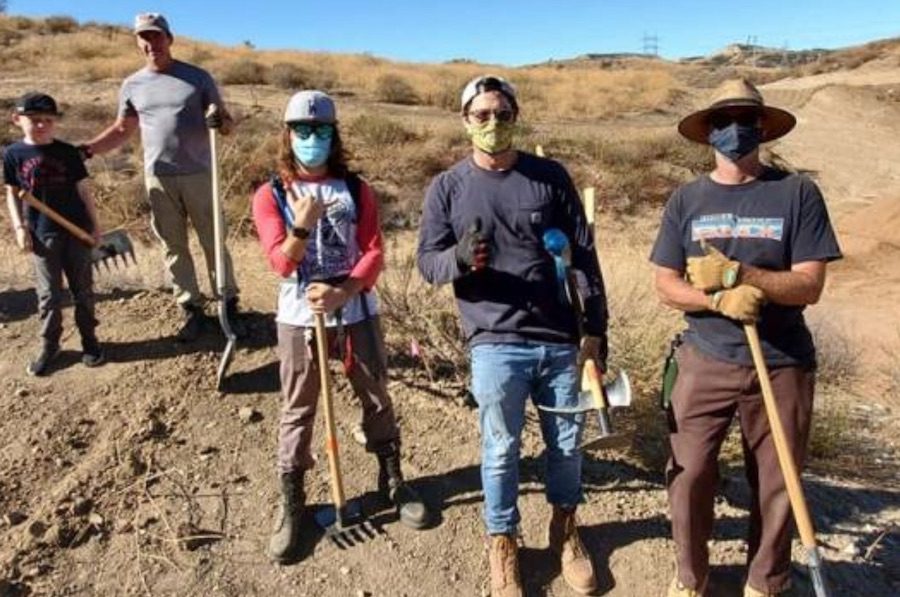
As 2025 ends, you may be considering all sorts of new activities that you hope will invigorate and fulfill you in 2026. Why not consider being a local volunteer?

The California Department of Motor Vehicles has announced several new laws signed by Governor Gavin Newsom this year will take effect on Jan. 1, 2026.

The Santa Clarita Valley Sheriff’s Station is now accepting applications for its Deputy Explorer Program, a career development and educational opportunity for young adults ages 14 to 20 who maintain a minimum 2.0 GPA.


SoCalGas reports that the most likely cause of the natural gas pipeline rupture in Castaic near Ridge Route Road and Pine Crest Place was land movement at the site of the break.

The Santa Clarita Valley Food Pantry has announced its newly elected Executive Board for 2026.

The end of the year points out that time speeds up as you get older, or get bored, or think to much.

Boys & Girls Club of Santa Clarita Valley hosted its annual Holiday Luncheon, bringing together volunteers, board members, employees and community partners to celebrate a year of impact and recognize those who help advance great futures for local youth.

The California Highway Patrol is ringing in 2026 by launching a New Year’s Holiday Enforcement Period from 6 p.m. Wednesday, Dec. 31, to 11:59 p.m. Thursday, Jan. 1.

In 2025, 6,096 individuals completed the Community Readiness Champions Gold Medal Training by the Los Angeles County Department of Public Health at community events and government staff trainings.

Caltrans has announced extended weekend lane reductions along Interstate 405 (I-405) through the Sepulveda Pass from Friday, Jan. 9 through Monday, Jan. 12.
A Better World Running will host its Happy New Year 5k, 10k, 15k, Half Marathon 8:30-11:30 a.m. Thursday, Jan 1 at West Creek Park 24247 Village Circle Drive, Valencia, CA 91354.

Santa Clarita residents are encouraged to drop off Christmas trees and wreaths at convenient locations for recycling. However, they can still recycle these items at home, curbside.

The Small Business Development Center hosted by College of the Canyons will offer a free webinar, “California’s New 2026 Laws Every Small Business Owner Should Know” on Thursday, Jan. 8 from noon to 1 p.m.

All games of the Cougar Holiday Classic basketball tournament (Dec. 29-30) can be watched live on the Cougars Sports Network.

Caltrans has announced lane closures at various locations in both directions of Interstate 5 (I-5) near Castaic for pavement rehabilitation on Monday, Dec. 29 and Tuesday, Dec. 30.


The California Highway Patrol has announced that all lanes of the Interstate 5 freeway in the Castaic area have been shut down in both directions to a possible ruptured gas line.

At this time last year, we had no idea what changes and challenges 2025 would have in store. What I did know, and what this year reaffirmed, is that whatever 2025 brought our way, we’d get through it together.

The National Weather Service reports that the Santa Clarita Valley was drenched with nearly nine inches of rain from the atmospheric river that brought a soggy Christmas week to most of California.

The city of Santa Clarita is seeking five artists to create artwork on five 60-inches by 60-inches canvases that will be featured above the Valencia Library Branch’s children’s area for two years, May 18, 2026 through May 23, 2028.

During the 2025 Christmas Holiday Enforcement Period, California Highway Patrol officers were on duty across the state, responding not only to enforcement needs but also to significant winter weather impacts, including snow, flooding and mudslides.

Bring passport applications and all required documents to the Passport Community Fair, 1-5:30 p.m. Friday, Jan. 9 at the Old Town Newhall Library.


Sometimes, a bag of Takis or a Chicago sports t-shirt is all it takes to remind a child that they matter.
CHAMPAIGN, Ill. (Chambana Today) – As the holiday season drew near, staff members were reviewing the Christmas wish lists of the youth they serve, and a few simple yet meaningful requests stood out. Joey asked for a bag of Takis. Kaleb wished for shirts from any Chicago sports team. These weren’t extravagant gifts, but they reflected the kind of things many kids desire: fun, comfort, and personal connection.
For the youth served by local programs, Christmas isn’t about lavish gifts—it’s about the reassurance that someone is listening, someone cares, and someone remembers what they love. When these wishes are fulfilled, it sends a powerful message: You matter. You are not forgotten.
The magic happens when those gifts are opened. Smiles widen. Shoulders relax. And hope sneaks in. In those moments, the real magic of Christmas becomes clear, not in the price tag of a gift, but in the love, attention, and sense of belonging it represents. A simple box of Takis or a Chicago sports t-shirt can light up a room with joy, reminding kids that they are seen and cared for.
As 2025 comes to a close, the need for support is more important than ever. Donations can help create these special moments, ensuring that the youth served not only feel valued during the holidays but year-round. To make a difference and receive recognition in the current tax year, donations must be made by 11:59 p.m. on December 31, 2025.
For those seeking a meaningful way to end the year, this is an opportunity to offer hope, love, and the message that someone cares. Visit to learn more and donate today.


DeSantis Talks College Football, Calls for Reforms to NIL and Transfer Portal · The Floridian

#11 Volleyball Practices, Then Meets Media Prior to #2 Kentucky Match


Nascar legal saga ends as 23XI, Front Row secure settlement


Sunoco to sponsor No. 8 Ganassi Honda IndyCar in multi-year deal


Maine wraps up Fall Semester with a win in Black Bear Invitational


WNBA’s Caitlin Clark, Angel Reese and Paige Bueckers in NC, making debut for national team at USA camp at Duke


Ross Brawn to receive Autosport Gold Medal Award at 2026 Autosport Awards, Honouring a Lifetime Shaping Modern F1
NASCAR, 23XI Racing, Front Row Motorsports announce settlement of US monopoly suit | MLex


Pinterest predicts the biggest Gen Z trends of 2026 | News


Rick Hendrick comments after the NASCAR lawsuit settlement





