

Address Newsletter
Our weekly digest on buying, selling, and design, with expert advice and insider neighborhood knowledge.


Full disclosure: We were a sports family, extraordinaire. Football, ballet, gymnastics.
But then one child turned out to be immensely talented at another very consuming, very expensive Olympic sport. We upended our whole family to help her pursue this dream. As in, we moved to another state for her training, and Dad stayed behind to support the effort (i.e., pay the bills). For several years, we did not even live together as a family.
It almost broke us.
Most people seem to love sports, or at least, a sport. More watching than participating, of course — that’s why most of us don’t look like athletes. But we do love the “thrill of victory and the agony of defeat” to quote the old (I guess ancient, actually) ABC TV program “Wide World of Sports.”
Plus, nobody does human interest stories better than sports journalists. They’re absolute masters of the tearjerker backstory: How the plucky little high school basketball player overcame rickets after his grandma died and became LeBron James. (Not LeBron James’ story, but I’m sure somewhere in there he may have been plucky.) Anyway, that kind of feel-good-now-I’m-rooting-for-him type of story.
Giving up unrushed family time is far too high a price to pay for the fleeting glory (or not) of a championship.
But you know the stories we don’t hear? The my-parents-divorced-after-living-apart-for-training stories.
There were a lot of those at the Olympic training center where my daughter trained. Or the non-prodigy-child-got-into-trouble-in-a-desperate-bid-for-attention story. Or the we-bankrupted-our-family-no-college-money-now story. We saw all of these play out in families around us.
For every heartwarming Olympic or NFL or Master’s tournament story, there are thousands of child sports stories that don’t end with a medal, ring, title, or even a scholarship. But they do end in damaged families, fractured relationships, debt, and regret. Of all the people who “gave up everything” to train — only a tiny fraction get a big reward.
Here’s the thing: Even the “big winners” pay this steep price, and in most cases, it’s not worth it. Let me explain.
You can’t give up huge chunks of your family life to the demanding taskmaster of organized kids’ sports without consequences. You can’t give up huge chunks of your family life for any reason without consequences. But in America today, organized sports are hijacking a healthy family dynamic.
Christian families in particular should have a higher goal for family life than endless shuttling to kids’ activities. But the endless shuttling hurts any family.
Let’s examine what everyone gives up when your child plays a sport, especially club team sports or extremely time-intensive individual sports.
The casualty, dead on arrival, is this: unrushed family time. And I submit for your consideration that giving up unrushed family time is far too high a price to pay for the fleeting glory (or not) of a championship or even a scholarship.
Why? Because what starts as an innocent once-a-week activity never gets less time-consuming (or less expensive). The demands only grow. Eventually, your family’s entire schedule — your whole family life — revolves around the coach’s requirements, not yours. Or the coaches’ requirements if you have more than one kid involved.
And if you have one kid involved, you have to make sure the others get “equal time” in another sport or activity. It’s only fair, right?
I’ve watched many parents go off in different directions every weekend, dad taking daughter to her weekend volleyball tournament, mom taking son to baseball practice and games. They reunite in exhaustion late Sunday night, only to start the week’s practice schedule all over again.
But this setup — catering to multiple children’s sports and activities — will eat up the fleeting time you have with your children and spit out nothing of value.
Even if one of them goes on to become an Olympic gold medalist, the cost will have been too high because, as I’ve written before, children are best served when they spend the bulk of their time with the people who love them the most: their family.
Everyday family life at home is where faith is taught and demonstrated, where character is developed, where relationships are strengthened, where children are raised to become people who love God and others.
We need family time for all this to happen. Unhurried family dinners. Regular church attendance together. Time exploring the natural world together, minus screens. Taking the kids to visit a nursing home or to serve at a soup kitchen. Spontaneous weekend road trips to visit the grandparents, the cousins, the forest, or the beach. Long conversations about anything and everything.
As Christians, we are raising children to be people who love God and others. Children’s sports activities offer nothing toward this goal. What they do tend to emphasize, however, is the self. If my family’s life is mostly focused on my sport practices, games, and goals, I am learning that it really is all about me, despite what my parents say.
Actions speak much louder than words.
Individual sports, where there is no team component, are probably even worse because the focus is on one child individually. But make no mistake: Your kids don’t need to be on a sports team to learn teamwork. God put them on a team already, and it’s your family.
That is the team that will permanently suffer if other sports and activities are allowed to dominate your family life.
If your children are currently in a demanding sport, you know that “team family” is not getting quality time together — or maybe any time together. When’s the last time you all sat down to eat dinner together without having to rush off? When’s the last time you had an unhurried, deep conversation?
Club sports, in particular, seem to delight in scheduling practices and games in such a way that there is rarely an untouched weekend. I’ve watched countless families drop off the radar at church because tournaments and games are scheduled not only all day Saturday but on Sunday as well, often involving travel that eats up the whole weekend.
About a year ago, a pastor in Texas posted about this phenomenon on X and how their family took a stand against Sunday sports participation, which caused his daughter some grief. While I admire parents who push back against sports being the most important thing on their schedule, I can’t help but think there’s a lot more to discipling your children than showing up at church on Sunday.
In other words, it’s not enough to just draw a boundary around Sunday.
Discipleship takes time. Years, in fact, which is why God designed little people to begin life in families that show them the way, day in and day out, through loving and secure relationships with — again — the people who love them the most. Time goes by quickly — and it’s something you never get back.
Every minute you spend focusing on a child’s sport is a minute you are not spending focusing on something more valuable. You cannot center your family life around a child’s sport or activity and not skew their view of him/herself and his/her relationship to your family and to the world. The message sent is really that it’s all about you, kid.
This may be, in part, what’s to blame for a generation of extraordinarily entitled young people. If your parents were not much more to you than chauffeurs to your every practice and activity (and the wallets to pay for it), you probably have an overinflated view of your own importance.
I’m not saying that every former child/teen athlete is insufferably self-centered, although a lot of them are. But I am saying they are not the people they could have been with mindfully attentive parenting instead of abandonment to a sport.
Does the Olympic gold medal make up for a childhood spent training apart from your family?
The child who wins the medal surely thinks it’s worth it because that child has been trained, as noted, to consider his/her pursuit the most important thing. But it wasn’t.
Our culture absolutely glorifies this — the medal winner, the NFL Draft pick, the title holder. Every once in a while, there’s a story that highlights the sacrifices made to achieve the medal or title, and those sacrifices are always framed as noble.
But sacrificing the precious little time you have with your children on the altar of pursuing sports (or any other) excellence is not noble. It is tragic. Sending your child to train somewhere away from you is the ultimate tragic choice.
Christian parents: I beg you to prioritize better than we did.
Sports offer some benefits, to be sure. If they can be incorporated into your child’s life in a way that doesn’t suck up other more valuable pursuits, great.
In retrospect, which is all I have at this point, I wish we’d enrolled the whole family in martial arts together. That would have provided a “life sport” that we could have done together as a family.
Yeah, we have a lot of regret. We can’t get back the years our family was split up to accommodate a training regimen. We can’t have the conversations we would have had, the meals we would have enjoyed together, the trips we might have taken, or the opportunities to serve others together that we could have experienced.
So I implore you to prayerfully consider your extremely limited family time, choosing to use it for God’s glory instead of your child’s. This is, after all, why God put children in families — so they can grow in secure and loving guidance. They need you more than they need anything else while they’re under your roof.
For us, our time with our kids is, even now, by far our favorite time. We just wish we had used it better for them, for us, and for the Lord we love.

A proposal to convert 42 acres of farmland in Big Bend, Wisconsin into a regional youth sports destination is advancing through the local approval process. Eric Weishaar, owner and developer of Breck Athletic Complex, presented plans to the Big Bend Plan Commission in November.
The project would require amending the village’s comprehensive plan to change the land designation from Medium Density Residential to Commercial. A joint public hearing between the Village Board and Plan Commission is set for Jan. 29 at 6 p.m. at Village Hall.
“This is going to be the first, really of its kind in the area. It’s going to be the biggest in the area, probably almost in the state,” Weishaar said during the November meeting.
The development would include six turf baseball fields, a championship baseball field with plaza seating, seven full-size soccer fields, three futsal fields, and four lacrosse fields. The 155,000-square-foot indoor facility would support year-round training across multiple sports.
Supporting amenities include concessions, restrooms, playgrounds, fitness trails, and plazas. The site plan also incorporates commercial outlots along Highway 164 for a craft bar/restaurant, banquet hall, hotel, gas station, and future retail.
Construction is planned across eight phases. Soccer fields would come first, with a potential opening as early as spring 2026 if ground breaks this coming spring. Baseball and softball fields are targeted for spring 2027 to give tournament operators lead time for scheduling.
Weishaar told commissioners that national tournament operators have committed to lease agreements spanning 25 to 30 years. SC Wave, affiliated with the Milwaukee Wave professional soccer organization, is also identified as a key partner.
“They rent places, spaces from all over the place, and they really want to consolidate. They’re actually pretty anxious to announce in their club, hey everybody, we’re going to have a permanent home,” Weishaar said.
The complex is expected to draw teams from outside Wisconsin for weekend-long tournaments, creating demand for nearby lodging and dining.
Developers emphasized that the facility would use modern LED field lighting designed to minimize light spill into nearby residential areas. Tournaments are expected to conclude by 10 or 11 p.m.
“This is not something that is going on all night,” Weishaar said.
The project still requires zoning and site plan approvals. Developers have asked local officials whether the review process can be expedited to meet tenant timelines.
If approved, Breck Athletic Complex would join a growing list of large-scale youth sports facilities positioning themselves as regional tournament destinations. The combination of indoor and outdoor capacity, long-term operator commitments, and adjacent commercial development reflects a model increasingly favored by developers seeking year-round revenue streams.
via: GM Today
photo: Courtesy of Village of Big Bend
YSBR provides this content on an “as is” basis without any warranties, express or implied. We do not assume responsibility for the accuracy, completeness, legality, reliability, or use of the information, including any images, videos, or licenses associated with this article. For any concerns, including copyright issues or complaints, please contact YSBR directly.
About Youth Sports Business Report
Youth Sports Business Report is the largest and most trusted source for youth sports industry news, insights, and analysis covering the $54 billion youth sports market. Trusted by over 50,000 followers including industry executives, investors, youth sports parents and sports business professionals, we are the premier destination for comprehensive youth sports business intelligence.
Our core mission: Make Youth Sports Better. As the leading authority in youth sports business reporting, we deliver unparalleled coverage of sports business trends, youth athletics, and emerging opportunities across the youth sports ecosystem.
Our expert editorial team provides authoritative, in-depth reporting on key youth sports industry verticals including:
Whether you’re a sports industry executive, institutional investor, youth sports parent, coach, or sports business enthusiast, Youth Sports Business Report is your most reliable source for the actionable sports business insights you need to stay ahead of youth athletics trends and make informed decisions in the rapidly evolving youth sports landscape.
Join our growing community of 50,000+ industry leaders who depend on our trusted youth sports business analysis to drive success in the youth sports industry.
Stay connected with the pulse of the youth sports business – where industry expertise meets actionable intelligence.
Sign up for the biggest newsletter in Youth Sports – Youth Sports HQ – The best youth sports newsletter in the industry
Follow us on LinkedIn
Follow Youth Sports Business Report Founder Cameron Korab on LinkedIn
Introducing Play Up Partners, a leading youth sports marketing agency connecting brands with the power of youth sports. We specialize in youth sports sponsorships, partnerships, and activations that drive measurable results.
Play Up Partners is a leading youth sports marketing agency connecting brands with the power of youth sports. We specialize in youth sports sponsorships, partnerships, and activations that drive measurable results.
Youth sports represents one of the most engaged and passionate audiences in sports marketing. With over 70 million young athletes and their families participating annually, the youth sports industry offers brands unparalleled access to motivated communities with strong purchasing power and loyalty.
We’ve done the heavy lifting to untangle the complex youth sports landscape so our brand partners can engage with clarity, confidence, and impact. Our vetted network of accredited youth sports organizations (from local leagues to national tournaments and operators) allows us to create flexible, scalable programs that evolve with the market.
Every partnership we build is rooted in authenticity and value creation. We don’t just broker deals. We craft youth sports marketing strategies that:
We’re positioning youth sports as the most desirable and effective platform in sports marketing. Our mission is simple: MAKE YOUTH SPORTS BETTER for athletes, families, organizations, and brand partners.
Common Questions About Youth Sports Marketing
Where can I sponsor youth sports? How do I activate in youth sports? What is the ROI of youth sports marketing? How much does youth sports sponsorship cost?
We have answers. Reach out to info@playuppartners.com to learn how Play Up Partners can help your brand navigate the youth sports landscape.
Youth sports organizations: Interested in partnership opportunities? Reach out to learn about our accreditation process.



A little more than 100 Pajaro Valley Unified School District students received an early Christmas present at Pajaro Valley High’s first annual toy drive event on Dec. 23.
Children from H.A. Hyde, Ohlone and Hall District elementary schools got a chance to pick from an assortment of toys inside the gymnasium prior to the varsity girls’ basketball game against North Monterey County.
The youngsters also got a special visit from Santa Claus and Little Santa Claus, who spoke to the group prior to making their way to the newly packaged basketballs, board games, backpacks and stuffed animals.
“My mission is to not just coach basketball, but help young people and help families through a difficult time during Christmas,” Pajaro Valley girls’ basketball head coach Darren Jackson said. “For most families, it’s difficult for them to go out and purchase gifts. It was an awesome turnout.”
It’s been nearly a decade since Jackson began the toy drive tradition with his wife Melissa, a teacher at Sherwood Elementary in Salinas.
“[Melissa] was telling me there’s a lot of kids that’s struggling, and there’s a lot of homeless kids out there,” Jackson said. “So, she inspired me through her job.”
Jackson spent 24 years at North Salinas High before taking the helm at Pajaro Valley in September. The Grizzlies’ first-year head coach said he was hoping to keep the tradition alive in Watsonville.
Jackson and the girls’ basketball team were dished an assist from PV High Activities Director Julie Brusa.
Brusa and ASB student body members stepped in by helping collect dozens of donations, including 25 bicycles given out through a raffle.
“[Brusa and the ASB student body] played a role,” Jackson said. “It was a girls’ basketball function but we turned it into a school function.”
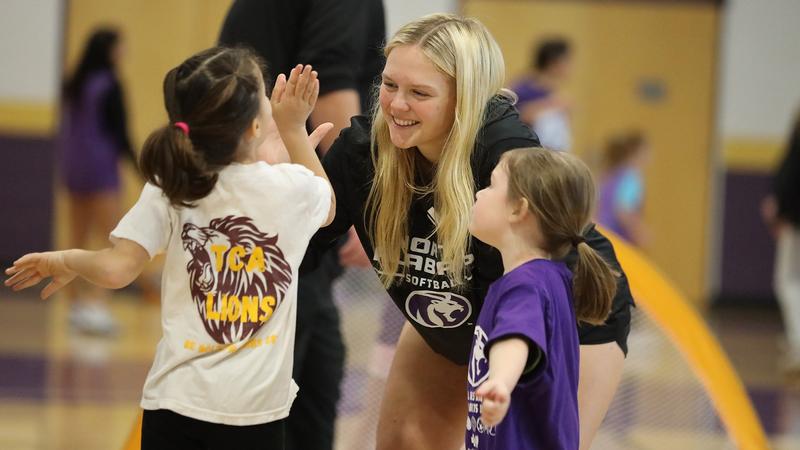
FLORENCE, Ala. (December 30, 2025) – For a second straight year, the University of North Alabama Department of Athletics will host a free youth clinic to celebrate National Girls and Women in Sports Day on Saturday, January 31 from 10 a.m. to noon at the UNA Rec Center.
The free clinic is sponsored by Blue Cross Blue Shield of Alabama and is open to ages 4-12.
“Hosting our second annual National Girls & Women in Sports Day clinic reflects our commitment to empowering girls through athletics,” said Debbie Williams, UNA Associate Athletic Director for Business Affairs and Senior Woman Administrator. “After welcoming over 100 young girls last year, we are excited to continue growing this event by giving our female student-athletes the opportunity to inspire confidence, demonstrate leadership and highlight the positive impact of sports both on and off the field.”
All of UNA’s women’s sports programs, including student-athletes and coaches, will be involved in the camp. This includes women’s basketball, beach volleyball, indoor volleyball, cheer and dance, cross country, women’s golf, soccer, softball and women’s tennis.
Following this event, the UNA women’s basketball team will host FGCU at 6 p.m. inside CB&S Bank Arena. The NGWSD celebration will continue during the game. This game will also serve as Youth Sports Night.
NGWSD is an initiative created by the Women’s Sports Foundation. The annual observance is the first Wednesday of February during National Signing Day.
To register, click here.
For more information on North Alabama Athletics, visit www.roarlions.com and follow UNA Athletics on Facebook, Twitter and Instagram.

Luxury Homes
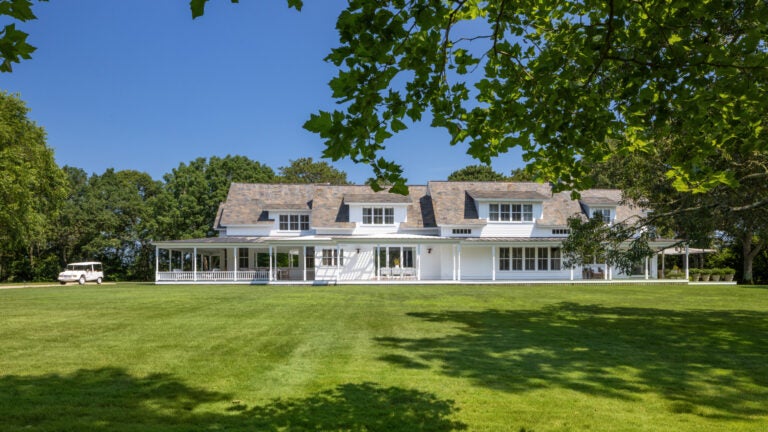
The saying goes “money talks, wealth whispers,” but the eye-popping homes — complete with eye-popping price tags — behind the biggest residential real estate transactions across Massachusetts in 2025 are talkers.
At a time when the $925,000 median sales price for a single-family home in Greater Boston already seems out of reach for many, this top trio is in a mortgage payment (or cash offer) league of their own.
As for the locations, the neighborhood backdrop to these transactions isn’t shocking: Martha’s Vineyard, Boston’s Back Bay, and Nantucket rule the roost. Here are the three priciest home sales in the Bay State in 2025, according to MLS and Zillow data.
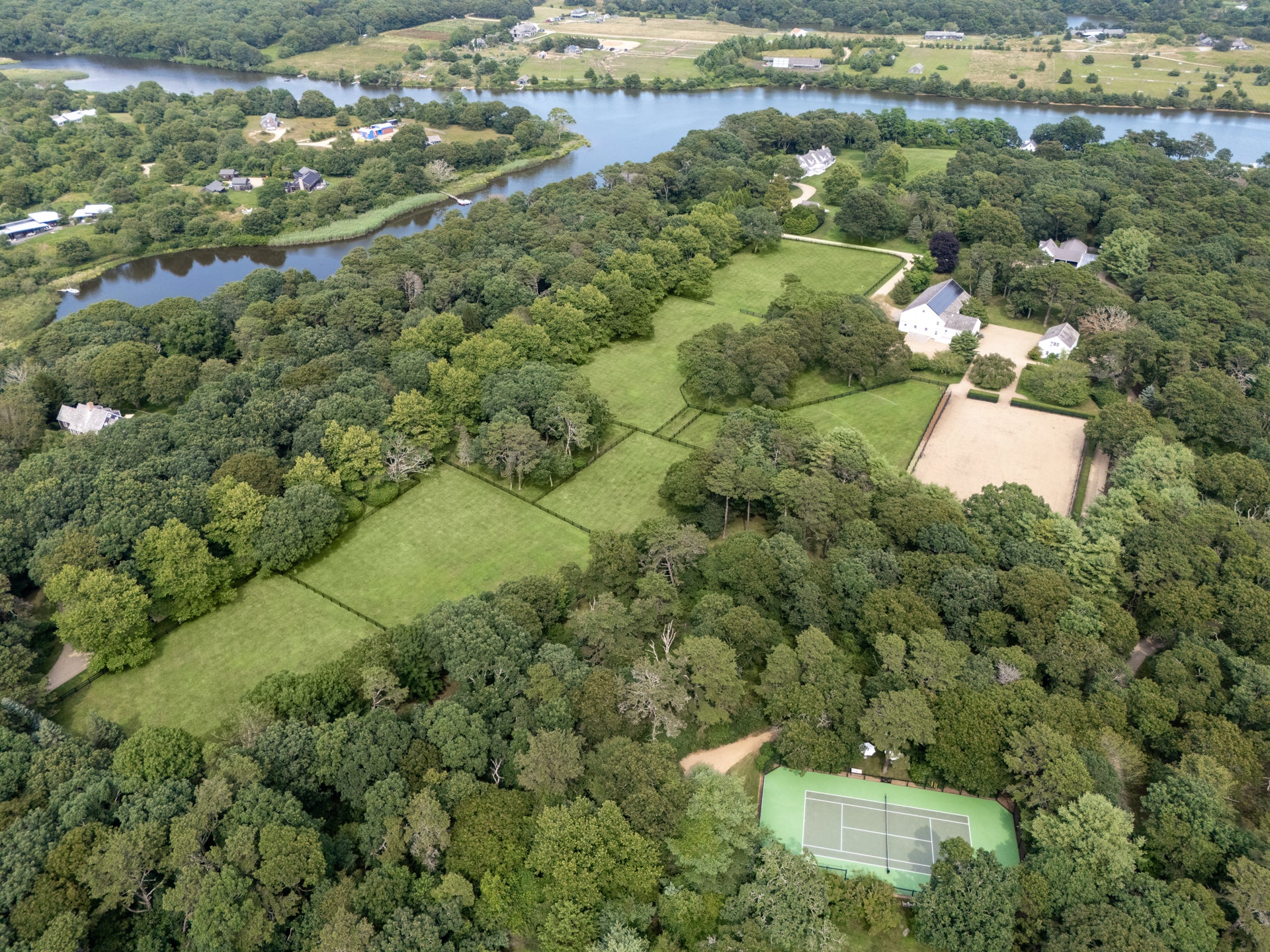
Price: $37,000,000
Sold: July 10, 2025
The crown jewel home of 2025 came with a presidential seal of approval alongside its $37 million price tag. Blue Heron Farm in Chilmark, better known as the former Summer White House for the Obama family, officially claimed the year’s top spot. Spanning nearly 30 acres on Tisbury Great Pond, this compound is a self-contained ecosystem of luxury, featuring a 150-year-old barn relocated from Pennsylvania.
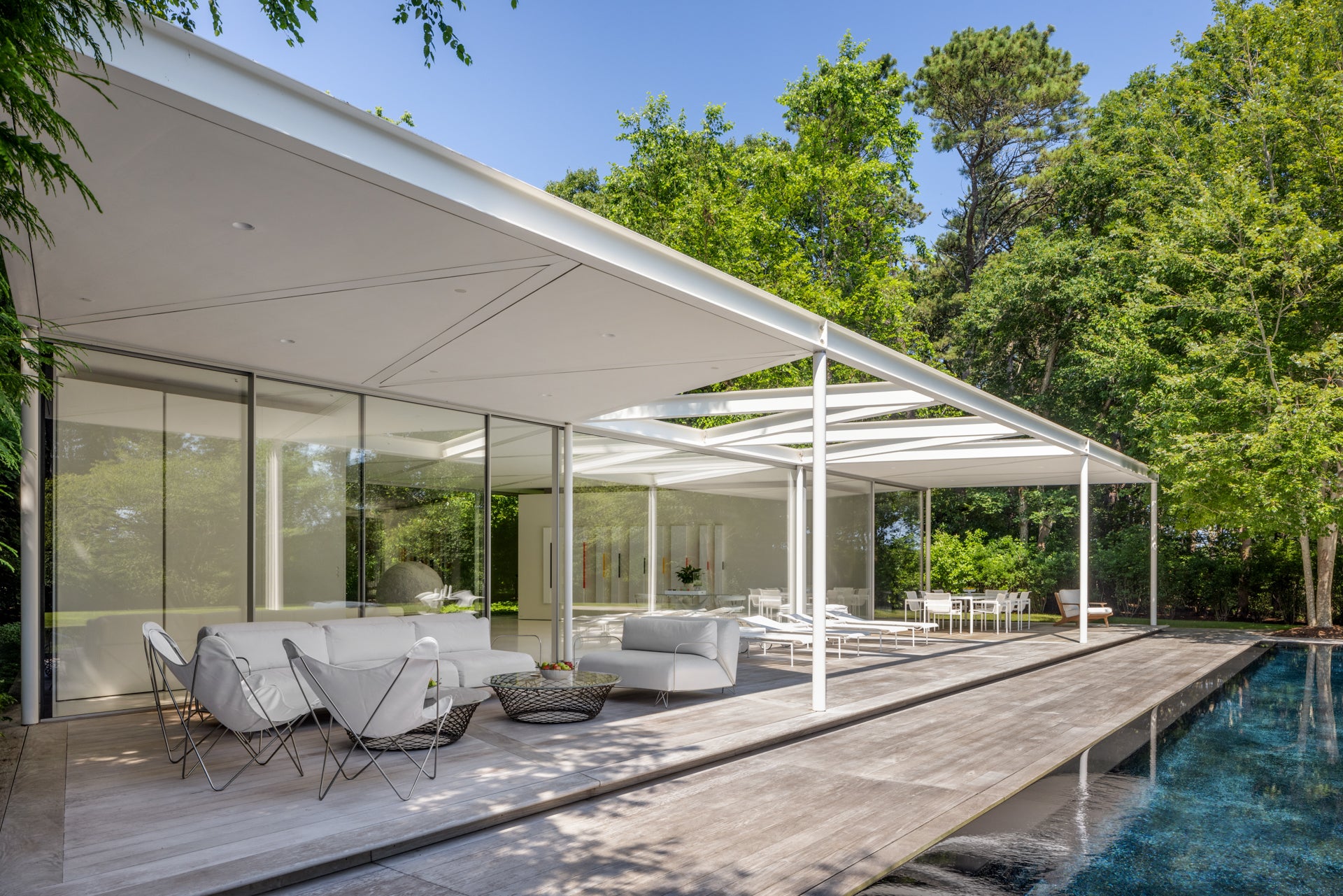
Beyond eight bedrooms and a private beach, the ultimate flex is the Norman Foster-designed pool house — why shouldn’t your swim break come with ties to a Pritzker Prize-winning architect? Listed by Maggie Gold Seelig of MGS Group Real Estate, this sale confirms that privacy isn’t priceless — it can be acquired on the Vineyard for tens of millions of dollars.

Price: $21,000,000
Sold: Nov. 24, 2025
If you’ve ever walked down the French boulevard-inspired stretch of Commonwealth Avenue in the Back Bay and wondered who owns those entire townhouses, the most up-to-date answer is the new owner of Number 59. Fetching a cool $21 million in November, this “sunny side” (aka the southern-facing stretch) stunner on the “Gold Coast” between Berkeley and Clarendon Streets defies the Back Bay trend of chopping grand estates into condos — remaining a glorious, 11,300-square-foot single-family monolith.

With 8 bedrooms, 10 bathrooms (8 full and two half baths), elevator access to all floors, and an attached garage (a Back Bay rarity), it is the architectural equivalent of a unicorn. Also listed by Maggie Gold Seelig, who had a firm hand on eight-figure deals this year, this 1910 masterpiece includes a separate staff or guest apartment.
Price: $21,000,000
Sold: Jan. 7, 2025
Tying with our Back Bay entry for the silver medal at $21 million, this Nantucket compound proves that “The Cliff” is just as much its own tax bracket as it is a neighborhood. This restored 6-bedroom, 10-bathroom grand dame dating to 1908 was listed by Gary Winn of Maury People Sotheby’s and includes a separate guest house. The real showstopper, however, is the more-than-900-square-foot rooftop deck — allegedly the largest of any residential property on the island — offering 360-degree views that practically demand a champagne toast at sunset. Inside, the home features a secret study hidden behind a foyer panel, which is frankly the only rational place to hide when you have a full house of summer guests.
Our weekly digest on buying, selling, and design, with expert advice and insider neighborhood knowledge.
PLATTSBURGH, N.Y. (ABC22/FOX44) – The Plattsburgh YMCA on Monday said they were proud that City of Plattsburgh officials approved $50,000 in funding to continue its free youth sports program for another year.
“Every time a child steps onto the court or the field, they learn the value of teamwork while building confidence, resilience, and determination,” said Kris Tate, COO for the Plattsburgh YMCA. “When communities invest in youth sports, we see healthier, stronger young people.”
Advertisement
According to the YMCA, more than 700 kids participated in its sports programs in 2025, and more than half of those, over 400, were City of Plattsburgh residents.
Busy Plattsburgh intersection poised for overhaul
Under the terms of the funding, which was approved earlier this month, sports are free for City of Plattsburgh kids ages 12 and under.
The association offers sports including basketball and tee ball – the next program is indoor soccer, which will be held in the spring, with registration open to the community on January 9.
Copyright 2025 Nexstar Media, Inc. All rights reserved. This material may not be published, broadcast, rewritten, or redistributed.
For the latest news, weather, sports, and streaming video, head to ABC22 & FOX44.

Most of what shapes a kid doesn’t happen during the game.
It happens before the first pitch — when they’re putting on a jersey that fits, tightening their cleats, and slipping a glove onto their hand that feels like it belongs there. Those details seem small to adults. To a child, they’re everything.
In Carson City, as in every town, there are kids who want to play and families who do everything they can to make that happen. Registration gets paid. Schedules get rearranged. Rides get worked out. What doesn’t always fall into place is equipment — especially something as personal and essential as a glove.
That gap usually stays invisible. Quiet. Unspoken.
And that’s exactly why it matters.
A Simple Idea, Done the Right Way
The idea is not complicated: an annual glove drive for Carson City Little League.
Not a spectacle. Not a fundraiser built on attention. Just a dependable, once-a-year effort to make sure that kids who need a glove have one — without ever being asked to explain why.
No announcements. No labels. No moments a child carries with them longer than they should.
Handled discreetly by the league, supported by the community, and grounded in respect.
Why This Matters More Than It Sounds
A glove is more than leather and laces.
It’s confidence. It’s safety. It’s the difference between playing free and playing guarded. Between reaching for the ball and hoping it doesn’t come your way.
Kids feel those differences immediately. They also remember who noticed — and who didn’t.
Youth sports are supposed to be where kids learn how to belong. That lesson starts before a coach ever speaks.
This Isn’t Charity. It’s Stewardship.
This wouldn’t be about rescuing anyone. It would be about maintaining the field, in the broadest sense of the phrase.
Communities take care of their parks, their schools, their traditions. Youth sports deserve the same quiet upkeep. When we remove small barriers early, we prevent bigger ones later — loss of confidence, loss of interest, loss of belief that a place is meant for you.
That kind of care doesn’t require applause. It requires consistency.
Why Make It Annual
Because needs don’t announce themselves once and disappear.
Kids grow. Gloves wear down. Circumstances shift. An annual glove drive acknowledges that reality without judgment or urgency. It makes support part of the rhythm, not a reaction to crisis.
When something becomes routine, it becomes reliable. And reliability is what kids trust.
The Real Outcome
If this works the way it should, no one will talk about it much.
Kids will show up ready to play. Coaches will coach. Parents will watch. Baseball will happen.
And a few players — ones we’ll never identify, and don’t need to — will step onto the field feeling equal instead of exposed.
Those are the quiet things that let kids play.
And they’re worth doing right.
— Chris Graham is a Carson City native, writer and lifelong baseball fan. A former Western Nevada College play-by-play broadcaster, his work focuses on sports, culture and community. He can be followed on his Substack at https://substack.com/@gamenotes.


#11 Volleyball Practices, Then Meets Media Prior to #2 Kentucky Match
Nascar legal saga ends as 23XI, Front Row secure settlement


Sunoco to sponsor No. 8 Ganassi Honda IndyCar in multi-year deal

Maine wraps up Fall Semester with a win in Black Bear Invitational


Ross Brawn to receive Autosport Gold Medal Award at 2026 Autosport Awards, Honouring a Lifetime Shaping Modern F1


WNBA’s Caitlin Clark, Angel Reese and Paige Bueckers in NC, making debut for national team at USA camp at Duke
NASCAR, 23XI Racing, Front Row Motorsports announce settlement of US monopoly suit | MLex


Rick Hendrick comments after the NASCAR lawsuit settlement


Nike Signs 10 LSU Athletes to NIL deals


Stempien to seek opening for Branch County Circuit Court Judge | WTVB | 1590 AM · 95.5 FM





