
NIL
Fresno State eyes partnership in new student-athlete snack venture


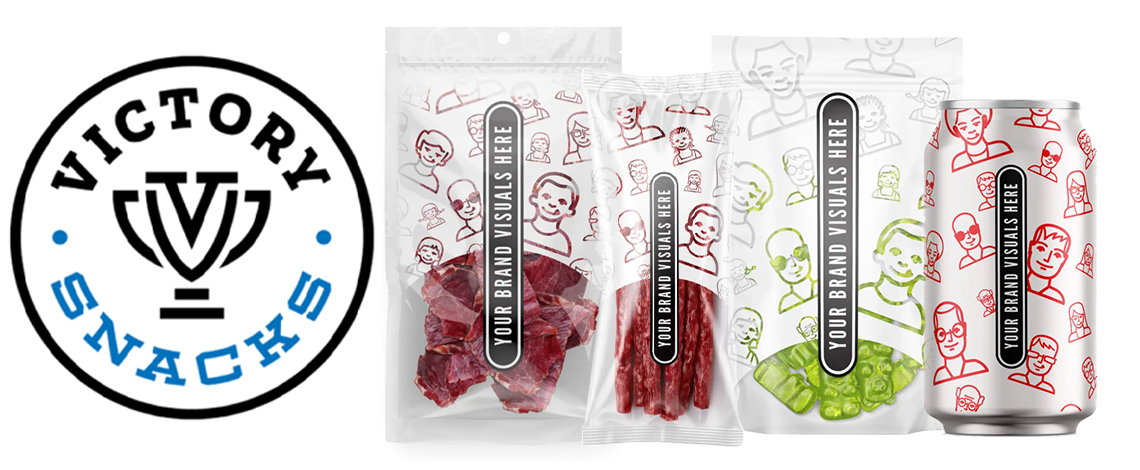
Images via Victory Snacks. Photo illustration by Cecilia Lopez
Fresno State is one of several universities discussing joining Victory Campus, a new initiative from Victory Snacks and NIL platform TheLinkU.
The program is designed to support student-athletes by offering school-branded snacks and beverages. A portion of revenue is directed toward name, image, and likeness (NIL) efforts.
Houston University, which recently appeared in the NCAA Basketball Championship Game, was announced as the first official partner, launching a line of “HoustonTX Snacks” that includes jerky, nuts, corn puffs, gummies and more. Products are available online and are expected to roll out at campus stores and sporting venues.
Victory Campus plans to develop similar snack lines designed for each school’s branding. In addition to Fresno State, other schools in talks include Alabama, Florida Atlantic University, Notre Dame and Oklahoma.
“Our goal is to create a sustainable revenue stream that supports student-athletes through everyday products,” said Grant Cohen, chief growth officer at Victory Snacks, in a news release.
According to TheLinkU, the program is intended to help universities expand NIL funding opportunities while engaging with alumni and fans.
No formal agreement has been announced yet between Victory Campus and Fresno State. Updates are expected as the program expands later this year.
“By delivering premium, American-produced snacks and beverages that carry the pride of each school’s brand, we are creating a new model for how NIL programs can thrive while celebrating what makes college athletics truly special,” Cohen said.

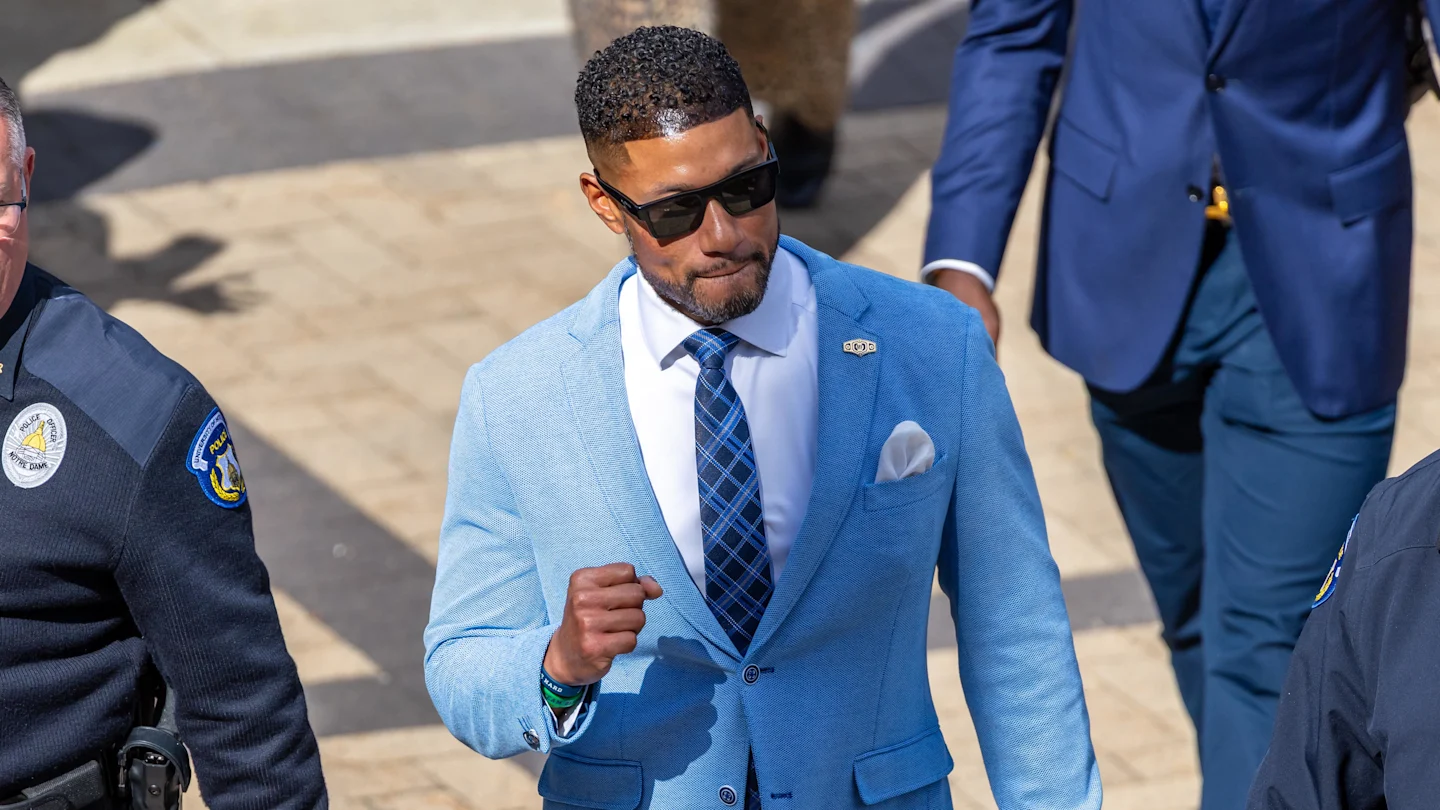
The college football coaching carousel spins on, but now some of that speculation includes one of the most prestigious positions in the NFL which came open this year, and a rising star in the NCAA is now being connected to the vacancy.
Notre Dame head coach Marcus Freeman is someone who should be considered in contention to become the next coach of the New York Giants franchise, according to college football analyst Josh Pate.
Freeman in play for the Giants?
“I just think Marcus Freeman is gonna be in play for the Giants job,” Pate said during an appearance with Bussin’ With The Boys.
“I think a lot of people in the college football administrative world know that/expect that. The agency world knows that/expects that. Not a done deal. I’m not going Schefter.
“If it’s even a remote possibility, and it certainly is, then that means the Notre Dame job may be open, as well. The coaching cycle is not close to done yet.”
NFL insiders seem to agree
The talk connecting Freeman to the Giants is not just random speculation at this point.
Freeman has also emerged as one of the most prominent names on the shortlist being assembled by the Giants franchise itself, according to The Athletic.
That is something to keep an eye on, as the NFL coaching bonanza is only just getting started, and Freeman is considered one of the best young coaching minds in circulation at any level.
LSU, Penn State, and Florida were all reportedly in communication with Freeman through his representatives when those schools were in the market for a coach, and the Giants could be next.
What Freeman has done at Notre Dame
Freeman has just completed his fourth season at the helm of the Fighting Irish program and boasts a 43-12 overall record, winning more than 78 percent of his games.
Freeman led Notre Dame to a No. 2 national ranking and an appearance in the national championship game against his alma mater a year ago.
His team went 10-2 this season and seemed poised for another berth in the College Football Playoff, before the committee reversed course on Selection Day and left the Irish out of the field, leading the school to decline playing in a bowl game.
What Notre Dame is giving Freeman
Freeman, who will turn 40 next month, signed a contract extension with Notre Dame last year that will lock him in with the school through the 2030 season, but if this carousel has proven anything, it’s that almost any contract can be gotten out of.
Notre Dame is a private school and is not obligated to publish its coaching salaries, but insiders contend his deal pays him $9 million per season and is worth a total of a reported $54 million.
But that raise is already somewhat out of date after Indiana recently inked Curt Cignetti to a new deal that will pay him $11.7 million per season.
The most recent reporting contends that Notre Dame and Freeman have not yet reworked his deal with the school, but that both sides are interested in coming to a new arrangement by the new year.
The faster they do that, the faster they can end talk of his leaving.
Read more from College Football HQ

JACKSON, Miss. (WLBT) – Name, image, and likeness.
It has taken athletics across the amateur level by storm nationally, creating an avenue for players to make money from their NIL, particularly in football.
College football, most notably at the NCAA Division I level, has been forever changed because of it, with one SEC coach calling the state of CFB “sick.”
“We’re trying to sound warning bells. There’s a warning that the system that we are in really is sick right now, and college football is sick,” Missouri head football coach Eli Drinkwitz said about NIL on Monday, December 16, ahead of his team’s appearance in the Gator Bowl. “There’s showing signs of this cracking moving forward… Tampering is at the highest levels – there is no such thing as tampering, because there’s no one that’s been punished for tampering. Everybody on my roster is being called.”
In Mississippi, Ole Miss has benefited from its strong NIL movement, the Grove Collective, which is a large reason why the football program is hosting a College Football playoff game in the school’s first-ever appearance.
But how is NIL affecting high school student-athletes in Mississippi?
Thirty-six states in the country are allowing high school student-athletes to profit from their name, image, and likeness.
Mississippi is not one of them.
“NIL is not for high school students,” Rickey Neaves, the Executive Director of the Mississippi High School Activities Association, said. ”They’re much too young to be taking on that responsibility and handling that large sum of money. So, a high school student and our association need to concentrate on number one, being a young person and enjoying school, enjoying the high school experience, and just being a young man or a young lady. And then the rest of it will take care of itself later on. They’re going to have to work and be responsible later on in life, and long enough. So let them be young while they can.”
According to Yahoo Sports, Fazion Brandon, a five-star recruit playing high school football in North Carolina, is allegedly making $1.2 million in NIL money, who signed several highly publicized contracts since his lawsuit.
Tristen Keys, the highest-rated Mississippi recruit in the class of 2026 and a senior at Hattiesburg High School who signed to play CFB at Tennessee, has an NIL valuation of over $500k, according to On3 Sports.
While not naming the said student-athletes, Neaves confirmed that several Mississippi athletes have been approached every year with a large sum of money with NIL deals since its emergence.
$1.2 and $1.4 million to be exact.
These individuals likely played football in the state, with Mississippi consistently ranking in the top five, and even the best in the country in producing four and five-star talent on the gridiron, multiple reports show.
In fact, 12 high school student-athletes are ranked in ESPN’s Top 300 recruits in the nation, with 5 of them being ranked in the top 100.
That amount of money is hard to turn down for anyone, let alone a high school athlete with the opportunity to achieve dreams at the tip of their finger.
Neaves said turning this opportunity down has impacted a select few of student-athletes in the state.
However, there are ways around signing an NIL contract that can’t be accepted until they graduate and are enrolled in a university.
“They can sign an NIL contract. [But] they or their parents cannot receive any money or any goods that can be escrowed, as we call it, into a bank account for when they do graduate,” Neaves stated. “They cannot use their school logo, their school colors. It does not keep them from using their own name, their own image, and their own likeness, but all of that other belongs either to their school or even to the association, so they can’t use that.”
“We do encourage parents to look into that,” he continued. “I had a deal with a couple of student-athletes last year, and my advice to them was, you can’t tell a young man when they’re 17, 18 years old to turn down $1.2 million. What you can tell them is to be very careful, have that money escrowed and waiting on you once you use your eligibility or once you have graduated, and then build your own name, your own legacy, and build off of that.”
No local student-athletes, according to Neaves, have left the state to pursue NIL deals that are eligible to profit from while in high school.
While the NIL movement hasn’t made its way to high school athletics in the Magnolia State, Neaves suggests another entity is directly affecting high school athletics here.
The transfer portal.
It has changed the landscape of amateur athletics forever, with major colleges able to pay millions in NIL contracts for transfers arguably older and more ready-made for a football program – or any other athletics program, for that matter – to win immediately.
While there are no formal, large-scale academic studies that provide a precise, specific percentage of high schoolers affected, this in turn undoubtedly results in fewer roster spots and scholarship offers for talented high school recruits.
In 2023, an analysis done by Gene’s Page shows that SEC programs’ high school signees dipped nearly 11-percent between 2019 and 2021 as the portal gained prominence.
The FootballScoop stated in an article that in 2021, around 400 fewer players across the country signed FBS scholarships compared to the two cycles prior, and the trend has continued.
Neaves proposes that high school athletes in the state are impacted today.
“We need to look at what that is doing to our high school athletes,“ he warned. ”Right now, we have some outstanding high school athletes, both male and female, who are not getting the opportunity to go on to the next level because these people are still hanging around. They’re gaining some of the six and seven-year college athletes, and that’s not letting today’s seniors in the room. One of these days, NIL money is going to run out, and you have, you have juniors and seniors in college that are staying in college because they’re making more money off their NIL than they would make out of working.”
Is there a future for NIL in Mississippi high school sports?
For the possibility of NIL to maneuver its way into Mississippi high school sports, it would first have to start above the MHSAA.
Neaves doubled down that it is not in the picture within the rules of the association, but that “the legislature could pass a bylaw that says student athletes of high school age can do this.”
“If that ever happened, we would have to stay within the rules ourselves. So, we would have to allow it,“ he said. ”I personally hope that does not happen because I think we have the best option for both worlds here. The student athlete can still have [NIL deals] waiting on them when they get out of school at any time in their life, when they are more adapted to [the] use of it and can benefit from it even more.”
It does remain a possibility, however.
More states are trending towards allowing high schoolers to make NIL money.
On November 25, Ohio became the latest state to join the NIL movement.
While it is technically out of Neaves’ control, he does encourage that high school sports remain the same in Mississippi.
“You never know in today’s world what’s going to be coming down the pipe, but I think you have to always look ahead and see what pitfalls are out there.”
“Let’s be realistic. Is a 16 or 17-year-old mature enough to handle a million dollars? No. I know when I was that age, I would have blown it and probably ruined my whole career while doing it. Now, that’s not what everybody would do, but if that happens to one person, that’s one too many.”
Want more WLBT news in your inbox? Click here to subscribe to our newsletter.
See a spelling or grammar error in our story? Please click here to report it and include the headline of the story in your email.
Copyright 2025 WLBT. All rights reserved.
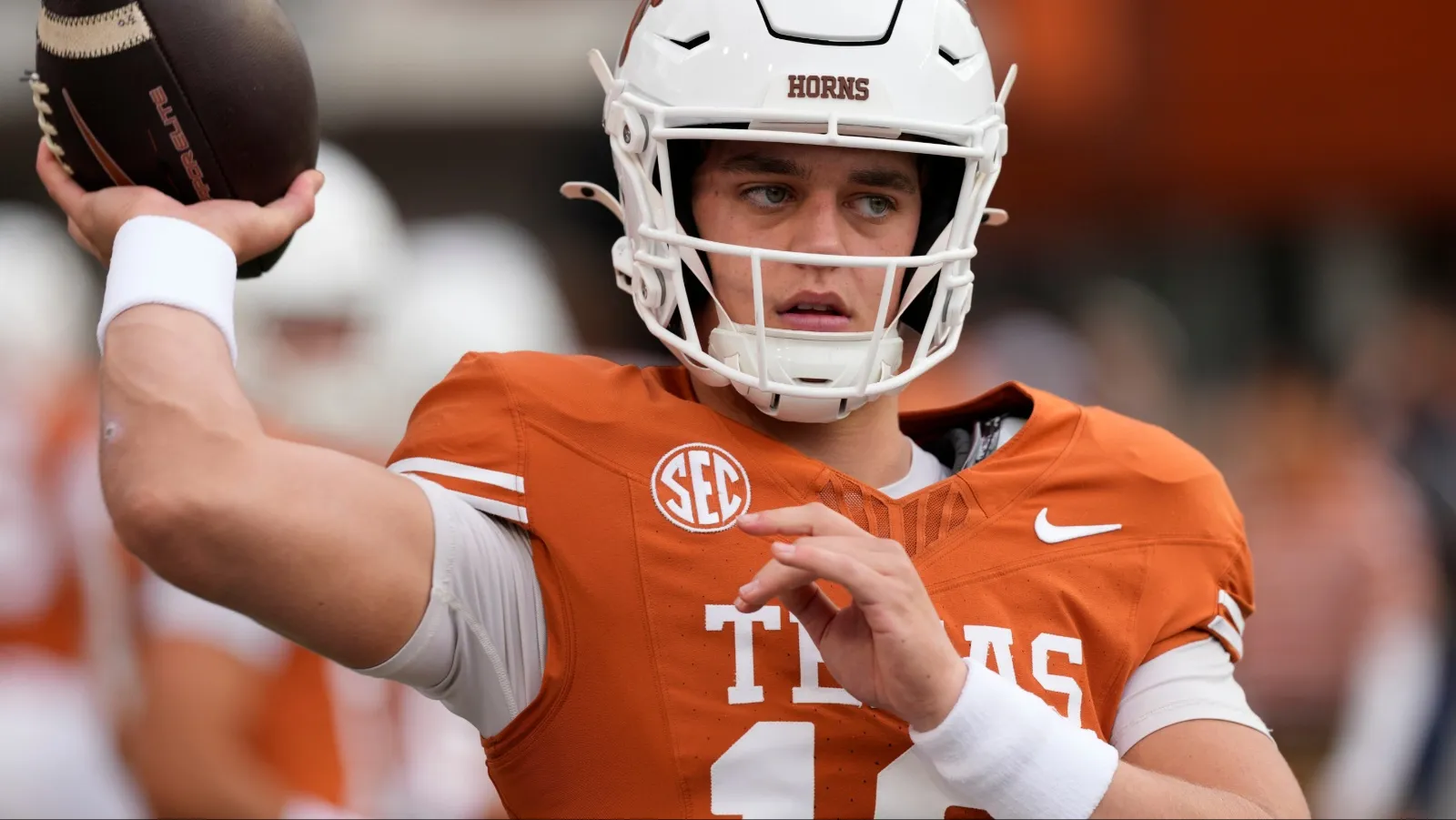
© Scott Wachter-Imagn Images
College football has been skidding down a slippery slope since the start of the NIL Era, and the line between that level and the pros gets blurrier with every year that passes. Now, we’ve been treated to our latest shift on that front courtesy of Arch Manning’s decision to take a pay cut ahead of his second season as the starter for Texas.
Next summer will mark the fifth anniversary of the landmark Supreme Court decision that essentially forced the NCAA to abandon its longstanding efforts to prevent students from cashing in on their name, image, and likeness.
It was a fairly inevitable development and one that was poised to have a dramatic impact on the landscape of college sports. While most fans agreed that student-athletes deserved to make some money, the ways in which they’re now able to do so have slowly but surely eroded the spirit of collegiate athletics as the concept of amateurism becomes a memory of the past.
That evolution has been marked by a number of tangible signposts, and the latest stake has been pounded into the ground courtesy of Arch Manning.
Arch Manning is taking a pay cut to allow Texas to use more of its House settlement funds on other talent
Earlier this week, we were treated to the latest piece of evidence that college football is basically a pro sport when USC went out of its way to announce running back Waymond Jordan had re-signed with the program after deciding to return to the Trojans for a second season.
We’ve reached a point where every player is effectively a free agent when their season comes to an end due to the transfer portal, and schools now have even more money they can use to try to poach and retain talent in the wake of the House settlement that will allow athletic departments to redistribute up to $20.5 million in revenue to athletes during the current academic year.
According to Texas Insider, the University of Texas is setting aside around $14 million for its football program next season. Arch Manning will undoubtedly receive a significant chunk of that sum, but the outlet spoke with sources who say the quarterback will accept “a reduced compensation” from the Longhorns so they can spend more money on other players in pursuit of a national championship.
Manning certainly isn’t hurting for cash, as he reportedly received at least $3.5 million this season thanks to NIL deals with companies including Red Bull, Uber, and Warby Parker.
It’s a commendable move for a QB who will be looking to improve after largely failing to meet the admittedly lofty expectations surrounding him during a campaign where the Longhorns went 9-3, but it’s also one that shows the sport has firmly reached the point of no return.

Updated Dec. 19, 2025, 10:54 a.m. CT
There are plenty of examples of a star in pro sports taking less money in order to help the overall roster. But it isn’t something that’s hit college football yet … until now, thanks to Arch Manning. Manning has asked to take a reduced portion of the Longhorns’ direct payout pool.
Manning’s aim at taking less NIL funds is to help improve the roster around him. Just like Patrick Mahomes, who regularly gives up millions to help the Kansas City Chief’s roster. Tom Brady did it with New England. Dirk Nowitzki, Tim Duncan, LeBron James, Kevin Durant, Jalen Brunson, Aaron Rodgers and Ben Roethlisberger have all helped the rosters around them by taking less.
In the pros, there are salary caps to negotiate. While college has no salary cap (yet), there is a finite amount in the NIL house pool. Texas can only spend what it has available. And while that pool is one of the biggest in the nation, Texas still follows a budget.
No doubt, Manning will be hoping the Texas coaching staff uses some of the freed up football revenue sharing funds on the offensive line. The line struggled in front of Manning all season and certainly inhibited his development early in the season.
Two offensive linemen are gone after the Citrus Bowl and Texas might lose a third. Left tackle Trevor Goosby was named first-team All-SEC is now contemplating going pro. Running back Jadan Baugh from Florida is also on Texas’ radar. The talented RB won’t be cheap.
Of course, it’s not like Manning will starve. The redshirt sophomore has one of the highest NIL valuations in nation. Manning has NIL deals with Red Bull, Panani, Uber and Warby Parker. Manning made north of $3.5 million in NIL deals in 2025, according to the Houston Chronicle.
With a big name that attracts major brands, Manning doesn’t need his big deals supplemented. But most college athletes are paid by the common pool of funds. Manning frees up some of that money for transfers.

Much like the NBA in the 2010s, once the actual season ends for college football, the real drama begins off the field. Since the conclusion of the regular season, many players have already announced whether they’ll enter the transfer portal or re-sign NIL and rev-share deals with their current teams.
There is no real contract system set up for college athletics the way there is in professional sports, where deals can be signed for four or five years, binding both sides. In college football, every player is basically a free agent every offseason and has the power to re-negotiate their deal or enter the transfer portal if they can’t agree to terms with their school. However, perhaps the most famous athlete in all of college sports is now deciding to reduce his salary, not increase it, as he plans to return for 2026.
That would be Texas quarterback Arch Manning. According to Sporting News and On3, Manning entered the 2025 college football season as, reportedly, the highest-paid player in the entire sport. On3’s NIL valuation database had Manning as the highest-valued player in the country heading into the year, and despite some dips in play, Manning still remains No. 1 in On3’s NIL100 rating the top 100 highest-valued college athletes. His current value is listed at $5.3 million.

But according to a report that came out Friday morning, Manning actually will accept less money from Texas’ direct revenue share next season in an attempt to help the team better equip themselves for a 2026 national championship run after disappointing their CFP expectations in 2025. It’s important to note that Manning’s endorsement deals, nor money from any NIL collective, are impacted by this.
“Sources tell Inside Texas that star quarterback has agreed to a reduced compensation amount from Texas’ House settlement revenue sharing pool in 2026,” On3 ‘s Justin Wells published on Friday. “This ostensibly doesn’t affect his compensation from fair market NIL, commonly referred to by Texas administrators as ‘real NIL.’ Manning has partnerships with Warby Parker, Waymo, Vuori, and Red Bull and is one of the most high-profile college athletes regardless of sport.”
This move here is noble by Manning but also makes most sense for the team. As Wells mentioned above, Manning is heavily partnered with national brands and is the unique college athlete who brings his own marketability to the table, outside of his performance. This is a guy that can generate millions of dollars from endorsements and public partnerships — what Texas admins consider “real NIL.”
Essentially, Texas can guarantee Manning less raw money via the rev-share route but still assure him that he’ll get his money through other NIL means. Then, the Longhorns can take that guaranteed rev-share money and use it on high-level players who may not have the same name recognition or personal brand as Manning.
More on College Football HQ

For most people, this time of year is about spending time with family and enjoying some well-earned time off, maybe with a glass of eggnog and a holiday movie.
That will be the case for most of the Boise State football squad, which earned itself a long Christmas break after winning the Mountain West championship for a third straight year and playing in the LA Bowl last weekend — one of the earliest postseason games on the schedule.
But for head coach Spencer Danielson and his staff, this time of year is also about keeping the football family together for the following season and trying not to let the stress ruin a visit from Old St. Nick.
Despite the fact that college football’s bowl season and playoffs go deep into January, the transfer portal opens on Jan. 2 and runs through Jan. 16. That means players who are looking to move are already declaring their intentions — whether their reason is playing time, money or location — and being courted by programs across the nation.
After Boise State’s berth in the College Football Playoff last year, which led to the Fiesta Bowl on New Year’s Eve, the Broncos had to contend with some players going to the portal, such as wide receiver Prince Strachan (USC), linebacker Andrew Simpson (UNC) and defensive tackle Braxton Fely, who ultimately returned.
Things are somewhat less stressful this year, but the next couple of weeks won’t be that restful, either.
Here’s where Boise State stands from a recruitment and Name, Image and Likeness standpoint as the Broncos look to retool for 2026.
How does Boise State approach NIL?
A big indicator of where Boise State stands in the new whirlwind of college athletics is how much NIL money the program is able to dish out. Unfortunately, like most programs, it is tight-lipped about spending power.
Former offensive coordinator Dirk Koetter said last January that Boise State’s 2024 NIL budget was just shy of $2 million. Given Boise State pocketed at least $3 million for traveling to the Fiesta Bowl, and there was $8 million paid to the Mountain West to be distributed among its teams, Danielson’s team likely saw a bump in its spending power.

Danielson said that Boise State would see an increase in NIL spending from 2025 to 2026, but that it’s still not enough.
“Is it where we absolutely need to be? No, there’s still a lot of meat on the bone; we need to continue to push,” Danielson said Wednesday. “But it is an increase from last season, and I’m excited to continue to do that in the years to come.”
Danielson said he and his staff are busy prepping for the portal — including working with current players to keep them — but they won’t actively meet with anyone until at least Jan. 2.
The coach said Wednesday that some teams are already reaching out to players and attempting to cut deals, but he has made it clear that Boise State will play by the rules and not be involved in underhanded activity.
“If someone on social media says, ‘Hey, I’m going to transfer,’ we are going to log that to know, ‘Hey, blank player’s leaving, let’s look at some film and see,’” Danielson said. “But we are going to have zero communication with that young man until he’s on the board. … When the portal opens up on January 2, we can have communication.”
What is Boise State looking for in a transfer?
When asked which specific positions the Broncos might try to enhance throught the portal, Danielson again remained coy.
“We’re going to really look at it holistically, and we’ve got some spots left,” Danielson said. “I’m really, really proud of the class that we got coming in as freshmen, and we’ve got a few spots left that we’ll be looking at the transfer portal for.”
He added that the program is also evaluating junior college players, but isn’t going to “recruit a lot of them.”
Danielson already said BSU would not pursue a quarterback, putting his trust in starter Maddux Madsen and primary backup Max Cutforth, as well as the incoming freshmen.
Speculating on some of the team’s other needs, a veteran wide receiver is probably on the wish list. The only upperclassman set to return in 2026 is redshirt junior Chris Marshall. Behind him are exciting but more inexperienced underclassmen Cam Bates, Quinton Brown and Qumonte Williams Jr.
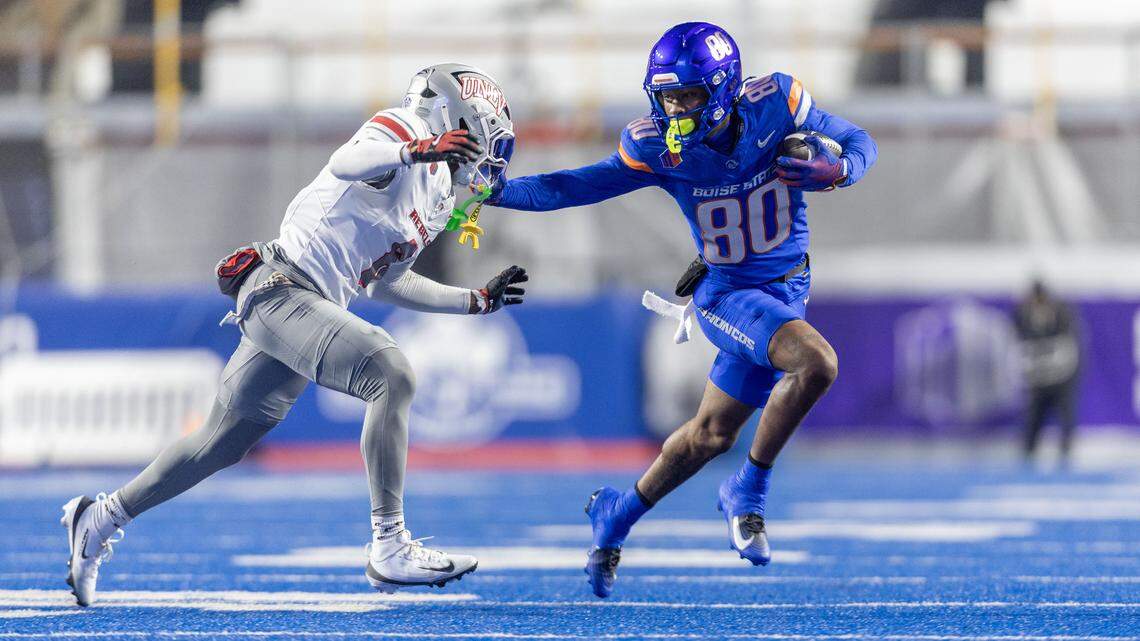
A good chunk of the starting offensive line needs to be replaced, with starting left tackle Kage Casey heading to the NFL Draft, and center-turned-left-tackle Mason Randolph and backup-turned-starting-center Zach Holmes both graduating.
Team captain Marco Notarainni is graduating at linebacker, but redshirt sophomore Boen Phelps made big leaps in 2025. Still, depth at that position is always crucial.
Players declare for the NFL Draft
Casey announced his intention to declare for the draft and opted out of Boise State’s LA Bowl loss to Washington. Casey didn’t even travel with the team to Southern California, and Danielson confirmed on Wednesday that he decided to keep Casey away from the team to avoid any distractions.
Fifth-year cornerback A’Marion McCoy, who missed the last month of the season with an injury, announced on his Instagram that he was declaring for the draft as well. McCoy ended the 2025 season with four interceptions, including a three-game streak of interceptions through October.

Junior safety Ty Benefield also could try to make it in the NFL. Benefield filed paperwork with the league last week to receive a draft projection and make a decision, and Danielson has said he will support whatever the team’s leading tackler from 2025 wants to do.
“It’s not a question of if he would be drafted, it’s a question of when,” Danielson said. “And he and his family are going to go through it and pray through it, and we’re going to go through that process in the next few weeks.”
Are any players leaving Boise State?
Several backups already have announced their intention to enter the transfer portal, including redshirt junior kick specialist Jarrett Reeser and redshirt junior offensive tackle Hall Schmidt.
Danielson said he doesn’t expect any major players to attempt to leave the program. One player who could be a target of other programs with lots of NIL money to spend is Benefield, but Danielson is confident that won’t happen if he decided to return for another college football season.
“I do believe that Ty and his family know, through how he’s been able to develop here, how he’s been able to play, the amount of NFL attention he has right now,” Danielson said. “If he decides not to go to the NFL, I believe that we would absolutely have a really good shot to keep him here, because he knows the best thing for his long-term future is being here.”
Danielson also has repeatedly said that a large chunk of the program’s NIL budget goes toward retaining and rewarding current players.
Boise State currently operates a tiered NIL model that provides a consistent package for players based on where the coaching staff believes each player is developmentally. Some of those groups include “guys that haven’t played, to played a little bit, to guys that are on the rise, to guys that are all-league,” Danielson said.
“I believe we’re going to find a way to give our guys really good offers. But more importantly, I need them to want to be here.”

Shaun Goodwin
Idaho Statesman

Kentucky Volleyball beats Wisconsin in thriller, will face Texas A&M in National Championship

Jordan Anthony named The Bowerman winner for 2025

Speedway Motorsports Hands Out Annual Awards

Santa Barbara Volleyball Club to Construct New Youth Training Facility in Goleta

Conway Selected for Philly-SIDA Academic All-Area Men’s Cross Country Team

Questions raised over Trump’s proposed ‘Patriot Games’ youth sports event

How Schools Are Powering the Future of Competitive Gaming Education

$54 million college football HC predicted to be candidate for high-profile NFL job

Broadcast schedule for 2026 Indy NXT season announced by FOX Sports, IndyCar

Alabama track star becomes first in school history to win Bowerman Award

Texas A&M volleyball takes out another titan, sweeping No. 1 Pitt to reach national championship

Greg Biffle, Wife, and Two Children Among 7 Killed in Thursday Morning Plane Crash

Tennis Programs to Host Free Junior Clinic in Harlingen January 10

Youth Lacrosse Thriving in Port Washington

NASCAR legend Greg Biffle and family killed in plane crash

First Tee Winter Registration is open

Fargo girl, 13, dies after collapsing during school basketball game – Grand Forks Herald

CPG Brands Like Allegra Are Betting on F1 for the First Time

F1 Las Vegas: Verstappen win, Norris and Piastri DQ tighten 2025 title fight

Sycamores unveil 2026 track and field schedule

Two Pro Volleyball Leagues Serve Up Plans for Minnesota Teams

Utah State Announces 2025-26 Indoor Track & Field Schedule

SoundGear Named Entitlement Sponsor of Spears CARS Tour Southwest Opener

Redemption Means First Pro Stock World Championship for Dallas Glenn

Jo Shimoda Undergoes Back Surgery

Texas volleyball vs Kentucky game score: Live SEC tournament updates

Bowl Projections: ESPN predicts 12-team College Football Playoff bracket, full bowl slate after Week 14

How this startup (and a KC sports icon) turned young players into card-carrying legends overnight

Robert “Bobby” Lewis Hardin, 56
Wisconsin volleyball sweeps Minnesota with ease in ranked rivalry win





-
 Motorsports1 week ago
SoundGear Named Entitlement Sponsor of Spears CARS Tour Southwest Opener
-
 NIL3 weeks ago
Bowl Projections: ESPN predicts 12-team College Football Playoff bracket, full bowl slate after Week 14
-
 Rec Sports3 weeks ago
Robert “Bobby” Lewis Hardin, 56
-
Sports3 weeks ago
Wisconsin volleyball sweeps Minnesota with ease in ranked rivalry win
-

 Motorsports2 weeks ago
Donny Schatz finds new home for 2026, inks full-time deal with CJB Motorsports – InForum
-
 Rec Sports2 weeks ago
How Donald Trump became FIFA’s ‘soccer president’ long before World Cup draw
-

 Motorsports3 weeks ago
Michael Jordan’s fight against NASCAR heads to court, could shake up motorsports
-
 Rec Sports2 weeks ago
Black Bear Revises Recording Policies After Rulebook Language Surfaces via Lever
-
 Sports3 weeks ago
Men’s and Women’s Track and Field Release 2026 Indoor Schedule with Opener Slated for December 6 at Home
-
 Rec Sports2 weeks ago
David Blitzer, Harris Blitzer Sports & Entertainment