
NIL
NIL is changing college sports; for better or worse?

HUNT VALLEY, Md. (TNND) — It’s been nearly four years since the NCAA enacted a new policy allowing college athletes to profit from their name, image and likeness, and just a few weeks since a federal judge opened the door for college athletic departments to pay athletes directly.
Much of the details are still being worked out in the courts. Key components like roster limits, scholarship limits and payment pools are still up in the air.
As is a governing body to oversee all of these new rules, since most current regulation is a patchwork of state laws, legal settlements and NCAA rules.
But, we are starting to see the impacts of college athletes getting paid – and what it means for the enterprise as a whole.
Depending on who you ask, the historical shift is: long overdue for athletes who’ve spent thousands of hours grinding for their craft; late to the party in terms of global sports; the official death certificate for amateurism and the “student” side of “student-athlete”; or, an inevitable reality that has to run wild before it gets reined in and regulated.
To the league itself, it’s a positive step.
When a judge granted preliminary approval for a framework for schools to pay athletes, NCAA President Charlie Baker said it would “help bring stability and sustainability to college athletics while delivering increased benefits to student athletes for years to come.”
The push for college athletes to get paid spans decades, with legal challenges and legislative efforts dating back to at least the early 2000s. Which is surprising, considering the NCAA has been a multi-million dollar industry for several decades, and a multi-billion dollar industry for about a decade.
That disparity is due to the idea of “amateurism,” a word many experts and analysts use when they cite concerns about completely commercializing college sports. That idea goes back more than a century, to 1800s England, where sports were only for the wealthy, and the working class didn’t want them to be able to pay their way to victory.
“I don’t want to say [amateurism] is going to die, but it will certainly be the commercial aspects that are going to permeate,” said David Hedlund, the chairman of the Division of Sport Management at St. John’s University. “I think we’re going to see and hear less and less about amateurism, and college sports are going to look more like professional sports, or a training ground for professional sports.”
The idea that sports are for enjoyment and the love of the game rather than money is a noble one. And players can love the game and make money off their talents at the same time.
But many experts say amateurism has long been dead; the NCAA was just, for whatever reason, the last organization behind the International Olympic Committee to let it die. It’s part of an effort to keep pace with the rest of the world. Overseas soccer and basketball players are spotted when they’re 12 to 14 years old, and go pro when they turn 18.
“We’re in a global marketplace,” said Matt Winkler, a professor and program director of sports analytics and management at American University. “We sort of have to keep up with the other nations if we want to strive and have those great moments in sports for our Olympic teams and our World Cup teams and so forth.”
Coaches have long been compensated, and universities have long profited off their sports teams.
“The money has always been there. It’s just a lot more front-facing now, I think, than it’s been in the past,” Hedlund said.
Some sports analysts say it was quite front-facing in this year’s NCAA Men’s Basketball Tournament.
March Madness was devoid of any significant upsets or Cinderella teams. For the first time in five decades, every team that made it to the Sweet 16 came from a power conference, including all four No. 1 seeds and all but one No. 2 seed.
And, every team that made it to the Final Four was a No. 1 seed.
ESPN analyst Stephen Smith said NIL deals and the now no-limits transfer portal are to blame for why mid-major programs didn’t see much success, and top-tier schools prevailed.
“If there was no NIL, if there was no portal and you have the mid-majors go 0-6 in the second round, please, we ain’t sweating that,” Smith said. “But when you’re able to point to rules that have been implemented that ultimately shows itself to have inflicted upon the game itself, that’s dangerous.
“College basketball as we knew it – which, to me, is all about March Madness – will cease to exist. Because there’s no madness.”
Experts say there is a serious question mark about the current state of how much colleges can pay to entice players, and how many times players can be enticed enough to transfer.
But not all believe it has to be the death of March Madness or competition in college sports. After all, there’s still Division 2 and 3 universities.
Richard Paulsen, a sports economist and professor at the University of Michigan, said it’s hard to gauge the impact of NIL deals and the transfer portal on competition. Because while the top ten or so power schools may be able to offer the most money to the elite players, there’s still a lot of talent out there.
“The top schools have an advantage in getting the A-level talent, but some of the players that might have sat on the bench at a top school previously could be enticed away with NIL money coming from a second tier school,” Paulsen said. “So I think the impact on competitive balance is maybe a little bit less clear.”
Paulsen says, as a professor, he is worried about the impact NIL deals – particularly million-dollar ones – can have on the students themselves, some 18, 19, 20 years old. It raises the question, does a teenager or young adult need this much money?
Shedeur Sanders is 23 years old, and his NIL valuation at the University of Colorado was roughly $6.5 million. Granted, he’s the son of NFL Hall of Famer and head coach for Colorado Deion Sanders.
But, his 2024 stats were top five in completion percentage, passing touchdowns and yards. Several analysts had him as the top prospect in the 2025 NFL draft, but he slid down to the fifth round, shocking much of the sports world.
Various reports place blame on other reasons – maybe he took more sacks than he should have, maybe NFL executives see traits we can’t see, maybe he bombed interviews with the managers, maybe it had to do with his Hall of Famer dad. And he certainly wouldn’t be the first prospect to get picked later than expected and prove all the teams that passed over him wrong.
But, he’s also losing money by going pro. The iced out, custom “Legendary” chain he wore on Draft Day reportedly cost $1 million.
“It is at least worth noting that five years ago, he wouldn’t have had the online presence that he had, and that could have turned off some NFL teams,” Paulsen said. “Without being in the rooms, I don’t know if it did, but that is possible, and it’s not something that would have been possible even five years ago.”
It begs the question, is it even worth going pro for these top-tier college athletes with insane NIL deals?
In the NBA, new data shows it may not be. The league announced last week just 106 players declared early for the 2025 draft. It’s the fewest since 2015. The number typically hovers around 300.
The drop in early entrants could be lingering effects of the extra COVID year.
But, next year, ten schools will pay their rosters somewhere in the neighborhood of $10 million, including several million dollars per top player. That’s far more than the players would make if they were a second-round draft pick in the NBA.
Winkler said the combination of competitive rosters and the scope of these NIL deals has more to do with this drop in early declarations.
“These deals are getting so big that unless you’re going to be a first round draft choice, maybe if you’re going to be kind of a lottery pick or a top 10, 15 pick, it would be better for you to exhaust your eligibility on a major team, because you’re going to make more,” he said.
So, it might be financially advantageous for athletes to wait on the pros. Some announcers were even suggesting Sanders should go back to college if the NFL didn’t deem him ready for the show. (NCAA rules prohibit him from doing so anyway; he declared for the draft and signed with an agent).
But what about the fact that these players, who become millionaires, are still students?
Schools are working to provide resources for these athletes so they can get advice on what to do with their wealth, so that they don’t spend it irresponsibly. Which is not to assume all of them would; it goes without saying this money could greatly benefit an athlete who grew up in poverty and change the trajectory for his/her family.
But Paulsen says he worries about the “student” side of “student-athlete” when we start talking about millions upon millions of dollars and students transferring to whichever school offers them the most. Sometimes credits don’t transfer; sometimes players could feel pressure to fulfill their NIL commitments over their studies, when the stakes are that high.
At a young age, these players are under an unprecedented amount of pressure, from their coach, from their family, from their financial adviser, from social media, from broadcast exposure, from stakeholders, from the tens of millions of people who can now legally bet on them.
“Players should be able to leave bad situations, absolutely, and I certainly support players’ autonomy and chasing financial benefit from their athletic talents,” Paulsen said. “But if we’re going to call them student athletes, we should have some emphasis on the student part of that too. Some of these rules that are helping the athlete are hurting the student.”
One of those rules, he says, is the transfer portal. But in addition to harming the students’ academic careers, experts say this also takes a toll on teams and fans of those teams.
Take Nico Iamaleava for example. The star quarterback abruptly parted ways with Tennessee over an alleged compensation dispute with the school’s collective. He demanded an NIL readjustment to $4 million to keep playing for the Vols, and when they said no, he transferred to UCLA, though it’s unclear if they met his demands.
The exit shocked his teammates in Knoxville, with one of his receivers and defensive backs, Boo Carter, telling reporters, “He left his brothers behind.”
But the new pay-to-play system does also beg the question of school loyalty, not just for the players, but the fans too.
Paulsen says roster continuity, players spending all four years playing for one team, has been an endearing feature of sports like women’s college basketball, when you look at the legacies, for example, Caitlin Clark built at the University of Iowa, or Paige Bueckers at the University of Connecticut.
“I do think there’s definitely some extent to which all this player movement can have negative consequences,” he said.
But, some experts doubt fans of teams need to see the same or similar team year to year.
After all, this past NCAA Men’s March Madness Championship between Florida and Houston – the one ESPN’s Smith said featured no madness at all – scored 18.1 million viewers on CBS. That’s up 22% from last year’s championship, and the biggest audience since 2019.
The Final Four games, featuring all No. 1 seeds, ranked as the most-watched games in eight years.
In other words, so far, so good when it comes to college sports fandom.
One thing broadly agreed upon among experts is that competition must remain intact. The Florida-Houston matchup was a nailbiter.
“The biggest thing that would kill sports is if there is no competitive balance,” Hedlund said. “It is known when you have a really great team being a not-so-great team, if the great team probably will win, people don’t want to watch.”
People still appear to be watching. If they stop, one could assume the NCAA would change its course, or it’d be out of all its money too.
Plus, these experts expect regulation soon – possible measures like transfer restrictions, collectively bargained salary caps, conference realignment to avoid concentration, turning athletic departments into LLCs, putting degree completion into bylaws and evening out the number of roster spots, among other rules.
Experts say: be patient, wait for the legal fights to run their course, and wait for the brightest minds in sports – and Congress – to come up with a solution that pleases the players, teams, coaches, schools and fans.
“This is fundamental to the success of sports, so we just need to figure out what rules, what regulations, what governing bodies, how do we facilitate this?” Hedlund said. “We don’t want to ruin sports. That’s what’s at stake here.”
Winkler says it all comes down to the most “hardcore” stakeholders: fans and alumni. If the SEC and Big 10 just ganged up and created their own Premier League and college sports turned into checkbook sports, it could threaten that school pride.
“This year, we definitely saw cracks in the system,” Winkler said. “If the best athletes just go to the top, are [fans] rooting for an inferior product? Are they still going to have that affinity for their school, their team, their degrees, and people that are doing it? This is really going to test that.
“[Schools] have two key pressure points: keep getting a lot of money from TV so you can fund your athletic department, and keep alumni, fans and donors still feeling as engagedThere’s a lot to be worked out in the next several months and probably the next year to really get a boiler plate idea of what the rules and regulations need to be.”

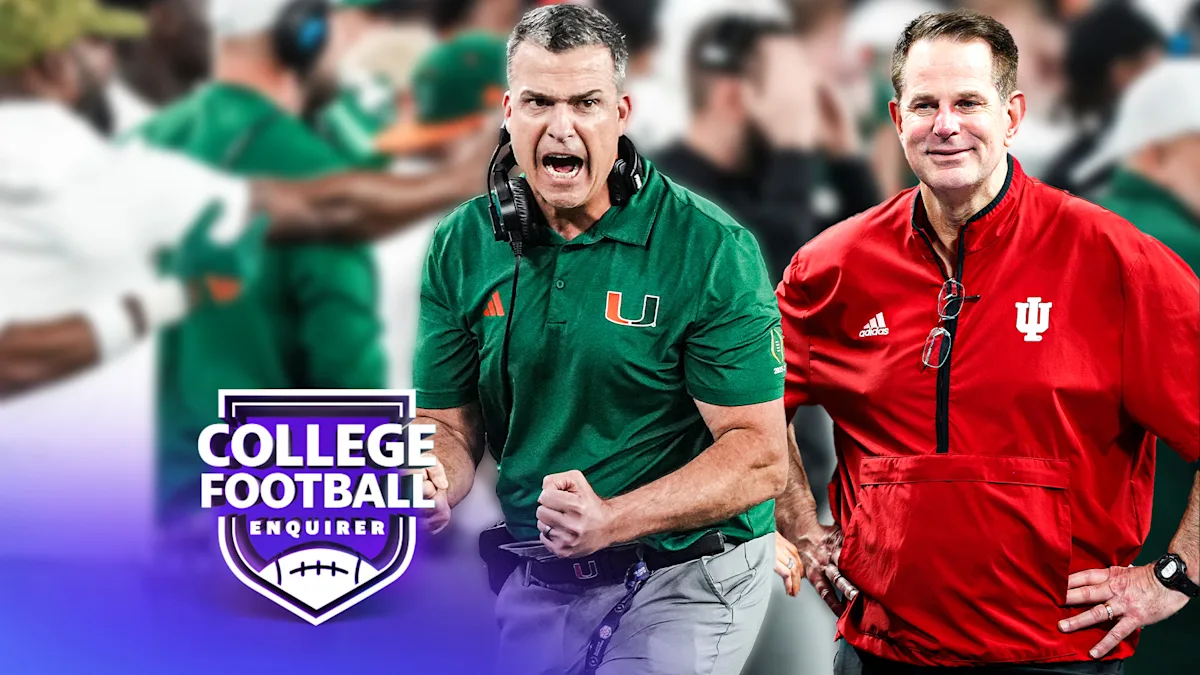
The National Championship Game is set! Andy Staples, Ross Dellenger and Steven Godfrey look ahead to the final matchup of the season by reacting to both semifinal matchups. They first talk about Indiana’s dominating performance over Oregon. Will the Hoosiers’ execution and talent win them a national title? How does Indiana stack up with the historically dominant national champions of the past? Then, they discuss the much more exciting semifinal matchup that saw Miami come out on top. How can Miami upset Indiana? What kind of advantage will playing in their home stadium create for the Hurricanes? Plus, will Oregon ever win a national championship?
Advertisement
Then, the guys look at some things happening off of the field in the college football world. After their loss to Miami, Ole Miss found out that Trinidad Chambliss’ request for another year of eligibility has been denied by the NCAA. However, this is not the end of the story as Chambliss will now sue the NCAA for damages spawning from the money he would make in NIL with that additional season. The guys discuss if Chambliss’ has a chance in this case, or if there is another motive behind the lawsuit.
Finally, the guys look at the madness of the transfer portal. First, they discuss the Demond Williams drama. After trying to enter the transfer portal, and Washington refusing to enter his name due his signed contract, Williams has now returned to the Huskies. Andy, Ross and Godfrey discuss what all happened in Seattle. Then, they look at the College Sports Commission’s investigation into how schools are writing NIL contracts. How will these contracts continue to evolve over time?
Get ready for the Natty with College Football Enquirer.
Miami and Indiana advance to Natty Photo by CFP/Getty Images Photo by Jeff Robinson/Icon Sportswire via Getty Images
(Photo by CFP/Getty Images Photo by Jeff Robinson/Icon Sportswire via Getty Images)
0:00:00 – Indiana dominates Oregon
Advertisement
14:37 – Miami advances over Ole Miss
24:51 – Will Oregon ever win a Natty?
29:46 – Trinidad Chambliss’ fight for a 6th year
40:49 – Demond Williams drama
52:12 – College Sports Commission investigation
Check out all the episodes of the College Football Enquirer and the rest of the Yahoo Sports podcast family at https://apple.co/3zEuTQj or at yahoosports.tv

Missouri finished the 2025 campaign as an interesting mix of promise and turnover under sixth-year head coach Eli Drinkwitz.
The Tigers posted an 8–4 regular-season record, going 4–4 in SEC play, and leaned heavily on a dominant run game led by sophomore running back Ahmad Hardy, who finished with 1,649 rushing yards (second most in college football) and 16 touchdowns on 256 carries (6.4 yards per carry).
However, the quarterback position quickly became a central offseason storyline when starter Beau Pribula re-entered the transfer portal.
On3’s Pete Nakos has tracked Pribula’s early January visit cycle, which included stops at Virginia Tech and Georgia Tech, followed by a visit to Washington as the Huskies navigated uncertainty surrounding Demond Williams.
On Friday, Nakos also reported that Pribula is expected to visit Tennessee, adding another SEC program to his growing list of suitors.
Pribula began his college career at Penn State, where he redshirted and served as a backup from 2022–24 before transferring to Missouri for the 2025 season.
In 2025, he completed 182 of 270 passes (67.4%) for 1,941 yards, 11 passing touchdowns, and nine interceptions across 10 games, while adding 297 rushing yards and six rushing scores on 95 carries, making him one of the more intriguing dual-threat quarterbacks available with both Big Ten and SEC experience.
That experience, paired with his production, has also made Pribula one of the more marketable players in the portal, with an NIL valuation reported in the neighborhood of $1.8 million as he navigates a crowded quarterback market this offseason.
A Central York (PA) product, Pribula was a three-star high school prospect and the No. 27 quarterback in the 2022 class per 247Sports, signing with Penn State over more than a dozen offers, including Nebraska, Northwestern, Rutgers, and Syracuse.

All four programs Pribula has been linked to make sense for different reasons.
Virginia Tech stands out as a logical reunion target, as James Franklin’s staff has been actively pursuing quarterbacks and has prior Penn State ties to Pribula, while Georgia Tech is looking to replace the expiring Haynes King era after losing depth when backup Aaron Philo transferred to Florida.
Washington, meanwhile, has hosted multiple quarterback visitors amid uncertainty surrounding Williams, as the Huskies look to stabilize the position within a program that offers Power-4 exposure and strong NIL opportunities.
At Tennessee, Josh Heupel’s offense has historically prioritized mobile playmakers, and ongoing quarterback turnover makes a veteran option like Pribula appealing, particularly with senior starter Joey Aguilar expected to move on.
Read More at College Football HQ
- Major college football programs lose transfer portal recruitment for $2 million QB
- College football program loses 34 players to transfer portal
- Stephen A. Smith deals $92 million college football coach blunt reality check
- Three major college football programs battling for former 5-star recruit

Over the past few years, the SEC’s reputation has not matched its on-field results. The conference’s reign atop college football has now officially come to an end. The debate over whether the SEC is still the most dominant conference in college football is over. The SEC’s failure to place a team in the national championship game for a third consecutive year has settled it.
For nearly two decades, the SEC ruled the sport under the conference mantra “It Just Means More.” The mantra was built by the conference’s superior talent and its unmatched level of passion. Their dominance was largely driven by the perceived recruiting advantage resulting from their geographical location. Proximity to recruiting hotspots in the South has enabled programs to consistently accumulate elite talent year after year.
That advantage led to an SEC team being crowned the national champion 13 of the last 19 years. However, the SEC’s dominance has slipped away over recent years. Why? July 1, 2021. The date the back door closed and the front door opened.
The SEC’s biggest advantage was never geographical location or its mantra of just meaning more. It was the SEC acceptance of if you’re not cheating you’re not trying. The understanding within the SEC that bending and sometimes breaking the rules was acceptable allowed the SEC to thrive for two decades. What most programs in other conferences frowned upon was overlooked in the SEC.
The instituting of Name, Image and Likeness (NIL) took away the SEC’s biggest advantage. Every school could now use monetary resources to get top talent to commit to their programs. And with it, the SEC’s ability to stockpile talent evaporated.
Recruiting Edge Lost With NIL
How does the SEC dominate for two decades with no end in sight, then tumble back to reality in just three years? Simply, they lost the paid-to-play advantage. There was a belief that the SEC was using NIL before NIL was something you could use. But no one could say for sure, that is, until former LSU coach Ed Orgeron let the cat out of the bag.
More Sports News
On an appearance of “Bussin’ With the Boys,” Taylor Lewan got the dirt from Orgeron.
“We all know that the SEC was NIL before NIL,” Lewan said. “We’re way past it. Can we now just admit it?”
“They say, ‘Hey, coach. You know, you’ve been out of coaching for a while. How are you going to adjust to NIL?’” Orgeron said. “‘Well, it’s a minor adjustment.’ They said, ‘What do you mean?’ I said, ‘Back then, we used to walk through the back door with the cash. Now, we just got to walk through the front door with the cash.’”
You can’t assume that every team was using the back door for recruiting. However, what else in the last four-and-a-half years could have changed the hierarchy of college football?
Trophies Define Conference Supremacy
There is no arguing that the SEC is the deepest conference in college football. But it’s not about being deep when arguing which conference is the best. To be considered the best, it’s putting trophies in the trophy case and playing for national championships. Something the SEC has not done in three years after Ole Miss was eliminated from the College Football Playoff. The only thing that matters is which teams are in the CFP.
Using meaningless losses in bowl games as a talking point that really has little to no impact on being the best conference. Bowl games are nothing more than spring games against other teams. Most teams bear little resemblance to what they were during the regular season. What really matters is how teams perform in the College Football Playoff against programs with equal or superior talent.
In the first nine years of the CFP, the SEC failed to have at least one team in the final. This year’s national championship will be the third straight year the SEC has failed to have a team advance to the final. The Big Ten, on the other hand, has had and will have a team playing in all three. The Big Ten has also won the last two national championships.
The SEC plays semantics in its effort to stay atop of college football. But the “best” means producing elite national championship contenders capable of winning it all and actually doing it. Something the Big Ten has accomplished each of the last two years, Michigan two years ago, Ohio State last season, and now Indiana has a chance to make it three straight for the Big Ten. The SEC is the deepest conference, considering five teams reached the College Football Playoff. What the SEC failed to do was to create a truly elite team that made it.
Moving forward, being a blue blood no longer matters. The only thing that matters now is being a “Green Blood.” A university with ultra-rich alumni willing to invest, with the only reward being wins. The days of “Bob’s Used Cars” putting cash in fast food bags are gone. Now it’s about billionaires and multi-millionaires like Mark Cuban or Nike founder Phil Knight handing over seven-figure checks, and there’s no conference with more than the Big Ten.
And if no rules exist, it is only a matter of time before the Big Ten becomes the deepest conference as well.
College football’s transfer portal season has taken some odd twists and turns this year. Now it’s entering … tax season?
In one of the latest oddities, schools in certain states began trading “no state income tax” social media posts as a way to entice players in the portal. Currently, nine states don’t levy income taxes: Alaska, Florida, Nevada, New Hampshire, South Dakota, Tennessee, Texas, Washington and Wyoming.
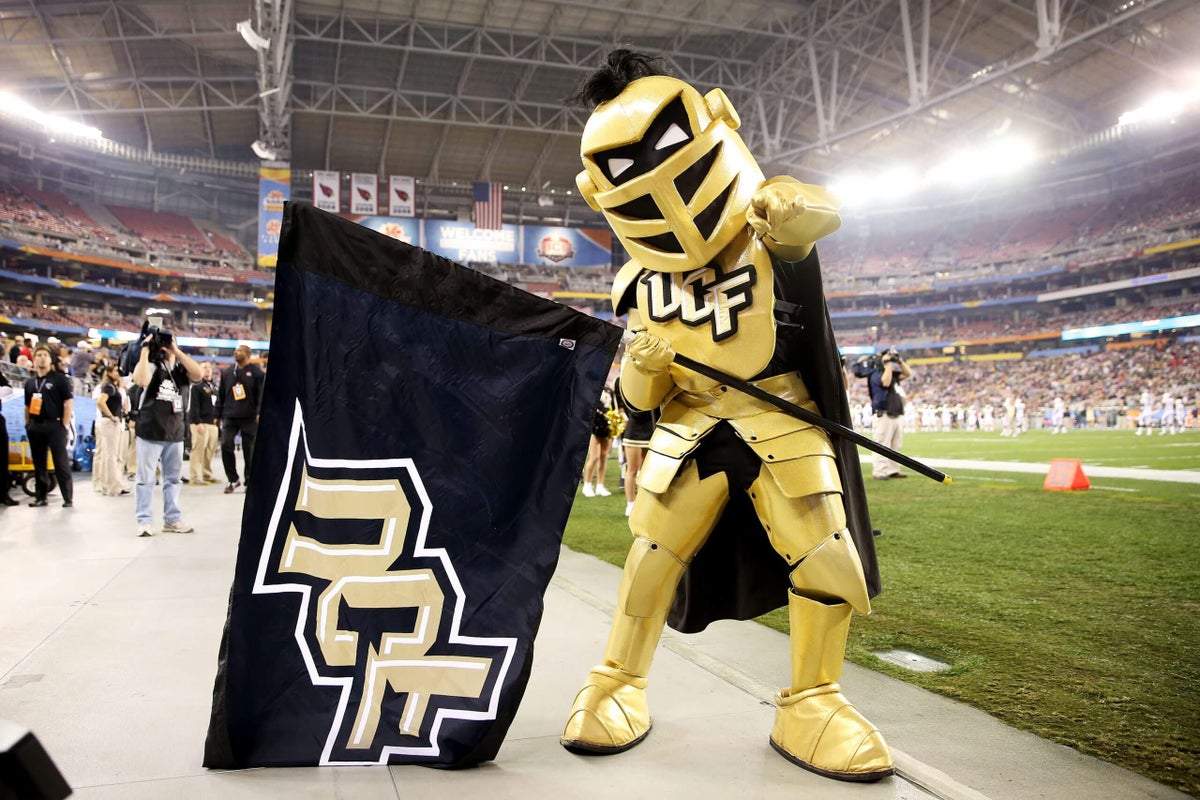
The Houston Cougars, UNLV Rebels and UCF Knights — all universities within one of those nine states — posted about their lack of state income taxes on X on Saturday, featuring an image of either a mascot or cheerleader lifting a comically large bag of cash above their heads.
UCF started the movement with a post on Saturday morning featuring its mascot, Knightro. Houston and UNLV soon followed suit, as did the UTEP Miners, FIU Panthers and North Texas Mean Green.
🤝 https://t.co/rqQdM0cpCQ pic.twitter.com/OgtMjGVhdx
— Houston Football (@UHCougarFB) January 10, 2026
How effective will that pitch be? UCF, Houston and UNLV were all outside the top 40 of 247Sports’ portal rankings as of Saturday night, so any little bit helps. Central Florida was the highest at No. 47 in the 247Sports rankings, followed by Houston at No. 49 and UNLV at No. 86. Texas Tech, Texas A&M and Houston were all in the top 10 of On3’s portal rankings.
College athletes are not only taxed on their NIL earnings, but also on anything they receive of value. If an athlete receives a new car, for example, they have to pay taxes on it in accordance with its value.
Arkansas has tweaked its tax code so that NIL income is tax-exempt as an incentive to induce athletes to sign at the University of Arkansas or other in-state schools.
There was no indication that income taxes were the reason behind another buzzy portal storyline earlier this week: Quarterback Demond Williams changing his mind about entering the portal and deciding to stay with the Washington Huskies. On Tuesday, Williams announced he was entering the portal — four days after signing with the Huskies, a Washington source close to the negotiations told The Athletic’s Bruce Feldman. On Thursday, he said he was “excited to announce that I will continue my football journey at the University of Washington.”
The Huskies were prepared to pursue legal action against Williams to enforce the contract, a source briefed on the situation told Feldman. Williams could have owed the school up to $4 million for transferring, according to Big Ten rules that state that if a player intends to transfer before the end of a payment period, he owes the remaining amount on his contract, unless the school agrees to accept a buyout from the player or the player’s next school.
Williams and his team ultimately decided to stay in Seattle — where he won’t have to pay state income taxes.

Boston College finished the 2025 season 2–10 (1–7 ACC) in what was a down year for the program under former NFL head coach Bill O’Brien.
The Eagles had gone 7–6 in back-to-back seasons, including O’Brien’s first year in 2024 after arriving from Ohio State, where he served as the Buckeyes’ offensive coordinator and quarterbacks coach.
However, the 2025 campaign marked Boston College’s worst season since 2012.
Despite the disappointing results, athletic director Blake James announced that Boston College will retain O’Brien for a third season and increase its financial investment in the football program ahead of 2026.
Still, with both the offense and defense struggling to produce consistent results throughout the year, a wave of players elected to seek new opportunities via the transfer portal, including redshirt-junior wide receiver Ismael Zamor, who announced his decision to enter the portal on January 6.
Zamor, listed at 6-foot, 193 pounds, enrolled at Boston College in 2022 out of Everett (Mass.) High School, where he was rated a three-star prospect and the No. 129 wide receiver nationally in the 247Sports Composite rankings.
He chose the Eagles over nearly a dozen other scholarship offers, including Michigan, Syracuse, Temple, Buffalo, and UMass.
Despite being viewed as an intriguing developmental prospect coming out of high school, Zamor primarily contributed on special teams during his time at Boston College, appearing in limited games and failing to record a reception across four seasons with the program.
He now enters the transfer portal as a redshirt junior.
Aside from Zamor, who saw limited action during his time in Chestnut Hill, Boston College has now seen 29 players depart via the transfer portal, including several notable contributors.
That group includes wide receiver Reed Harris (committed to Arizona State), running back Turbo Richard (committed to Indiana), tight end Ty Lockwood (committed to Arkansas), tight end Stevie Amar Jr. (committed to UCLA), and safety Omarion Davis (committed to Penn State), among others.
Richard was the Eagles’ leading rusher in 2025, totaling 749 rushing yards and nine touchdowns on 145 carries (5.2 yards per carry), while also adding 213 receiving yards and two receiving scores.
Harris, meanwhile, finished as the team’s second-leading receiver, recording 673 yards and a team-high five touchdowns on 39 receptions (17.3 yards per catch).

This level of turnover following a 2–10 season is significant for two primary reasons.
First, it strips Boston College of experienced contributors across multiple position groups, most notably at the skill positions, tight end, and throughout portions of the defensive front seven and secondary.
Second, it signals a program reset of sorts, as more than two dozen players are effectively voting with their feet in search of better fits, greater stability, or clearer paths to playing time.
Read More at College Football HQ
- First-team All-conference player announces transfer portal decision
- No. 1 transfer portal player visits fourth college football program
- Son of NFL Pro Bowl QB announces transfer portal commitment
- $1.8 million QB set to visit fourth college football program in transfer portal

Getty
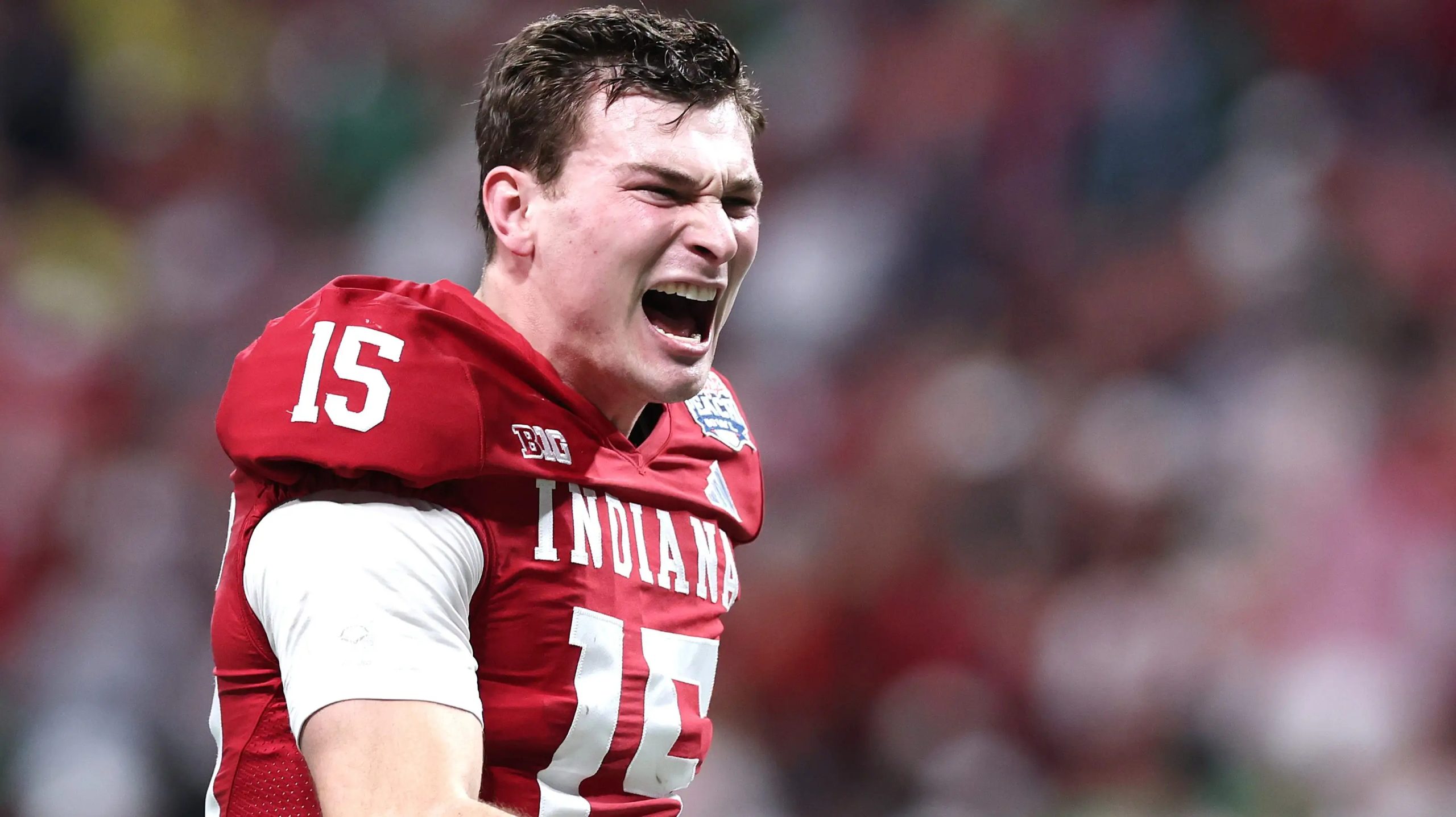
Fernando Mendoza turned down major NIL offer from Miami to join Indiana.
Fernando Mendoza has become the top quarterback in college football. The Indiana Hoosiers star captured the Heisman Trophy and is now one win away from leading Indiana to its first national championship in program history.
Indiana will meet the Miami Hurricanes at Hard Rock Stadium in Miami Gardens on January 19, a matchup that adds an extra layer of intrigue.
Not only is the national championship game being played in Miami’s home stadium, it also represents a homecoming for Mendoza. He attended Christopher Columbus High School in Miami, where he won a state championship — the same school Hurricanes head coach Mario Cristobal attended.
Mendoza’s father was teammates with Cristobal at Christopher Columbus, while his mother played college tennis at the University of Miami. Mendoza grew up just a mile from the university’s campus.
That background raises a natural question: How did Mendoza end up at Indiana instead of Miami — and now find himself facing the Hurricanes in the biggest game of his career?
More Indiana football on Heavy: Indiana Football Accused of Cheating as Wild Social Media Rumor Spreads
Fernando Mendoza Wasn’t Offered by Miami
Coming out of high school, Mendoza was a three-star prospect, ranked as the No. 135 quarterback in the country and the No. 250 overall player in Florida, according to 247Sports. Despite his local ties, the only Power Four program to offer him a scholarship was California Golden Bears, where he ultimately committed.
At the time, then-Miami head coach Manny Diaz and his staff never extended an offer and were even hesitant to bring Mendoza on as a walk-on, according to The Athletic’s Dane Brugler.
Mendoza entered the transfer portal last December, and many believed he could land with his hometown team, which was searching for a replacement for Cam Ward. That scenario never materialized, even though Miami eventually made an offer.
Miami Was Turned Down by Fernando Mendoza
Miami was desperate to replace its Heisman Trophy finalist from the 2024 season and reportedly made Mendoza a lucrative NIL offer, according to Newsweek’s Ben Dogra.
“Mendoza made $2.3 million from Indiana, but he only made $100,000 at Cal,” Dogra said. “But he was offered more by the University of Miami and turned it down. That’s why they got Carson Beck.”
So why didn’t Mendoza choose Miami? Dogra said the decision had everything to do with development, despite the Hurricanes’ larger offer.
“Let’s just say Indiana was a better fit,” Dogra said. “If you’ve got a kid from Florida that goes to Cal broke for three years and then transfers to Indiana, and his NIL money is going significantly up — let’s say $2 million-plus — but he was offered $3 million-plus at Miami, his hometown, there’s a reason he didn’t take it.
“The reason he didn’t take it is because he had a better chance to become a more successful quarterback and grow to get ready for the next level. And that’s exactly what happened. So that’s coaching.”
Mendoza is now widely viewed as the projected No. 1 overall pick in the NFL draft, a selection currently held by the Las Vegas Raiders.
Before the draft becomes the focus, Mendoza has one more goal: leading Indiana to its first national championship. At this point, he is already considered a Hoosiers legend. If he delivers a title in his hometown — against the team that once passed on him — that legacy will only grow larger.
Shane Shoemaker Shane Shoemaker is a sports journalist covering college football and the NFL for Heavy.com. His work has also appeared in The Sporting News, Athlon Sports, USA TODAY, and ClutchPoints, along with high school sports coverage for the Marion Tribune. More about Shane Shoemaker
More Heavy on Indiana
Loading more stories

Field Events Power DePaul at Gately Indoor

Lehigh Competes in First Away Meet at Penn Select

Indiana & Miami advance to Natty + QB transfer portal madness

Szepieniec, VanZeeland Secure Individual Victories at Minnesota Open

Panthers Turn In 3 Podium Sweeps at Minnesota Open

Lenes, Kermath take First at Wesleyan Indoor Invite I

$1.8 million QB set to visit fourth college football program in transfer portal

Sullivan Leads Cardinals at Wesleyan Indoor Invite I

Photos: Fort Lewis College women’s and men’s basketball take on Westminster University

Mountain Hawks Produce Top Performances at Penn Select

City to unveil sports park master plan

The wildest hockey brawl of the year was at an AHL intermission youth game

Bulldogs Set Three School Records in Season Opener at Tryon

PEM hosts area athletes in wrestling invitational

SEC’s Reign Collapses Under NIL

#11 Volleyball Practices, Then Meets Media Prior to #2 Kentucky Match

Stempien to seek opening for Branch County Circuit Court Judge | WTVB | 1590 AM · 95.5 FM

Ross Brawn to receive Autosport Gold Medal Award at 2026 Autosport Awards, Honouring a Lifetime Shaping Modern F1

Maine wraps up Fall Semester with a win in Black Bear Invitational

Nascar legal saga ends as 23XI, Front Row secure settlement

Princeton Area Community Foundation awards more than $1.3 million to 40 local nonprofits ⋆ Princeton, NJ local news %

Downtown Athletic Club of Hawaiʻi gives $300K to Boost the ’Bows NIL fund

Sunoco to sponsor No. 8 Ganassi Honda IndyCar in multi-year deal

WNBA’s Caitlin Clark, Angel Reese and Paige Bueckers in NC, making debut for national team at USA camp at Duke

Badgers news: Wisconsin lands 2nd commitment from transfer portal

Nike Signs 10 LSU Athletes to NIL deals

Five Youth Sports Trends We’re Watching in 2026

Beach Volleyball Unveils 2026 Spring Schedule – University of South Carolina Athletics

Three Clarkson Volleyball Players Named to CSC Academic All-District List

Kentucky AD explains NIL, JMI partnership and cap rules





-
 Sports3 weeks ago
Badgers news: Wisconsin lands 2nd commitment from transfer portal
-
 Rec Sports1 week ago
Five Youth Sports Trends We’re Watching in 2026
-
 Sports2 weeks ago
Kentucky VB adds an All-American honorable mention, loses Brooke Bultema to portal
-

 Motorsports3 weeks ago
Dr. Patrick Staropoli Lands Full-Time O’Reilly Ride with Big Machine Racing
-
NIL2 weeks ago
Fifty years after IU’s undefeated champs … a Rose Bowl
-

 Motorsports2 weeks ago
BangShift.com IHRA Acquires Historic Memphis Motorsports Park In Millington Tennessee. Big Race Weekend’s Planned For 2026!
-
 Sports2 weeks ago
2025 Volleyball Player of the Year: Witherow makes big impact on Central program | Nvdaily
-
 Sports2 weeks ago
H.S. INDOOR TRACK & FIELD: GLOW region athletes face off at Nazareth University | Sports
-
 Sports2 weeks ago
Colorado volleyball poised to repeat success
-

 Motorsports3 weeks ago
NJ Motorsports Park Announces 2026 Event Schedule