
Motorsports
Championship weekend site rotation won’t include Daytona


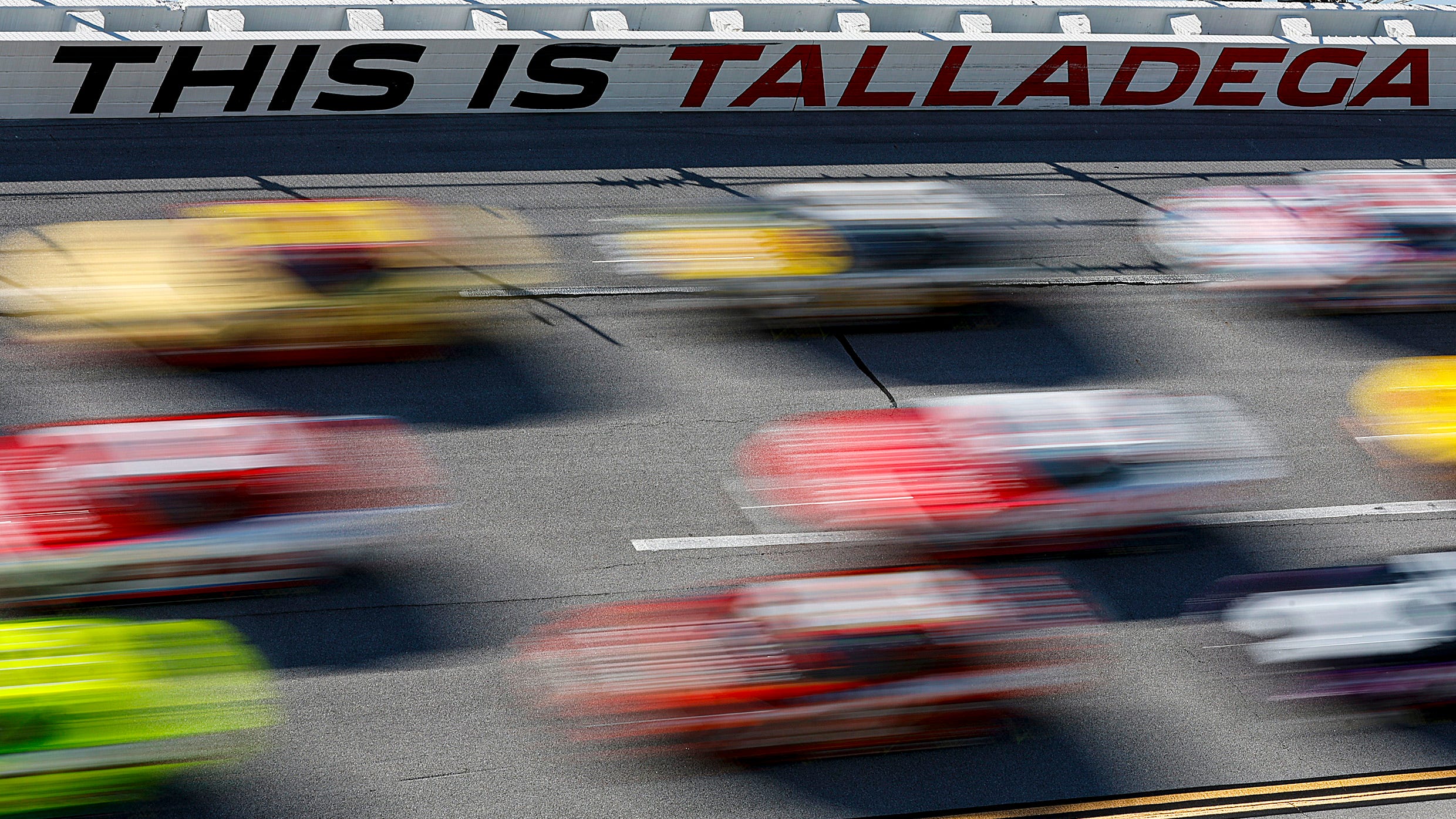

Sights and sounds from NASCAR Cup Series Race Day at Talladega Superspeedway
Sights and sounds from NASCAR Cup Series Race Day at Talladega Superspeedway as the Jack Links 500 runs on Sunday afternoon.
- NASCAR’s championship weekend will rotate to different tracks starting in 2026.
- Daytona International Speedway and Talladega Superspeedway are not being considered as host sites.
- NASCAR prefers short ovals and 1.5-mile intermediate tracks for the championship races.
- Homestead-Miami Speedway will host the 2026 championship races.
NASCAR will move its championship weekend away from Phoenix Raceway, where it’s lived since 2020, and rotate it around a group of host sites beginning in 2026. But that rotation won’t include the sport’s most famous track.
Daytona International Speedway is not currently being considered to host the championship races. Neither is its sister venue, Talladega Superspeedway.
NASCAR executive Ben Kennedy explained the decision on a Zoom call with reporters Tuesday.
“We’ve unanimously agreed it needs to look and feel like what we’d expect traditional NASCAR racing to look and feel like,” Kennedy said, ruling out drafting tracks.
So there you have it. NASCAR wants to focus on short ovals and 1½-mile intermediate tracks. There’s less parity there, allowing the best drivers in the best equipment to separate themselves.
Kennedy added that road courses are low on the list, but to “never say never.”
The season will continue to start with the Daytona 500, though. And Florida will be seeing the final race of the season soon.
Homestead-Miami Speedway, which previously hosted the season finale from 2002-2019, will be first up in the new rotation. The Cup, Xfinity and Truck Series title races will occur there Nov. 6-8, 2026.
“As we celebrate our 30th season, it is fitting we will start our next decade returning to our championship roots at Homestead-Miami Speedway,” Homestead-Miami president Guillermo Santa Cruz said in a press release.

Motorsports
Flying Lizard Motorsports’ Darren Law Steps Out of Driving Retirement for Daytona Return with Vintage Racing Company

Phoenix, Ariz., (January 13, 2026) – Flying Lizard Motorsports Team Principal Darren Law will step back into the driver’s seat later this month, taking a break from team ownership to compete with Vintage Racing Company (VRC) in the BMW M Endurance Challenge at Daytona International Speedway.
Law will co-drive the No. 91 Porsche 718 GT4 RS CS alongside Owen Trinkler and Dan Ammann in the Michelin Pilot Challenge endurance race, which serves as the season opener for the series. The race is scheduled to go green on Friday, January 23, at 1:45 p.m. ET and will be broadcast live on Peacock.
The Daytona start marks a special return for Law, who brings decades of experience and success at the iconic Florida circuit. A former overall winner at Daytona in the DP class with Brumos Porsche driving a Porsche DP Prototype, Law is joining VRC in their launch of the team’s first full-season effort in IMSA Michelin Pilot Challenge.
“After having spent so many years driving Porsches, I am looking forward to getting back in one and competing at Daytona,” said Law. “I have a great deal of history and success at this track, and Daytona is a special place for me. This is a great way to begin the season.

“I want to thank Michael Eberhardt for asking me to join their effort, I was able to test with the team in December and spend valuable time with Dan and Owen. I have know Owen for many years and am excited to finally get a chance to drive with him. Both are very quick drivers, and we worked well together from the outset. This is a great event, as I always enjoy the challenge. It will be fun and hopefully we can deliver a strong result for the team.”
While Law’s primary focus remains leading Flying Lizard Motorsports’ multi-program efforts across North America, The Daytona appearance represents a unique opportunity to bring his proven experience and background, and contribute to the VRC effort as it embarks on its inaugural full-season campaign in the Michelin Pilot IMSA series.
The BMW M Endurance Challenge at Daytona will kick off a busy weekend of racing festivities at Daytona International Speedway, setting the stage for the Rolex 24 At Daytona later in the weekend. Fans can watch Law’s return to competition live on Peacock beginning at 1:45 p.m. ET on Friday, January 23.
About Flying Lizard Motorsports
Flying Lizard Motorsports is a premier motorsport team known for its unwavering commitment to excellence and success on the racing circuit. With a rich history spanning over two decades, Flying Lizard Motorsports has earned a formidable reputation as a powerhouse in the world of motorsports, boasting 24 championship titles and a legacy of podium finishes across North America and at the legendary 24 Hours of Le Mans. Fueled by passion, expertise, and a relentless drive for perfection, the team continues to push boundaries and set new standards of performance in every competition it enters. Through strategic partnerships and a dedicated team of professionals, Flying Lizard Motorsports remains at the forefront of motorsport innovation, delivering thrilling racing experiences and unforgettable moments for fans worldwide.
Apex Motor Club
Apex Motor Club is Arizona’s premier motorsports club located just 35 miles southwest of Phoenix Sky Harbor Airport and the only private motorsports club located within a major metropolitan area. APEX is the ultimate country club for automotive enthusiasts where car culture, racing and country club lifestyles converge. Enjoy an hour of track time in your latest acquisition, drive off track, into your privately-owned garage and join like- minded enthusiasts in the clubhouse for food, beverages, and activities.
APEX Motor Club features only the best in racing technology. The APEX phase one track is a 2.27-mile circuit with an additional 2.15-mile circuit in phase 2, beginning construction in 2023. APEX is paved using the latest techniques and premium materials, creating the smoothest and most durable racing surface, rarely found on most race tracks.
Furthermore, APEX incorporated extensive run off and installed an LED flag-lighting system to offer members a premium and safe racing atmosphere.
APEX has something for everyone from world-class racing circuits to private collection tours, as well as a clubhouse with amenities including a swimming pool, fitness center, restaurant and more. The APEX experience offers everything from the APEX Academy, which not only teaches members their new track, but provides the fundamentals in performance driving techniques, to private one-on-one coaching with industry experts and racing professionals. In addition, APEX features on-site fueling and offers concierge-level service for preparing your vehicle prior to as well as during lapping and racing sessions. The APEX off-track experience is just as valuable! APEX members enjoy special invitations to a variety of unique experiences throughout the valley and country all year long.
Website: www.apexmotorclub.com.
Source: Flying Lizard Motorsports
Motorsports
A Dream Come True: Henrik Peters Set For Rookie Challenge Debut With Marko Stipp Motorsport – Speedway Digest

Age is truly just a number when it comes to chasing your passion: 48-year-old Henrik Peters is gearing up to join the Rookie Challenge and compete for the NASCAR Euro Series regularity time-attack title during the 2026 season. Following a successful test in the winter, the Kleinmachnow native officially signed with Marko Stipp Motorsport for what will be his first season in European NASCAR.
“I am absolutely thrilled to confirm my participation in the 2026 NASCAR Euro Series season,” Peters stated after putting pen to paper on his inaugural NASCAR contract. “Taking this next step means the world to me, and I am highly motivated to work relentlessly with the team to achieve competitive results. I’m eager for the season to start and ready for the challenges ahead. I want to sincerely thank Marko Stipp Motorsport for their confidence in me and this fantastic opportunity. My focus is sharp: to learn, develop, and give everything I have throughout the 2026 Season.”
Outside of racing, Peters, who privately drives a roaring, NASCAR inspired track setup Ford Mustang Shelby GT500, works as an Certified Financial Planner. He is no stranger to high-performance driving, having previously participated in track days, and he spends extensive hours honing his skills in his sim racing simulator. Everything related to motorsports fuels his drive, but he maintains balance by training in the gym and dedicating time to his family.
“We are delighted to bring Henrik Peters, our first MSM Discovery Day graduate, into NASCAR Euro Series,“ said Team Manager Chris Liemann. „The chemistry between us was right from the start, and we look forward to guiding Henrik step-by-step through the Rookie Challenge to prepare him for the OPEN next year.”
The 2026 NASCAR Euro Series grid is rapidly taking shape, and Peters will certainly not be the last fresh face across the three divisions. The 2026 Rookie Challenge will roar to life on April 17 at the Circuit Ricardo Tormo in Valencia, Spain. Peters’ official racing number will be announced by Marko Stipp Motorsport at a later date. The German long-team goal is to move up to OPEN in the near future.
NASCAR Euro Series PR

In a press conference late Monday afternoon, NASCAR president Steve O’Donnell presented the series’ new system for selecting its season champion, beginning in 2026. It’s a modified version of a return to 2004’s “Chase for the Championship.”
The kinder, gentler playoff format will no longer eliminate 12 of the original 16 playoff drivers from contention. Currently, the series selects the “final four” drivers for that last race of the season, and the driver who finishes the race higher than the other three is crowned champion. The system seemed silly when it was announced, and that’s how it played out.
For O’Donnell and his team, returning to an old idea was the best new idea they could come up with. “We are going back to a format where, on the Cup side, the first 26 races will be based on a points system, and the final 10 races will make up the Chase.”
He said this version balances the emphasis some critics asked for: One side wanted the championship to be based on performance in all 36 races, and the other side was committed to some sort of late-season playoff. “We believe we’ve struck that balance,” O’Donnell said. “We’ve got the best of both worlds, where every race matters. We’ve talked to a lot of folks in the industry. We’ve run a lot of different models and believe this is the best place to land, to get back to who we are. That’s the core of NASCAR,” he said.
Here’s the new system in a nutshell: In the Cup Series, 16 drivers will qualify for the 10-race Chase based on the number of points they score during the 26-race regular season. Unlike in the current system, you no longer have to win a race to be one of those 16 drivers; those 16 spots will be based on points, and all 16 drivers are viable right to the end.
Might not the new arrangement revisit an issue that used to haunt NASCAR—the possibility that a consistent driver could win the championship without winning a single race all season?
That has been addressed in the new model by shuffling the number of points drivers are awarded to strongly support race wins. NASCAR will now award 55 points for a win, versus just 40 under the current system. Points for all other positions, including stage points, remain the same. The “Playoff” points that are currently awarded to help decide which drivers will be eliminated are gone, since the eliminations are gone, too. The new format makes it possible that the championship-winning driver may not dominate the final race. Which, this year, will move from Phoenix back to the Homestead-Miami track.
Season points will still be re-racked for the final 10 races, with the regular-season points leader starting the Chase with 2100 points, 25 more than the second-place driver and 35 more than the third-place driver.
These changes apply to all three NASCAR pro series. In the second-tier O’Reilly Auto Parts series, 12 drivers will compete in a nine-race Chase, while in the Craftsman Truck series, the championship for 10 drivers will be decided in the final seven races.
This is, by very rough count, about the 20th different system NASCAR has used since it launched in 1949, depending on what constitutes a “different system,” as opposed to a minor or moderate change to a system. The longest-lasting system was created, as the story goes, in 1974 by NASCAR publicist Bob Latford, who wrote down his concept of a proper points system on a table napkin at the legendary Boot Hill Saloon in Daytona Beach, with the help of tablemates Phil Holmer, a career Goodyear manager, and Joe Whitlock, a NASCAR writer and publicist. It was a relatively straightforward formula: Where each driver finished in each race earned them a certain number of points.
That system did not award the winner of the race a whole lot more points over second- and third-place finishers, which the creators figured would help keep the championship battle tight. Thus, it was theoretically possible for a driver to win a championship without winning a single race; Matt Kenseth almost pulled that off in 2003, by winning the season championship while scoring only one win. But he had 23 top-10 finishes, and that system favored consistency. NASCAR figured it was time for the most extensive revision of the championship model in its history.

NASCAR introduced the first version of the “Chase for the Championship” in 2004. In the final 10 races, only the top 10 drivers in points would be eligible to win the championship: The other drivers would still be racing, sure, but in a somewhat deflated state, a situation about which their sponsors weren’t enthusiastic. On the other hand, wins would mean more than they used to.
Ten years later, NASCAR’s top executive, Brian France, tweaked the Chase into the late-season, 10-race Eliminations system, in which the eligible drivers, now expanded to the top 16, would be whittled down to a final four, just like in, say, the teams in a college basketball tournament.
France and other NASCAR execs talked a lot about how that system should create “game 7 moments,” which baseball sometimes managed with the World Series, in which the championship might be won in the final inning of game 7. But there have been World Series swept in just four games, when one of the teams is especially dominant. A situation where one driver basically ran the table wouldn’t happen in NASCAR, France insisted. With Jimmy Johnson, it sort of occurred, but granted, it was rare.
To what extent the TV networks pushed this idea is significant: They’d see exciting championships in NCAA college basketball, in professional football with the Super Bowl, even in golf with the Masters. NASCAR’s new format would allow TV and radio announcers to still legitimately hype the drama in real time, just like they do with the other sports they carry, each of which involves some sort of ball.
Broadcasters were also excited about the then-new “stages,” which would automatically halt the racing for five minutes or so, two or three times per race. It was a guaranteed window for selling advertising, which was awkward when a race went virtually the whole distance under the green flag.
Dedicated NASCAR loyalists were aghast, but not as vocal as you might expect, over a NASCAR championship that wasn’t really based on the performance of a team and a driver over all of the 36 races but on the one last race of the year. A valid point, NASCAR would usually concede, but the Chase and then the resulting eliminations would be more exciting.
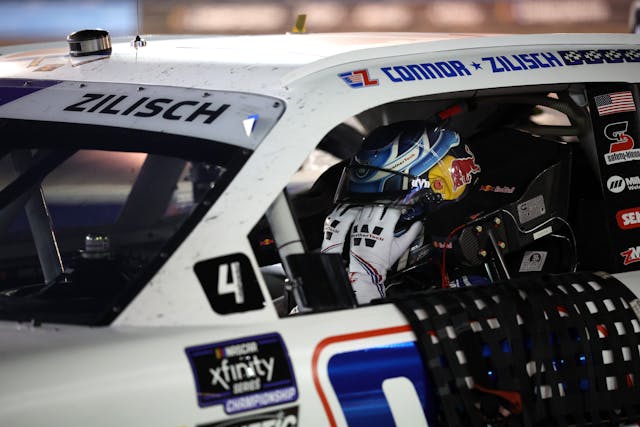
And sometimes it was, but the system was finally torpedoed by the 2025 season. In the NASCAR Xfinity series (soon to be the O’Reilly Auto Parts series), rookie Connor Zilisch won a record 10 races. He was one of the final four drivers in the last race in Phoenix, and in the winner-take-all format, he was beat by Jesse Love, who won three races, including this season’s finale. And since the current system gives the championship to the driver who does best in the final race, and not necessarily the driver who does best over all 36 races—well, the optics were especially lousy that year.

The next day, 44-year-old Cup driver Denny Hamlin was about to win his first championship when a caution flag flew for William Byron’s crash very late in the race, which Hamlin had thoroughly dominated. The top drivers all dashed to the pits for fresh tires; Hamlin took four, while his competition took two, which got them back out on track ahead of Hamlin. One of them, Kyle Larson, won the race for his second championship, costing Hamlin a title that even his detractors admitted he deserved.
That Cup race, coupled with Zilisch’s loss of the Xfinity championship, put the final bullet in the elimination format, and thus in the possibility to win a season championship by just doing well in the last race. NASCAR had been fiddling with a format change for a while, but suddenly the heat was turned up to boil, and they had to deliver meaningful changes before the 2026 season starts next month with the Daytona 500.
Many fans and NASCAR drivers are saying they did exactly that, for all three series. In Monday’s press conference, former Cup driver and current team owner Dale Earnhardt, Jr., praised the return of a modified version of the Chase: “I was really excited to hear the news that we were getting a little closer to a full 36-race format. This is as close, in my opinion, as you can get without going all the way.
“What I believe it does is make it simpler for our fans to follow. I’m a fan of the sport, and now I’m compelled to plug in every single week because I know there’s a long-form objective for my driver to accomplish to be able to give himself the opportunity to win the championship. So even though my driver may have success early on in the season, it does not assure him success in post season.”
Earnhardt is a traditionalist, who liked it when the old system concentrated on performance over the entire 36-race season, but there’s no way NASCAR’s TV partners would have been interested in going back to that: There had to be a playoff element.
Retired and respected Cup driver Mark Martin, an outspoken critic of the current system, praised this new one in that same press conference. Martin considers himself the voice of traditional fans, and as such, he supported a 36-race championship, but he also knew that wasn’t going to happen. “I think that this is the most perfect compromise that you could ever ask for. It’s going to require our 2026 champion to be lightning fast and incredibly consistent, and that’s what we can all get behind.
“So I’m really excited. I think it’s fantastic. I would just appeal to the race fans, all the race fans, but especially the classic fans who say to me, ‘I don’t watch anymore.’ I say we need you. Come on back. We’re headed in the right direction. Come back and join with us, and we’ll keep making progress.”

1/12/26
After being on LIV Golf since its inception in June 2022, Brooks Koepka announced that he was leaving for the PGA Tour last month. Today, PGA Tour CEO Brian Rolapp and the PGA Tour have announced that Brooks Koepka will be eligible to play in PGA Tour events. The PGA Tour has also announced a Returning Member Program, allowing other players on LIV Golf to return to the Tour. Koepka announced in a statement on X that he will be playing in both the Farmers Insurance Open and the WM Phoenix Open.
According to a document shared to players and agents, posted to X by Josh Carpenter, the PGA Tour’s Returning Member Program is “open to players who have participated in Unauthorized Tournaments, have not been a member for a minimum of two (2) years
and have won THE PLAYERS, Masters, U.S. Open, PGA Championship, and/or The Open in the years 2022-2025.” The application window is between today, January 12, and February 2, and it applies to the 2026 season only. Rolapp said, “this is a one-time defined window and does not set a precedent for future situations.” Players can’t say they will come back to the PGA Tour for future seasons and play on LIV until then. The program will allow those players to be eligible to play in PGA Tour events, with the tournaments they participate in adding spots to the field, rather than those players taking away spots from other PGA Tour players.
According to the PGA Tour Returning Member Program document shared with players and agents, “players are also required to play in a minimum of 15 cosponsored and approved tournaments in the 2026 season.” Players are eligible for The Players, but to play in signature events, they must qualify via the Aon Next 10, Aon Swing 5, OWGR top 30, or a full-field event win. Players can’t get sponsor exemptions to signature events.
This window of opportunity applies to a limited number of players on LIV Golf, with the window ending two days before LIV Golf’s first event of the 2026 season. Cam Smith (winner of the 2022 Players and Open Championship), Jon Rahm (winner of the 2023 Masters), and Bryson DeChambeau (winner of the 2024 U.S. Open) are the players eligible for the PGA Tour’s Returning Member Program. Currently, Cam Smith is the captain of Ripper GC, Jon Rahm is the captain of Legion XIII, and Bryson DeChambeau is the captain of Crushers GC, all on LIV Golf.
The PGA Tour’s new philosophy of extending an olive branch to some of the top players in the world, hoping they have buyer’s remorse, is Brian Rolapp’s biggest first move. Rolapp has been working behind the scenes and is making a big splash. Jon Rahm has been voicing his frustrations with LIV, particularly with their 54-hole format. LIV Golf is moving to a traditional 72-hole format starting this season. Bryson DeChambeau has been the biggest torchbearer for LIV Golf and would be a shock to leave. Cam Smith, after a career year in 2022, has had a rough couple of years. In 2025, Smith missed the cut at all four majors, but he has been pleased with playing routinely in his home country of Australia, with LIV’s flagship tournament of LIV Adelaide.
There isn’t any telling whether DeChambeau, Rahm, and/or Smith will jump ship and head back to the PGA Tour. The PGA Tour must have an inclination that at least one of the three players will head back. Otherwise, they wouldn’t publicly create this path for them. For other players to come back, there’s still no indication when they would be eligible to play or if they would face further discipline.
The PGA Tour continues to make gains while LIV feels like it’s on life support. Whatever plans of a “merger” seem to have broken down once again. LIV Golf needs to make large strides in 2026, with what feels like a make-or-break year for them.
www.elisportsnetwork.com



NASCAR’s championship format has just undergone its latest change, but it’s far from the first time the Sanctioning Body has tweaked the way it crowns a champion.
Red Byron winning the inaugural season in 1949, The King earning his first crown in 1971, Dale Earnhardt winning his seventh in 1994, Jimmie Johnson’s historic run of five in-a-row in 2010, and Kyle Larson’s latest triumph in 2025 — all of these happened under different systems.
At some point, stock car racing was awarding points based on prize money, race lengths, or even laps completed. In the modern age, the Chase or the playoffs have existed in some form since 2004, breaking the season up into parts and create unpredictable outcomes.
Without getting too into the weeds of every little change, here’s a simplified rundown of each system that NASCAR has utilized over its 77-year history, and how it has evolved since 1949.
1949: It’s all about the money

Vintage car of Red Byron, NASCAR’s first champion
Photo by: Eric Gilbert
In the early days of the sport, only the top 14 finishers scored points for most races, with the points awarded based on the prize money. If you think the modern systems have been confusing, try to imagine a points table that changed weekly. Winning a race that awarded $500 was worth as much as finishing 14th in a race that awarded $25,000, such as the Southern 500 at Darlington. This system existed for some time, but with changes.
1952: Altering the money-based points format
Points being attached to cash prizes continued until 1967, but in 1952, the system was altered to reflect growing field sizes and bigger purses. Points were awarded back to at least 25th place, and 200 points for the winner of a race paying $4,000 (or less) was the lowest rung.
1968: Points based on race length, not prize money
Starting in 1968, the points awarded were now based on race length, not prize money. For races at 250 miles or shorter, the winner earned 50 points. For races between 250 and 399 miles, the winner earned 100 points. For races at 400 miles or longer, the winner earned 150 points. This new system also awarded points all the way back to 50th place. This continued for three years without changes.
1972 and 1973: Two systems at once
As NASCAR’s top level of competition became the Winston Cup Series in 1971 and entered the modern age, the championship format changed with it. In 1972 and 1973, there were actually two points systems. The primary system awarded points based on finishing position, no longer determined by race lengths or purse money. The race winner earned 100 points, and it dropped by two points with every position down to 50th.
At the same time, drivers earned additional points for the distance they covered during each race. For every lap completed, the driver would earn 1/4th of a point at tracks shorter than one mile, half a point at tracks one mile in length, and continuing upward to 2.5-mile superspeedways where drivers earned 1.25 points per lap completed.
For 1973, the system was altered slightly to award 125 points to the race winner while keeping the rest of it the same, adding a bit more emphasis to winning.
1974: Do the math
NASCAR changed the system yet again in 1974, but this new format only lasted a single year … and you can probably guess why after learning about it. It took the purse money, multiplied it by the driver’s total number of starts, and divided that by 1,000. Even next to the playoffs it was perhaps the most confusing system ever used. The points awarded also changed with every start, since the number of starts played a crucial role in the math.
1975: The Latford system decides the full-season champion
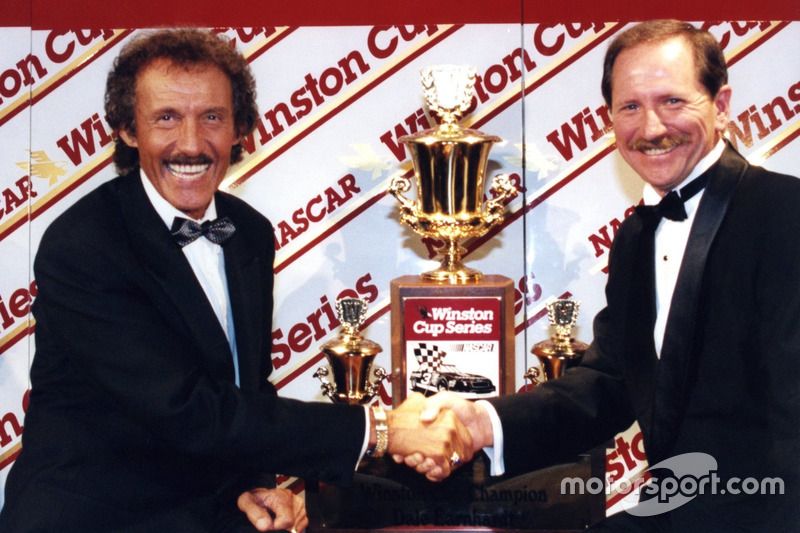
Richard Petty congratulates Dale Earnhard on his seventh championship
Photo by: NASCAR Media
Finally, NASCAR found some consistency in 1975. The Latford system, developed by Bob Latford, awarded 170 points to the race winner, and dropped five points per position down to sixth place. It then dropped four points for every position down to 11th place, and then three points per position down to last place.
It lasted longer than any other format, and was used for decades from the era of Petty to Earnhardt and Gordon. The points system even survived the early iterations of the playoffs and was in use through the 2010 season. The only change was in regards to points for the race winner, upping it to 180 points in 2004 and 185 points in 2007.
2004: The Chase for the Cup Version 1.0
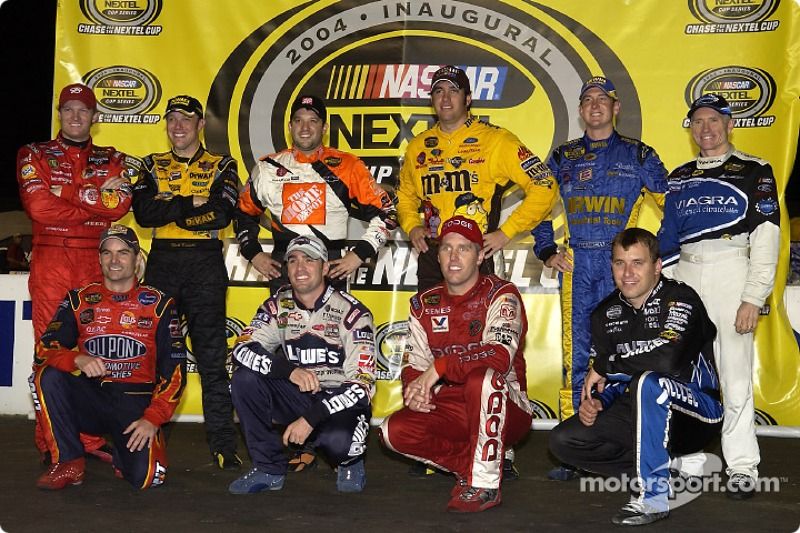
The final top-10 for the “Chase for the Championship”: Jeff Gordon, Jimmie Johnson, Jeremy Mayfield, Ryan Newman, Dale Earnhardt Jr., Matt Kenseth, Tony Stewart, Elliott Sadler, Kurt Busch and Mark Martin
Photo by: Autostock
While the Latford system continued to be in use through the 2010, NASCAR introduced the Chase for the Cup in 2004, resetting the points partway through the season. It followed the final season with a full-season championship where Matt Kenseth won a single race in March and then used consistency to capture the crown.
With the Chase, the standings were reset for the top ten drivers in points after Race #26. There were incremental five-point drops between each driver to recognize their performance during the regular season, with the No. 1 seed granted 50 points.
2007: Expanding the playoff field
The playoff field was expanded from ten drivers to 12, all while still using the Latford system. This version of the Chase also added an extra ten bonus points for every race win, which was added to a driver’s total after the points reset following Race #26.
2011: Introducing wildcards and abandoning the Latford system
For the first time since 1974, NASCAR did not use the Latford system to award points in 2011. This also followed Jimmie Johnson’s unprecedented five-year run of championships. They came up with a new system with hopes of simplifying things, awarding a single point per position. This version of the Chase also introduced two wildcards, which brought in two drivers between 11th and 20th in the standings with the most wins. A driving force behind this was the 2010 season of Jamie McMurray, where he won three races including the Daytona 500 and Brickyard 400 – but missed the playoffs.
In the first year with this system, Tony Stewart and Carl Edwards actually tied for the championship with Stewart winning via the tiebreaker.
The final year of this system was 2013, and featured the SpinGate controversy, with Michael Waltrip Racing causing an intentional caution to try and secure Martin Truex Jr’s spot inside the playoff field. The fallout from that led NASCAR to add a 13th spot to the Chase, bringing Jeff Gordon back into the title hunt.
2014: Radical overhaul with eliminations and multiple rounds

The four drivers for the 2014 Sprint Cup: Denny Hamlin, Joe Gibbs Racing Toyota, Ryan Newman, Richard Childress Racing Chevrolet, Joey Logano, Team Penske Ford, Kevin Harvick, Stewart-Haas Racing Chevrolet
Photo by: NASCAR Media
Enter eliminations. In 2014, NASCAR dramatically changed the championship, throwing the ten-race Chase for the Cup aside in favor of something entirely new. To put it as simply as possible, NASCAR cut the final ten races up into four rounds. The playoffs now included 16 drivers, including a ‘win-and-you’re in’ feature where any driver inside the top 30 in points could win a race and automatically secure a playoff spot. If there were less than 16 winners, then the remaining spots would be filled by the top points-scorers. There were also bonus points for race winners as well, which were applied at reset. As for the playoffs, each three-race round featured resets, eliminating the bottom four drivers in points (unless they won one of the three races). This continued until only four remained, pushing them into a winner-take-all finale with points becoming irrelevant – the top finisher of those four in the season finale would become the champion.
This format was all about winning, and yet the first champion was nearly a winless driver as Ryan Newman ended the season second in the championship to Kevin Harvick. This format also triggered chaos throughout the rounds, including a massive brawl between Brad Keselowski and Jeff Gordon at Texas Motor Speedway.
2017: The addition of stage points and playoff bonus points
The format remained the same, but the points around it changed a bit. NASCAR introduced stage breaks and with them, stage points. Most races were split into three stages with up to ten points being awarded to the top-ten runners at the end of Stage 1 and Stage 2. This forced drivers to race hard from the start, and gave drivers the opportunity to limit damage from good days that didn’t end well. These stages also awarded a single playoff point to the ‘winner’ that would be added to their total when it became time for the reset.
These playoff bonus points were offered to race winners (now increased to five per win), but also the top ten drivers in the standings at the end of the regular season. The regular season ‘champion’ would earn 15 of these bonus points.
While there were minor changes in the years that followed, this continued to be the foundational format for determining a champion until the end of the 2025 season. They even dropped the top 30 rule, so even a driver last in points could win their way into the playoffs. Growing disdain for this system as the perceived ‘deserving’ champion fell short in the one-race finale and frustration over its unpredictability pushed NASCAR to overhaul its championship once again ahead of the 2026 season.
2026: The Chase returns, but with a larger field
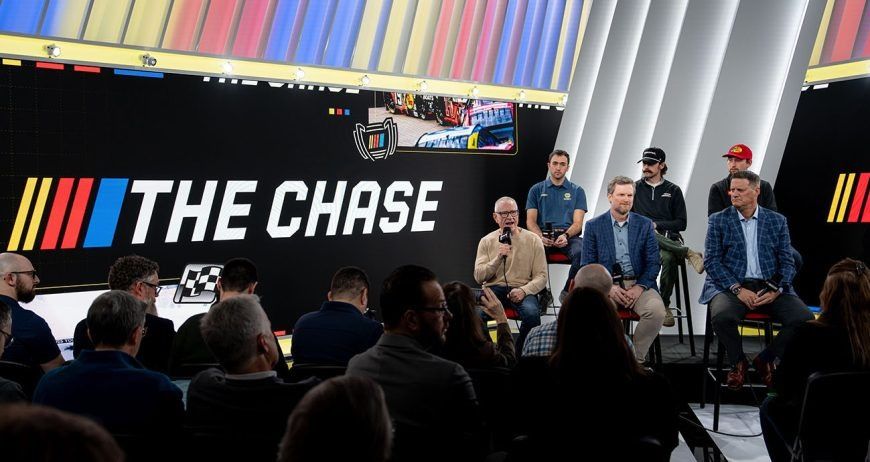
2026 version of The Chase announcement
NASCAR’s new format isn’t actually that new, as it’s a return to the ten-race postseason we became accustomed to between 2004 and 2013. However, there are no win and you’re in wildcards, and the field will remain large at 16 drivers. However, it will simply be the top 16 drivers in points who qualify for the Chase.
NASCAR also increased the award for race winners up to 55 points, ensuring no driver can score more than them (via stage points) and putting a 20-point gap between first and second.
Additionally, the reset after Race #26 will not be based on bonus points accumulated during the regular season, but predetermined figured based on points position. For example, the No. 1 seed will have a 100-point advantage over the No. 16 seed. There are also 25 points between first and second at the start of the Chase, before dropping ten points further to third and then five points between each position.
We want your opinion!
What would you like to see on Motorsport.com?
Take our 5 minute survey.
– The Motorsport.com Team
Motorsports
Michigan Central Race Days Celebrates the Tech, Talent, and Tenacity of Motorsports; Unique Public Experience Launches January 18 in Partnership with Ford Racing

DETROIT — Michigan Central will become the ultimate destination for motorsports fans this month when Michigan Central Race Days revs up the innovation district from January 18-30, continuing the buzz of the Detroit Auto Show. Presented in partnership with Ford Racing, the immersion brings the world of motorsports to The Station – from Off-Road to Formula 1 – for a hands-on experience for Detroit’s racing die-hards and newcomers alike. Ford Racing is celebrating 125 years of racing as America’s race team in 2026 across 34 different race series on six continents of the world.
For two weeks,The Station will become the place where Detroit’s deep roots in motorsports meet cutting-edge technology and dynamic community programming. Visitors will get an up-close look at the 2026 Ford Racing lineup, experience state-of-the-art simulators, and explore the ideas and technologies shaping the future of motorsports.
“We are thrilled to bring the excitement of Ford Racing’s official season launch to The Station– giving everyone an up-close and personal look at the cutting-edge cars and tech pushing the boundaries of performance,” said Catherine Kelly, head of brand and communications at Michigan Central. “Motorsports in Detroit aren’t just entertainment, they are in our DNA, and we want Michigan Central Race Days to bring this exhilarating sport to everyone.”
EXPERIENCE THE FAST LANE
Throughout Michigan Central Race Days, visitors can explore a range of complimentary must-see exhibits, interactive experiences, and programs, including:
-
Vehicle Showcase: A rare public display of six premier Ford Racing vehicles, including the Oracle Red Bull F1 car in its new 2026 livery, marking Ford’s return to Formula 1 after a 22-year absence and featuring the inaugural Red Bull Ford Powertrains power unit. Additional vehicles include the Mustang GT4, Aussie Supercar, Dark Horse R, NASCAR Cup Car, and Bronco DR.
-
Racing Simulators: Get into the driver’s seat in one of Ford Racing’s thrilling simulators or feel like a champion with a photo op on our winner’s circle podium.
-
Heritage Exhibit: A curated selection of rare racing artifacts and memorabilia tracing Ford’s long history of racing-driven innovation. Check out original documents from the fabled Ford v. Ferrari rivalry, highlights of women in Ford Racing, and artifacts like 24k gold Le Mans cufflinks, documents as far back as 1910, GT program books from the 1960s and more.
-
Exclusive Merchandise: The Shop at Michigan Central will feature exclusive race gear including collaborations with Oracle Red Bull Racing and Visa Cash App Racing Bulls, Enchanté, designed and created by former F1 driver Daniel Ricciardo, and Detroit-based Greyson Clothiers.
Exhibits will be open to the public during regular operating hours, Monday through Sunday from 10 a.m.- 5 p.m. Free admission except ticketed events on January 18 for Opening Day, 10 a.m.-5 p.m., January 23 for Fridays at The Station 6 p.m.-10 p.m., and January 30 for the Final Lap 6 p.m.-10 p.m.
YOUTH ACTIVITIES TO INSPIRE FUTURE OF RACING
Racing is more than just fast cars; it is the research, development and people behind it. Michigan Central Race Days explore how motorsports innovation is driven by next-generation talent through the following experiences designed with youth organizations and universities.
-
Innovation in Motion: The Boys and Girls Clubs of Southeastern Michigan will host a series of experiences for youth starting on January 18 related to engineering, software, autonomy, and design in the field of motorsports like live autonomous racing demos.
-
The Science of Speed: In partnership with Michigan State University, the weekend of January 24-25 will explore both the “car machine” and the “human machine” behind elite motorsports. Future innovators and visitors alike will discover the research and development that goes into optimizing driver safety and performance at the Spartan Motorsport Performance Lab. Displays of MSU vehicles, including its Indy Autonomous challenge car, will also hit the floor with students from MSU’s SAE Formula 1 racing team ready to share the ways they keep problem-solving related to racing at the forefront.
-
Playful Engineering: Michigan Science Center will extend its Detroit Auto Show programming into the second week of Race Days (January 26-30), inviting kids (and adults) to explore automotive innovation through interactive, imaginative activities, including select after-school experiences.
“As we prepare to open the Michigan Central Club in just a few weeks, we’re thrilled to give the community an early look at how young people can imagine themselves shaping the future of motorsports,” said Shawn H. Wilson, President & CEO, Boys & Girls Clubs of Southeastern Michigan. “Through hands-on experiences during Race Days, we’re sparking youth curiosity and creativity that can continue to be nurtured in our soon-to-be-opened space at Michigan Central as we work together to drive the next generation of talent in mobility and beyond.”
ENTERTAINMENT
Music and culture are core to Michigan Central Race Days, adding energy, rhythm, and a distinctly Detroit identity to two weeks of motorsports programming. High-octane music will activate The Station throughout the event, blending track-side energy with Detroit’s rich musical heritage.
Opening day on January 18 will feature DJ Kid McFly spinning Detroit house and soul from 11 a.m. to 3 p.m., while racing fans get their first look at the exciting exhibitions and demonstrations. Tickets for opening day are $10.
Michigan Central will host a special racing edition of its regular Fridays at The Station event series on Friday, January 23 from 6-10 p.m. The evening lineup features Detroit House Collective to fuel the dance floor and a live performance from Sean Blackman who will transport the audience around the world with his global flair. Fridays at The Station tickets are $15.
On Friday, January 30, enjoy extended hours to experience the race cars and exhibits with the Final Lap as Race Days come to a close. LADYMONIX will put you in the fast lane with dance music from 6-10 p.m., and specialty cocktails will be available for purchase. Final Lap tickets are $15.
Tickets for the opening day, Fridays at The Station, and the Final Lap can be purchased at Michigan Central Race Days .
About Michigan Central
Michigan Central is a 30-acre technology and cultural hub in Detroit, where leaders, thinkers, communities and creators come together to accelerate bold ideas and technologies that shape our collective future. By providing access to world-class infrastructure, tools, and resources, Michigan Central inspires innovators and community members to collaborate on real, ground-breaking solutions to global problems. Since opening in April 2023, Michigan Central has grown into a diverse ecosystem of nearly 250 companies and startups working at the intersection of mobility, technology and society. Learn more at michigancentral.com.

Potomac Falls graduate Jalen Coker emerges as needed reliable No. 2 wide receiver for Bryce Young in Carolina | Sports

US supreme court considers state bans on transgender athletes in school sports – live | US supreme court

Volleyball Graduates Reinhardt & Martin Earn Academic All-America Honors

Flying Lizard Motorsports’ Darren Law Steps Out of Driving Retirement for Daytona Return with Vintage Racing Company

Why Do Cities Build Sports Complexes Instead of Neighborhood Fields?
Indiana football roster too old? No, Hoosiers just have better players

Gaston Represents UIndy as Allstate NACDA Good Works Team Nominee

Turf defeats grass in El Camino Park showdown

UNI volleyball: Hartman earns CSC Academic All-American status

AUSL’s 2026 host cities unveiled as league achieves national footprint with coast-to-coast reach

Michael ‘Woody’ Woodring ’74 Scholarship established to support Mountaineer track & field and cross country student-athletes
Panthers Fall to #10 John Carroll
Lyla Auth wins 2025-26 volleyball Gatorade Player of the Year honors

A Dream Come True: Henrik Peters Set For Rookie Challenge Debut With Marko Stipp Motorsport – Speedway Digest

Long Beach Poly vs. Jordan, Boys’ Basketball – The562.org

Stempien to seek opening for Branch County Circuit Court Judge | WTVB | 1590 AM · 95.5 FM

Ross Brawn to receive Autosport Gold Medal Award at 2026 Autosport Awards, Honouring a Lifetime Shaping Modern F1

Princeton Area Community Foundation awards more than $1.3 million to 40 local nonprofits ⋆ Princeton, NJ local news %

Downtown Athletic Club of Hawaiʻi gives $300K to Boost the ’Bows NIL fund

Badgers news: Wisconsin lands 2nd commitment from transfer portal

Five Youth Sports Trends We’re Watching in 2026

Badgers news: Final Four Game Thread vs. No. 1 Kentucky Wildcats

Kentucky VB adds an All-American honorable mention, loses Brooke Bultema to portal

Beach Volleyball Unveils 2026 Spring Schedule – University of South Carolina Athletics

Three Clarkson Volleyball Players Named to CSC Academic All-District List

Kentucky AD explains NIL, JMI partnership and cap rules

Central’s Meyer earns weekly USTFCCCA national honor

Is women’s volleyball the SEC’s next big sport? How Kentucky, Texas A&M broke through

BangShift.com IHRA Acquires Historic Memphis Motorsports Park In Millington Tennessee. Big Race Weekend’s Planned For 2026!

PRI Show revs through Indy, sets tone for 2026 racing season

 NBA Legend Michael Jordan to Join NBC Sports as Special Contributor
 Why a rising mid-major power with an NCAA Tournament team opted out of revenue-sharing — and advertised it
 Trackhouse to pair Chastain with McSwain
 Volleyball Falls to SEMO – Tennessee State University
 Kennewick School Board backs changes to gender inclusion in sports | News
-
 Rec Sports2 weeks ago
Five Youth Sports Trends We’re Watching in 2026
-
 Sports3 weeks ago
Kentucky VB adds an All-American honorable mention, loses Brooke Bultema to portal
-
 Motorsports3 weeks ago
BangShift.com IHRA Acquires Historic Memphis Motorsports Park In Millington Tennessee. Big Race Weekend’s Planned For 2026!
-

 Sports2 weeks ago
H.S. INDOOR TRACK & FIELD: GLOW region athletes face off at Nazareth University | Sports
-
NIL3 weeks ago
Fifty years after IU’s undefeated champs … a Rose Bowl
-
 Sports3 weeks ago
2025 Volleyball Player of the Year: Witherow makes big impact on Central program | Nvdaily
-

 Sports3 weeks ago
Colorado volleyball poised to repeat success
-

 Sports3 weeks ago
Texas A&M volleyball’s sweep of Kentucky attracts record viewership
-
 NIL3 weeks ago
NIL Funds Are at Top of Arizona State’s Christmas Wishlist
-
 Motorsports3 weeks ago
Kyle Larson opens door to 24 Hours of Daytona comeback – Motorsport – Sports