
NIL
House vs. NCAA



The college sports world is still waiting for a resolution to the House vs. NCAA settlement nearly a month after a federal judge presided over the final approval hearing.
The $2.8 billion settlement, if approved, would benefit thousands of former and current college athletes. It would provide back pay to former athletes for missed name, image and likeness (NIL) opportunities. And it would allow current and future athletes — especially elite ones and those who participate in the money-making sports of football and men’s basketball — to benefit from revenue sharing from their universities.
But U.S. District Judge Claudia Wilken’s approval of the House settlement has been held up by one issue: roster limits.
The settlement would allow schools to increase the number of scholarships provided in most sports, but it also would set roster limits below what many teams carry.
In football, Division I programs would be allowed to increase the number of full scholarships provided from 85 to 105. However, football teams wouldn’t be able to carry more than 105 players — a significant reduction for teams that often field rosters of 120 or more thanks to walk-on players.
The possibility of such reductions has caused stress for many players across the country who occupy fringe roster spots — and for the coaches who have had to think about cutting them. Many athletes and their parents let Wilken know about such challenges through objection letters, and she listened.
Wilken first suggested during the final approval hearing April 7 that the NCAA and its power conferences — the Big Ten, SEC, ACC and Big 12 — consider revising the settlement to either phase in roster limits or grandfather in the roster spots of current players.
When the NCAA and power conferences declined that suggestion after the hearing, Wilken issued an ultimatum: Find a solution to the roster problem or lose approval of a settlement that has been in the works for years. She gave the parties 14 days to begin negotiating the issue, a deadline that arrives Wednesday.
“Judge Wilken has been the greatest champion for college athletes in this whole process,” said a Chicago-area mother of a Division I athlete. “As a graduate of a Power Four school, I am completely disgusted with how the Power Four is acting and how many of their athletic directors are acting (when it comes to roster limits). I am completely disgusted with the NCAA. I’m completely disgusted with the plaintiff attorneys, who are not representing everybody in the class of Division I athletes.”
Understanding the math

If the NCAA and power conference leaders can come up with a solution Wilken accepts, it would end nearly a year of uncertainty for many athletes, especially those in non-revenue-generating sports and those who hold walk-on or partial-scholarship roster spots.
Some teams trimmed their rosters early to get ahead of the issue, with many reports surfacing in the fall of athletes being cut or recruits having their offers withdrawn. But some athletes with fringe roster spots have spent months wondering whether they will have a place on their teams next year.
The mother of the Division I athlete, who participates in a spring sport, said her son has been nervous about his roster spot, and the knowledge that cuts might be on the horizon has created a difficult dynamic on the team. Some players worried about losing their places. Others felt guilty knowing they would have a spot over a teammate.
The coach was upfront with his players — and vocal against the limits — but it still created what she called “a cloud over his team.”
“It’s been really hard for the team because they understand the math,” said the mother, who asked not to be named because of the changing nature of her son’s spot on the team. “Kids and teams are used to the competition embedded for playing time or starting roles, but the idea of viewing your teammate as, ‘It’s me or him for next year,’ is not something that any of them signed up for or have really had to do before.
“They keep saying things like, ‘Well, next year — hopefully, if I’m back.’ … It’s just so much to put on a bunch of 18- and 19-year-olds.”
Noah Henderson, director of the sport management program at Loyola’s Quinlan School of Business, has been a vocal critic of the proposed roster limits.
After the preliminary approval of the settlement, Henderson — a former golfer at Saint Joseph’s in Philadelphia — looked at how many roster spots might be eliminated, first examining SEC baseball teams and Football Bowl Subdivision teams. His conclusion, which he wrote for Sports Illustrated, was that more than 100 SEC baseball spots could be lost with a 34-player limit, and potentially thousands of spots could be lost at the highest level of football.
Henderson published more articles for SI on potential effects of the House settlement, and he also took his concerns directly to Wilken via objection letters about the roster limits.
“I was a student-athlete myself,” he told the Tribune. “I know how hard anyone works to get there, whether you’re playing important minutes or you are someone who shows up to lift and practice every day fighting to make the team better. No one is on a D-I roster by luck. Everyone worked really hard to get there, and it felt like in a lot of the talk about these roster limits, that wasn’t necessarily reflected.”
Henderson was far from the only person to voice his objections to Wilken. Dozens of athletes, their parents and advocates wrote letters explaining how the roster uncertainty affected them, including many in April before Wilken issued the decree that attorneys needed to find a solution before she would grant approval.
“I think people’s voices are really powerful in this,” the athlete’s mother said. “I think people’s outcry is part of what pushed this judge to make this stand. … All of a sudden she gets 120 letters in one day, that is a powerful thing.”
Planning ahead
The uncertainty hasn’t been easy for coaches either. Many are trying simultaneously to get their rosters in order and do right by the athletes who may or may not be cut — while also allowing for the possibility they could keep those players around.
Illinois football coach Bret Bielema said during his news conference at the end of spring practice that he has one plan if the NCAA limits rosters to 105 players and another if teams can have 115 to 120. Bielema, who does exit interviews with each player every fall and spring, said he tried to be “upfront and honest” about where they stood in each scenario.
“I shared that with every kid,” Bielema told reporters. “As soon as we have any information, I update them with that. … The one thing as a coach, I promise you, I’m a couple steps ahead of where reality is all the time.”
Bielema didn’t advocate for a 105 limit, but he likes the idea of a uniform number across college football to even the playing field, however it plays out. He said recruiting has been “for lack of a better term, a s−−−show” recently.
“The more we can get that (number) streamlined, the better the world will be,” he said.

Some college athletes didn’t wait to see how it pans out and entered their sport’s transfer portal.
Illinois walk-on tight end Nick True said Bielema brought up the roster limits to him, but he already had decided to transfer, believing that “what I was showing on tape and what I was proving to the coaches, I just wasn’t getting the opportunity I felt like I’ve shown I deserve.” He is looking at smaller programs where he can be more confident he’ll get on the field and said he has offers from Ball State and Illinois State.
True, from Jacobs High School in Algonquin, said he knows other players who entered the portal after talking with Bielema amid the murky future of their spots.
“Being in that position is hard for them, wanting to pursue their football dreams,” True said. “But getting all of this last minute and trying to find a new school is obviously not going to work out for a lot of them. It is definitely tough for a lot of them.”
Notre Dame football coach Marcus Freeman indicated to reporters this spring he was taking a similar approach to Bielema, formulating a plan for 105 players and another if the Irish can carry more.

Irish wide receiver Alex Whitman was among the walk-ons who wrote a letter to Wilken. He noted how walk-ons participate for the love of the game, their team and their school, often taking on unsung roles on the scout team to contribute in whatever way they can.
“If the proposed settlement goes through as is, it means that I could be cut,” Whitman wrote. “I would be left with two undesirable options, leave my dream university where I invested so much time and energy or stay and watch from the sidelines as my eligibility quietly disappears, essentially forcing me to choose between student or athlete.
“It feels like everything I have worked for is being taken away, not because of merit but because of the decisions of a few who prioritize money over people.”
Henderson advocated in one of his letters and in an ensuing SI story for the implementation of practice squads. His reasoning was the House settlement already is serving as a “de facto” collective bargaining agreement — including a salary cap of sorts that would be about $20.5 million per school in the first year — without the NCAA and its schools having to recognize their athletes as employees.
Why not emulate professional sports and try to save some roster spots by creating practice squads?
“I looked at this and saw we were moving toward a professional model of sports,” Henderson said. “And that’s something common in professional sports is you have some developmental system, a farm team or minor-league system — or taking the model from football, a practice squad — where you can still have more players on a roster.
“In football, there are a lot of injuries. There’s a reason schools are carrying 123 guys.”
A Yahoo Sports report last week said a plan is in the works to grandfather in current roster spots and phase in the limits, and an attorney for the plaintiffs told The Associated Press on Monday that he believes the agreement “will solve the judge’s concerns.”
If a such a proposal is agreed upon, the issues for football walk-ons could be solved temporarily. But many questions remain about the future reduction of Division I roster spots.
Future challenges

Former Wheaton St. Francis volleyball player Kyle Zediker already had moved out after his first year at Grand Canyon University in Phoenix and was at home in Illinois when he received the news.
Zediker was on FaceTime with a teammate, who was attending what they thought was a compliance meeting. Instead, Grand Canyon officials let the men’s volleyball team know the program was being cut just a year after it made the NCAA Tournament semifinals.
“It was pretty sad,” Zediker said. “It’s tough to have to go there for one year and then leave all my friends and connections that I made at that school behind. We really did have a great thing going there, a really good young core moving forward for volleyball. So it is really sad to know all that has to be left behind.”
The team received no warning that such news was coming.
Over the phone, Zediker strained to understand the reasoning, which to the best of his knowledge was “a business decision.” Grand Canyon, which announced in March it would opt into the House settlement, cited the low number of Division I men’s volleyball teams and said it would reallocate funds to its other programs. The university said it will honor existing scholarships and field a club men’s volleyball team.
“In a rapidly evolving college athletics landscape, GCU is constantly evaluating how it can best position itself as a Division I athletic department and a university,” the school said in a statement. “The move will allow GCU to focus on supporting its remaining 20 athletic programs at the highest levels in their respective conferences.”
The American Volleyball Coaches Association responded with a statement expressing its “deep concern” with the program’s elimination. It said that in the changing world of college sports, “these challenges must not be met with the reduction of opportunities that transform lives and communities.”
The situation underscores the potential danger to non-revenue-generating sports. For some universities, that might be the elimination of entire programs as athletic departments figure out how to allocate funds in the revenue-sharing era. And for some, it could mean the aforementioned roster trims.
Zediker, a setter who had 219 assists in his first season, is in the transfer portal and expects to move fairly quickly on his next opportunity. He has been struck by the amount of support he has received — including from the Grand Canyon coaches who lost their jobs — as he tries to find a new home.
But he’s worried about some of his teammates who might have trouble latching on to a new team, especially with the roster situation in flux.
“Especially people who maybe didn’t get a ton of playing time, maybe they didn’t play at all,” Zediker said. “If they’re going in the portal, it’s really tough for those guys to find new homes just because it’s hard for college coaches to take someone that has no film.
“So knowing that some of my teammates are in that situation, but they’re very good volleyball players, it’s really tough to see that because they’re so deserving of a spot and they’re amazing people. But it’s just the way the landscape of men’s volleyball is going right now and how the NCAA is changing.”
If the roster limits are phased in and/or current players are grandfathered in, it could help athletes in the 2025-26 school year. But eventually Division I opportunities may decrease in all sports.
Two area high school football coaches noted to the Tribune that recruiting opportunities for many of their players already have diminished because of the transfer portal. Wiping out perhaps thousands of roster spots would make it worse, and high school athletes would have to continue to adjust their expectations for which collegiate level they can play.
Henderson argued that a temporary solution at least would allow time for the roster restructuring to play out naturally.
“I don’t think it will have as drastic an impact if you amortize this over a few years,” he said. “What you’ll likely see is conferences like the Ohio Valley and the Missouri Valley get strong athletes. … You’re going to see talent be dispersed in a different way.
“The issue (right now) is the shock to the system. If you put 10,000 athletes in the transfer portal in one year, it’s going to upend (a lot). If you do it gradually, you can allow talent to more naturally find a home and sort of rebound.”
Originally Published:

Dec. 26, 2025, 5:40 a.m. CT
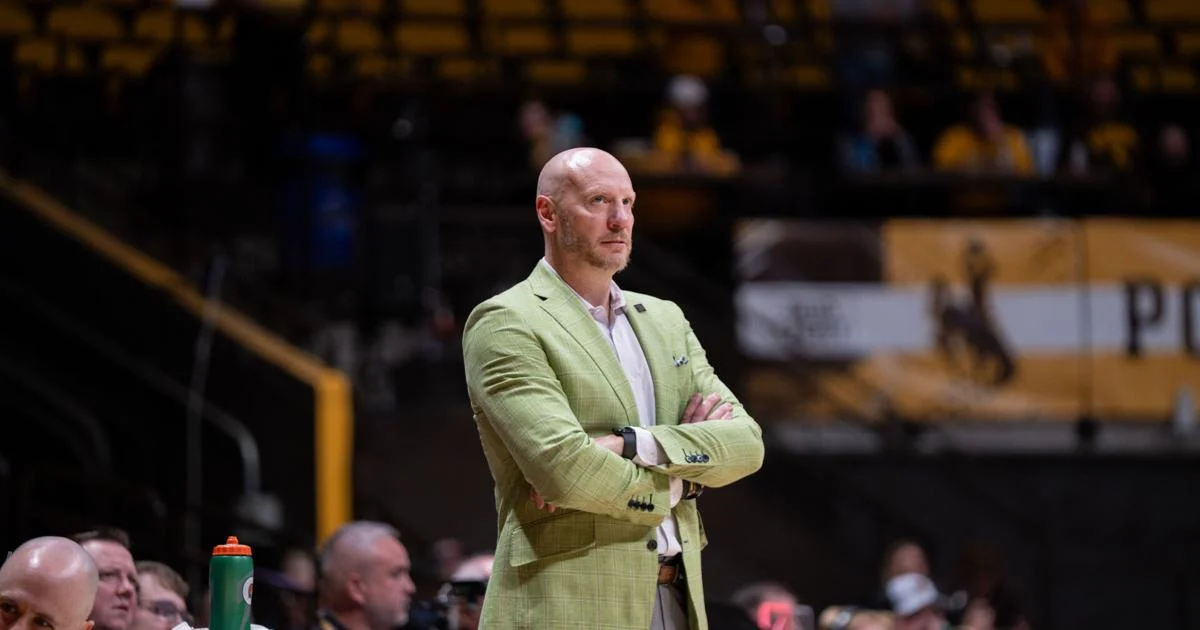
NORMAN – For University of Oklahoma defensive lineman Danny Okoye, his current spot – as the face of a social media campaign seeking to spread awareness of a life-saving drug for those who have overdosed on opioids – was a case of fortuitous timing.
Okoye is the first of a series of OU student-athletes who will participate in an NIL (name, image and likeness) deal with the nonprofit HarborPath of Charlotte, North Carolina, to promote Narcan, the brand name under which the generic drug naloxone is distributed.
Dec. 26, 2025, 5:03 a.m. ET
- Tennessee Sen. Marsha Blackburn has proposed the HUSTLE Act to create tax-deferred savings accounts for college athletes’ NIL income.
- The need for congressional intervention is questionable, given that other wealthy groups, like NFL players, do not receive similar legislative protection.
If the hollowness of the bowl season or the irrationality of the playoff system has you saddened by the state of college football, it could always be worse. Congress could get involved.
It’s already bad enough that NCAA apologists want Congress to grant college athletics an antitrust exemption. Now Tennessee Senator (and gubernatorial candidate) Marsha Blackburn, in a timely act of pandering, wants to give college athletes special tax-advantaged savings accounts – “for their own protection.”
Blackburn’s comically named “Helping Undergraduate Students Thrive with Long Term Earnings (HUSTLE Act) would allow certain college athletes to create tax-deferred accounts for their Name Image and Likeness (NIL) income.
Don’t get me wrong; I’m a big fan of saving and investing, especially in a tax-deferred vehicle. But the aim of this act ‒ somehow protecting young people from squandering their NIL riches ‒ raises an obvious question: Where exactly is the constitutional mandate (or even suggestion) for Congress to pass laws discouraging 19-year-old millionaires from buying expensive cars and jewelry?
If Blackburn is genuinely concerned about young, wealthy athletes squandering their money, why didn’t she start with the NFL? A widely cited 2009 Sports Illustrated article claimed that 78% of NFL players “face financial stress or bankruptcy” within two years of retirement. This figure was likely exaggerated, but a statistically sound study by the National Bureau of Economic Research found that 15.7% of NFL players file for bankruptcy within 12 years of retiring. Yet this hasn’t prompted any urgent Congressional push to save professional athletes from themselves.
If age is really the determining factor in financial responsibility, why is the fastest growing demographic of bankruptcy filers over 65? Why is the median age of someone filing for bankruptcy 49 and not 29?

Blackburn could, of course, propose legislation allowing college athletes to participate in the existing tax-deferred retirement accounts at their respective universities, but that would concede that the players are employees ‒ something universities want to avoid at practically all costs.
Not to be outdone by the Senate, the House of Representatives proposed the SCORE Act, which would grant NCAA institutions exemptions from antitrust laws – essentially codifying the illegal wage collusion the schools practiced for decades ‒ while also legally declaring that players are not employees of the universities that pay for their athletic services. Too many old timers simply can’t accept the end of decades of illegal (and in my opinion, immoral) athletic department business practices, so they are begging Congress to protect them.
Even if you concede the premise that 20-year-olds are incapable of making wise financial decisions and require assistance, why would Congress be the entity to turn to for financial wisdom?

David Moon, president of Moon Capital Management, may be reached atdavid@mooncap.com.


stl.pony said:
Feel like it’s largely being paid for by sales tax the new stadium development will generate.
Not in finance, so someone should absolutely check my math/analysis on this.
State of Kansas has an 8.25% sales tax. For the sales tax to generate 3 billion, the total sales would need to be about 36 billion. According to this article the Royals stadium and Arrowhead stadium collectively generate 55 million a year in tax revenue. (Don’t know what the analysis is to produce that; admit it could be wrong.) If you round it up to 60 million a year, the break even point is 600+ years.
If you take the numbers the Chiefs put out, 1 billion in economic impact for the region and 29 million in tax revenue per year. The break even point from tax revenue would be 1800 years?
I don’t know what is considered the region for the economic impact evaluation and how that changes based on if the stadium is on the Missouri side or the Kansas side of Kansas City. I also remember reading a report about the state fair of Texas that claimed that events like the state fair and sporting events don’t necessarily generate additional economic activity in a region, it just concentrates it into the event rather the wider community. (Admittedly, that could mean more tax revenue for one city in the region over another.) In my layperson’s opinion, a sports stadium deal like this doesn’t seem to be as smart of a decision as offering economic incentives to a Toyota or other non-entertainment business to move to your city.
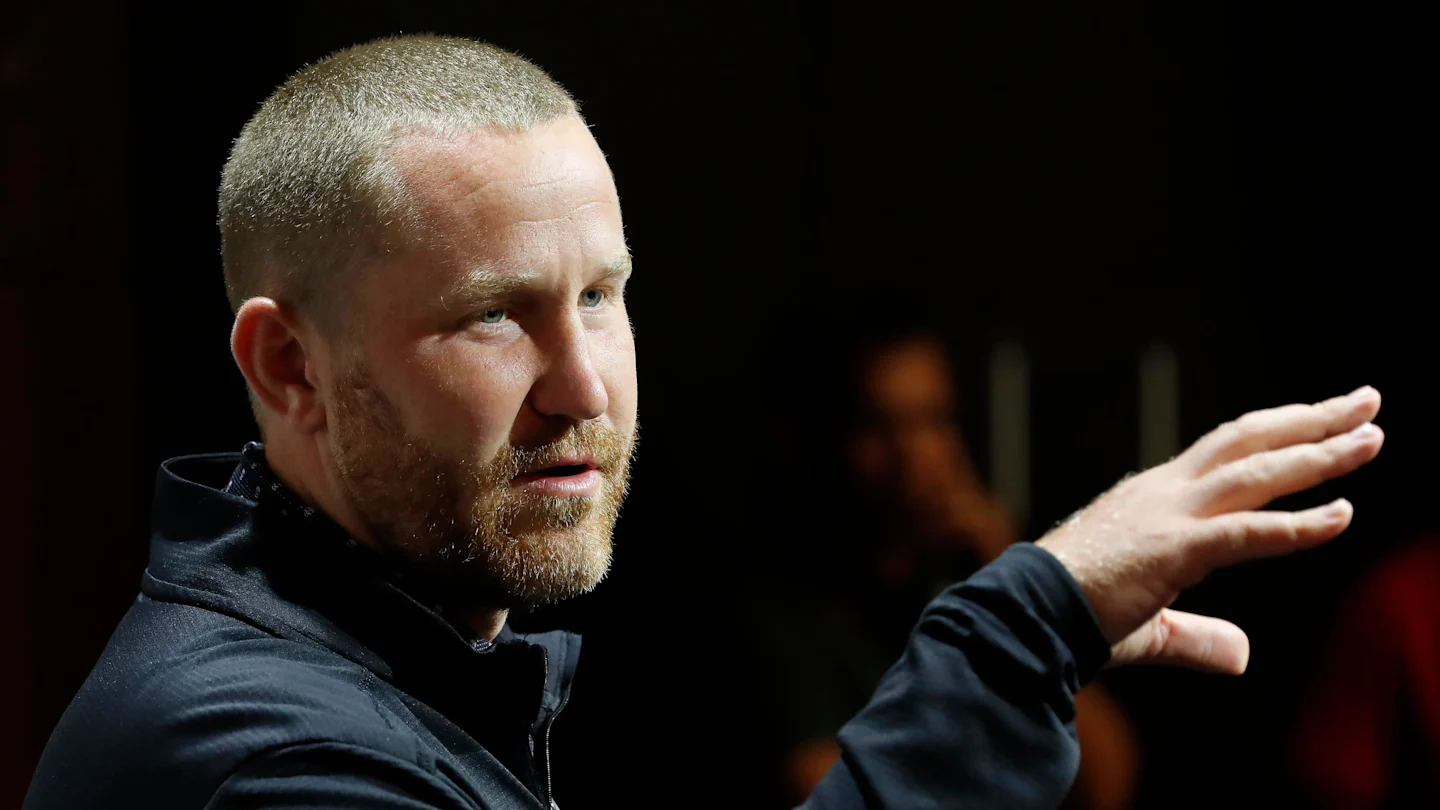
As Michigan’s coaching search drags on, some overlooked possibilities could be floating back to the forefront. After apparently striking out on established head coaches like Kenny Dillingham and Kalen DeBoer, one SEC coordinator is exactly such a possibility for the Wolverines.
In a recent episode of Andy and Ari On3, Andy Staples and Ari Wasserman pointed out that the current coaching carousel has been virtually obsessed with established head coaches. Kentucky hired Oregon offensive coordinator Will Stein as its next coach, but otherwise, schools have passed on coordinators in favor of coaches with head coaching experience.
Both Staples and Wasserman singled out Georgia defensive coordinator Glenn Schumann as a strong coaching possibility who Michigan should consider. “Why hasn’t he been in the conversation,” asked Wasserman. “He’s been intereviewed by schools, they just haven’t hired him,” noted Staples. “Normally, multiple coordinators would have either gotten these jobs or been finalists for these jobs.”
“If I were Michigan, I would hire Schumann over all the others,” said Wasserman. “I feel like if you’re Michigan, you want to get the guy that reshapes how you do things. It’s not that Jedd Fisch wouldn’t or Jeff Brohm wouldn’t….Don’t you want to go get the younger coordinator from Georgia who recruits his ass off and has been around big builds and has he defense playing like this at the right time and try to build you program around that?”

Schumann is only 35 years old, but has spent the last 17 seasons with either the Alabama or Georgia programs. He went to Alabama to be a student assistant coach under Nick Saban, then moved up to graduate assistant and then to Director of Football Operations.
When Kirby Smart left Alabama to take the Georgia head coaching job, Schumann went with him. First, he was the inside linebacker coach. In 2019, he added co-defensive coordinator to his responsibilities and ahead of 2024, he became the sole defensive coordinator
Georgia has historically been a very aggressive big-play-oriented defense, but Schumann has helped remake them on the fly. In 2025, the Bulldogs have held opponents to 15.9 points per game, second in the SEC, despite being near the bottom of the conference standings in sacks (tied for last), tackles for loss (next to last), and turnovers forced (13th).
Schumann was considered in 2023 for the Philadelphia Eagles defensive coordinator role, but hasn’t been significantly linked with another collegiate job. Despite his relative youth, his experience inside two of the foremost college football dynasties of recent vintage makes him an intriguing possibility, should Michigan decide to take a chance.
As much as the state of college athletics these days drives people to distraction, coaches and administrators don’t have many options.
So, you don’t like players being paid? You don’t like players have the ability to transfer to another program anytime they choose? You don’t like lawyers and agents raking in huge amounts of cash? What can unhappy fans do about it?
You can stop supporting your favorite program. You can stop going to games or even watching games. If enough people do that, what they will accomplish is making it more difficult for their favorite programs to win. They will change nothing.
Despite all of it, coaches are expected to win. Athletics directors are expected to provide the resources for them to win. They have no choice but to play the game with the rules – or lack thereof – in place today.
Is it out of control? Of course it is, in football and basketball. Will there be efforts to mitigate the damage that is being done to the sports so many love? There will be. Will they be successful? Maybe, but so far we’re not seeing it. Yet, TV ratings are higher than ever. Stadiums are filled. It’s still fun, which is what it was always meant to be.
For sure, there are some misconceptions out there.
Players, in fact, can and do sign contracts. There is nothing to keep them from signing multi-year contracts, but those are iffy for both sides. Maybe a player turns out not to be worth what he is being paid. Or maybe he turns out to be worth more than he’s being paid.
None of this is simple. It is further complicated by agents who are neither qualified nor interested in much anything beyond making money for themselves.
Maybe, one day, someone will find a solution. Maybe Congress will step in and help, though there has been no indication that is close to happening.
Players and coaches are better-trained, better-informed and more knowledgeable than they have ever been. Players are not the spoiled, entitled young men they are accused of being. They are being pulled in all sorts of directions by family, agents, boosters and others with agendas of their own.
Almost every effort to find common ground has blown up.
The December signing period was meant to give players who had made up their minds opportunities to get the recruiting process over with. Previous to that move, it was rare for players to graduate early and enroll in time for spring practice. Now, it’s what every coach wants and most players want.
NIL was supposed to be about players having opportunities to earn spending money, maybe even get a car. It was never meant to make anybody wealthy. Along came collectives, and that changed.
Penalty-free transfers were supposed to be about players having opportunities to go in search of more playing time. Instead, added to NIL, it become a monster. Without penalty-free transfers, things would be different today.
For now, if people let this destroy their love for the game, they are letting the forces of chaos win. It’s still college students – yes, they are students – playing football. And they pay a fearsome price in blood, sweat and mental challenges to do it.
Once the portal has opened and closed and rosters begin to be set, things will calm down. The focus will return to where it should be, on those who play the game and the season ahead.
***
To all of you who do us the honor of coming here to read and comment and debate, and to Ron Sanders, Nathan King, Christian Clemente, Jason Caldwell and Patrick Bingham, my valued colleagues, I wish joy, peace and love on this day.

Growth, maturation and health profiles of youth triathletes; Associati

Dale Earnhardt broke down in tears after special gift to mom – Motorsport – Sports

Best of Bethesda 2026 Readers’ Picks: Kids & Schools
OU lineman Danny Okoye face of NIL deal to tout life-saving Narcan

All-Area Volleyball First Team | Winchester Star

Honda Newly Launches “Discover Honda” Content Curation Media Platform — TradingView News
Best Gainesville-area Big School Volleyball Player for the 2025 season

‘Christmas tradition’ welcomes more than 170 area children | News, Sports, Jobs

Taylor column: Wyoming’s Wicks not using NIL as an excuse | University of Wyoming
Petoskey’s Katie Parker earns News-Review Volleyball POY, see All-Area

Davidson County Sheriff’s Office mourns loss of former deputy Zach Cash — DavidsonLocal.com
Rockford-area speed skater ‘dreams’ of competing in Olympics someday

All-Lowcountry teams for cross country, volleyball and more

Youth Sports and Burnout: When Passion Turns to Pressure

2025 Staff Picks: Monona Grove FC fires its only Black head coach, prompting backlash from parents

Fargo girl, 13, dies after collapsing during school basketball game – Grand Forks Herald

SoundGear Named Entitlement Sponsor of Spears CARS Tour Southwest Opener

Jo Shimoda Undergoes Back Surgery

Redemption Means First Pro Stock World Championship for Dallas Glenn

Bowl Projections: ESPN predicts 12-team College Football Playoff bracket, full bowl slate after Week 14

Black Bear Revises Recording Policies After Rulebook Language Surfaces via Lever

Donny Schatz finds new home for 2026, inks full-time deal with CJB Motorsports – InForum

Robert “Bobby” Lewis Hardin, 56

How this startup (and a KC sports icon) turned young players into card-carrying legends overnight

How Donald Trump became FIFA’s ‘soccer president’ long before World Cup draw

Men’s and Women’s Track and Field Release 2026 Indoor Schedule with Opener Slated for December 6 at Home

David Blitzer, Harris Blitzer Sports & Entertainment

Indiana’s rapid ascent and its impact across college football
Wisconsin volleyball sweeps Minnesota with ease in ranked rivalry win

Michael Jordan’s fight against NASCAR heads to court, could shake up motorsports






-
 Motorsports2 weeks ago
SoundGear Named Entitlement Sponsor of Spears CARS Tour Southwest Opener
-
 Motorsports2 weeks ago
Donny Schatz finds new home for 2026, inks full-time deal with CJB Motorsports – InForum
-
 Rec Sports3 weeks ago
David Blitzer, Harris Blitzer Sports & Entertainment
-

 Motorsports3 weeks ago
JR Motorsports Confirms Death Of NASCAR Veteran Michael Annett At Age 39
-
Sports3 weeks ago
Elliot and Thuotte Highlight Men’s Indoor Track and Field Season Opener
-
Sports3 weeks ago
West Fargo volleyball coach Kelsey Titus resigns after four seasons – InForum
-

 Motorsports2 weeks ago
Rick Ware Racing switching to Chevrolet for 2026
-

 NIL2 weeks ago
DeSantis Talks College Football, Calls for Reforms to NIL and Transfer Portal · The Floridian
-

 NIL3 weeks ago
Colleges ponying up in support of football coaches, programs
-
 Sports2 weeks ago
#11 Volleyball Practices, Then Meets Media Prior to #2 Kentucky Match