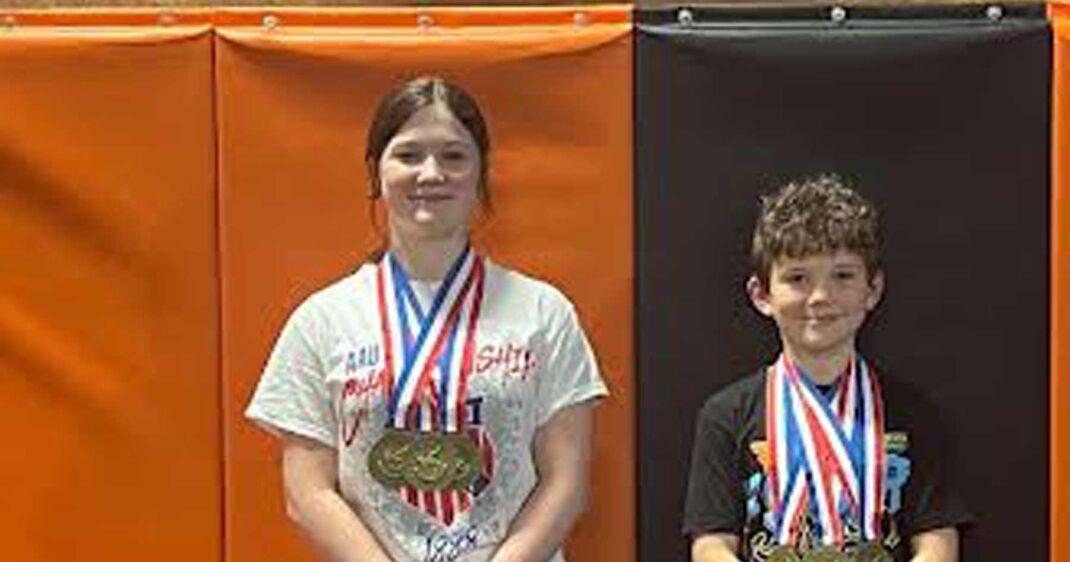
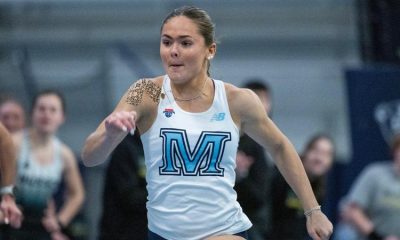
PALMYRA, Mo. — Ava Rife and Cooper Nicholson finished the 2025 Missouri USA Youth Wrestling Season, capturing the Triple Crown.
Missouri USA Wrestling hosts three state tournaments throughout the calendar year. The first is the Folkstyle tournament held in March and the final two, Freestyle and Greco-Roman, were held May 3 and 4 in Springfield, Mo.
Rife and Nicholson were champions in all three tournaments.
Sometimes, a bag of Takis or a Chicago sports t-shirt is all it takes to remind a child that they matter.
CHAMPAIGN, Ill. (Chambana Today) – As the holiday season drew near, staff members were reviewing the Christmas wish lists of the youth they serve, and a few simple yet meaningful requests stood out. Joey asked for a bag of Takis. Kaleb wished for shirts from any Chicago sports team. These weren’t extravagant gifts, but they reflected the kind of things many kids desire: fun, comfort, and personal connection.
For the youth served by local programs, Christmas isn’t about lavish gifts—it’s about the reassurance that someone is listening, someone cares, and someone remembers what they love. When these wishes are fulfilled, it sends a powerful message: You matter. You are not forgotten.
The magic happens when those gifts are opened. Smiles widen. Shoulders relax. And hope sneaks in. In those moments, the real magic of Christmas becomes clear, not in the price tag of a gift, but in the love, attention, and sense of belonging it represents. A simple box of Takis or a Chicago sports t-shirt can light up a room with joy, reminding kids that they are seen and cared for.
As 2025 comes to a close, the need for support is more important than ever. Donations can help create these special moments, ensuring that the youth served not only feel valued during the holidays but year-round. To make a difference and receive recognition in the current tax year, donations must be made by 11:59 p.m. on December 31, 2025.
For those seeking a meaningful way to end the year, this is an opportunity to offer hope, love, and the message that someone cares. Visit to learn more and donate today.
Nevada’s youth sports participation remains low nationally, and, compared to other states, about 46% of children between 6 and 17 years old participate during the 2023-2024 school year. Comparatively, nationally, the participation level stands at approximately 57%. Rising costs, environmental challenges, and socioeconomic pressures are limiting access for many families across the state.
The cost of youth sports has risen sharply. By 2024, families spent an average of about $1,000 per year for their child’s primary sport, which is a 46% increase from 2019. The rising cost of registration fees, uniforms, equipment, private coaching, and travel places stress on families. Anecdotal examples include a Nevada family paying nearly $500 for a single cross-country season.
“Immediately, a lot of Nevada families just cannot afford that,” Richard Rosenkranz, a UNLV professor who studies interventions to boost nutrition and exercise, told The Nevada Independent.
Rosenkranz pointed to a broader cultural shift in youth athletics. “We’ve essentially professionalized a lot of sports,” he said. To remain competitive, Rosenkranz said, academic and extracurricular sports programs need to hire full-time coaches, upgrade facilities and equipment, and travel to tournaments. “It poses more of a financial burden in a state where … so many parents have multiple jobs in the service industry, where kids have higher shares of parents who can’t afford it,” said Rosenkranz.
Nevada’s unique context compounds these barriers. There are many people still working in the service industry, and many families rely on multiple jobs within it. There are also limited options for public transportation, and people come and go from the state, which creates challenges for long-term participation. Unlike some states, many Nevada families do not qualify for sports-fee waivers.
Environmental factors also play a role. Extreme heat and high-temperature artificial turf affect practice schedules and raise safety concerns, potentially discouraging sustained outdoor participation.
Despite the numerous hurdles faced by Nevada Youth Sports and the organizations providing them, new forms of programs and access to them are increasing. These programs include recreational leagues, after-school programs, shorter 8-week cycles, and other options that provide youth with flexibility based on their schedules and budgets. Providing more flexible options and easier access for youth should substantially increase their opportunities to participate in organized sports and improve their physical, mental, and social well-being.
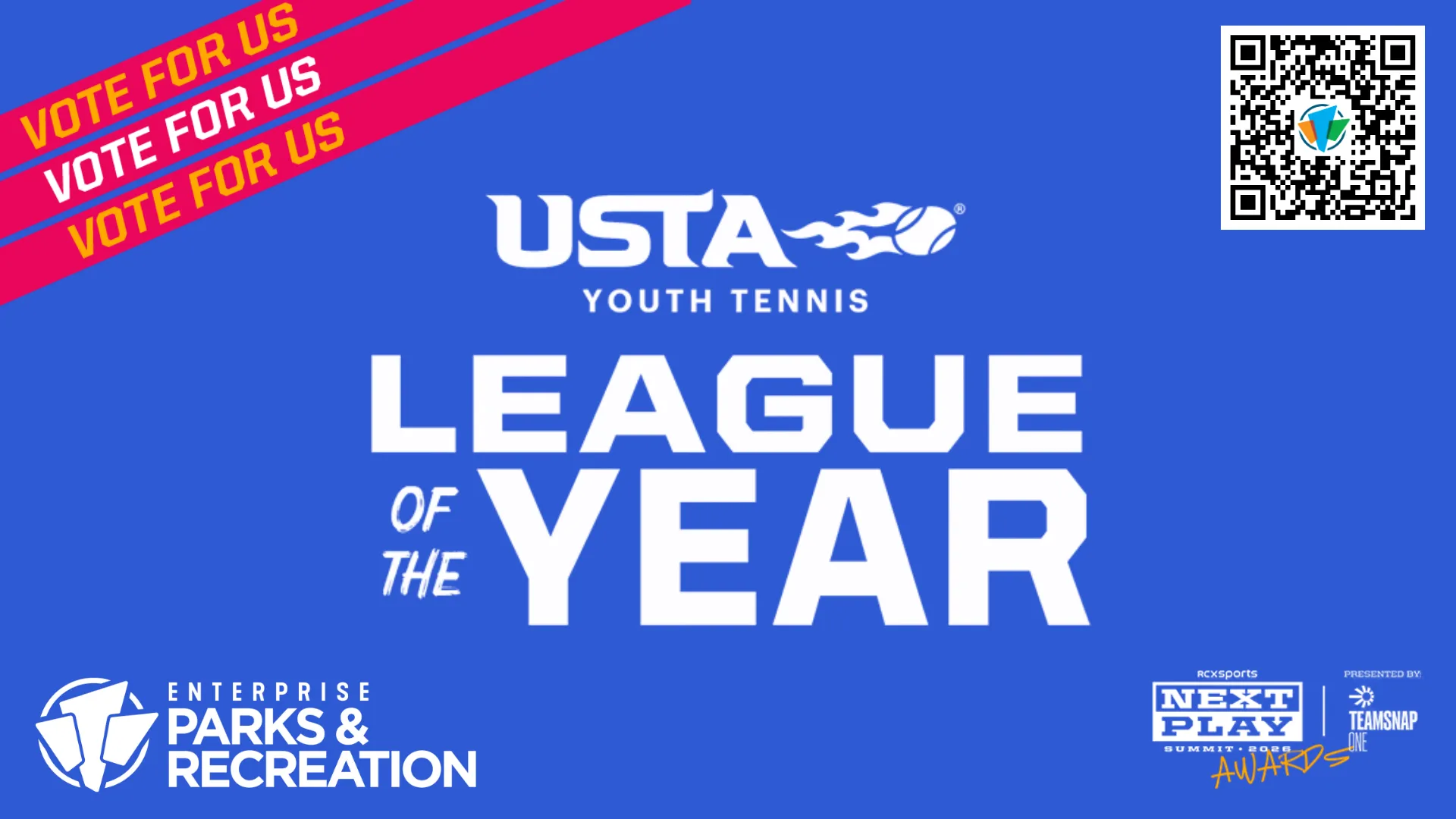
ENTERPRISE, Ala. (WDNews) — Enterprise Parks and Recreation has been named a national finalist for two prestigious awards recognizing excellence in youth sports programming: USTA League of the Year and Community League of the Year. Selected from programs and league operators nationwide, the Enterprise Parks and Recreation Department was recognized for its commitment to expanding access, fostering inclusion and creating high-quality developmental opportunities for youth athletes. Officials said the recognition highlights the department’s leadership, innovative programming and focus on positive youth development. The USTA League of the Year award honors excellence in youth tennis, recognizing leagues that grow participation and provide welcoming, developmental environments for players of all skill levels. Enterprise Parks and Recreation was named a finalist for its parks and recreation tennis implementation that emphasizes access and participation. Other finalists include organizations from Rhode Island and Illinois. The department was also named a finalist for Community League of the Year, an award recognizing grassroots organizations such as parks and recreation departments, nonprofits, YMCAs and Boys & Girls Clubs that promote community through access, inclusivity and positive youth development. Enterprise Parks and Recreation was recognized in this category for its multisport model that prioritizes affordability, inclusion and community integration. Since launching the USTA Youth Tennis program in partnership with RCX Sports, Enterprise Parks and Recreation has steadily grown participation. The program served 101 youth participants in 2024 and increased to 112 participants in 2025, reflecting continued community interest in youth tennis. The program was led during its inaugural year by Grant Lyons, a longtime local tennis coach who helped establish the league and introduce the sport to new players in Enterprise. In its second year, instructional leadership transitioned to NET: New Era Tennis, which continued an emphasis on positive coaching, accessibility and player development. Designed for children ages 6 to 14, the six-week league focuses on skill development, teamwork and fun in a beginner-friendly environment. The affordable program includes equipment, instruction and a structured curriculum to help remove barriers to participation, regardless of prior tennis experience. The program is held at the William “Bill” Morris Tennis Complex. “This recognition speaks volumes about the work being done to ensure our youth have access to quality recreational opportunities,” Superintendent Landon Adams said. “Enterprise Parks and Recreation continues to create programs that strengthen our community and support the growth of young athletes on and off the court.” Blake Moore, director of Community Services and Recreation, said the recognition reflects a team effort and strong community support. “We are proud to be recognized at the national level,” Moore said. “Our goal has always been to provide affordable, inclusive programs that give every child the opportunity to learn, grow and enjoy being active in a positive environment.” Each year, RCX Sports recognizes outstanding leagues and leaders through the Next Play Summit Awards, honoring organizations and individuals who demonstrate leadership, inclusion, innovation and community impact while making youth sports accessible and meaningful. The selection process includes screening by the RCX Awards Committee, which selects three finalists per category. Public voting for the Community Choice Awards is open through Jan. 15, 2026. Winners will be announced during the RCX Summit Awards Ceremony, scheduled for Jan. 16–18 in Orlando.
YUMA, Ariz. – A 12-year-old boy is in trouble after police say he threatened parents in a youth soccer league group chat.
What we know:
On Dec. 29, the Yuma Police Department said parents in a group chat got a “threatening text message” that referenced “a potential incident planned later in the day at the Ray Kroc Athletic Complex.”
As a precaution, police conducted additional security checks at the complex, and the soccer league canceled practice.
Investigators found out through investigative work that the sender was a young boy. He was not identified.
“With assistance from the Arizona Counter Terrorism Information Center (ACTIC), YPD Officers identified the sender as a 12-year-old male juvenile. It was determined that the juvenile’s phone number had been added to the group chat in error and that he has no affiliation with the soccer league,” Yuma Police said.
The boy reportedly admitted to sending the text, and said it was meant to be a joke.
What they’re saying:
“Charges will be forwarded to the Yuma County Juvenile Justice Center (YCJJC) for review,” police said. “The Yuma Police Department worked closely with the Soccer League, City of Yuma Parks and Recreation, and all assisting agencies, and would like to thank them for their cooperation and support. YPD takes all threats seriously and will thoroughly investigate each incident to ensure public safety.”
What you can do:
Anyone with information about this incident, or has concerns about it, is asked to call Yuma PD at 928-783-4421, or to remain anonymous, call 928-782-7463.
In this episode of Future of the Business World, Yijia Chen, co-grand prize winner of the Summer 2025 Comment & Win Competition, shares how her journey as a provincial-level tennis player has shaped her entrepreneurial mindset, intellectual curiosity, and approach to personal branding. Trained at the Rafa Nadal Academy, Yijia reflects on how competitive sport taught her focus, resilience, and attention to detail — skills that now inform her work as a sports content creator and emerging researcher in the business of athletics.
Wharton Global Youth Program: Hello and welcome to Future of the Business World, the podcast featuring high school entrepreneurs across the globe. I’m Diana Drake, managing editor of the Wharton Global Youth Program at the Wharton School, University of Pennsylvania.
As we wrap up our fifth season of the Future of the Business World podcast, I can’t help but look back at the innovative spirit captured in the past 62 episodes. We launched the show in September 2020 with guest Rucha Mehendale, then a California high school student, developing an app to keep teens motivated and on schedule. Today, Rucha is working as a global marketing specialist at Nvidia, a great example of the Future of the Business World in action.
Today’s guest emerged from the pages of our summer 2025 Comment and Win Competition, ultimately claiming the title as co-grand prize winner. The innovative thread woven through those comments inspired me to reach out to her.
Let’s get started.
Yijia [Annie] Chen, welcome to Future of the Business World.
Yijia “Annie” Chen. (Photo credit: Annie Chen)
Annie Chen: I’m really honored to be here.
Wharton Global Youth: Tell us about yourself. Where do you live and go to school and what are your passions?
Annie: I’m from Nanjing, a city very close to Shanghai, with a long history and rich cultural roots. I go to school there, and outside of academics, tennis has been a huge part of my life. Beyond tennis, I’m really passionate about sports analytics. Music. I enjoy music from Lana Del Rey, and I also play the Guqin, which is a traditional Chinese seven-string instruments. It’s very calming for me and helps me slow down in a fast-paced world.
Wharton Global Youth: You’re a provincial level tennis player who has trained at the Rafa Nadal Academy [in Spain]. Tell us more about your tennis career and training. What does that look like so far?
Annie: I’ve been playing tennis since I was five and for almost 12 years, and one of the most enjoyable experiences for me was training at the Rafa Nadal Academy. Through conversations with fellow athletes, coaches and even Rafa Nadal’s nutritionist, I noticed how often they reflect on the mental struggles that come with daily training and constant competition, things like pressure buildup, emotional fatigue and confidence swings after matches. Many players don’t struggle because of a lack of skill, but because intense expectations arrive too quickly, like you often need to face immense pressure from the press conference and also the press coverage, so you are simply too young to handle all the stress.
These experiences made me reflect on how lower ranked or developing players often don’t receive enough mental or structural support, even though they may have huge potential. As I trained at Rafa Nadal Academy, I just did some comparison with the training in my Chinese tennis academies. I feel that Rafa Nadal Academy, like the system, is more integrated. Training isn’t just about hitting balls. Everything is connected. They use advanced facilities like motion tracking systems and even small efficiency details that are hard to notice with the naked eye. So, coaching is also more Western style, like instead of only giving direct structures, coaches often ask you questions like why you chose a certain shot, and what do you notice during a rally? So, that encourages me to think independently and take ownership of their decisions. So, experiencing both systems helped me understand how structure, technology and coaching philosophy together could shape long-term athlete development, and it could help me grow as a well-rounded athlete.
Wharton Global Youth: Wow, so you’re not just doing your thing on the court, you’re really digging deeply into the motivations and the psychology behind your sport. That sounds fascinating, and we are going to talk about tennis today, because I feel like your personal sports experience has fueled your entrepreneurial mindset in many ways. Would you agree with that?
Annie: Definitely, tennis constantly puts me in situations where there’s noone to rely on but myself. I need to stand alone on the court, competing and combining with my opponents, and there was no coach to step in. I had to figure out much whether to slow the pace or change my serve placement. So, actually I could. I developed a habit of diagnosing a problem quickly, adjusting technology, adjusting strategy with limited information, and also staying calm under immense pressure. I will test an idea and see when or how it fails, and I will adapt, and then I will keep moving forward, just like on a court.
Wharton Global Youth: In the past, you have been an influencer on Red Note, which is a popular Chinese social media and e-commerce app. Help us understand really what it means to be a sports creator on Red Note, and how you use your content to support and motivate other young athletes.
On Red Note, my content usually focuses much more on supporting athletes mental well being and also decision making. First, I share my content of how to help young athletes recognize common stressors in training and competition and understanding when it’s important to pause and seek help. And also, I talk openly about how to process losses, setbacks and emotional ups and downs to come with competing and being evaluated publicly. And moreover, I teach them breathing techniques and short meditation routines, and also kind of instruct them with some positive visualizations, so we could help athletes stay grounded under pressure. And also, I share about sports analytics-based content, including, like simple match breakdowns and some data-informed predictions. The goal is to teach young athletes how to think, how to read patterns, evaluate matchups and understand why some tech strategies will work in specific situations.
And also, I often highlight athletes like Naomi Osaka, their mental stress and how they overcome their mental illness, because she has stepped away to protect her mental health, become a mother and return on her own terms, also like Amanda [Animisimova], whose journey shows how resilience and patience can lead to renewed success. So, I wanted young players to follow role models who value balance, resilience and long-term growth, not just constant winning like only the points and match results.
Wharton Global Youth: I want to stay with Naomi Osaka for a minute. Your experience as a content creator actually prompted you to research women’s tennis sponsorships, where you compared athletes such as Naomi and Coco Gauff and explored how branding decisions shape opportunities in the industry. It really sounds like fascinating work. Annie, what have you learned about branding and sponsorships, which is a big social media and business, right?
Annie: Yes, so like, through Red Note, I noticed that brands weren’t just looking for performance. They care about storytelling and values. For example, sports headphone brands approached me and connected with my contents, message and audience trust. So, I wanted to delve deeper, and I compared Naomi Osaka and Coco by looking at how their brand identities led to very different sponsorship pathways. Naomi partnerships are closely tied to her global influence, mental health advocacy and social impact, which attract brands and technology, health care and wellness, and also her status as a coming mother to the court.
Coco Gauff, on the other hand, has a more diverse and Gen Z-oriented sponsorship portfolio, like she’s one of the most successful tennis athletes on Tiktok and on Instagram, those social media, so she could have a strong appeal to apparel lifestyle and digital-first brands, and she could attract the Gen Z athletes, the Gen Z teenagers. What stood out to me is that sponsorship success isn’t just about performance. It’s about alignment between an athlete’s values, audience and the type of assets brands want to activate. That difference has important implications for how the industry evaluates female athletes and long-term brand strategy.
Wharton Global Youth: Can you talk more about some of the opportunities that your Red Note engagement inspired for you. For example, when you and I were talking back and forth before this interview, you mentioned that you spoke recently at Wimbledon about reimagining tennis media. Tell us more about that.
Annie: At Wimbledon, my talk focused on how tennis media can better support young athletes and engage Gen Z audiences. And I proposed two main ideas. First, I suggested creating media opportunities led by high school students or youth clubs. These students could act as interviewers, content creators or storytellers, giving junior players a platform to speak on their own terms. From my own experience, training and competing with junior athletes, traditional press conferences can be overwhelming, so when we let young people lead the conversation, we could shift the dynamic from interrogation to dialog. This approach is clearly a win-win, because young athletes feel more in control and less pressured. Student journalists gain real-world experience in media production and tennis organizations could receive content that feels genuine and resonates with younger audiences.
The second proposal is more focusing on showcasing vulnerability and growth, not just victories, because media can feature speeches and interviews where players discuss challenges, near misses or emotional struggles after tough matches, moments like Amanda’s runner-up speech at Wimbledon, or Coco Gauff talking openly about pressure, demonstrate that losing, as in failure, is part of growth. So, when we highlight those authentic stories, we could help young athletes understand that success isn’t only measured by trophies. We’re also providing relatable role models for the fans. So I wanted to [emphasize] those [types of] content and spread it through social media [with the] hashtag #GrandSlamFinals. So, when it is combined with the youth-led media, this approach could reinforce mental health, build empathy and create content that Gen Z audiences will genuinely connect with themselves.
Wharton Global Youth: I’m amazed by how much you’re a voice of youth in the game of tennis. It sounds like you are really championing so much more than winning that next match. I’m remembering a moment from last summer’s Comment & Win Competition when you were reflecting on one of our podcast episodes featuring students who are doing great work around recycling used tennis balls — again, another innovative aspect of your sport. You talked about the gap in sustainability awareness within tennis academies in China. What does that gap look like, and have you worked to address it?
Annie: So, many tennis academies in China just don’t have clear systems for handling used tennis balls. Most are simply thrown away without a second thought. To address this on a small but practical level, I founded my school’s first tennis club and turned this issue into something students could engage with directly. We collected discarded tennis balls in our community and organized hands-on workshops where students could transform them into creative art pieces and functional decorations. The goal wasn’t just recycling; it was helping people see waste differently and start conversations about sustainability within a sports setting. Through this, more students and even coaches began to think about how tennis programs could manage equipment more responsibly.
Wharton Global Youth: Also, again from the Comment & Win (this is probably one of the things that led to your co-grand prize, by the way), you wrote about reaching out to the woman who led sustainability efforts at Wimbledon. What did you learn about Wimbledon’s approach to using old tennis balls?
Annie: Wimbledon’s used tennis balls are repurposed in a variety of creative ways, like they are transformed into acoustic panels to improve sound quality, made into shelters that provide safe habitats for wildlife, especially birds, and even crafted into functional furniture like benches and seating. So, seeing this firsthand showed me how small and thoughtful innovations can turn what would normally be waste into something really useful and really meaningful, beautiful and even environmentally friendly.
“Many of us, especially teenagers, are afraid of cold emailing to professionals. The hardest part of reaching out to professionals is often taking the first step. It could feel intimidating to send that initial email or make that first connection, especially when you’re young and inexperienced, but in my experience, many professionals genuinely value youth perspectives. They’re often impressed by their initiative, their young voice, their curiosity and their fresh ideas.” – Yijia “Annie” Chen
Wharton Global Youth: This is a great example, because time and again, I was surprised by your ability to take the initiative and risks to discover new knowledge and to fuel your curiosity. Where does that drive come from in you, do you think? What have you learned about cold calling and reaching out to people randomly for insight?
Annie: I think a lot of my drive comes from a mix of curiosity and love of challenges. From a young age, I realized that trying new things, even if I might fail, was the only way to really learn and grow. For example, in tennis losing my first big match at seven and crying for like four or five hours taught me that setbacks in the end are a signal to explore, improve and push myself further.
And also, speaking of cold emailing, I think it’s a thing that is worth talking about, because many of us, especially teenagers, are afraid of cold emailing to professionals. The hardest part of reaching out to professionals is often taking the first step. It could feel intimidating to send that initial email or make that first connection, especially when you’re young and inexperienced, but in my experience, many professionals genuinely value youth perspectives. They’re often impressed by their initiative, their young voice, their curiosity and their fresh ideas. So, if one email doesn’t get a response, that’s okay. You could try a different approach, follow up politely, or reach out through another channel, another approach. Each attempt is also a chance to practice research, your communication skills, and also problem-solving skills. So, it’s beneficial for our growth.
Wharton Global Youth: You touched on sports analytics a few minutes ago. I want to go a little deeper, because I know that’s one of your passions. You actually spent a few weeks on the Wharton School campus in summer 2025 studying sports analytics in Wharton’s Moneyball Academy. Tell us more about your passion for sports data as well as your time in the academy. What were your greatest takeaways from this?
Annie: Being immersed in sports analytics at Wharton was an eye-opening experience, because back at my hometown, I don’t have that much opportunity to engage with those like-minded peers and also TAs and professors to delve deeper into our projects.
One of the projects I worked on is to focus on what really makes a tennis serve effective, looking at factors like speed, accuracy, and how unpredictable the serve placement is. So, I analyzed point by point data from the US Open over several years and our team run regressions, and found that serve speed had the biggest impact, though accuracy and variation also played important roles.
What made the experience truly memorable wasn’t just about the data or the analysis. It was working with a team of passionate peers and getting support from the course TAs. They were incredibly helpful. The TAs did guide us to finalize our methods, question our assumptions, and refine our approaches when we hit some roadblocks. And sometimes it was stressful trying to get everything right, but that pressure pushed us to think critically and creatively. Collaborating so closely with teammates and receiving mentorship from TAs taught me how to communicate ideas, clearly, handle feedback, and also persevere under pressure. And by the end, I kind of feel like I was part of a real sports analytics community.
Wharton Global Youth: I’m going to actually throw one of your quotes back at you from the Comment and Win, because I think it really just synthesized your thoughts around this. You said, “Tennis has taught me how to focus, how to push through, and how to pay attention to details. Data has taught me to question what I see, to look deeper and to keep testing ideas.” I really thought that was sweet.
You’re currently designing an app. The prototype is complete and includes interactive challenges that help young tennis athletes recover from injuries more effectively. Tell me how all of this incorporates AI and data driven insights and just provide a few details of your project.
Annie: The app uses a gamified Island map to make recovery engaging and interactive each week. Athletes complete recovery challenges that feel like unlocking new areas of the island, turning rehabilitation into a fun and game-like experience. Users can select specific pain areas or focus points, like your shoulder, maybe your leg, your ankle or your knee. And the app generates AI-personalized rehab and conditioning plans tailored to their needs. So, throughout the process, your AI personalized rehab and assistant will provide encouragement, track progress, and offer tips to keep athletes motivated and also consistent. At the end of each week, the app will also produce a comprehensive coach report summarizing the athlete’s progress, highlighting their improvements and recommending adjustment for next week. So, looking ahead, I hope to build on this experience during college, because when I learn more about AI data analysis and also user standard design, I could further develop this app. I could lengthen like the weeks that the athletes could rehabilitate. My goal is to expand the features to make it usable over long recovery periods, and ultimately, I hope I could help more athletes reach their full potential safely and effectively.
Wharton Global Youth: All right, let’s end with our lightning round answer these questions as quickly as you can. What is about you that would surprise us.
Annie: I think I really love teddy bears. Like I sleep with eight to nine teddy bears. They’re eight to nine teddy bears on my bed. And I love Paddington Bear.
Wharton Global Youth: What is your best shot on the court?
Annie: I think volleys.
Wharton Global Youth: Where do you hope to be in five years?
Annie: Maybe in a sports consulting or sports analytics firm, and possibly I will attend graduate school.
Wharton Global Youth: How do you define success in a few words?
Annie: Making impact without losing yourself.
Wharton Global Youth: What advice do you have about handling pressure?
Annie: When I’m on the court, I will use some breathing techniques like, 4331, I think, inhale, hold exhale and grunt.
Wharton Global Youth: What would you be caught binge watching at midnight,
Annie: Mysteries, especially Wednesday, and also maybe some Disney episodes
Wharton Global Youth: Your favorite influencer on social media?
Annie: Kendall Jenner.
Wharton Global Youth: You are starting a business-themed talk show. Who is your first guest and what is your first question?
Annie: If I am lucky enough, I hope to invite Serena Williams, and my first question will be, how do you redefine success beyond the court?
Wharton Global Youth: Annie Chen, thank you for joining us on Future of the Business World.
Quarterback Fernando Mendoza led Indiana University to an undefeated season and won the 2025 Heisman Trophy.
Mendoza, once an overlooked high school recruit, credits his success to his Cuban-American heritage and work ethic.
Mendoza is the first Cuban-American to win the Heisman and is projected to be a top NFL draft pick.
MIAMI ― Fernando Mendoza sat in the front seat of the rental car on the six-hour drive from Miami to Gainesville, dialing one college coach after another.
He had just finished a week-long visit to some of college football’s most elite programs in the Southeastern Conference – Alabama, Clemson, South Carolina, LSU – and Mendoza, then a high school junior quarterback, needed to convince them to put him on their roster.
One after another, he called and asked the coaches if he could play for them. One after another, their answer was an unequivocal “no.”
He ended each call with the corresponding cheer from that team – “Go Tigers!”, “Roll Tide!” – characteristically upbeat, despite the rejections.
After checking into a Gainesville hotel with his speed and conditioning coach, Antonio Robinson, Mendoza confided something that had been weighing on him. His mother had recently confessed she’d long been diagnosed with multiple sclerosis, an incurable disease of the nervous system. He had to win, he told him, for her.
“Bro, you’re good. You’re going to play on Sundays,” Robinson told Mendoza at the time, meaning playing in the NFL. “We don’t know how you’re going to get there, but you’re going to play.”
Today, Mendoza, 22, sits atop of the college football universe.
As Indiana University’s starting quarterback, he led the Hoosiers this year to an historic undefeated season and secured the top ranking in the College Football Playoffs, which began Dec. 19. Indiana plays the dynastic University of Alabama in the Rose Bowl on Jan. 1 for a chance to advance and play for the national title – which would be another first for Indiana, traditionally a basketball-first school.
On Dec. 13, Mendoza was also awarded the Heisman Trophy, college football’s highest honor, becoming both the first Hoosier and first Cuban-American to ever win the award – and only the third Latino winner after Jim Plunkett in 1970 and Alabama’s Bryce Young in 2021.
Several mock drafts, including USA TODAY’s, forecast Mendoza – ranked 2,149th in the nation coming out of high school – as the No. 1 selection in next year’s NFL draft.
How did a lanky, six-foot-five kid from Miami – the grandson of Cuban immigrants and overlooked by most football schools – rise to such improbable heights in college football?
Mendoza’s coming of age in Miami would be marked by a cultural changing of the guard, when tackle football was becoming increasingly popular among Cuban-Americans, who have traditionally focused on baseball.
His Cuban heritage sparked a work ethic that often eclipsed others around him. And even as obstacles piled up, Mendoza found a way to work around, over or straight through them.
In recent interviews, Mendoza has credited his Cuban-American culture and upbringing for much of his success.
“It’s a huge point of pride,” he told NBC Sports, adding how his grandparents emigrated from Cuba to start lives over in the U.S. “I’m extremely grateful for all the hardship they’ve been through.”
First quarter: The shift to focus on football
Baseball-Reference.com counts more than 400 Cuban-born players who have played in the major leagues, dating back to 1871, when Havana-born Esteban “Steve” Bellán laced up for the Troy Haymakers. Total Cuban-born players to ever play in the NFL: four.
“Porque en Cuba…” “Because in Cuba” was a common line of reasoning and refrain of many parents to urge kids in 1980s Miami to spend hours on end at the batting cages. Boys spent their Saturdays at Tamiami Park or Academia Carlos “Patato” Pascual, learning fundamentals like rundowns or how to lay down a bunt at the hands of retired Cuban ball players, dreaming of one day playing in the majors themselves.
Florida, of course, has long been a perennial powerhouse for recruiting high school football talent.
It’s one of the nation’s top destinations for elite college football since the 1990s, during which a team from the state appeared in every national title game until 2002. Florida’s juggernaut status continued well into the 2000s. According to the recruiting database ESPN 300, Florida produced the most prospects of any state in the country in the class of 2023. Lamar Jackson, Michael Irvin and Joey and Nick Bosa are counted among South Florida’s high-end recruits.
But the past two decades has seen a noticeable shift in Cubans and Cuban-Americans in South Florida becoming focused on football, said Carlos Gobel, 47, a high school football coach who has coached youth sports for more than 20 years in South Florida.
Would-be pitchers made the switch to quarterbacks. Spurred on by the past successes of the Miami Dolphins’ perfect 1972 season and their Hall of Fame quarterback Dan Marino, Gen Xers took to playing football in high school.
By the time these Cuban families in South Florida became parents themselves, they placed their kids into rec leagues, starting as young as 4 years old, Gobel said. Youth leagues today, like Miami Xtreme or Florida Youth Football League, actively try to recruit the best young talent and parents are hiring specialized coaches to train their youth earlier and earlier, he said.
He added: “Everyone loves football down here. Fernando came in right at its peak.”
Second quarter: ‘He’s just built different’
Mendoza was destined to play organized sports.
His father, Fernando Mendoza IV, played football at Christopher Columbus High School in Miami (alongside Mario Cristobal, current head coach at the University of Miami), and later as an undergraduate student at Brown University. His mother, Elsa Mendoza, was a standout tennis player at the University of Miami.
He joined the South Miami Grey Ghosts, part of a local youth league, while in grade school but started as a fourth string quarterback, according to an essay his mother published in The Players’ Tribune, an online platform. Mendoza had to work his way into a starting position.
By the time he reached 8th grade, Mendoza’s sights were firmly set on playing quarterback in college. That year, his father hired Robinson to improve Fernando’s speed and agility.
In one of their early meetings, at Florida Christian School’s West Campus, Robinson had him and other student athletes do 15 100-meter dashes, back-to-back-to-back, with just 30-second breathers between runs.
It’s the type of grueling conditioning, especially in Miami’s punishing sun, that makes most youth puke or beg for a break, Robinson said.
Mendoza caught his breath then asked: “We got anything else?”
Robinson, a former NFL receiver who won a Super Bowl ring with the Green Bay Packers in 2011, put him through more workouts.
“He’s just built different,” Robinson said. “I remember telling my son, ‘This kid’s going to play in the NFL.’”
Robinson worked with Mendoza the next four years, meeting with him several times a week, having him pull weights in a dead run or running backwards up hills at parks, watching his acceleration and agility improve.
In 10th grade, Mendoza began playing football at Columbus High School, his father’s alma mater, located in the heart of Westchester.
Calle Ocho (or, Eighth Street) remains the beating heart of the Cuban diaspora in Miami but Westchester (pronounced “Weh-che-te” in the truncated lingo of Cuban-Americans) is its gravitational center, home to La Carreta, Rio Cristal, Sergio’s and other establishments and eateries that, over the years, have transformed the sleepy Miami suburb into North Cuba.
At Columbus, Cuban-American parents aspire to raise their boys in the teachings and values of the Catholic Marist Brothers families once followed in Cuba.
Mendoza came to play under Coach Dave Dunn, who has coached high school and collegiate athletes for three-and-a-half decades. At their first meeting, Mendoza showed up with a notebook and a pen, eager to soak up everything his coach had to offer, Dunn said.
Over the next three years, Dunn and Mendoza lunched together each day in Dunn’s office, meticulously going over practice film, discussing his mistakes or strategizing plays for the upcoming game.
“He’s always trying to learn, always working his tail off to get better,” Dunn said. “And I think that’s ingrained in him from his grandparents and obviously his parents, as well.”
Halftime: A transformative trip to Cuba
All four of Mendoza’s grandparents fled Cuba’s dictatorship and emigrated to the U.S. to seek a better life.
His paternal grandmother, Marta Menocal Mendoza, arrived in the U.S. via Operation Pedro Pan, a clandestine exodus of more than 14,000 unaccompanied Cuban youth from the communist island.
His maternal grandfather, Alberto Espino, arrived in Miami as a teen in 1960 from Santiago de Cuba. In 2019, Mendoza and his younger brother, Alberto, joined their grandparents on a missionary trip to Santiago de Cuba on the easternmost part of the Caribbean island.
They climbed along the Sierra Maestra mountain range, home to Fidel Castro’s 1950s uprising, visited the chapel of La Virgen de la Caridad del Cobre, Cuba’s patron saint, and distributed goods they brought from the U.S. to cousins and locals in Santiago.
Mendoza was struck by how his impoverished family members survived while having next to nothing. It was a transformative trip, as he later expressed in an essay in an application to the prestigious Miami Herald’s Silver Knight Award in high school. Amazon founder Jeff Bezos and U.S. Supreme Court Justice Ketanji Brown Jackson are among its past winners.
“I had arrived in Cuba with no expectations but left with a sense of place in this world,” Mendoza wrote, “Whatever I accomplish or fulfill in my lifetime, I will always represent my cousins, family, and community back in Santiago.”
At Columbus High, a Catholic, all-boys school, Mendoza was as focused on the classroom as he was on offensive schemes, said Sylvie Galvez-Cuesta, his guidance counselor. He loaded up on the most challenging math and science classes, was director of the campus ministry and helped launch a student-led podcast.
In 2022, after escorting the 15 Silver Knight nominees to the Miami Herald offices for interviews, Galvez-Cuesta took the students to lunch at a restaurant in South Miami.
Midway through the meal, Mendoza tapped his water glass with a fork, stood and gave an impromptu speech thanking the faculty on behalf of the students. The counselors there were in tears.
“That’s Fernando in a nutshell,” Galvez-Cuesta said. “That will always stay in my heart: how heartfelt this young man was at 18 years old.”
Third quarter: Pre-dawn workouts, broken fingers
Jose Leon began at Columbus High School as a freshman wide receiver, as Mendoza entered his junior year as the team’s starting quarterback. Prodded by his dad, Leon sent Mendoza an Instagram message, offering to work out with him.
As a freshman, Leon thought the chances of the school’s varsity quarterback replying were slim. To his surprise, Mendoza responded immediately, suggesting they meet early to catch passes.
For the next five months, the two met at 5 a.m., three days a week, at the Columbus practice field, before the 5:45 a.m. practice with the rest of the team, to have Leon run routes and catch passes from Mendoza.
Leon broke three fingers fielding passes from Mendoza’s increasingly powerful arm. But the pre-dawn sessions forged a bond between the two.
Leon would later visit the Mendoza Coral Gables home to play Madden NFL video football games with Mendoza and his younger brother, Alberto, shoot hoops in the backyard or have breakfast with them at La Carreta, a Cuban culinary landmark, where they munched on Cuban toast and croquetas.
Often, right after meals, Mendoza would dart back home to study or meet with his parents, Leon said.
“He was locked in,” said Leon, now on the football squad at Appalachian State University in North Carolina. “I can’t recall a time I’ve ever seen him at a party.”
Fourth quarter: A life-altering diagnosis
In 2020, his junior year, Mendoza took the reins of the Columbus High School football team.
As the coronavirus continued spreading across the U.S., he led the team to an undefeated season, but statewide competitions were cancelled due to the outbreak. Instead, the team won a tri-county championship that included Miami-Dade, Broward and Palm Beach counties.
Following closely in his footsteps was his younger brother, Alberto Mendoza, who later led the Explorers to back-to-back state championships and broke the school record for most passing yards (2,611) and passing touchdowns (35) in a season. He’s currently backup quarterback at Indiana behind Mendoza, foreshadowing a Manning family-like takeover of the sport in the coming years – with a mojo criollo twist.
“If you ask anyone around campus, [Alberto] is the best quarterback to ever play at Columbus,” said Andres Fernandez, their high school quarterback coach. “He is absolutely special.”
At Indiana, the brothers share a house together and Alberto closely follows Mendoza’s game day preparation and decision-making. The brothers each threw for a touchdown in a win over Kennesaw State on Sept. 6, marking the first time brothers on the same team have thrown a TD pass in one game since Brandon Allen and Austin Allen did it for Arkansas in 2015.
“Being able to play with each other, not a lot of people get to share a locker room or a meeting room, let alone a house with their brother in college.” Fernando Mendoza said in an interview with IndyStar, part of the USA TODAY Network. “I’ve learned a lot of tricks from Alberto.”
Their bond started at an early age, when their mother had them share a room, even though their house had a spare room, to get them to grow closer, Mendoza told IndyStar.
Then, midway through high school, the Mendoza brothers received one of the most crushing news of their lives: Mom had multiple sclerosis.
Elsa Mendoza had known for years that she carried the disease but kept it from her sons, hoping not to cause them undue worry. After contracting COVID, however, she became so weak that she could no longer hide it from them.
“It was during football season, and I realized I wasn’t going to be able to travel,” she wrote in her Players’ Tribune essay. “And the thought of you wondering if I supported you any less, because suddenly I wasn’t at your games? I hated that. So that’s when I knew we had to sit you and your brother down … No amount of years could have prepared me for how hard of a conversation it ended up being.”
Elsa Mendoza described how her firstborn son kept her company early in life, while his dad worked long hours on his path to becoming a doctor. “Maybe this is silly to say about a newborn,” she wrote, “but to me you were more like my buddy.”
Mendoza took the news as best as could be expected, Elsa Mendoza wrote, filling her with confidence and helping to raise awareness about MS.
“[You’ve] made it so much easier,” she said. “And you’ve done that in the sweetest, strongest, most Fernando way possible — by making me feel the exact opposite of embarrassed. You’ve made me feel seen.”
Two-minute warning: No offers, then California-bound
Generally unnoticed because his breakout year was during COVID, Mendoza didn’t receive any calls from elite football teams.
After his road trip through the Southeast with Robinson netted no scholarships, Dunn, his coach, reached out to more than 50 contacts he knew in college football programs, asking if anyone needed a quarterback. Not a single one was interested.
“I called everybody I knew and nobody would bite,” Dunn said. “It was very frustrating.”
In recent years, college football has become increasingly competitive.
Out of the 1 million high school football players, only 7.5% will make it to the college level. Just 3% will play on a Division I team, according to an NCAA analysis.
The introduction in 2018 of the NCAA transfer portal – which made Mendoza’s arrival to Indiana possible – and the Name, Image and Likeness (NIL) deals, which allows student athletes to profit from sales and marketing, has only ramped up competition.
Colleges no longer have a lockdown on the sprawling sports business, even as 13 programs are worth over $1 billion and counting. It used to be that recruits would sit down with coaches and map out the next four years. But the ability to change schools and make money on side deals forces some coaches to piece together rosters year by year. Players have the power to go with the highest bidder.
In South Florida, this trend trickled down the competition, driving high school parents to specialize and train their student athletes earlier and earlier, Gobel said.
“[Football] has always been big down here but I’ve seen the shift happen where it’s become obsessive,” he said. “Whatever the NFL used to do is what college programs are doing now, and whatever college programs used to do high school programs are doing now.”
As Mendoza entered his senior year, processing his mom’s MS diagnosis and having no offers from top schools weighed on the young athlete, though his outward appearance remained unflinchingly positive, said Robinson, his speed and conditioning coach.
“Fernando overcame a lot,” he said. “And he’s still doing it. He’s beating the odds.”
Mendoza graduated Columbus High with a 4.86 cumulative GPA and 12 advance-placement courses. But he was only a 2-star football prospect, ranked 2,149th nationally and 140th among quarterbacks by 247Sports, which ranks high school athletes.
His best offer came from Yale University, which Mendoza was ready to accept. But a week before the signing deadline, the University of California, Berkeley, offered him a scholarship and a spot on their football roster. Now, he had a chance to play for a competitive football school and study at one of the country’s top business schools. He snatched the opportunity.
At Berkeley, Mendoza showed flashes of an elite college quarterback. He twice led the Golden Bears to victories against Stanford in the “Big Game,” in 2023 and again last year, throwing for a combined 593 yards and six touchdowns.
They lost to his hometown University of Miami in October 2024, in a thrilling 39-38 comeback win for UM. The University of Miami was selected into the College Football Playoffs and won their first-round matchup earlier this month against Texas A&M. (Many in Westchester are hoping Mendoza and Indiana will face-off with the Canes for this season’s College Playoff National Championship on Jan. 19 at Miami’s Hard Rock stadium, for an epic hometown showdown.)
Even as he excelled on the field, Mendoza also poured himself into academics, taking finance and business courses at UC Berkeley’s renown Haas School of Business.
Stephen Etter, a lecturer at Haas who mentored Mendoza, would meet with him in the business school’s courtyard three times a week between classes and practices. They’d go over assignments and map out how to pursue his degree, while also discussing how to look beyond social media and other distractions. Often, Mendoza would bring up his Cuban upbringing.
“Whenever I worked with Fernando, 90% of the time, he’d say, ‘That’s my heritage. That’s what my grandparents and parents taught me,’” Etter said.
He added: “He was a young man beyond his years.”
Final score: ‘For the love and sacrifice of my parents and grandparents’
Last year, Mendoza chose to transfer to Indiana University to play under head coach Curt Cignetti – and with younger brother Alberto. Still two classes shy of graduating from the Haas School of Business, Mendoza appealed to the dean, requesting to make up the courses remotely.
The school’s leaders designed a video-conferencing option so that Mendoza could finish his classes and get his degree – the first time such an option was offered to a transferring student, Etter said.
“To Fernando, that degree was very, very important,” he said.
Fernando’s feats on the field at Indiana have now taken on historic, almost mythic, contours: Leading college football’s losingest team to an undefeated season and a first seed in the College Football Playoffs.
Along the way, his heroics have been enshrined in SportsCenter highlights:
o Sept. 27: A game-winning 49-yard touchdown toss to receiver Elijah Sarrat with 1:35 left in the fourth quarter against Iowa.
o Nov. 8: A game-winning touchdown pass to Omar Cooper, Jr., in the back of the endzone with 40 seconds left in the fourth quarter to beat Penn State.
o Dec. 7: A back shoulder, go-ahead touchdown throw to Sarratt in the third quarter to upset Ohio State.
At the Heisman ceremony in New York City a week later, Mendoza again paid tribute to his Cuban upbringing by switching to Spanish midway through his acceptance speech to honor his grandparents, who were in attendance.
“Por el amor y sacrificio de mis padres y abuelos, los quiero mucho,” he said. For the love and sacrifice of my parents and grandparents, I love you very much. With all my heart, I thank you.
Later that evening, Mendoza joined a viewing party for more than 50 friends and family at the Elsie Rooftop, a cocktail bar located 25 floors above downtown Manhattan. He went around the cavernous room, hugging friends, taking selfies and letting each person hold or snap a photo with the 45-pound trophy.
“It was like he wanted everybody to be part of it,” said Galvez-Cuesta, who attended. “It was magical.”
As Mendoza worked his way through the crowd, Abba’s hit song, “Fernando,” blared over the venue’s speakers. The freshly-minted Heisman winner smiled and kept hugging and thanking until each person was acknowledged.
The party lapsed into a long, loud, carthatic sing-along.
“There was something in the air that night The stars were bright, Fernando They were shining there for you and me For liberty, Fernando …”