
NIL
Former NFL Player Says NIL Needs To Change To Save College Football

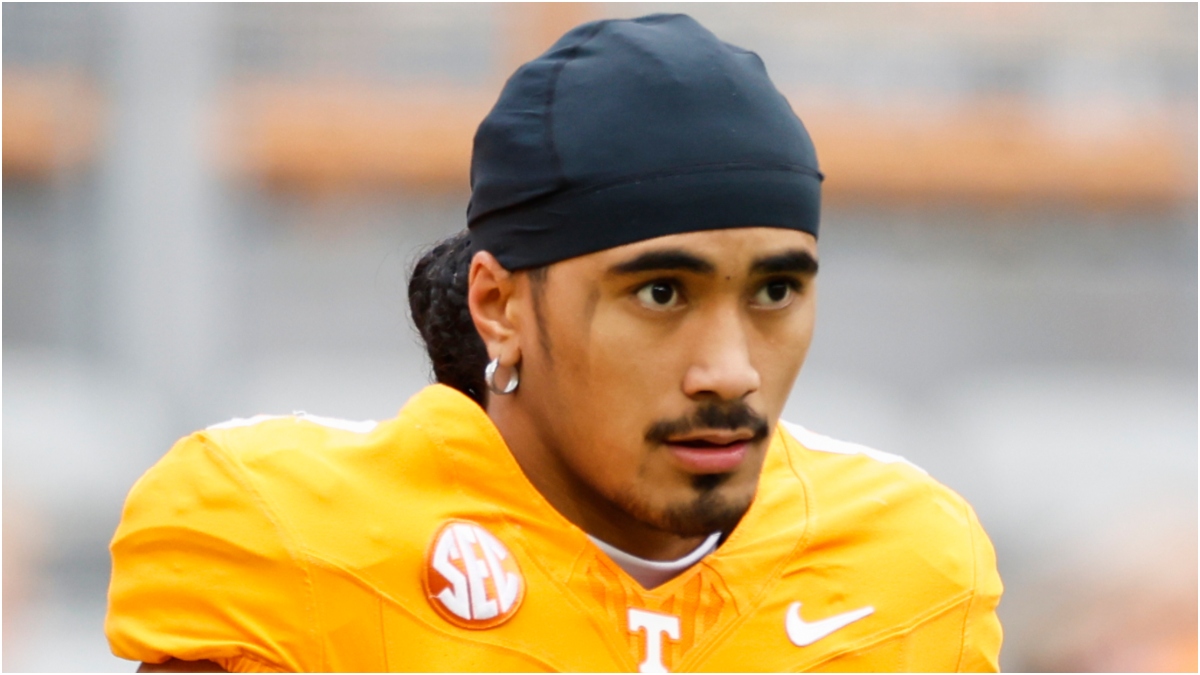
College football has a serious problem on its hands. After years of players having no ability to earn money as a result of their status as athletes, as well as little freedom of movement between schools, they now have arguably the most free and open system in sports.
Athletes can now move between schools each year, at will. Think you can get more Name, Image and Likeliness money elsewhere? The floodgates are open. Though of course, as Nico Iamaleava can tell you, searching for money doesn’t always work out.
There are some benefits to this both for players, and for certain schools who can now pull recruits away from big-name programs with better financial offers. But it’s also created a system where the “student-athlete” designation is essentially a farce. And former NFL player Jack Brewer thinks the sport needs a complete overhaul in order to return to how it used to be.
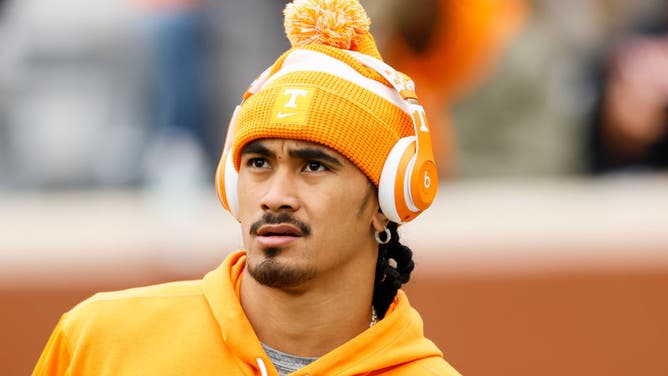
KNOXVILLE, TENNESSEE – NOVEMBER 23: Nico Iamaleava #8 of the Tennessee Volunteers looks on prior to the game between the Tennessee Volunteers and the UTEP Miners at Neyland Stadium on November 23, 2024 in Knoxville, Tennessee. (Photo by Johnnie Izquierdo/Getty Images)
Former NFL Player Warns ‘Student Athletes’ Disappearing
Brewer, who played in the NFL from 2002 to 2006, spoke to Fox News Digital about the new era of NIL in college football and how, in his mind, it’s negatively impacted the sport and the players.
“We need to get back to student-athletes,” Brewer said.
“If a person wants the freedom to make as much money as they want and can leverage the sport to do that, they should absolutely be able to — and they can, in our professional leagues. But there’s no place for an unlimited amount of money to be paid to people in college sports. They should be student-athletes, which is what they signed up to be.”
And this is the delicate balance that college athletics is facing in the modern era; players are putting their health and careers on the line, in a sport that’s generating billions of dollars, and schools and administrators have historically taken advantage of it.
READ: Big Ten Conference Dominating On And Off Field, With Massive Revenue Increase
The system we have now though, all but eliminates the “student” part of “student-athlete.” Brewer agrees.
“You’ll continue to see students who are no longer focused on school because their incentive for going to college is no longer to get an education, but to make money,” Brewer said. “It’s not right for universities to exploit this loophole, recruiting student-athletes who no longer have to focus on being students.”
Where critics like Brewer are right is that the unrestricted transfer system and complete lack of regulation in NIL give college football players more freedom than virtually any other sport. NFL players have contracts; they aren’t able to switch between teams at the drop of a hat, even after the NIL distribution based on a presumed commitment.
President Donald Trump has reportedly discussed an executive order to put a stop to unrestricted NIL after speaking to legendary head coach Nick Saban. The free-for-all era seems to be coming to a rapid end.

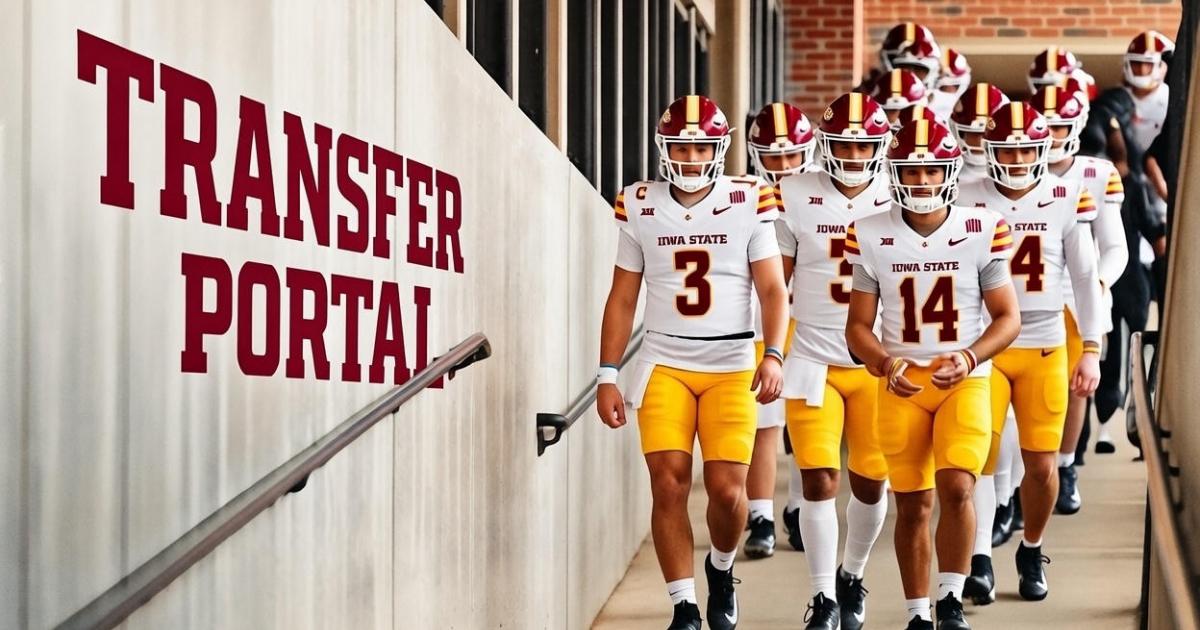
This isn’t isolated to mid-tier teams like Iowa State. Even former powerhouses are reeling from portal raids. USC, under Lincoln Riley, hemorrhaged 15 players after a disappointing 2025 season, including backups and starters seeking better NIL opportunities elsewhere. The Trojans’ losses exacerbate roster instability in a program once synonymous with West Coast dominance. Similarly, Florida State shed 25 athletes, UNC lost 15, and over 10 programs nationwide saw 20 or more departures, highlighting how NIL bidding wars amplify turnover at underperforming or underfunded schools. These exits often follow coaching changes or subpar seasons, with athletes prioritizing financial incentives over rebuilding efforts.
The fallout extends beyond regular-season rosters, contributing to a palpable lack of interest in the multitude of bowl games not tied to the College Football Playoff (CFP). With the transfer portal overlapping bowl season and NIL deals luring players away, non-playoff bowls have become exhibitions of depleted teams, rife with opt-outs and makeshift lineups. Players, now professionalized through NIL earnings, increasingly skip these games to avoid injury risks ahead of the NFL draft or to chase better opportunities via the portal, rendering many matchups unwatchable and irrelevant. This year alone, several 5-7 teams declined bowl invitations outright, including Iowa State and Notre Dame that also had a 10-2 winning record in 2025, signaling diminished prestige, while opt-outs have turned storied bowls into shadow versions of themselves. Viewership for non-playoff bowls remains robust in aggregate—Disney’s 33 such games averaged 2.7 million viewers last season, up from prior years—but fan sentiment and expert analysis point to growing apathy, with complaints that NIL and the portal have “demolished bowl season” by eroding competitive integrity. As one observer noted, these games hold “no interest” for teams anymore, fueling calls for reforms like paying players to participate or shifting the portal window post-bowls.
As the 2025 calendar winds down, the NCAA’s revamped transfer portal is poised to swing open on January 2, 2026, ushering in a condensed 15-day frenzy that closes on January 16, 2026, for most football programs. This single-window structure, a shift from previous dual periods to curb ongoing tampering and streamline chaos, includes extensions: Players from teams in the College Football Playoff national championship (set for January 19, 2026) get an extra five days from January 20-24, while coaching changes trigger separate 15-day windows starting five days after a new hire. Amid NIL’s financial allure, this upcoming portal period could accelerate roster volatility, with programs like Iowa State still reeling from pre-window announcements and others bracing for bidding wars.
Yet, in Texas—the epicenter of NIL spending—some programs thrive amid the chaos, leveraging deep-pocketed boosters to build fortresses against portal losses. The University of Texas (UT) boasts the nation’s top football NIL budget at $35-40 million for 2025, enabling net gains like edge rusher Colin Simmons from LSU and wideout Isaiah Bond from Alabama while minimizing outflows. Texas A&M follows closely with $51.4 million in total NIL revenue (football-dominant), adding 12 transfers like quarterback Marcel Reed despite some exits tied to NIL dissatisfaction. Texas Tech, spending nearly $30 million, turned the portal into a weapon with 15 additions, including quarterback Brendan Sorsby on a rumored $4 million deal, fueling a playoff push. SMU, raising $65 million for all sports via its Mustang Club, focused on retention bonuses to limit departures to just five, adding talents like edge Braden Carter and earning ACC buzz.
Contrast this with in-state rivals Baylor, TCU, and the University of Houston, where modest NIL resources expose vulnerabilities. Baylor ramped up to $15 million in NIL spending, adding 24 transfers to flip its roster, but still suffered heavy losses post-2025, prompting coach Dave Aranda to fight for key retentions like four critical players amid portal risks. TCU, also allocating around $15 million to football under Big 12 revenue sharing, balanced gains (e.g., experienced quarterbacks) with lumps from departures, reflecting the portal’s double-edged sword in a new era of $20.5 million caps. Houston, with unspecified but lower NIL figures, bolstered its roster with 15 transfers and 30 overall additions, yet faces ongoing portal needs after a 4-8 season, lacking the financial firepower to consistently outbid elites.
This Texas divide underscores NIL’s inequality: Wealthy programs like UT and A&M buy stability and stars, while others like Baylor and TCU scramble to plug holes, often becoming feeder systems. As the transfer portal window in 2026 looms, college football’s soul hangs in the balance and talk of reform is already in the air.
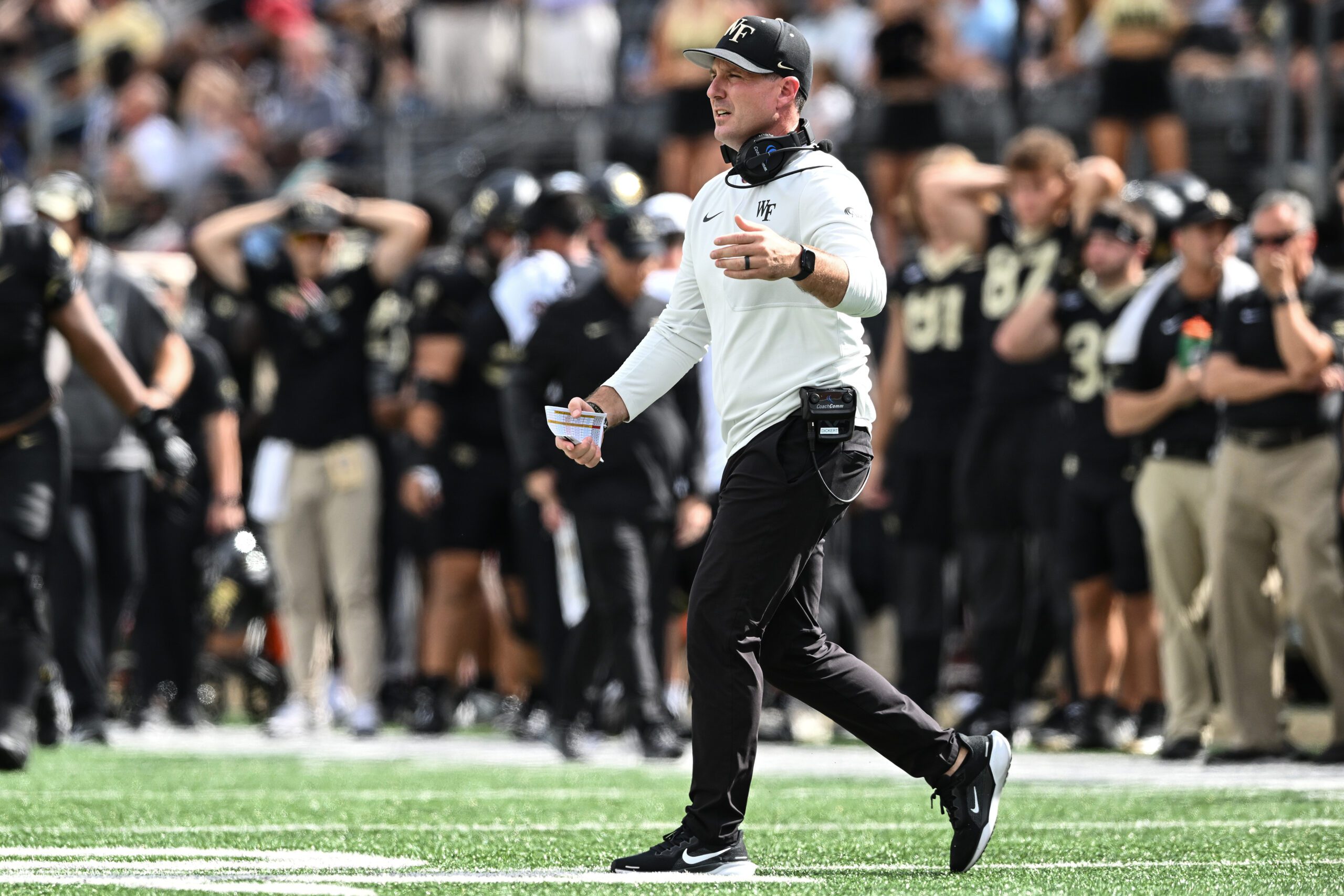
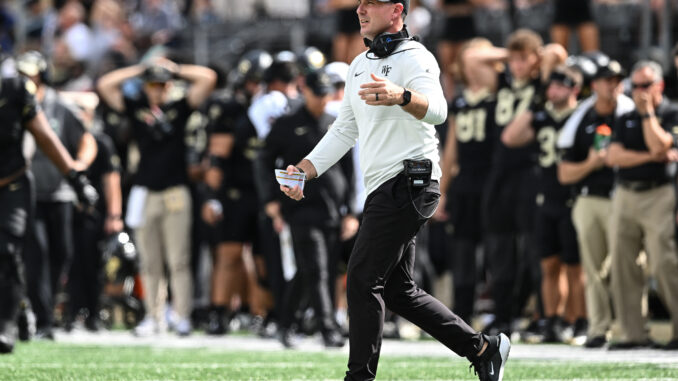
For over a decade, Dave Clawson built Wake Forest into one of the steadiest football programs in the Atlantic Coast Conference, crafting a developmental model that produced seven consecutive bowl appearances.
Clawson’s approach to making the Demon Deacons a fixture in North Carolina’s college football landscape was deliberate: recruit under-the-radar prospects, develop them patiently for two or three seasons, then rely on experienced upperclassmen to carry the program.
As the transfer portal and NIL opportunities reshaped college football, that model became harder to sustain. After back-to-back 4-8 seasons, Clawson resigned, citing a rapidly changing landscape and acknowledging he could no longer give the job everything it required.
Wake Forest suddenly faced a reset as a coaching change, roster turnover and evolving expectations left the program searching for direction. When Jake Dickert, former coach at Washington State, arrived in Winston-Salem ahead of the 2025 season, optimism was cautious at best.
What followed was one of the ACC’s most striking turnarounds.
In his first season, Dickert — the North State Journal’s 2025 Coach of the Year — restored stability and belief, guiding Wake to an 8-4 record and a return to bowl eligibility.
Capping off Dickert’s debut season, the Demon Deacons (8-4) will face SEC representative Mississippi State Bulldogs (5-7) in the Duke’s Mayo Bowl on Jan. 2 at Bank of America Stadium in Charlotte.
In their 2025 campaign, the Deacs tied for the most victories among all FBS programs in the Carolinas, underscoring the program’s rapid rebound. Wake Forest defeated two teams ranked at the time, including a road victory at Virginia (the Cavaliers’ only home loss of the season) and a home win that snapped SMU’s 20-game regular-season conference winning streak.
After back-to-back losses in September, Wake responded by winning six of seven games before closing the regular season with a loss at Duke; the Deacs finished 4-4 in ACC play.
On the field, Dickert leaned on a blend of experience and toughness. Graduate transfer quarterback Robby Ashford brought leadership to an offense that had struggled for consistency in recent seasons, while senior running back Demond Claiborne anchored the ground game and emerged as a physical focal point in key moments.
Defense again proved to be the program’s backbone. The Demon Deacons ranked sixth in the ACC and 38th nationally in scoring defense, finished top five in the league in total and passing defense, and did not allow a touchdown against either Virginia or North Carolina.
Dickert’s impact extended well beyond Saturdays.
Before the season, he overhauled Wake Forest’s recruiting and scouting infrastructure, assembling a 10-person staff dedicated to identifying talent and building depth in a new era of college football. The early returns have been promising.
During the recent National Signing Day, Wake Forest announced a 30-player 2026 recruiting class — the highest-ranked in program history — currently inside the national top 50. The class includes one four-star and 29 three-star recruits, signaling a shift toward broader talent acquisition and immediate competitiveness.
Dickert’s efforts were rewarded following the regular season. On Dec. 2, Wake Forest Vice President and Athletics Director John Currie announced that Dickert had signed a long-term contract extension.
“Jake Dickert has proven himself to be one of college football’s rising head coaches and one of the truly special leaders in the ACC,” Currie said. “He has galvanized our locker room, our campus, and our community. Coach Dickert is exactly the type of leader who inspires players, and he and his family fit seamlessly into the Wake Forest and Winston-Salem community.”
Dickert echoed that sentiment, pointing to long-term investment as central to Wake Forest’s direction.
“Our family could not be more grateful to call Wake Forest and Winston-Salem home,” he said. “Over the last 11-plus months, our staff and student-athletes have embraced a new process of being ‘Built in the Dark.’ When John approached me a few weeks ago about the university’s desire to further invest in our program, I was both humbled and energized.”
“This commitment ensures that our staff has the stability, resources and support necessary to continue elevating Wake Forest football,” Dickert added. “I’m proud of this team, our staff and our seniors who built the foundation for this new era, and excited for what’s ahead. There has never been a better time to be a Demon Deacon.”
While roster turnover remains a reality, Wake Forest’s trajectory is still heading upward. With a retooled staff, a revamped recruiting approach and renewed confidence throughout the program, Dickert has revived the Demon Deacons and positioned them for sustained relevance for years to come.
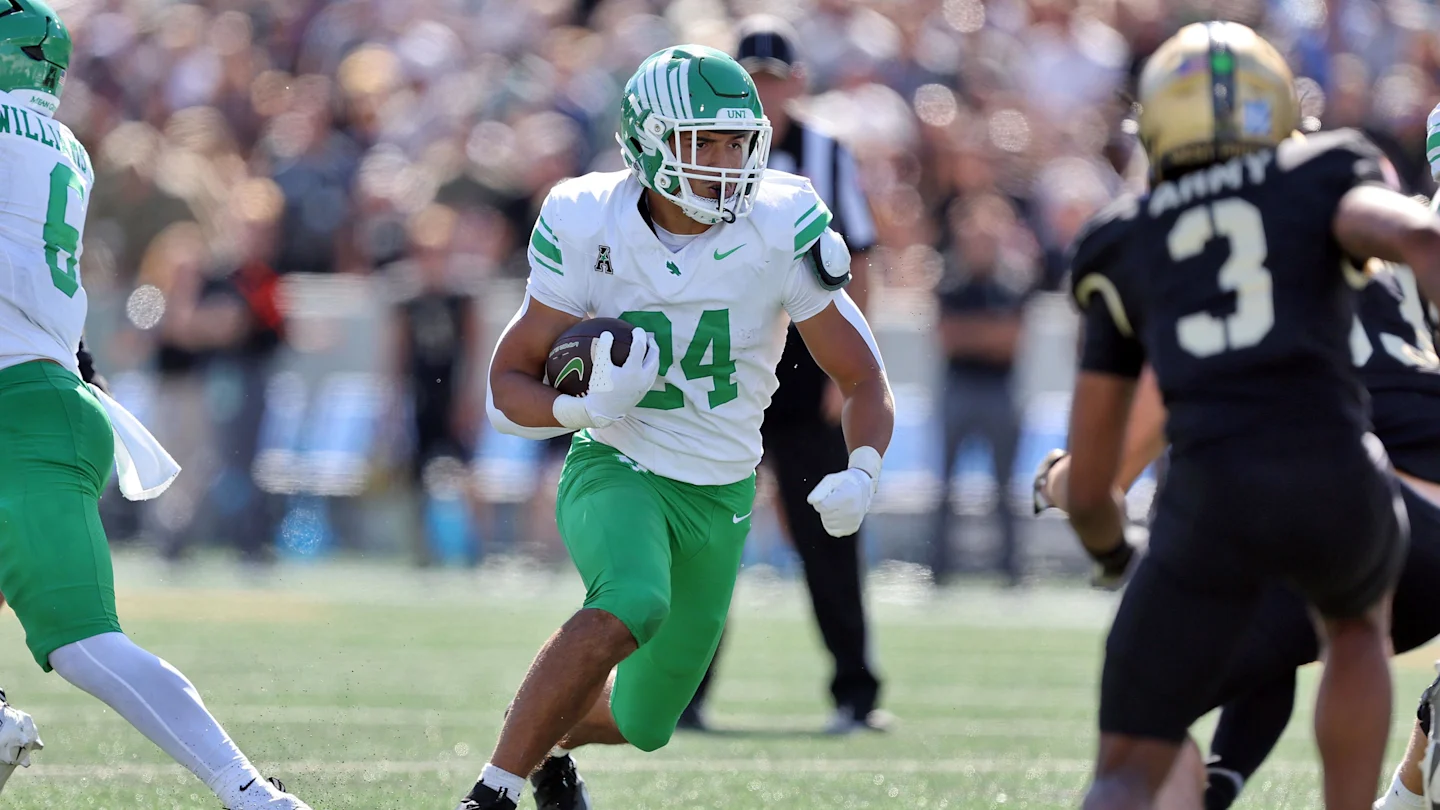
North Texas enjoyed a historic 2025 season, finishing 12–2 overall (7–1 in the American Conference) and cracking the AP Top 25.
The Mean Green posted the nation’s top offense (45.1 points per game), reached the AAC Championship Game, and capped the year with a thrilling 49–47 New Mexico Bowl win over San Diego State, the most wins in program history.
A key driver behind that success was true freshman running back Caleb Hawkins, who posted 1,434 rushing yards on 230 carries (6.2 yards per carry) with 25 rushing touchdowns, plus 32 catches for 370 receiving yards and four receiving TDs, 1,804 scrimmage yards and 29 total touchdowns.
He earned All-America and All-Conference freshman honors, national freshman awards recognition, and MVP honors in North Texas’ bowl victory.
However, shortly after, he announced his decision to enter the NCAA transfer portal, positioning himself as one of the highest-profile running backs available when the portal opens Friday.
On Monday, On3’s Pete Nakos specifically listed Hawkins among portal names being tracked and identified Texas as one of the programs showing early interest or appearing as a logical landing spot in that early intel.

Hawkins was a lightly-recruited three-star prospect out of North Rock Creek High School (Shawnee, Oklahoma) who signed with North Texas over offers from Emporia State and Central Oklahoma.
Texas finished the 2025 season ranked No. 13 in the final AP poll but failed to reach the College Football Playoff despite entering the year as the preseason No. 1 team in the AP Top 25.
Sophomore quarterback Arch Manning has publicly confirmed he will return to Texas for 2026, but the Longhorns face significant attrition at running back, with Quintrevion Wisner, Jerrick Gibson, and CJ Baxter all set to enter the transfer portal.
Texas has a clear need at running back, Hawkins’ proximity to Austin, and the program’s proven history of developing NFL-level backs, such as Bijan Robinson, Jonathan Brooks, Roschon Johnson, and Jaydon Blue, all point to Texas as a logical landing spot for Hawkins.
Read More at College Football HQ
- $2.6 million QB ranked as No. 1 transfer in college football
- 25-touchdown RB shares farewell note after entering college football transfer portal
- College Football Playoff team loses All-Conference player to transfer portal
- College football team loses three All-Americans to transfer portal

Saint Peter’s Peacocks (5-5, 2-0 MAAC) at Fairfield Stags (8-5, 0-2 MAAC)
Fairfield, Connecticut; Monday, 7 p.m. EST
BETMGM SPORTSBOOK LINE: Stags -3.5; over/under is 138.5
BOTTOM LINE: Fairfield hosts Saint Peter’s after Braden Sparks scored 26 points in Fairfield’s 121-58 win over the City Tech Beavers.
The Stags have gone 5-1 in home games. Fairfield ranks second in the MAAC with 24.6 defensive rebounds per game led by Brandon Benjamin averaging 5.7.
The Peacocks are 2-0 in MAAC play. Saint Peter’s is fourth in the MAAC with 10.6 offensive rebounds per game led by Jahki Gupton averaging 1.8.
Fairfield averages 8.6 made 3-pointers per game, 1.7 more made shots than the 6.9 per game Saint Peter’s gives up. Saint Peter’s averages 8.7 made 3-pointers per game this season, 1.6 more made shots on average than the 7.1 per game Fairfield gives up.
The Stags and Peacocks meet Monday for the first time in conference play this season.
TOP PERFORMERS: Benjamin is averaging 12.8 points, 9.7 rebounds and 1.6 blocks for the Stags. Sparks is averaging 17.7 points over the last 10 games.
Brent Bland averages 3.4 made 3-pointers per game for the Peacocks, scoring 16.0 points while shooting 40.0% from beyond the arc. TJ Robinson is averaging 12.3 points and 3.2 assists.
___
The Associated Press created this story using technology provided by Data Skrive and data from Sportradar.
As usual, Pate is spot on here.
The landscape of college football is changing by the day, and the new mantra for any coach looking to stay in the game is “adapt or die.”
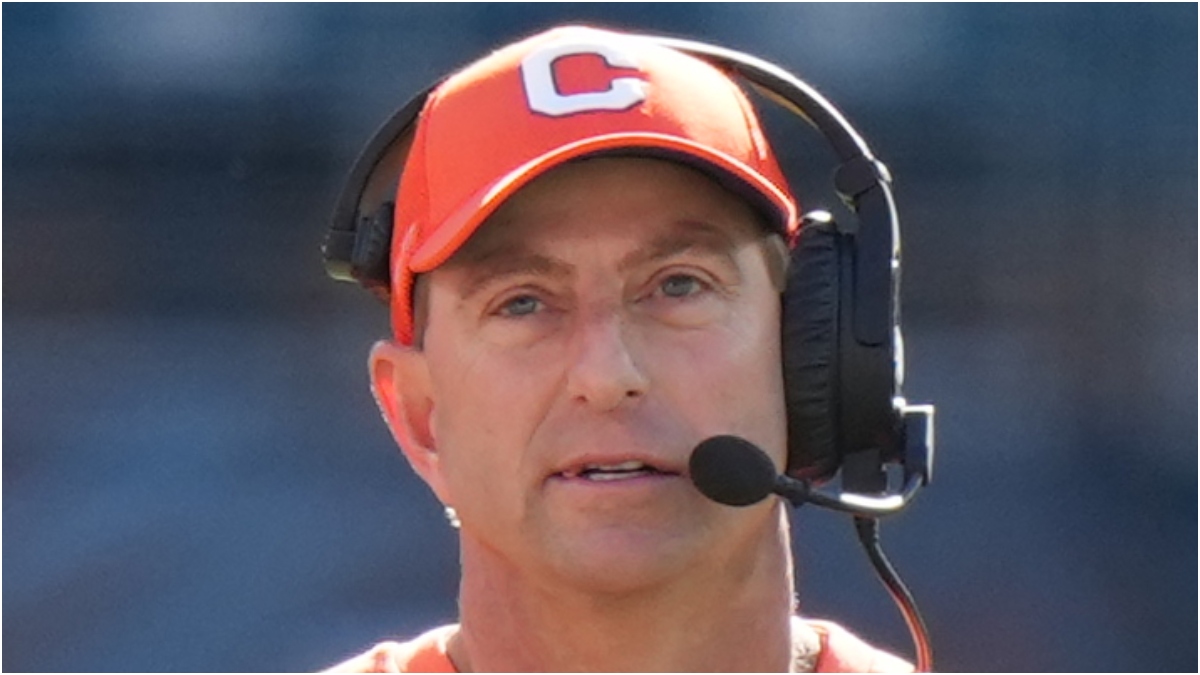
One coach that has been dragged kicking and screaming into the NIL and transfer portal era of college sports is none other than Clemson Tigers head coach Dabo Swinney.
And this weekend’s Pinstripe Bowl (aka The Disappointment Bowl) may have been the metaphorical death blow to Dabo’s reign as one of college football’s elites.
I’ve been on the “Dabo is done” train for a hot minute now, and one media personality who is with me (as he usually is) is Josh Pate.
Pate put it as bluntly as he could on the latest episode of his podcast, Josh Pate’s College Football Show.
“This was going to be the year that if the Dabo model still worked, it would be proven,” Pate explained, “and they went 7–6.”
This was about as disappointing a season for a College Football Playoff contender outside of State College, PA, but according to Pate, things could get a lot worse for Clemson before they get better.
“On paper, next year should be worse for Clemson.”
Brutal.
The “Dabo Model” Pate is referring to is the complete and utter dismissal of the transfer portal and reluctance to lean into NIL.
As I’ve said, an over reliance on the transfer portal can be just as damning as not using it at all (see Florida State), but there needs to be a healthy influx of talent from the portal if you want your program to survive in this day and age.
The truth is, even with Clemson’s relative success in the recruiting ranks, that well was starting to dry up, and there was no other source of talent being infused into the team.
Unfortunately for Tigers fans, Dabo isn’t willing to make the changes or adaptations to grow and evolve into a winning coach in 2025, a fact Pate knows all too well.
“Any sizable improvement at this point would require significant change, and I don’t expect Dabo Swinney to change.
“If you don’t adapt, you will die as a playoff contender,” Pate said, echoing my earlier sentiment.
Will Clemson force Dabo’s hand or let him ride off into the sunset as he dies on the hills of his old principles?
Time will tell, but Clemson fans have to be sick seeing the same man who built their program to such dizzying heights less than a decade ago be the very source of their downfall.
A cruel irony for a fanbase which deserves better.

“Jay Boulware brings years of successful experience as a highly respected coach and recruiter,” Rodriguez said. “His knowledge of the Big 12 Conference and ability to recruit high-level players and develop running backs make him a great addition to our program. I look forward to having him join our staff here at WVU.”
Boulware, a 29-year coaching veteran, comes to West Virginia after serving as the running backs coach and special teams coordinator at Kentucky for the past three years. He has coached running backs, tight ends and special teams at numerous Power 4 programs, has coached in 17 bowl games, including several BCS and CFP games and won a national championship. Programs that he worked for won seven conference championships, had numerous indviiduals named all-conference, All-American, national individual finalists and NFL Draft choices.
His resume includes working at Texas (2020-21, 1996-97), Oklahoma (2013-20), Auburn (2009-12), Iowa State (2007-09), Utah (2005-07), Stanford (2004-05) and Arizona (2000-04).
He also spent time assisting with the running backs with the Pittsburgh Steelers and did fellowships with the New Orleans Saints and the San Francisco 49ers. His first full-time coaching position was at Northern Illinois (1997-2000).
In 2023, Kentucky boasted a back who finished with 1,129 rushing yards and 14 touchdowns, in 2024 – two running backs had almost 600 yards each and in 2025, his top running back finished with more than 700 yards and 12 touchdowns.
This past season, the Wildcats finished No. 13 nationally in kickoff return defense. In 2024, UK was No. 6 nationally in punt return defense, No. 15 in net punting and No. 25 in kickoff return defense. In 2023, the Wildcats ranked No. 2 nationally in kickoff return yards, averaging 30.13 yards per return and scored a nation-leading three touchdowns.
At Texas, he helped the No. 19 Longhorns finish 7-3 overall and capture the Alamo Bowl title in 2020.
He spent seven years at Oklahoma as the special teams coordinator, five seasons as the running backs coach and two years with the tight ends. The Sooners’ special teams produced 10 touchdowns, a safety and three returned
two-point PATs.
Boulware guided six of his running backs at OU to 1,000-yard seasons and five of his running backs earned first or second-team All-Big 12 honors with three players drafted in the NFL.
Before Oklahoma, he spent four seasons (2009-12) at Auburn as the tight ends coach and special teams coordinator in 2008. Two seasons later, the Tigers posted a 14-0 record capped by a 22-19 win over Oregon in the BCS Championship Game.
Boulware spent two seasons (2007-08) at Iowa State coaching running backs and special teams under Gene Chizik. The Cyclones ranked No. 12 nationally in kickoff returns in 2008, set an NCAA FBS individual record with 319 kickoff return yards against Oklahoma State. ISU was also second in the Big 12 Conference in punting that year.
Prior to Iowa State, Boulware worked for two seasons as tight ends coach/co-special teams coordinator at Utah under coach Kyle Whittingham. While there, his special teams units were among the Mountain West Conference leaders, including a kickoff return unit that led the MWC in 2006.
Boulware spent three seasons at Arizona under coach John Mackovic as tight ends coach (2001), running backs coach (2002) and running backs coach/special teams coordinator (2003). During his tenure with the Wildcats, he mentored running back Mike Bell who finished his collegiate career with 3,163 rushing yards, the third-highest total in school history, and was named second-team All-Pac 10 as a sophomore.
An all-state selection at Nimitz High School in Irving, Texas, Boulware played on the offensive and defensive lines. He went on to play at Texas as an offensive lineman in 1991. After redshirting his first year and seeing action as a reserve in 1992, he was contending for a starting position before the 1993 season but was forced to end his career after being diagnosed with a health condition.
He began his coaching career at Texas, first as a student coach (1994-95) and then as a graduate assistant (1996). He helped UT win at least a share of three conference championships and made three bowl appearances in all three of his seasons working with the staff.
In 2024, he was inducted into the Irving ISD Athletic Hall of Fame.
Boulware graduated from Texas in 1996 with a degree in economics. He has one daughter, Jordin.

NIL’s Mercenary March of College Football Athletes

Nevada youth rank last in sports participation. Will rising costs make it worse?

Nevada youth rank last in sports participation

Victims scammed by people posing as members of youth sports team at West Town Mall: KPD

Shoot 360 Franchisees Take Over Two Dallas-Fort Worth Units

Families weigh costs and benefits as year-round youth sports industry grows in Wisconsin

Wake Forest’s Jake Dickert revives the Demon Deacons in debut season

Major college football program linked to 1,800 yard RB in transfer portal

Saint Peter’s visits Fairfield after Sparks’ 26-point game

Spencer McLachlin Named Head Coach at UC San Diego

Defending Big West Regular Season And National Champion Long Beach State Chosen As 2026 Preseason Coaches’ Poll Favorite

Marcus Johnson’s 40 points lead Garfield Heights win; Lutheran East avenges loss to Warrensville at NEO Youth Elite Christmas showcase

NSU adds goalkeeper transfer – Northwestern State University Athletics

DeLuca, Padroff, Collins: Recent Death Notices From Brookfield

PERFECT GAME EXPANDS PRESENCE IN PACIFIC RIM, STRENGTHENING YOUTH BASEBALL DEVELOPMENT |

SoundGear Named Entitlement Sponsor of Spears CARS Tour Southwest Opener

Donny Schatz finds new home for 2026, inks full-time deal with CJB Motorsports – InForum

Black Bear Revises Recording Policies After Rulebook Language Surfaces via Lever

Bowl Projections: ESPN predicts 12-team College Football Playoff bracket, full bowl slate after Week 14

Men’s and Women’s Track and Field Release 2026 Indoor Schedule with Opener Slated for December 6 at Home

David Blitzer, Harris Blitzer Sports & Entertainment

How Donald Trump became FIFA’s ‘soccer president’ long before World Cup draw

Michael Jordan’s fight against NASCAR heads to court, could shake up motorsports

Rick Ware Racing switching to Chevrolet for 2026

DeSantis Talks College Football, Calls for Reforms to NIL and Transfer Portal · The Floridian
Elliot and Thuotte Highlight Men’s Indoor Track and Field Season Opener

JR Motorsports Confirms Death Of NASCAR Veteran Michael Annett At Age 39

#11 Volleyball Practices, Then Meets Media Prior to #2 Kentucky Match

Colleges ponying up in support of football coaches, programs

23 عاما من الفضائح السياسية والجنسية منذ انقلاب حمد بن خليفة.. استغلال الفتيات الصغيرات في الدعارة.. ضبط ابنة رئيس وزراء قطر خلال ممارستها لجنس الجماعي.. ملامح الحكم تتخبط بين المنفي وتدخلات النساء






-
 Motorsports3 weeks ago
SoundGear Named Entitlement Sponsor of Spears CARS Tour Southwest Opener
-
 NIL3 weeks ago
DeSantis Talks College Football, Calls for Reforms to NIL and Transfer Portal · The Floridian
-
 Sports2 weeks ago
#11 Volleyball Practices, Then Meets Media Prior to #2 Kentucky Match
-
 Motorsports2 weeks ago
Sunoco to sponsor No. 8 Ganassi Honda IndyCar in multi-year deal
-
 Motorsports2 weeks ago
Nascar legal saga ends as 23XI, Front Row secure settlement
-

 Motorsports3 weeks ago
Accelerating Inclusion: Breaking Barriers in Motorsport
-
 Rec Sports2 weeks ago
WNBA’s Caitlin Clark, Angel Reese and Paige Bueckers in NC, making debut for national team at USA camp at Duke
-
 Sports2 weeks ago
Maine wraps up Fall Semester with a win in Black Bear Invitational
-
 NIL3 weeks ago
Ed Orgeron: Paying players via NIL would only require a ‘minor adjustment’
-
Motorsports3 weeks ago
NASCAR, 23XI Racing, Front Row Motorsports announce settlement of US monopoly suit | MLex