
Rec Sports
Three juvenile escapees charged after DC crime spree


One of the teens has already been re-arrested by police, along with two other suspects, but police are searching for two of the escapees.
WASHINGTON — DC Police are searching for two of three teen boys who escaped from a youth rehabilitation center in Pennsylvania Sunday night and allegedly committed crimes in the District. The third teen has already been re-arrested, along with two other suspects.
Three juveniles escaped from a Department of Youth Rehabilitation Services (DYRS)-contracted facility out of state and now face a slew of charges after police say they stole an SUV, committed a robbery, shot a man, and led officers on a chase through the nation’s capital.
According to the Metropolitan Police Department (MPD), the teens escaped from the youth detention center before allegedly stealing a red 2016 Land Rover SUV with Pennsylvania license plates. The Real Time Crime Center (RTCC) was alerted and quickly entered the stolen vehicle into MPD’s license plate reader systems.
Later that night, just before 11 p.m., officers responded to a shooting in the 700 block of 8th Street, NE. They found a man who had been shot, who told officers he was robbed. The individuals were last seen in a red SUV matching the description of the stolen Land Rover. The man was taken to an area hospital to be treated. He is expected to be OK.
Investigators later confirmed that the red SUV was involved in the robbery and shooting.
A short time later, an officer spotted the SUV heading toward the RFK Stadium area. MPD’s helicopter, Falcon 1, was deployed and located the car. Under aerial surveillance, five suspects were seen bailing out of the SUV and running away. Two of the individuals then jumped back into the car and drove off, while officers arrested one suspect on foot. An AR-15-style rifle was recovered nearby.
Around 11:15 p.m., a Seventh District officer spotted the SUV again, this time traveling on Alabama Avenue, SE. Due to the vehicle’s connection to the violent crime, a pursuit was authorized. Falcon 1 resumed aerial surveillance and tracked the SUV until it came to a stop near Minnesota Avenue and T Street, SE. The remaining suspects ran away. Officers arrested two more juveniles.
MPD confirmed that the three juveniles who were taken into custody have been charged with Assault with a Dangerous Weapon (Gun), Robbery, and related firearm offenses. One of them was confirmed to be among the initial DYRS escapees. Authorities are still searching for the two remaining juveniles.
In a statement, DYRS said they are “actively coordinating with the Metropolitan Police Department to support efforts to locate and safely return the youth.”
Anyone with information about the case or the whereabouts of the remaining suspects is urged to call MPD at 202-727-9099 or text the department’s anonymous tip line at 50411.


At your local Brooklyn Y kids can learn to play a sport, develop their skills, make new friends, and become empowered in youth sports, dance & swim programs. We have activities that cater to every interest and age group. Every class at the Y is a new opportunity to challenge boundaries, surpass goals, and cultivate well-being. Learn from the best instructors and choose from a diverse class catalog. Find a class that’s right for your children and family.
2026 Winter Programs Session Dates: January 2 – February 22. Find out more here.

Rec Sports
What The University of Utah’s $500M Private Equity Deal Means for the Future of Youth Sports
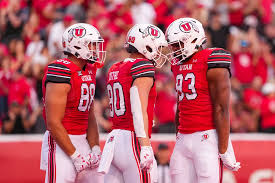
The University of Utah made history this week by becoming the first major college athletic program to partner with a private equity firm. The unanimous vote by the school’s board of trustees on December 10, 2025, approved a groundbreaking agreement with New York-based Otro Capital that could generate up to $500 million in capital.
The deal represents a significant evolution in college sports financing, one that will be closely watched across the industry. For the millions of families investing in youth sports as a pathway to college scholarships, understanding this shift matters. The model Utah is testing could reshape how college athletics programs are funded and operated nationwide.
The Deal Structure
The University of Utah will create a new for-profit entity called Utah Brands & Entertainment LLC to manage the commercial side of its athletic department. This includes ticket sales, corporate sponsorships, media rights, licensing, hospitality and other revenue-generating operations.
Otro Capital will take a minority ownership stake in exchange for a significant capital infusion, with the university maintaining majority control through its Growth Capital Partners Foundation. Athletic Director Mark Harlan will chair the board of the new entity, which will be led by an external president overseeing day-to-day operations.
The university retains control over athletic decisions including coaching hires, scheduling and student-athlete welfare. The deal includes an exit strategy allowing Utah to repurchase Otro’s stake after five to seven years.
Otro Capital was founded in 2023 by former RedBird Capital Partners executives, including Alec Scheiner, who previously served as president of the Cleveland Browns and senior vice president of the Dallas Cowboys. The firm was also instrumental in creating Legends Hospitality, a major player in stadium operations and sports venue management.
Why This Happened Now
The timing of this deal reflects the financial pressure facing college athletic departments nationwide. The House v. NCAA settlement now allows schools to pay student-athletes up to $20.5 million annually, with that figure increasing 4% each year over the next decade.
Utah athletics reported a $17 million deficit in fiscal year 2024, spending $126.8 million against $109.8 million in revenue. While the football program generated a $26.8 million profit and men’s basketball added $2.6 million, the remaining 17 sports programs lost $21.2 million combined.
Similar deficits exist across college sports. Ohio State, despite generating $254.9 million in revenue, ran a $37.7 million deficit. Colorado projected a $27 million shortfall. The traditional funding model of donor contributions and ticket sales is no longer sufficient to cover rising costs.
The Olympic Sports Question
The relationship between college athletics and Olympic sports development presents both opportunity and uncertainty under this new model. Olympic sports programs including swimming, diving, gymnastics, wrestling, track and field, and others represent the primary development pathway for American Olympic athletes.
Data from the U.S. Olympic and Paralympic Committee shows that 88% of American summer Olympians at the 2016 Rio Games competed in college. Over 70% of U.S. Olympic swimmers since 2000 came through collegiate programs. For winter sports at the 2018 PyeongChang Olympics, one-third of Team USA members were former college athletes.
Private equity firms typically focus on profitability and return on investment. The business-oriented decision making this brings could take several directions. Operational efficiencies and revenue optimization might generate resources to support a broader range of sports. Alternatively, pressure to maximize returns could lead to resource reallocation away from non-revenue programs.
The University of Utah has explicitly committed to maintaining its Olympic sports programs. President Taylor Randall stated the deal will help grow women’s and Olympic sports. The structure keeps athletic decisions including program offerings under university control rather than investor authority.
The question for youth sports stakeholders is whether improved revenue generation can sustain more comprehensive athletic programs, or whether profit pressure will eventually impact program offerings despite current commitments.
The Youth Sports Pipeline Connection
Changes to college Olympic sports programs would directly impact youth sports participation and development. College scholarships serve as a significant motivator for families investing time and money into youth sports training.
Research from the Aspen Institute shows that roughly 20% of youth sports parents believe their child has the ability to play Division I college sports. This belief influences enrollment decisions in travel programs, specialized training and development academies.
The impact on youth sports could unfold in several ways:
If college programs expand or improve through better revenue generation, more scholarship opportunities could increase youth participation in Olympic sports. Enhanced facilities and resources at the college level might strengthen the entire development pipeline.
Conversely, if college opportunities diminish, youth participation could be affected as families reassess their investments. Swimming, wrestling and gymnastics programs at the youth level rely heavily on the college pathway as a development goal.
Greg Earhart of the College Swimming and Diving Coaches Association noted in Sports Illustrated that changes to college programs create downstream effects. When parents make decisions about youth sports enrollment, news about college program changes factors into their calculus.
COVID demonstrated the interdependence between college and youth sports. When NCAA facilities closed to youth programs, junior diving programs that had been developing future Olympians lost access to facilities. Some coaches transitioned to college positions for stability. Four years later, some markets still face gaps in availability and coaching capacity.
Private Equity Already in Youth Sports
The entry of private equity into college sports parallels a trend already underway in youth sports. Over the past three years, Apollo Global Management co-founder Josh Harris and Blackstone executive David Blitzer have used their family foundations to acquire youth sports properties through a company called Unrivaled Sports.
Private equity involvement in youth sports brings both professional management and business pressure. Improved facilities, better marketing and operational efficiency can enhance the participant experience. The capital these firms provide enables facility upgrades and expansion that individual operators might not afford.
The concern among some advocates centers on accessibility. Higher facility fees, tournament costs and program expenses could accelerate economic stratification in youth sports. The counterargument is that professional management and economies of scale might actually improve efficiency and cost structure over time.
What Makes Utah Different
Several factors enabled Utah to move forward where other schools and conferences have stalled. The Big Ten explored a $2.4 billion private investment proposal with UC Investments last month, but the deal faced opposition from Michigan and USC. The complexity of getting 18 member schools to agree proved challenging.
Utah’s board of trustees has only 10 members, streamlining the negotiation and approval process. The school also took a more transparent approach, with President Randall and AD Harlan publishing an 800-word letter explaining their rationale on the same day as the board vote.
The university structured the deal to maintain control over athletic operations while partnering with Otro on the commercial revenue side. This separation allowed Utah to access private capital and operational expertise without ceding decision-making authority over sports programs.
Legislative Response and Legal Questions
The deal generated immediate response from lawmakers at both state and federal levels. Representative Michael Baumgartner of Washington posted on social media that Congress would examine the tax-exempt status of universities entering private equity deals. Earlier this year, he introduced the PROTECT Act, legislation aimed at blocking private equity deals with athletic departments or conferences.
Utah state senators Daniel McCay and Nate Blouin expressed concerns publicly. Representatives Brendan Boyle and Lori Trahan also questioned the approach on social media.
Legal experts have varied perspectives on the implications. David Gringer, a partner at WilmerHale specializing in antitrust issues in higher education, told Front Office Sports that treating private equity as a “boogeyman” is misguided. He noted that LLC structures have been used by other schools like Kentucky, Michigan State and Clemson, albeit without private equity involvement, and provide clear benefits including dedicated funding sources and operational flexibility.
Frank Azzopardi, a partner at Davis Polk, expressed surprise at Utah creating a for-profit entity during the SBJ Intercollegiate Athletics Forum, citing potential implications for the university’s 501(c)(3) tax status.
Gringer countered that threats to strip tax-exempt status are unnecessarily inflammatory, calling it “absurd” to penalize a school’s overall tax status based on a standalone entity with private equity investment.
The legal and regulatory framework for these partnerships remains unsettled, creating uncertainty for other institutions considering similar approaches.
What Youth Sports Leaders Should Watch
For those operating youth sports organizations, several aspects of the Utah deal offer learning opportunities:
Program Sustainability: Track whether Utah maintains or expands funding and roster sizes for Olympic sports programs. Positive outcomes would validate the model, while program reductions would signal potential risks across college athletics.
Operational Excellence: Otro brings expertise in ticketing, sponsorships, licensing and hospitality that college programs have traditionally handled internally. Youth sports organizations may identify similar opportunities to professionalize revenue operations and improve business performance.
Donor Equity Participation: Utah offered major donors the opportunity to purchase stakes in the new entity. This model combines traditional philanthropy with investment returns, potentially providing a blueprint for youth sports organizations seeking capital while maintaining operational control.
Revenue-Generating Innovation: The partnership aims to identify new revenue streams through professional sports expertise. Successful innovations at the college level could be adapted for youth sports contexts.
Five to Seven Year Timeline: The deal includes an exit strategy after five to seven years. This timeframe will reveal whether private equity partnership can genuinely improve financial sustainability or if it merely delays difficult decisions. The performance metrics and outcomes over this period will be instructive.
The Broader Trend
Utah’s deal is positioned as a first mover rather than an outlier. Industry executives told Front Office Sports they expect more deals to be announced over the next 12 to 24 months, though likely at a measured pace rather than rapid adoption.
Ben Fund, a partner at Carlyle Group, noted that private equity firms are actively interested in college sports opportunities. Chuck Baker, co-chair of Sidley Austin’s entertainment, sports and media practice, said the main question among both private equity and university clients is whether this will accelerate similar deals elsewhere.
Several schools including Kentucky, Michigan State and Clemson have created similar for-profit entities for revenue generation, though none have partnered directly with private equity firms. These structures provide existing models for separating commercial operations while maintaining university control over athletic decisions.
The difference with Utah is the capital partner. Otro brings both immediate funding and operational expertise from professional sports. Whether this combination delivers better outcomes than university-managed entities will influence how other schools approach their financial challenges.
The Youth Sports Impact
The impact on youth sports depends on how private equity-backed college programs balance financial performance with program breadth. Several scenarios are possible:
Enhanced revenue generation could strengthen college programs across all sports, improving scholarship opportunities and facility quality. Better business operations might create efficiencies that support rather than threaten Olympic sports.
Alternatively, sustained pressure for returns could lead to difficult decisions about program offerings despite current commitments. The five to seven year timeline before exit strategies take effect will be telling.
The Los Angeles 2028 Olympic Games adds relevance to this question. With international competition on American soil, the strength of college programs producing Olympic athletes will be on display.
For youth sports families making long-term investment decisions about their children’s athletic futures, the Utah deal represents a model worth understanding. The answers emerging over the next several years will inform whether similar structures spread across college athletics.
The deal closes in 2026, when Utah Brands & Entertainment begins operations. Whether private equity partnership proves to be an effective solution for college sports sustainability, and what that means for youth sports pathways, will become clearer as results emerge.
The seal has been broken. Private equity has officially entered college sports. How this influences youth sports development will be determined by the execution of this first major partnership.
Legal Disclaimer:
YSBR provides this content on an “as is” basis without any warranties, express or implied. We do not assume responsibility for the accuracy, completeness, legality, reliability, or use of the information, including any images, videos, or licenses associated with this article. For any concerns, including copyright issues or complaints, please contact YSBR directly.
Sources
Photo: UtahUtes.com
Primary Reporting:
- Dellenger, Ross. “Sources: University of Utah nearing landmark private equity deal expected to generate $500 million.” Yahoo Sports, December 9, 2025.
- Horney, Ben. “The Private Equity ‘Boogeyman’ Shows Up at Utah.” Front Office Sports, December 12, 2025.
- Axios. “Private equity makes its first college sports play.” December 10, 2025.
University of Utah Coverage:
- The Salt Lake Tribune. “University of Utah nears private equity deal to fund athletics department with Otro Capital.” December 9, 2025.
- The Salt Lake Tribune. “How might private equity’s deal with the University of Utah turn gold? How might it turn sour?” December 10, 2025.
- Deseret News. “University of Utah proposes private equity deal to fund athletics.” December 9, 2025.
- KSL Sports. “University of Utah Announces Landmark Private Equity Deal.” December 9, 2025.
Financial and Industry Analysis:
- Bloomberg. “Private Equity Firm Otro Wins College Sports Deal With University of Utah.” December 10, 2025.
- Wetzel, Dan. “Beware, college sports, private equity has arrived.” ESPN, December 2025.
- Business of College Sports. “Is Private Investment on the Way Into College Sports or Getting Banned?” 2025.
Olympic Sports Pipeline:
- Sports Destination Management. “As Colleges Cut Teams, USA Loses Prospective Olympians.” 2020.
- Bloomberg. “America Is an Olympic Powerhouse, College Sports Rules Could End It.” September 4, 2025.
- SwimSwam. “Now Is the Time: A Call to Protect Collegiate Olympic Sports.” 2025.
- Epstein, David. “Why America’s Olympic Pipeline Might Start Leaking.” The Range, 2025.
- AInvest. “The Shifting Financial Dynamics of College Sports and Its Impact on U.S. Olympic Dominance.” 2025.
Private Equity in Youth Sports:
- The New York Times. “Youth Sports Are a $40 Billion Business. Private Equity Is Taking Notice.” 2025.
- NPR. “When private equity invests in youth sports facilities.” November 25, 2025.
- Vice. “Is This the End of Youth Sports?” 2025.
Additional Context:
- Sports Business Journal. “The NCAA settlement puts Olympic and non-revenue sports on the brink.” June 30, 2025.
- El-Balad.com. “Otro Capital to back University of Utah in college sports’ first private-equity partnership, aiming to raise $500 million.” December 9, 2025.
About Youth Sports Business Report
Youth Sports Business Report is the largest and most trusted source for youth sports industry news, insights, and analysis covering the $54 billion youth sports market. Trusted by over 50,000 followers including industry executives, investors, youth sports parents and sports business professionals, we are the premier destination for comprehensive youth sports business intelligence.
Our core mission: Make Youth Sports Better. As the leading authority in youth sports business reporting, we deliver unparalleled coverage of sports business trends, youth athletics, and emerging opportunities across the youth sports ecosystem.
Our expert editorial team provides authoritative, in-depth reporting on key youth sports industry verticals including:
- Sports sponsorship and institutional capital (Private Equity, Venture Capital)
- Youth Sports events and tournament management
- NIL (Name, Image, Likeness) developments and compliance
- Youth sports coaching and sports recruitment strategies
- Sports technology and data analytics innovation
- Youth sports facilities development and management
- Sports content creation and digital media monetization
Whether you’re a sports industry executive, institutional investor, youth sports parent, coach, or sports business enthusiast, Youth Sports Business Report is your most reliable source for the actionable sports business insights you need to stay ahead of youth athletics trends and make informed decisions in the rapidly evolving youth sports landscape.
Join our growing community of 50,000+ industry leaders who depend on our trusted youth sports business analysis to drive success in the youth sports industry.
Stay connected with the pulse of the youth sports business – where industry expertise meets actionable intelligence.
Sign up for the biggest newsletter in Youth Sports – Youth Sports HQ – The best youth sports newsletter in the industry
Follow us on LinkedIn
Follow Youth Sports Business Report Founder Cameron Korab on LinkedIn
Are you a brand looking to tap into the world’s most passionate fanbase… youth sports?
Introducing Play Up Partners, a leading youth sports marketing agency connecting brands with the power of youth sports. We specialize in youth sports sponsorships, partnerships, and activations that drive measurable results.
About Play Up Partners
Play Up Partners is a leading youth sports marketing agency connecting brands with the power of youth sports. We specialize in youth sports sponsorships, partnerships, and activations that drive measurable results.
Why Sponsor Youth Sports?
Youth sports represents one of the most engaged and passionate audiences in sports marketing. With over 70 million young athletes and their families participating annually, the youth sports industry offers brands unparalleled access to motivated communities with strong purchasing power and loyalty.
What Does Play Up Partners Do?
We’ve done the heavy lifting to untangle the complex youth sports landscape so our brand partners can engage with clarity, confidence, and impact. Our vetted network of accredited youth sports organizations (from local leagues to national tournaments and operators) allows us to create flexible, scalable programs that evolve with the market.
Our Approach
Every partnership we build is rooted in authenticity and value creation. We don’t just broker deals. We craft youth sports marketing strategies that:
- Deliver measurable ROI for brand partners
- Create meaningful experiences for athletes and families
- Elevate the youth sports ecosystem
Our Vision
We’re positioning youth sports as the most desirable and effective platform in sports marketing. Our mission is simple: MAKE YOUTH SPORTS BETTER for athletes, families, organizations, and brand partners.
Common Questions About Youth Sports Marketing
Where can I sponsor youth sports? How do I activate in youth sports? What is the ROI of youth sports marketing? How much does youth sports sponsorship cost?
We have answers. Reach out to info@playuppartners.com to learn how Play Up Partners can help your brand navigate the youth sports landscape.
Youth sports organizations: Interested in partnership opportunities? Reach out to learn about our accreditation process.


ENGLEWOOD, Colo. (AP) — His first career Pro Bowl nod is tantalizingly within reach for nine-year NFL veteran Garett Bolles, whose renaissance on the gridiron mirrors his awakening off the field.
The Broncos’ left tackle has polished the rough edges of his game over the years to go from a raw latecomer to football (he was a lacrosse star as a kid) to one of the league’s best blindside protectors.
He anchors one of the best offensive lines in football and is a big reason the Broncos are 11-2 and perched atop the AFC playoff race heading into this weekend’s marquee showdown with the Green Bay Packers (9-3-1) at Empower Field.
Honored to be this years nominee for Walter Payton Man of the Year. This recognition means the world, but the real reward is giving back to the community. Grateful for the support and ready to keep making a difference. 🙏🏽 #WPMOY pic.twitter.com/hQ8esJS4Je
— Garett Bolles (@gbolles72) December 5, 2025
Early on, he was derided by Broncos fans for his propensity for penalties. “Holding, offense, No. 72” practically became his motto. He no longer draws that ire — or many flags, for that matter.
He’s been whistled just four times in 871 snaps this season and he hasn’t allowed a single sack of second-year passer Bo Nix.
Bolles credits the many mentors he’s had, Hall of Famer Mike Munchak among them, for refining his technique and his overall game, and he credits his experience overcoming a troubled adolescence for helping him navigate the negativity that started to surround him as a rookie in 2017 facing a steep learning curve.
“Well, No. 1, I’ve been down before,” Bolles said. “I’ve been down to where nothing’s coming my way and everything is against me and the odds are against me, people have counted me out, people have doubted me, people have continued to beat me up with words. I’ve been down. I’ve been to where I’ve had nothing and I feel like no one is there for me. And so, those moments in football, that’s just how my career’s been, that’s how my life’s been.”
Through all the tribulations, Bolles said he always knew he’d come out a better player and person.
“I never want to let anyone down,” he said. “And I didn’t want to let this city down. I didn’t want to let this team down and this organization because they’ve given me so much, not only to have a voice and a platform but to be able to play this game at a high level and I needed to change.”
Aside from the physical adjustments, Bolles had a mental and emotional roadmap for this renaissance from his time as a troubled youth, which included several school suspensions and expulsions, drug and alcohol use and even jail time for vandalism.
He was kicked out of his home at 19 and turned his life around after his former lacrosse coach, Greg Freeman, and his wife, Emily, took him in and gave him structure, mentorship and a chance to focus on family, faith and football.
“When you’ve been doubted in life, not only do you have to prove to yourself that you can be successful, but you’ve got to prove to others that you can be counted on, you can be reliable and you can continue to work hard through your work ethic and through your love that you show people and your kindness,” Bolles said. “And that was my goal and I’m going to continue to do that and I’ve obviously seen the results from it.”
From the start of his career, Bolles has been deeply involved in mentoring teens in the Arapahoe County Juvenile Probation Court, providing renovations to the hearing spaces and a shoulder to lean on.
“The way I grew up, I wanted to give back to kids who were very similar to me,” Bolles said. “Because, when you live that lifestyle, a lot of people just end up giving up on you, and they don’t love you and they don’t appreciate you — and I know how that feels. As I started talking to these kids I just realized these kids are just like me; they just need someone to love them and to cheer them on and to be there for them and to have someone in their corner.”
Bolles and his wife, Natalie, also founded the GB3 Foundation in 2021 to support children with learning differences and speech disorders, inspired by their son Kingston, now 8, who was diagnosed five years ago with childhood apraxia of speech. This fall, the Bolles funded the Bjorem & Bolles Apraxia Training Center in Parker, Colorado, a facility dedicated to training educators and speech-language pathologists who serve children with CAS.
For those efforts, the Broncos named Bolles their Walter Payton Man of the Year nominee this month.
Broncos defensive coordinator Vance Joseph, who was a first-year head coach in Denver when Bolles was selected 20th overall out of Utah in the 2017 NFL draft, said he sensed right away Bolles would apply that same determination that helped him overcome so much off the field to becoming the polished player he is today.
“As a player, he’s obviously one of the great tackles, his physical traits when we drafted him kind of spoke to that. He needed time on task to polish his tasks,” Joseph said. “And he’s always been a wonderful person. He’s been a father since the day I met him. He’s a great husband. He is the best teammate. … He is really a good person and he is absolutely a great player.”
Garett Bolles got the job done against the Texans’ elite edge rusher duo 🛡️ https://t.co/N6ViMkn6ju pic.twitter.com/BJmwrlq0k5
— PFF (@PFF) November 3, 2025
You’d think an NFL football player taking time to go see them would make Bolles a hero for so many troubled youth. But it’s actually the other way around; they inspire him, so much in fact that he said he plays football as much for them as he does his teammates.
“I love football, don’t get me wrong. I truly do love football, I love everything about it, it’s truly a passion of mine,” Bolles said. “But nothing brings me more joy than being able to help these kids.”
Take us with you, wherever you go.
Download the new & improved KSL Sports app from Utah’s sports leader. You can stream live radio, video and stay up to date on all of your favorite teams.

CORPUS CHRISTI, Texas — The City of Corpus Christi has finalized an agreement that allows the Oso Pony League to continue operating at the Southside Sports Complex while expanding access to more community groups. The facility, located at 1901 Paul Jones Avenue, will now serve more youth sports organizations under an affordable rental model.
Under the new License Use Agreement, nonprofit organizations can rent fields starting at $4.25 per hour or $5.25 per hour with lights. The low-cost structure aims to help youth sports groups focus on programming rather than fundraising efforts.
The city will handle facility maintenance through its Athletic Fields Maintenance Team within the Parks & Recreation Department. Fields are available for practices, tournaments and company events.
“Our goal is to remove barriers and maximize the public benefit of our city-owned assets,” Robert Dodd said.
Dodd serves as Parks and Recreation Director for the city.
“This new model ensures equitable access for all groups and prioritizes the youth sports programs that are so vital to our community’s future, all while keeping rental rates affordable,” Dodd said.
The approach mirrors the successful structure already in place at the Greenwood Sports Complex and follows best practices recommended by the National Recreation and Park Association.
Organizations interested in renting fields can find more information by visiting the city’s sports fields webpage.
For the latest local news updates, click here, or download the KRIS 6 News App.

Colorado Springs, Colo. (December 12, 2025) – USA Ultimate confirmed today the full calendar of 2026 Championship Events. The first event of the year will be the Beach Championships, returning to Virginia Beach on May 9-10. The event, which has seen record growth the past four years, has taken place in Virginia Beach 10 of the last 11 years. The 2025 event marked the biggest USA Ultimate beach event to date, with growth across nearly all divisions.
Many other previously announced events are returning to familiar locations in 2026, with both the Masters Championships and the Youth Club Championships taking place in Aurora, CO. 2026 also marks the final year of a three year agreement to host the National Championships in San Diego, CA – which has hosted the event since 2018.
USA Ultimate has a full calendar of premier events scheduled for 2026 – in collaboration with a number of trusted local partners – offering the ultimate community opportunities to compete at the highest level across all disciplines and divisions.
The full 2026 Championship Events Schedule is listed below.
| Event | Date | Location | Venue | Local Organizer |
| USA Ultimate Beach Championships | May 9-10 | Virginia Beach, VA | Virginia Beach Oceanfront | City of Virginia Beach Sports Marketing and Resort Management LLC |
| USA Ultimate D-III College Championships | May 16-18 | Waukegan, IL | Greg Petry Sports Park | Illinois Ultimate |
| USA Ultimate D-I College Championships | May 22-25 | Rockford, IL | Mercyhealth Sportscore Two | Illinois Ultimate |
| USA Ultimate Masters Championships | July 17-20 | Aurora, CO | Aurora Sports Complex | Altitude Ultimate |
| U.S. Open & Youth Club Championships | July 31 – August 3 | Aurora, CO | Aurora Sports Complex | Altitude Ultimate |
| USA Ultimate National Championships | October 22-25 | San Diego, CA | Surf Cup Sports Park | San Diego Ultimate |

MUSKEGO, Wis.—Former Director of Tryouts for the Croatian Eagles Soccer Club in Franklin, Justin Kagerbauer faces federal sex crime charges.
According to federal investigators, 41-year-old Kagerbauer was caught in an undercover operation for allegedly communicating with a 9-year-old girl in the U.K. He planned to travel there to have sex with her.
In reality, the girl Kagerbauer was messaging was actually a government agent operating under the Eastern Regional Special Operations Unit.
Police and federal agents were able to find and arrest Kagerbauer at Chicago O’Hare International airport where he already had purchased a ticket to England.
According to the indictment, Kagerbauer is charged with attempted foreign travel to engage in illicit sexual conduct with a minor, using a computer to engage in unlawful sexual activity, and distributing child pornography.
If convicted of Count One, Kagerbauer faces up to thirty years’ imprisonment.
If convicted of Count Two, he faces a mandatory ten years’ imprisonment or up to life imprisonment.
If convicted of Count Three, he faces a mandatory five years’ imprisonment, up to twenty years’ imprisonment.
Kagerbauer may also face a $250,000 fine for each count. He also may be required to register as a sex offender under state and federal law.

NASCAR 25 Producer on Alcoholic Beverage Sponsorships: “Never Say Never”

Registration open for YMCA Winter Programs! (sponsored) | Brooklyn Bridge Parents

$15 million college football coach sues Big Ten school over buyout dispute

What The University of Utah’s $500M Private Equity Deal Means for the Future of Youth Sports

From Troubled Youth To NFL Star: Garett Bolles’ Journey

Corpus Christi expands youth sports access with affordable field rentals

Full 2026 Championships Schedule Finalized

Historic Season Comes to Close

Muskego Youth Sports Director faces Federal Sex Crime Charges

Sam Corry Back With Nitro for 2 ARCA Races

City honors Karon Lewis with first Dave Miletich Volunteer Coach of the Year Award

KU volleyball knocked out by unbeaten Nebraska in Sweet 16 sweep

Meet The Two Oregon Freshmen Ready To Make Ducks History Under Dan Lanning

IHRA Announces Acquisition of Maple Grove Raceway

No. 1 Nebraska volleyball powers past Kansas, sets regional final date with Texas A&M

First Tee Winter Registration is open

Fargo girl, 13, dies after collapsing during school basketball game – Grand Forks Herald

CPG Brands Like Allegra Are Betting on F1 for the First Time

Volleyball Recaps – November 18

F1 Las Vegas: Verstappen win, Norris and Piastri DQ tighten 2025 title fight

Two Pro Volleyball Leagues Serve Up Plans for Minnesota Teams

Sycamores unveil 2026 track and field schedule

Utah State Announces 2025-26 Indoor Track & Field Schedule

Jo Shimoda Undergoes Back Surgery

Redemption Means First Pro Stock World Championship for Dallas Glenn

Robert “Bobby” Lewis Hardin, 56

How this startup (and a KC sports icon) turned young players into card-carrying legends overnight

Texas volleyball vs Kentucky game score: Live SEC tournament updates

Bowl Projections: ESPN predicts 12-team College Football Playoff bracket, full bowl slate after Week 14

Indiana’s rapid ascent and its impact across college football

 NBA Legend Michael Jordan to Join NBC Sports as Special Contributor
 Why a rising mid-major power with an NCAA Tournament team opted out of revenue-sharing — and advertised it
 Falcons mailbag
 Portal Update – Basketball and Gymnastics Take Hits
 has always dreamed in Mercurial. Now his initials are on the boots.
The new Kyl…
has always dreamed in Mercurial. Now his initials are on the boots.
The new Kyl…
-
 Rec Sports3 weeks ago
First Tee Winter Registration is open
-
 Rec Sports2 weeks ago
Fargo girl, 13, dies after collapsing during school basketball game – Grand Forks Herald
-
 Motorsports3 weeks ago
CPG Brands Like Allegra Are Betting on F1 for the First Time
-
 Motorsports3 weeks ago
F1 Las Vegas: Verstappen win, Norris and Piastri DQ tighten 2025 title fight
-
 Sports3 weeks ago
Two Pro Volleyball Leagues Serve Up Plans for Minnesota Teams
-
 Sports3 weeks ago
Sycamores unveil 2026 track and field schedule
-
 Sports3 weeks ago
Utah State Announces 2025-26 Indoor Track & Field Schedule
-
 Motorsports2 weeks ago
Jo Shimoda Undergoes Back Surgery
-
 Motorsports2 weeks ago
Redemption Means First Pro Stock World Championship for Dallas Glenn
-
 Rec Sports2 weeks ago
Robert “Bobby” Lewis Hardin, 56